40 Best Pink Flowers for UK Gardens: Stunning Plants for Borders, Beds and Cottage Gardens
Lee Burkhill: Award Winning Designer & BBC 1's Garden Rescue Presenters Official Blog
Beginner level
Pink is one of those colours that gardeners either reach for instinctively or dismiss entirely as too obvious, too safe, or too cottage-garden-by-numbers. I have been designing gardens professionally for over twenty years as an RHS-qualified horticulturalist and BBC1's Garden Rescue presenter, and I can tell you with some conviction that both camps are wrong. Pink is not obvious. It is not safe. And it is absolutely not limited to the cottage garden.
Quick Answer
The best pink flowers for borders include Japanese anemones, penstemons, and hardy geraniums for long summer colour, camellias and magnolias for spring drama, clematis and roses for vertical impact, and nerines for autumn interest. With the right plant selection you can have pink flowers in your garden from February all the way through to November.
Pink spans one of the widest tonal ranges of any colour in the garden. There is the barely-there blush of a Magnolia soulangeana in March. The soft, warm salmon of Geranium ‘Wargrave Pink’ threads through a border all summer. The vivid electric magenta of Lychnis coronaria blazing against silver foliage. The deep, almost-red cerise of Dahlia ‘Fascination’ in September sun. These are not the same colour in any meaningful design sense, and treating them as interchangeable is where most gardeners come unstuck.
In this guide, I am sharing 40 of the very best pink flowering plants for UK gardens, covering trees, shrubs, climbing plants, hardy perennials, annuals, and bulbs. Every plant comes with full growing data, my personal tips from years of designing and planting these in real gardens, and links to buy. Whether you are building a dedicated pink border, adding season-extending punctuation to a mixed planting, or simply looking for reliable performers for a difficult spot, there is something here for every garden.
This page contains affiliate links for products I use and love. If you take action (i.e. subscribe or make a purchase) after clicking a link, I may earn a small gardening commission, which helps me keep the Garden Ninja blog free for everyone.
Why Pink Flowers Deserve Far More Space in Your Garden
Before we dive into the plant list, I want to take a moment to make the case for pink. Not the timid, apologetic version of pink that gardeners use when they cannot quite commit to red. The full, confident, designed use of pink across an entire planting scheme.
A) The colour psychology of pink, from blush to magenta
Soft blush pinks create calm and romance. They sit beautifully with whites, silvers, and soft purples, making them the natural choice for relaxed cottage gardens, sensory gardens, and any space designed to feel like a retreat. On Garden Rescue I have used blush-toned planting in everything from a small urban courtyard in Manchester to a walled kitchen garden in the Cotswolds, and the effect is consistently one of peacefulness and space.
Hot pinks and magentas work completely differently. They create energy and drama, drawing the eye and anchoring focal points. A single clump of Lychnis coronaria in full flame will stop visitors in their tracks more reliably than almost anything else you can plant. Understanding this tonal spectrum is the difference between a pink planting that sings and one that looks muddled.
B) Pink is the great harmoniser in mixed planting
White is often described as the garden peacemaker, and rightly so. But pink does something white cannot. It warms a scheme. It bridges the gap between cooler purples and blues on one side and the warmer oranges and yellows on the other. In practical terms this means a mid-border planting of pink Penstemon or Astrantia can hold together a colour scheme that might otherwise feel at war with itself. I use this trick constantly.
C) Pink flowers are exceptional for pollinators
Many pink-flowered plants produce nectar in particularly accessible forms for bees and butterflies. The RHS Plants for Pollinators list includes a remarkable number of pink-flowering species, from Weigela and Spiraea in early summer to Echinacea and Hylotelephium in late summer and autumn. If you are trying to support wildlife in your garden, a well-planned pink planting scheme is one of the most effective things you can do.
D) You can have pink in flower every single month of the year
This is the part that genuinely surprises most people. With thoughtful plant selection, you can have something pink flowering in a UK garden from February right through to November, with evergreen interest bridging the winter gap. Bergenia kicks things off in late winter. Camellia carries the spring. Roses, clematis, and a vast army of perennials hold the summer. Japanese anemones and nerines carry the colour well into autumn. That kind of continuity is what separates a good border from a great one.
Pink-Flowering Trees for Structural Spring Drama
Trees set the scale and the emotional register of any garden. A pink-flowering tree in spring creates a statement that no shrub or perennial can match. These four are my top picks for UK gardens of different sizes.
1. Prunus ‘Kanzan’: Japanese Flowering Cherry
There is a ‘Kanzan’ cherry two streets from where I grew up in the north-west of England, and I can still remember the first time I properly noticed it in flower. I must have been about eight years old. It stopped me absolutely dead on the pavement. What was this exotic beauty?!
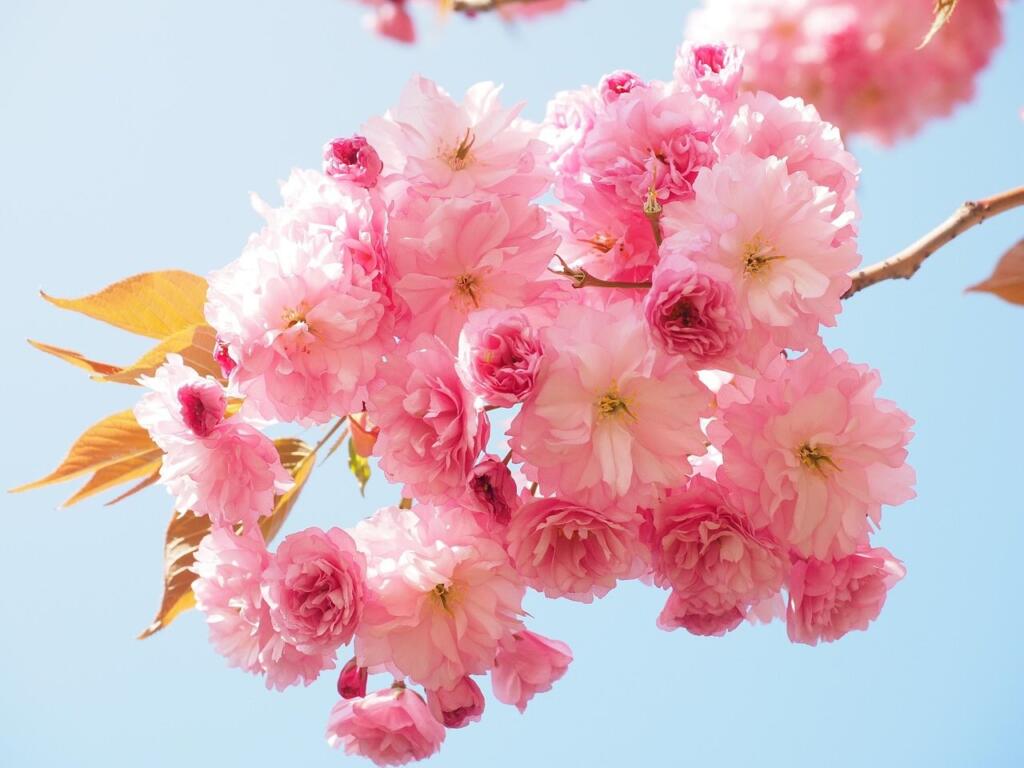
Thirty-odd years later, and it still does exactly the same thing every April. Kanzan produces masses of large, fully double, deep purplish-pink flowers that open from crimson buds, clothing the stiffly vase-shaped branches in a truly extraordinary cloud of colour. I still find it the most hopeful of all spring flowers with its bright cherry pink blooms!
The emerging foliage is a wonderful bronze-copper, turning green through summer before settling into warm orange-bronze in Autumn. It is a sterile variety, so you get none of the cherry mess, just blossom, good foliage, and excellent Autumn colour. For medium to large gardens, this is one of the most spectacular spring trees available.
🌿 At A Glance
Botanical Name
Prunus ‘Kanzan’
Plant Type
Deciduous tree
UK Hardiness
H6 (hardy throughout the UK)
Height / Spread
Up to 10m / 8m
Flowering Period
April to May
Best Conditions
Full sun; any reasonably fertile, well-drained soil including chalk and clay
💡 Top Tip
Plant ‘Kanzan’ where it can be seen from a window or from a garden seating area. The spring display lasts only two to three weeks but it is genuinely breathtaking. Make sure you have adequate space. This tree earns its room but it does need it.
The Judas Tree is one of those plants I frequently recommend on Garden Rescue and then spend the next ten minutes explaining why I am so excited about it, because on paper it sounds modest, and in reality it is jaw-dropping.
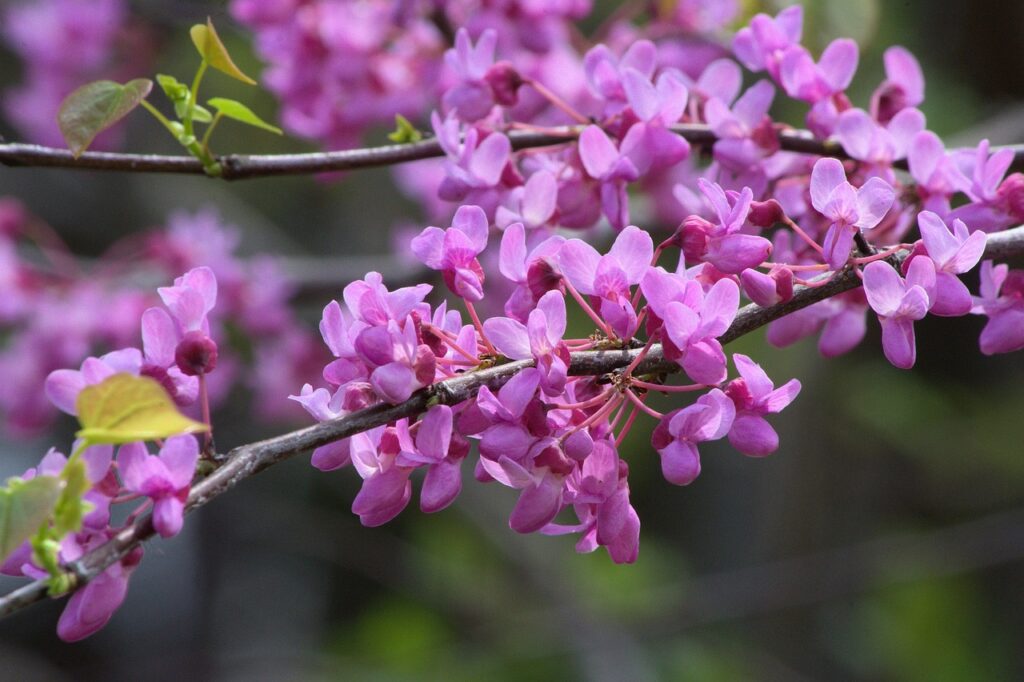
In April and May, rosy-pink pea-shaped flowers emerge directly from the older branches and even the trunk itself, a botanical phenomenon called cauliflory that produces one of the most striking flowering effects of any tree in cultivation. The heart-shaped leaves that follow are beautiful in their own right.
It thrives in warm, sheltered spots and is best suited to southern and central England, though it will grow further north with wall protection. Purple seed pods persist well into winter, adding further structural interest. A nitrogen-fixer that improves the soil around it as a bonus.
🌿 At A Glance
Botanical Name
Cercis siliquastrum
Plant Type
Deciduous small tree or large shrub
UK Hardiness
H5 (hardy in most UK regions)
Height / Spread
Up to 10m / 10m
Flowering Period
April to May
Best Conditions
Full sun; well-drained soil including chalk; warm, sheltered position
💡 Top Tip
Plant against a warm south or west-facing wall in colder UK regions. The Cercis grown as a multi-stem specimen has a particularly beautiful natural form and keeps the height more manageable in a smaller garden.
If I had to choose one tree that provides the best value for a medium-sized UK garden across all four seasons, Malus floribunda would be a very strong contender. In spring, it produces one of the most extravagant flowering displays of any crab apple, with deep crimson-pink buds opening to pale pink flowers that fade almost to white, creating a beautiful two-tone bicolour effect across the entire canopy. The sheer quantity of bloom is remarkable.
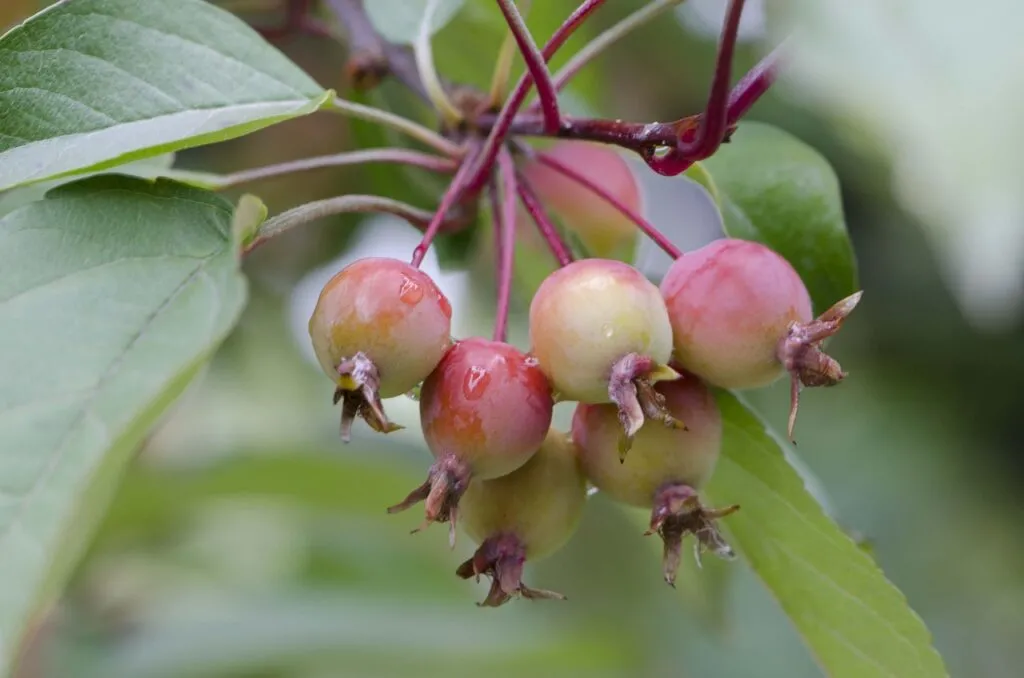
Tiny yellow and red crab apples follow in Autumn, absolutely beloved by birds and excellent for making crab apple jelly. Bronze Autumn foliage rounds out the performance. It tolerates urban pollution well and grows happily in most soils.
🌿 At A Glance
Botanical Name
Malus × floribunda
Plant Type
Deciduous tree
UK Hardiness
H6 (hardy throughout the UK)
Height / Spread
Up to 8m / 8m
Flowering Period
April to May
Best Conditions
Full sun or partial shade; any moist but well-drained soil; pollution-tolerant
💡 Top Tip
This is an excellent choice for a wildlife garden. Leave the crab apples on the tree through autumn and winter and thrushes, fieldfares, and redwings will strip them. It is also one of the most disease-resistant crab apples available, which matters enormously for long-term reliability.
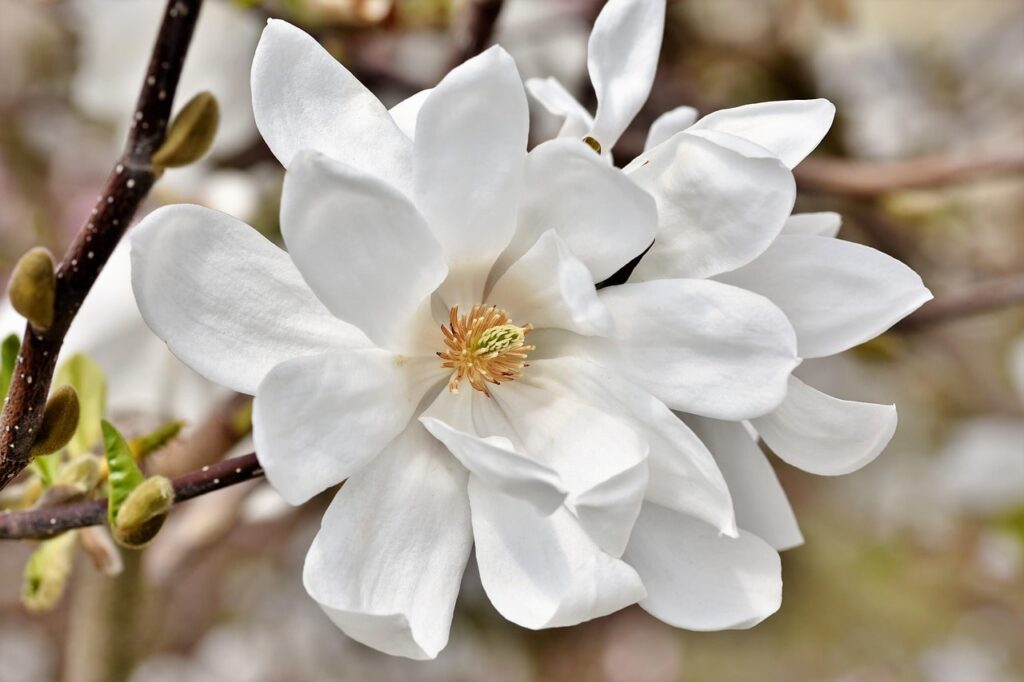
The saucer magnolia is one of those plants that earns its reputation entirely on merit. Those large goblet-shaped flowers, white inside shading to soft pink and purple on the outside, appearing on bare branches from late March through May, are genuinely one of spring’s most spectacular sights.
I designed a garden in Cheshire about eight years ago, where the client had a mature specimen as the centrepiece, and on a spring morning during the site visit, the whole thing was perfectly backlit. I genuinely stopped work for ten minutes.
It can be grown as a large multi-stemmed shrub or a small tree. Smooth, silvery bark adds winter interest. Avoid frost pockets as late frosts can brown the flowers, and position away from harsh east winds for the same reason.
🌿 At A Glance
Botanical Name
Magnolia × soulangeana
Plant Type
Deciduous tree or large shrub
UK Hardiness
H6 (hardy throughout the UK)
Height / Spread
Up to 8m / 8m
Flowering Period
March to May
Best Conditions
Full sun or partial shade; moist, well-drained, neutral to acid soil; sheltered from cold east winds
💡 Top Tip
If your soil is alkaline, plant in a large container with ericaceous compost and it will perform beautifully. Mulch annually with leaf mould or bark to retain moisture. Magnolias resent root disturbance so choose your position carefully and plant young.
Pink Shrubs for Year-Round Backbone and Border Structure
Shrubs are the architecture of the border. They provide height, structure, and seasonal interest that perennials and annuals simply cannot replicate. These six pink-flowering shrubs are reliable, beautiful, and suited to the full range of UK gardens.
5. Weigela florida ‘Pink Poppet’
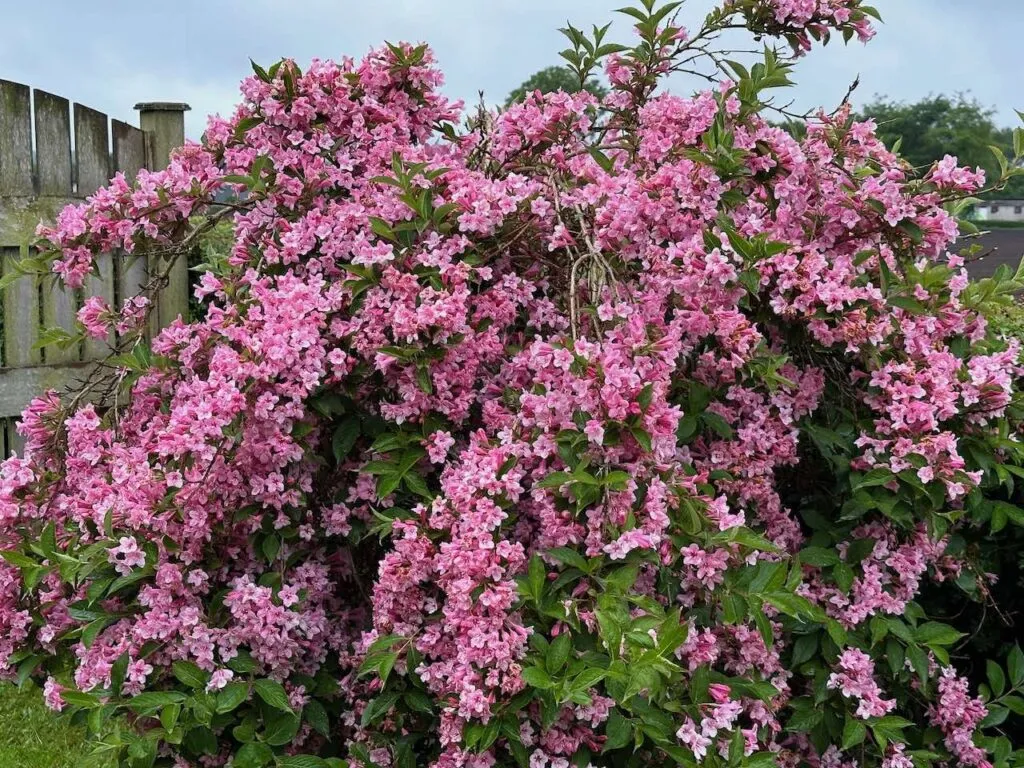
Weigela is one of those incredibly reliable shrubs that performs brilliantly without demanding very much in return. ‘Pink Poppet’ is the compact version I recommend most often for smaller gardens and containers, reaching just 40 to 60cm tall and producing a mass of vibrant, tubular pink flowers in May and June, with a second flush in late summer. It is completely unfussy about soil, tolerates both sun and partial shade, and once established, needs very little attention.
You can also propagate it from soft wood cuttings in late spring and grow even more of them for free!
🌿 At A Glance
Botanical Name
Weigela florida ‘Pink Poppet’
Plant Type
Deciduous dwarf shrub
UK Hardiness
H6 (hardy throughout the UK)
Height / Spread
40 to 60cm / 60 to 100cm
Flowering Period
May to June; repeat August to September
Best Conditions
Full sun or partial shade; any well-drained soil; drought-tolerant once established
💡 Top Tip
Prune weigela immediately after the first flush of flowers by removing about a third of the oldest stems at ground level. This keeps the plant vigorous and improves the second flowering in late summer. Never prune in spring or you will cut off the flowering wood.
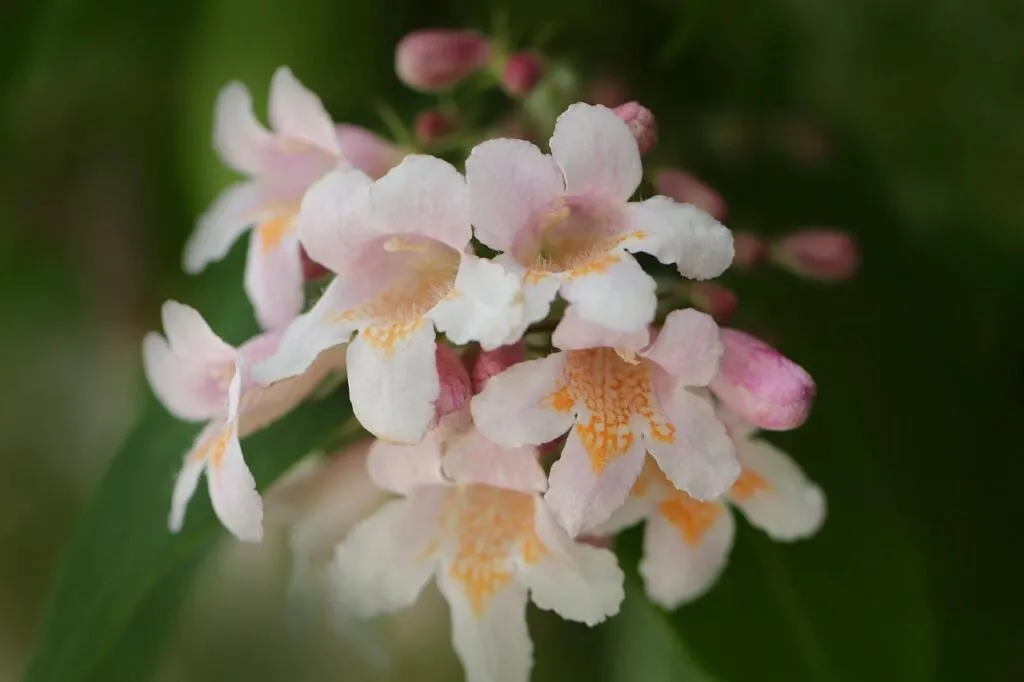
I have a genuine soft spot for Kolkwitzia because so few gardeners have heard of it, and yet it is one of the most spectacular May-flowering shrubs you can grow. ‘Pink Cloud’ produces masses of small bell-shaped, soft pink flowers with yellow throats so prolifically that the arching branches literally bow under the weight of bloom. The RHS gave it an AGM for good reason. It is bombproof, tolerates drought once established, and the peeling bark adds winter interest.
🌿 At A Glance
Botanical Name
Kolkwitzia amabilis ‘Pink Cloud’
Plant Type
Deciduous shrub
UK Hardiness
H6 (hardy throughout the UK)
Height / Spread
Up to 3m / 4m
Flowering Period
May to June
Best Conditions
Full sun; any well-drained soil; tolerates drought and pollution
💡 Top Tip
Give it plenty of room and let it develop its natural arching habit. Pruning is rarely needed beyond removing the oldest stems after flowering every few years to keep it producing vigorous new growth from the base.
7. Spiraea japonica ‘Anthony Waterer’: Japanese Spirea
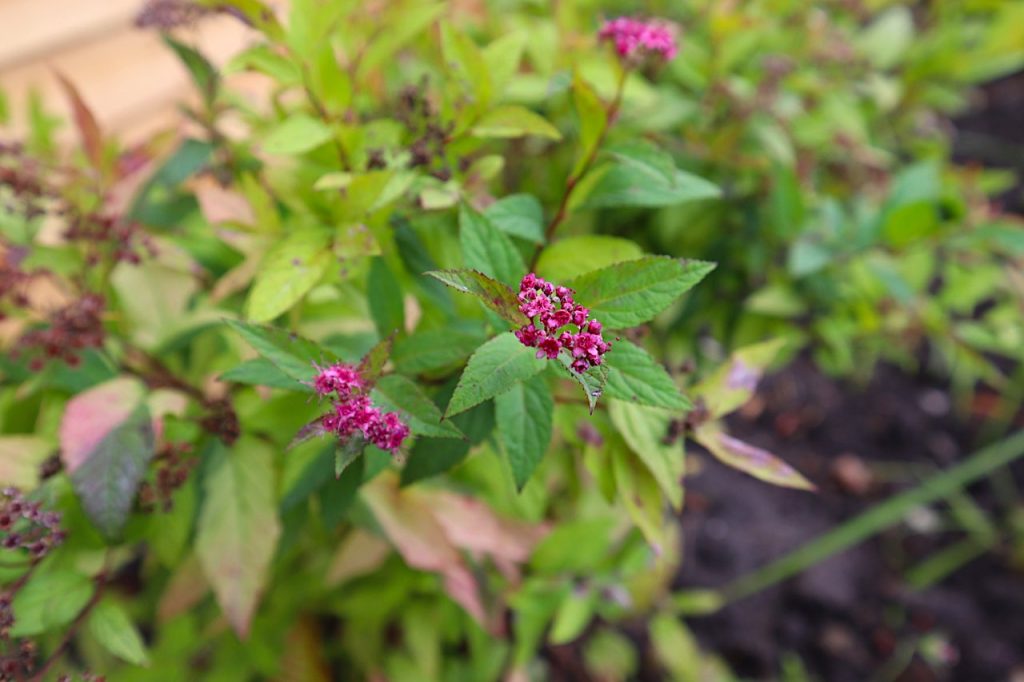
Spiraea ‘Anthony Waterer’ has been a garden staple since 1875, which tells you everything you need to know about its reliability. This compact, mounded shrub produces flat-topped clusters of deep rosy-pink flowers throughout July and August, and the foliage earns its keep in two additional seasons, emerging reddish-purple in spring and turning burgundy-red in Autumn. It is one of the toughest plants in this guide, rated H7, meaning it can survive temperatures well below -20 °C.
🌿 At A Glance
Botanical Name
Spiraea japonica ‘Anthony Waterer’
Plant Type
Deciduous shrub
UK Hardiness
H7 (very hardy, all UK regions)
Height / Spread
60cm to 1m / 1 to 1.5m
Flowering Period
July to August
Best Conditions
Full sun; average well-drained soil; tolerates clay and urban pollution
💡 Top Tip
Cut back hard in early spring, almost to ground level, for the best foliage and flower production each season. It responds extremely well to hard pruning and comes back vigorously every time. Excellent as a low informal hedge or massed on a slope.
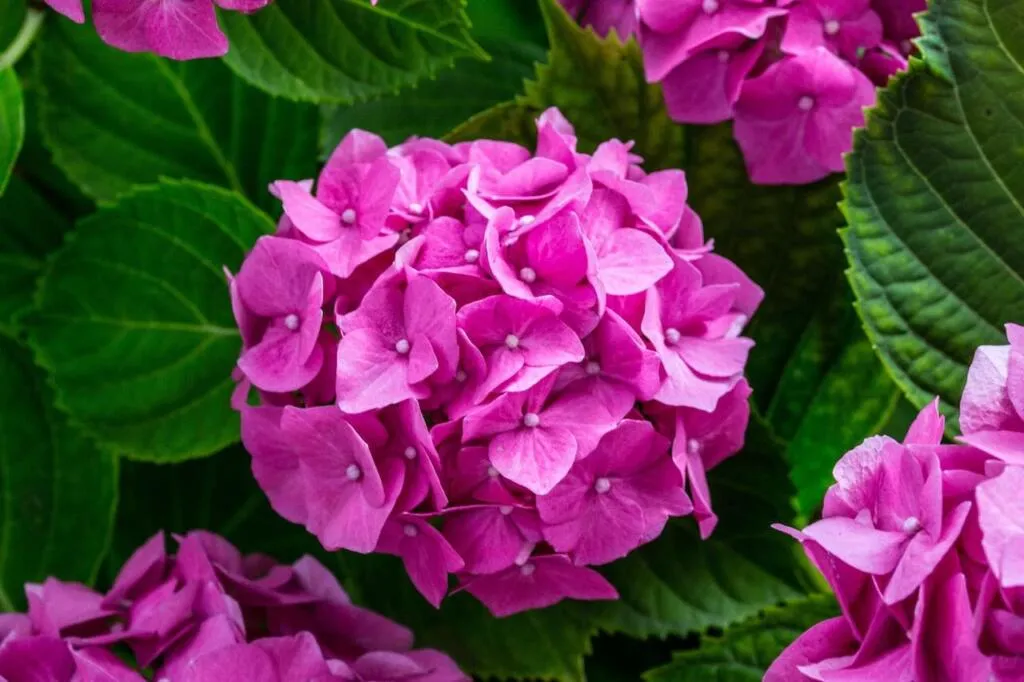
The mophead hydrangea is a British garden icon, and when it is grown well in the right conditions, it deserves every bit of the adulation it receives. The key thing most gardeners do not realise is that the flower colour is directly controlled by soil pH. In neutral to alkaline soil (pH 6.0 and above) the flowers will be pink, while in acid soil they turn blue.
If you want reliably pink flowers, you can add garden lime around the base of the plant each spring to maintain the right pH or, just like me, let the Hydrangea find its own colouration from the soil! Less drama!
Hydrangeas flower on old wood, so prune carefully in spring, removing only dead flower stems and taking care not to cut back into the healthy new growth below. The dried flower heads provide excellent autumn and winter structure.
🌿 At A Glance
Botanical Name
Hydrangea macrophylla
Plant Type
Deciduous shrub
UK Hardiness
H5 (hardy in most UK regions)
Height / Spread
1 to 2m / 1.5 to 2.5m
Flowering Period
July to September
Best Conditions
Partial shade ideal; moist, well-drained soil with organic matter; neutral to alkaline for pink flowers
💡 Top Tip
Do not let it dry out in summer. Hydrangeas will tell you very clearly when they are thirsty by wilting dramatically, and repeated water stress reduces flowering. Mulch around the base each spring with garden compost to retain moisture and feed the plant at the same time.
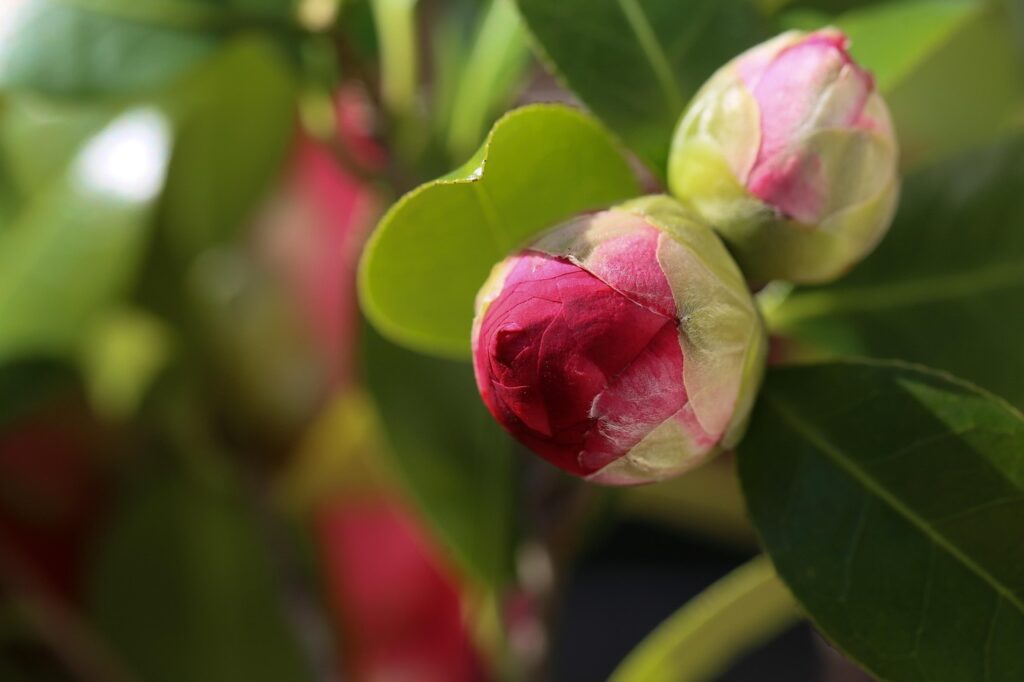
‘Donation’ is widely considered one of the finest hybrid camellias ever raised, and having grown and recommended it for many years, I would not argue with that assessment. It produces an extraordinary profusion of large, semi-double, orchid-pink flowers with delicate, darker veining from February through to May, and unlike many camellias, it drops its spent blooms cleanly rather than leaving them rotting on the plant. The glossy evergreen foliage provides excellent year-round structure.
🌿 At A Glance
Botanical Name
Camellia × williamsii ‘Donation’
Plant Type
Evergreen shrub
UK Hardiness
H5 (hardy in most UK regions)
Height / Spread
Up to 5m / 2.5 to 3m
Flowering Period
February to May
Best Conditions
Partial to full shade; acid, humus-rich, well-drained soil (ericaceous); north or west-facing aspect ideal
💡 Top Tip
Avoid east-facing positions, as early morning sun thaws frosted buds too quickly and damages the flowers. A north or west-facing wall is ideal. In alkaline soil areas, grow in a large container with ericaceous compost and feed with an ericaceous fertiliser each spring.
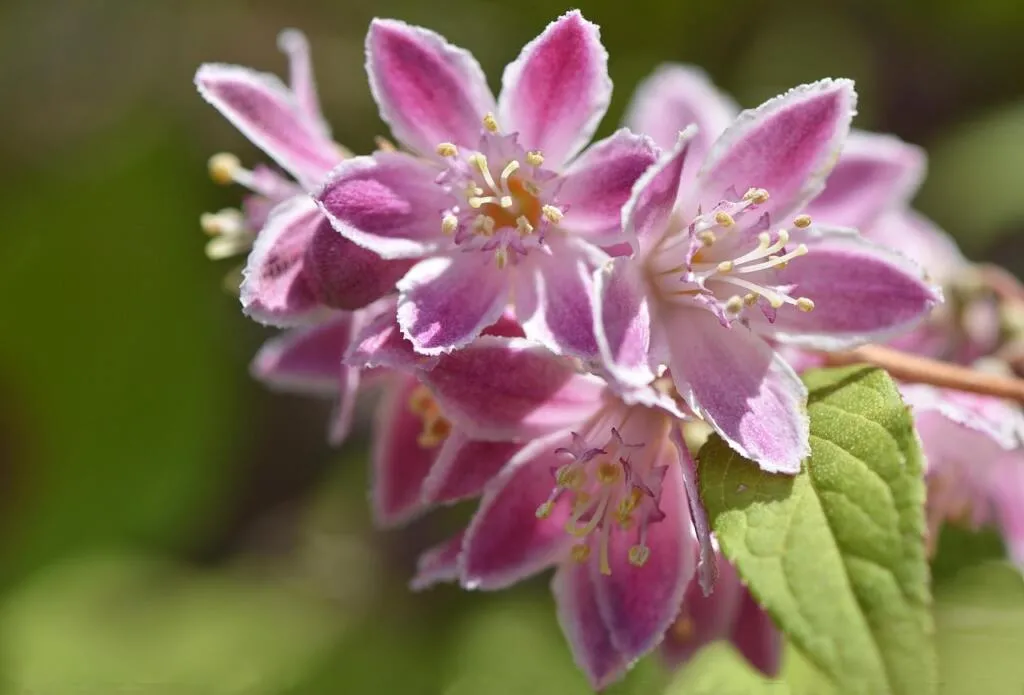
Deutzia is criminally underused in UK gardens, and ‘Strawberry Fields’ is the variety that always gets the best reaction when I include it in a planting plan. The flowers are bicolour, deep pink on the outside of the petals, pale pink to white within, and are produced in large conical panicles over a flowering season that can last six weeks or more.
It is lightly fragrant, draws pollinators in large numbers, and its graceful, arching habit means it integrates beautifully into mixed borders without dominating.
🌿 At A Glance
Botanical Name
Deutzia × hybrida ‘Strawberry Fields’
Plant Type
Deciduous shrub
UK Hardiness
H5 (hardy in most UK regions)
Height / Spread
1.5 to 2m / 1.5 to 2m
Flowering Period
May to July
Best Conditions
Full sun or partial shade; moist, fertile, well-drained soil; salt-tolerant for coastal gardens
💡 Top Tip
Prune immediately after flowering by removing about a third of the oldest stems at ground level. Do not prune in autumn or winter as you will lose next year’s flowers. Honey-fungus resistant, which is a genuinely useful characteristic in established gardens.
Pink Climbing Plants for Vertical Romance and Fragrance
Vertical planting transforms gardens. It adds height and drama, makes small spaces feel bigger by drawing the eye upward, and creates opportunities for fragrance at nose and face level where it can really be appreciated. These five pink climbers are among my most frequently recommended.
11. Clematis montana var. rubens
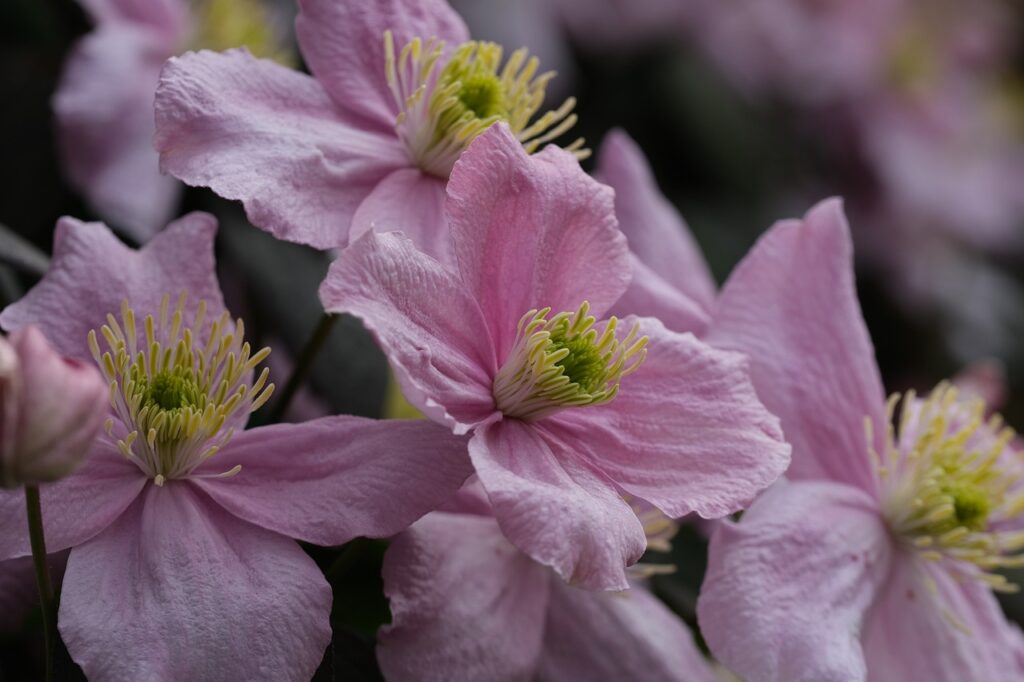
Clematis montana is one of those plants that makes gardening feel genuinely magical. I have seen mature specimens scrambling through old apple trees, across pergolas, and along the tops of fences, and when they are in full flower in May, the effect is simply extraordinary.
The var. rubens form produces masses of single satin-pink flowers, smaller and more delicate than the large-flowered hybrids, with a beautiful, sweet vanilla fragrance that carries on the breeze for considerable distances. Bronze-tinted young foliage adds further charm.
🌿 At A Glance
Botanical Name
Clematis montana var. rubens
Plant Type
Deciduous climber (Pruning Group 1)
UK Hardiness
H5 (hardy in most UK regions)
Height / Spread
8 to 12m / 4m+
Flowering Period
May to June
Best Conditions
Full sun or partial shade; moisture-retentive, well-drained soil; roots in shade is ideal
💡 Top Tip
This is Pruning Group 1. Minimal pruning needed and certainly no hard cutting back. If it outgrows its space, tidy lightly immediately after flowering. Give it a large structure to cover; this is not a plant for a small obelisk. A mature tree, large pergola, or long fence are perfect.
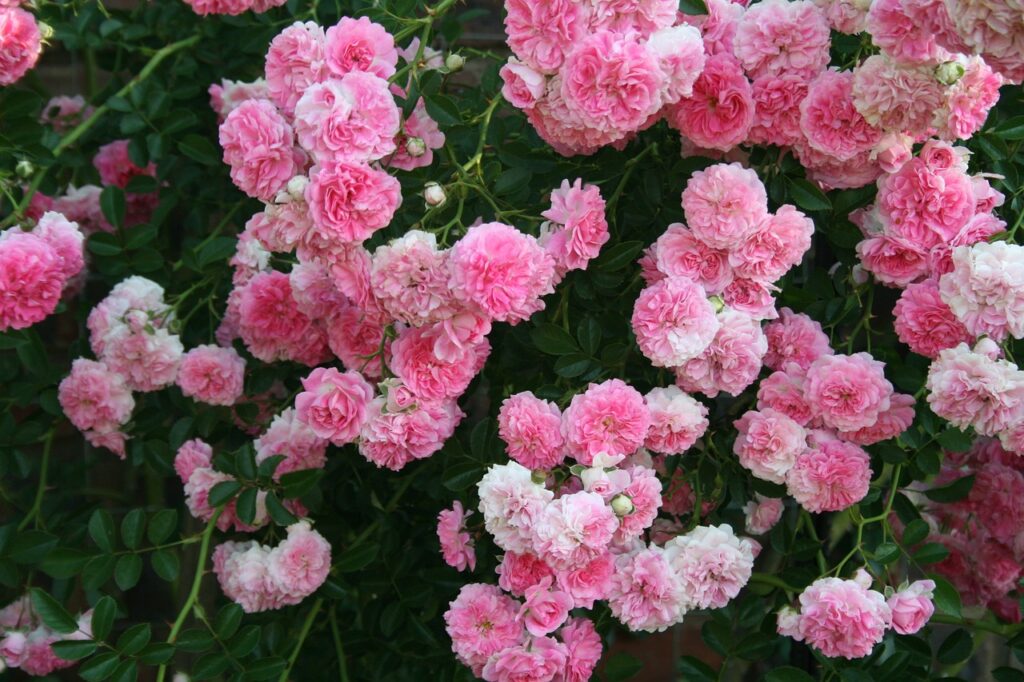
12. Rosa ‘Zéphirine Drouhin’: Thornless Climbing Rose
This 1868 Bourbon rose is one of the most requested plants from clients after they have seen it growing in a garden I have designed. The complete absence of thorns makes it uniquely practical for high-traffic areas such as doorways, along pathways, over arches, and the cerise-pink, semi-double flowers carry one of the most powerful and beautiful raspberry fragrances of any Rose in cultivation.
‘Zéphirine Drouhin’ also flowers more reliably on a shaded or north-facing wall than almost any other climbing rose, which makes it an exceptional solution to one of the trickiest problems in UK gardening.
🌿 At A Glance
Botanical Name
Rosa ‘Zéphirine Drouhin’
Plant Type
Climbing rose (Bourbon)
UK Hardiness
H6 (hardy throughout the UK)
Height / Spread
Up to 3m / 2m
Flowering Period
June to October (near-continuous)
Best Conditions
Full sun to partial shade; tolerates north-facing walls; moist, fertile, well-drained soil
💡 Top Tip
Train the main stems as horizontally as possible, as this encourages far more lateral flowering shoots than growing them vertically. Deadhead regularly to maintain the near-continuous flowering season. Watch for blackspot and treat promptly; like many Bourbons it can be susceptible in wet summers.
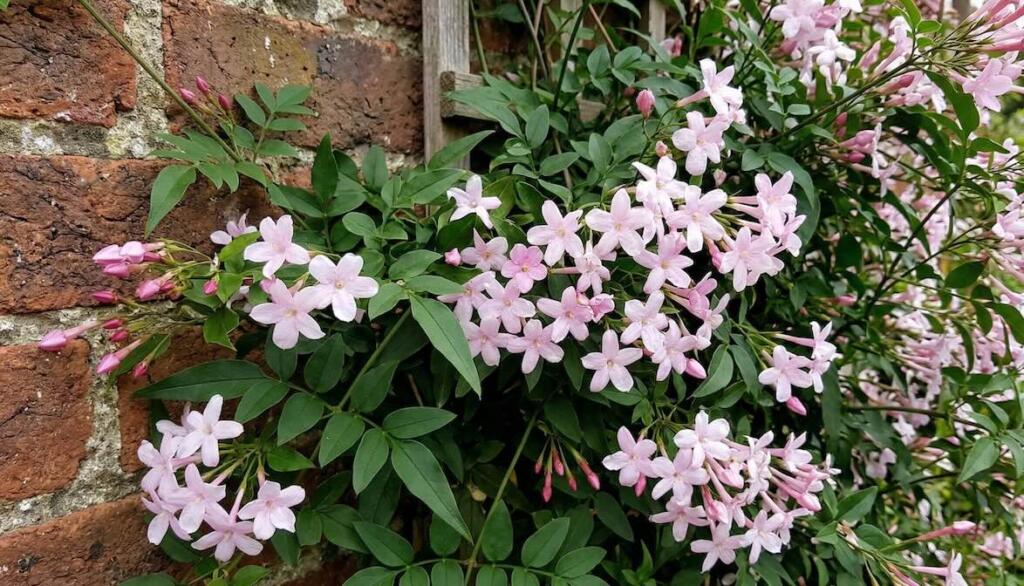
Most gardeners know white jasmine, but very few have encountered this pink-flowered hybrid, which is a genuine shame because it is beautiful. Jasminum stephanense produces clusters of pale blush-pink, sweetly fragrant, star-shaped flowers from June through July, the only commonly available Jasmine in pink, and is a fast-growing plant that will quickly cover a warm, sunny fence or wall with semi-evergreen growth. Position it near a doorway or seating area where the fragrance can be properly appreciated.
🌿 At A Glance
Botanical Name
Jasminum × stephanense
Plant Type
Deciduous to semi-evergreen climber
UK Hardiness
H4 (hardy in most areas; shelter in cold regions)
Height / Spread
Up to 5m / 2 to 4m
Flowering Period
June to July
Best Conditions
Warm, sunny, sheltered position; well-drained soil; south or west-facing wall ideal
💡 Top Tip
Provide a warm, sheltered spot. A south or west-facing wall is ideal, especially in the north of England and Scotland. Tie in new growth regularly as it is a twining climber and benefits from guidance. Mulch in autumn in colder gardens for extra root protection.
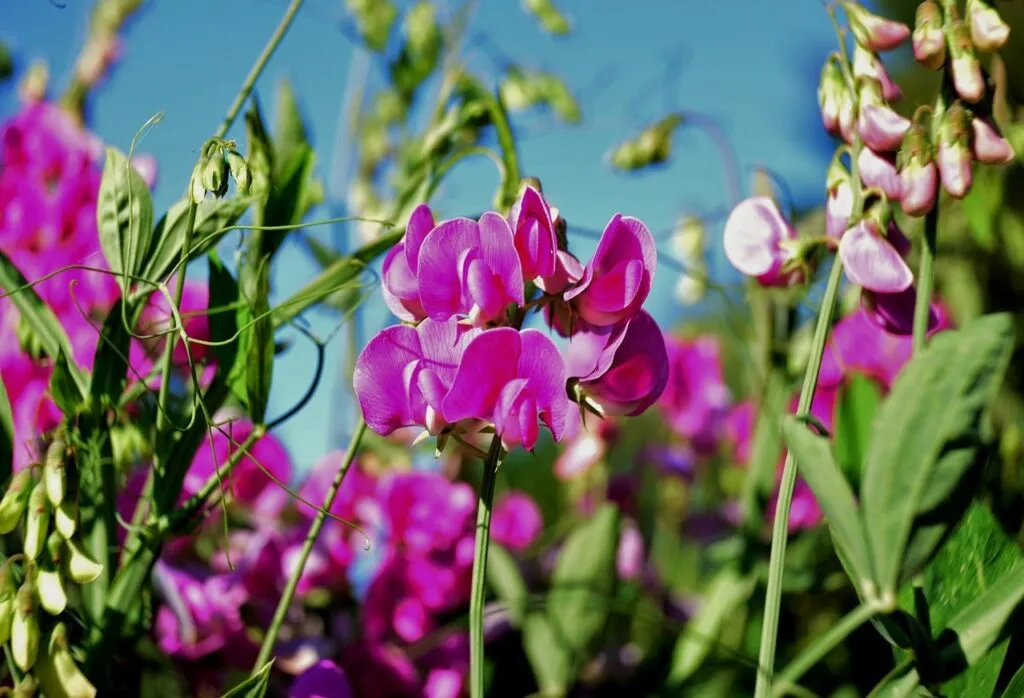
Sweet peas hold a very specific place in my heart. My grandmother grew them every year down the full length of her allotment, and the smell of sweet peas in full flower on a warm July morning is one of the most vivid sensory memories I have from childhood. Pink sweet peas, from the soft blush of ‘Mollie Rilstone’ to the vivid salmon of ‘Fragrant Hills’, are among the finest cut flowers in cultivation, and the more you pick them the more they produce. They are the ultimate reward-for-effort annual climber.
🌿 At A Glance
Botanical Name
Lathyrus odoratus
Plant Type
Hardy annual climber
UK Hardiness
Hardy annual (tolerates light frost)
Height / Spread
1.8 to 2.4m / 30cm
Flowering Period
June to September
Best Conditions
Full sun; rich, moisture-retentive, well-drained soil; manure-enriched bed preferred
💡 Top Tip
Sow seeds in autumn (October to November) for earlier and more vigorous plants, or in late February to March. Soak seeds overnight to speed germination. Deadhead every week without fail, as any pods setting seed will shut down flower production almost immediately.
15. Lonicera periclymenum ‘Serotina’: Late Dutch Honeysuckle
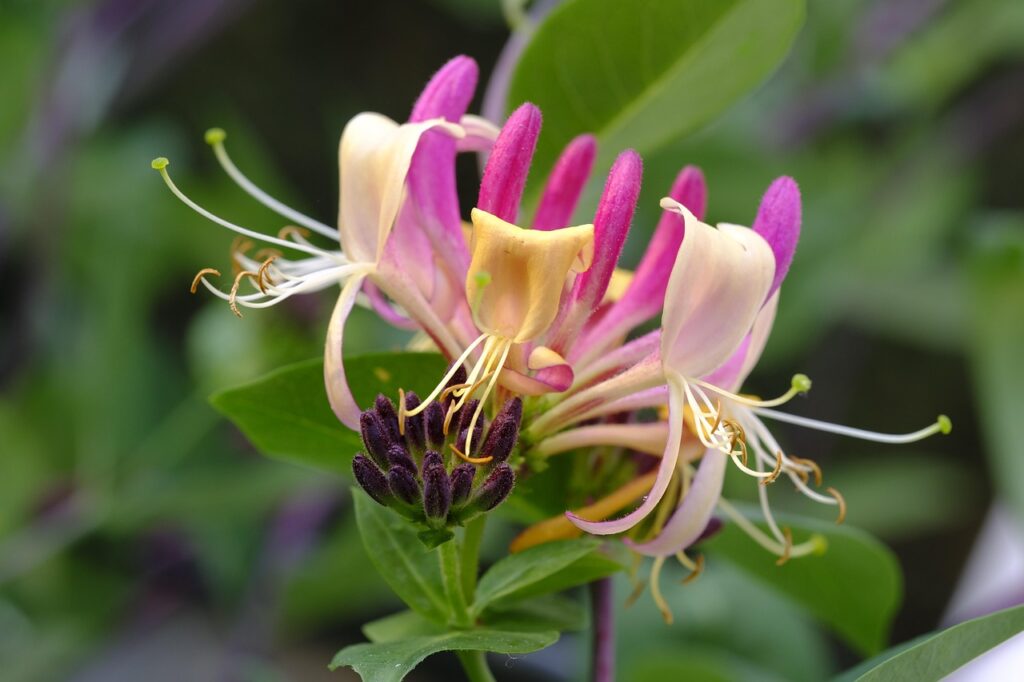
Native honeysuckle is one of the most important wildlife plants in the British garden, and ‘Serotina’ is the late-flowering form that extends the season well into autumn.
Deep crimson-pink buds open to creamy-yellow interiors and release one of the most powerfully sweet fragrances of any garden climber, particularly in the evening when it attracts night-flying moths. Red berries follow the flowers, providing food for warblers and dormice.
🌿 At A Glance
Botanical Name
Lonicera periclymenum ‘Serotina’
Plant Type
Deciduous twining climber
UK Hardiness
H6 (hardy throughout the UK)
Height / Spread
Up to 7m / 3.5m
Flowering Period
July to October
Best Conditions
Partial shade ideal; any fertile, moist but well-drained soil; roots in shade, top in sun
💡 Top Tip
Plant alongside a climbing rose such as ‘Zéphirine Drouhin’ for a classic combination that provides interest from June to October. Keep roots cool and shaded with a mulch or underplanting of low groundcover. Prune lightly after flowering if it becomes congested.
Pink Hardy Perennials for the Heart of Your Border
Hardy perennials are the backbone of any mixed border. They return each year reliably, they can be divided and multiplied, and with good selection, you can achieve months of overlapping pink-flower interest from early spring right through to the first frosts. These fifteen are my most trusted performers.
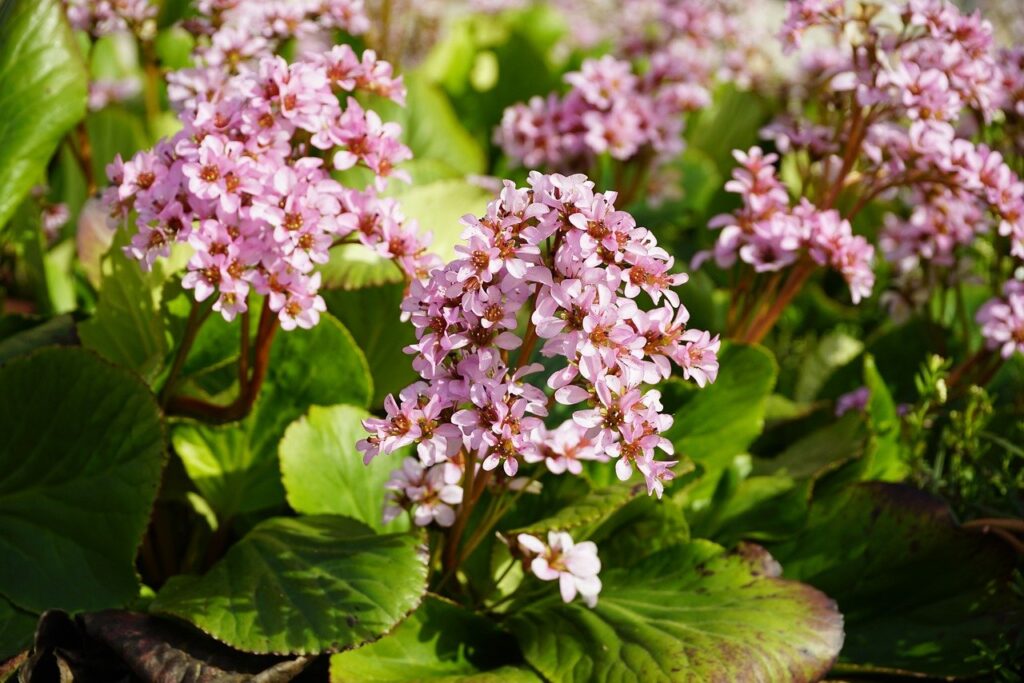
Bergenia is one of the very first perennials to flower each year, producing clusters of bright purplish-pink flowers from late February through April and providing vital early nectar for bumblebee queens emerging from hibernation. The large, leathery leaves turn rich purplish-bronze in winter, giving this plant a genuine year-round presence. It thrives in virtually any conditions, including deep shade and heavy clay, which makes it genuinely invaluable for difficult spots.
🌿 At A Glance
Botanical Name
Bergenia cordifolia ‘Purpurea’
Plant Type
Hardy evergreen perennial
UK Hardiness
H7 (very hardy, all UK regions)
Height / Spread
40 to 50cm / 60cm
Flowering Period
February to April
Best Conditions
Sun, partial shade, or full shade; most soils including clay; extremely adaptable
💡 Top Tip
Remove the old flower stems after flowering is complete and tidy up any damaged leaves in spring. Divide congested clumps every few years to keep them vigorous and to generate free plants for other parts of the garden. Deer and rabbit resistant.
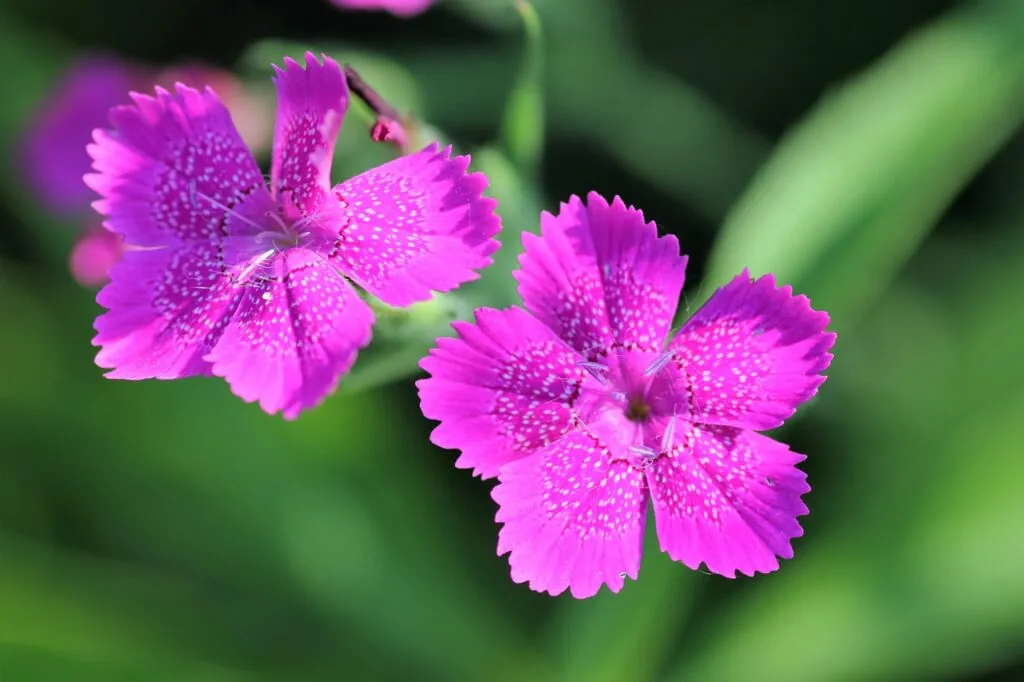
If I had to choose one Dianthus for a classic cottage garden border, ‘Doris’ would be it every time. The double, pale pink flowers with a deep salmon-pink eye and intense clove fragrance are everything a traditional pink should be, and the compact silver-grey evergreen foliage provides tidy front-of-border structure year-round. It holds an RHS AGM and flowers from June through August, making it one of the longest-performing pinks available.
🌿 At A Glance
Botanical Name
Dianthus (Allwoodii Group) ‘Doris’
Plant Type
Hardy evergreen perennial
UK Hardiness
H5 (hardy in most UK regions)
Height / Spread
25 to 40cm / 30cm
Flowering Period
June to August
Best Conditions
Full sun; well-drained, neutral to alkaline soil; excellent drainage essential
💡 Top Tip
The one thing Dianthus will not tolerate is wet roots over winter. Grow on a slope, in raised beds, or mix in plenty of grit when planting to ensure excellent drainage. Deadhead regularly for the best continuous display. A gravel mulch around the crown also helps prevent moisture-related problems.
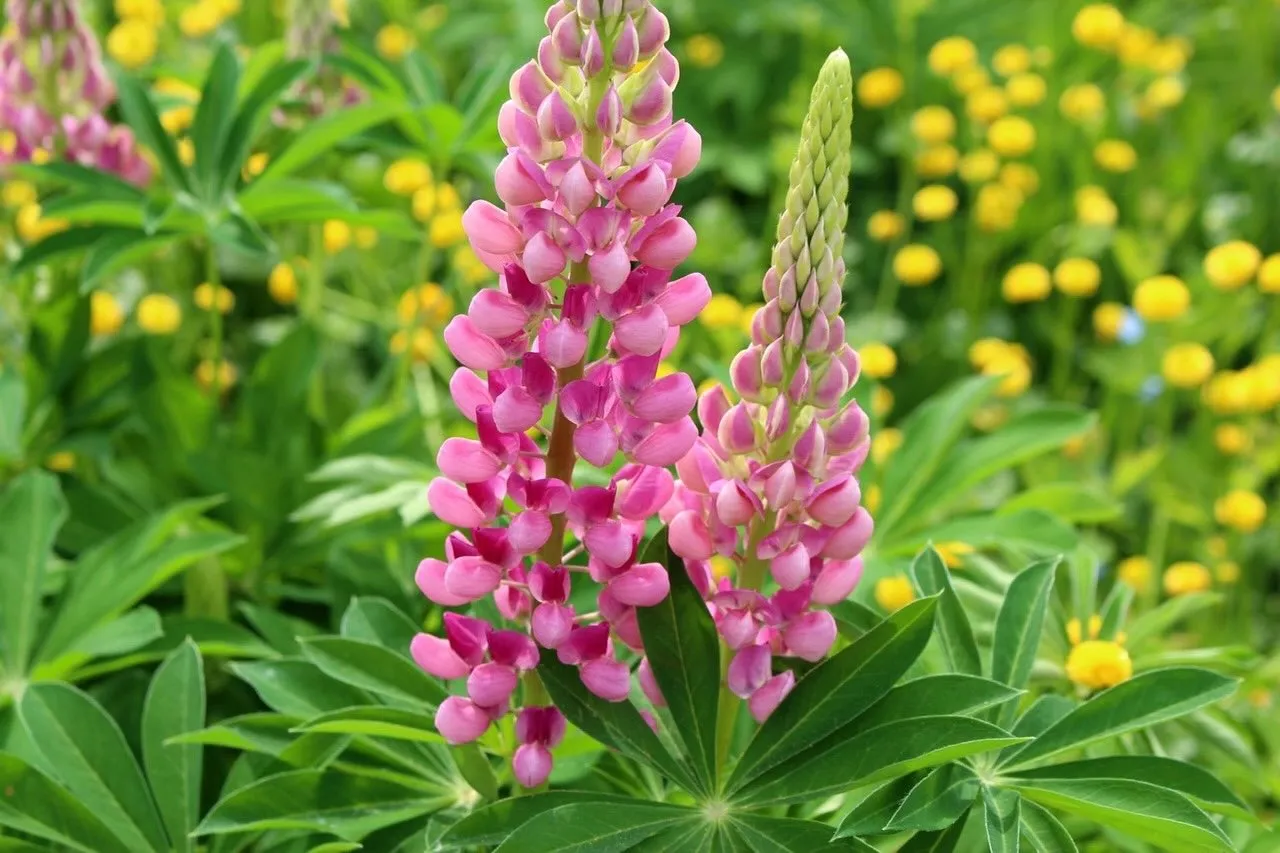
Lupins are one of the most dramatic vertical elements you can introduce to a cottage garden border in early summer, and ‘The Chatelaine’ is a particularly beautiful cultivar from the Band of Nobles series with rosy-pink flower spires and contrasting white standards. Dense, tall spikes of fragrant flowers rising to a metre or more create an extraordinary structural impact in June and July, and a well-established clump in full flower is genuinely showstopping. Deadhead after the first flush for a second, smaller flush later in summer.
⚠️ Important Note
All parts of lupins are toxic if ingested. Keep children and pets away from the seeds in particular. Wear gloves when handling plants if you have sensitive skin.
🌿 At A Glance
Botanical Name
Lupinus ‘The Chatelaine’
Plant Type
Hardy herbaceous perennial
UK Hardiness
H5 (hardy in most UK regions)
Height / Spread
50cm to 1m / 30 to 50cm
Flowering Period
June to July
Best Conditions
Full sun or light shade; moderately fertile, moist but well-drained, lime-free soil
💡 Top Tip
Lupins are relatively short-lived as perennials, typically performing best for three to five years before declining. Replace with new plants raised from seed to maintain a strong clump. They also fix atmospheric nitrogen in the soil, which benefits nearby plants.
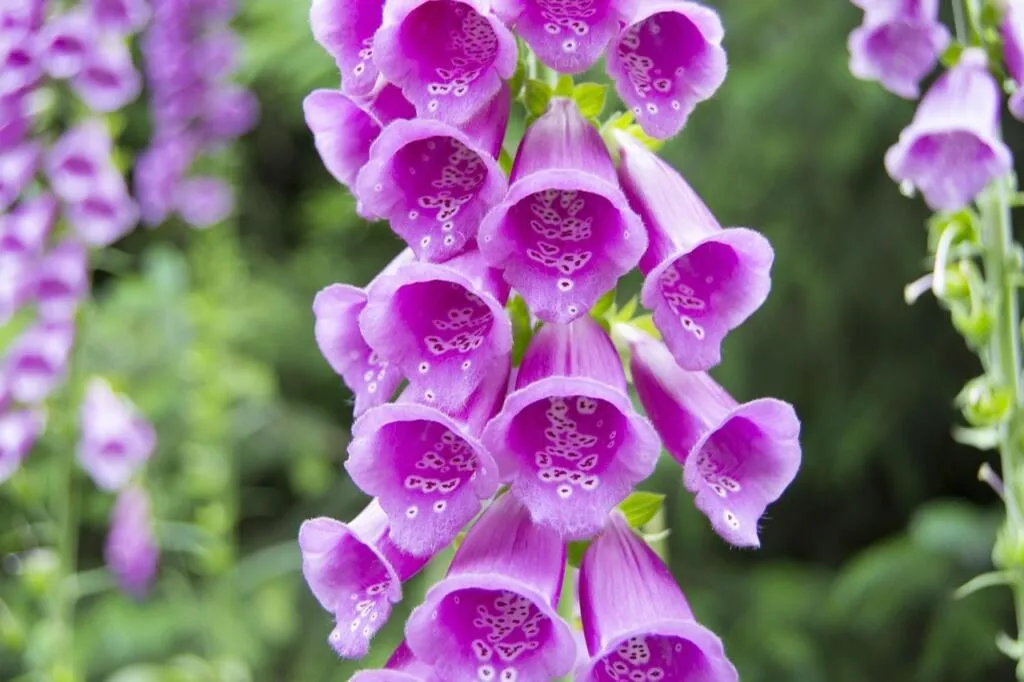
The common foxglove is a UK native wildflower and one of the most magnificent back-of-border plants in the entire planting designer’s toolkit. Tall one-sided spires of tubular pinkish-purple flowers, each with darker spotting inside, can reach two metres or more and create vertical drama that no other biennial comes close to matching. Bumblebees climb inside each flower to reach the nectar, which is one of the most satisfying things to watch on a warm June afternoon. It self-seeds prolifically, naturalising across a border to create generous informal drifts.
⚠️ Important Note
All parts of the foxglove are highly toxic if ingested. The cardiac glycosides in the leaves are extremely dangerous to people, pets, and livestock. Wear gloves when handling, and wash hands afterwards.
🌿 At A Glance
Botanical Name
Digitalis purpurea
Plant Type
Hardy biennial (self-seeds as perennial)
UK Hardiness
H7 (very hardy, all UK regions)
Height / Spread
1 to 2m / 50 to 60cm
Flowering Period
June to July
Best Conditions
Partial shade to full sun; humus-rich, moist but well-drained soil; woodland edge ideal
💡 Top Tip
Leave seed heads in place after flowering to allow self-seeding. Thin seedlings the following spring if they become too dense. For a pure white form try Digitalis purpurea f. albiflora. The combination of white and pink foxgloves together in dappled shade is breathtaking.
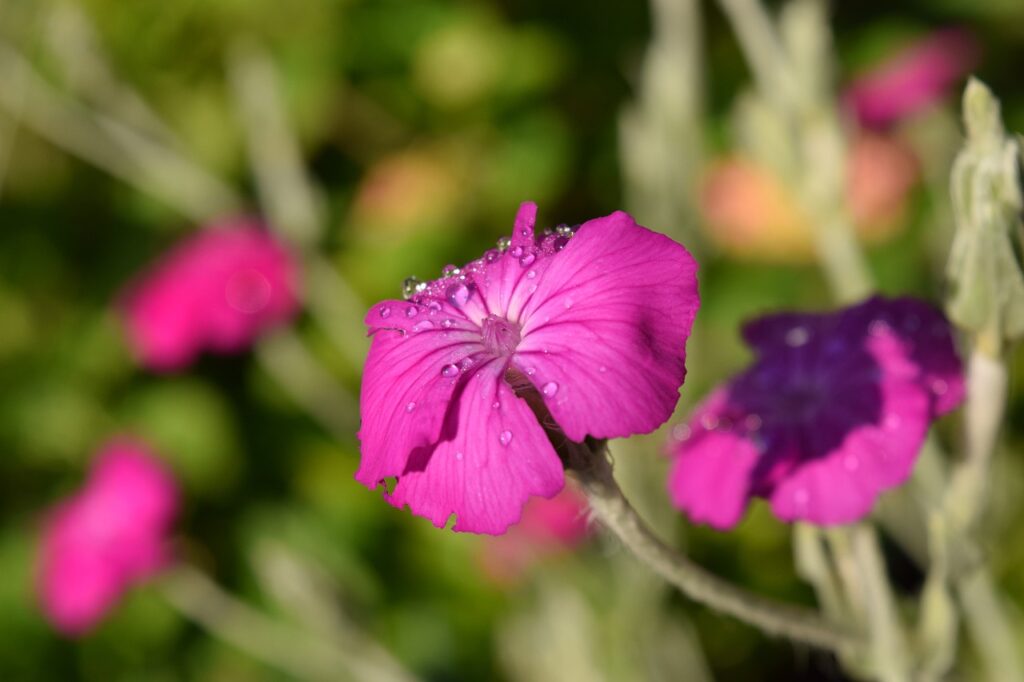
Rose campion is the plant that introduces itself at every open garden I have ever attended. It is invariably the one that visitors stop to photograph or ask for the name of, because silvery-white, woolly foliage paired with vivid magenta-pink flowers is a combination that looks completely intentional yet occurs naturally in this plant.
The contrast between the electric pink of the flowers and the cool silver of the leaves is one of the most striking partnerships in the garden, and it works as well in a contemporary planting as it does in a traditional cottage scheme. It is also drought-tolerant, short-lived but self-seeding, and essentially trouble-free.
🌿 At A Glance
Botanical Name
Lychnis coronaria
Plant Type
Hardy short-lived perennial (self-seeds)
UK Hardiness
H5 (hardy in most UK regions)
Height / Spread
60 to 75cm / 30 to 45cm
Flowering Period
June to August
Best Conditions
Full sun; well-drained, even poor or dry soil; drought-tolerant once established
💡 Top Tip
Plant it where it can wander. Rose campion self-seeds generously and the seedlings can be moved or thinned where needed. Pair it with Stachys byzantina (lamb’s ears) and lavender for a classic silver-foliage grouping with the pink providing the colour punctuation. Excellent for dry gardens and gravel schemes.
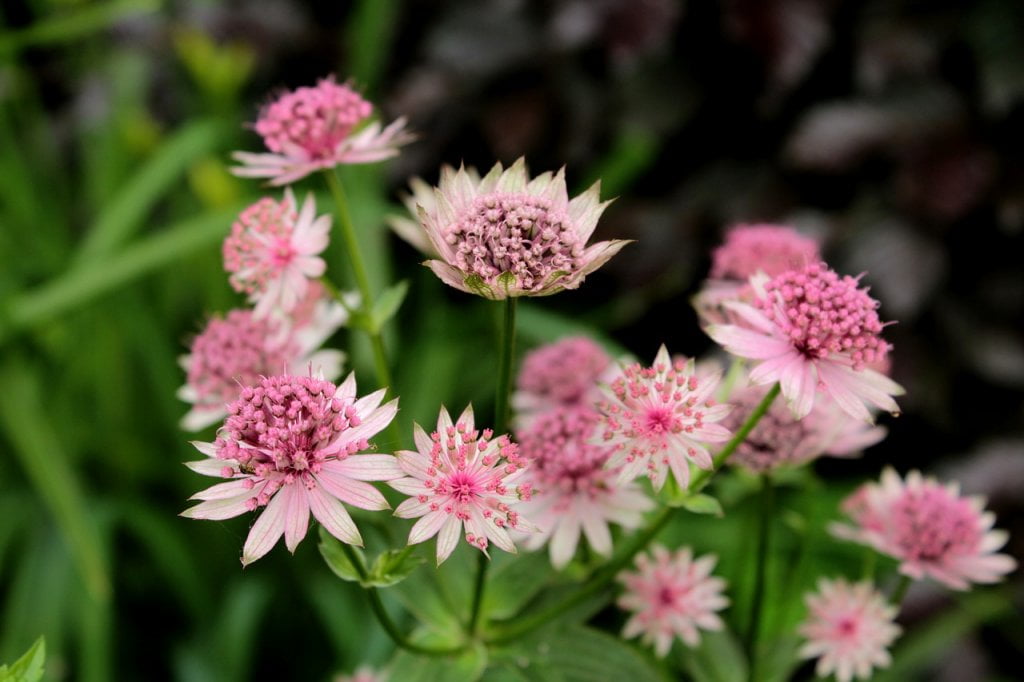
Astrantia is one of those plants that rewards close inspection and tends to divide gardeners into two camps. Those who find it fussy and pointless, and those who absolutely adore it. I am firmly in the second camp.
The intricate pincushion flowers, each one a tiny domed cushion of pink florets surrounded by papery star-shaped bracts, are exquisite up close and produce a romantic, hazy effect en masse over an exceptionally long season from June through to September. ‘Roma’ is a sterile hybrid that will not self-seed and channels all its energy into continuous flowering.
🌿 At A Glance
Botanical Name
Astrantia major ‘Roma’
Plant Type
Hardy herbaceous perennial
UK Hardiness
H7 (very hardy, all UK regions)
Height / Spread
60 to 90cm / 45cm
Flowering Period
June to September
Best Conditions
Sun or partial shade; moist, fertile, humus-rich soil; does not like drying out
💡 Top Tip
Astrantia is an excellent cut flower. Pick stems when the flowers are newly open and they will last well in a vase. Divide clumps in spring every three to four years to keep plants vigorous. It pairs beautifully with roses, ornamental grasses, and Geranium ‘Wargrave Pink’ for a relaxed, romantic mid-border combination.
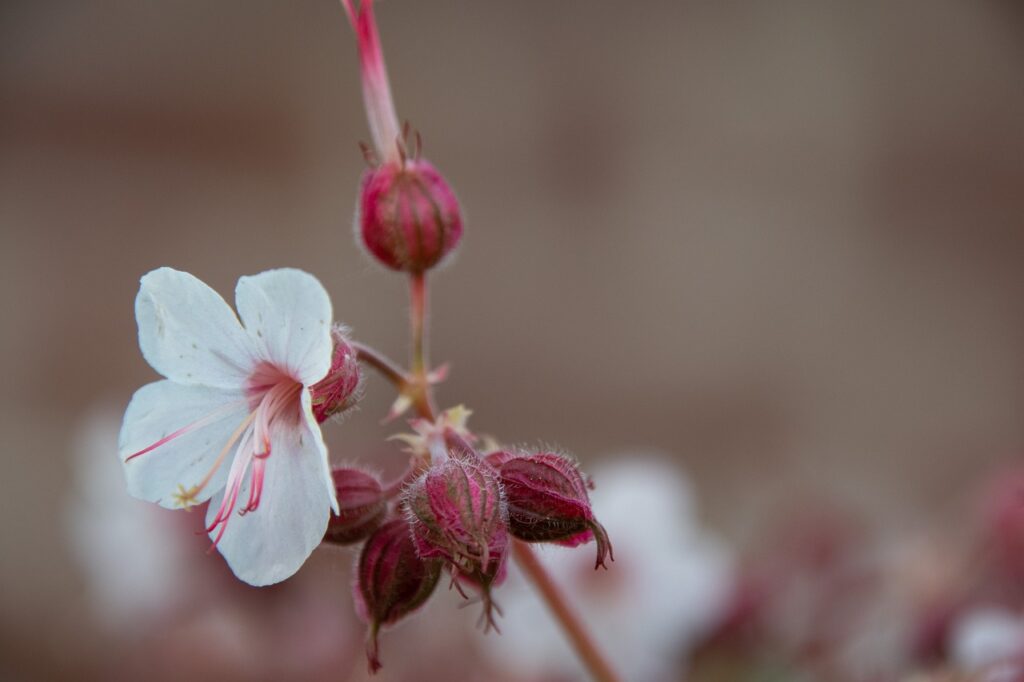
Hardy geraniums are among the most useful and reliable plants in any border, and ‘Wargrave Pink’ is the one I reach for most often when a client needs something that will genuinely look after itself. Warm salmon-pink flowers are produced continuously from May right through to October over a long season that outperforms almost everything else at mid-border height. The deeply lobed, semi-evergreen foliage provides year-round weed-suppressing ground cover, and it grows happily in dry shade once established.
🌿 At A Glance
Botanical Name
Geranium × oxonianum ‘Wargrave Pink’
Plant Type
Hardy semi-evergreen perennial
UK Hardiness
H7 (very hardy, all UK regions)
Height / Spread
60cm / 60 to 90cm
Flowering Period
May to October
Best Conditions
Full sun, partial shade, or dry shade once established; most soils including clay
💡 Top Tip
Shear back hard after the first flush of flowers in July. Cut the entire plant back to near ground level and it will regenerate quickly to produce a fresh flush of growth and flowers for late summer and autumn. This also keeps the plant tidy and prevents it from sprawling.
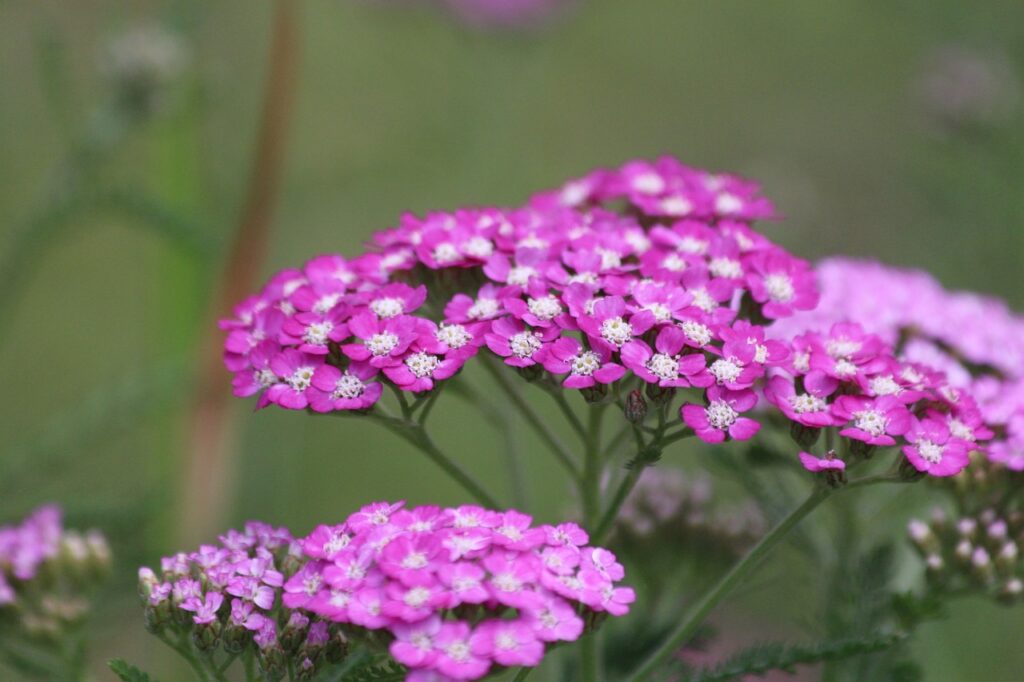
Yarrow is one of those plants that does multiple jobs in the border simultaneously. The flat-topped flowerheads of vivid cerise-pink act as a perfect landing platform for butterflies, bees, and beneficial hoverflies, making this one of the best wildlife plants in this entire list. The aromatic feathery foliage is attractive in its own right, and the dried seedheads provide winter structure and food for seed-eating birds. It is also exceptionally drought-tolerant once established.
🌿 At A Glance
Botanical Name
Achillea millefolium ‘Cerise Queen’
Plant Type
Hardy herbaceous perennial
UK Hardiness
H7 (very hardy, all UK regions)
Height / Spread
60cm / 60cm
Flowering Period
June to September
Best Conditions
Full sun; moist but well-drained or dry soil; very drought-tolerant once established
💡 Top Tip
Divide clumps every two to three years in spring to prevent the centre dying out, which achillea is prone to in rich soils. It excels in prairie and naturalistic planting schemes alongside Echinacea, Penstemon, and ornamental grasses. An excellent fresh or dried cut flower.
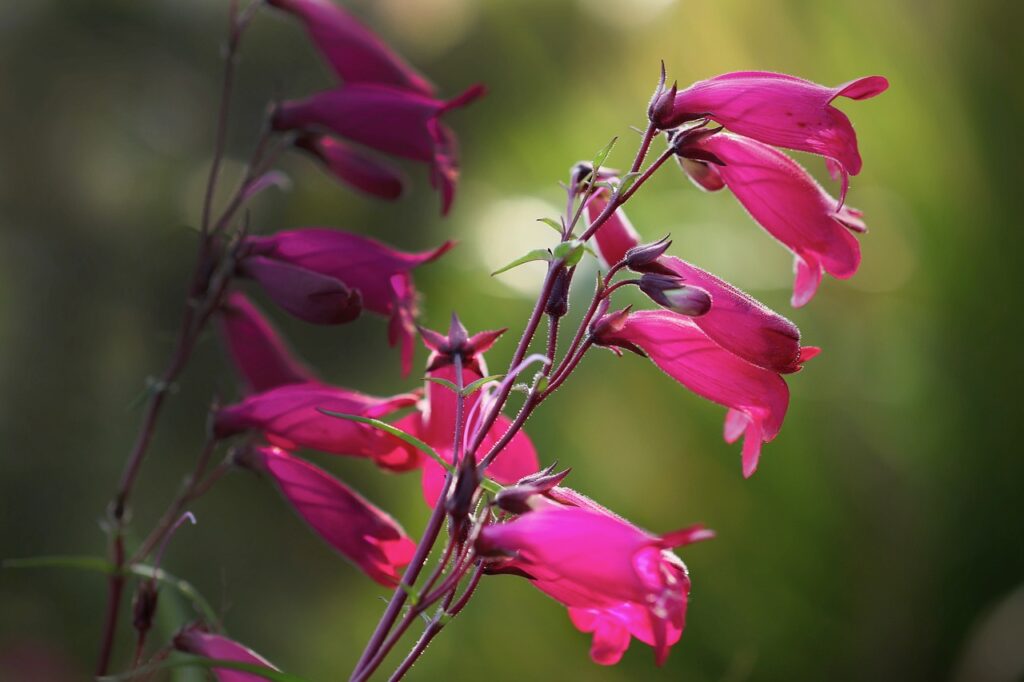
24. Penstemon ‘Andenken an Friedrich Hahn’: Beardtongue
Penstemons are one of the workhorses of the summer border, and this variety, bred in 1918, remains one of the finest ever raised. Despite the impossible-to-remember name, it is also sold as ‘Garnet’.
Deep garnet-red to reddish-pink tubular flowers with white-marked throats are produced continuously from July right through to October, a flowering season that very few perennials can match, and it is considered the hardiest of all the large-flowered hybrid penstemons. An RHS AGM holder with excellent credentials.
🌿 At A Glance
Botanical Name
Penstemon ‘Andenken an Friedrich Hahn’
Plant Type
Hardy semi-evergreen perennial
UK Hardiness
H5 (hardy in most UK regions)
Height / Spread
75 to 90cm / 30 to 45cm
Flowering Period
July to October
Best Conditions
Full sun or partial shade; fertile, moist but well-drained soil; winter mulch in cold areas
💡 Top Tip
Do not cut back in autumn. Leave the old stems and semi-evergreen foliage in place over winter as they provide some frost protection for the crown, then cut back hard to fresh growth in mid-April. Apply a thick mulch in November in colder gardens as extra insurance.
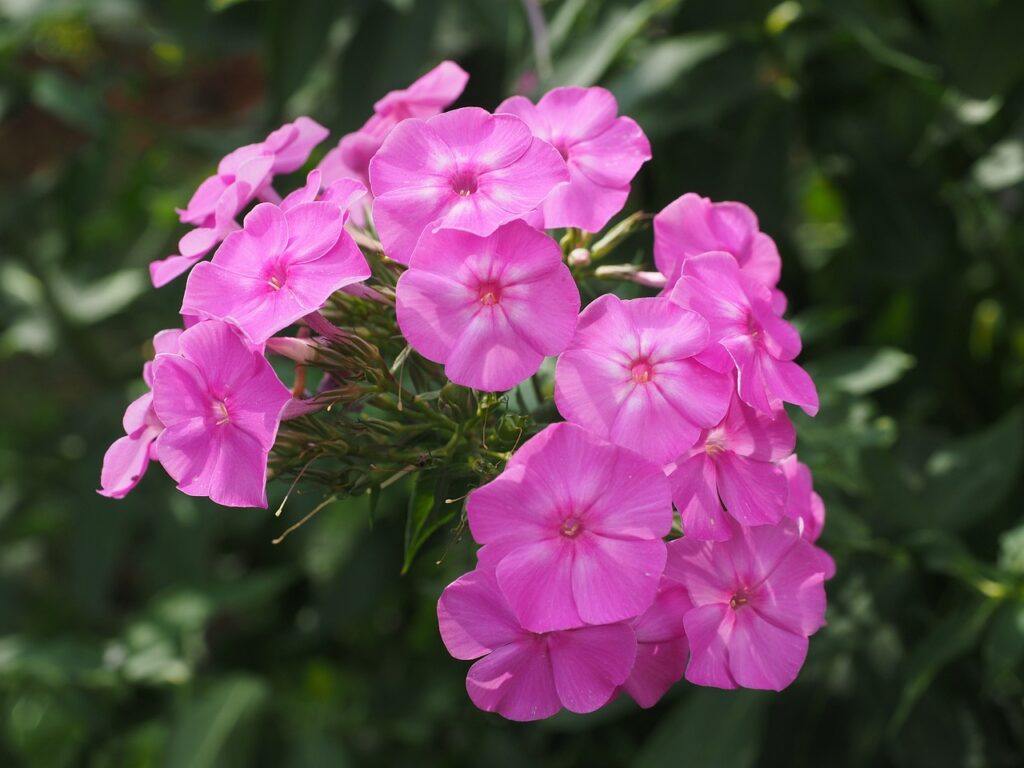
Garden phlox is one of those plants that really do smell as good as they look. ‘Eva Cullum’ produces large, conical panicles of bright, deep pink flowers with darker magenta eyes from July through to October, and the fragrance on a warm evening is something genuinely special. It is sweet, rich, and pervasive in the best possible way. This cultivar is also notably mildew-resistant, which matters enormously because powdery mildew has historically been the main problem with phlox in UK conditions. RHS AGM holder.
🌿 At A Glance
Botanical Name
Phlox paniculata ‘Eva Cullum’
Plant Type
Hardy herbaceous perennial
UK Hardiness
H7 (very hardy, all UK regions)
Height / Spread
75 to 90cm / 60 to 75cm
Flowering Period
July to October
Best Conditions
Full sun or partial shade; fertile, moist, well-drained soil; good air circulation helps prevent mildew
💡 Top Tip
Divide clumps every three to four years in spring to maintain vigour. Avoid crowding plants together and ensure good air circulation around them. Keep well-watered during dry spells as phlox dislikes drying out. Superb planted where you can enjoy the evening fragrance from a seating area.
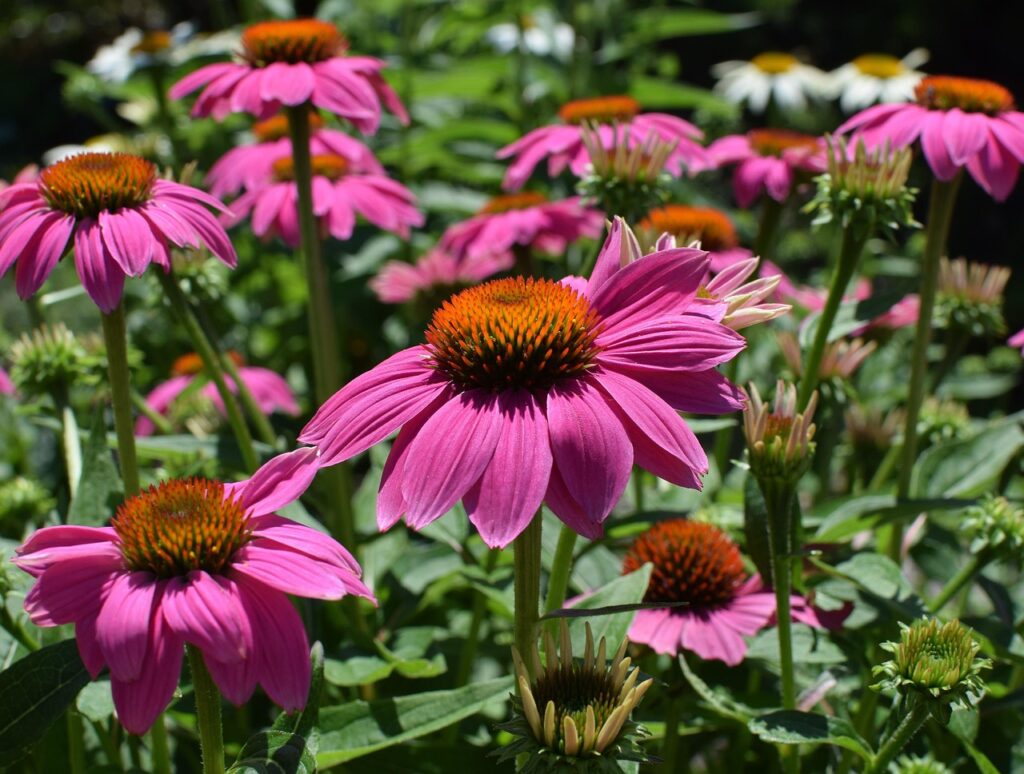
Echinacea has become one of the signature plants of naturalistic and prairie planting design over the past two decades, and with very good reason. The large daisy-like flowerheads, with slightly reflexed purplish-pink ray petals surrounding a prominent golden-brown cone, are architecturally beautiful and absolutely irresistible to butterflies and bees throughout summer.
Leave the cones in place after flowering, and goldfinches will work through them all winter. Sturdy and self-supporting, requiring no staking even in exposed positions.
🌿 At A Glance
Botanical Name
Echinacea purpurea
Plant Type
Hardy herbaceous perennial
UK Hardiness
H5 (hardy in most UK regions)
Height / Spread
1 to 1.5m / 45cm
Flowering Period
July to September
Best Conditions
Full sun; deep, well-drained, humus-rich soil; drought-tolerant once established
💡 Top Tip
Pairs superbly with ornamental grasses such as Molinia and Panicum, and with Rudbeckia, Achillea, and Persicaria for a full-season naturalistic border. Leave seedheads standing all winter for structure and bird food, they look beautiful through frost.
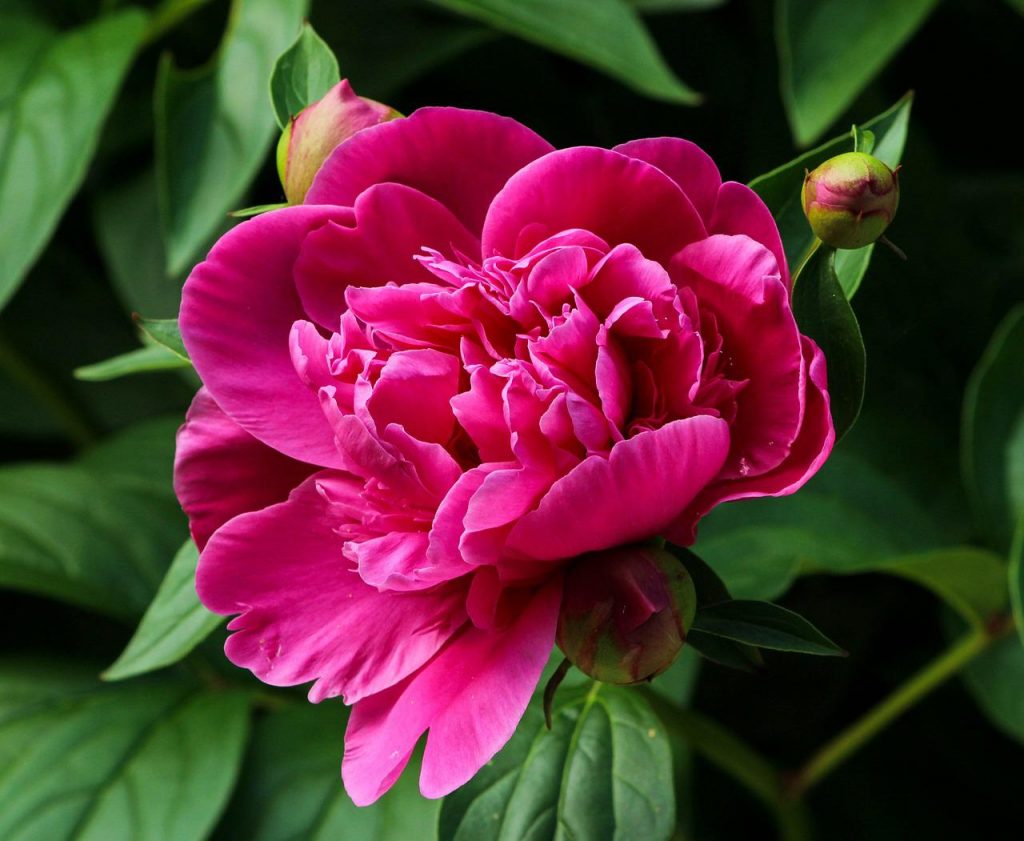
I could not write a guide to the best pink flowers for borders without including peonies. ‘Sarah Bernhardt’ has been in cultivation since 1906 and remains one of the most-planted peonies in the world for very good reason. The enormous, fully double, apple-blossom pink flowers with a wonderful rose fragrance are some of the most glamorous blooms in the whole of horticulture, and a well-established clump in full flower in June is simply one of the most beautiful things a garden can contain.
They are long-lived plants; peonies planted by your grandmother may still be flowering in your grandchildren’s time.
🌿 At A Glance
Botanical Name
Paeonia lactiflora ‘Sarah Bernhardt’
Plant Type
Hardy herbaceous perennial
UK Hardiness
H7 (very hardy, all UK regions)
Height / Spread
90cm / 90cm
Flowering Period
June
Best Conditions
Full sun or very light shade; fertile, well-drained soil; plant with the crown no more than 2.5cm below soil surface
💡 Top Tip
The most common reason peonies fail to flower is planting too deep. The eyes (red growing points) must sit no more than 2.5cm below the soil surface. Too deep and the plant will produce only foliage. Do not move peonies once established, they resent disturbance and may take two to three years to recover.
Persicaria is one of those plants I champion constantly because it is so underused relative to what it actually does. ‘Rosea’ produces slender, elegant spikes of clear light pink flowers from July through to October, making it one of the longest-flowering perennials available for UK borders, and it does this reliably in conditions including heavy clay and partial shade that defeat many other plants. A genuine Piet Oudolf favourite for naturalistic planting, and well-suited to the current trend for wildlife-friendly low-maintenance borders.
🌿 At A Glance
Botanical Name
Persicaria amplexicaulis ‘Rosea’
Plant Type
Hardy semi-evergreen perennial
UK Hardiness
H7 (very hardy, all UK regions)
Height / Spread
1 to 1.2m / 1 to 1.2m
Flowering Period
July to October
Best Conditions
Full sun or partial shade; any moist soil including heavy clay; very adaptable
💡 Top Tip
Give it room, this is a substantial plant at full size. Cut back hard in early spring before new growth emerges. It spreads steadily via rhizomes to form a weed-suppressing clump, which is an asset in most borders but worth monitoring in smaller spaces.
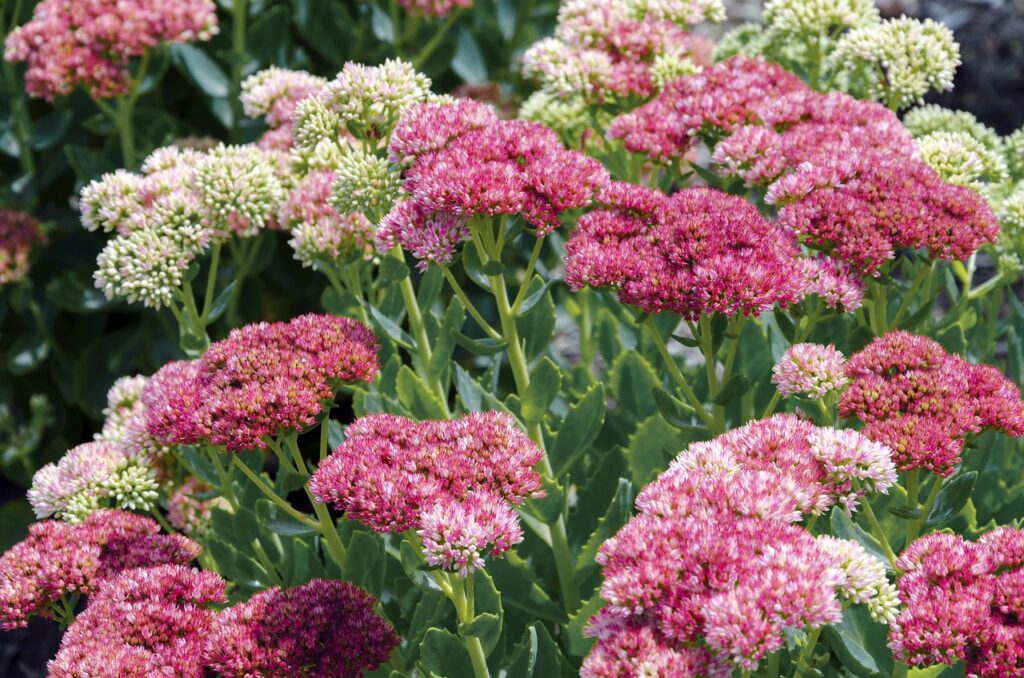
If there is one plant that consistently draws the most attention from butterflies in the late-summer garden, it is this one. The flat-topped heads of dense, tiny, star-shaped carmine-pink flowers that develop through August and September are extraordinary magnets for butterflies, particularly peacocks, red admirals, and small tortoiseshells fuelling up for winter. The succulent blue-green foliage provides architectural interest from spring onwards, and the dried seedheads add winter structure.
🌿 At A Glance
Botanical Name
Hylotelephium spectabile ‘Brilliant’
Plant Type
Hardy herbaceous perennial (succulent)
UK Hardiness
H7 (very hardy, all UK regions)
Height / Spread
45 to 50cm / 45 to 50cm
Flowering Period
August to October
Best Conditions
Full sun; well-drained soil; extremely drought-tolerant; avoid rich, wet soils
💡 Top Tip
Avoid overly rich soil, this causes the stems to become lax and flop. A lean, gritty, free-draining soil produces the most compact and self-supporting plants. Cut down in late winter before new growth emerges. Virtually indestructible once established and genuinely requires no feeding.
30. Anemone × hybrida ‘September Charm’: Japanese Anemone
Japanese anemones are one of the great salvations of the late-season garden. When virtually everything else is winding down in September, these graceful plants are hitting their stride.
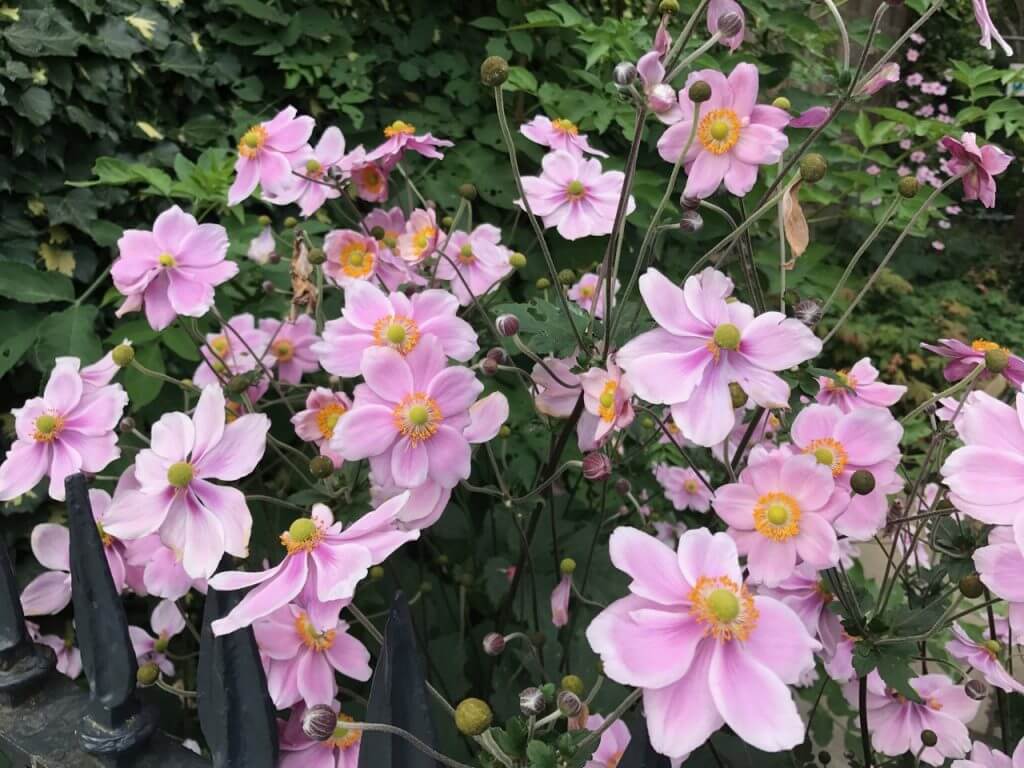
‘September Charm’ produces masses of single silvery-pink flowers with a deeper rose-pink reverse and prominent golden stamens on tall wiry stems above dark green foliage, and a well-established clump in full autumn flower is one of the most beautiful things I know in the garden.
It spreads slowly via underground rhizomes, forming extensive colonies over time.
🌿 At A Glance
Botanical Name
Anemone × hybrida ‘September Charm’
Plant Type
Hardy herbaceous perennial
UK Hardiness
H6 (hardy throughout the UK)
Height / Spread
90 to 120cm / 60 to 90cm
Flowering Period
August to October
Best Conditions
Full sun or partial shade; any well-drained garden soil; tolerates clay once established
💡 Top Tip
Japanese anemones can be slow to establish in the first year or two, but patience is well-rewarded. Once settled they spread steadily and can become vigorous colonisers, site them where this is an asset rather than a problem. Pair with asters, ornamental grasses, and Hylotelephium for a superb late-season combination.
Annuals are the instant gratification of the plant world, and there is absolutely nothing wrong with that. They fill gaps in borders, extend the season, provide cut flowers for the house, and allow you to experiment with colour combinations without long-term commitment. These five pink-flowering annuals are among the finest available for UK gardens.
31. Cosmos bipinnatus ‘Sensation Pinkie’: Cosmos
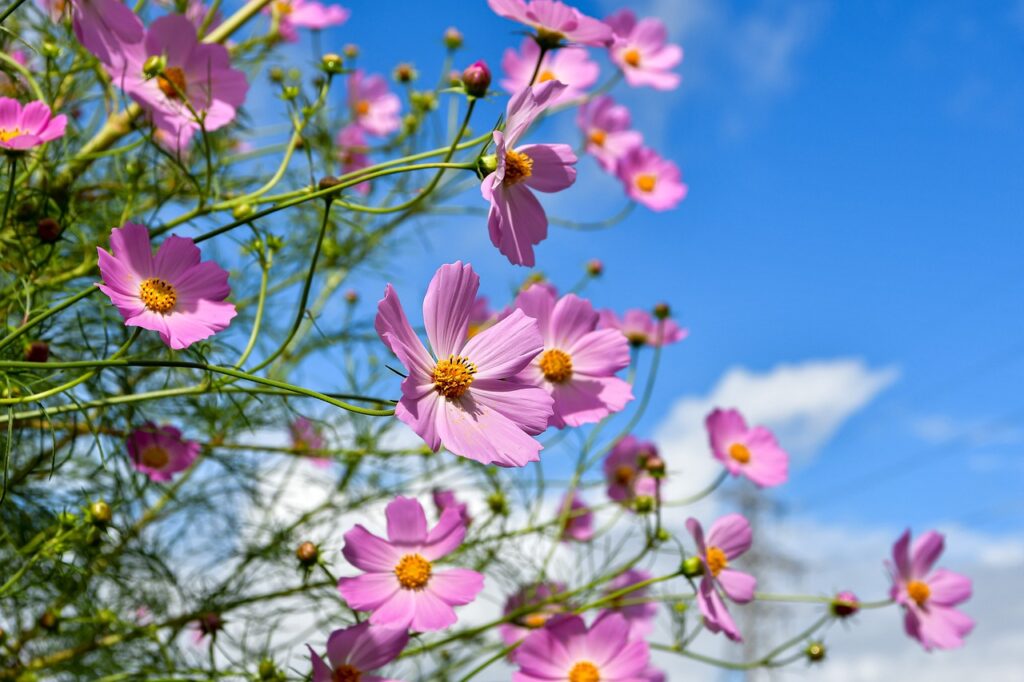
Cosmos is possibly the most rewarding annual you can grow from seed in a UK garden, and ‘Sensation Pinkie’ with its large, single, purplish-pink flowers and prominent yellow centres is one of the finest varieties available. The extraordinarily fine, feathery foliage creates a hazy, airy texture unlike any other annual, allowing cosmos to integrate beautifully into mixed borders without looking jarring or out of place. An RHS AGM holder and RHS Plants for Pollinators. Superb as a cut flower throughout summer.
🌿 At A Glance
Botanical Name
Cosmos bipinnatus ‘Sensation Pinkie’
Plant Type
Half-hardy annual
UK Hardiness
H3 (protect from frost)
Height / Spread
50cm to 1m / 45cm
Flowering Period
June to September
Best Conditions
Full sun; moderately fertile, moist but well-drained soil; avoid over-feeding
💡 Top Tip
Sow under cover in April and plant out after the last frost (late May in most areas). Pinch out the growing tip when plants are about 30cm tall to encourage bushy growth and more flowers. Deadhead regularly. Avoid rich soil, cosmos performs best in lean conditions and produces more flowers with less fertiliser.
Annual lavatera is one of those plants that looks considerably more expensive and architectural than it actually is, which is always a quality I appreciate in a plant. ‘Silver Cup’ produces large, open, funnel-shaped light pink flowers prominently veined with deeper rose-pink towards the centre, on sturdy, shrub-like plants that reach 70cm or more and produce bloom continuously from July through October. An RHS AGM holder that is also an excellent pollinator plant and cut flower.
🌿 At A Glance
Botanical Name
Lavatera trimestris ‘Silver Cup’
Plant Type
Hardy annual
UK Hardiness
H3 (sow after last frost)
Height / Spread
70 to 75cm / 75cm
Flowering Period
July to October
Best Conditions
Full sun; moderately fertile, well-drained soil; sheltered from drying winds
💡 Top Tip
Sow direct into the border in April or May where you want the plants to flower. Lavatera resents root disturbance so direct sowing is preferred over transplanting. Avoid over-feeding, too much nitrogen produces lush foliage at the expense of flowers.
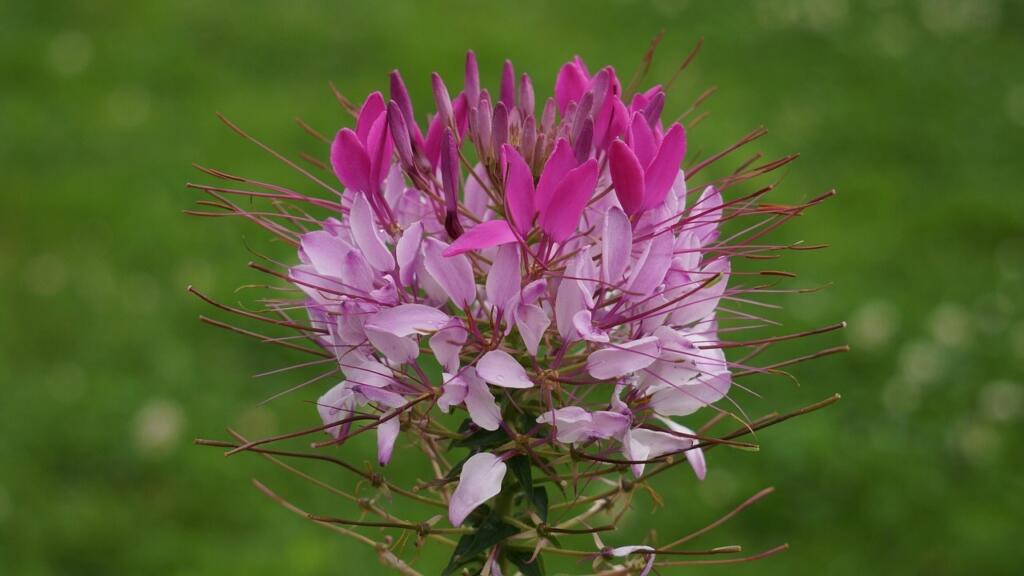
Cleome is one of those plants that looks genuinely exotic but is surprisingly straightforward to grow from seed. ‘Rose Queen’ produces large, loose heads of sweetly fragrant rose-pink flowers with fascinatingly long protruding stamens, the spider-like effect that gives the plant its common name, on tall stems that can reach 1.5 metres, creating outstanding architectural impact at the back of the border. It attracts bees, butterflies, and hummingbird hawk-moths and self-seeds readily to maintain itself.
🌿 At A Glance
Botanical Name
Cleome hassleriana ‘Rose Queen’
Plant Type
Half-hardy annual
UK Hardiness
H2 (tender; plant out after last frost)
Height / Spread
1 to 1.5m / 30 to 45cm
Flowering Period
June to October
Best Conditions
Full sun; moist but well-drained soil; sheltered position
💡 Top Tip
Sow seeds indoors in March at 18 to 21°C and plant out in late May after acclimatising gradually over a week or two. The stems and leaves have fine spines so wear gloves when handling. Allow some plants to set seed for a self-maintaining colony.
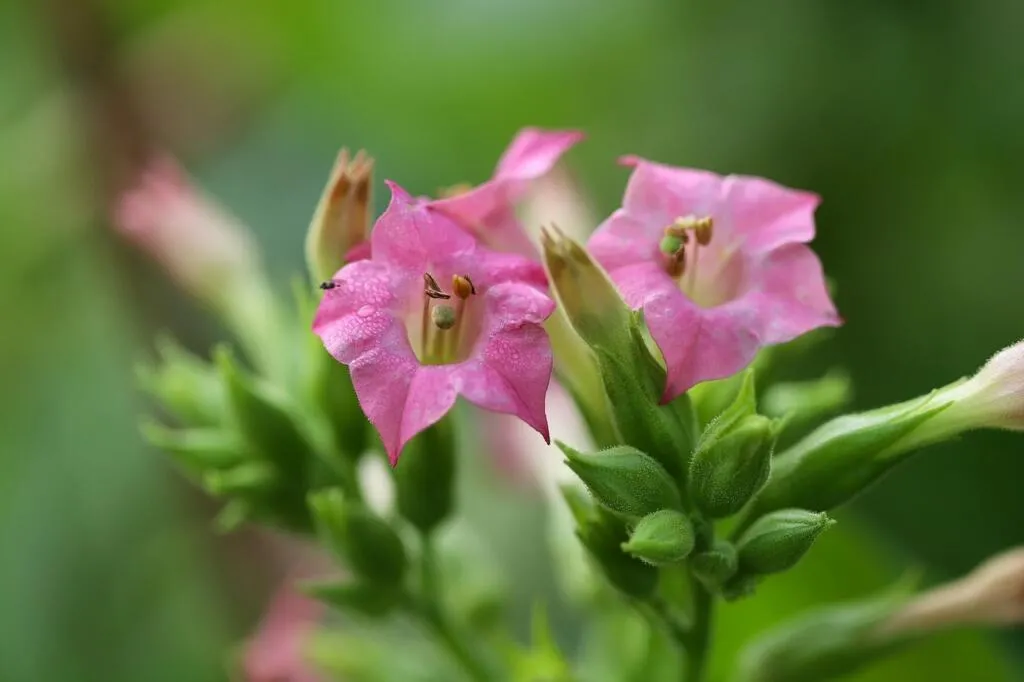
If you enjoy your garden in the evenings, and I think most of us do the majority of our actual sitting in gardens after work rather than during the day, then Nicotiana is one of the most important plants you can grow. The tubular, star-shaped pink flowers open in the afternoon and early evening, releasing a deeply sweet, complex fragrance that generously perfumes the surrounding area and draws in moths and other night-flying insects in considerable numbers. It is, in short, a plant that turns your evening garden into something magical.
🌿 At A Glance
Botanical Name
Nicotiana alata (pink selections)
Plant Type
Half-hardy annual (tender perennial grown as annual)
UK Hardiness
H2 (tender; plant out after last frost)
Height / Spread
90cm to 1.5m / 30 to 60cm
Flowering Period
June to October
Best Conditions
Full sun to partial shade; moderately fertile, moist but well-drained, humus-rich soil
💡 Top Tip
Plant near seating areas, open windows, and doorways where the evening fragrance can be best enjoyed. Sow indoors in March on the surface of compost (seeds need light to germinate) and plant out in late May. Note: all parts contain nicotine and are harmful if ingested, keep away from children and pets.
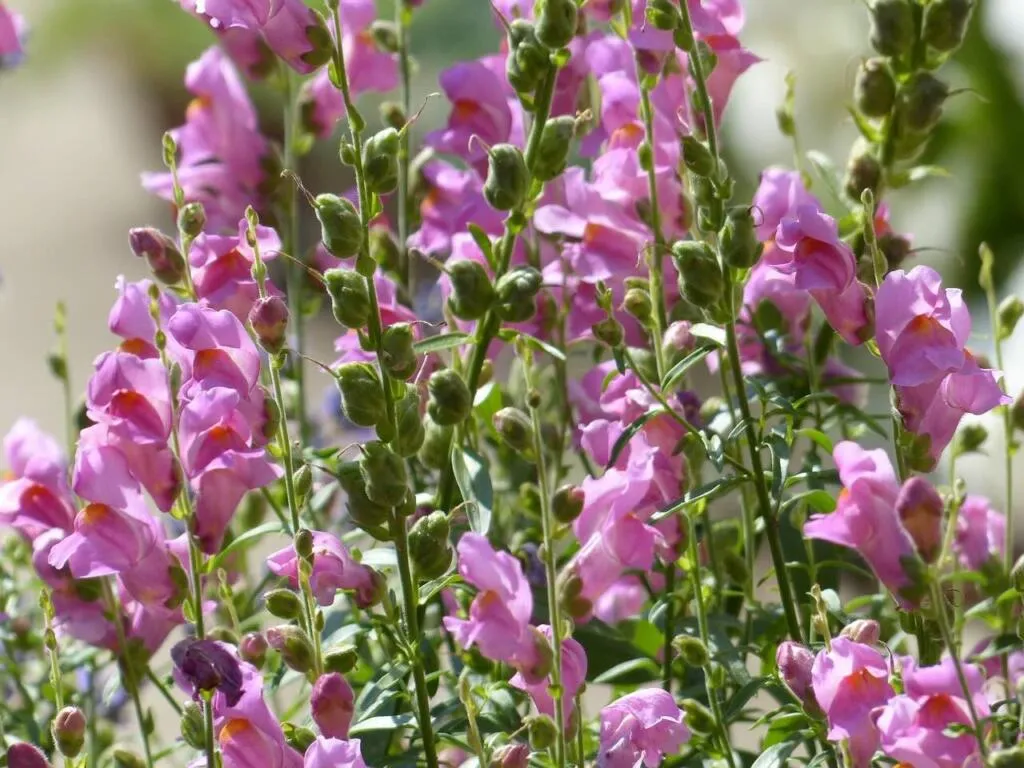
Snapdragons have been a cottage garden staple for generations, and the ‘Madame Butterfly’ series represents a significant upgrade on traditional forms. Rather than the classic closed-mouth snapdragon flower, ‘Madame Butterfly’ produces fully double, ruffled, azalea-type blooms in soft pink that are genuinely glamorous and make exceptionally long-lasting cut flowers with real vase presence.
More rust-resistant than older cultivars and a great choice for summer bedding and mixed borders alike.
🌿 At A Glance
Botanical Name
Antirrhinum majus ‘Madame Butterfly Pink’
Plant Type
Half-hardy annual
UK Hardiness
H3 (protect from hard frost)
Height / Spread
60 to 75cm / 25 to 30cm
Flowering Period
July to October
Best Conditions
Full sun; rich, moderately fertile, well-drained soil; sheltered position
💡 Top Tip
Pinch out the growing tip when plants are 10 to 15cm tall to encourage a bushier, more branching habit. Cut back hard after the first main flush of flowers for a second flush in late summer. Excellent for cutting garden schemes.
Pink Bulbs, Corms, and Tubers for Seasonal Punctuation
Bulbs are the secret weapon of the well-planned border. They fill the gaps between other plants, provide seasonal punctuation, and many are surprisingly inexpensive to buy in bulk. These five pink-flowering bulbs and tubers span spring to autumn, ensuring colour continuity across the seasons.
36. Allium cernuum: Nodding Onion
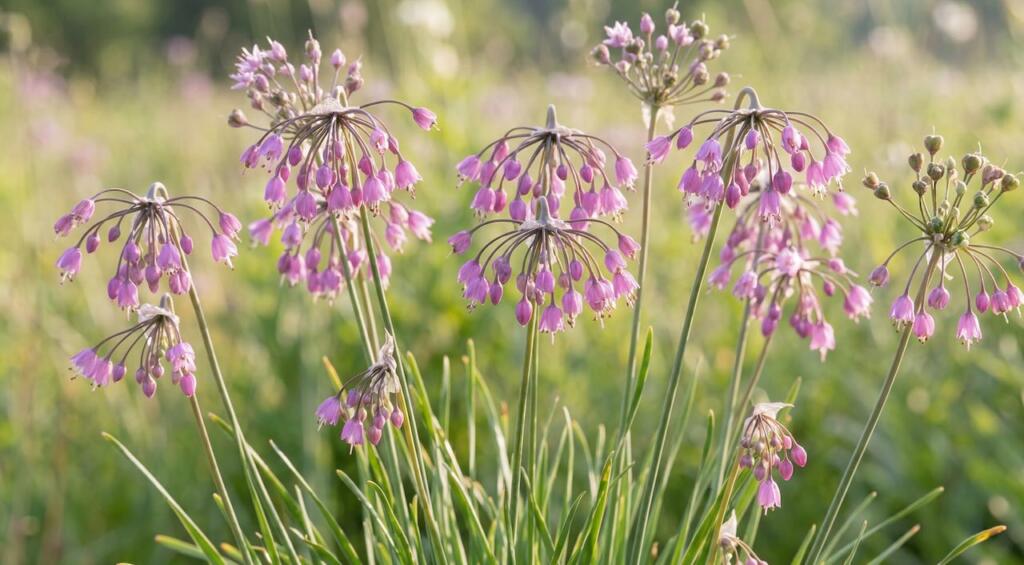
While Allium hollandicum ‘Purple Sensation’ gets all the glory, this quieter, more charming species deserves far more attention. Allium cernuum produces nodding, chandelier-like umbels of small, bell-shaped, mid- to deep-pink flowers on slender, gently arching stems from June through August, creating a delicate and rather magical effect that works beautifully in both cottage borders and gravel gardens. It naturalises readily and is virtually trouble-free.
🌿 At A Glance
Botanical Name
Allium cernuum
Plant Type
Bulb (bulbous perennial)
UK Hardiness
H6 (hardy throughout the UK)
Height / Spread
30 to 60cm / clump-forming
Flowering Period
June to August
Best Conditions
Full sun; fertile, well-drained soil; tolerates poor soils
💡 Top Tip
Plant in groups of 15 to 20 for the best effect, spacing bulbs 10cm apart. Allow some seed heads to develop, the plant self-seeds gently and the seedheads are attractive in their own right. Excellent in rockeries, gravel gardens, and the front of mixed borders.
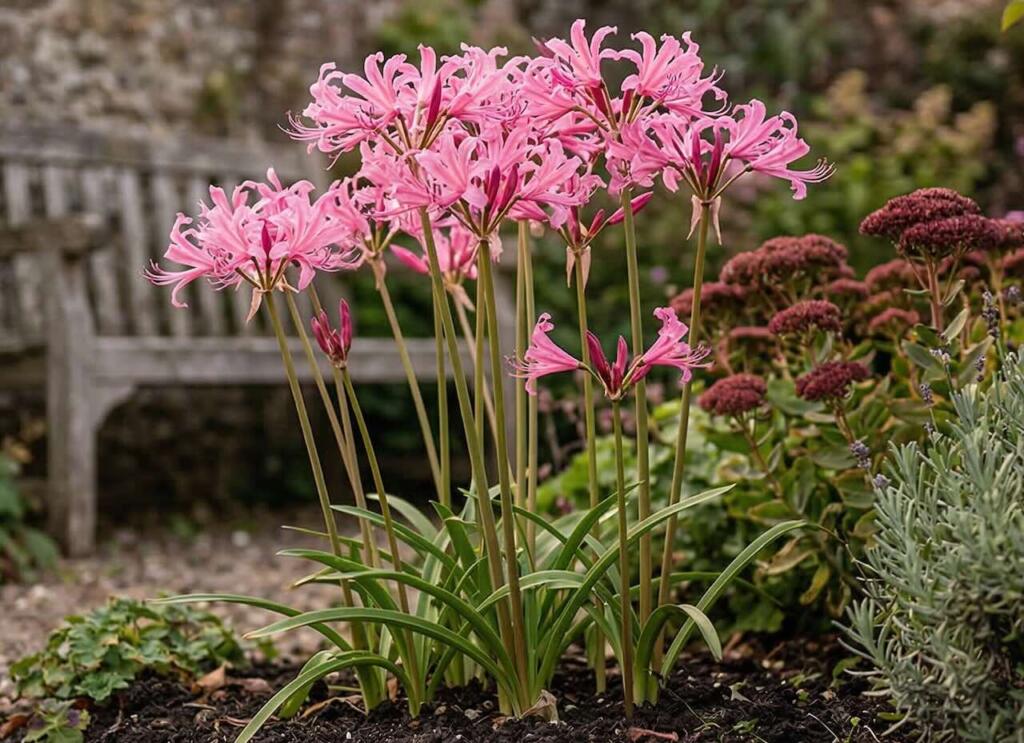
Nerines are one of the great autumn-flowering bulbs, and Nerine bowdenii is the hardiest species for outdoor cultivation in the UK. Elegant umbels of lily-like, clear pink flowers with charmingly wavy, recurved petals appear on bare stems in September, October, and sometimes November, providing vivid colour at precisely the moment when most other plants are winding down for the year. The way the petals shimmer and catch late autumn light is one of the most beautiful optical effects in the garden. An outstanding cut flower.
🌿 At A Glance
Botanical Name
Nerine bowdenii
Plant Type
Bulb
UK Hardiness
H5 (hardy in most UK regions)
Height / Spread
30 to 50cm / plant in groups
Flowering Period
September to November
Best Conditions
Full sun; moderately fertile, well-drained soil; south or west-facing wall ideal; congestion encourages flowering
💡 Top Tip
Nerines flower best when congested, do not be in a hurry to divide them. Plant the bulb tips just at or slightly above soil level and leave undisturbed for years. A warm, south-facing wall base is the perfect spot, particularly in northern England and Scotland where extra warmth makes a real difference.
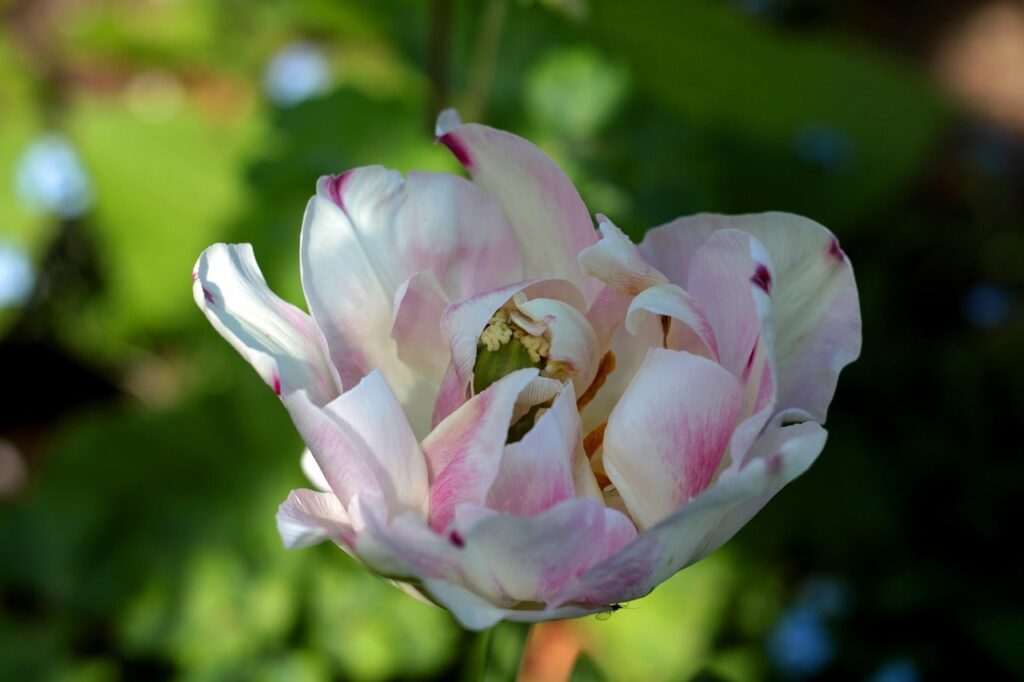
Of all the hundreds of tulip cultivars available, ‘Angélique’ is the one I have recommended most consistently over twenty years of designing spring planting schemes. The sumptuous, fully double, peony-shaped blooms swirl through shades of blush, pale Rose, and deeper pink with touches of cream and green, creating an effect so lush and glamorous that people consistently mistake them for peonies or garden roses at a glance.
Fragrant, long-lasting as a cut flower, and one of the finest spring bulbs in cultivation.
🌿 At A Glance
Botanical Name
Tulipa ‘Angélique’ (Double Late Group)
Plant Type
Bulb
UK Hardiness
H6 (hardy throughout the UK)
Height / Spread
40 to 45cm / 15cm
Flowering Period
April to May
Best Conditions
Full sun; fertile, well-drained soil; plant 10 to 15cm deep in October to November; shelter from strong winds
💡 Top Tip
Plant in groups of at least 10 to 15 bulbs for maximum visual impact. For a luxurious spring container display, plant three layers of bulbs at different depths with ‘Angélique’ at the top layer alongside forget-me-nots or wallflowers for a classic combination. Lift and store bulbs after the foliage has died back for best results in subsequent years.
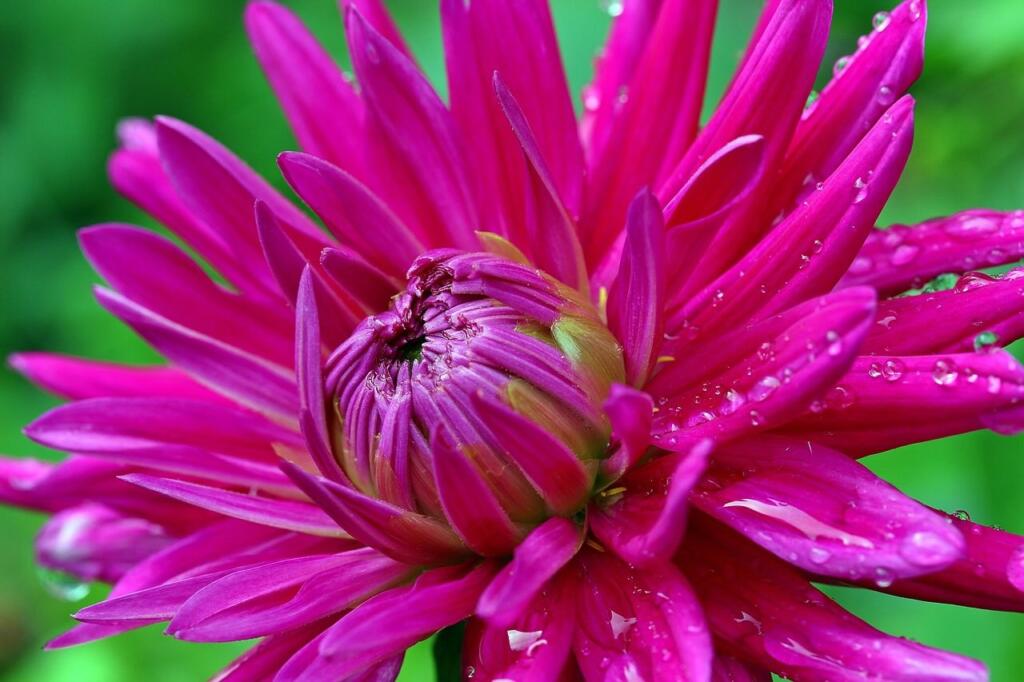
Dahlias are the undisputed champions of the late-summer and Autumn border, and ‘Fascination’ is one of the most versatile and spectacular varieties for mixed planting. The semi-double, strongly purplish-pink flowers are beautiful in their own right, but what makes ‘Fascination’ exceptional is the combination of those vivid blooms with deeply dark bronze-purple foliage, a colour contrast that is simply extraordinary and works as well in modern gardens as in traditional cottage schemes. An RHS AGM holder.
🌿 At A Glance
Botanical Name
Dahlia ‘Fascination’
Plant Type
Tender tuber (lift in autumn in most areas)
UK Hardiness
H3 (lift and store tubers after first frosts)
Height / Spread
75cm / 45 to 60cm
Flowering Period
July to October
Best Conditions
Full sun; fertile, humus-rich, moist but well-drained soil; stake if needed in exposed positions
💡 Top Tip
Pinch out the growing tip when plants are 30 to 40cm tall to encourage a bushy, branching habit with more flowers. Deadhead regularly for continuous blooming. Lift tubers after the first frosts have blackened the foliage, dry them off, and store in dry compost in a frost-free location over winter.
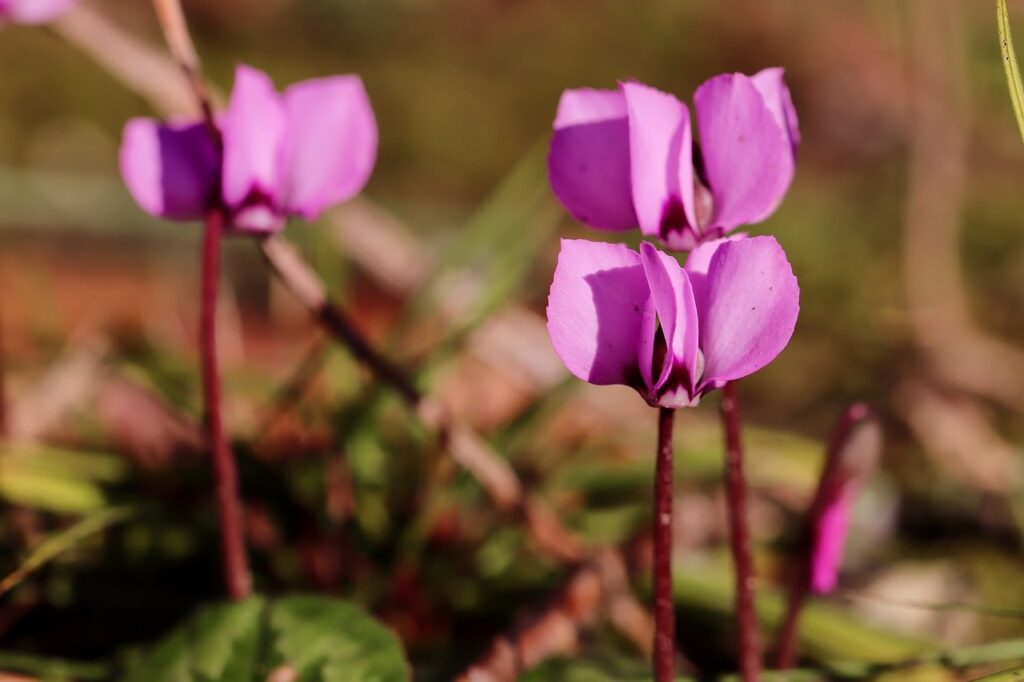
I want to finish this list with a plant that most gardeners have either overlooked entirely or assumed they cannot grow, because Hardy Cyclamen is one of the genuine treasures of the UK garden, and it deserves far more space than it typically gets.
Enchanting reflexed pink flowers appear from August through to November, and the extraordinary marbled silver-patterned leaves that follow persist all winter and into spring, making every single plant a unique piece of living artwork. They naturalise under deciduous trees to create carpets of autumn colour in conditions where almost nothing else will perform.
🌿 At A Glance
Botanical Name
Cyclamen hederifolium
Plant Type
Tuber
UK Hardiness
H5 (hardy in most UK regions)
Height / Spread
10 to 15cm / 15 to 30cm
Flowering Period
August to November
Best Conditions
Partial to full shade; humus-rich, well-drained soil; avoid summer moisture; beneath deciduous trees is ideal
💡 Top Tip
Plant the flat side of the tuber facing upwards and the rough concave side facing down. Cyclamen tubers are extremely long-lived, individual plants can persist and grow for over a century. They self-seed gently, carried by ants, to form expanding colonies over time. Leave them completely undisturbed once established.
Designing with Pink Flowers: Tips from Garden Ninja HQ
i) Mix your pinks, blush and magenta to create completely different effects
One of the most common mistakes I see in gardens designed around a single colour is treating that colour as monolithic. Pink is not one colour. The pale blush of Paeonia ‘Sarah Bernhardt’ and the electric magenta of Lychnis coronaria are both pink in name, but they create completely different emotional responses and work in very different design contexts.
Soft blush pinks feel romantic and calm. They work beautifully in gardens designed for relaxation, in shaded areas where a paler tone is more visible, and alongside whites, silvers, and cool purples. Hot pinks and magentas are energising and attention-grabbing; use them to anchor focal points, draw the eye to a seating area, or inject life into a flat border. The skill is in knowing which version of pink you are reaching for and why.
ii) Layer heights and seasons for year-round pink interest
A border planted entirely with June-flowering perennials will look extraordinary for four weeks and then deeply underwhelming for the rest of the year. The key to a genuinely successful pink border is overlapping seasons and staggered heights that create interest from February through to November.
Think of it in layers: ground-level cyclamen and bergenia for early and late colour, medium-height perennials like geraniums and dianthus for the summer backbone, and tall verticals like foxgloves, lupins, and cleome for drama above. A well-layered border should never have a moment when nothing is happening; there should always be something in bud, in flower, or offering decorative seedheads.
iii) The best companion colours for pink
Pink is one of the most versatile colours in the garden palette precisely because it works with so many others. Cool schemes pair pink with white, silver, pale lavender, and soft purple, think Stachys byzantina for silver, Salvia nemorosa for purple, and white cosmos for lightness. The effect is calm, romantic, and refined.
Warm schemes pair pink with orange, golden yellow, and bronze, think Hemerocallis, Rudbeckia, and bronze fennel as foils for pink dahlias and echinacea. The effect is vibrant and energetic. Silver-leaved plants such as Artemisia, Stachys, and Lychnis coronaria itself work as universal foils for any shade of pink, cooling down the hot tones and intensifying the pale ones simultaneously.
iv) Pink flowers for tricky spots
Not every gardener has the luxury of a sunny, free-draining border. For shaded spots, the best pink performers are Camellia ‘Donation’ (north and west-facing walls), Digitalis purpurea (dappled to full shade), Geranium ‘Wargrave Pink’ (dry shade once established), Astrantia ‘Roma’ (partial shade with moisture), and Cyclamen hederifolium (deep dry shade beneath trees).
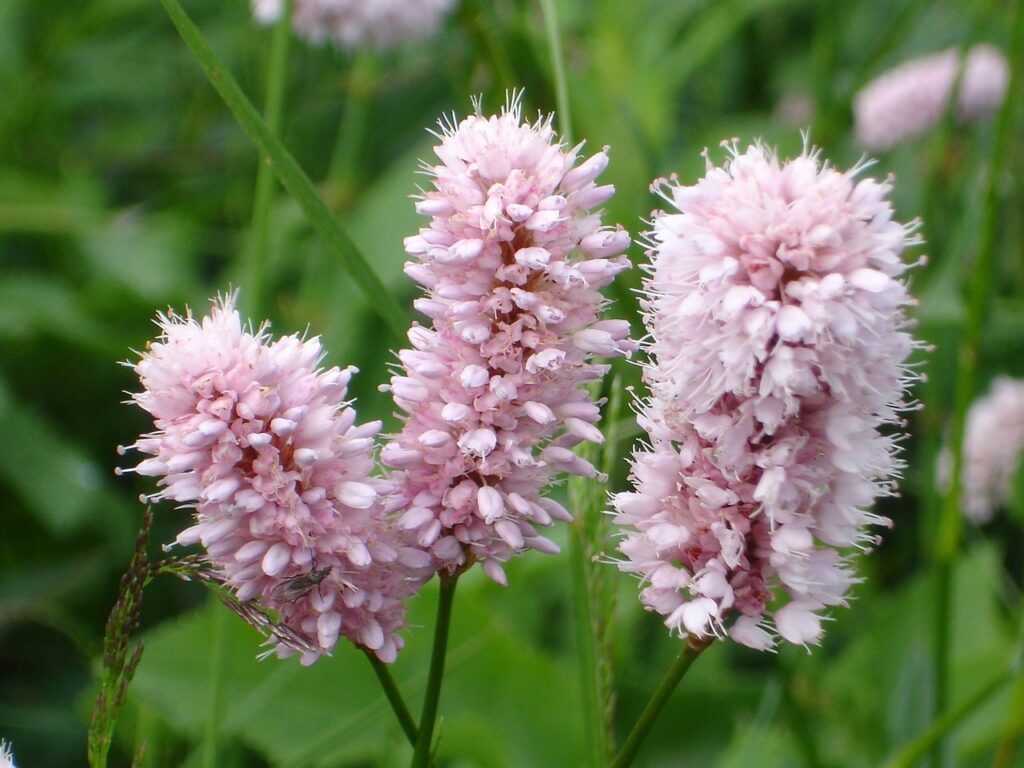
For heavy clay, reach for Spiraea ‘Anthony Waterer’, Persicaria ‘Rosea’, Bergenia ‘Purpurea’, and Anemone ‘September Charm’, all rated H7 and proven performers in difficult conditions. For dry, exposed, or poor soils, Lychnis coronaria, Achillea ‘Cerise Queen’, and Hylotelephium ‘Brilliant’ are your most reliable allies.
Quick Reference: 40 Best Pink Flowers for UK Gardens
#
Plant
Type
Flowers
Hardiness
1
Prunus ‘Kanzan’
Tree
Apr–May
H6
2
Cercis siliquastrum
Tree
Apr–May
H5
3
Malus × floribunda
Tree
Apr–May
H6
4
Magnolia × soulangeana
Tree
Mar–May
H6
5
Weigela ‘Pink Poppet’
Shrub
May–Jun, Aug–Sep
H6
6
Kolkwitzia ‘Pink Cloud’
Shrub
May–Jun
H6
7
Spiraea ‘Anthony Waterer’
Shrub
Jul–Aug
H7
8
Hydrangea macrophylla (pink)
Shrub
Jul–Sep
H5
9
Camellia ‘Donation’
Shrub
Feb–May
H5
10
Deutzia ‘Strawberry Fields’
Shrub
May–Jul
H5
11
Clematis montana rubens
Climber
May–Jun
H5
12
Rosa ‘Zéphirine Drouhin’
Climber
Jun–Oct
H6
13
Jasminum stephanense
Climber
Jun–Jul
H4
14
Lathyrus odoratus (pink)
Climber (annual)
Jun–Sep
Hardy annual
15
Lonicera ‘Serotina’
Climber
Jul–Oct
H6
16
Bergenia ‘Purpurea’
Perennial
Feb–Apr
H7
17
Dianthus ‘Doris’
Perennial
Jun–Aug
H5
18
Lupinus ‘The Chatelaine’
Perennial
Jun–Jul
H5
19
Digitalis purpurea
Biennial
Jun–Jul
H7
20
Lychnis coronaria
Perennial
Jun–Aug
H5
21
Astrantia ‘Roma’
Perennial
Jun–Sep
H7
22
Geranium ‘Wargrave Pink’
Perennial
May–Oct
H7
23
Achillea ‘Cerise Queen’
Perennial
Jun–Sep
H7
24
Penstemon ‘Garnet’
Perennial
Jul–Oct
H5
25
Phlox ‘Eva Cullum’
Perennial
Jul–Oct
H7
26
Echinacea purpurea
Perennial
Jul–Sep
H5
27
Paeonia ‘Sarah Bernhardt’
Perennial
Jun
H7
28
Persicaria ‘Rosea’
Perennial
Jul–Oct
H7
29
Hylotelephium ‘Brilliant’
Perennial
Aug–Oct
H7
30
Anemone ‘September Charm’
Perennial
Aug–Oct
H6
31
Cosmos ‘Sensation Pinkie’
Annual
Jun–Sep
H3
32
Lavatera ‘Silver Cup’
Annual
Jul–Oct
H3
33
Cleome ‘Rose Queen’
Annual
Jun–Oct
H2
34
Nicotiana alata (pink)
Annual
Jun–Oct
H2
35
Antirrhinum ‘Madame Butterfly’
Annual
Jul–Oct
H3
36
Allium cernuum
Bulb
Jun–Aug
H6
37
Nerine bowdenii
Bulb
Sep–Nov
H5
38
Tulipa ‘Angélique’
Bulb
Apr–May
H6
39
Dahlia ‘Fascination’
Tuber
Jul–Oct
H3
40
Cyclamen hederifolium
Tuber
Aug–Nov
H5
Your subscription could not be saved. Please try again.
Your subscription has been successful.
Frequently Asked Questions About Pink Flowers for UK Gardens
What are the best pink flowers for borders in the UK?
The best pink flowers for UK borders include Geranium ‘Wargrave Pink’ and Penstemon ‘Garnet’ for long summer flowering; Echinacea purpurea and Hylotelephium ‘Brilliant’ for late summer and Autumn; Paeonia ‘Sarah Bernhardt’ for early summer glamour; and Anemone ‘September Charm’ for Autumn interest. For vertical impact, Digitalis purpurea, Lupinus ‘The Chatelaine’, and climbing roses extend the display into three dimensions. Combining plants from different categories ensures colour across multiple seasons.
Which pink perennials come back every year?
All the hardy perennials in this guide return each year reliably in UK conditions, including Bergenia, Geranium, Astrantia, Achillea, Penstemon, Phlox, Echinacea, Paeonia, Persicaria, Hylotelephium, and Anemone. Peonies are among the longest-lived perennials in cultivation and can continue to flower for 50 years or more with minimal intervention. Lychnis coronaria and Digitalis purpurea are technically short-lived but self-seed so prolifically that they behave as permanent border plants in practice.
What pink flowers bloom all summer long in the UK?
For continuous pink flowering throughout summer (June to October), the best performers are Geranium ‘Wargrave Pink’, Astrantia ‘Roma’, Penstemon ‘Andenken an Friedrich Hahn’, Phlox ‘Eva Cullum’, Persicaria ‘Rosea’, Rosa ‘Zéphirine Drouhin’, Lathyrus odoratus (with regular deadheading), and Cleome ‘Rose Queen’. For the strongest display, combine early-summer perennials such as dianthus and lupins with mid-summer performers like phlox and penstemon, then allow dahlias and Japanese anemones to carry the display into October.
What pink flowers grow well in shade?
For shaded gardens, the most reliable pink-flowering plants include Camellia ‘Donation’ (which actually prefers north or west-facing aspects), Digitalis purpurea (native to woodland edges), Geranium ‘Wargrave Pink’ (tolerates dry shade once established), Astrantia ‘Roma’ (partial shade with moisture), Bergenia ‘Purpurea’ (sun to deep shade), and Cyclamen hederifolium (deep dry shade beneath trees). Rosa ‘Zéphirine Drouhin’ is the most shade-tolerant climbing Rose available.
Are there pink flowers that bloom in winter in UK gardens?
True pink-flowering plants that bloom during the UK winter months are rare but not absent. Camellia williamsii ‘Donation’ begins flowering in February in milder areas, and mild winters can push this into late January. Bergenia cordifolia ‘Purpurea’ reliably flowers from late February through April, often with the first flowers appearing in the last weeks of winter. For a reliable winter pink, grow camellia in a container that can be brought into a frost-free greenhouse or porch during the coldest spells to protect the blooms.
How do I create an all-pink flower border?
A successful all-pink border requires careful seasonal planning, a variety of plant types, and thoughtful colour-tone management. Start with structural elements: one or two shrubs such as Weigela ‘Pink Poppet’ or Deutzia ‘Strawberry Fields’ for the middle ground, and a climbing Rose or clematis on an obelisk for height.
Layer in hardy perennials at different flowering times: Bergenia for early colour, lupins and peonies for June, phlox and penstemon for July to October. Add bulbs such as Tulipa ‘Angélique’ for spring and Nerine bowdenii for Autumn. Finally, fill gaps with annuals such as cosmos and sweet peas through summer.
What colours go well with pink flowers in a garden?
Pink is exceptionally versatile and works with a wide range of companion colours. Cool palettes pair pink with white (cosmos, Japanese anemone), silver (Stachys byzantina, Artemisia), and soft purple (Salvia nemorosa, Allium). Warm palettes pair pink with orange, bronze, and golden-yellow (Rudbeckia, Hemerocallis, bronze fennel). Dark foliage plants such as Dahlia ‘Fascination’ itself or the dark-leaved Sambucus create a striking contrast with both pale and hot pinks. Silver foliage acts as a universal harmoniser for any shade of pink.
What are the best pink flowers for a cottage garden?
For a classic UK cottage garden, the most appropriate and beautiful pink-flowering plants include Rosa ‘Zéphirine Drouhin’ for a wall or arch, Paeonia lactiflora ‘Sarah Bernhardt’ as the glamorous centrepiece, Digitalis purpurea for towering vertical drama, Lathyrus odoratus for fragrant cutting, Dianthus ‘Doris’ for the front border, Lychnis coronaria for informal self-seeding charm, and Lupinus ‘The Chatelaine’ for early summer spires. Astrantia ‘Roma’ threaded through Rose stems creates a particularly beautiful cottage garden combination.
What are the best low-maintenance pink flowers?
For minimum effort and maximum impact, focus on long-lived, self-sufficient plants. Spiraea ‘Anthony Waterer’ needs only an annual cut-back and nothing else. Geranium ‘Wargrave Pink’ and Bergenia ‘Purpurea’ are essentially self-maintaining once established. Persicaria ‘Rosea’ is extraordinary in difficult conditions, including clay and shade. Achillea ‘Cerise Queen’ and Hylotelephium ‘Brilliant’ both thrive on neglect and drought. For annuals, Lychnis coronaria and Digitalis purpurea self-seed so reliably that they require no replanting after the first year.
Why are my hydrangea flowers pink and not blue?
The colour of Hydrangea macrophylla flowers is directly controlled by soil pH, which determines the availability of aluminium to the plant. In neutral to alkaline soil (pH 6.0 and above), aluminium is less available, and flowers turn pink. In acid soil (pH below 6.0), aluminium is readily absorbed, and flowers turn blue. To maintain or encourage pink flowers, apply garden lime around the plant in spring to raise the pH. To encourage blue, apply aluminium sulphate.
Note that white-flowered varieties are not affected by pH and remain white regardless of soil conditions. However, I mostly advise gardeners not to bother fussing with the soil for hydrangeas, just let them do their thing, it’s better for the environment!
Further Plant Colour Guides
Colour is one of the most powerful tools in any garden designer’s toolkit, and once you start thinking about planting through the lens of a single colour, the whole design process becomes so much more intentional and rewarding. Whether you are drawn to cool, calming tones or bold, high-impact drama, there is a dedicated Garden Ninja colour guide to help you make the most of every border, bed, and container in your garden.
As a BBC1 Garden Rescue presenter and award-winning garden designer with over 20 years of professional experience, I have used every one of these colours extensively across hundreds of real garden designs. These guides are not theoretical colour wheel exercises. They are practical, plant-by-plant resources drawn from years of hands-on planting design, so you can be confident that every plant listed genuinely performs in UK conditions.
🌹 Red Flowering Plants
Bold, passionate, and utterly unforgettable, red flowers create the highest-impact borders in any garden.
From the tropical flame of Crocosmia to the smouldering copper of Helenium, these 35 orange-flowering plants will transform your borders from March to October.
Each guide follows the same comprehensive structure I use when designing planting plans for my professional clients: trees, shrubs, perennials, ground cover, bulbs, and climbers, all with hardiness ratings, ultimate dimensions, growing conditions, and my personal top tips drawn from real garden design experience. Whether you are starting from scratch with a blank canvas or looking to refine an existing border, these guides give you the plant knowledge to make genuinely confident, well-informed choices.
If you want to take your planting design skills even further, my Garden Design for Beginners course walks you through the entire process of creating a beautiful, cohesive planting scheme from the ground up. Thousands of UK gardeners have already used it to transform their outdoor spaces, and it will change the way you think about plants and colour forever.
Would You Like Help Designing Your Own Pink Garden?
If this guide has inspired you to think more carefully about your own garden planting, I would love to help you take it further. Whether you are starting from scratch, refreshing an existing border, or trying to solve a specific problem, my online courses and design resources cover everything you need.
My Garden Design for Beginners course takes you through the entire design process from understanding your space to creating a planting plan, everything I do professionally, adapted for home gardeners. You can also download my free Garden Design Brief, an eight-page guide that helps you clarify what you actually want from your garden before you spend a single pound on plants.
29
Garden Design Examples for Small Gardens: 30 Design Templates & Planting Plans
Garden Design Examples for Small Gardens: 30 Design Templates & Planting Plans: In this online gardening course, I’ll walk you through 30 fantastic garden designs, explaining the logic behind the layout, the plant choices, and take-home tips for applying them in your own garden.
Weekend Garden Makeover: A Crash Course in Design for Beginners
Learn how to transform and design your own garden with Lee Burkhills crash course in garden design. Over 5 hours Lee will teach you how to design your own dream garden. Featuring practical design examples, planting ideas and video guides. Learn how to design your garden in one weekend!
Garden Design for Beginners: Create Your Dream Garden in Just 4 Weeks
Garden Design for Beginners Online Course: If you want to make the career jump to becoming a garden designer or to learn how to design your own garden, this is the beginner course for you. Join me, Lee Burkhill, an award-winning garden designer, as I train you in the art of beautiful garden design.
Your subscription could not be saved. Please try again.
Your subscription has been successful.
Lee Burkhill
Lee Burkhill, known as the Garden Ninja, is an award-winning garden designer and horticulturist with over 30 years of gardening experience and 15 years as a professional garden designer. A qualified RHS (Royal Horticultural Society) professional, Lee specialises in sustainable garden design and practical horticultural advice. He designs and presents on BBC1’s Garden Rescue and in leading gardening publications.