Top 20 Perennial Flowering Plants for Full Sun in the UK: Beginner Bullet-Proof Plants
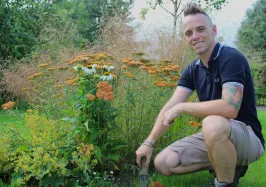
Lee Burkhill: Award Winning Designer & BBC 1's Garden Rescue Presenters Official Blog
Beginner level
If you are one of the lucky gardeners to have a south facing or sunny garden then the world is your oyster for choosing bright plants. This guide is going to show you my top 20 full sun herbaceous perennials that come back every year for fuss free gardens full of brightly coloured scented blooms that are great for wildlife.
Whilst the weather here in the UK can be a bit temperamental, the summer often feels like a two-week affair before it disappears again. You would be surprised just how favourable our climate actually is for growing genuinely awesome plants.
If your garden is lucky enough to be in full sun, this list of full-sun herbaceous perennials will bring a blast of colour and energy all summer long, no matter whether it is drizzling. And as someone who has been designing gardens professionally for over 15 years and presenting on BBC Garden Rescue, I can tell you that full sun borders are genuinely some of the most exciting planting canvases a designer gets to work with.
These hardy, long-lived beauties not only add bursts of colour and texture but also withstand the mercurial UK weather. In this guide, I’ll walk you through the top 20 perennial plants for full sun in the UK, helping you create a garden that’s as vibrant as it is enduring. So reach for the sunglasses as I show you 20 easy-to-look-after hot colour plants for those gorgeous south-facing gardens.
This page contains affiliate links for products I use and love. If you take action (i.e. subscribe, make a purchase) after clicking a link, I may earn some gardening commission which helps me keep the Garden Ninja Blog free for all.
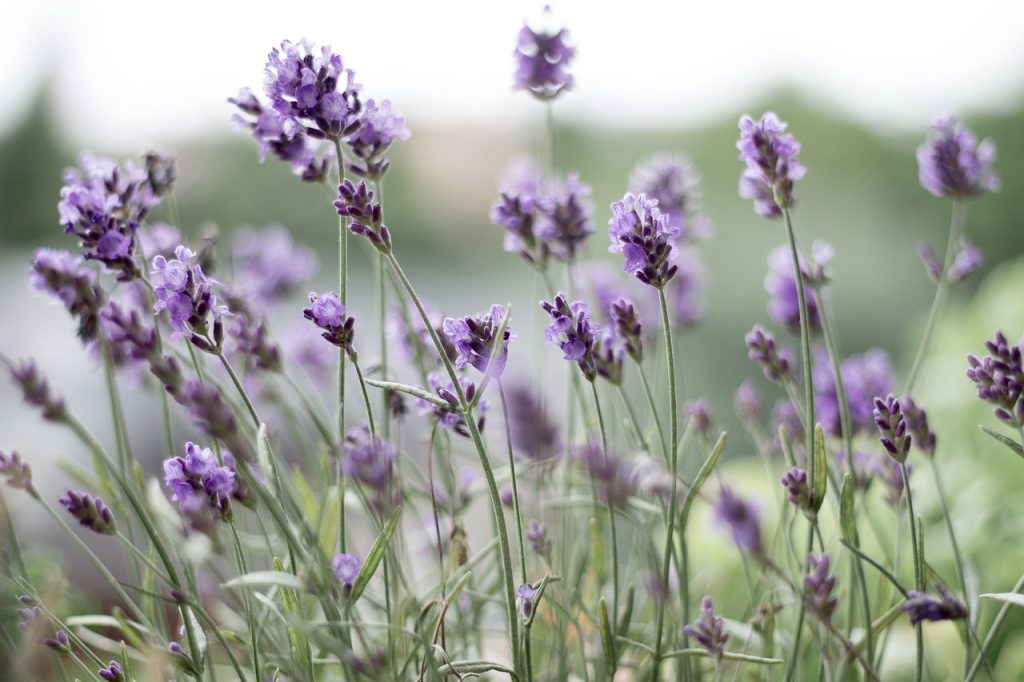
1. Lavender (Lavandula spp.)
Lavender, with its fragrant, slender spikes of purple, blue, or pink flowers, is a classic choice for full sun gardens. These aromatic perennials not only add enormous charm to any border but also attract pollinators in huge numbers.
On a warm July day, a well-established lavender hedge will be absolutely humming with bees. Varieties like English Lavender (Lavandula angustifolia) and French Lavender (Lavandula stoechas) are both well-suited to the UK’s climate. Plant them in well-drained soil for optimal results. The drier, the better in most cases. I use lavender as an edging plant constantly in my BBC Garden Rescue designs because it does three jobs at once: structure, fragrance, and pollinator support.
Also, prune your lavender at the end of each summer to ensure fresh blooms next year and to prevent it from becoming woody. Watch my guide below for a simple technique that will keep your lavender looking its best for years to come, not to mention giving you free cuttings to propagate more lavender or use as dried flowers at home!
Full sun, very well-drained to dry soil, avoid heavy clay
💡 Garden Ninja Top Tip
Never cut lavender back into old wood — it won’t regenerate from bare stems. Always prune in late summer, cutting back to where you can see fresh green growth. Prune little and often every year rather than leaving it for years and then hacking it back. Consistent annual pruning is what keeps lavender bushy and floriferous for a decade or more.
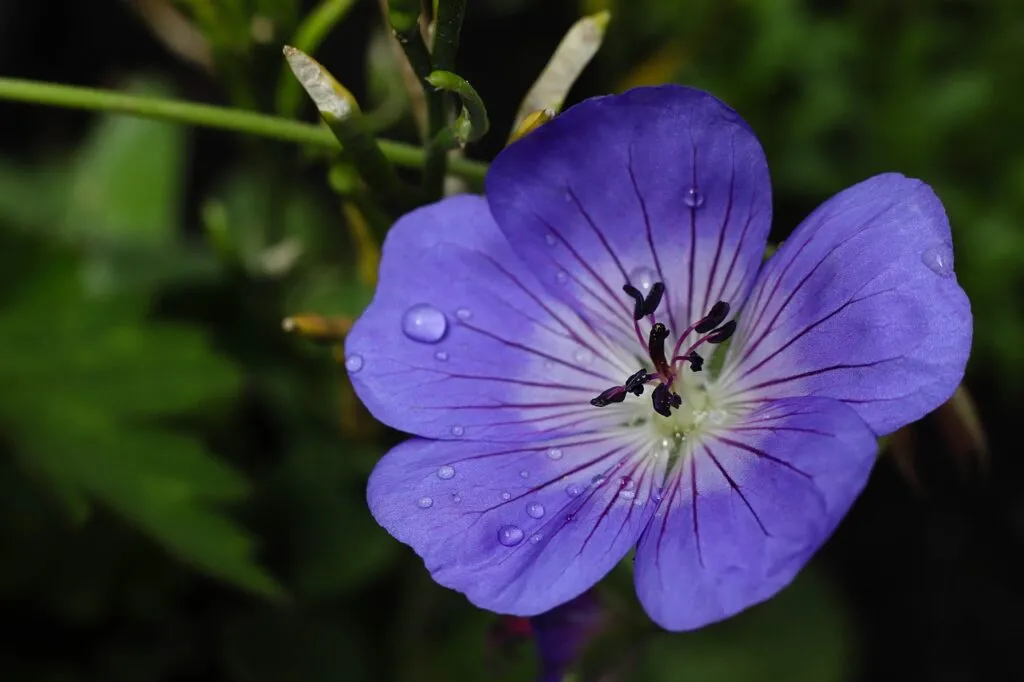
2. Geranium ‘Rozanne’ (Hardy Geranium)
Geranium ‘Rozanne’ is a prolific bloomer, producing vivid violet-blue flowers from late spring to autumn. These hardy geraniums are slug-proof, dog-proof, child-proof, and bomb-proof. In fact, I reckon they will withstand nuclear fallout! These full sun herbaceous perennials are prized for their low maintenance and disease resistance.
Hardy Geraniums suit various garden styles, from cottage gardens to modern landscapes, making them a versatile addition to your sunny garden. I’d go as far as to say that Geranium ‘Rozanne’ is one of the finest plants ever introduced to UK horticulture, and the RHS agrees, having awarded it the prestigious Award of Garden Merit. It flowers from June right through to November if you cut it back hard mid-season to encourage a second flush.
Full sun to partial shade, most soils, extremely unfussy
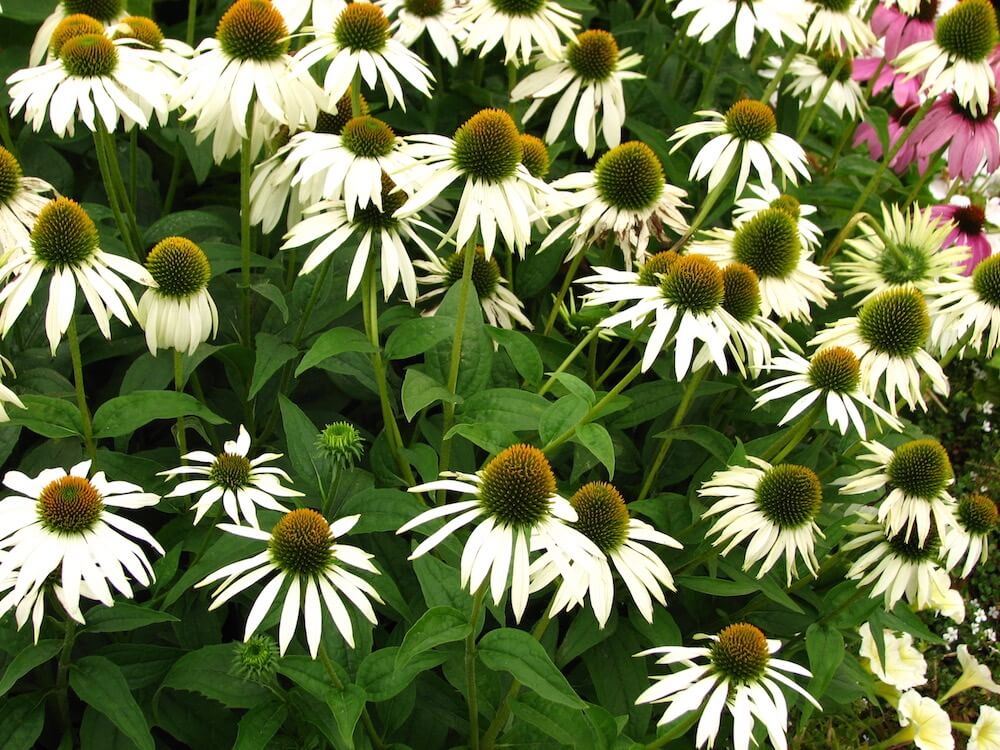
3. Echinacea (Coneflowers)
Echinacea, also known as coneflower, is a North American native that has found a welcoming home in British gardens. With its daisy-like, pinkish-purple blooms and dark central cones, it adds a delightful touch to sunny borders. These perennials are drought-tolerant and beloved by butterflies, creating a captivating summer display. Opt for ‘White Swan’ to brighten your borders with clean, elegant white flowers, or try ‘Magnus’ if you want the full drama of deep pink.
One of the great things about Echinacea is that it genuinely improves with age, unlike so many perennials that need dividing after a few years; a well-established Echinacea clump just gets bigger and better. Deadhead regularly to extend the flowering season, but leave the seedheads standing in winter as they look spectacular frosted, and the finches adore them.
Full sun, rich well-drained soil, drought tolerant once established
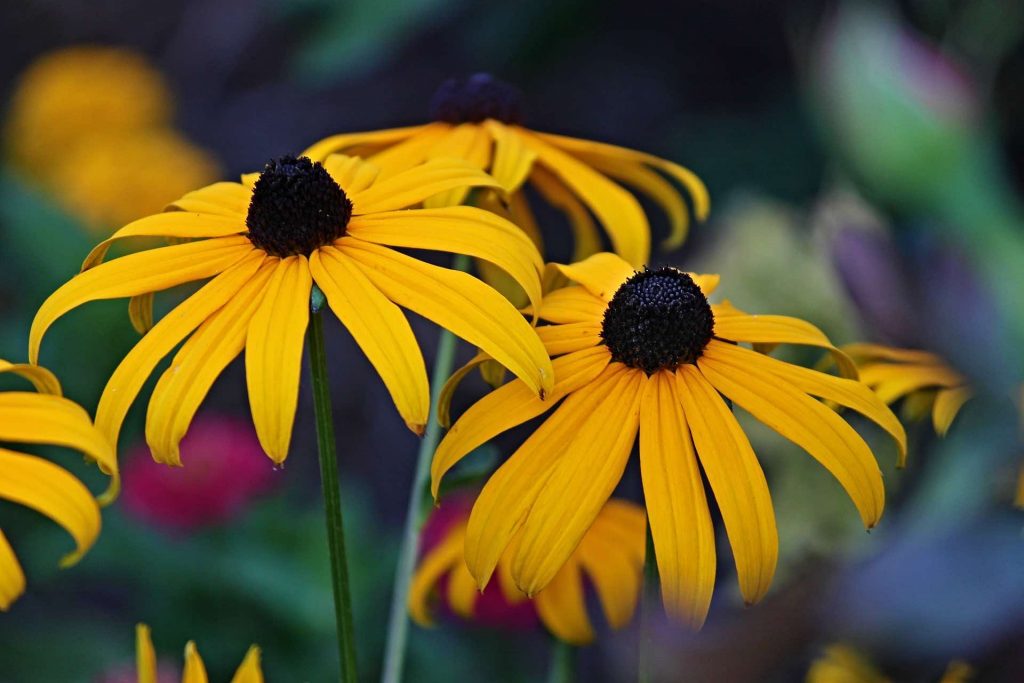
4. Rudbeckia ‘Goldsturm’ (Black Eyed Suzie)
If you seek sunshine in flower form, Rudbeckia ‘Goldsturm’ is an excellent choice. Its also one of my all-time favourite hot border flowers! These cheerful black-eyed Susans boast golden-yellow petals with contrasting dark centres. They bloom from mid-summer to early autumn, creating a burst of colour when other plants may start to fade. Their tolerance to drought and poor soil conditions makes them reliable performers in full-sun gardens.
‘Goldsturm’ in particular is one of those RHS Award of Garden Merit plants that simply never lets you down, flowering reliably every year with zero fuss. Divide clumps every three years in spring to keep the display vigorous and to generate free plants for other areas of the garden.
Fully hardy (H7) — one of the most reliable UK perennials
Height & Spread
60–75cm x 45–60cm
Flowering Period
July to October
Best Growing Conditions
Full sun to partial shade, most soils including poor and dry
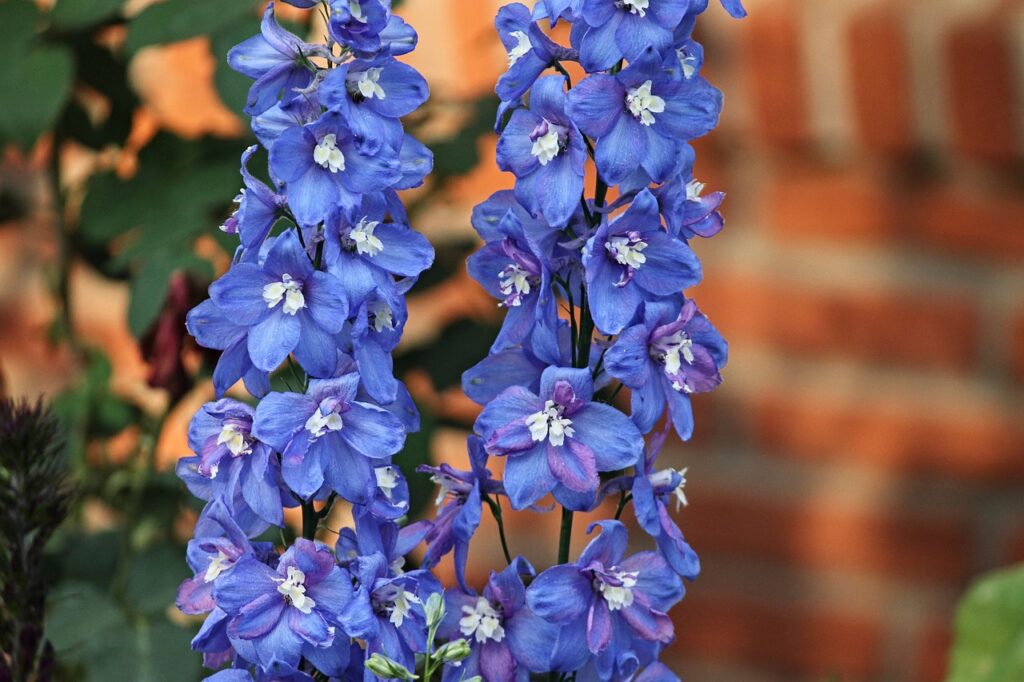
5. Delphiniums
Delphiniums are a symbol of British summer gardens. Their tall spikes adorned with exquisite, often blue, pink, or white flowers add a touch of drama to borders and cottage gardens. While they require some care to prevent flopping the beauty they bring to your sunny landscape is well worth the effort. I often stake and support them once they get to about 8 inches tall.
I consider the Delphinium one of the crown jewels of the British herbaceous border, and after years of designing gardens for BBC Garden Rescue, nothing stops a TV presenter in their tracks quite like a well-grown Delphinium in full flower. Though they can be high maintenance, so if I put them in your garden, take it as a sign of my faith in your skills, Ninja!
Ensure you have your slug traps or torches ready when they start to grow. Go out at night and remove any slugs or snails from demolishing the newly emerging foliage. The tender young shoots are irresistible to slugs in spring, so be vigilant from March onwards. Cut the main spike back once it has flowered to encourage a second, smaller flush later in the season.
Fully hardy (H6) — protect crowns from slugs in spring
Height & Spread
1.5–2m x 60cm — stake required in exposed gardens
Flowering Period
June to July, second flush September if cut back
Best Growing Conditions
Full sun, rich moist well-drained soil, sheltered from wind
⚠️ Garden Ninja Warning
All parts of Delphinium are toxic if ingested — keep away from children and pets. Wear gloves when handling the plant, as the sap can cause skin irritation in some people. This is also worth bearing in mind when choosing where to position them in the border.
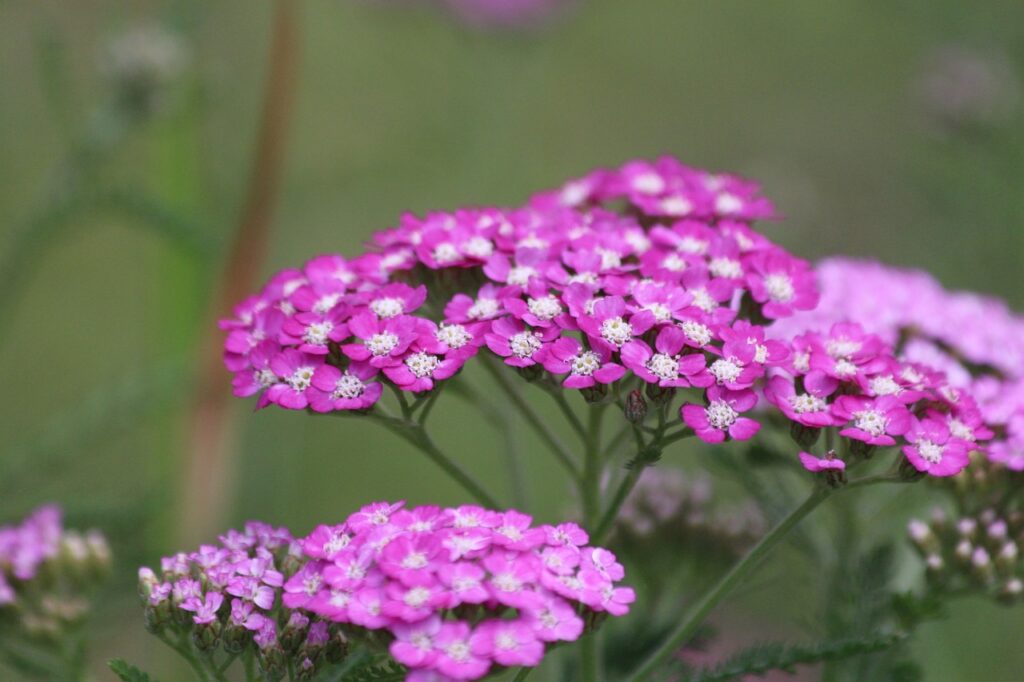
6. Achillea (Yarrow)
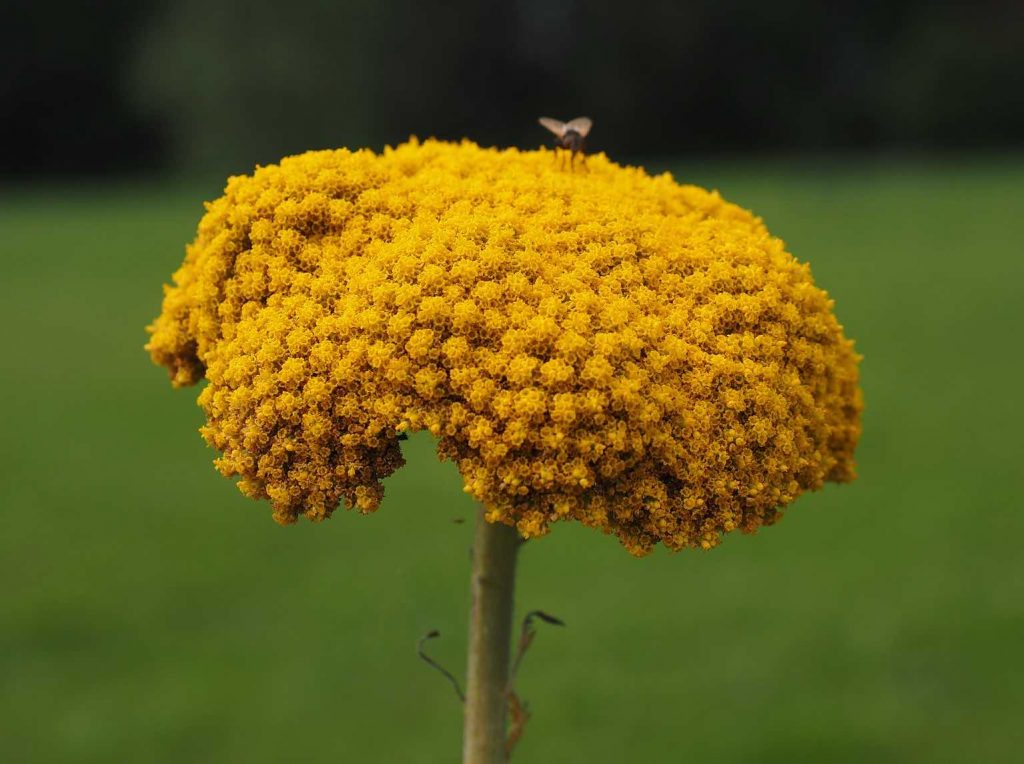
Achillea is a hardy, low-maintenance perennial that is ideal for full sun locations. Its flat clusters of bright yellow flowers create a stunning display from early summer through to late summer. This yarrow variety is also deer-resistant, and its feathery foliage adds a beautiful textural element to your garden design.
The flat flower heads are one of nature’s finest landing platforms for pollinators hoverflies in particular absolutely swarm over Achillea, and as a designer I think of them as the ‘insect motorway service station’ of the border.
My favourite varieties are ‘Moonshine’ for its pale yellow flowers paired with silver foliage, ‘Terracotta’ for a warm amber that fades beautifully with age, and ‘Paprika’ for a vivid red that stops people in their tracks. All three together, mixed with some ornamental grasses like Panicums, create one of those planting combinations that looks effortlessly designed but requires almost no skill to pull off, other than full sun and decent drainage.
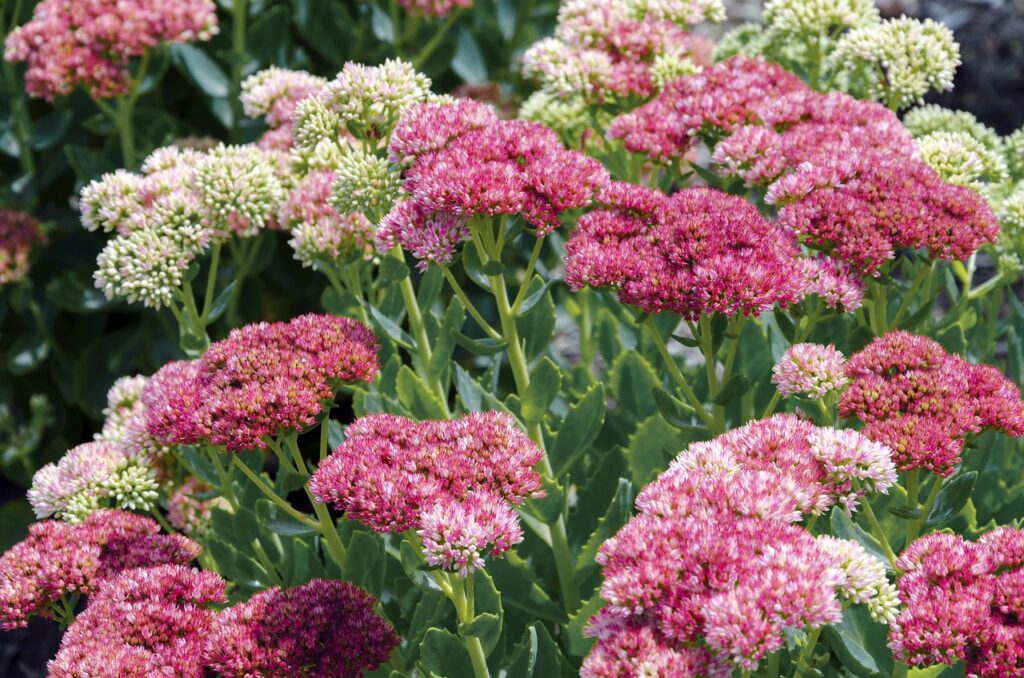
Sedum ‘Autumn Joy’ is a tough succulent perennial that thrives in full sun. It’s renowned for its fleshy, grey-green leaves and large, broccoli-like flower heads that transition from pink to a rusty red in late summer and autumn. This plant is also a magnet for pollinators, making it an ecologically valuable choice for your garden. Pretty much indestructible too, and if the frosts damage it, just cut it back to fresh growth and it will rejuvenate. Easy peasy!
What I love about Sedum ‘Autumn Joy’ from a garden design perspective is that it earns its place in four distinct seasons. It has fleshy blue-green rosettes in spring, expanding mounds of foliage in summer, pink then copper flower heads in autumn, and skeletal architectural stems in winter. That is exceptional value for a single plant.
Fully hardy (H7) — one of the most frost-tolerant perennials available
Height & Spread
45–60cm x 45–60cm
Flowering Period
August to October, winter seedhead interest
Best Growing Conditions
Full sun, poor to average well-drained soil, drought tolerant
8. Crocosmia (Monbretia)
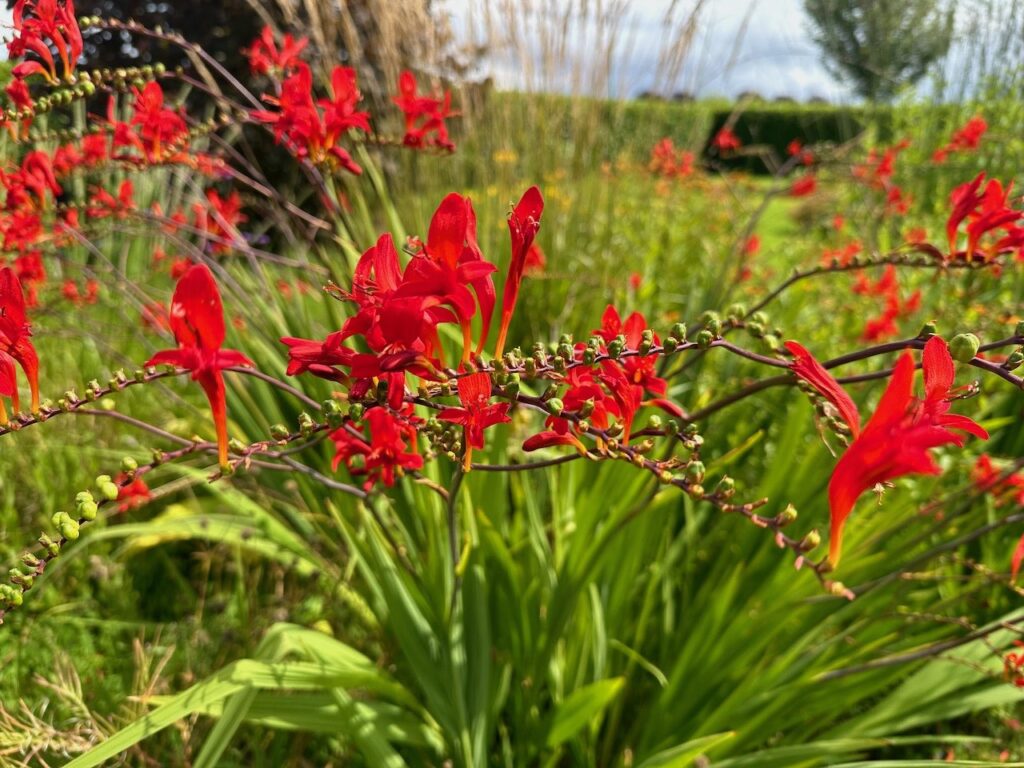
Crocosmia, often referred to as montbretia, is known for its striking sword-shaped leaves and vibrant, funnel-shaped flowers that range in colour from fiery reds to sunny yellows. Grown from corms — a modified type of bulb — these perennials create a bold statement in full-sun gardens and often bloom from mid-summer to early autumn.
The strappy foliage is slug-proof and beautiful as a texture layer in any garden design. Crocosmia ‘Lucifer’ is the variety I reach for most often in professional planting plans as its flame-red flowers on arching stems in July are genuinely one of the most spectacular sights in the summer border. It pairs brilliantly with ornamental grasses and bronze-leaved plants where the colours really sing against each other.
H4–H6 depending on variety — ‘Lucifer’ is fully hardy (H6)
Height & Spread
60–120cm x 30–45cm (spreads via corm chains)
Flowering Period
July to September
Best Growing Conditions
Full sun to partial shade, moist well-drained soil
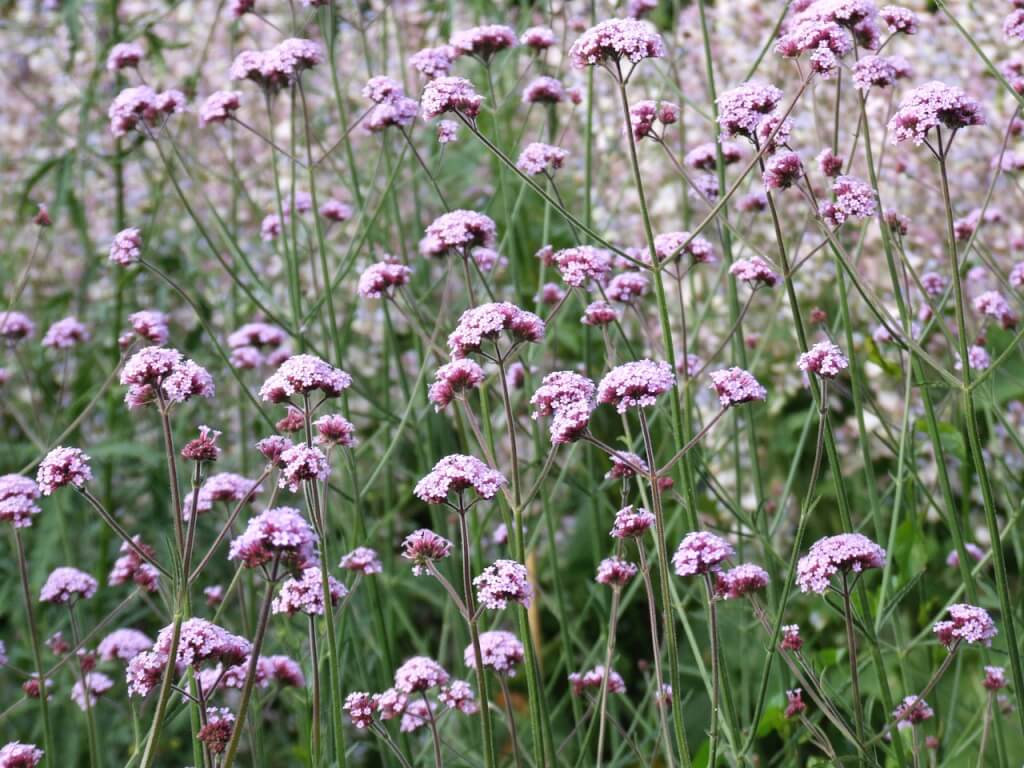
9. Verbena bonariensis (Vervain)
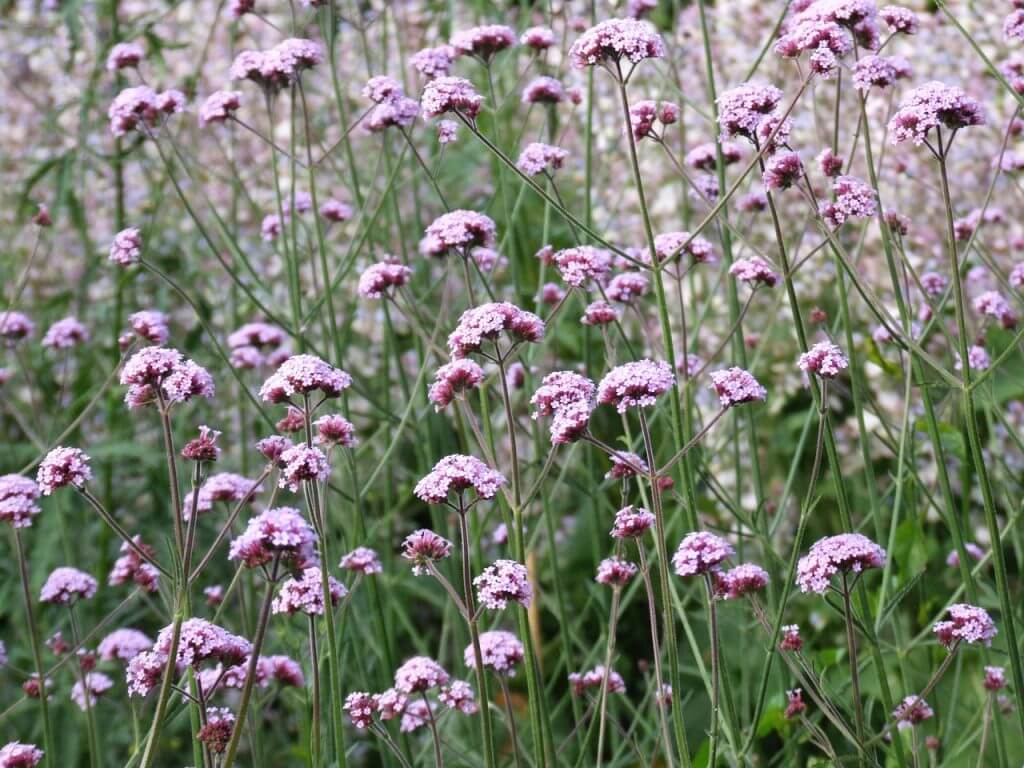
Verbena bonariensis is an elegant perennial known for its slender, tall stems and clusters of small, lilac-purple flowers. Its airy, almost ethereal appearance adds grace to garden borders. This plant is adored by butterflies and can create a delightful spectacle of fluttering visitors in the summer sun.
As a garden designer, one of my favourite tricks is to weave Verbena bonariensis through the middle of a border rather than planting it in a clump. Its see-through habit means you can plant it in front of shorter plants without blocking the view, creating depth and a sense of movement that looks effortlessly naturalistic.
It self-seeds everywhere, so it is a great plant to easily propagate. Once the flower heads have dried, cut them off and shake them to disperse the seeds over your garden and flower beds for next year’s flowers!
H3–H4 — self-seeds so freely that cold winters are rarely a problem
Height & Spread
1.5–2m x 45cm — tall and airy, doesn’t block views
Flowering Period
June to October
Best Growing Conditions
Full sun, well-drained fertile soil, leave dead stems for winter protection
10. Alchemilla mollis (Lady’s Mantle)
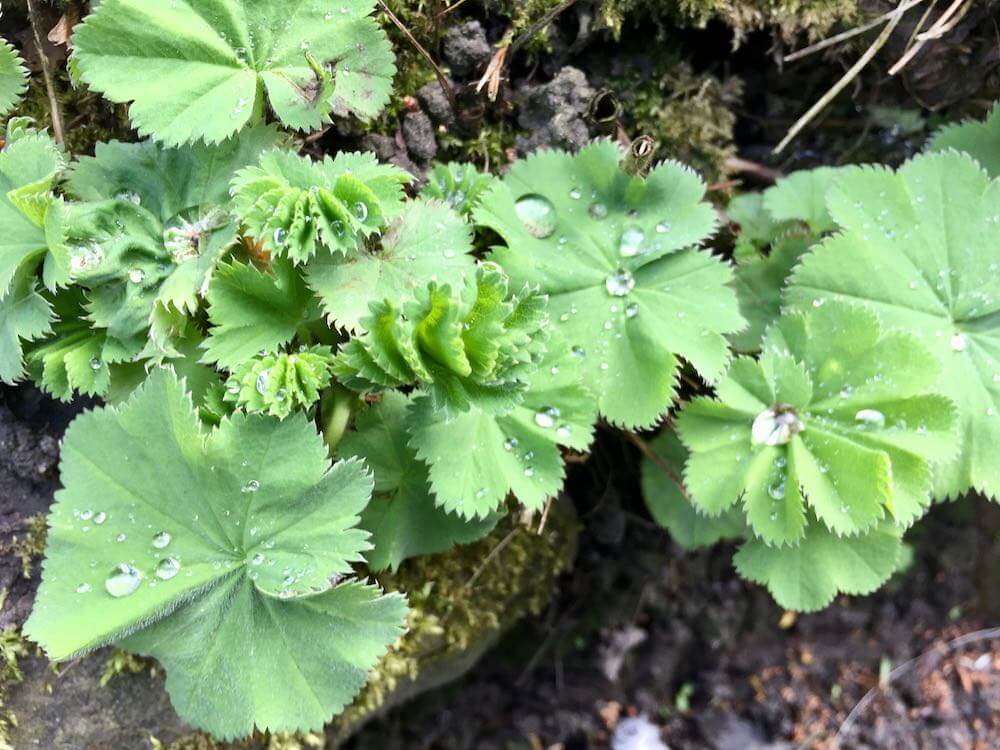
Commonly known as lady’s mantle, Alchemilla mollis features scalloped, pleated leaves that catch and hold dewdrops, creating a beautiful effect in the morning sun. This perennial produces delicate, chartreuse-yellow flowers that complement its foliage. It’s a versatile addition to sunny borders and a perfect companion for other perennials. Impossible to kill and will self-seed everywhere a bit like Verbena. Top tip: once the flowers go over, cut them back hard to stop self-seeding and to allow air and light to get to nearby plants.
Alchemilla is one of those quietly brilliant plants that every experienced garden designer has quietly added to almost every scheme they’ve ever created. It softens hard edges brilliantly by spilling over paths, tumbling off walls, or threading between roses. The frothy lime-green flower clusters are outstanding as a cut flower and work as a foil for almost every other colour in the border.
Fully hardy (H7) — one of the toughest perennials in existence
Height & Spread
40cm x 50cm — self-seeds to spread further
Flowering Period
June to August
Best Growing Conditions
Full sun to partial shade, most soils, cut back after flowering to prevent seeding
11. Penstemon (Beardtongue)
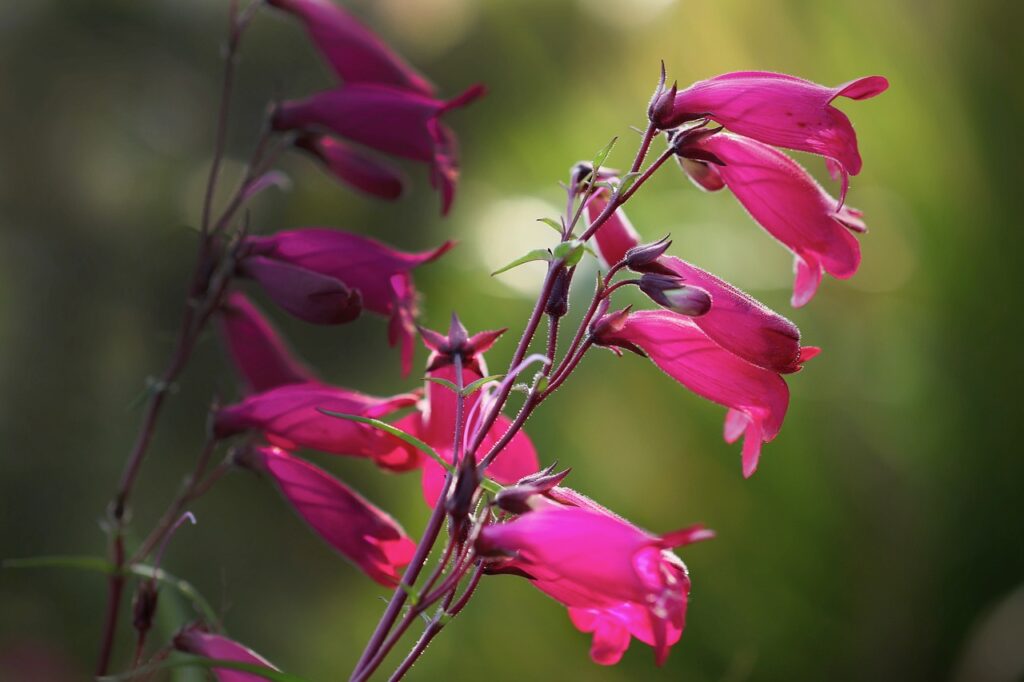
Penstemon, often called “beardtongue,” showcases tubular, nectar-rich flowers in shades of pink, red, or purple. These vibrant perennials are a magnet for hummingbirds when grown overseas and for bees and pollinators here in the UK, and can bring a burst of colour to your full-sun garden. They are semi-evergreen so leave them through the winter and only cut back the frost-damaged parts.
The RHS has described Penstemons as having one of the longest flowering seasons of any garden perennial as a variety can be in flower from June to October, which is simply outstanding value in any border.
Look for named varieties like ‘Husker Red’ for striking dark burgundy foliage with white flowers, or ‘Andenken an Friedrich Hahn’ (also sold as ‘Garnet’) for deep wine-red tubular flowers that pair beautifully with silver foliage plants. Take cuttings in late summer to ensure you never lose a plant over winter, as they root very easily and grow on quickly.
H4 — take cuttings as insurance in cold northern gardens
Height & Spread
60–90cm x 45–60cm
Flowering Period
June to October (exceptional season length)
Best Growing Conditions
Full sun to partial shade, moist well-drained soil, avoid waterlogging in winter
12. Helenium ‘Moerheim Beauty’ (Sneezeweed)
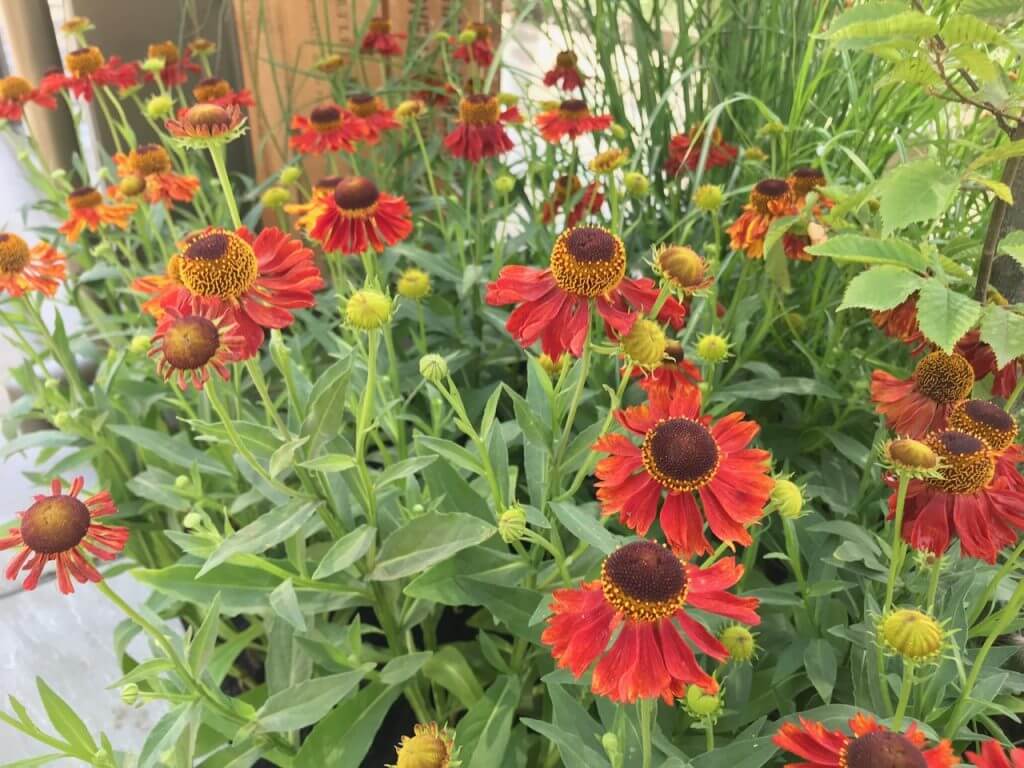
Helenium ‘Moerheim Beauty’ features striking, daisy-like flowers in warm, autumnal shades of orange and red. These flowers are for hot-border lovers who want to add serious zing and zest to their garden design plans. These perennials are perfect for extending the colour and charm of your garden into late summer and early autumn, adding a burst of late-season interest that photographs beautifully.
I grow Heleniums all through the Exploding Atom Garden here at Garden Ninja HQ, and the ‘Moerheim Beauty’ variety is consistently the one that gets the most comments from visitors. A combination of deep copper-red petals around a dark brown cone is absolutely glorious against the blue sky.
Apply the Chelsea chop in late May by cutting the plant back by roughly a third to create a more compact, bushier plant that flowers a couple of weeks later than untreated plants. This simple technique can extend the overall flowering period of a clump if you chop half and leave half untouched.
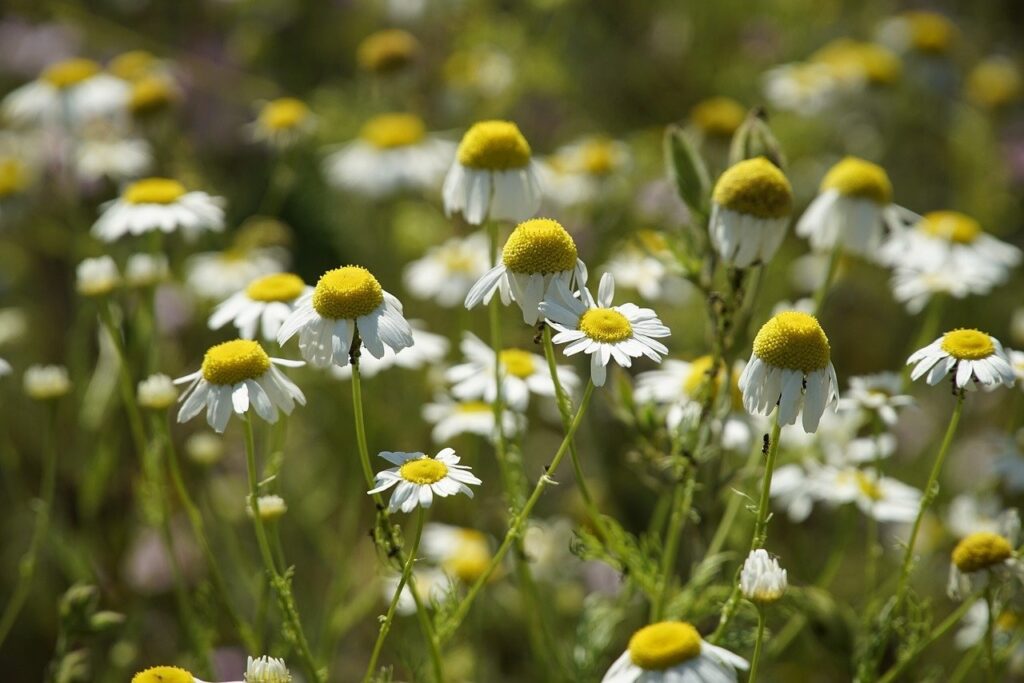
Anthemis tinctoria, also known as golden marguerite, boasts daisy-like, bright yellow blooms that resemble cheerful sunflowers. These perennials provide a sunny, carefree look to your garden and are highly attractive to bees and butterflies. Great for the front of a border where you want to watch wildlife buzzing about, and genuinely one of the most underrated plants in UK horticulture.
The variety ‘E.C. Buxton’ has paler, creamy-yellow flowers that are slightly more sophisticated if you want something less brash, and it pairs magnificently with blue-purple Nepeta or Agastache.
Full sun, well-drained soil, cut back after flowering to extend life
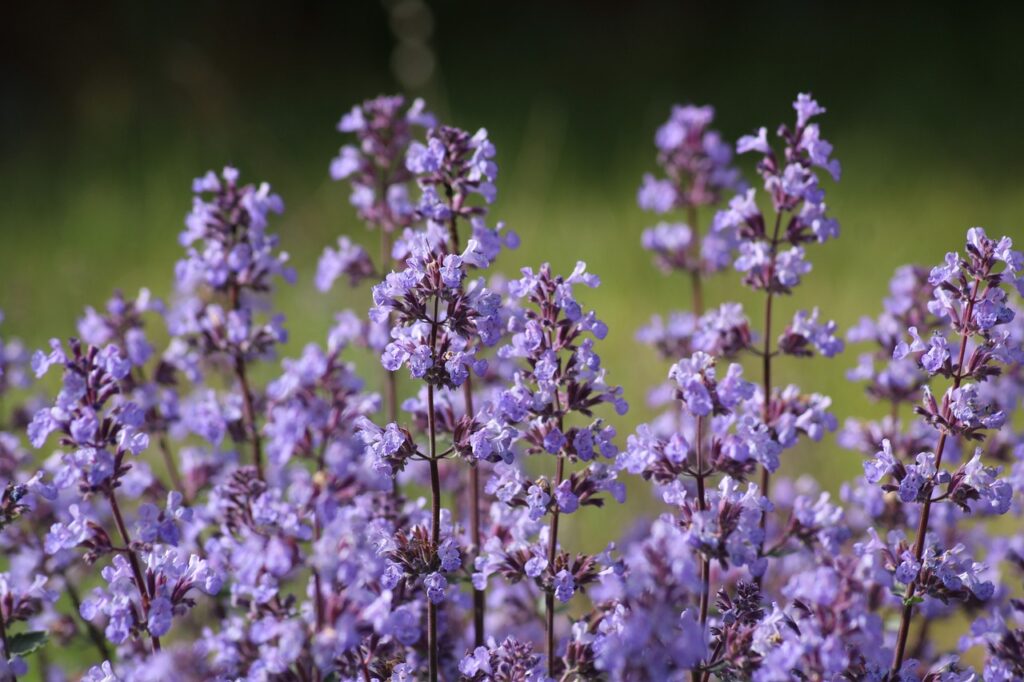
14. Nepeta ‘Walker’s Low’ (Catmint)
Catmint, such as Nepeta ‘Walker’s Low,’ is a superb choice for full sun gardens. It asks for nothing and doesn’t need feeding or babysitting. This gorgeous herbaceous perennial has a shrub-like form, creating mounds of near-endless lilac-purple flowers. Its aromatic grey-green foliage complements its lavender-blue flower spikes. This perennial is not only low-maintenance but also catnip for bees and butterflies.
In over 15 years of professional garden design, I have rarely not planted Nepeta in a south-facing, sunny border! It is simply too reliable, too beautiful, and too useful a plant to leave out. Cut it back hard after the first flush in June, and it will produce an equally impressive second flowering in late August. Nepteta is also a great alternative to lavender, with the only pruning being a late winter chop back to the ground!
Fully hardy (H7) — RHS Award of Garden Merit holder
Height & Spread
60cm x 75cm — mounding habit
Flowering Period
May to September (two flushes if cut back)
Best Growing Conditions
Full sun, well-drained to dry soil, unfussy and incredibly tough
💡 Garden Ninja Top Tip
Cut Nepeta back by two thirds immediately after the first flush of flowers in late June — it looks brutal but it will regenerate quickly, giving you a fresh, compact mound of foliage and a generous second flowering from August onwards. This technique effectively doubles your display season.
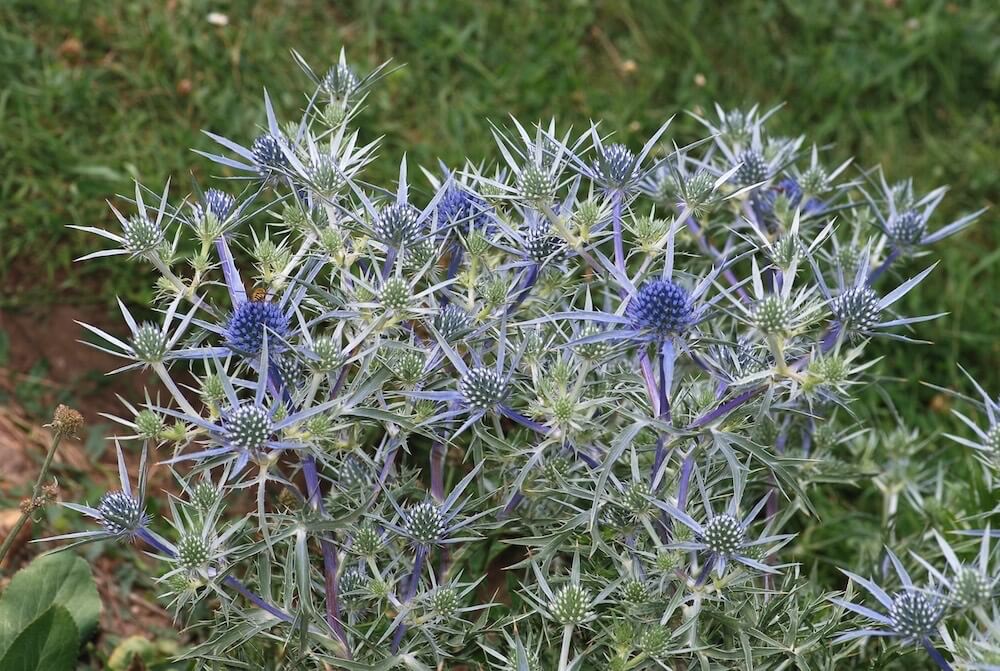
15. Eryngium (Sea Holly)
Eryngium, commonly called sea holly, is a unique and visually captivating perennial. Its spiky, silvery-blue bracts encircle small, cone-like flowers. Eryngiums are drought-tolerant, making them an excellent choice for full sun, well-drained locations. They also make excellent cut flowers and will dry easily for flower arranging. Eryngiums are one of those plants that genuinely look as though they belong in a contemporary, award-winning garden
The metallic blue colouring catches the light in a way that looks expensive and sophisticated, which is probably why they appear in professional garden design schemes at every level from RHS Chelsea right down to the domestic back garden.
Fully hardy (H6–H7) — needs well-drained soil to survive winter
Height & Spread
60–90cm x 45cm
Flowering Period
June to August
Best Growing Conditions
Full sun, poor well-drained to dry soil — do not overfeed
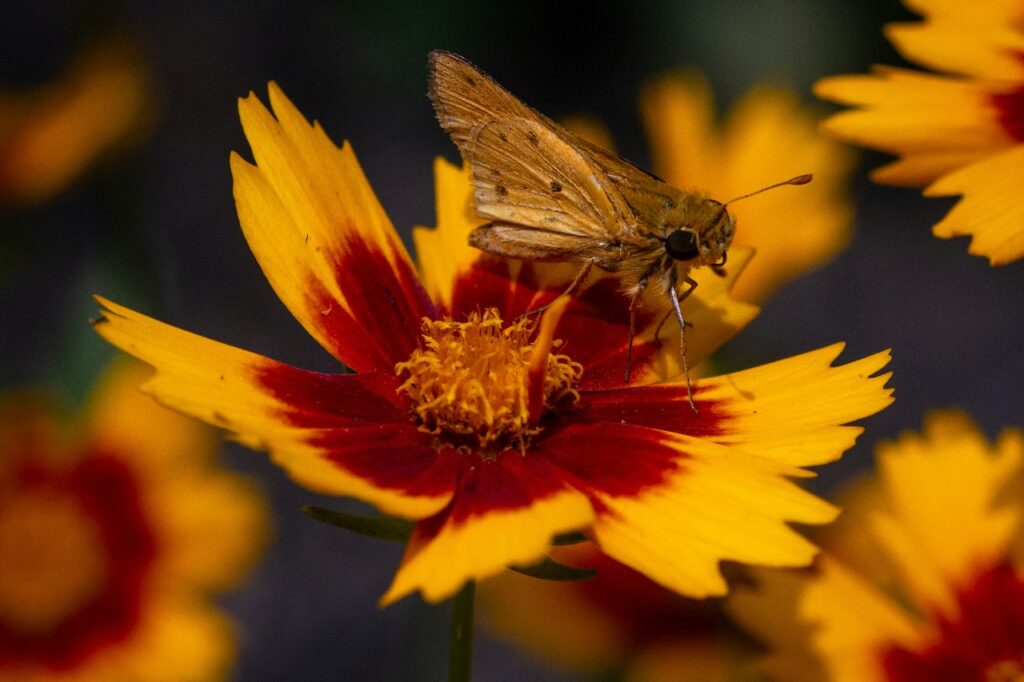
16. Coreopsis (Tickseed)
Coreopsis, often referred to as “tickseed,” is prized for its bright and sunny, daisy-like flowers. These perennials come in a variety of colours, from vibrant yellow to soft pink and red. They are resilient and low-maintenance, making them an ideal choice for sunny borders. Great for container gardening and rental properties where you need high impact in a small space.
A pot of Coreopsis grandiflora ‘Early Sunrise’ in full flower looks like it belongs in a show garden. Deadhead consistently to encourage months of continuous blooming, and divide the clumps every couple of years in spring to keep the display at its best.
H4–H5 — mulch crowns in cold northern gardens over winter
Height & Spread
30–60cm x 30–45cm
Flowering Period
June to September
Best Growing Conditions
Full sun, well-drained soil, deadhead regularly for continuous flowering
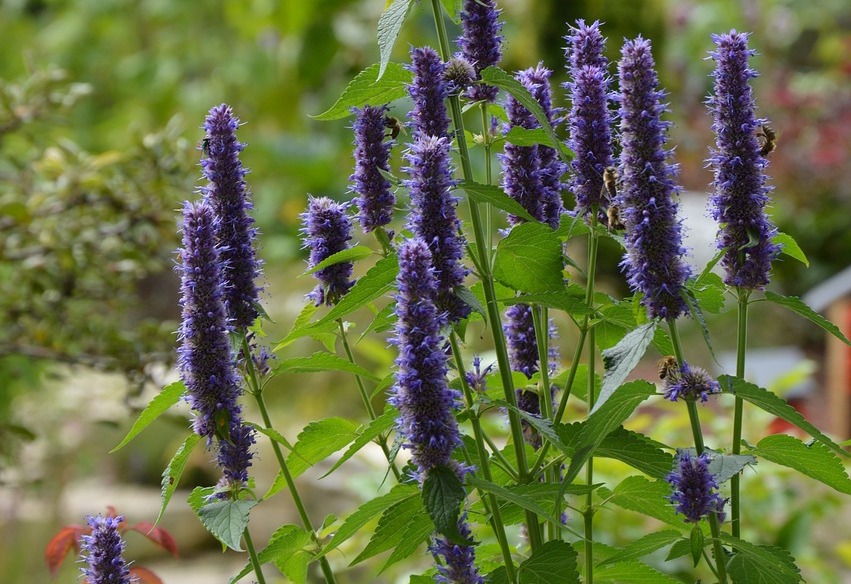
17. Agastache ‘Black Adder’ (Hyssop)
Agastache, also known as hyssop, features spikes of aromatic, tubular flowers in shades of deep purple or blue. The smell is like a citrus liquorice when rubbed which I find one of the most distinctive plant fragrances in the garden. These perennials are not only beautiful but also exceptional for attracting pollinators and beneficial insects to your garden, with ‘Black Adder’ in particular producing some of the darkest, most velvety purple-black flower spikes you’ll find on any garden plant.
They do require a heavy mulch before harsh winters to survive, and good drainage is key — a wet, cold winter in heavy clay will kill them.
H3–H4 — heavy mulch essential; excellent drainage non-negotiable
Height & Spread
90cm x 60cm
Flowering Period
July to October
Best Growing Conditions
Full sun, very well-drained soil, mulch crown heavily before winter
18. Calamagrostis ‘Karl Foerster’
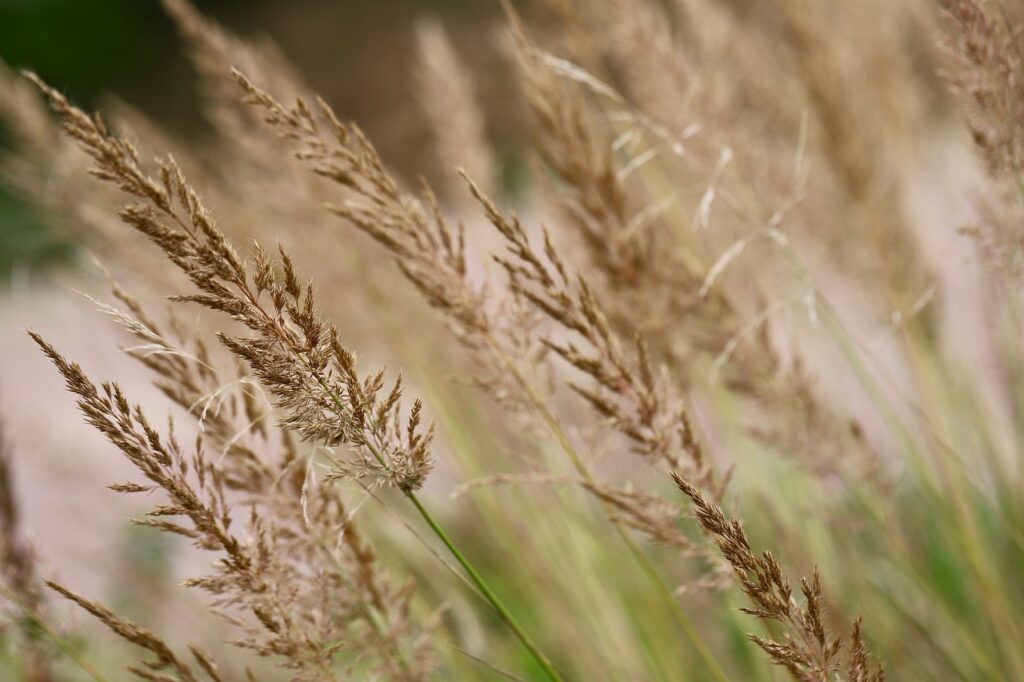
Calamagrostis is one of the best behaved ornamental grasses available to UK gardeners. Towering at up to 1.5 metres in height, it adds a delicacy to borders and beautiful movement in any breeze without taking over or becoming a problem. It doesn’t easily self-seed or spread, so it works brilliantly with all the other plants in this list.
Give it full sun, and it won’t fail to amaze as the feathery golden plumes from July onwards catch the low evening light in a way that will stop you in your gardening tracks, Ninja.
Named after the great German nurseryman Karl Foerster, this is the grass that single-handedly convinced a generation of gardeners that ornamental grasses were worth growing. I use it in nearly every contemporary planting plan I create for BBC Garden Rescue clients who want a modern, low-maintenance look.
Fully hardy (H6–H7) — RHS Award of Garden Merit holder
Height & Spread
Up to 1.5m x 60cm — upright clump-forming, not invasive
Flowering / Interest Period
June to February (plumes persist through winter beautifully)
Best Growing Conditions
Full sun, most soils including moist clay, cut to ground in March
19. Gaillardia ‘Arizona Sun’ (Blanket Flower)
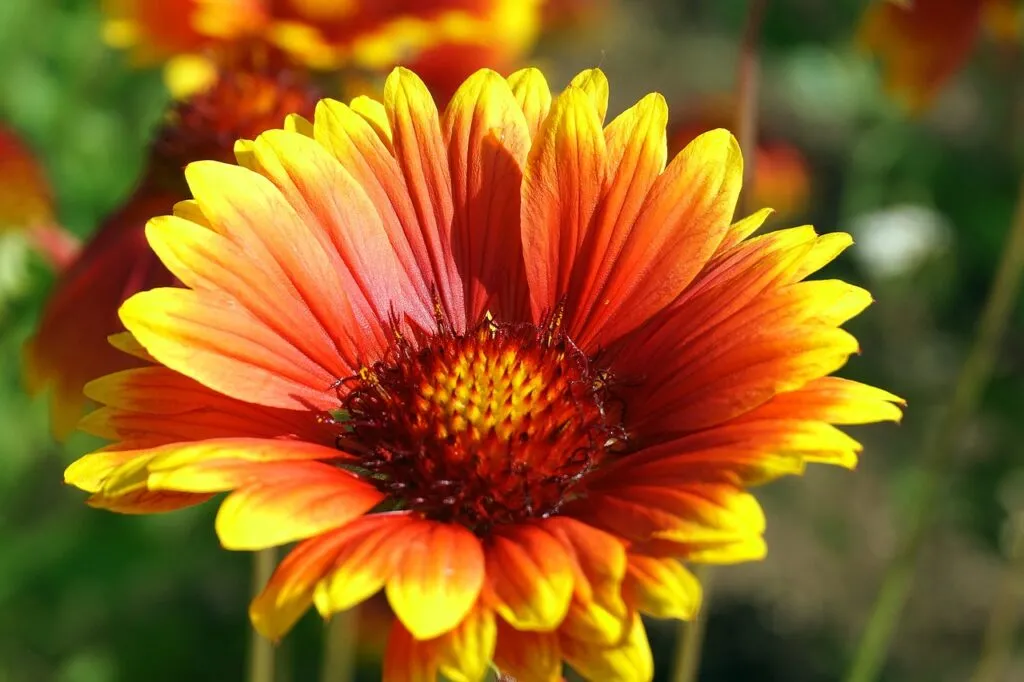
Gaillardia ‘Arizona Sun’ is a dazzling blanket flower with fiery, red-orange petals tipped in yellow otherwise known as blanketflower. These hardy, low-maintenance plants are drought-tolerant, making them perfect for gardeners of all levels, especially beginners. These perennials are a burst of sunshine and are excellent for attracting pollinators, including bees and butterflies.
What makes ‘Arizona Sun’ stand out from other Gaillardia varieties is its genuinely compact habit — it rarely exceeds 30cm in height, which makes it ideal for the front of a border or filling a sunny container where you don’t want flopping or sprawling. The flowers are simply outrageously colourful, and against a gravel mulch or pale stone path, the combination is spectacular.
H4 — requires excellent drainage to survive winter; avoid clay
Height & Spread
25–30cm x 25–30cm — compact and neat
Flowering Period
June to October
Best Growing Conditions
Full sun, poor to average well-drained to dry soil
20. Phlomis (Jerusalem Sage)
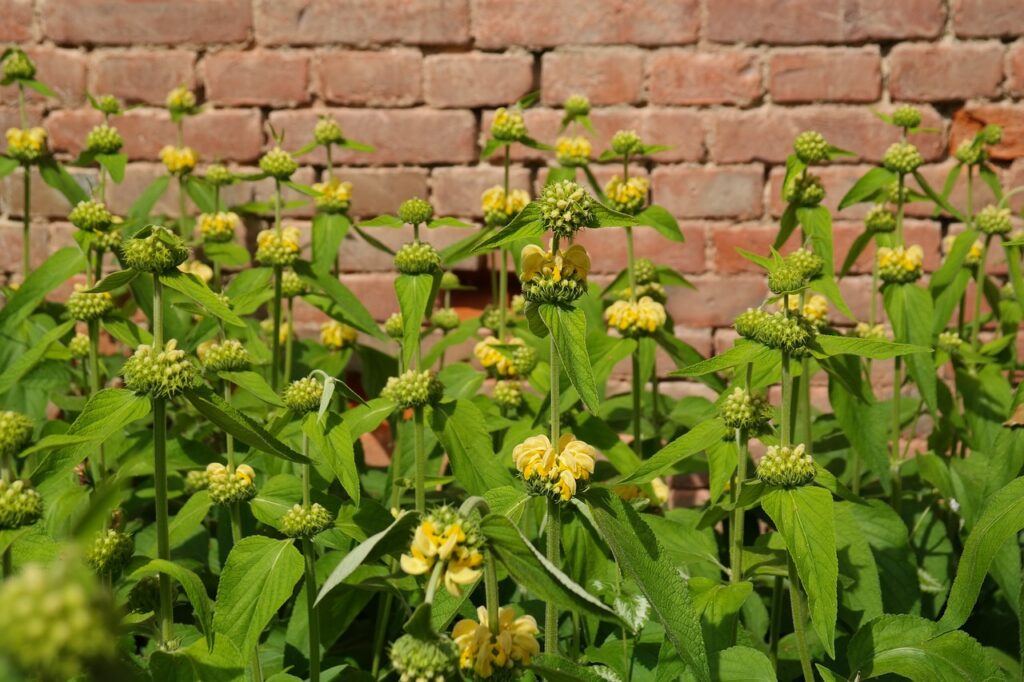
I’ve saved the best, most bulletproof, easy-peasy plant until last: Phlomis. Also known as Jerusalem Sage, Phlomis is an excellent choice for gardens in full sun and poor soil. This hardy perennial thrives in tough environments where other plants may struggle.
Its attractive, woolly foliage and vibrant yellow or purple flowers add beauty and interest to your garden, while its drought tolerance and low maintenance requirements make it a practical and reliable option for any gardener. Plus, Phlomis is highly resistant to pests and diseases, ensuring a healthy, long-lasting display, which for anyone who has lost a plant to vine weevil or powdery mildew is enormously reassuring!
It will even overwinter in warmer gardens if protected and doesn’t need cutting back or pruning in winter like other herbaceous perennials. The seedheads are extraordinary architectural sculptures standing through winter, catching frost and mist in a way that makes the garden look thoughtfully planted even in January. This is a plant that earns its spot year-round.
H4–H5 — russeliana is hardier; fruticosa needs shelter in cold areas
Height & Spread
90–120cm x 90–120cm
Flowering Period
May to July, with dramatic winter seedheads
Best Growing Conditions
Full sun, poor well-drained soil — thrives on neglect
How to Design a Full Sun Border: A Professional’s Approach
After 15 years of designing gardens and presenting BBC Garden Rescue, the single most common mistake I see homeowners make with full sun borders is treating them as a flat canvas and planting everything at roughly the same height. A well-designed sunny border needs layers:
Groundcover plants
Mid-border structure
And height — to look intentional and lush from every angle.
Think of it like a theatre: you need stalls, circle, and upper circle all filled to create the full effect.
At ground cover level, use spreading plants like Alchemilla mollis, Nepeta, and Geranium ‘Rozanne’ to suppress weeds and soften edges.
In the mid-border, bring in your workhorses — Rudbeckia, Echinacea, Helenium, Sedum, and Penstemon — for the core summer colour.
At the back, use taller structural plants like Calamagrostis ‘Karl Foerster’, Calamagrostis ‘Karl Foerster’, Verbena bonariensis, and Delphinium to add height without solidity. The grasses are particularly important in this final layer because they add movement and transparency that makes the whole border feel alive rather than static.
When choosing colours for a full sun border, I always recommend either working with a hot palette — yellows, oranges, reds — or a cool palette of blues, purples, and pinks, but not both at the same time. Mixing hot and cool colours tends to produce a border that looks unsettled and without intention.
The hot palette plants from this guide would be Rudbeckia, Helenium, Gaillardia, Crocosmia, and Achillea ‘Terracotta’. The cool palette plants would be Nepeta, Agastache, Verbena bonariensis, Geranium ‘Rozanne’, and Eryngium. Either combination is stunning, but commit to one direction and plant in generous drifts rather than individual specimens scattered around.
💡 Garden Ninja Top Tip: The Rule of Three
Plant each variety in groups of three, five, or seven — never in even numbers, and never as single specimens scattered around the border. Odd-numbered groups look natural and intentional; single specimens look like an afterthought. When buying plants, order three of everything by default and the border will look designed from day one.
When to Plant Full Sun Herbaceous Perennials in the UK
The best time to plant herbaceous perennials in the UK is either spring (March to May) or early autumn (September to October). Both windows have real advantages. Spring planting gives plants a full growing season to establish before their first winter, which is particularly important for slightly tender plants like Agastache and Gaillardia. Autumn planting takes advantage of warm soil temperatures and reliable autumn rainfall, which means far less watering and often produces bigger, better-established plants come spring.
Avoid planting in the height of summer if you can — newly planted perennials in July and August will need constant watering to establish in dry sunny conditions, and the risk of losing them is significantly higher. If you plant in summer, water deeply every 2 to 3 days for the first 4 to 6 weeks, and apply a thick mulch immediately around the planting area to retain soil moisture. Container-grown plants can be planted at almost any time of year as long as you water them in properly and are prepared to give them support through any extreme weather.
Frequently Asked Questions: Full Sun Herbaceous Perennials
What is the difference between an annual and a perennial?
An annual plant completes its entire lifecycle — germinating, growing, flowering, setting seed, and dying — within a single growing season. A perennial lives for multiple years, dying back to its roots in winter and regenerating each spring. Herbaceous perennials specifically are those that die back completely above ground each autumn, leaving no permanent woody structure. This is different from evergreen perennials or sub-shrubs, which retain some foliage or woody framework through winter. Most of the plants in this guide are true herbaceous perennials, making them some of the best-value plants you can buy for a UK garden.
How many hours of sun does a full sun border need?
A full sun position is generally defined as receiving at least six hours of direct sunlight per day during the growing season. South-facing borders in the UK typically receive the most sun, with west-facing gardens often running a close second thanks to the warmer afternoon light. If your garden receives four to six hours of sun, most of the plants in this guide will still perform well — they may be slightly less floriferous than in full sun, but they will flower. Below four hours and you are moving into partial shade territory, where a different plant palette would be more appropriate.
Do full sun perennials need feeding?
This is one of the most misunderstood aspects of growing full sun perennials. Many of the plants in this guide — particularly Achillea, Eryngium, Lavender, Phlomis, and Gaillardia — actively perform better in poor, low-nutrient soil. Feeding them with a high-nitrogen fertiliser produces lots of lush foliage but very few flowers, and the soft, sappy growth is far more vulnerable to pests, diseases, and frost damage. The exceptions are Delphinium, Helenium, and Echinacea, which benefit from a balanced slow-release fertiliser applied in spring. As a general rule, if a plant originates from a dry, rocky, or sandy habitat, leave it alone and do not feed it.
When should I cut back full sun herbaceous perennials?
The simple answer is late February to mid-March — cut everything back to the ground just as the first new growth is starting to emerge at the base of the plant. Cutting back in autumn removes vital overwintering habitat for insects and birds, and strips away the frost protection that dead stems provide for plant crowns. I know it looks a bit untidy through winter, but leaving stems standing is genuinely one of the most impactful things you can do for garden wildlife. A hard frost on skeletal Rudbeckia or Phlomis seedheads also looks absolutely beautiful if you catch it on a clear winter morning.
Which full sun perennials are best for clay soil?
Heavy clay soil can be challenging for many full sun perennials, particularly those that originate from dry, rocky environments. However, several plants from this guide cope well with clay once established, including Rudbeckia, Helenium, Crocosmia, Penstemon, and Calamagrostis. The key is to improve drainage at the time of planting by incorporating grit and compost into the planting hole, and to avoid planting in winter when clay soils are saturated. Lavender, Eryngium, Achillea, and Gaillardia are genuinely poor choices for clay and will likely die over their first wet winter — save those for raised beds or well-drained borders instead.
Can full sun perennials grow in pots and containers?
Absolutely, and several of the plants in this guide are particularly well suited to container growing. Lavender, Nepeta, Gaillardia ‘Arizona Sun’, Coreopsis, Penstemon, and Geranium ‘Rozanne’ all perform excellently in pots. Use a well-draining compost — a mix of two-thirds multipurpose compost and one-third horticultural grit works well — and ensure the pot has adequate drainage holes. Water containers more regularly than border plants and feed with a balanced liquid fertiliser every two to three weeks from May to September. Tall plants like Delphinium and Calamagrostis are less suitable for containers as they can become top-heavy and vulnerable to wind rock.
How do I prevent full sun perennials from flopping?
Flopping is most commonly caused by one of two things: insufficient light, or overly rich, nitrogen-heavy soil. If a plant that should be growing in full sun starts to flop, check that it is not being gradually shaded out by neighbouring plants that have grown taller. If light is adequate, reduce feeding and see if the following year’s growth is more compact. For tall perennials like Delphiniums and Heleniums that are prone to flopping regardless, use pea sticks, bamboo canes, or proprietary grow-through plant supports installed early in spring before the plant reaches its full height. The Chelsea chop — cutting plants back by a third in late May — is also an excellent technique for creating more compact, self-supporting plants that rarely need staking.
Your subscription could not be saved. Please try again.
If you really want to amp up your gardening skills and make your garden beautiful, why not take one of my online garden design courses? Whether you want to take a crash course in a weekend or spend more time becoming a fully-fledged garden designer, I have courses for all abilities. That way, you can put all of your knowledge of full sun herbaceous perennials into practice in your own garden. The best thing is they are affordable, and you don’t need to go back to university — study at your own time and refer back to the course materials at any time for as long as you want. So what’s stopping you from creating the garden of your dreams?
Study Online Anywhere
Video Lessons
Quizzes
5 Sample New Build Garden Designs
Beginners guide to planting
Certificate upon Completion
29
Garden Design Examples for Small Gardens: 30 Design Templates & Planting Plans
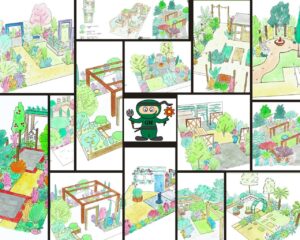
Garden Design Examples for Small Gardens: 30 Design Templates & Planting Plans: In this online gardening course, I’ll walk you through 30 fantastic garden designs, explaining the logic behind the layout, the plant choices, and take-home tips for applying them in your own garden.
Weekend Garden Makeover: A Crash Course in Design for Beginners
Learn how to transform and design your own garden with Lee Burkhills crash course in garden design. Over 5 hours Lee will teach you how to design your own dream garden. Featuring practical design examples, planting ideas and video guides. Learn how to design your garden in one weekend!
Garden Design for Beginners: Create Your Dream Garden in Just 4 Weeks
Garden Design for Beginners Online Course: If you want to make the career jump to becoming a garden designer or to learn how to design your own garden, this is the beginner course for you. Join me, Lee Burkhill, an award-winning garden designer, as I train you in the art of beautiful garden design.
Alright, garden ninjas, you’ve made it to the end of our guide through the sun-drenched world of full sun herbaceous perennials! From the dazzling blooms of Gaillardia to the tough-as-nails Phlomis, you’re now armed with the knowledge to create a border that’s not just surviving, but absolutely thriving in full sun. The plant info tables throughout this guide give you UK hardiness ratings, height and spread, and growing conditions for every plant — so you can make informed choices before you buy rather than guessing and hoping. Remember, the secret to a stunning garden is picking the right plants for the right spots. Roll up those sleeves, get your hands dirty, and let your garden shine like the superstar it is!
Your subscription could not be saved. Please try again.
Your subscription has been successful.
Lee Burkhill
Lee Burkhill, known as the Garden Ninja, is an award-winning garden designer and horticulturist with over 30 years of gardening experience and 15 years as a professional garden designer. A qualified RHS (Royal Horticultural Society) professional, Lee specialises in sustainable garden design and practical horticultural advice. He designs and presents on BBC1’s Garden Rescue and in leading gardening publications. Lee combines three decades of hands-on gardening knowledge with professional design qualifications to help gardeners create beautiful, functional outdoor spaces.