For the garden you’ve already got, not the one you’re starting from scratch. Seven checklists and video lessons from BBC Garden Rescue’s Lee Burkhill, built to help you work out what’s worth keeping before you spend a penny.
69


Quick Answer
For most UK gardeners with a power supply, the best greenhouse heater is a thermostat controlled electric fan heater, about 1kW for a 6x8ft greenhouse and 2kW for 8x10ft or larger. Set it to 2 to 5°C for frost protection or 7 to 10°C for tender plants. Use a paraffin heater only where there is no electricity.
It also keeps my tender plants alive over winter, and it got the seed trays off every windowsill in the house. In this guide I will walk you through the types of greenhouse heater, the features worth paying for, how to size one for your greenhouse, what they cost to run at current UK electricity prices, and the two things people get wrong most often: ventilation and electrical safety.

Jump To
This page contains affiliate links for products I use and love. If you take action (i.e. subscribe, make a purchase) after clicking a link, I may earn some gardening commission, which helps me keep the Garden Ninja Blog free for all.
🛒 Buy the Bio Green Tropic 2kW greenhouse heater from Amazon UK
An unheated greenhouse already does a lot. It keeps the rain and wind off, and on a sunny winter day it warms up nicely. On a clear, still night, though, the glass loses heat fast, and an unheated greenhouse can drop to within a degree or two of the temperature outside. Anything tender inside it gets frosted along with everything in the garden.
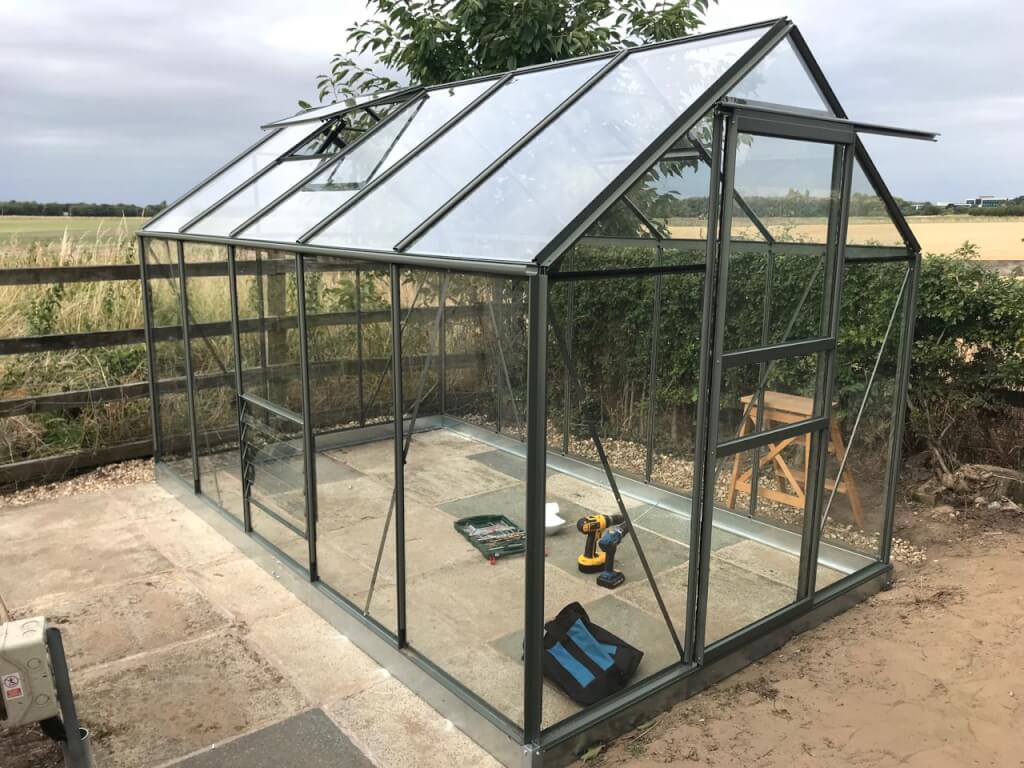
A heater earns its keep if you want to do any of three things: keep the greenhouse frost-free through winter, overwinter tender or tropical plants, or start seeds earlier in the year than an unheated greenhouse allows. If you only use your greenhouse for tomatoes from May to September, you can probably manage without one. If you want to grow from seed, keep a collection of tender plants, or push your season earlier, a heater with a thermostat is one of the best investments you can make in the garden.
For me, the biggest benefit of a heater is the extra two to four weeks it gives you at the start of the year. With the greenhouse kept above about 10°C from late winter, you can sow seeds that would otherwise sit sulking in a cold greenhouse until April, and the young plants will be bigger, sturdier, and ready to plant out the moment the frosts finish.
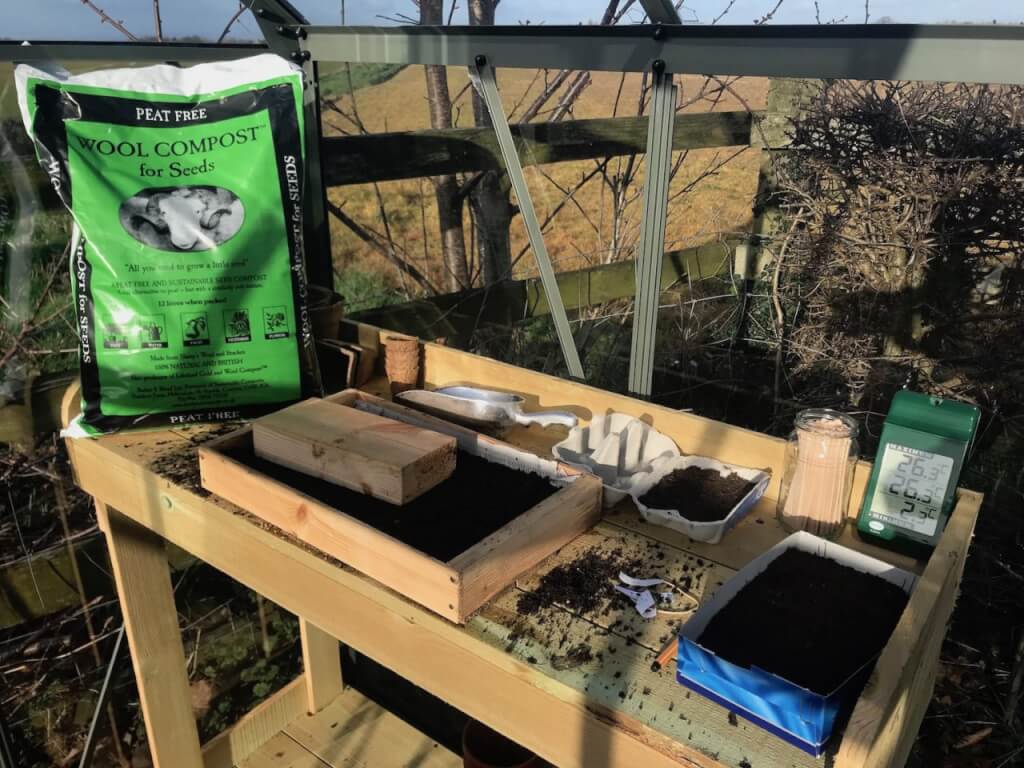
Those weeks matter most for slow germinators. Herbaceous perennials such as Helenium, Achillea, Echinacea and Acanthus can take weeks to germinate and months to reach a plantable size, so sowing in a heated greenhouse in late winter is the only way to get many of them flowering in their first year. The same goes for slow-starting vegetables, such as Chillies, Sweet Peppers, Aubergines and Celeriac, which need a long season to crop well in the UK. Give them a three-week head start, and the harvest arrives before the autumn weather turns instead of a handful of green fruit in October.
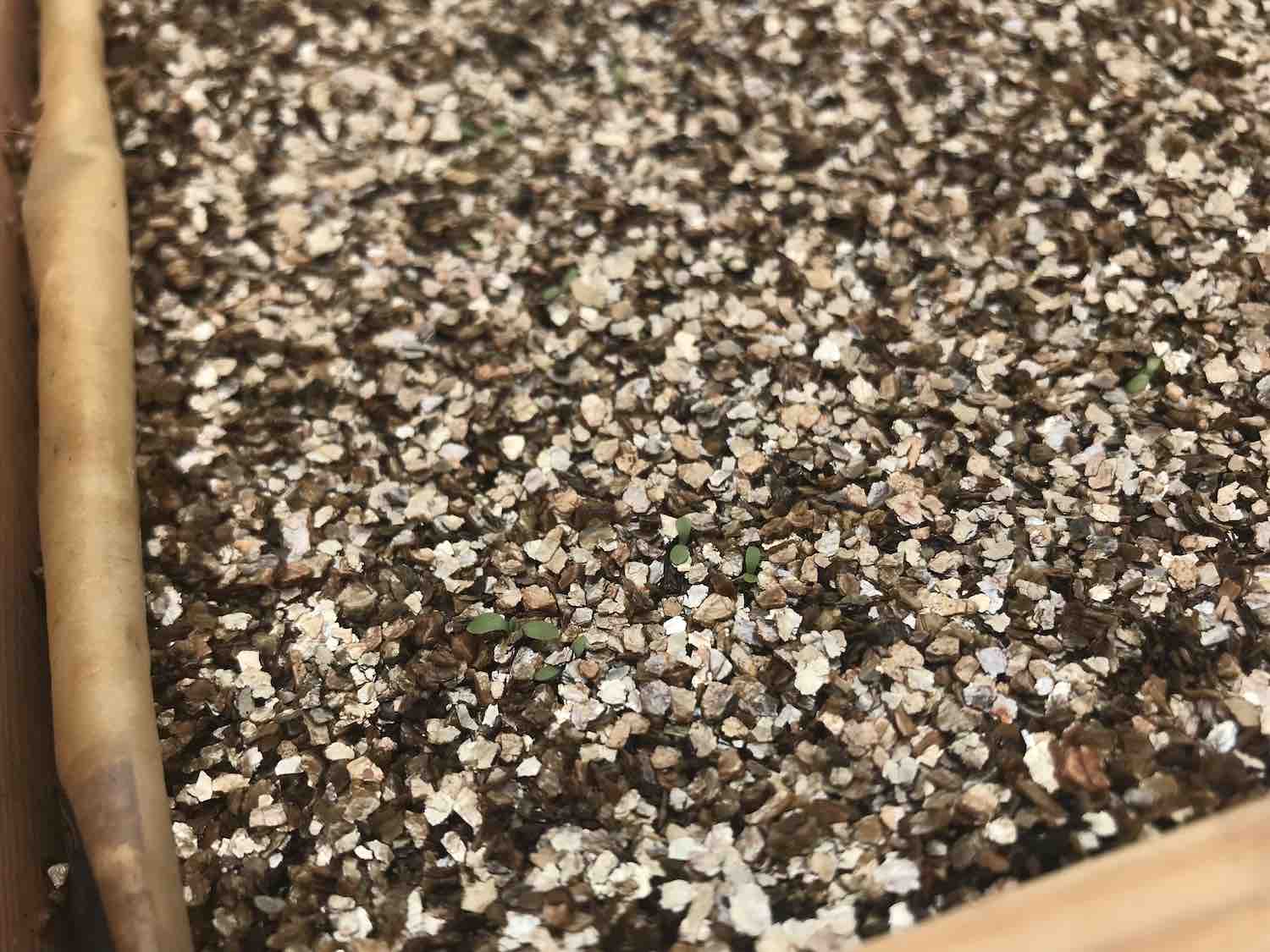
This is exactly how I filled the Exploding Atom Garden. I grew around 90% of the herbaceous perennials in my own garden from seed in a heated greenhouse. Buying the same number of perennials in pots would have cost thousands of pounds. A few packets of seed, some compost and a winter of greenhouse heating cost a tiny fraction of that. My guide on how to sow seeds covers the technique, my list of the best plants to grow from seed is a good place to start, and my guide to pricking out and potting on seedlings covers the next step. Once they are potted on and growing strongly, my plant fertiliser guide compares the feeds worth using on young plants.

It also solves a problem every keen seed sower knows: window ledges cluttered with seed trays and seedlings stretching towards the light. A heated greenhouse gives them the all-round light they need to grow short and sturdy, and it gives you your windowsills back.
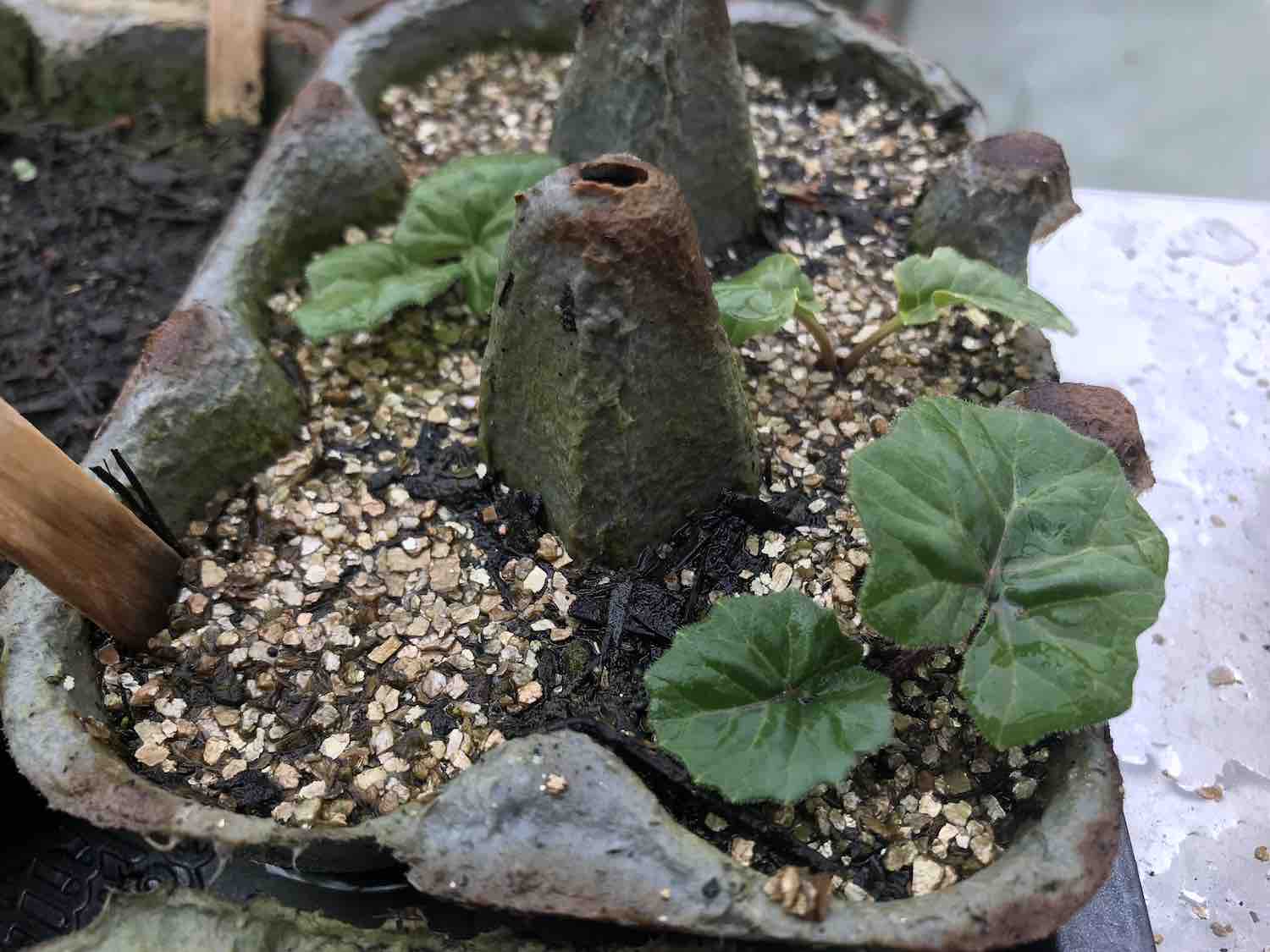
For the slowest germinators, combine the heater with a heated propagator or a thermostat-controlled heat mat. The heater keeps the air in the greenhouse frost-free, and the propagator or heat mat gives the seed trays the 18 to 21°C of bottom heat many seeds need to germinate, without heating the whole greenhouse to that temperature.
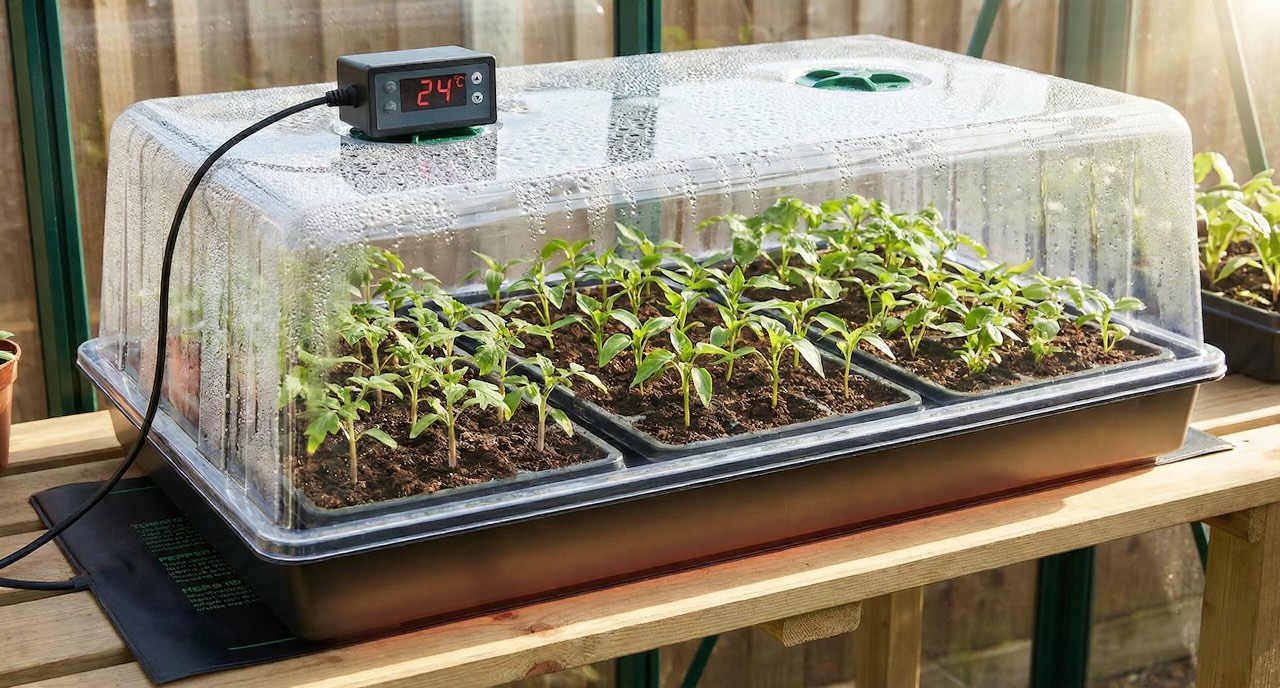
🛒 Buy a seedling heat mat with thermostat from Amazon UK
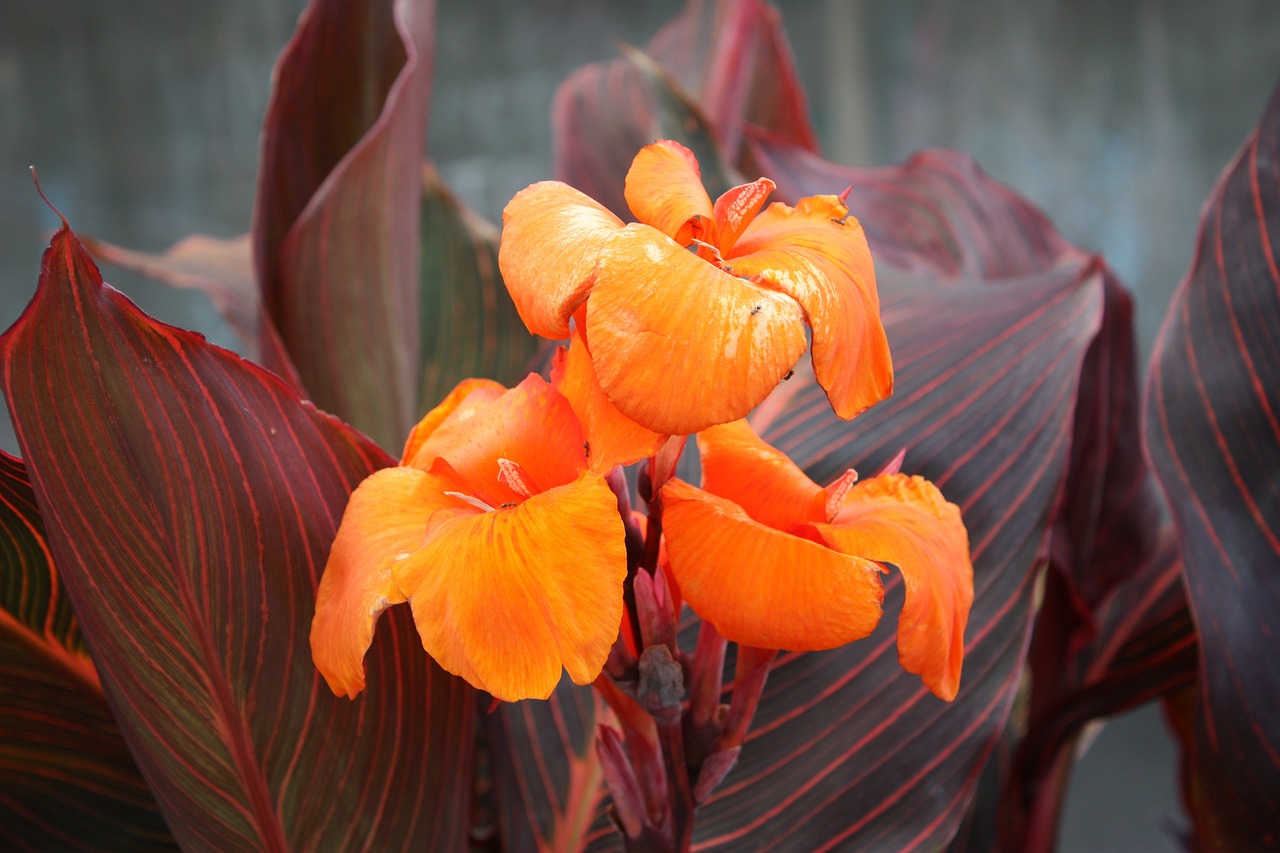
My heater also keeps my tropical plants alive through winter. I have overwintered Cannas and Musa (bananas) in my greenhouse with the heater set to just 9°C, so it only runs intermittently on cold nights and costs far less than heating the greenhouse to a growing temperature. The plants go dormant, sit quietly through the coldest months, and come back to life as the days lengthen in spring.
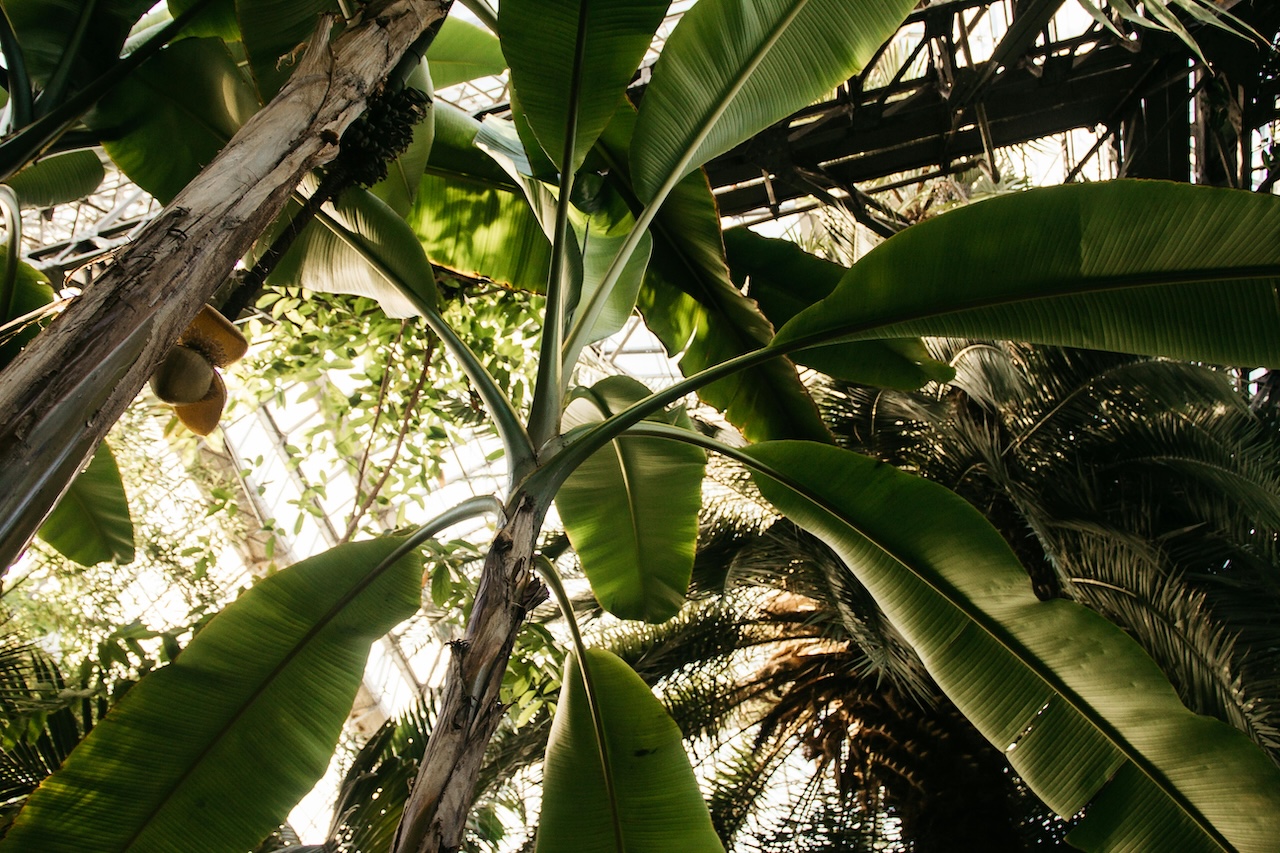
The trick with tender plants over winter is to keep them on the dry side. A cool, damp greenhouse is the perfect home for grey mould, so water dormant plants only when the compost is almost completely dry. Cut Canna foliage back once the first frost blackens it, and let Musa slow right down with minimal water until spring. If you are lifting Cannas or Dahlias from the border, my guide to lifting and storing Dahlia tubers covers both.
A heated greenhouse at 7 to 10°C also suits Pelargoniums, tender Salvias, Citrus trees, Agapanthus in pots and most tender succulents. A heated greenhouse is also a good place to keep cuttings of tender plants such as Pelargoniums and Salvias ticking over until spring; you only need a sharp pair of secateurs and my guide to taking softwood cuttings. Hardier container plants can usually manage in an unheated greenhouse with some insulation, and my guide to protecting container plants from winter frost covers those.
There are four main types of greenhouse heater, and the right one depends mostly on whether you have power in your greenhouse and what you want it to do.
If you can safely get power to your greenhouse, electric is the way to go. An electric heater with a thermostat runs only when needed, adds no moisture or fumes to the air, and is by far the easiest to live with. Paraffin and gas heaters are a backup for greenhouses at the far end of a garden or allotment with no power, but both release water vapour and combustion gases, so they need more ventilation and attention.
You will also see solar greenhouse heaters advertised. In a UK winter there is very little sun on the short, cold days when you need heat most, and nothing at night, so a solar heater on its own will not keep a greenhouse frost-free. Dark water butts or a brick wall inside the greenhouse do store a little daytime warmth and release it slowly overnight, which helps, but treat them as an extra rather than a heater.
These are the heaters and accessories I would buy for a typical UK back garden greenhouse, based on the features that matter most: a reliable thermostat, safe construction for a damp environment, and running costs you can live with.
The Bio Green Tropic is a compact greenhouse fan heater. It has two heat settings, 1kW for mild nights and 2kW for hard frosts, so you only use the power you need. The thermostat adjusts from 0 to 60°C and switches the heater on and off automatically, and its IPX4 splash-proof rating matters in a greenhouse where water gets sprayed around.
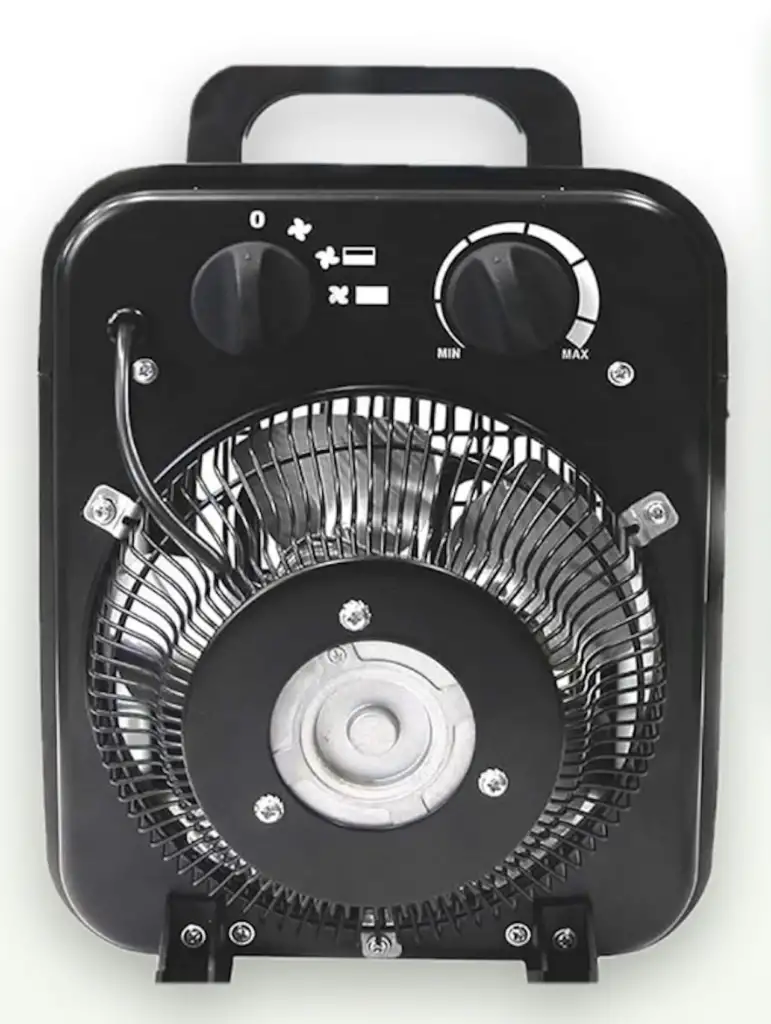
In summer, it runs as a fan only, which helps move air on hot days and keep fungal problems at bay. The listing says it suits greenhouses up to about 10 m², which covers a typical 8x10ft greenhouse.
| 🌡️ Bio Green Tropic At A Glance | |
|---|---|
| Type | Electric fan heater |
| Power | 1kW or 2kW, plus fan only |
| Thermostat | Adjustable, 0 to 60°C |
| Splash rating | IPX4 |
| Best for | Greenhouses up to about 10m² with power |
🛒 Buy the Bio Green Tropic 2kW greenhouse heater from Amazon UK
This heater has lived in my greenhouse for years, raising the Exploding Atom Garden’s perennials from seed and keeping my Cannas and Musa alive at 9°C through winter. The LightHouse 2kW is a simple, tough fan heater with three settings (fan only, half power and full power) and a thermostat dial, and it is rated IP24 splash-proof, which is the minimum I would accept in a greenhouse. It is not waterproof, so it still lives on the staging away from where I water, but it has never let me down.
The one thing I would change is the thermostat. The dial is marked only MIN to MAX, so finding the right setting takes a max-min thermometer and a few cold nights of nudging, and it will not hold a temperature as tightly as a digital thermostat. You end up guessing and needing an extra greenhouse thermometer, which can be a pain for beginner gardeners.
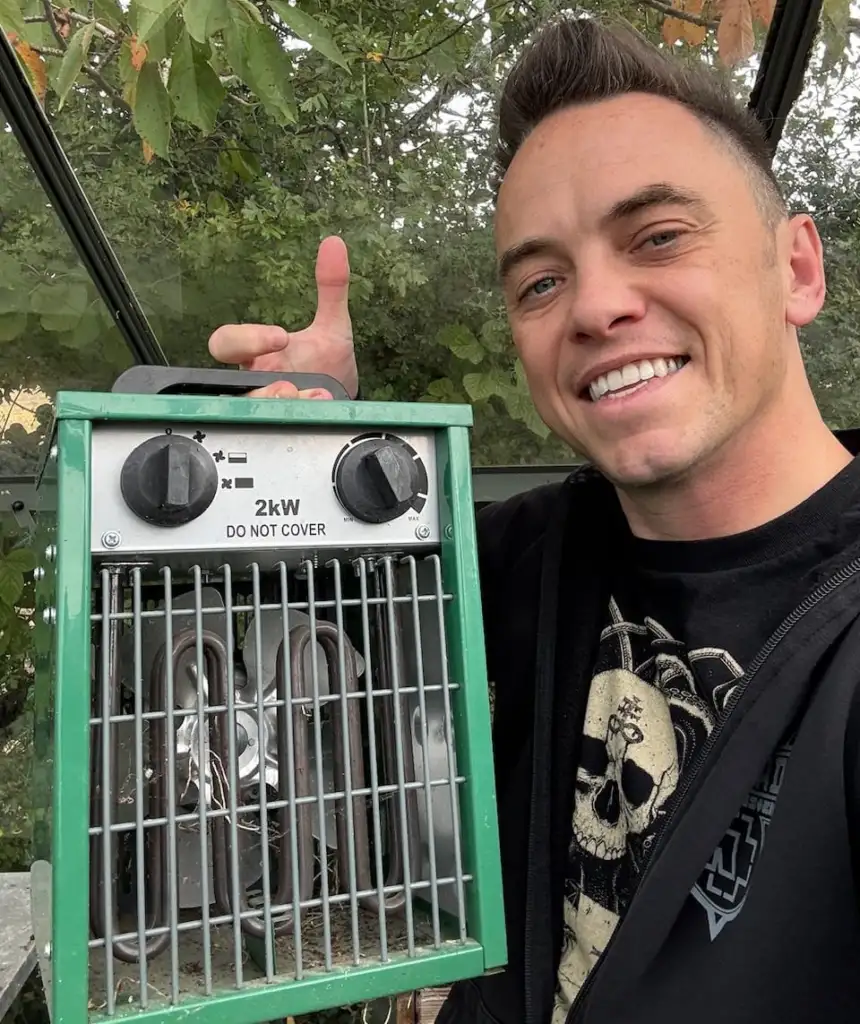
For set-and-forget precision, pair any of these heaters with the plug-in digital thermostat controller I cover further down. If you want a reliable, no-fuss heater at a sensible price, the LightHouse has done the job for me year after year.
| 🌡️ LightHouse 2kW At A Glance | |
|---|---|
| Type | Electric fan heater |
| Power | Fan only, 1kW or 2kW |
| Thermostat | Dial, marked MIN to MAX |
| Splash rating | IP24 splash-proof |
| Best for | Greenhouses up to about 20m² with a safe power supply |
🛒 Buy the LightHouse 2kW greenhouse heater I use from Amazon UK
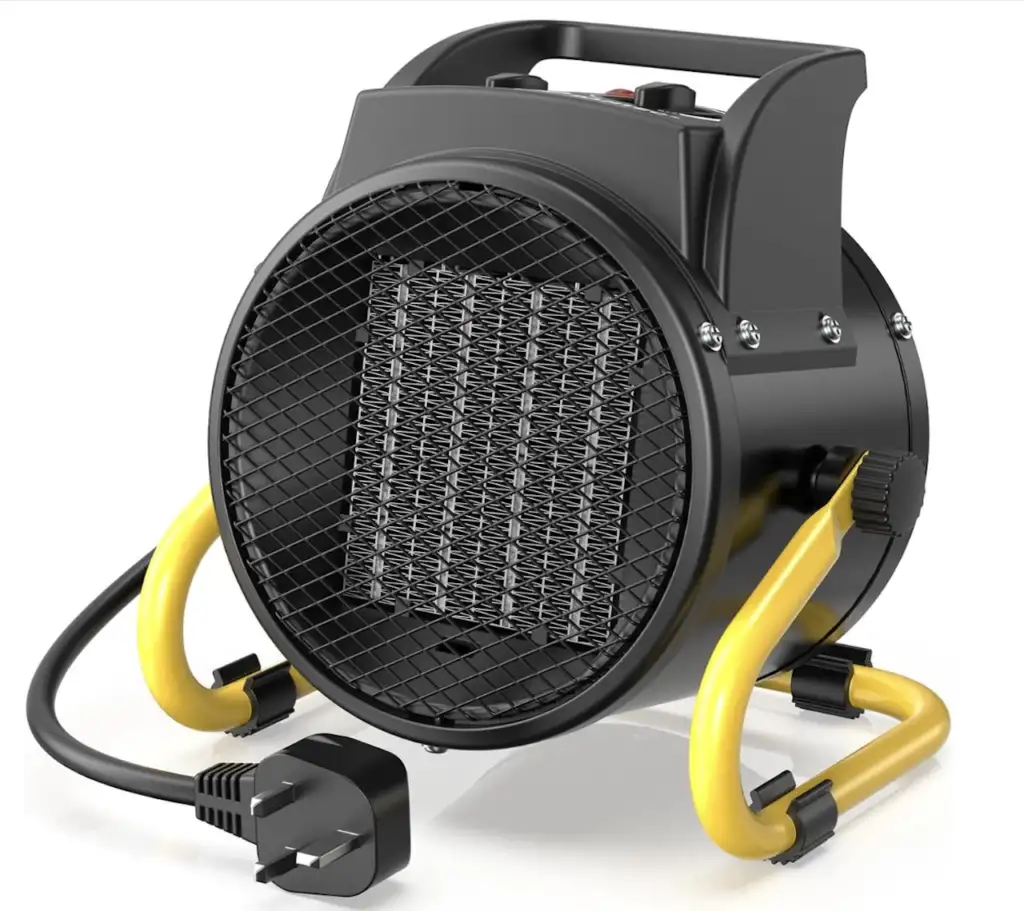
If the Tropic is more than you want to spend, the DAHTEC 2000W is a compact ceramic fan heater with three settings: fan only at 25W, 1kW and 2kW. The 1kW setting is plenty for frost protection in a small greenhouse; the fan-only mode moves air around on still days, and it includes built-in overheat protection. It is light enough to move between the greenhouse in winter and the shed or garage the rest of the year.
There is one important caveat. The DAHTEC carries an IP20 rating, which means it has no protection against water. It is designed mainly for indoor spaces and garages, so in a greenhouse it must be kept well away from any watering or condensation drips.
Stand it on a dry, solid shelf above floor level rather than on damp staging or the floor; never point a hose or watering can near it; and run it only from a weatherproof outdoor socket protected by an RCD. Its thermostat is a simple dial rather than a digital one, so pair it with a max-min thermometer to check what temperature it is actually holding. If you cannot guarantee it will stay dry, spend the extra on a splash-proof heater instead.
| 🌡️ DAHTEC 2000W At A Glance | |
|---|---|
| Type | Ceramic fan heater |
| Power | 25W fan only, 1kW or 2kW |
| Thermostat | Adjustable dial |
| Splash rating | IP20, so no water protection |
| Best for | Budget frost protection in a greenhouse where it can be kept completely dry |
🛒 Buy the DAHTEC 2000W fan heater from Amazon UK
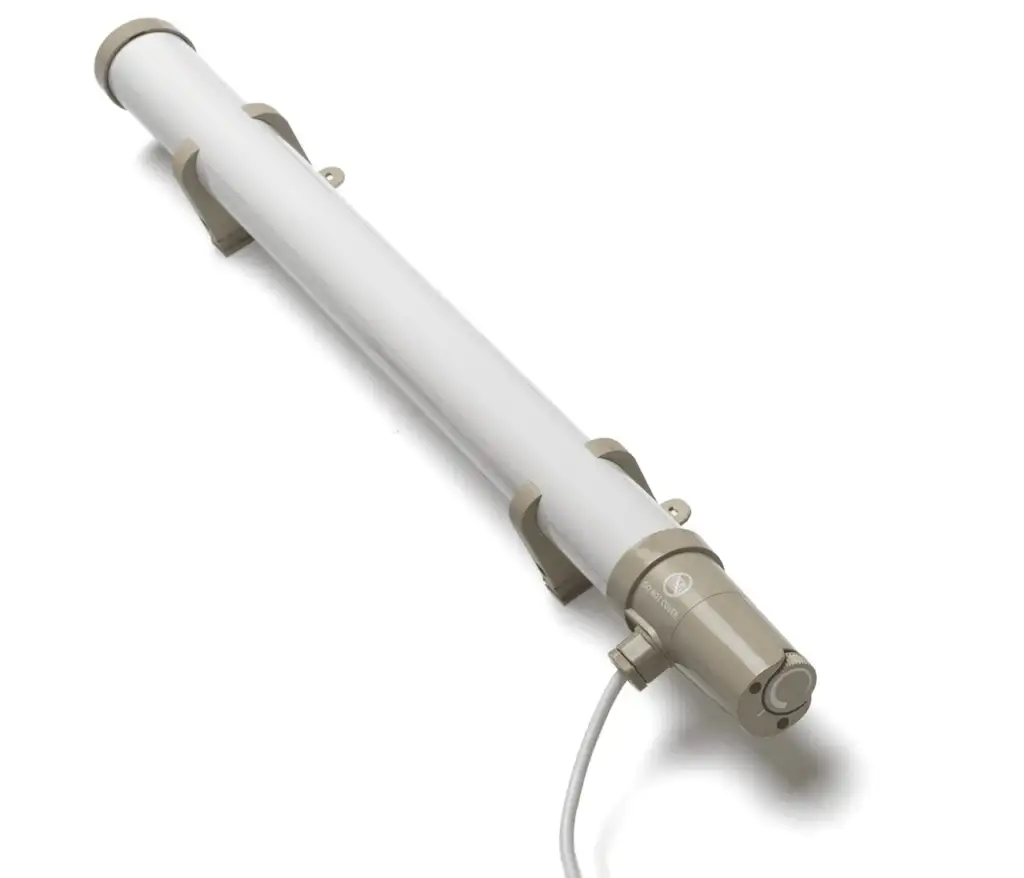
For a small lean-to or a 6x4ft greenhouse that only needs to stay frost-free, a tubular heater is cheap to run and quiet. The Dimplex ECOT range comes in lengths from one foot upwards with a built-in thermostat, and it mounts low on the greenhouse wall or under the staging, out of the way. It will not raise the temperature far on a hard night, so use it for frost protection rather than overwintering tropical plants.
| 🌡️ Dimplex ECOT At A Glance | |
|---|---|
| Type | Tubular heater |
| Power | Low wattage, depending on length |
| Thermostat | Built in |
| Best for | Small greenhouses and frost protection |
🛒 Buy the Dimplex ECOT 2ft tubular heater from Amazon UK or the 3ft Dimplex ECOT tubular heater from Amazon UK
Where there is no power, a paraffin heater is the traditional answer. The Bio Green Warmax Power 5 has two burners and, with both lit, can keep a 10x8ft greenhouse frost-free. Paraffin heaters release water vapour and fumes as they burn, so they need ventilation whenever they are lit, and the wicks and tank need regular trimming and refilling.
Some allotments ban them due to the fire hazard, and you must be super vigilant when using them; don’t leave dried seed packets or old plant waste around that can catch fire. Like I said above, ventilation for the carbon dioxide and fumes they emit is essential.
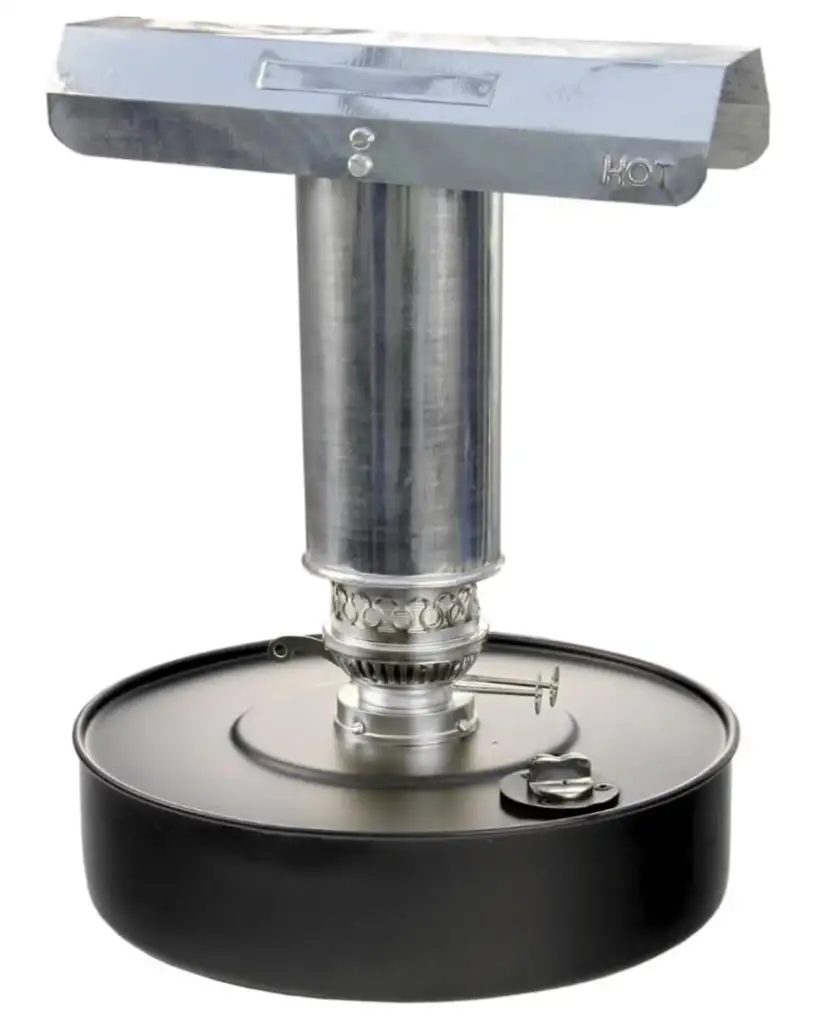
| 🔥 Bio Green Warmax Power 5 At A Glance | |
|---|---|
| Type | Paraffin heater |
| Burners | Two |
| Thermostat | None, so it burns continuously |
| Best for | Greenhouses and allotments without power |
🛒 Buy the Bio Green Warmax paraffin greenhouse heater from Amazon UK
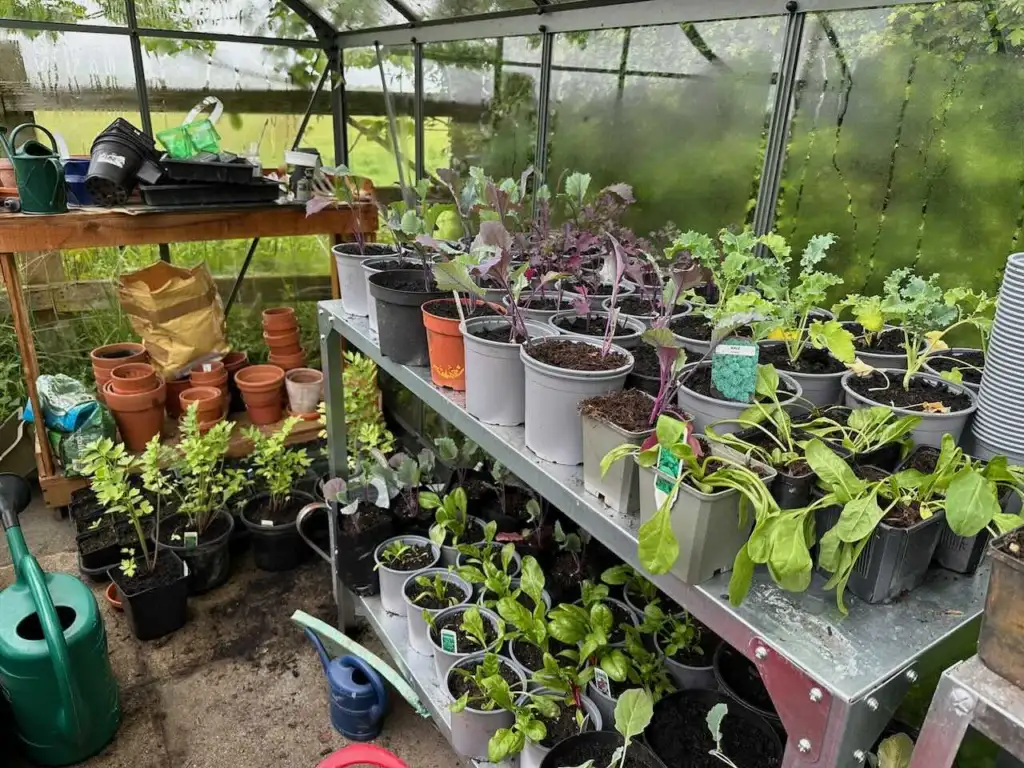
A heater is only as good as your knowledge of what is happening in the greenhouse overnight. A simple max-min thermometer records the lowest temperature since you last reset it, so you can check each morning that the heater and thermostat are actually holding the temperature you set. It costs a few pounds and quickly tells you if your heater is too small or the thermostat is badly placed.
🛒 Buy a max-min greenhouse thermometer from Amazon UK
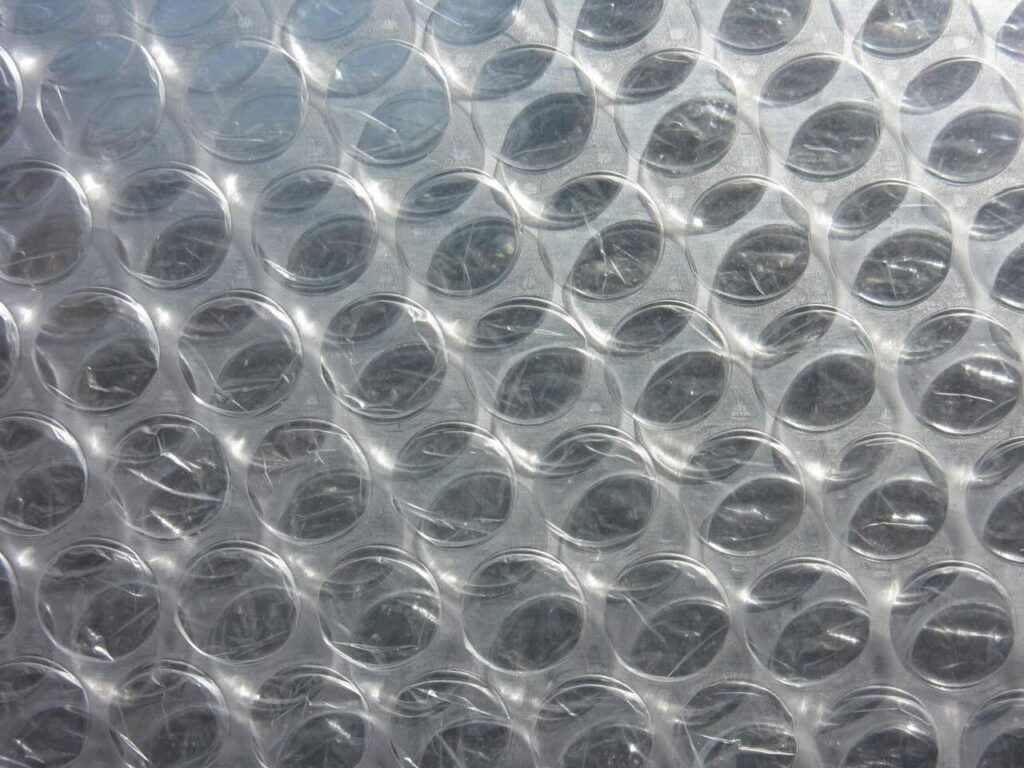
Lining the inside of the glass with horticultural bubble insulation cuts heat loss substantially, often by around a third, so a smaller heater can do the job and your heater runs for less time. Use horticultural-grade bubble wrap with large bubbles, which lets more light through than packing bubble wrap, and fix it to the glazing bars with clips so you can take it down in spring. The roll I have linked comes with fixing clips.
🛒 Buy horticultural bubble insulation with fixing clips from Amazon UK
Heater size depends on your greenhouse size, insulation, and how warm you want to keep it. Keeping a greenhouse frost-free at 2 to 5°C takes far less heat than holding it at 9 or 10°C for tropical plants, roughly doubling what you need on a cold night. As a rule of thumb, for an insulated glass greenhouse:
Go up a size if your greenhouse is exposed to wind, is not insulated, or sits in a cold northern garden or frost pocket. A heater that is slightly too high costs very little extra, because the thermostat simply switches it off sooner. One that is too small runs flat out all night and still lets the temperature fall. Polycarbonate greenhouses hold heat a little better thansingle-glazedd glass, so you may get away with a slightly smaller heater, though the insulation advice still applies. If you haven’t built your greenhouse yet, it’s worth reading my account of putting up my own first.
At the October 2026 price cap, electricity costs 26.32p per kWh. A 2kW heater running flat out uses 2kWh every hour, so it costs about 53p for every hour it is actually heating. With a thermostat, it will not run flat out. It switches on and off to hold the temperature you set, so the real cost depends on how cold the night is and how warm you keep the greenhouse.
This is why the thermostat setting matters so much. With my greenhouse at 9°C for the Cannas and Musa, the heater cuts in only intermittently, mostly on the coldest nights. On a mild, cloudy night, it may hardly run at all. On a clear night at minus 5°C outside,e it might run for around seven hours, which works out at roughly £3.70 for that night with a 2kW heater. Setting the thermostat to a frost-free 3 or 4°C instead cuts the cost dramatically, and insulating the glass cuts it again.
My own greenhouse heater is the LightHouse 2kW greenhouse heater in the photo below, and it has done the job for years, from raising the Exploding Atom Garden’s perennials from seed to keeping my Cannas and Musa alive through winter. If I were buying today, though, I would choose a newer fan heater with a lower power setting and pair it with a digital thermostat, because that combination costs noticeably less to run. The saving comes from how long the heater runs, not how much power it draws. Every electric heater turns all the electricity it uses into heat, so a 2kW heater draws the same power whether it is ten years old or brand new.
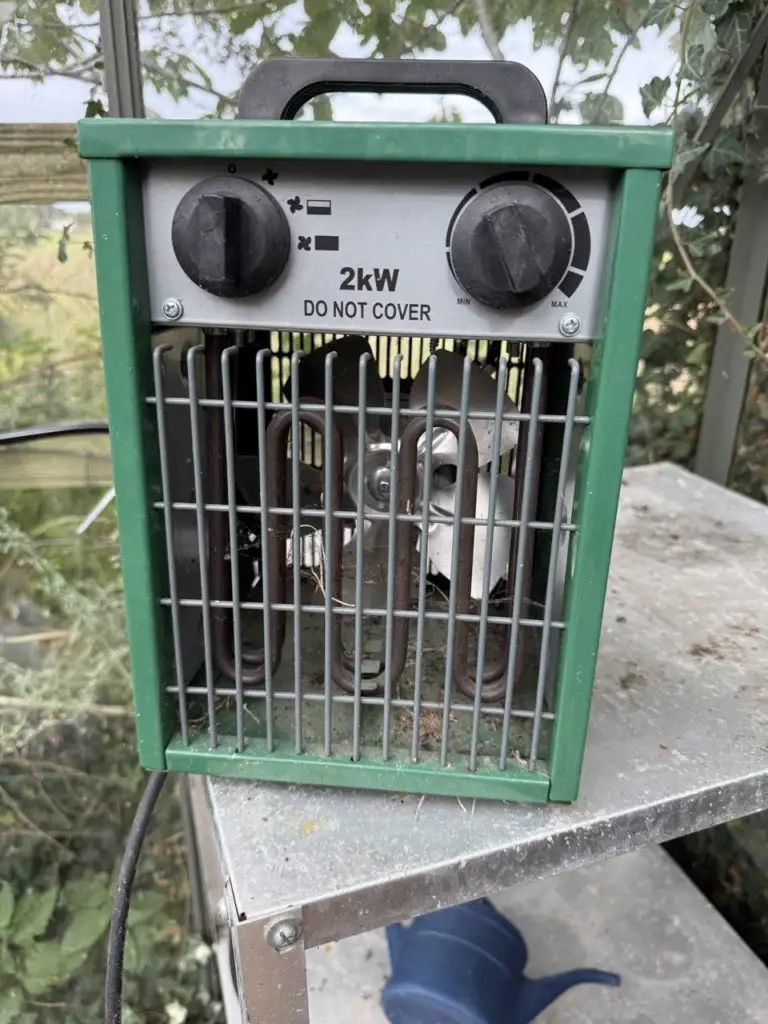
You can see the problem on mine. The thermostat is a dial marked only MIN to MAX, with no temperatures, so the only way to know what it is actually holding is a max-min thermometer. Older heaters like this tend to switch on and off a few degrees above or below your setting and usually overshoot, so the greenhouse ends up warmer than it needs to be.
A modern digital thermostat lets you set an exact temperature, such as 9°C for tender plants or 3°C for frost protection, and holds it within a degree, so the heater switches off the moment the job is done. Many newer models also offer a lower power setting for mild nights and a fan that spreads heat evenly, so the thermostat isn’t fooled by a warm pocket of air next to the heater. Over a long winter, those small differences in run time add up to real savings on your electricity bill.
Many paraffin and gas heaters have no thermostat, so they burn continuously whether the night is mild or freezing, which is why their running costs can creep up over a long winter.
If your greenhouse is at the bottom of a long garden or on an allotment with no power, you still have options, though none are as simple as a thermostat-controlled electric heater.
Paraffin and gas heaters are the main choices, and I’d pick the Warmax paraffin heater above. Both give real, useful heat, but they need refuelling, daily ventilation and a watchful eye, and most have no thermostat, so they burn whether the night is mild or freezing.
A hotbed is the oldest trick in the book. A deep layer of fresh horse manure mixed with straw, built into a raised frame and topped with compost, heats up as it rots down and gives seed trays gentle bottom heat for several weeks in late winter. It will not keep a whole greenhouse frost-free, but it is free, it works, and the Victorians grew melons this way.
Thermal mass helps on every winter night. Water butts, black-painted water containers, or a brick or stone wall inside the greenhouse soak up warmth on sunny days and release it slowly overnight, taking the edge off frost. Combine it with bubble insulation and fleece over tender plants and an unheated greenhouse stays noticeably warmer.
Terracotta pot and candle heaters appear all over social media, but a few tea lights under an upturned pot give off very little heat, nowhere near enough to keep frost out of a greenhouse, and an unattended naked flame among dry seed trays and fleece is a fire risk. I would not rely on one. The same goes for solar heaters on their own, as I explained above.
Everything in this guide applies to polytunnels too, though a polytunnel loses heat faster than a glass greenhouse, so size your heater towards the top of the range in the sizing table and add a second skin of insulation if you can.
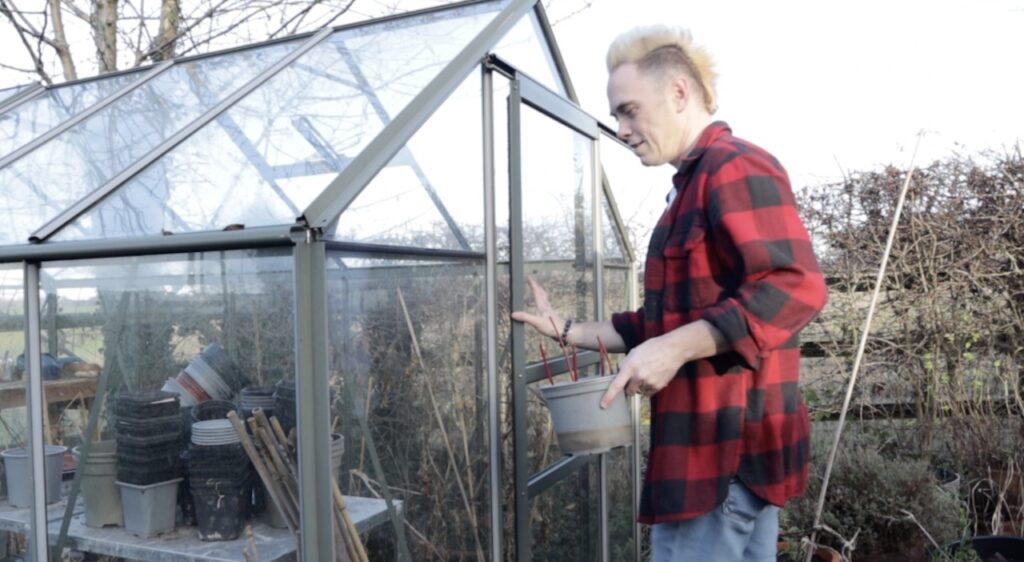
Ventilation is the part of greenhouse heating that most people get wrong. It feels wrong to open the door and let warm air out, but a closed, heated greenhouse full of plants quickly becomes damp and stale. Condensation forms on the glass, the air stops moving, and grey mould (Botrytis) moves in on leaves, stems and seedlings.
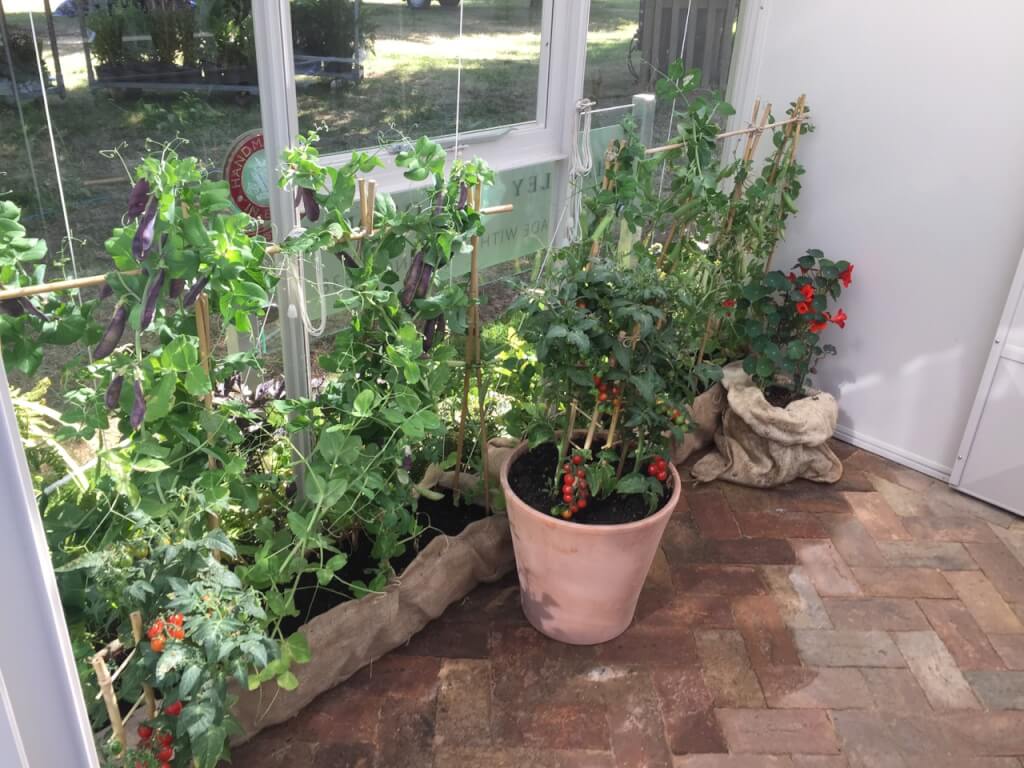
I open the door every few days to allow proper air exchange, ideally on a dry, bright morning when the outside temperature is above freezing, and close it again by early afternoon so the greenhouse warms back up before nightfall. On still days, running the heater’s fan on its own for an hour or two also keeps the air moving. With a paraffin or gas heater, ventilation matters even more, because burning fuel produces water vapour and fumes, so open a vent or the door a little every day the heater is lit. A badly trimmed wick or a yellow, smoky flame also produces fumes that can scorch tender leaves and create carbon monoxide, so keep the wick trimmed, keep the flame blue, and never spend long in a closed greenhouse with a paraffin or gas heater burning.
Water and electricity are a dangerous combination, and a greenhouse is damp, with water sprayed around. Take electrical safety seriously:
Have a qualified electrician install outdoor power. The safest setup is a dedicated outdoor circuit with weatherproof sockets, protected by an RCD (residual current device) that cuts the power instantly if there is a fault. New outdoor circuits fall under building regulations, so this is a job for a registered electrician, not a weekend DIY project.
Choose a splash-proof heater wherever possible. Look for a rating such as IPX4, which means the heater is protected against water splashing from any direction. Never use an oil-filled radiator or an old indoor heater in a greenhouse. If you choose a heater without a splash rating, such as the budget DAHTEC above, position it so it cannot get wet.
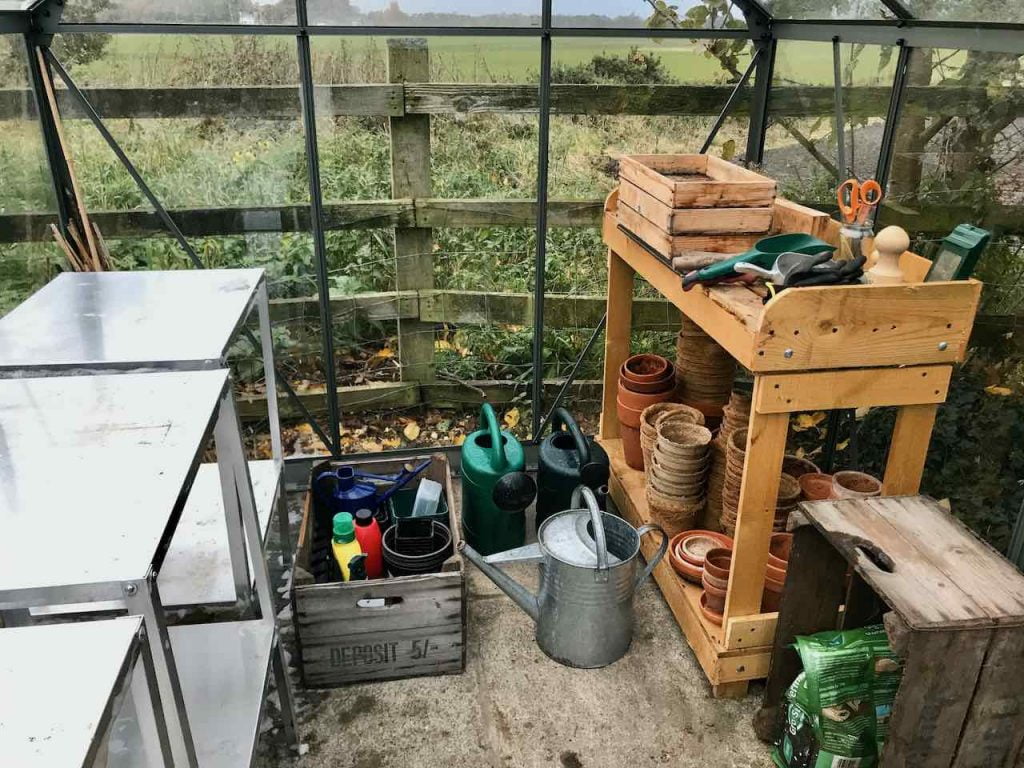
If you run a cable to the greenhouse, use an outdoor-rated one and protect the connection. I run my cable through the side vent rather than under the door, so the door can still close properly and the cable isn’t trapped or crushed every time it shuts. Keep any plug-and-socket connection off the ground in a weatherproof box, and never leave a domestic extension reel running out to the greenhouse all winter.
Clean it out before the first cold night. Over summer, dust, cobwebs, and bits of dried plant collect inside the grille and around the heating elements, as you can see in my photo. Unplug the heater and brush or vacuum it out each autumn before you switch it on, because debris on hot elements is a fire risk, and the smell of burning dust is the first sign it needs cleaning.
Keep the heater clear. Stand it on a level, solid surface, away from the greenhouse walls and anything that could fall on it, such as plant pots, fleece, or bubble insulation, and position it so it won’t get splashed when you water.
My own LightHouse heater, pictured above, is rated IP24, which means splash-proof but not waterproof. It shrugs off the odd splash, but I would never point a hose anywhere near it, and that difference matters more than most people realise. A greenhouse is one of the wettest places you can put an electrical appliance.
You water by hand or with a hose, condensation runs down the glass and drips off the roof on cold mornings, and the air in a closed greenhouse in winter is often close to saturated. A heater that pulls that damp air across hot elements and live wiring all night needs to be built for it.
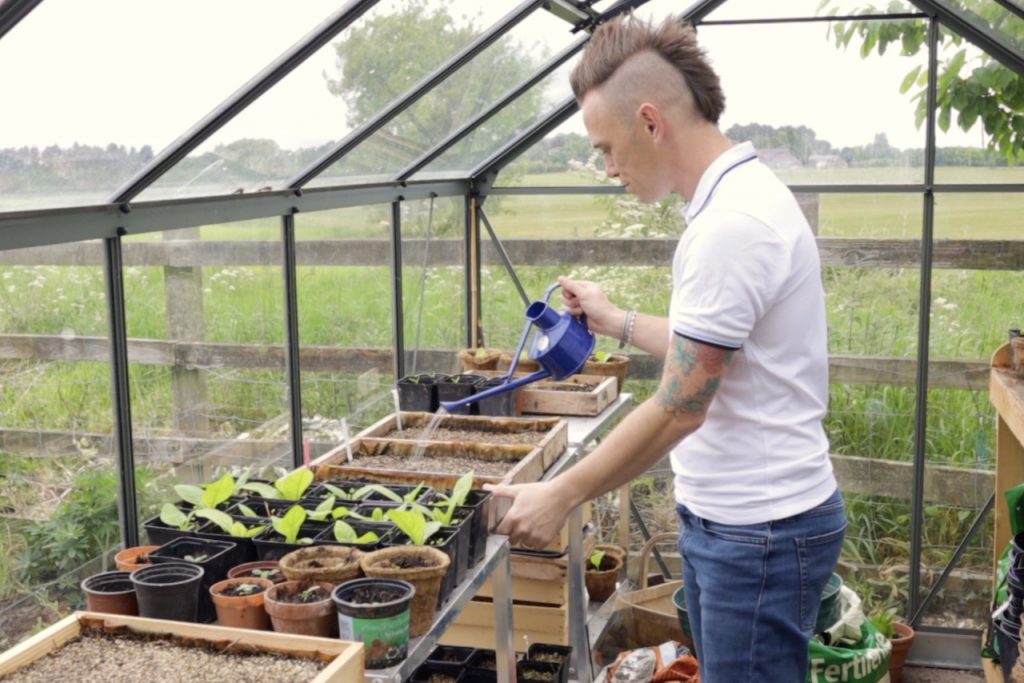
Electrical equipment is given an IP (Ingress Protection) rating, written as IP followed by two digits. The first digit is protection against solid objects such as fingers and dust, and the second is protection against water. An X means that part has not been tested. This is what the common ratings mean in a greenhouse:
A heater that isn’t water resistant can do far more harm than just stop working. Water getting into a mains appliance can make the metal casing live, and in a greenhouse you are often standing on a damp floor with wet hands. That is why an RCD on the supply matters so much: it cuts power in a fraction of a second if current leaks to earth, and it is the safety net that covers you if water ever does get in. Damp air also corrodes wiring and thermostat contacts inside an unrated heater over time, so an old heater that has spent years in a greenhouse deserves a careful look each autumn for rust, cracked cable, or scorch marks before you turn it back on.
If you already own a heater without a rating, like the budget DAHTEC, you can still use it more safely, and the same habits apply to a splash-proof heater like my LightHouse. Keep it on a dry shelf above floor level, angled away from where you water, never position it under the roof where condensation drips, and only plug it into an RCD-protected weatherproof socket. When it is time to replace it, put an IPX4 or better rating at the top of your list.
The cheapest heat is the heat you never need to make, so most of these tips focus on holding on to warmth rather than producing more.
Place the thermostat at plant height, away from the heater itself and out of direct sun, so it reads the temperature your plants actually experience. A thermostat sitting next to a warm heater switches off too early, and one in sunshine reads too warm during the day.
Insulate before you heat. Bubble insulation on the glass, draught-proofing the door, and filling gaps in the glazing make a bigger difference to running costs than the heater you choose
Heat a smaller space. In a large greenhouse, hang a sheet of bubble insulation to partition off one end, and only heat the section with your tender plants and seed trays. This halves the volume you heat.
Group plants on the staging near the heater and away from the coldest end, and use a heated propagator for seeds that need bottom heat, so you don’t heat the whole greenhouse to germination temperature. For filling seed trays, my guide to the best soil improvers and compost covers the peat-free composts I use. My December and February growing guides list what to sow once the greenhouse is warm.
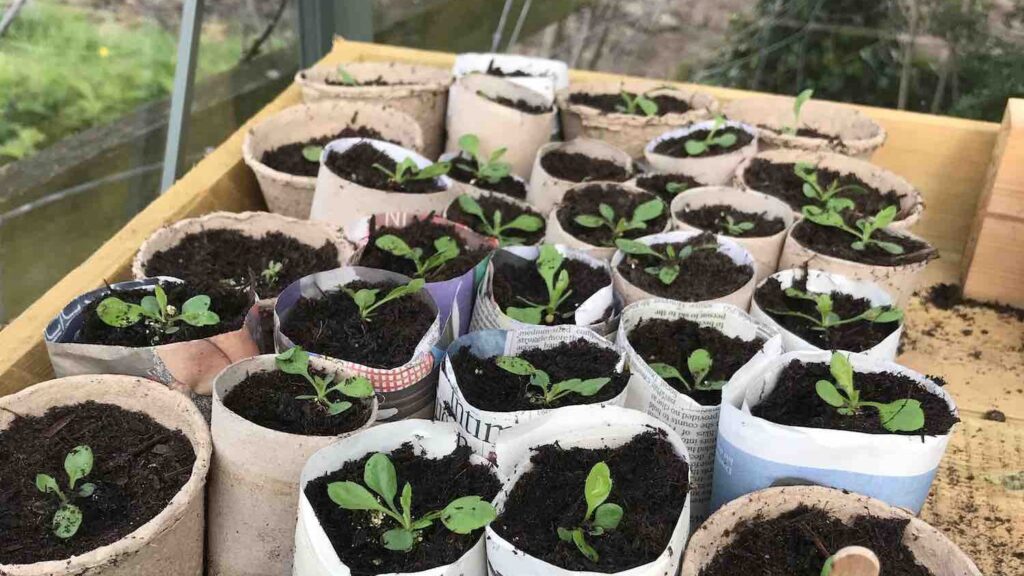
Only heat when you need to. Switch the heater on when nights start dropping toward freezing, usually from late October, and off again once spring frosts finish, usually by late April or May. On the coldest nights, a layer of horticultural fleece draped over tender plants gives them a few extra degrees of protection without turning tup he heater
Keep the glass clean. Winter light is precious, and clean glass lets more of the low sun in to warm the greenhouse during the day. I clean the glass and clear out the greenhouse each November, as you can see in my November garden tour.
Many heaters, including my LightHouse, have a thermostat dial marked only MIN to MAX. To find the setting you want, place a max-min thermometer at plant height in the middle of the greenhouse, set the dial slightly above minimum, and check the lowest overnight reading the next morning. Nudge the dial up or down a fraction at a time over a few cold nights until the lowest reading sits where you want it, such as 3°C for frost protection or 9°C for tender plants, then mark that position on the dial with a dab of paint or a pen.
If your old heater still works, you don’t have to replace it to get the benefits of a digital thermostat. A plug-in thermostat controller sits between the socket and the heater and switches it on and off from a temperature probe you place among your plants, so you can set an exact temperature. Turn the heater’s own thermostat to maximum and let the controller do the work. Check that the controller is rated for the full load of your heater (a 2kW heater draws close to 9 amps, so choose one rated for at least 13 amps or 3kW), and keep it somewhere dry, ideally outside the greenhouse in a weatherproof box alongside the plug.
🛒 Buy a plug-in digital thermostat controller from Amazon UK
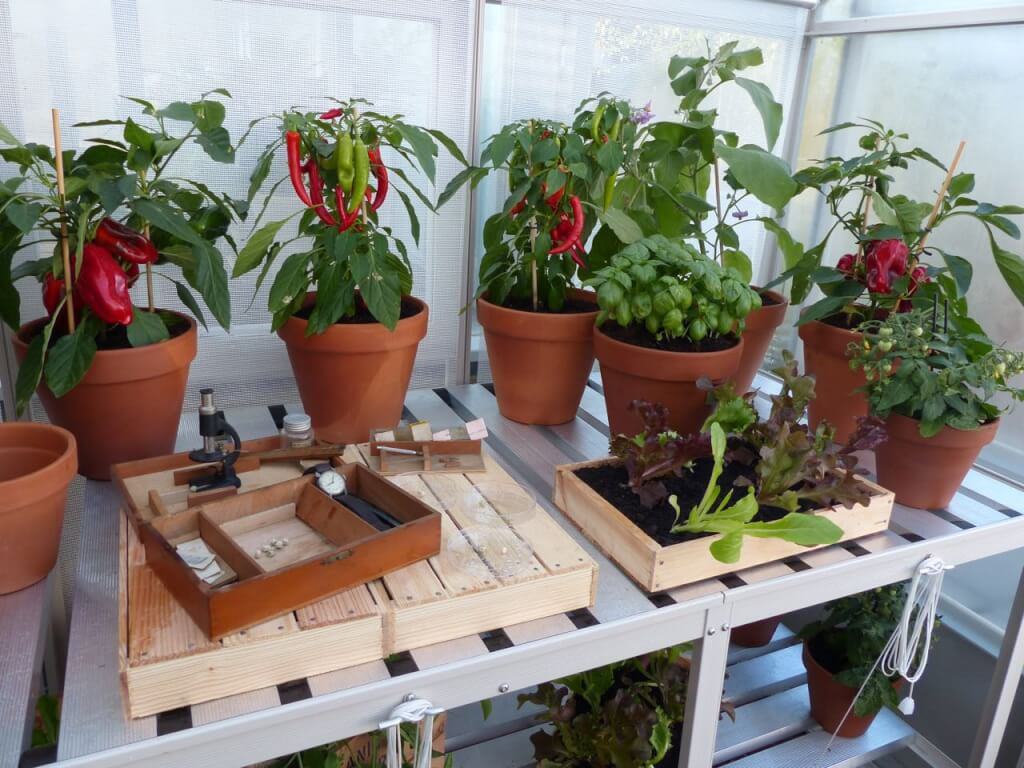
To keep a greenhouse frost-free, set the thermostat to 2-5°C. For tender plants such as Cannas, Musa, Pelargoniums and Citrus, 7 to 10°C is safer; I overwinter my Cannas and Musa at 9°C. For late-winter sowing, aim for at least 10°C in the greenhouse, and use a heated propagator for seeds that need warmer compost to germinate.
At the October 2026 price cap of 26.32p per kWh, a 2kW electric heater costs about 53p per hour of heating. With a thermostat, it only runs when needed, so the real cost depends on how cold the night is and the temperature you set. Keeping a greenhouse just frost-free costs far less than keeping it at 9 or 10°C, and insulating the glass reduces the cost further.
A 1kW heater is usually enough to keep an insulated 6x8ft greenhouse frost-free. If you want to keep tender plants at 7 to 10°C, or your greenhouse is uninsulated or exposed, choose a 1.5 to 2kW heater with a thermostat.
Yes. A closed, heated greenhouse quickly becomes damp, which leads to grey mould on plants and seedlings. Open the door every few days on a dry, mild morning to exchange the air, and close it again by early afternoon. Paraffin and gas heaters need more ventilation, because they release water vapour and fumes as they burn.
A heater designed for greenhouses, with a thermostat and a splash-proof rating, can run unattended overnight, provided it is powered from a weatherproof outdoor socket protected by an RCD and placed on a level surface away from anything flammable. Never leave an indoor heater or a domestic extension reel running in a greenhouse.
It is safest to choose a splash-proof heater with a rating such as IPX4, because a greenhouse is damp and water gets splashed around when you water. If you use a fan heater without a splash rating, keep it on a dry shelf well away from watering or condensation, and run it only from a weatherproof outdoor socket protected by an RCD. Never use an oil-filled radiator in a greenhouse.
Every electric heater converts all the electricity it uses into heat, so a 2kW heater uses the same power whatever its age. Newer fan heaters cost less to run because many have lower power settings for mild nights, and a digital thermostat, whether built in or plugged in, holds an exact temperature and switches off sooner than an old dial thermostat that overshoots.
Not on their own in winter. Winter days are short and sunny, and there’s no sun at night, when frost strikes. Thermal mass such as water butts or a brick wall stores a little daytime warmth and helps a bit, but you still need a heater to keep a greenhouse reliably frost-free.
They are a good option where there is no electricity. They release water vapour and combustion fumes, so ventilate them daily when lit, trim the wick regularly, and keep the tank topped up. Most have no thermostat, so they burn continuously whatever the temperature.
A 2kW electric heater uses 2kWh for every hour it is actually heating, which costs about 53p at the October 2026 price cap. With a thermostat, it only runs when the greenhouse drops below your set temperature, so a frost-free setting of 3 to 5°C in an insulated greenhouse uses far less than keeping it at 9 or 10°C. Most of the electricity is used on the few very cold nights each winter.
Insulate the glass with horticultural bubble insulation, partition off a smaller area and only heat that, set the thermostat to the lowest temperature your plants need, and use a heated propagator for seeds rather than heating the whole greenhouse. Keeping the glass clean, adding thermal mass such as water butts, and draping fleece over tender plants on the coldest nights also help.
Set the thermostat to 2 to 5°C to keep frost out, or 7 to 10°C for tender plants. If your heater has a dial marked only MIN to MAX, place a max-min thermometer at plant height, start with the dial just above minimum, and adjust it a little at a time over a few cold nights until the overnight low sits where you want it.
Switch it on when night temperatures start dropping towards freezing, usually from late October in most of the UK, and leave it on with the thermostat in control until frosts finish in late April or May. A heater with a thermostat costs nothing on mild nights because it runs only when the temperature falls below your setting.
It should be splash-proof, with a rating such as IP24, IPX4, or better, because greenhouses are damp and water splashes around when you water. A heater with no water rating, such as IP20, can only be used safely if it is kept completely dry on a shelf, away from watering and condensation, and plugged into an RCD-protected weatherproof socket.
For hardy plants and overwintering perennials, an unheated greenhouse is fine as long as it stays above about minus 2 to minus 3°C, since the glass keeps out wind and wet. Tender plants are damaged once temperatures reach 0°C, so keep the greenhouse at 2 to 5°C for frost protection and 7 to 10°C for tropical plants such as Cannas and Musa. Most seeds need at least 10°C in the greenhouse, and 18 to 21°C in a propagator, to germinate.
Use a paraffin or propane greenhouse heater, and ventilate it every day it is lit. Add thermal mass, such as water butts; insulate the glass with horticultural bubble insulation; and drape fleece over tender plants on the coldest nights. A hotbed of fresh manure and straw gives seed trays gentle bottom heat in late winter. Candle and terracotta pot heaters don’t provide enough heat to keep frost out.
A heated greenhouse typically brings your sowing and growing window forward by two to four weeks. That makes the biggest difference for slow-germinating seeds such as herbaceous perennials, Chillies, Peppers, and Aubergines, which need a long season to flower or crop well in the UK.

Join over 100,000 gardeners on YouTube
Free gardening videos from the Garden Ninja, with 8 million views and counting.
Subscribe on YouTube, it’s freeA greenhouse full of seedlings in March needs somewhere to go by May. My online garden design courses teach you how to work out where every plant goes, how the borders fit together, and how to plant in drifts that look designed, using the same process I followed when planting the Exploding Atom Garden from seed.
With courses starting from just £29, you can plan your borders over winter while your seedlings grow.
For the garden you’ve already got, not the one you’re starting from scratch. Seven checklists and video lessons from BBC Garden Rescue’s Lee Burkhill, built to help you work out what’s worth keeping before you spend a penny.
Garden Design Examples for Small Gardens: 30 Design Templates & Planting Plans: In this online gardening course, I’ll walk you through 30 fantastic garden designs, explaining the logic behind the layout, the plant choices, and take-home tips for applying them in your own garden.
Learn how to transform and design your own garden with Lee Burkhills crash course in garden design. Over 5 hours Lee will teach you how to design your own dream garden. Featuring practical design examples, planting ideas and video guides. Learn how to design your garden in one weekend!
Garden Design for Beginners Online Course: If you want to make the career jump to becoming a garden designer or to learn how to design your own garden, this is the beginner course for you. Join me, Lee Burkhill, an award-winning garden designer, as I train you in the art of beautiful garden design.
For most UK gardeners, an electric greenhouse heater with a thermostat, sized to your greenhouse and paired with bubble insulation, is the best way to keep a greenhouse frost-free, overwinter tender plants and start your growing year two to four weeks early. A tubular heater suits small greenhouses that only need frost protection, and a paraffin heater is the fallback where there is no power.
If you are buying for a keen grower, a greenhouse heater or heated propagator makes a brilliant present, and my gardening gifts guide has more ideas, while my best garden tools guide covers the hand tools I use every day.
Whatever you choose, set the thermostat no higher than your plants need, ventilate every few days, and treat the electrics with respect. Do that, and a heated greenhouse will pay for itself many times over in plants grown from seed, as it has in my own garden.
Happy gardening from The Garden Ninja! 🌿


Lee Burkhill, known as the Garden Ninja, is an award-winning garden designer and horticulturist with over 30 years of gardening experience and 15 years as a professional garden designer. A qualified RHS (Royal Horticultural Society) professional, Lee specialises in sustainable garden design and practical horticultural advice. He designs and presents on BBC1’s Garden Rescue and in leading gardening publications. Lee combines three decades of hands-on gardening knowledge with professional design qualifications to help gardeners create beautiful, functional outdoor spaces.
View all posts by Lee Burkhill







JOIN THE NINJAS
Be the first in line for new Guides, Discount codes and Offers