For the garden you’ve already got, not the one you’re starting from scratch. Seven checklists and video lessons from BBC Garden Rescue’s Lee Burkhill, built to help you work out what’s worth keeping before you spend a penny.
69


Quick Answer
Prune Cornus (grown for winter colour) in late March to early April, once established for three or more years. Cut all stems back to around 10cm above ground level. This hard pruning, called coppicing, encourages vigorous new growth that produces the brightest stem colour the following winter. Young plants under three years old should be left to establish without pruning.
Jump To
Cornus is a genus of about 30 to 60 species of woody plants in the family Cornaceae, commonly known as Dogwoods. They are one of the most underappreciated groups of garden plants in the UK, offering winter stem colour, spring and summer flowering interest, and in some cases spectacular autumn foliage, all from a shrub or small tree that is genuinely tough enough for almost any UK garden condition.
You may already have a Cornus in your garden without realising it. Established Cornus shrubs lose their vivid stem colour as the wood ages and lignifies, turning from fiery red or lime green to dull brown. Many gardeners assume their dogwood is past its best when, in fact, it simply needs a hard prune to restore it completely.
Having pruned Cornus both in my own garden and in hundreds of client gardens over 20 years, I can tell you that few things in late winter gardening are as immediately satisfying as watching those blazing new shoots emerge after a good coppice.
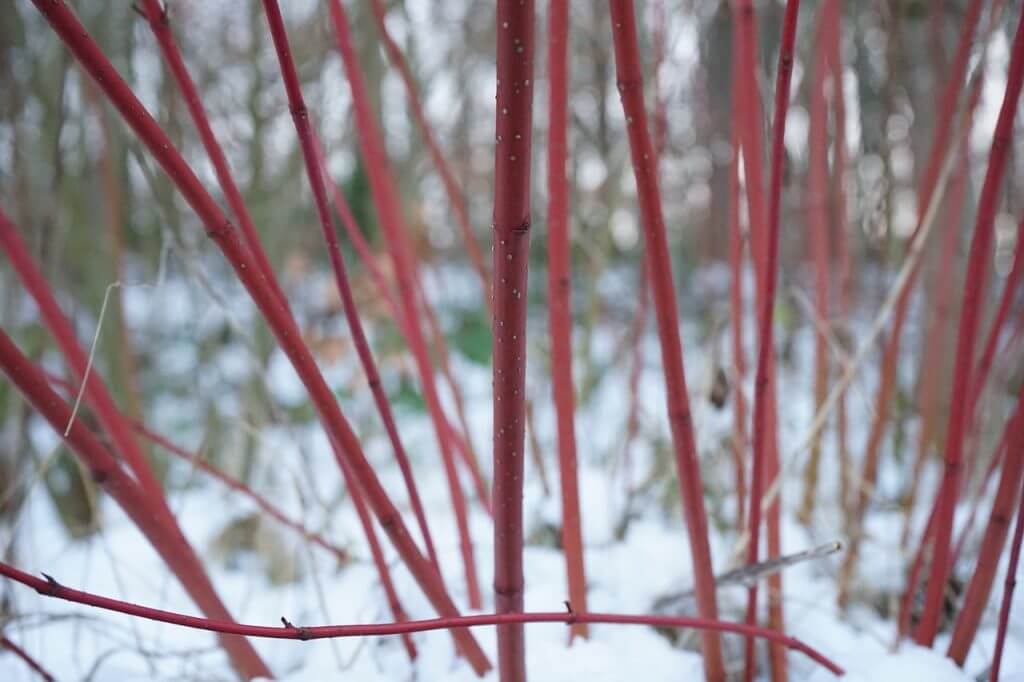
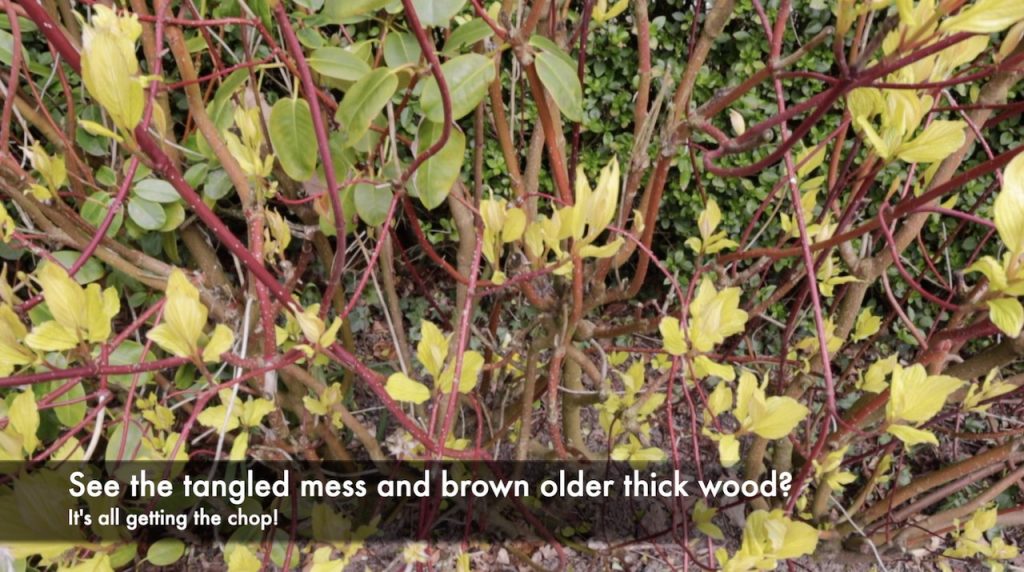
Hard pruning Cornus keeps their vibrant winter stem colours and maintains the vigour of the shrub. Without pruning, dogwoods grown for colour become woody and congested, with the older branches gradually losing their brilliant reds, greens, and oranges and turning to a dull brown-grey. It is only the newest growth that provides the best colour: the stem produced in the current growing season will always be brighter than one produced two or three seasons ago.
Many types of Cornus shrub are also genuinely vigorous growers that get out of hand without an annual or biennial prune. Left to their own devices for several years, they send up suckers, expand considerably into neighbouring planting, and develop crossing branches that create a tangled, congested canopy. For new gardeners it can feel counterintuitive to cut a shrub back almost to the ground, but Cornus is one of the most forgiving plants in the garden for this treatment. Their existing root structure is intact and fuelling that new growth from the moment you put the secateurs down.
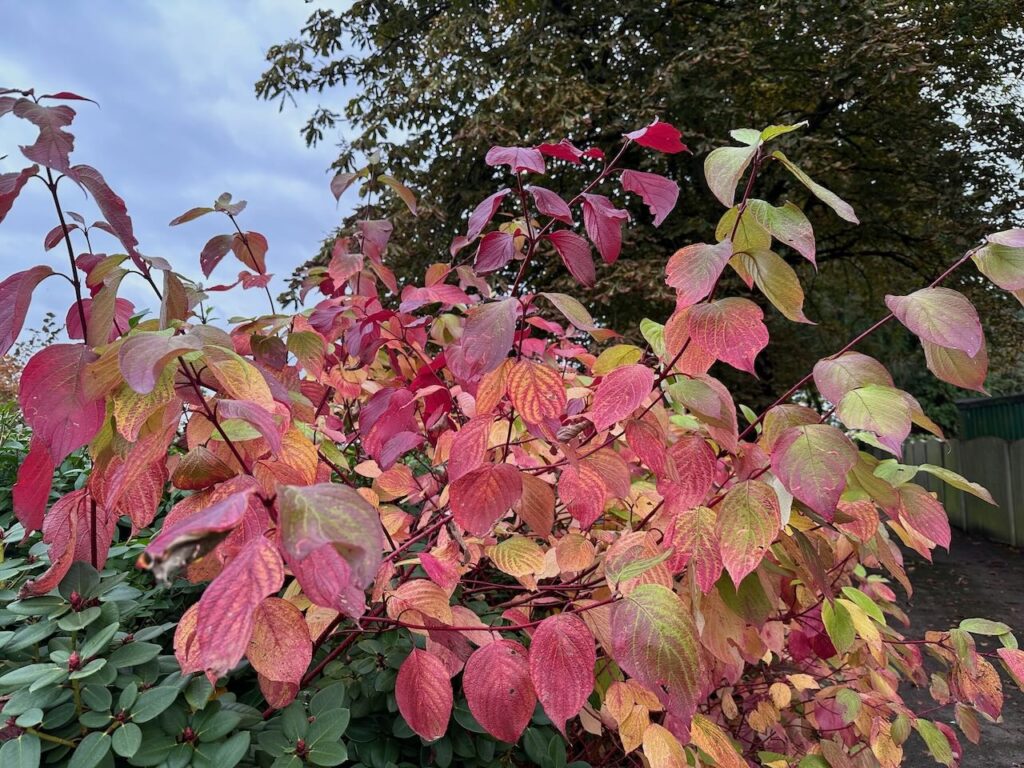
Regular pruning encourages vivid winter stems. Hard pruning keeps their vigorous growth under control, prevents Cornus from becoming woody and dull-looking, and gives you a supply of material for hardwood cuttings so you can propagate more plants for free.
Dogwoods have a habit of being well-behaved for two years and then growing at a considerable rate in year three if not controlled. Older Dogwoods lignify: the stems become very woody and thick, making them hard to manage and their colour fades to dull brown. They also sucker freely and send out new shoots at each side of the shrub. Without pruning, these can become unwieldy very quickly.
One of the most common sources of confusion around Cornus is that the name covers several very different types of plant requiring completely different management. Understanding which type you have before reaching for the secateurs is essential, because the hard coppicing technique that works brilliantly on Cornus will damage or ruin a flowering Cornus tree.
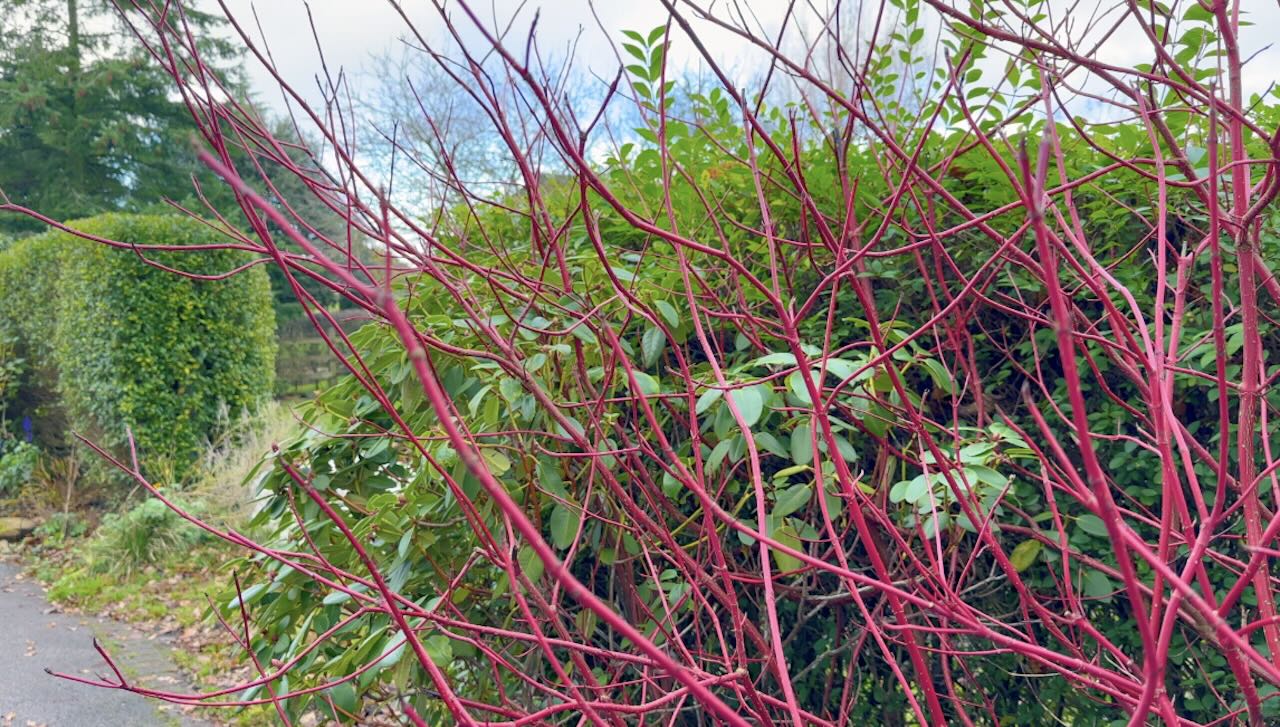
This is the group most people mean when talking about dogwoods in a UK garden context. These deciduous shrubs are grown primarily for vivid winter stem colour: reds, oranges, yellows, lime greens, and deep purple-black depending on variety. They respond brilliantly to hard pruning and actively need it to maintain their colour. All the pruning guidance in this article refers primarily to this group.
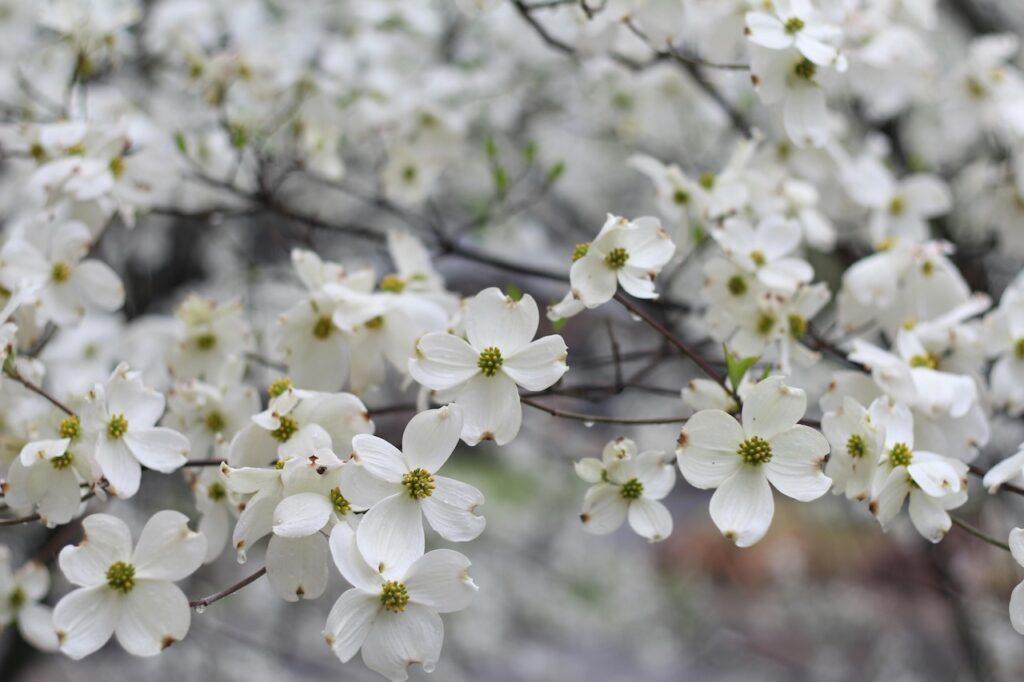
Cornus kousa (Japanese flowering dogwood) and Cornus florida (American flowering dogwood) are grown for spectacular spring flowers and their tiered branching habit. These do not need hard pruning and will not tolerate it. Light pruning to remove damaged or crossing branches when dormant is all they need. Heavy pruning destroys their natural shape and significantly reduces flowering.
Cornus controversa and its celebrated variegated form are grown as specimen trees for their dramatic horizontal tiered branching. They need space, patience, and almost no pruning beyond occasionally removing any upright shoots that might merge two tiers. This is a tree for a larger garden rather than a small border.
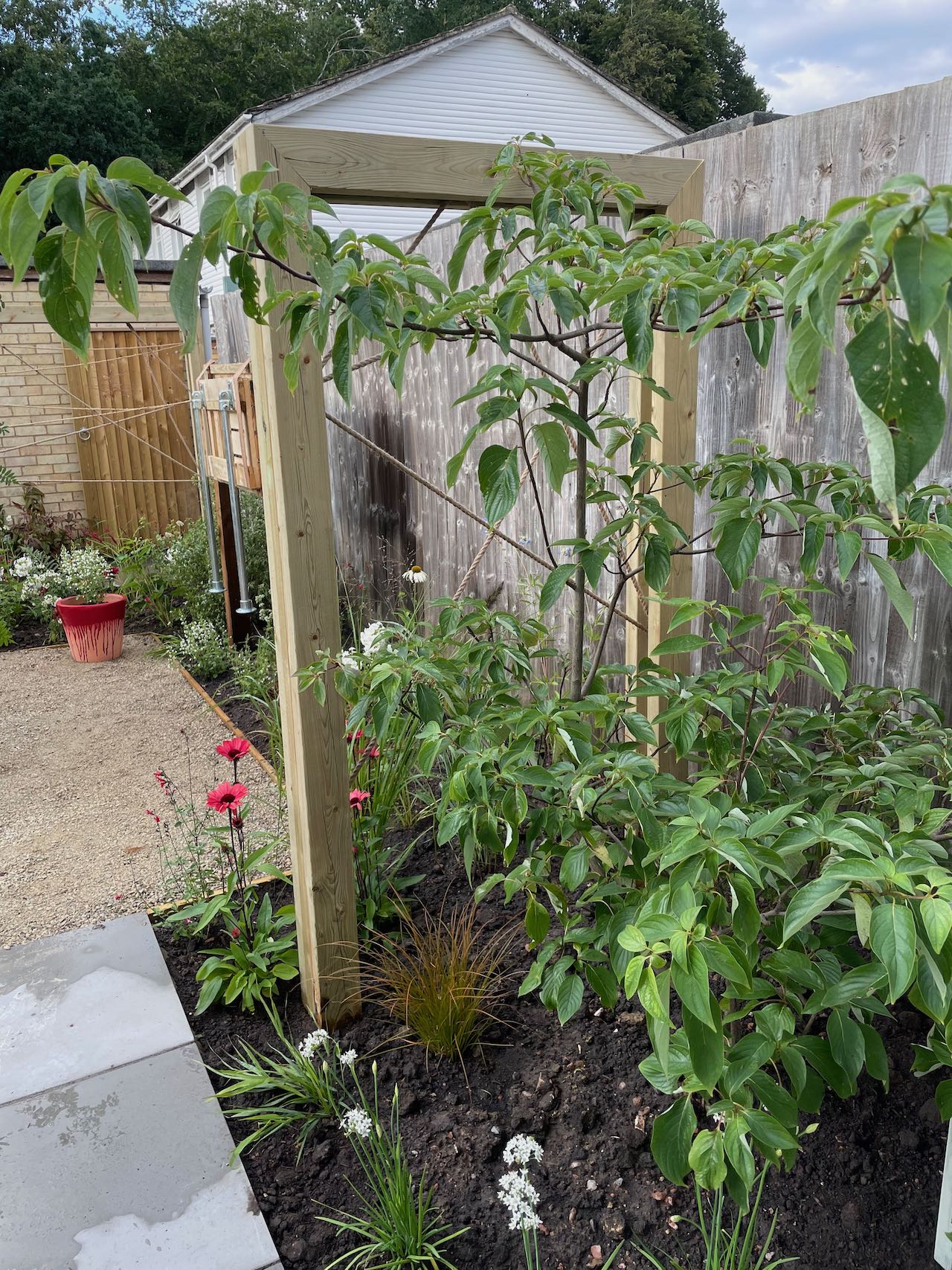
Cornus mas is grown primarily for its early yellow flowers, which appear in late January and February before the leaves emerge, and its small red, cherry-like fruits in late summer. It does not need annual hard pruning but tolerates light tidying. An underused plant that deserves far more attention for its winter flowering interest.
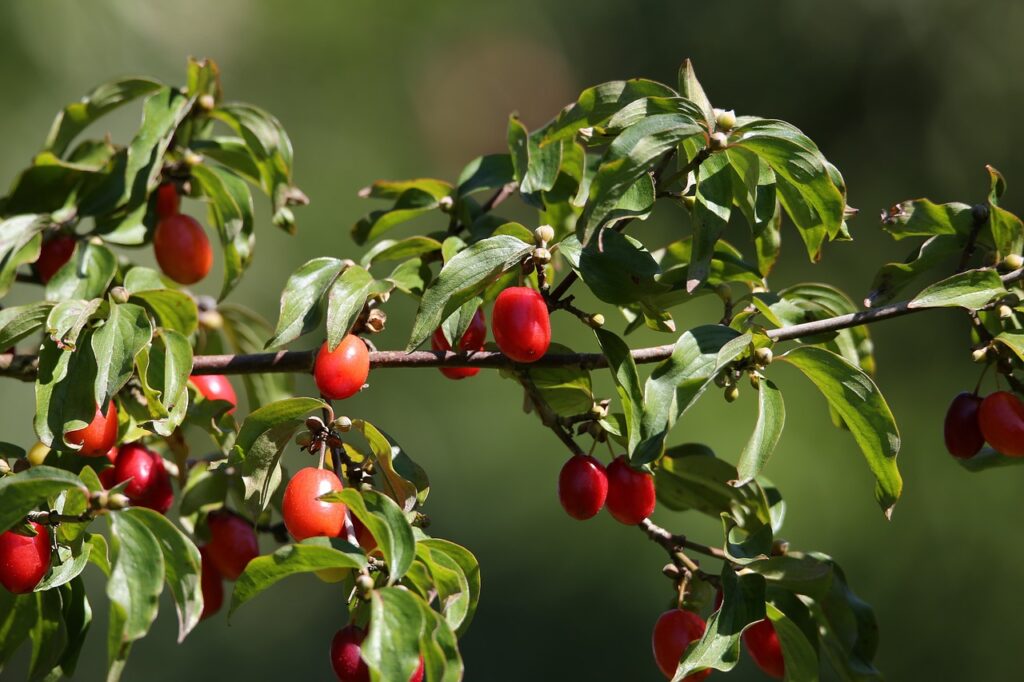
Choosing the right variety is the starting point for a successful dogwood display. These are the Cornus I recommend most frequently in client gardens and on the forum, chosen for colour intensity, reliability in UK conditions, and availability from UK nurseries.
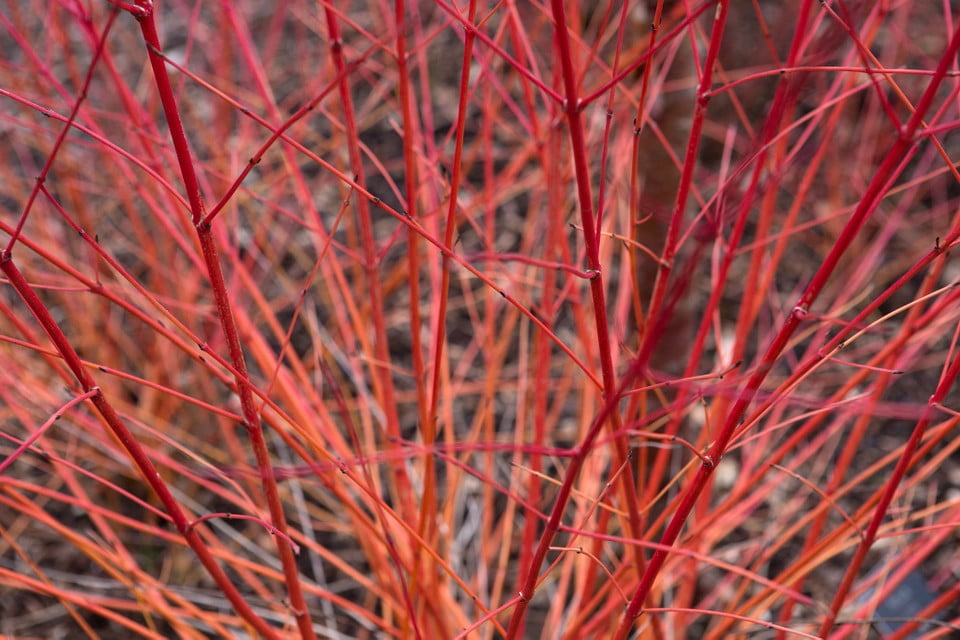
My personal favourite combination is Cornus alba Sibirica planted alongside Cornus sericea Flaviramea. The contrast between blazing red and lime green stems is extraordinary on a frosty winter morning and one of the most impactful low-maintenance garden displays you can create for under thirty pounds in plants.
🛒 Buy Cornus Dogwood Shrubs from Amazon UK
Prune Cornus in late March to early April in the UK. This is when new green growth is just beginning to emerge, telling you the plant is in active growth and will respond vigorously. Pruning at this point also lets you enjoy the winter stem display for as long as possible before removing it.
The older guidance recommended pruning in January, and some sources still suggest this. Based on experience and the RHS’s updated guidance, late March is better for two reasons. First, you extend the winter display by two to three months. Second, pruning into actively growing wood is less stressful for the plant than cutting into fully dormant wood in the depths of winter, and the response in terms of new growth is stronger and faster.
💡 Top Tip
Don’t be impatient to prune in January or February just because the stems look past their best. Leave them until you see the first green buds breaking at the base of the stems in late March. That is the signal that the plant is ready and will respond with maximum vigour.
For Cornus sanguinea varieties like Midwinter Fire and Magic Flame, avoid full coppicing to ground level. These respond better to pruning to approximately half their height, as they do not regenerate as vigorously as alba varieties from a full hard prune. A lighter approach every year suits them better than a hard coppice every other year.
Cornus only need hard pruning once established for three or more years. Young plants planted in the last year or two should be left alone to build their root system. Their stems will already be thin and flexible with good colour, and pruning before they are established can set them back significantly.
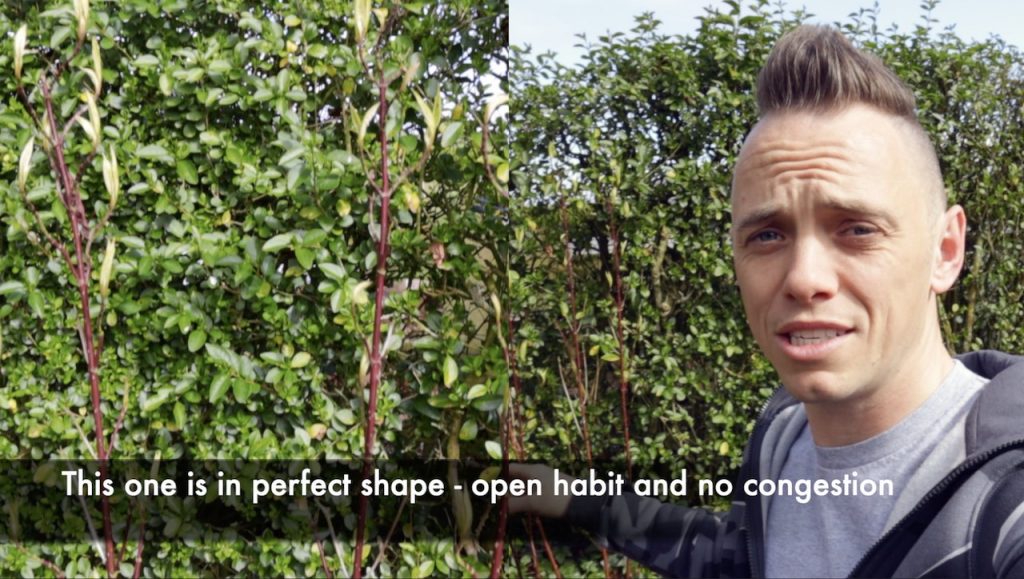
Signs that an established Cornus needs pruning: the stems are thick, woody, and brown rather than brightly coloured. The shrub has become congested with many crossing stems. The overall size has grown beyond what you want. Or the most vigorous, colourful growth is concentrated only near the tips of long woody branches rather than throughout the shrub. Any of these signals means it is time to get the loppers out.

Sharp, clean tools matter more than expensive ones. A blunt or dirty pair of secateurs makes ragged cuts that heal slowly and can introduce disease. Before pruning, wipe blades with a cloth soaked in diluted garden disinfectant or methylated spirits, particularly if you have been pruning other plants in the same session.
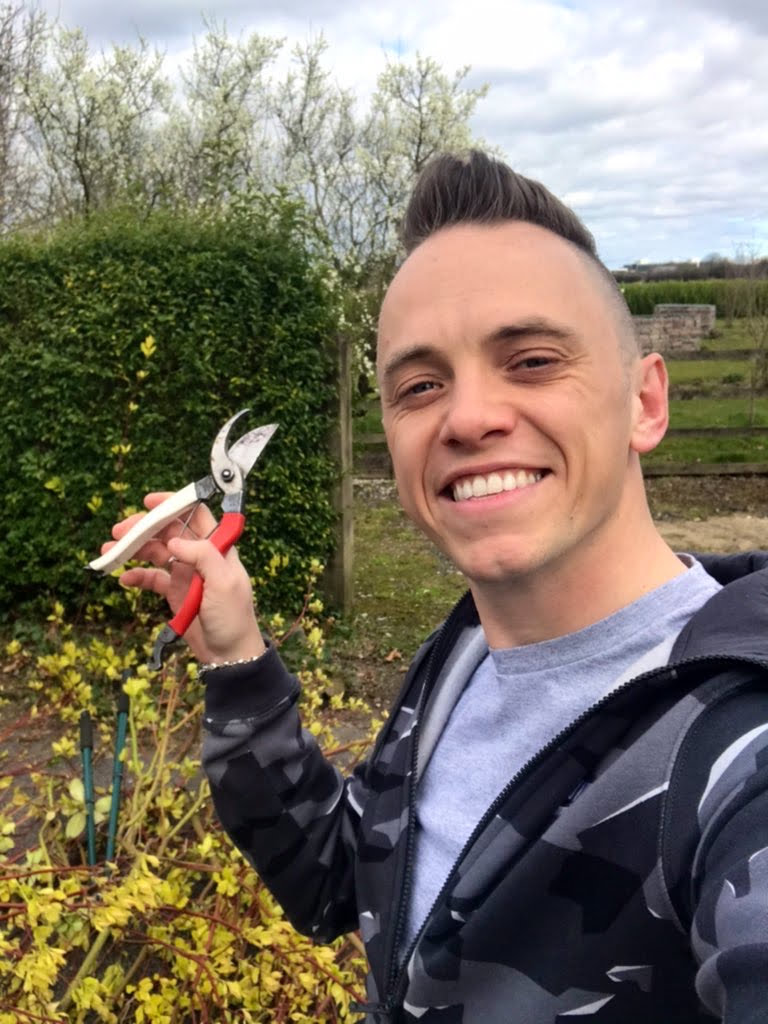
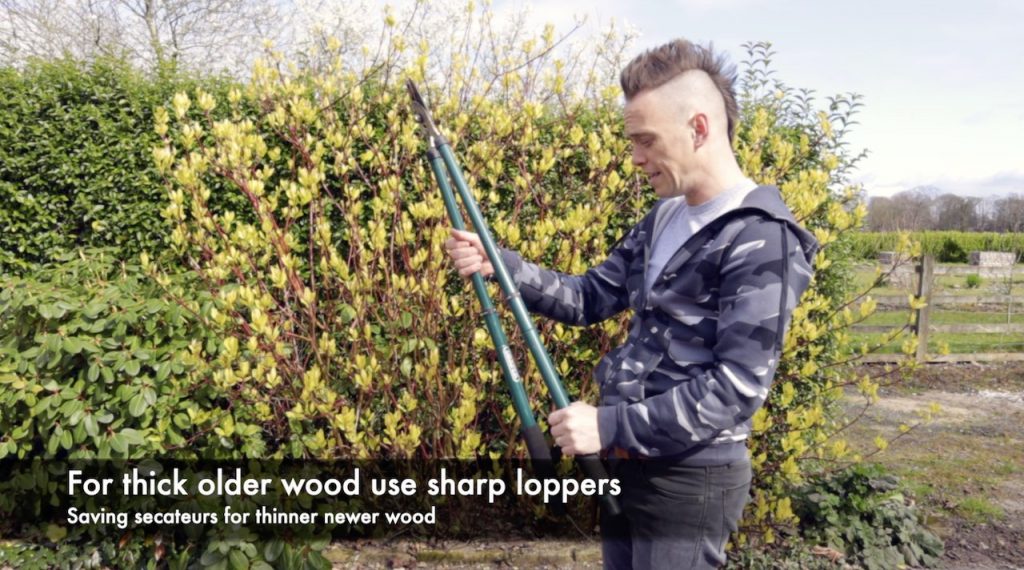
For a well-maintained Cornus pruned regularly, sharp secateurs handle most stems comfortably. For older or neglected specimens with thick woody stems, loppers extend your reach and provide the leverage to cut cleanly through wood that secateurs would crush rather than cut. For very thick old stems over 3cm diameter, a pruning saw is the right tool.
🛒 Buy Sharp Bypass Secateurs from Amazon UK
🛒 Buy Garden Loppers from Amazon UK
🛒 Buy a Folding Pruning Saw from Amazon UK
Pruning dogwood is straightforward once you understand the method. The example below is a Cornus sibirica around 20 years old that has never been properly pruned. It demonstrates that even serious neglect is entirely recoverable.
Start with the thickest, most established stems. These are the oldest wood and will have growth only near the tips. Cut them back to 8 to 10cm above soil level. Make clean, decisive cuts rather than a series of small uncertain ones.
Once the thick old stems are cleared, remove any stems that are crossing each other, growing inwards into the centre of the shrub, or showing signs of damage or disease. Aim for an open, palm-of-the-hand shape with stems radiating outward from the base. Good air circulation through the centre prevents disease and improves stem colour development.
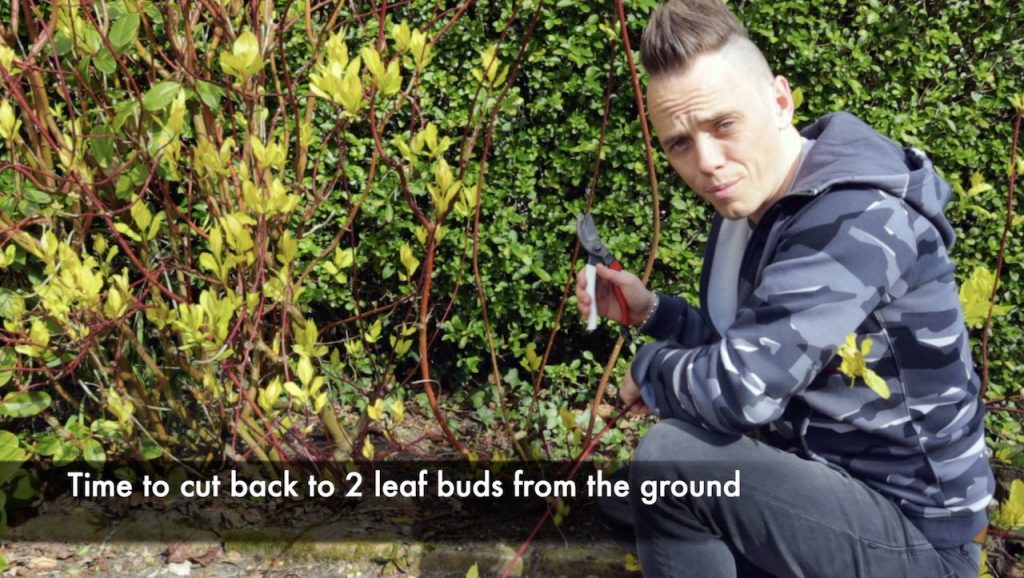
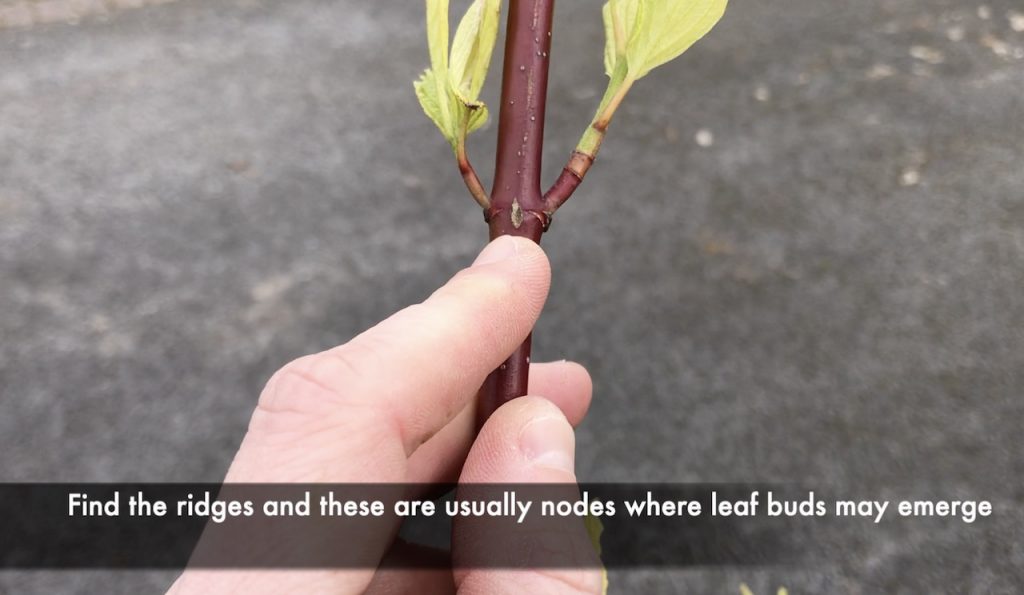
Take back all remaining growth to two or three sets of buds from the base. On a well-maintained Cornus, buds are easy to spot as small swellings or emerging leaves. On older, woodier specimens look for the small raised ridges and nodes on the bark. These are where new growth will break from and where your cut should be made, just above them.
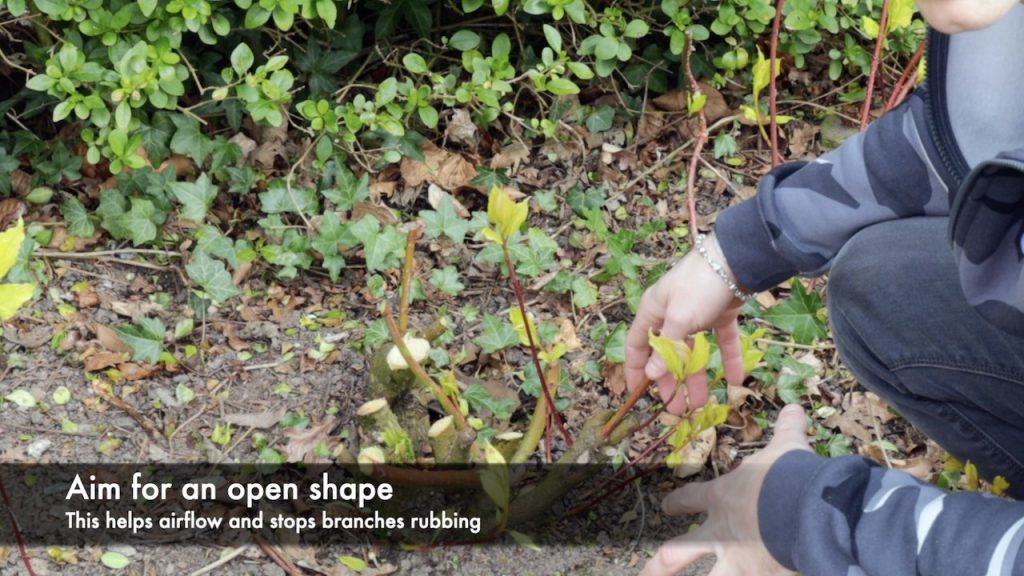
Make clean, neat cuts just above the buds. Cornus leaves are opposite rather than alternate, meaning they emerge in pairs from the same point on the stem. A clean horizontal cut just above a pair of buds is the correct technique. The angle matters less than the cleanliness of the cut. Avoid crushing or tearing cuts that damage the wood below the bud.
Once pruning is complete, apply a generous mulch of well-rotted compost or bark chips around the base of the shrub, keeping it clear of the stems themselves. This is the step most people skip and it makes a real difference. Mulching after hard pruning retains soil moisture, feeds the soil as it breaks down, and supports the vigorous flush of new growth you are relying on for next winter’s display.
🛒 Buy Bark Chip Mulch from Amazon UK
I hard-prune my Cornus every two to three years, rather than annually as some guides recommend. Annual coppicing to ground level puts the plant under repeated stress and can produce a thinner, less vigorous shrub over time. Every other year gives the plant a full growing season to build strength before the next hard cut.
The alternative approach, which works well for a more gradual method, is to remove one-third of the oldest stems each spring rather than coppicing everything at once. This maintains some height and structure year-round while encouraging fresh colourful growth continuously. It produces a tidier, more structured result that works well in formal or mixed borders.
Cornus grown for stem colour earns its impact when combined thoughtfully with other plants. These are the planting partnerships I return to most often in client garden designs.
Red Cornus with lime green Cornus: The contrast between Cornus alba Sibirica (red) and Cornus sericea Flaviramea (lime green) is the classic combination for good reason. Plant in a group of three to five with red slightly outnumbering green, massed together rather than alternated. The colour contrast is most effective when you can see both from the same viewpoint simultaneously.
Cornus with Ophiopogon Nigrescens: The near-black grass Ophiopogon planiscapus Nigrescens, known as black mondo grass, planted as groundcover around the base of red Cornus, creates one of the most dramatic winter combinations available. The near-black of the grass against blazing red stems is genuinely striking on a winter morning and one of my favourite border combinations in client gardens.
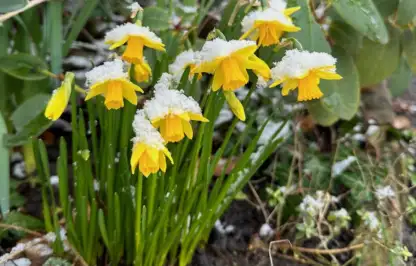
Cornus with early spring bulbs: Snowdrops, winter aconites, and early narcissus planted around the base of Cornus provide additional interest at the point when the stems are most vivid, and the garden is otherwise quiet. The bulbs emerge and flower before the Cornus foliage shades them out, then the leaf canopy effectively hides the dying bulb foliage through summer.
Cornus with Cotinus: Smoke bush planted alongside Cornus creates a foliage partnership working through summer as well as winter. The purple or golden foliage of Cotinus through the growing months contrasts with the summer leaf colour of varieties like Elegantissima or Aurea, while in winter, the bare Cornus stems carry the display after the Cotinus drops its leaves.
💡 Top Tip
For the most vivid stem colour, plant Cornus in a position that receives good winter sun. Winter sunlight hitting the stems from a low angle in December and January dramatically amplifies the colour. A north-facing position where winter sun never reaches produces noticeably duller stems than the same variety grown in a sunnier spot.
Pruning your Cornus is a prime opportunity to propagate new plants for free. Cornus roots incredibly readily from hardwood cuttings: one pot of cuttings can produce ten or more new plants. I have given away dozens of Cornus plants over the years from cuttings taken during the annual prune.
Select pencil-thick stems from last year’s growth when pruning. Cut into sections of around 15 to 20cm, making the bottom cut just below a node using a straight horizontal cut, and the top cut at 45 degrees just above a node. The angled top cut sheds rainwater and reminds you which end is which when planting.
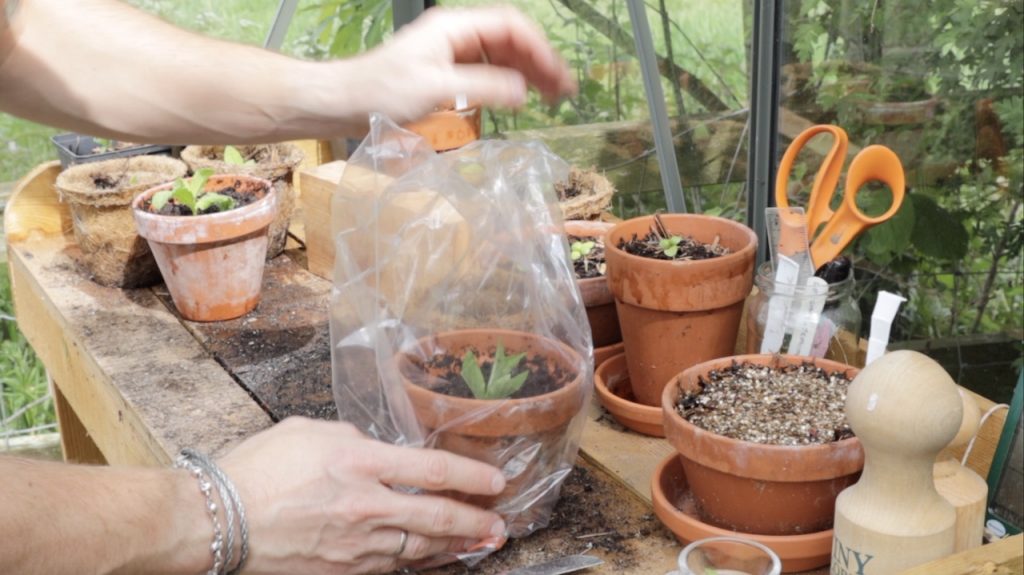
Push the cuttings into a pot of compost and perlite mixed 50:50, burying around two-thirds of the cutting. Arrange them around the edge of the pot where the compost is slightly warmer. Water well and place in a cold frame or sheltered position outdoors. When roots appear at the drainage holes, pot on individually into 2-litre pots and grow on until strong enough to plant out in late spring.
🛒 Buy Horticultural Perlite for Propagation from Amazon UK
Cornus are genuinely tough plants that will grow in almost any UK garden conditions. They thrive in heavy wet clay, which is one of the most challenging conditions for most plants, and I have seen them flourishing in boggy ground alongside streams and in poorly drained urban gardens where many other shrubs would have rotted away.
For the best stem colour, grow in full sun. The stems develop colour regardless of light levels, but winter sunlight striking them at a low angle dramatically amplifies their visual impact. Dappled shade is perfectly adequate for healthy growth. Deep shade noticeably reduces vigour and stem colour, and is the one condition worth avoiding if you have the choice.
In free-draining sandy soil, Cornus will still grow but more slowly and may need watering during very hot, dry summers until established. Adding well-rotted organic matter to sandy soil before planting improves moisture retention and helps the plant establish faster. Once established for two to three years, Cornus in sandy soil becomes much more self-sufficient.
Cornus are generally very trouble-free but there are a handful of issues that come up repeatedly on the forum and in client consultations.
The most common problem, invariably caused by one of two things: the plant has not been pruned recently enough, or it is in too much shade. Stems older than two or three years always fade to brown regardless of variety. Hard pruning in March will restore full colour the following winter. If shading is the issue, consider whether any neighbouring evergreens can be reduced to let in more winter light.
Very occasionally, a hard-pruned Cornus is slow to regenerate. This is almost always one of three things: it was pruned too early in the season before active growth had begun, the soil is very poor and dry, or the plant is still young and not yet established enough for hard pruning. Apply a mulch, water if the season is dry, and be patient. Cornus very rarely fail to regenerate after coppicing if the root system is intact.
Cornus sucker readily and will expand its footprint over time. If this becomes a problem, suckers can be removed with a spade at any time of year by cleanly cutting through the root connection below the soil level. Annual coppicing keeps the central plant compact and reduces (though does not eliminate) the suckering tendency.
Cornus can occasionally develop leaf spots (anthracnose) or scorching in very hot, dry summers. Neither is typically fatal. Leaf spot can be reduced by improving air circulation through annual pruning and avoiding overhead watering. Scorch resolves as temperatures moderate. Neither condition normally requires treatment in a UK garden context.
The best time to plant Cornus is in winter as bare root shrubs, typically November through to early March. Bare-root plants are significantly cheaper than container-grown specimens, and because they are dormant, they require minimal watering and establish readily. Container-grown Cornus can be planted at any time of year, but spring and autumn are most favourable. Summer planting requires consistent watering until established.
🛒 Buy Bare Root Cornus from Amazon UK
Late March to early April is the ideal time to prune Cornus in the UK. This is when the plant moves into active growth, signalled by the first green buds breaking on the stems. Pruning at this point gives maximum time for new growth to develop through summer and produce vivid stems by the following winter.
No. Hard coppicing only applies to Cornus grown for winter bark colour: varieties of Cornus alba, Cornus sericea, and most Cornus sanguinea. Flowering Cornus, like Cornus kousa and Cornus florida, and tree forms like Cornus controversa, should never be hard pruned. They need only light maintenance pruning of damaged or crossing branches when dormant.
Faded stem colour is almost always caused by old wood that has not been pruned recently enough. Only the current season’s growth produces the brightest colour. Stems that are two or three years old naturally darken to brown-grey. A hard prune in late March will restore full colour the following winter. Inadequate winter sun can also reduce colour intensity.
For a full coppice, cut all stems back to 8 to 10cm above soil level, leaving just two or three sets of buds on each stem. For a lighter annual approach, remove one-third of the oldest stems entirely and reduce the remaining stems by half. For Cornus sanguinea varieties (Midwinter Fire, Magic Flame), prune to approximately half height rather than to the ground, as they do not regenerate as vigorously from a full coppice.
Yes, and Cornus is one of the easiest plants to propagate from hardwood cuttings. Take pencil-thick stems of the current season’s growth when pruning in March. Cut into 15 to 20cm sections with a straight cut below a node at the base and a 45-degree cut above a node at the top. Insert two-thirds of the cutting into compost and perlite, and place in a cold frame or sheltered spot outdoors until roots appear at the drainage holes, then pot on individually.
Cornus alba Sibirica (bright red) is the most reliably vivid and widely available. For the most dramatic combination, plant it alongside Cornus sericea Flaviramea (lime green). Cornus sanguinea Midwinter Fire produces multi-toned orange, red, and yellow stems that are genuinely spectacular in low winter light. Cornus alba Kesselringii is worth seeking out for its unusual, near-black stems.
Ready to elevate your gardening beyond basic tasks? My comprehensive online courses provide the expertise to transform you from enthusiastic beginner to confident garden creator.
With courses starting from just £29, you gain access to award-winning design knowledge.
For the garden you’ve already got, not the one you’re starting from scratch. Seven checklists and video lessons from BBC Garden Rescue’s Lee Burkhill, built to help you work out what’s worth keeping before you spend a penny.
Garden Design Examples for Small Gardens: 30 Design Templates & Planting Plans: In this online gardening course, I’ll walk you through 30 fantastic garden designs, explaining the logic behind the layout, the plant choices, and take-home tips for applying them in your own garden.
Learn how to transform and design your own garden with Lee Burkhills crash course in garden design. Over 5 hours Lee will teach you how to design your own dream garden. Featuring practical design examples, planting ideas and video guides. Learn how to design your garden in one weekend!
Garden Design for Beginners Online Course: If you want to make the career jump to becoming a garden designer or to learn how to design your own garden, this is the beginner course for you. Join me, Lee Burkhill, an award-winning garden designer, as I train you in the art of beautiful garden design.
Other shrubs and plants need pruning too to get the best growth and flowering potential each gardening year. If you want to know more about how to prune different plants, check out my detailed pruning guides below.
How to trim hedges | How to prune a Hydrangea | Rose Pruning Guide | Fruit Tree Pruning | Winter vs Summer Pruning | Pruning Herbaceous Plants
Cornus are among the most rewarding and forgiving shrubs you can grow in a UK garden. Hard prune in late March once established for three or more years, cutting all stems back to 8 to 10cm above ground. Mulch generously afterwards. The plant responds with a vigorous flush of brightly coloured new stems that will light up the garden from November through to spring.
Combine red and lime green varieties together, plant in a sunny position, and take hardwood cuttings from the prunings. Cornus asks very little and gives a great deal in return.
Happy Gardening!



Lee Burkhill, known as the Garden Ninja, is an award-winning garden designer and horticulturist with over 30 years of gardening experience and 15 years as a professional garden designer. A qualified RHS (Royal Horticultural Society) professional, Lee specialises in sustainable garden design and practical horticultural advice. He designs and presents on BBC1’s Garden Rescue and in leading gardening publications. Lee combines three decades of hands-on gardening knowledge with professional design qualifications to help gardeners create beautiful, functional outdoor spaces.
View all posts by Lee Burkhill


You must be logged in to post a comment.



JOIN THE NINJAS

Be the first in line for new Guides, Discount codes and Offers






Loved that demonstration of how to prune dogwood. Easy, clear and fun to watch. We watched your video about hydrangeas last week. Thanks for all your good advice – Lee.
Nadine and Neil – Dundee
Hi Nadine, Thanks for your lovely comment. I’m glad my gardening guides are helping you make the most of your garden plants! Happy Gardening. Lee
Hi Lee – I recently planted a Kesselringii. It’s November and so has now lost its leaves but the tips of the branches look grey, as if they’ve lost their colour. Is this typical of a young cornus? Should I trim them? Many thanks!
Hi Charlotte,
Good to hear from you. With this species of Dogwood it does have a very dark purple almost black stem colour. The tips may look grey due to this pigment. However, they may have become damaged by frost. A good way to check is to trim off the very tip and if its brittle and shatters the tips are dead. If green and fleshy they are fine. If dead its probably just damage to the tip. So cut them back to the next healthy node or leaf. If you have further questions why not add them to the Garden Ninja Forum here were thousands of Ninjas can help! https://www.gardenninja.co.uk/forum/
Happy Gardening. Lee
Thanks so much for your helpful reply, I really appreciate it. Thanks for pointing me in the direction of the forum too ?