For the garden you’ve already got, not the one you’re starting from scratch. Seven checklists and video lessons from BBC Garden Rescue’s Lee Burkhill, designed to help you decide what’s worth keeping before you spend a penny.
69


Quick Answer
The Wheel of the Year is an eightfold calendar of seasonal festivals, called sabbats, that marks the turning points of the natural year, the solstices, the equinoxes and the four cross quarter days that fall between them. For a gardener it maps almost exactly onto the growing year you already live by, from the first stirrings under the soil at Imbolc through to the final harvest at Samhain, and working with it is less about adopting a new belief system and more about paying proper attention to a rhythm your garden has been keeping all along.
I have been gardening for over thirty years now, and if there is one thing three decades of getting my hands in the soil has taught me, it is that the garden has its very own calendar that follows patterns if you tune into it enough.
Long before I had heard the word Imbolc I knew the exact week the first snowdrop would push through the cold ground on my patch. Similarly, I knew that the wheat in the fields of August or apples on the trees meant that Lammas or Lughnasadh was here before I knew the sabbat name.
The Wheel of the Year allows you to finally connect each season with its ancient roots and the symbolism it reveals.

This guide is my attempt to bring the eight sabbats down out of the more esoteric corners of pagan and Wiccan practice and into the flower bed the veg patch and even the greenhouse, where I think they belong just as comfortably.
For each one, I will give you the date, what it actually means, a simple ritual you can do without any special equipment, a few crystals that are traditionally associated with that point in the year, and five plants that are either flowering, fruiting or ready to harvest right at that moment in a typical UK garden.
Helping you connect your spiritual side to your garden!
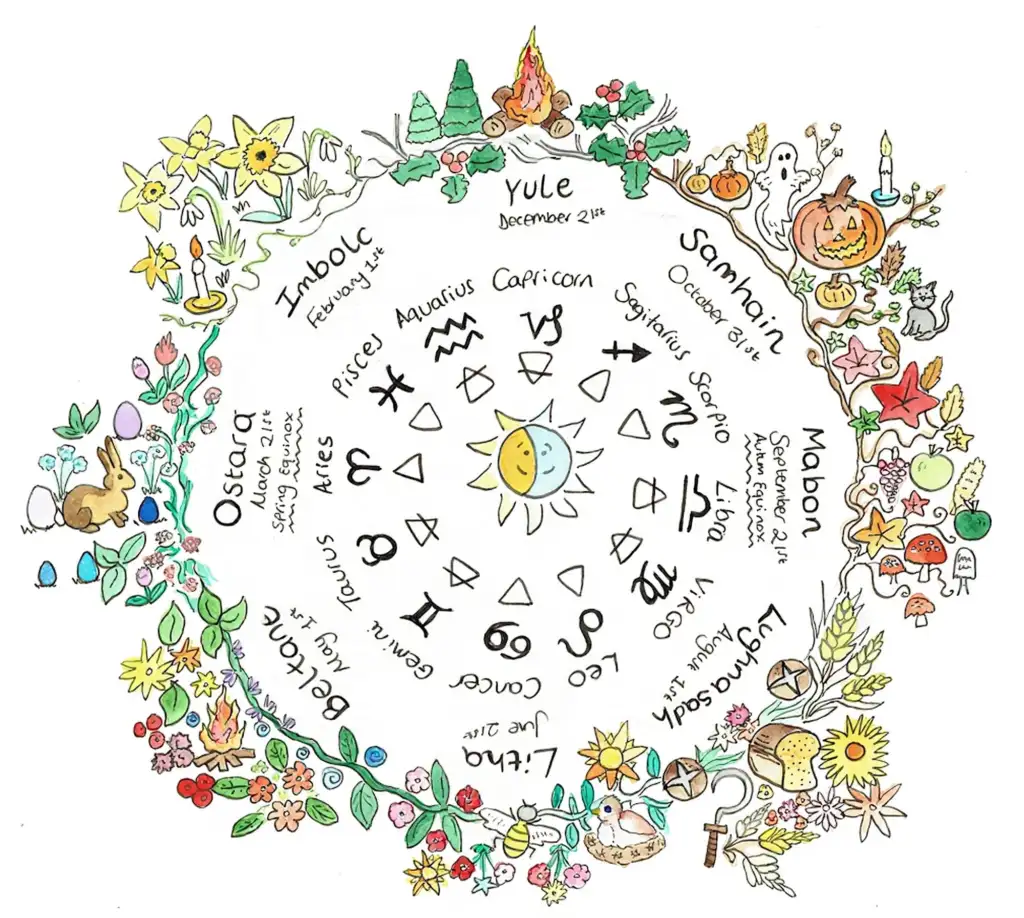
The wheel above is one I drew and painted myself, and I will explain a little further down why hand drawing and watercolour are such a central part of how I connect with all of this, from the folklore side through to my entire approach to garden design. Whilst usually the wheel runs clockwise from right to left (deosil in pagan terms), I’ve always seen it anti-clockwise (widdershins) in my mind, so that’s the way I have drawn it!
Jump To
This page contains affiliate links for the plants and cooking items you may need. If you take action (i.e. subscribe, make a purchase) after clicking a link, I may earn some gardening commission, which helps me keep the Garden Ninja Blog free for all.
The Wheel of the Year is an eightfold calendar built from two sets of four points. The first set is the astronomical quarters, the two solstices and two equinoxes, the days when the sun’s position gives us the longest day, the shortest day, and the two moments when light and dark sit in perfect balance.
These are fixed points that anyone with an interest in astronomy would recognise, and they shift by a day or two each year depending on the actual mechanics of the earth’s orbit.
The second set is the four cross quarter days.
Which fall roughly halfway between each solstice and equinox and were historically tied to the agricultural calendar, sowing, calving, harvest and the start of the dark half of the year.

Put those eight points together, and you get a wheel that turns continuously through the year. Each sabbat moves through to the next, light growing, then fading, then growing again. Modern Wicca, formalised in England in the mid-twentieth century, adopted this full eightfold structure as the backbone of its ritual calendar, but the underlying idea, marking the turning points of the farming year with some kind of festival or observance, is far older than Wicca itself.
The wheel of the year turns up in one form or another across almost every agricultural society that has ever depended on getting the timing of planting and harvest right. Think of it as a blueprint showing communities what to grow, when to harvest, when to store, when to celebrate and how to prepare.
You do not need to be pagan, Wiccan or anything else in particular to find the Wheel useful. At its very core, it is a very old, very practical farming calendar that has had spiritual meaning layered onto it over centuries, and I love working with it in my own garden. It resonates with me and slows me down each year, forcing me to stop and take note of where I am and how the garden and Mother Nature are doing. It stops gardening from becoming another tick-box exercise, and I believe it makes people better gardeners and guardians of green spaces.
Every experienced gardener already keeps some version of this calendar without necessarily naming it ‘the wheel of the year’. You know roughly when to plant out your seedlings after the last frosts, when the soil has warmed enough to sow directly, when the light starts dropping fast enough in autumn that everything needs lifting or protecting.
What the sabbats add to that practical knowledge is a moment of reflection and introspection at each turning point, a chance to actually stop and notice the change instead of simply reacting to it as another job on the list.
I find that the pause over the years of being a hedge witch changes how I garden. Marking Imbolc means I am out checking the beds for the first stirrings of growth, appreciating the snowdrops instead of just noticing them in passing on my way to the car.
Celebratinf Lughnasadh means I actually stop that evening, break some bread with a bit of ceremony, thanking Mother Nature for the gifts instead of letting the moment slip by unnoticed. None of this requires any particular belief or religion. It simply asks you to treat the changing seasons as something worth your full attention, which, as gardeners, we all claim to value but very rarely practise given our busy lives!
There is also something very grounding about working with an ancient calendar that connects you to every gardener/soul who has ever tended a patch of land before. Modern convenience, blogs and AI have taken the guesswork out of growing.
It helps me to leave the last of the summer growth standing until Samhain instead of tidying it away early, or make sure I am up at first light on Beltane morning to see the start of summer. These wheel of the year rituals allow me to pay attention on purpose, just like our ancestors and give thanks to Mother Nature.
If you have followed my design work at all, on Garden Rescue or through the studio, you will know that every single garden I design starts life as a hand-drawn, watercolour-painted plan rather than a piece of CAD software. People ask me about this a lot, usually assuming it must be slower or less accurate than working digitally, and the honest answer is that it probably is slower, but that is entirely the point.
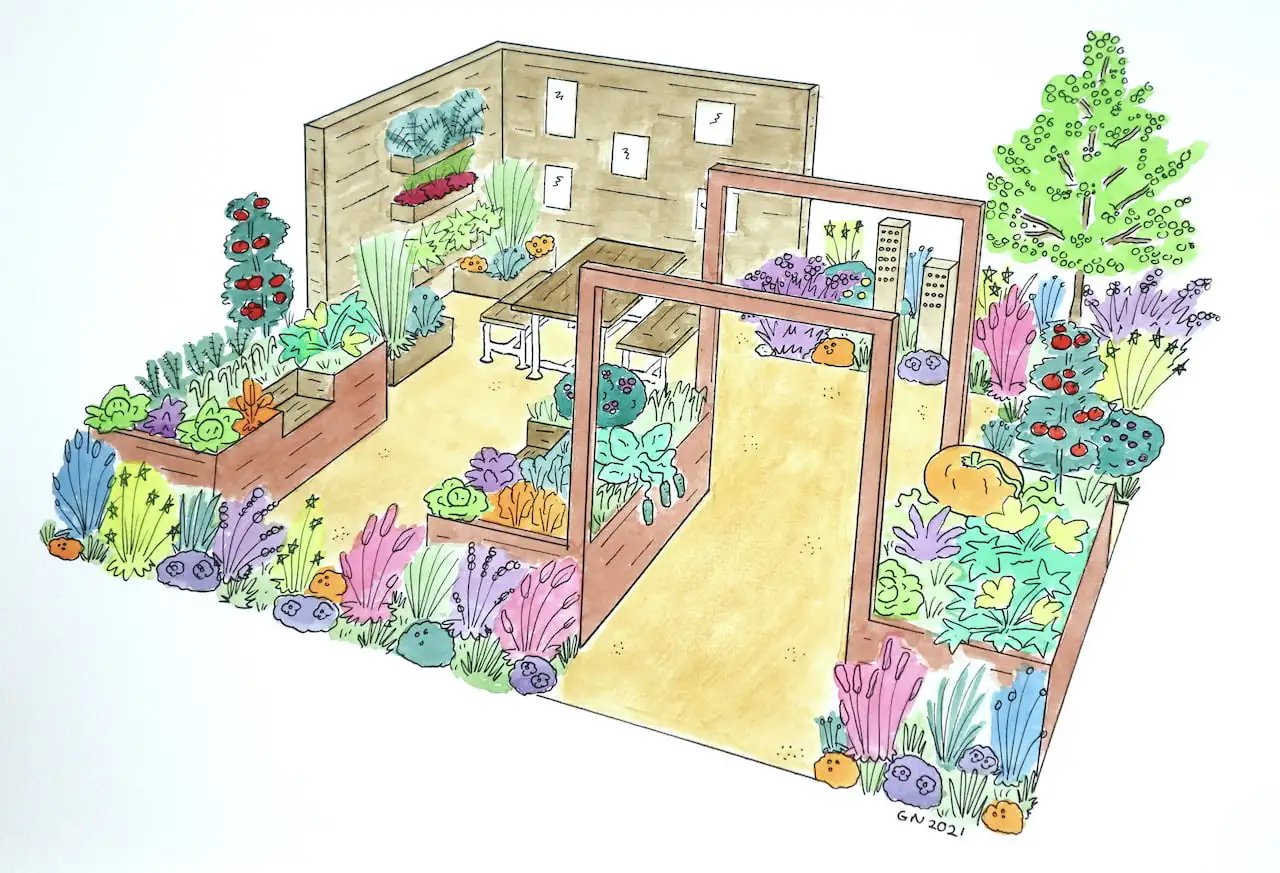
Sitting down with a pencil, a brush, and a box of watercolours forces a completely different relationship with a plot of land than clicking and dragging shapes on a screen ever could. I have to actually think about the way light will fall across a border, the exact curve a path wants to take rather than the curve a piece of software defaults to, the specific green a particular hedge will be in April against the specific green it will be in August.
Painting a garden before it exists means slowing down enough to notice what a piece of land is actually doing, rather than imposing a plan on it without looking first.
It is also the same instinct that draws me to the Wheel of the Year. A watercolour cannot be rushed the way a digital render can, and a sabbat is easy to let slide past the way a calendar notification can simply be dismissed. Both ask you to sit with something for a while, and I think gardens, like the seasons, reward that kind of patience.
Before we go through each one properly, here is the full wheel in one place. The two solstices and two equinoxes move by a day or two each year depending on the astronomical calendar, so treat those four dates as approximate and check an almanack for the exact date in any given year. The four cross-quarter days are fixed.
| Sabbat | Date | What it marks |
|---|---|---|
| Samhain | 31 October to 1 November | The final harvest and the start of the dark half of the year |
| Yule | Winter Solstice, around 21 December | The shortest day and the return of the light |
| Imbolc | 1 to 2 February | The first stirrings of growth under the soil |
| Ostara | Spring Equinox, around 20 March | Balance of light and dark, sowing properly begins |
| Beltane | 30 April to 1 May | The growing season tips fully into life |
| Litha | Summer Solstice, around 21 June | The longest day, peak light and abundance |
| Lughnasadh | 1 August | The first harvest |
| Mabon | Autumn Equinox, around 22 September | The second harvest and balance turning towards rest |
Samhain or halloweeen is the beginning of the pagan and witchcraft year. Rather than January we start during the final harvest where the earth is quiet and the veil between world is thin. Think of it as the quiet start to the year where we give thanks to ancestors, connect and move forward. Wiccans, Pagans and Witches celebrate this as the start of the new occult year.
Samhain sits opposite Beltane on the wheel and marks the true end of the growing year rather than the tidier, more commercial end date most of us think of as autumn. This is the point when the last of the harvest is properly in, the light is fading fast, and the garden begins its long turn towards dormancy. It is traditionally considered the point when the veil between the living world and the world of ancestors and spirits is thinnest, which is precisely where Samhain’s later association with Halloween comes from.
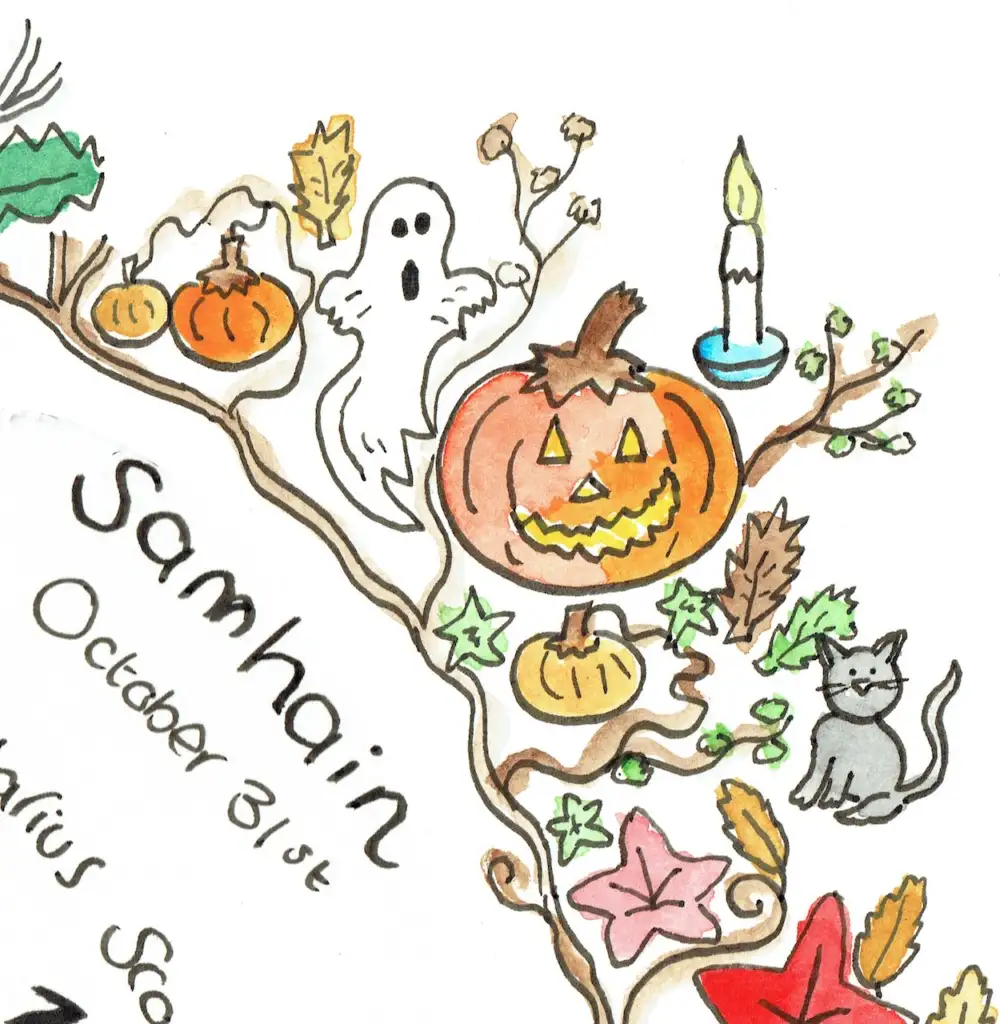
In the garden, Samhain is my cue to properly let go, rather than rushing to tidy everything up and prune it back. I leave seed heads and the last of the summer’s growth standing a little longer here than most gardening advice would suggest, partly for the wildlife that needs the shelter and partly because it feels right to let the garden finish its own year in its own time, without forcing an early tidy-up.
A simple ritual is to leave a small offering of the last of your harvest, an apple or a few berries, out for the birds and whatever else might be passing, and to spend a few minutes actually thinking about what you want to let go of in your own life as the light fades, in the same way the garden is letting go of its growth.
Crystals traditionally associated with Samhain lean dark and protective, reflecting the descent into the dark half of the year and the thinning veil.
| Crystal | Colour | Properties |
|---|---|---|
| Obsidian | Glossy black | Volcanic glass valued as a deeply grounding, protective stone, said to absorb negative energy and shield against psychic unease |
| Jet | Deep black | An ancient organic gem long used for mourning and protection, traditionally carried to ward off ill will |
| Smoky Quartz | Smoky brown-grey | A grounding stone said to clear negative energy and steady the mind through the darker half of the year |
Five plants worth enjoying or harvesting at Samhain:
| Plant | Why it matters now |
|---|---|
| Apples | Still coming off the tree in most UK gardens right through into November |
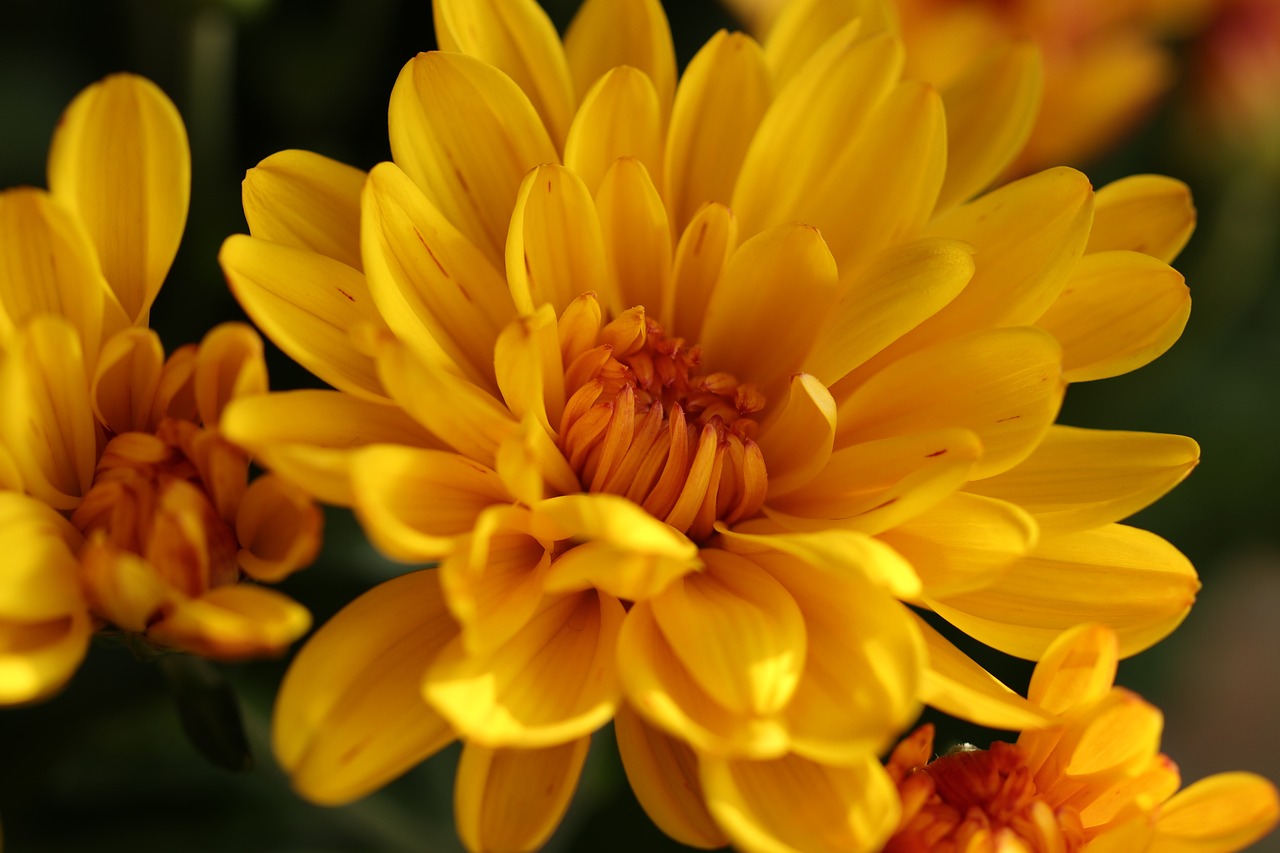
| Chrysanthemum | Deep red flowers, one of the last proper flushes of colour before the frosts |
| Sloes | From the blackthorn hedge, best picked after the first frost has softened them |
| Rosehips | Wild rosehips, which make a properly good winter tonic |
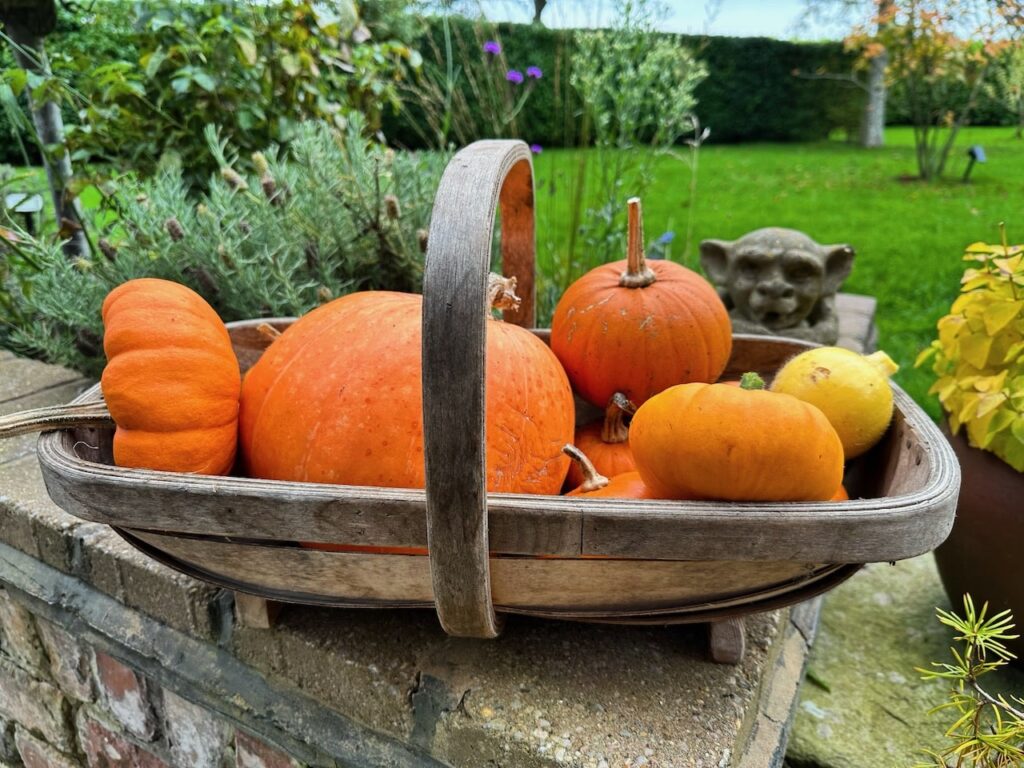
| Pumpkins or winter squash | The last of the big harvest sitting in the veg patch, waiting to be lifted before the ground turns too wet and cold |
Yule falls on the shortest day of the year, usually around 21 December, and marks the exact moment the wheel turns back towards the light. It is the darkest point of the year but also the most hopeful, since from this day onwards every day gets marginally longer until we reach the opposite point at Litha in midsummer. A lot of what we now think of as Christmas tradition, bringing evergreens indoors, lighting candles against the dark, gathering around a fire, has its roots in older Yule practice.
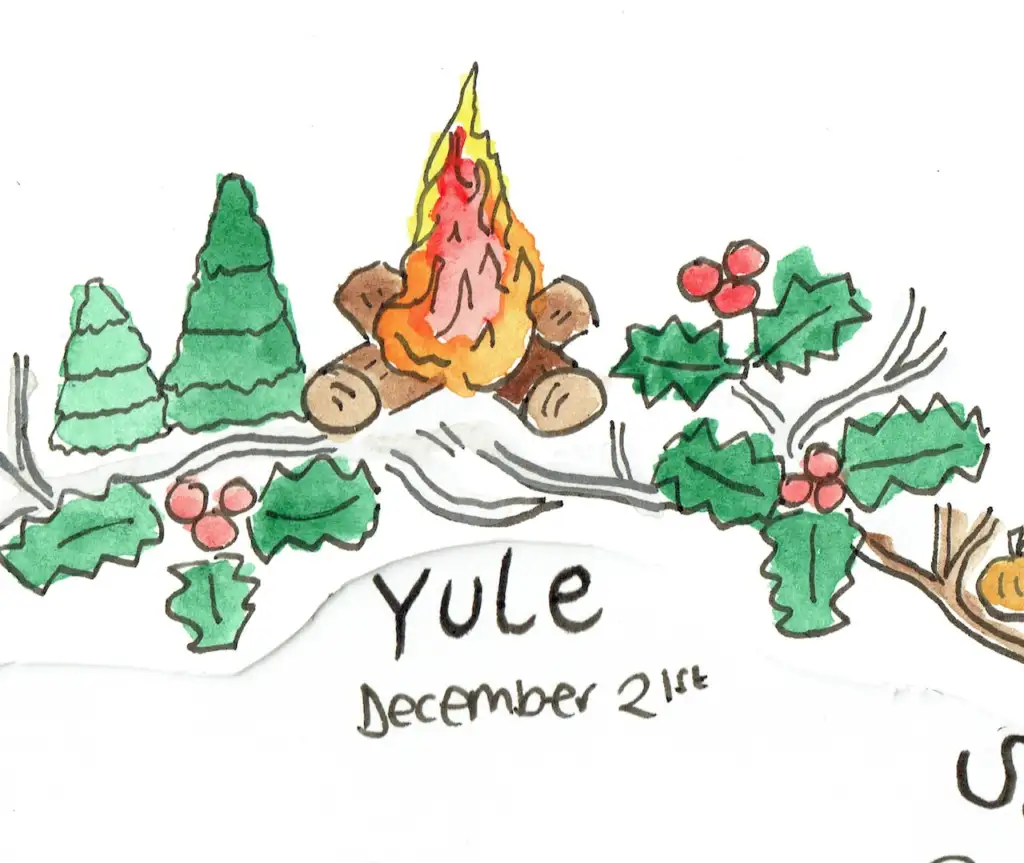
In the garden, this is a quiet, restful sabbat rather than an active one. My main ritual is simple: bringing a little evergreen indoors, holly, ivy, or a few sprigs of pine, and lighting a candle at dusk to mark the turning of the light, rather than letting the shortest day pass unnoticed. It is also a good moment to sit with the seed catalogue and start dreaming about the year ahead, since the light is about to begin its slow return, even though the cold has not yet properly arrived.
Crystals for Yule tend towards clarity and warmth, marking the returning light against the cold.
| Crystal | Colour | Properties |
|---|---|---|
| Clear Quartz | Clear to white | Known as the master healer, valued for amplifying energy and bringing clarity as the light begins its return |
| Garnet | Deep red | Associated with vitality and courage, traditionally carried to boost energy and confidence through the cold |
| Ruby | Rich red | Linked to vitality and passion, traditionally said to guard the wearer through the darkest weeks of the year |
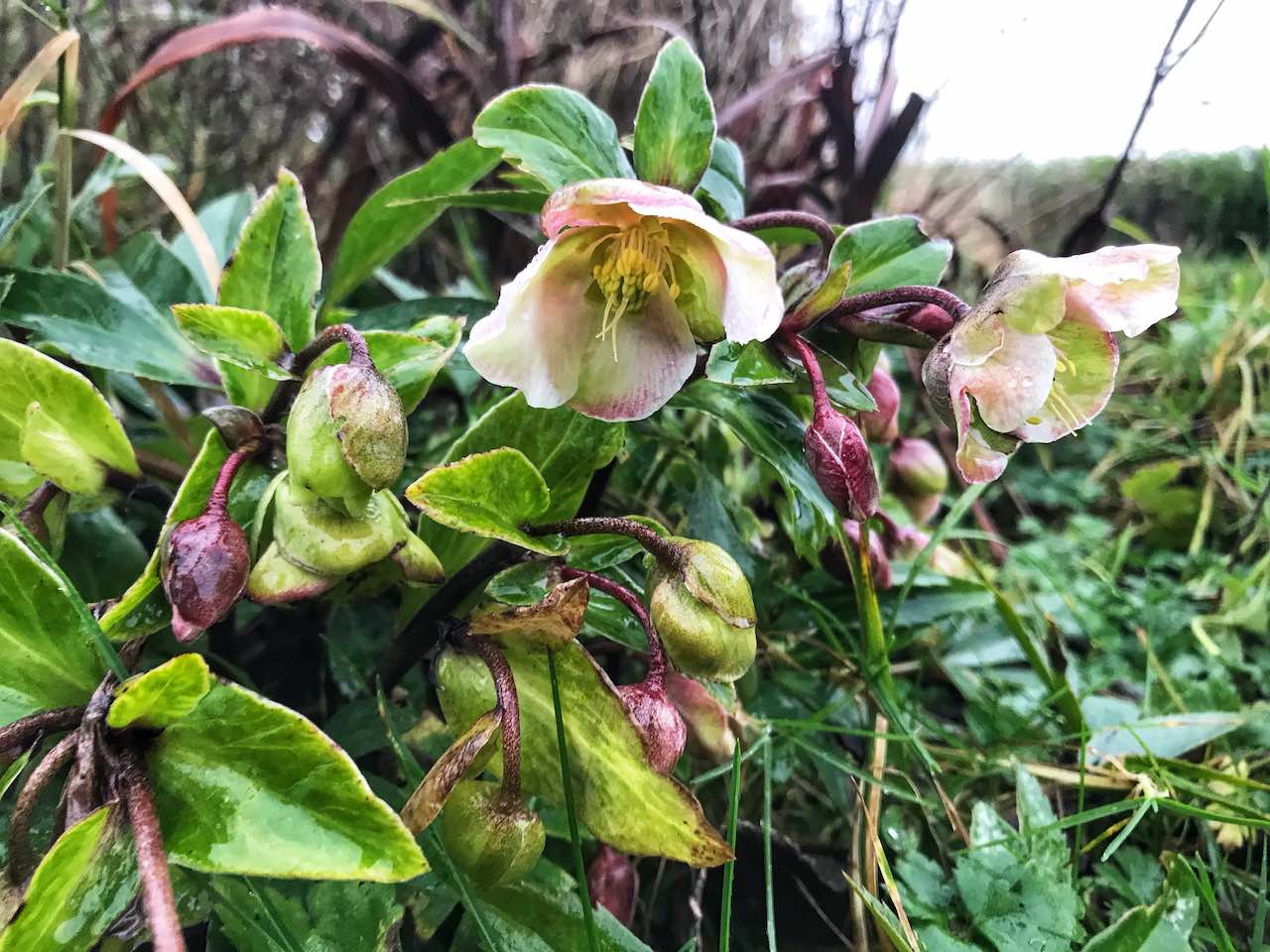
Five plants for Yule:
| Plant | Why it matters now |
|---|---|
| Holly | At its absolute best with berries this month |
| Ivy | Evergreen and still offering shelter to wildlife through the coldest weeks |
| Mistletoe | Worth seeking out if you are lucky enough to have any nearby |
| Christmas rose | One of the very few things flowering properly in a UK garden in late December |
| Rosemary | Evergreen and fragrant, traditionally associated with remembrance at the year’s end |
Imbolc sits at the midpoint between the Winter Solstice and the Spring Equinox and marks the first genuine stirrings of the growing year, even though the weather rarely feels like it yet. The name is thought to derive from an old term for ewe’s milk, tied to the lambing season, and it has long been associated with Brigid, goddess of the hearth, healing, and poetry in Celtic tradition, later absorbed into the Christian calendar as Candlemas.
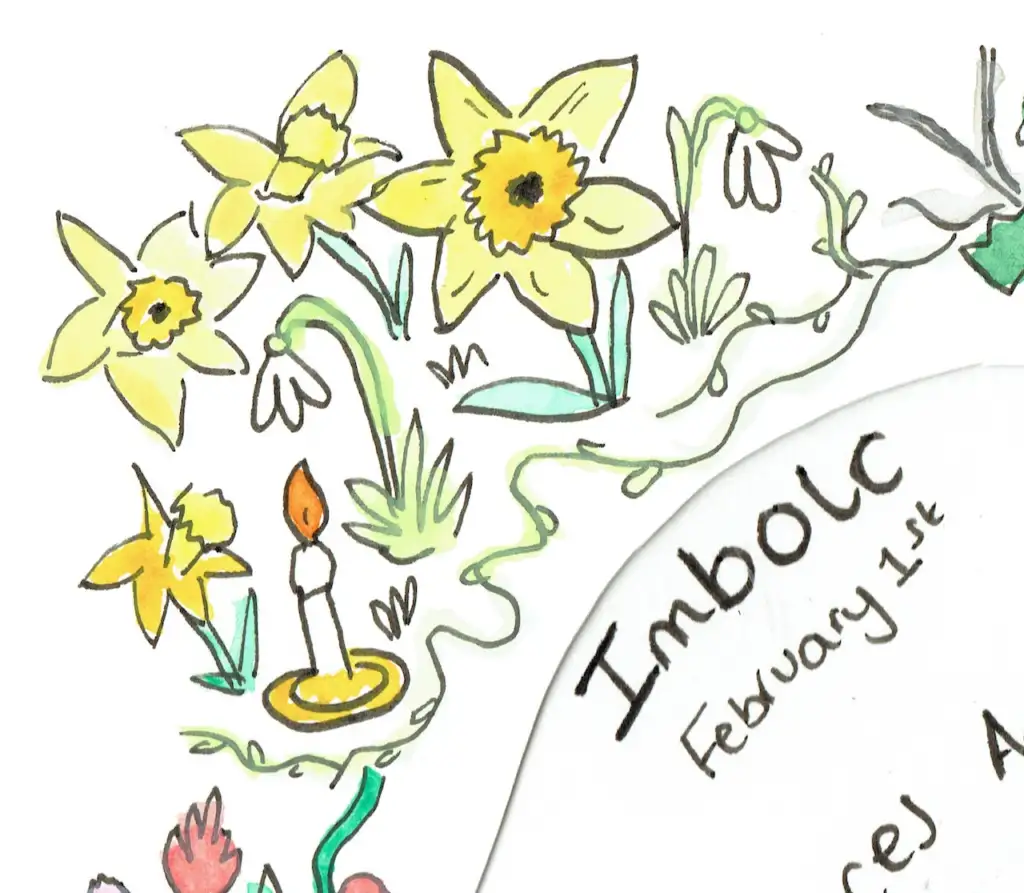
This is one of my favourite points on the wheel as a gardener, because it is the moment the garden gives you proof, however small, that the growing year has begun again. My Imbolc ritual is entirely practical: cleaning and sharpening my tools for the season ahead, sowing the first seeds under cover, and taking a proper walk around the garden specifically to find the first snowdrops, rather than simply noticing them on the way to somewhere else.
Crystals for Imbolc lean towards new beginnings and returning clarity.
| Crystal | Colour | Properties |
|---|---|---|
| Amethyst | Purple | Associated with Brigid and spiritual clarity, traditionally used to calm the mind and support insight |
| Moonstone | Pale, shimmering white | Tied to intuition and new beginnings, associated with the gentle pull of lunar energy |
| Clear Quartz | Clear to white | Known as the master healer, said to amplify intention and mark the returning light |
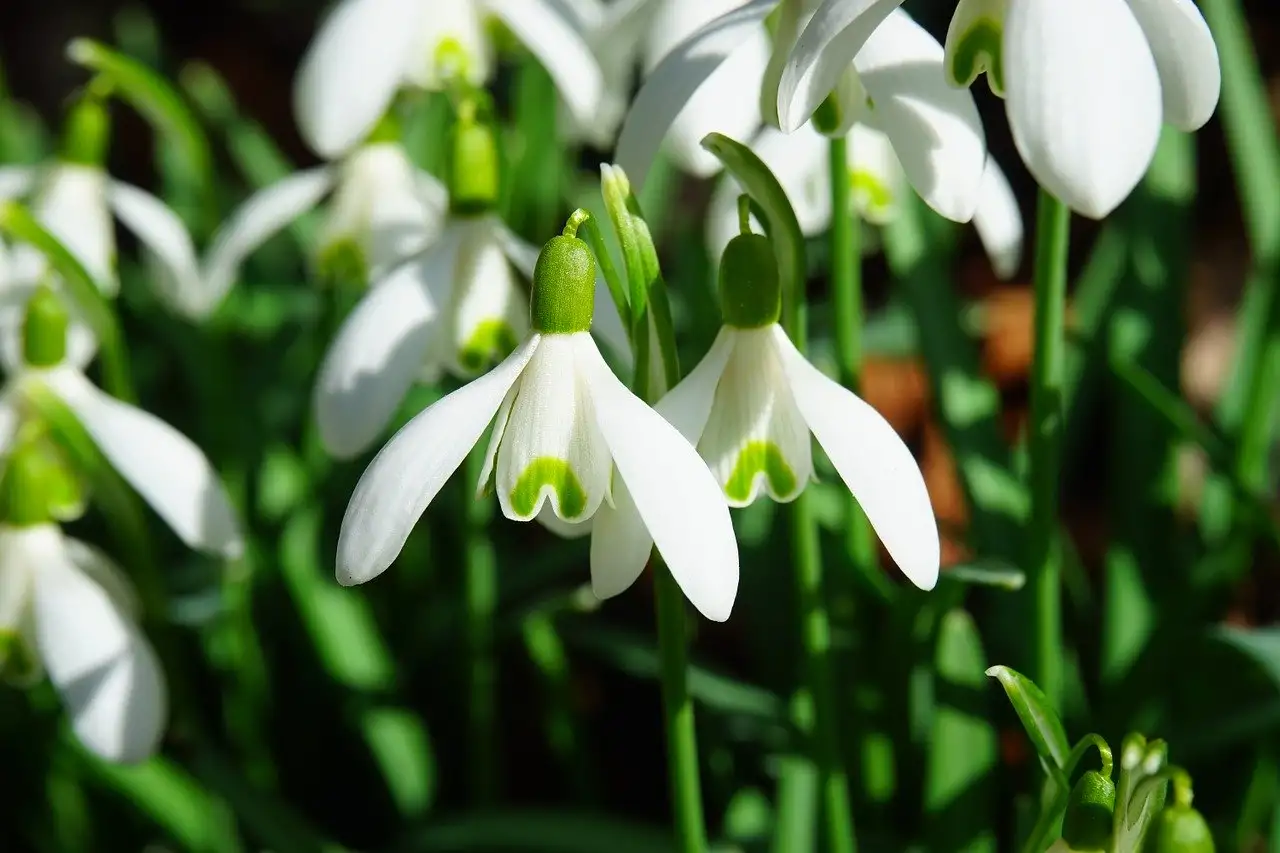
Five plants for Imbolc:
| Plant | Why it matters now |
|---|---|
| Snowdrops | The single most reliable marker of this sabbat in any UK garden |
| Early crocus | Pushing through not long after the first snowdrops |
| Winter aconite | Cheerful yellow flowers against the bare soil |
| Hazel catkins | Dangling and pollen heavy on still bare branches |
| First primrose | Tucked into a sheltered hedge bank well before most of the border has woken up |
Ostara falls on the Spring Equinox, usually around 20 March, the point when day and night are in perfect balance before daylight takes the lead. The name is thought to come from Eostre, a Germanic goddess of spring and dawn, and it is where a fair amount of Easter symbolism, including eggs and hares, ultimately traces back to.
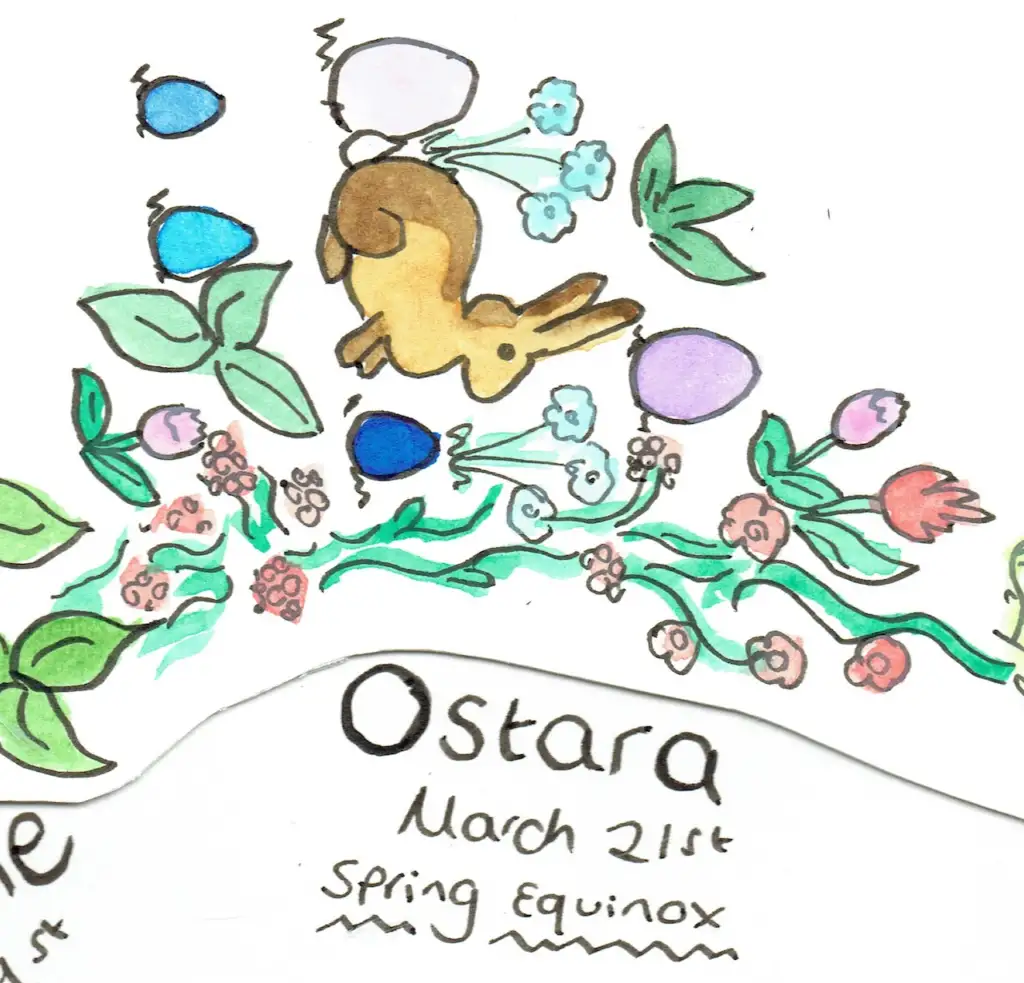
For a gardener, this is the point where sowing properly begins in earnest rather than the tentative under cover starts of Imbolc. My Ostara ritual is simply to sow something directly into open ground on the day itself, whatever the weather allows, as a deliberate marker that the growing season has properly arrived, and to spend a moment appreciating the balance of the day, since from here the light will keep pulling ahead of the dark all the way through to Litha.
Crystals for Ostara lean towards gentleness and fresh growth, moss agate being about as literal a gardener’s crystal as folklore offers.
| Crystal | Colour | Properties |
|---|---|---|
| Rose Quartz | Soft pink | The stone of unconditional love, associated with gentleness and new growth |
| Aquamarine | Pale blue-green | A calming stone linked to clear communication and the freshness of the returning season |
| Moss Agate | Mottled green | Long associated with abundance and growth, traditionally seen as a gardener’s stone for a thriving plot |
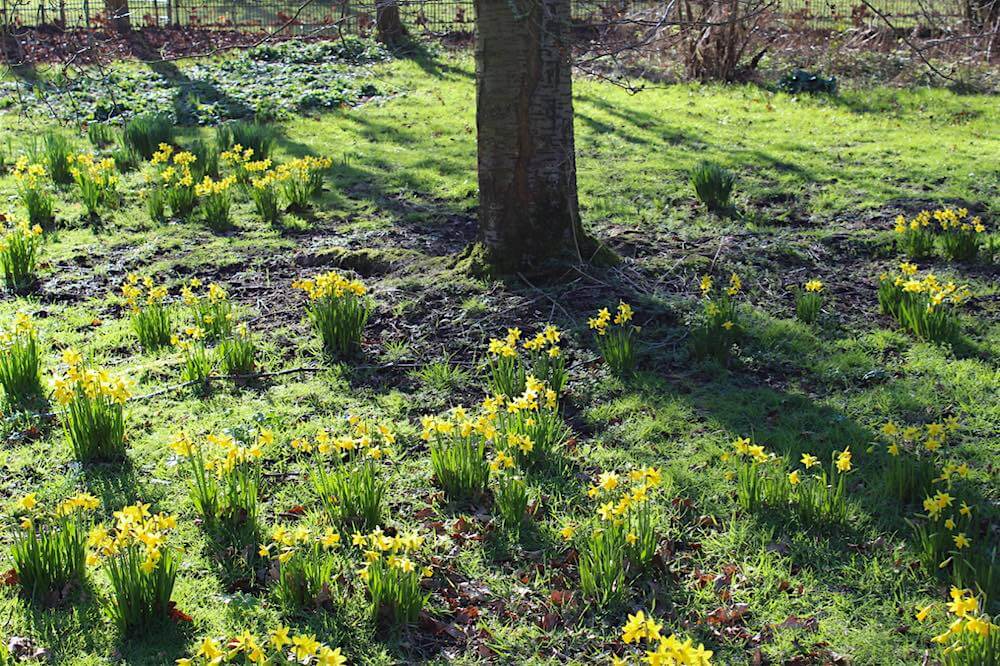
Five plants for Ostara:
| Plant | Why it matters now |
|---|---|
| Daffodils | The classic marker of this point in the year |
| Early tulips | Just starting to open |
| Forsythia | Bright yellow, practically glowing against a still bare hedge line |
| Blackthorn blossom | Appearing just ahead of the leaves |
| Violets | Low and easily missed but flowering steadily in shadier corners |
Beltane sits opposite Samhain and marks the point at which the growing season fully tips into life. It is traditionally the most joyful, fertile point on the wheel, associated with maypoles, bonfires, and the hawthorn coming into flower, which is no coincidence, since hawthorn blossom at this point was traditionally taken as the signal that the fairy realm and the human world were closest together.
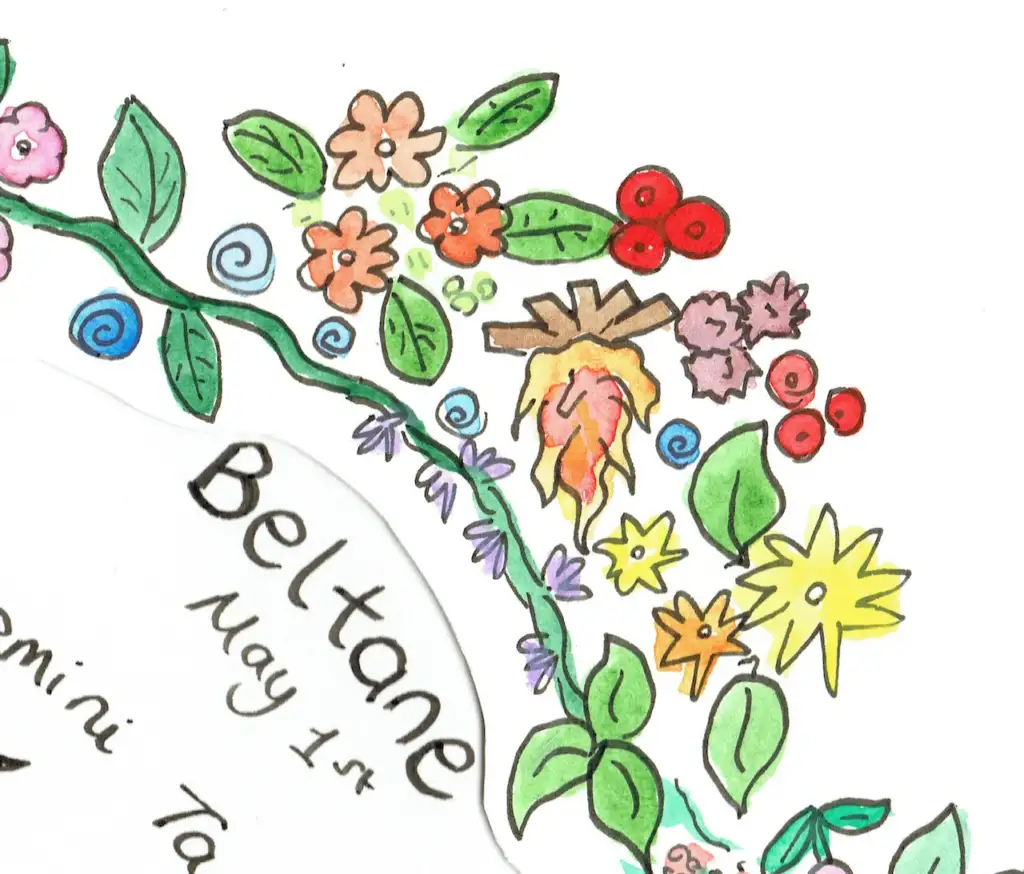
My Beltane ritual is to be out in the garden at first light specifically to see what has come into flower overnight, since so much seems to arrive all at once in that first week of May. It is also traditionally a good time to decorate a door or gate with fresh hawthorn from outside, since the old country rule was that you never brought hawthorn blossom into the house itself.
Crystals for Beltane lean towards growth, fertility and open-hearted joy.
| Crystal | Colour | Properties |
|---|---|---|
| Emerald | Rich green | Associated with growth, renewal and prosperity at the height of the growing season |
| Green Aventurine | Light green | Known as a luck stone, linked to opportunity and heart healing |
| Rose Quartz | Soft pink | The stone of unconditional love, here associated with the joyful, open hearted energy of the season |
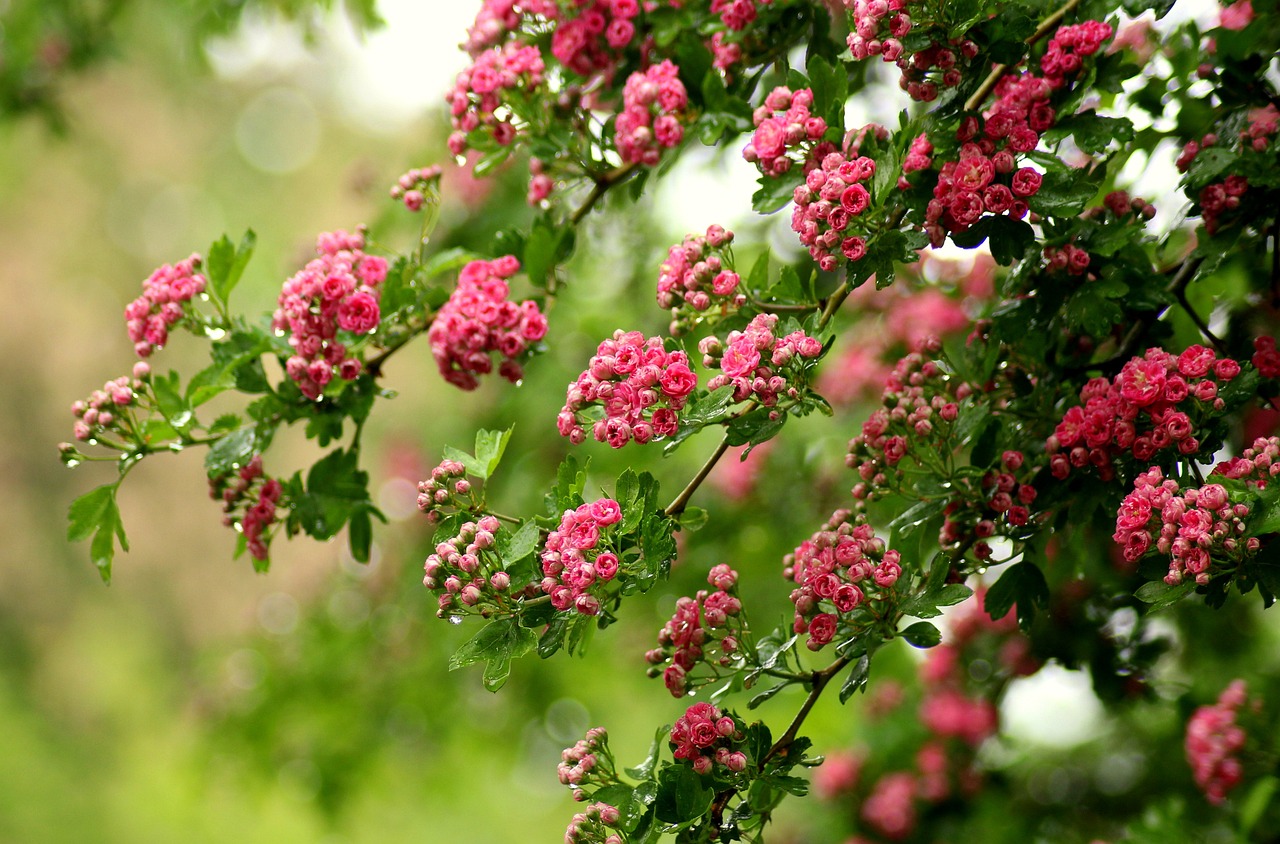
Five plants for Beltane:
| Plant | Why it matters now |
|---|---|
| Hawthorn | Blossom is the defining flower of this sabbat |
| Bluebells | Carpeting any woodland edge or shaded border |
| Lilac | Heavily scented and just coming into full flower |
| Cowslips | Look for them in a wilder lawn or meadow area |
| Lily of the valley | Delicate and fragrant, traditionally one of the most protected flowers of early May |
Litha falls on the longest day, usually around 21 June, the peak of light and abundance on the wheel. From here the days begin, almost imperceptibly at first, to shorten again, so Litha carries a slightly bittersweet quality alongside its obvious celebration, the very top of the wheel with the whole turn back down still ahead.
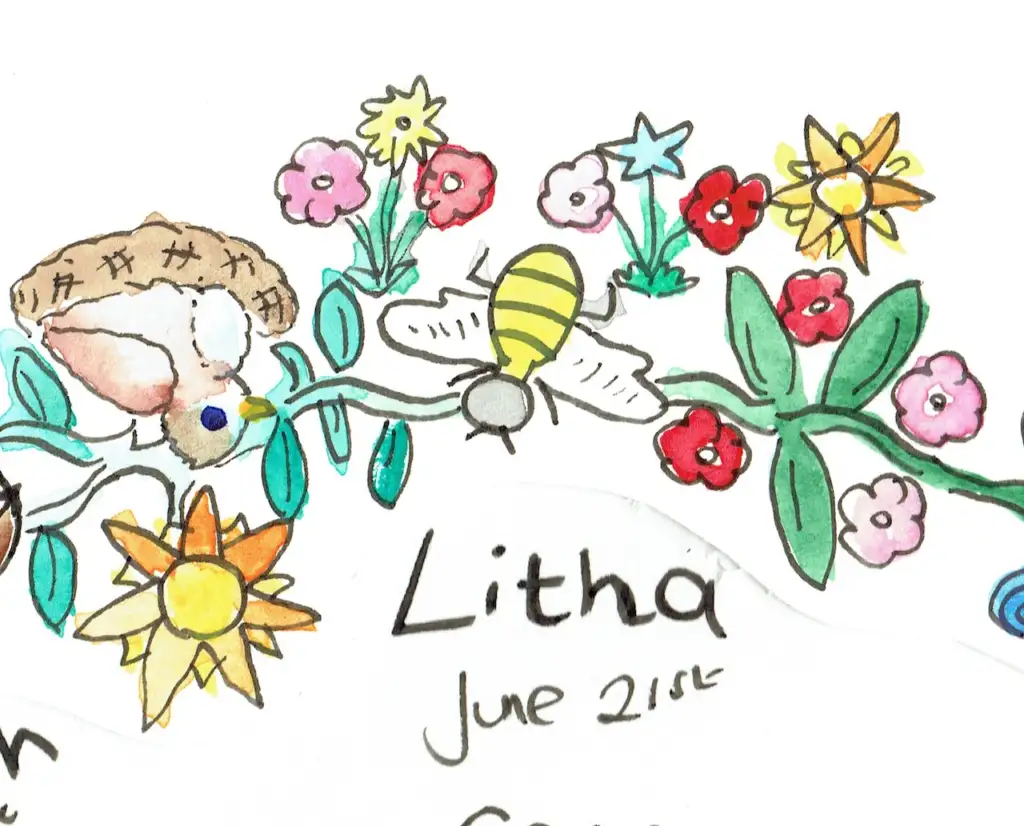
My Litha ritual is to actually stay outside for the extended light rather than heading in at my usual time, and to harvest any herbs I plan to dry or use in tinctures on this day specifically, since folklore consistently holds that herbs cut at the height of midsummer are at their most potent. It is also a lovely point to simply sit in the garden at dusk, which on the longest day barely arrives before ten o’clock, and properly notice just how much light the garden is getting.
Crystals for Litha lean towards the peak sunlight and vitality of the longest day.
| Crystal | Colour | Properties |
|---|---|---|
| Citrine | Golden yellow | Known as the merchant’s stone, associated with abundance, confidence and warmth |
| Sunstone | Orange-gold | Linked to joy and creative energy, traditionally associated with the peak sunlight of midsummer |
| Tiger’s Eye | Golden brown | Grounding and protective, associated with courage and vitality at the height of the year’s energy |
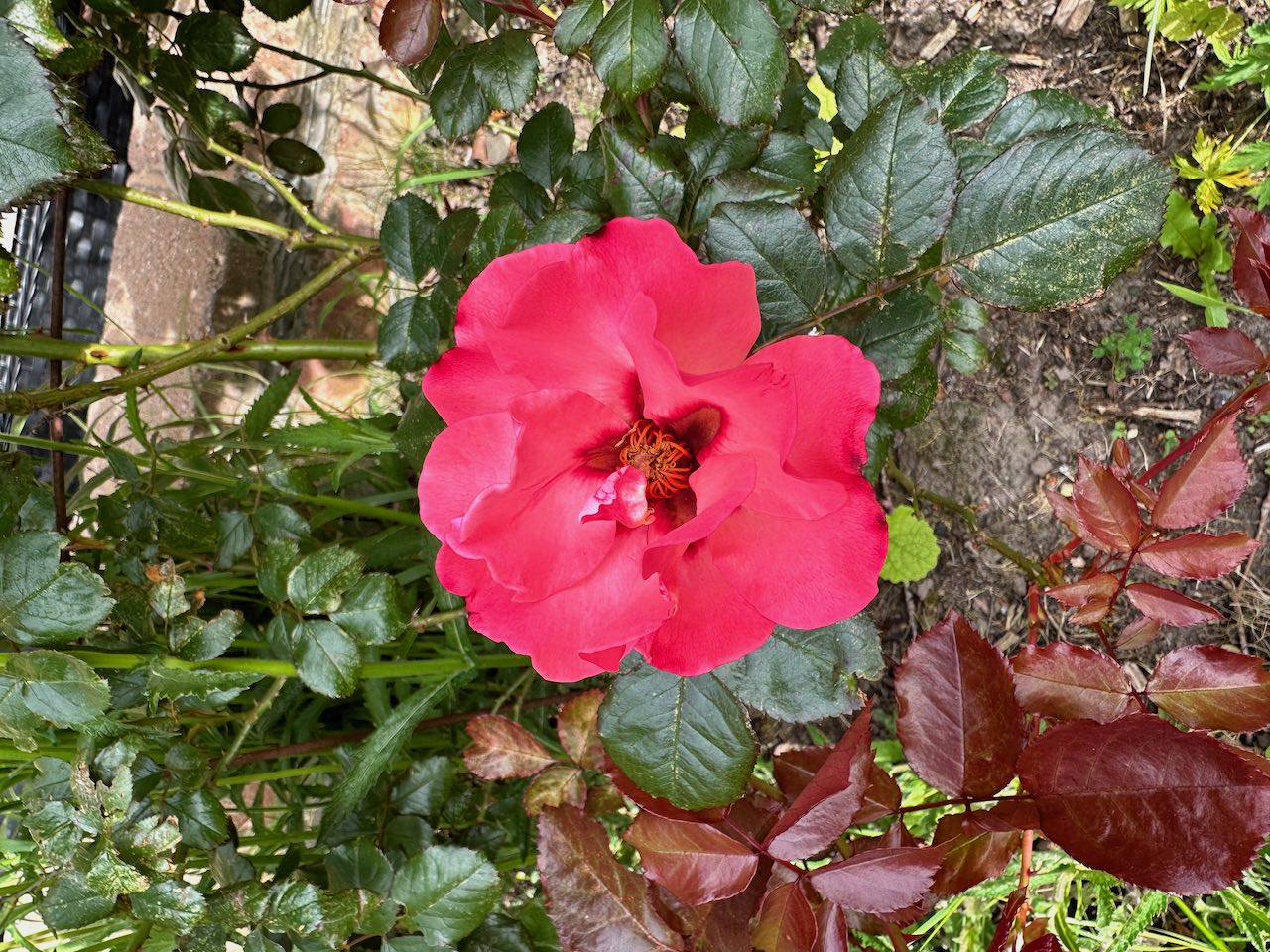
Five plants for Litha:
| Plant | Why it matters now |
|---|---|
| Roses | At their most abundant flush right now |
| St John’s Wort | Named directly for this point in the calendar and traditionally harvested at midsummer |
| Elderflower | Heady and creamy across every hedgerow |
| Foxgloves | Tall and striking in any shadier border |
| Lavender | Just starting its long summer flowering and at its most fragrant in the warmth of a June evening |
Lughnasadh, sometimes called Lammas or loaf-mass, marks the first harvest, traditionally the grain harvest, and sits at the midpoint between Litha and Mabon. Named after the Celtic god Lugh, it is the point where all the effort of spring and early summer starts properly paying off at the table rather than just in the border.
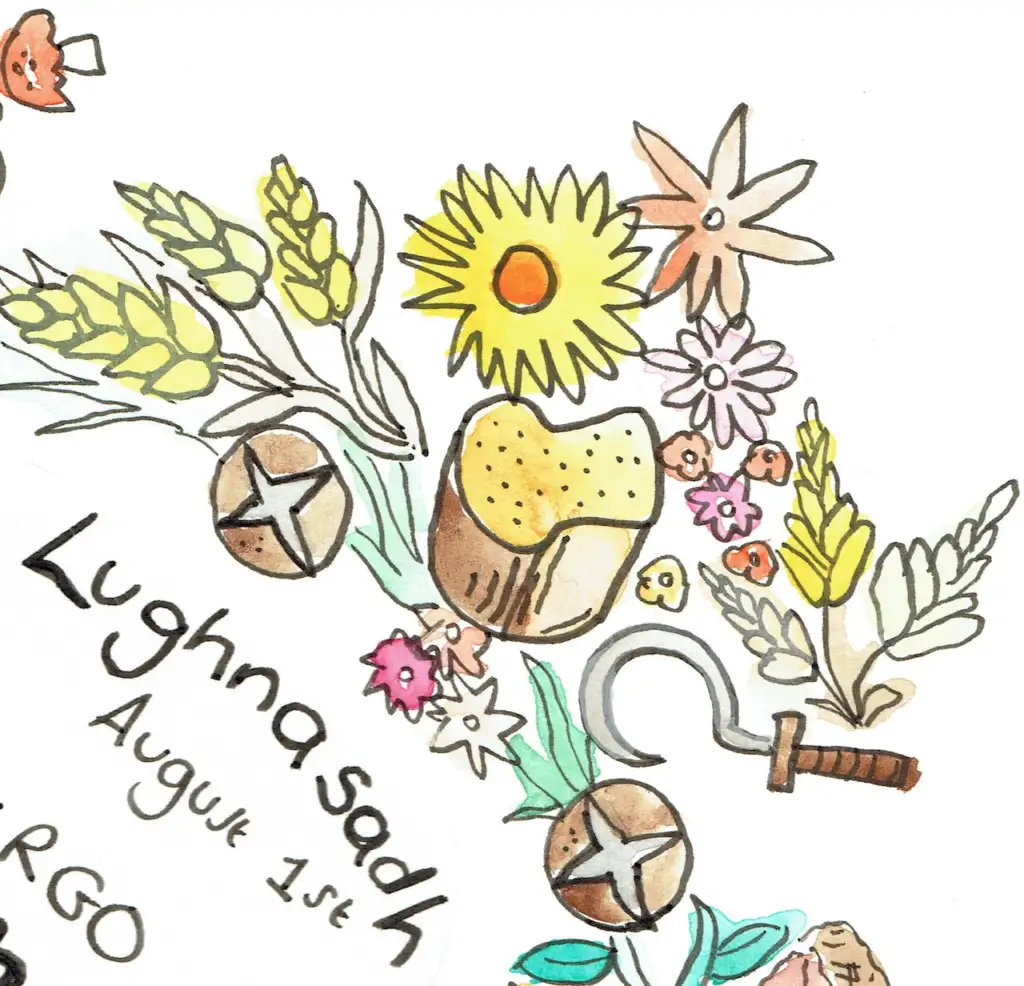
My Lughnasadh ritual is to eat something I have grown myself on the day, with a bit more ceremony than the usual absent-minded harvest snacking, and if I have grown anything, even just a few ornamental grasses gone to seed, to acknowledge the first harvest properly rather than letting it slide past unnoticed. Baking something with homegrown herbs or fruit is a lovely way to mark it if you want to take it a step further.
Crystals for Lughnasadh lean towards abundance and the first fruits of the harvest.
| Crystal | Colour | Properties |
|---|---|---|
| Carnelian | Orange-red | Linked to vitality, motivation and creativity, traditionally carried into the first harvest |
| Citrine | Golden yellow | Known as the merchant’s stone, associated with prosperity and warmth |
| Peridot | Light green | Associated with joy and abundance, traditionally tied to the first fruits of the harvest |

Five plants for Lughnasadh:
| Plant | Why it matters now |
|---|---|
| Sunflowers | At their absolute peak right now |
| Blackberries | Ripening properly along any hedgerow |
| Calendula | Cheerful and still flowering strongly through the height of summer |
| First sweetcorn | If you have grown it, ready around now |
| Earliest apples | Starting to colour on the tree ahead of the main autumn crop |
Mabon falls on the Autumn Equinox, usually around 22 September, the second point of perfect balance between light and dark, this time with the dark about to take the lead all the way through to Ostara. It marks the second, fuller harvest, and is often thought of as a pagan Thanksgiving, a moment of proper gratitude for what the growing year has produced.
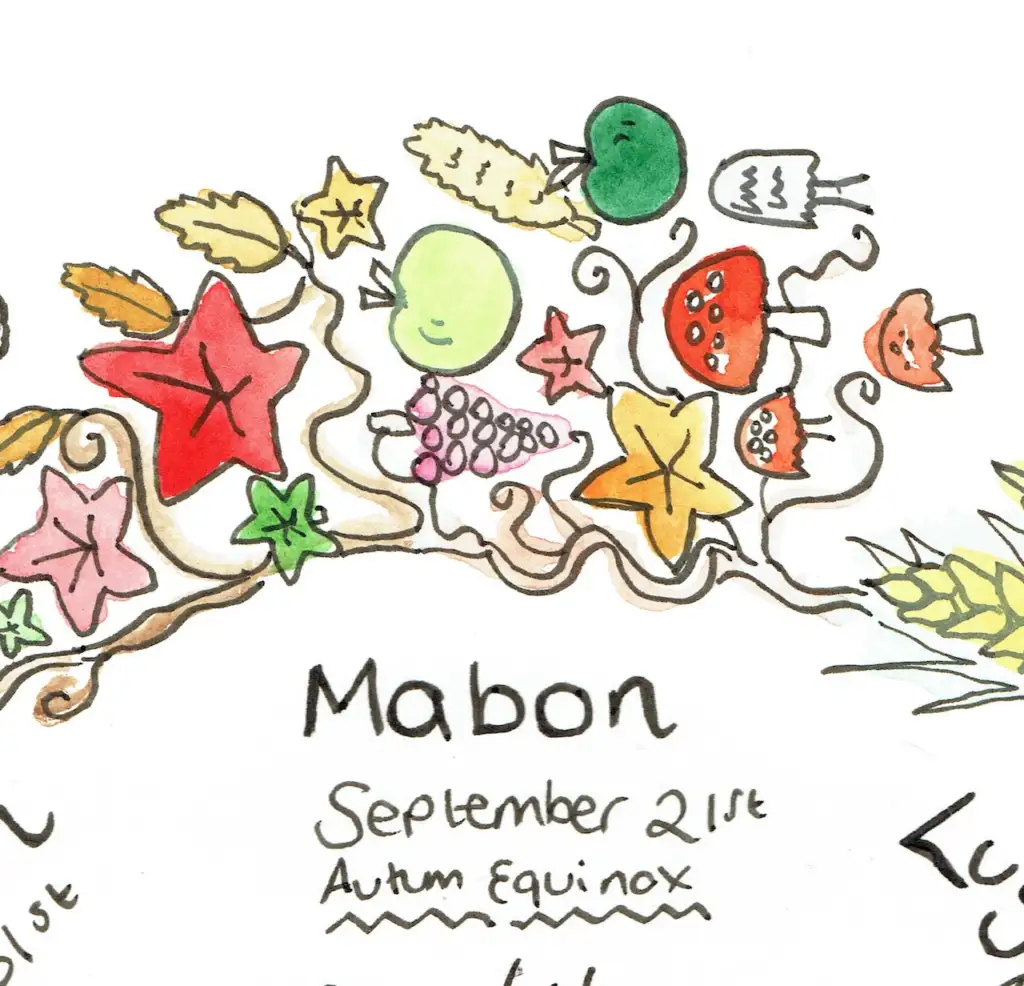
My Mabon ritual is to spend a proper afternoon gathering and storing whatever the garden has given that year, apples for the store, seeds for next year, the last of the herbs for drying, and to plant spring bulbs on the day itself as a deliberate act of faith that the light will return. It is a lovely point to sit with the balance of the day, dark and light equal, and think honestly about what in your own life needs storing away for winter and what needs releasing.
Crystals for Mabon lean towards balance and reflection as the year turns inward.
| Crystal | Colour | Properties |
|---|---|---|
| Tiger’s Eye | Golden brown | Grounding and protective, associated with balance as the light and dark reach equilibrium |
| Carnelian | Orange-red | Linked to vitality, here carried for the last warmth of the harvest energy |
| Lapis Lazuli | Deep blue | Linked to wisdom and clear reflection, traditionally used for insight as the year turns inward |
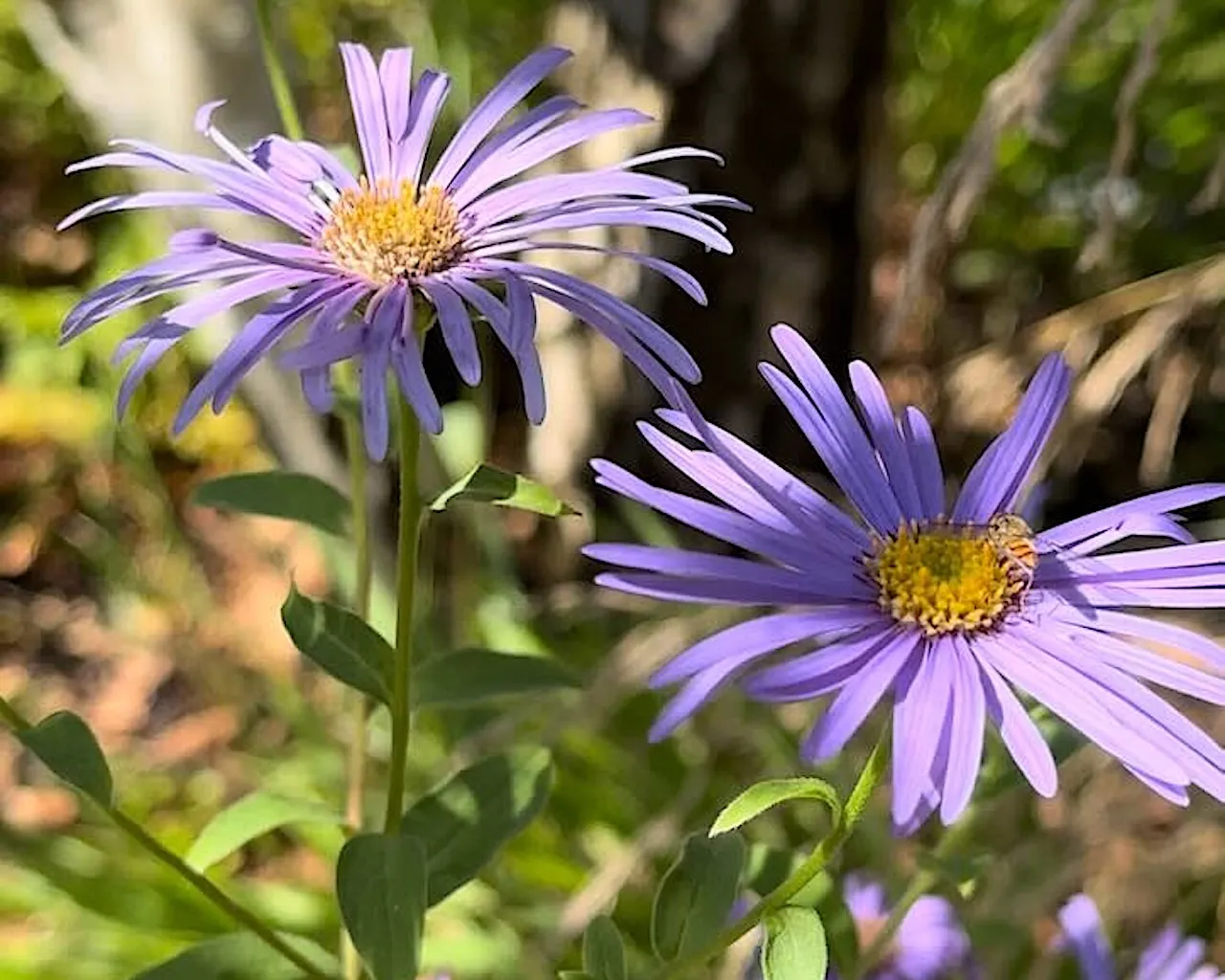
Five plants for Mabon:
| Plant | Why it matters now |
|---|---|
| Apples | The main harvest coming off in earnest |
| Pumpkins and squash | Properly ready for lifting |
| Hops | If you grow them, twining and heavy right now |
| Sedum or ice plant | One of the best late nectar sources for pollinators heading into autumn |
| Michaelmas daisies | One of the last big flushes of colour before the frosts properly set in |
You do not need to mark all eight sabbats with equal ceremony to get something out of this. I would rather someone properly noticed two or three turning points a year with real attention than went through the motions on all eight without feeling any of it. Start with whichever sabbat falls next on the calendar, keep the ritual small and practical, sowing a seed, gathering a harvest, lighting a candle, and let the rest build naturally from there.
What matters far more than getting every crystal correspondence exactly right is the underlying habit the Wheel builds, stopping regularly through the year to actually notice what your garden and the wider land around you is doing, instead of letting the seasons slide past while you are focused on the next job on the list. That habit of attention is what hedge witchcraft comes down to for me, and it is available to every gardener, whether or not you ever use the word witch for yourself.
If this has struck a chord, I have written a fair bit more on the crossover between gardening and folklore over the years. My guide to trees and their influence on witchcraft goes much deeper into the folklore behind hawthorn, rowan, elder and the rest, and my A to Z of garden plants used in witchcraft covers the herbs and flowers you can grow and harvest yourself. If you want to put any of the herbs mentioned above to practical use, my guide to making smudge sticks from your own garden is a good next step, and if you fancy designing a whole border around this theme, I would point you towards how to create the occult cottage garden.
No. The Wheel of the Year began as a practical farming and seasonal calendar long before Wicca formalised it into a religious structure, and plenty of gardeners mark the sabbats simply as a way of paying closer attention to the changing seasons.
The solstices and equinoxes are astronomical events tied to the earth’s exact position relative to the sun, which does not align perfectly with our calendar year, so the dates can shift by a day or two either way. The four cross quarter sabbats, Samhain, Imbolc, Beltane and Lughnasadh, are fixed calendar dates.
Whichever one falls next on the calendar. There is no need to wait for a particular starting point, and Imbolc or Ostara are especially good ones for gardeners to begin with, since both mark the point where active sowing and growing begins.
Not at all. The crystals mentioned throughout this guide are a traditional association rather than a requirement, and a meaningful sabbat ritual can be as simple as sowing a seed, harvesting something you have grown, or lighting a candle at dusk.

Join over 100,000 gardeners on YouTube
Free gardening videos from the Garden Ninja, with 8 million views and counting.
Subscribe on YouTube, it’s freeNow that you understand the wheel of the year and how to connect with your garden space, maybe it’s time to check out your garden’s design, too! Which is exactly what I cover in my design courses. Helping you create the most magical garden of your dreams and fix problems that stop you from making the most of your green space.
With courses starting from just £29, you gain access to award-winning design knowledge.
For the garden you’ve already got, not the one you’re starting from scratch. Seven checklists and video lessons from BBC Garden Rescue’s Lee Burkhill, designed to help you decide what’s worth keeping before you spend a penny.
Garden Design Examples for Small Gardens: 30 Design Templates & Planting Plans: In this online gardening course, I’ll walk you through 30 fantastic garden designs, explaining the logic behind the layout and plant choices, plus take-home tips for applying them in your own garden.
Learn how to transform and design your garden with Lee Burkhill’s crash course in garden design. In over 5 hours, Lee will teach you how to design your dream garden. Featuring practical design examples, planting ideas and video guides. Learn how to design your garden in one weekend!
Garden Design for Beginners Online Course: Want to become a garden designer or design your own garden? This beginner course is for you. Join me, Lee Burkhill, an award-winning garden designer, as I train you in the art of beautiful garden design. Enjoy 20 hours of online study and video lessons, along with quizzes and a completion certificate.
The Wheel of the Year is, at its heart, a very old invitation to pay proper attention to what your garden is already telling you eight times a year. You do not need a coven, a full set of crystals or a settled set of beliefs to get something real out of it, just a willingness to stop at each turning point and actually notice the hawthorn coming into blossom, the first apple dropping, the light beginning to fade or return. I have spent thirty years learning to read those moments in the soil before I ever put names to them, and drawing and painting every garden I design by hand has taught me the same lesson from a different direction: that slowing down enough to properly look is where the real connection with Mother Nature happens.
Happy gardening, and happy turning of the wheel.

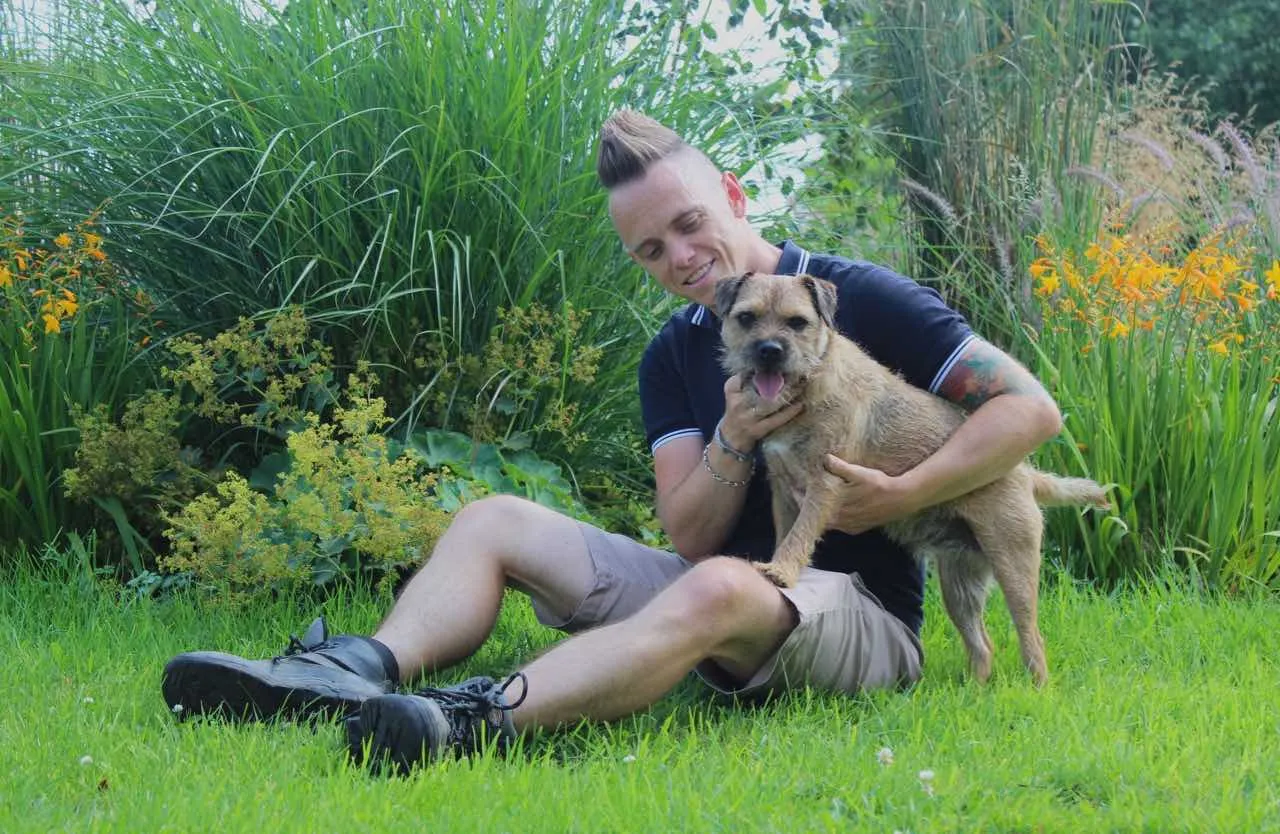
Lee Burkhill, known as the Garden Ninja, is an award-winning garden designer and horticulturist with over 30 years of gardening experience and 15 years as a professional garden designer. A qualified RHS (Royal Horticultural Society) professional, Lee specialises in sustainable garden design and practical horticultural advice. He designs and presents on BBC1’s Garden Rescue and in leading gardening publications. Lee combines three decades of hands-on gardening knowledge with professional design qualifications to help gardeners create beautiful, functional outdoor spaces.
View all posts by Lee Burkhill






JOIN THE NINJAS
Be the first in line for new Guides, Discount codes and Offers