For the garden you’ve already got, not the one you’re starting from scratch. Seven checklists and video lessons from BBC Garden Rescue’s Lee Burkhill, designed to help you decide what’s worth keeping before you spend a penny.
69


Quick Answer
Japanese knotweed has hollow, bamboo like stems speckled with purple, shovel shaped leaves that grow in a zigzag pattern, and clusters of small white flowers from August to October. It dies back to ground level every winter and regrows from the same root system each spring. Several ornamental garden plants are regularly mistaken for it, so a confident identification matters before you do anything else, especially given the legal and mortgage implications a genuine infestation can carry in the UK.
I get asked about this plant more than almost anything else that comes through the forum, and usually the question arrives with a genuine note of panic in it. Someone has spotted a fast-growing, cane-like plant at the bottom of the garden, heard the word knotweed mentioned by a neighbour, and immediately started worrying about mortgages, solicitors and five-figure removal bills. Most of the time, once I have seen a clear photo, it turns out to be something else entirely.

That is not me being dismissive of the plant itself. Japanese knotweed is a serious problem when it is present, and I am not going to soften that for the sake of a reassuring opening paragraph. But a large proportion of the “is this knotweed” questions I see, both on the forum and from clients over twenty years of professional garden design, turn out to be ornamental Persicaria, ordinary bindweed, or young dogwood shoots that share a passing resemblance and nothing more. This guide is built to give you a confident answer either way, rather than leaving you to guess from a single blurry phone photo.
Jump To
Japanese knotweed, botanically Reynoutria japonica though you will still see it labelled Fallopia japonica on older references, is a herbaceous perennial that was brought to Britain from Japan in the early nineteenth century as an ornamental plant for Victorian gardens. It was, by all accounts, rather admired at the time for its striking foliage and rapid growth. Those exact qualities are what make it such a liability today.
Every knotweed plant found growing wild in the UK is genetically part of the same female clone, introduced from a single source and spread since then entirely through fragments of root and stem rather than seed. That single detail explains almost everything else about why it behaves the way it does. A piece of rhizome smaller than your fingernail is enough to establish an entirely new colony, which is why disturbed soil, fly-tipped garden waste and even a strimmer dragged carelessly through a patch can spread the problem to somewhere it never existed before.
The plant dies back completely above ground every winter, leaving hollow, rattling brown canes that persist for a season or two, then reappears with startling speed each spring from the same root crown. In good conditions it can grow several centimetres a day during late spring, which is often the detail that first alarms people; a plant that seemed unremarkable in April can be shoulder height by June.
Identification comes down to four features working together. Any one of these on its own can belong to a dozen other garden plants, which is exactly why so much confusion happens online, but genuine knotweed shows all four at once.
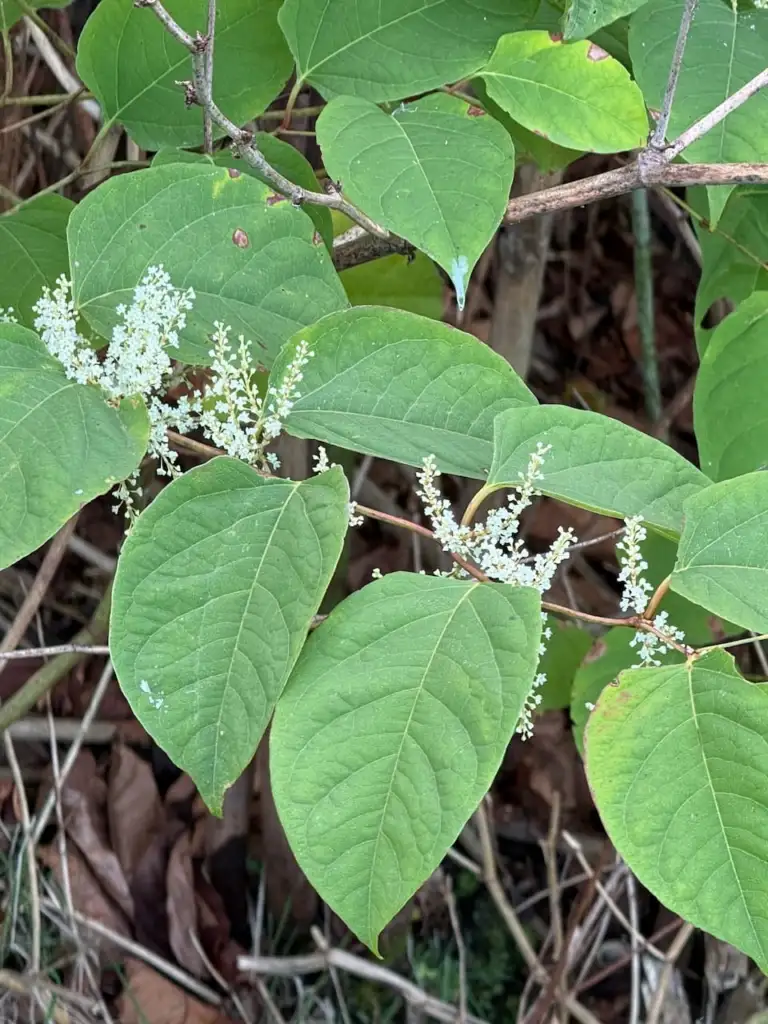
The stems are the single most reliable feature. They are hollow, jointed like bamboo, and pale green with distinctive purple or red flecking, particularly noticeable toward the base of the cane. Snap one open and you will find it is properly hollow inside, not pithy or solid the way most garden shrubs are. Mature canes reach 2.1 to 3 metres in a single growing season and stand upright with a slightly zigzagging habit rather than growing in a straight line.

The leaves are shield or shovel shaped, technically described as broadly ovate with a flat, truncated base, roughly the size and shape of a small spade blade. They emerge alternately along the stem in a distinctive zigzag pattern, never directly opposite one another, and each leaf tapers to a clear point at the tip. New growth in spring often has a reddish tinge before settling into a glossy mid to dark green through summer.
The flowers arrive late, from August through to October, well after most garden perennials have finished for the year. They appear as loose, cream or off-white sprays clustered at the leaf joints and stem tips, individually tiny but produced in such volume that a mature stand can look almost frothy from a distance. Japanese knotweed in the UK is functionally sterile since every plant is the same female clone with no viable male counterpart present, so it does not set seed here, though the flowers themselves are still a useful late-season identification marker.

The root system, if you ever need to look at it, is the most damning feature of all but also the one I would actively discourage you from investigating yourself. Knotweed rhizome is thick, woody and often described as looking like a dark, knuckled piece of ginger root, capable of extending seven metres horizontally from the visible crown and up to three metres deep. Disturbing it to check is precisely the mistake that spreads an infestation, so this is identification knowledge to have in your head, not a reason to start digging.
One of the most common reasons people struggle to identify knotweed confidently is that they are looking at the wrong stage of its life cycle for the guide they are reading. A photograph of the frothy white autumn flowers is not much use if you are standing in front of a bare patch of dead brown canes in February, so it helps to know what to expect at each point in the year.
This is the section I actually want you to read most carefully, because in my experience it resolves the majority of the anxious messages I get. Google an image search for knotweed, and you will find a hundred slightly different-looking plants all confidently labelled as the real thing by people who are, frankly, guessing. Here are the six I am asked about most often, in order of how frequently I see the confusion.
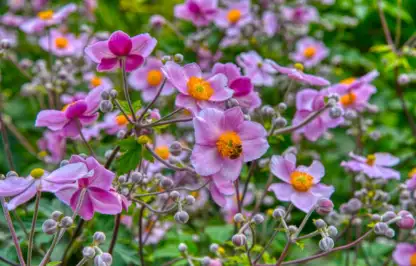
This is, hands down, the mix up I see most often, and I understand exactly why. Persicaria is a genus of herbaceous perennials that is, botanically speaking, a close relative of Japanese knotweed, both sit within the wider knotweed family, Polygonaceae, which is precisely why the leaf shape and general habit look so familiar. Varieties like Persicaria microcephala ‘Red Dragon’ and Persicaria amplexicaulis are lovely, well behaved garden plants that I use regularly in client borders, and I have had more than one panicked forum message about a plant that turned out to be exactly this.
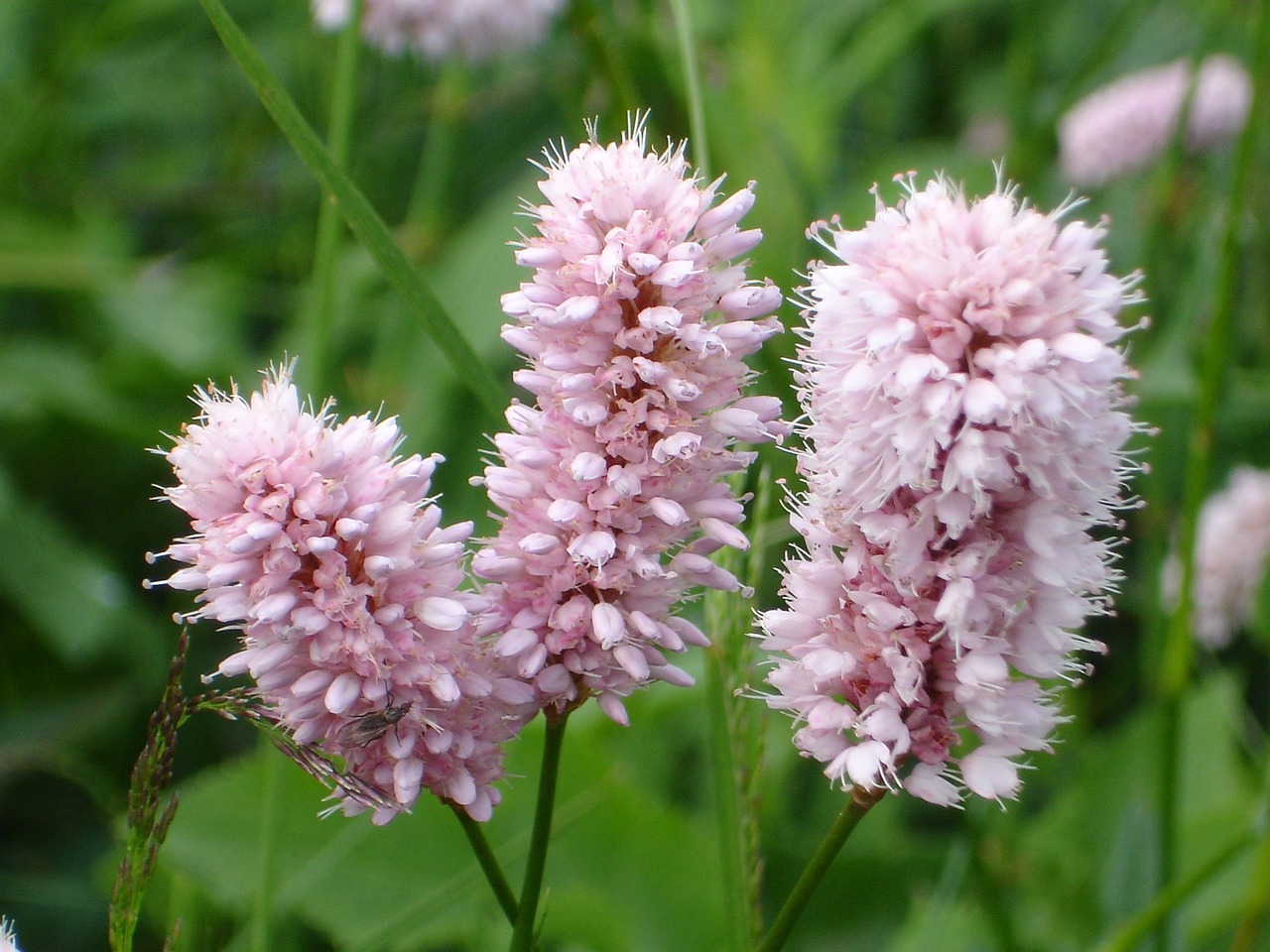
The tell is in the stem and the scale. Persicaria stems are solid, not hollow, and considerably more slender than knotweed canes, usually staying under a metre rather than pushing past two. The leaves often carry a distinctive dark chevron marking or maroon flush that true knotweed never shows, and the flowers arrive as tight, upright pink or red spikes rather than knotweed’s loose, frothy white sprays.
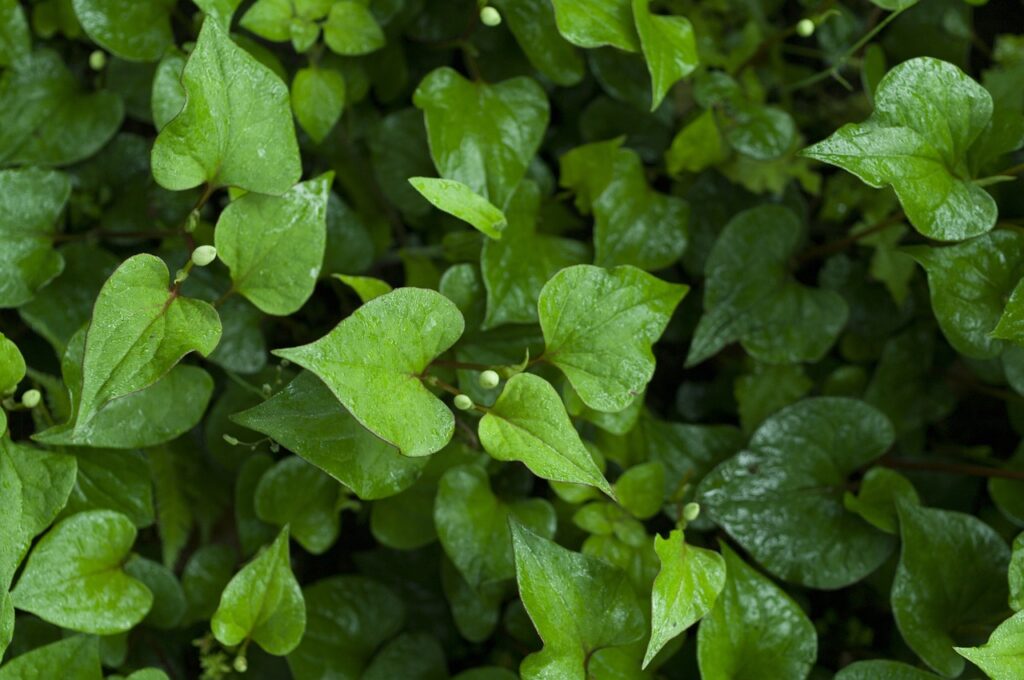
Field and hedge bindweed are real trouble as garden weeds in their own right, so I am not suggesting you ignore them if you find them, but they are not knotweed and do not carry the same legal weight. The confusion usually happens because both plants are vigorous, both can appear seemingly from nowhere in a border, and both have arrow or heart-shaped leaves that a nervous gardener glances at and assumes the worst.
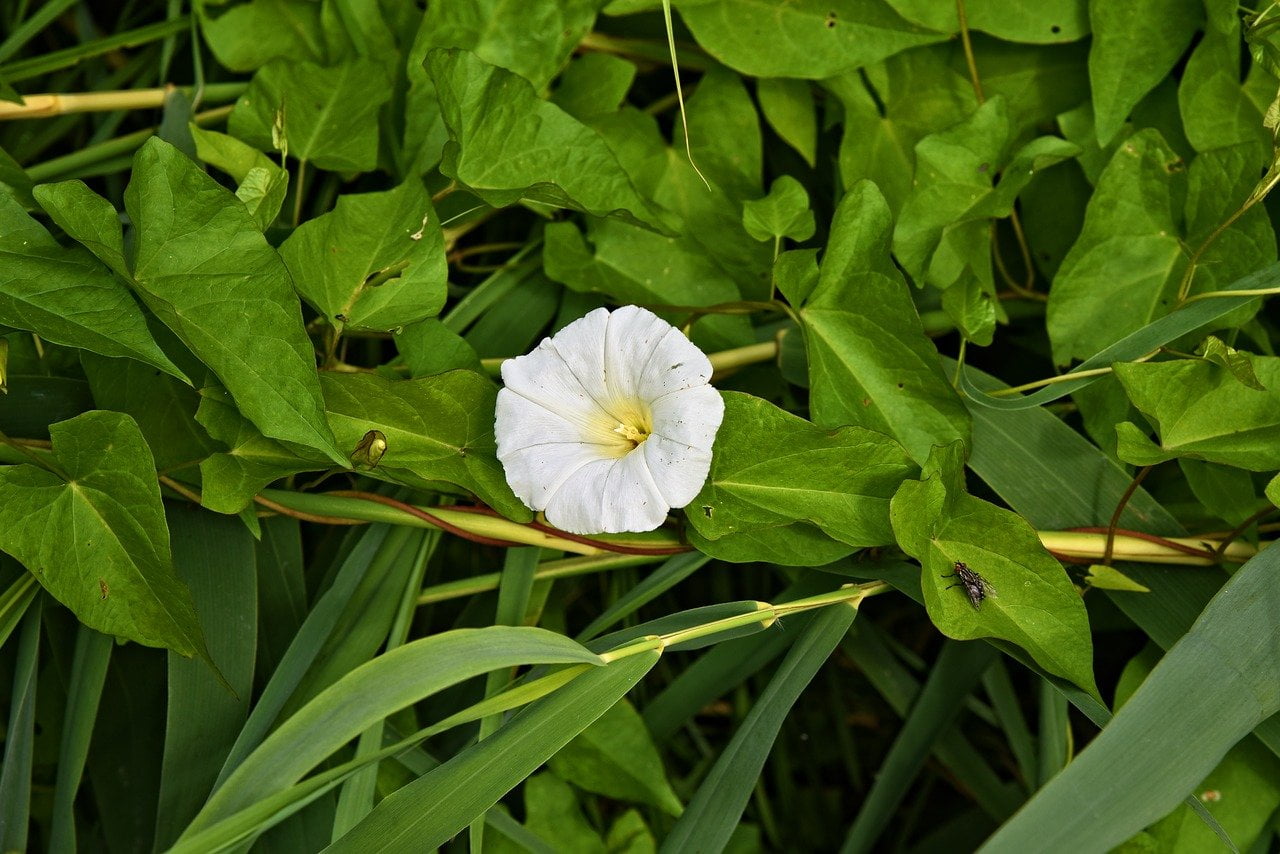
Bindweed is a climbing, twining plant; it wraps itself around anything upright and pulls itself skyward, whereas knotweed stands as an independent, self-supporting cane and never twines around other plants. Bindweed’s large, trumpet-shaped white flowers, similar in shape to a morning glory, are also completely different from knotweed’s small, clustered sprays.
Russian vine, Fallopia baldschuanica, is close enough botanically to knotweed that the two even used to share a genus name, and it has earned its own nickname of mile-a-minute vine for good reason. It produces the same kind of frothy cream flower sprays in late summer that trip people up, and I would happily forgive anyone the confusion at first glance. The difference is habit rather than flower: Russian vine is a rampant, woody climber that will scramble thirty feet up a tree or over a shed roof given the chance, while Japanese knotweed is an upright, self-supporting herbaceous cane that never climbs anything.

Houttuynia cordata, sometimes sold as a groundcover or pond margin plant, has heart-shaped leaves that carry a passing resemblance to young knotweed shoots, and it spreads with an enthusiasm that alarms people who planted it expecting something more restrained. The leaves are considerably smaller than knotweed’s, often with a variegated cream and red colouring in the popular ‘Chameleon’ cultivar, and crushing a leaf releases a distinctive citrus or fishy smell that knotweed does not share at all.
I’ll be honest, I can’t stand this plant; the smell elicits either citrus or off fish depending on how you interpret it, and it clings to hands, gloves and tools for what feels like forever. Often found on pond shelves, take care when cutting it or dividing it; the stink will stick to you for days!
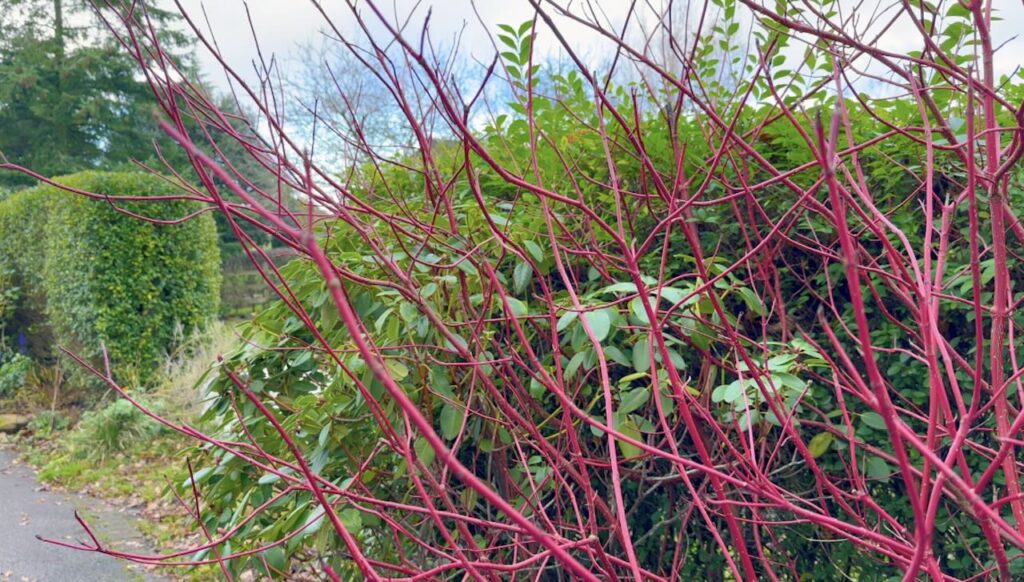
This one catches out people looking at very early spring growth specifically. Fresh Cornus (dogwood) or Syringa (lilac) suckers pushing up from the base of an established shrub can, for a few short weeks, show reddish young stems that superficially echo knotweed’s red spring shoots. The giveaway is that these will be growing directly from a woody shrub base you already recognise, and the leaves that follow are entirely different in shape from knotweed’s shovel form, ovate and pointed for lilac, or the distinctive parallel leaf veining of dogwood.
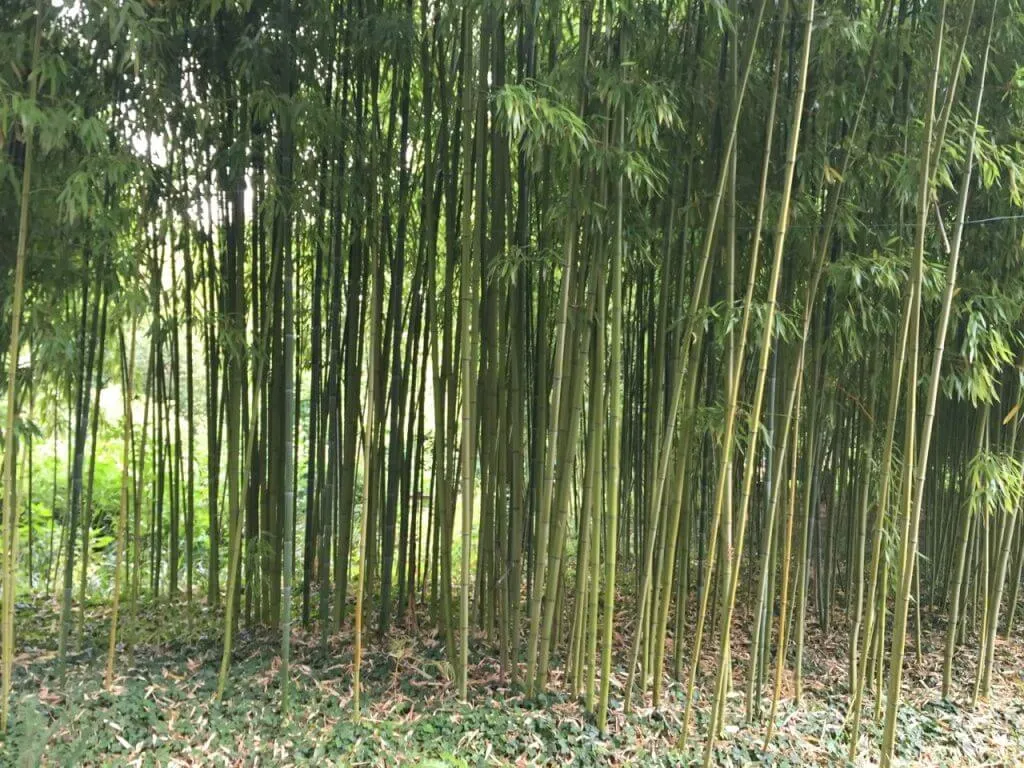
The word bamboo comes up constantly in knotweed descriptions, since the hollow, jointed canes really do resemble it, and this works in reverse too, plenty of people worry a spreading bamboo is actually knotweed. True bamboo canes are round in cross section and remain woody and evergreen through winter rather than dying back to brown, brittle stalks. Bamboo leaves are also narrow, lance-shaped and grass-like, nothing like knotweed’s broad, shovel-shaped foliage.
⚠ A Note on Certainty
None of the above is a substitute for a proper identification if there is any real doubt, particularly if you are mid way through a house sale or purchase. A clear, well lit photograph sent to a PCA (Property Care Association) accredited invasive weed specialist will usually get you a confident answer within a day or two, and is money well spent against the alternative of guessing wrong in either direction.
I want to be properly useful here rather than vague, but I also need to be upfront that I am a garden designer, not a solicitor, so treat this as a clear explanation of the general legal position rather than advice on your specific situation. If you are already dealing with a dispute or a property transaction, a conversation with a solicitor who handles this regularly is worth far more than anything written here.
Simply having Japanese knotweed growing on your land is not, on its own, a criminal offence. This surprises most people, given how seriously everyone treats the plant. What the Wildlife and Countryside Act 1981 actually makes an offence is causing it to grow in the wild, which in practice means you cannot deliberately plant it, and you cannot allow soil or plant material containing it to spread beyond your boundary through negligence.
The more commonly used piece of legislation in practice is the Anti-Social Behaviour, Crime and Policing Act 2014, which allows a local authority to issue a Community Protection Notice if knotweed on your land is having a persistent, detrimental effect on a neighbour’s ability to enjoy their own property, for example if it is visibly encroaching across a boundary. Ignoring a notice like this can lead to a fine, so it is not something to sit on if one arrives.
Separately, if you knowingly allow knotweed to spread onto a neighbour’s property, you can be liable for the cost of removal and any resulting damage under the law of private nuisance, and there have been well publicised civil cases where this has resulted in significant payouts. The practical upshot is straightforward even without the legal detail, if you know you have it, dealing with it responsibly rather than ignoring it protects you as much as it protects anyone next door.
This is where most of the genuine stress around knotweed actually comes from, and it is worth understanding properly since it shapes almost every decision that follows a positive identification.
UK mortgage lenders follow guidance that categorises knotweed risk by proximity to the property, and most will decline to lend, or will lend only on the condition that a professional management plan is already in place, if knotweed is growing within 7 metres of a habitable structure. This is why a RICS survey during a house purchase specifically looks for it, and why finding it during a sale can hold up or unpick a transaction if it is not handled promptly.
The practical fix that satisfies almost every lender is a formal treatment plan from a PCA accredited contractor, usually accompanied by an insurance backed guarantee that transfers to a new owner. This does not need to mean the knotweed has already been fully eradicated before a sale can proceed, a documented plan with a guarantee in place is usually enough to satisfy a lender’s requirements, which is worth knowing if you are worried a single patch is about to derail a house move entirely.
If you are selling, you will also need to complete the TA6 Property Information Form honestly, which directly asks whether the property is or has been affected by Japanese knotweed. Answering this incorrectly, even unintentionally, can expose you to a misrepresentation claim later, so an accurate answer with evidence of treatment where relevant is always the safer route than hoping nobody asks.

Two things make knotweed properly different from an ordinary vigorous garden weed, and understanding both explains why it is treated so differently in law and in professional practice.
The first is the sheer scale and persistence of the root system. That rhizome network I mentioned earlier, extending metres in every direction and storing enormous energy reserves, is what allows the plant to force its way through tarmac, block paving, and the small existing cracks in old brickwork, concrete or drainage systems. It is worth being clear that it does not typically punch through sound, modern foundations from a standing start the way some of the more dramatic press coverage implies, but it absolutely exploits existing weaknesses with a persistence that few other plants can match, and that reputation is exactly why lenders and surveyors treat it with such caution.
The second is ecological. A dense knotweed stand shades out and outcompetes every native plant beneath it, and because the UK population is entirely one sterile female clone reproducing only vegetatively, an established stand can persist and dominate a riverbank, woodland margin or neglected corner of a garden more or less indefinitely without the natural checks that come with a plant reproducing and adapting through seed. Riverbanks are a particular concern, since flood water carrying even small rhizome fragments can establish entirely new colonies miles downstream, which is why you will often see knotweed described as one of the costliest invasive species in the UK to manage at a landscape scale, not just in individual gardens.
I will say this plainly, because it is the single most important piece of practical advice in this whole guide. Do not strim, mow, dig up, or rotavate knotweed if you suspect that is what you have found. Every one of those actions breaks the plant into fragments, and every fragment is a potential new colony. Cutting it back with a strimmer is, without exaggeration, one of the most effective ways to turn a single contained patch into a scattered problem across the whole garden.
Professional treatment almost always means a carefully timed programme of systemic herbicide, typically glyphosate based, applied directly to the leaves in late summer or early autumn once the plant has flowered and is naturally drawing nutrients back down into the rhizome for winter. This timing matters enormously, since it is precisely when the chemical gets carried down into the root system with the plant’s own natural processes, rather than sitting only in the top growth. A single treatment is rarely enough. Most professional programmes run across two to five growing seasons of repeat applications before a contractor will confidently sign off eradication, which is a good reason to be sceptical of anyone promising a one visit fix.
Excavation and removal of the contaminated soil entirely is the other main professional route, faster than herbicide treatment but considerably more expensive and disruptive, and it still needs to be handled by a specialist given how strict the disposal rules are, which brings us to the next section.
I get asked constantly whether a determined homeowner can treat it themselves with a garden centre glyphosate product, and honestly, for a very small, well established patch a long way from any boundary or building, a patient DIY approach over several years is not impossible. But for anything near a boundary, a building, a driveway, or anywhere close to a property sale, I would always recommend a PCA accredited professional. The insurance-backed guarantee that comes with professional treatment is often the actual thing a mortgage lender or buyer’s solicitor wants to see, not just evidence that the plant is gone.
This catches people out constantly, so it deserves its own clear section rather than a passing mention. Japanese knotweed is classed as controlled waste under the Environmental Protection Act 1990 once it has been cut or excavated, which means normal household disposal routes are simply not legally available to you.
⚠ What You Must Not Do
Knotweed material cannot go in your green garden waste bin, your general household bin, your home compost heap, or be taken to a standard household waste recycling centre without prior arrangement. Fly tipping it, including something as apparently minor as dumping a bag of cut canes over a fence or on waste ground, is a criminal offence under the same controlled waste rules, on top of the risk of establishing an entirely new colony wherever it lands.
Legitimate disposal routes are a licensed landfill site that specifically accepts controlled waste, which needs to be arranged in advance and is rarely something a standard household tip will handle on the spot, or on site burial or burning by a licensed specialist following strict Environment Agency guidelines on depth and location. In practice, this is precisely why most people end up using a PCA accredited contractor for the whole job rather than trying to manage disposal themselves, since the contractor already holds the necessary waste carrier licence and knows exactly which sites will accept the material.
If you have read through the identification section above and you honestly think you have found it, here is the order I would actually work through, based on how I talk clients and forum members through this exact situation.
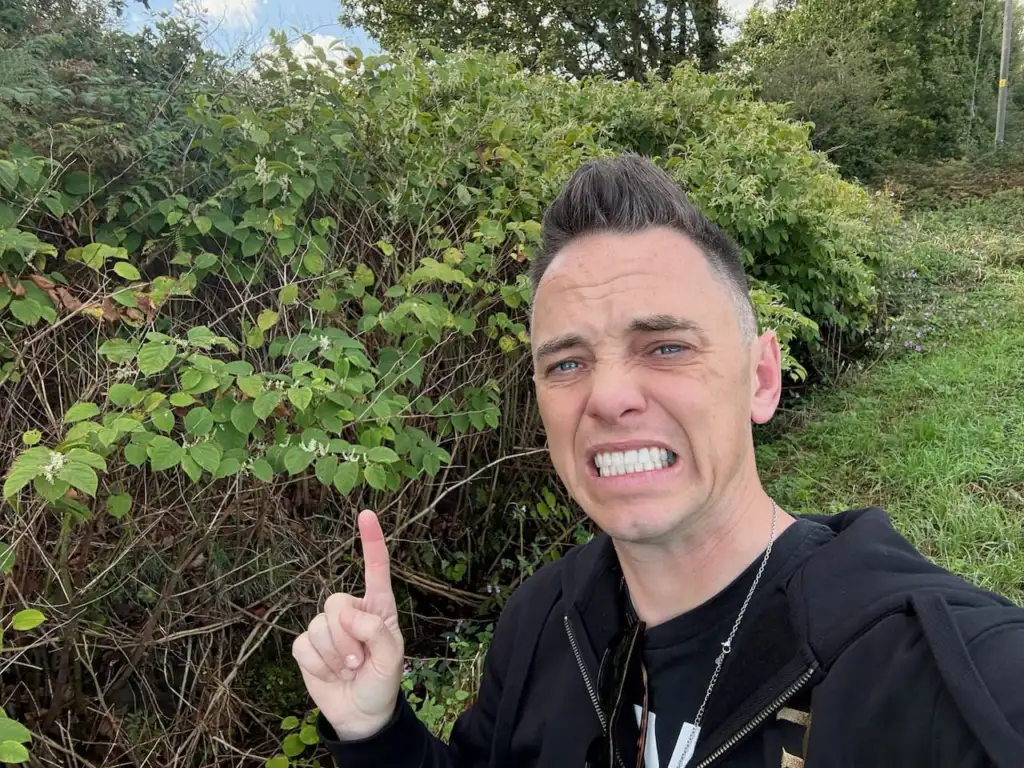
Do not touch, cut, strim or dig it. Leave it exactly as it is until you have a professional opinion. Nothing about waiting a week or two to get it properly assessed makes the situation worse, whereas disturbing it can make things measurably worse very quickly.
Take clear photographs of the stem close up, showing the purple flecking and hollow structure if a cane has already broken naturally, the leaf arrangement along the stem, and the whole plant from a short distance to show its overall habit and scale. Good photographs are often enough for an initial remote opinion from a specialist before you commit to a paid site visit.
Get a proper identification from a PCA accredited specialist rather than relying on a Facebook gardening group or a confident sounding stranger online. The Property Care Association keeps a register of accredited invasive weed contractors on their website, and most offer a free or low cost initial identification, sometimes from photographs alone.
If it is confirmed, get a proper treatment plan and quote in writing, including whether an insurance backed guarantee is included, since this is usually the document a mortgage lender, buyer or solicitor will actually want to see rather than proof of eradication alone.
If you are mid way through selling or buying a property and knotweed has come up, loop your solicitor in immediately rather than trying to manage it quietly. Delays caused by knotweed are far more often caused by poor communication and last minute surprises than by the plant itself, and an early, honest conversation with everyone involved tends to keep a sale on track far better than hoping the issue resolves itself.
Yes, in the great majority of cases. It very rarely stops a sale outright, but it usually needs a documented professional treatment plan and, ideally, an insurance backed guarantee in place before a lender or buyer’s solicitor will be satisfied.
A professional herbicide treatment programme typically runs across two to five growing seasons of repeat applications. Excavation is faster, often completed within days, but considerably more expensive and still requires specialist licensed disposal.
No. Unlike giant hogweed, Japanese knotweed is not toxic and does not cause skin burns or reactions. The danger it poses is structural and legal rather than a direct health risk, which is an important distinction from some of the other invasive plants covered elsewhere on the site.
No, and this is one of the most important rules in this whole guide. Home composting will not kill the rhizome and can actively help it spread. It must be treated as controlled waste and disposed of through a licensed specialist.
Yes. The above ground growth dies back completely every winter, but the extensive underground rhizome survives and sends up fresh canes each spring, often with startling speed once the weather warms.
They are entirely different plants with entirely different risks. Knotweed is a structural and legal problem with shovel shaped leaves and bamboo like canes, while giant hogweed is a towering umbellifer with a sap that causes severe skin burns in sunlight. I have covered giant hogweed identification and what to do if you are burned by it in a separate guide, since the two deserve to be treated quite differently.

Join over 100,000 gardeners on YouTube
Free gardening videos from the Garden Ninja, with 8 million views and counting.
Subscribe on YouTube, it’s freeOne of the best ways to improve your gardening skills as a beginner is to take a garden design or gardening course. You can take many weekend or distance courses from the RHS, local gardening groups, or horticultural colleges to help improve your skills, all of which will help take your gardening to the next level. But what if you do not have the time to attend an in person course or the funds to commit to gardening?
That is where online gardening courses come in. Online garden courses cost a fraction of the price, can be completed at home in your own time, and often provide far greater value for money when training as a gardener.
I offer a number of gardening and garden design courses to help take your skills to the next level so you can become a fully fledged Garden Ninja.
For the garden you’ve already got, not the one you’re starting from scratch. Seven checklists and video lessons from BBC Garden Rescue’s Lee Burkhill, designed to help you decide what’s worth keeping before you spend a penny.
Garden Design Examples for Small Gardens: 30 Design Templates & Planting Plans: In this online gardening course, I’ll walk you through 30 fantastic garden designs, explaining the logic behind the layout and plant choices, plus take-home tips for applying them in your own garden.
Learn how to transform and design your garden with Lee Burkhill’s crash course in garden design. In over 5 hours, Lee will teach you how to design your dream garden. Featuring practical design examples, planting ideas and video guides. Learn how to design your garden in one weekend!
Garden Design for Beginners Online Course: Want to become a garden designer or design your own garden? This beginner course is for you. Join me, Lee Burkhill, an award-winning garden designer, as I train you in the art of beautiful garden design. Enjoy 20 hours of online study and video lessons, along with quizzes and a completion certificate.
Confident identification is the whole battle with Japanese knotweed. Hollow, purple flecked canes, shovel-shaped leaves growing in a zigzag, and late-season white flower sprays are the genuine signs, and several ornamental garden plants, Persicaria most of all, are regularly mistaken for it. If you do have a confirmed infestation, leave it undisturbed, get a PCA-accredited specialist involved, and treat disposal as seriously as the law requires. It is a manageable problem with the right professional help, rarely the disaster the more excitable headlines suggest.
Happy gardening, and if you are ever truly unsure what you are looking at, a proper professional opinion is always worth the small cost against getting a knotweed identification wrong in either direction.


Lee Burkhill, known as the Garden Ninja, is an award winning garden designer and horticulturist with over 30 years of gardening experience and 15 years as a professional garden designer. A qualified RHS professional, Lee specialises in sustainable garden design and practical horticultural advice. He designs and presents on BBC1’s Garden Rescue and in leading gardening publications. Lee combines three decades of hands on gardening knowledge with professional design qualifications to help gardeners create beautiful, functional outdoor spaces.
View all posts by Lee Burkhill





JOIN THE NINJAS
Be the first in line for new Guides, Discount codes and Offers