For the garden you’ve already got, not the one you’re starting from scratch. Seven checklists and video lessons from BBC Garden Rescue’s Lee Burkhill, built to help you work out what’s worth keeping before you spend a penny.
69


Quick Answer
Most conifers cannot regenerate from old brown wood, which means once they outgrow their space, your options are limited to careful staged reduction, acceptance and maintenance, or removal. Unlike deciduous hedges and shrubs, conifers cannot be cut back to bare wood and expected to recover. Understanding this biological reality before deciding how to act will save you significant time, money, and disappointment.
Of all the questions that arrive in the Garden Ninja forum, those about oversized conifers are among the most consistently difficult to answer because the honest answer is not always what people want to hear. Having designed and managed gardens professionally for over twenty years, I have seen more conifer disasters than I care to count, usually caused by well-intentioned gardeners who hard-pruned a Leylandii hedge in winter and then spent the following years staring at a wall of dead brown wood that never recovered.
This guide is for anyone who has inherited an oversized conifer, allowed one to get away from them, or is trying to decide what to do with a conifer hedge that has become a source of tension with neighbours or a problem for the garden. I will cover why conifers behave the way they do, what you can and cannot do, how to manage a staged reduction where it is possible, when to call in a tree surgeon, and what to plant instead when removal is genuinely the best course. The most important thing to understand from the outset is that this is a problem in which the plant’s biology sets firm limits on what is achievable.
Jump To
To understand why managing an oversized conifer is so different from cutting back an overgrown privet or hawthorn hedge, you need to understand a growth mechanism called apical dominance. In conifers, the growing tip of each branch, called the apical meristem, produces hormones that suppress the development of dormant buds lower down the stem. The plant focuses its energy on growing upwards and outwards from the tips. When you remove a branch tip on a conifer, there are no dormant buds lower down the bare wood waiting to regenerate, which is why cutting into old brown wood produces permanent dead patches rather than the flush of new growth you would see on a deciduous shrub.
This is fundamentally different from how most hedging plants behave. Privet, hawthorn, beech, hornbeam, and box can all be cut back to bare stumps and will produce vigorous new growth from dormant buds in the old wood. The same is broadly true of most garden shrubs. Conifers are the exception rather than the rule, and this catches many gardeners out because they assume the same rules apply to all plants.
There is also the question of the brown inner zone that develops as a conifer matures. Every conifer has a living green outer layer where active photosynthesis occurs, and a dead brown interior where older needles have fallen and no living buds remain. The moment you cut into that brown zone, you are cutting into dead material, and no amount of waiting, feeding, or encouraging will produce new growth from it. This is not a question of the plant being in poor health or needing better treatment. It is simply how conifers are built.
💡 Top Tip
The green zone on a well-maintained conifer hedge might only be 30 to 45cm deep. On a neglected conifer that has not been trimmed for several years, it could be as little as 15cm. Before attempting any reduction, look at the plant from the side to assess how much living green growth you actually have to work with.
Not all conifers behave the same way, and understanding which species you are dealing with is the first step in determining what is possible. The vast majority of common garden conifers cannot regenerate from old wood, but there is one very important exception.
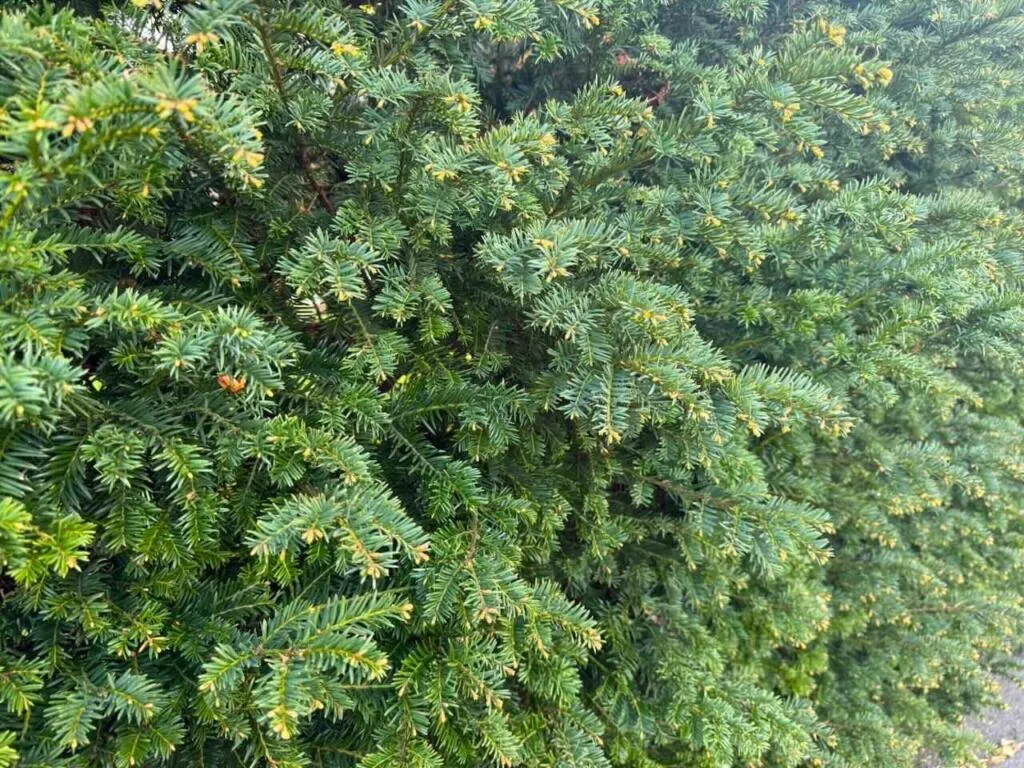
Yew (Taxus baccata) above is the only common conifer that can be cut back hard into old wood and reliably regenerate. It is slow-growing compared to Leylandii, but it is the only hedging conifer you can genuinely renovate once it has become overgrown. Even yew benefits from a staged approach over two or three years, reducing one side at a time to avoid putting the plant under too much stress in one go, but the biological capacity for regeneration is there in a way that simply does not exist in other conifers.
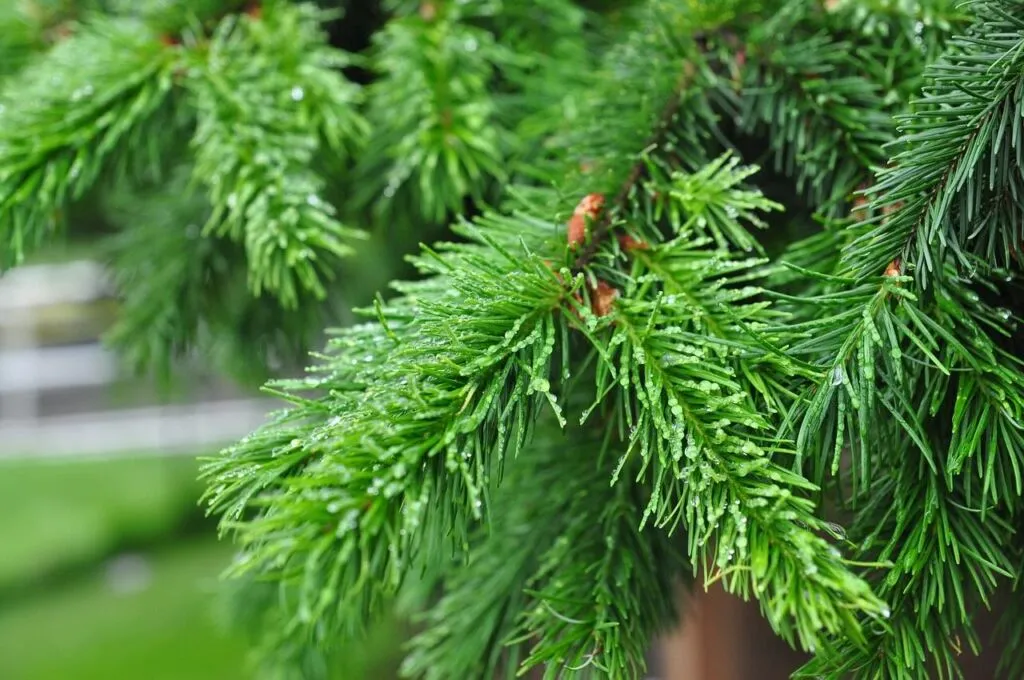
Leylandii (x Cuprocyparis leylandii), Lawson cypress (Chamaecyparis lawsoniana), Monterey cypress (Cupressus macrocarpa), and Thuja species cannot regenerate from bare brown wood. The same applies to most pine, spruce, and fir trees used as garden specimens. Pencil cypress (Cupressus sempervirens) and the various dwarf conifer varieties are similarly unable to recover from hard pruning into old wood. If you have any of these, you need to work only within the green zone, which places strict limits on how much reduction is achievable.
💡 Top Tip
If you are not sure what type of conifer you have, photograph a close-up of the foliage and use an identification app such as PlantNet. Knowing whether you have yew, leylandii, or a Lawson cypress changes the advice substantially and will determine whether any serious reduction is feasible at all.
If you have a Leylandii, Lawson cypress, or similar non-regenerating conifer that has become taller than you want, but where the green zone is still accessible, a staged reduction is the only option short of removal. The keyword here is staged. Attempting to reduce a large conifer by more than a third of its height in a single season is likely to cause significant stress to the plant and will result in bare, permanent dead patches where you have cut into old wood.
The RHS advises that healthy conifers can generally tolerate a reduction of up to one-third of their height in a single operation, carried out in early April, as growth begins.
Where a greater reduction is needed, the recommendation is to remove one-third in the first instance, allow the plant to recover for a full growing season, then remove up to half of the remaining plant in the following year. This staged approach spreads the stress over two seasons and gives the plant the best chance of maintaining a dense, green outer layer throughout the process.
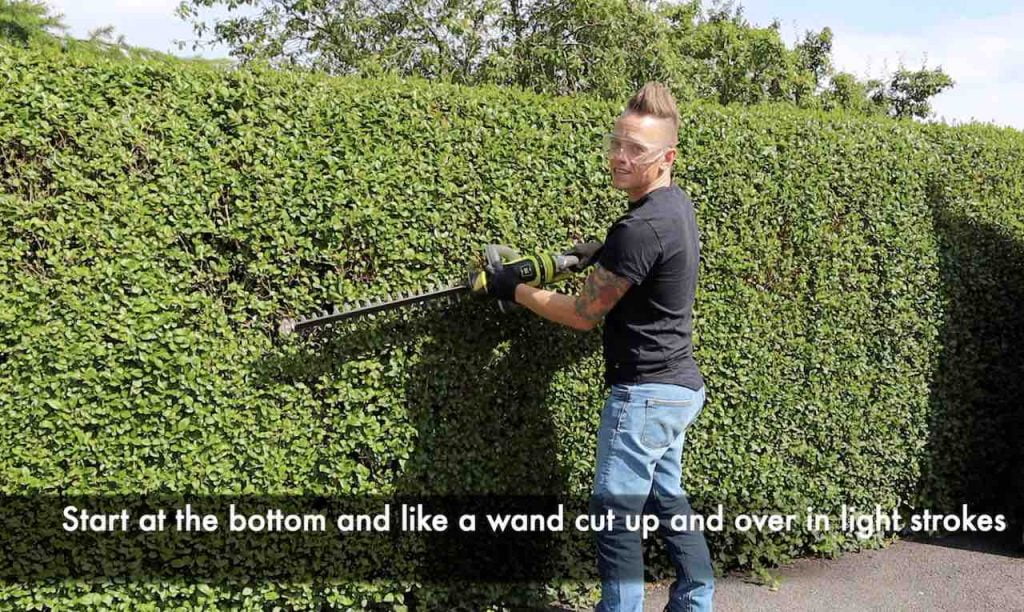
The timing of this work matters considerably. Conifer trimming should be carried out between April and the end of August, when the plant is actively growing and best able to respond. Work done outside this window, particularly in winter, leaves bare cuts exposed to cold and disease without the growth response needed to cover them. Three trims a year within the growing season is the ideal maintenance regime for a fast-growing species like Leylandii, though for a staged reduction project, a single careful cut in April is the right approach.
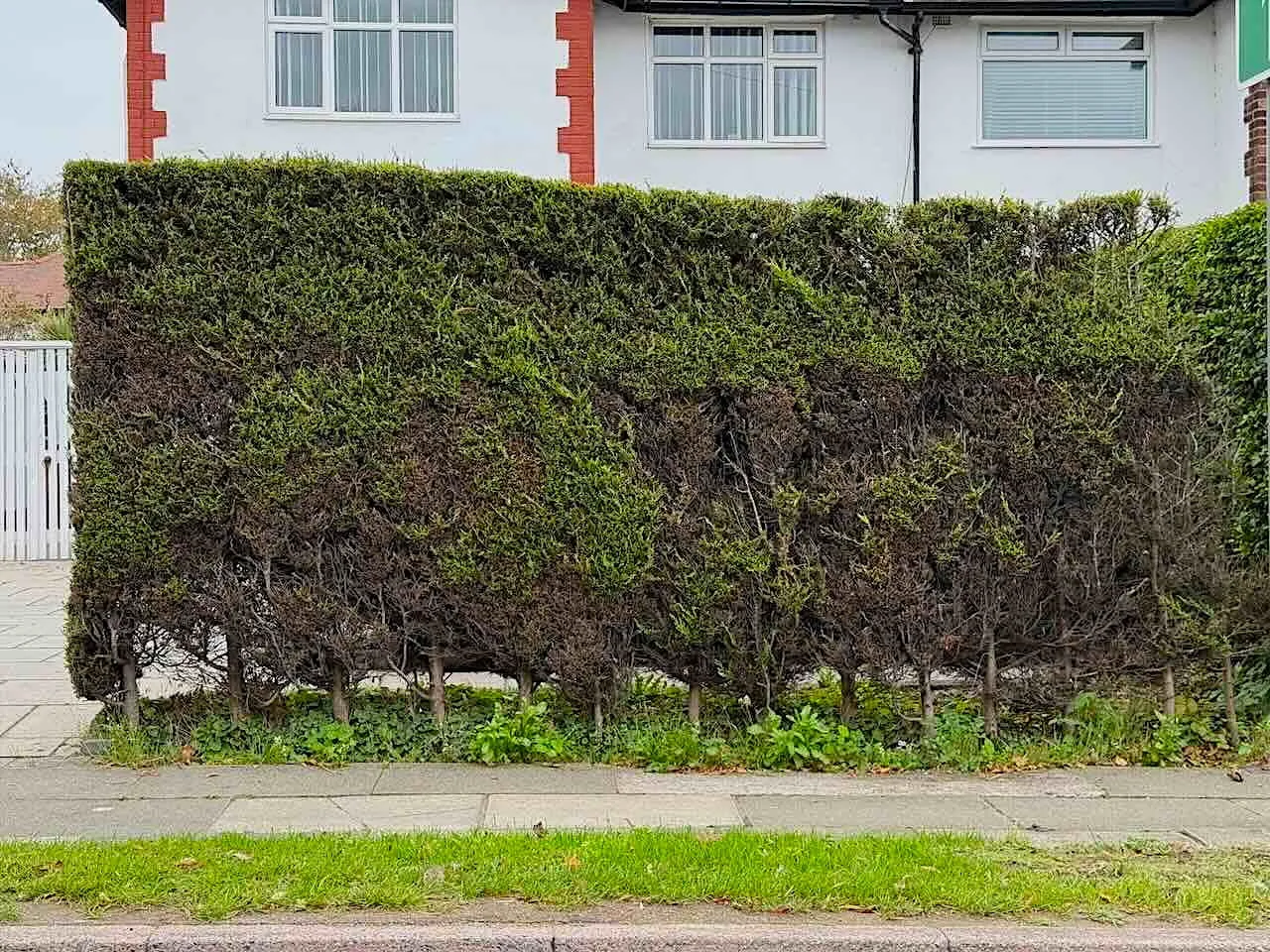
When reducing the height, always aim to finish the cut just above a visible green side shoot rather than leaving a bare stump. That side shoot will grow on to cover the cut. The shape you maintain through any reduction should taper slightly, with the base of the hedge wider than the top, so that light reaches the lower branches and they remain green and dense. A flat-sided or top-heavy conifer hedge will progressively die back at the base as the lower branches are shaded out, creating the brown and gappy look that many neglected conifer hedges develop.
💡 Top Tip
Always use sharp, clean tools when cutting conifers. Blunt hedge trimmer blades tear rather than cut, leaving ragged brown edges that take much longer to green over and create entry points for fungal disease. Sterilise blades between different plants with diluted disinfectant to prevent spreading conifer diseases such as Phytophthora root rot.
🛒 Buy a cordless hedge trimmer from Amazon UK
🛒 Buy a telescopic pole saw from Amazon UK
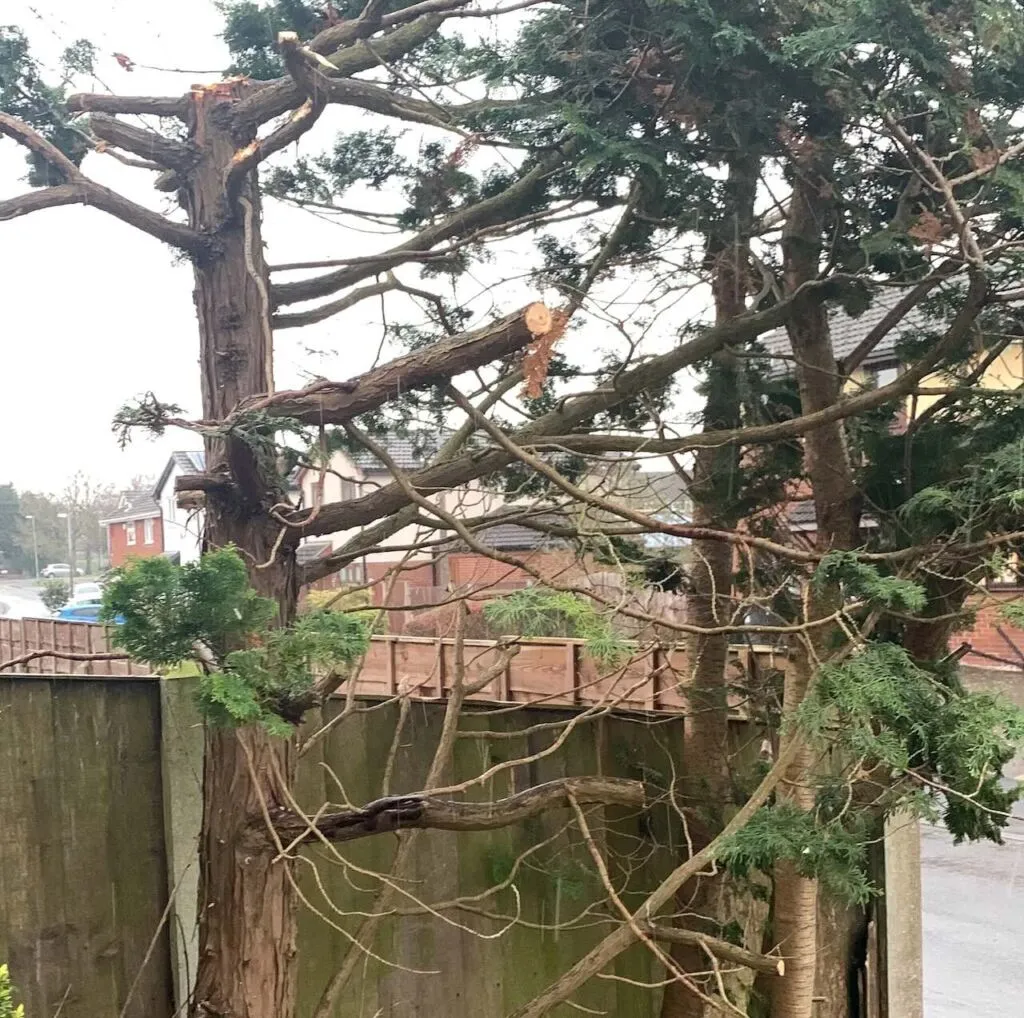
Topping, which means cutting the main central leader of a conifer straight across at a chosen height, is one of the most common and most damaging interventions I see gardeners attempt on oversized conifers. The appeal is obvious: the tree is too tall, so you cut the top off. The problem is that, because of apical dominance, removing the main leader does not cause the conifer to bush out below the cut as many people expect. Instead, the cut left behind is permanent and exposed, the plant looks flat-topped and unnatural, and in many cases, the wound becomes an entry point for fungal infection.
Sometimes, one of the uppermost side branches takes over as a new leader, growing strongly upward to replace the original, meaning the height reduction achieved is temporary at best. A topped conifer will often regain its original height within a few years, leaving you with a flat-topped, permanently disfigured plant that is still too tall. This is the worst of all outcomes, combining the aesthetic damage of an unnatural shape with the effort and cost of the original work, and gaining very little in the long term.
The one situation where removing the leader has a legitimate purpose is on a young conifer being deliberately shaped and trained, where the cut is made just above a living side shoot at the intended final height, and maintenance trimming will prevent any replacement leader from taking over. On a mature, oversized conifer being reduced retrospectively, topping is very unlikely to give you the result you are hoping for.
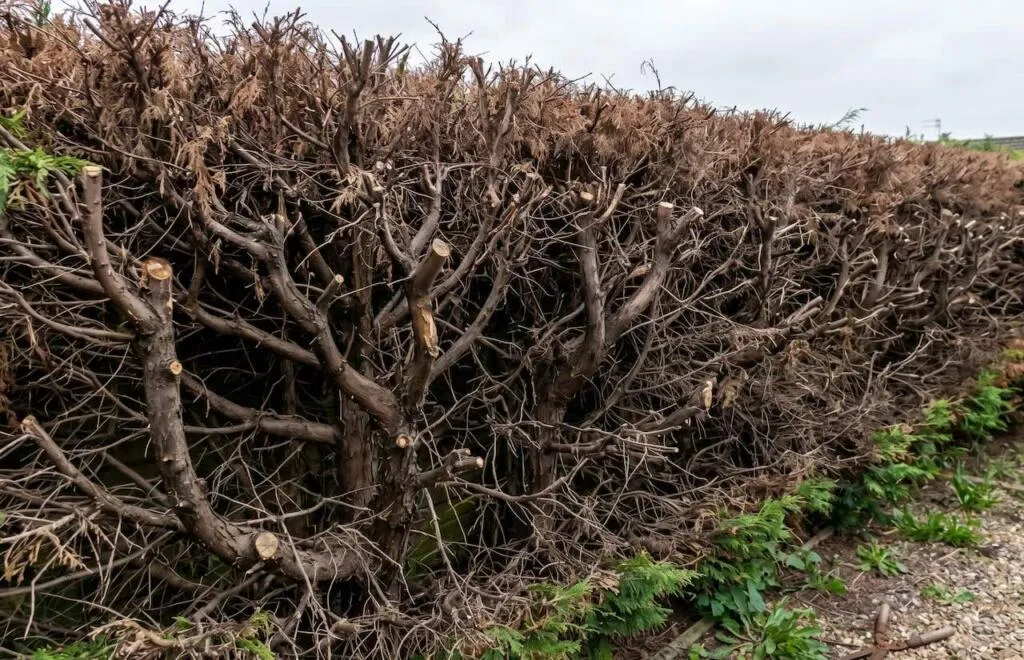
Conifer hedges, and Leylandii in particular, are the most common source of hedge-related neighbour disputes in the UK. If you are dealing with a neighbour’s conifer hedge that is affecting your garden, or your own hedge has become a source of complaint, it is worth understanding the legal position before taking any action.
The Anti-social Behaviour Act 2003 introduced legislation specifically addressing high hedges, which gives local councils in England and Wales the power to order a hedge to be reduced if it is deemed to be having a detrimental effect on a neighbouring property. A hedge qualifies under this legislation if it is composed of two or more trees or shrubs, is predominantly evergreen or semi-evergreen, and is over two metres in height. Before a council will consider a complaint, it generally expects both parties to have made a reasonable attempt to resolve the situation between themselves, and there is usually a fee for making a formal complaint.
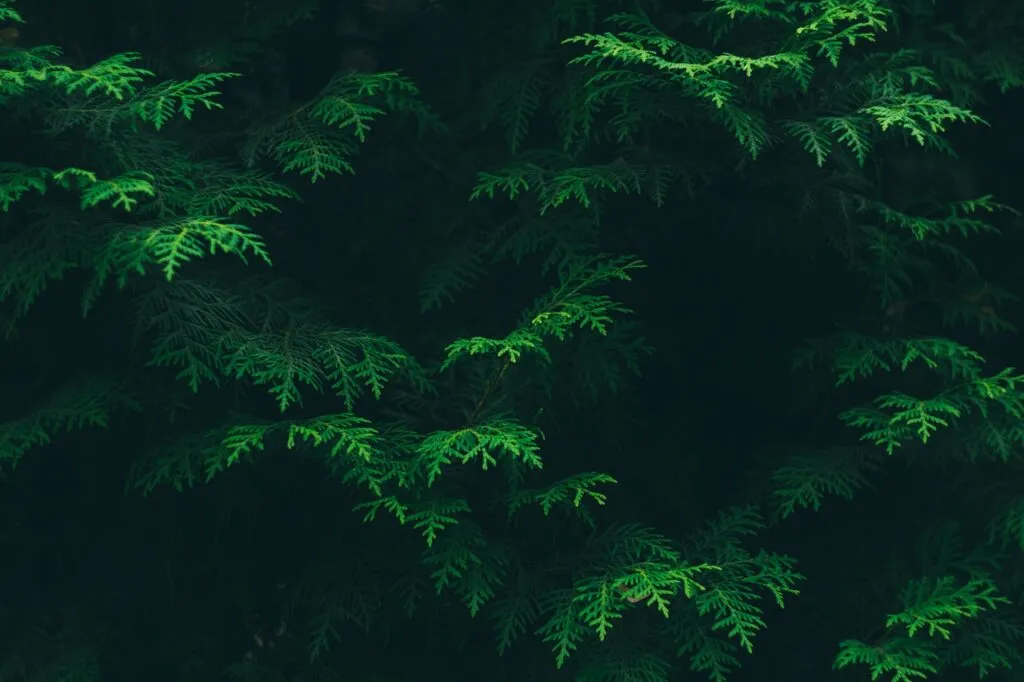
If your own hedge is the subject of a complaint, the most constructive approach is almost always to engage with the neighbour directly and agree on a reasonable height before the council becomes involved. A professionally managed hedge at a mutually agreed-upon height is a far better outcome for everyone than an enforcement order, which may require a more drastic reduction than either party would have wanted. My strong advice, having seen this situation many times, is to keep Leylandii and similar fast-growing conifers trimmed to a maximum of two to three metres from the start. Once they are established at a manageable height and maintained annually, they cause very few problems. It is the ones that are left to grow unchecked for years that become genuinely difficult situations.
⚠️ Important Note
You are legally entitled to cut back branches and roots of a neighbour’s tree or hedge that cross your boundary, but only back to the boundary line. You must offer the cut material back to the tree owner, as it legally belongs to them. You are not entitled to enter a neighbour’s property to do this work without their permission, and you should not cut back beyond your boundary even if you believe the hedge is causing damage. If in doubt, seek advice from the council or a qualified solicitor.
There are several situations involving oversized conifers in which professional help is genuinely necessary rather than simply preferable. Working at height with power tools is one of the most hazardous activities in the domestic garden, and the consequences of an accident involving a hedge trimmer or chainsaw on a ladder can be severe. If the conifer is over three metres tall and requires ladder work to manage, I would strongly recommend calling in a qualified tree surgeon rather than attempting the work yourself.
A qualified arborist will have the equipment, training, and insurance to work safely at height, and they will be able to advise honestly on whether a conifer is worth retaining or whether removal is the more sensible long-term course. When getting quotes, look for a contractor who holds a relevant qualification, such as the City and Guilds 0893 Chainsaw Certificate, and who carries both public liability insurance and employers’ liability insurance. These are not optional extras; they are basic requirements for any professional doing this type of work.
A tree surgeon can also carry out staged reductions more safely than most gardeners can manage from the ground, using rigging techniques to lower the removed sections without damaging the garden below. For a very large conifer that needs significant height reduction, a professional staged reduction carried out over two seasons is a realistic option that most experienced arborists will be comfortable planning and executing. Get at least two or three quotes, and be wary of any contractor who does not visit the site before quoting or who cannot provide proof of insurance.
🛒 Buy a long reach pruning saw from Amazon UK
There are situations where removal is genuinely the most sensible course of action, and recognising them clearly is better than spending years in an unsatisfactory compromise. If a conifer hedge has been hard-pruned into bare brown wood and has permanent dead sections that will never recover, continued maintenance will not improve the situation. If a single conifer tree has grown to a scale where it is casting significant shade over a large part of the garden, absorbing moisture and nutrients from a wide area, and the roots are beginning to cause concerns near structures, removal resolves all of these problems in a way that any amount of pruning cannot.
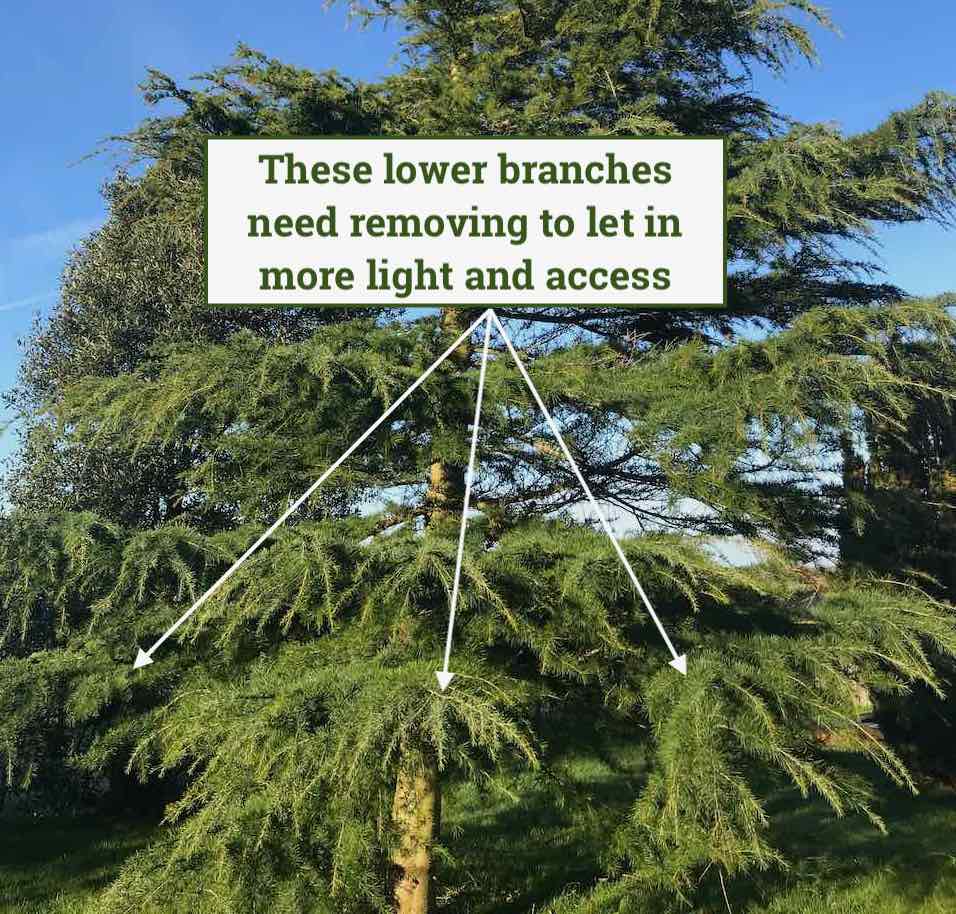
Removing a large conifer is not a DIY job in most circumstances. The sectional felling involved in bringing down a mature tree in a domestic garden, where there are structures, other plants, and people nearby, requires the skills, equipment, and risk management of a professional arborist. The cost varies considerably with the size of the tree and the accessibility of the site, but for a large Leylandii, quotes of several hundred pounds are common, and for a very large tree in a confined space, the cost can be higher. This is money well spent relative to the cost of repairing damage to a fence, greenhouse, or neighbouring property from an amateur attempt.
Once a conifer is removed, the stump will need to be dealt with. Most arborists offer stump grinding as an add-on service, which reduces the stump to below ground level and produces wood chips that can be used as mulch. A ground-level stump left in place from a conifer will generally not regrow, unlike stumps from deciduous trees, but it will take many years to rot down fully if left untreated, and it can be a trip hazard in the meantime. Stump grinding is the cleanest solution and makes replanting in the same area much more straightforward.
If you are removing a conifer hedge and replacing it, or starting fresh with a new boundary, this is the point where thinking carefully about the species you choose will save you from repeating the same problem in fifteen years’ time. The key qualities to look for are evergreen foliage for year-round privacy, a manageable growth rate, and the ability to respond well to hard pruning if needed. The best hedging choices are those that give you control, rather than species that demand constant vigilance to prevent them from outgrowing their space.
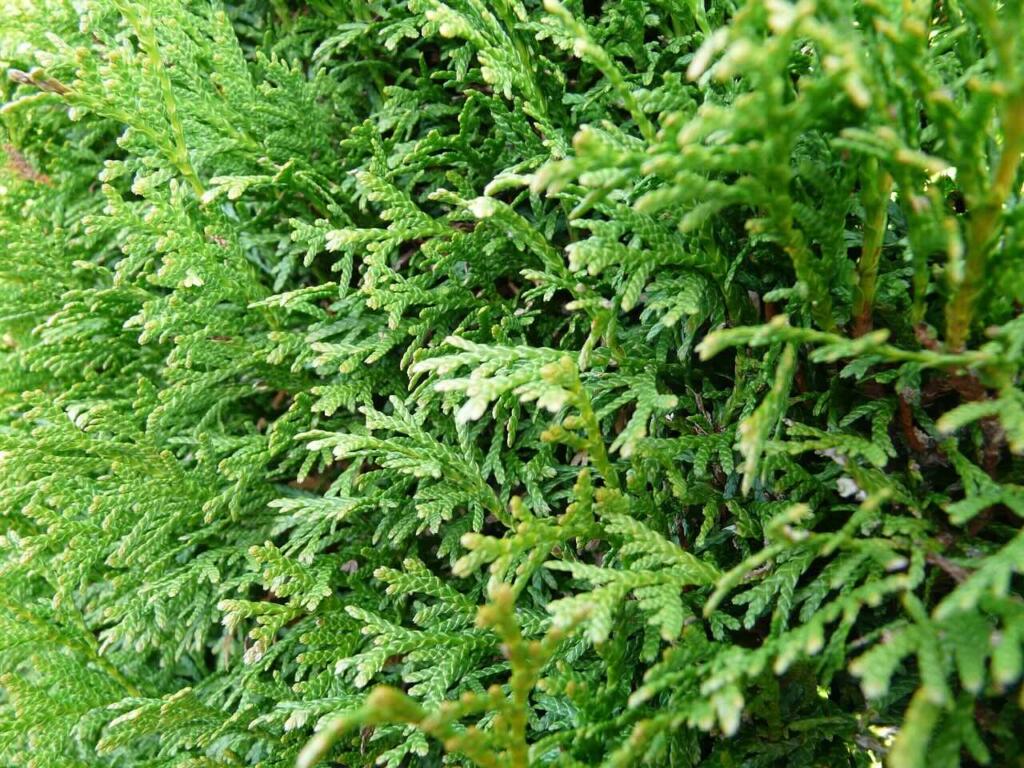
Yew (Taxus baccata) is my first recommendation for a formal, dense, evergreen hedge that can genuinely be renovated if it ever becomes oversized. It is slower-growing than Leylandii, typically putting on around 30cm per year once established, but that slower pace is an advantage in a domestic garden rather than a disadvantage. Yew can be cut back hard and will regenerate. It produces berries that are valuable wildlife food, though the plant itself is toxic to people and animals, so this is worth bearing in mind in gardens used by children or pets.
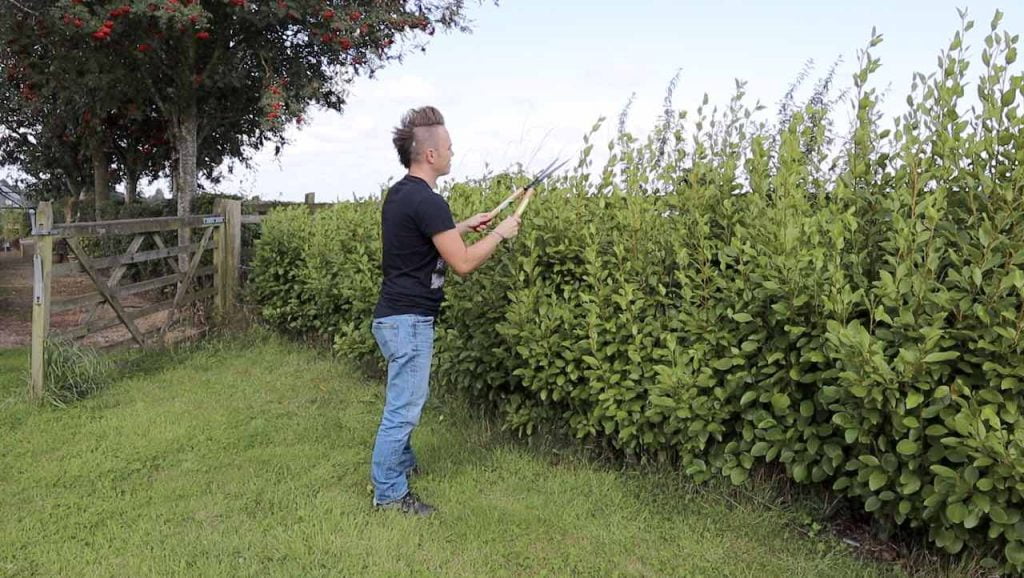
Laurel (Prunus laurocerasus) makes a fast-growing, broad-leaved evergreen hedge that can be hard-pruned back to bare wood and will regenerate reliably. It is not a true conifer, but it serves a similar role in the garden, providing dense, year-round privacy at a pace that satisfies those seeking relatively quick results. Portuguese laurel (Prunus lusitanica) is more refined in appearance, slower-growing, and tolerates a wider range of conditions, including drier soils.
Hornbeam (Carpinus betulus) and beech (Fagus sylvatica) are deciduous, but both retain their dead leaves through winter, providing good year-round privacy even without evergreen foliage. Both can be cut back hard and respond vigorously. They are excellent choices for larger boundaries where a more naturalistic or wildlife-friendly hedge is wanted. Photinia (Photinia x fraseri ‘Red Robin’) provides evergreen cover with the bonus of vivid red new growth in spring, and tolerates hard pruning back to old wood when needed.
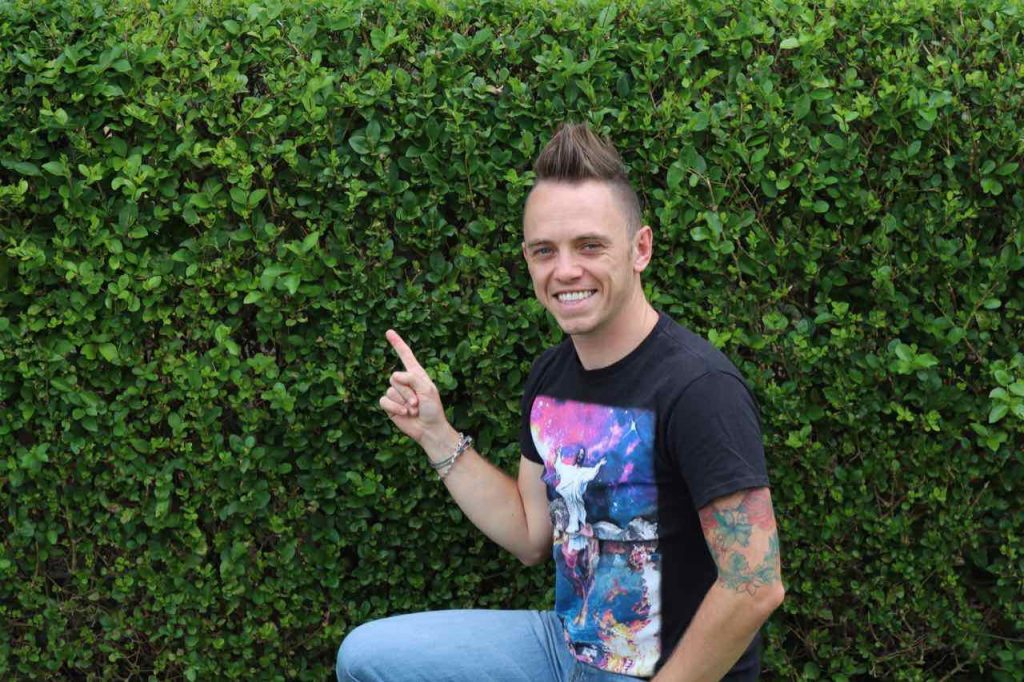
Thuja plicata ‘Atrovirens’, sometimes called the Western red cedar, is one of the few conifers I do recommend as an alternative to Leylandii. It grows at a similar pace to Leylandii but has finer, more aromatic foliage and is slightly more tolerant of trimming. It still cannot be hard-pruned into old wood, so the same discipline of regular maintenance applies, but it is a better-behaved plant in most gardens and does not carry the neighbourly baggage that Leylandii brings.
If you’re planting yew or another hedge from scratch rather than replacing an old conifer, my bare root hedging guide covers spacing, planting and the crucial first year prune.
🛒 Buy yew hedging plants from Amazon UK
🛒 Buy laurel hedging plants from Amazon UK
In most cases, no. Leylandii cannot regenerate from old brown wood, which means cutting it back by half will almost certainly expose bare dead sections that will never recover. The maximum safe reduction in a single season is around one-third of the total height, carried out in April when the plant is beginning active growth. If a greater reduction is needed, it must be staged across two seasons, and even then, there are limits to what is achievable without permanent damage.
There is no automatic legal maximum height for a hedge in the UK. However, under the Anti-social Behaviour Act 2003, a local council can order a hedge to be reduced if it is over two metres tall and is causing a significant and unreasonable impact on a neighbouring property’s enjoyment of their home or garden. The legislation covers evergreen and semi-evergreen hedges of two or more trees. A fee is usually payable to make a complaint, and the council will expect both parties to have attempted to resolve the matter directly first.
It depends on the species and how it has been cut. Yew is the only common UK garden conifer that will reliably regenerate from old bare wood. All other common conifers, including leylandii, Lawson cypress, Thuja, and most pine and spruce species, will not produce new growth from wood that has lost its needles. They will grow back from cuts made within the green, living zone, which is why regular light trimming maintains a dense hedge, while cutting into the brown zone creates permanent bare patches.
The only reliable way is to start managing the height from an early stage, before the plant outgrows the space available. Once a leylandii or similar conifer is established at the desired height, cut the central leader back by around 15cm in spring each year to prevent further vertical growth, and trim the sides two to three times a year to maintain a dense, tapered shape. Prevention is genuinely the only reliable approach because, once the plant has grown significantly beyond the desired height, your options become very limited.
Costs vary considerably depending on the tree’s size, location, and the site’s accessibility for a chipper and other equipment. For a medium-sized conifer of five to eight metres, professional removal typically costs between £300 and £700. Larger trees in confined spaces can cost significantly more. Stump grinding is usually charged as an additional cost of £75 to £200, depending on stump size. Always get at least three quotes from insured, qualified arborists before committing.
Start by approaching your neighbour directly and calmly, explaining how the hedge is affecting your garden. Most disputes are resolved through conversation before they escalate. You are entitled to cut back any branches that cross your boundary to the boundary line, and you should offer the cut material back to the tree owner. If direct discussion fails, your local council can intervene under high hedges legislation if the hedge is over two metres, predominantly evergreen, and is causing a significant impact on your property. Document the situation with photographs before making any formal complaint.
If you want to learn more about garden design, plant selection, and creating a garden that works for your space and lifestyle, take a look at my online garden design courses. Whether you are starting from scratch with a new build or trying to bring a neglected plot back under control, I have courses ranging from £29 to £199 that give you the professional knowledge to make better decisions from the ground up.
For the garden you’ve already got, not the one you’re starting from scratch. Seven checklists and video lessons from BBC Garden Rescue’s Lee Burkhill, built to help you work out what’s worth keeping before you spend a penny.
Garden Design Examples for Small Gardens: 30 Design Templates & Planting Plans: In this online gardening course, I’ll walk you through 30 fantastic garden designs, explaining the logic behind the layout, the plant choices, and take-home tips for applying them in your own garden.
Learn how to transform and design your own garden with Lee Burkhills crash course in garden design. Over 5 hours Lee will teach you how to design your own dream garden. Featuring practical design examples, planting ideas and video guides. Learn how to design your garden in one weekend!
Garden Design for Beginners Online Course: If you want to make the career jump to becoming a garden designer or to learn how to design your own garden, this is the beginner course for you. Join me, Lee Burkhill, an award-winning garden designer, as I train you in the art of beautiful garden design.
Managing an oversized conifer comes down to understanding the biology first. Most conifers cannot regenerate from old wood, which means your options are always limited to working within the green zone, accepting the current size with a good maintenance programme, or removing the plant entirely. Staged reduction of up to one-third per season is possible on healthy plants, but it is not a route to transforming a very large conifer into a compact one. Topping almost always creates more problems than it solves.
The most important decisions in this situation are made before any cutting begins. Identify your species, assess the extent of the green zone, decide honestly whether reduction is achievable or whether removal is the better long-term answer, and call a qualified arborist for any work that requires getting off the ground. If you are replacing a conifer hedge, choose a species that gives you proper control: yew for a formal evergreen, laurel for speed with flexibility, hornbeam or beech for a more naturalistic boundary. Any of these will serve you better in the long run than another planting of Leylandii.
Happy Gardening!

Lee Burkhill, known as the Garden Ninja, is an award-winning garden designer and horticulturist with over 30 years of gardening experience and 15 years as a professional garden designer. A qualified RHS (Royal Horticultural Society) professional, Lee specialises in sustainable garden design and practical horticultural advice. He designs and presents on BBC1’s Garden Rescue and in leading gardening publications. Lee combines three decades of hands-on gardening knowledge with professional design qualifications to help gardeners create beautiful, functional outdoor spaces.
View all posts by Lee Burkhill





JOIN THE NINJAS
Be the first in line for new Guides, Discount codes and Offers