For the garden you’ve already got, not the one you’re starting from scratch. Seven checklists and video lessons from BBC Garden Rescue’s Lee Burkhill, built to help you work out what’s worth keeping before you spend a penny.
69


Quick Answer
The best orange flowers for UK gardens include Crocosmia ‘Emberglow’, Helenium ‘Moerheim Beauty’, Geum ‘Totally Tangerine’, and Kniphofia for summer and autumn impact, with Tulipa ‘Princess Irene’ and Wallflowers delivering spring colour. Choose from trees, shrubs, climbers, perennials, annuals, and bulbs to achieve orange flowers from March right through to October.

Orange spans a remarkable tonal range, and that breadth is where the real design opportunity sits. I adore orange and always push to use more of it in my garden designs. I love its warmth, energy and relationship to positivity. I even have orange laces in my steel-toed gardening boots!
In this guide, I am sharing 35 of the very best orange flowering plants for UK gardens, covering trees, shrubs, climbing plants, hardy perennials, annuals, and bulbs. Every plant comes with full growing data, my personal tips from over two decades of designing and planting these in real gardens across the UK, and links to buy. Whether you are building a dedicated hot border, adding warmth and contrast to a mixed planting, or simply hunting for one brilliant performer for a difficult spot, there is something here for every garden.
This page contains affiliate links for products I use and love. If you take action (i.e. subscribe or make a purchase) after clicking a link, I may earn a small gardening commission, which helps me keep the Garden Ninja blog free for everyone.
🌿 Jump To
Before we get into the plant list, I want to make the case for orange properly. Not the tentative “I’ll just pop in one orange marigold at the edge” approach that most gardeners default to. The fully committed, designed use of orange as a genuine structural colour across an entire planting scheme. Often known as hot colours or hot flower bed design, orange, yellow, and red can create the most vibrant gardens imaginable!
Orange is a warm advancing colour, which means it appears closer to the eye than cool colours like blue and purple. In practical terms, this means orange flowers jump forward in a border, drawing the eye immediately and creating a focal point even from a distance. Used thoughtfully, this is enormously useful. Used without thought, it can make a border feel chaotic. The key is understanding that orange needs either a foil or a companion to sing at its best.
Deep, dark oranges in the amber and burnt sienna range are the sophisticated end of the spectrum and the most useful for mixed planting. A Helenium with chocolatey brown centres, or a Dahlia in burnt copper, works brilliantly alongside purples, blues, and rich crimsons because those cool colours provide the visual contrast that stops orange from feeling overwhelming. On Garden Rescue, I reach for this deeper end of the palette constantly in late-summer and Autumn schemes, and the results are consistently among the most striking borders I have designed.
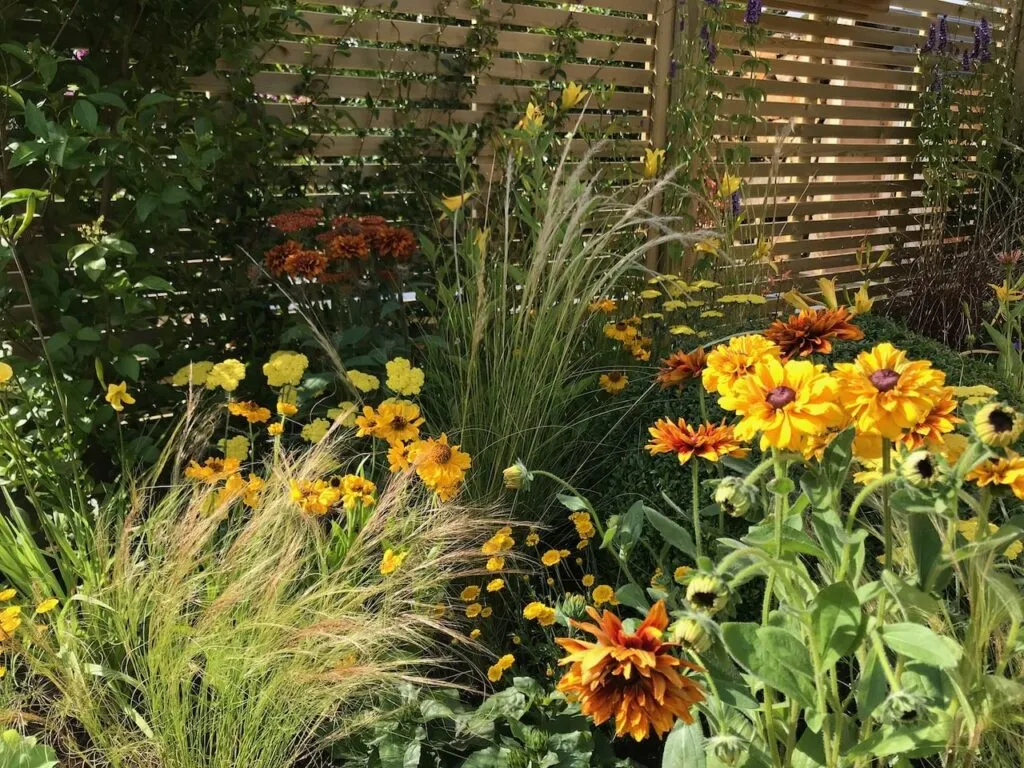
If you have ever looked at a summer border in late July and felt that it had somehow lost its energy, orange is almost certainly the answer. Yellow goes pale in strong light. White can look washed out. But orange holds its intensity through the heat of the day and positively glows in low evening light. This is why the great hot border designers, from Gertrude Jekyll through to the prairie planting movement, have always reached for orange as the anchor. It has a luminosity that no other colour in the garden reliably produces.
Many of the finest orange-flowering plants are exceptional wildlife plants. Crocosmia, Kniphofia, Helenium, Echinacea, and Rudbeckia are all on the RHS Plants for Pollinators list, attracting bees, hoverflies, and butterflies in very large numbers. If you are trying to support pollinators through the summer months, a thoughtfully chosen orange planting scheme is one of the most productive things you can do.
The late-season orange performers, such as Helenium and Rudbeckia, are particularly valuable because they flower precisely when many early-summer plants have finished, providing a bridge into autumn for foraging insects.
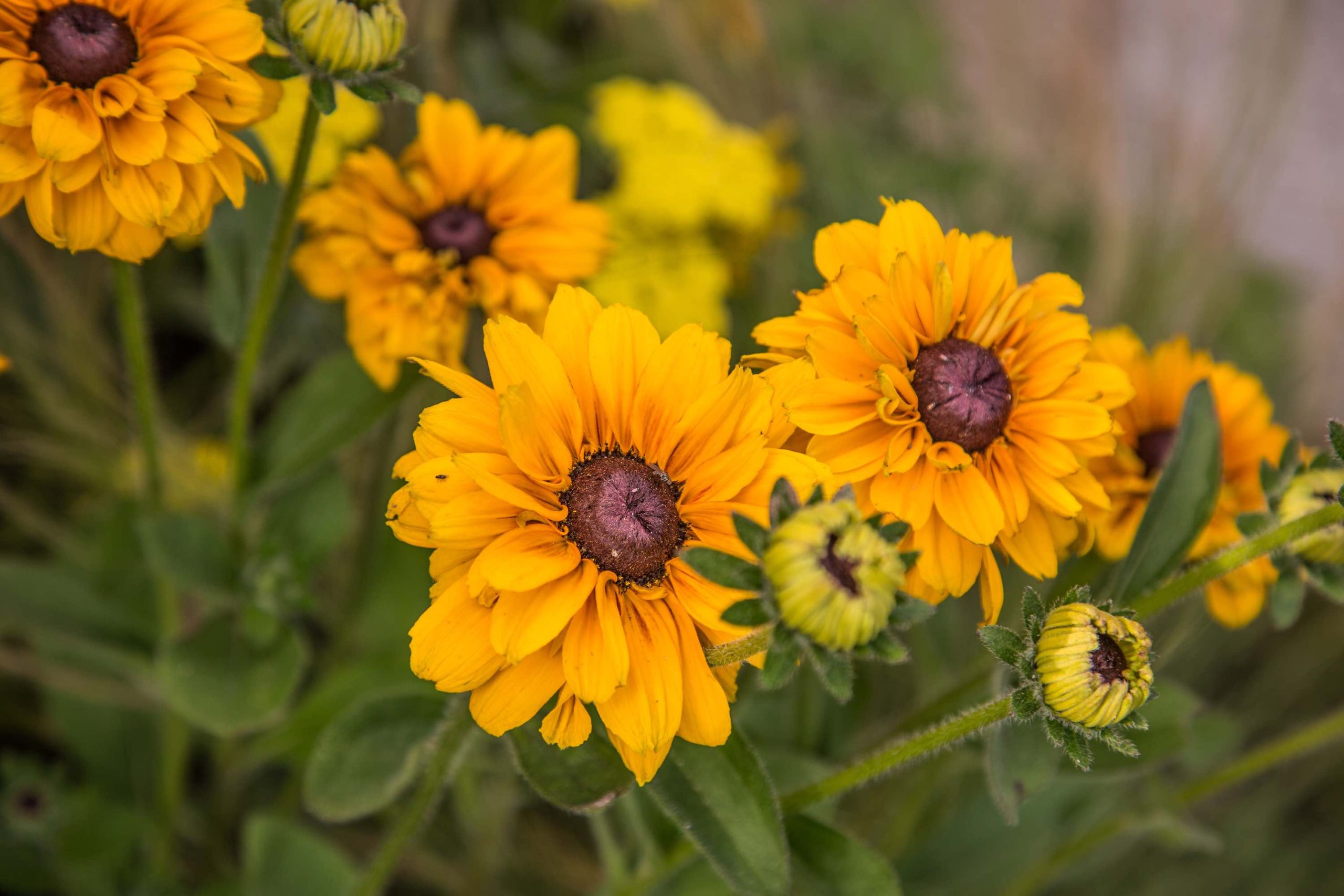
This surprises most gardeners when I point it out. With the right plant selection, you can have something orange in flower in a UK garden for eight continuous months. Wallflowers and tulips carry the spring from March through May. Geum and Aquilegia bridge into June. Then Crocosmia, Kniphofia, Helenium, Rudbeckia, Dahlias, and Marigolds hold the summer and Autumn all the way through to the first frosts. That kind of continuity takes planning, but it produces a border that genuinely evolves and rewards through the season rather than peaking for three weeks and then going quiet.
Trees set the scale of any garden and the emotional register of the entire space. An orange-flowering tree in spring creates a statement that no shrub or perennial can match. These two are my top picks for UK gardens.
Sorbus ‘Joseph Rock’ is the tree I reach for whenever I want guaranteed, long-season orange in the garden from a single specimen. The spring blossom is creamy white and pleasant enough, but what makes this tree extraordinary is what comes afterwards. From late summer onwards, the berries ripen through pale yellow to a deep, warm amber-orange that intensifies as Autumn advances, eventually holding right into winter while most other berry-bearing trees have been stripped bare by birds.
The autumn foliage turns through shades of red, purple, orange, and crimson simultaneously on the same tree, creating a combination of fiery leaf colour and glowing amber berries that is genuinely breathtaking. It’s a firecracker of a small garden tree, which is well-suited to even the smallest tiny courtyard urban gardens!
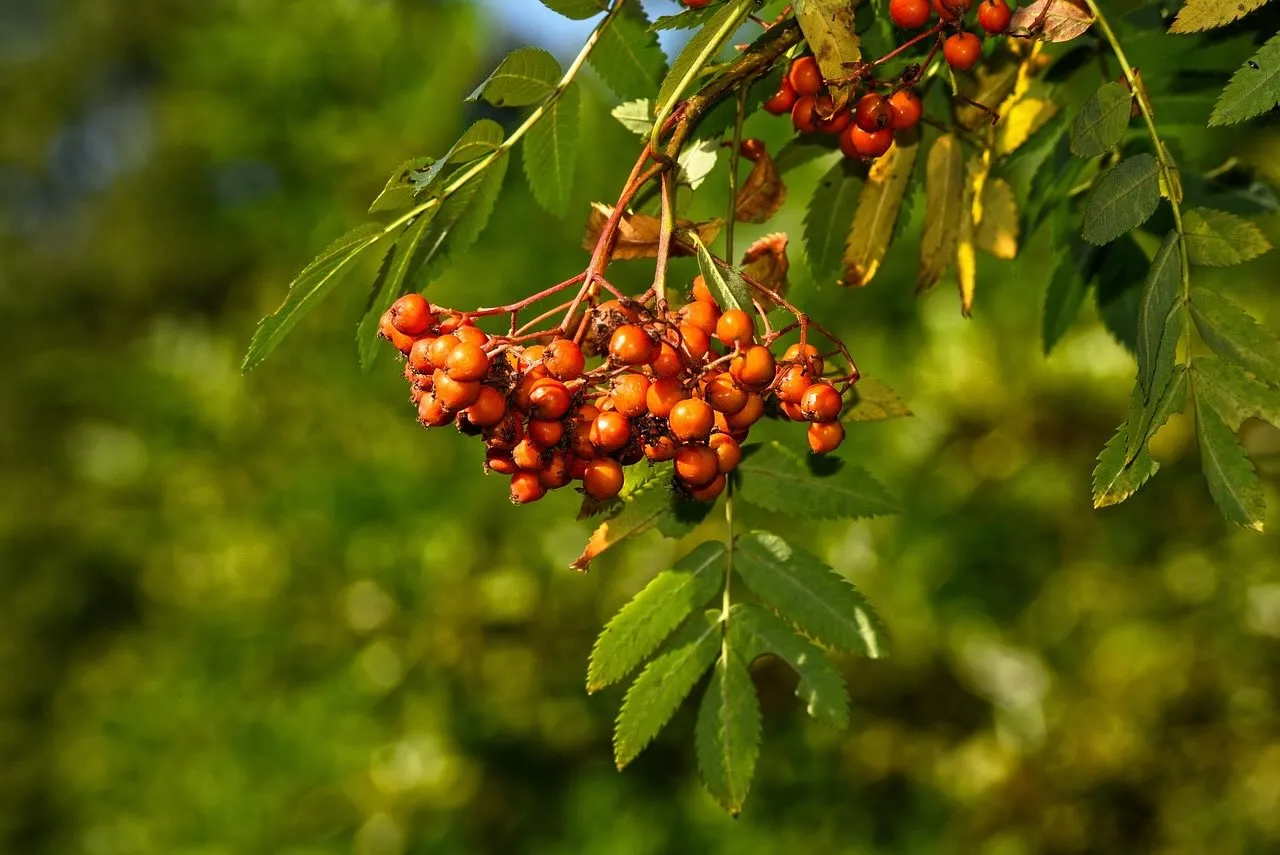
I have used this tree in dozens of garden designs over the years, particularly in medium-sized gardens where a four-season focal point tree is needed but space is limited. It has a neat, upright habit that keeps it well-behaved in smaller plots. The berries are unusual among sorbus in being largely avoided by birds until very late in the winter, which extends their ornamental value significantly compared to the red-berried varieties, which are stripped within weeks.
💡 Top Tip
Plant where the berries can be seen from inside the house during autumn and winter. The amber berry clusters combined with the multi-coloured autumn foliage create one of the finest displays of any UK-hardy tree at precisely the time when most of the garden has gone quiet. Underplant with orange tulips and bronze sedge to carry the warm palette from spring through to the tree’s own autumn show.
🛒 Buy Sorbus ‘Joseph Rock’ from Amazon UK
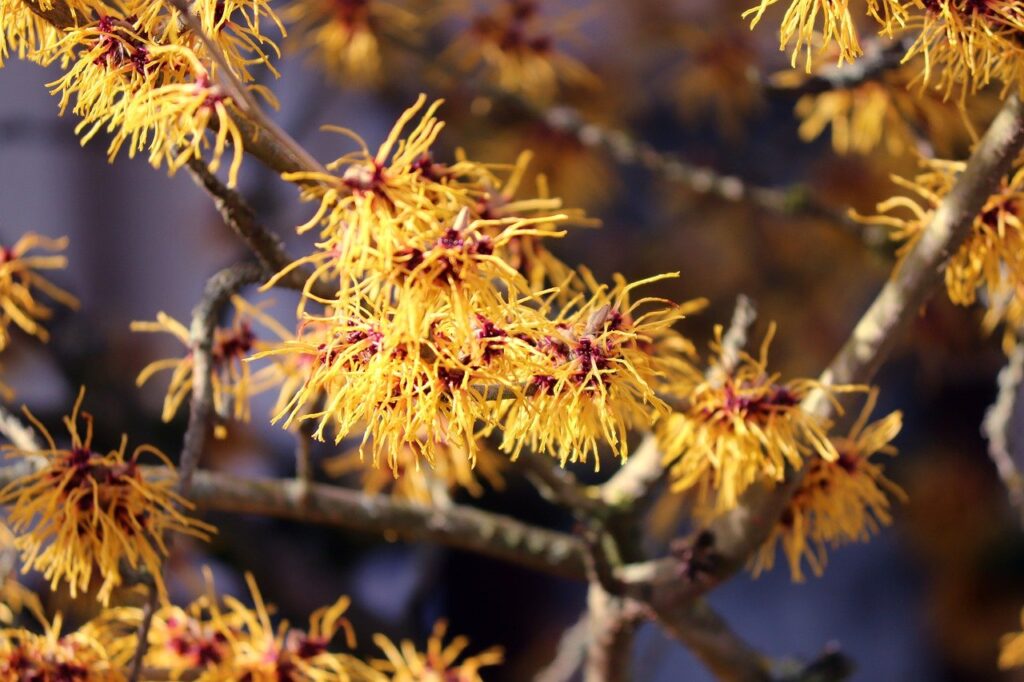
Witch hazel is the plant I recommend whenever someone tells me they want something exceptional for winter and early spring with no gaps in seasonal interest. ‘Jelena’ is the orange-toned cultivar I reach for ahead of all others. From January through to March, spidery clusters of rich copper-orange flowers appear on completely bare branches, giving one of the finest winter displays of any UK-hardy plant. The scent is beautifully spiced and carries well on cold winter air.
The Autumn colour is fabulous too: leaves turn through orange, red, and amber before they fall, meaning ‘Jelena’ earns its space at two completely different points in the season. It is slow-growing, so patience is required, but after five years, it becomes genuinely magnificent. I planted one in my own garden eight years ago, and it remains one of my favourite plants on the entire plot.
💡 Top Tip
Witch hazels perform best in slightly acid, moisture-retentive soil. On alkaline or chalk soils, grow in a large raised bed or container with ericaceous compost. They resent root disturbance so plant young and choose your position carefully. Avoid frost pockets as late frosts can brown the flowers.
🛒 Buy Hamamelis ‘Jelena’ from Amazon UK
Shrubs provide the permanent architecture of any border. These five orange-flowering shrubs offer reliable colour, excellent structure, and the kind of long-term performance that annual planting simply cannot replicate.
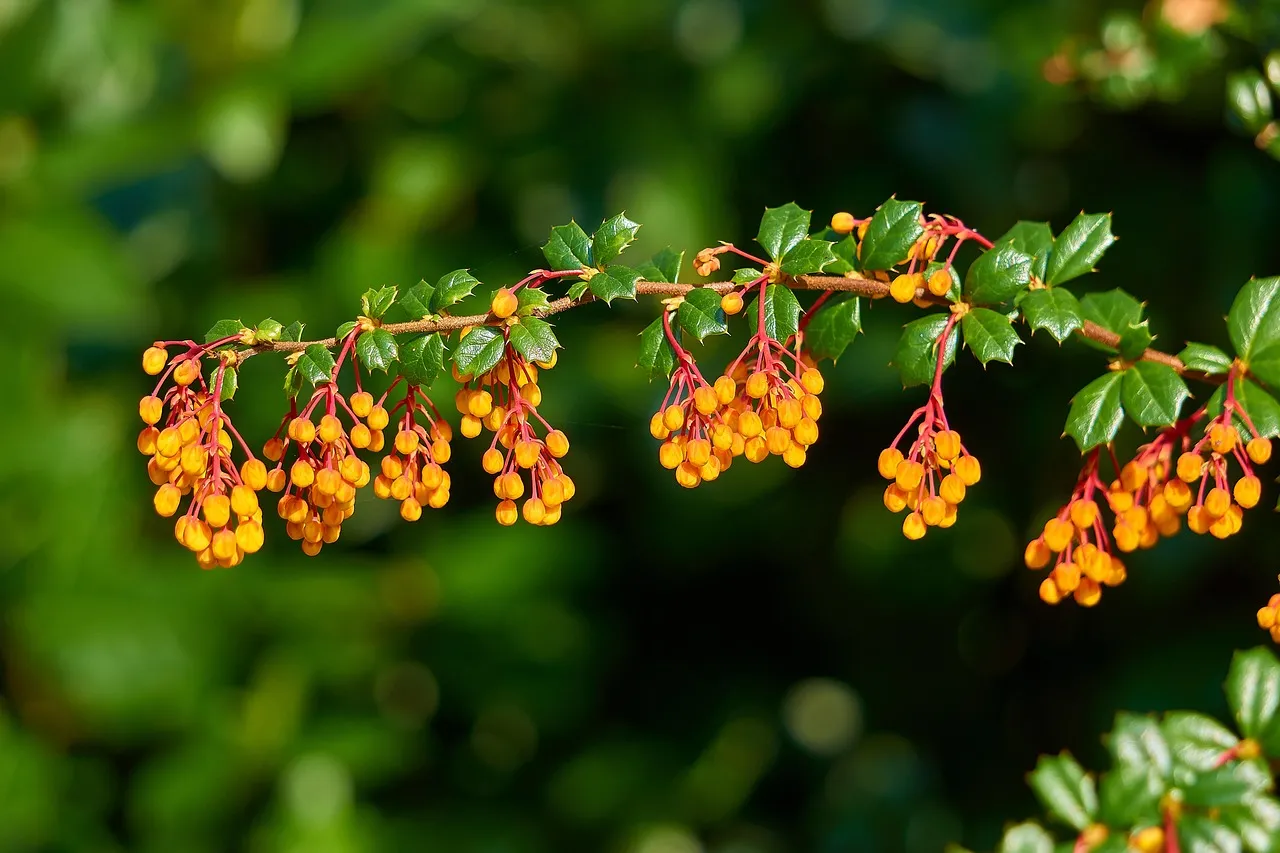
Berberis darwinii is one of those brilliantly useful shrubs that does everything you could want from a garden plant and then adds extraordinary spring flower colour as a bonus. From April through May, the arching branches are absolutely smothered in small, rich golden-orange flowers that hang in clusters and are genuinely beautiful up close. Bees absolutely love it, arriving in huge numbers on warm spring days.
It is fully evergreen, holding its small, dark, holly-like leaves through winter to give year-round structure. Purple-black berries follow the flowers in Autumn, providing food for birds. It tolerates a very wide range of conditions, including chalk, clay, and exposed sites, and it makes an excellent security hedge because of its fierce spines. On Garden Rescue, this is one of the first plants I reach for on a front garden brief where security and colour are both priorities.
💡 Top Tip
Prune lightly after flowering to maintain shape, removing about a third of the oldest stems. Wear thick gloves because the spines are genuinely fierce. As a hedge, plant at 45cm spacing for a dense, impenetrable barrier within three to four years.
🛒 Buy Berberis darwinii from Amazon UK
Potentilla fruticosa is one of the most underrated shrubs in British horticulture. The ‘Tangerine’ cultivar produces saucer-shaped flowers in a warm apricot-orange, a softer and more versatile tone than many orange plants, making it far easier to blend into a mixed border. It flowers almost continuously from June right through to October, which is an extraordinary season of interest for a woody shrub that asks very little in return.
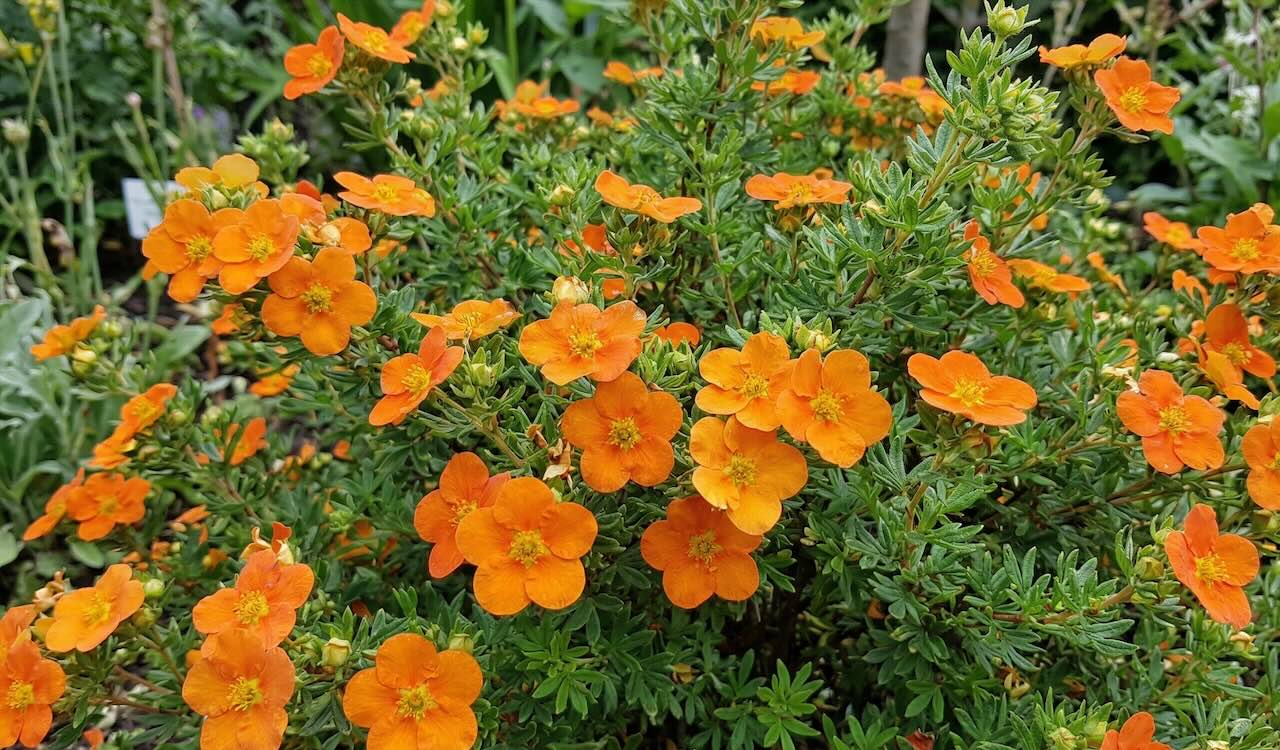
It tolerates poor soils, exposed positions, and neglect with remarkable equanimity. I have recommended it for coastal gardens, exposed northern gardens, and low-maintenance schemes alike because it simply gets on with performing without any fuss. Small but perfectly formed at around 60 to 90cm, it fits into gaps in the border where a larger shrub would be impractical.
💡 Top Tip
The orange colour on ‘Tangerine’ is most intense in semi-shade. In full blazing sun, the flowers can fade to more of a yellow-cream. Plant where it gets morning sun and some afternoon shade for the richest colour, particularly in southern UK gardens where summers are warmest.
🛒 Buy Potentilla ‘Tangerine’ from Amazon UK
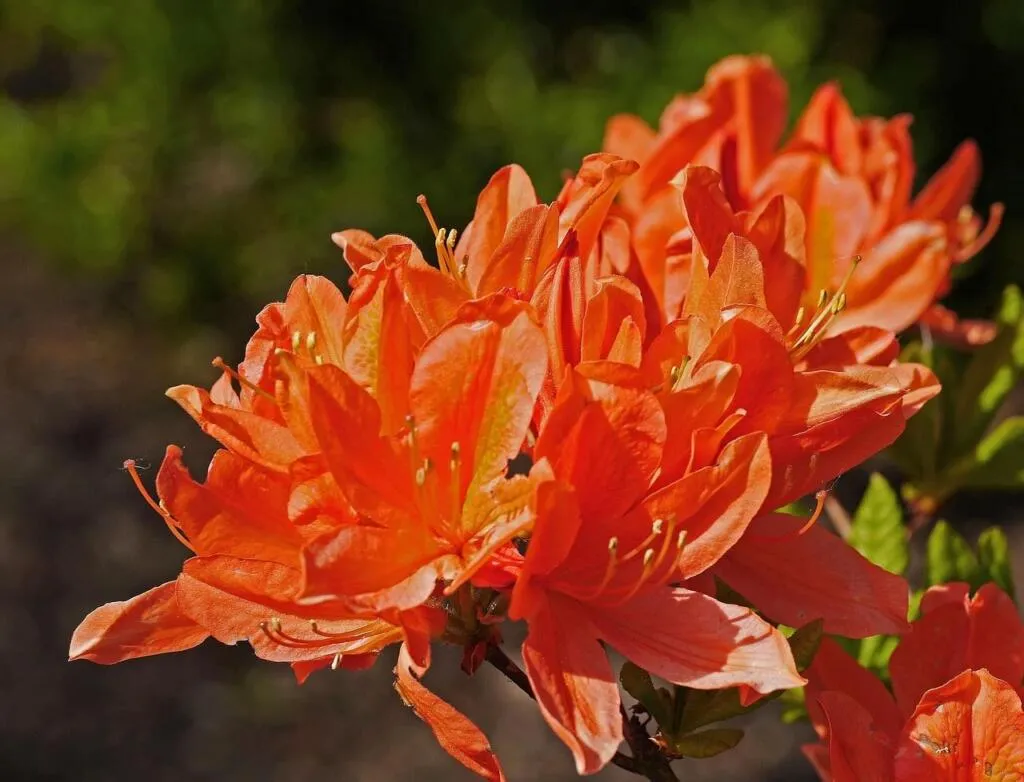
Among deciduous azaleas, ‘Gibraltar’ is, in my view, the finest orange variety available. The flowers are large, fully double, and a rich, warm flame orange that absolutely glows in the spring garden. They open from dark orange buds in April and May, and the combination of bud colour and open flower on the same plant at the same time creates a remarkable layered effect. The scent is outstanding too, sweet and penetrating, one of the finest of any spring-flowering shrub.
Autumn leaf colour is another season of genuine interest, turning through bright orange and flame before they fall. Like all azaleas, ‘Gibraltar’ requires acid or ericaceous conditions to thrive. On alkaline or chalk soils, grow it in a container or raised bed with ericaceous compost, and it will perform magnificently.
💡 Top Tip
Mulch annually with bark or pine needles to retain moisture and maintain soil acidity. Never add lime or alkaline fertilisers near azaleas. Deadhead the spent flowers carefully by hand rather than with secateurs to avoid damaging the new growth buds immediately beneath the flowerheads.
🛒 Buy Azalea ‘Gibraltar’ from Amazon UK
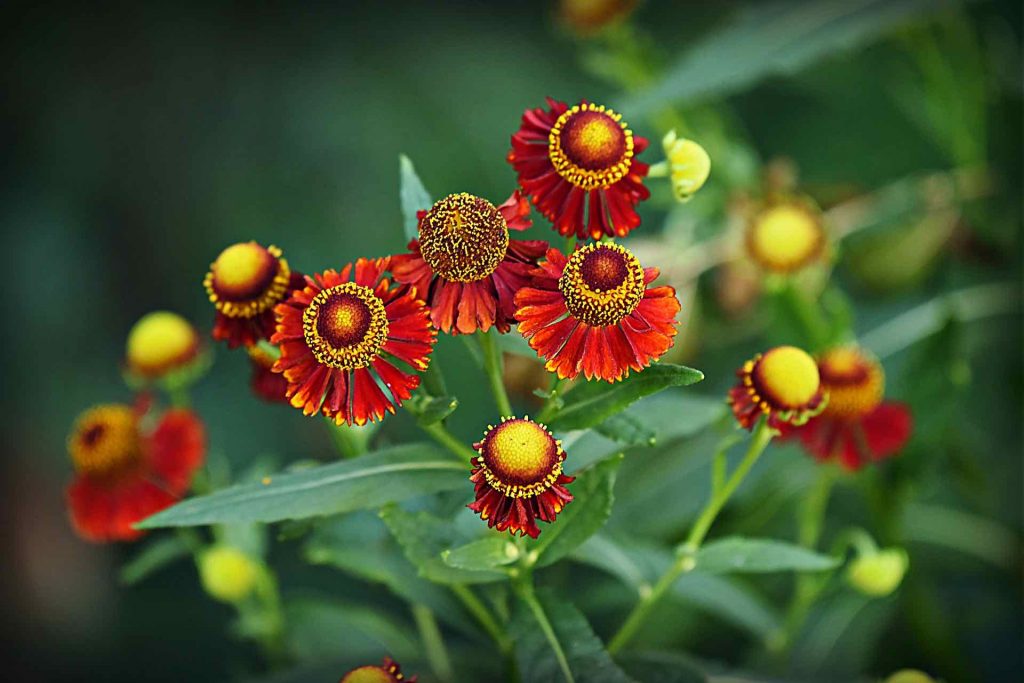
Helenium ‘Moerheim Beauty’ is one of the great border perennials, and it features in almost every hot border scheme I have designed professionally. It is included here in the shrubs section rather than perennials because of its woody base and increasingly structural role in the summer border, but it deserves a mention regardless of how you categorise it. The flowers are rich burnt orange with a dark chocolate-brown cone at the centre, beginning their display in July and continuing reliably until September.
The colour combination of copper-orange petals and dark centres is extraordinarily beautiful and works particularly well alongside deep purple salvias and the blue spires of Agastache. In gardens I designed for BBC Garden Rescue, this has been one of the most commented-upon plants by homeowners, seeing the finished result.
💡 Top Tip
Deadhead Heleniums regularly to extend flowering by several weeks. Divide clumps every two to three years in spring as they can become congested and flowering quality drops. They dislike drying out, so mulch well in spring and water during dry spells.
🛒 Buy Helenium ‘Moerheim Beauty’ from Amazon UK
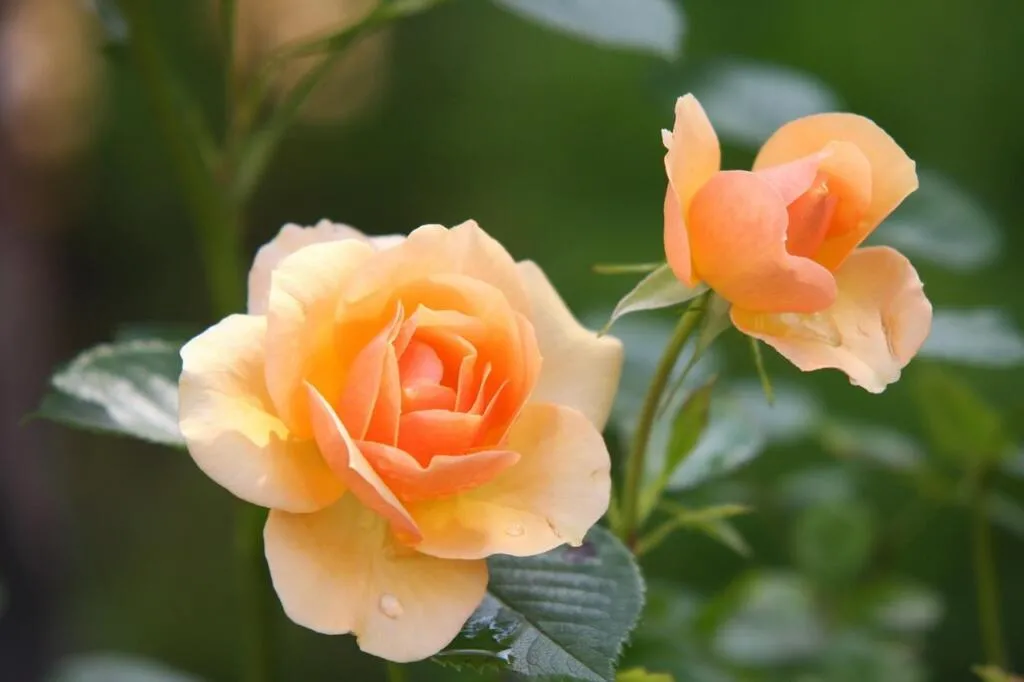
For a climbing rose with genuine, sustained orange flower colour, ‘Warm Welcome’ is the variety I recommend most consistently. The flowers are a vivid, intense orange-vermillion that holds its colour remarkably well through the season without fading to pink or salmon as many orange roses do in strong sun. It is repeat-flowering from June through to Autumn and grows to around 2.5 metres, making it ideal for a pillar, obelisk, or low garden wall.
It has excellent disease resistance, which matters enormously for long-term performance. Nothing is more demoralising than a black spot-ridden Rose by August. ‘Warm Welcome’ is reliably healthy in most UK conditions and has held an RHS Award of Garden Merit for good reason.
💡 Top Tip
Feed with a dedicated rose fertiliser in spring and again after the first flush of flowers to fuel the repeat blooming. Train the main stems as horizontally as possible against a support structure. Horizontal training encourages far more flower production than vertical growth.
🛒 Buy Rosa ‘Warm Welcome’ from Amazon UK
Climbing plants make use of the vertical dimension of the garden that so many gardeners leave empty. These three orange climbers cover walls, fences, and structures with extraordinary colour through the summer months.
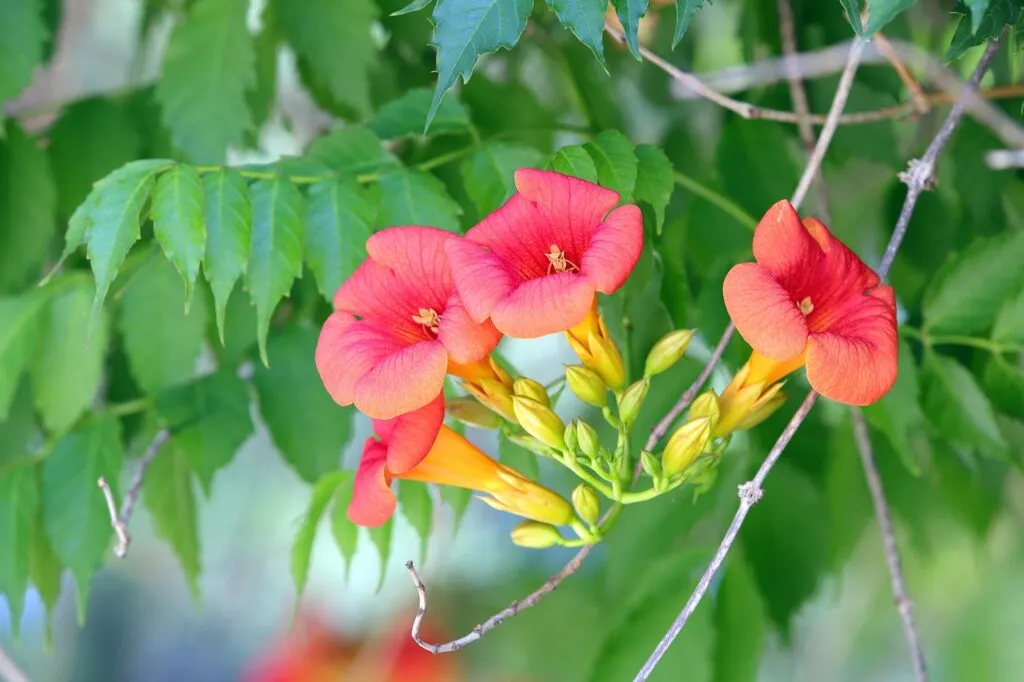
Campsis radicans is one of the most dramatic climbing plants you can grow in the UK, and in a warm, sheltered spot, it is spectacular. The flowers are large, trumpet-shaped clusters in vivid orange-red, produced from July through September. It is self-clinging via aerial roots, so no tying-in is needed once established, and it rapidly covers walls, fences, and pergola posts once it gets going.
It needs a warm, south or west-facing wall and a sheltered position to perform at its best in the UK, particularly in Scotland and northern England. In milder southern gardens, it is more accommodating. The exotic, almost tropical look of the flowers makes it the centrepiece of any hot garden scheme. Hummingbirds are its natural pollinators in North America; in the UK, it attracts large numbers of bees and hoverflies.
💡 Top Tip
Be patient with Campsis. It can be slow to establish in its first two years, but once the root system is fully developed it grows vigorously and flowers prolifically. Prune back hard each spring to two or three buds from the main framework to keep it neat and maximise flowering.
🛒 Buy Campsis radicans from Amazon UK
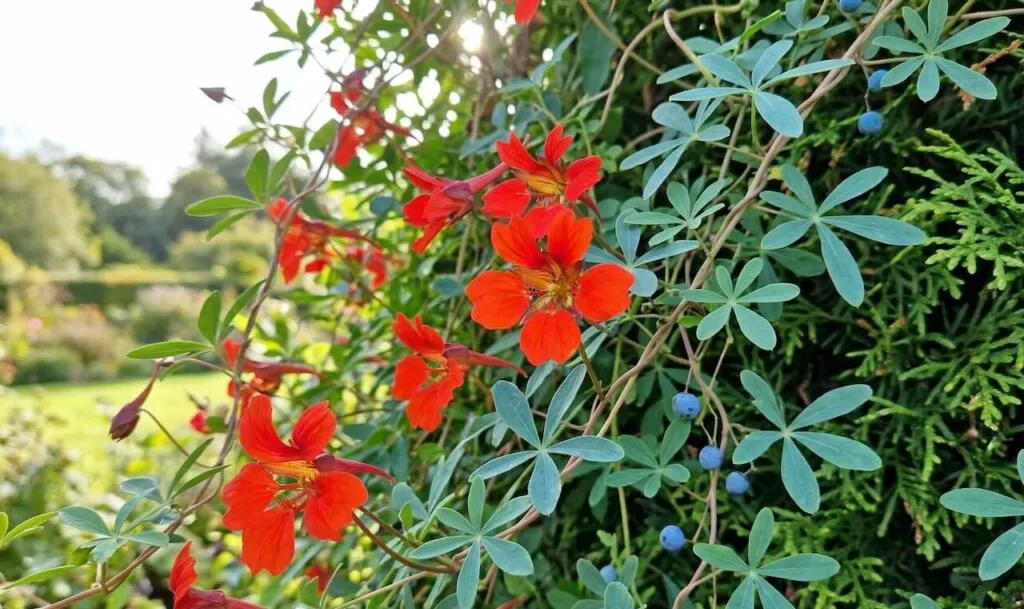
This is one of my absolute favourite climbers for the UK garden, partly because of how spectacular it is and partly because it surprises every gardener who has not seen it before. The Scottish Flame Flower produces small but intensely vivid, vermillion-orange flowers from July through September on delicate, scrambling stems that can run 3 metres or more through supporting shrubs and hedges. The contrast of those fiery flowers against dark green yew, holly, or box is one of the finest colour combinations in the garden.
Despite the name, it actually struggles in the hotter, drier parts of England and thrives in the cooler, moister conditions of Scotland, Wales, and northern England. It needs a cool root run while the stems enjoy the sun. Bright red berries follow the flowers in Autumn. It dies back completely each winter and re-emerges from its underground rootstock in spring.
💡 Top Tip
Plant the rhizome deeply, about 15cm down, in cool, humus-rich soil and mulch heavily to keep the roots cool. It establishes slowly and may not flower in its first year, but once settled it is a reliable, spectacular performer. Allow it to scramble through a dark-leaved hedge for maximum impact.
🛒 Buy Tropaeolum speciosum from Amazon UK
Hardy perennials are the backbone of the summer border, returning reliably year after year and getting better with age. These ten orange-flowering perennials are the ones I rely on most in professional planting schemes.
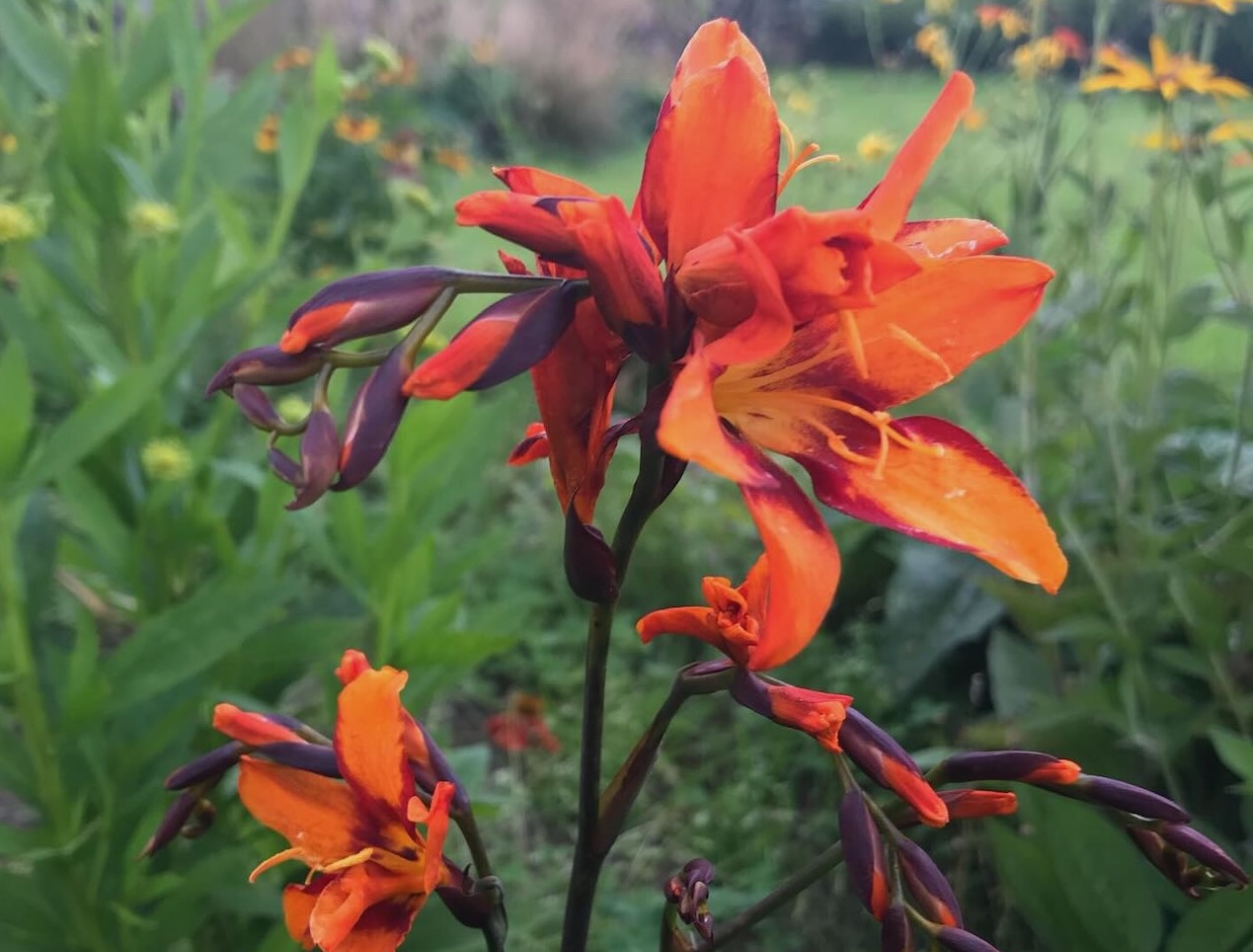
If there is one orange plant that I think every UK garden should contain, Crocosmia ‘Emberglow’ is very nearly it. The arching stems of vivid, fiery red-orange flowers appear from July through August, creating one of the most electrifying colour effects in the summer garden. The sword-like foliage is handsome from spring onwards, giving the plant a structural presence long before the flowers appear.
It is vigorous, spreading steadily by corm to form impressive clumps. Divide every three to four years to keep it flowering at its best. Bees and hoverflies visit the flowers constantly. It has an RHS Award of Garden Merit, and it absolutely deserves it. I have used it in everything from a small urban courtyard in Manchester to a large rural border in Cheshire, and it performs brilliantly in both contexts.
💡 Top Tip
In colder northern gardens, apply a thick mulch of bark or straw over the corms in November to protect them through winter. Divide congested clumps in spring once every three to four years, replanting the younger outer corms and discarding the older central ones for the best flower production.
🛒 Buy Crocosmia ‘Emberglow’ from Amazon UK
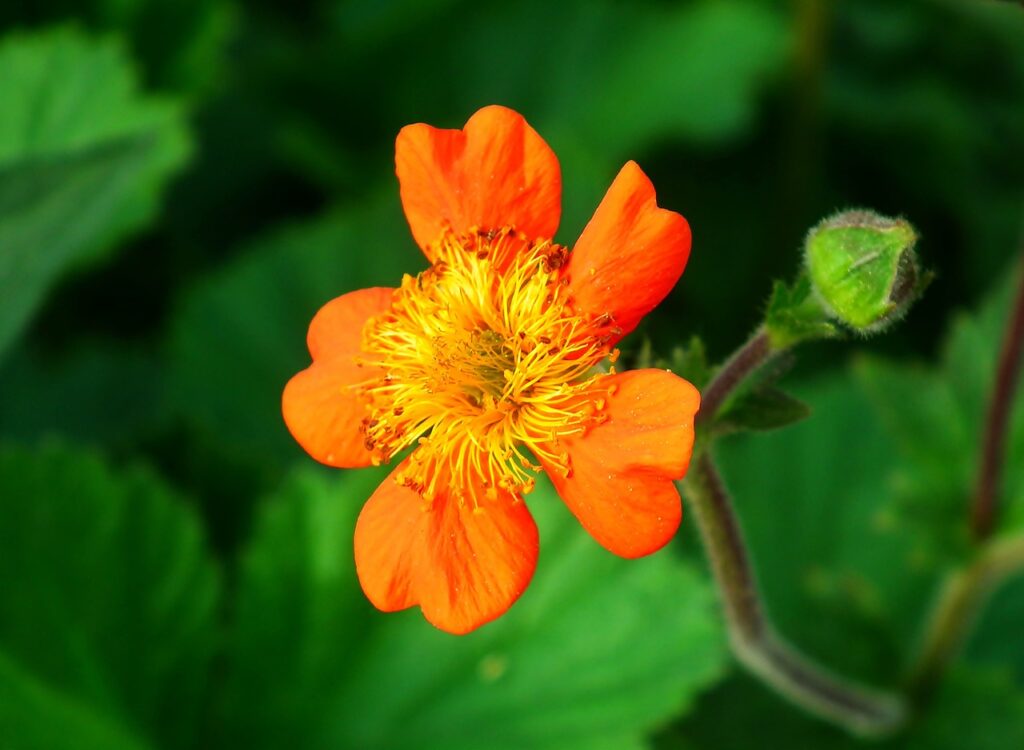
Geum ‘Totally Tangerine’ is the plant I recommend whenever someone tells me they want a soft, warm orange that blends easily rather than shouts. The flowers are a beautiful peachy-apricot-orange, semi-double, and held on airy, wiry stems that dance in any breeze. It flowers with extraordinary generosity from May right through to October, which gives it one of the longest seasons of any perennial in this guide.
The low mounding foliage stays tidy and attractive even when the plant is not in flower. It is a genuinely easy plant, tolerating a wide range of soils and conditions and asking very little in return for months of colour. Plant it in drifts at the front of a border and allow it to knit together naturally for the best effect.
💡 Top Tip
Deadhead regularly to maintain the extraordinary long flowering season. Cut the whole plant back by about half in midsummer if flowering is beginning to slow, and it will produce a strong second flush within four to six weeks. Divide every two to three years in spring to keep it vigorous.
🛒 Buy Geum ‘Totally Tangerine’ from Amazon UK
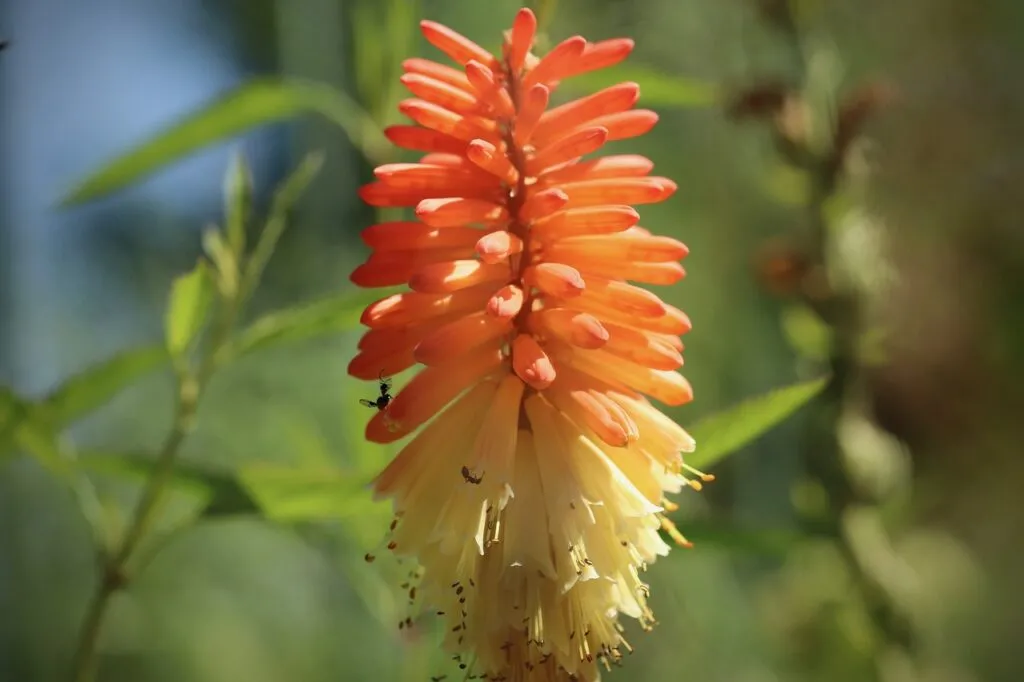
Red hot pokers are one of the great architectural perennials of the summer and Autumn garden, and ‘Orange Blaze’ is the variety I recommend most often for pure orange impact. The torchlike flower spikes open from orange buds in July and August, the individual tubular flowers held in dense, upright spikes that reach 80 to 90 centimetres. The structural drama of a kniphofia in full flower is unlike anything else on the border, creating a genuine vertical exclamation mark.
Bees and bumblebees are particularly attracted to kniphofia and will visit repeatedly throughout the day when the plants are in flower. The strap-like evergreen foliage also provides winter structure, making this a genuinely four-season plant. Plant in bold groups of three or five for the best effect.
💡 Top Tip
In colder regions, tie the foliage up into a bundle in late autumn to protect the crown from frost. Good drainage is the single most important factor for kniphofia survival through winter. On heavy clay, improve drainage with grit before planting or grow in a raised bed.
🛒 Buy Kniphofia ‘Orange Blaze’ from Amazon UK
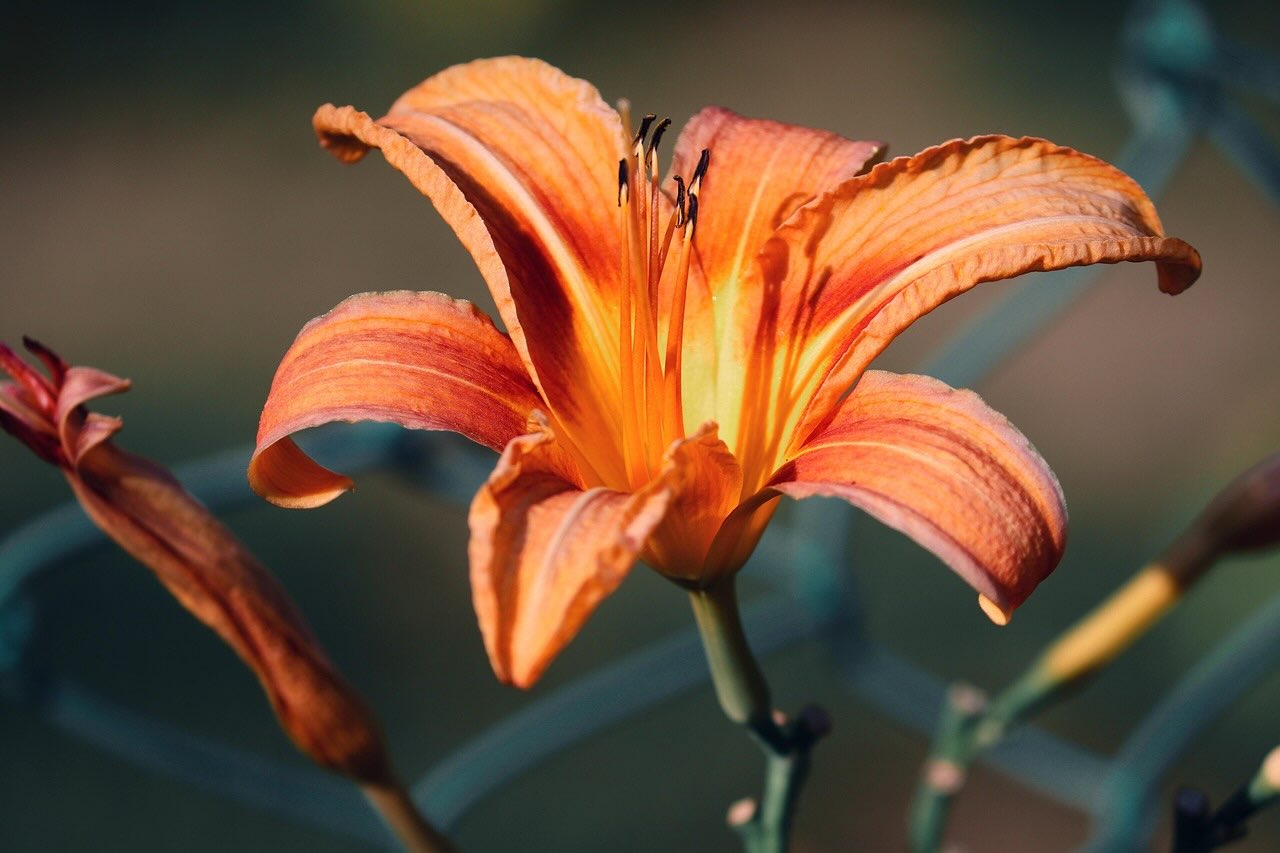
Daylilies are among the most versatile and rewarding perennials in UK horticulture, and ‘Stafford’ is the deep orange-red variety that earns its place in almost every scheme I design. Despite the name “daylily” suggesting each flower lasts only a day, the plant produces so many buds over such a long period that it appears to flower continuously from June through August. The flowers are a rich, deep orange-red with yellow throats, large and impressive, making a bold statement wherever they are planted.
Daylilies tolerate a remarkably wide range of conditions, including partial shade, clay soil, and drought once established. They increase steadily in size and can be divided every four to five years to produce new plants for free. They are also exceptional container plants, performing brilliantly in large pots.
💡 Top Tip
Remove the spent flower stem entirely once all buds have opened and finished to keep the plant looking tidy and encourage maximum energy into the remaining flowers. Divide congested clumps in spring by lifting the whole clump and pulling the individual fans apart by hand. Replant at the original depth.
🛒 Buy Hemerocallis ‘Stafford’ from Amazon UK
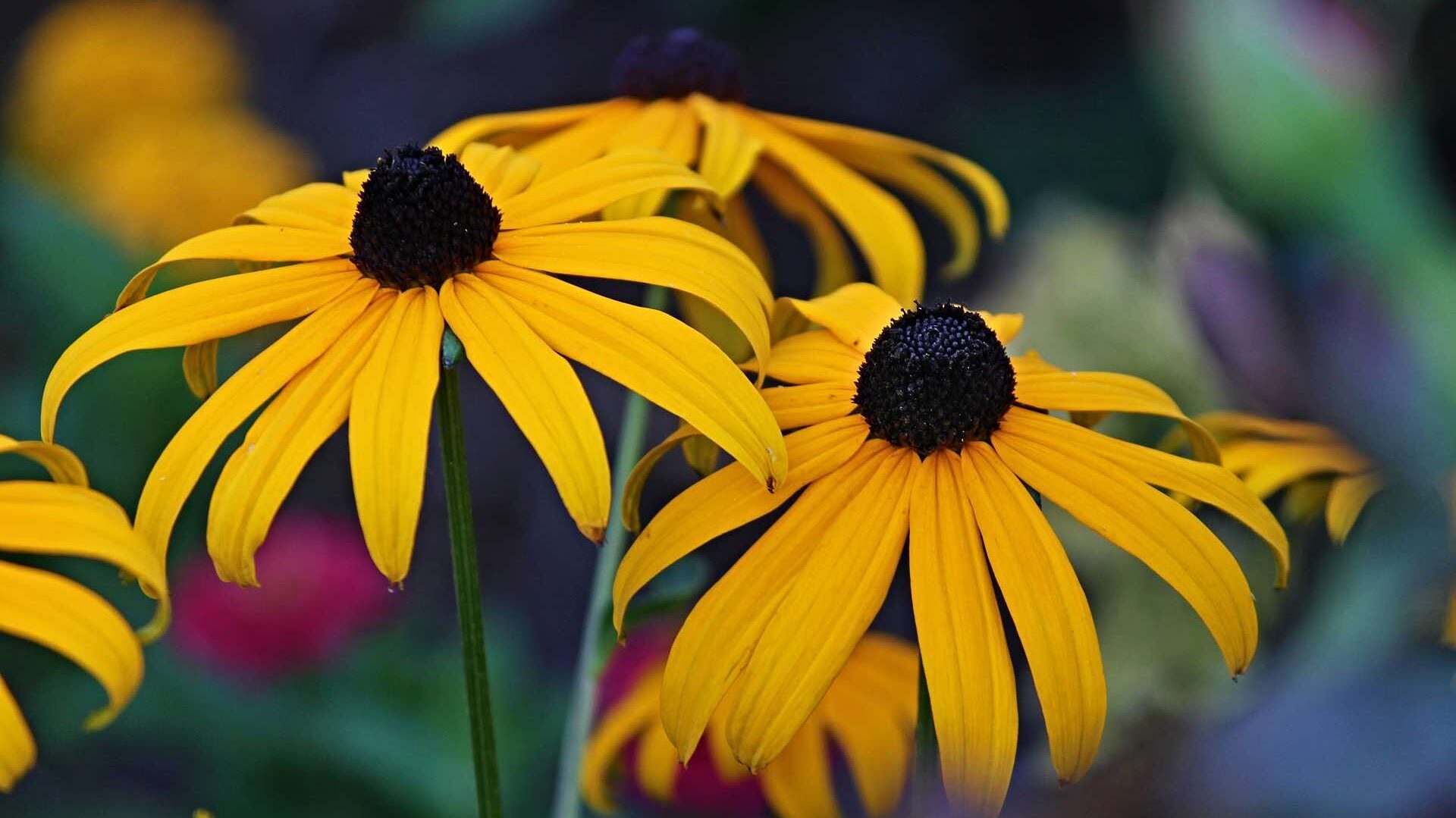
Rudbeckia ‘Goldsturm’ is one of the most reliable and long-flowering perennials available for UK gardens. The large, daisy-like flowers are a rich golden-orange with dark, almost black central cones that create a wonderful contrast. Flowering begins in August and continues right through to October, which makes it one of the most valuable orange performers in the Autumn border when so many other plants are fading.
It is tough, tolerating clay soils, partial shade, and most UK conditions. Leave the dark seed heads on through winter, as they are beautiful in the frost and provide food for birds. This is a plant I use repeatedly in late-season colour schemes because nothing else delivers the same reliable orange impact right through to the first frosts.
💡 Top Tip
Leave the seed heads standing through winter. They are beautiful when frosted and provide food for finches, particularly goldfinches, through the lean winter months. Cut back to ground level in late February or early March before new growth begins. Divide every three to four years to maintain vigour.
🛒 Buy Rudbeckia ‘Goldsturm’ from Amazon UK
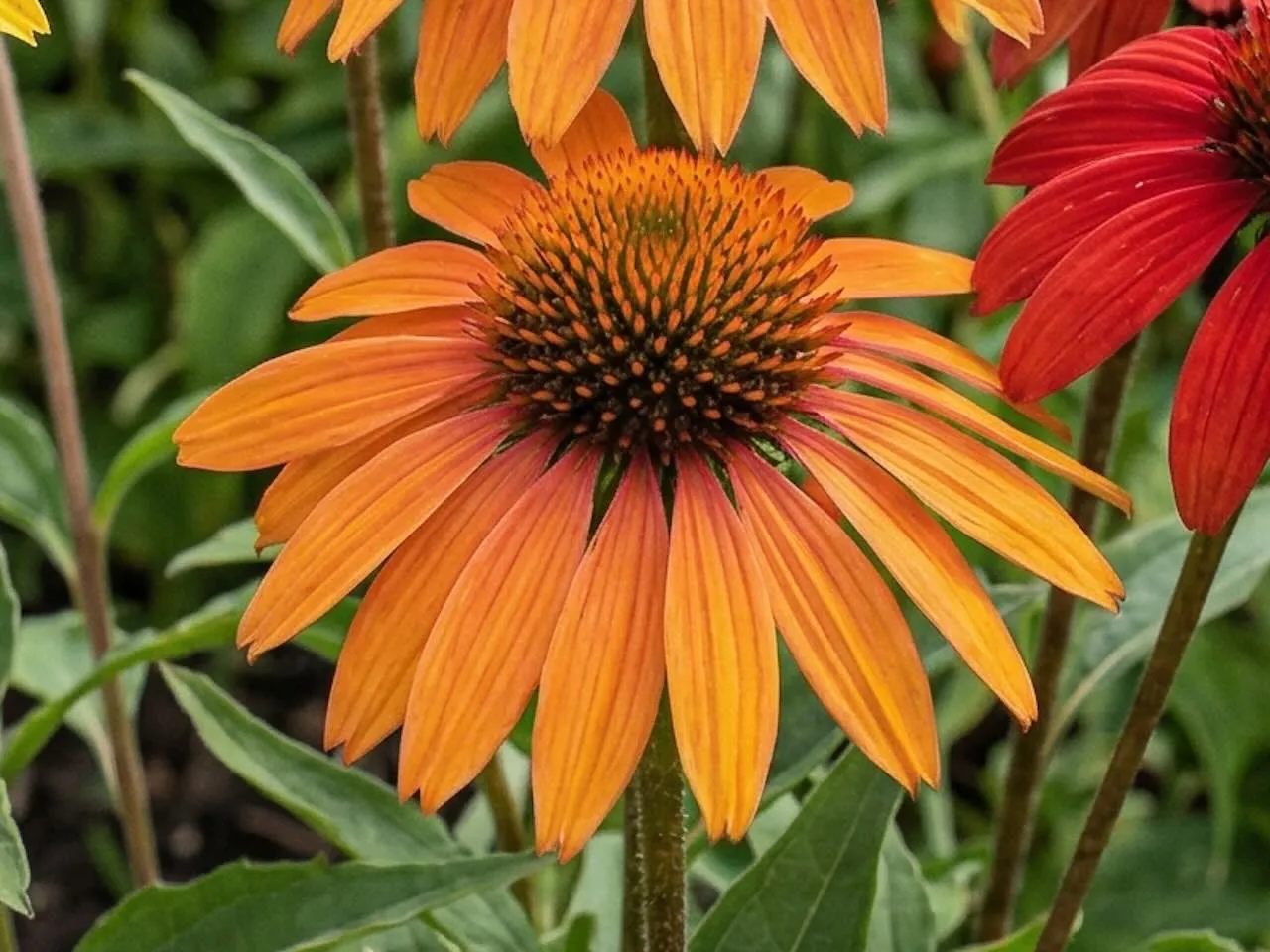
Echinacea ‘Hot Summer’ is one of the newer orange coneflower varieties, and it is genuinely exciting. The flowers open bright golden-yellow, then mature to rich orange and finally to a fiery red-orange as they age, meaning multiple colour stages coexist on the same plant at the same time, creating a spectacular effect. The prominent, domed orange cones at the centre persist well into winter as architectural seed heads, loved by birds and enormously beautiful when dusted with frost.
Coneflowers are amongst the most valuable pollinator plants in the UK, with bees and butterflies visiting in huge numbers throughout the flowering period from July to September. Plant in bold drifts for maximum visual impact and to maximise the benefit to pollinators.
💡 Top Tip
Echinacea absolutely requires good drainage to survive UK winters. On heavy clay, improve with grit or grow in a raised bed. Leave the seed heads standing until February to feed birds and provide winter structure. Cut back to ground level in late winter just as new growth is emerging from the base.
🛒 Buy Echinacea ‘Hot Summer’ from Amazon UK
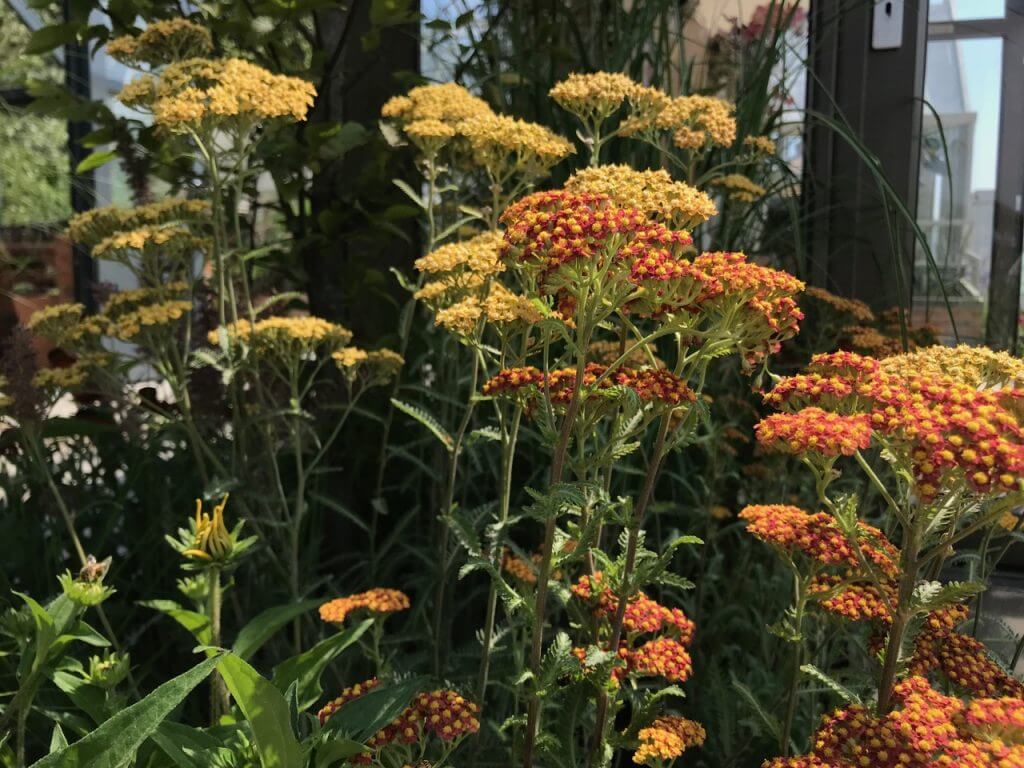
Achillea ‘Walther Funcke’ is one of those quietly brilliant plants that earns enormous admiration from visitors without ever quite getting the mainstream recognition it deserves. The flat-topped flowerheads are a rich, warm orange-red in early summer, gradually fading through apricot and amber to cream as the season progresses, meaning the plant offers a shifting, evolving display across several months. The feathery, silver-grey foliage is beautiful in its own right and provides excellent contrast to both the flowers and neighbouring plants.
It is drought-tolerant once established, genuinely excellent for pollinators, and performs reliably in poor, thin soils where more demanding plants struggle. This makes it invaluable for gravel gardens, dry sunny banks, and new build gardens with thin, compacted soil.
💡 Top Tip
Do not feed achilleas heavily or you will get lush, floppy growth that needs staking. They perform far better in lean, well-drained conditions. Deadhead regularly and cut back hard after the main flush to encourage a second wave of flowers. Divide every two to three years in spring.
🛒 Buy Achillea ‘Walther Funcke’ from Amazon UK
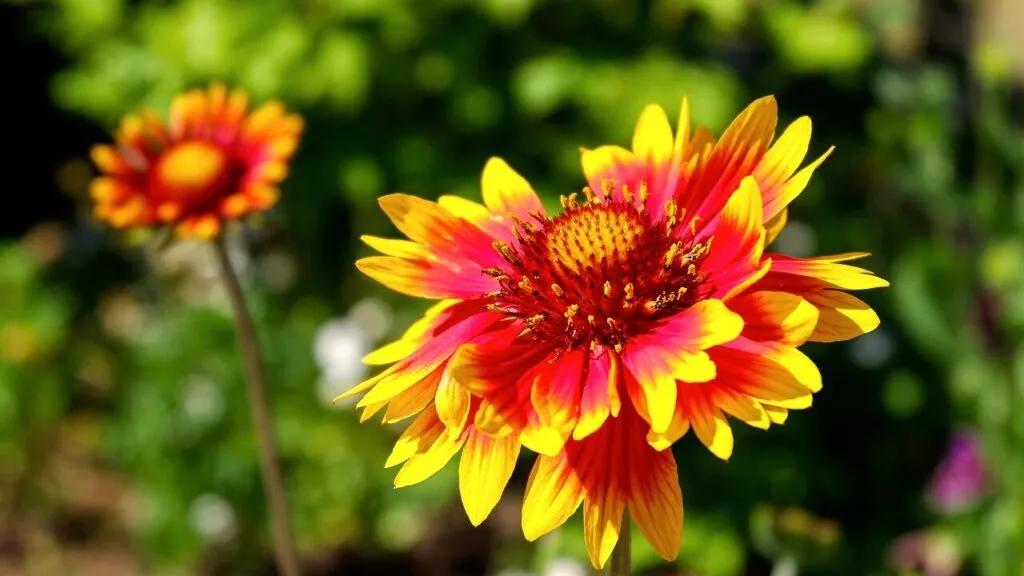
Gaillardia ‘Kobold’, also known as ‘Goblin’, is the compact blanket flower and one of the most cheerful, long-flowering perennials you can grow. The bold, daisy-like flowers are rich orange-red with yellow tips, a colour combination that is almost impossibly vivid in strong sunlight. It flowers from June right through to Autumn, making it one of the longest performers in the border, and it thrives in hot, dry conditions that make many other plants struggle.
At around 30-40cm in height, it sits perfectly at the front of a border or in large containers. Plant it alongside blue salvias or purple verbena for the most striking contrast. It does need excellent drainage to thrive and resents wet winter conditions, so on heavy soils treat it as a short-lived perennial and replace every few years.
💡 Top Tip
Deadhead constantly for the longest flowering season. On heavy clay soils, add plenty of grit to the planting hole and raise the crown slightly above the surrounding soil level to improve drainage around the crown in winter, which is when most losses occur.
🛒 Buy Gaillardia ‘Kobold’ from Amazon UK
Fox and Cubs is one of those plants that sits in a curious position in British horticulture: technically a wildflower native to the Alps and naturalised across the UK, officially listed as an invasive weed in some contexts, and yet utterly, irresistibly beautiful in the right setting. The vivid orange, dandelion-like flowers are produced in clusters on hairy, branching stems from June right through to August, and the colour is a rich, clear orange that has real intensity in sunshine.
For a wildflower meadow, a rough grass bank, or any naturalistic planting scheme where you want a splash of genuine orange that takes care of itself entirely, Fox and Cubs is one of the finest plants available.
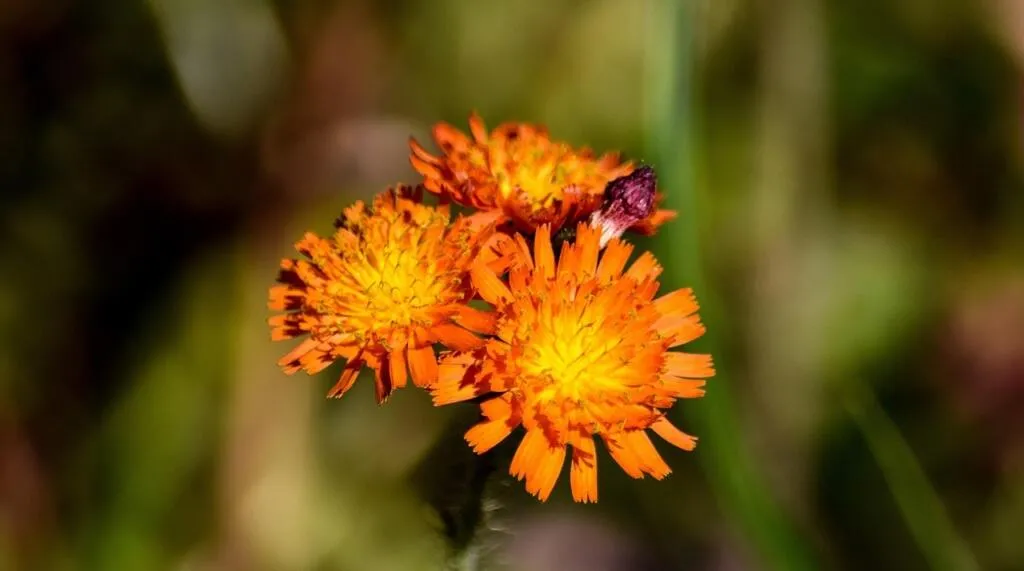
It spreads by runners and self-seeds with enthusiasm, which means it is not a plant for the formal border where it would become a nuisance. But in a meadow context, allowed to run through fine grasses and mix with other wildflowers such as yellow rattle, ox-eye daisy, and knapweed, it creates a naturalistic orange note that is genuinely beautiful. Bees visit the flowers in large numbers. I have used it at the wilder end of garden designs to add orange into a naturalistic scheme at no ongoing effort or cost once established. As a Ninja, it’s also a plant that reminds me of childhood summers finding it growing in lawns and verges, a true British wildflower in spirit even if its origins are continental.
💡 Top Tip
Use Fox and Cubs only where you are happy for it to spread freely. In a wildflower meadow or rough grass area it is wonderful and genuinely low maintenance. Keep it well away from formal borders and lawns where its runners would cause problems. Combine with yellow rattle, ox-eye daisy, and field scabious for a naturalistic meadow in full orange and purple contrast.
🛒 Buy Fox and Cubs seeds from Amazon UK
Persicaria amplexicaulis ‘Firetail’ is one of those entirely dependable, season-long performers that makes you wonder why it is not in every garden. The upright, poker-like flower spikes are a vivid red-orange and appear in extraordinary quantities from July right through to October. The plant has a long, almost architectural season of interest that carries the border from midsummer well into autumn without interruption.
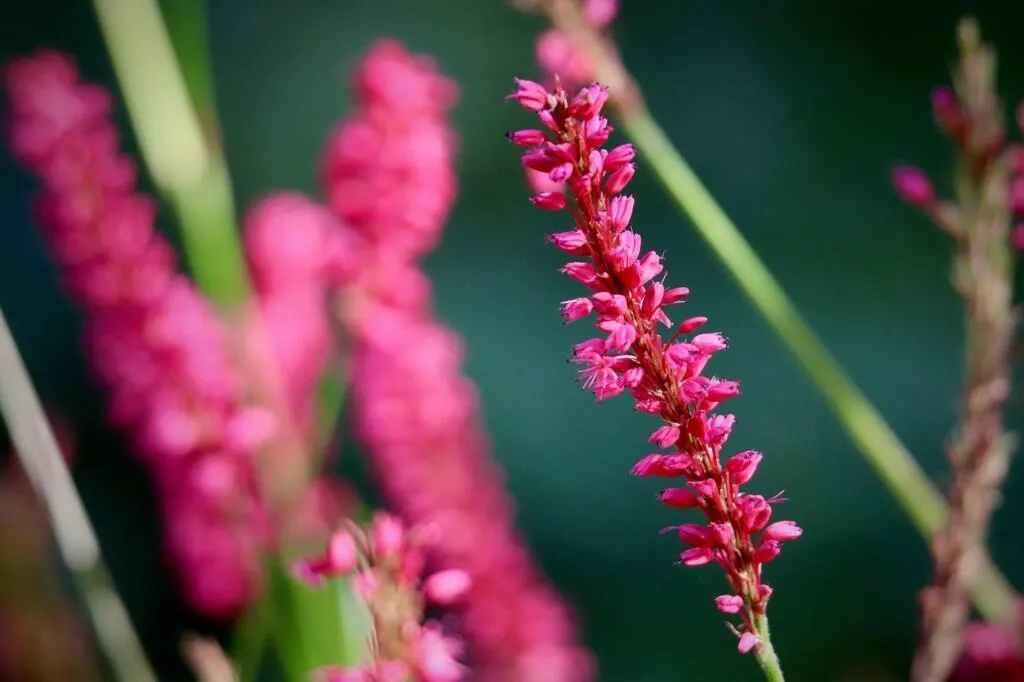
It is genuinely tough, tolerating clay soils, partial shade, and difficult conditions that would challenge most perennials. A rapidly spreading clump-former, it can be divided in spring to produce more plants. It holds the RHS Award of Garden Merit and is one of my most reliable recommendations for difficult spots.
💡 Top Tip
Give it room to expand as it spreads steadily. Cut back hard to ground level in late winter and the new growth emerges quickly in spring. It tolerates being divided very easily in spring, making it an economical way to fill large border areas rapidly.
🛒 Buy Persicaria ‘Firetail’ from Amazon UK
Annuals provide instant impact and fill the gaps that perennials and shrubs leave in their first and second year. These seven orange annuals are some of the most reliable and rewarding you can grow from seed or buy as plug plants.
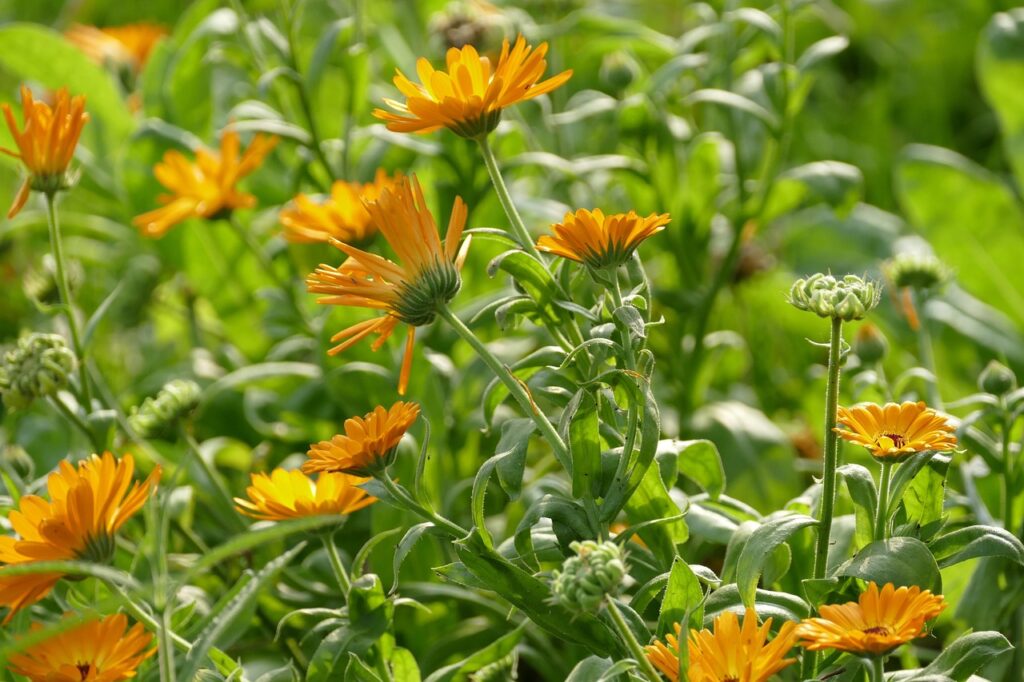
If I had to recommend one annual flower for absolute beginners, Calendula officinalis would be very near the top of the list. It is extraordinarily easy to grow, genuinely beautiful, and surprisingly useful in the kitchen garden as a companion plant that deters pests and attracts hoverflies whose larvae eat aphids.
The vivid orange, daisy-like flowers appear from June right through to the first frosts and self-seed prolifically, meaning once you have it in your garden, you effectively have it for free every subsequent year.
The petals are edible and traditionally used to add colour to salads, rice dishes, and teas. Grow a patch near vegetables and let it do its companion planting work while looking beautiful all summer. It is genuinely one of the most useful plants in this entire guide.
💡 Top Tip
Sow seed directly where you want the plants to grow from March onwards. Thin seedlings to about 25cm apart. Deadhead regularly to maintain flowering, or allow a few plants to set seed so they self-sow and naturalise. Sow in autumn for the earliest spring flowers the following year.
🛒 Buy Calendula seeds from Amazon UK
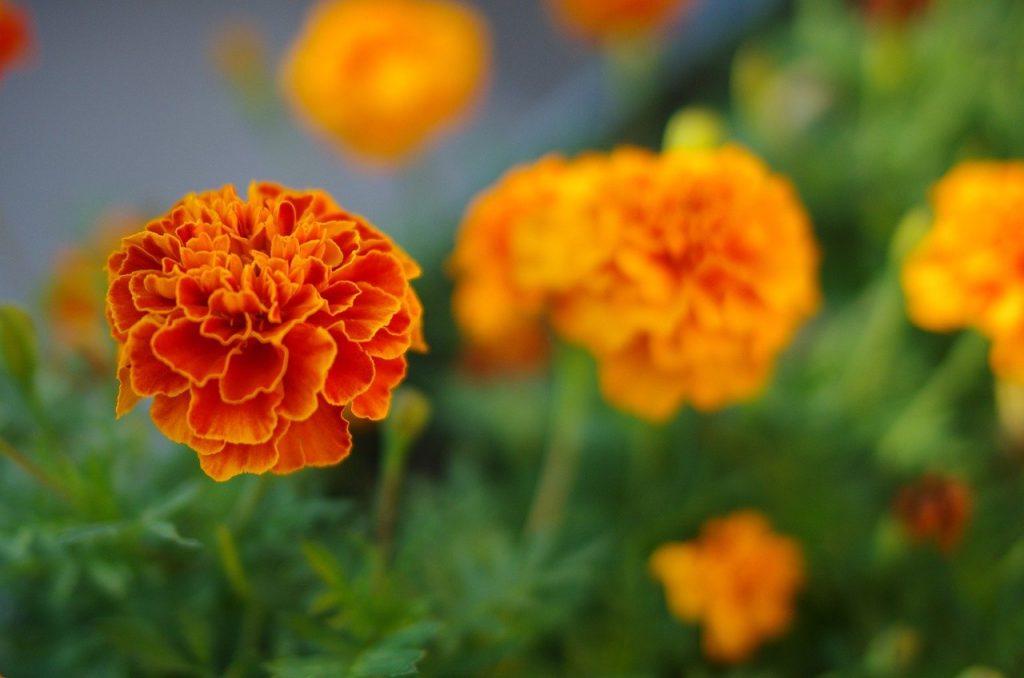
French marigolds are one of the great workhorses of the summer garden. They are cheerful, productive, easy to grow, long-flowering, and absolutely irresistible to bees and hoverflies. The compact plants are covered in orange, yellow, and bicolour flowers from June right through to the first frosts. Plant them in blocks alongside vegetables where they deter whitefly and attract beneficial insects, or use them as edging plants along paths and borders for a ribbon of orange all summer.
For the richest, most intense orange, look for varieties in the ‘Fireball’, ‘Aurora Orange’, or ‘Boy O Boy’ series. Half-hardy annuals, they should be started under glass in March and planted out after the last frost in late May. Buy as plug plants if you prefer not to raise from seed.
💡 Top Tip
Deadhead regularly or pinch out the spent flowers to maintain continuous flowering. Plant around the base of tomatoes, courgettes, and other vegetables to deter whitefly and attract aphid-eating hoverflies. One of the best companion planting choices available.
🛒 Buy French marigold seeds from Amazon UK
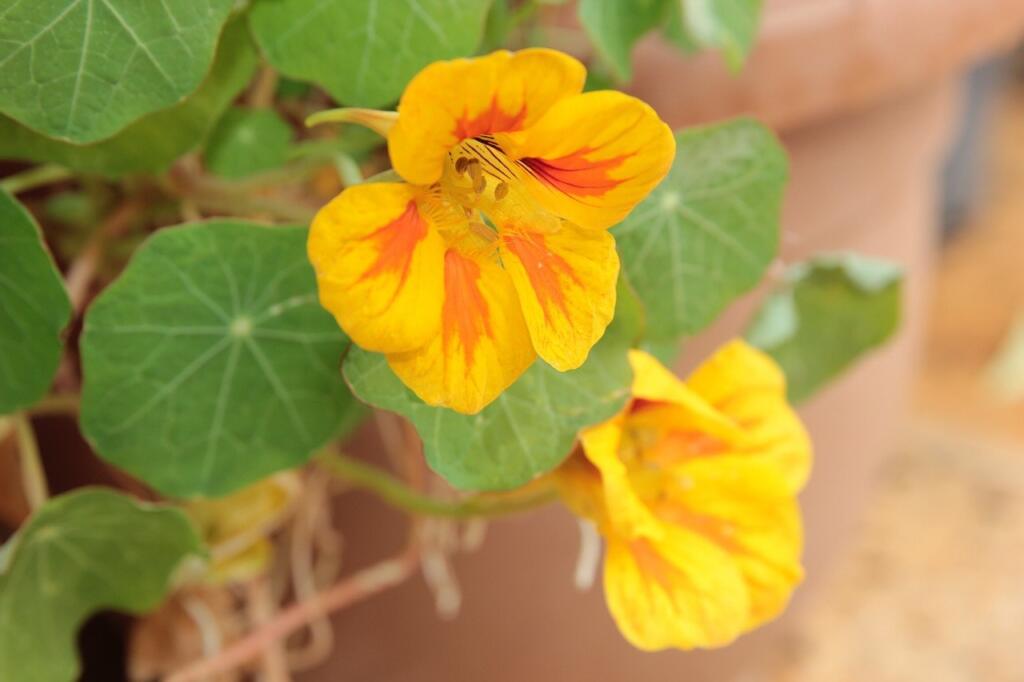
Nasturtiums are one of those plants that are so easy to grow, so cheerful, and so versatile that every garden should have them somewhere. The bright, spurred flowers in orange, yellow, and red appear from July through to Autumn, and the large, round, bright green leaves are striking in their own right. The whole plant is edible, flowers and leaves both, the flowers with a pleasant peppery flavour that makes them one of the most useful garnishes for salads and summer dishes.
Direct sow the large seeds in May where you want them to grow. They need no coddling and will flower rapidly in even poor soils. In rich soil, they tend to produce masses of leaves and fewer flowers, so do not overfeed. Trailing varieties spill beautifully over the edges of containers and hanging baskets.
💡 Top Tip
Sow seeds on their sides (the natural germination position) directly in the ground in April or May once frosts have passed. Do not sow in pots and transplant as they resent root disturbance. For more flowers and fewer leaves, plant in poorer soil and do not feed.
🛒 Buy nasturtium seeds from Amazon UK
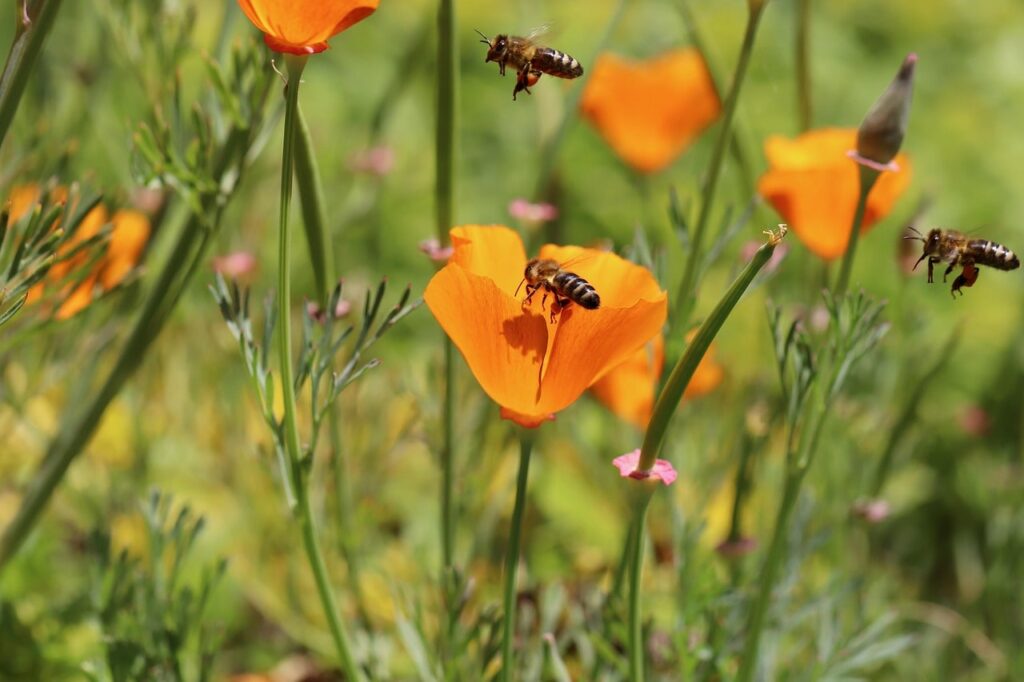
The California poppy is one of the most cheerful and undemanding annuals you can grow. The silky, cup-shaped flowers in vivid orange, yellow, and apricot shades open fully in the sun and close in shade and poor weather, which gives them a charming, responsive quality. They are extraordinarily easy to grow from seed sown directly into any sunny, dry spot, and they naturalise and self-seed freely to create drifts of colour with minimal effort.
In a gravel garden or a dry sunny bank, they are completely at home and will spread to fill gaps with minimal encouragement. Sow in Autumn for the earliest spring flowers or in early spring. They resent root disturbance, so always sow direct rather than raising in pots. A classic cottage garden plant that deserves a place in every UK garden.
💡 Top Tip
Scatter seeds thinly across bare soil in autumn and allow the winter cold to stratify them naturally for the strongest spring germination. Allow some plants to set seed and they will naturalise happily across a border, producing waves of colour without any further intervention.
🛒 Buy California poppy seeds from Amazon UK
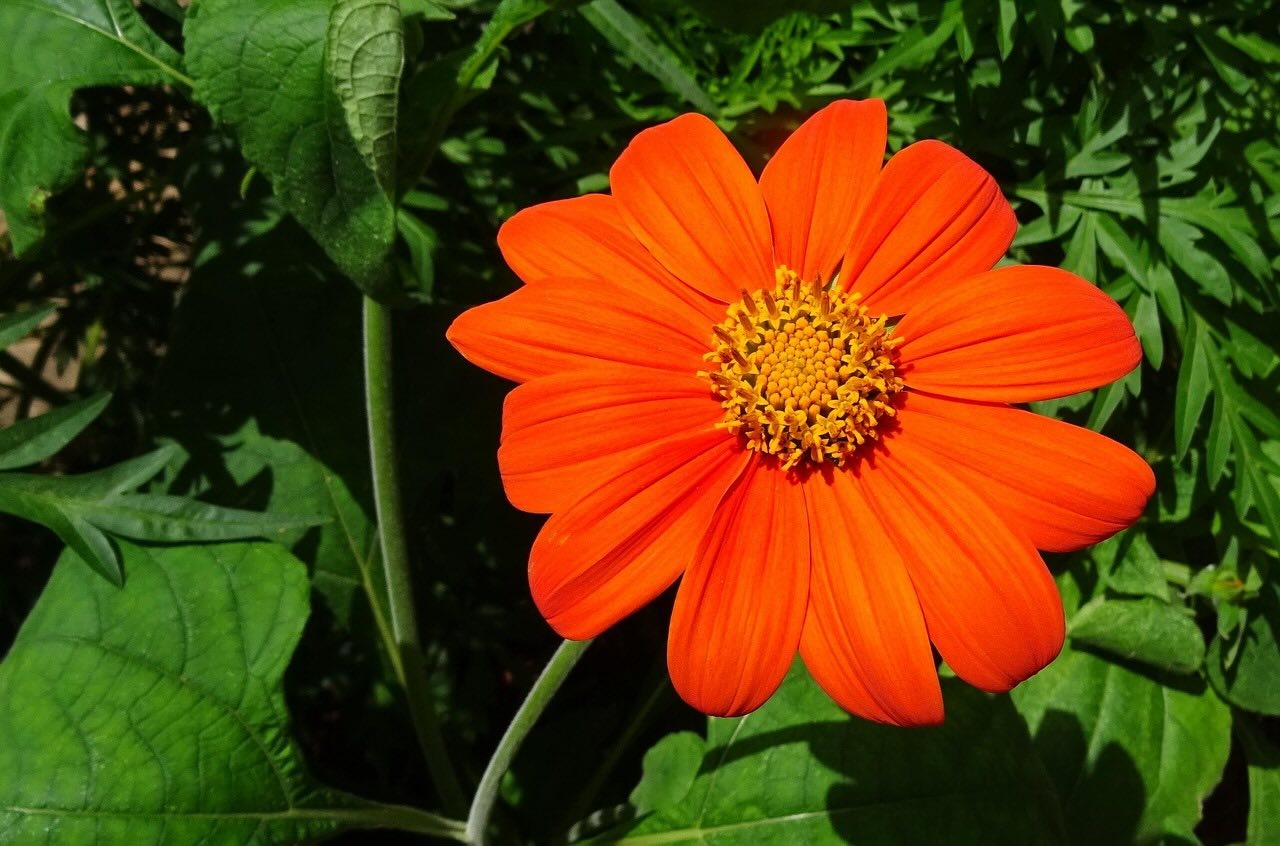
Tithonia is one of those plants that provokes genuine gasps when visitors see it for the first time. The flowers are large, daisy-like, and a vivid, almost unreal orange-red, produced on tall stems from August through to the first frosts. It grows rapidly to 90 to 120 centimetres and creates bold, structural colour at the back of a border or in a cutting garden where few other plants achieve that height with that intensity of colour.
Butterflies are particularly attracted to the flowers. Start seeds under glass in April, harden off carefully, and plant out after the last frost. It needs a warm, sunny, sheltered position to give its best in the UK. In a good summer, it is breathtaking. Excellent as a cut flower, with the flowers lasting well in water when cut before they are fully open.
💡 Top Tip
Sow seeds indoors in April in small pots, one seed per pot, as Tithonia dislikes root disturbance from pricking out. Harden off carefully before planting out in late May or early June. Deadhead regularly to maintain flowering and cut for the vase before the flowers are fully open.
🛒 Buy Tithonia seeds from Amazon UK
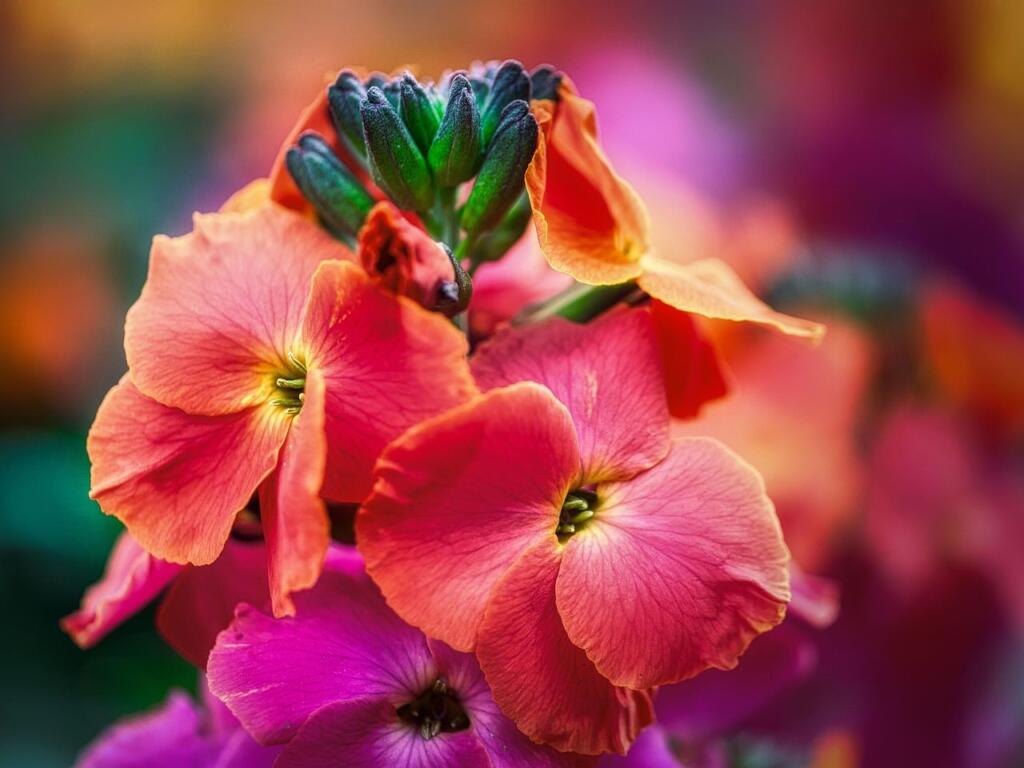
Wallflowers are the classic spring bedding plant, and the orange varieties are among the finest. The fragrance alone is worth the planting effort. On a warm April day, a bed of orange wallflowers delivers a scent that is warm, spiced, and unmistakably spring. They flower from March through May, providing orange colour in the garden at exactly the moment when winter is releasing its grip and the garden needs warmth most urgently.
Plant in autumn for spring flowering, usually buying bedding plants from September onwards. They pair brilliantly with orange, yellow, and bronze tulips, which flower at the same time and share the same warm spring palette. After flowering, they are pulled up and replaced with summer bedding. Short-lived but utterly irreplaceable for spring scent and colour.
💡 Top Tip
Plant orange wallflowers with orange or bronze tulips such as ‘Princess Irene’ or ‘Ballerina’ for a spectacular spring combination that extends the colour impact by several weeks beyond the wallflowers’ main season. Plant the wallflower plugs in October and tuck the tulip bulbs between them at the same time.
🛒 Buy orange wallflower plants from Amazon UK
Bulbs are the secret weapon of the seasonal garden. Plant them and largely forget about them, and they return year after year with extraordinary colour at precisely the right moments. These ten orange bulbs, corms, and tubers cover spring, summer, and Autumn.
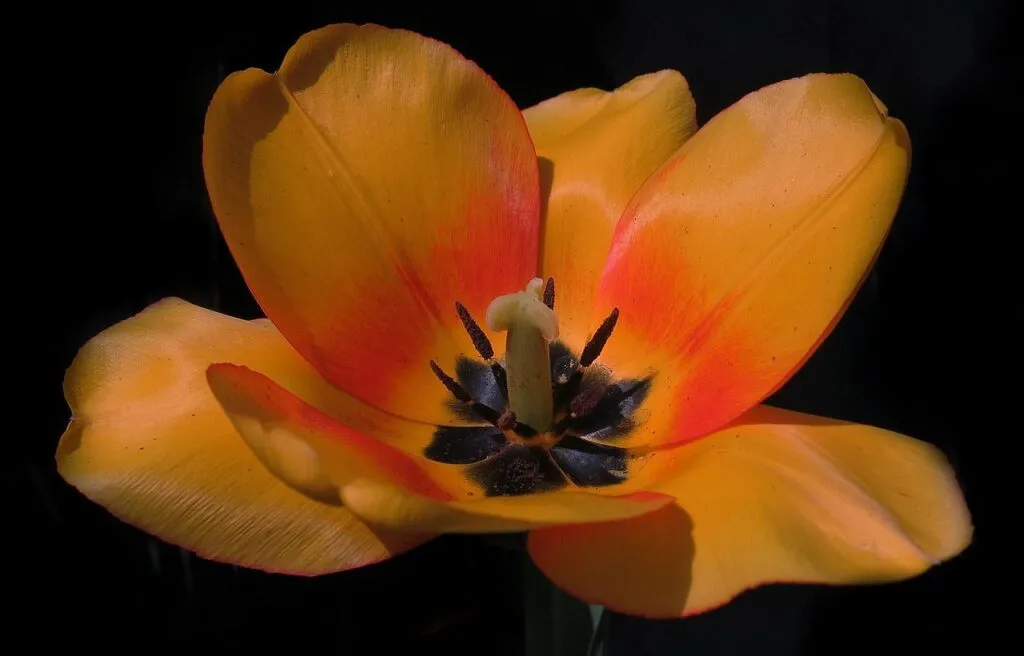
‘Princess Irene’ is, in my view, the finest orange tulip for UK gardens. The flowers are a warm, glowing orange, flushed with purple-feathered markings on the outer petals, giving an extraordinary depth and richness that solid-colour orange tulips simply cannot match. It flowers in April on short, sturdy stems that hold the flowers upright in wind far better than wide, taller varieties, making it particularly reliable in exposed UK gardens.
The compact height of around 30 to 35 centimetres makes it ideal for the front of borders or containers where its colour can be appreciated at close range. Plant in Autumn for flowering the following April, ideally in bold groups of 15 to 25 bulbs for maximum visual impact.
💡 Top Tip
Combine with orange wallflowers and bronze carex for a layered spring display. After flowering, allow the foliage to die back naturally before removing it. In heavy clay soils, lift the bulbs after the foliage has died back and store them dry until replanting in autumn for the best results.
🛒 Buy Tulipa ‘Princess Irene’ from Amazon UK
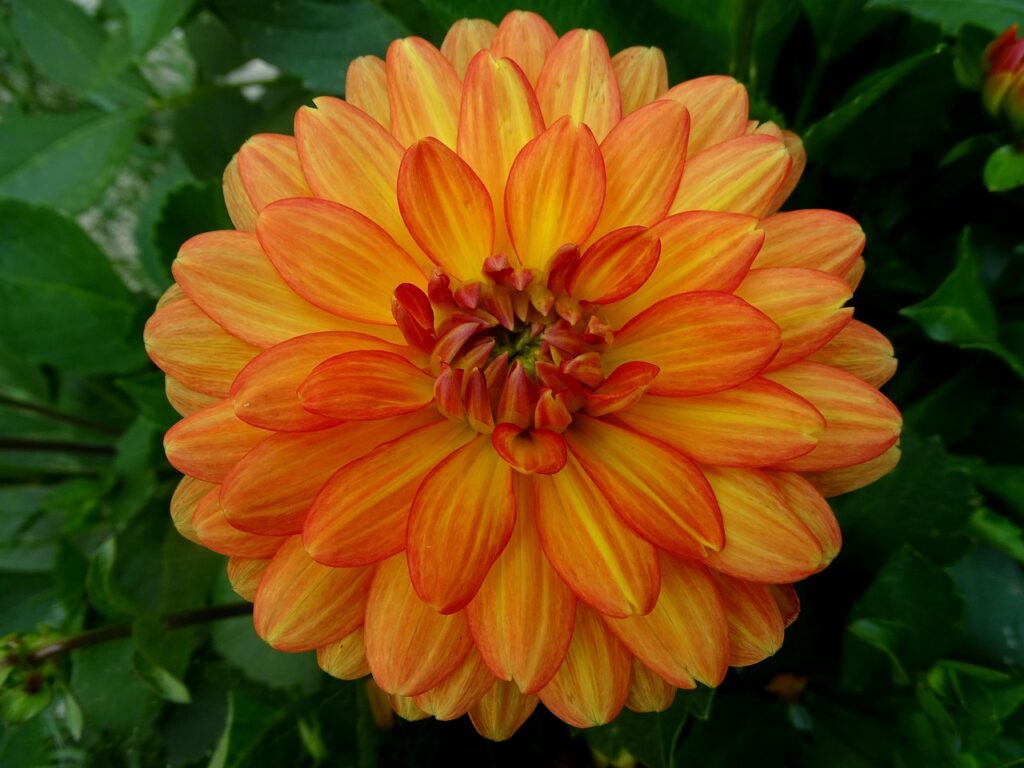
David Howard is the orange dahlia I recommend ahead of all others. The flowers are a rich, warm apricot-orange with a decorative, fully double form, but the foliage is what makes this variety truly exceptional. The leaves are a deep, almost chocolatey bronze-purple that provides a stunning self-contained contrast to the orange flowers, meaning the plant earns its space even in the weeks before and after flowering. This combination of orange bloom and dark foliage is one of the finest colour pairings in the entire world of garden plants.
It flowers from July through the first frosts, an extraordinarily long season that makes it one of the most valuable plants in the late-summer and Autumn border. Plant tubers in late April or May and expect flowers by midsummer. Lift and store tubers frost-free over winter in colder UK regions.
💡 Top Tip
Deadhead dahlias constantly. Every spent flower removed prompts the plant to produce two more buds. If you can manage to cut to the vase regularly, you will have flowers indoors while the plant continues flowering outdoors simultaneously. Stake before the plant reaches 40cm to avoid wind damage later.
🛒 Buy Dahlia ‘David Howard’ from Amazon UK
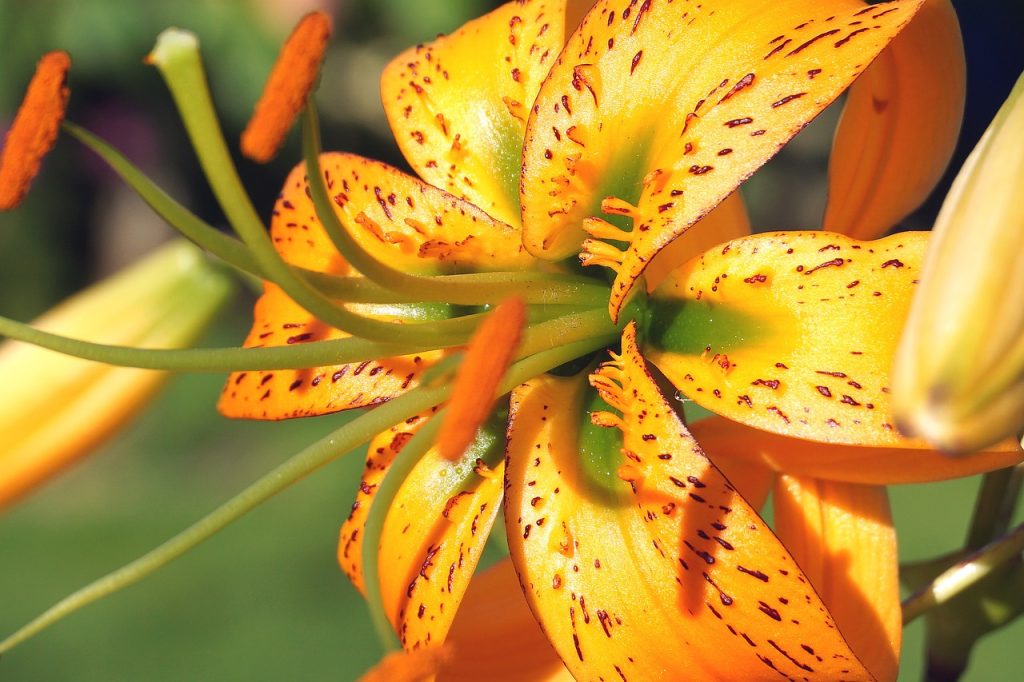
Lilium ‘Enchantment’ is one of the classic orange lilies, a variety that has been in cultivation since the 1940s and remains among the finest for its pure, unambiguous colour and exceptional reliability. The large, upward-facing flowers are a rich, clear orange dotted with dark spots, and they appear in clusters of six to twelve blooms per stem from June through July. At 60 to 90 centimetres tall, it creates an elegant vertical element in the border that few other plants can match for sheer flower-to-space impact.
Asiatic lilies like ‘Enchantment’ are unscented, making them ideal for cutting and keeping indoors near people sensitive to strong fragrances. They perform well in containers and reliably in the open border in any well-drained soil. Plant bulbs in Autumn or spring, pointed end upward, at two to three times the bulb’s own depth.
💡 Top Tip
Lilies grow brilliantly in deep pots. Use a soil-based compost with added grit for drainage, plant bulbs at three times their own depth, and place the container where the roots stay cool while the stems and flowers receive sun. Protect emerging shoots from slugs in spring as they can cause significant damage.
🛒 Buy Lilium ‘Enchantment’ from Amazon UK
Canna ‘Tropicanna’ is one of the most theatrical plants you can grow in a UK garden. Even before the flowers appear, the foliage alone is extraordinary: enormous, paddle-shaped leaves in deep bronze-green, dramatically striped with gold, red, and orange, which creates a tropical effect unlike anything else in temperate horticulture. The vivid orange flowers appear above this remarkable foliage in July and August, creating a combination so striking that it regularly stops people in their tracks on Garden Rescue visits.
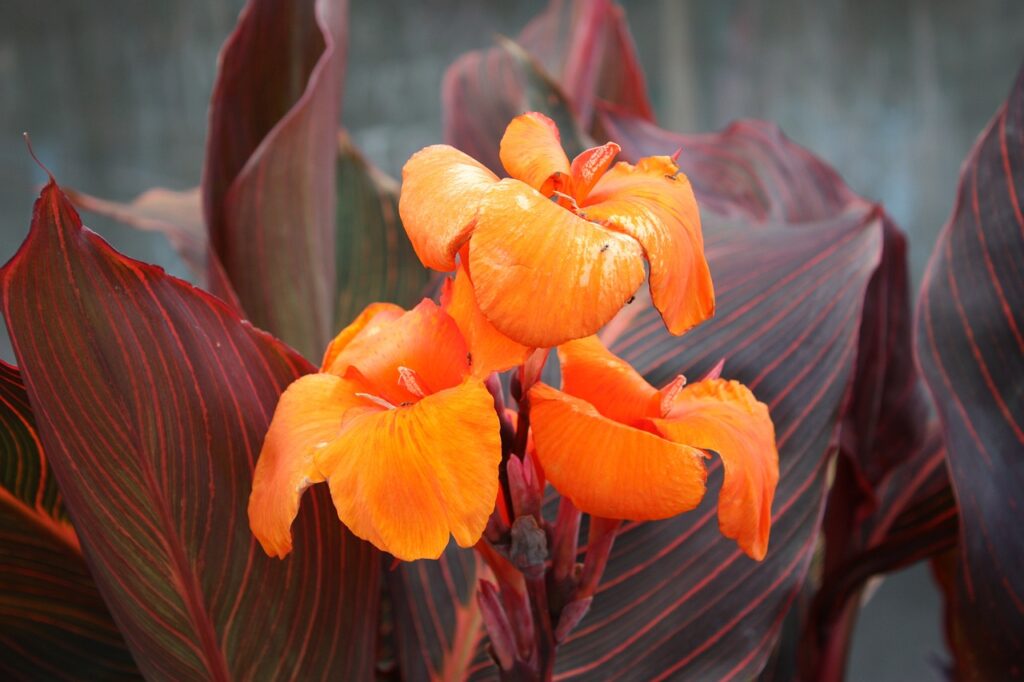
It thrives in hot, sunny, sheltered positions and needs lifting and storing frost-free over winter in most UK regions. Plant the rhizomes in pots under glass in April, then move them outside after the last frost. A must for anyone wanting to create a tropical or exotic garden feel.
💡 Top Tip
Start rhizomes in pots of compost under glass in April, one eye per pot, and keep warm and moist. Once all frost risk has passed and the plant is growing strongly, move outdoors to a sheltered, sunny position. After the first frosts blacken the foliage, lift, dry, and store rhizomes in just-moist compost in a frost-free place over winter.
🛒 Buy Canna ‘Tropicanna’ from Amazon UK
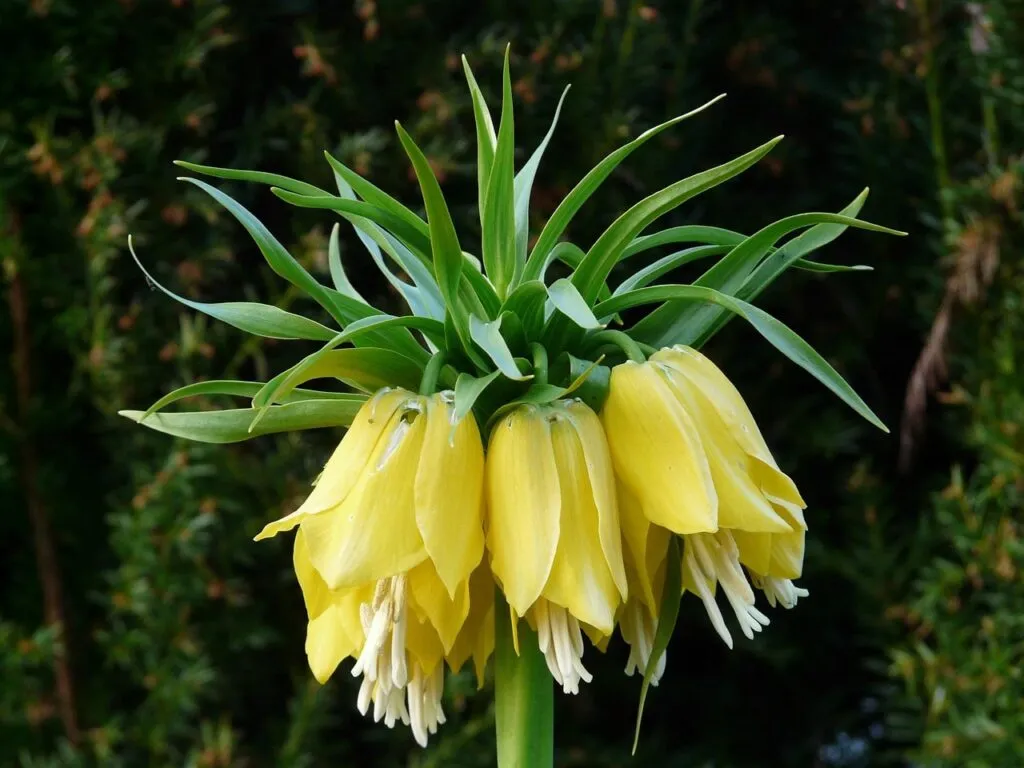
Crown Imperial is one of the most dramatic spring bulbs available for UK gardens. The stout stems rise to 60 to 90 centimetres and are topped by a crown of pendant, bell-shaped flowers in vivid orange-red, with a fountain of bright green leaves above the flowers, creating an almost regal effect. There is genuinely nothing else in spring that looks quite like a well-grown Fritillaria imperialis, and when planted in groups of five or seven, it creates a breathtaking focal point in April.
It has a strong, musky scent that deters moles and squirrels, which is an additional practical benefit. Plant the bulbs on their sides in well-drained soil in Autumn at about 15cm depth to prevent water from sitting in the bulb’s hollow top and causing rot. It naturalises well once established and comes back reliably each year.
💡 Top Tip
Always plant Fritillaria imperialis bulbs on their sides at 45 degrees. This prevents rainwater collecting in the hollow at the top of the bulb during autumn, which causes the most common cause of failure. Add extra grit beneath the bulb in clay soils to improve drainage further.
🛒 Buy Fritillaria imperialis from Amazon UK
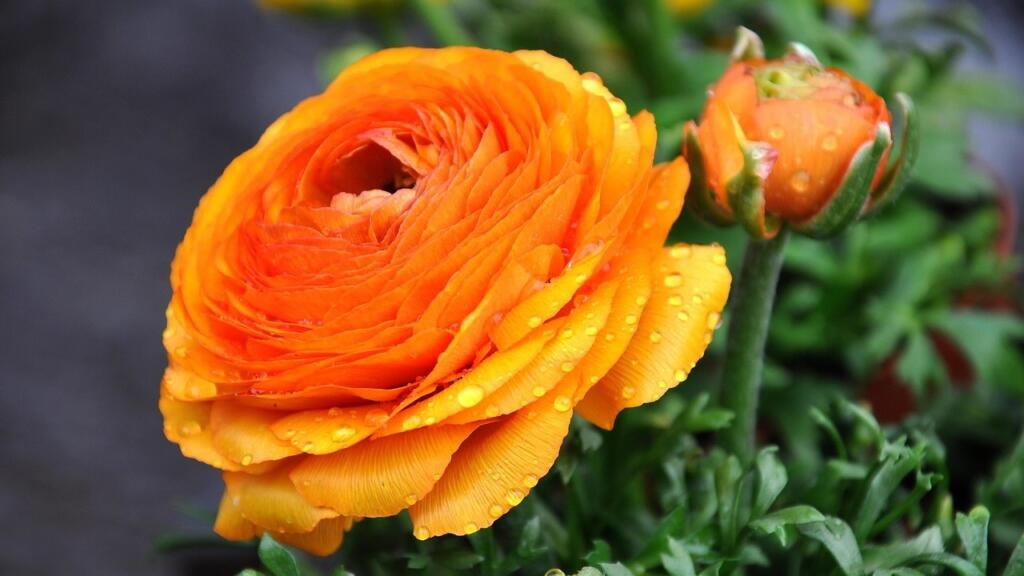
Ranunculus asiaticus has become increasingly popular in UK gardens over recent years as growers have discovered that these extraordinarily beautiful flowers can be grown reliably here with a little attention to timing. The fully double, papery-petalled flowers are available in every shade from palest apricot through to vivid orange and flame, and they are genuinely stunning both in the garden and as cut flowers. A single stem of orange Ranunculus cut for the vase will outperform almost any other flower in terms of sheer beauty and longevity.
Plant corms in Autumn in mild UK regions, or in February or March under glass and plant out in April in colder areas. They need well-drained soil and cool growing conditions. Lift the corms in summer once the foliage has died back and store them dry until replanting the following season.
💡 Top Tip
Soak the corms in water for a few hours before planting to rehydrate them and speed germination. Plant with the claws facing downward at about 5cm depth. They grow best in cool, moist spring conditions, which makes them very well suited to the UK climate in April and May.
🛒 Buy Ranunculus corms from Amazon UK
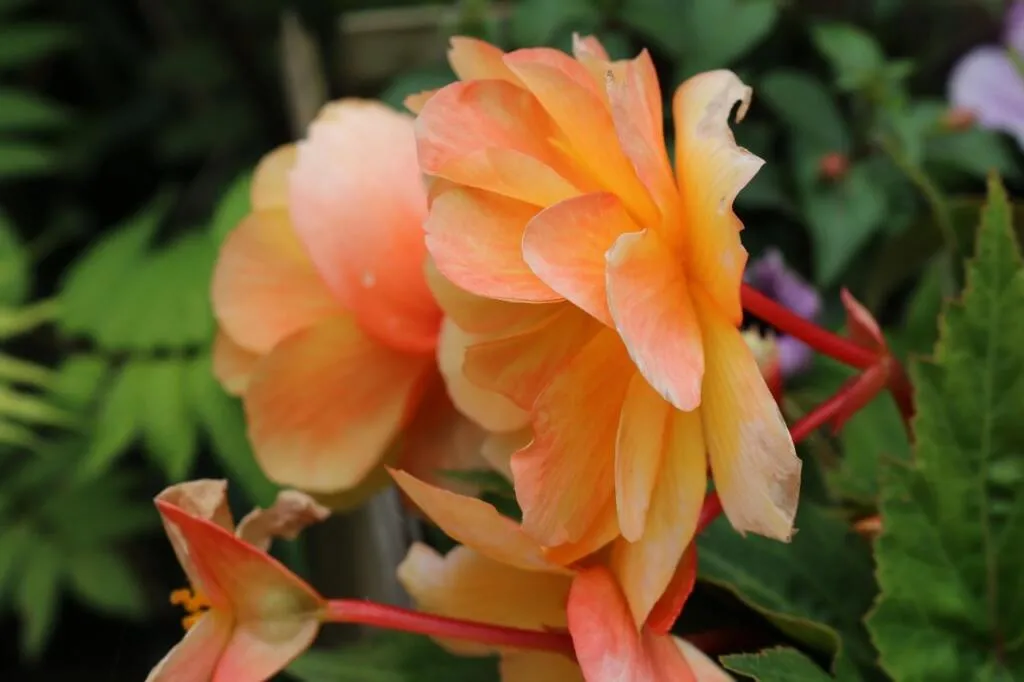
Tuberous begonias are the go-to orange plant for shaded containers and hanging baskets, where most of the other plants on this list would fail to flower. The ‘Non-Stop’ series is exactly what the name suggests: extraordinary, continuous flowering from planting until the first frosts, the large, fully double flowers produced in an almost relentless succession. In a north-facing or shaded courtyard where vibrant orange colour seems impossible, ‘Non-Stop Orange’ delivers brilliantly.
Start tubers under glass in March in barely moist compost, hollow side upward, and move outdoors in late May. Feed weekly with a high-potash fertiliser to maintain the extraordinary flowering performance. Lift tubers in Autumn before the first frosts and store dry and frost-free over winter for use the following year.
💡 Top Tip
Feed weekly with a tomato or general high-potash feed throughout the growing season. Begonias in containers dry out surprisingly quickly in summer, so check daily and water consistently. Remove spent flowers to maintain the continuous display and reduce the risk of botrytis in wet weather.
🛒 Buy Begonia ‘Non-Stop Orange’ from Amazon UK
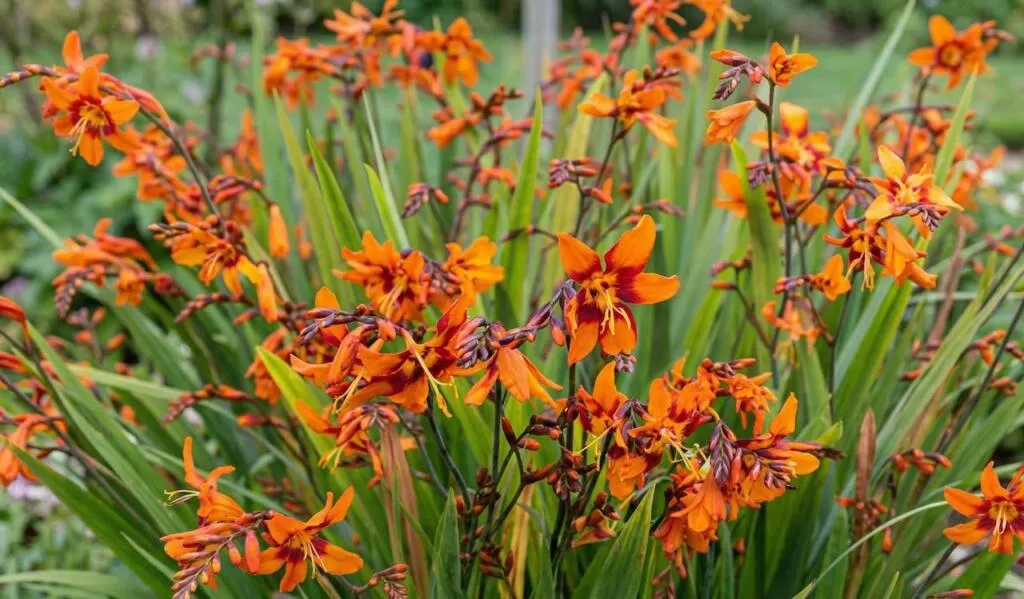
So good I’ve listed this plant genus twice in this guide! ‘Emily McKenzie’ is the orange variety of crocosmia I recommend alongside ‘Emberglow’ for anyone wanting a slightly softer, more complex flower colour.
The flowers are a rich, deep orange with dark red markings at the throat that create a beautiful, jewel-like quality quite different from the solid flame of ‘Emberglow’. It flowers in August and September, slightly later than ‘Emberglow’, which is useful for extending the orange season further into Autumn.
It is slightly less vigorous than ‘Emberglow’ and stays more compact, making it suitable for smaller borders and containers. The arching stems and grass-like foliage are architectural and attractive from spring onwards. Bees and hoverflies visit the flowers enthusiastically throughout August and September.
💡 Top Tip
Plant ‘Emily McKenzie’ alongside ‘Emberglow’ to extend the orange crocosmia season from July right through to September. The different flower colour and later season make them ideal companion plants in the summer border. Both can be grown in the same conditions and maintained with the same routine.
🛒 Buy Crocosmia ‘Emily McKenzie’ from Amazon UK
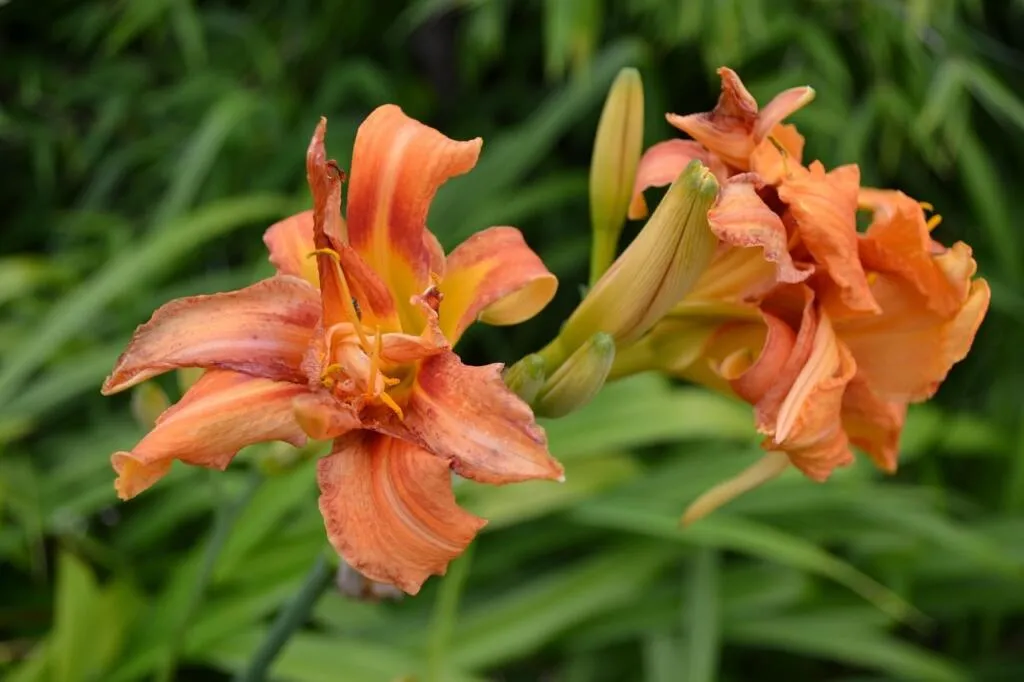
If ‘Stafford’ is the deep, smouldering orange daylily, ‘Primal Scream’ is its vivid, extrovert counterpart. The flowers are a spectacular tangerine-orange, large and dramatic, held above broad, arching green foliage on tall stems. The colour is extraordinary in strong sunlight, almost luminous, and it makes a genuinely bold statement in the midsummer border.
Like all hemerocallis, it is remarkably tough, tolerating a wide range of conditions and increasing steadily each year. Plant it where it will receive plenty of sun for the richest colour. The flowers are produced from July through August and are excellent cut flowers, lasting several days in water if you cut stems with multiple buds before all are open.
💡 Top Tip
For the richest colour and the most generous flowering, plant in full sun in fertile, moisture-retentive soil. Mulch annually in spring to retain moisture and feed. Divide congested clumps every four to five years in spring, replanting the younger outer portions and discarding the exhausted central section.
🛒 Buy Hemerocallis ‘Primal Scream’ from Amazon UK
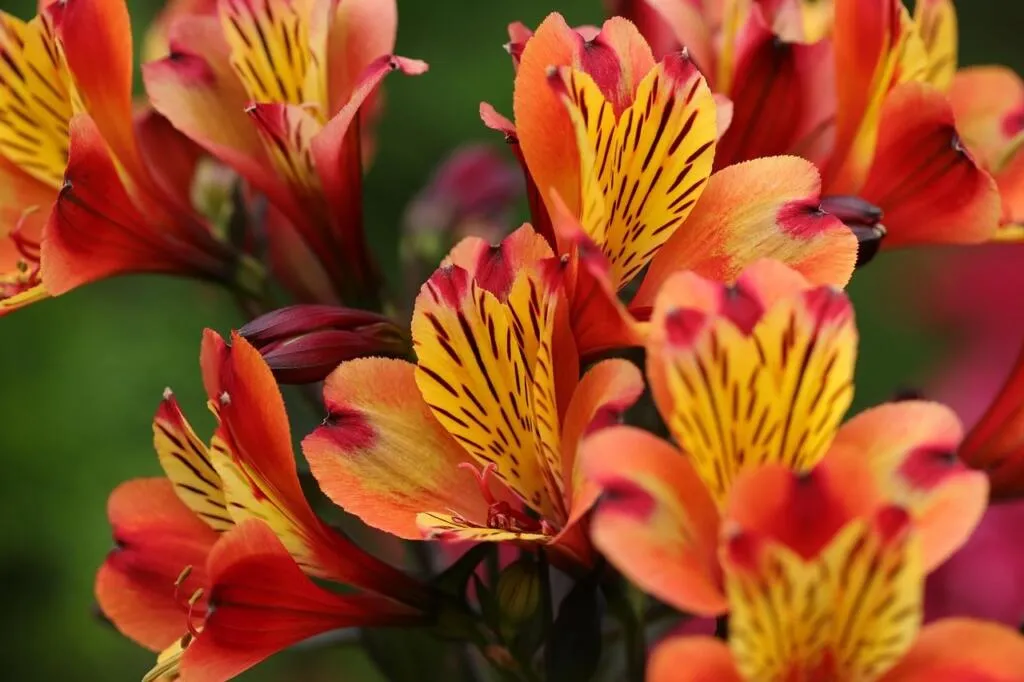
Alstroemeria ‘Indian Summer’ is one of the finest orange-flowering plants for cut-flower production in the UK garden. The flowers are a rich, warm orange with darker orange and maroon markings on the inner petals, and they are produced in extraordinary quantities on long, branching stems from June right through to October. As a cut flower, alstroemeria is almost peerless, lasting two to three weeks in a vase and continuing to open further buds as the arrangement ages.
In the border, it produces a cheerful, long-lasting display that picks up where many spring plants leave off and continues into the Autumn. Once established, it spreads steadily by rhizome to form increasingly generous clumps. It is remarkably drought-tolerant once established and requires very little ongoing care.
💡 Top Tip
When harvesting for the vase, pull rather than cut the stems from the plant. Pulling them out cleanly from the base actually stimulates new stem production more effectively than cutting. Handle the rhizomes carefully when planting as they are brittle and resent disturbance once established. Mulch generously the first winter after planting in exposed or colder regions.
🛒 Buy Alstroemeria ‘Indian Summer’ from Amazon UK
Orange is one of the most creatively versatile colours in the garden, but it does reward some thought about placement and combination. Here is how I approach it in professional planting design.
The classic hot border combines orange, red, and yellow in a scheme that feels energising, passionate, and visually intense. The key to making this work without it becoming chaotic is structure. Use dark bronze or deep purple foliage plants, such as Cotinus ‘Grace’, Dahlia ‘Bishop of Llandaff’, or Phormium ‘Platt’s Black’, to anchor the scheme and prevent the warm colours from vibrating against each other. The dark foliage acts as a visual full stop between the warm tones, giving the eye somewhere to rest.
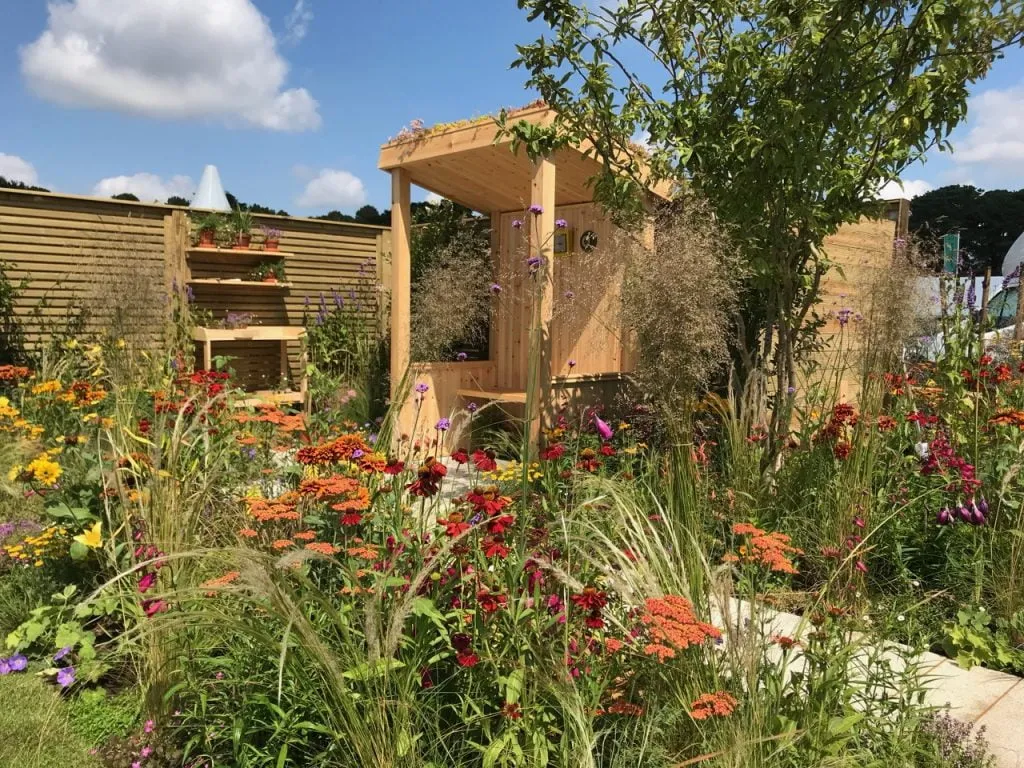
At its best, a well-designed hot border in late July through September is genuinely breathtaking. The warm evening light catches the orange and red flowers, making them seem to glow from within. I have designed dozens of hot borders over the years, and they consistently elicit the strongest emotional responses from clients when they see the finished result.
Orange and blue are complementary colours on the colour wheel, meaning they sit directly opposite each other and create maximum contrast when placed together. A drift of vivid orange Crocosmia ‘Emberglow’ against the blue-purple of Agapanthus, Salvia ‘Indigo Spires’, or Verbena bonariensis is one of the most striking colour combinations available to a garden designer. The contrast is electric, and both colours appear more intense in each other’s presence.
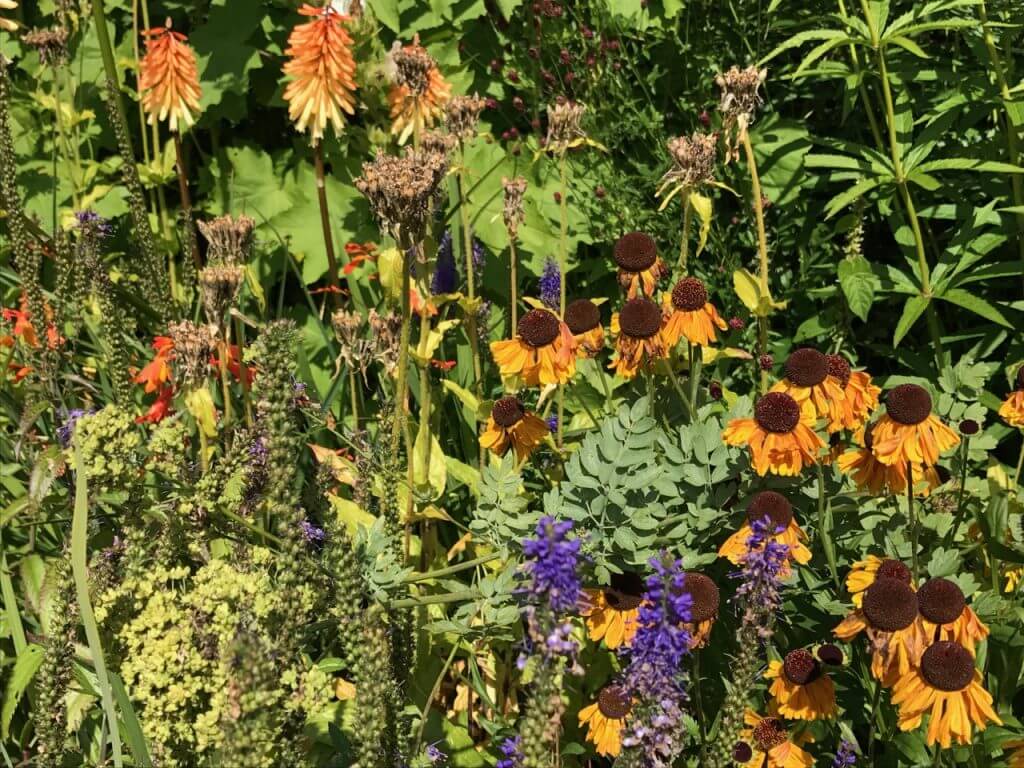
This is the combination I used most consistently on Garden Rescue when the brief was for a vibrant, contemporary garden. It always delivers, and it works in gardens of every size, from a small urban courtyard right up to a large country estate.
Not every orange scheme needs to shout. The softer, apricot end of the orange spectrum pairs beautifully with creams, warm whites, soft yellows, and warm silvers for a scheme that is warm and inviting rather than intense. Geum ‘Totally Tangerine’, apricot foxgloves, creamy Achillea, and silver Stachys byzantina create a border that has all the warmth of orange without any of the visual assertiveness that can make some gardeners nervous about using the colour.
This is the approach I use when clients ask for something warm and welcoming but are hesitant about full-blown hot border intensity. It creates a garden that feels bathed in warmth without overwhelming the senses, and it works particularly well in cottage garden styles and in gardens designed for relaxation and entertaining.
| Plant | Type | Hardiness | Flowering |
|---|---|---|---|
| Sorbus ‘Joseph Rock’ | Tree | H6 | Aug to Jan (berries) |
| Hamamelis ‘Jelena’ | Tree / large shrub | H6 | Jan to Mar |
| Berberis darwinii | Shrub | H5 | Apr to May |
| Potentilla ‘Tangerine’ | Shrub | H7 | Jun to Oct |
| Azalea ‘Gibraltar’ | Shrub | H6 | Apr to May |
| Helenium ‘Moerheim Beauty’ | Shrub / perennial | H7 | Jul to Sep |
| Rosa ‘Warm Welcome’ | Climbing rose | H6 | Jun to Oct |
| Campsis radicans ‘Flamenco’ | Climber | H4 | Jul to Sep |
| Tropaeolum speciosum | Climbing perennial | H5 | Jul to Sep |
| Crocosmia ‘Emberglow’ | Perennial | H4 | Jul to Aug |
| Geum ‘Totally Tangerine’ | Perennial | H6 | May to Oct |
| Kniphofia ‘Orange Blaze’ | Perennial | H5 | Jul to Sep |
| Hemerocallis ‘Stafford’ | Perennial | H7 | Jun to Aug |
| Rudbeckia ‘Goldsturm’ | Perennial | H7 | Aug to Oct |
| Echinacea ‘Hot Summer’ | Perennial | H6 | Jul to Sep |
| Achillea ‘Walther Funcke’ | Perennial | H7 | Jun to Aug |
| Gaillardia ‘Kobold’ | Perennial | H5 | Jun to Oct |
| Pilosella aurantiaca (Fox and Cubs) | Wildflower perennial | H7 | Jun to Aug |
| Persicaria ‘Firetail’ | Perennial | H7 | Jul to Oct |
| Calendula officinalis | Annual | H4 | Jun to Oct |
| Tagetes patula | Annual | H1c | Jun to Oct |
| Tropaeolum majus | Annual | H3 | Jul to Oct |
| Eschscholzia californica | Annual | H4 | Jun to Sep |
| Tithonia rotundifolia | Annual | H1c | Aug to Oct |
| Erysimum cheiri | Biennial | H5 | Mar to May |
| Tulipa ‘Princess Irene’ | Bulb | H6 | April |
| Dahlia ‘David Howard’ | Tender tuber | H3 | Jul to Oct |
| Lilium ‘Enchantment’ | Bulb | H5 | Jun to Jul |
| Canna ‘Tropicanna’ | Tender rhizome | H2 | Jul to Sep |
| Fritillaria imperialis | Bulb | H6 | Apr to May |
| Ranunculus asiaticus | Corm | H3 | Apr to Jun |
| Begonia ‘Non-Stop Orange’ | Tender tuber | H2 | Jun to Oct |
| Crocosmia ‘Emily McKenzie’ | Corm | H5 | Aug to Sep |
| Hemerocallis ‘Primal Scream’ | Perennial | H7 | Jul to Aug |
| Alstroemeria ‘Indian Summer’ | Perennial | H4 | Jun to Oct |
Colour is one of the most powerful tools in any garden designer’s toolkit, and once you start thinking about planting through the lens of a single colour, the whole design process becomes so much more intentional and rewarding. Whether you are drawn to cool, calming tones or bold, high impact drama, there is a dedicated Garden Ninja colour guide to help you make the most of every border, bed, and container in your garden.
As a BBC1 Garden Rescue presenter and award winning garden designer with over 20 years of professional experience, I have used every one of these colours extensively across hundreds of real garden designs. These guides are not theoretical colour wheel exercises. They are practical, plant by plant resources drawn from years of hands on planting design, so you can be confident that every plant listed actually performs in UK conditions.
Bold, passionate, and utterly unforgettable, red flowers create the highest impact borders in any garden.
Explore Red Flowers →From deep violet to soft lavender, purple flowers bring an effortless sense of style and atmosphere to any planting scheme.
Explore Purple Flowers →Sunshine in plant form, yellow flowers lift any border with warmth, energy, and cheer that lasts from early spring to late autumn.
Explore Yellow Flowers →True blue flowers are some of the rarest in the plant world, which is precisely what makes them so prized and so satisfying to find.
Explore Blue Flowers →Crisp, elegant, and luminous in low light, white flowers are the designer’s secret weapon for creating a sense of calm and space in any garden.
Explore White Flowers →From a barely there blush to deep magenta, pink flowers are endlessly versatile and bring a warmth and softness that works in almost any garden style.
Explore Pink Flowers →From the tropical flame of Crocosmia to the smouldering copper of Helenium, these 35 orange flowering plants will transform your borders from March to October.
Explore Orange Flowers →Moody purples and near black foliage bring drama and atmosphere to a border, working as a striking foil for every other colour on this list.
Explore Dark & Gothic Plants →Each guide follows the same comprehensive structure I use when designing planting plans for my professional clients: trees, shrubs, perennials, ground cover, bulbs, and climbers, all with hardiness ratings, ultimate dimensions, growing conditions, and my personal top tips drawn from real garden design experience. Whether you are starting from scratch with a blank canvas or looking to refine an existing border, these guides give you the plant knowledge to make confident, properly informed choices.
The best orange perennial flowers for UK gardens include Crocosmia ‘Emberglow’ for vivid summer impact, Geum ‘Totally Tangerine’ for a long season from May to October, Helenium ‘Moerheim Beauty’ for late summer colour, Rudbeckia ‘Goldsturm’ for autumn flowering through to October, and Kniphofia ‘Orange Blaze’ for architectural summer interest. All are reliably hardy and return every year without lifting.
Orange flowers for shade are limited as most orange-flowering plants prefer sun, but Begonia ‘Non-Stop Orange’ is outstanding in partial shade and performs brilliantly in north-facing containers and hanging baskets. Persicaria ‘Firetail’ tolerates partial shade well. Geum ‘Totally Tangerine’ also performs in light shade, producing good colour in dappled conditions rather than deep shade.
The finest orange flowers for pollinators include Crocosmia, Kniphofia, Helenium, Rudbeckia, Echinacea, Calendula, Tagetes, and Achillea. All feature on the RHS Plants for Pollinators list. Calendula officinalis and Tagetes patula are particularly valuable because they are so easy to grow in large quantities and attract hoverflies whose larvae are important predators of aphids and greenfly.
Orange flowers that perform brilliantly in containers include Begonia ‘Non-Stop Orange’ for shade, Tagetes patula and Calendula officinalis for sunny spots, Tulipa ‘Princess Irene’ for spring, Dahlia ‘David Howard’ for summer through autumn, Lilium ‘Enchantment’ for summer impact, and Kniphofia ‘Orange Blaze’ for a bold summer focal point. Most dahlias, lilies, and tender plants that need lifting in winter are particularly well suited to container growing.
Orange and purple are complementary colours that work exceptionally well together. Orange and purple sit opposite each other on the colour wheel, so they create maximum contrast and make each other appear more intense. Classic combinations include Crocosmia with Salvia, Helenium with Verbena bonariensis, and orange Dahlia with purple Allium. This is one of the most frequently used colour combinations in professional garden design.
The finest orange flowers for spring in UK gardens include Tulipa ‘Princess Irene’, which flowers in April, Erysimum (orange wallflowers) from March to May, Fritillaria imperialis in April to May, Azalea ‘Gibraltar’ in April to May, Berberis darwinii in April to May, and Hamamelis ‘Jelena’, which flowers in January through March. Combining wallflowers and orange tulips gives a spectacular layered display from March right through to late May.
The easiest orange flowers to grow from seed include Calendula officinalis (scatter and forget), Eschscholzia californica (sow direct in autumn or spring), Tropaeolum majus / nasturtium (sow direct after frosts), and Tagetes patula (sow under glass in March and plant out in May). Calendula is probably the easiest of all, as it will grow in virtually any soil, self-seeds prolifically, and thrives on neglect.
Now you’ve got the bug for bright orange flowers why not consider expanding your knowledge with one of my online gardening courses? My Garden Design for Beginners Course offers step-by-step guidance from me — Lee Burkhill, award-winning garden designer and presenter on BBC1’s Garden Rescue. In this course, you will go from a garden design novice to a confident designer equipped to tackle any outdoor space.
Enrol now for just £199 and start your journey toward garden design mastery.
For the garden you’ve already got, not the one you’re starting from scratch. Seven checklists and video lessons from BBC Garden Rescue’s Lee Burkhill, built to help you work out what’s worth keeping before you spend a penny.
Garden Design Examples for Small Gardens: 30 Design Templates & Planting Plans: In this online gardening course, I’ll walk you through 30 fantastic garden designs, explaining the logic behind the layout, the plant choices, and take-home tips for applying them in your own garden.
Learn how to transform and design your own garden with Lee Burkhills crash course in garden design. Over 5 hours Lee will teach you how to design your own dream garden. Featuring practical design examples, planting ideas and video guides. Learn how to design your garden in one weekend!
Garden Design for Beginners Online Course: If you want to make the career jump to becoming a garden designer or to learn how to design your own garden, this is the beginner course for you. Join me, Lee Burkhill, an award-winning garden designer, as I train you in the art of beautiful garden design.
Orange is the colour that too many UK gardeners leave on the shelf, and I hope this guide has convinced you it deserves far better. From the amber berry clusters of Sorbus ‘Joseph Rock’ glowing through winter to the tropical flame of Campsis in August, there is genuinely something in this spectrum for every garden, every season, and every level of experience.
Start with Geum ‘Totally Tangerine’ for easy, long-season colour, add Crocosmia ‘Emberglow’ for summer drama, and finish the season with Rudbeckia ‘Goldsturm’, carrying the border right through to the first frosts. Commit to orange properly, and your garden will never look flat again.
Make sure you visit my YouTube channel for more gardening guides, and follow me on Twitter, Facebook or Instagram for daily garden help and tips.
Happy Gardening Ninjas!



Lee Burkhill, known as the Garden Ninja, is an award-winning garden designer and horticulturist with over 30 years of gardening experience and 15 years as a professional garden designer. A qualified RHS (Royal Horticultural Society) professional, Lee specialises in sustainable garden design and practical horticultural advice. He designs and presents on BBC1’s Garden Rescue and in leading gardening publications.
View all posts by Lee Burkhill




JOIN THE NINJAS

Be the first in line for new Guides, Discount codes and Offers