For the garden you’ve already got, not the one you’re starting from scratch. Seven checklists and video lessons from BBC Garden Rescue’s Lee Burkhill, designed to help you decide what’s worth keeping before you spend a penny.
69


What kills leatherjackets and chafer grubs in lawns? Nematodes are the only effective control left to UK gardeners, but the two pests need different species. Leatherjackets are killed by Steinernema feltiae applied from September to October. Chafer grubs need Heterorhabditis bacteriophora applied from late July to September, while soil sits above 12°C.
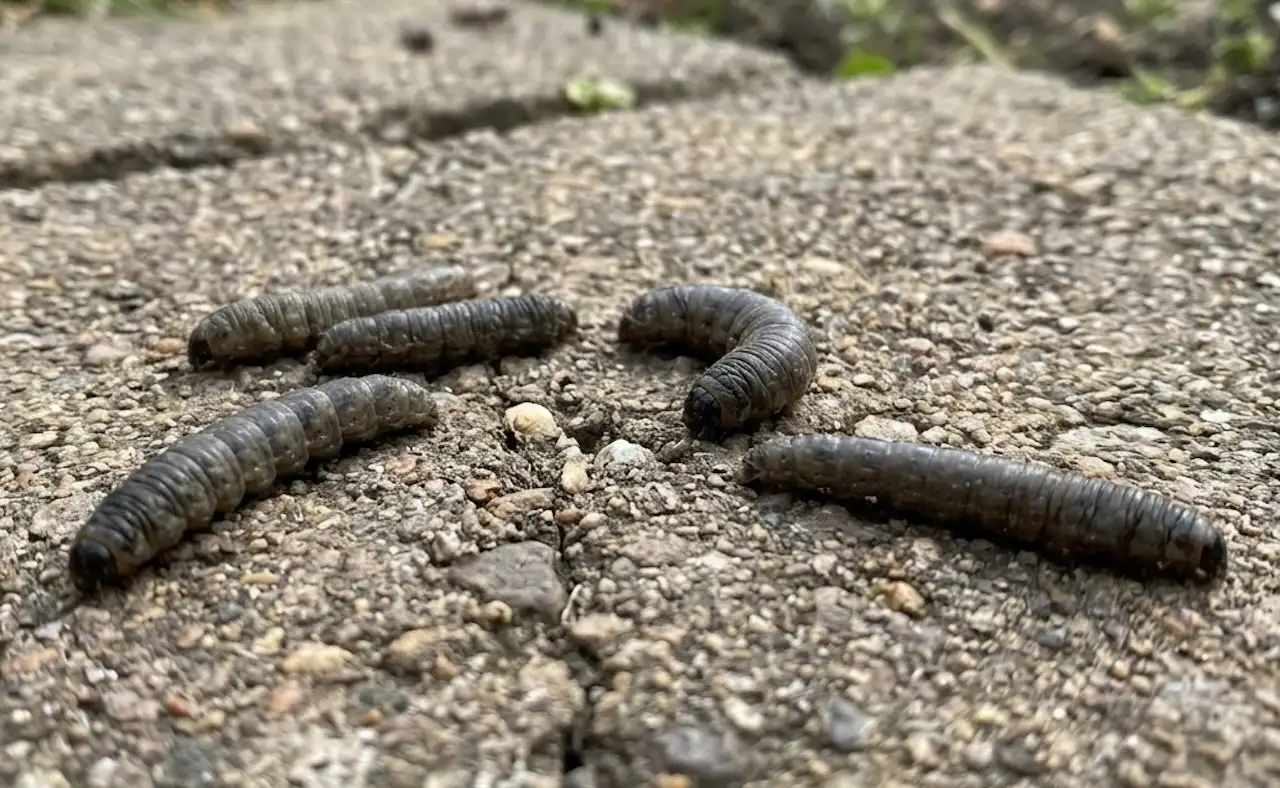
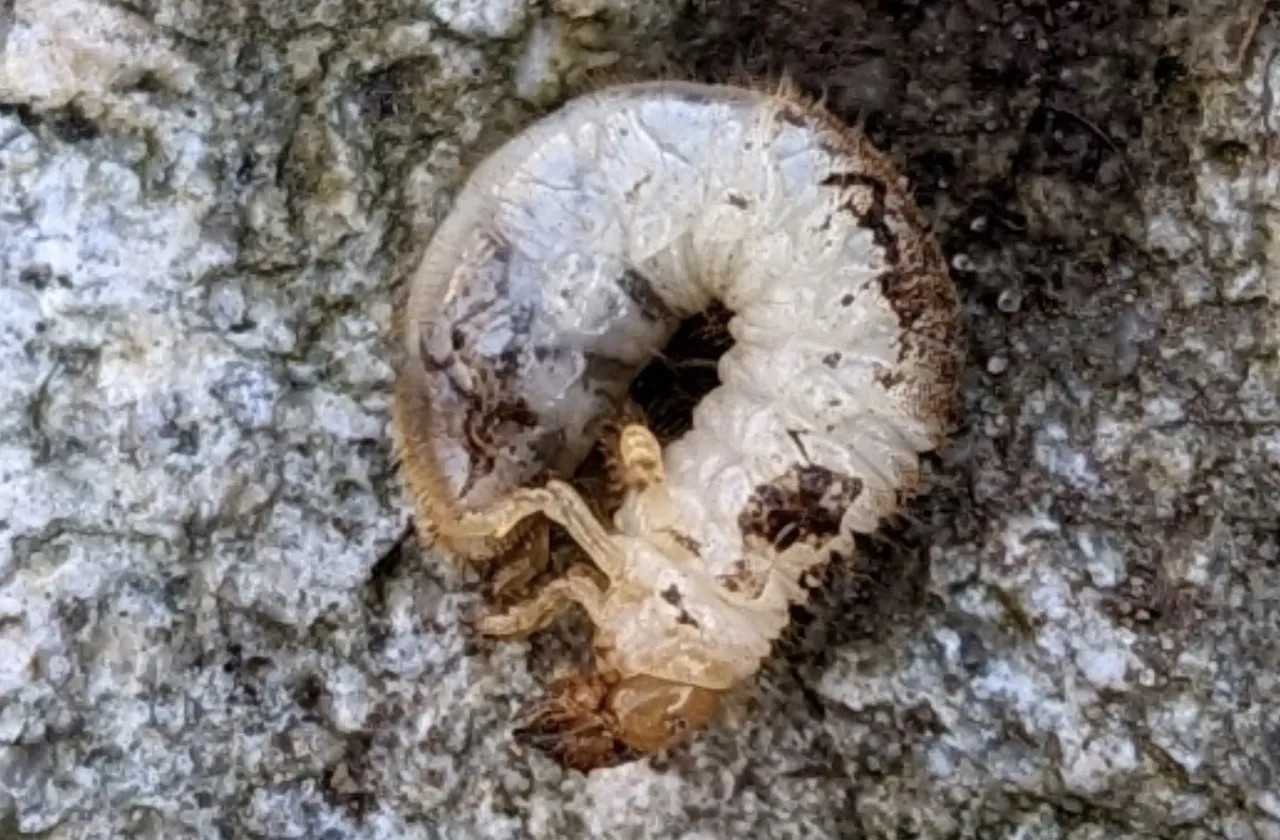
How do I tell them apart? Leatherjackets are straight, legless, greyish brown and up to 4cm long with no obvious head. Chafer grubs are creamy white, curl into a firm C shape, and have three pairs of legs behind an orange brown head.
Which one is tearing up my turf? Birds pecking neat holes usually means leatherjackets. Turf rolled back in sheets by badgers, foxes or crows almost always means chafer grubs.
Two grubs cause the vast majority of the lawn wreckage I get sent photographs of every autumn, and gardeners almost always treat for the wrong one. Leatherjackets and chafer grubs both live in the top few centimetres of soil, both eat grass roots, and both leave yellow-brown patches that lift away like a badly glued carpet. They are different animals with different life cycles, different treatment windows and different nematode species, so getting the identification right before you spend money is the whole game.
I have been pulling both out of client lawns for the best part of two decades, and the pattern repeats every year. Someone buys leatherjacket nematodes in June because the lawn looks rough, applies them to a chafer grub problem, sees no improvement, and concludes that nematodes are a waste of money. The product was fine. The identification and the timing were not. This guide covers both pests in one place, shows you how to tell them apart in about thirty seconds, and gives you the correct treatment and window for each.
🛒 If you already know which pest you are dealing with, you can order leatherjacket nematodes here ready for the autumn window.
This page contains affiliate links for products I use and recommend. If you take action after clicking a link, such as subscribing or making a purchase, I may earn a small gardening commission, which helps keep the Garden Ninja blog free for everyone.
Lift a corner of damaged turf with a spade, roll it back, and look at what is sitting in the top five centimetres of soil. You need about thirty seconds and one clear look at a grub to settle this. The single fastest test is shape. A chafer grub curls into a firm C the moment you turn it out of the soil and it has obvious legs. A leatherjacket stays straight, has no legs at all, and no head you could point to.
| What to check | Leatherjackets | Chafer grubs |
|---|---|---|
| What it actually is | Larva of the crane fly or daddy longlegs (Tipula paludosa and Tipula oleracea) | Larva of a chafer beetle, usually the garden chafer (Phyllopertha horticola) |
| Body shape | Straight and tubular, stays straight when handled | Curls into a tight C shape as soon as you lift it |
| Legs | None at all | Three obvious pairs behind the head |
| Head | No distinct head, blunt at both ends | Hard orange brown head capsule, easy to see |
| Colour | Grey brown to almost black, tough leathery skin | Creamy white body, soft, with a dark swollen rear end |
| Size | Up to 4cm when fully grown in spring | Garden chafer around 15mm to 18mm, cockchafer up to 30mm and beyond |
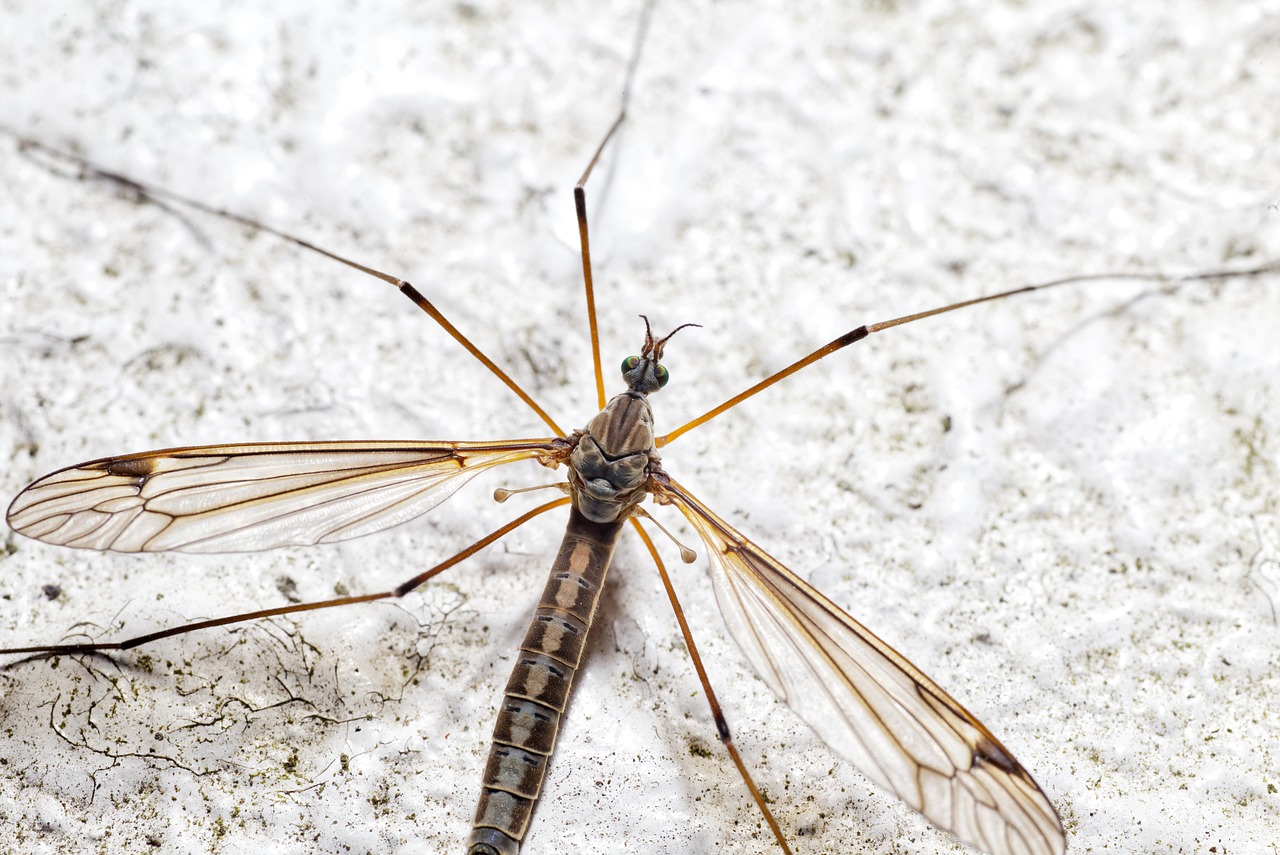
| Adult insect | Crane fly, emerging in large numbers from lawns in late summer | Chafer beetle with a metallic green head, flying at dusk in May and June |
| Eggs laid | August and September | May and June |
| Worst damage | Autumn through to March and April, when larvae are largest | September and October, with a shorter flare up in early spring |
| Typical damage signs | Irregular yellow patches, starlings and rooks pecking neat holes | Turf ripped back in sheets by badgers, foxes, crows and magpies |
| Nematode to buy | Steinernema feltiae, sold as leatherjacket killer | Heterorhabditis bacteriophora, sold as chafer grub killer |
| Best treatment window | September to October, with a weaker March to April option | Late July to September only |
| Soil temperature needed | Above 12°C is ideal, and this species keeps working in cooler soil than the chafer one | Above 12°C, and the warmer the better up to around 20°C |
If you take one thing from that table, make it the treatment window. The chafer grub window closes at roughly the point the leatherjacket window opens, so late August and early September is the only stretch of the year where you can sensibly treat both. Outside that overlap you are choosing one pest, which is exactly why the identification matters more than the product.
Leatherjackets are the larval stage of crane flies, the long legged insects that appear in numbers in late summer and blunder around your living room light at night. The adults cause no damage whatsoever. They barely feed, they exist to mate and lay eggs, and they feed bats, swifts and garden birds while they are doing it, so they earn their place in the food chain. The problem sits underground with their offspring.
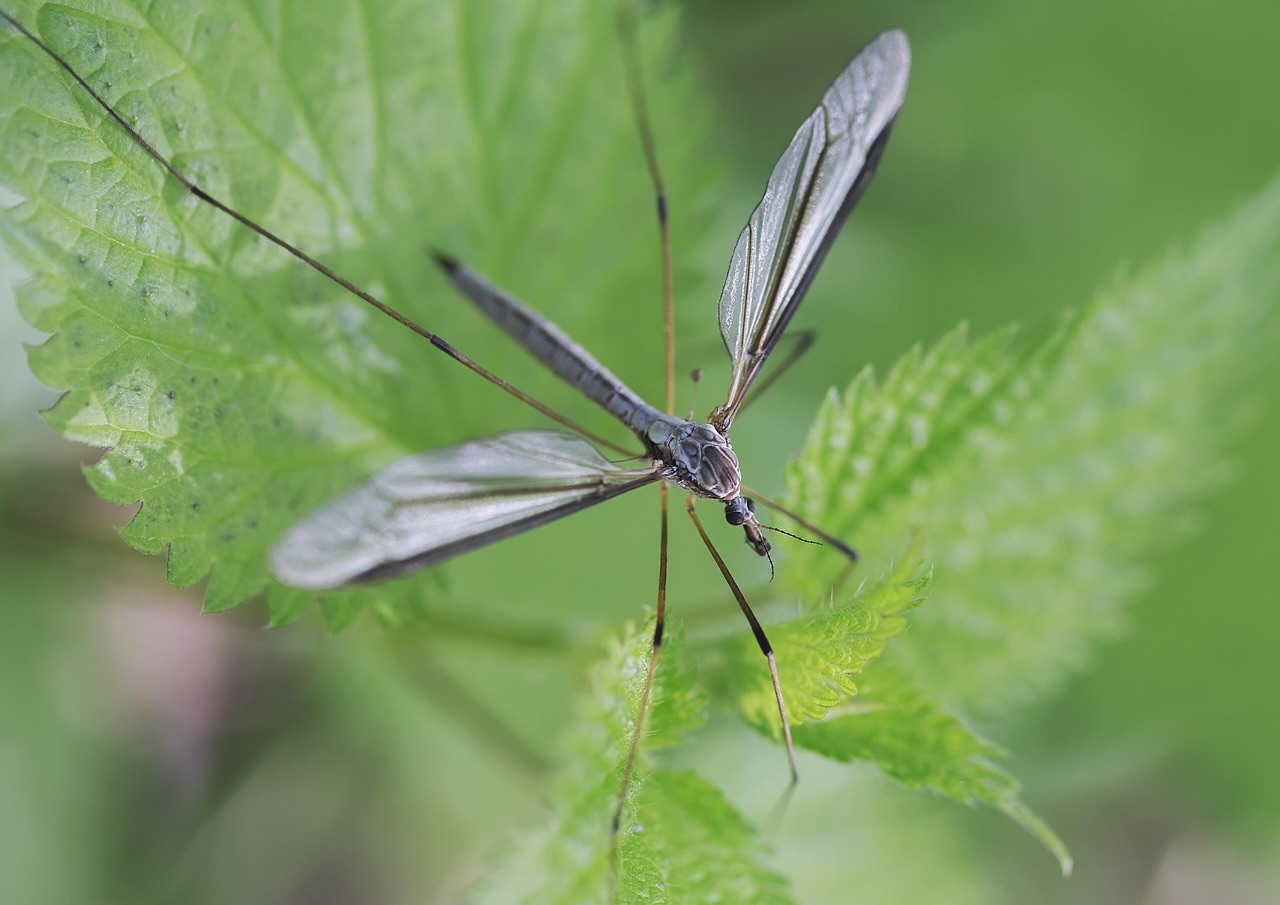
Female crane flies lay eggs in damp turf through August and September, and a single female can lay up to 300 of them. The eggs hatch within a fortnight and the larvae start feeding on grass roots, shoots and stems just below the surface. They are greyish brown, tubular, legless and leathery skinned, which is where the name comes from, and they reach up to 4cm by the time they are fully grown. A badly infested lawn can carry hundreds per square metre, and at those numbers the grass cannot replace roots fast enough to keep up.
Damage arrives in two waves. The first is autumn feeding, as newly hatched larvae build body mass before winter. The second and more severe wave is spring, when overwintered larvae resume feeding aggressively before pupating into adult crane flies in late summer. March and April are when I see the worst leatherjacket lawns, and by then the larvae are large, tough and much harder to kill than they were the previous September.
One detail worth knowing if you grow vegetables or bedding: leatherjackets will also chew the roots of young ornamental and vegetable plants in borders, not only grass. If you have a leatherjacket lawn next to a vegetable bed and seedlings keep collapsing for no obvious reason, the two are often connected.
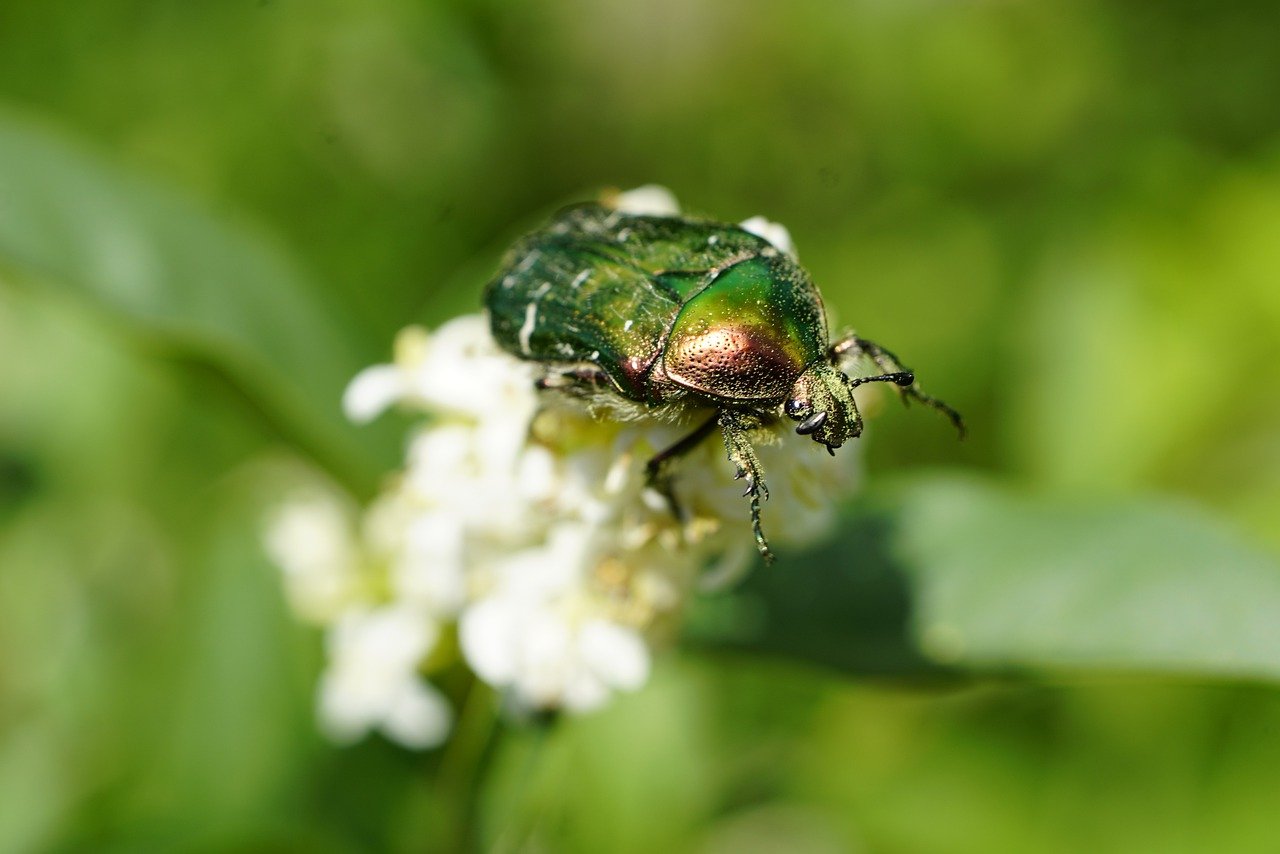
Chafer grubs are the larvae of chafer beetles, a group within the scarab family. There are several chafer species in Britain and most of them cause no trouble at all, with some adults acting as pollinators and some larvae quietly breaking down decaying matter. The one that damages lawns is almost always the garden chafer, Phyllopertha horticola, a beetle about 9mm long with a metallic green head and thorax and light brown wing cases.
The adults fly up out of the turf at dusk in May and June, often in clouds, mate, and the females drop back down to lay their eggs in the grass. Those eggs hatch into the fat white grubs that do the damage. Through midsummer the grubs are small and the feeding barely registers. From September onwards they are approaching full size and eating hard, which is why a lawn that looked perfectly healthy in July can fall apart in six weeks during early autumn.
The garden chafer runs a one year cycle, which is why its damage flares up quickly and can vanish just as fast once the grubs pupate. The Welsh chafer, Hoplia philanthus, is a similar size with a black head and reddish brown wing cases, and it turns up more often on lighter free draining soils. The cockchafer, Melolontha melolontha, better known as the May bug, is the giant of the group. Its larvae reach 30mm or more and it spends three to four years underground, so cockchafer damage tends to be patchy and slow rather than the sudden collapse you get with garden chafer.
My full guide on how to get rid of chafer grubs covers the UK species, the treatment window and lawn repair in detail if chafers turn out to be your problem.
Size is a useful clue for telling chafer grubs from other white grubs. Vine weevil larvae are also creamy white with a brown head, but they are much smaller and have no legs at all, and you find them in pots and borders rather than out in open turf. If you have lifted a small legless white grub from a container, read my separate guidance on vine weevil rather than treating it as a lawn problem, because the nematode species and the application method are different again.
Before you buy anything, be certain the problem is a grub at all. Plenty of the lawn photographs sent to my gardening forum turn out to be drought stress, compaction, dog urine or moss smothering thin turf rather than anything eating roots. My full yellow and patchy lawn diagnosis guide works through the alternatives if you are not yet sure.
The signs that point at a root eating grub are these:
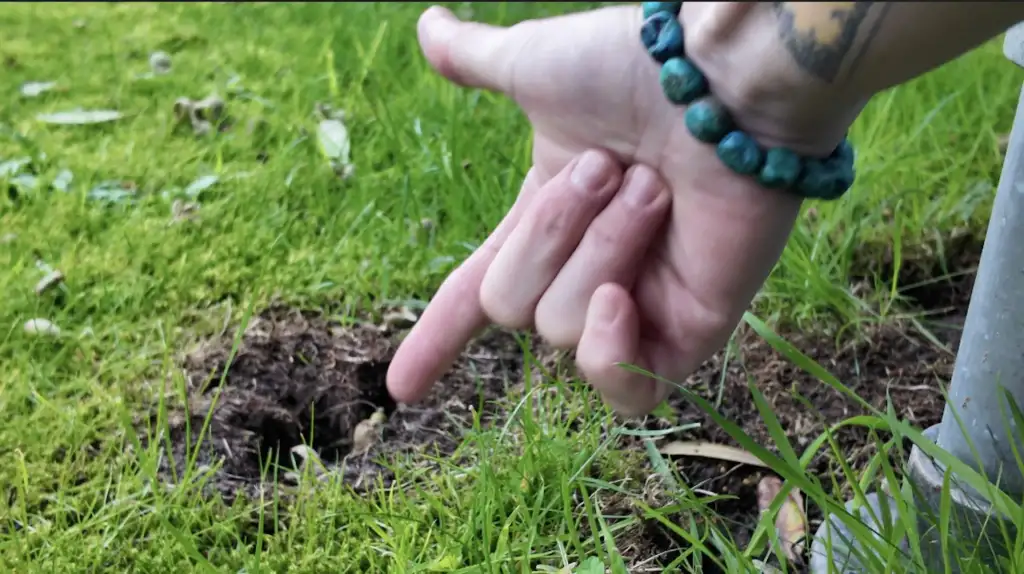
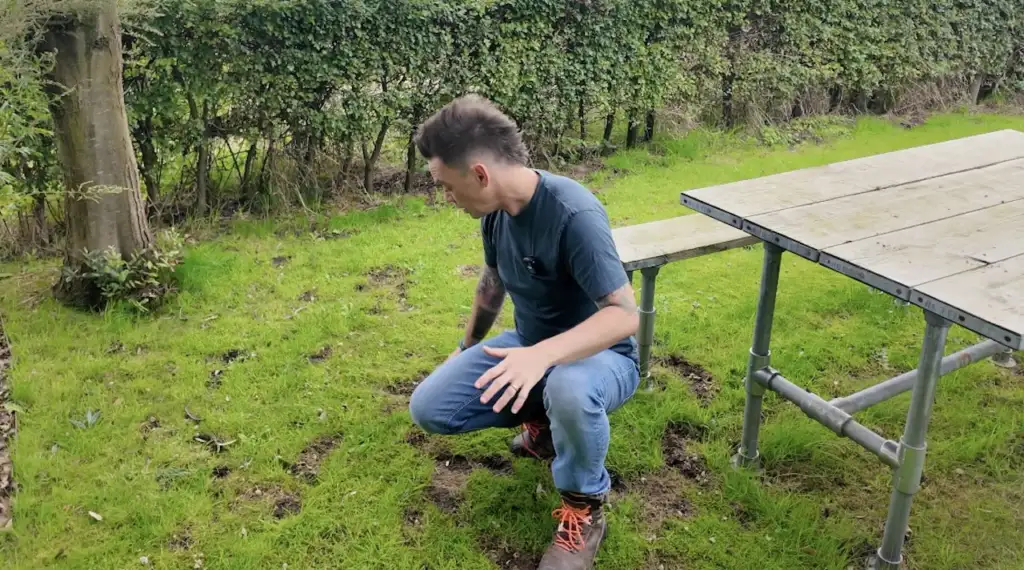
This is the best field clue I know, and it works before you have lifted a single piece of turf. Neat pecking holes and birds working the surface usually means leatherjackets. Turf torn up and rolled back in sheets means chafer grubs. Badgers, foxes, crows and magpies will churn a lawn apart to reach chafer grubs, because a fat white grub is worth the effort in a way a thin leathery one is not. If you have come out in the morning to find strips of turf flipped over like a rolled rug, start with chafer grubs as your working theory.
Worth saying plainly: the animals are not the problem. They are a symptom, and they are telling you there is a food source under the grass. Fencing out the badgers or scaring off the crows leaves the grubs in place and the roots still being eaten.
For leatherjackets there is a simple overnight test. Choose a damaged patch on an evening when the soil is moist, and lay old carpet, thick plastic sheeting or dampened hessian sacking over roughly a square metre. Leave it overnight and check first thing in the morning. Leatherjackets migrate to the surface under the covering where it is damp and dark, and you will see them clearly.
More than five leatherjackets per square metre is worth treating, and twenty or more per square metre is a severe infestation. Counts above a hundred per square metre will kill large areas of turf outright. At the lower end, between roughly twenty five and fifty per square metre, a thick well fed lawn will often shrug the damage off once the larvae pupate in May, so treatment becomes a judgement call rather than an emergency.
Chafer grubs will not come to the surface for the sacking test, so the method there is direct. Cut three sides of a 30cm square of turf with a spade, roll it back like a flap, and count what is sitting in the root zone and the top few centimetres of soil underneath. Do this in two or three separate damaged areas rather than one, since chafer populations are patchy. If you are finding grubs consistently and the turf is already lifting, you have enough to justify treating. If you turn up one or two grubs across several test squares in an otherwise healthy lawn, leave them alone and feed the grass instead.
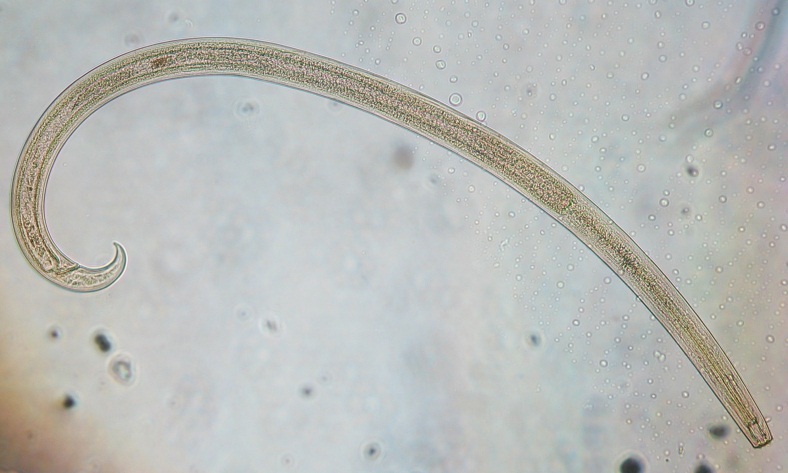
Nematodes are microscopic parasitic worms that hunt grubs in the soil, enter them through natural openings, release bacteria that kill the host within a few days, then reproduce inside the dead grub before emerging to find more. This is proper biological control rather than a hopeful organic remedy, and applied correctly it clears the large majority of a population. It is also the only effective control still available to UK gardeners for either pest.
The two pests need two different nematode species, and this is where most of the wasted money in lawn pest control happens.
Steinernema feltiae is the species sold as leatherjacket killer, and some products pair it with or substitute Steinernema carpocapsae. The best window is September through to October, with September ideal across most of Britain, because the newly hatched larvae are small, soft and feeding near the surface.
This species tolerates cooler soil than the chafer nematode, which is what makes an October application realistic in a year when autumn arrives early. A secondary March to April window catches overwintered larvae before they pupate, though control is weaker because the larvae are larger and tougher by then.
🛒 You can buy leatherjacket nematodes here, and it is worth pre ordering so fresh stock arrives inside your treatment window.
Heterorhabditis bacteriophora is the species that works on chafer grubs, sold as chafer grub killer, and it is the same nematode used against vine weevil larvae. The window runs from late July to September, so it opens and closes earlier than the leatherjacket one. Soil needs to be above 12°C and this species prefers warmth, working best between roughly 12°C and 20°C. There is no useful spring application for chafer grubs, because by then the surviving larvae have moved deeper into the soil to pupate and are out of reach.
🛒 You can buy chafer grub nematodes here for the late summer window.
Soil temperature is the variable that catches people out, because air temperature in September can read 18°C while the soil under a shaded north facing lawn is still sitting at 10°C. A cheap probe takes the guesswork out of it and pays for itself the first time it stops you applying a pack of live nematodes into soil that is too cold for them to work.
🛒 A soil thermometer is the cheapest insurance you can buy before a nematode application.
Nematodes are living organisms and they die easily, so the handling matters as much as the timing. These six steps apply to both species.
Buy from a supplier with quick turnover and check the use by date on arrival. Packs are sized by area, usually 100 or 500 square metres, so measure your lawn before ordering rather than guessing. Apply on the day they arrive if you can, or keep them in the fridge and use them within the stated shelf life. A pack left in a warm shed for a fortnight is a pack of dead nematodes.
Water thoroughly the day before if the soil is dry, because nematodes need moisture to move through it. Mow to normal height first, but do not scarify immediately beforehand. Pick a cloudy day or apply at dusk, since direct sunlight and UV kill nematodes on the surface within minutes.
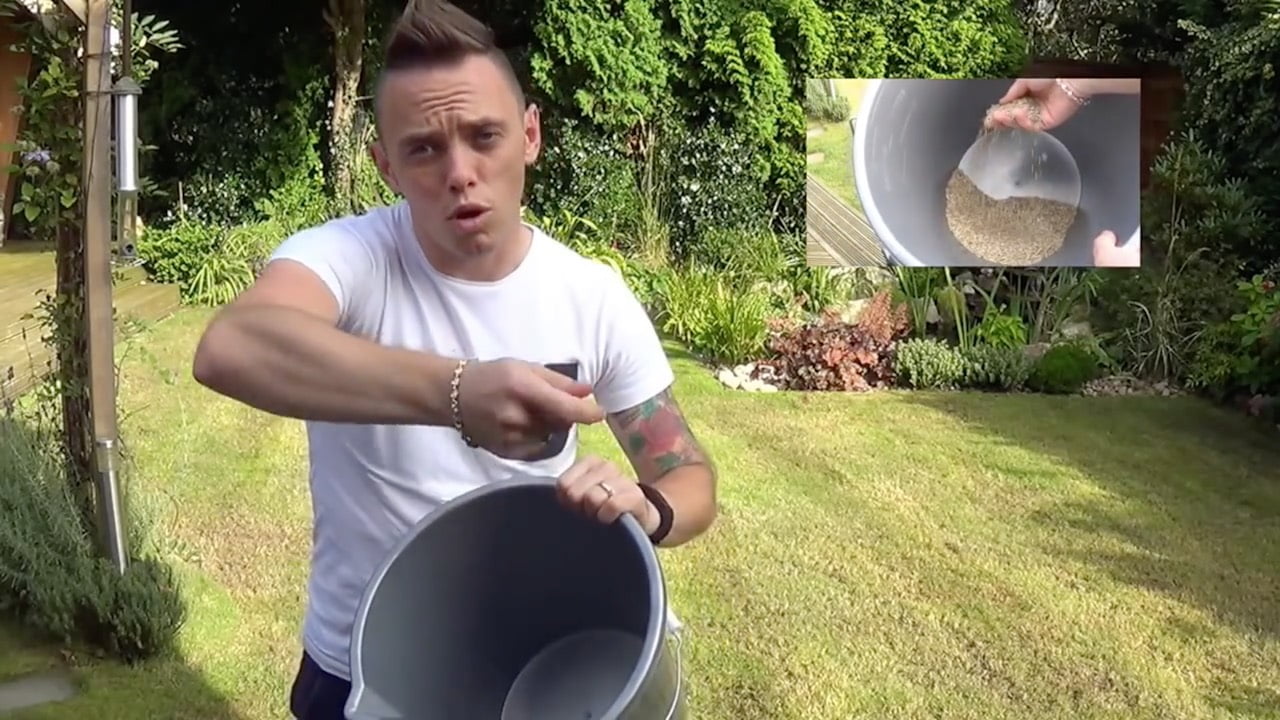
Follow the packet dilution rates exactly. You mix the powder or sponge with a small volume of water to make a suspension, then dilute that into your watering can or sprayer. Use the whole mixture immediately and keep agitating it as you go, because nematodes settle to the bottom of a can within a couple of minutes and you will end up with a triple dose on one strip and nothing on the rest.
Treat the entire lawn rather than the visible patches. Grubs are present well beyond the damage you can see, and spot treating simply moves the problem sideways. A watering can with the rose removed is fine for a small lawn. For anything larger, use a knapsack sprayer or a hose end feeder designed for nematodes, and aim for the coverage rate on the pack, which is usually around 5 litres per square metre of finished solution.
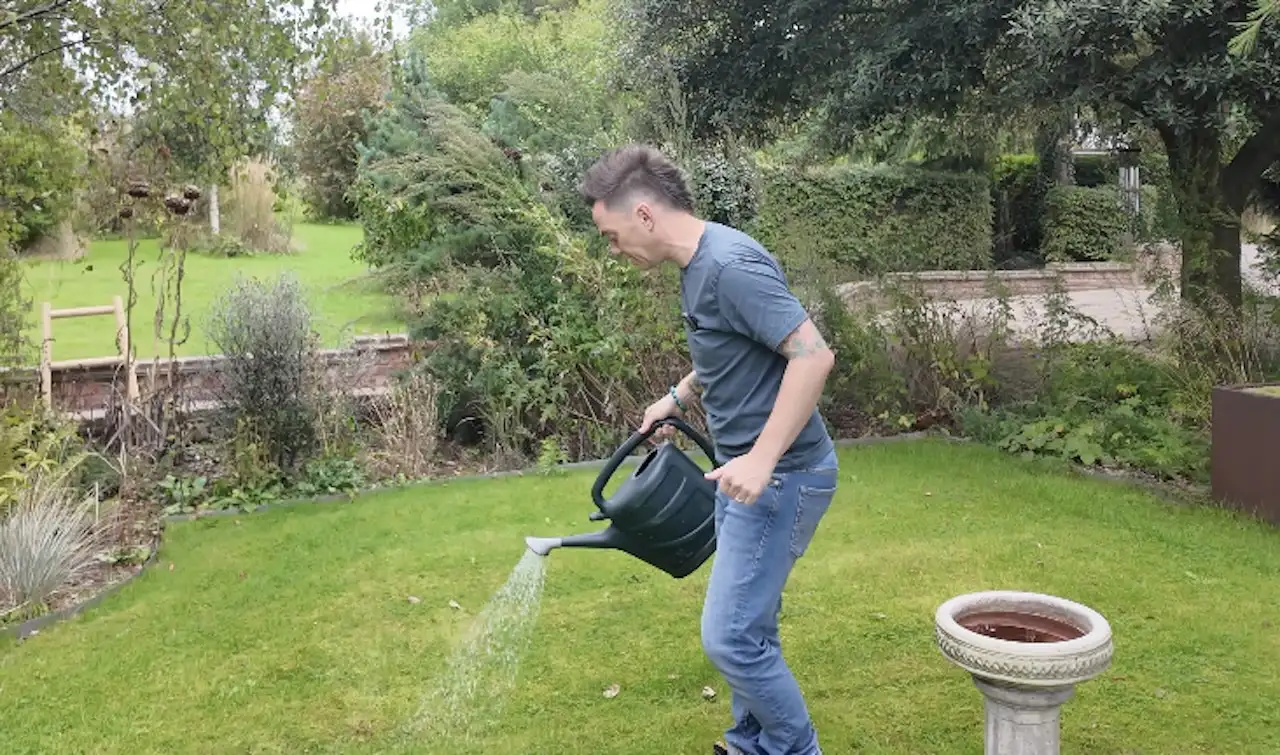
Immediately after applying, water the lawn again with plain water. This washes the nematodes off the grass blades and down into the soil where the grubs are. The soil then needs to stay moist for at least a fortnight, so keep watering through any dry spell in that period. This single step is the difference between 80 per cent control and almost none.
No fertiliser, no weed killer, no fungicide and no other treatment for two weeks. Keep traffic off the grass as far as you can, since compacted soil slows nematode movement. Mowing at normal height is fine.
Bird and mammal activity usually drops noticeably within a week as the population falls, and you will often find dead grubs brought to the surface. Within two to three weeks the population should be largely cleared and root damage stops, so the grass can start recovering. A single correctly timed application typically achieves 80 to 90 per cent control. For a severe infestation, or an application made late in the window, a second dose four to six weeks later mops up survivors.
Here is the year laid out for both pests, so you can see where the windows sit relative to each other and where they overlap.
| Time of year | Leatherjackets | Chafer grubs |
|---|---|---|
| January and February | Larvae dormant in cold soil. Map damage and plan repairs | Larvae deep and dormant. Nothing to treat |
| March and April | Peak damage. Secondary nematode window once soil passes 12°C | Grubs moving deeper to pupate. Too late to treat |
| May and June | Larvae pupating. Repair and overseed damaged turf | Adult beetles flying at dusk and laying eggs. Nothing to treat |
| July | Adult crane flies developing. Lawn maintenance only | Nematode window opens late in the month |
| August | Crane flies emerging and laying eggs. Let the grass grow slightly longer | Prime nematode window, soil at its warmest |
| September | Best nematode window of the year | Last of the nematode window. Damage becoming visible |
| October | Nematode window still open while soil holds above 12°C | Peak damage and animal digging. Too late to treat this season |
| November and December | Soil too cold. Improve drainage and keep off wet turf | Feeding slows. Plan next summer’s treatment |
Late August into early September is the only period where both windows are open at once. If your lawn has both pests, which does happen on heavy damp ground, that overlap is when to act, applying the two nematode species as separate applications rather than mixing them in one can.
None of these will clear a serious infestation on their own. They earn their place as supporting measures alongside nematodes, and for a small lawn with a light population they are sometimes all you need.
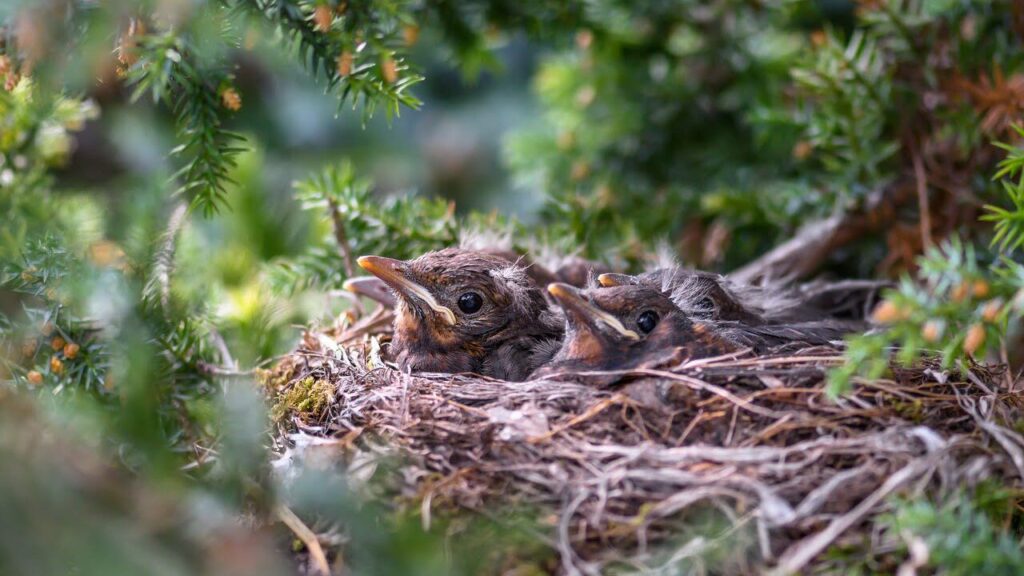
Starlings, thrushes, blackbirds and crows will work systematically through an infested lawn given the chance, and they do it for free. Rather than trying to scare them off, put out feeders and water to keep a healthy bird population in the garden. A few pecked holes are a fair trade against unchecked root damage. A bug hotel and a more wildlife friendly planting scheme around the lawn both help keep predators on site year round.
The exception is badgers and foxes on a chafer grub lawn. That level of digging does more damage in a night than the grubs manage in a month, and it is a reason to treat rather than to wait and see.
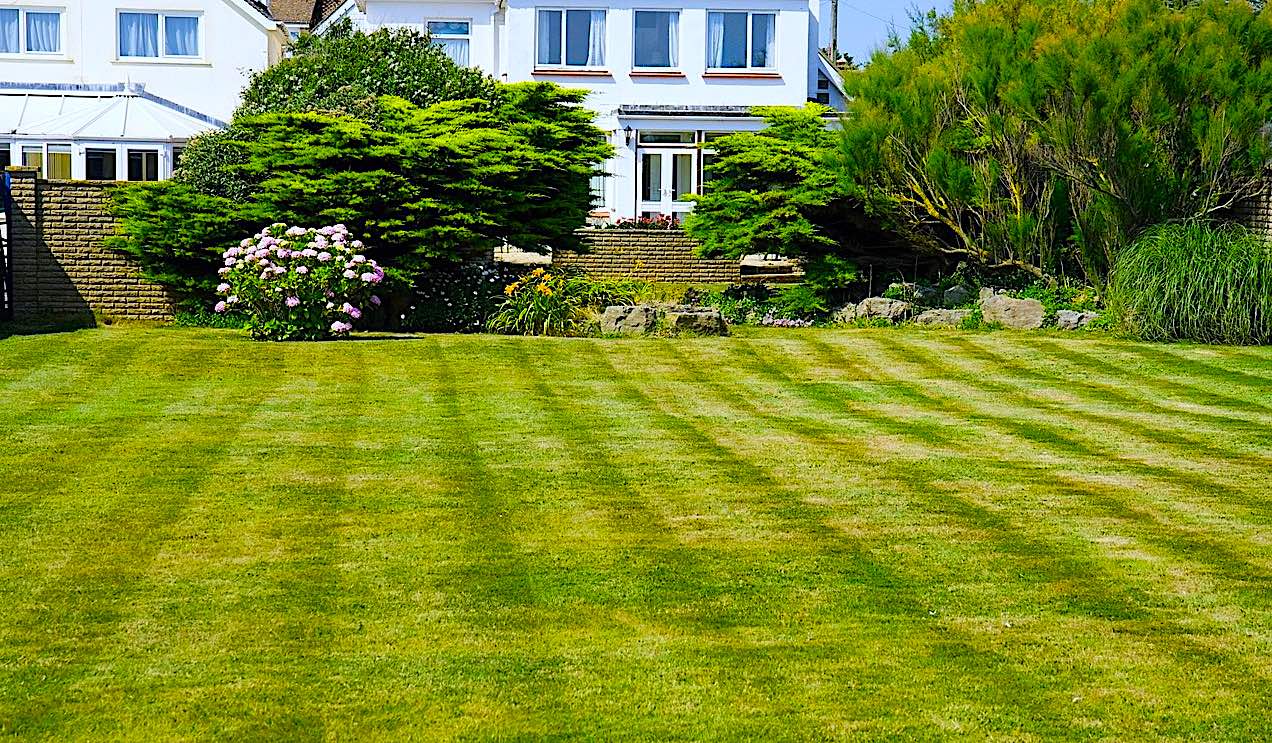
Crane flies choose damp turf for egg laying and leatherjackets do well in poorly drained soil, so persistent wet patches are an invitation. Hollow tine aeration, sharp sand worked into compacted areas, and proper land drains in the sections that stay waterlogged all make the lawn less attractive to egg laying females. It will not fix this year’s infestation. It reduces next year’s. Knowing what soil type you have tells you how much of a job this is going to be.
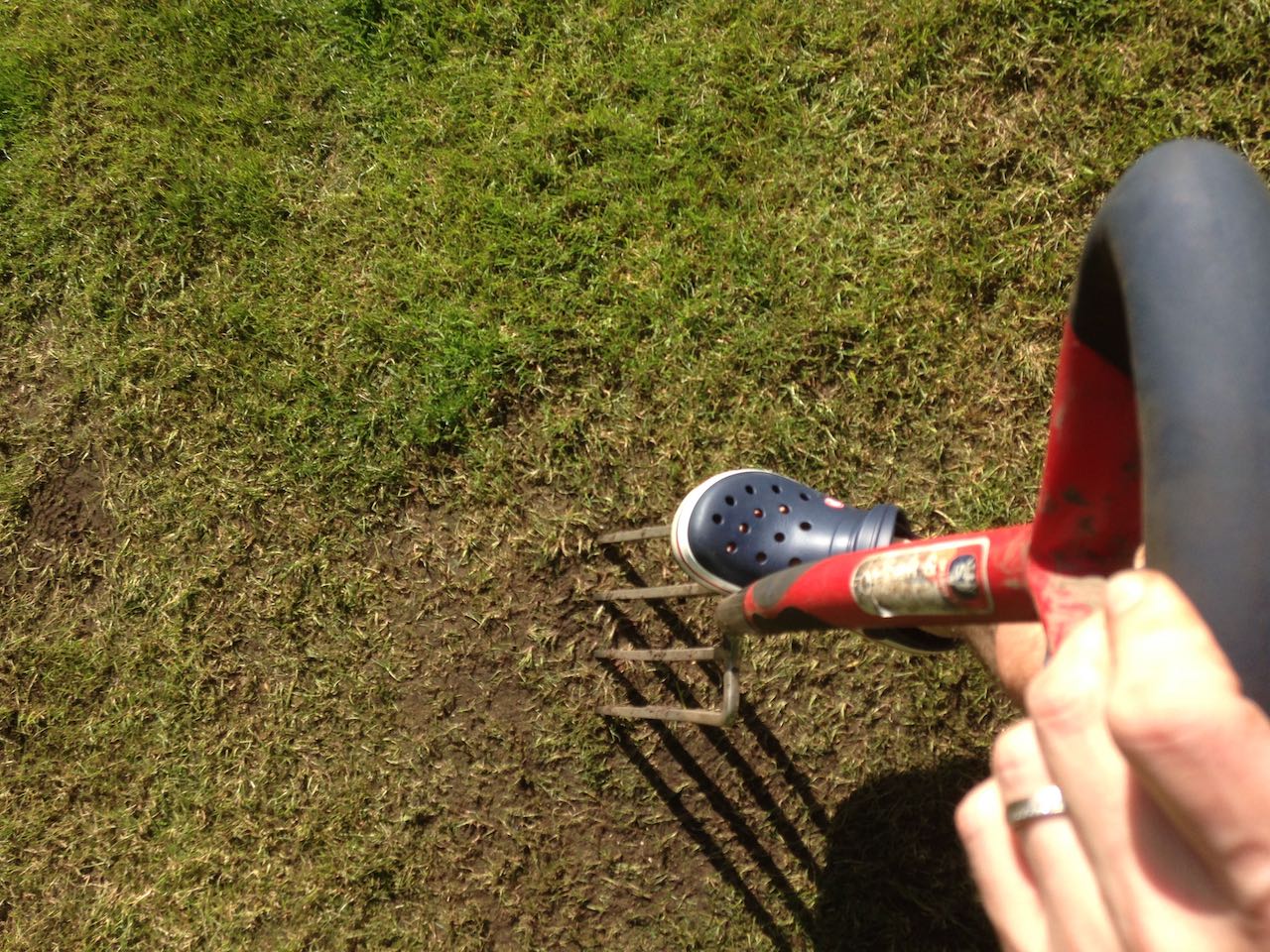
On a small infested area, vigorous raking with the tines biting into the soil surface brings some leatherjackets up where you can collect them or leave them for the birds. It is slow, it misses plenty, and it is only worth the effort on a patio sized lawn. Follow up by reseeding the raked areas. My guide on choosing a lawn scarifier covers the powered options if you are doing this at any scale.
Female crane flies prefer short turf for egg laying, so raising the mower height through late August and early September makes the lawn marginally less appealing. This is a small preventative measure rather than a fix, and it does nothing for chafer beetles, which lay in May and June regardless of grass length.
Killing the grubs stops the damage. It does not put the grass back. Once a population has crashed, the recovery work runs on its own timetable and it is worth doing properly, because bare soil in an established lawn fills with lawn weeds and moss faster than it fills with grass.
For patches where the grass has thinned but the sward is still alive, overseeding in mid spring or early autumn is the answer, ideally combined with top dressing to give the new seed something to root into. For areas where the turf has been rolled back by animals and the roots are gone entirely, firm the turf back down if it is still intact and water it, or lift the dead sections and lay fresh turf once the grub population is under control.
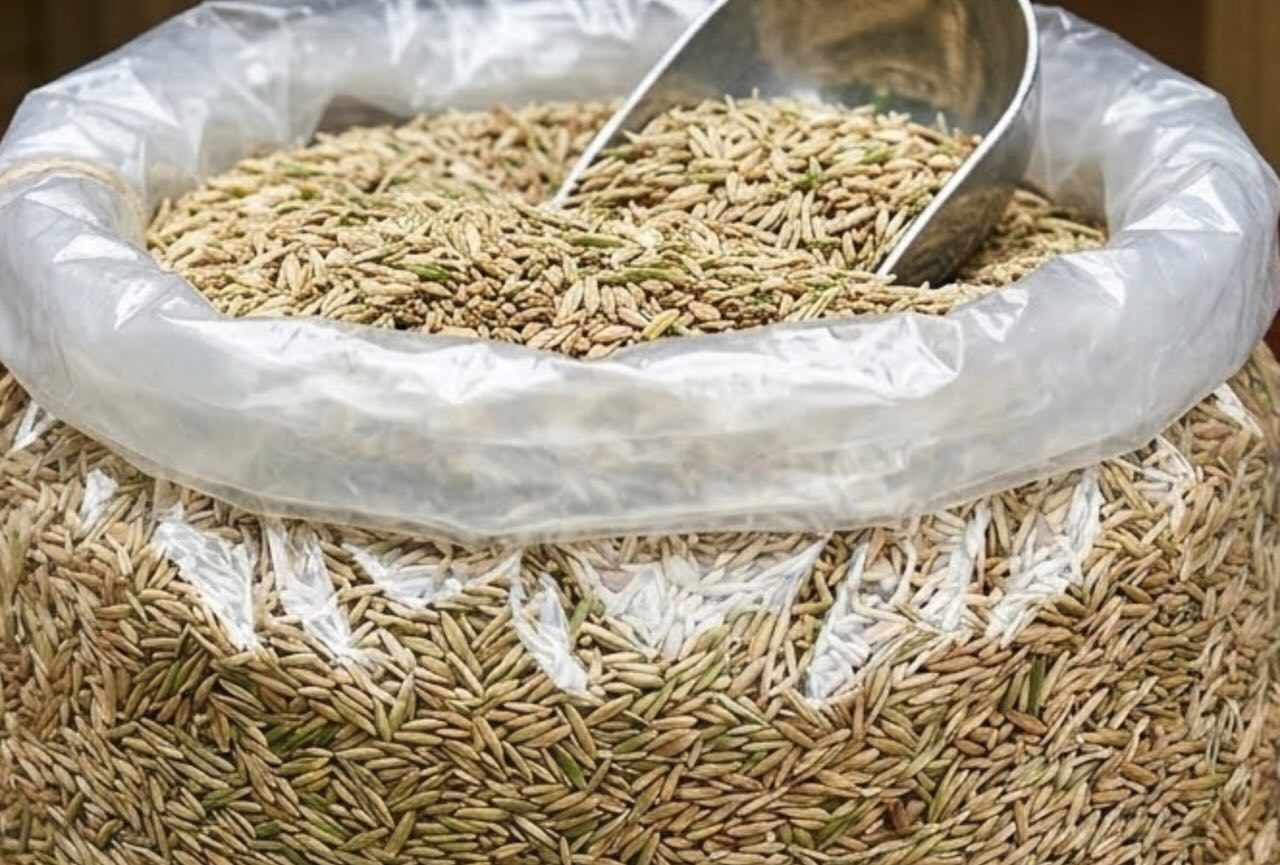
🛒 A hard wearing grass seed mix is the one I reach for on repaired patches, since it establishes quickly and copes with traffic.
A nitrogen rich spring feed helps the remaining grass recover vigorously and outgrow moderate root feeding. It controls nothing on its own, and a thick well fed lawn tolerates a grub population that would visibly wreck thin, compacted, underfed turf. That is the honest long term answer to both pests: healthy grass with deep roots absorbs a level of damage that a struggling lawn cannot.
If you have found grub damage in winter, the treatment windows have closed. Soil below 12°C means nematodes will not work, and both species are relatively inactive through the coldest months. Winter is still useful preparation time.
A) Keep feeding the birds. Thrushes and blackbirds carry on working lawns during mild spells whenever the ground is not frozen. Keep feeders stocked and water available, and they keep chipping away at the population for you.
B) Map the damage. Walk the lawn, photograph the worst areas and mark them out. That record makes spring treatment and repair far more targeted than trying to remember which corner was bad five months later.
C) Improve drainage where the ground allows. If you have identified waterlogged areas and the soil is not frozen solid, fork over compacted patches, work sharp sand into the wettest sections, or install proper drainage if you are tackling it comprehensively. Better drainage makes the lawn less attractive to next summer’s egg laying crane flies.
D) Pre order your nematodes. Work out which pest you have, calculate your lawn area, and book a delivery for the right window rather than discovering your supplier is out of stock in the week you need them. Leatherjacket nematodes want late March or early April for the secondary window. Chafer grub nematodes want late July.
E) Keep off wet damaged turf. Grass with compromised roots is vulnerable to further damage from compaction and wear. Let it rest through winter so it is in the best shape to recover.
F) Plan the recovery. Decide now whether damaged areas need overseeding or fresh turf, order what you need, and set out your spring feeding schedule. My month by month lawn care planner maps the whole year if you want the wider maintenance calendar alongside the pest work.
Let me save you time and money on the approaches that still circulate on forums and gardening blogs.
1) Chemical lawn insecticides. The products that used to control both pests, containing imidacloprid or chlorpyrifos, were withdrawn from amateur garden use years ago on environmental grounds. Anything sold to home gardeners today that claims to kill lawn grubs chemically is either ineffective or should not be on sale. There is a newer professional product, acelepryn, which is approved for licensed turf care operators rather than gardeners, so if you want that route it means hiring a professional lawn care company rather than buying anything yourself.
2) Garlic, chilli and soap sprays. Homemade organic sprays have their uses on foliage pests, and no use at all here. Both grubs live in the soil where a foliar spray never reaches them, and neither crane flies nor chafer beetles are deterred by smell when they are ready to lay.
3) Companion planting around the lawn edge. Planting herbs or flowers at the lawn edge to repel crane flies or chafer beetles does nothing. Both will lay in suitable turf regardless of what is growing in the border next to it.
4) Treating at the wrong time of year. Applying nematodes into cold soil, or applying chafer nematodes in spring when the grubs have already gone deep, wastes a live product that cost you money. If you have missed the window, wait for the next one and spend the intervening months on drainage, feeding and repair instead.
5) Rolling or firming the lawn to crush the grubs. This one comes up every year. Rolling compacts the soil, which makes the lawn harder for grass roots to grow through and does nothing to the grubs sitting below the compaction zone. You end up with the same population in worse soil.
Lift a corner of damaged turf and look at the grub. Leatherjackets are straight, legless, grey brown and up to 4cm long with no obvious head. Chafer grubs are creamy white, curl into a firm C shape, and have three pairs of legs behind an orange brown head. If animals have rolled your turf back in sheets, it is almost certainly chafer grubs.
Steinernema feltiae, sold as leatherjacket killer. Some products use or include Steinernema carpocapsae. Apply from September to October while soil is above 12 degrees Celsius, with September being the strongest window across most of Britain.
Heterorhabditis bacteriophora, sold as chafer grub killer. It is the same species used against vine weevil larvae. Apply from late July to September while soil sits between roughly 12 and 20 degrees Celsius.
Late August into early September is the only period where both windows are open. Apply the two nematode species as separate applications rather than mixing them in one watering can, since the dilution rates and coverage differ between products.
The three usual reasons are the wrong species for the pest, soil below 12 degrees Celsius, and soil that dried out in the fortnight after application. Applying in bright sunshine rather than at dusk also kills nematodes on the surface before they reach the soil.
For leatherjackets, more than five per square metre is worth treating and twenty or more is a severe infestation. For chafer grubs, judge it alongside the damage: grubs turning up consistently across several test squares in turf that is already lifting justifies treatment, while one or two in a healthy lawn does not.
Not as a home gardener. The old amateur insecticides containing imidacloprid and chlorpyrifos were withdrawn years ago. The newer professional product acelepryn is restricted to licensed turf care operators, so the chemical route means hiring a professional lawn care company.
Most lawns do, once the population is controlled. Overseed thinned patches in mid spring or early autumn, replace turf where the roots have gone entirely, and feed the grass to push recovery. Thick, well fed turf tolerates a grub population that would visibly wreck thin, compacted turf.
The digging is a symptom rather than the cause. Deterring the animals leaves the grubs eating roots underneath. Treat the grubs and the digging stops on its own, usually within a week or two of a successful nematode application.
Yes. They also feed on the roots of young ornamental and vegetable plants in borders, so collapsing seedlings next to an infested lawn are often connected. Chafer grubs are more consistently a turf problem.

Join over 100,000 gardeners on YouTube
Free gardening videos from the Garden Ninja, with 8 million views and counting.
Subscribe on YouTube, it’s freeSorting out leatherjackets and chafer grubs fixes a problem. It does not, on its own, give you a garden you actually want to sit in. If the lawn is the part of your garden you think about most, that is usually a sign the rest of the space is not pulling its weight. My online garden design courses take you through the same process I use on client projects, from measuring up to planting plans.
Inside the courses you get the site analysis checklist I run on every design, the brief questions that pull out what you actually want from a space, plant selection formulas that stop the guesswork at the nursery, layout principles for gardens that work as well as they look, and budget planning that puts money where it shows. It is the toolkit built across more than 200 garden transformations, with video walkthroughs throughout.
For the garden you’ve already got, not the one you’re starting from scratch. Seven checklists and video lessons from BBC Garden Rescue’s Lee Burkhill, designed to help you decide what’s worth keeping before you spend a penny.
Garden Design Examples for Small Gardens: 30 Design Templates & Planting Plans: In this online gardening course, I’ll walk you through 30 fantastic garden designs, explaining the logic behind the layout and plant choices, plus take-home tips for applying them in your own garden.
Learn how to transform and design your garden with Lee Burkhill’s crash course in garden design. In over 5 hours, Lee will teach you how to design your dream garden. Featuring practical design examples, planting ideas and video guides. Learn how to design your garden in one weekend!
Garden Design for Beginners Online Course: Want to become a garden designer or design your own garden? This beginner course is for you. Join me, Lee Burkhill, an award-winning garden designer, as I train you in the art of beautiful garden design. Enjoy 20 hours of online study and video lessons, along with quizzes and a completion certificate.
Leatherjackets and chafer grubs cause similar looking damage and need different answers. Identify the grub first, using shape and legs as your test, then match the nematode species to the pest and apply it inside the right window. Leatherjackets want Steinernema feltiae in September and October. Chafer grubs want Heterorhabditis bacteriophora from late July to September. Get the species and the timing right, keep the soil moist for a fortnight afterwards, and you should see 80 to 90 per cent control from a single application.
Everything else supports that. Encourage the birds, fix the drainage that makes your lawn attractive to egg laying crane flies in the first place, repair the damage with overseeding or fresh turf, and feed the grass so it carries deeper roots into next season. A healthy lawn absorbs a level of grub pressure that a thin, compacted, hungry one cannot, which is why the best long term defence against both pests is decent ordinary lawn care.
Happy gardening, Ninjas!

Lee Burkhill, known as the Garden Ninja, is an award-winning garden designer and horticulturist with over 30 years of gardening experience and 15 years as a professional garden designer. A qualified RHS (Royal Horticultural Society) professional, Lee specialises in sustainable garden design and practical horticultural advice. He designs and presents on BBC1’s Garden Rescue and in leading gardening publications. Lee combines three decades of hands-on gardening knowledge with professional design qualifications to help gardeners create beautiful, functional outdoor spaces.
View all posts by Lee Burkhill






JOIN THE NINJAS
Be the first in line for new Guides, Discount codes and Offers