For the garden you’ve already got, not the one you’re starting from scratch. Seven checklists and video lessons from BBC Garden Rescue’s Lee Burkhill, built to help you work out what’s worth keeping before you spend a penny.
69


Quick Answer
Mare’s tail, also called horsetail, cannot be eradicated in a single season. The most reliable organic approach is cutting or pulling shoots every one to two weeks to exhaust the root reserves, combined with smothering under cardboard or heavy duty membrane for at least a full growing season. Standard glyphosate struggles against the plant’s waxy silica coating, so if you do use a weed killer, look for one combining glyphosate with 2,4-D, bruise the foliage first, and expect to repeat treatment for several years.
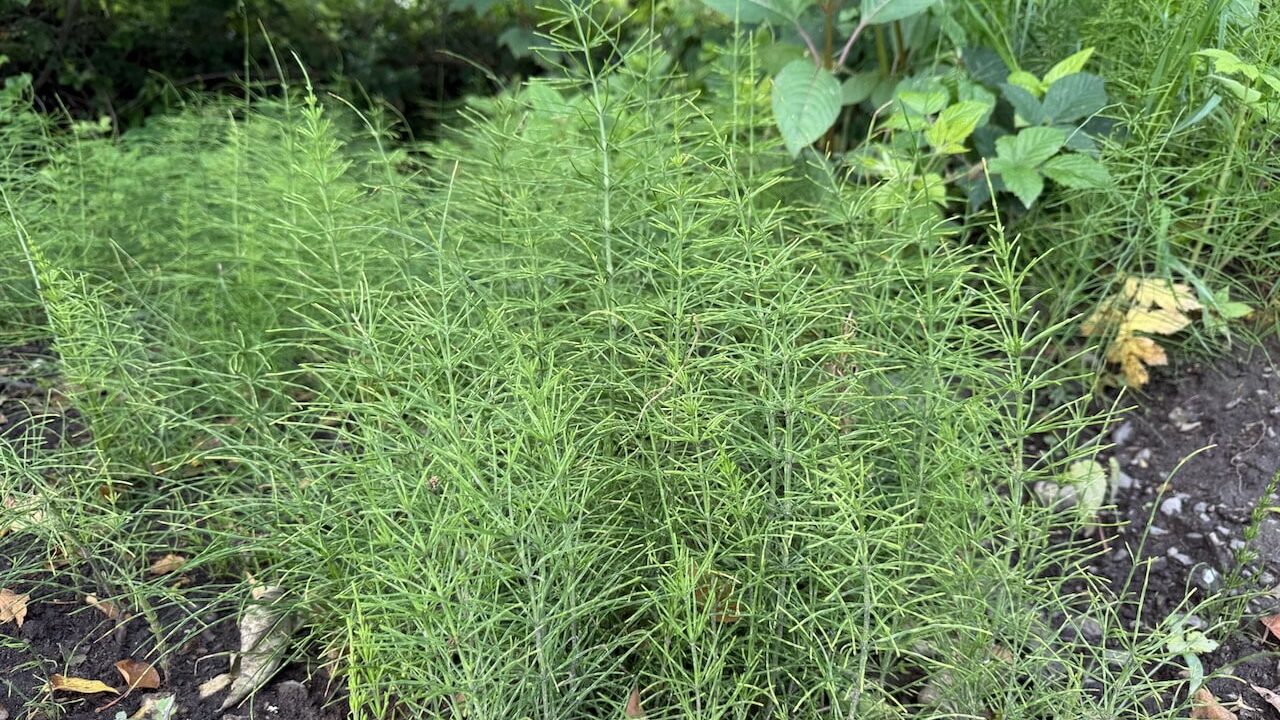
You may have noticed tall, thin, segmented green spikes emerging in your flower beds, driveway, cracks in paving or behind the shed and then realised it’s mare’s tail. This weed is remarkably resilient and can survive in nearly all conditions and environments. But if mare’s tail or horsetail weeds are causing mayhem in your garden, then this guide on how to get rid of mare’s tail should help.
This page contains affiliate links for products I use and love. If you take action (i.e., subscribe or make a purchase) after clicking a link, I may earn some gardening commission, which will help me keep the Garden Ninja Blog free for all.
Mare’s tail is one of the most recognisable and fear-inducing weeds you’ll find in a UK garden. This nearly indestructible weed pokes up from the ground with thin spikes that act as both stem and leaf in one. Whether you have a gorgeously manicured, weeded and curated garden or a rubble-filled building site, mare’s tail will live and thrive in almost any conditions.
Mare’s tail is sometimes known as horse tail or horsetail, all of which are the same weed. Horsetail is mare’s tail and vice versa, though the correct common name is mare’s tail if we’re being pedantic. Worth knowing too is that horsetail is actually the more accurate botanical common name for Equisetum arvense, since mare’s tail technically refers to a separate, unrelated aquatic plant, Hippuris vulgaris, but in everyday UK garden conversation the two names are used completely interchangeably for the same troublesome weed.
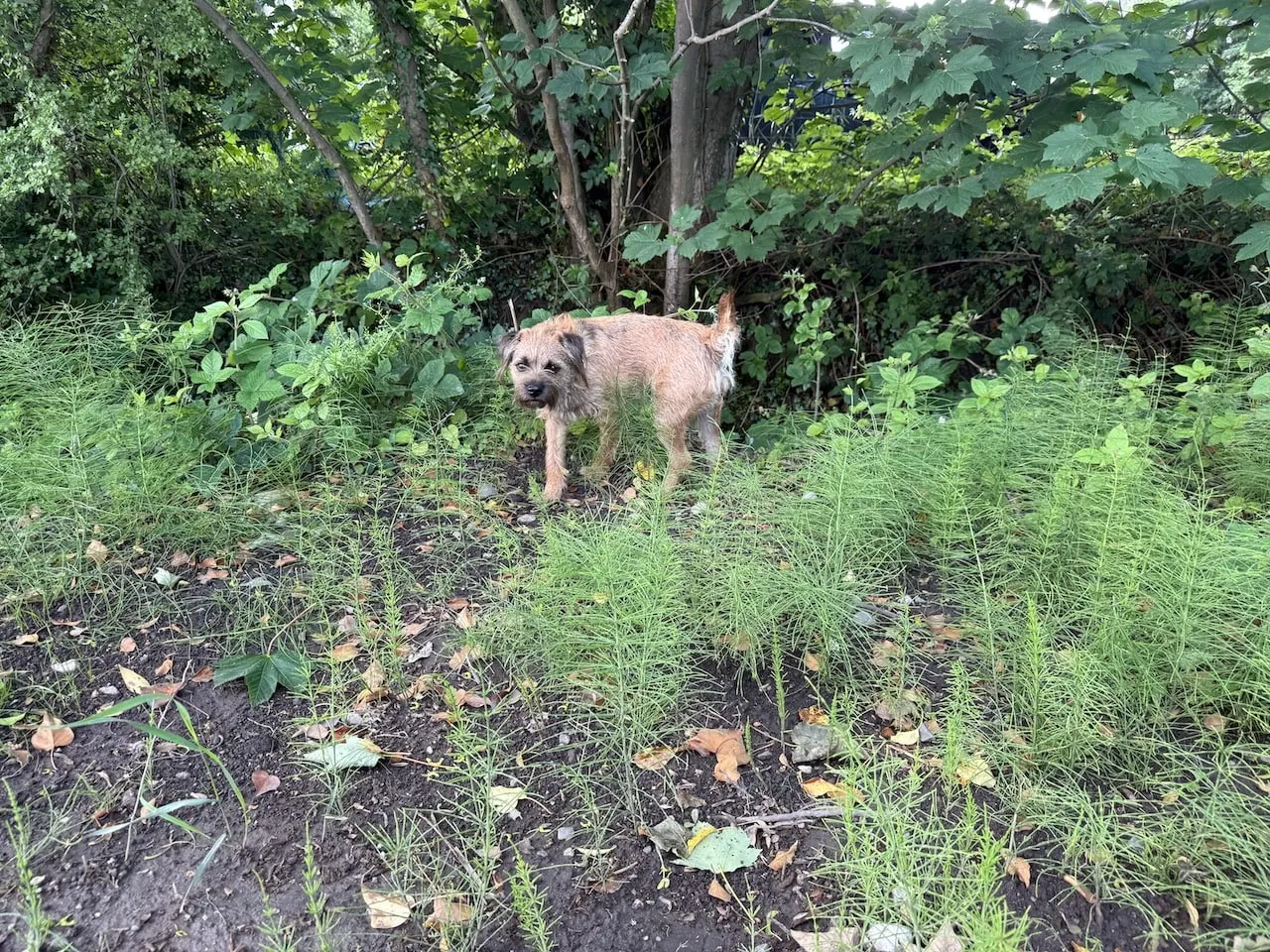
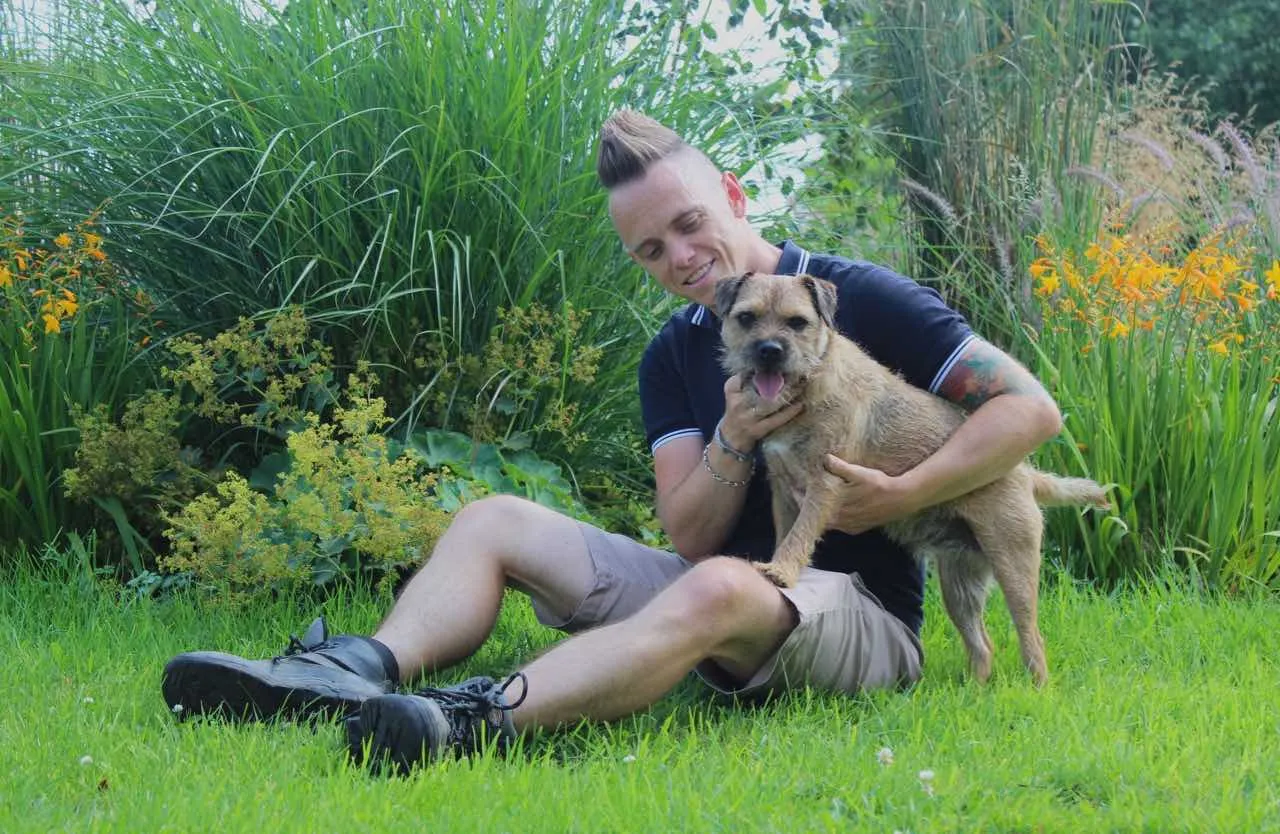
Look at Percy, my Border Terrier, below, looking frustrated at this mare’s tail weed.
It’s easy to spot mare’s tail as its long, thin stem and summer foliage look a bit like a horse’s tail, hence the name. In the United States, people call it horsetail weed, whereas in the United Kingdom and Europe it’s commonly referred to as mare’s tail.
Mare’s tail is one of the oldest plants on Earth, dating back over 100 million years, even predating the dinosaurs. It belongs to the genus Equisetum, a group of ancient, non-flowering plants that reproduce by spores, not seeds, a bit similar to ferns in the way they reproduce. This makes them tough and very difficult to remove or manage, which is why so many of you ask me how to get rid of mare’s tail.
Mare’s tail has two distinct growth stages each year.
Speak to any gardener or allotment owner and mention mare’s tail, and groans and disgusted stares will meet you. This is usually because mare’s tail is a near-endless problem for all gardeners, whether growing vegetables in a kitchen garden or managing a wildflower meadow in a rural area. Let’s take a look at why mare’s tail is so difficult to get rid of.
I’ve had mare’s tail in nearly every garden I’ve worked on or lived with, from a scrappy first home with a builder’s yard for a lawn, right through to gardens I’ve designed for clients on new build plots where the topsoil had clearly been dumped from somewhere else entirely. It’s one of those weeds that turns up on the worst ground and the best ground alike, and honestly, after enough years of it, you stop being surprised and just start working out your plan of attack for that particular patch.
Mare’s tail has an incredibly deep and resilient root system composed of rhizomes, which are horizontal underground stems. These rhizomes can penetrate more than two metres into the soil, allowing the plant to access deep water reserves and nutrients that many other plants can’t reach. This depth also makes it extremely difficult to fully remove, as the roots often grow well below the reach of typical cultivation tools.
One of the most persistent characteristics of mare’s tail is its ability to regenerate from the tiniest piece of root or rhizome left behind in the soil. Even a fragment as small as a centimetre can develop into a new plant, making complete eradication a real challenge without meticulous removal and follow up treatments.
The above ground stems of mare’s tail are coated with silica, a gritty compound that makes them unusually tough. This not only gives the plant a rough texture but also protects it from being grazed by herbivores, reduces water loss during drought conditions, and renders many common weedkillers ineffective, as the coating prevents effective absorption. This single factor is the reason so many gardeners spray glyphosate on mare’s tail and see almost no result.
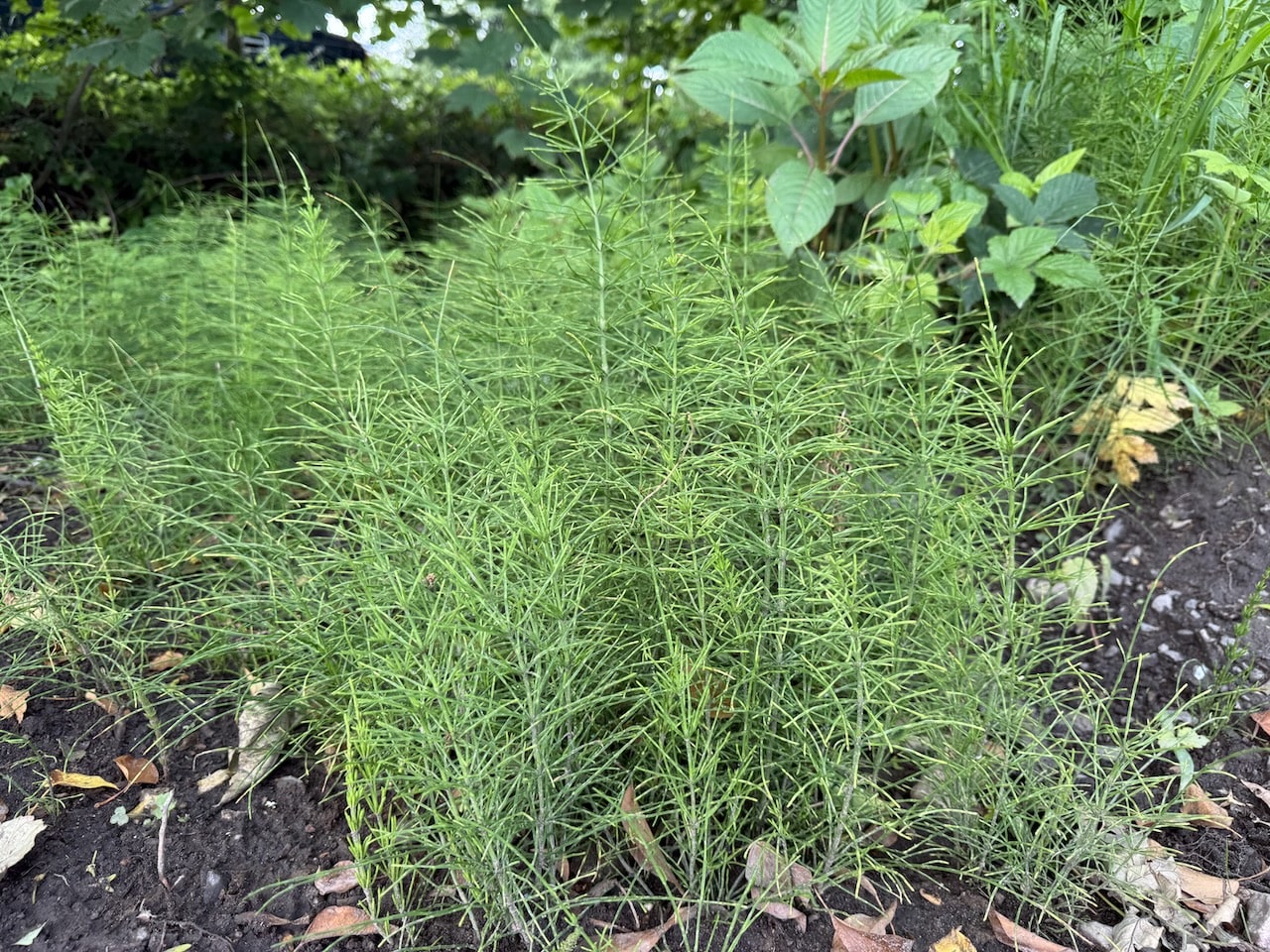
Mare’s tail spreads predominantly through its subterranean rhizome system, allowing it to colonise large areas quickly. These rhizomes can travel laterally beneath the soil surface and produce new shoots at considerable distances from the original plant. It’s not uncommon for new growth to appear metres away, giving the impression the plant has suddenly popped up elsewhere in the garden.
While complete eradication may take several seasons, if not decades, consistent organic control can significantly reduce and suppress mare’s tail over time, especially if you make it part of your regular gardening routine. A bit like watering plants in hot weather, monthly mare’s tail pulling and smothering can help reduce its invasiveness in your garden.
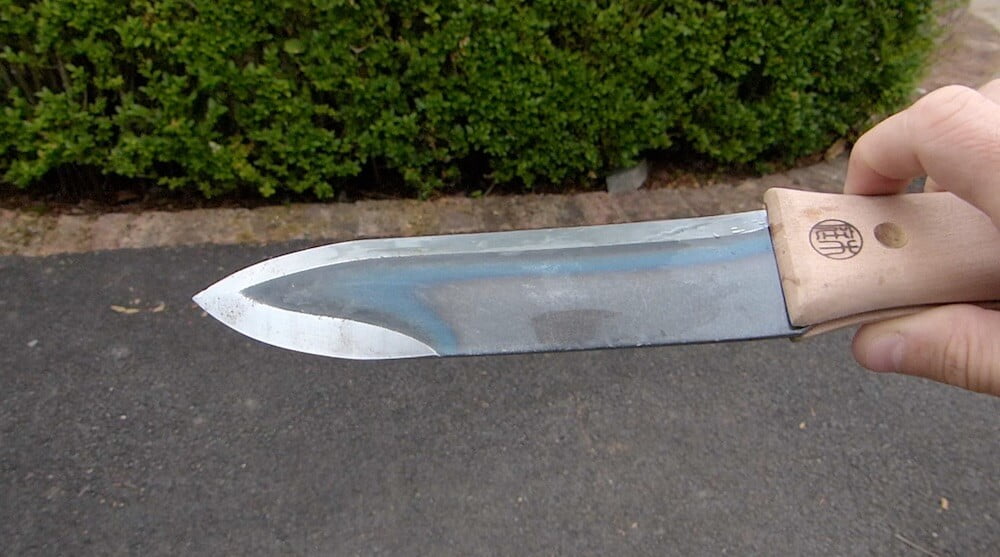
🛒 Buy a Hori-Hori garden knife from Amazon UK
🛒 Buy heavy duty weed membrane from Amazon UK
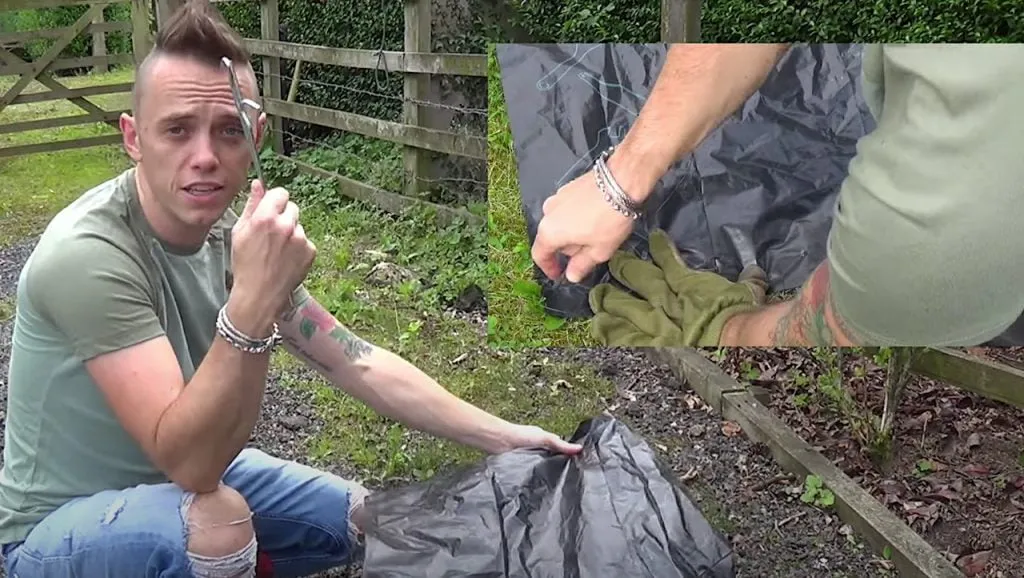
Healthier, looser soil supports stronger plants, vegetables and crops, and suppresses mare’s tail through plant competition.
🛒 Buy peat free compost from Amazon UK
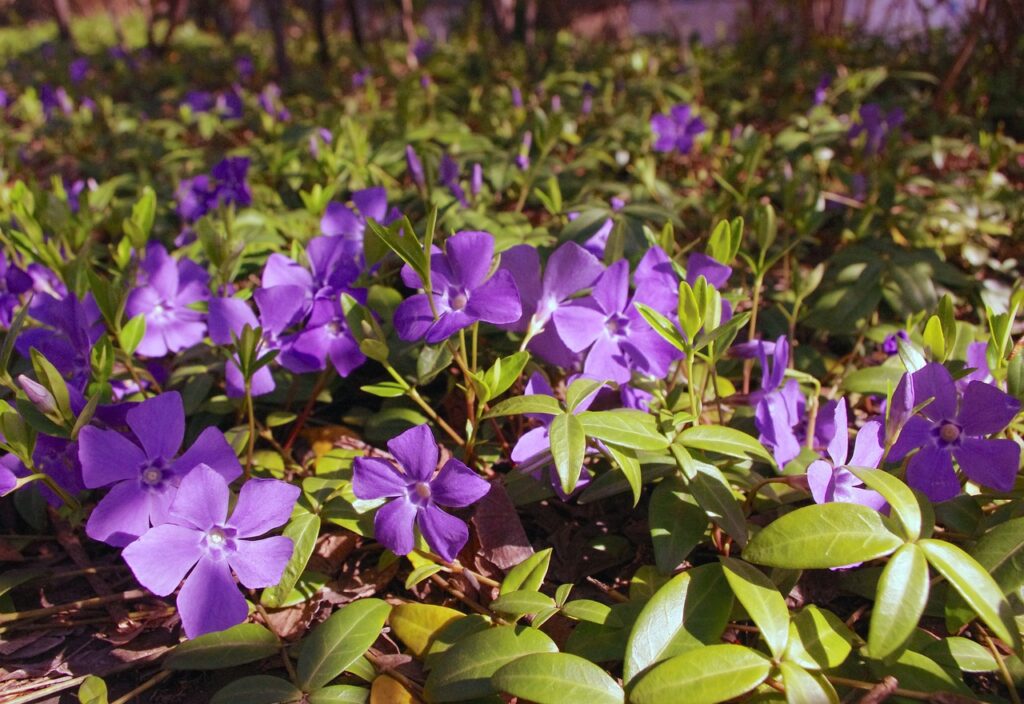
In less cultivated areas, try planting vigorous, spreading groundcovers to compete with and shade out mare’s tail. Options include Symphytum officinale, comfrey, Pentaglottis sempervirens, green alkanet, which is a weed in its own right, mint, though this will run thoroughly through all flower beds so beware, Lysimachia nummularia, creeping Jenny, Vinca minor, periwinkle, and Galium odoratum, sweet woodruff.
These won’t eradicate mare’s tail, but they can help smother and reduce the light reaching its shoots.
Mare’s tail coming up through grass is its own particular headache, since you can’t smother a lawn under cardboard without killing the turf along with the weed. Regular mowing helps here more than most people expect, since cutting the shoots down every time you mow has much the same weakening effect as hand pulling, it just happens automatically as part of your normal routine rather than needing a separate job. It won’t clear an established patch on its own, but it keeps the weed from getting the upper hand while you work on the soil underneath with aeration and top dressing, and it buys you time to decide whether a selective brushwood killer, covered in the next section, is worth reaching for on that particular patch.
This one comes up a lot, both in the comments and on the forum. Pouring boiling water over mare’s tail will scorch the top growth, and it can look like you’ve won within a day or two, but it’s a temporary fix rather than a cure. The root system sits well below where the heat can reach, so boiling water rarely kills it outright, though repeated dousing can weaken the plant over time if you keep at it. If you do try it, take real care pouring boiling water outdoors, especially near paving, lawn edges or anywhere children or pets are likely to be underfoot, since a slip with a full kettle or pan causes a nasty scald far quicker than mare’s tail causes a problem.
I get asked a lot whether mare’s tail will damage pond liners, patios or garden structures the way some more aggressive roots can. In my experience it doesn’t cause that kind of structural damage. It’s more of a persistent nuisance than a genuine threat to hard landscaping, spreading along the surface and just underneath it rather than forcing its way through anything solid. That said, it is unsightly once it gets going near a pond edge or a boundary, and left alone it will keep creeping.
Where it gets trickier is when it’s coming in from a neighbour’s garden rather than your own. A friendly word with them is worth having, since tackling it from both sides always works better than fighting it alone, but I know that’s not always practical or welcome. Failing that, your best bet is to keep after it hard on your own side. It’s not a quick fix and it won’t stop it appearing at the boundary again, but regular manual removal, little and often, gradually exhausts the plant and keeps your side of the fence in far better shape than leaving it be. Consistency beats any single treatment here.
This is the question I get asked most often on the topic, and I’ll give you an honest answer rather than a sales pitch. As covered above, mare’s tail’s silica coating means standard, straight glyphosate weed killer, the kind most gardeners already have in the shed, is poor at controlling this weed on its own. If you’ve tried a normal glyphosate spray and seen the shoots shrug it off within a week or two, that’s not you doing anything wrong, it’s just how this plant is built.
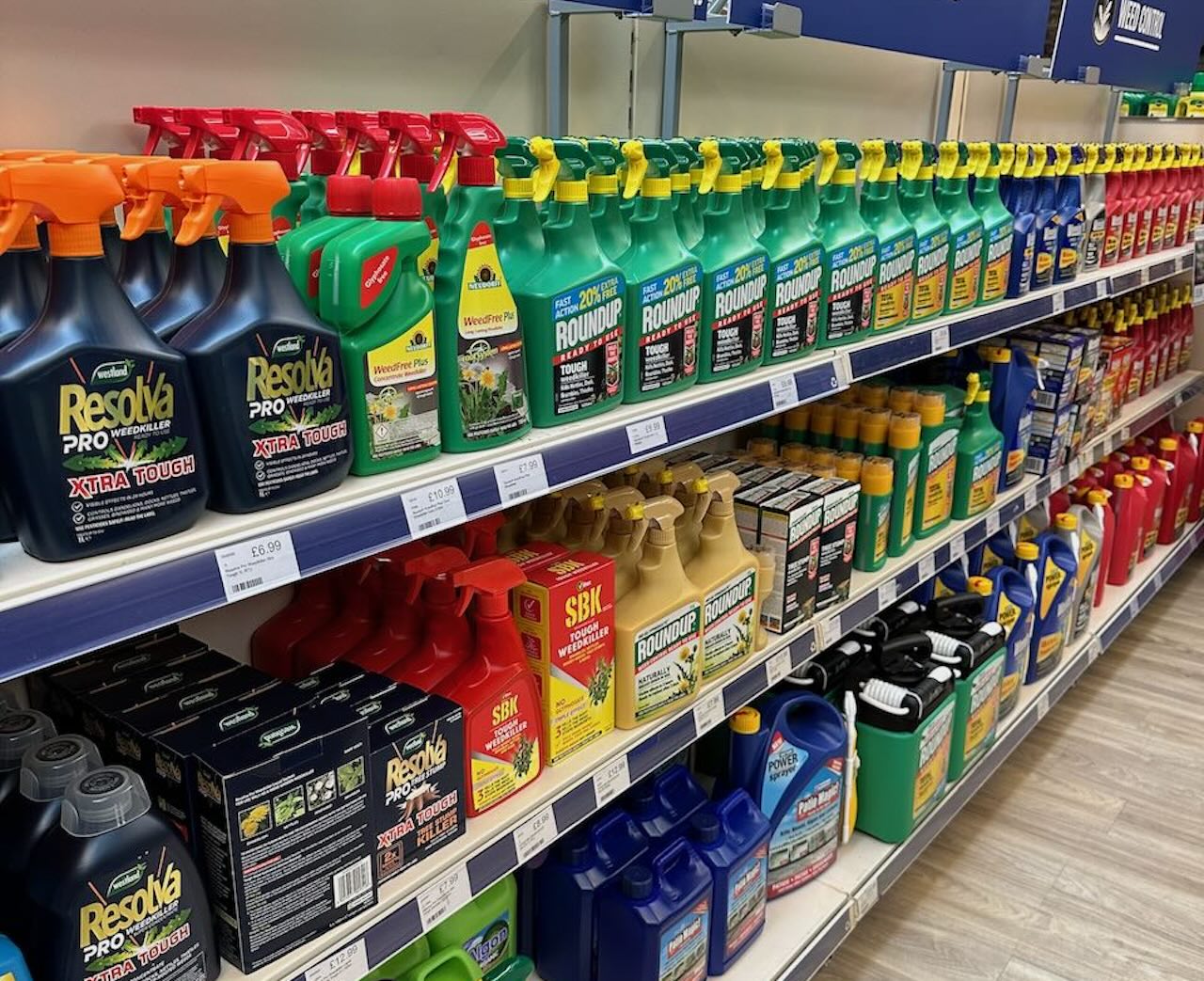
Products that combine glyphosate with 2,4-D are considerably more effective, since the 2,4-D component breaks down the leaf tissue first, which then allows the glyphosate to translocate around the plant more quickly and reach deeper into the root system. In the trade, products like Kurtail Evo and Diamond Horse Tail Killer are built around exactly this dual active approach and are widely considered the strongest options for mare’s tail control, but it’s worth knowing these are professional use products in the UK, requiring the buyer to hold appropriate pesticide certification under DEFRA and HSE rules, so they aren’t something the average home gardener can simply pick up and spray.
For home use, a general purpose glyphosate concentrate is still the most accessible option, and where you’re treating mare’s tail growing through a lawn rather than a border or driveway, a selective brushwood type weed killer based on triclopyr is worth considering instead, since it targets tough, woody weeds like mare’s tail without killing the surrounding grass. Whichever product you choose, the bruising step covered in the next section makes a real difference to how well it’s absorbed, regardless of brand.
| Product type | Active ingredient | Where to use it | Availability |
|---|---|---|---|
| Standard glyphosate concentrate | Glyphosate only | Driveways, paving, bare borders, non-selective | Widely available to home gardeners |
| Dual active glyphosate plus 2,4-D | Glyphosate + 2,4-D | Hard surfaces and amenity areas, non-selective | Professional use only in the UK, requires pesticide certification |
| Brushwood killer | Triclopyr | Lawns and grassed areas, selective, will not kill turf | Widely available to home gardeners |
Whichever type you go for, buy a proper pressure sprayer rather than relying on a cheap trigger bottle, since even coverage across every stem is what actually determines how well any of these products work.
This comes up a lot on our forum too. Have a look at this thread where I answer a reader’s question directly on mare’s tail and weed killer, including why I’d always try organic and manual control first.
🛒 Buy glyphosate weed killer concentrate from Amazon UK
🛒 Buy brushwood killer for lawns from Amazon UK
Set realistic expectations before you spend money on any product here. Even the strongest dual active professional herbicides need repeat applications over several years to exhaust a mature mare’s tail root system, and no weed killer, however strong, gives a genuine one spray fix. If that’s not what you want to hear, the smothering method covered earlier in this guide remains the most reliable route to actually winning this fight, just on a longer timescale and without the ongoing cost or environmental impact of repeat spraying.
Glyphosate is a non-selective, systemic herbicide. This means it kills most green plants it touches by being absorbed through the leaves and then transported throughout the plant, all the way down to the roots. It’s commonly sold under brand names like Roundup. However, with mare’s tail, that silica coating means it’s least effective on this weed compared with creeping buttercup, couch grass or bindweed.
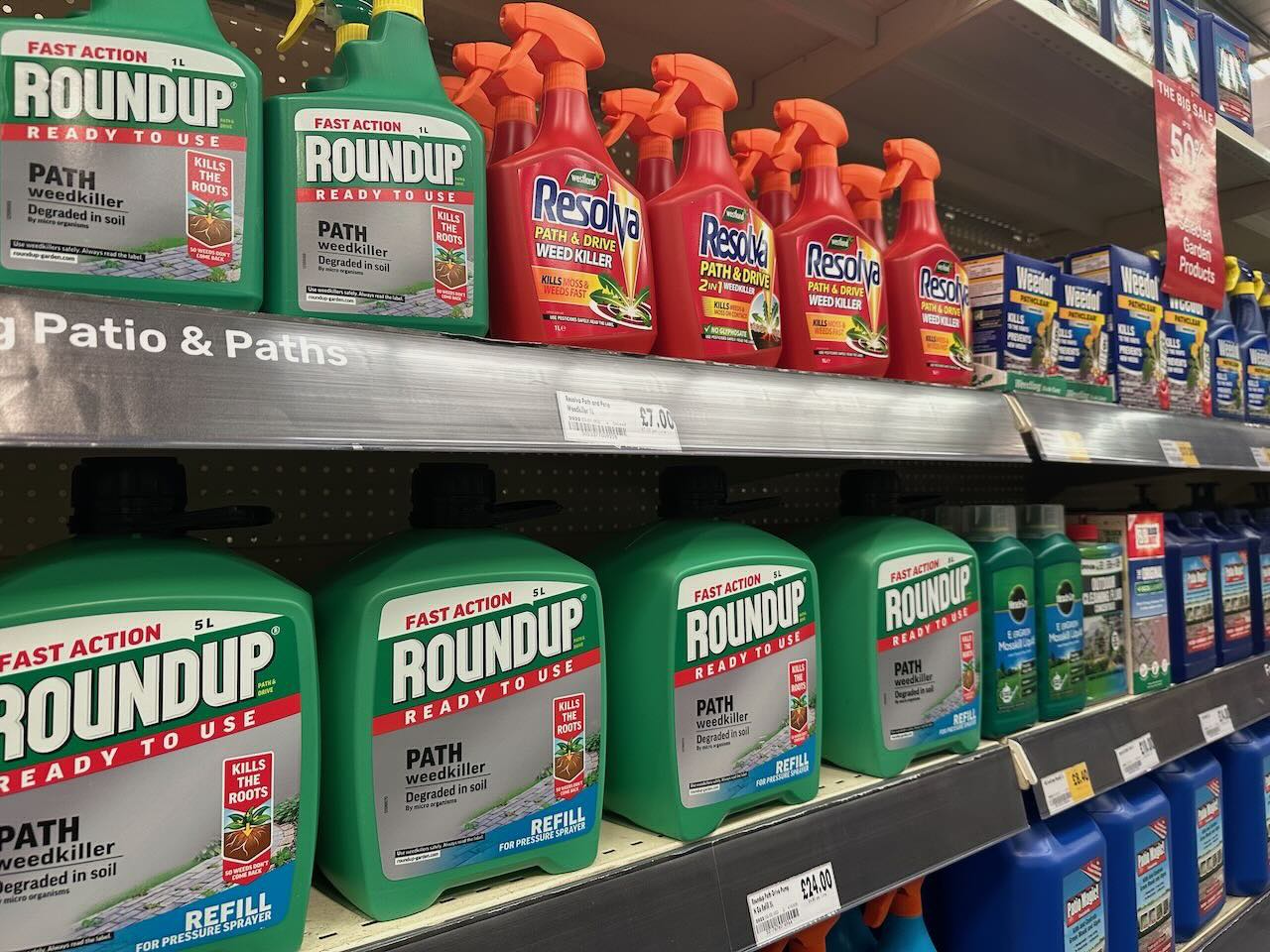
My honest position is that I wouldn’t use glyphosate on mare’s tail myself, and it’s harmful to the wider environment when beginner gardeners spray it with abandon, since it drifts on the breeze and kills prize herbaceous perennials alongside the weed you were aiming for. That said, some gardeners will try it regardless, so here’s how to give it the best possible chance of working if that’s the route you choose.
🛒 Buy a pressure garden sprayer from Amazon UK
Limited effectiveness on mare’s tail: it has poor leaf surface absorption and a deep root system, so glyphosate is only partially effective without repeat treatments and proper technique.
Non-selective: it will kill everything it contacts, including grasses, flowers and crops, so care must be taken when applying.
Environmental concerns: glyphosate is under scrutiny for its environmental and health impacts. Some countries and councils have banned or restricted its use, so always check local regulations and consider safer alternatives where possible.
Persistence of rhizomes: even after dieback above ground, rhizomes can survive and resprout. Total eradication may take several seasons of dedicated treatment.
Not pet or child friendly during use: glyphosate should be kept well away from children and animals until fully dried and absorbed.
Don’t rotavate the area. It chops up the roots and helps spread the weed further.
Don’t ignore it. Even one plant left to grow will feed the underground network.
Don’t rely on a single control method. Success comes from combining multiple strategies, cutting, smothering, soil improvement and patience, rather than expecting one product or technique to solve it alone.
Many guides on mare’s tail list its toxicity and talk about alkaloids like palustrine being harmful. While this is true, you’d have to eat a large amount of it to get enough mare’s tail into your system to become ill, and the chances of that are extremely unlikely unless it’s consumed intentionally or mistaken for another plant and made into a herbal tea.
While occasional contact isn’t dangerous, mare’s tail should never be ingested by animals or children. It’s best to remove it from areas where pets or young children might have unsupervised access, especially really young infants who have a tendency to eat things they find. Never use mare’s tail in homemade herbal remedies.
Patience is key when trying to remove or reduce mare’s tail. Organic control methods may take two to three years to show major results, but they’re effective when done consistently. The goal is to exhaust the root system, suppress new growth, and encourage healthier soil and competing plants.
You may just think you’ll reach for the weed killer, but trust me when I say it’s actually less effective than manual methods in most gardens. It damages other plants, is expensive, and takes multiple applications to even make a dent in mare’s tail.
After enough years of gardening with mare’s tail as an uninvited but permanent guest, I’ve come round to a view a lot of purists won’t like, which is that fighting it everywhere all the time simply isn’t a good use of anyone’s weekend. Some patches truly deserve the effort. Others really don’t. Knowing which is which saves you a lot of frustration.
In my first proper rental garden, years ago now, the whole back third of the plot was solid mare’s tail growing through what had once been a vegetable patch. I threw everything at it that first summer, cutting weekly, digging where I probably shouldn’t have, and I made almost no visible dent in it by August. What actually worked, eventually, was smothering that whole third of the garden under old carpet offcuts and cardboard for a full eighteen months while I grew everything I actually wanted in raised beds built on top of weed membrane elsewhere. By the time I lifted the covering, the mare’s tail was patchy and weak enough that regular hand pulling kept it in check from then on. That garden taught me the smothering method properly, the hard way, rather than from a book.
In a later garden I designed my own vegetable beds around from scratch, I fought it hard right from the start, because it was coming up directly through where I wanted to grow food, and I wasn’t prepared to share a bed with something that would out compete everything I planted. Cardboard, raised beds, and relentless pulling of every shoot the moment it showed kept that patch properly clear within about three seasons, which for mare’s tail is a decent result.
But in my current garden, there’s a scrubby corner behind the shed, right by where I’ve been building out a wildlife pond, and I’ve simply let the mare’s tail have it. It’s not in anyone’s way, it’s not competing with anything I care about, and honestly, as one of the oldest plants on the planet, there’s something quite nice about having a genuine living fossil pottering along undisturbed at the bottom of the garden. Ground beetles and other invertebrates use the cover it provides, and I’d rather spend my weeding time on the borders that actually matter to me than wage a pointless war on a patch nobody sees.
So my honest advice, beyond all the methods above, is to work out which parts of your garden actually need to be mare’s tail free, vegetable beds, lawns, anywhere it’s competing with plants you’ve spent money on, and commit properly to those. Then give yourself permission to leave it be in the corners nobody’s fussed about. You’ll get further with focused effort on a smaller area than you ever will trying to clear an entire garden at once, and you’ll enjoy your garden a great deal more in the meantime.
Yes, in everyday garden use mare’s tail and horsetail refer to the same plant, Equisetum arvense. Horsetail is technically the more accurate botanical common name, but both terms describe the identical weed and are used interchangeably across the UK.
Mare’s tail produces pale brown, cone tipped fertile shoots in spring, followed by green, upright, brush like sterile shoots from late spring through autumn, growing 20 to 50cm tall with whorls of needle thin leaves that give the plant its tail-like appearance.
Products combining glyphosate with 2,4-D give the strongest results, since the 2,4-D breaks down leaf tissue and allows the glyphosate to penetrate more effectively. The most powerful dual active products are professional use only in the UK. For home use, a general glyphosate concentrate applied after bruising the foliage, or a triclopyr based brushwood killer for mare’s tail growing in a lawn, are the realistic options, and neither will fully eradicate the weed in a single season.
No, mare’s tail shouldn’t be eaten. It contains alkaloids including palustrine, and while a small accidental brush with the plant isn’t dangerous, it should never be deliberately consumed, brewed into a tea, or used in homemade herbal remedies.
Let me, Lee Burkhill, the Garden Ninja, help you unlock the joy and creativity of designing your own garden, no matter your experience level. With my online garden design courses, you’ll learn exactly how to shape your outdoor space into something beautiful, personal and practical. You don’t need any fancy tools or years of experience, just a willingness to dig in and grow your confidence.
Through step by step video lessons, engaging quizzes and clear, easy to follow guidance, I’ll teach you how to plan layouts, select the right plants, and maintain a beautiful garden all year round. It’s all designed for beginners, with plenty of tips and tricks to help you avoid common pitfalls and get started on the right foot.
Enrol now and let’s create something amazing together. With a little help from the Garden Ninja, your dream garden is well within reach.
For the garden you’ve already got, not the one you’re starting from scratch. Seven checklists and video lessons from BBC Garden Rescue’s Lee Burkhill, built to help you work out what’s worth keeping before you spend a penny.
Garden Design Examples for Small Gardens: 30 Design Templates & Planting Plans: In this online gardening course, I’ll walk you through 30 fantastic garden designs, explaining the logic behind the layout, the plant choices, and take-home tips for applying them in your own garden.
Learn how to transform and design your own garden with Lee Burkhills crash course in garden design. Over 5 hours Lee will teach you how to design your own dream garden. Featuring practical design examples, planting ideas and video guides. Learn how to design your garden in one weekend!
Garden Design for Beginners Online Course: If you want to make the career jump to becoming a garden designer or to learn how to design your own garden, this is the beginner course for you. Join me, Lee Burkhill, an award-winning garden designer, as I train you in the art of beautiful garden design.
So there we have it, my best methods of getting rid of mare’s tail and hopefully avoiding harsh weed killers in the process. Yes, it’s hard work, and you may need to accept some marigold on your hands, but by using the smother method and other organic manual methods, backed up with a properly chosen and correctly applied weed killer if you do decide to go that route, you can keep control of this weed and continue enjoying your garden.
Happy Gardening!


Lee Burkhill, known as the Garden Ninja, is an award-winning garden designer and horticulturist with over 30 years of gardening experience and 15 years as a professional garden designer. A qualified RHS (Royal Horticultural Society) professional, Lee specialises in sustainable garden design and practical horticultural advice. He designs and presents on BBC1’s Garden Rescue and in leading gardening publications. Lee combines three decades of hands-on gardening knowledge with professional design qualifications to help gardeners create beautiful, functional outdoor spaces.
View all posts by Lee Burkhill





JOIN THE NINJAS
Be the first in line for new Guides, Discount codes and Offers