For the garden you’ve already got, not the one you’re starting from scratch. Seven checklists and video lessons from BBC Garden Rescue’s Lee Burkhill, built to help you work out what’s worth keeping before you spend a penny.
69


Quick Answer
Prune cherry trees in mid to late summer, ideally July to August, and never in winter, since cold, damp cuts invite silver leaf disease and bacterial canker. Remove dead or crossing growth first, thin congested branches, and aim for an open goblet shape, taking no more than a quarter of the canopy in any one season.
Cherry trees, with their delicate blossoms and luscious fruits, are fabulous fruit trees for any sized garden. But to ensure their health, productivity, and aesthetic appeal, it’s essential to understand how to prune them correctly.
Pruning a Cherry or Plum tree might sound daunting at first, but fear not. In this comprehensive guide, we’ll break down the process step by step, making it easy for you to unlock the full potential of your Cherry tree. So, let’s dive in Ninjas and learn how to prune a Cherry tree with confidence.
Jump To
This page contains affiliate links for products I use and love. If you take action (i.e. subscribe, make a purchase) after clicking a link, I may earn some gardening commission which helps me keep the Garden Ninja Blog free for all.
Pruning Cherry and stone fruit trees is essential both for tree health and also for fruit. Left unpruned, most fruit trees will put on excessive growth wherever they can, becoming congested, out of control and looking worse for wear.
All fruit trees in the genus Prunus, in other words Plum or Cherry, require specific pruning each year. The same pruning advice of pruning in spring or summer only applies to all stone fruit trees, such as apricots, Greengages and Almond trees.
Before we get our hands dirty, let’s understand why pruning is essential for Cherry trees.
Pruning removes dead, damaged, or diseased branches, allowing the tree to redirect energy toward healthy growth and fruit production. Pruning actively directs energy to parts of the tree where it can fruit. When we prune, we are simply controlling where we want growth, not just removing parts of the tree to stop it growing.
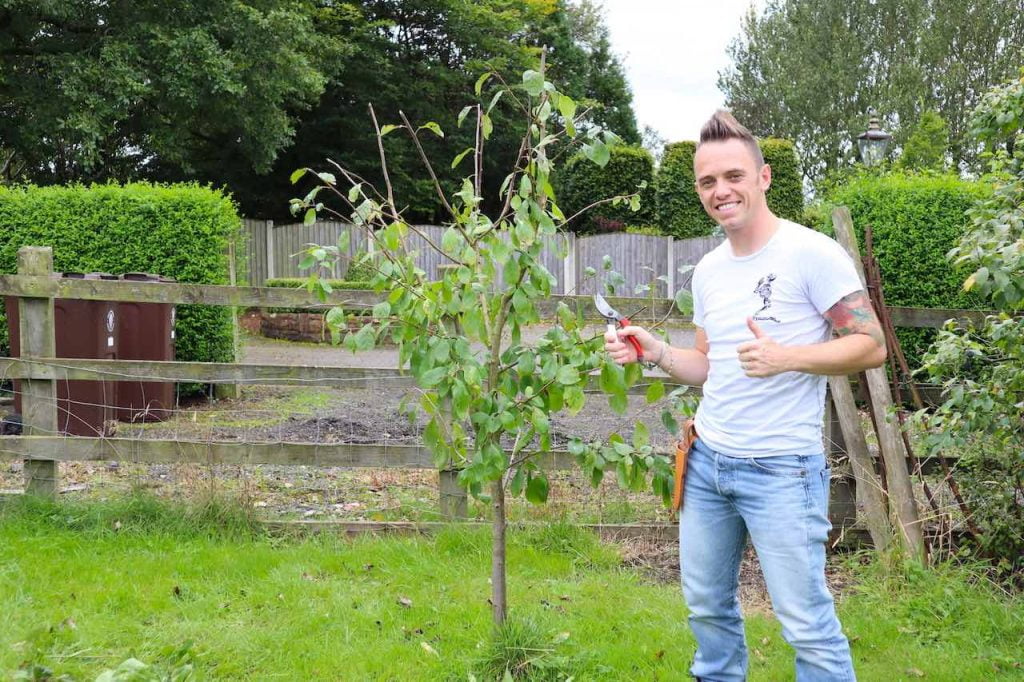
See the neat example of a young Plum tree above, which has been pruned back in summer.
Proper pruning opens up the canopy, enhancing air circulation and sunlight penetration. This reduces the risk of fungal diseases and ensures that all parts of the tree receive adequate light. No one likes to feel crammed and inhale stale air, cherry trees are no exception.
Pruning helps to thin out excess branches, which can lead to better fruit quality and larger yields. It also encourages the development of fruiting wood, meaning less rotten fruit and a bigger bounty each year.
Cherry trees, like other fruit trees, benefit from regular pruning to maintain their desired shape, size, and structure. Cherry trees can be vigorous growers depending on the rootstock they have been grafted to, with dwarfing rootstocks keeping a tree to somewhere between 2m and 4m and non dwarfing rootstocks capable of reaching the height of a two storey house. It’s always worth checking the rootstock label at the point of buying if you have a small garden. They will respond really well to a yearly prune in late summer.
Now, let’s explore the steps to prune a cherry tree or any stone fruit tree effectively so you get plenty of fruit and a healthy tree.
This is a distinction I think gets missed far too often, and it really does change how you should approach pruning your tree. Not all cherries are the same underneath the blossom, and knowing which type you have will shape both when and how you prune.
Varieties like Stella, Sunburst and Lapins fall into this camp, the ones bred primarily for eating fresh. Sweet cherries fruit on older wood as well as at the base of one year old shoots, so the framework you build up over several years matters. I always prune these immediately after harvest, typically late July, aiming for that open goblet or open centre shape that lets sunlight reach right through the canopy.
These are your cooking cherries, most commonly Morello, and they behave quite differently. Acid cherries fruit almost entirely on the previous year’s growth, so if left unpruned the crop ends up produced right at the tips of increasingly long, overextended branches, which is when you start losing fruit to wind damage or the sheer weight of the crop. Because of this, acid cherries need a proper annual renewal prune, removing a good proportion of the wood that has just fruited to encourage strong new shoots for next year’s harvest. I find gardeners who treat their Morello like a sweet cherry, giving it a gentle tidy rather than a proper renewal cut, end up disappointed with a sparse crop a few years down the line.
Acid cherries are a little more forgiving on timing too. Whilst late summer still works well, they can also tolerate an early spring prune before bud break, which sweet cherries generally don’t respond to as favourably.
If your cherry tree is grown purely for its spectacular spring blossom rather than fruit, the timing principle stays the same but the goal changes. Prune once flowering has completely finished, usually mid to late summer, and focus on removing crossing branches and anything spoiling the natural shape rather than chasing a formal framework. Pruning too early risks removing flower buds that formed the previous season, which means a disappointing display the following spring.
Before you start to prune your Cherry trees, you’re going to need a few key tools and pieces of equipment. The right tools for pruning Cherry trees will make it a breeze and reduce the possibility of infection or damage.
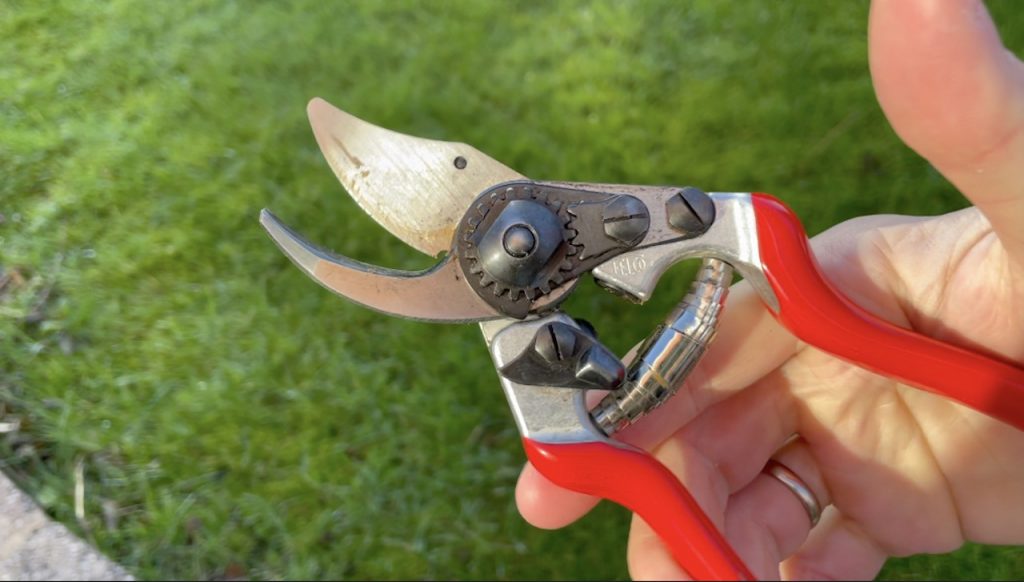
🛒 Buy Felco 2 secateurs from Amazon UK
The best time to prune cherry trees is during late summer, ideally late July to the end of August, or in early spring for acid cherries only, but never in winter.
This is because Cherry trees and the Prunus group are susceptible to Silver leaf disease and bacterial canker, both of which can damage and even kill a cherry tree, and both of which spread far more readily through fresh wounds during cold, damp weather.
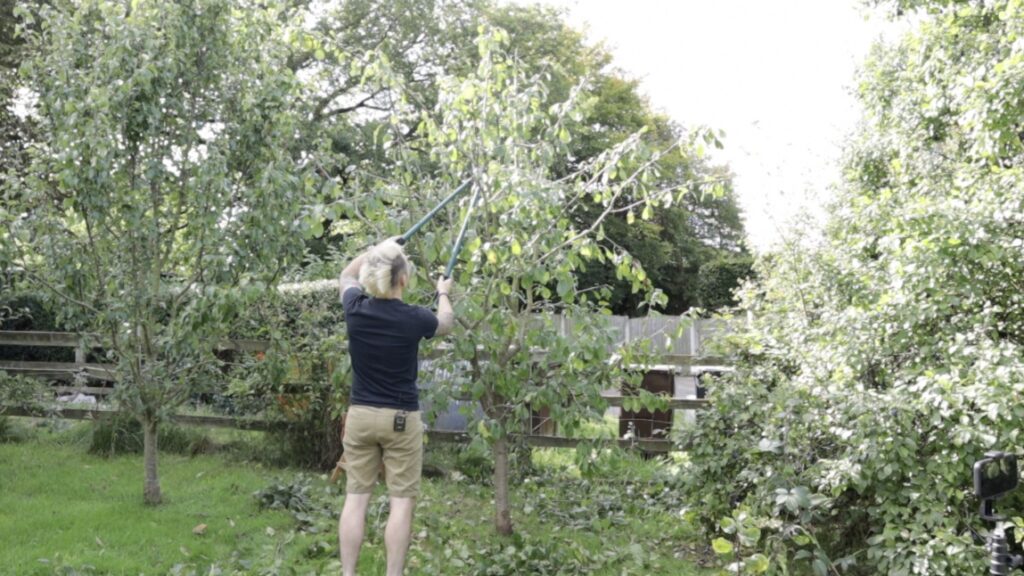
By pruning Cherry trees in late summer, you can avoid this issue and save yourself heartache. Full details on both diseases and how to spot them are further down this guide.
💡 Top Tip
Never remove more than a quarter of the live canopy in a single season. Cherry trees don’t recover from harsh cuts the way apples or pears do, and heavy pruning shocks the tree, triggering a flush of weak, disease prone regrowth rather than the strong fruiting wood you actually want. Young trees in their first three years can take a more significant formative prune to establish structure, but established trees only need light, maintenance level pruning each year.
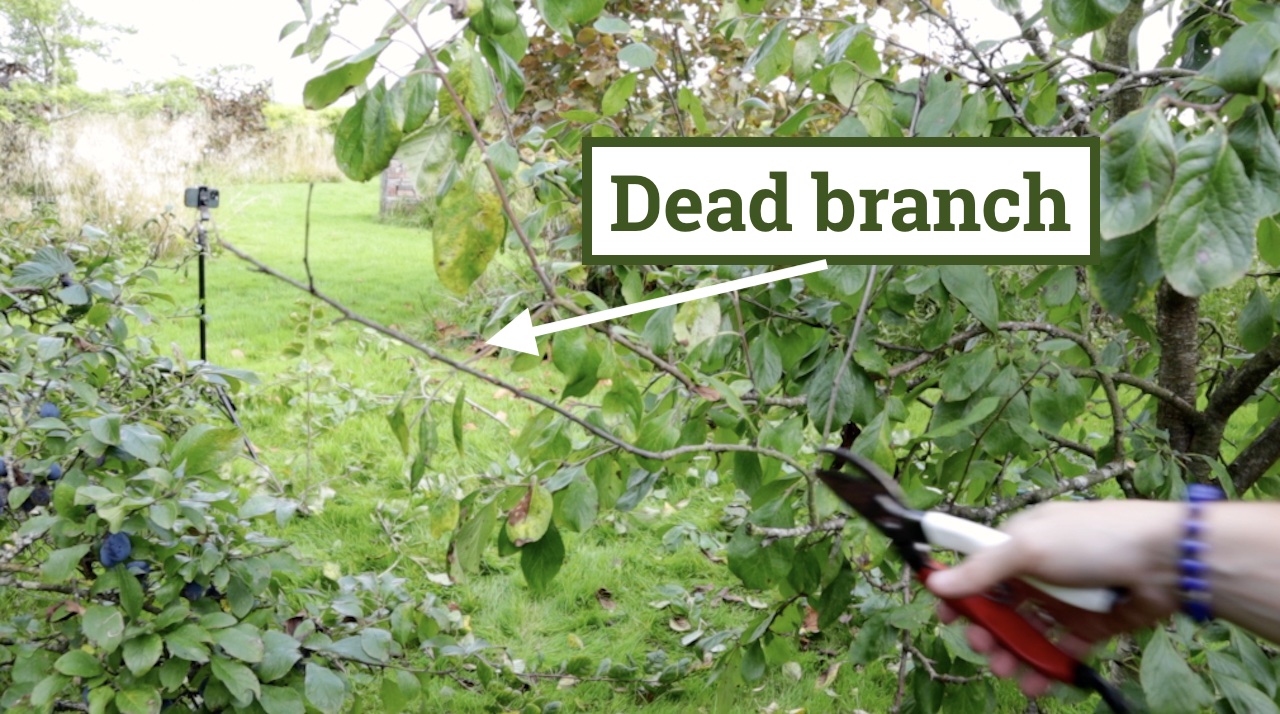
Begin by inspecting the tree for dead, damaged, or diseased branches. These are the first to go.
Make clean cuts just outside the branch collar, the swollen area where the branch meets the trunk. Removing this wood encourages new growth and prevents diseases from spreading.
Cherry trees can become overcrowded, which reduces sunlight penetration and air circulation. Identify branches that are growing too closely together or crossing each other and cut them out. Remove any excess branches, giving priority to those that block light or rub against each other.
Remove a third of this year’s growth. You can identify this as it’s long and bendy, often being called green wood as it has not had time to lignify and turn brown and firm. You want to work around the tree and prune off a third of the wood to help control the shape and structure of the tree. If left, this new long green growth can become overburdened with fruit next year and break off, damaging the tree.
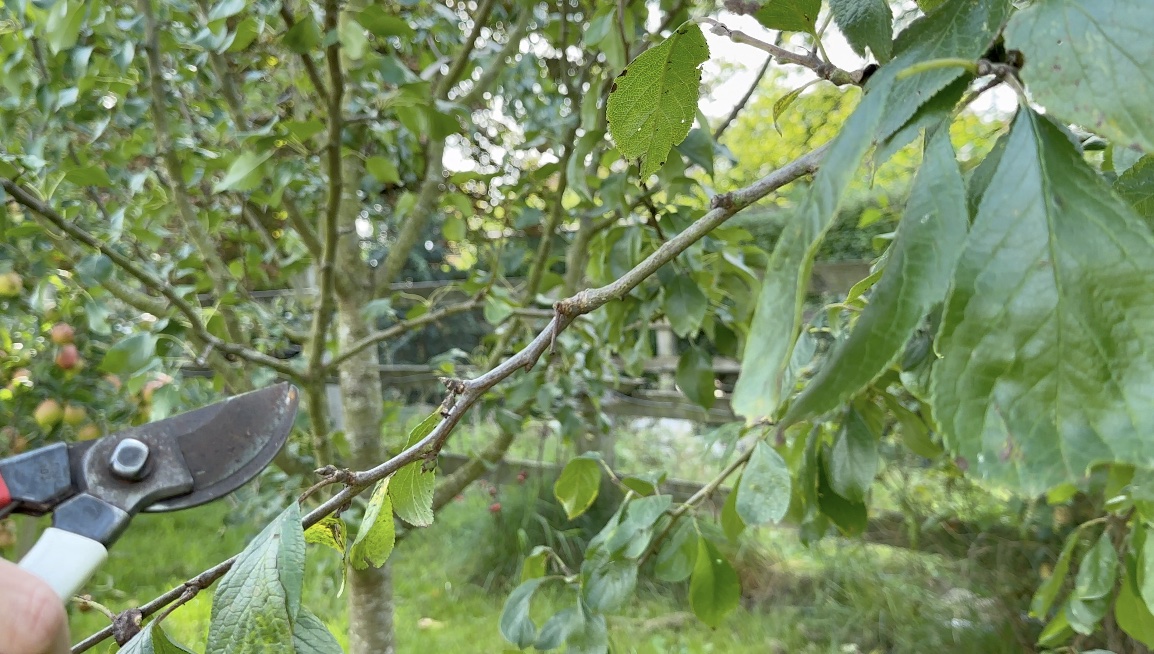
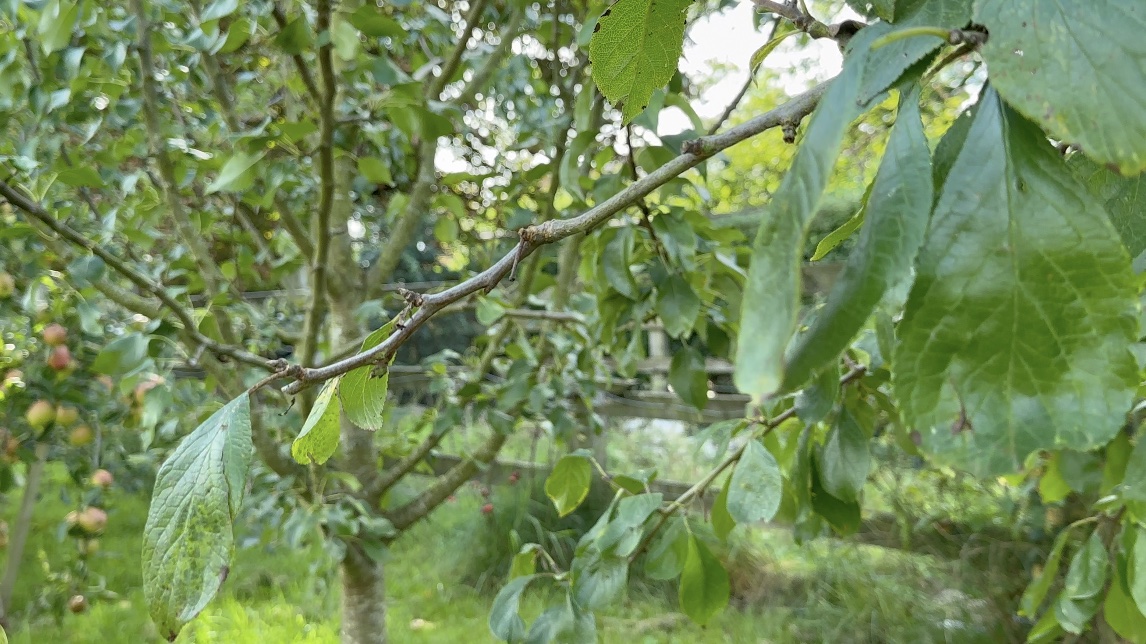
The two pictures above show a before and after of Cherry tree branch pruning.
Cherry trees should have a central leader, the main trunk, and several branches radiating outwards in the open goblet shape. This is a well-rounded shape with air and space between each branch like a goblet or cup. These open goblet branches form the tree’s structure.
Choose 3 to 5 strong branches that are evenly spaced around the trunk and at different heights. Remove any competing leaders or weak branches, or anything that looks like it’s growing inwards and will cross other branches.
If space is really tight, a fan-trained cherry grown flat against a warm, sheltered wall or fence is a really good alternative to a free-standing goblet-shaped tree. It takes more formative training in the early years, tying branches in against wires to build the fan framework, but it’s a lovely option for a small garden where a full-sized tree simply isn’t practical.
Cherry trees produce most fruit on one-year-old wood, so it’s essential to encourage the growth of fruiting wood by pruning the tree into a healthy and robust shape.
To do this:
By pruning the branches back by a third and ensuring a clear framework, fruit won’t bend or break branches and the tree overall will be more productive.
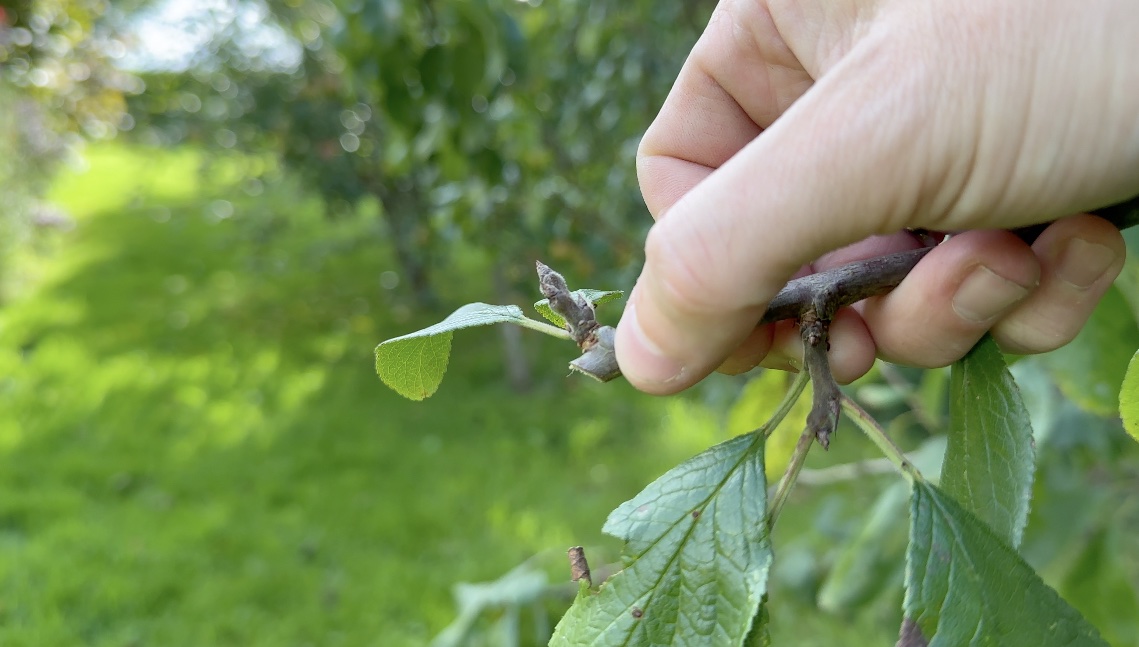
When pruning, always make clean, sharp cuts at a 45-degree angle away from the bud or leaf node below. Avoid leaving long stubs, as they can attract pests and diseases. Make cuts just above a bud or lateral branch and at a slight angle to allow water to run off.
Low hanging branches can become a real pain, both for mowing the grass around your tree or for fruit harvesting. These low hanging branches tend to drop and have the potential to snap, tear or break off harming the tree, so they need to be cut back to the main trunk.
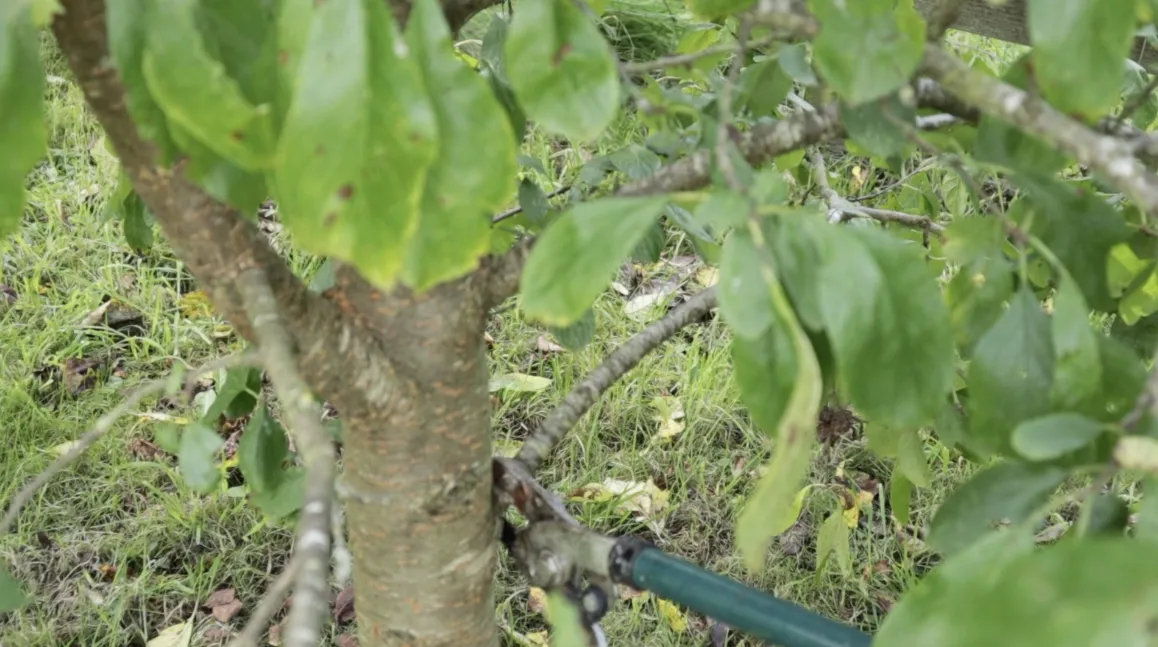
It’s always best to remove these lower branches back to the main trunk of the tree. This is sometimes known as a crown lift.
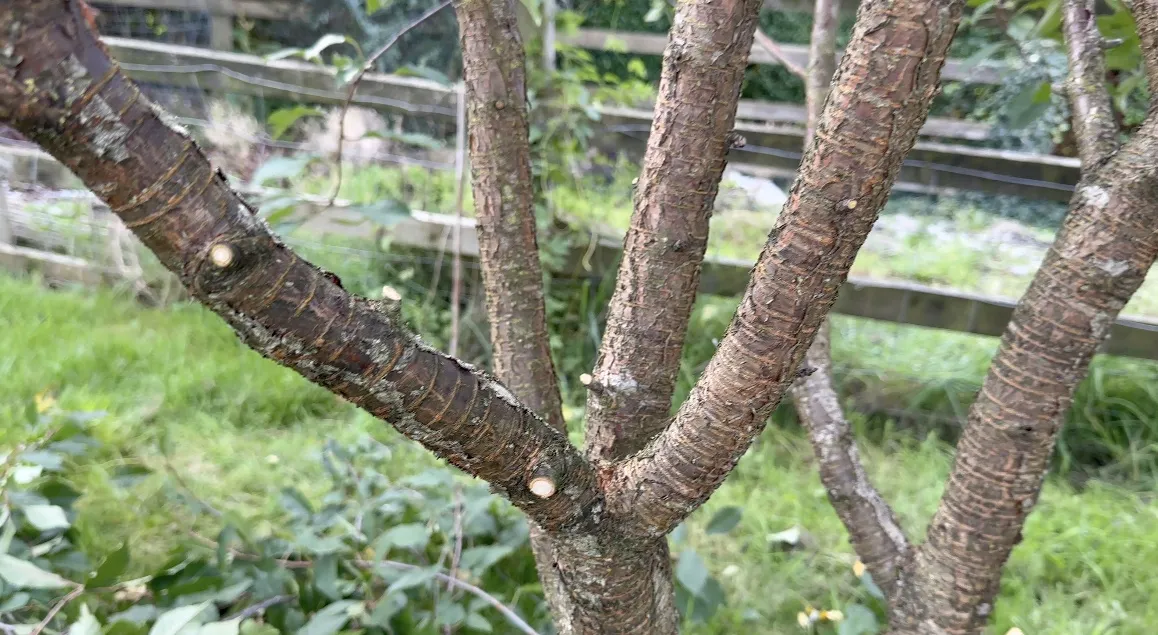
After you finish pruning, clean and disinfect your tools to prevent the transmission of disease. Dip the blades in a solution of one part bleach to nine parts water, or use a dedicated garden disinfectant spray, then rinse and dry them thoroughly.
🛒 Buy Citrox natural garden disinfectant from Amazon UK
It’s then time to sharpen your tools, ready for your next pruning session. Using a whetstone, sharpen your secateurs and loppers so they always stay razor sharp. It makes pruning cuts easier and yields better results for your fruit tree.
Finally, add a layer of mulch around the base of the tree to conserve moisture and deter weeds. Additionally, consider feeding your cherry tree with a balanced fertiliser in late winter or early spring to provide essential nutrients for growth and fruit production.
I’ve mentioned both diseases already, but they’re important enough to explain properly, since understanding what you’re actually protecting against makes the summer-only pruning rule feel a lot less arbitrary.
Silverleaf disease, caused by the fungus Chondrostereum purpureum, affects various woody plants, particularly fruit trees and ornamental trees. It is characterised by the distinctive silver-grey appearance of infected leaves and branches.
The fungus enters the plant through pruning cuts or wounds and spreads internally, inhibiting the flow of water and nutrients within the tree. As a result, affected leaves may develop a silver sheen, and branches can become weak, dieback, or die entirely. The spores are most active during the cold, wet autumn and winter months, which is exactly why a summer prune, when the tree heals a fresh cut within a week or two, is so much safer.
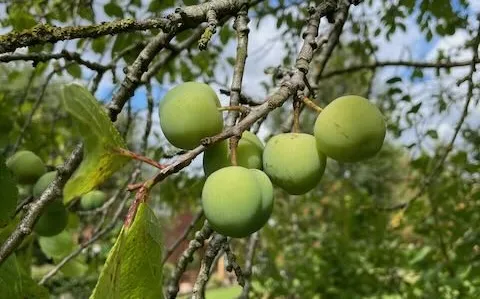
Bacterial canker is the other major threat to cherry trees, and it’s just as serious. It shows up as sunken, dead patches of bark on the trunk and branches, and the most obvious giveaway is gummosis, a thick, amber coloured, gummy resin that oozes heavily from the infected bark. Like silver leaf, it enters through pruning wounds and spreads fastest in cold, wet conditions, which is another reason the late summer pruning window matters so much for this genus.
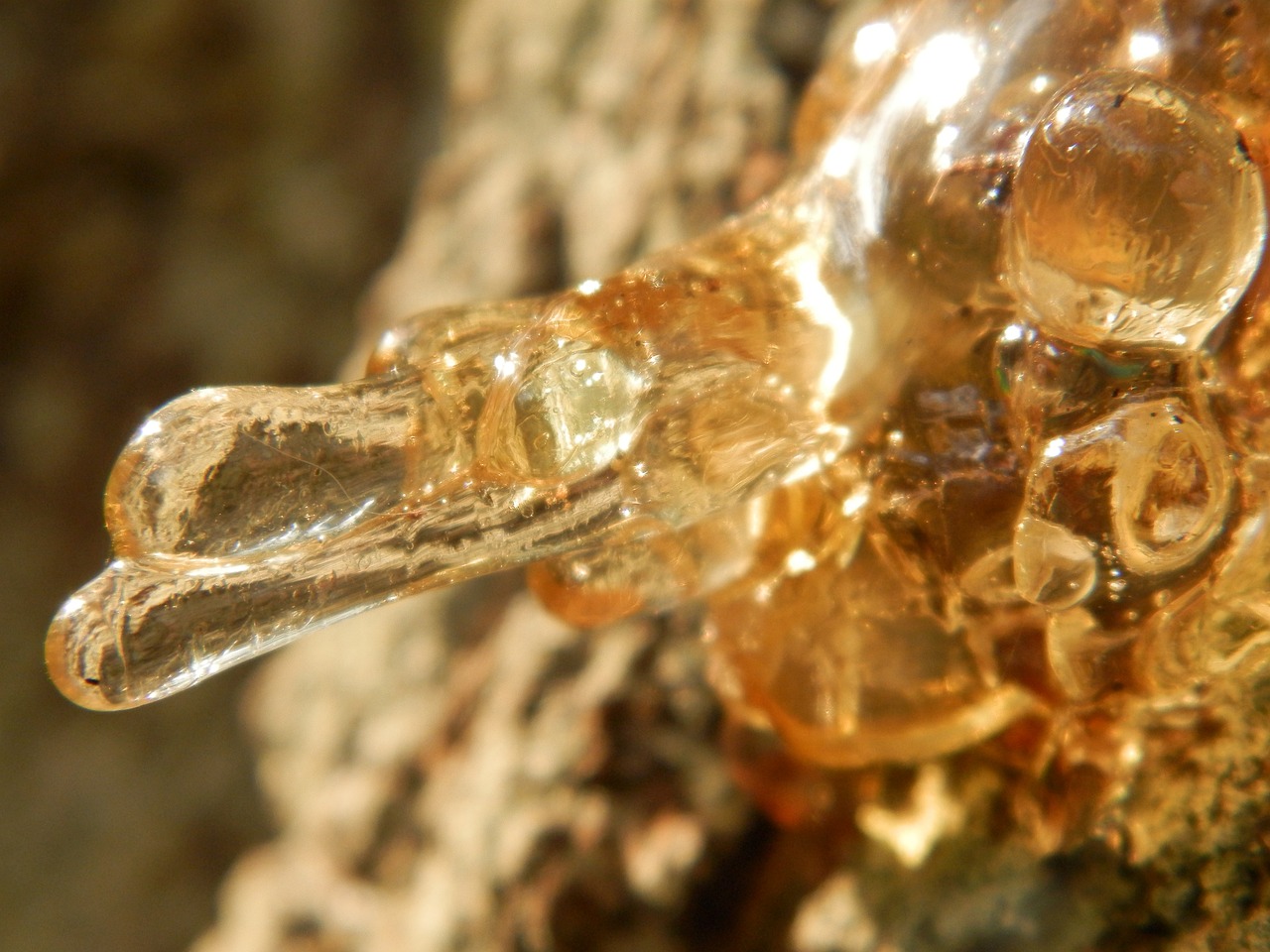
If you spot either disease, cut well back into completely healthy wood, disinfecting your tools between every single cut, and dispose of the infected material rather than composting it. There’s no chemical cure for either once established, so timing and hygiene really are your only meaningful prevention.
When it comes to pruning Cherry trees, gardeners make a number of mistakes. If you avoid the problem pruning mistakes below, you can guarantee that your Cherry tree will be healthier and more productive. Let’s take a look at the top reasons why people’s Cherry trees fail to fruit or look unhealthy.
Now that you know how to prune a cherry tree why not visit my other beginner fruit tree pruning guides to make sure that all of your garden trees are as healthy and productive as can be?
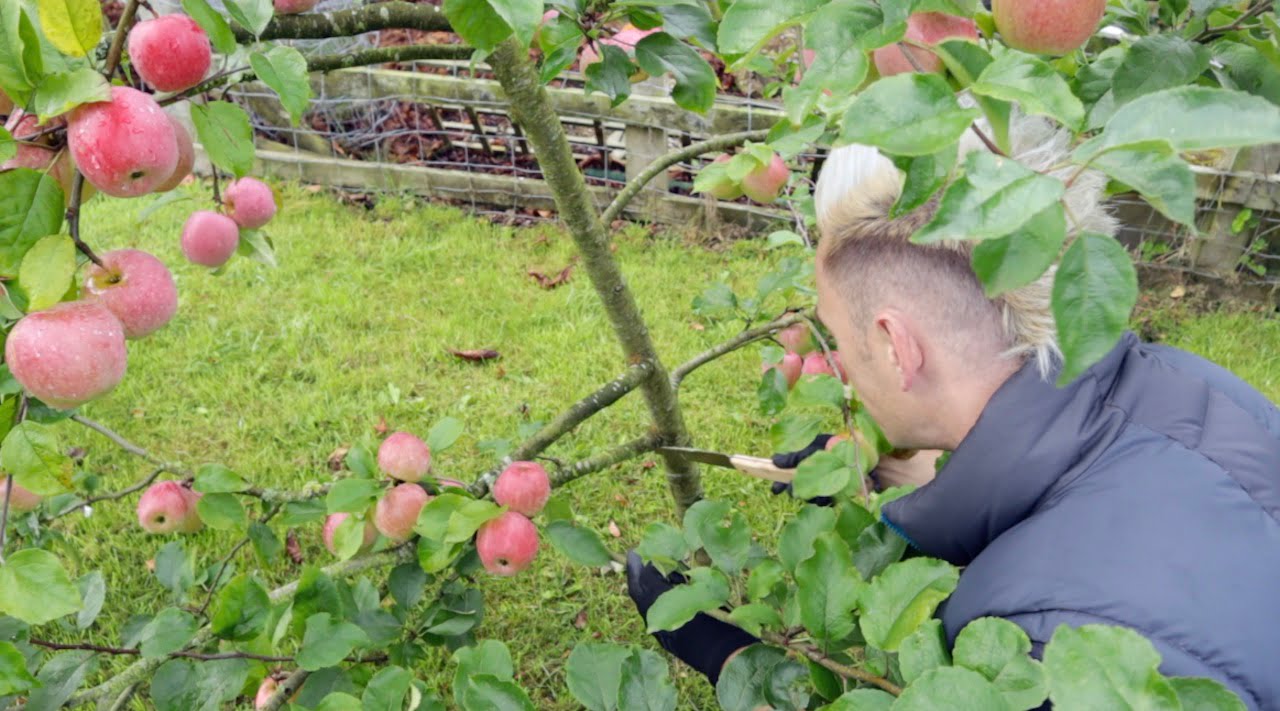
Late July to the end of August is ideal for most cherry trees, since this is shortly after harvest for sweet varieties and gives wounds plenty of warm, dry weather to heal quickly. Acid cherries can also be pruned in early spring before bud break if needed.
No, this is the single biggest mistake gardeners make with cherry trees. Winter pruning wounds heal slowly in cold, wet conditions, leaving the tree exposed to silver leaf disease and bacterial canker for months. Only remove storm damaged or truly dangerous branches in winter, and consider a wound sealant on those emergency cuts.
Never remove more than around a quarter of the live canopy in a single season. Established trees usually only need 10 to 15% removed for routine maintenance. Overgrown trees are better tackled with a gradual reduction spread across two or three summers rather than one heavy cut.
Yes. Sweet cherries fruit on older wood and need a framework building up over years, pruned lightly after harvest. Acid cherries fruit almost entirely on the previous year’s growth and need a proper annual renewal prune to encourage fresh fruiting shoots, or the crop ends up sparse and stuck at the tips of overlong branches.
This is gummosis, the classic sign of bacterial canker. Cut back into healthy wood well beyond the affected area, disinfecting your tools between every cut, and remove the infected material from the garden rather than composting it.
Not for routine summer pruning. The RHS no longer recommends wound paint for healthy cuts made at the right time of year. It’s only worth considering as a thin protective coat on emergency winter cuts made on storm damaged branches, where the wound is exposed during the highest risk months.

Join over 100,000 gardeners on YouTube
Free gardening videos from the Garden Ninja, with 8 million views and counting.
Subscribe on YouTube, it’s freeReady to transform your gardening skills beyond just plopping plants in pots on your balcony? Garden Ninja’s expertly crafted online courses will fast-track your development from keen amateur to skilled garden designer in months rather than years. Starting at just £29, you’ll gain access to professional garden design expertise from BBC Garden Rescue’s Lee Burkhill, delivered at a fraction of traditional horticultural education costs.
For the garden you’ve already got, not the one you’re starting from scratch. Seven checklists and video lessons from BBC Garden Rescue’s Lee Burkhill, built to help you work out what’s worth keeping before you spend a penny.
Garden Design Examples for Small Gardens: 30 Design Templates & Planting Plans: In this online gardening course, I’ll walk you through 30 fantastic garden designs, explaining the logic behind the layout, the plant choices, and take-home tips for applying them in your own garden.
Learn how to transform and design your own garden with Lee Burkhills crash course in garden design. Over 5 hours Lee will teach you how to design your own dream garden. Featuring practical design examples, planting ideas and video guides. Learn how to design your garden in one weekend!
Garden Design for Beginners Online Course: If you want to make the career jump to becoming a garden designer or to learn how to design your own garden, this is the beginner course for you. Join me, Lee Burkhill, an award-winning garden designer, as I train you in the art of beautiful garden design.
Pruning a cherry tree is an artful process that enhances the tree’s health, appearance, and fruit production. By following these steps and giving your cherry tree some well-deserved attention, you’ll enjoy a bountiful harvest of delicious cherries and a beautiful addition to your garden.
So, grab your pruning tools, put on your gardening gloves, and embark on a journey to unlock the beauty and bounty of your cherished cherry tree.
Make sure you visit my Youtube channel, for more gardening guides. You can also check out my Tweet, Facebook or Instagram for more garden help and tips.
Happy pruning.
Lee Burkhill, known as the Garden Ninja, is an award-winning garden designer and horticulturist with over 30 years of gardening experience and 15 years as a professional garden designer. A qualified RHS (Royal Horticultural Society) professional, Lee specialises in sustainable garden design and practical horticultural advice. He designs and presents on BBC1’s Garden Rescue and in leading gardening publications. Lee combines three decades of hands-on gardening knowledge with professional design qualifications to help gardeners create beautiful, functional outdoor spaces.
View all posts by Lee Burkhill




JOIN THE NINJAS

Be the first in line for new Guides, Discount codes and Offers