For the garden you’ve already got, not the one you’re starting from scratch. Seven checklists and video lessons from BBC Garden Rescue’s Lee Burkhill, built to help you work out what’s worth keeping before you spend a penny.
69


Today, I’m giving you the exact template I use on private clients’ work and BBC Garden Rescue, completely free. This is not a tick box exercise, but a systematic ‘logical’ approach to understanding what you need from your garden. It helps demystify where to start with any garden design. Showing what’s possible within your constraints, and how to create a design that really works rather than just looking pretty in a photograph or on Pinterest!
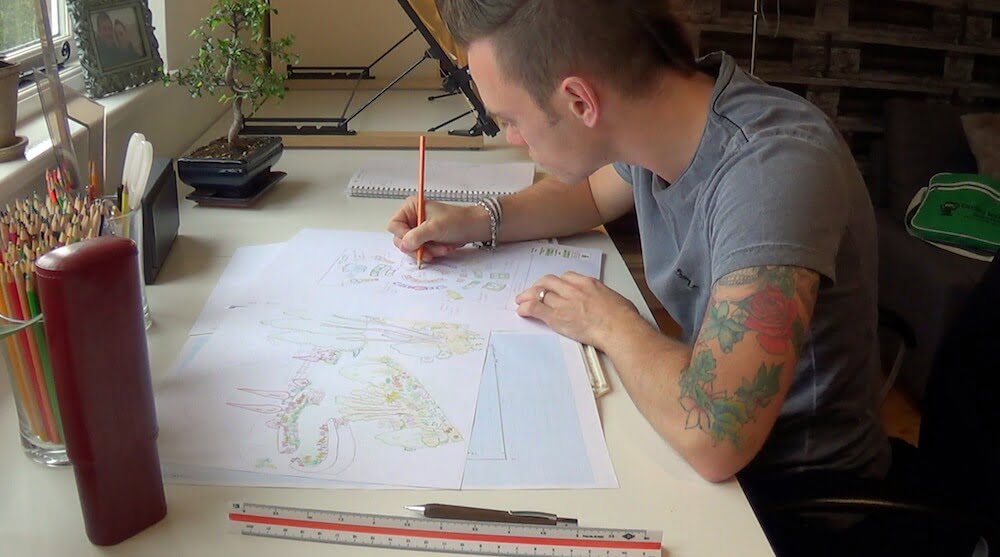
Here’s what makes this even more critical: for Garden Rescue, I design these gardens remotely, working from site surveys, photographs, and videos without visiting beforehand. The first time I physically stand in the garden is on filming day when the homeowners choose my design. That means this brief process has to be absolutely thorough because there’s no opportunity to pop back and check something I’m uncertain about. The jeopardy is real, and the brief is what prevents costly mistakes.
Over 20 years in professional garden design, I’ve seen the same pattern countless times with new gardeners designing their own spaces.
Someone gets excited about creating a beautiful garden, they spend hours browsing Pinterest and Instagram, collecting gorgeous images of gardens they love, and then they dive straight into buying plants and materials without ever properly planning what they actually need.
Six months later, they’re disappointed, frustrated, and often significantly out of pocket with a garden that still doesn’t work for them.
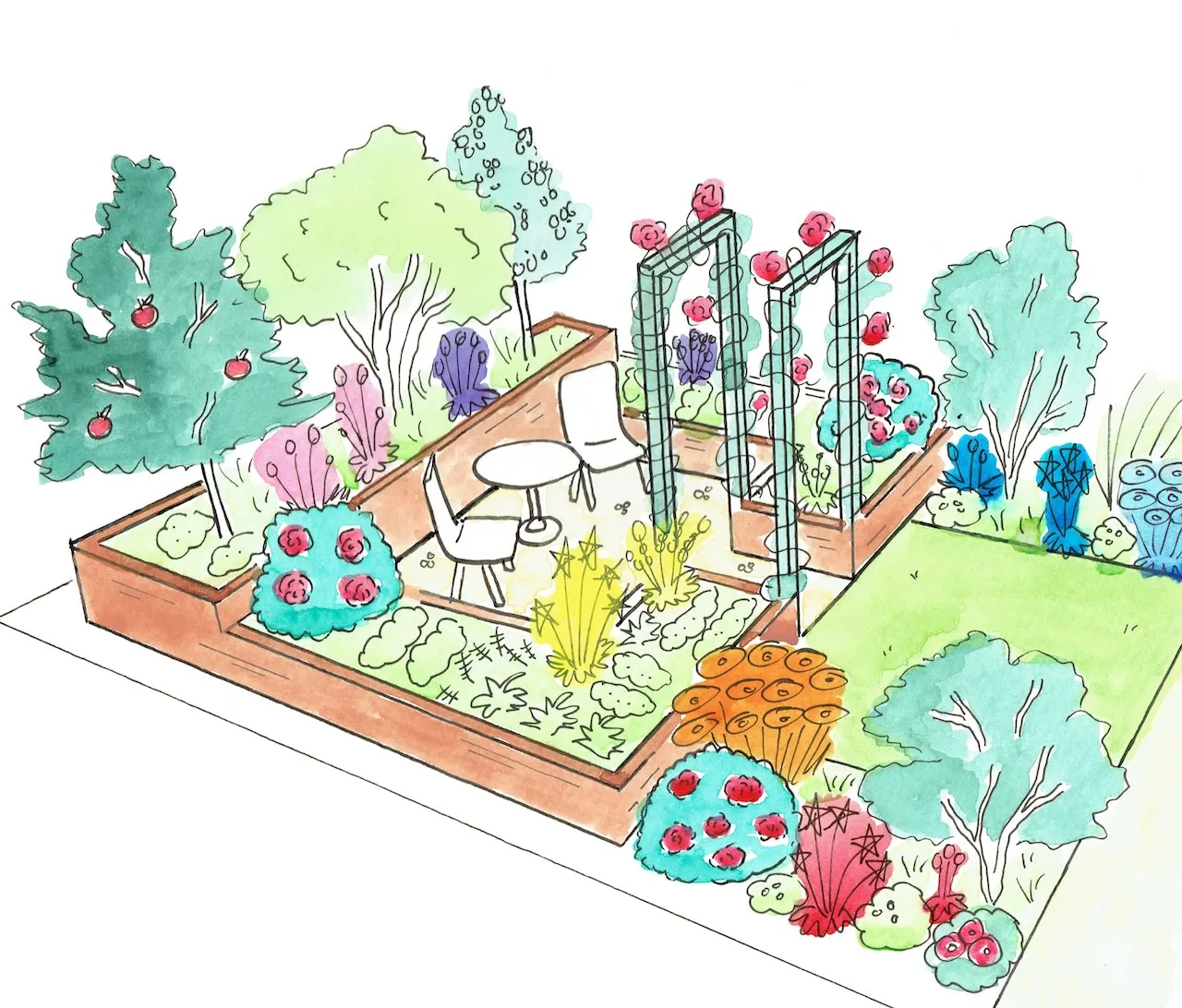
The problem isn’t lack of enthusiasm or budget, it’s starting in the wrong place. Beautiful images are inspiring, but they’re someone else’s garden, designed for someone else’s life, in someone else’s space, with someone else’s budget and skill level.
What works spectacularly in a large, south-facing, country garden with a full-time gardener simply won’t translate to a small, shaded, urban space maintained by someone who works full-time and has young children. Trying to copy without understanding why things work is a recipe for disappointment.
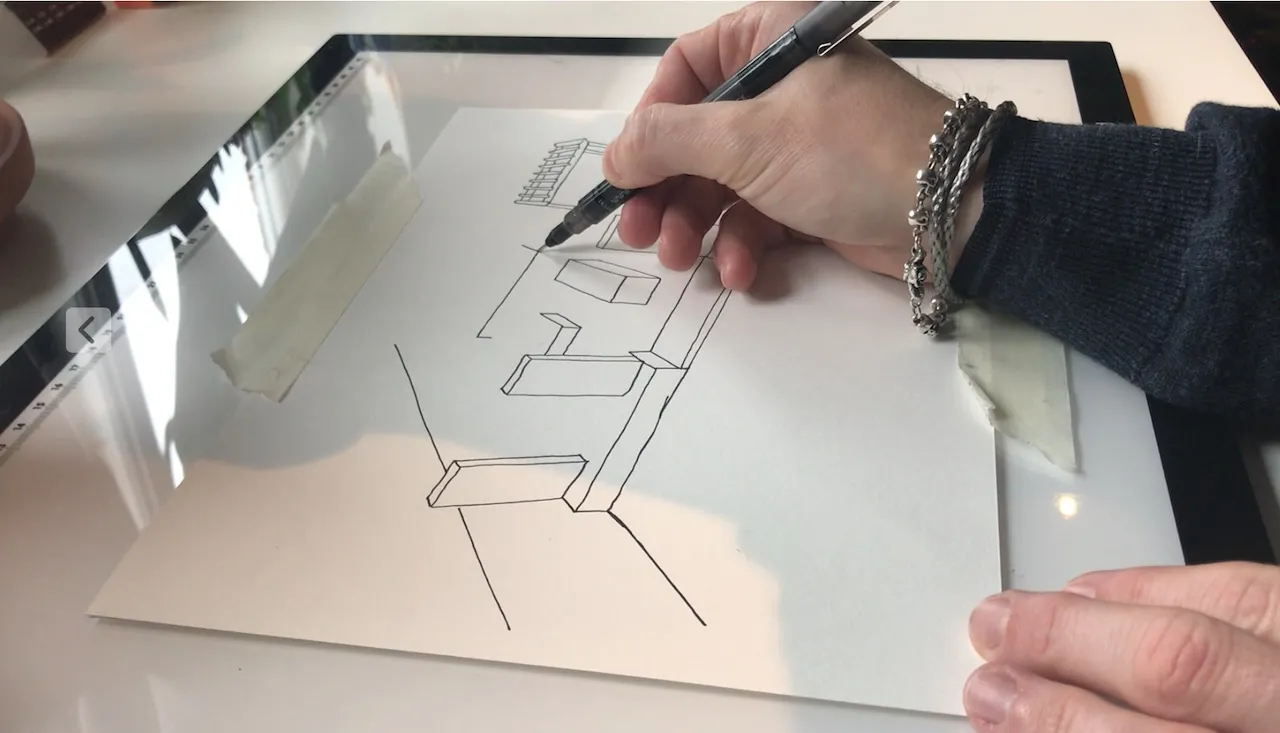
Professional garden design starts with questions, rather than assuming answers or jumping straight to the solution. It begins with understanding the site’s opportunities and constraints, the people who’ll use the space and how they’ll use it, the budget and timescale that define what’s realistic, and the maintenance capabilities that determine what’s sustainable.
Skip this foundational work, and you’re building on metaphorical sand, constantly guessing what to do and hoping it works. Invest time in a proper brief, and every decision that follows becomes clearer and more confident. Not to mention easier to cost and quantify!
The other reason designs fail is vague aspirations rather than concrete requirements. “We want a low-maintenance garden” means completely different things to different people. For some, it means no lawns because they hate mowing. For others, it means drought-tolerant plants because they forget to water. For someone else, it might mean no annual bedding because they can’t be bothered replanting twice a year.
Until you dig deeper and understand the real issues and priorities, you’re designing in the dark.
What I’ve learned through hundreds of garden transformations is that the time spent on a thorough brief is never wasted.
It prevents expensive mistakes, clarifies priorities when tough budget decisions need to be made, helps you communicate clearly with contractors or plant suppliers, and ultimately results in gardens that people genuinely love living with rather than gardens that just look good on Instagram for a few weeks before reality sets in.
This template represents two decades of experience distilled into the essential questions that reveal what a garden needs to be. I use these same questions whether I’m designing for Garden Rescue, working with private clients, or planning my own garden projects. They’re not just random queries, they’re carefully structured to uncover the information that shapes every design decision from overall layout through to individual plant selection.
Every garden needs a primary purpose that guides all other decisions. Is this fundamentally an entertainment space where you’ll host gatherings and dinners? A family garden where children need room to play and explore? A horticultural showcase where you’ll indulge your plant-collecting passion? A wildlife haven designed primarily to support local biodiversity? A productive space for growing food? Or a peaceful retreat where you’ll sit and relax after busy days?
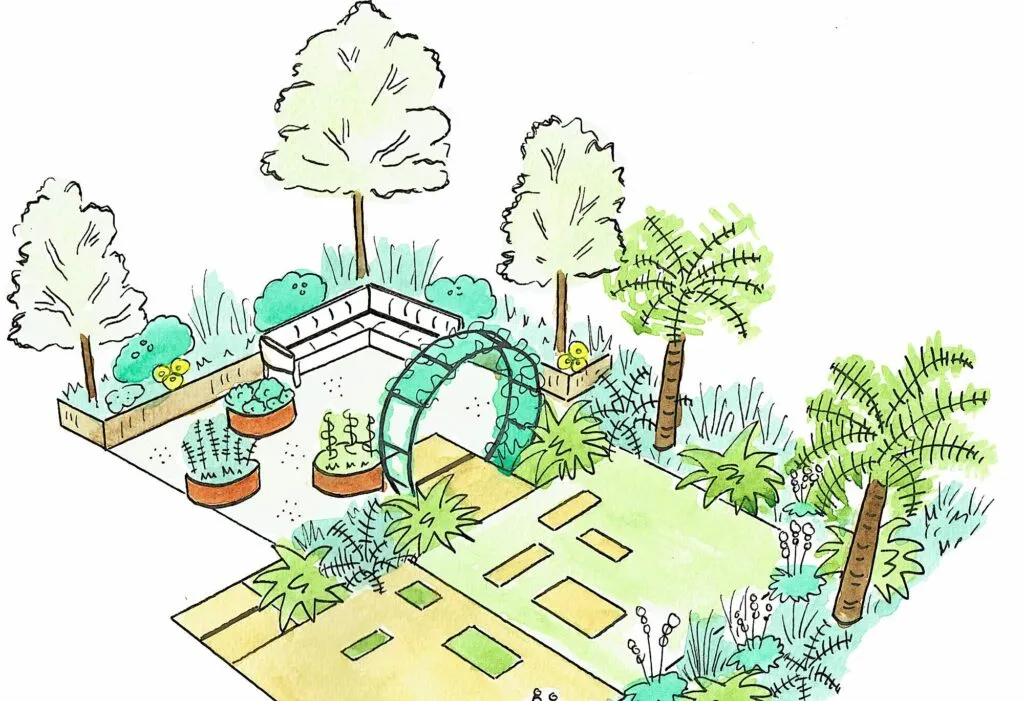
Gardens can serve multiple purposes or functions, but there needs to be a hierarchy. Trying to give equal weight to everything results in confused spaces that don’t excel at anything. A garden designed primarily for children’s play will allocate space very differently from one designed primarily for entertaining adults, even if both gardens include elements of the other. Understanding the primary purpose shapes fundamental decisions about layout, materials, planting, and ongoing management.
I’ve seen this play out repeatedly on Garden Rescue. When homeowners are unclear about the primary purpose, we end up going round in circles during the design process. Once we establish that, for example, the garden is fundamentally about creating a safe outdoor classroom for home-educated children, suddenly every decision becomes much easier. The aesthetic style, the material choices, the plant selection, all of it flows naturally from that clear sense of purpose.
Gardens are used by real people with real needs, and those people need to be at the centre of design decisions. Are there young children who need safe surfaces and open space? Teenagers who want privacy from parents and somewhere to hang out with friends? Elderly relatives who visit regularly and need easy access? People with mobility challenges who require level surfaces and handrails? Enthusiastic gardeners who’ll spend hours maintaining plants? Pet dogs who need exercise space and won’t respect pristine lawns?
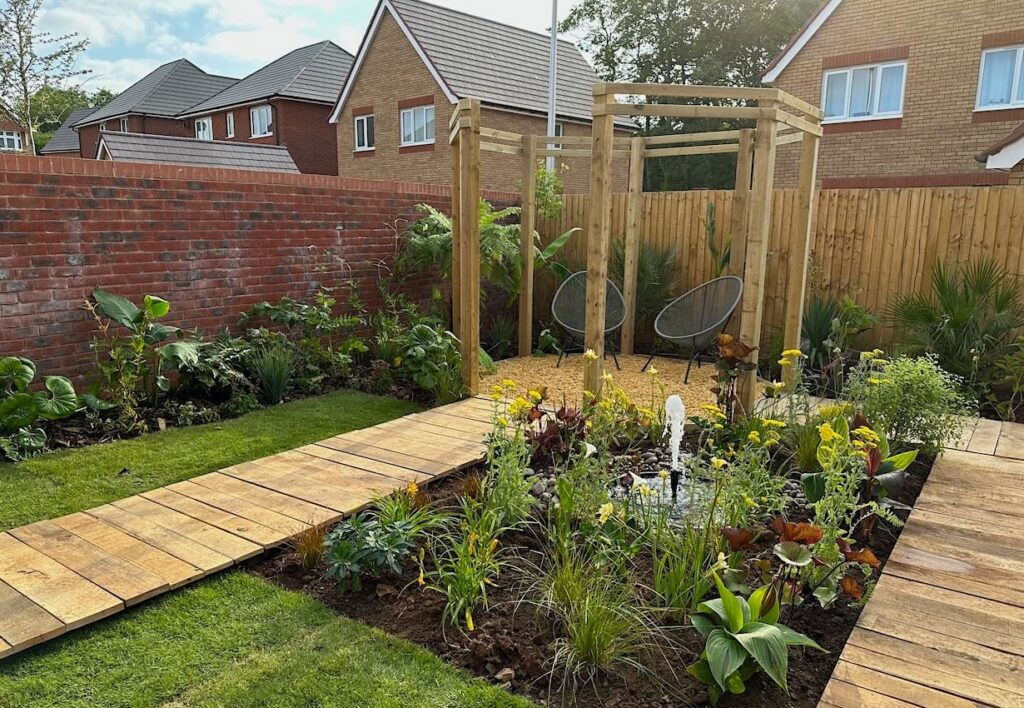
Understanding who uses the space shapes everything from safety considerations to maintenance planning. A garden for a family with toddlers needs very different design thinking than one for retired empty nesters who’ve waited their whole lives to create their dream garden. The first prioritises safety, durability, and spaces for messy play. The second can include more delicate plants, precious materials, and areas that require careful attention.
Think also about how people move through and use the garden. Do you tend to sit in one favourite spot, or do you like to move around following the sun? Do you host large groups that need ample seating, or is it usually just the two of you? Do children need clear sight lines from the house for supervision? Do you work from home and want to use the garden during the day, or is it primarily an evening and weekend space? These patterns of use significantly influence design decisions.
This is where we get concrete about essential requirements. Not vague wishes, but specific elements that absolutely must be included for the garden to work. Perhaps you need a secure boundary for dogs, a greenhouse for serious vegetable growing, or a substantial seating area that can accommodate family gatherings of 12 or more people. Maybe you need storage for bikes and garden tools, a washing line hidden from view, or a play area visible from the kitchen window.
Must-haves help prevent that disappointing moment when a beautiful design is complete, but you realise there’s nowhere to store the bins, no tap for filling watering cans, and the seating area is too small for your regular Sunday lunches. These practical requirements need to be addressed up front so the design can incorporate them elegantly rather than adding them awkwardly as afterthoughts.
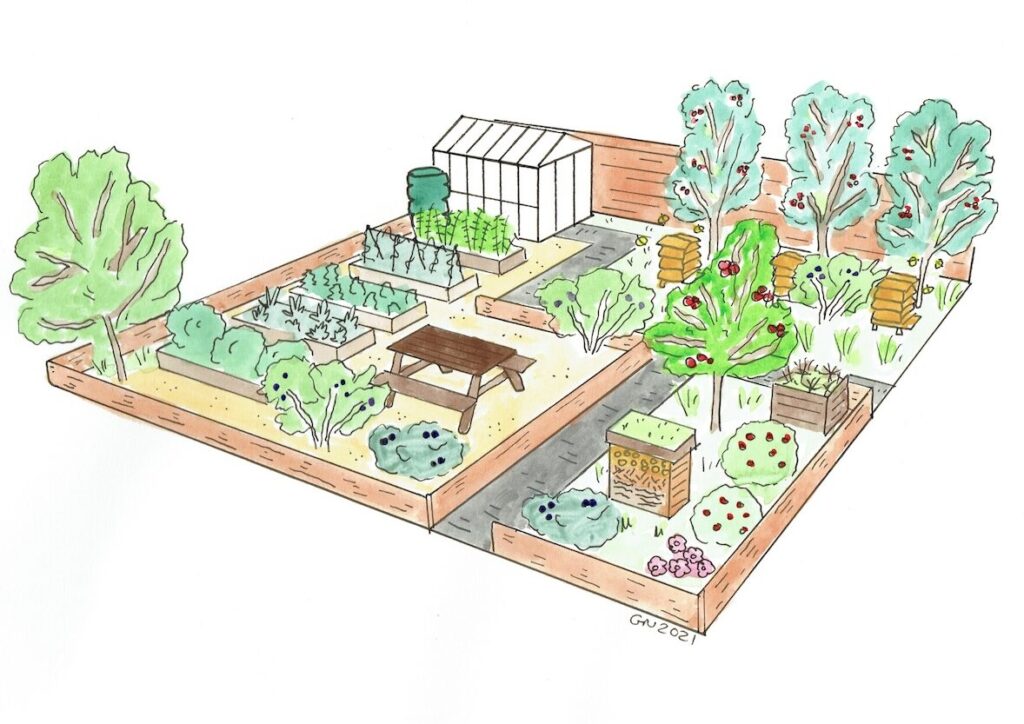
Prioritise your must-haves honestly. Not everything can be essential. If you’ve got a long list of must-haves and a modest budget, something has to give. Being clear about absolute requirements versus nice-to-haves makes those inevitable trade-off decisions much easier when budget realities bite.
Just as important as what you do want is what you absolutely don’t want. Perhaps you hate lawns because you associate them with childhood chores, or you’re allergic to certain plants, or you’ve had problems with water features and never want another one, or you can’t stand the rustling of bamboo. These deal breakers are just as important as must-haves because they prevent the design from including elements you’ll actively dislike.
Often, deal breakers reveal important information about past frustrations or failures. If someone says “no high-maintenance plants,” I want to know what happened with the previous plants that led to this rule. Were they trying to grow sun lovers in shade? Did they have unrealistic expectations? Were they maintaining plants incorrectly? Understanding the root cause helps ensure we not only avoid the specific plant but also address the underlying issue.
I’ve learned to take deal breakers seriously, even when they seem arbitrary or unusual. A client once told me she hated all yellow flowers because they reminded her of a particularly difficult period in her life. That’s a completely legitimate constraint that shapes plant selection, and respecting it ensures she’ll love her garden rather than being constantly reminded of something negative.
This might be the most important question of all because it determines what’s sustainable long term. How many hours per week will you realistically spend maintaining your garden? Not how many hours you’d like to spend in an ideal world, but how many you actually will spend given work commitments, family responsibilities, other hobbies, and the simple truth that some weeks life gets in the way.
Be brutally honest here. One to two hours weekly? That’s enough for a modest garden designed for appropriate maintenance. Five to ten hours weekly? You can manage much more ambitious planting and maintain higher standards. Thirty minutes weekly? You need a very carefully designed, low-maintenance garden with robust plants and minimal fuss. Zero hours weekly? You need professional maintenance or a garden that’s essentially self-sustaining with just occasional input.
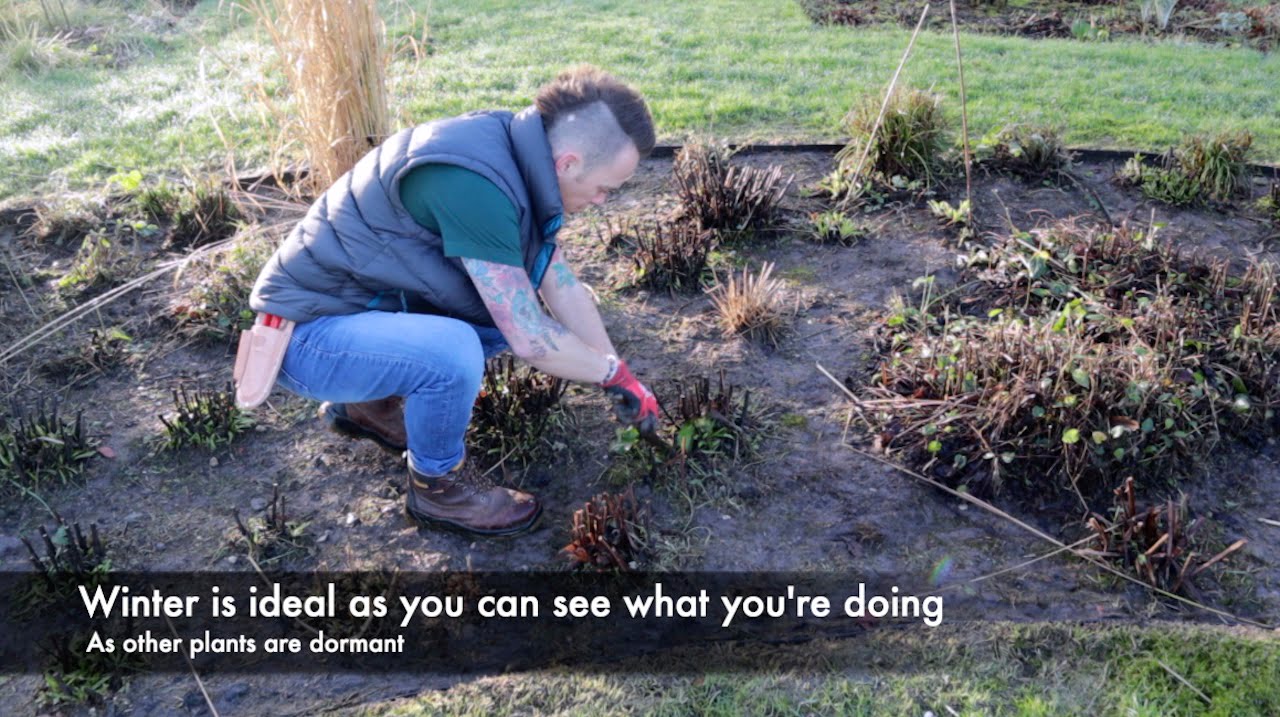
Also consider which maintenance tasks you enjoy versus which you’ll avoid. Some people love deadheading roses and pruning shrubs but hate mowing lawns. Others find mowing meditative, but can’t be bothered with fiddly plant care. Design around what you’ll actually do, not what you theoretically should do. A garden that works with your natural inclinations will be maintained, whilst one that requires tasks you hate will gradually deteriorate, regardless of your good intentions.
Now we can start thinking about aesthetics. What garden styles appeal to you? Contemporary and minimalist with clean lines and a limited plant palette? Traditional cottage garden with exuberant planting and relaxed charm? Formal and structured with clipped hedges and symmetrical layouts? Naturalistic and wild with meadow planting and flowing forms? Mediterranean with drought-tolerant plants and sun-baked textures?
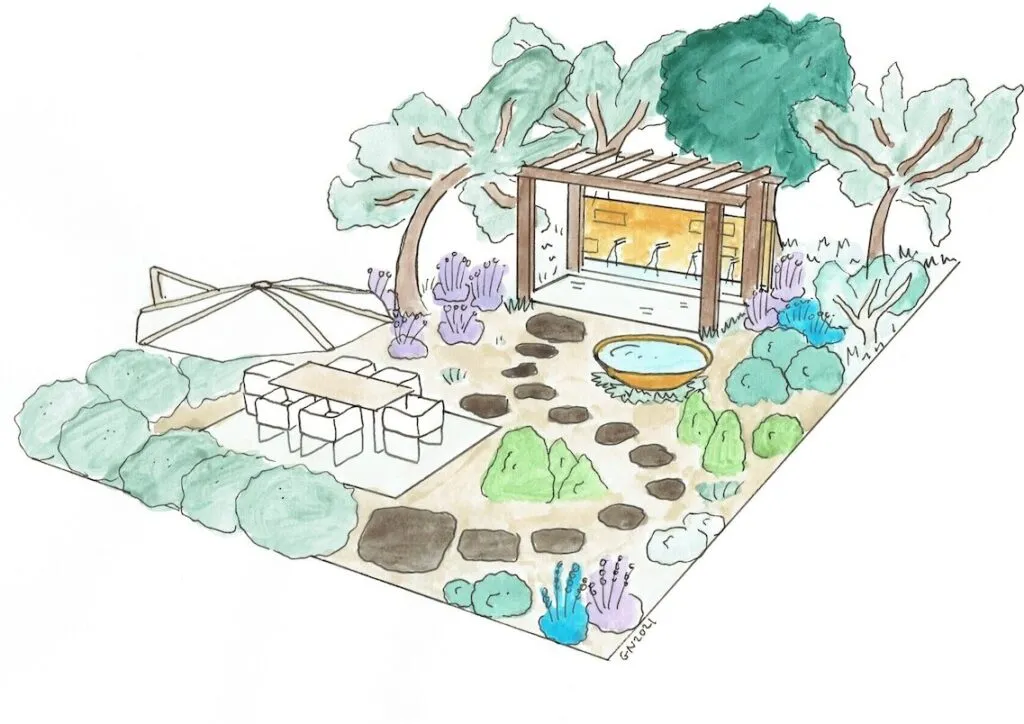
Look at images of gardens you love and try to identify common threads. Is it the colour schemes that attract you? The types of plants? The hard landscaping materials? The overall feel or atmosphere? Understanding what draws you to certain styles helps translate vague preferences into concrete design decisions. Saying “I love contemporary gardens” is useful, but saying “I’m drawn to contemporary gardens because I love the clean lines, limited colour palette, and use of structural plants like grasses and bamboos” gives much clearer direction.
Don’t feel constrained by style labels. Many successful gardens blend elements from different styles, creating something unique that suits the specific space and people. A formal structure softened with cottage garden planting, or a naturalistic meadow contained within contemporary hard landscaping, can work beautifully. Style is a guide, not a straitjacket.
Colour is deeply personal and profoundly affects how we experience gardens. Some people love hot colours, the vibrant reds, oranges, and yellows that create energy and excitement. Others prefer cool palettes, the calming blues, purples, and silvers that create tranquillity. Some want sophisticated single-colour schemes, perhaps an all-white garden or a purple-and-silver border. Others embrace the full rainbow with joyful abandon.
Think about colours you gravitate towards in other areas of your life. Your clothes, your home interiors, the art you choose, all these reveal colour preferences that probably extend to garden design too. If your entire wardrobe is neutral tones, you’re unlikely to love a riot of clashing hot colours in your garden. If your living room is bold and dramatic, a pastel garden might feel insipid by comparison.
Consider also whether you want flower colour or foliage interest. Some gardens rely heavily on flowering plants for colour impact, whilst others use foliage colours, textures, and forms to create sophisticated schemes that work year-round. Foliage-focused gardens often have more sustained interest because flowers are inevitably seasonal, whilst leaves can provide interest for many months or even year-round with evergreens.
When do you use your garden most? Are you there primarily in summer, making that the season to prioritise for peak interest? Do you work shifts that mean you’re often home during weekdays in quieter seasons? Are you away for long summer holidays but home all winter? Do you primarily entertain in autumn, hold spring garden parties, or use the space year-round?
Understanding seasonal use helps prioritise where to invest in creating interest. If you’re rarely home in summer because you’re travelling, there’s no point in creating stunning summer borders at the expense of other seasons. Conversely, if summer is when you practically live outside, that’s where design effort should focus, whilst ensuring the garden doesn’t look completely dead the rest of the year.
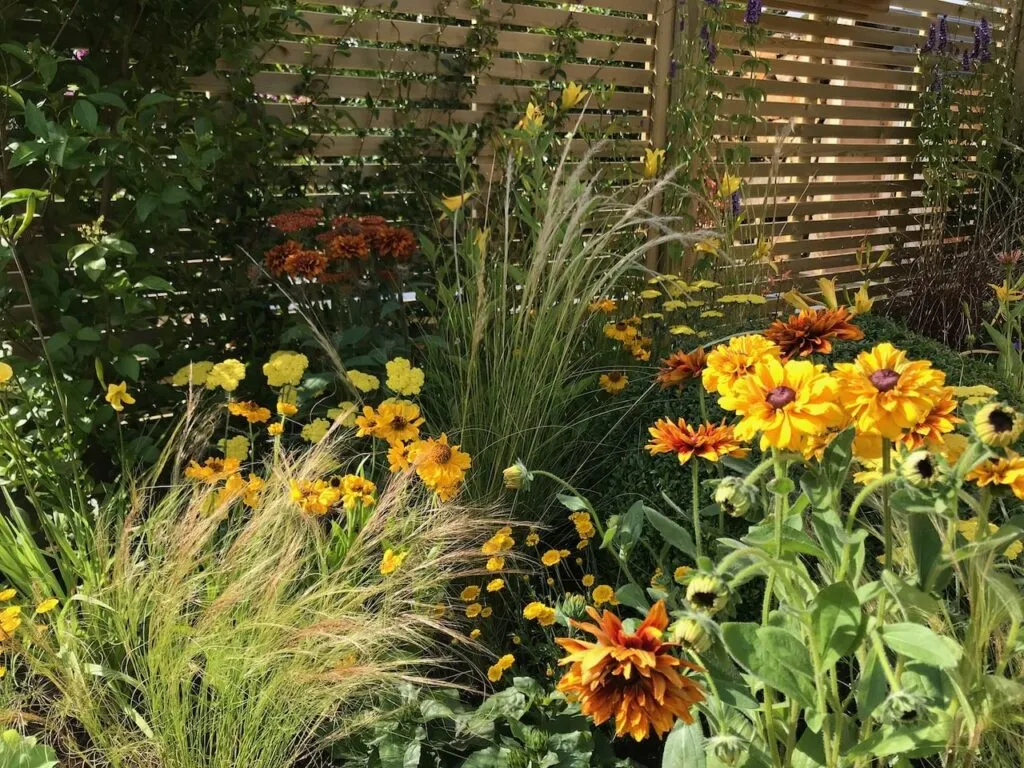
Consider also seasonal challenges specific to your site. Are you exposed to harsh winter winds that limit what survives? Do you get spring waterlogging, which means early interest needs to come from plants that tolerate wet feet? Is summer drought a regular issue requiring emphasis on drought tolerant species? These seasonal realities shape plant selection and design details in important ways.
Money talk makes everyone uncomfortable, but clarity about the budget prevents disappointment and helps make smart decisions about where to invest. What’s your realistic total budget for the project? This should include everything: materials, plants, labour if you’re using it, tools and equipment you’ll need to buy, and contingency for unexpected issues.
Consider whether you’re doing the work all at once or phasing it over time. Phasing lets you spread costs and adjust plans based on how earlier phases work out, but it also means living with an incomplete garden longer. If phasing, what’s the budget for each phase, and how will phases work together towards the final vision?
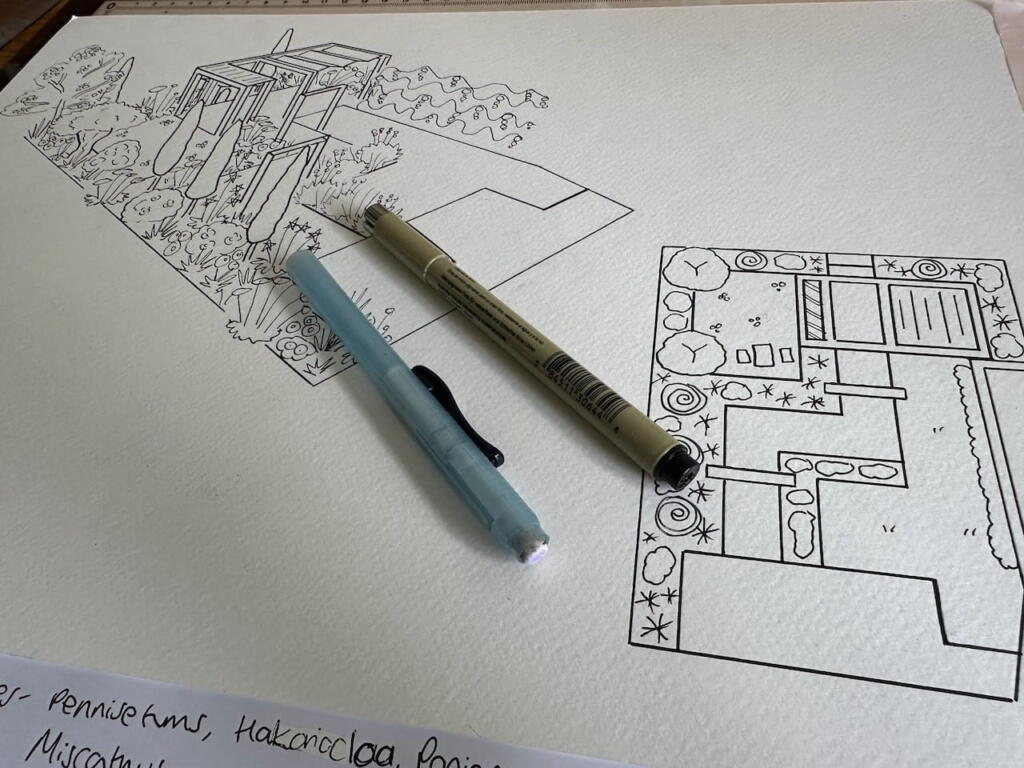
Think about the split between hard landscaping, plants, and features. Typically, hard landscaping takes 40 to 50% of budget because materials and labour are expensive, plants take 25 to 30%, features like pergolas or water elements take 15 to 20%, and you keep 10 to 15% as contingency. If your budget doesn’t allow this kind of split, you need to adjust expectations or phase the work.
Now we get into the practical realities that determine what’s possible. What are your sun and shade patterns throughout the day and across seasons? Is the garden south-facing with full sun, north-facing and predominantly shaded, or somewhere in between? Are there trees casting shade that change seasonally, or buildings creating permanent shadow?
What’s your soil like? Clay, sand, loam, chalk? How well does it drain after heavy rain? Are there areas that stay soggy, or spots that dry out quickly? Is the soil acid, neutral, or alkaline? This affects what plants will thrive and what site improvements you might need. You can run simple tests yourself, but professional soil analysis is relatively inexpensive and provides detailed information on pH, nutrient levels, and soil structure.
Consider exposure to wind and weather. Are you on an exposed hilltop, in a sheltered valley, or somewhere in between? Wind can be incredibly damaging to plants and make gardens uncomfortable to use. Frost pockets exist in low-lying areas where cold air accumulates, limiting what survives winter. Understanding these microclimates helps select plants that’ll thrive rather than merely survive.
What practical limitations affect what’s possible? Access is crucial; if you can only reach the garden through the house, it limits the sizes of materials and requires protecting floors during construction. Boundaries might have restrictions; perhaps you’re not allowed to alter existing fences in rented properties, or planning rules limit wall heights. Underground services such as drains, water pipes, gas lines, and electrical cables constrain where you can excavate.
Are there existing elements you’re keeping? Mature trees, established shrubs, patios or structures that are staying put? These fixed points need to be incorporated into the design rather than being afterthoughts. Sometimes constraints become features; that awkward tree root could become a reason for raised beds, and the existing patio might define a natural seating zone.
Consider also legal and planning requirements. Are you in a conservation area with restrictions on changes? Do you need planning permission for structures over certain sizes? Are there tree preservation orders limiting what you can do? Getting these practical constraints clear upfront prevents expensive mistakes and redesign work later.
Gardens evolve over time, and so do people’s lives. What future plans might affect the garden? Are you planning to be in this house for decades, or is it a five-year home? Are children growing up and needing less play space? Are you approaching retirement with more time for gardening? Might you develop mobility issues that’ll require easier access and maintenance?
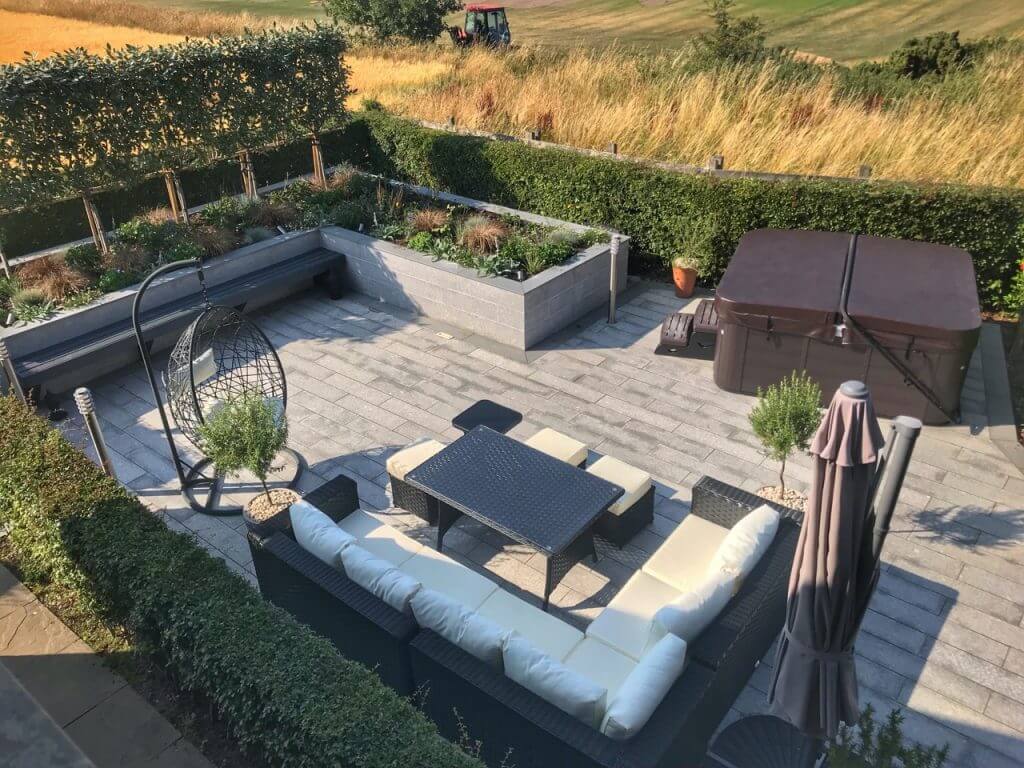
Think about how the garden might need to adapt. Play areas can transition to seating spaces as children age, high-maintenance borders can be simplified as capacity decreases, and productive areas can be introduced as interest and time increase. Designing with flexibility in mind prevents having to start completely over when circumstances change.
Consider also the garden’s own evolution. Most gardens take three to five years to properly mature, but they continue changing beyond that. Trees grow larger, perennials need dividing, and shrubs require rejuvenation. Good design anticipates this evolution, planning for mature sizes and knowing when intervention will be needed to maintain the design intent.
Working through these questions systematically might take an hour or more, and that time is worth every minute. Don’t rush to finish; sit with the questions, think through your answers, and be as honest and specific as possible. Vague or wishful answers lead to vague, compromised designs.
Involve everyone who’ll use the garden in completing the brief. If you live with a partner or family, their needs and preferences matter too. Conflicting priorities, now revealed, can be negotiated and balanced in the design. Hidden differences discovered after construction starts cause arguments and disappointment. The brief process should create shared understanding and agreement about what you’re creating together.
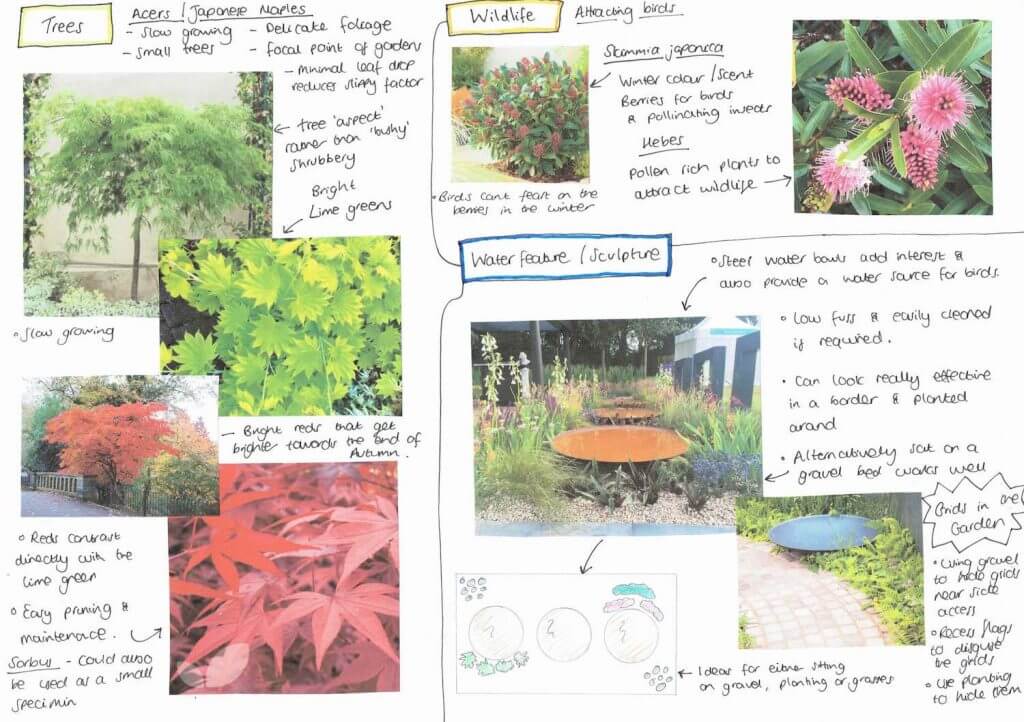
Take comprehensive photos and videos as you think through the questions. For Garden Rescue, I design based on site surveys, photographs, and videos without visiting beforehand, so the quality of the visual documentation directly impacts the quality of the design. Photograph the garden from every angle, at different times of day, in different seasons if possible.
Take shots from key viewpoints inside the house. Document existing features, problem areas, and anything you’re definitely keeping. Video walkthroughs showing how spaces connect and feel. If you’re working with a designer remotely, these materials are their eyes on your site, so be thorough.
Don’t be afraid to revise your answers as you think more deeply. Your first response to “what style do you want?” might be “cottage garden,” but after looking at examples and considering maintenance, you might realise you actually want a contemporary look with a relaxed feel.
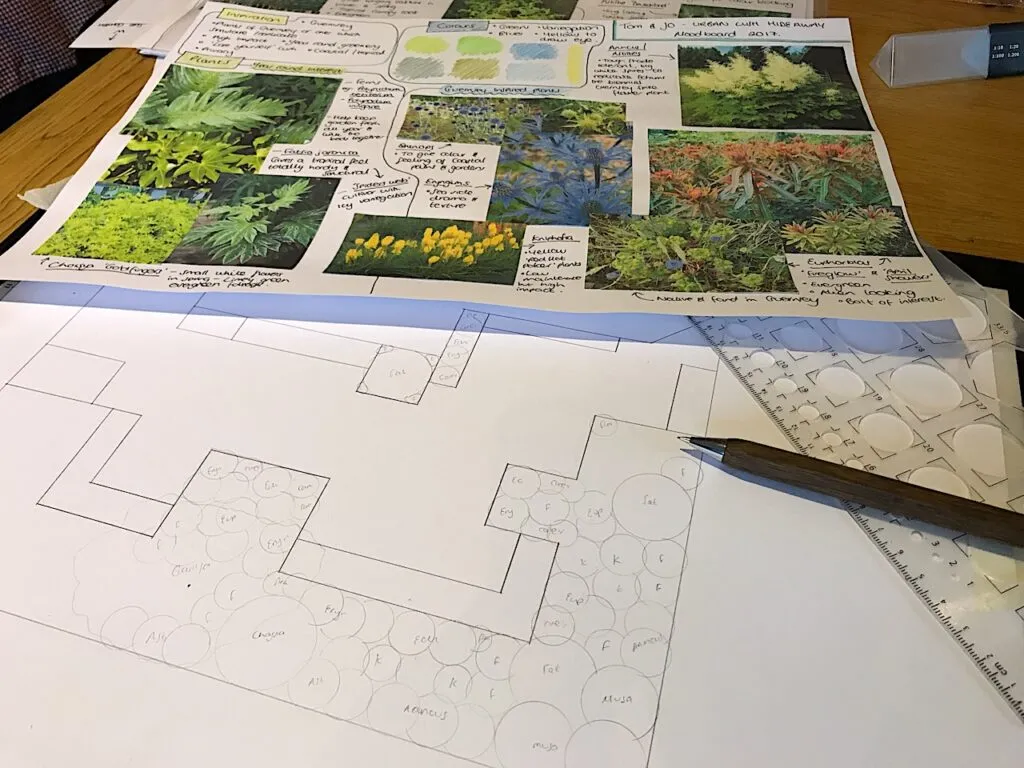
The brief is a thinking tool, not a test with right answers. It’s helping you discover what you really want, not just what you initially thought you wanted.
Once complete, this brief becomes your design compass. Every decision you make during the design and implementation process should reference it.
When you’re unsure about a material choice, plant selection, or layout option, ask which one best serves the requirements in your brief. This prevents getting distracted by attractive options that don’t actually serve your needs.
For Garden Rescue, this brief, combined with thorough photographic documentation, allows me to design with confidence despite never having visited the garden beforehand. When I arrive on filming day and see the space for the first time, the design works because the brief revealed everything I needed to know. That same systematic approach works whether you’re designing your own garden or working with a professional.
Completing this brief is just the first step in the design process. Once you’ve got clarity about what you need, you need to translate those answers into an actual design. That means understanding site analysis techniques that work from photographs and surveys, layout planning principles that create functional spaces, plant selection strategies that ensure success, budget allocation methods that maximise every pound, and implementation planning that gets results.
These are exactly the skills I teach in my comprehensive Garden Design for Beginners course, the same systematic methodology that allows me to design 100-plus Garden Rescue gardens remotely with confidence. If I can design a complete garden transformation from photos, videos, and a brief without visiting beforehand, you can certainly design your own garden using these same professional techniques.
For the garden you’ve already got, not the one you’re starting from scratch. Seven checklists and video lessons from BBC Garden Rescue’s Lee Burkhill, built to help you work out what’s worth keeping before you spend a penny.
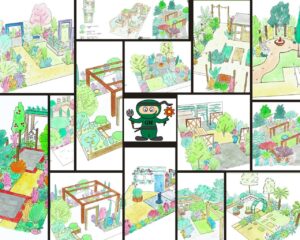
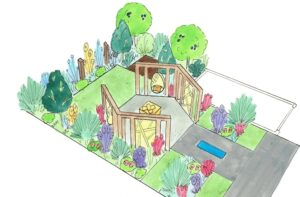
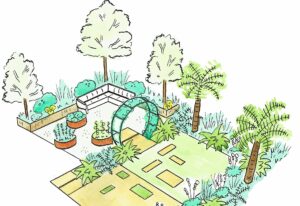
Garden Design Examples for Small Gardens: 30 Design Templates & Planting Plans: In this online gardening course, I’ll walk you through 30 fantastic garden designs, explaining the logic behind the layout, the plant choices, and take-home tips for applying them in your own garden.
Learn how to transform and design your own garden with Lee Burkhills crash course in garden design. Over 5 hours Lee will teach you how to design your own dream garden. Featuring practical design examples, planting ideas and video guides. Learn how to design your garden in one weekend!
Garden Design for Beginners Online Course: If you want to make the career jump to becoming a garden designer or to learn how to design your own garden, this is the beginner course for you. Join me, Lee Burkhill, an award-winning garden designer, as I train you in the art of beautiful garden design.
The course takes you from that completed brief through to a finished design you’re confident implementing. You’ll learn:
This isn’t just theory and principles; it’s practical, hands-on training using real garden examples. You’ll see exactly how I apply these techniques to actual Garden Rescue projects, work through exercises developing your own designs, and get feedback on your work from me and the community of over 5,000 students.
Many started knowing absolutely nothing about garden design, but they’re now creating gardens they love or even designing professionally for others. The difference between struggling with your garden and loving it lies in understanding the systematic approach professionals use.
The brief gets you asking the right questions, the course teaches you how to answer them with beautiful, functional design that transforms your outdoor space from a frustrating compromise into a genuine asset you’ll use and enjoy daily.
Get the complete Garden Rescue design brief template I use on every project. This professional PDF includes all 12 questions with guidance on how to answer each one effectively.
What’s included:
Download Free Design Brief Template
The most common mistake in garden design is rushing to solutions before properly understanding problems and requirements. You can’t design effectively until you know what the garden needs to be, who’ll use it and how, what constraints you’re working within, and what success looks like to you specifically. The brief process forces that clarity, preventing expensive mistakes and ensuring the design serves your actual needs rather than looking pretty but working poorly.
I’ve used this briefing process on hundreds of gardens, from tiny urban courtyards to large country plots, from new build blank canvases to mature gardens needing rejuvenation. Every single time, the brief reveals information that shapes the design in crucial ways. Often, homeowners discover needs and preferences they hadn’t previously articulated. The brief process is as much about self-discovery as information gathering.
Download the template, set aside an hour, and work through it thoughtfully. Involve anyone who’ll use the garden, be honest about constraints and capabilities, and resist the temptation to give aspirational answers that don’t reflect reality. The brief only works if you’re truthful with it. Once complete, you’ll have the foundation for creating a garden that genuinely transforms your outdoor space from frustrating afterthought to valued extension of your home.
Happy Gardening Ninjas!



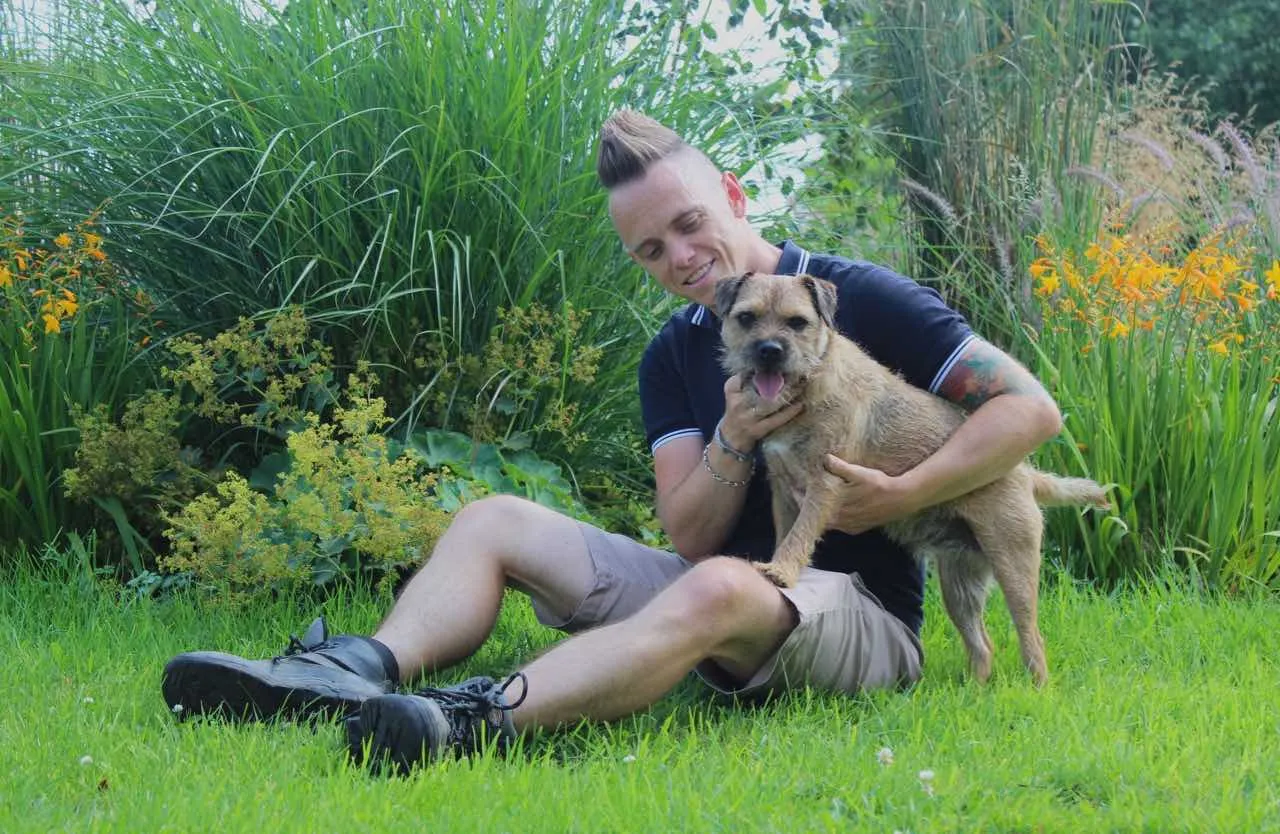
Lee Burkhill, known as the Garden Ninja, is an award-winning garden designer and horticulturist with over 30 years of gardening experience and 15 years as a professional garden designer. A qualified RHS (Royal Horticultural Society) professional, Lee specialises in sustainable garden design and practical horticultural advice. He designs and presents on BBC1’s Garden Rescue and in leading gardening publications. Lee combines three decades of hands-on gardening knowledge with professional design qualifications to help gardeners create beautiful, functional outdoor spaces.
View all posts by Lee Burkhill


JOIN THE NINJAS
Be the first in line for new Guides, Discount codes and Offers