-
How to prune an apple tree: Ultimate beginners guide
 Lee Burkhill: Award Winning Designer & BBC 1's Garden Rescue Presenters Official Blog

Apple trees are a wonderful addition to any garden no matter what size. Available in a number of dwarf sizes and varieties the choice is almost endless! However, most new gardeners get very apprehensive about how and when to prune apple trees. Pruning is essential to enable apple trees to grow healthily and provide a bounty of fruits. This guide will get you up to speed and feeling confident to prune apples trees for success!
Quick Answer
Prune apple trees between November and late February while they are dormant. Remove dead, damaged or crossing wood first, shorten this year’s new growth by a quarter, take out any double leaders, then thin congested growth back to an outward facing bud to keep an open goblet shape.
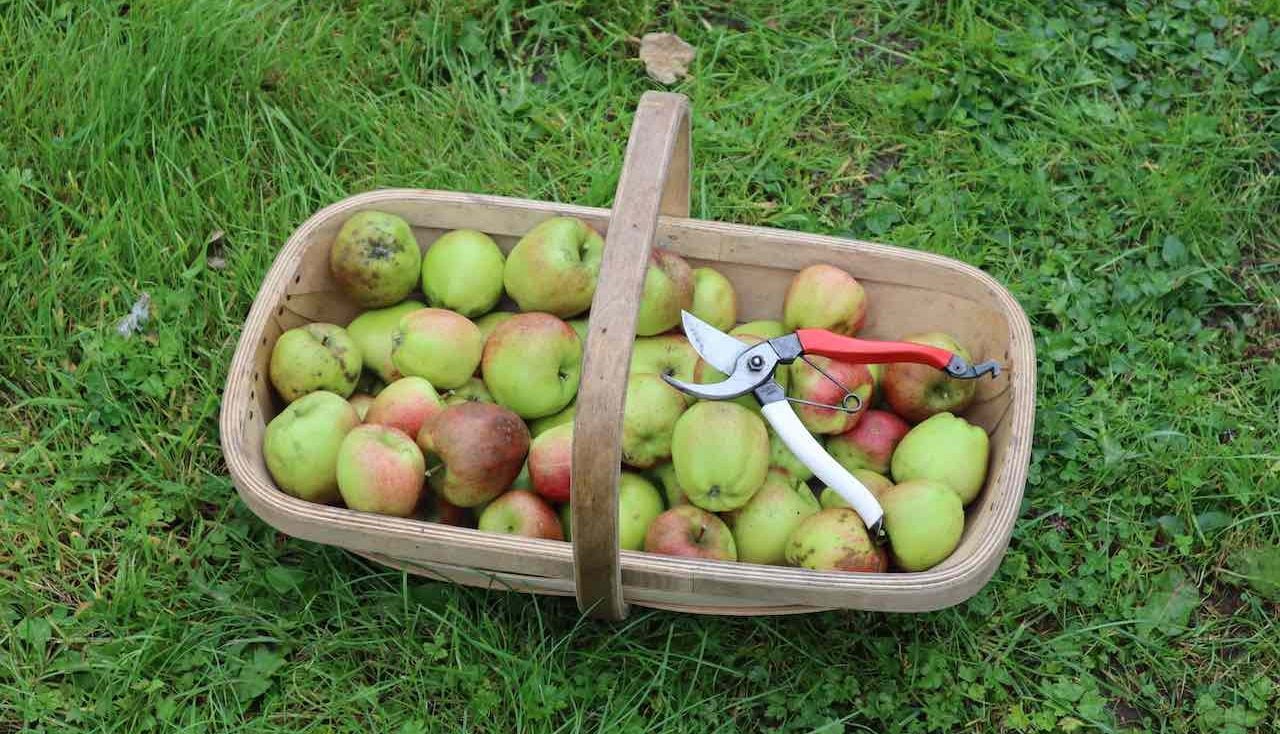
Every garden should have at least one tree, and when I speak to clients with tiny gardens, the apple tree is the one I recommend most frequently. Not only do apple trees provide a rich source of pollen for bees, but they are also beautiful trees for a small garden. The bonus is that with some light-touch apple tree pruning each year, you can also be rewarded with a trug full of delicious apples each autumn.
However, newer gardeners and experienced ones alike seem to recoil in horror when it comes to ‘formative pruning’, the practice of pruning each year to help form the shape of their young apple tree. I will walk you through the process so you can prune for success and remove any demons you may have about pruning apple trees.
Jump To
This page contains affiliate links for products I use and recommend. If you take action after clicking a link, I may earn a small gardening commission, which helps me keep the Garden Ninja blog free for everyone.
1. Why do we need to prune apple trees?
We formatively prune apple trees in the winter to help shape their ultimate growth. We want apple trees that are well-balanced and evenly spaced with an open habit that allows airflow and space for fruit. If we plant an apple tree and leave it alone, the chances are it will put on a flurry of new growth, which eventually gets tangled or damages itself.
The job of the gardener is to help select and shape that growth so we get the maximum potential out of the tree and ensure it grows to a pleasing shape. This means less damage, disease or garden drama when it comes to growing an apple (or other fruit) tree in the garden.
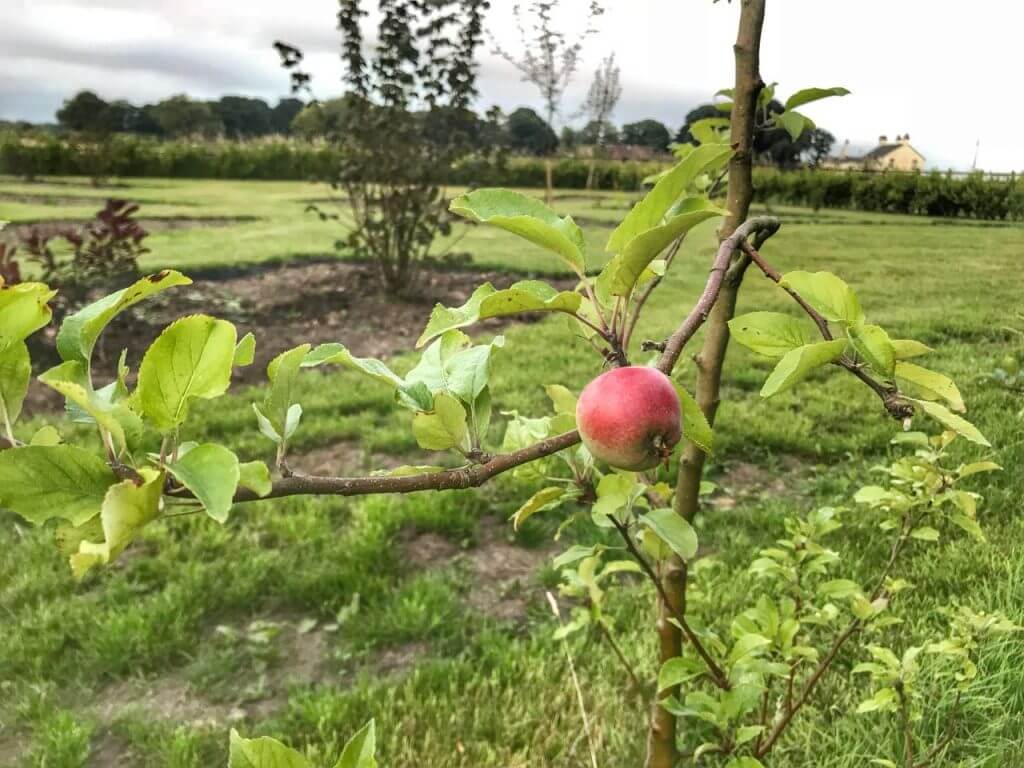
Once formative pruning is complete, say in around 5 years. Then, all other pruning is just light touch maintenance pruning to keep them in that shape.
2. What does pruning do to an apple tree?
Understanding how fruit trees respond to pruning is an essential part of successful pruning. However, most guides and books tend to skip over this step. I believe this is why gardeners become so fearful of knowing how to prune an apple tree, opting to ignore it and hope for the best. Often at their peril as the tree struggles to fruit, becomes unruly or gets damaged by crossing weak branches.
When we prune a branch or leader (a stem that is vertically growing and vigorous), we remove part of that branch. This has the effect of sending the energy, hormones or ‘go-juice’ back to the next bud or lateral (sideways shoot or branch). Think of it like capping off a pipe in your kitchen; the water will divert and be pushed back to the next available tap or outlet.
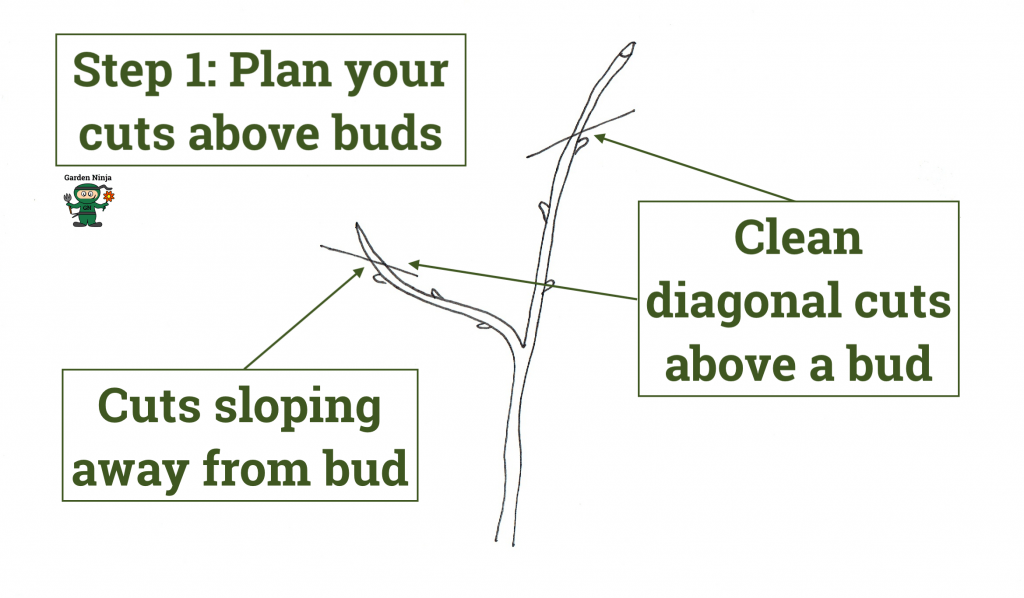
So when we make a pruning cut, it will create growth further down from that cut. Rather than thinking of pruning as ‘removing growth potential’, we need to think of it as ‘creating growth potential’. Pruning does not weaken the plant but focuses the energy elsewhere.
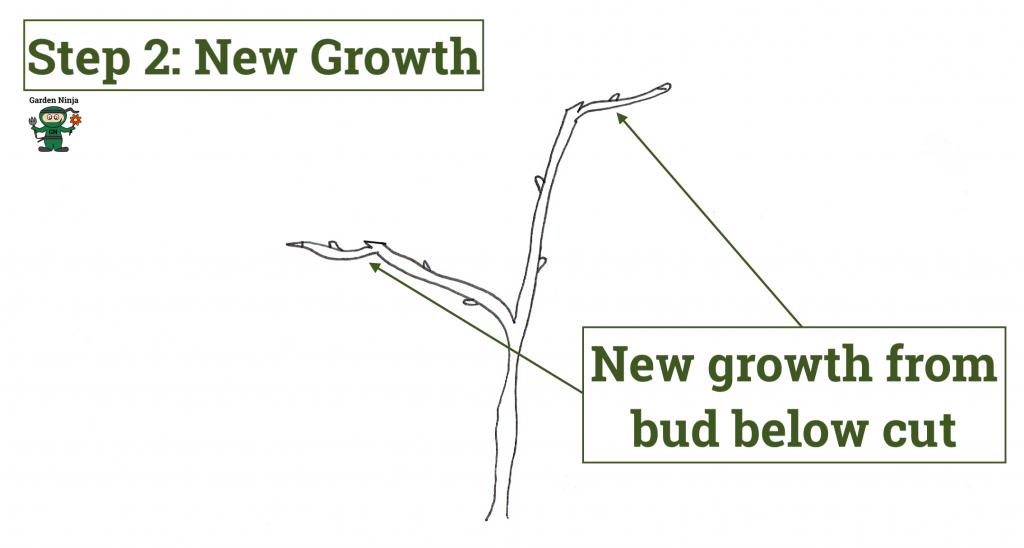
As we can choose where to make the cuts, we can choose where to focus the growth of the tree. Rather than thinking of pruning as ‘losing growth’ we need to shift out mindset to ‘choosing growth’. This is the best way to learn how to prune an apple tree, thinking of it as choosing growth, not losing branches.
3. When to prune apple trees?
For nearly all fruit trees, formative pruning, the type that allows you to influence the ultimate growth and shape of a younger tree takes place in Winter.
The best time to prune apple trees is between November and late February before the tree starts to put on leaves.
This is when the sap has receded, and the apple tree is dormant. It means the tree won’t bleed, and you can see exactly what you’re doing as the leaves will have already fallen. You can see the true outline of the tree without the distraction of delicious fruit or foliage!
The Prunus group of plums and cherries should not be pruned in winter but mid-spring to summer as they are susceptible to diseases from winter pruning. All other fruit trees are fine to be pruned in the winter. If you’ve read my Summer Vs Winter pruning guide you will know that:
- Winter pruning encourages growth
- Whereas late summer pruning restricts growth
With all pruning, avoid doing it in snow or frost. It is no fun for you or the fruit tree. I tend to wait until early February before I prune my fruit trees.
4. What tools do you need to prune an apple tree?
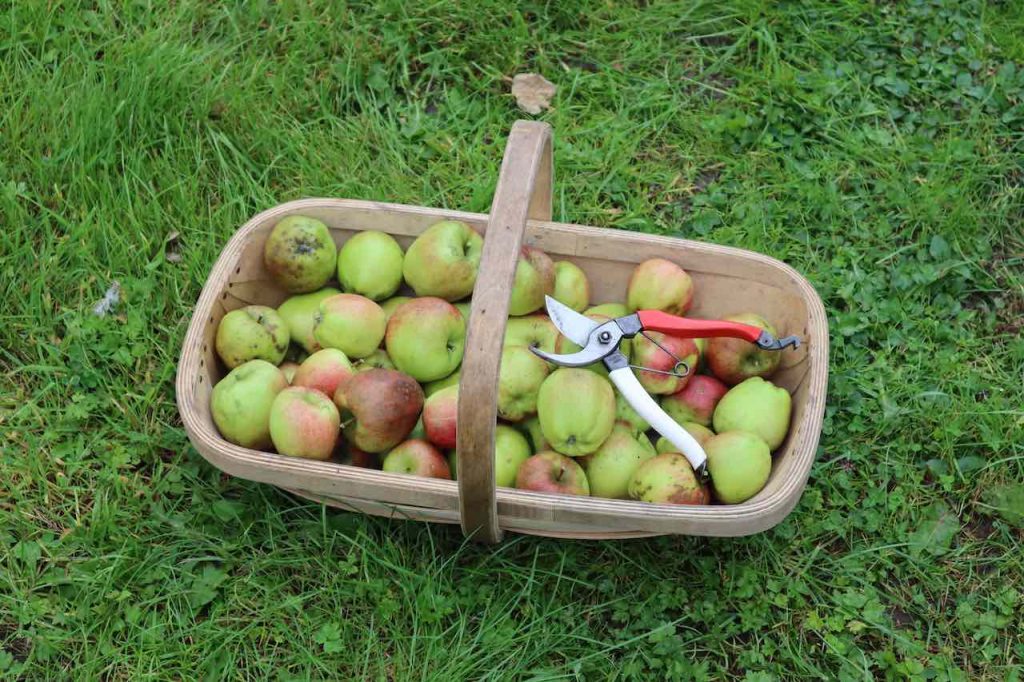
Before you go anywhere near a branch, get your tools together. Trying to prune an apple tree with the wrong tool for the job is where most of the ragged cuts and crushed stems I see on client visits come from. For most of the pruning described in this guide you only need four things.
- Sharp secateurs for anything up to the thickness of your thumb. A bypass pair gives a cleaner cut than an anvil pair on live wood.
- Loppers for branches too thick for secateurs but still small enough to fit within the jaw, usually up to wrist thickness.
- A pruning saw for anything thicker than that, particularly on an old or neglected tree where you are removing whole limbs.
- A sturdy tripod ladder if the tree has got away from you, rather than balancing on a kitchen chair, which I still see far too often on the forum.
Sharp secateurs are essential for easy, successful fruit tree pruning. Clean, neat cuts will heal faster and cause less stress to the tree. If you dig out your secateurs and they are rusty and look like they’ve been exhumed from the Titanic, it’s time to clean and sharpen them. My easy guide here shows you how to renovate secateurs.
💡 Top Tip
Wipe your blades with methylated spirit or a proprietary disinfectant between trees, and especially straight after cutting out anything you suspect is diseased. Apple trees can carry canker and other fungal problems in their wood, and dirty blades are one of the easiest ways to carry that disease from a sick tree to a healthy one.
5. Making clean pruning cuts
Likewise, make sure the branches or laterals can be easily cut with your tools. If you need force, or you end up gurning to make your cuts, then you need a wood saw or loppers.
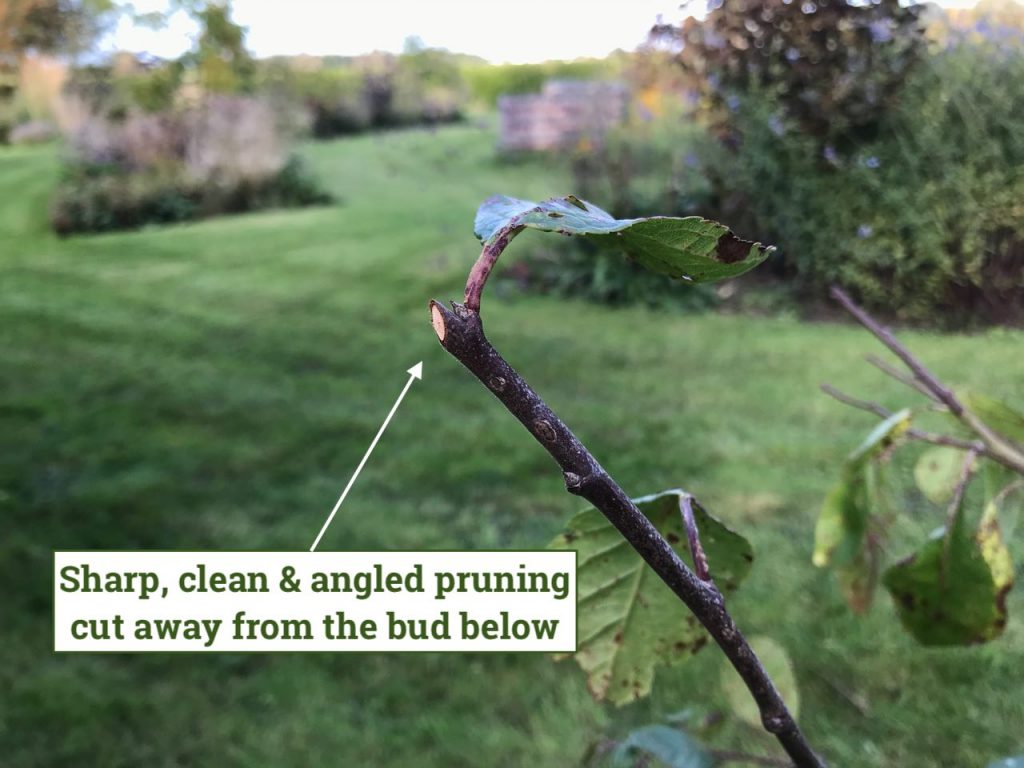
A clear example of a neat, clean pruning cut above. Always on an angle away from the bud or leaf below it.
6. What is the open goblet pruning shape?
If you’ve done any reading on how to prune, then you may have read about the ‘open goblet shape‘. While it is a good description of the pruning technique, it can confuse newer gardeners. Especially because ‘goblet’ is usually only heard on Game of Thrones and not used in everyday language.
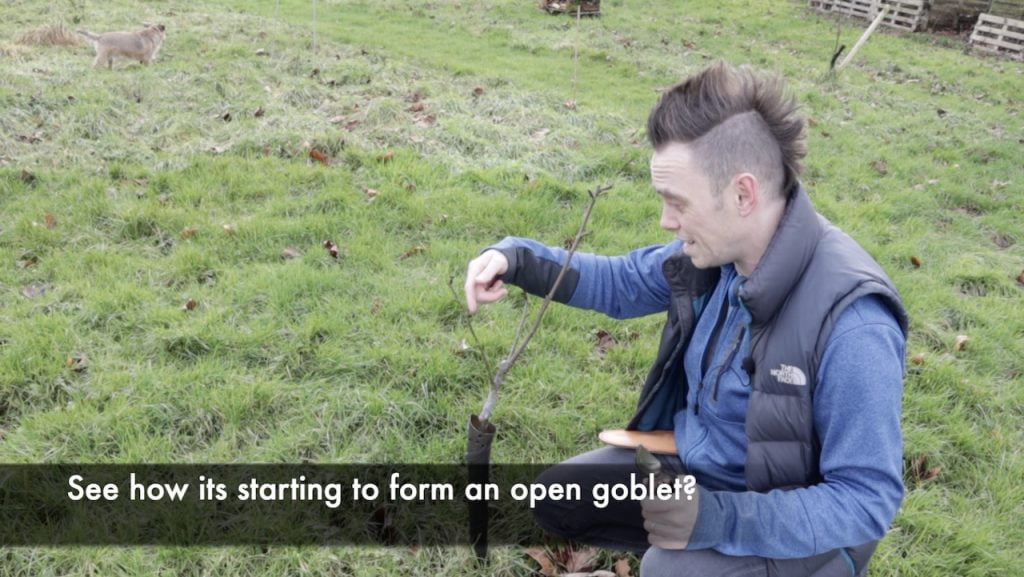
Another good way to think of the open goblet shape is like an upturned palm of your hand with all your fingers stretched out. This is the shape and spacing you want from your fruit trees. You don’t want anything crossing or too close together. Have a look at the examples below to see the open goblet or open palm shape for reference. If in doubt, the video at the beginning of this guide shows you this shape in more detail.
7. How to prune an apple tree: step by step
Most gardeners are apprehensive to prune any plant, especially if it’s happily growing away. After all, you’ve just planted it, and you want it to succeed. However, fruit tree pruning, even in year one, is essential to help shape and form the apple tree.
If you’ve bought a young apple tree ‘whip,’ i.e. one main stem with a few laterals, pruning will help you whip it into a productive shape. Most fruit trees come as a 2-year-old graft, like a long pencil with a few buds and side branches. Leaving a new fruit tree to grow like this without pruning will likely lead to a tangled mess or sky-high branches all congested and little fruit.
Even if you’ve had an apple tree for a few years and not touched it, now is the time. By pruning it into shape sooner, you’ll have less work to do and a better fruit tree because of it. Remember that pruning will encourage growth and help your fruit tree fill out. Then you’ll have far better apple harvests come autumn!
Follow the steps below on how to prune an apple tree correctly.
Step 1. Inspect the tree and identify any damaged, crossing, rubbing or dead wood
Any damaged, diseased, crossing, rubbing or otherwise unsuitable branches or laterals should be removed first. Take them back to the next branch down or off altogether if damaged. Work around the apple tree, removing any of these first.
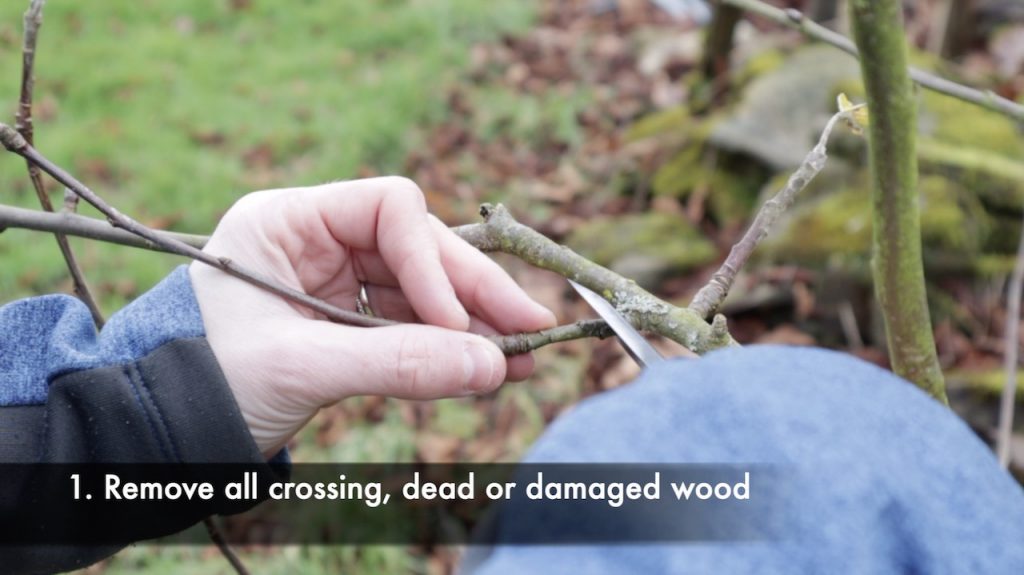
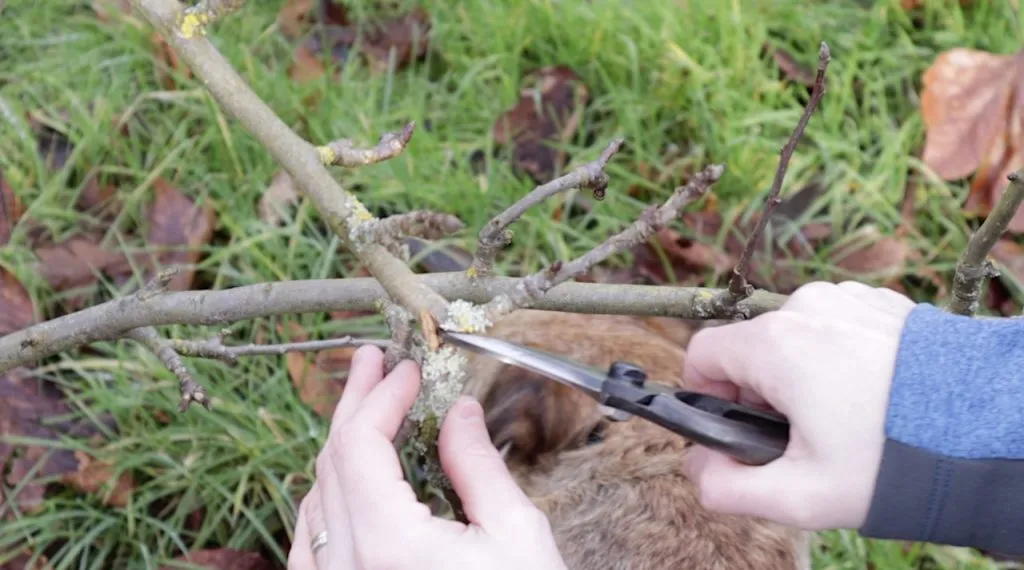
This damaged branch above needs to be removed and pruned back to a healthy bud. This first step usually is enough to gather confidence in how to prune an apple tree and allows you to clearly see the rest of the tree.
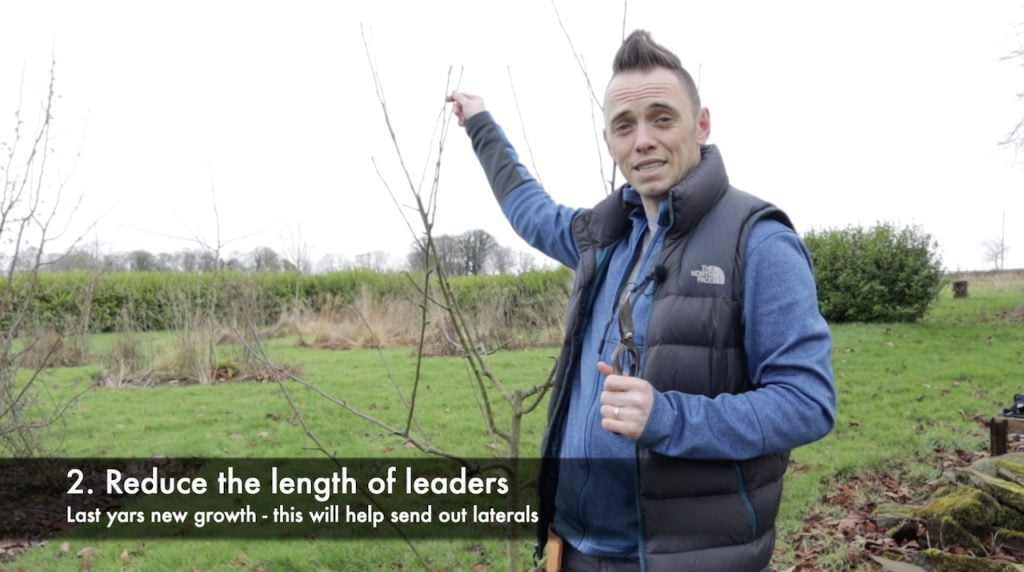
Step 2. Removing 1/4 of this year’s new growth
The next step is to shorten all of this year’s fresh growth by 1/4. These new branches are also known as the leaders, which is upward-facing growth on your fruit tree. You may notice that growth on the branches tends to point upwards, which is natural. We are reducing these to create more side laterals to break out. This, in turn, leads to more fruiting spurs breaking out!
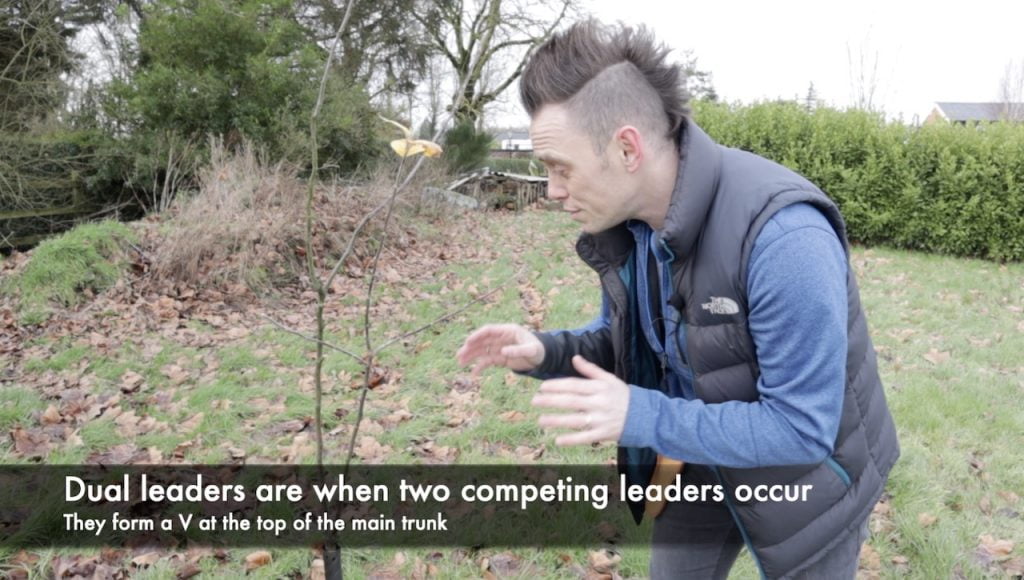
Step 3. Remove any dual or double leaders
When shaping a fruit tree, we want one main leader, and then all other growth shoots off from this. Forming that neat round tree canopy. You can spot dual leaders if you look at the main stem. If it forks into a ‘V’ sign and both are reaching upwards. You need to remove the weaker of the two and go back to the main trunk.
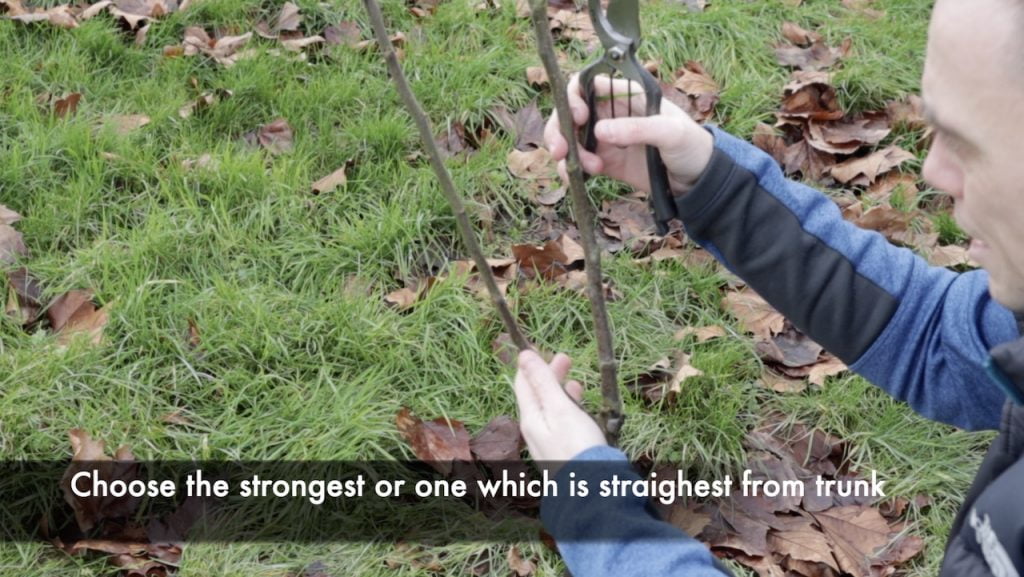
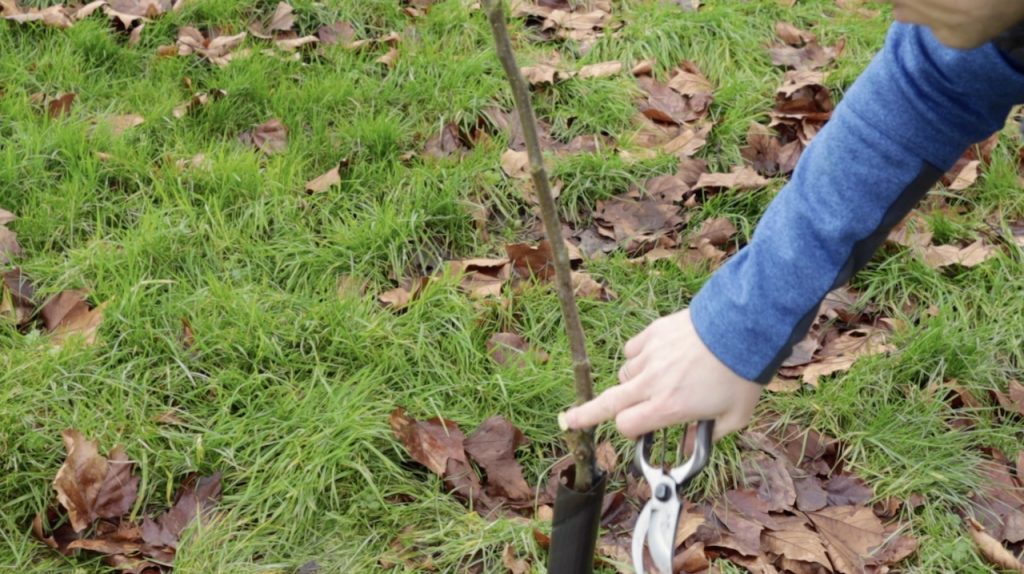
Step 4. Shorten back any congested growth or branches that rub
Work your way around the rest of the tree, shortening and removing any growth that is likely to rub as it grows further or is making the tree congested. It’s a repeat of step 1 now that you have shortened anything. If any lateral or branches are growing inward, remove them back to an outward-facing bud.
Remember the open goblet or open palm shape. Even if you’re dealing with a very young tree, you may find after pruning there are only 3 branches in this open goblet shape. That’s fine, too! You’re forming the shape of the tree. Then, next year, you may end up with 5-7 branches and more the year after to create the goblet shape.
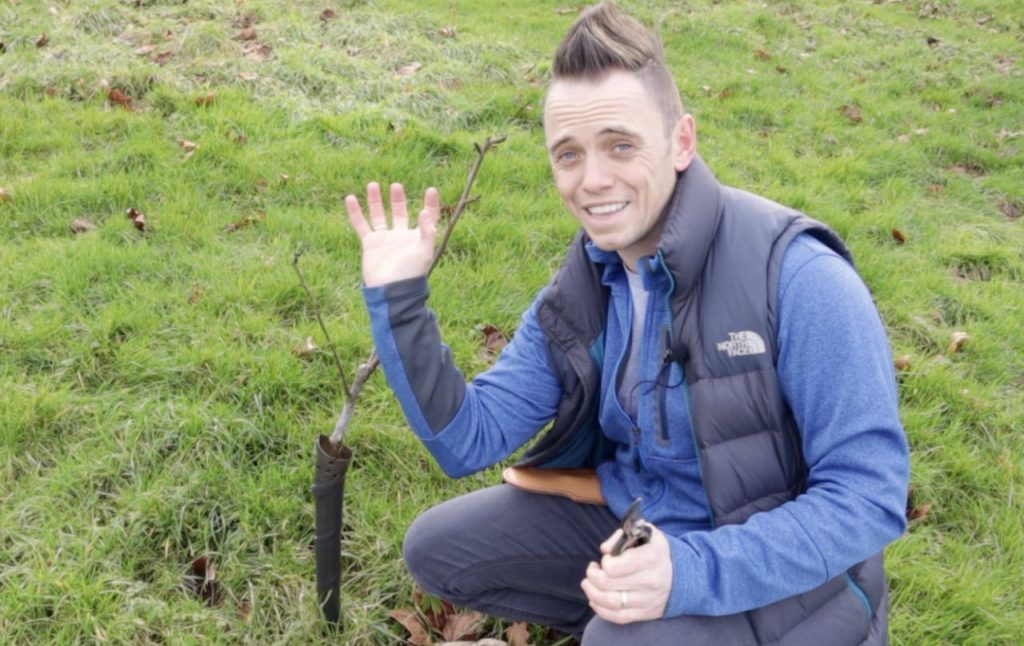
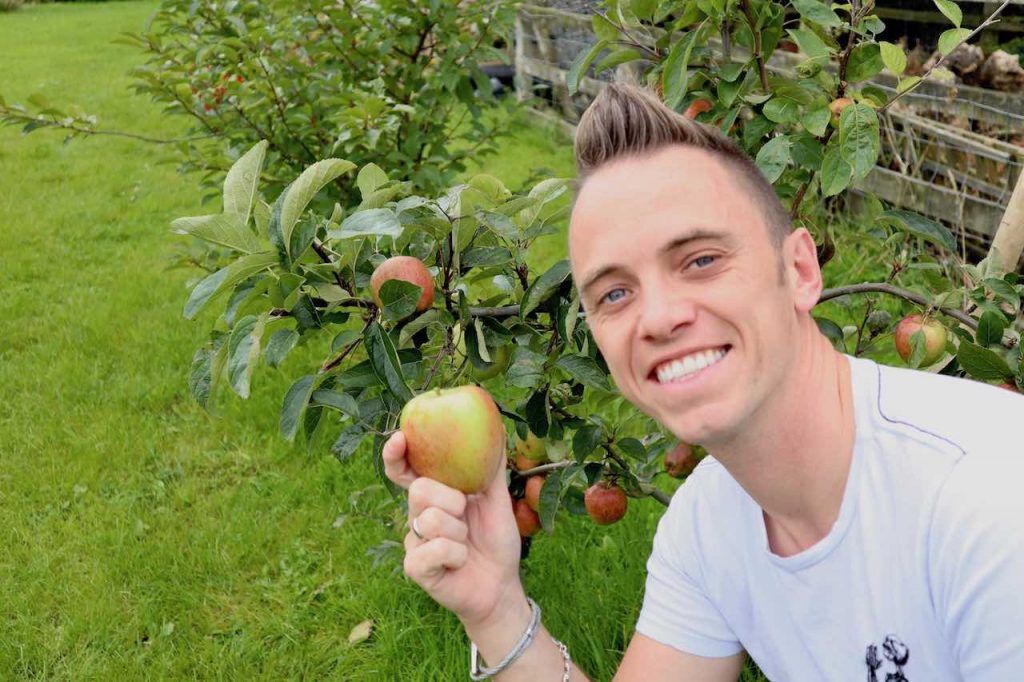
My best impression of the open goblet / open palm above. See, the small apple tree behind me has only a few branches but has the basic form ready to expand this year.
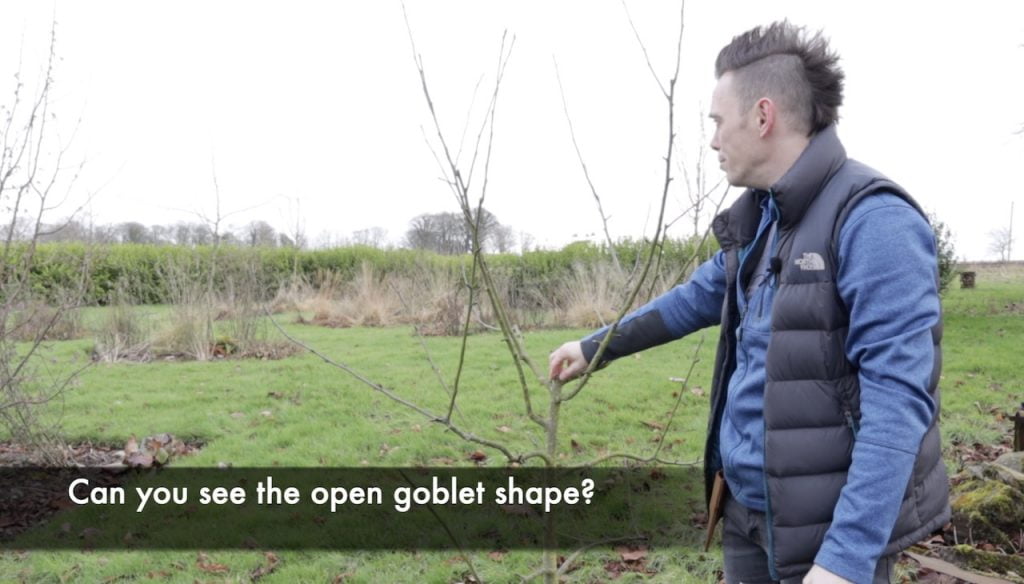
When you have finished, you should have a shape or form similar to the image below on a 3-year-old tree.
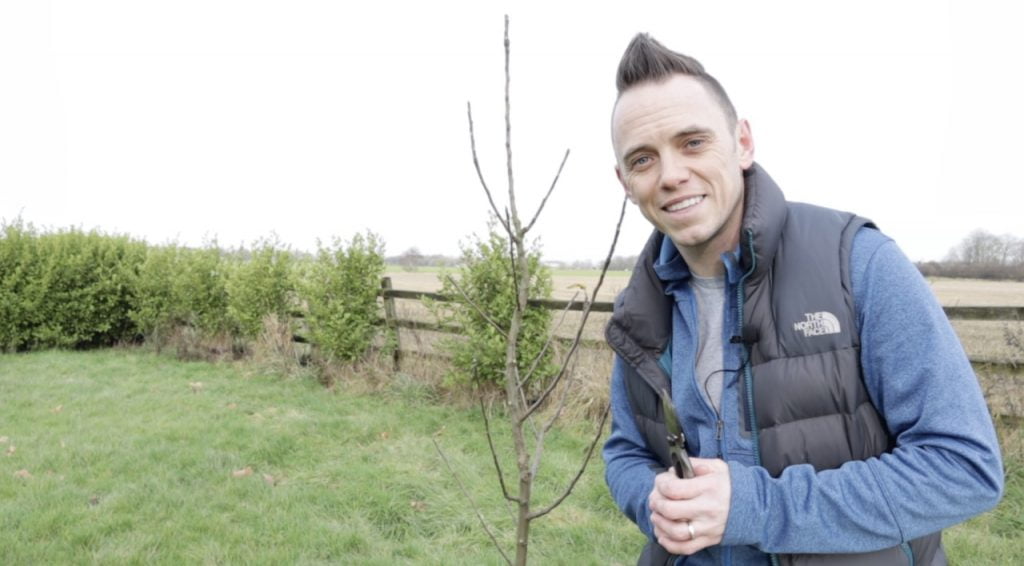
See how there is one main leader, space between the lateral branches and an open ‘goblet’ shape?
Apple Tree Pruning Steps
Let’s recap on the four steps needed to successfully prune an apple tree.
- Remove any dead, diseased or damaged branches first
- Remove 1/4 of this year’s growth/length of each branch
- Remove any double leaders
- Remove any congested growth and shorten branches back to an outward-facing bud
As you develop your pruning skills, there are numerous other tweaks for fruit trees, such as summer pruning to thin out fruiting spurs and whatnot. You can read more on that here. However, for now, you are armed with the basic pruning skills you need to get your young apple trees into shape.
If you have an old or inherited fruit tree that’s in a bad way and needs serious pruning, then follow my Winter fruit tree hard pruning guide above for advice.

8. Water sprouts, suckers and congested growth explained
Once you start pruning regularly, you will hear a few terms thrown about that are worth knowing properly rather than lumping them all in as ‘growth’. A water sprout is a thin, fast-growing, dead straight shoot that shoots vertically from a branch, usually as a reaction to hard pruning the year before. They rarely fruit, they crowd the canopy, and they are one of the first things I remove on a client’s neglected tree.
A sucker is similar in appearance but grows from the rootstock below the graft union, close to the base of the trunk or even from the roots themselves. Suckers should always be pulled or cut away flush, because if left, they can eventually take over from the grafted fruiting variety altogether, leaving you with a tree that grows from the rootstock’s genetics rather than the apple you actually bought.
The easiest way to tell a water sprout from a healthy new leader is the angle and vigour of the growth. A water sprout grows almost perfectly upright and often several feet in a single season, whereas the leaders you want to keep grow at a wider angle and slow down as the tree matures. If in doubt, remove it. You lose very little by taking out a water sprout, and a great deal by leaving a congested one in place for another year.
9. Pruning back to an outward facing bud
Pruning fruit trees to an outward-facing bud is the key to successful pruning, as it maintains tree health and has a number of other benefits. Firstly, it encourages robust growth by promoting the development of new branches and shoots away from the tree’s centre. This method maintains an open canopy structure, enabling sunlight to penetrate deeper into the tree, ensuring that more fruit-bearing branches receive adequate light.
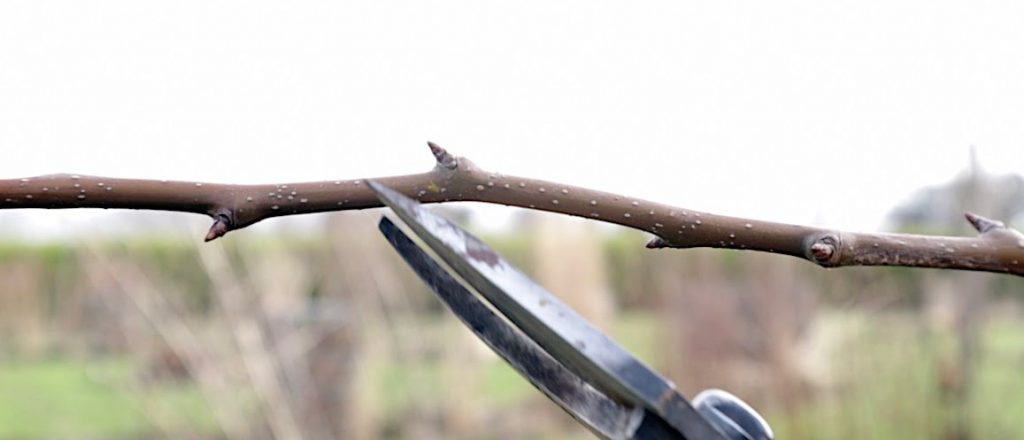
The practice of always cutting to an outward-facing bud facilitates better air circulation within the canopy, reducing the risk of fungal diseases and pest infestations by minimising moisture retention and creating a less favourable environment for pathogens. It reduces congestion.
Furthermore, pruning to an outward-facing bud enhances fruit production by creating space for fruit to develop and reducing branch overcrowding. This spacing minimises competition for sunlight and nutrients, producing higher fruit quality and apple tree yields. Additionally, pruning helps prevent crossed branches that can cause damage and provide entry points for pests and diseases. By directing growth away from the centre, pruning reduces the likelihood of branch entanglement and promotes structural integrity.
Whenever you make a cut, ensure it is made just above an outward-facing bud.
10. Spur bearers and tip bearers: why it matters for pruning
Here is a detail that catches out a lot of otherwise confident gardeners. Apple trees fruit in one of two ways, and it changes how hard you can prune the tips of the branches.
Spur bearers, which make up the vast majority of garden apple varieties including Cox’s Orange Pippin, Braeburn and Golden Delicious, produce their fruit on short, stubby spurs that form along two or three year old wood. Because the fruit isn’t at the tips, you can shorten the leaders each winter as described in this guide without sacrificing next year’s crop.
Tip bearers, a smaller group that includes varieties such as Bramley’s Seedling and Discovery, carry a good proportion of their fruit buds right at the tips of the previous year’s growth. If you shorten every leader by a quarter on a tip bearing variety the way you would on a spur bearer, you will cut away a good chunk of next year’s fruit along with it. For tip bearers, prune more lightly, focus your cuts on removing crossing, damaged or congested wood rather than shortening every leader, and only tip back the longest, most vigorous shoots.
If you’re not sure which type you have, check the label from when you bought the tree, or look at where the fruit formed last summer. Fruit clustered along the branch on short spurs means a spur bearer. Fruit sitting right at the end of last year’s growth means a tip bearer.
11. Common mistakes when pruning apple trees
After years of answering pruning questions on the forum, the same handful of mistakes come up again and again. The biggest is taking off too much in one go. As a rule, never remove more than a quarter to a third of the canopy in a single winter, even on a badly neglected tree. Anything more than that shocks the tree into producing a mass of vigorous, upright water sprouts the following summer, which leaves you with more work the year after, not less. If you’ve inherited a very overgrown tree, spread the renovation over two or three winters rather than trying to fix it all at once.
The second common mistake is pruning with blunt or dirty tools, which crushes the stem rather than cutting it cleanly and leaves an open wound that heals slowly and invites disease. The third is leaving a stub above the bud or, at the other extreme, cutting so close that you damage the bud itself. Aim for a clean angled cut roughly five millimetres above an outward facing bud, sloping away from it so rainwater runs off rather than sitting on the cut surface. Finally, avoid the temptation to hard prune in summer to tidy up a tree that has got away from you. As covered below, summer is for light maintenance only, and any serious renovation work should wait for the dormant season.
12. Can I prune an old, overgrown apple tree in summer?
This is a common scenario where people move house or inherit an old apple tree that hasn’t been pruned. It can be tempting mid-summer, when it’s in full growth, to think about giving this apple tree a haircut or tidying up. Please don’t hard prune apple trees in summer!
Pruning apple trees in the summer can cause severe damage to the tree in terms of sap bleeding and also ruin the overall shape of the tree. Summer pruning restricts growth when done delicately, but hard pruning is too much of a shock to the tree. Leaving it little time to heal.
The chances are that heavy summer pruning sends up water shoots, long thin branches that reach upwards and zap energy from the tree.
If you need to hard prune an apple tree, please do this in the dead of winter instead for better tree health and fruit production in the following year.
13. Fruit Tree Rootstocks Explained
Another frequent question I get asked is, ‘How big will my fruit tree grow?‘. The answer is it depends on the rootstock. Nearly all fruit trees are grafted. I.e. a scion of a fruit tree (cutting) is then grafted and bound onto a rootstock that controls its ultimate height.
Fruit trees use different rootstocks depending on how big you want the fruit tree to be.
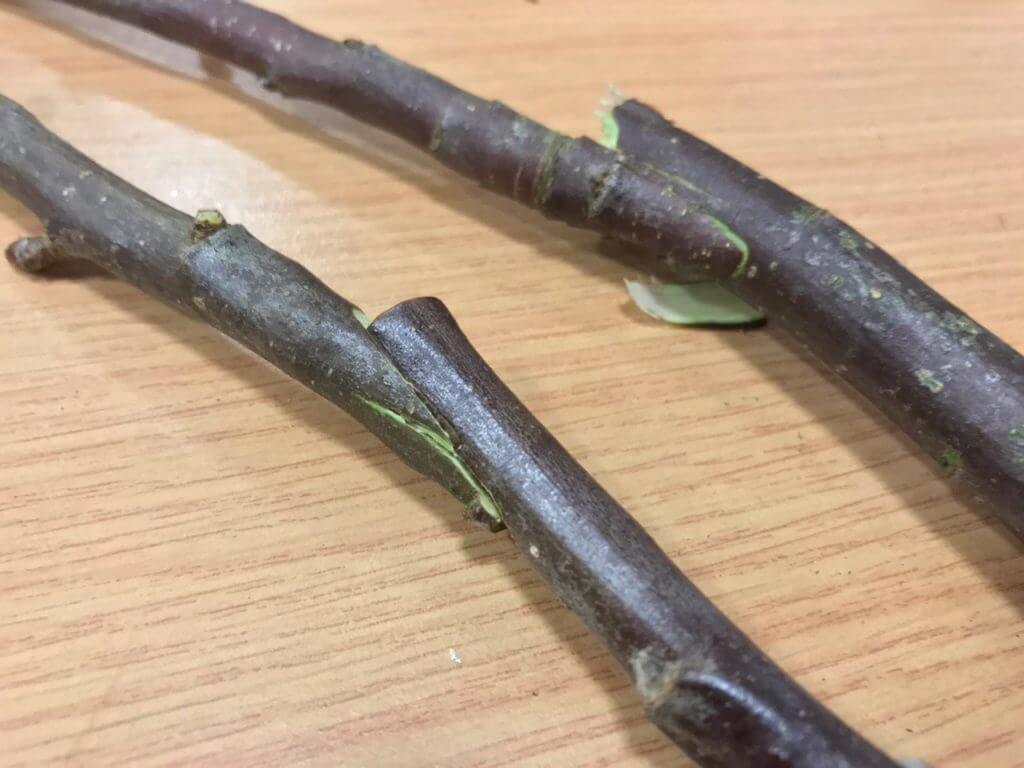
Have a look below and also check the labels of any trees you’re buying. This will help you anticipate how big it will grow.
Tree Root Stock Sizes
| Rootstock | Eventual Height | Best For |
| M27 | Very small, 1 to 2m | Pots or patios, always keep staked |
| M9 | Small, 1.8 to 2.5m | Very productive, always keep staked |
| M26 / MM111 / M9 | Medium, 2 to 3m | Bushes or cordons, can be trained as a medium sized tree |
| MM106 | Large, 2.5 to 4.5m | Good sized garden apple tree, more drought tolerant, fruiting after 3 to 4 years |
| MM111 / M25 | Large, full sized, 5m plus | Full sized apple tree, drought tolerant, fruits after 4 to 5 years, maximum yield |
14. Top 10 Small Garden Apple Trees
If you’re looking to add some delicious apples to your garden, then below are my top ten cultivars of apples suitable for small or urban garden spaces. Remember to always check the rootstock to ensure their ultimate height and spread work with the size of your garden.
| Cultivar | Why It Suits a Small Garden | Buy Now |
| 1. Ballerina Series | Specifically bred for small spaces, Ballerina apple trees feature compact, columnar growth habits, making them ideal for container planting or limited garden areas. Varieties include ‘Ballerina Samba’ and ‘Ballerina Polka’. | 🛒 Buy Now |
| 2. Golden Delicious | Known for its sweet, crisp fruit, Golden Delicious apples are versatile and can be grown in small spaces with proper pruning and care. | 🛒 Buy Now |
| 3. Fuji | Fuji apples are flavourful and store well. They can thrive in smaller garden spaces, especially when trained against a wall or fence. | 🛒 Buy Now |
| 4. Gala | Gala apples are prized for their crisp texture and sweet flavour. These trees can be grown in containers or small gardens, and they often produce fruit at a young age. | 🛒 Buy Now |
| 5. Cox’s Orange Pippin | This classic English apple variety offers exceptional flavour and can be trained as an espalier or grown in containers for small gardens. | 🛒 Buy Now |
| 6. Jonagold | Jonagold apples are a cross between Jonathan and Golden Delicious varieties, offering a perfect blend of sweet and tart tastes. They can be grown in small garden spaces with proper pruning. | 🛒 Buy Now |
| 7. Granny Smith | Known for its tart flavour and excellent keeping qualities, Granny Smith apples can be grown in smaller gardens, especially when trained on dwarfing rootstocks. | 🛒 Buy Now |
| 8. Pink Lady | Pink Lady apples are crisp and sweet tart, making them popular for fresh eating and cooking. They can be grown in containers or small garden spaces with adequate sunlight. | 🛒 Buy Now |
| 9. Braeburn | Braeburn apples offer a balanced taste profile with a hint of tartness. They can be grown in small gardens and respond well to pruning to keep their size manageable. | 🛒 Buy Now |
| 10. Mutsu (Crispin) | Mutsu apples are large, sweet and juicy, making them excellent for fresh eating and baking. The tree’s compact growth habit makes it suitable for small garden spaces. | 🛒 Buy Now |
Frequently Asked Questions About Pruning Apple Trees
How often should I prune my apple tree?
Once a year, every winter, is enough for an established apple tree. A young tree in its formative years benefits from that same annual light touch pruning to build its shape, while a mature tree in good order may only need dead, damaged and crossing wood removed most years, with a proper shaping prune every second or third winter.
Can I prune an apple tree in autumn?
It’s best avoided. Autumn pruning cuts are slower to heal because the tree is only just moving into dormancy, and the fresh wounds are more vulnerable to fungal infection over a wet winter. Wait until the leaves have properly fallen and the coldest part of winter has passed, ideally November through to late February.
What happens if I don’t prune my apple tree at all?
An unpruned apple tree will keep growing, but the canopy becomes congested, crossing branches rub and create wounds that let disease in, and fruiting spurs get shaded out by their own foliage. Over several years, you typically end up with a taller, less productive tree that fruits mainly at the very top, out of reach, with smaller and fewer apples than a well maintained tree of the same age.
Why has my apple tree stopped fruiting after pruning?
This is usually down to over pruning the previous winter, removing too much fruiting wood in one go, or pruning a tip bearing variety as though it were a spur bearer. It can also follow a late frost damaging the blossom, or simply be a tree resting after a heavy crop the year before, known as biennial bearing. Give it a full growing season and prune more lightly next winter, focusing on shape rather than heavy reduction.
Do I need to seal or paint pruning wounds on an apple tree?
No. Modern guidance from the RHS and my own experience both point the same way here, wound paints and sealants trap moisture against the cut rather than letting it heal naturally, and can encourage rot. A clean, well angled cut made with sharp tools heals perfectly well left open to the air.
If pruning has left you wanting more, I cover formative pruning and open goblet shaping in full on my pear tree pruning guide, and if wisteria is next on your list, my wisteria pruning guide walks through the summer and winter cuts you need for that. Subscribe to my YouTube channel for step by step pruning videos through the whole winter season.
Summary
Pruning is your best friend when growing beautiful and productive fruit trees. If we can reprogram our tentative pruning minds to view pruning as encouraging growth rather than removing parts of the tree. It’s then easy with this mindset to tackle pruning with confidence.
I hope that this guide has helped you put your pruning demons to bed when it comes to fruit trees. Pruning really is straightforward once you have the confidence to know what you’re cutting and why. I urge you to get out into your gardens and start taking control of your trees; they will thank you for it!
If you’ve enjoyed this article, then why not Tweet, Facebook or Instagram me with your fruit tree pruning pictures or questions? You can also subscribe to my YouTube channel for hundreds of garden design tips, tricks, and hack guides!
Happy pruning!




Lee Burkhill
Lee Burkhill, known as the Garden Ninja, is an award-winning garden designer and horticulturist with over 30 years of gardening experience and 15 years as a professional garden designer. A qualified RHS (Royal Horticultural Society) professional, Lee specialises in sustainable garden design and practical horticultural advice. He designs and presents on BBC1’s Garden Rescue and in leading gardening publications. Lee combines three decades of hands-on gardening knowledge with professional design qualifications to help gardeners create beautiful, functional outdoor spaces.
View all posts by Lee Burkhill






Categories
One thought on “How to prune an apple tree: Ultimate beginners guide”
Leave a Reply
You must be logged in to post a comment.
Other posts
-

Start here: to begin your gardening journey! Read more
-
How to mulch your garden: reduce weeds & feed plants Read more
-
Clematis Ultimate Growing & Pruning Guide Read more
-

How to Prune a Plum Tree: The Complete Beginner’s Guide Read more
-
Best Cordless Garden Tools UK 2026: A Garden Designer’s Complete Guide Read more
-
DIY Garden Paths: Materials, Methods, and Mistakes to Avoid Read more


I was reading your article on pruning apple trees and I’m really impressed with the content you’ve created. It makes it easy for us to understand what needs to be done in order to grow a healthy tree. You make an excellent point about the importance of Fruit Tree Pruning Without this step, our apples would not have grown so well or looked as nice as they do now. There’s such a huge difference between them after we started pruning!