-
Plants That Love Clay Soil: 30 Easy to Grow Heavy Soil Plants
 Lee Burkhill: Award Winning Designer & BBC 1's Garden Rescue Presenters Official Blog
Plants that love clay soil do exist and by choosing them you can transform your heavy garden soil into a beautiful flower bed! Gardening in clay soil can be challenging due to its dense and compact nature. We all know ow diffoicult heavy clay soil is to dig and work with. While clay soil is often slow to drain and can become hard in dry conditions, it’s also nutrient-rich and can support a wide range of resilient plants. So let me show you some incredibly plants that love clay soil!
Are you struggling with clay soil in your garden? You are absolutely not alone. While clay soil can feel like a gardener’s nemesis with its dense, claggy texture and tendency to sit wet for much of the year, heavy clay soil offers a unique combination of high nutrient content and moisture retention that many plants genuinely thrive in.
As a garden designer who has worked with clay on countless projects, including several BBC Garden Rescue builds, I can tell you that the gardeners who learn to work with their clay rather than fight it are the ones who end up with the most impressive planting. From bold herbaceous perennials and long-flowering shrubs to beautiful roses and structural trees, this guide covers the plants that don’t just tolerate clay. They love it.
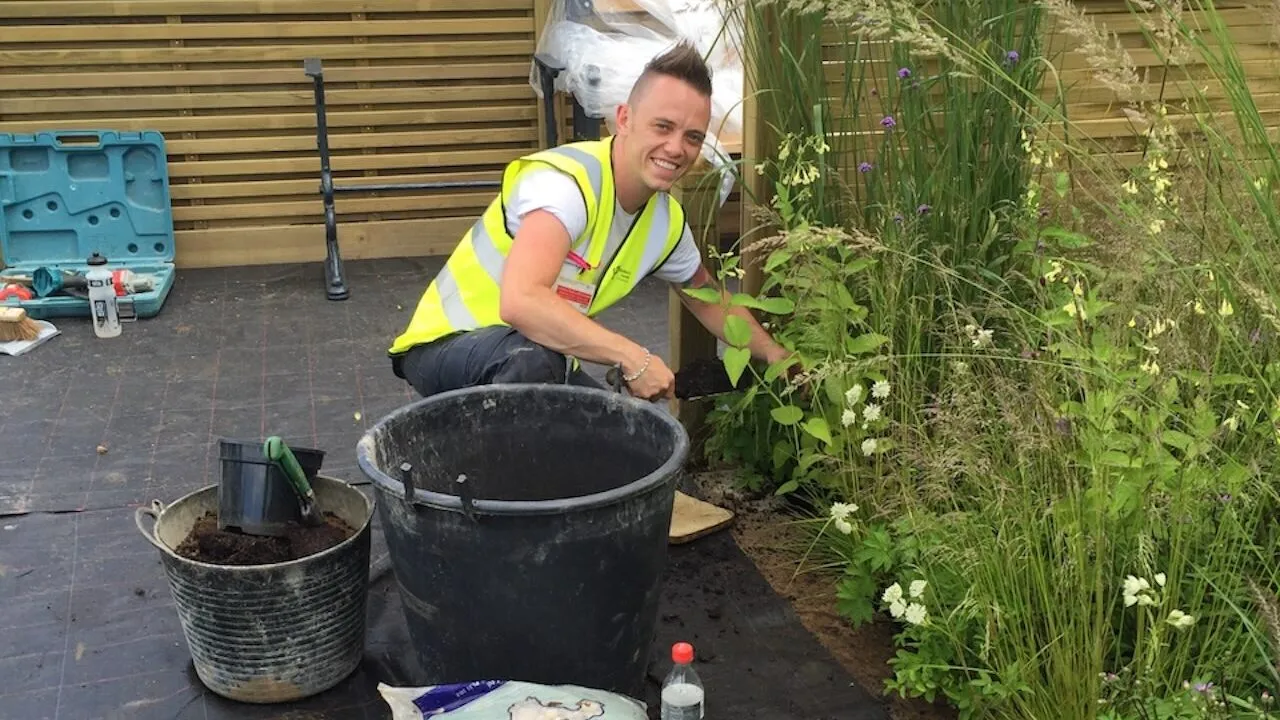
Even beginner gardeners can create a thriving, beautiful garden on heavy clay with the right plant selection. I have put together this comprehensive guide covering perennials, shrubs, trees, bulbs and roses, so whether you have a shady north-facing plot, a sun-baked south-facing border or anything in between, you will find plants here that will genuinely perform for you.
Quick Answer
The best plants for clay soil in the UK include roses, hardy geraniums, Rudbeckia, Astilbe, Hydrangea, Cornus, Bergenia, Hemerocallis, Astrantia and Amelanchier. These plants thrive in clay’s nutrient-rich, moisture-retentive conditions. Improve clay gradually by mulching annually with well-rotted organic matter rather than digging, and plant in late winter or early spring once the soil begins to warm.
🌿 Jump To
How to improve clay soil easily
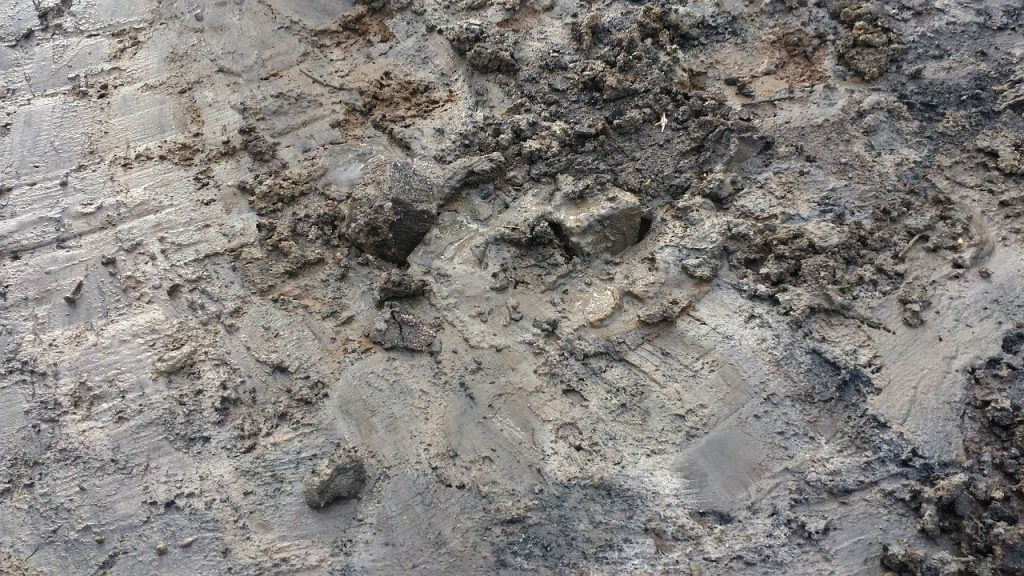
Clay soil, while rich in nutrients, often poses challenges due to its dense texture, poor drainage and tendency to become waterlogged in winter and crack like concrete in summer. However, with a few targeted improvements, you can turn this heavy soil into a genuinely productive growing medium. The biggest mistake with clay soil is to keep digging and turning it over, because this only compacts it further and makes the conditions harder to work with, not to mention giving most gardeners a serious backache.
i) Work organic matter into the soil
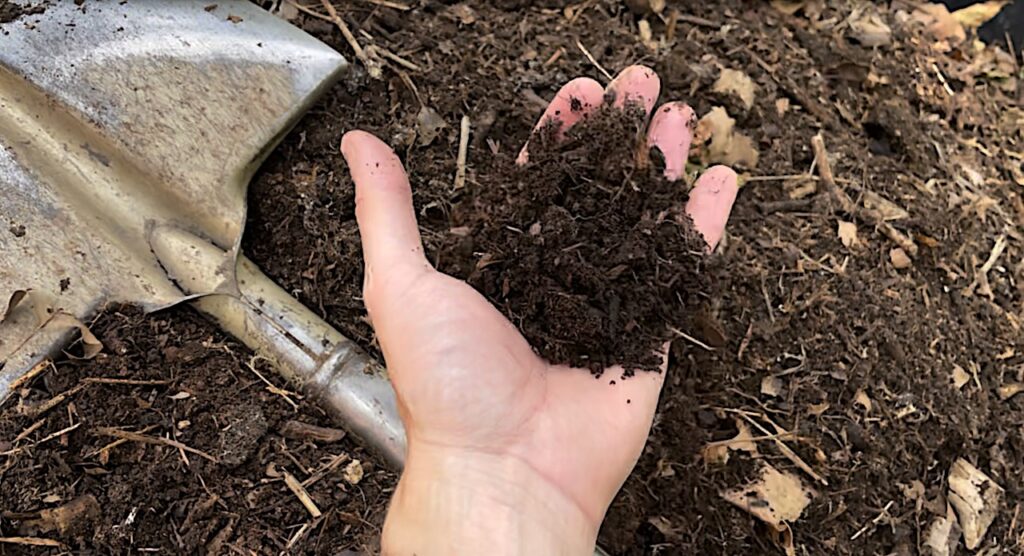
One of the best ways to improve clay soil is by incorporating organic matter. Well-rotted garden compost, manure, composted bark or leaf mould can all enhance the soil structure, making it more porous and easier for roots to penetrate. Organic matter increases fertility, improves drainage and boosts the soil’s water-holding capacity, providing a balanced environment for plant growth. The key word here is well-rotted. Fresh manure or unfinished compost can do more harm than good by locking up nitrogen as it continues to break down. Think of well-rotted organic matter as a slow-release superfood for your soil.
ii) The benefits of mulching
I am a huge advocate of mulching your soil to improve it. Not only is mulching incredibly easy, but it also offers multiple benefits for the garden. Apply a 5–7.5cm thick layer of mulch to the soil surface between late Autumn and late winter (November to February). Mulching is, in my expert opinion, the single most impactful thing a clay-soil gardener can do, offering frost protection, weed suppression, moisture conservation, and a gradual increase in organic content as it breaks down. Popular materials include well-rotted compost, chipped bark, gravel or slate chippings. Leave a 7.5cm gap between the mulch and plant stems to prevent rot.
iii) Breaking up planting holes properly
When planting in clay soil, pay special attention to the planting hole. The bottom of the hole should be loosened with a garden fork, and the sides should be broken down to prevent the formation of a sump where water collects and drowns roots. Without these precautions, plants risk waterlogging, a common cause of clay soil plant failures that is entirely preventable.
iv) Timing matters: plant in late winter or spring
Delay planting on clay soil until late winter or early spring. This timing minimises the risk of dormant roots sitting in cold, waterlogged ground during the wettest months. By waiting, you give plants a far better chance of establishing themselves as conditions warm and improve through March and April.
v) Grit and drainage
Adding coarse grit to clay soil can improve drainage and aeration, but only in limited cases. To be honest, I rarely add grit to clay soil as I find its benefits very limited. In most cases, it can make working with the soil even worse. This method is best suited for small areas or specific planting spots for plants like lavender that demand particularly sharp drainage. If space allows, raised beds filled with lighter soil mixtures can also address drainage issues without trying to transform the existing clay.
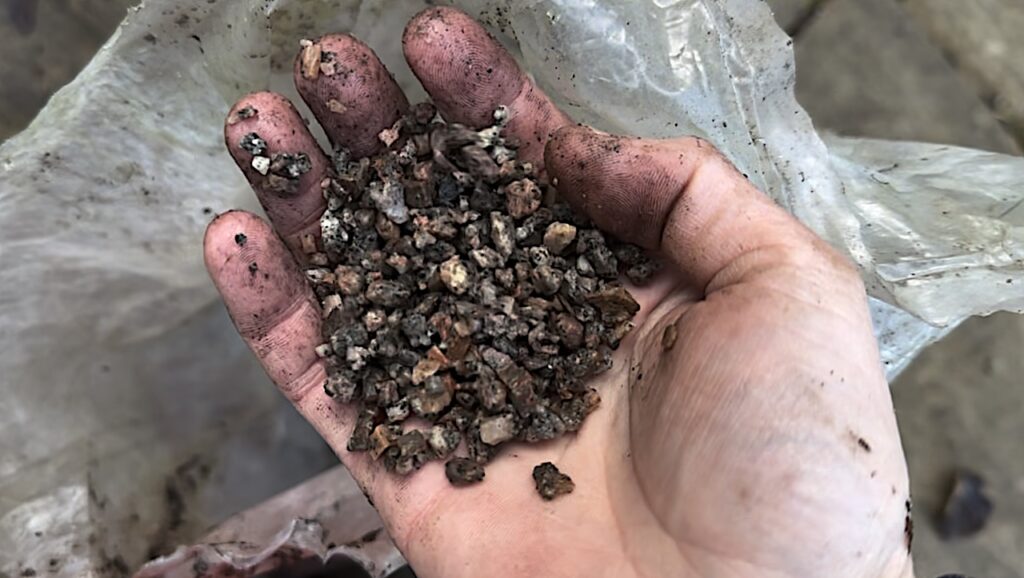
vi) Freeze-thaw benefits in winter
If you rough-dig your clay soil in Autumn, the natural freeze-thaw cycle of winter can help break down clumps. This improves the soil’s structure, making it easier to work with come spring. It works particularly well for allotment-style kitchen gardens where you are preparing seed beds for direct sowing. For larger shrubs, trees and perennials, the mulch-and-leave approach remains the better long-term strategy. Continue to mulch annually with well-rotted organic matter, and your clay will gradually improve year on year.
💡 Top Tip
Never add sand alone to clay soil. This is one of the most common mistakes I see and it creates an almost concrete-like texture. If you want to improve drainage, use composted bark, peat free compost, leaf mould or a specialist clay-breaking product like Vitax Clay Breaker (gypsum-based) instead.
Perennials that love clay soil
Let’s jump straight in with herbaceous perennials, which form the backbone of most clay soil planting schemes. These beauties do not need you to fix your clay first. They simply love the fudgy, nutrient-rich conditions that heavy clay provides.
1. Rudbeckia hirta (Black-Eyed Susan)
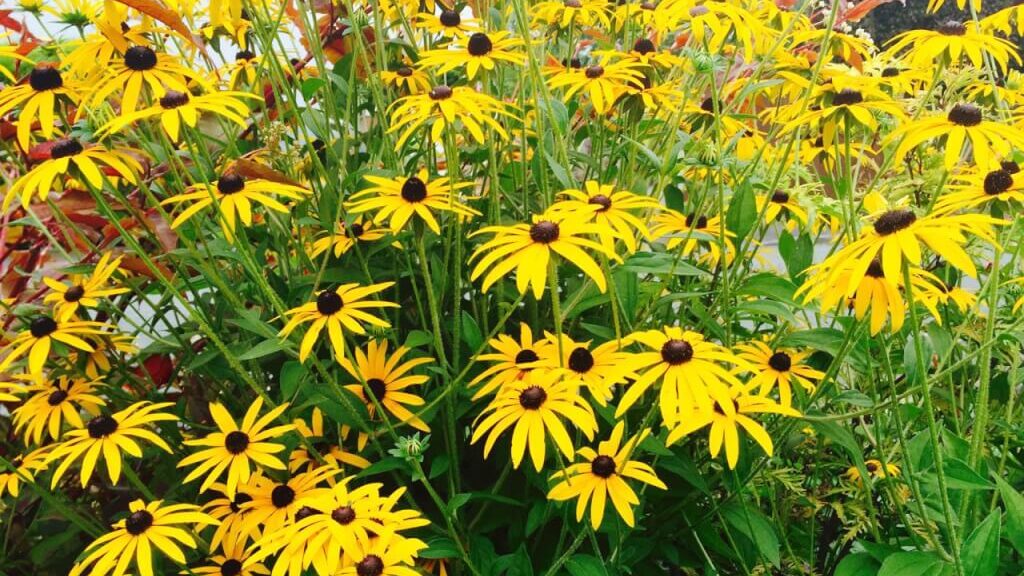
Hardy and adaptable, the Black-Eyed Susan is my number-one clay-soil perennial. Rudbeckia is virtually slug-proof, which matters enormously in the wetter conditions that clay gardens often produce, and it has some of the most arresting bright yellow flowers of any herbaceous perennial. You might ask why I rate it so highly, and it comes down to several factors.
It tolerates neglect once established, flowers abundantly in late summer and early Autumn when many other plants are fading, and can be easily divided to increase your stock for free. This cheerful plant sports bright yellow petals with a distinctive dark central cone, providing a fantastic final blast of colour before the winter months close in.
🛒 Buy Rudbeckia from Amazon UK
2. Geranium (Hardy Cranesbill)
Hardy geraniums (not to be confused with the tender pelargoniums sold as bedding plants) are the single most recommended clay soil perennial across UK gardening sources, and with very good reason. Varieties like ‘Rozanne’, ‘Orion’ and ‘Mavis Simpson’ will tumble and sprawl through a border, covering ground beautifully and suppressing weeds.
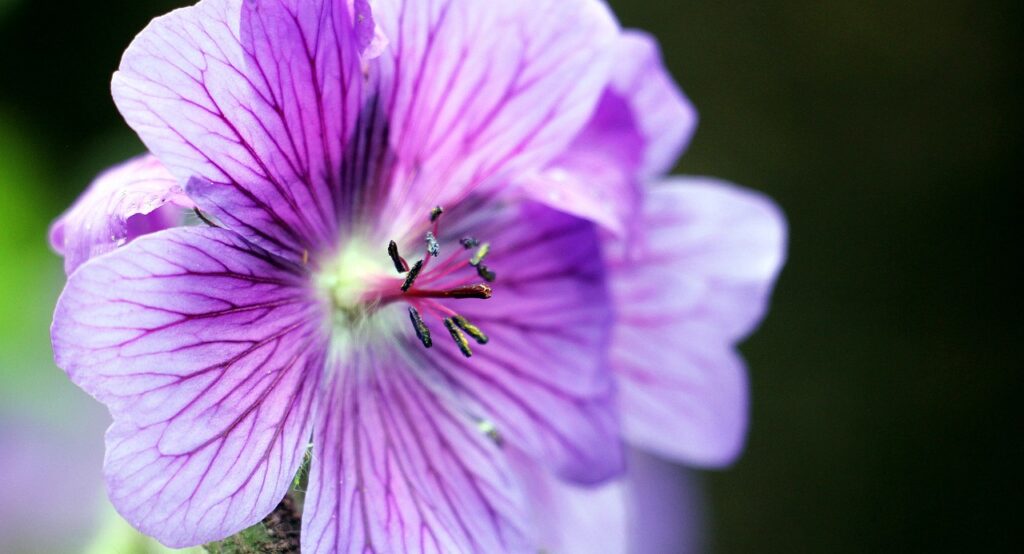
They are exceptionally versatile, performing well in full sun or partial shade, and their tolerance of clay is outstanding. I use hardy geraniums in almost every garden I design because they are reliable, long-flowering, low-maintenance and genuinely beautiful. Rozanne’ in particular is exceptional, flowering from June right through to the first frosts with its violet-blue saucers held on sprawling stems. The RHS has awarded many varieties its Award of Garden Merit, which is a very good indicator of consistent performance.
🛒 Buy Hardy Geranium from Amazon UK
3. Monarda (Bee Balm)
Monarda is a fabulously extravagant-looking herbaceous perennial that smells of Earl Grey tea. It looks alluring and difficult to grow, but this is far from the truth. Known as Bee Balm, not because it attracts bees (which it does in large numbers) but because it was historically used to treat bee stings, Monarda tolerates the dense, moisture-holding nature of clay soil and thrives in full sun, with bright red, pink, or purple flowers and a gorgeous bergamot scent.
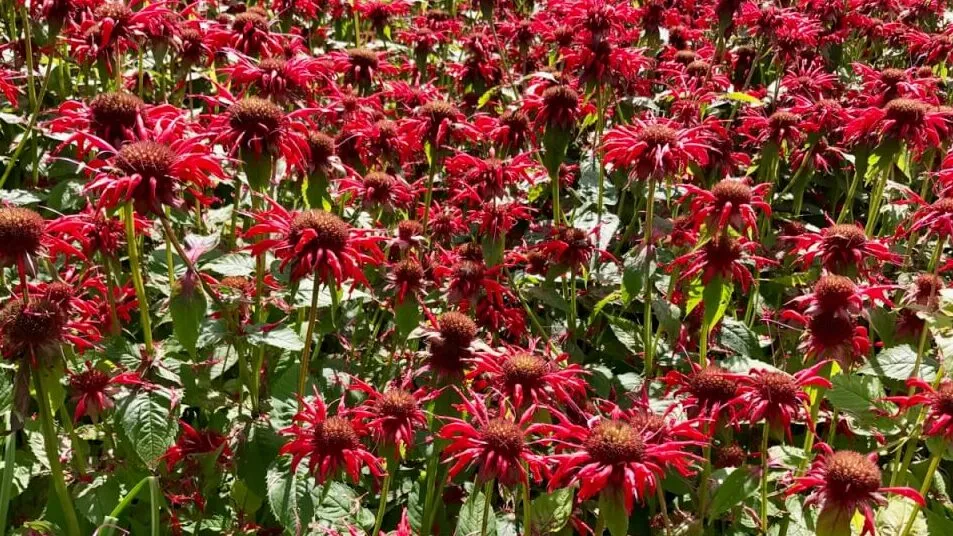
This mid- to late-summer-flowering perennial is a real showstopper. One thing to be aware of is susceptibility to powdery mildew during hot, dry spells. If the leaves develop a white powdery residue, increase watering. The clay soil’s moisture retention actually helps prevent mildew in most UK summers.
4. Echinacea purpurea (Coneflower)
Coneflowers are a surprising addition to a clay-soil plant list, as they look so delicate yet are tough, resilient plants that thrive in heavy soil. Usually found beside river beds in their native North America, Echinacea are well-suited to the moisture-retentive conditions of UK clay gardens.
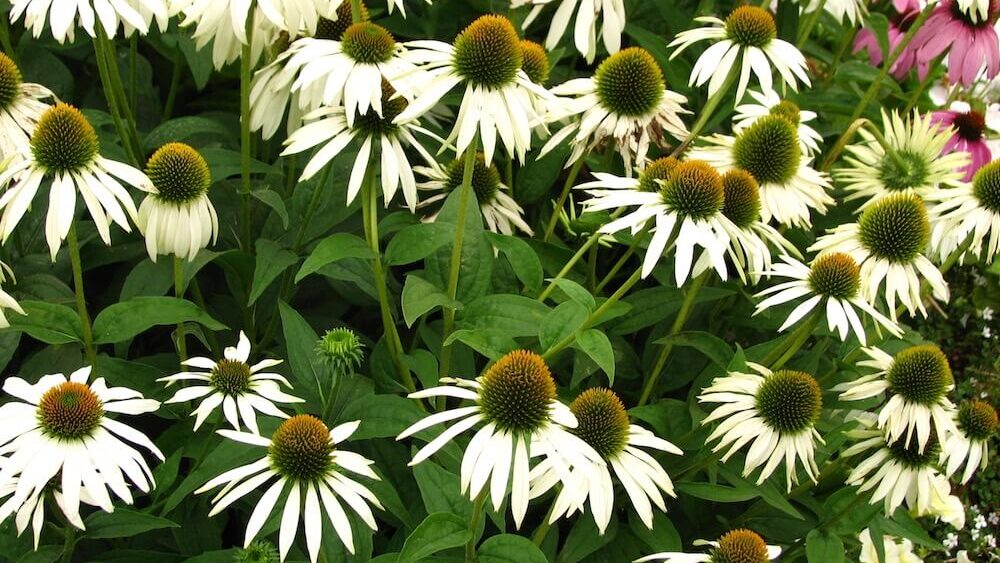
The daisy-like flowers, with their distinctive raised central cone, attract bees and butterflies in large numbers throughout the summer months. Leave the seed heads standing over winter, as they provide architectural interest in the border and an important food source for birds like goldfinches. The most reliably perennial forms are the white-flowered species and the traditional purple-pink varieties.
🛒 Buy Echinacea from Amazon UK
5. Astrantia major (Masterwort)
Astrantia is one of my absolute favourite plants for a clay soil border, and it features in many of my garden designs. The intricate, pincushion-like flowers, each one looking like a tiny botanical illustration, appear in shades of white, pale pink, deep red and near-black from June right through to September.
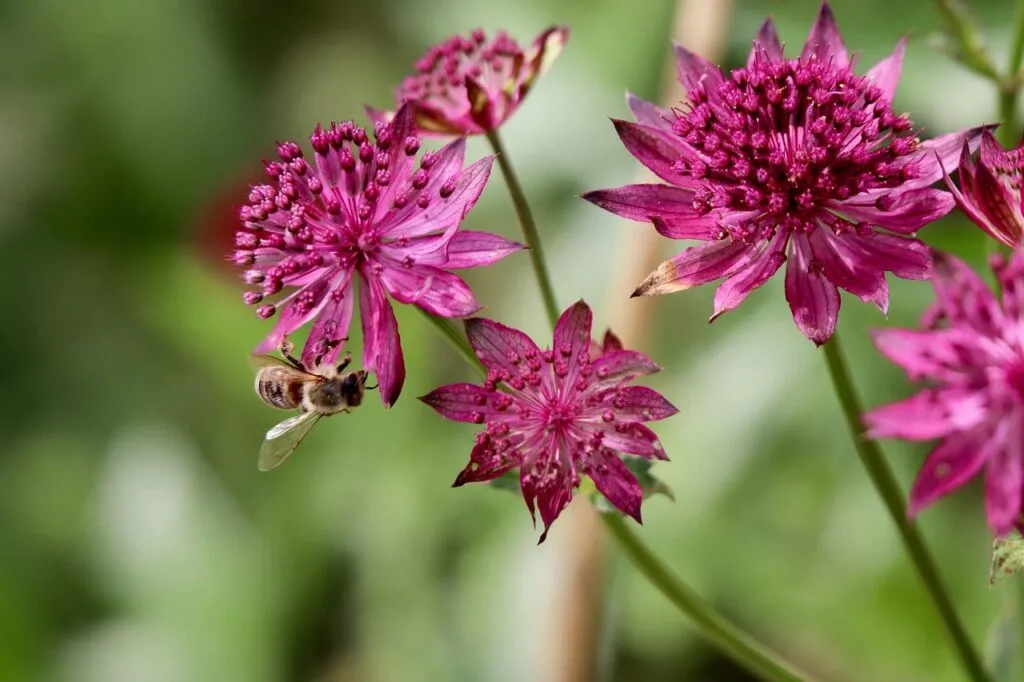
What makes Astrantia so valuable on clay is its love of moisture combined with its tolerance of partial shade. This combination is genuinely hard to find in a long-flowering perennial. It self-seeds politely, and the seedlings are easy to move. The RHS has given the Award of Garden Merit to several varieties, including ‘Hadspen Blood’ (deep crimson), ‘Roma’ (clear pink) and the white-flowered species. It is a plant I return to again and again.
🛒 Buy Astrantia from Amazon UK
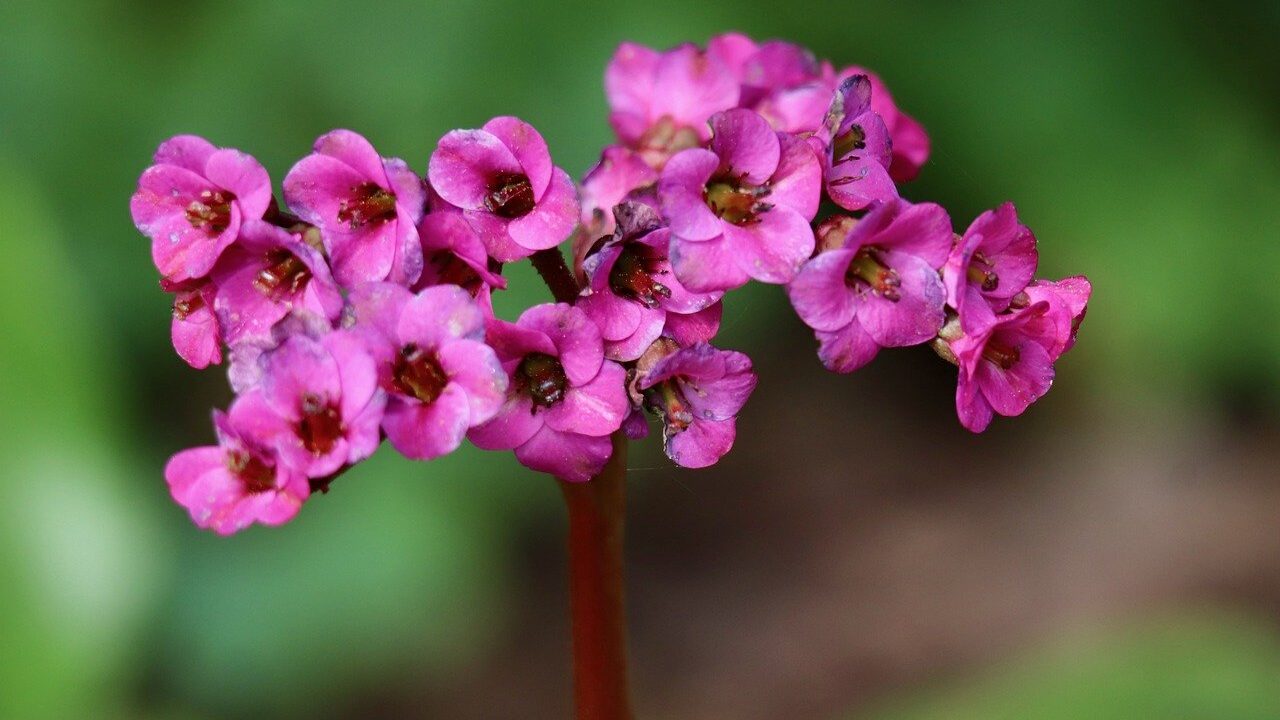
6. Bergenia cordifolia (Elephant’s Ears)
Bergenia is nicknamed “elephant’s ears” for its bold, leathery evergreen leaves, and it is a top pick for clay soil. Its hardy nature allows it to thrive in heavy, moisture-retentive ground where other plants might struggle. Bergenia is highly adaptable, growing well in full sun or full shade, and once established, it is also drought-resistant.
Genuinely one of the toughest plants available to UK gardeners. Slugs leave it alone entirely, and it adds a glossy green foil to the garden year-round. In late winter or early spring, it bursts into clusters of pink, white or purple flowers that attract early pollinators. The leaves turn stunning shades of red and bronze in the colder months, adding winter interest. Its spreading habit also stabilises soil and prevents erosion on slopes.
7. Hemerocallis (Daylily)
Daylilies are a dream for gardeners with clay soil. Their strong roots easily penetrate heavy soil, making them resilient and dependable even in challenging conditions. Celebrated for their vibrant trumpet-shaped flowers, each bloom lasts just a single day, but the plants produce a continuous flush of flowers throughout summer, ensuring colour for weeks on end.
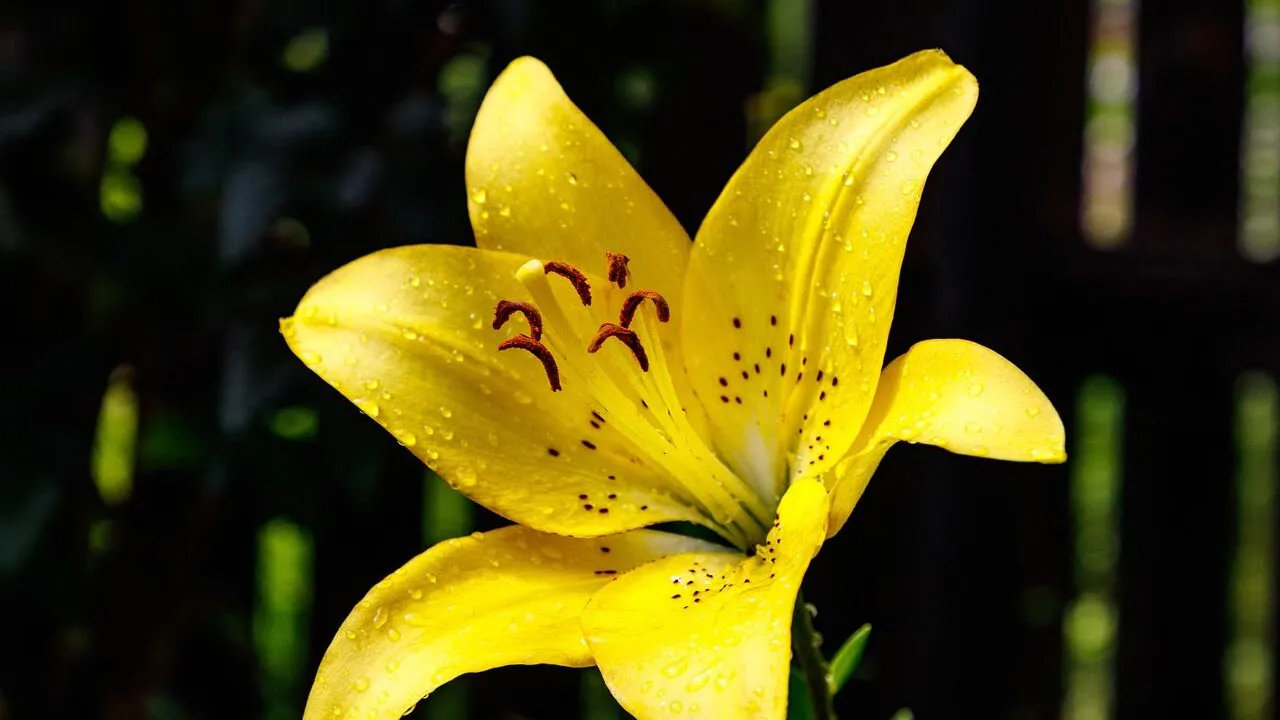
Daylilies come in warm oranges and yellows, romantic reds, and striking purples and virtually every colour imaginable. They require minimal care, tolerate drought once established and resist many common pests and diseases. I often use them as the mid-border filler in clay gardens because they bulk up quickly and never let you down.
🛒 Buy Hemerocallis from Amazon UK
8. Astilbe (False Goat’s Beard)
Astilbe is a fantastic match for clay soil, thriving in its moisture-retentive properties. This plant loves damp conditions and tolerates even deep shade, making it invaluable for the difficult combination of north-facing clay gardens. With the right balance of shade and moisture, Astilbes reward you with lush fern-like foliage and eye-catching feathery plumes of flowers.
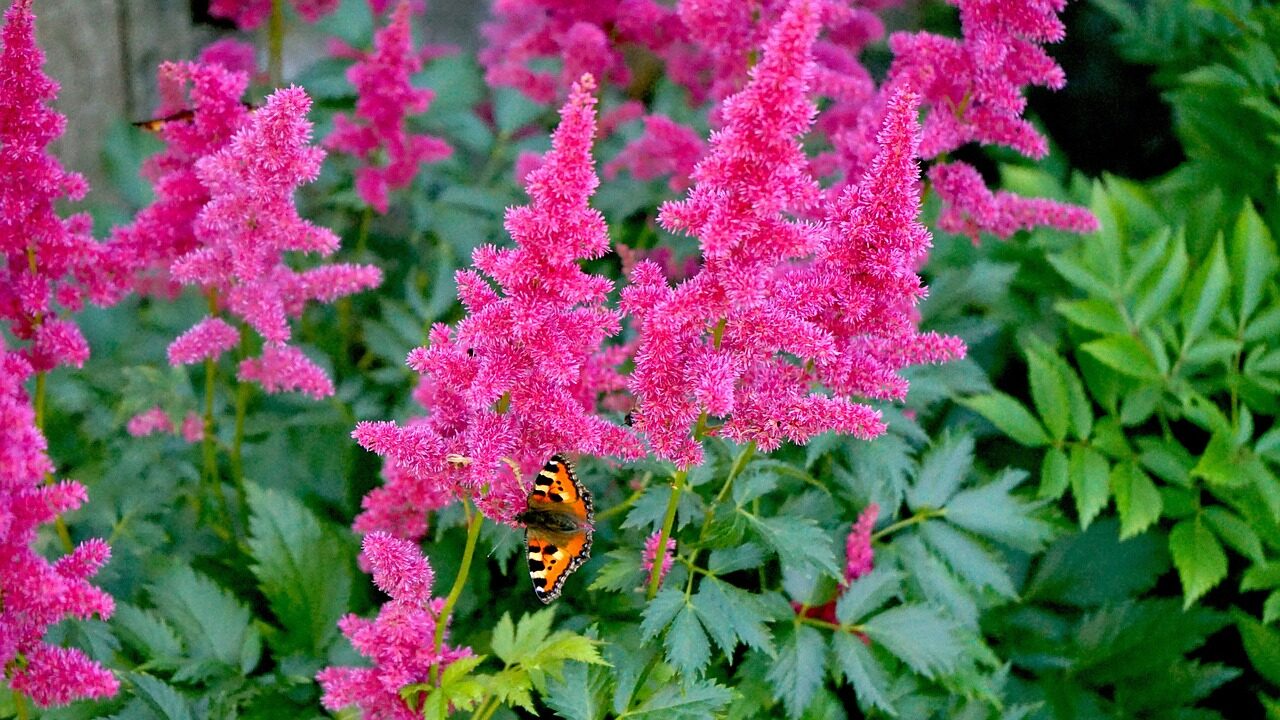
I love mixing Astilbes with ferns and hardy geraniums in my garden designs because the textures work beautifully together. Available in white, soft pinks, deep reds and vibrant purples, there is an Astilbe variety for every garden palette. Resistant to most pests and diseases, these are excellent plants for beginner gardeners working with clay.
9. Alchemilla mollis (Lady’s Mantle)
Lady’s Mantle is one of those plants that just makes every border look better. Its softly lobed, velvety leaves collect rain and dew drops like little mercury pearls, and the frothy lime-green flowers work as a perfect foil for almost every other plant colour in the border.
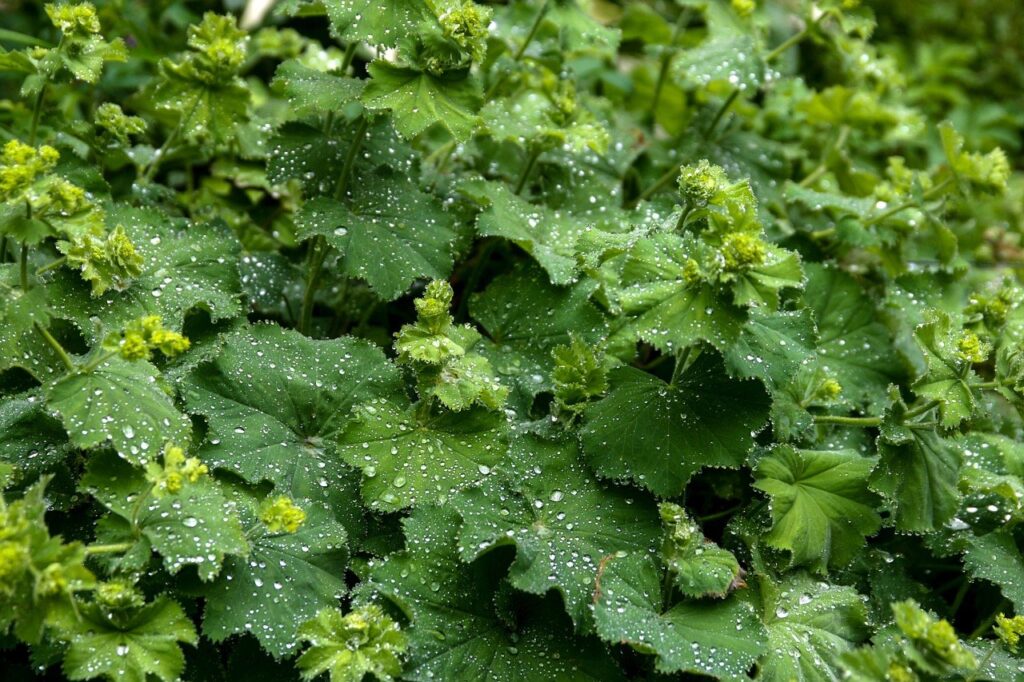
Alchemilla mollis is a versatile performer on clay soil, tolerating a wide range of conditions from full sun to quite deep shade. It spreads gently by self-seeding, filling gaps and softening hard edges beautifully. If it self-seeds too enthusiastically, simply cut it back hard after flowering,g and it will produce a fresh mound of new foliage. I use it as an edging plant along paths and borders where its tumbling habit softens the line between hard surfaces and planting.
🛒 Buy Alchemilla mollis from Amazon UK
10. Hosta (Plantain Lily)
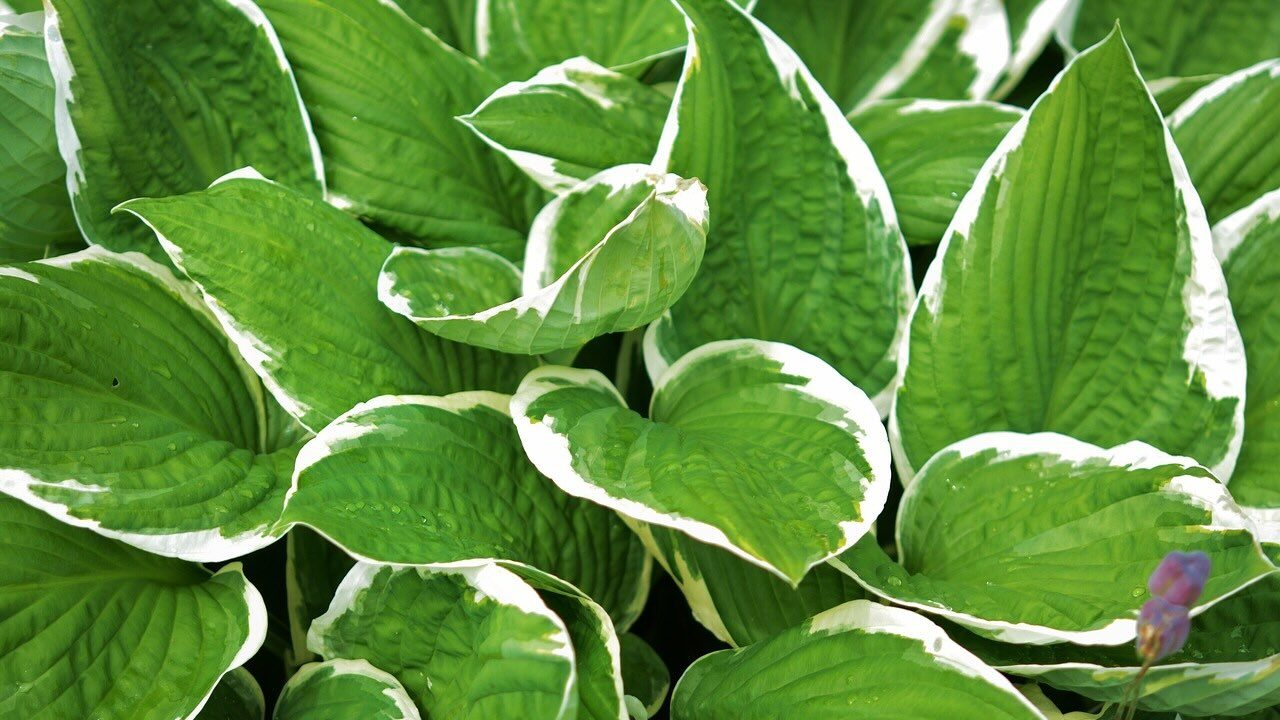
Everybody knows hostas love shade and are the go-to plant for gardens lacking sunlight, but they also thrive in heavy clay soil, a combination that makes them invaluable. Hostas’ large, textured leaves benefit from clay’s moisture-retentive nature, keeping their root systems hydrated and healthy.
Available in green to blue, ribbed to smooth-leafed, and variegated to solid colours, there is a hosta variety for every size of shade garden. The biggest challenge with hostas is slug and snail damage, so make sure defences are in place before the young tightly rolled shoots emerge in spring. If slugs reach them at that tender stage, it is usually game over for the season.
11. Helleborus (Hellebore)
Hellebores are among the plants that experienced gardeners quietly get excited about, and for very good reason. They flower at the most difficult time of year, from January through to April, when little else is happening in the garden. Their nodding, cup-shaped flowers in shades of white, cream, pale pink, deep burgundy, smoky purple and near-black are exquisite up close, and they thrive in exactly the conditions that clay soil with dappled shade provides.
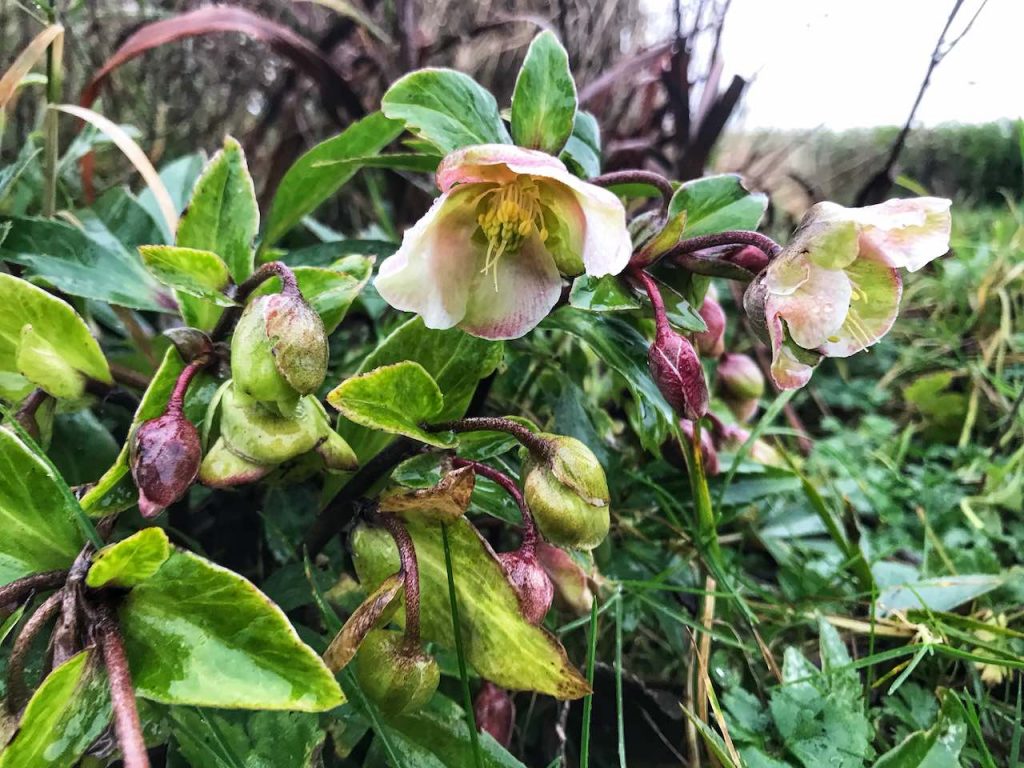
Hellebores are long-lived, evergreen, largely slug-resistant and require almost no maintenance once established. They work beautifully under deciduous trees and shrubs, where they catch the winter and early-spring light before the canopy closes. A plant worth every single penny.
🛒 Buy Hellebore from Amazon UK
12. Heuchera (Coral Bells)
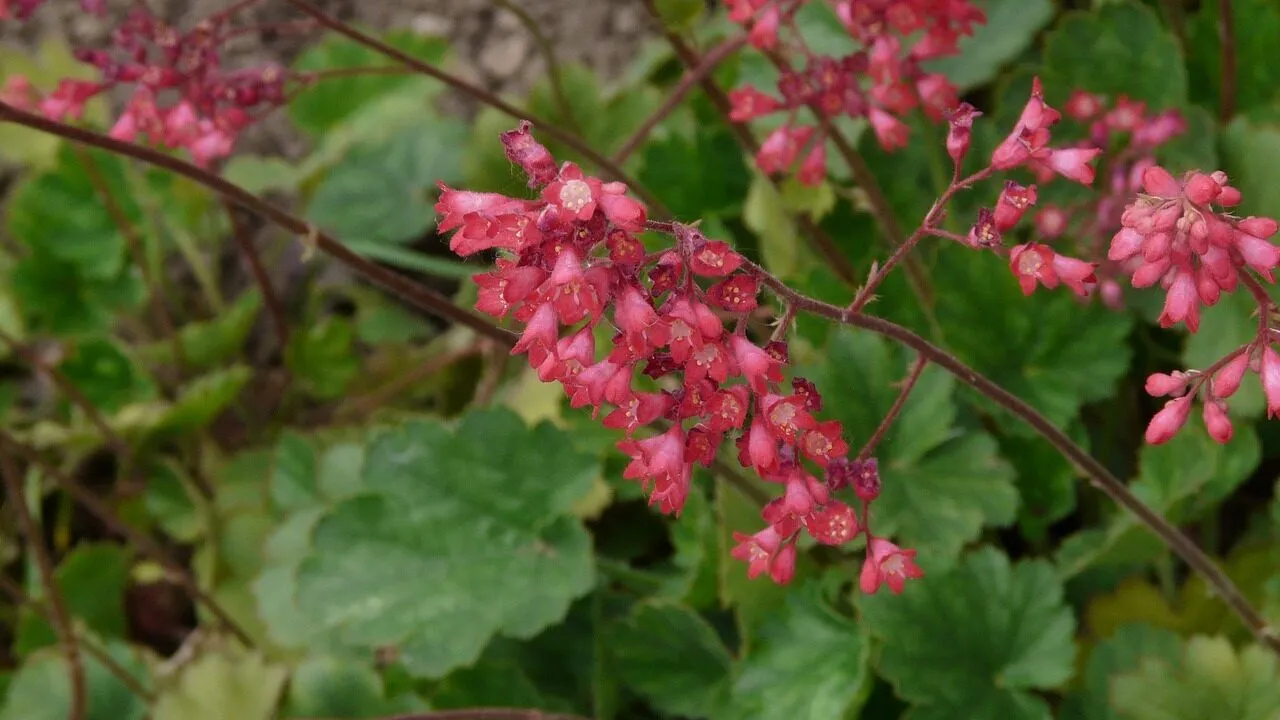
Coral Bells are a garden favourite and one of those rare plants that thrive in clay soil while bringing a splash of vibrant colour and texture that lasts all year. The real star of Heuchera is its stunning foliage, available in greens, purples, bronzes, silvers and near-black, with some varieties featuring striking veining or marbling that makes them a focal point in shady borders.
These versatile perennials are well-suited to partial shade where clay soil’s moisture retention keeps their shallow root systems hydrated. The delicate bell-shaped flowers on tall,l wiry stems appear from late spring to early summer, attracting pollinators. They also make excellent container plants if you can protect the roots from vine weevil.
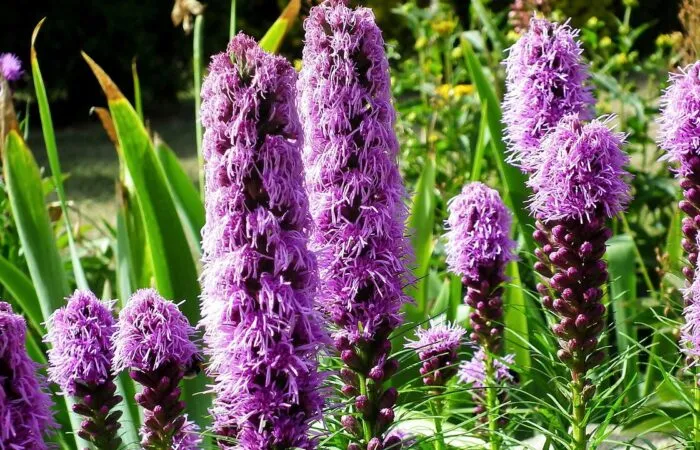
13. Liatris spicata (Blazing Star)
Blazing Star is one of the most striking clay-tolerant perennials available, and when I first started using it in heavy clay borders, I was genuinely surprised by how well it performed. It’s tall, upright spikes of feathery flowers open from the top downwards, a unique feature among flowering plants, adding a dramatic vertical element to the border.
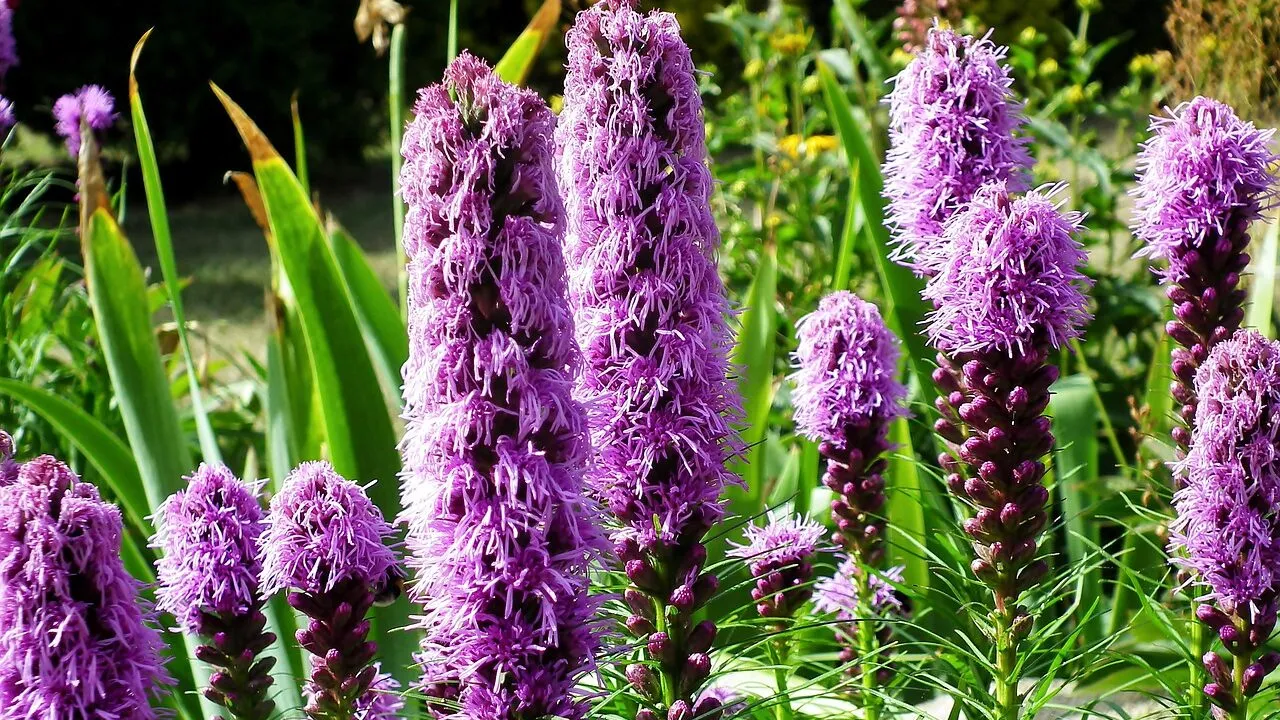
The vivid purple flower spikes are irresistible to bees and butterflies, and they work beautifully with ornamental grasses like Molinia, whose clump-forming foliage provides a perfect textural contrast to Liatris’s bold upright spikes. Available in purple, pink and white, it flowers from July to September.
14. Helenium (Sneezeweed)
Helenium is a plant that more gardeners with clay soil should be growing. Despite the unflattering common name of “sneezeweed”, a reference to the pollen rather than any irritant quality, this is one of the most richly coloured late summer perennials available. The RHS Award of Garden Merit holder ‘Moerheim Beauty’ produces warm copper-red daisy flowers with a prominent brown central boss from July through to September.
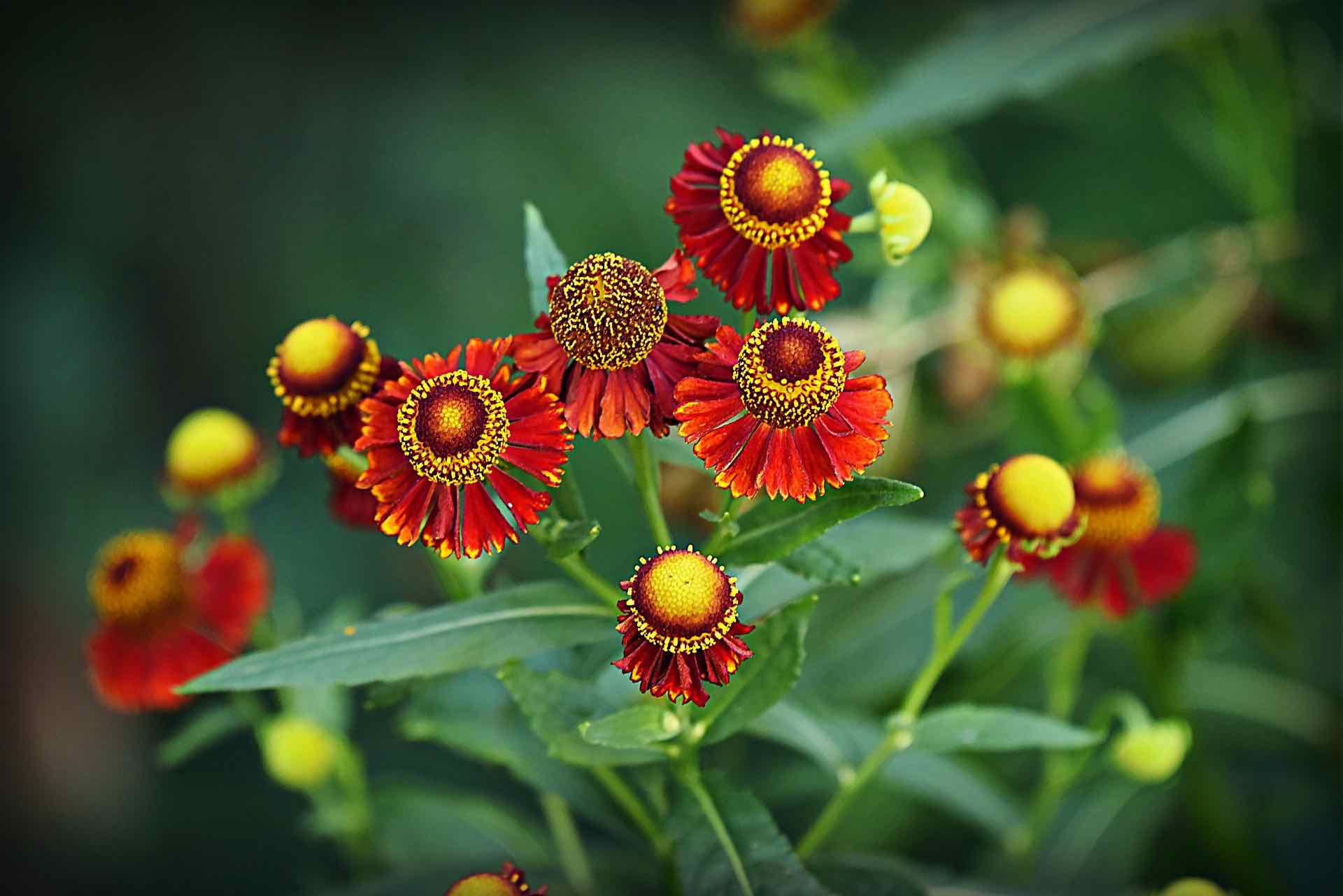
Clay soil’s moisture retention suits Helenium perfectly, and in my experience, it performs considerably better in clay than in lighter, free-draining soils that dry out quickly in summer. Divide clumps every three years to maintain vigour, and you will be rewarded with an ever-expanding drift of Autumn colour.
15. Achillea millefolium (Yarrow)
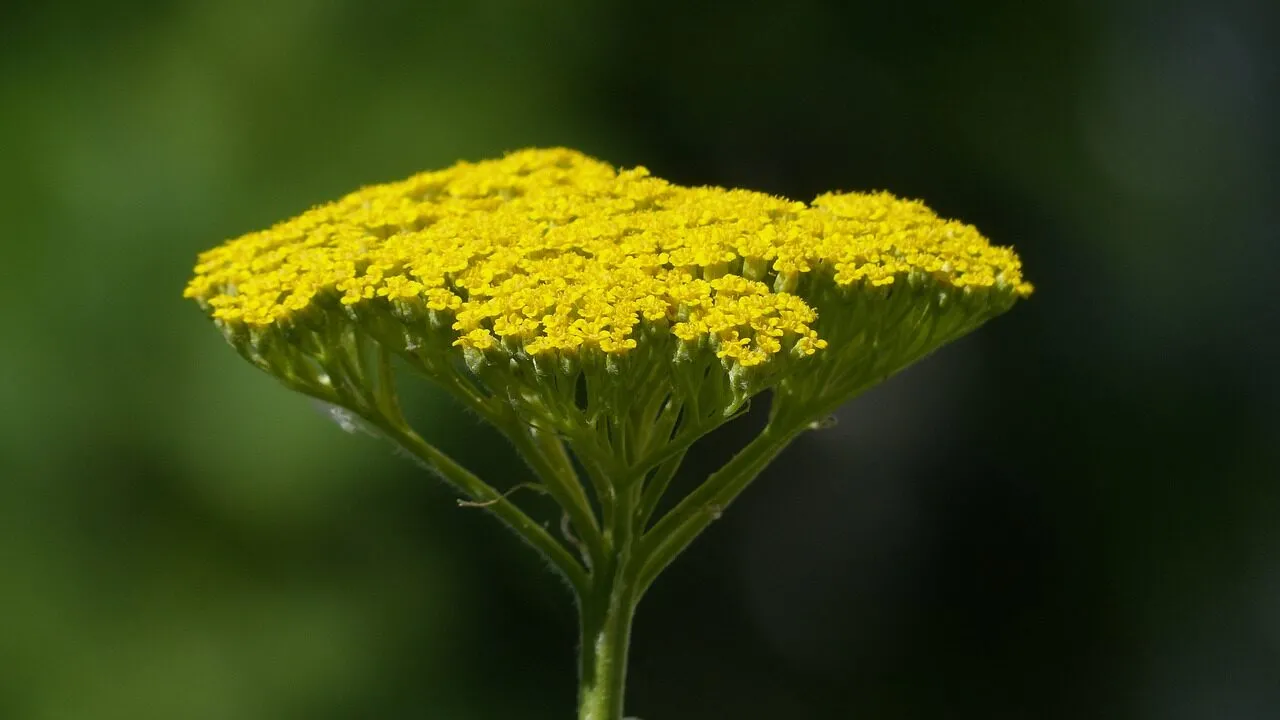
Yarrow is a powerhouse perennial with a tenacious root system that allows it to establish itself in compacted clay. Its flat-topped flower clusters provide a naturalistic aesthetic that sits beautifully in cottage gardens, wildflower meadows or prairie-style borders.
Yarrow’s flat flower heads are magnets for pollinators, drawing in bees, butterflies and hoverflies throughout the long flowering season. Blooming in shades of white, pink, red and yellow from June to September, it pairs beautifully with ornamental grasses and lavender. The blooms also dry exceptionally well for indoor arrangements.
16. Eutrochium purpureum (Joe Pye Weed)
Joe Pye Weed is a tall, stately plant featuring clusters of fragrant mauve-pink flowers atop sturdy stems from late summer into early Autumn. It genuinely thrives in moist clay conditions that challenge many other plants, tolerating occasional waterlogging. This is not a plant for small gardens, as it needs space given its height of up to 180cm and broad spread.
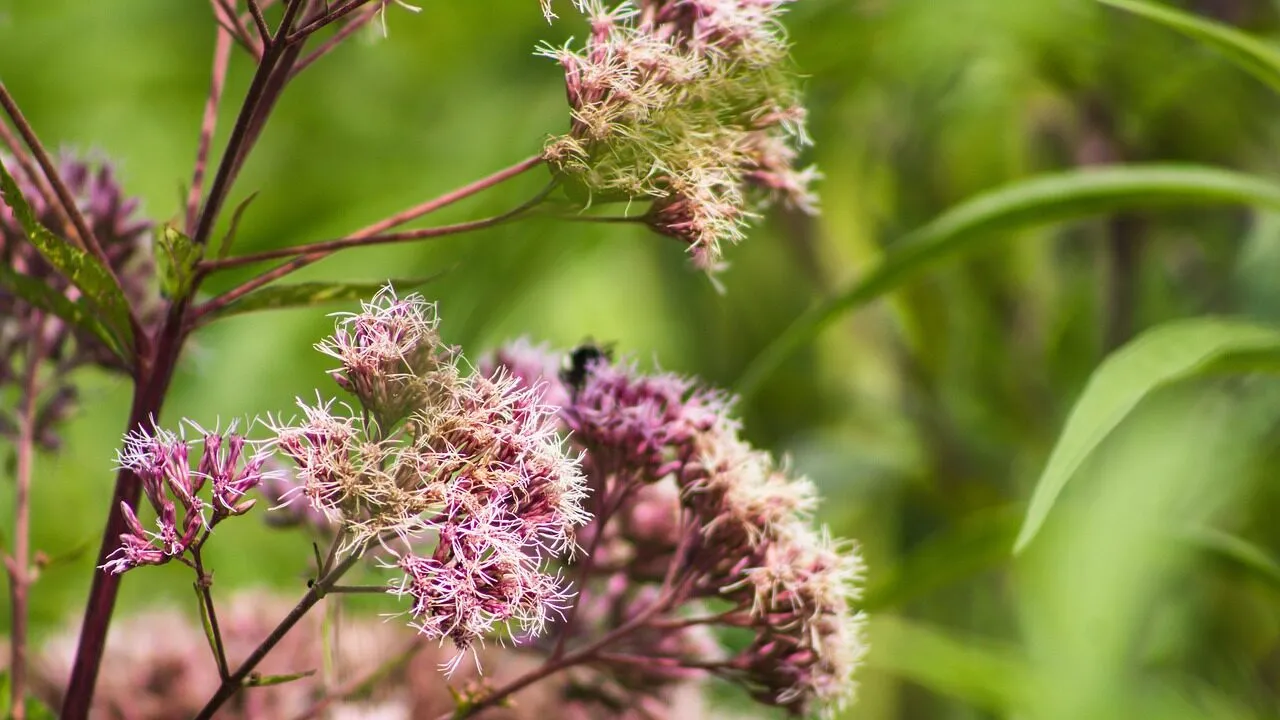
In a larger border or as a backdrop plant, it is spectacular, and its flowers are a magnet for pollinators right into Autumn. Note that this plant has undergone botanical reclassification and may be sold under Eupatoriadelphus or Eupatorium as well as Eutrochium.
🛒 Buy Joe Pye Weed from Amazon UK
17. Anemone hupehensis (Japanese Anemone)
Japanese anemone is a standout performer in clay soil, thriving in its moisture-retentive, nutrient-rich environment and ideal for late-season colour. From late summer into early Autumn, it produces a profusion of delicate, cup-shaped blooms in soft pink, blush Rose or pristine white, each with a golden-yellow centre.
These blooms appear precisely when most other perennials have faded, making them invaluable for extending border interest into October. Japanese anemones naturalise and form lush clumps over time, making them an excellent choice for filling and softening unloved clay borders. They pair beautifully with ornamental grasses, asters and hydrangeas.
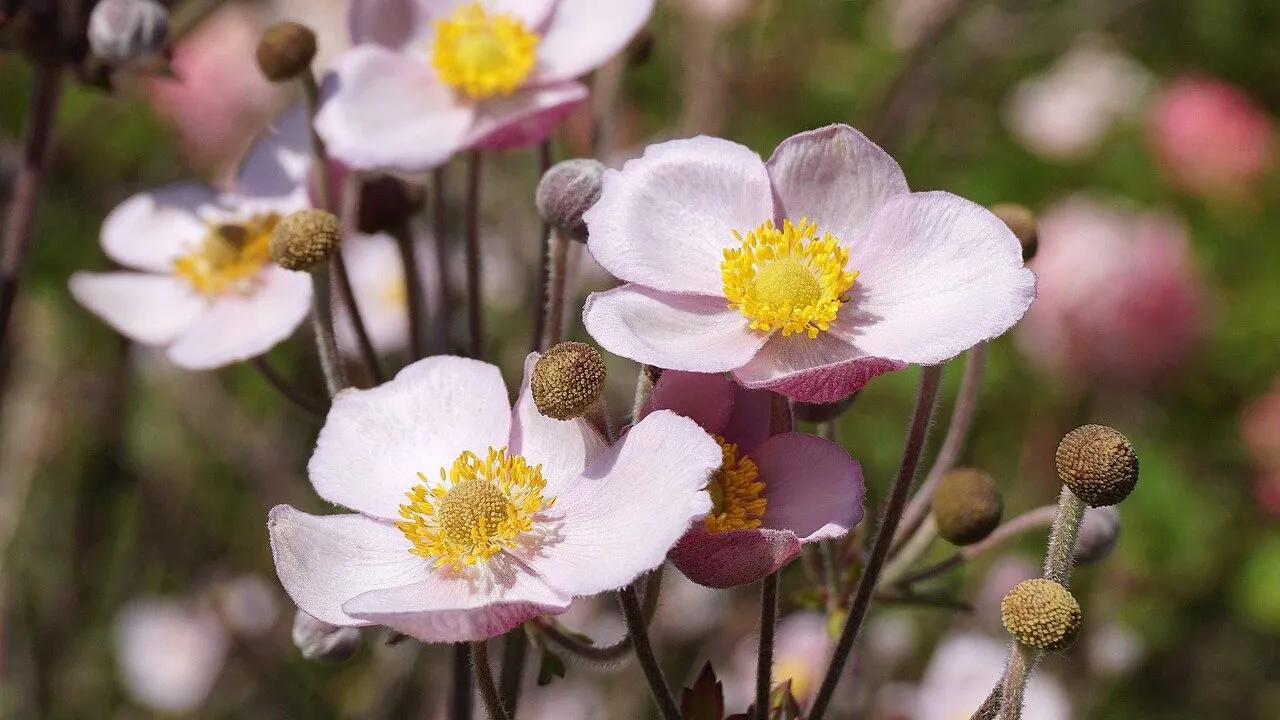
🛒 Buy Japanese Anemone from Amazon UK
Shrubs for clay soil
Shrubs provide structure, year-round interest and the permanent backbone of any planting scheme. The good news for clay-soil gardeners is that some of the most beautiful and reliable shrubs available in the UK thrive in heavy soil. Here are my top picks.
18. Hydrangea paniculata (Panicle Hydrangea)
Hydrangea paniculata ‘Floribunda’ is a superstar shrub for gardens with clay soil. Clay’s nutrient-retentive properties provide the perfect environment for this hydrangea to produce its lush cone-shaped flower clusters, which bloom prolifically from midsummer into Autumn.
The flowers shift from creamy white to shades of blush pink as the season progresses, and this shrub also provides invaluable winter structure in the garden while other plants die back. I tend to leave the dried flower heads on until December, then cut them for indoor dried-flower arrangements before pruning the whole shrub back hard in early spring. You can follow my viral hydrangea pruning guide on the site for the full how-to.
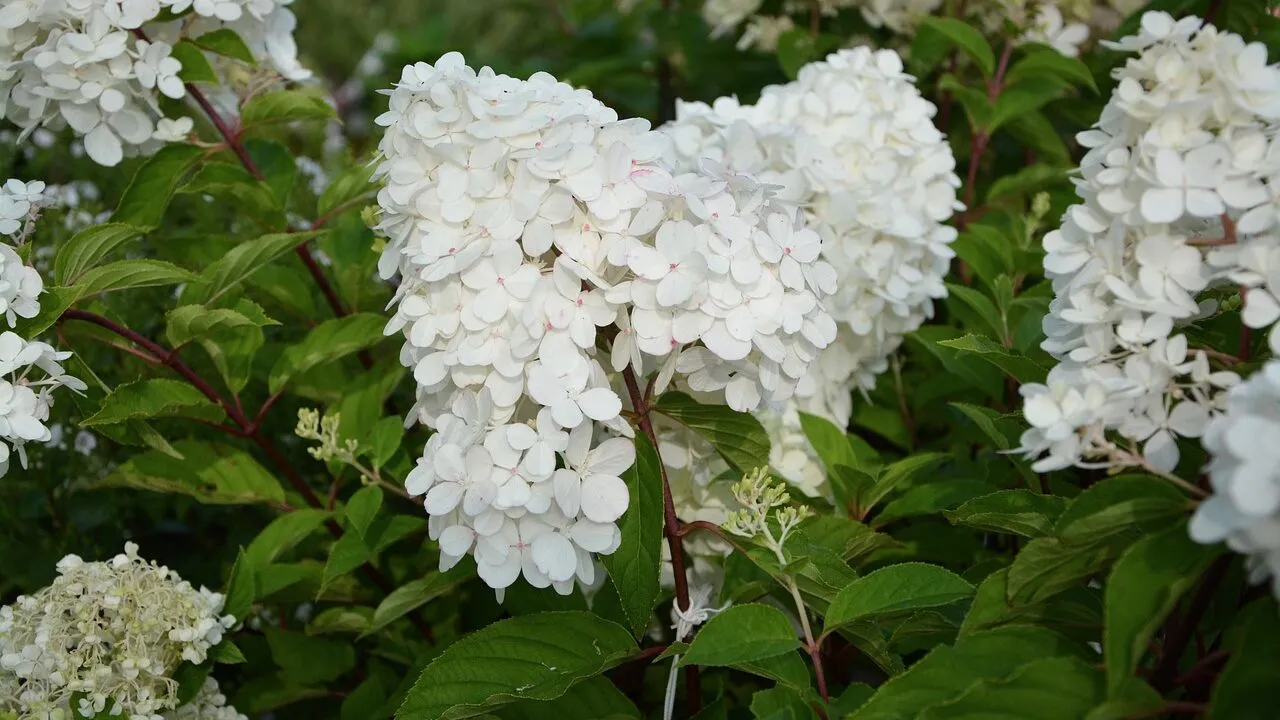
🛒 Buy Hydrangea paniculata from Amazon UK
19. Cornus alba (Dogwood)
Dogwood is one of the most striking shrubs available to UK gardeners, and it positively revels in clay soil conditions. The main reason to grow Cornus is its stunning winter stem colour, which is revealed once the leaves drop. ‘Sibirica’ produces vivid scarlet stems that glow like fire against low winter light. Midwinter Fire’ transitions from orange at the base to glowing yellow at the tips.
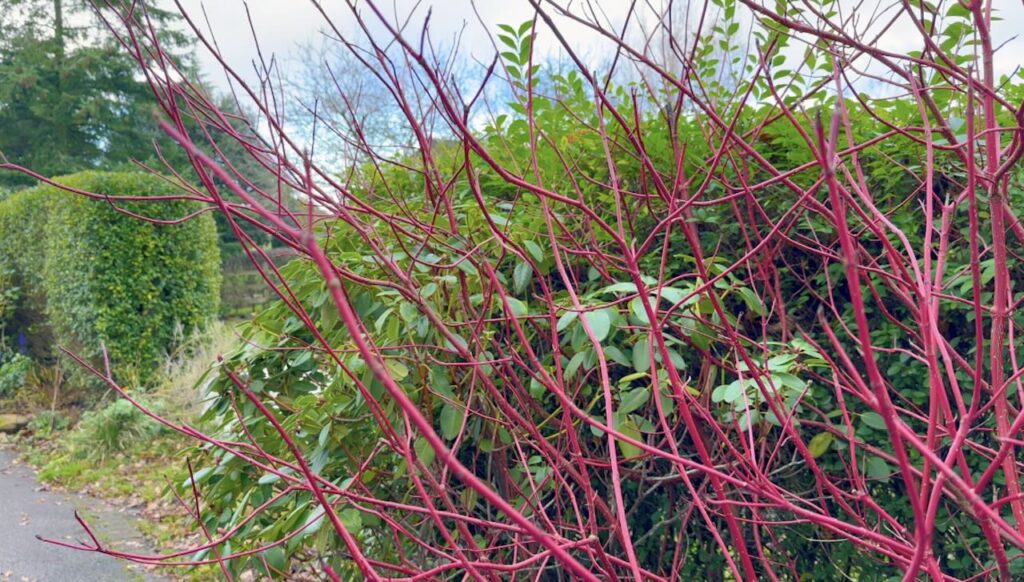
Cut all stems back hard in late February or early March, and the plant will push vigorous new growth with the most intensely coloured young stems. It also tolerates waterlogging better than almost any other ornamental shrub, making it perfect for the wetter parts of clay gardens.
🛒 Buy Cornus dogwood from Amazon UK
💡 Top Tip
For the best stem colour on Cornus, coppice the whole plant back to around 15cm above ground level in late February. It sounds brutal but the new growth that follows will have the most intensely coloured stems. Leave it unpruned and the stems gradually lose their vibrancy.
20. Viburnum tinus (Laurustinus)
Viburnum tinus ‘Eve Price’ is a clay-soil evergreen shrub that I consistently recommend in my garden designs. It is one of those completely reliable, year-round performers that deserve far more attention than they get. The small, densely packed clusters of pink-budded white flowers open from November right through to April, providing colour and fragrance during the very months when the garden is at its most bare.
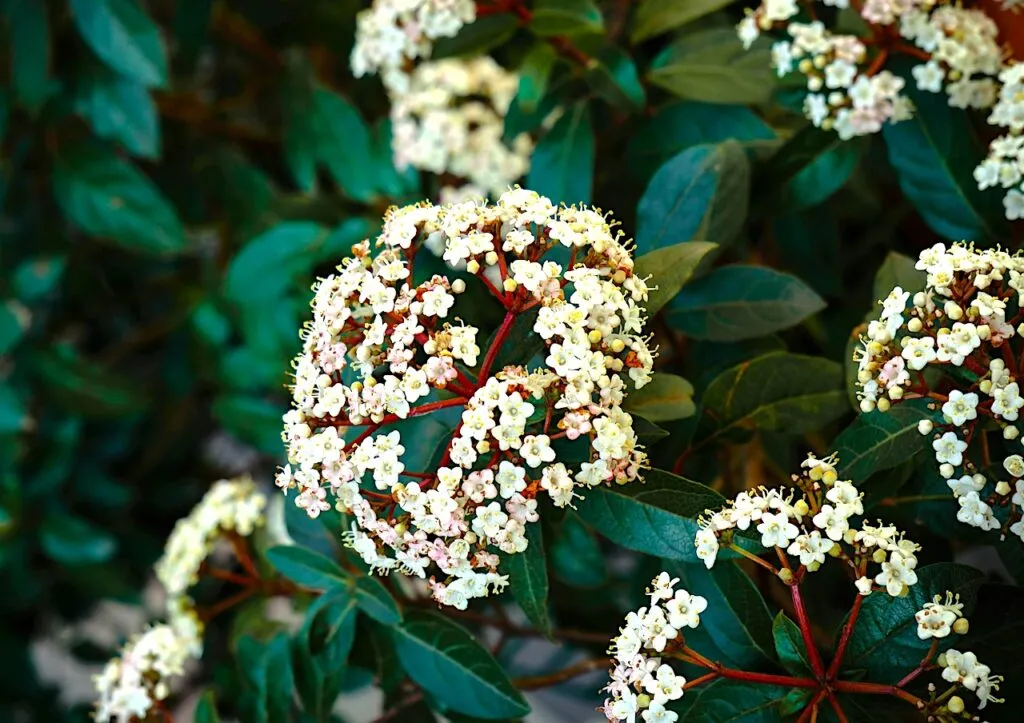
The RHS recommends Viburnum tinus as one of its top performers for clay soil, and ‘Eve Price’ is the most compact and free-flowering variety. It makes an excellent hedge, screen or large container specimen and tolerates both shade and exposed positions.
🛒 Buy Viburnum tinus from Amazon UK
21. Mahonia × media ‘Winter Sun’
Mahonia is one of the RHS’s own top five recommendations for clay soil, and with very good reason. This bold, architectural evergreen shrub brings structure and winter interest that few other plants can match. The long, spiny, pinnate leaves give it a dramatic, almost tropical appearance, and the bright yellow, sweetly fragrant flower spikes from November through to March are a vital early nectar source for bumblebees venturing out on mild winter days.
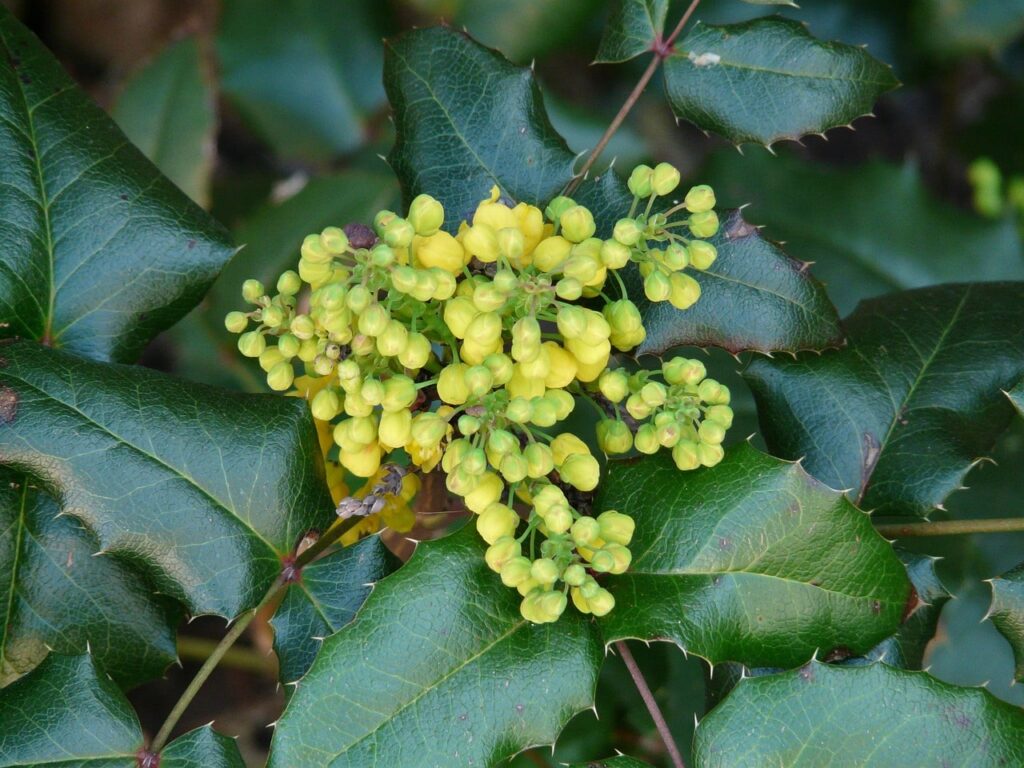
‘Winter Sun’ holds the RHS Award of Garden Merit and thrives in shade, which is particularly useful in clay gardens where shade from adjacent trees or fences is common. A plant of genuine year-round presence.
22. Philadelphus (Mock Orange)
Mock Orange is a classic cottage-garden shrub that performs beautifully in clay soil. The billowing masses of pure white, four-petalled flowers appear in June and July and carry one of the most intoxicating fragrances in the entire plant kingdom. A rich, vanilla-orange scent that fills the garden on warm summer evenings.
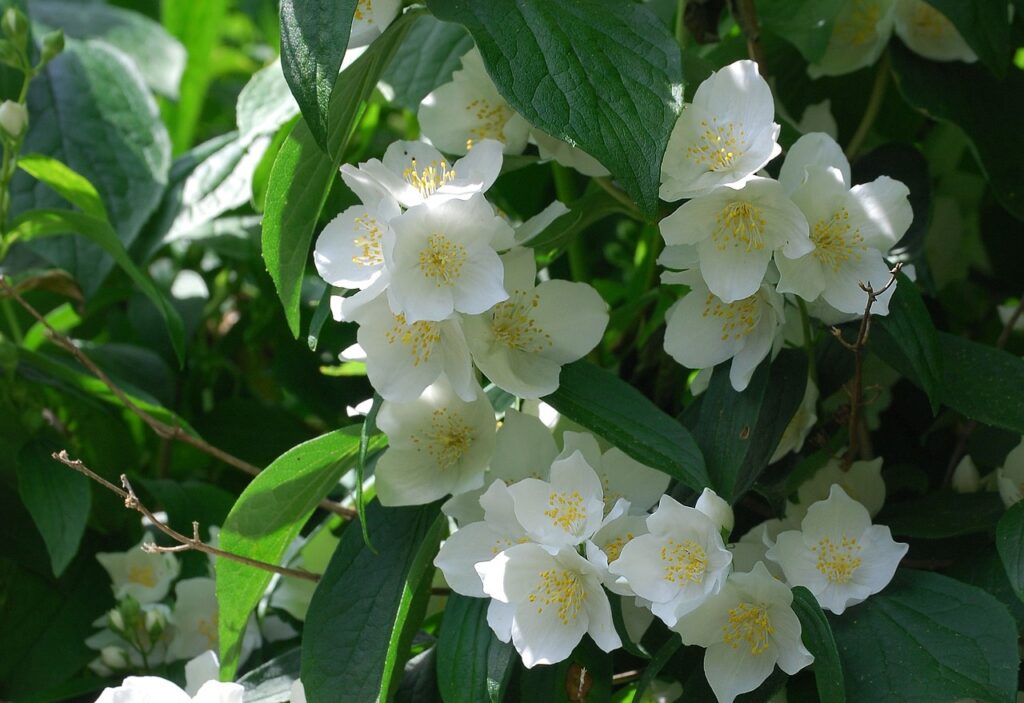
‘Manteau d’Hermine’ is the RHS AGM-winning compact variety at around 100cm, making it ideal for smaller gardens, while ‘Belle Étoile’ grows larger with a striking purple stain at the base of each petal. Prune immediately after flowering by removing the oldest stems at the base to encourage vigorous new growth for next year’s flowers.
🛒 Buy Philadelphus from Amazon UK
Roses for clay soil
Here is the truth about roses and clay soil that many gardeners do not realise: roses actually love it. Clay’s high nutrient content and moisture retention provide exactly the conditions that roses thrive in, and many of the great English garden roses were originally developed on heavy clay. The key is choosing varieties suited to UK conditions and planting them correctly.
23. Rosa ‘Bonica’ (Ground Cover Rose)
If you have clay soil and you only plant one Rose, make it ‘Bonica’. This RHS Award of Garden Merit shrub Rose is one of the most reliable and disease-resistant varieties available in the UK, producing clusters of soft pink, fully double flowers on arching stems from June right through to October. ‘Bonica’ is exceptionally healthy and requires minimal spraying even in the damp conditions that clay gardens can produce, which is exactly the quality you need in a clay soil Rose.
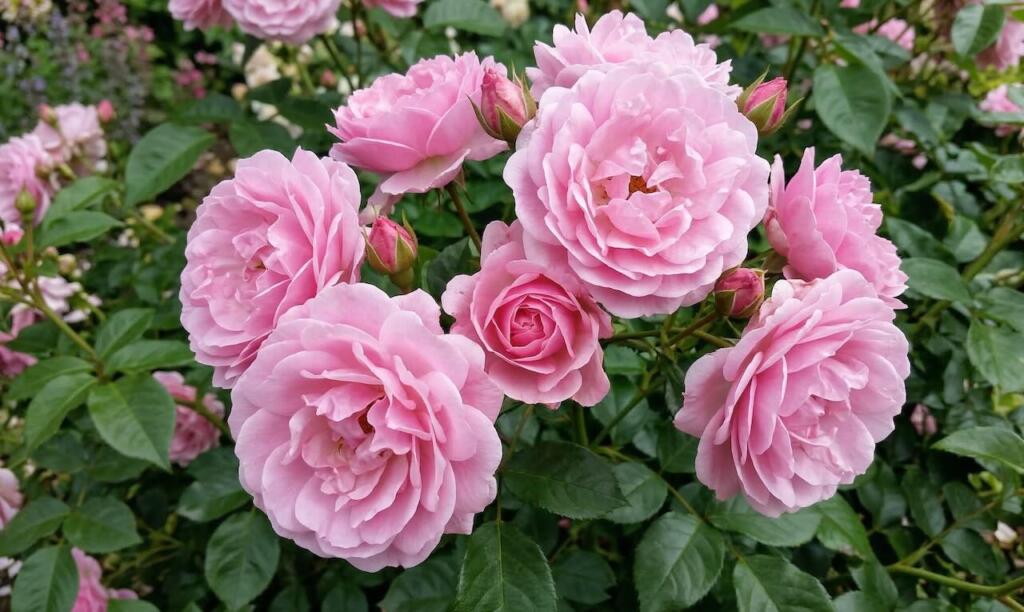
It grows to approximately 90cm high and spreads to 120cm, making it ideal for a mid-border position or planted in groups of three for a larger drift. Small red hips follow the flowers in Autumn, providing an additional wildlife interest.
🛒 Buy Rosa ‘Bonica’ from Amazon UK
24. Rosa ‘Blanche Double de Coubert’ (Rugosa Rose)
Rugosa roses are the toughest group of garden roses available, and ‘Blanche Double de Coubert’ is one of the finest. This RHS Award of Garden Merit Rose carries an H7 hardiness rating, meaning it tolerates temperatures down to -20 °C. This is remarkable for a Rose of this quality. The heavily fragrant, semi-double white flowers with a slight blush appearance from June to October, and the wrinkled rugosa foliage is naturally disease-resistant.
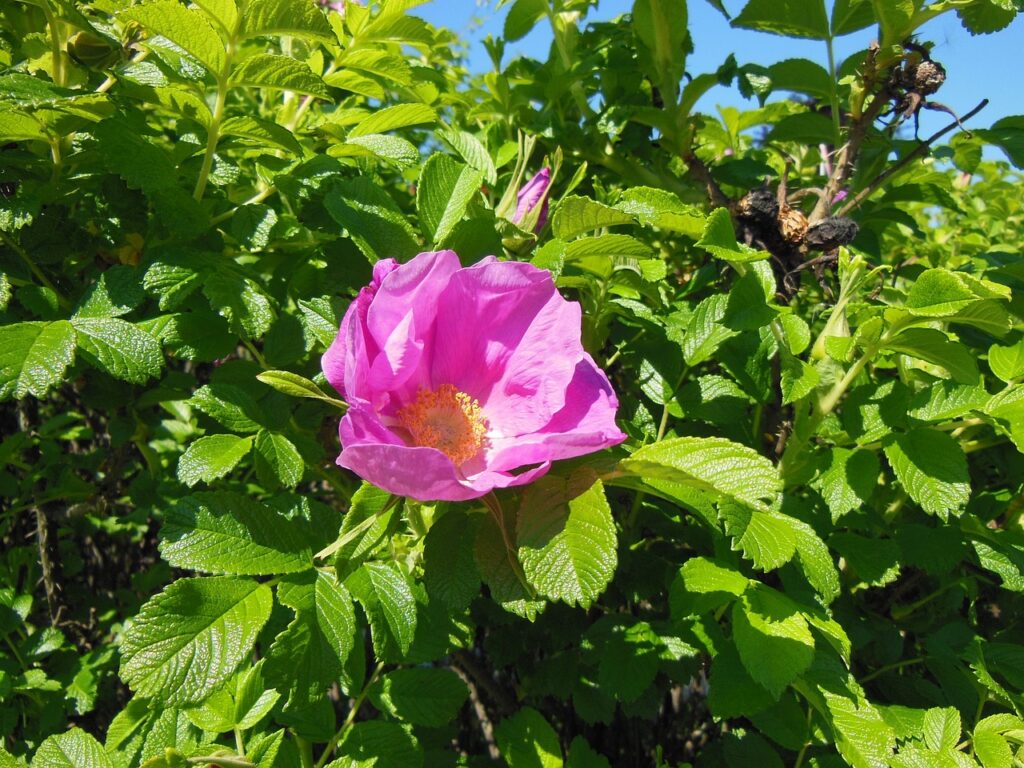
Pests largely ignore the rough, heavily textured leaves, and the plant produces large, decorative red hips in Autumn that birds love. Rugosa roses thrive in clay soil because they evolved on the sandy, windswept coasts of East Asia, where moisture and nutrients were concentrated in dense soils, and clay suits them perfectly.
🛒 Buy Rugosa Rose from Amazon UK
💡 Top Tip
When planting roses in clay, always break up the sides of the planting hole with a fork rather than leaving them smooth, as smooth clay walls can act like the inside of a pot, trapping roots and water. Work in a couple of buckets of well-rotted compost to get them off to the best possible start.
Trees for clay soil
Trees provide the permanent structure, scale and seasonal drama that transforms a garden from a collection of plants into a designed landscape. Several of the finest trees available to UK gardeners thrive on clay, and choosing the right one for your space will pay dividends for decades.
25. Amelanchier lamarckii (Juneberry / Snowy Mespilus)
Amelanchier lamarckii is the tree I recommend more than any other for small to medium UK gardens, and its ability to thrive on clay makes it even more relevant. This RHS AGM tree provides four seasons of genuine interest: the emerging coppery-bronze foliage in early spring is covered simultaneously with a haze of delicate white blossom that rivals any cherry; small edible purple-black berries follow in June; the green summer foliage is clean and pest-free; and in Autumn the leaves turn spectacular shades of orange, red and crimson before falling.
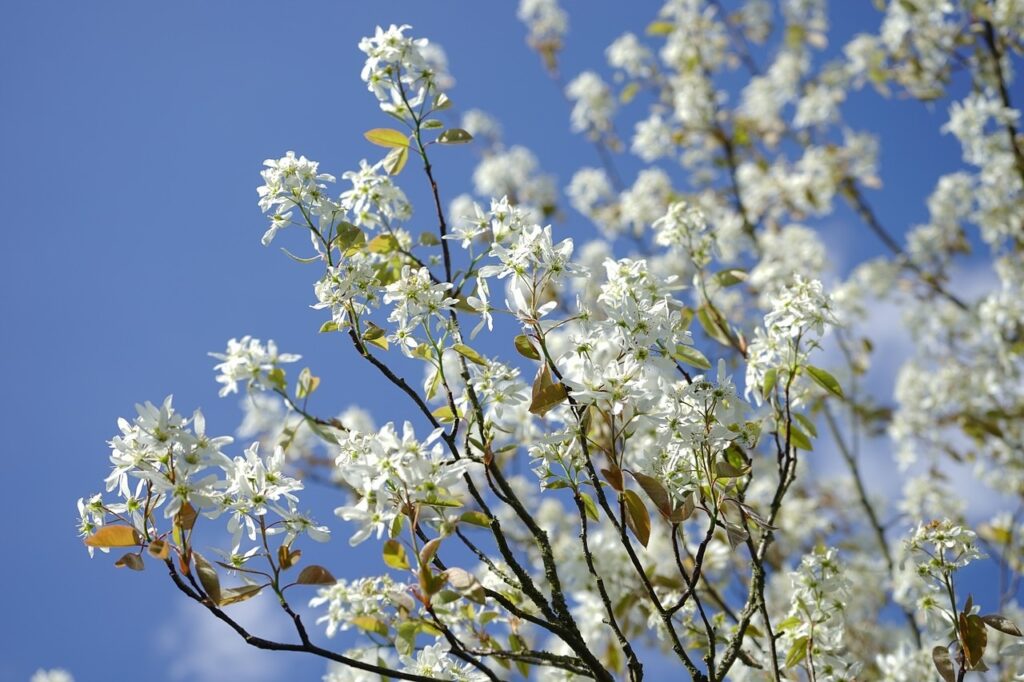
It grows to around 5m over 20 years, making it genuinely suitable for garden-scale planting, and it tolerates clay soil, partial shade, and damp conditions without complaint.
🛒 Buy Amelanchier from Amazon UK
26. Betula pendula (Silver Birch)
Silver birch is one of Britain’s most beautiful native trees, and it is far more tolerant of heavy clay than many people realise. The white peeling bark provides year-round interest, especially striking in winter when the delicate tracery of branches is revealed against a pale sky. This is an outstanding wildlife tree that supports over 300 insect species, which in turn support birds throughout the year.
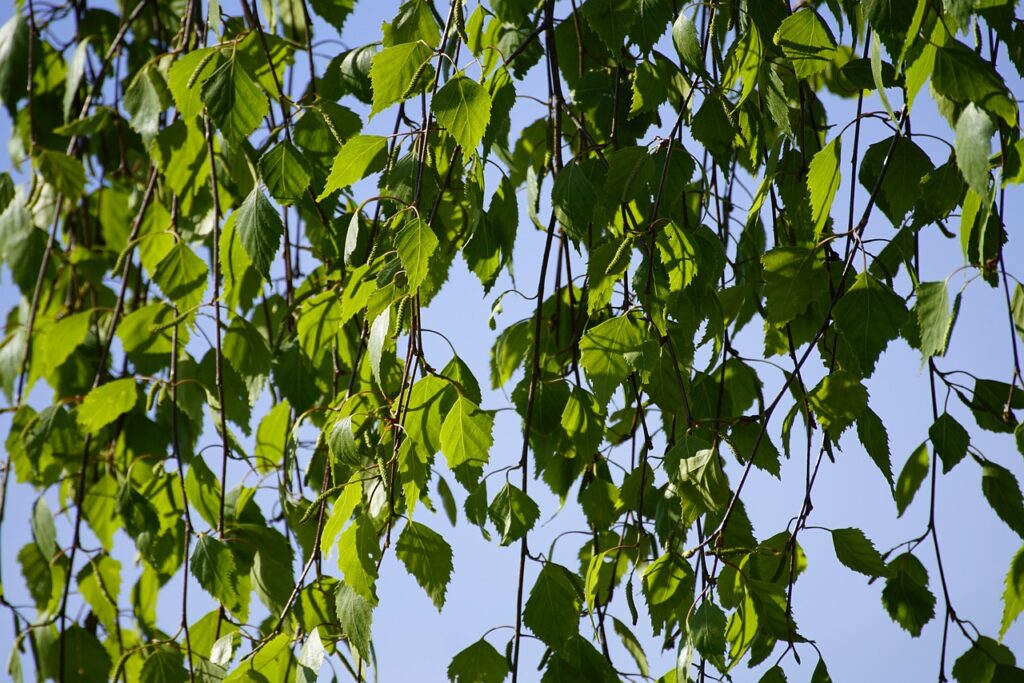
Silver birch is also a relatively fast-growing tree, making it one of the quickest ways to add height and structure to a clay-soil garden. For gardens with more space, the Himalayan birch *Betula utilis* var. *jacquemontii* has even more brilliant white bark and is equally happy on clay.
🛒 Buy Silver Birch from Amazon UK
27. Crataegus laevigata ‘Paul’s Scarlet’ (Hawthorn)
Hawthorn is arguably the toughest tree you can plant in a UK clay soil garden, and ‘Paul’s Scarlet’ is the ornamental variety that combines the rugged resilience of the native hawthorn with genuinely beautiful double crimson-pink flowers in May. It tolerates heavy clay, waterlogging, exposed and windy sites, atmospheric pollution and coastal conditions. It also has fantastic folklore uses for witchcraft and other esoteric rituals!
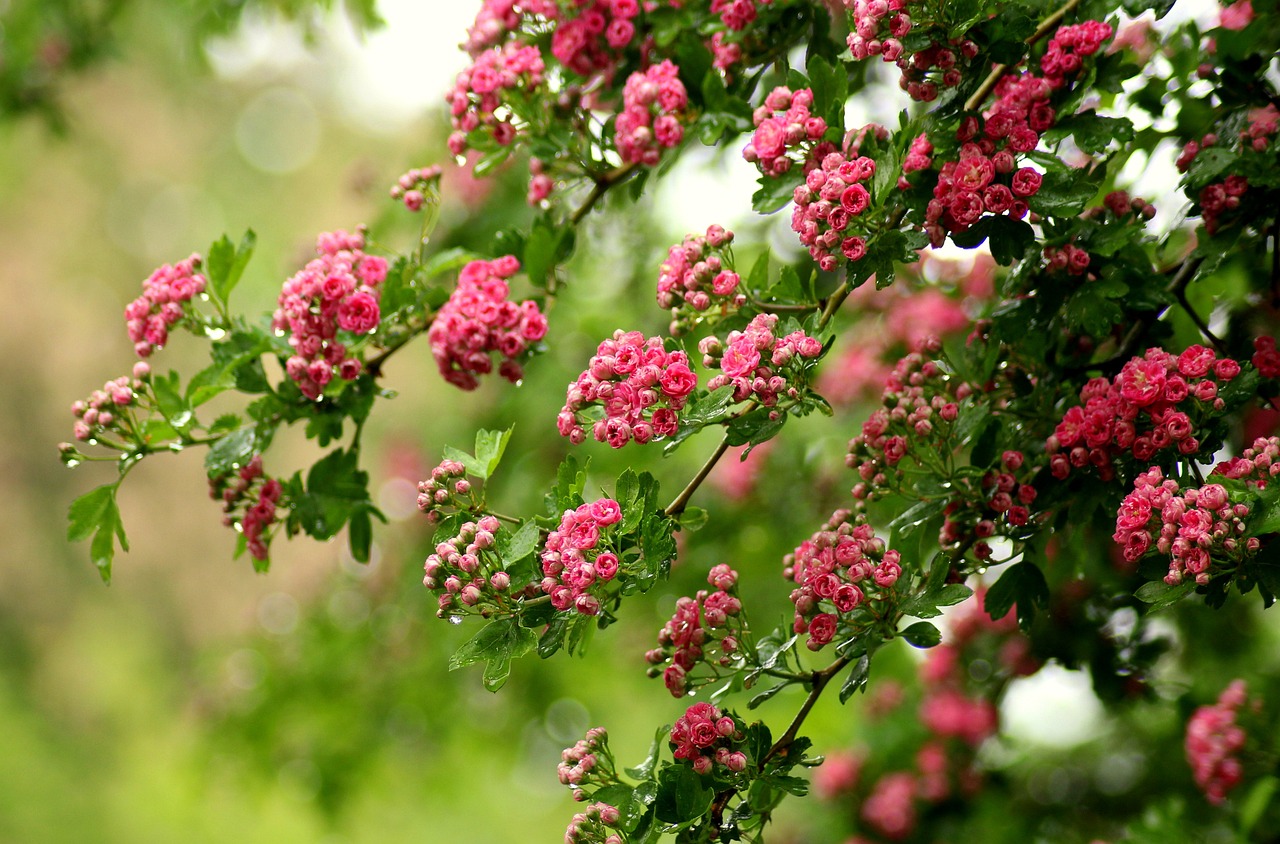
There are very few environmental challenges that it cannot handle. The scarlet blossom is spectacular against the fresh spring foliage, and the red haws that follow in Autumn are a critical food source for migrating thrushes and fieldfares. An excellent choice for difficult, exposed clay gardens.
Bulbs for clay soil
Many gardeners assume that bulbs and clay soil are incompatible, but this is only true of bulbs that require very sharp drainage. Tulips in particular will struggle in poorly drained clay. However, a surprising number of bulbs actually prefer the moisture-retentive conditions that clay provides.
28. Camassia (Quamash)
Camassia is the standout bulb for clay soil and one that genuinely excels in conditions where most other bulbs struggle. Native to the wet meadows of North America, Camassia evolved in exactly the kind of moisture-retentive, heavy soil that UK clay gardeners have in abundance.
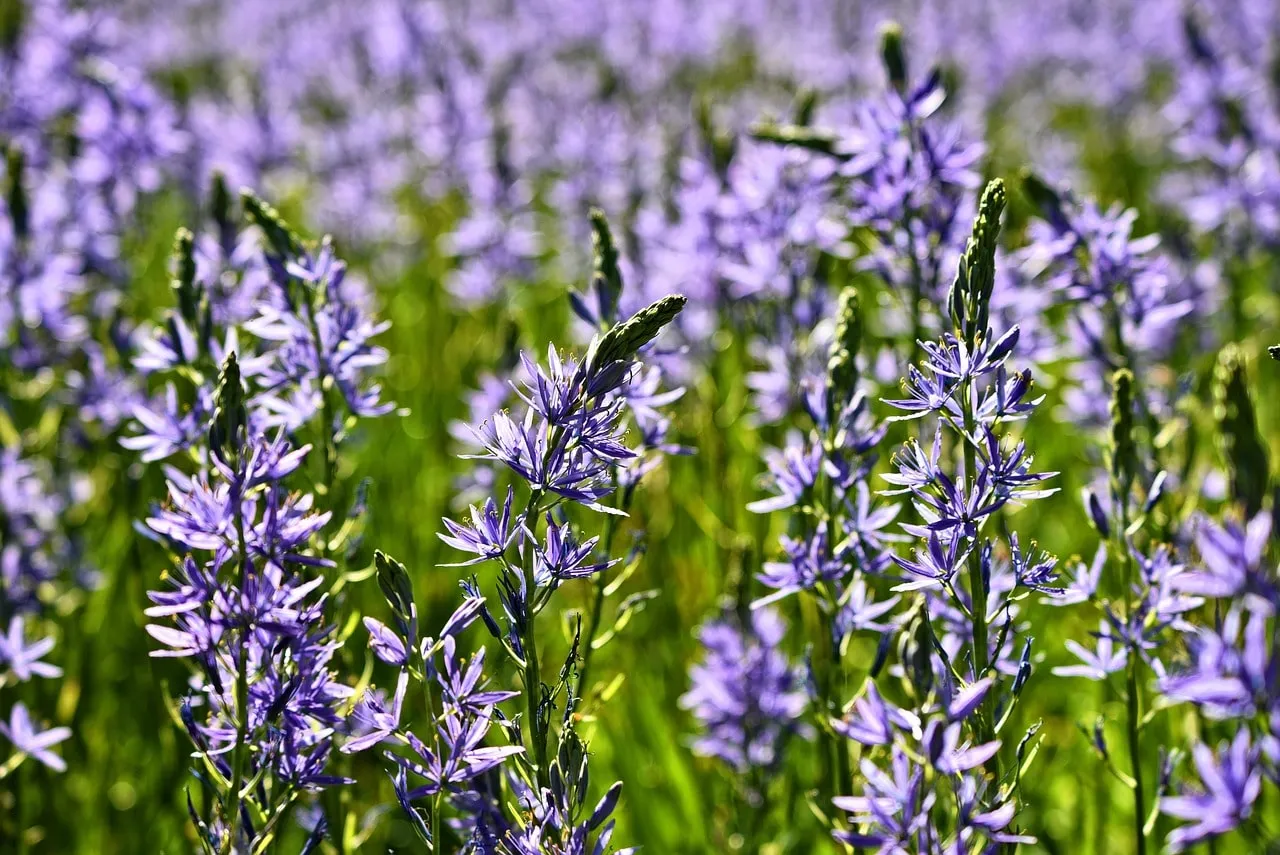
The tall, elegant spikes of star-shaped flowers in blue, violet or cream appear in May and June, bridging the gap between spring bulbs and early summer perennials. They naturalise readily in grass and are perfectly happy in the kind of moist, heavy turf that forms naturally on clay. I have seen Camassia planted in my own garden designs come back stronger each year with zero intervention—a bulb of genuine reliability.
🛒 Buy Camassia bulbs from Amazon UK
29. Narcissus (Daffodil)
Daffodils are one of the most clay-tolerant spring bulbs available and are far better suited to heavy, moist conditions than tulips. The native wild daffodil, Narcissus pseudonarcissus, is often found naturalised in damp, clay-based woodland soils across the UK, indicating its preferences.
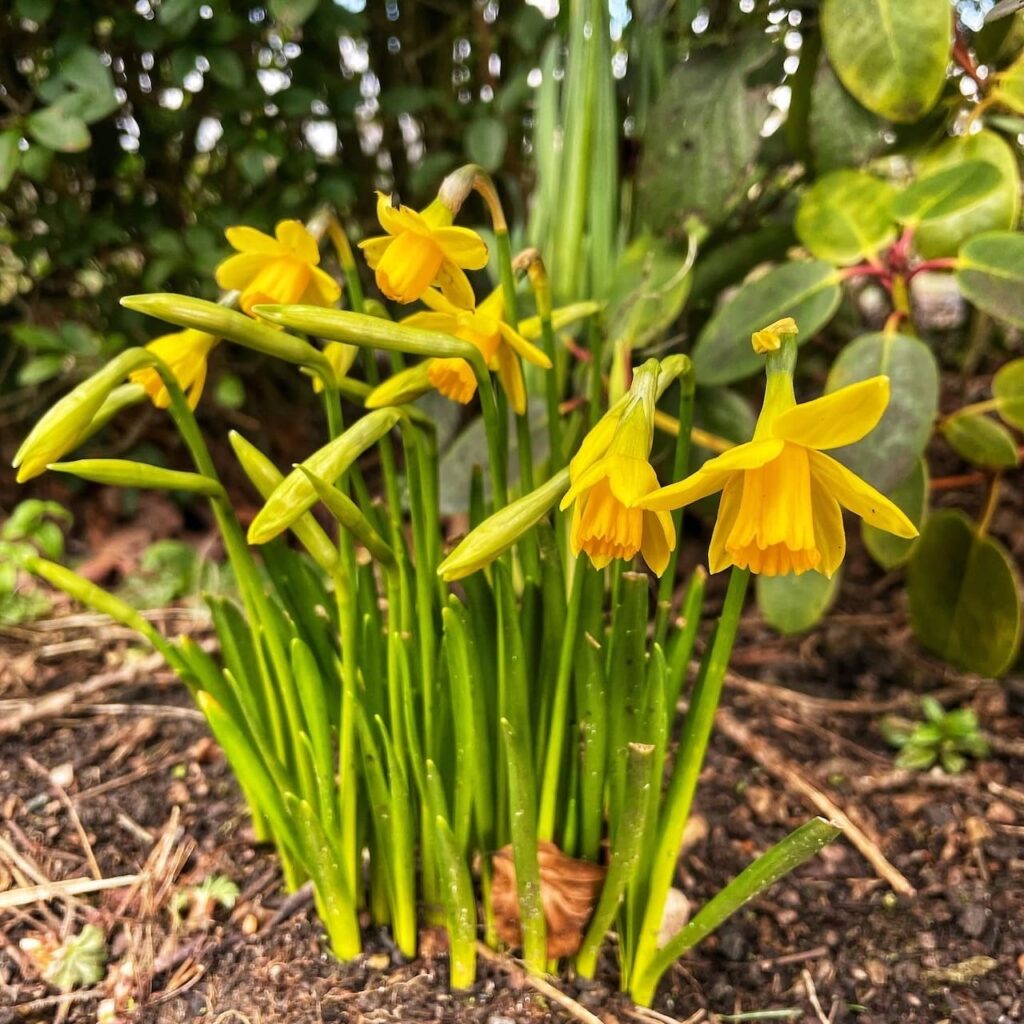
Large-flowered varieties like ‘King Alfred’ and ‘Jetfire’ perform well in clay, as do the more naturalistic, multi-headed species varieties like ‘Tête-à-Tête’ and the fragrant *Narcissus poeticus*. Plant in Autumn at a depth of three times the bulb’s diameter, and they will reliably return and multiply each year. Always let the foliage die down naturally before removing it.
🛒 Buy Narcissus bulbs from Amazon UK
30. Galanthus (Snowdrop)
Snowdrops prefer exactly the kind of conditions that clay soil under deciduous trees naturally provides, namely cool, moist soil with good organic content and dappled shade. They are, in fact, far better suited to clay than to dry, sandy soils, where they quickly fail. Plant them “in the green” (as growing clumps immediately after flowering in late February or March) for much better establishment than from dry bulbs in Autumn.
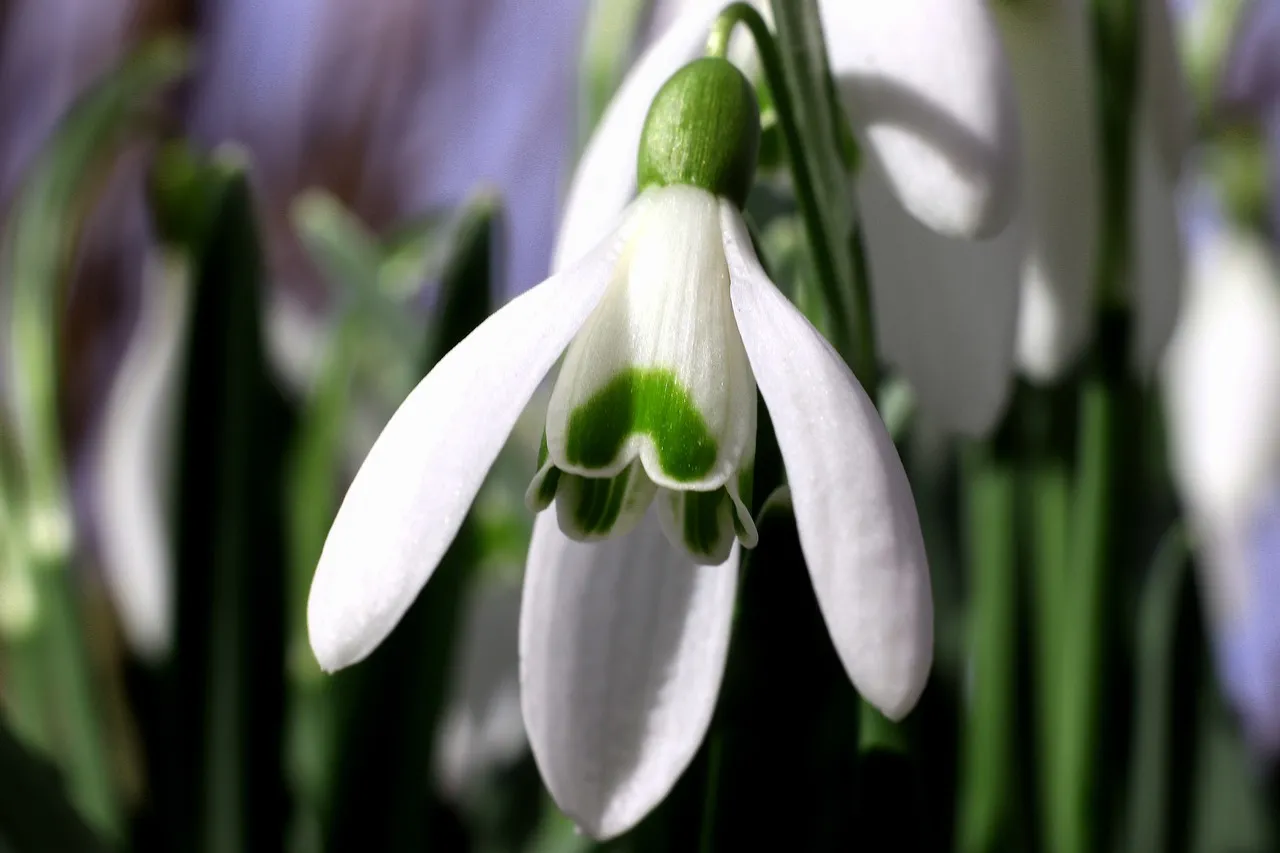
The common snowdrop, Galanthus nivalis, is the most reliable for clay soils, but for collectors, the double-flowered ‘Flore Pleno’ and the larger-flowered ‘S. Arnott’s, both RHS AGM holders, are outstanding. They will naturalise steadily, forming beautiful drifts beneath deciduous trees.
🛒 Buy Snowdrop bulbs from Amazon UK
The benefits of clay soil for plants
Clay soil is often considered the bane of gardening life, but once you understand its properties, you begin to see it differently. It can be tough to work with, especially when it is compacted and heavy, but there is genuine growing power locked within clay that lighter soils simply cannot match.
High nutrient value
Unlike sandy soil, which quickly leaches nutrients with every rainfall, clay has an extraordinary ability to retain them. The microscopic clay particles carry a negative electrical charge that binds positively charged mineral nutrients such as calcium, magnesium and potassium, and holds them in the root zone where plants can access them. This means that plants growing in clay can enjoy a genuinely nutrient-rich environment that supports stronger, more sustained growth, acting almost like a slow-release fertiliser. I have noticed this firsthand with plants like Astilbe, Joe Pye Weed and roses, which produce notably richer growth in clay than in lighter soils.
Moisture retention
Clay holds onto water like no other soil type, and this can be a huge advantage for moisture-loving plants. Candelabra primroses, Astilbe, Japanese iris and Camassia all prefer their roots in consistently moist ground, and clay provides exactly that environment. The key is to ensure adequate drainage around the root zone by gradually improving soil structure with organic matter. Too much standing water in clay during winter can cause root rot, but this is avoidable with the right management.
Natural coolness in summer
On hot summer days, while your neighbour’s sandy soil bakes in the sun, clay remains noticeably cooler, keeping plant roots from overheating. This cool, consistent temperature helps slow evaporation and extends the period before watering becomes necessary. Plants like Echinacea and Monarda sail through a hot UK summer in clay soil. Those in free-draining soils struggle to cope. The one caveat is during genuinely prolonged heat waves, when clay can crack and become almost concrete-like. During those periods, deep watering with collected rainwater is important to keep the soil profile moist.
Tips for working with clay soil
Improve drainage gradually: Incorporate plenty of organic matter, such as compost, well-rotted manure,e or leaf mulch,d into your clay soil. These materials help break up the dense structure, increasing air pockets and making it easier for water to flow through. Over time, this improves drainage and enhances fertility. Do this by mulching on top rather than digging in, which further compacts the soil.
Mulch regularly: Applying a thick layer of mulch (wood chips, bark or garden compost) around your plants is one of the most powerful things you can do for a clay garden. Mulch retains moisture during dry spells, insulates roots during temperature swings and keeps the soil consistently cool. For plants that enjoy moist conditions, a good mulch helps maintain steady soil moisture and prevents weeds from competing for resources.
Avoid working wet clay: When clay soil is wet, it becomes sticky and easily compacts under pressure, destroying its structure and leading to poor drainage. Hold off on digging, tillin,g or even walking on the soil until it has dried out slightly. Use planks or stepping stones to spread your weight and protect the soil structure when you do need to access borders in wet weather.
Consider raised beds for challenging plants: If certain plants struggle with clay’s heavy, water-retentive nature, such as lavender, herbs and many Mediterranean plants that prefer sharper drainage, raised beds allow you to customise the soil mix entirely. This is a far more practical solution than trying to transform an entire clay border.
💡 Top Tip
Check your clay soil’s pH before buying plants. UK clay can be neutral to slightly alkaline (pH 6.5–7.5) in most of England, but in high-rainfall areas of Wales, Scotland and the West Country it can be more acid (pH 5.5–6.5). Acid clay suits rhododendrons and camelliaswhile alkaline clay suits roses, clematis and most herbaceous perennials. A simple soil test kit from any garden centre will give you a quick reading.
Frequently asked questions about plants for clay soil
What plants love clay soil in the UK?
The best plants for clay soil in the UK include roses (particularly rugosa and shrub roses), hardy geraniums, Hydrangea paniculata, Cornus (dogwood), Astilbe, Bergenia, Hemerocallis (daylilies), Astrantia, Amelanchier and Camassia bulbs. These plants all thrive in clay’s nutrient-rich, moisture-retentive conditions. Avoid Mediterranean plants like lavender and cistus in heavy clay as they require sharp drainage.
Do roses grow well in clay soil?
Yes, roses actually thrive in clay, so many of the finest English garden roses were developed on heavy clay. Clay’s high nutrient content and moisture retention suit roses perfectly. The best varieties for clay include rugosa roses (extremely tough, H7 hardiness), shrub roses like ‘Bonica’, and English roses from David Austin. The key is to break up the sides of the planting hole with a fork and add well-rotted compost at planting time to give roots the best start.
What shrubs grow well in clay soil?
Excellent shrubs for clay soil include Cornus (dogwood) for winter stem colour, Viburnum tinus for winter flowers, Mahonia for winter fragrance and structure, Philadelphus (mock orange) for summer scent, Hydrangea paniculata for late summer flowers, and Buddleja for wildlife value. Most deciduous shrubs are more tolerant of clay than evergreens, though Viburnum tinus, Mahonia and Sarcococca are outstanding evergreen exceptions.
What bulbs grow in clay soil?
Camassia is the outstanding bulb for clay soil, thriving in the moist conditions that clay provides. Narcissus (daffodils) naturalise well in clay, as do snowdrops (Galanthus), which prefer the cool, moist conditions under deciduous trees on heavy soil. Alliums perform adequately in improved clay. Avoid tulips in heavy, poorly drained clay as they require sharp drainage and will rot in waterlogged conditions.
Can you grow lavender in clay soil?
Lavender does not thrive in heavy clay soil. It is a Mediterranean plant that requires very sharp drainage and is likely to rot in the wet, moisture-retentive conditions of clay, particularly over winter. If you want to grow lavender in a clay garden, the most practical solution is to create a raised bed or a large container filled with a free-draining compost-and-grit mix. Alternatively, Perovskia (Russian sage) provides a similar silvery, aromatic effect and is much better suited to clay conditions.
How do you improve clay soil for planting?
The most effective way to improve clay soil is to mulch annually with a 5–7.5cm layer of well-rotted organic matter such as compost, leaf mould or composted bark, applied to the soil surface in late Autumn or winter. Over several years, this feeds the soil biology and gradually improves soil structure without compacting it. Never add sand alone to cclayy as it creates a concrete-like texture. Breaking up planting holes with a fork, improving drainage around individual plants and choosing clay-tolerant varieties are more immediately practical than trying to transform the entire soil profile.
Is clay soil acidic or alkaline?
Clay soil in the UK is typically neutral to slightly alkaline, with a pH of around 6.5–7.5 in most of England. However, in high-rainfall areas of Wales, Scotland and the West Country, clay soil can be more acidic (pH 5.5–6.5), which suits acid-loving plants like rhododendrons and camellias. Clay in urban areas of England can be more alkaline due to building rubble and lime leaching over time. Test your soil with an inexpensive pH test kit before selecting plants to ensure you choose varieties suited to your specific conditions.
When is the best time to plant in clay soil?
The best time to plant in clay soil is late winter or early spring, typically March to May in most parts of the UK, once the soil has warmed before the driest summer conditions arrive. Autumn planting (September to November) works well for trees and shrubs if the soil is not waterlogged, as they can establish root systems through the mild Autumn weather before winter dormancy. Avoid planting in waterlogged winter clay or in the heat of summer when the soil may be baked hard.
Summary
Creating a flourishing garden in clay soil is not just possible. It is genuinely rewarding once you work with the soil’s strengths rather than against them. From bold perennials like Rudbeckia, Astrantia and Echinacea to reliable shrubs like Cornus, Viburnum tinus and Mahonia to beautiful clay-loving roses and elegant trees like Amelanchier and silver birch, the plant palette available to clay-soil gardeners is far richer than most people realise. Start with a good annual mulch, choose your plants from this guide, and your clay garden will improve year on year. Gradually i,t becomes one of the most productive and beautiful growing environments you could ask for.
Make sure you visit my YouTube channel for more gardening guides. You can also follow me on Twitter, Facebook or Instagram for daily garden help and tips.
Happy gardening!



Lee Burkhill
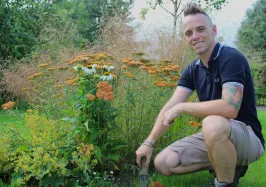
Lee Burkhill, known as the Garden Ninja, is an award-winning garden designer and horticulturist with over 30 years of gardening experience and 15 years as a professional garden designer. A qualified RHS (Royal Horticultural Society) professional, Lee specialises in sustainable garden design and practical horticultural advice. He designs and presents on BBC1’s Garden Rescue and in leading gardening publications. Lee combines three decades of hands-on gardening knowledge with professional design qualifications to help gardeners create beautiful, functional outdoor spaces.
View all posts by Lee Burkhill





Categories
Other posts
-

Start here: to begin your gardening journey! Read more
-
How and When to Prune Ribes, Flowering Currant: The Complete Beginner’s Guide Read more
-
Planting plan service Read more
-

Plants for Chalk Soil: 30 Easy Winners for Alkaline Gardens UK Read more
-
Autumn Planting Guide: Why fall is the perfect time to plant your garden! Read more
-
Plant Hardiness Ratings Explained: how cold can your plants get? Read more