Lee Burkhill: Award Winning Designer & BBC 1's Garden Rescue Presenters Official Blog
Beginner level
A south facing garden is the aspect most people dream of when they're buying a house, and with very good reason they get the most of the sun! As a garden designer with over 30 years of gardening experience and more than 15 years as a professional, including presenting on BBC1's Garden Rescue, I've planted south facing gardens all over the country, and they really do provide the most flexible growing conditions. This guide will show you the best plants for full sun!
If you’re lucky enough to have a south facing garden, you have access to a plant palette that simply isn’t available to any other garden aspect, along with the warmest, sunniest outdoor space imaginable.
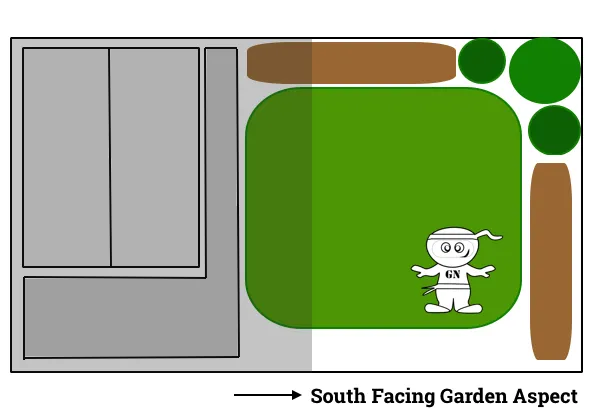
A south facing garden receives direct sun from mid-morning right through to late afternoon and, in summer, into the early evening as the sun moves around towards the west. The soil dries out more quickly than in any other aspect, walls and fences accumulate significant amounts of heat which they radiate back into the garden overnight, and the overall microclimate is noticeably warmer than the ambient temperature.
This means you can push the boundaries of hardiness considerably, growing plants that would struggle in any other aspect, from Mediterranean herbs through to more tender climbers and exotic-looking architectural plants.
Quick Answer
South facing gardens receive full sun from mid-morning to early evening, creating warm, dry conditions perfect for Mediterranean-style planting. The best choices include clematis, wisteria, campsis, passion flower and star jasmine for walls; lavender, rosemary, cistus, ceanothus and phlomis for shrubs; agapanthus, salvia, kniphofia, echinacea and rudbeckia for perennials; alliums and tulips for bulbs; and Stipa gigantea, yucca and panicum for drama and structure. Generous soil preparation and consistent mulching are the two most important practical steps to long-term success.
The challenges of a south facing garden are the inverse of those in a north facing one: rather than insufficient light and coolness, you’re managing heat and drought. Soil preparation, mulching and thoughtful watering are the three most important tools in your arsenal. Get those right, and a south facing garden can be one of the most spectacular and productive outdoor spaces imaginable.
Before you plant anything, spend a day observing where the sun falls and when, and how intense it is in different parts of the garden. Most south facing gardens are not uniformly sunny: there will be areas close to the house or boundary walls that receive some shade, areas that are particularly exposed to drying winds, and spots where the reflected heat from a wall or hard surface creates an especially warm microclimate. These variations within the garden are all planting opportunities waiting to be exploited.
The soil in a south facing garden dries out quickly.Clay soils will crack and become very hard in dry summers, while sandy soils can become almost dust-like. In both cases, generous additions of organic matter before planting are essential, and annual mulching is absolutely vital. The good news is that many of the most beautiful and ornamentally valuable plants are completely adapted to dry, sunny conditions: lavender, rosemary, cistus, alliums, agapanthus and many more thrive in exactly the conditions a south facing garden provides and actually perform better than they would in damper, cooler aspects.
South facing walls and fences are among the most valuable growing surfaces in any garden, because they accumulate enormous amounts of heat from the sun throughout the day and release it gradually through the night, creating a substantially warmer microclimate immediately against the wall than anywhere else in the garden. Against a south facing wall, you can grow plants rated H3 or even H2 that would not survive frost in the open garden, and the early warmth of spring encourages plants to start into growth several weeks before they would in a north or east facing position.
Best Climbers for a South Facing Wall or Fence
A south facing wall is the premier growing surface for the most dramatic and tender climbers, and the range of plants available to you is extraordinary.
Clematis (Large-Flowered Hybrids)
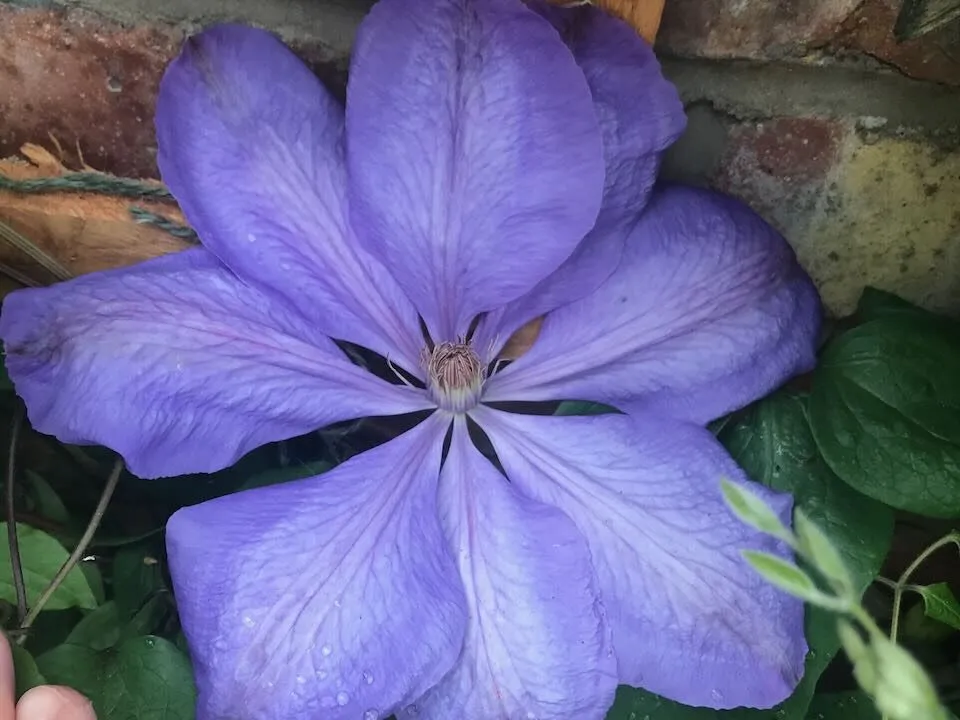
Virtually all clematis can be grown in a south facing position, and the large-flowered hybrid types perform particularly spectacularly in the sustained sunshine. Varieties such as the intense purple ‘Jackmanii’, the rich red ‘Niobe’, the pale lavender-blue ‘Mrs Cholmondeley’, and the enormous deep violet flowers of ‘The President’ are all exceptional.
The key rule for most large-flowered clematis is to provide shade for the roots while allowing the flowering stems to reach into full sun. Planting a low-growing shrub or placing a flat stone over the root zone achieves this beautifully. All clematis should have their feet in cool, moist soil; the flowers can take care of themselves in the sunshine.
🌿 At A Glance
Height: 2m to 6m | RHS Hardiness: H5 to H6 | Flowering: May to October depending on variety
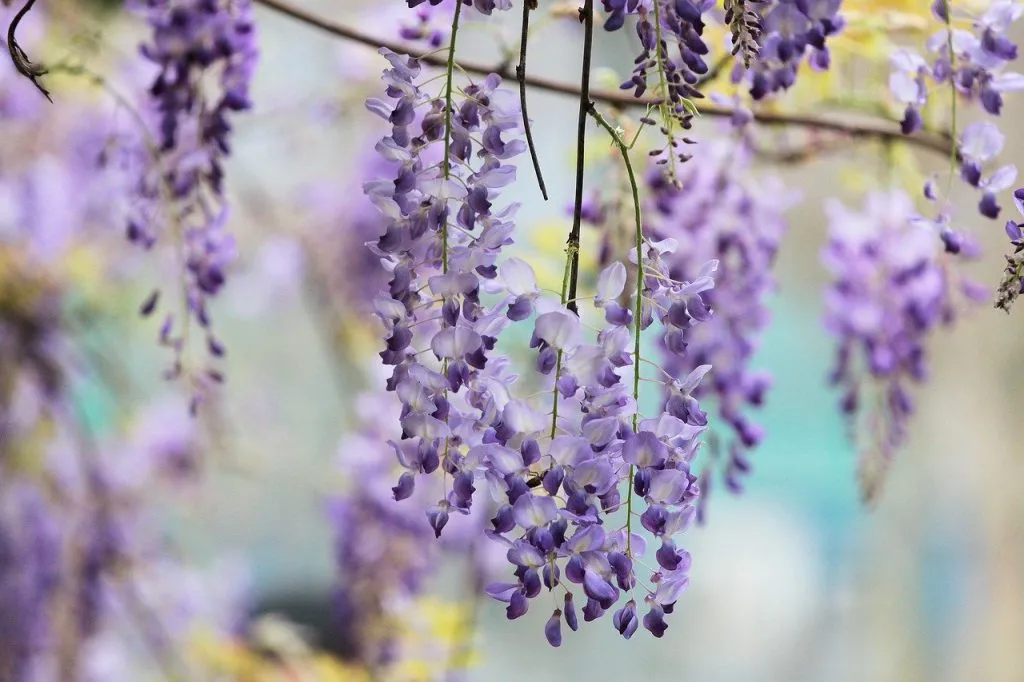
Wisteria performs at its absolute best on a south facing wall, and I have seen established plants on south facing elevations that are simply breathtaking, covering enormous areas with their cascading flower racemes and creating a spectacle that stops people in their tracks every spring.
Both Wisteria sinensis and Wisteria floribunda thrive here, and the sustained heat of a south facing wall encourages the new growth to ripen properly in summer, which is crucial for producing the flowering spurs that carry next year’s blooms. Prune in August to six or seven leaves beyond the basal cluster, and again in winter to two or three buds. The discipline of this pruning is what produces that extraordinary floral display year after year.
🌿 At A Glance
Height: Up to 30m over time | RHS Hardiness: H5 to H6 | Flowering: April to June
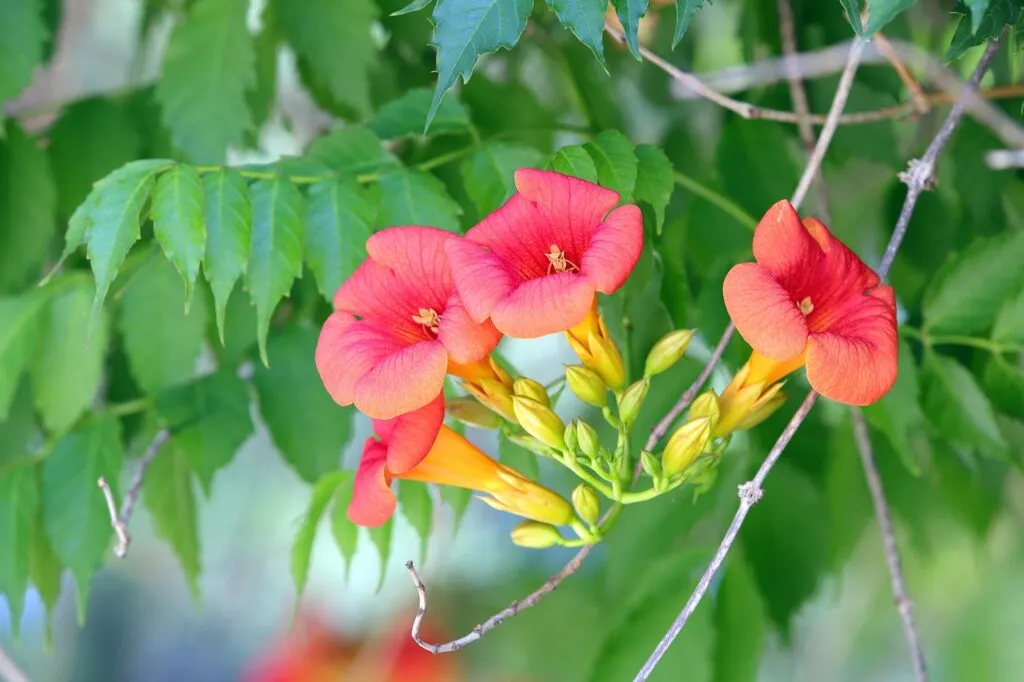
On a south facing wall, campsis is utterly magnificent. In a hot summer, a well-established plant can produce dozens of its extraordinary trumpet-shaped flowers in intense shades of orange, red and yellow, creating an almost tropical display from August through September.
It needs the accumulated warmth of a south facing wall to flower really well, making this the ideal aspect for it. It is self-clinging, but I’d always recommend providing additional wire support to ensure even coverage. Cut it back hard in early spring to a framework of main stems, and it will grow vigorously and flower prolifically each summer.
🌿 At A Glance
Height: Up to 10m | RHS Hardiness: H3 to H4 | Flowering: August to September
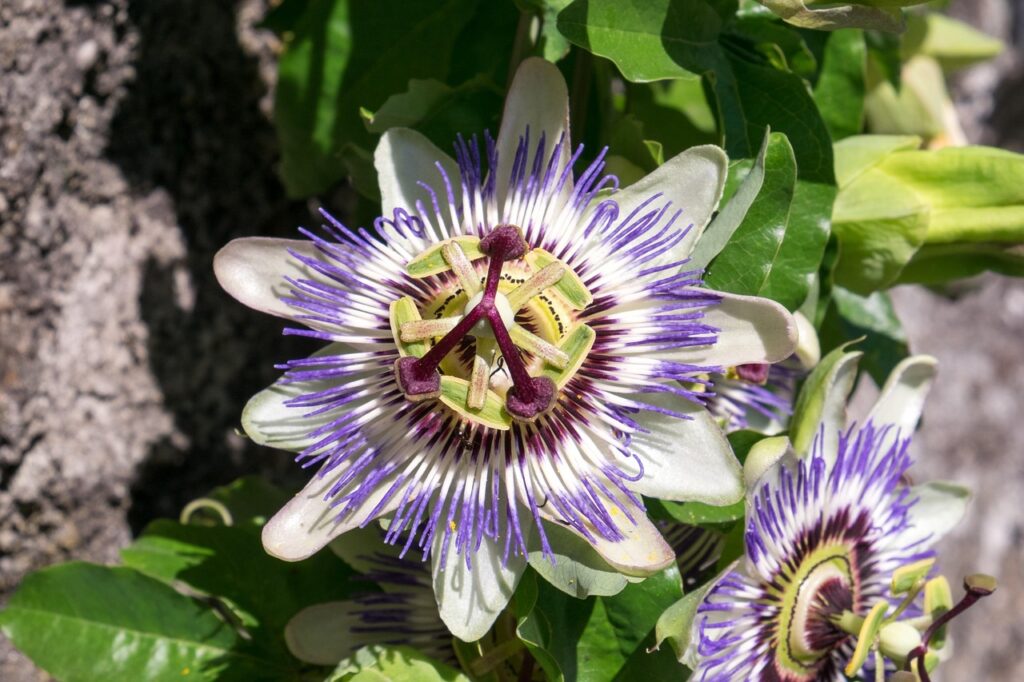
The blue passion flower is one of the most exotic and spectacular plants you can grow on a south facing wall in the UK, and against a sheltered south facing wall it is reliably hardy in most parts of the country except the coldest northern regions.
The flowers are extraordinary: intricately structured, in shades of white, blue and purple, and produced in great abundance throughout summer. In warm summers, orange egg-shaped fruits follow. It is a vigorous, tendril-climbing plant that will cover a large area quickly, and it benefits from pruning back hard in early spring to keep it within bounds and encourage vigorous new flowering growth.
🌿 At A Glance
Height: Up to 10m | RHS Hardiness: H3 to H4 | Flowering: June to September
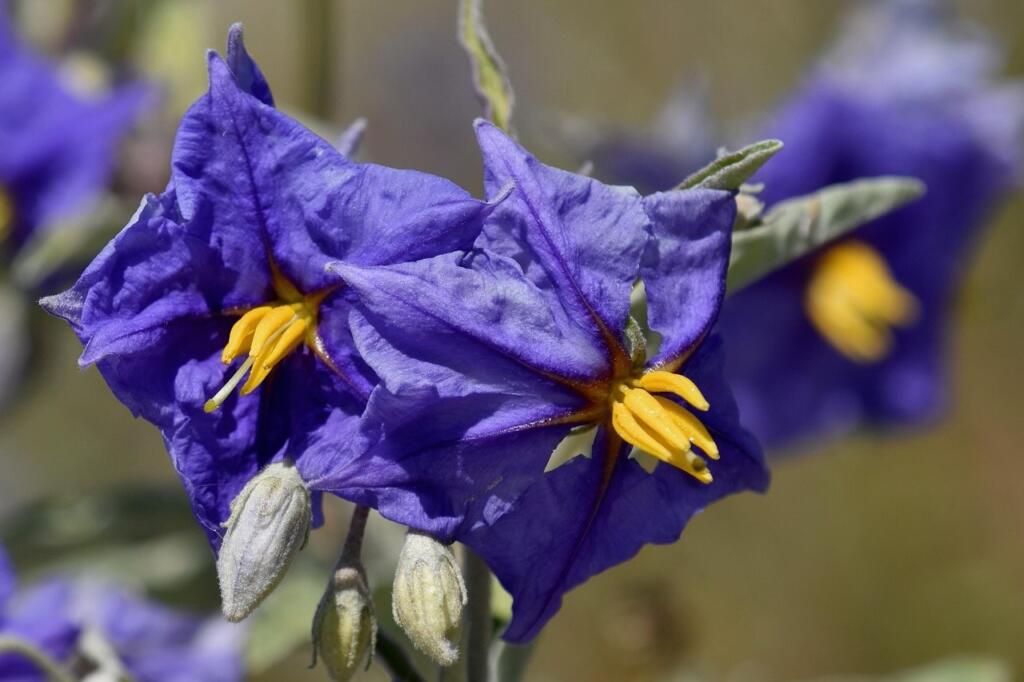
Solanum crispum ‘Glasnevin’ is one of my favourite climbers for a south facing wall, and one that I feel is still underused in British gardens. It produces clusters of rich purple, potato-like flowers with bright yellow centres from early summer right through to autumn, in a seemingly endless succession that makes it one of the longest-flowering climbers available.
It is semi-evergreen, vigorous and requires a sheltered south facing position to give of its best. It holds the RHS Award of Garden Merit and needs only light pruning in spring to keep it tidy.
🌿 At A Glance
Height: 4m to 6m | RHS Hardiness: H3 | Flowering: June to October
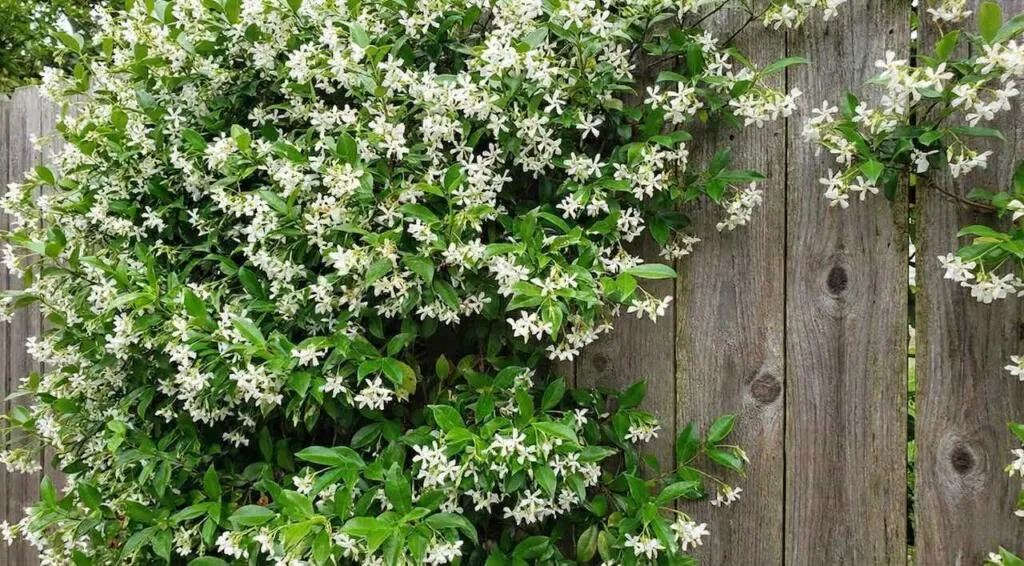
Star jasmine is absolutely superb on a south facing wall. The combination of full sun and wall warmth encourages it to flower extraordinarily profusely, covering itself in masses of the small, pinwheel-shaped, intensely fragrant white flowers from midsummer onwards.
The glossy evergreen foliage looks immaculate year-round, providing excellent winter structure on the wall. Against a sheltered south facing wall, even in colder parts of the UK, it generally performs without the frost damage that can affect it in more exposed positions. The fragrance it produces on warm summer evenings is one of the great pleasures of a south facing garden.
🌿 At A Glance
Height: 6m to 9m | RHS Hardiness: H3 to H4 | Flowering:July to August
The shrub palette for south facing gardens includes some of the most beautiful and ornamental plants available, including many Mediterranean species that bring an entirely different aesthetic to the traditional British garden.
Cistus (Sun Rose)
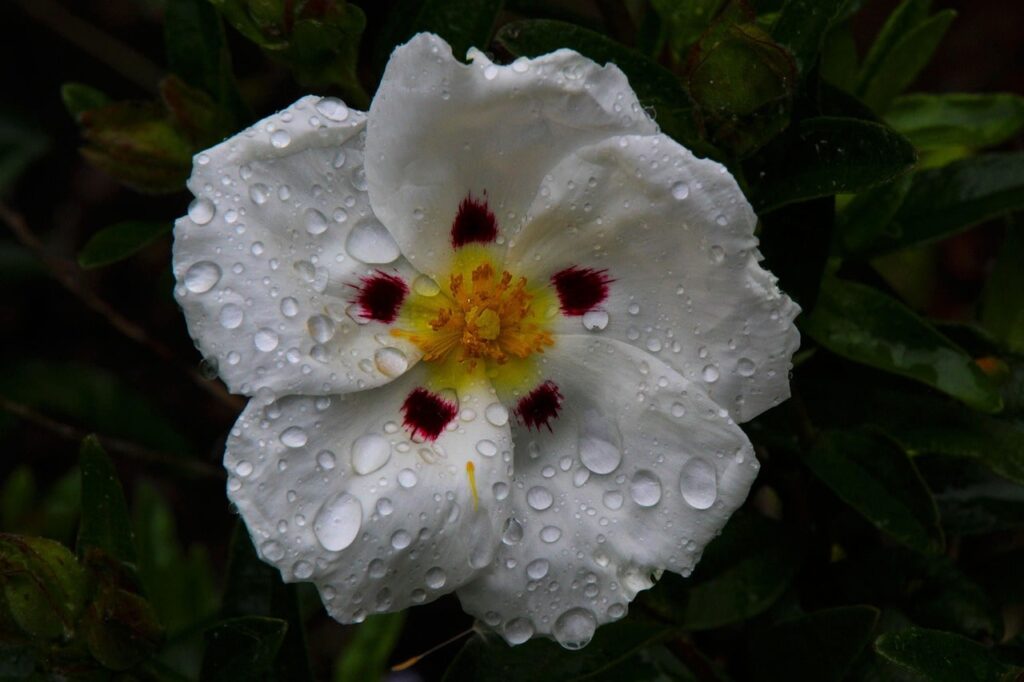
Cistus is a shrub that was made for south facing gardens. These Mediterranean evergreens are completely at home in hot, dry, sun-baked conditions and produce their large, tissue-paper-like flowers in shades of white, pink and magenta in early summer. Each individual flower lasts only a day, but they are produced in such profusion that the display continues for several weeks.
Cistus x dansereaui ‘Decumbens’ in white with crimson marks at the base of each petal and Cistus x purpureus in bright pink are both outstanding. They hate being transplanted, so choose your position carefully and plant small specimens that will establish quickly. They hold the RHS Award of Garden Merit.
🌿 At A Glance
Height: 60cm to 1.5m | RHS Hardiness: H4 | Flowering: May to July
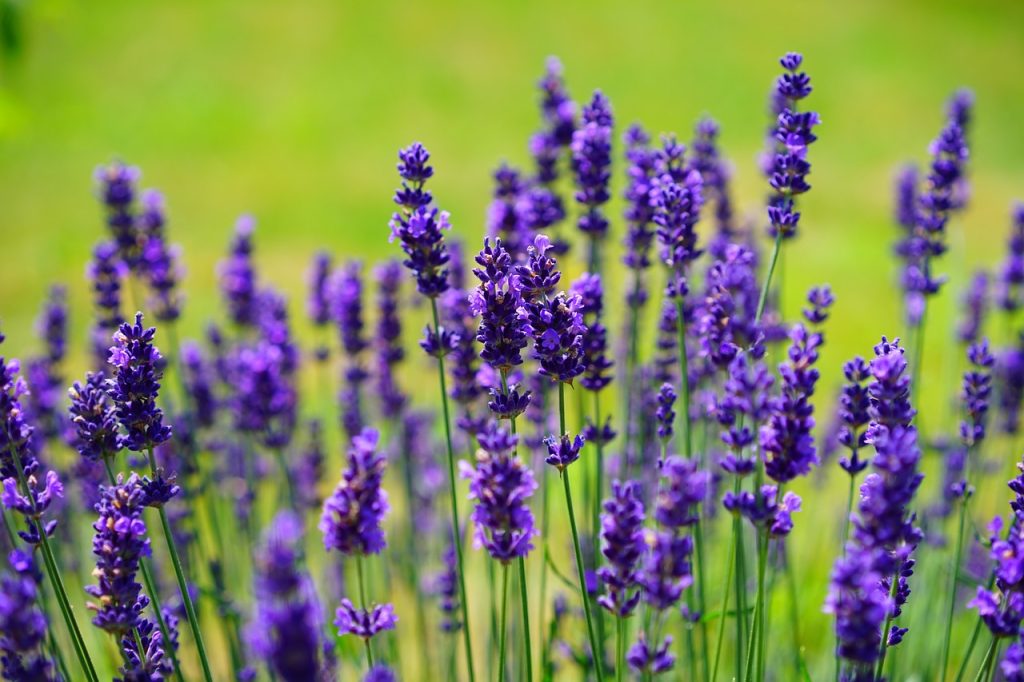
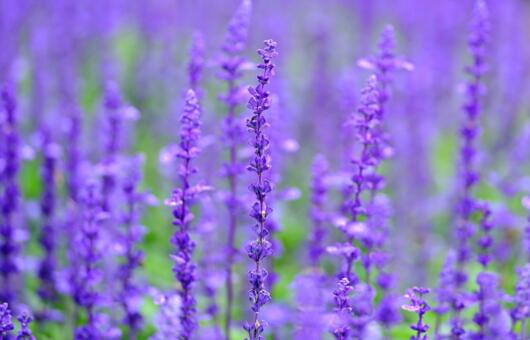
Lavender is the quintessential south facing garden shrub, and for very good reason. It absolutely thrives in hot, dry, sunny conditions, producing its aromatic, silver-grey foliage and intensely fragrant flower spikes in shades of purple, blue, pink and white throughout summer. In a south facing garden, lavender will flower more prolifically and the essential oils that give it its characteristic scent are produced in greater concentration than in any shadier position.
‘Hidcote’ in deep purple and ‘Munstead’ in softer lavender blue are the most reliably hardy varieties. Plant in the sandiest, most free-draining soil you have, and trim back after flowering each year without cutting into old wood.
🌿 At A Glance
Height: 30cm to 80cm | RHS Hardiness: H5 | Flowering: June to August
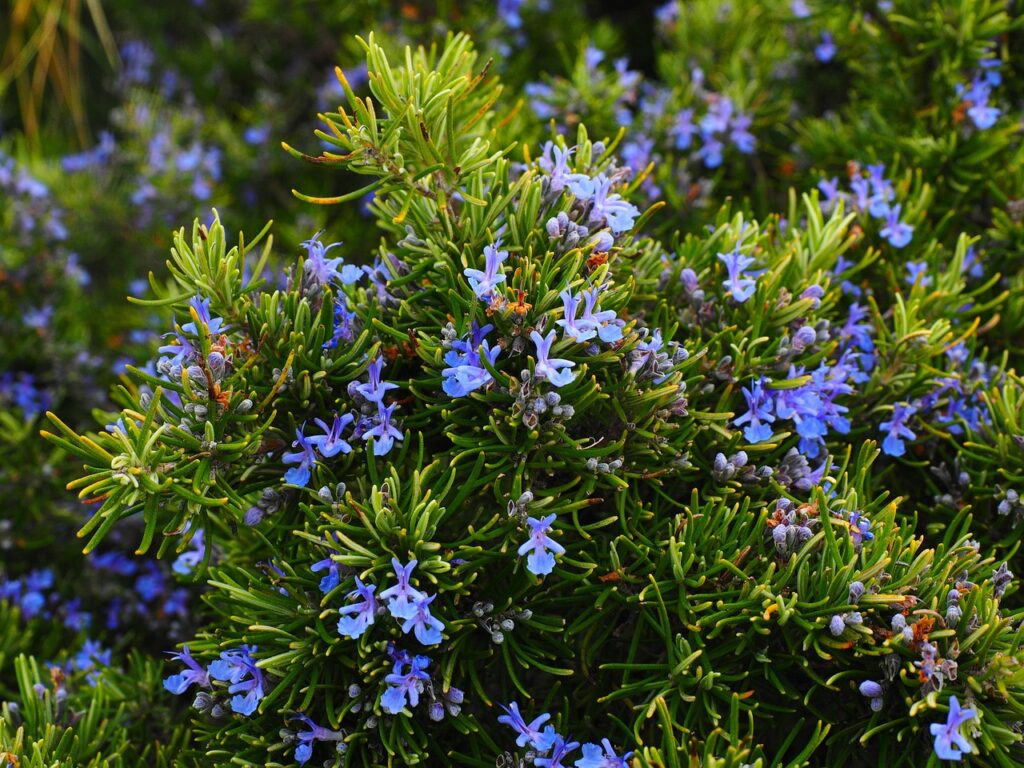
Rosemary is both a magnificent ornamental shrub and a kitchen herb, and in a south facing garden it grows with a vigour and aromatic intensity that is simply not achievable in any other aspect. The flowers, in shades of blue, purple, pink and white depending on variety, are produced in early spring and are enormously valuable to bees emerging after winter.
The evergreen, aromatic foliage is attractive year-round. The upright variety ‘Miss Jessopp’s Upright’ is excellent for structural planting, while ‘Prostratus’ works beautifully trailing over a wall edge. Both need well-drained soil and full sun to thrive.
🌿 At A Glance
Height: 60cm to 1.5m | RHS Hardiness: H4 | Flowering:March to May
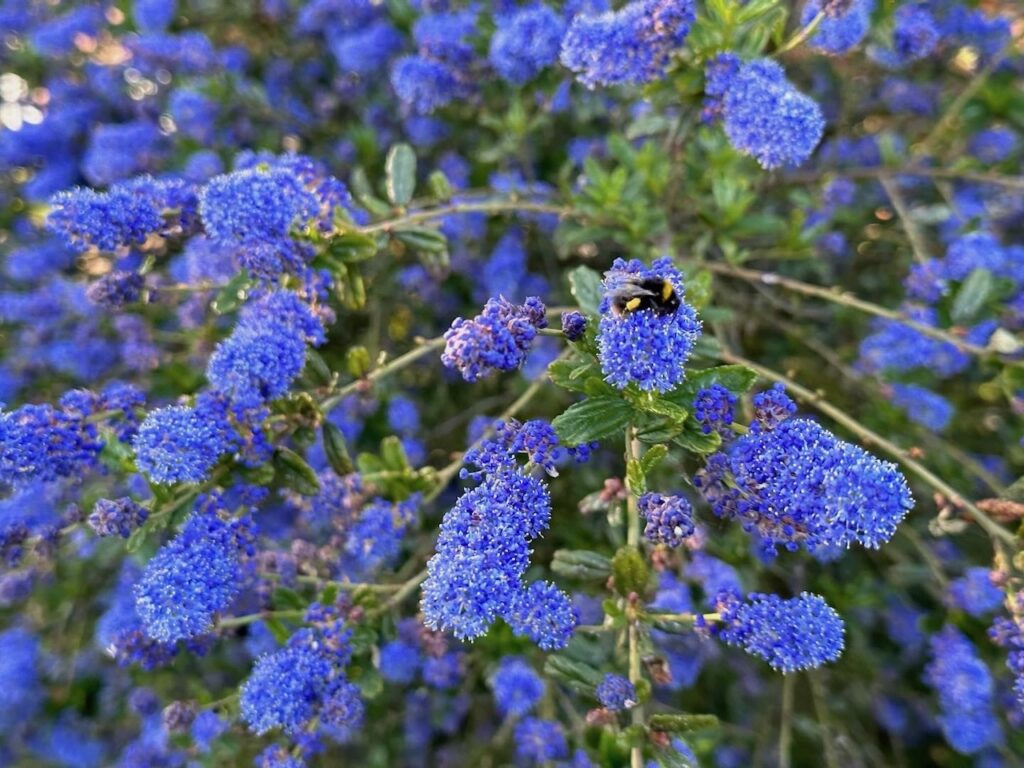
Ceanothus at its best belongs on a south facing wall or in a south facing border, where the warmth and sun encourages abundant, long-lasting flowering and helps protect it through winter. The evergreen varieties, which are more tender than the deciduous forms, are particularly effective here: ‘Puget Blue’, ‘Concha’ and the magnificent ‘Italian Skies’ all produce their extraordinarily intense blue flowers in spectacular profusion in a south-facing position.
Wall-train the larger varieties by tying in the main stems to horizontal wires, and prune lightly after flowering to keep the shape tight against the wall.
🌿 At A Glance
Height: 2m to 5m | RHS Hardiness: H4 | Flowering: April to June
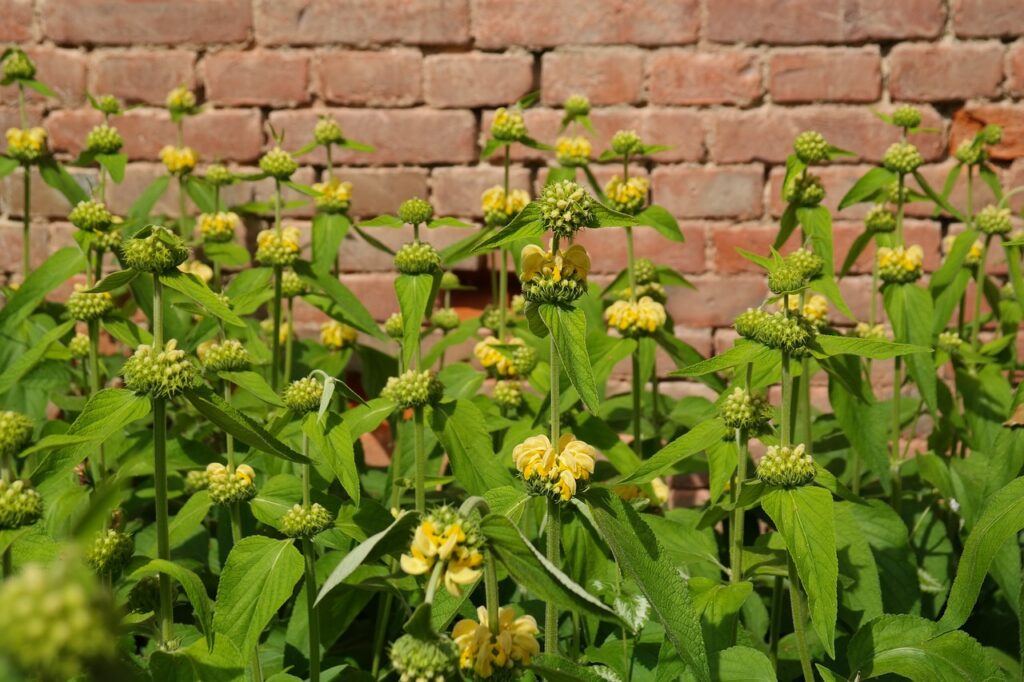
Phlomis fruticosa is one of those shrubs that is absolutely at home in a hot, sunny south facing garden and performs there far better than anywhere else. The large, woolly, silver-grey leaves are beautiful year-round and provide an excellent foil for other plants. I have them here at Garden Ninja HQ as they still bring a silvery charm during the winter months, given they are semi-evergreen.
The rich golden-yellow, hooded flowers, arranged in whorls up the stems in summer, are unusual and very attractive, and the dried seedheads that follow are architectural and interesting well into winter. It holds the RHS Award of Garden Merit and is completely drought-tolerant once established.
🌿 At A Glance
Height: 1m to 1.5m | RHS Hardiness: H4 | Flowering: June to August
South facing borders support a magnificent range of sun-loving perennials, including many that originate in Mediterranean, South African and prairie climates and are perfectly adapted to the warmth and dryness these conditions provide.
Agapanthus (African Lily)
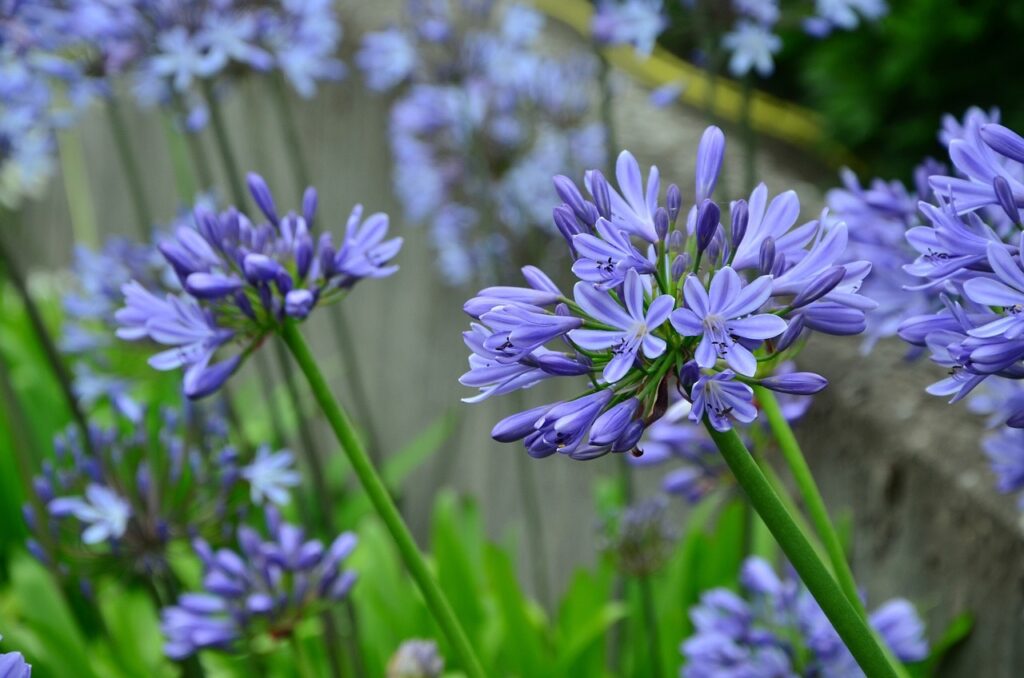
Agapanthus is one of the most beautiful plants you can grow in a south facing garden, and in a warm, sheltered south facing position the hardier varieties perform with quite extraordinary abundance. The strap-shaped, dark green foliage is attractive all season, and the tall stems carrying large, rounded flowerheads in shades of rich blue, violet and white from midsummer onwards are simply magnificent.
Varieties such as ‘Midnight Blue’, ‘Northern Star’ and the pure white ‘White Heaven’ are all reliable and stunning. In a south facing position with good drainage, they will increase steadily year on year and eventually form impressive, long-lived clumps.
🌿 At A Glance
Height: 60cm to 1.2m | RHS Hardiness: H3 to H4 | Flowering: July to September
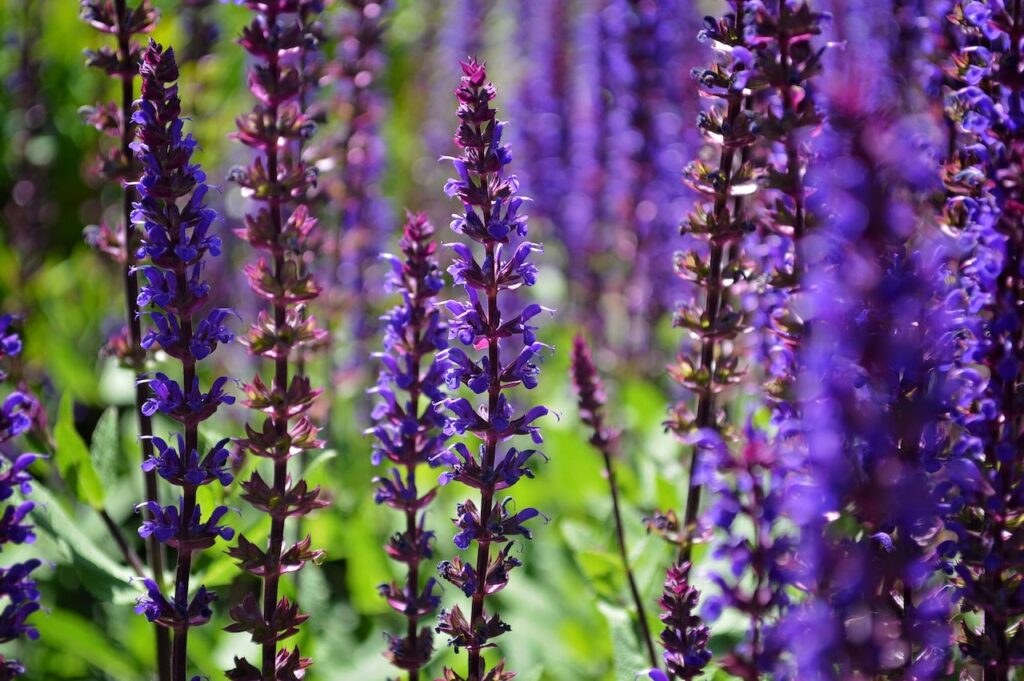
Salvias are among the finest perennials for south facing gardens, thriving in the heat and drought that characterise these aspects. The range of salvias available has exploded in recent years, and the variety of flower colours, plant sizes and season lengths is now extraordinary.
Salvia nemorosa ‘Caradonna’ with its dark stems and violet-blue flowers is a reliable, completely hardy choice that flowers from June to August. Salvia x sylvestris ‘Mainacht’ in deep blue is another outstanding variety. If you’ve seen my work on TV, you’ll know I have strong feelings about Salvia ‘Hot Lips’ — its red and white colouration is genuinely hard to blend with other plants — so opt instead for one of the more harmonious and versatile varieties.
🌿 At A Glance
Height: 45cm to 90cm | RHS Hardiness: H3 to H5 | Flowering: June to October
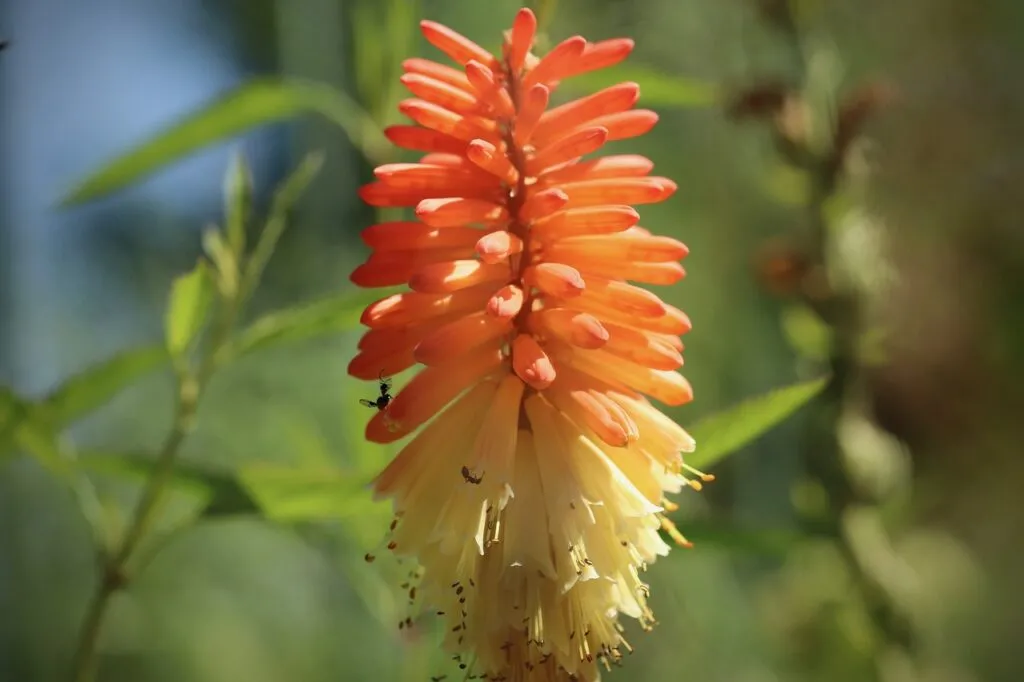
Red hot pokers are custom-built for south facing gardens. They demand full sun and free-draining soil, and in these conditions they reward you with some of the most dramatic flowerheads of any hardy perennial.
The tall, bold, poker-shaped spikes in combinations of red, orange, yellow, cream and green are architectural and striking, and they provide valuable late-season colour when many other plants are fading. ‘Royal Standard’ is the classic, while ‘Percy’s Pride’ in lime-green and yellow and the dwarf ‘Little Maid’ in cream add variety to the planting. They are also excellent for butterflies and bees.
🌿 At A Glance
Height: 60cm to 1.5m | RHS Hardiness: H4 to H5 | Flowering: July to September
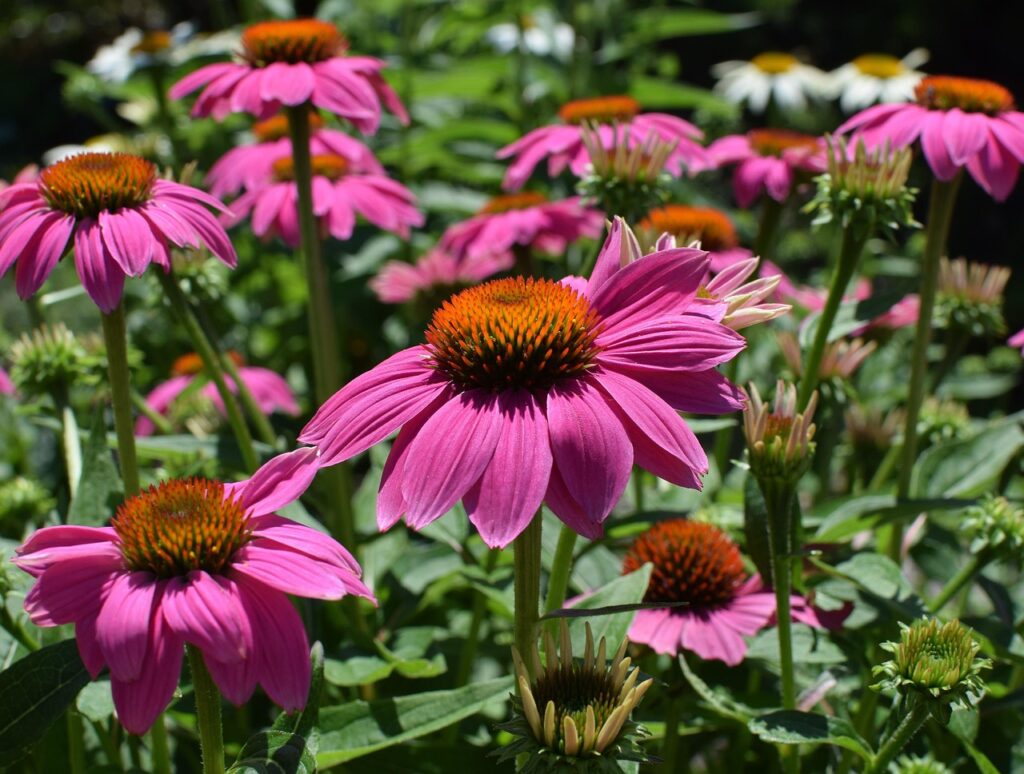
Echinaceas have become one of the most fashionable perennials of recent years and deserve every bit of the attention they receive. They produce large, daisy-like flowers with a distinctive raised, conical central boss in a wide range of colours from the traditional magenta-purple of Echinacea purpurea through to white, orange, yellow, red and deep burgundy in newer varieties.
They need full sun and reasonably drained soil to perform at their best, making a south facing border ideal. The seedheads that develop after the petals fall are architecturally beautiful and provide food for finches through winter. ‘Magnus’, ‘White Swan’ and ‘PowWow Wild Berry’ are all excellent varieties.
🌿 At A Glance
Height: 60cm to 1m | RHS Hardiness: H5 | Flowering: July to September
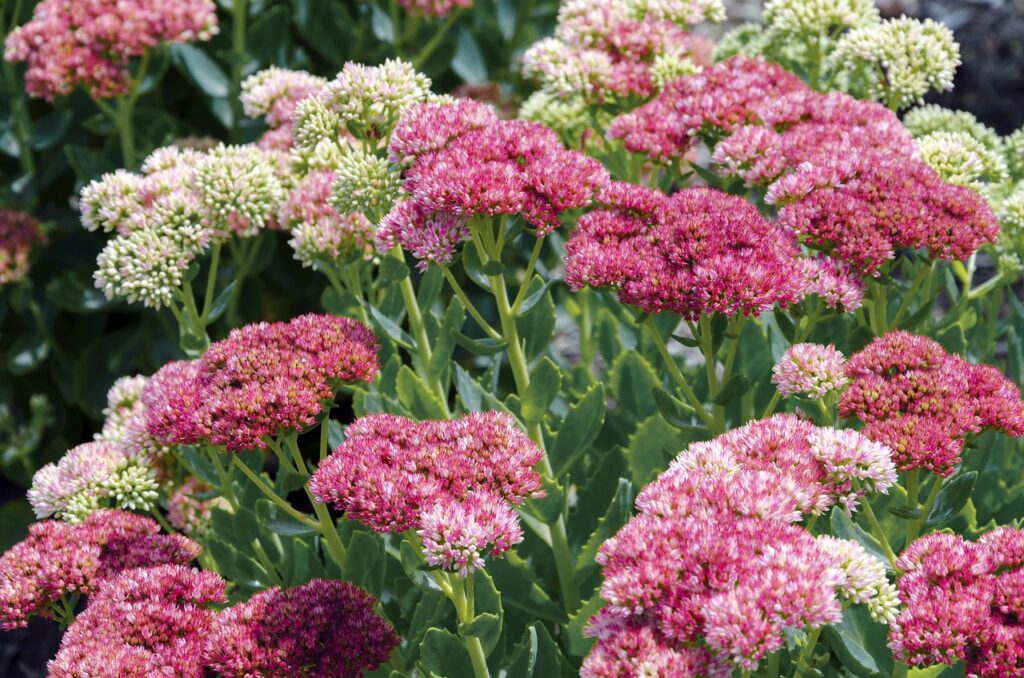
Sedums are perfectly adapted to the dry, sunny conditions of a south facing garden. The fleshy, glaucous foliage stores water, allowing the plants to cope with drought without stress, and the flat, broad flowerheads in shades of pink and red that appear from late summer are absolutely covered in butterflies and bees. Sometimes known as ice plant, these are genuinely resilient plants for almost any garden position.
‘Autumn Joy’ is the most reliable and widely grown variety, while ‘Purple Emperor’, with its dark purple foliage and rose-pink flowers, is more dramatic. They never flop or need staking in a sunny position, unlike in shadier spots where they become leggy.
🌿 At A Glance
Height: 40cm to 60cm | RHS Hardiness: H6 | Flowering: August to October
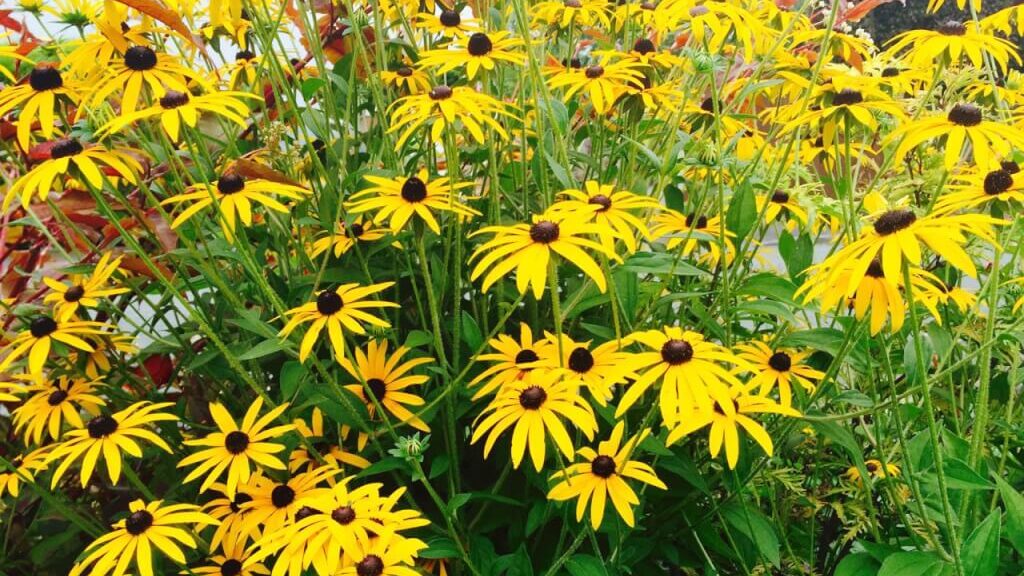
Rudbeckias are among the most cheerful and reliable late-summer perennials for south facing gardens. The golden-yellow, black-centred daisy flowers are produced in enormous abundance from late summer into autumn, providing colour at a time when much of the summer planting is already declining.
They need full sun to perform at their best and are completely at home in a warm south facing border. Rudbeckia fulgida var. sullivantii ‘Goldsturm’ holds the RHS Award of Garden Merit and is the most widely grown and reliable variety. I adore rudbeckia and put them into as many gardens as I can, as they are great for wildlife and add a bright yellow blast of sunshine throughout September here in the UK.
🌿 At A Glance
Height: 60cm to 90cm | RHS Hardiness: H6 | Flowering: August to October
One of the greatest advantages of a south facing garden is the opportunity it gives you to grow plants that originate in Mediterranean climates and that simply cannot be grown well in any other aspect in the UK. This is a genuinely exciting group of plants that brings a different aesthetic and atmosphere to the traditional British garden.
Euphorbia characias subsp. wulfenii
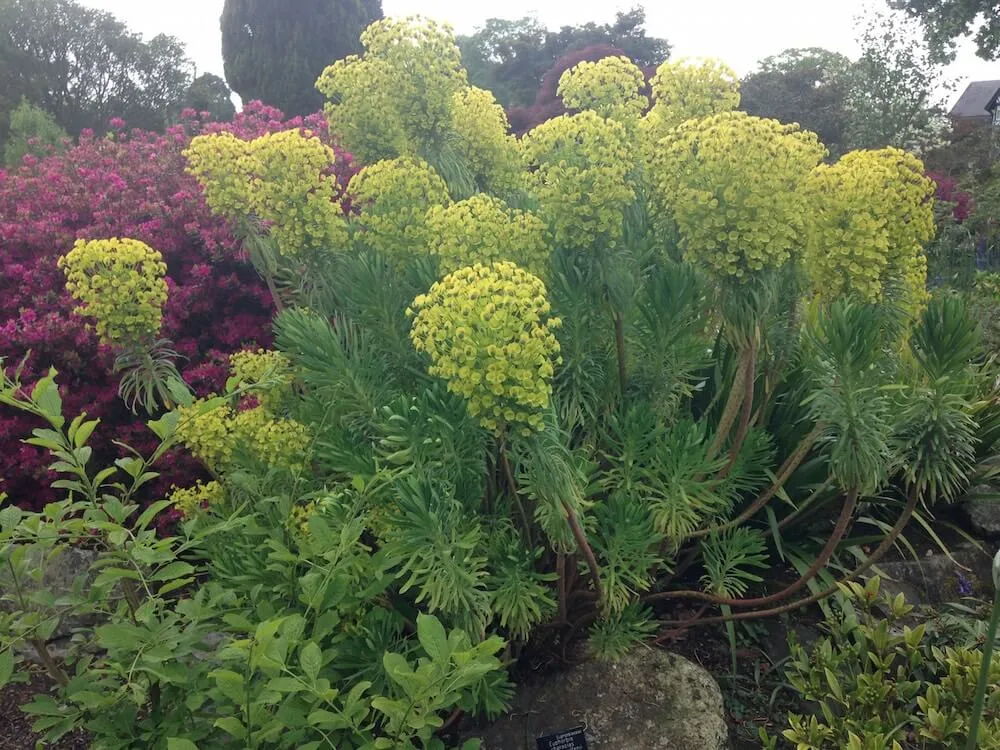
Euphorbia characias is one of the finest architectural plants available for a south facing garden. It forms a rounded, evergreen shrub with striking blue-grey foliage on upright stems, and in spring produces huge, structural flowerheads of lime-yellow-green bracts that last for months. It is drought-tolerant, completely self-sufficient once established, and provides year-round presence and structure.
Cut out the old, flowered stems at the base after flowering to encourage fresh new stems for the following year. Be careful when pruning, as the white sap is a skin and eye irritant.
🌿 At A Glance
Height: 1m to 1.5m | RHS Hardiness: H4 | Flowering: March to June
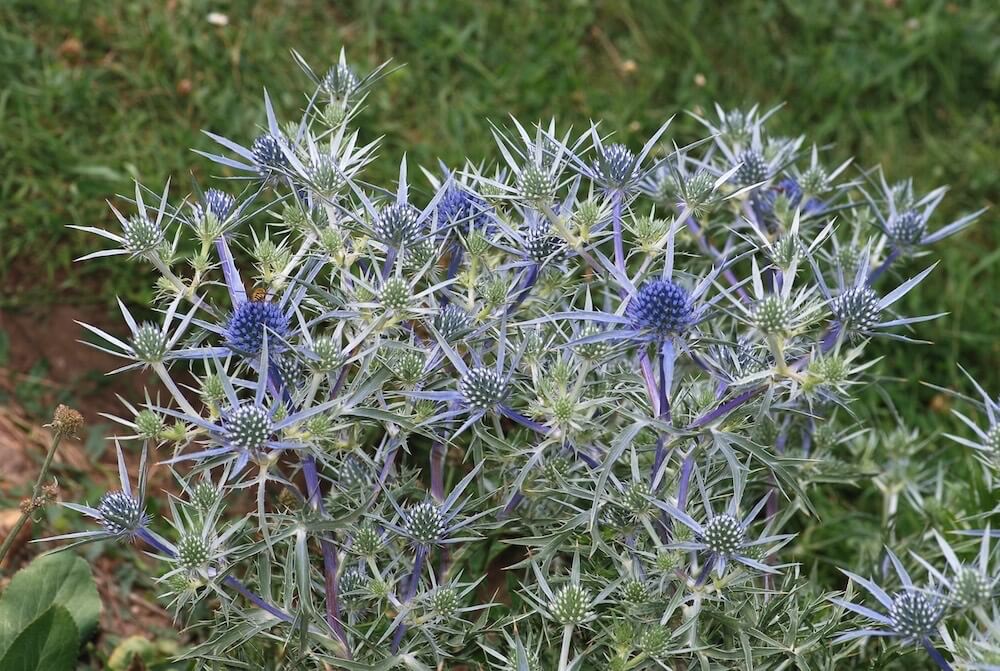
Eryngiums are extraordinary plants for south facing gardens, with their steely blue, thistle-like flowerheads and often metallic or silver-tinted foliage creating a cool, architectural contrast to the warm colours of late summer. They thrive in hot, dry, well-drained conditions and are completely self-sufficient once established.
Eryngium x zabelii ‘Big Blue’, Eryngium giganteum (known as Miss Willmott’s Ghost) with its silver-white bracts, and the dramatic Eryngium bourgatii are all excellent choices. They also make exceptional dried flowers if cut before they are fully open.
🌿 At A Glance
Height: 45cm to 90cm | RHS Hardiness: H5 to H6 | Flowering: June to August
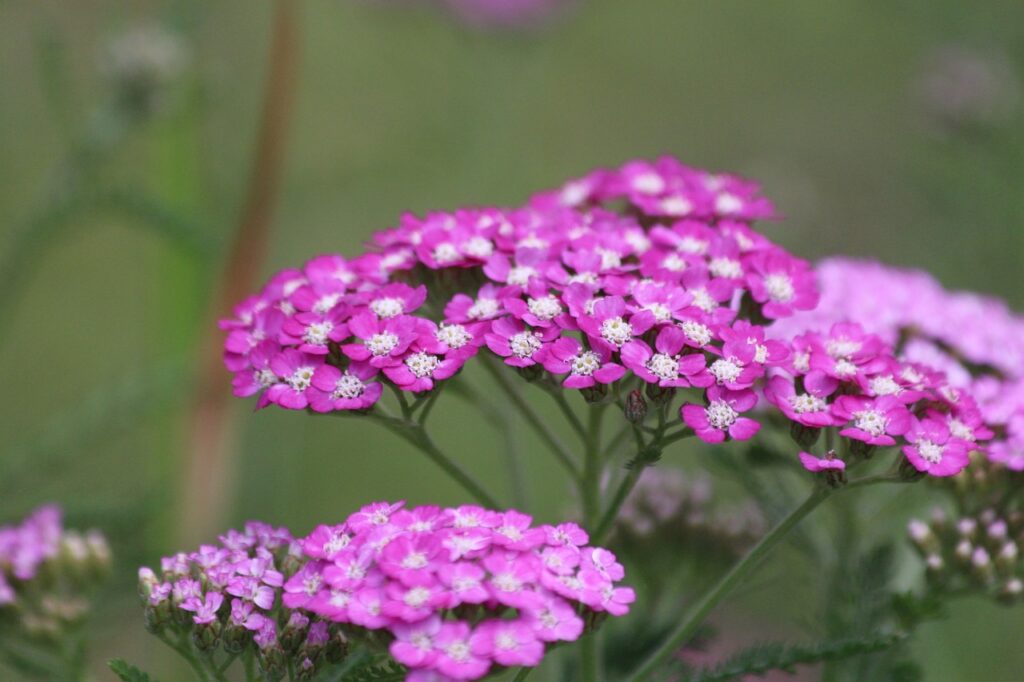
Achilleas are invaluable plants for south facing borders, combining drought tolerance with a long and spectacular flowering season. The flat-topped flower heads in shades of yellow, cream, white, pink, red and terracotta provide colour from early summer well into autumn, and the feathery, aromatic foliage is attractive throughout the season.
They associate beautifully with grasses and other prairie-style plants. The variety ‘Coronation Gold’ in deep yellow and ‘Cerise Queen’ in bright pink are both reliable and excellent performers in a sunny south facing position. Great to seed into a meadow too, and the bees and hoverflies will flock to your garden.
🌿 At A Glance
Height: 45cm to 90cm | RHS Hardiness: H6 | Flowering: June to September
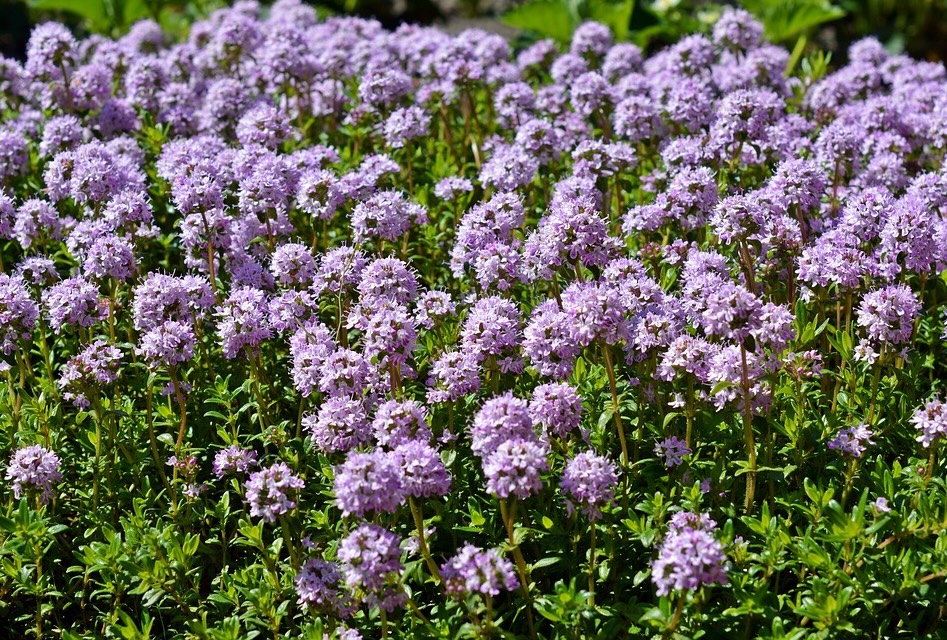
Growing thyme in a south facing garden is one of life’s genuine pleasures. The plants produce their tiny, intensely aromatic leaves in abundance in hot, sunny, well-drained conditions, and the flowers, in shades of pink, purple and white, are smothered in bees from early summer.
Beyond the culinary varieties, ornamental thymes such as Thymus serpyllum ‘Coccineus’ in deep crimson red and Thymus ‘Silver Queen’ with its silver-variegated foliage make beautiful ground cover or edging plants. They need poor, well-drained soil and full sun, and are completely drought-tolerant once established. I’ve even used them instead of small lawns with stepping stones between them, as thyme can be walked on without being crushed.
🌿 At A Glance
Height: 5cm to 30cm | RHS Hardiness: H5 | Flowering: May to July
South facing gardens support a magnificent range of bulbs, particularly those that need warmth to flower well and to ripen properly after flowering.
Allium
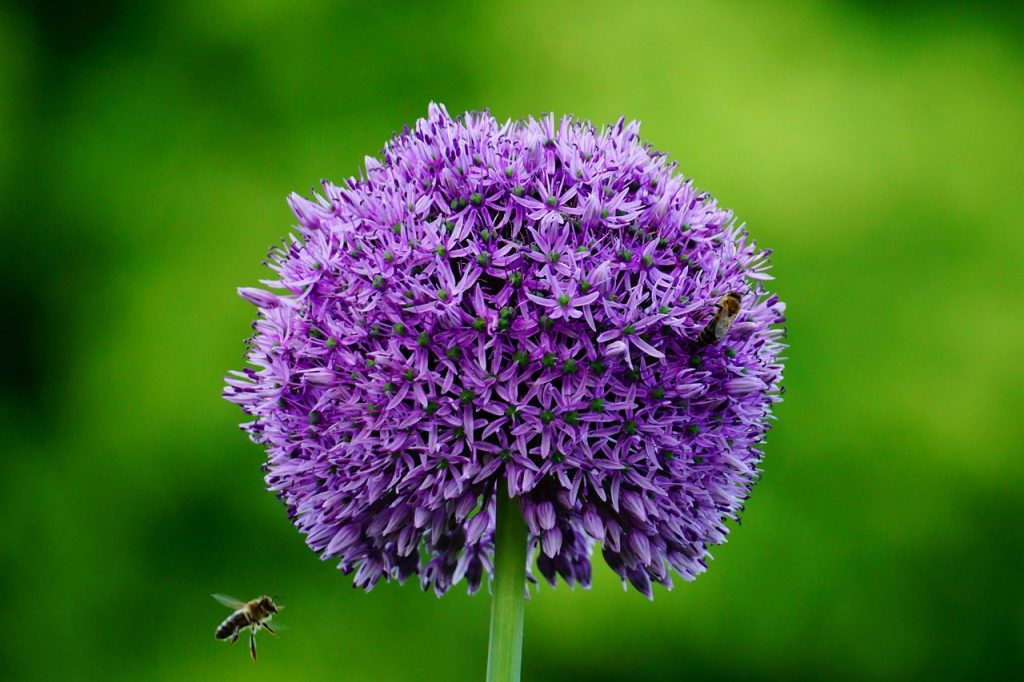
Ornamental alliums are among the most impressive and architectural of all bulbs, and they thrive in the warm, well-drained conditions of a south facing garden. The perfectly spherical flowerheads rise above the surrounding planting on tall, elegant stems in late spring and early summer, providing a striking vertical element that associates beautifully with roses, salvias and other early summer perennials.
‘Purple Sensation’ in deep violet, the majestic ‘Globemaster’ and the later-flowering ‘Sphaerocephalon’ in burgundy red are all outstanding choices. The seedheads that follow are also architecturally interesting and can be left on the plant for several months.
🌿 At A Glance
Height: 30cm to 1.2m | RHS Hardiness: H5 to H6 | Flowering: May to July
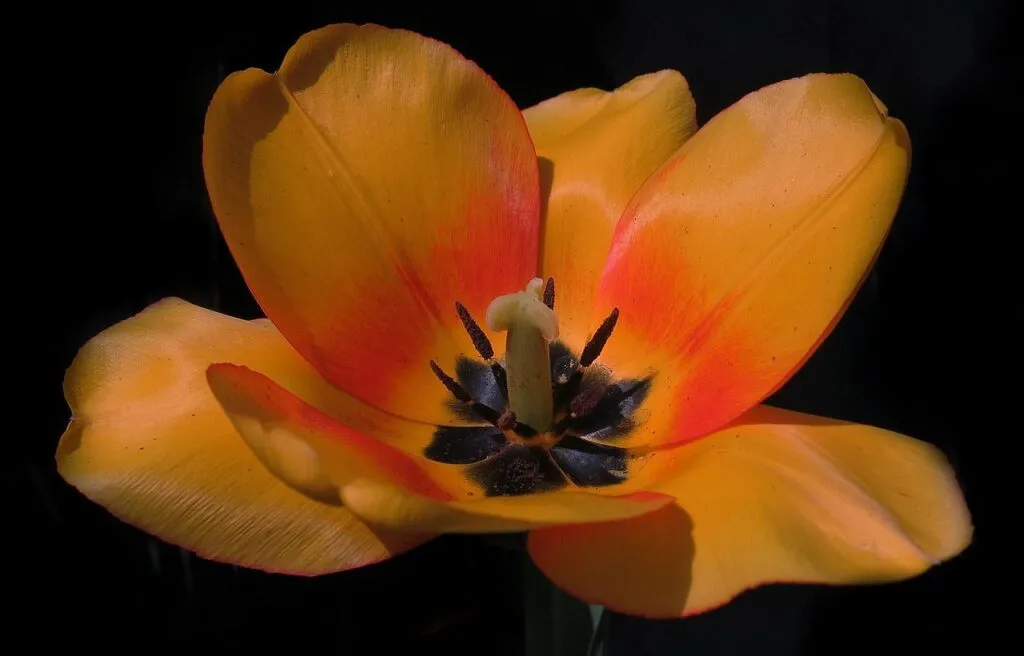
Tulips in a south facing garden flower early, flower boldly, and flower in colours that are at their very richest in full sunshine. The heat helps the bulbs ripen properly after flowering, which improves the chances of a good display in subsequent years, though in many gardens treating them as annual bedding and replanting each autumn produces the most reliable results.
The deep red ‘Apeldoorn’, the extraordinary black-purple ‘Queen of Night’, and the dramatic orange and red flame of ‘Prinses Irene’ are all magnificent in a sunny south facing border.
🌿 At A Glance
Height: 30cm to 70cm | RHS Hardiness: H6 | Flowering: March to May
South facing gardens are the natural home for prairie-style grasses and architectural plants that bring drama, movement and structure to hot, sunny borders.
Stipa gigantea (Giant Feather Grass)
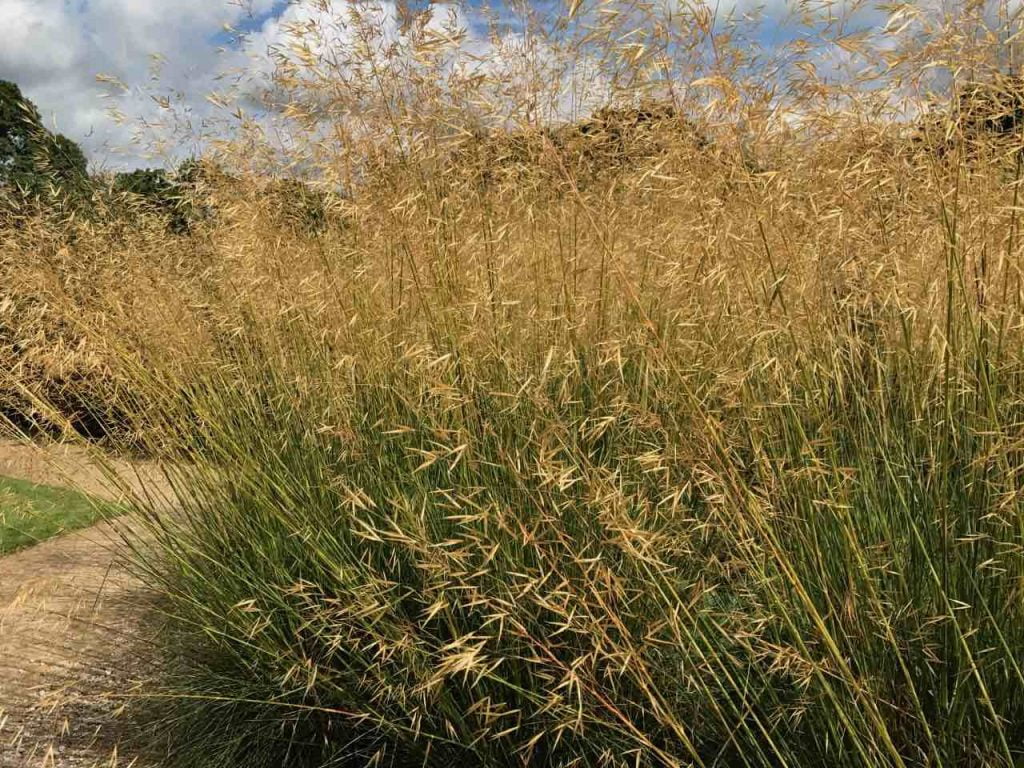
Stipa gigantea is one of the great ornamental grasses for south facing gardens. The evergreen, tufted base produces tall, airy flower stems reaching up to 2.5m, carrying enormous, golden, oat-like seed heads that sway magnificently in any breeze and catch the light spectacularly.
In a south facing garden, the seed heads are produced in great abundance and the plant remains in excellent condition throughout the summer. It needs well-drained soil and full sun to thrive.
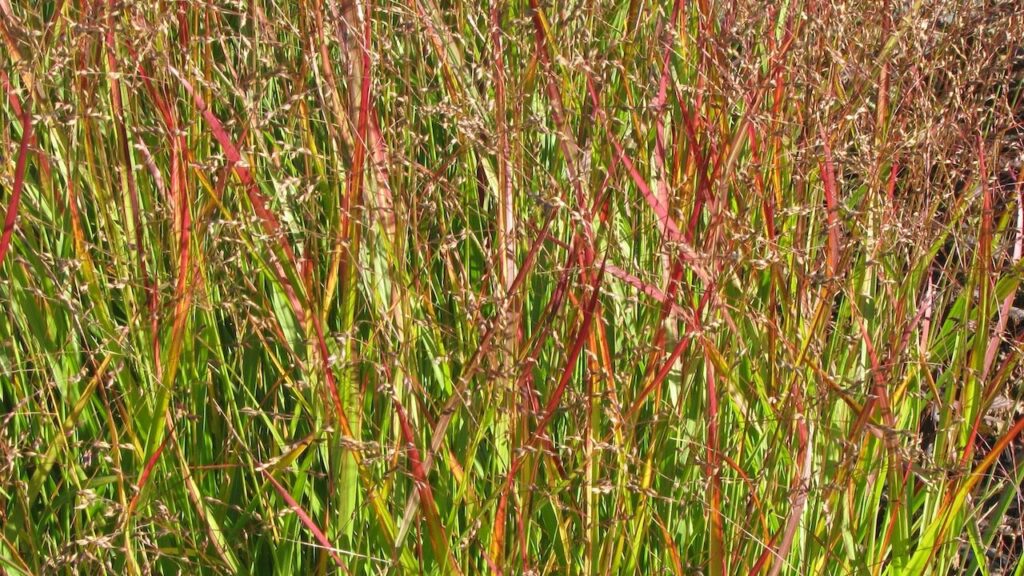
Switch grass is a beautiful prairie grass that loves the warmth of a south facing position. It produces airy, cloud-like plumes of tiny flowers and seeds in late summer that catch the light beautifully, and the foliage often turns stunning shades of orange, red and gold in autumn.
The varieties ‘Shenandoah’ with its red-tipped foliage and ‘Northwind’ with its stiffly upright, blue-green leaves are particularly fine choices for a south facing border.
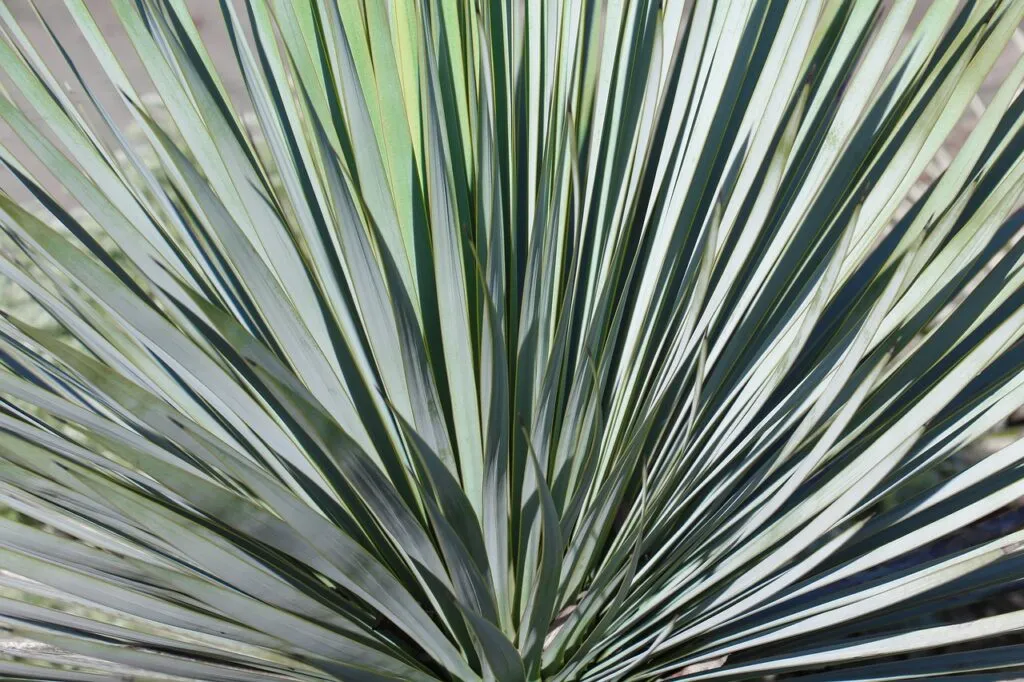
Yuccas are among the most dramatic and structurally powerful plants you can grow in a south facing garden. Their sword-like, evergreen leaves radiate from a central point to create a bold, spiky rosette that is genuinely architectural and striking. In warm summers, mature plants produce extraordinary towering spires of creamy white, bell-shaped flowers.
Yucca gloriosa is the most commonly grown and is fully hardy in most UK gardens. Plant in the best-drained position in the garden and be cautious when working near it, as the leaf tips are extremely sharp.
🌿 At A Glance
Height: 1m to 2.5m | RHS Hardiness: H4 to H5 | Flowering: July to September
South facing gardens support the boldest, hottest colours magnificently. Reds, oranges, deep purples and vivid blues all perform beautifully in full sunshine, and there are also exquisite opportunities for more refined colour schemes using the silvers, creams and soft pinks of Mediterranean-style planting. To help you build your colour scheme, take a look at my dedicated colour guides below.
Many gardens have multiple aspects, or you may be curious about how the approach to planting differs depending on which direction your garden faces. I’ve written comprehensive plant guides for all four aspects so you can make the best possible decisions throughout your whole outdoor space.
Soil Preparation and Planting Tips for South Facing Gardens
Managing soil moisture is the fundamental challenge in a south facing garden, and getting it right before you plant makes an enormous difference to long-term plant performance. Before planting any border, particularly those along south facing walls and fences, dig in generous amounts of well-rotted garden compost or manure to a depth of at least 30cm. This improves moisture retention in sandy soils and improves drainage in clay soils, while adding organic matter that feeds soil biology and improves long-term fertility.
💡 Top Tip
Mulching is an essential task in a south facing garden. Apply a 5 to 7cm layer of composted bark, garden compost or pebbles around all plants each spring, before the weather warms up and the soil begins to dry out. A good mulch can reduce water loss from the soil by up to 75% during hot periods, which makes a dramatic difference both to plant health and to the amount of time you spend watering.
When planting climbers against a south facing wall, plant at least 30 to 45cm away from the base of the structure, as the soil immediately against the wall is almost always extremely dry due to the rain shadow combined with the drying effect of the reflected heat. Water climbers in very thoroughly after planting and continue watering regularly throughout the first full growing season while they establish.
For the more tender plants described in this guide — such as campsis, passion flower and Solanum crispum — a south facing wall is genuinely their best chance of survival in the UK climate. Plant them in the warmest, most sheltered spot against the wall, mulch over their root zone in autumn to protect the roots from severe frost, and in very cold winters consider wrapping the lower stems in horticultural fleece as additional protection.
Water south facing gardens wisely. In summer, water deeply in the morning or evening, directing the water at the base of plants rather than over the foliage. Deep, infrequent watering encourages roots to grow down into the soil where moisture is more reliably available, making plants more resilient in drought conditions. Overhead watering in hot sunshine can occasionally cause leaf scorch and wastes water through rapid evaporation.
My Top 5 Tools for Planting Your South Facing Garden
The right tools make every garden task more enjoyable and effective. Here are the five tools I would use when planting and maintaining a south facing garden, all covered in more detail in my complete beginner’s garden tools guide.
1. Quality Garden Trowel
For planting perennials, bulbs and smaller shrubs, a quality stainless steel trowel with a rubberised handle is your most important tool. Avoid plastic-headed trowels completely. Expect to spend between £5 and £35, or up to £60 for premium Japanese steel.
For soil preparation and planting larger shrubs and climbers, a quality garden spade with a solid one-piece metal head is essential. Invest between £35 and £65 for a tool that will last decades.
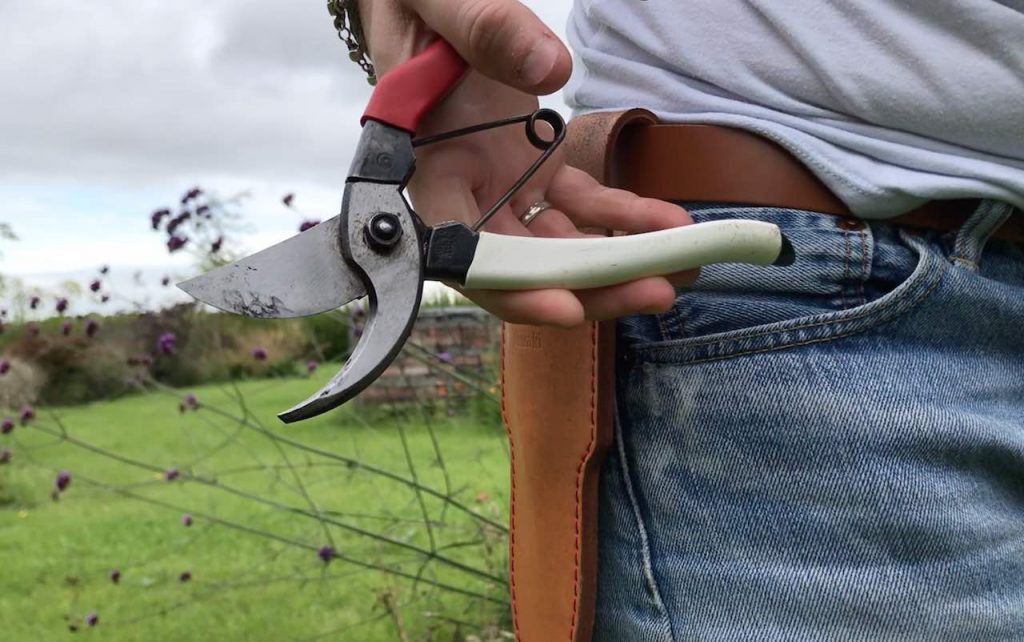
For deadheading, pruning climbers, and shaping shrubs, a good pair of bypass secateurs is indispensable. Spend between £20 and £60 for a reliable everyday pair. Felco are some of my most favourite snips as they have excellent repair and serviceability. Niwaki are also fabulous!
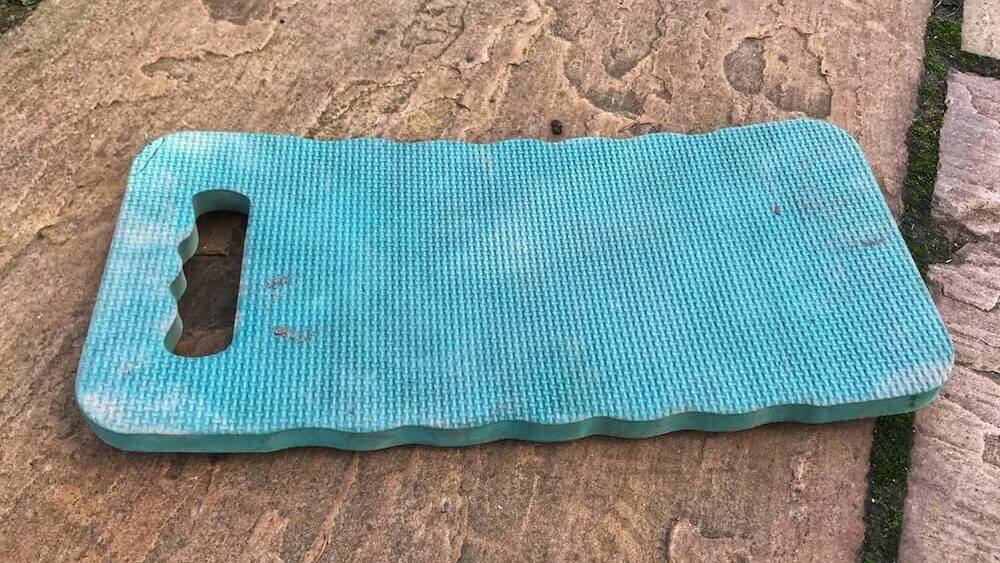
The greatest value-for-money gardening purchase you will ever make. A simple foam kneeling pad protects your knees and makes every border planting session considerably more comfortable. Spend no more than £3 to £15. The super thick ones are best!
Frequently Asked Questions About South Facing Gardens
Q: What is the best plant for a south facing wall? A: It depends on what you want to achieve. For sheer drama and year-round impact, wisteria and campsis are hard to beat. For fragrance, star jasmine is extraordinary. For something more unusual and conversation-stopping, Solanum crispum ‘Glasnevin’ produces a continuous succession of flowers from June to October that few climbers can match. All of these demand a south facing wall to perform at their very best.
Q: Can lavender grow in a south facing garden? A: Lavender is one of the very best plants for a south facing garden. It thrives in exactly the hot, dry, sunny conditions that a south facing position provides, flowers more prolifically than in any shadier aspect, and produces its essential oils in greater concentration. A well-drained south facing border is the ideal position for every lavender variety.
Q: What are the challenges of a south facing garden? A: The two main challenges are soil moisture and heat management. The soil in a south facing garden dries out rapidly, particularly along the base of south facing walls where the rain shadow effect makes conditions even drier. The solution is generous organic matter incorporation before planting and consistent mulching every spring, which dramatically reduces water loss. Deep, infrequent watering is far more effective than frequent shallow watering.
Q: Can I grow vegetables in a south facing garden? A: A south facing garden is genuinely excellent for vegetables. Tomatoes, courgettes, aubergines, peppers, beans, sweetcorn, pumpkins and most salad crops all thrive in the warmth and sunshine. The extended growing season that a south facing aspect provides can extend harvests by several weeks compared with other aspects. It is one of the best possible positions for a productive kitchen garden.
Q: Is a south facing garden too hot in summer? A: For the right plants, no. For those that need moisture and cooler conditions — hostas, ferns, astilbes — yes, a south facing position will not suit them at all. The solution is simply to choose plants that are adapted to warmth and drought, and there is a magnificent range of these available including the Mediterranean shrubs, salvias, agapanthus, kniphofia and alliums covered in this guide.
Q: What shrubs are best for a south facing garden? A: Lavender, rosemary, cistus, ceanothus and phlomis are outstanding. All originate from Mediterranean or similar climates, all thrive in hot, dry, sunny conditions, all are evergreen or semi-evergreen, and together they create a genuinely beautiful, fragrant and wildlife-friendly planting that asks very little of you once established.
Unlock Your Garden Potential with Garden Ninja’s Expert Online Training
Ready to transform your gardening skills beyond just choosing plants? Garden Ninja’s expertly crafted online courses will fast-track your development from keen amateur to skilled garden designer in months rather than years. Starting at just £29, you’ll gain access to professional garden design expertise from BBC Garden Rescue’s Lee Burkhill, delivered at a fraction of traditional horticultural education costs.
29
Garden Design Examples for Small Gardens: 30 Design Templates & Planting Plans
Garden Design Examples for Small Gardens: 30 Design Templates & Planting Plans: In this online gardening course, I’ll walk you through 30 fantastic garden designs, explaining the logic behind the layout, the plant choices, and take-home tips for applying them in your own garden.
Weekend Garden Makeover: A Crash Course in Design for Beginners
Learn how to transform and design your own garden with Lee Burkhills crash course in garden design. Over 5 hours Lee will teach you how to design your own dream garden. Featuring practical design examples, planting ideas and video guides. Learn how to design your garden in one weekend!
Garden Design for Beginners: Create Your Dream Garden in Just 4 Weeks
Garden Design for Beginners Online Course: If you want to make the career jump to becoming a garden designer or to learn how to design your own garden, this is the beginner course for you. Join me, Lee Burkhill, an award-winning garden designer, as I train you in the art of beautiful garden design.
Summary: Making the Most of Your South Facing Garden
A south facing garden is a magnificent growing environment, and if you approach it with the right plant choices and the right soil management, it can be one of the most spectacular and productive gardens imaginable. The key is to embrace the conditions rather than fighting them: choose plants that are genuinely adapted to warmth and sun, prepare your soil generously before planting, and mulch consistently to manage soil moisture.
The opportunity to grow plants from Mediterranean climates, to establish tender climbers that would struggle anywhere else, and to enjoy your garden in long, warm, sun-drenched afternoons and evenings is genuinely special. South facing gardens in the UK can feel like a different country on a good summer day, and with the planting suggestions in this guide, the botanical quality will match the atmosphere perfectly.
Your subscription could not be saved. Please try again.
Your subscription has been successful.
Lee Burkhill
Lee Burkhill, known as the Garden Ninja, is an award-winning garden designer and horticulturist with over 30 years of gardening experience and 15 years as a professional garden designer. A qualified RHS (Royal Horticultural Society) professional, Lee specialises in sustainable garden design and practical horticultural advice. He designs and presents on BBC1’s Garden Rescue and in leading gardening publications. Lee combines three decades of hands-on gardening knowledge with professional design qualifications to help gardeners create beautiful, functional outdoor spaces.