-

Lawn Weeds Identification Guide: Common UK Lawn Weeds and How to Remove Them
 Lee Burkhill: Award Winning Designer & BBC 1's Garden Rescue Presenters Official Blog
Spotted something suspicious lurking between your grass blades? You're not imagining things. UK lawns play host to a rogues' gallery of uninvited guests in the form of lawn weeds, and knowing who's gatecrashed your garden party is the first step to showing them the door. This guide to lawn weeds will show you how to identify them and treat them!
Here’s the thing about lawn weeds that drives most gardeners completely bonkers: you can’t treat what you can’t identify as a lawn weed.
I’ve lost count of how many times clients have told me they’ve been battling “that yellow flowery thing” or “the spreading green stuff” with completely the wrong treatment. It’s like trying to cure a headache with athlete’s foot cream. Technically, you’re treating something, but you won’t achieve the results you’re after.

The good news? Most UK lawns share the same common culprits, and once you know what you’re looking at, dealing with them becomes infinitely easier. I’m going to walk you through the ten most common lawn weeds you’ll encounter in British gardens, how to identify them at a glance, and most importantly, how to evict them effectively.
No more guessing games, no more buying the wrong products, just straightforward weed identification that actually works.
Quick Answer
The most common UK lawn weeds are dandelions, daisies, white clover, creeping buttercup, greater plantain, yarrow, speedwell, self-heal, creeping thistle, and mind-your-own-business. Each requires a different removal approach, though the single best long-term defence is maintaining thick, well-fed grass that weeds simply cannot establish in.
Jump To

Is Clover Bad for Lawns?
Clover is not bad for lawns and can actually be beneficial. White clover fixes nitrogen from the air and releases it into the soil, naturally fertilising surrounding grass without any chemical intervention. It stays green during drought, requires no feeding, and attracts beneficial pollinators. I adore it!
However, if you want a perfectly uniform grass-only lawn, clover won’t fit that aesthetic. Whether clover is “bad” depends entirely on your lawn goals: ecological and low maintenance versus pristine and traditional.
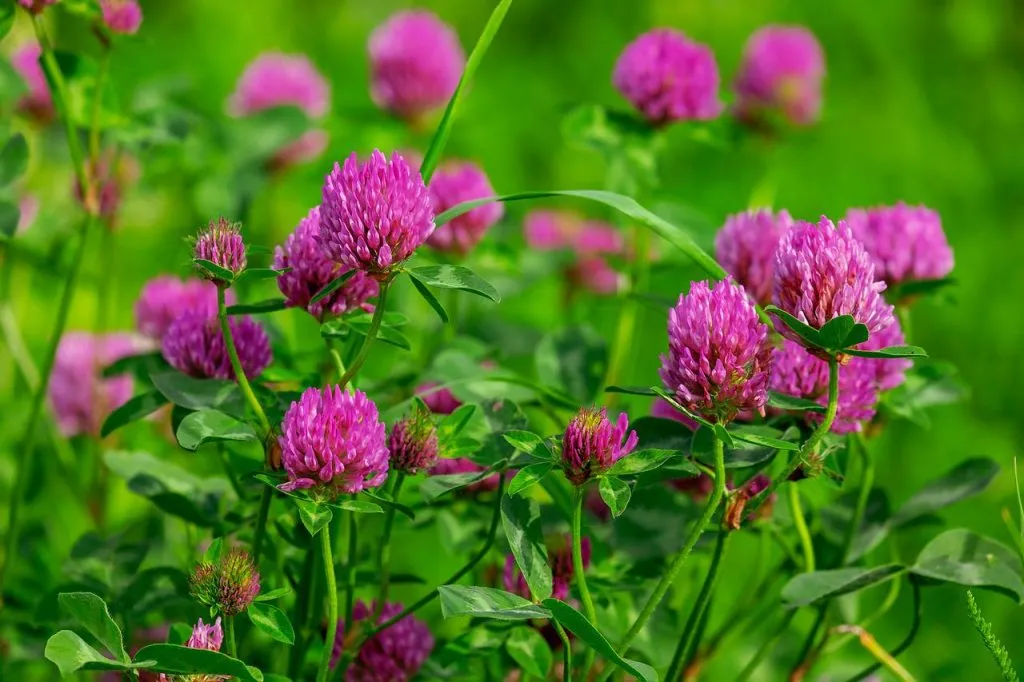
Before we dive into the weed lineup, let’s address the clover question, as it’s arguably the most contentious plant in lawn care. Some people treat clover like public enemy number one, whilst others actively seed it into their lawns. The truth sits somewhere in the middle, and your personal preference matters more than any blanket rule.
Clover naturally appears in nitrogen-poor soils because it can create its own fertiliser through nitrogen fixation. This means grass growing near clover actually gets fed by it, staying greener without synthetic fertiliser. Pretty clever, really. If you’re after a relaxed, eco-friendly lawn that supports pollinators and needs minimal maintenance, keeping clover makes perfect sense. If you want bowling green perfection with nothing but grass, then yes, you’ll want to remove it.
Neither approach is wrong; they’re just different philosophies. It all depends on how much you want to help wildlife, which in my garden means I let them roam everywhere!
Best Tools for Removing Lawn Weeds
Before we get into identifying individual weeds, it’s worth talking about tools, because using the right one makes an enormous difference to how quickly and cleanly you can remove weeds from your lawn. I’ve tried pretty much everything over the years, and I keep coming back to the same two favourites.
For tap-rooted weeds like dandelions and plantain, a daisy grubber is the single best tool you can own. It has a long, forked blade specifically designed to reach down alongside the tap root and lever it out intact. If you snap the root and leave even a centimetre in the ground, many weeds will simply regenerate. The daisy grubber removes the whole thing cleanly with minimal soil disturbance, which matters because churning up soil can actually bring dormant weed seeds to the surface and give them exactly the conditions they need to germinate.
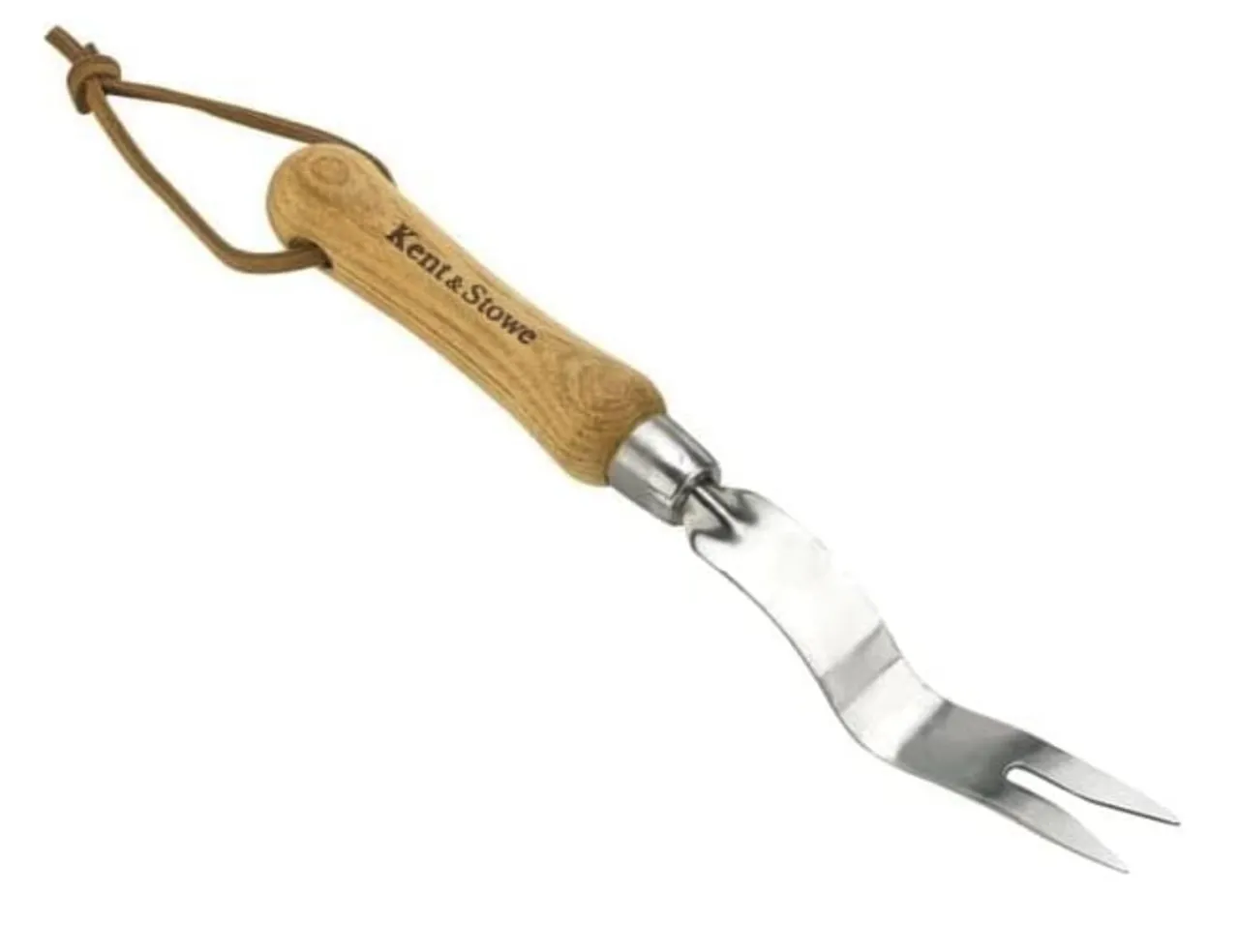
🛒 Buy a Daisy Grubber from Amazon UK. This is the one I reach for every single time.
My second recommendation is a hori hori knife. If you’ve never come across one, it’s a Japanese garden knife with a curved blade, one sharp edge, and one serrated edge. I wrote an entire guide to them on this site because they genuinely replace three or four other tools. For weeding, the pointed blade slides easily into tight spots and alongside stubborn roots, and the serrated edge cuts through tough stolons and creeping stems without tearing. It’s the tool I use for pretty much everything that doesn’t require the specialist geometry of the daisy grubber.
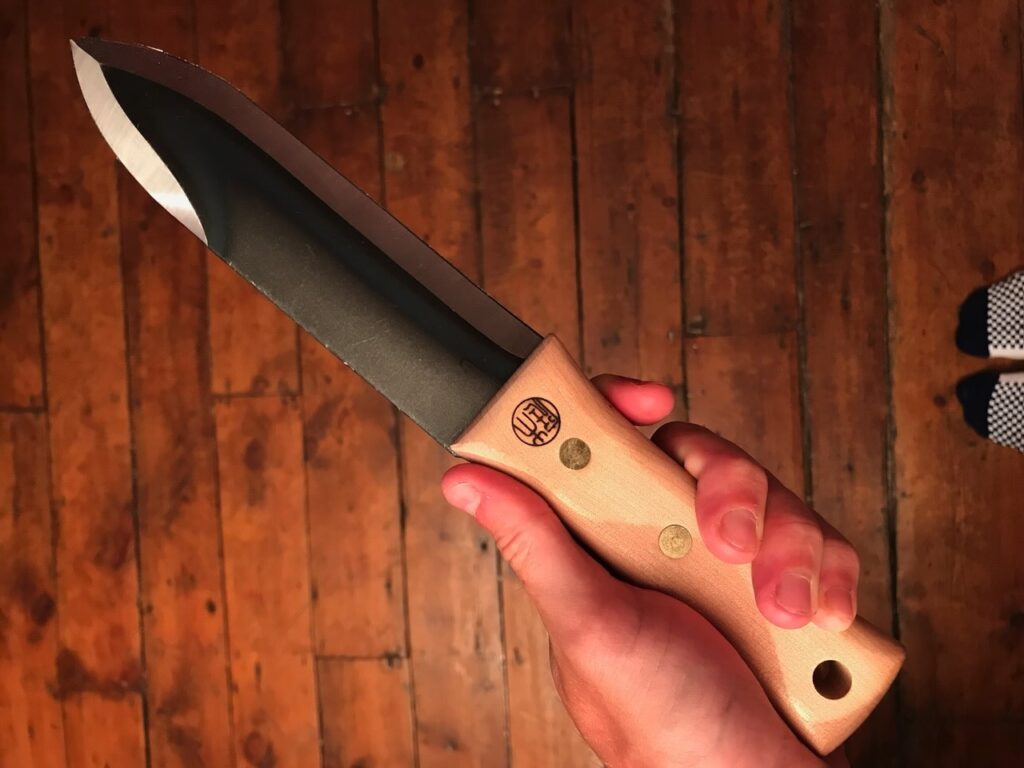
🛒 Buy a Hori Hori Knife from Amazon UK. Read my full guide on this site for model recommendations at different price points.
💡 Top Tip
Always water the lawn or weed after rain when the soil is soft. Trying to extract tap roots from hard, dry ground almost guarantees you’ll snap them off below the surface. Half a dandelion root left in the ground will simply regrow.
The UK Lawn Weed Hall of Fame
Right, let’s meet your lawn’s uninvited residents. I’ve arranged these in order from “you’ll definitely have this” to “you might have this depending on your conditions.”
1. Dandelion (Taraxacum officinale)
How to identify: If you can’t spot a dandelion, you need better glasses. Bright yellow flowers that turn into those fluffy white seed heads that kids love to blow everywhere (thanks for that, by the way). Fabulous for early foraging honey bees and insects, and you can eat the flowers, leaves and roots too!
The leaves form a flat rosette with distinctive jagged edges that look like lions’ teeth, hence the name. Flowers appear from March to November, and they’re absolutely relentless about spreading.
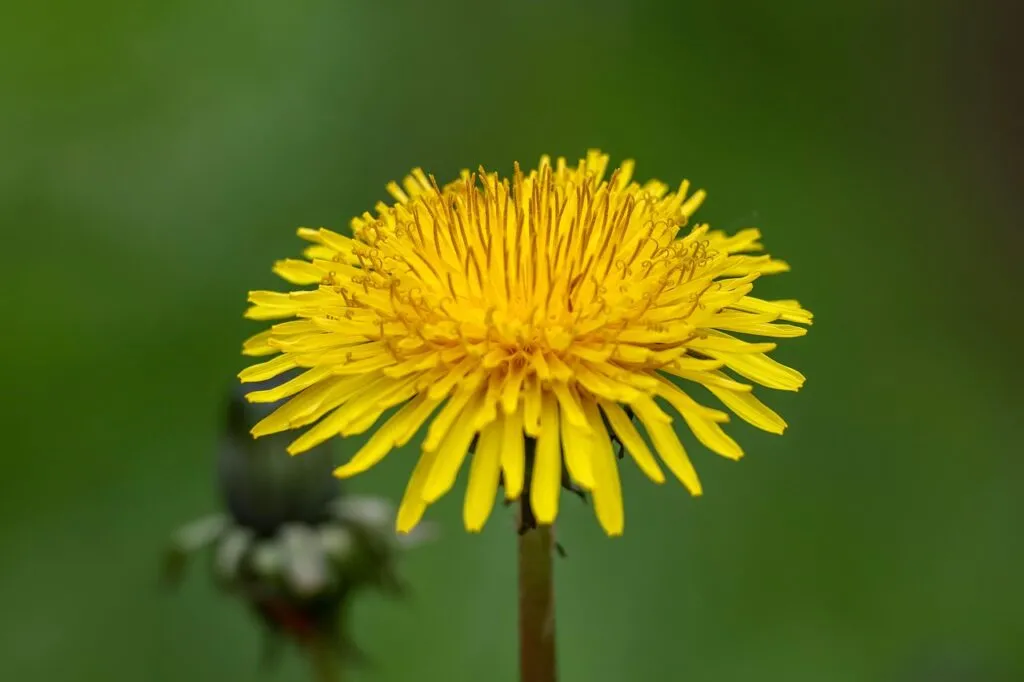
Why they’re problematic: Dandelions have tap roots that go down deeper than your average house foundation. Well, not quite, but they’re impressively long, sometimes reaching 30cm. If you don’t remove the entire root, they’ll regenerate like some sort of horticultural Terminator. The flat rosette of leaves smothers grass underneath, and one plant produces hundreds of wind-borne seeds.
How to remove them: Use a daisy grubber or narrow trowel to dig out the entire tap root. Water the lawn first to soften the soil and make extraction easier. For widespread infestations, a selective lawn weedkiller containing 2,4-D will knock them back without harming grass. The real secret though? Maintain thick, healthy grass through regular feeding and proper mowing height. Dandelions struggle to establish in dense turf.
🛒 Buy a Daisy Grubber from Amazon UK. The most effective tool for dandelion removal.
2. Daisy (Bellis perennis)
How to identify: Those cheerful white petals with sunny yellow centres that children adore. Daisies form low rosettes of spoon-shaped leaves and close their flowers at night, opening again when the sun appears. They flower from March to October and spread through both runners and seeds.
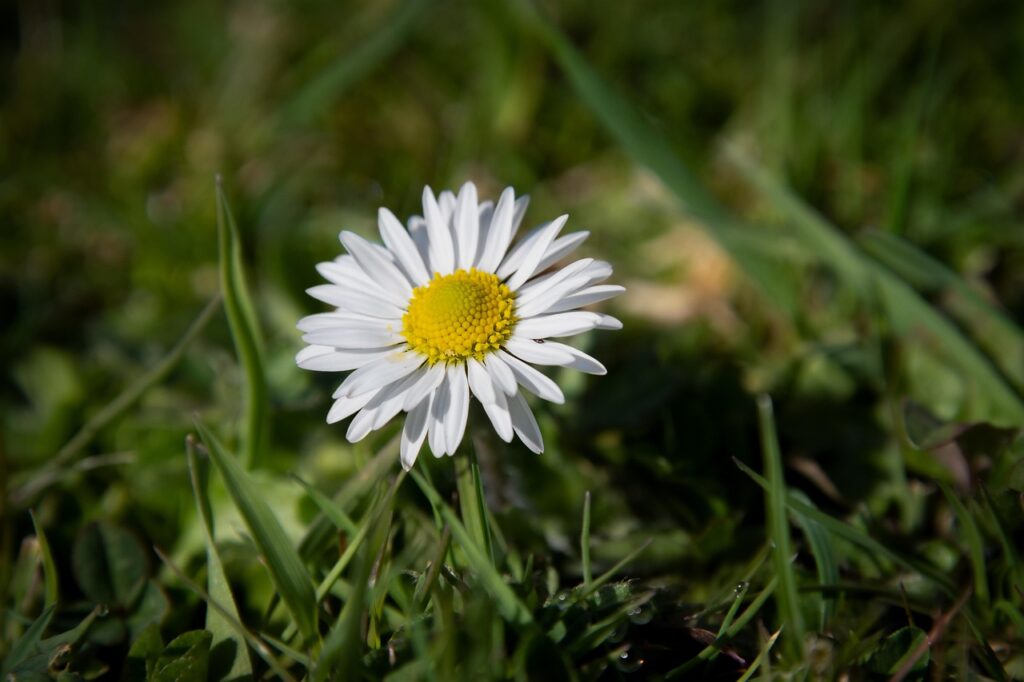
Why they’re problematic: Daisies tolerate close mowing beautifully, which means your mower won’t kill them. They spread aggressively through underground runners, forming dense mats that crowd out grass. They particularly love thin, weak lawns where competition is minimal.
How to remove them: Individual plants can be dug out with a hand fork, making sure to remove all roots. Selective weedkillers work well on daisies. Prevention is easier than cure: maintain vigorous grass growth through feeding, and raise your mowing height slightly. Daisies hate competition from healthy grass. For tips on keeping your lawn in peak condition, check out my guide on scarifying lawns.
3. White Clover (Trifolium repens)
How to identify: Three-part leaves (hence “trefoil”) with distinctive white globe-shaped flowers that bees absolutely adore. So, it’s a great one for wildlife, and I leave it to spread through my lawn for this reason! However, if you want a ‘perfect lawn’, it can become problematic. The leaves often have a pale chevron marking. Clover grows low and spreads through creeping stems called stolons that root wherever they touch soil.
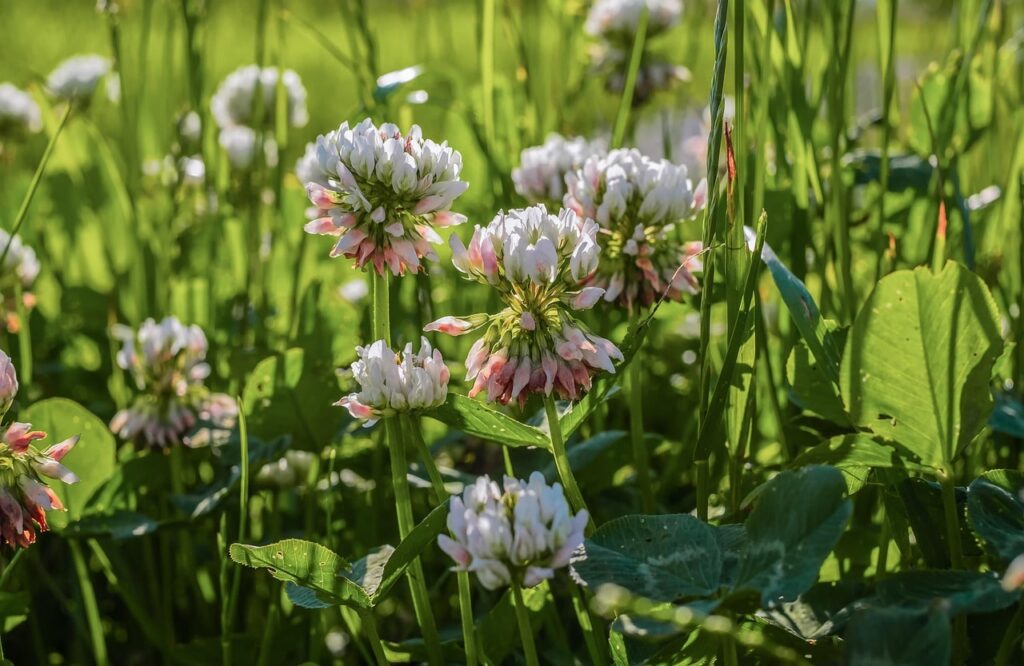
Why they’re problematic: Clover thrives in nitrogen-poor soil and spreads rapidly once established, potentially taking over large sections of lawn. It’s also quite slippery underfoot when wet, which can be hazardous.
How to remove them: Here’s the controversial bit: you might not want to. As we discussed earlier, clover offers genuine benefits. However, if you’re determined to remove it, regular feeding with nitrogen-rich fertiliser helps grass outcompete it. Rake over clover patches before mowing to lift the stems for the mower blades to catch. Selective weedkillers work, though clover can be resistant to some formulations. Hand weeding small patches is most effective, removing the entire root system.
4. Creeping Buttercup (Ranunculus repens)
How to identify: Glossy yellow cup-shaped flowers with five petals, appearing from May to August. The leaves have three lobes and are slightly hairy. True to its name, creeping buttercup spreads through runners that root at intervals across the lawn surface. They are a pain when they take hold as the runners go on forever!
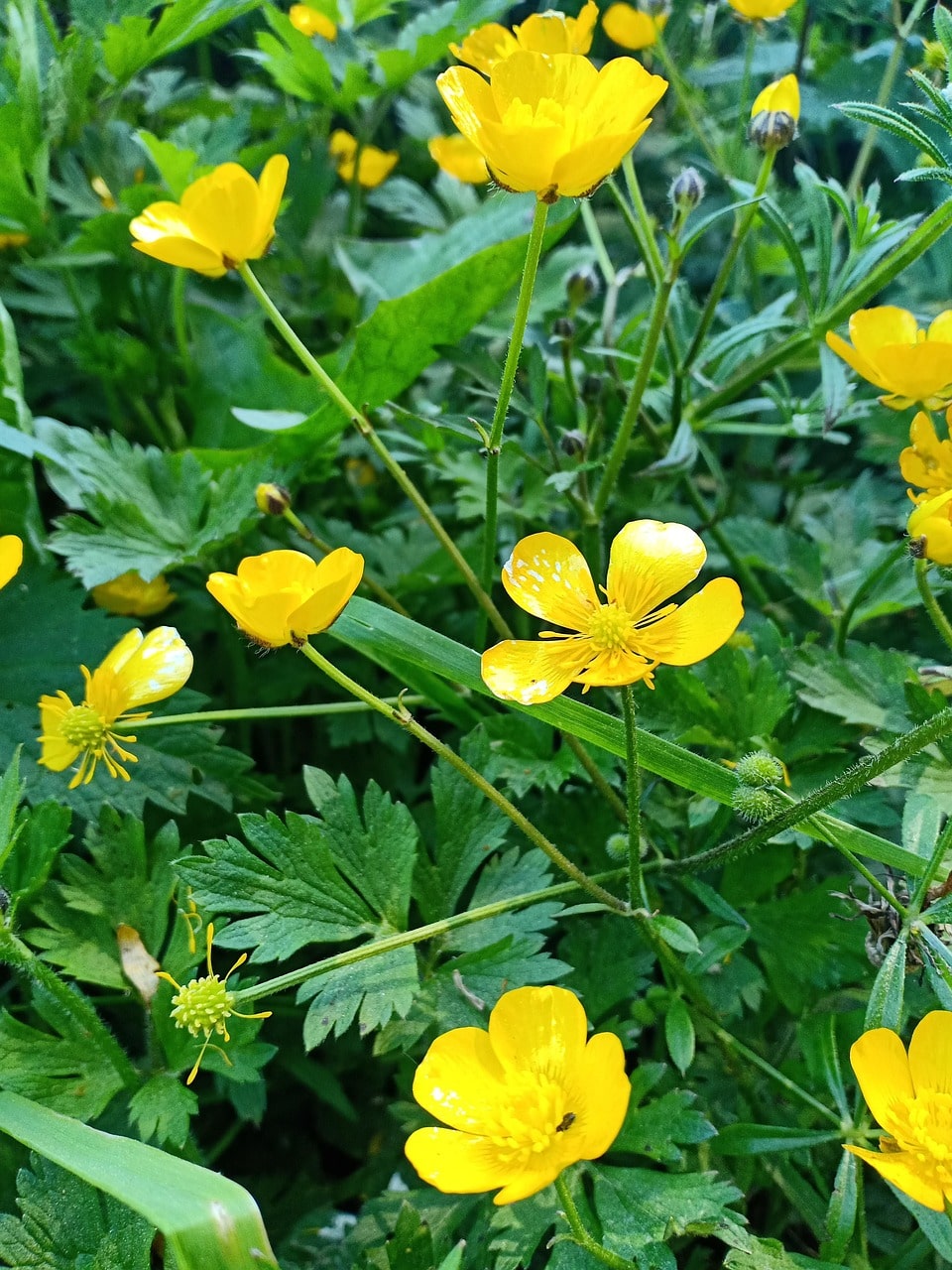
Why they’re problematic: This plant absolutely loves damp, poorly draining soil, which is bad news for much of the UK. The creeping runners spread rapidly, and the dense root system is difficult to eradicate completely. It can dominate large sections of lawn if left unchecked and that goes for ornamental flower beds too!
How to remove them: Improve drainage first through aeration and possibly installing drainage systems; otherwise, you’re fighting a losing battle. Rake over patches before mowing to lift runners into the mower blades. Apply selective weedkiller in spring or autumn when actively growing. Scarifying helps remove surface runners. Long-term, improving soil conditions matters more than herbicide application. My article on improving winter lawn care covers drainage improvement techniques.
5. Greater Plantain (Plantago major)
How to identify: Broad, ribbed oval leaves forming a rosette flat to the ground. Produces tall flower spikes with tiny greenish flowers that aren’t particularly attractive. The leaves have prominent parallel veins running their length.
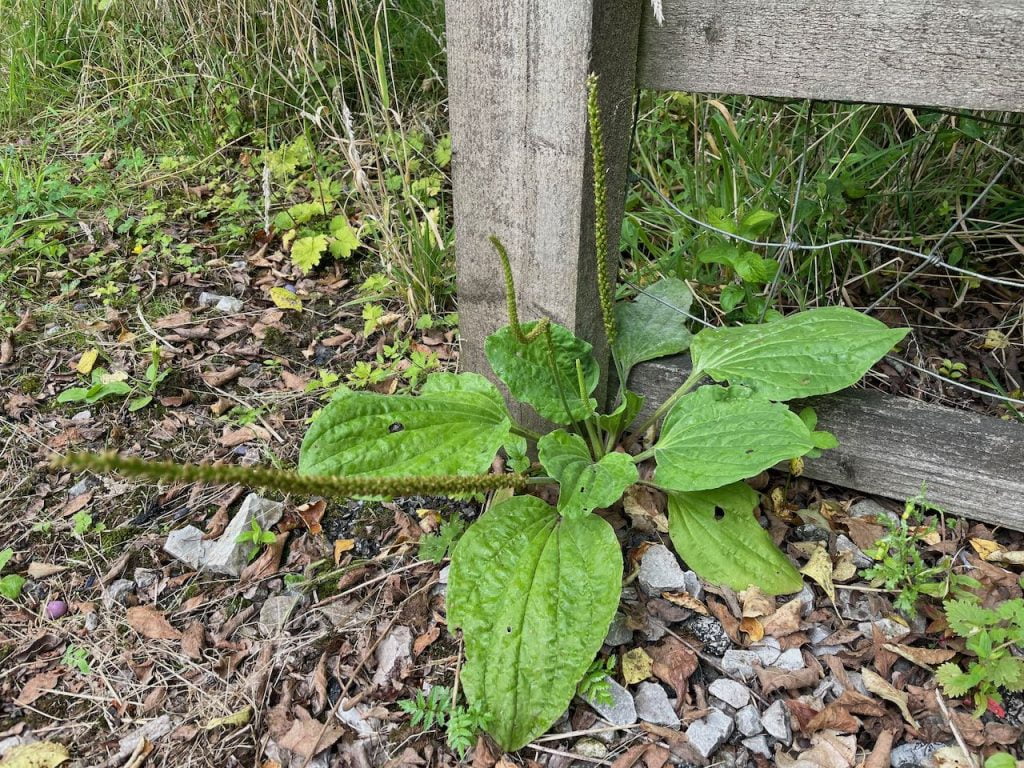
Why they’re problematic: The broad leaves smother grass underneath, and the deep root system makes plantain extremely drought-resistant. It spreads through thousands of tiny seeds from those flower spikes.
How to remove them: Dig out individual plants with a hand fork, removing the entire root. Plantain has relatively shallow roots compared to dandelions, making removal easier. Selective lawn weedkillers are effective. Prevent establishment by maintaining thick grass coverage and avoiding soil compaction, as plantain loves compacted ground.
6. Yarrow (Achillea millefolium)
How to identify: Feathery, finely divided leaves that look almost fern-like. White or occasionally pink flat-topped flower clusters appear from summer to autumn. Spreads through creeping underground stems, and the whole plant has a distinctive aromatic scent when crushed. I actually adore them, but as a meadow flower, not so much in formal ornamental lawns!
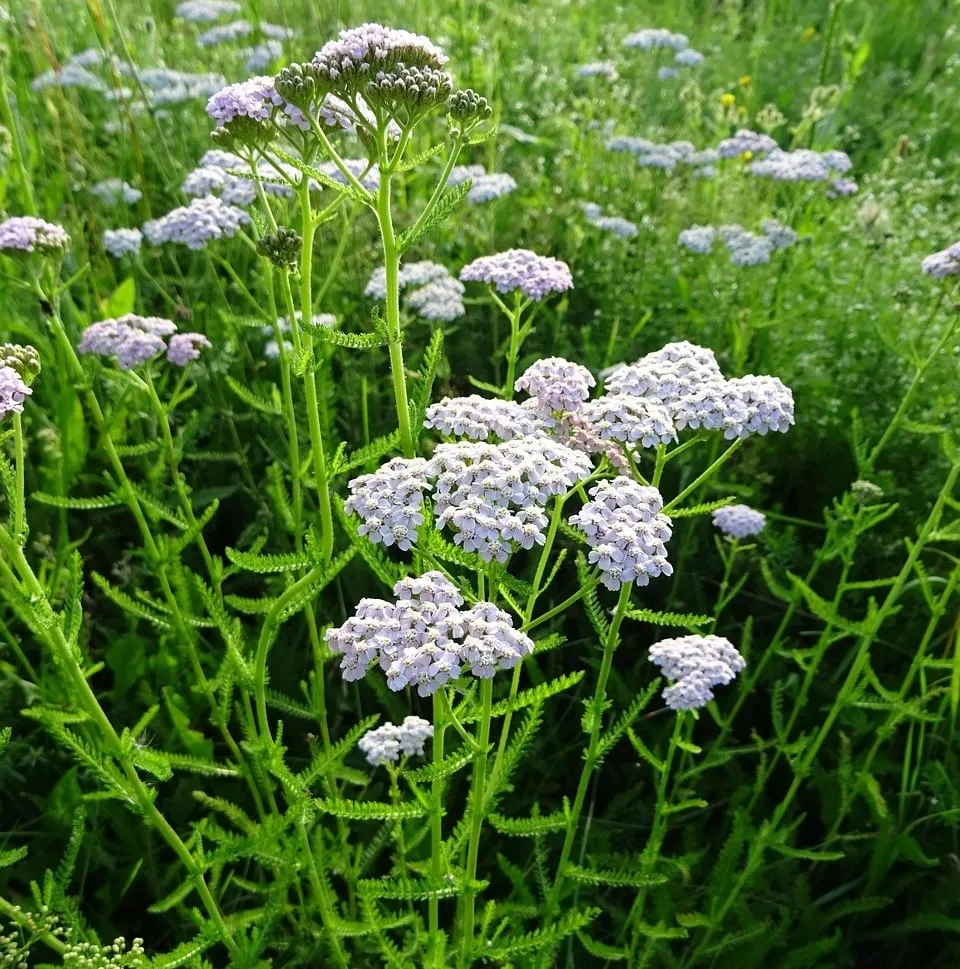
Why they’re problematic: Yarrow has incredibly deep, fibrous roots that make it extremely drought-tolerant. Once established, it spreads steadily through underground runners and forms patches that crowd out grass. It particularly thrives in dry conditions.
How to remove them: Hand weeding is challenging due to the deep root system. Selective weedkillers containing MCPA or dicamba work reasonably well. Regular mowing prevents seed head formation. Improving soil moisture through proper watering and adding organic matter helps grass compete more effectively against drought-tolerant yarrow.
7. Speedwell (Veronica species)
How to identify: Tiny blue, white or pink flowers and small oval leaves with serrated edges. There are several speedwell species, but slender speedwell is most common in lawns. It forms creeping mats of growth close to the ground and flowers spring through summer.
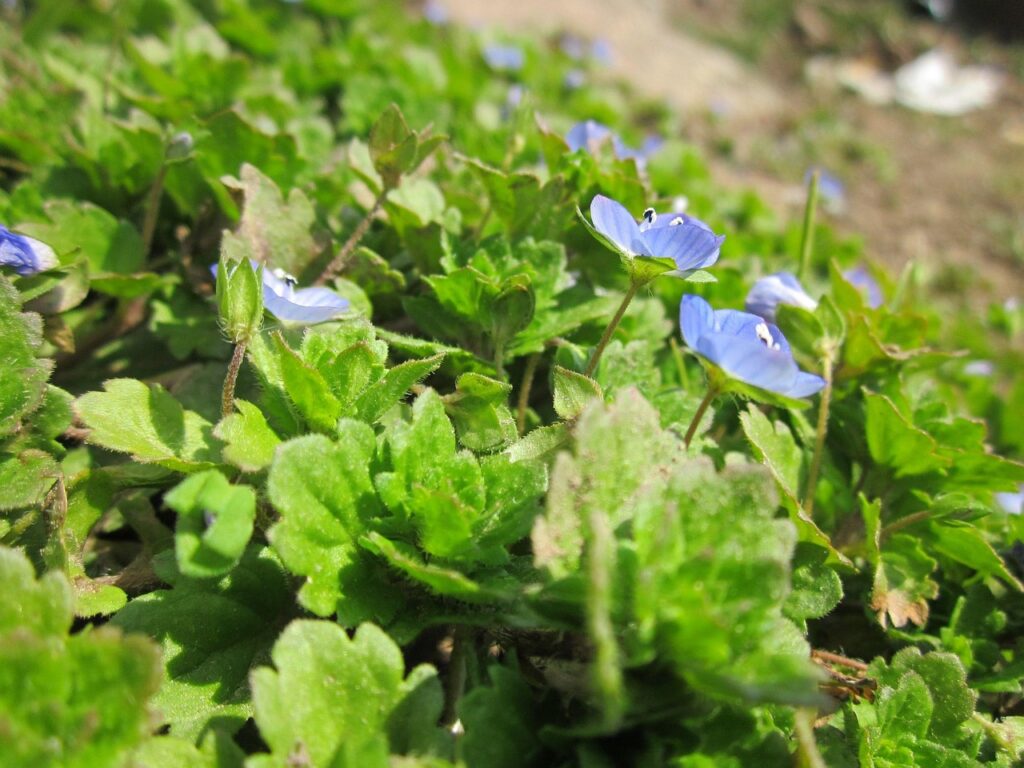
Why they’re problematic: Speedwell spreads rapidly through creeping stems and seeds, forming dense patches. It’s tolerant of close mowing and thrives in thin, weak grass.
How to remove them: Improve lawn vigour through feeding and proper maintenance. Speedwell struggles in thick, healthy turf. Apply selective lawn weedkiller in spring when actively growing. Hand weeding is tedious but possible for small infestations. The key is prevention through maintaining dense grass coverage.
8. Self-heal (Prunella vulgaris)
How to identify: Distinctive purple-blue tubular flowers arranged in short spikes. The leaves are oval and slightly hairy, arranged in pairs along square stems. It spreads through creeping stems that root at leaf nodes. Some gardeners actually quite like self-heal because the flowers are attractive.
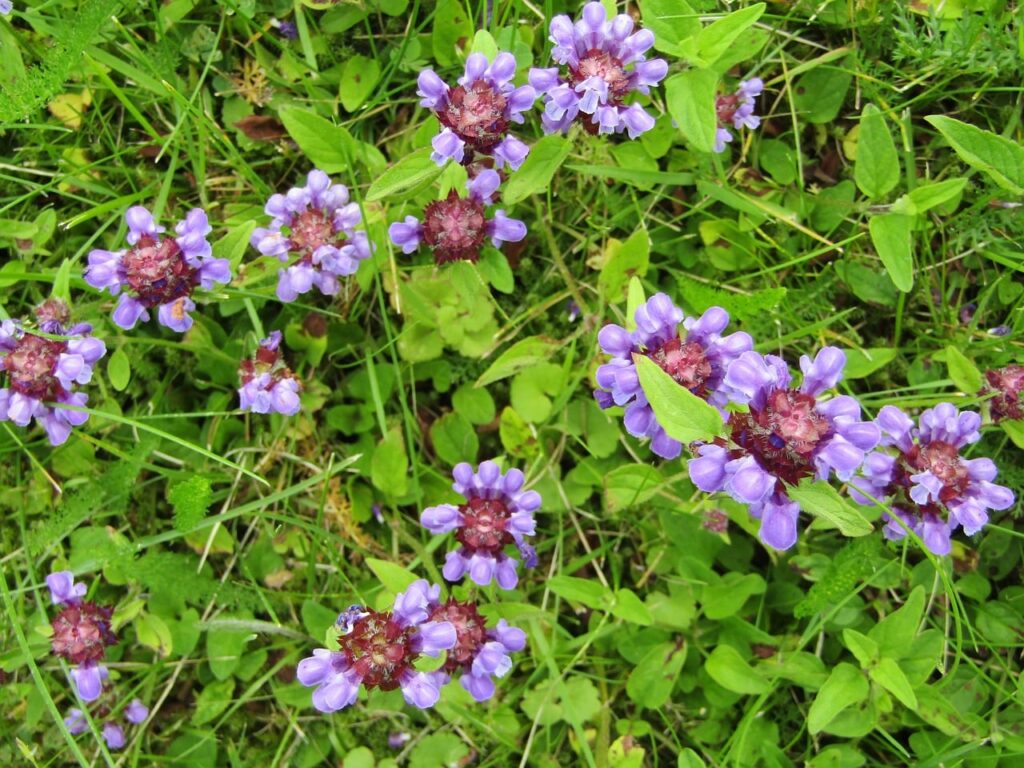
Why they’re problematic: Self-heal loves damp conditions and spreads rapidly in poorly drained lawns. The creeping stems root wherever they touch soil, creating expanding patches. It’s persistent and difficult to eliminate once established.
How to remove them: Improve drainage through aeration. Raise mowing height to encourage grass competition. Selective weedkillers work on self-heal. Hand removal is effective for small patches. Prevention through better drainage and lawn vigour is more effective than reactive treatment.
9. Creeping Thistle (Cirsium arvense)
How to identify: Spiny, lobed leaves and purple thistle flowers on tall stems. Unlike other lawn weeds, creeping thistle grows upright rather than flat, making it very obvious. Spreads through extensive underground rhizomes that send up new shoots across wide areas.
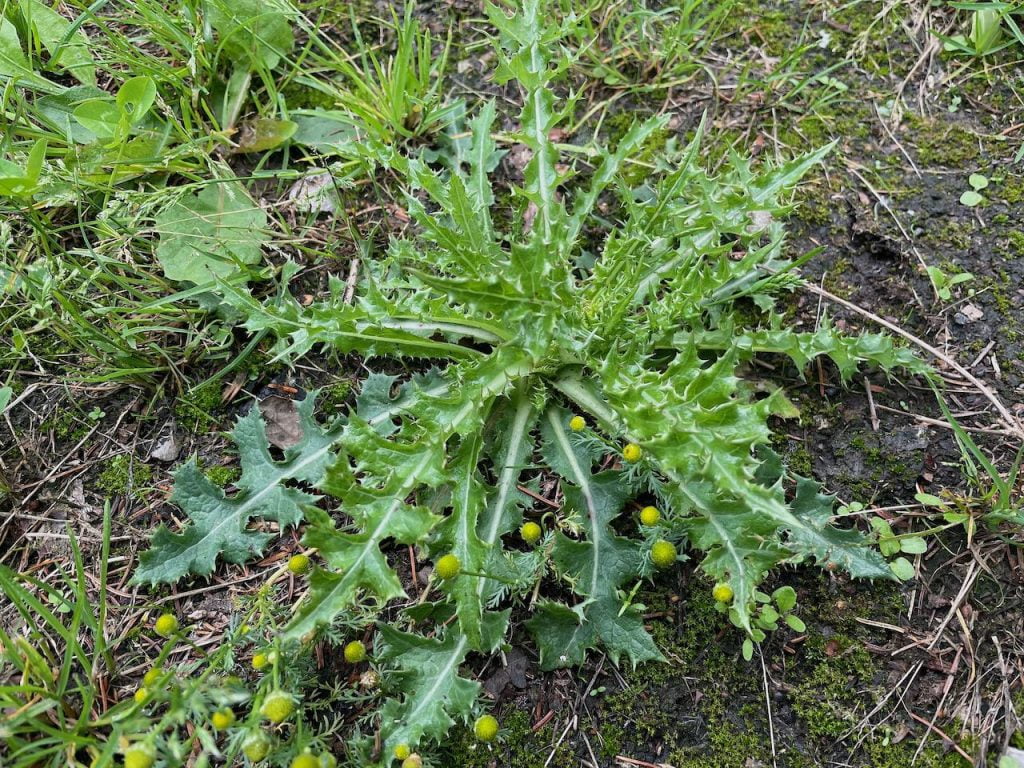
Why they’re problematic: The extensive underground root system means one plant can colonise large areas. Mowing just removes the tops whilst roots remain active underground. The spiny leaves make lawns unpleasant to use. It’s genuinely one of the most difficult lawn weeds to eradicate completely.
How to remove them: Systemic weedkillers that travel to roots are essential. Spot treat with glyphosate (which will kill grass too, requiring reseeding, and you need to read why I never use it here) or use selective thistle killers. Repeated applications may be necessary. Dig out roots where practical, but they break easily and regenerate. This is one weed where persistence and patience are absolutely essential.
10. Mind-your-own-business (Soleirolia soleirolii)
How to identify: Tiny bright green leaves forming dense, moss-like mats. The leaves are almost circular, only a few millimetres across. It spreads rapidly through tiny stems that root continuously. Often escapes from pots or borders into lawns, especially in shady, damp areas.
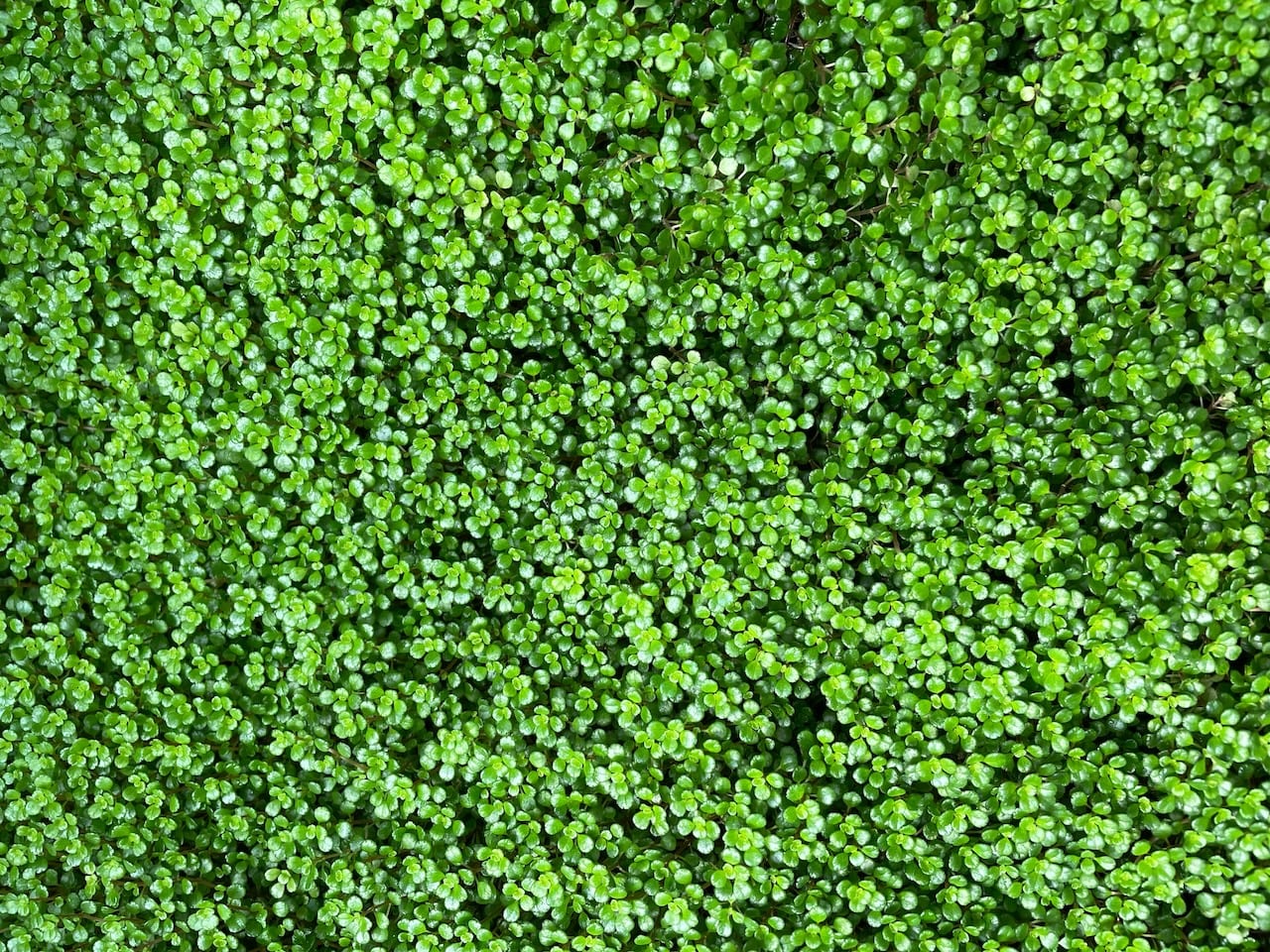
Why they’re problematic: Mind your own business (also called baby’s tears) forms impenetrable mats that smother grass completely. It thrives in shade and moisture, conditions where grass struggles. Removal is exceptionally difficult because the tiny stems break easily, and each fragment can regenerate.
How to remove them: Honestly? This is the hardest weed on the list to remove from lawns. Glyphosate works but kills grass too. Hand removal is nearly impossible due to the delicate, regenerative nature. Improving light levels and drainage helps grass compete. Sometimes the only practical solution is accepting it in heavily shaded areas where grass won’t thrive anyway. Consider alternatives to grass in these zones, as detailed in my alternatives to lawns guide.
Quick Reference Weed Identification Table
| Weed Name | Flower Colour | Key Identifier | Best Control Method |
|---|---|---|---|
| Dandelion | Yellow | Fluffy seed head, jagged leaves | Daisy grubber to remove entire tap root |
| Daisy | White/yellow centre | Spoon-shaped leaves, closes at night | Hand fork or daisy grubber, selective weedkiller |
| White Clover | White globe | Three-part leaves with chevron | Consider keeping it, or increase nitrogen feeding |
| Creeping Buttercup | Glossy yellow | Three-lobed leaves, surface runners | Improve drainage, selective weedkiller |
| Greater Plantain | Greenish spike | Broad ribbed oval leaves | Fork out, address compaction |
| Yarrow | White/pink clusters | Feathery fern-like leaves, aromatic | Selective weedkiller with MCPA, improve moisture |
| Speedwell | Blue/white/pink tiny | Small serrated leaves, mat-forming | Improve lawn vigour, selective weedkiller |
| Self-heal | Purple-blue spike | Square stems, oval paired leaves | Improve drainage, selective weedkiller |
| Creeping Thistle | Purple thistle | Spiny leaves, upright growth | Systemic weedkiller, repeated treatments |
| Mind-your-own-business | Tiny/inconspicuous | Moss-like mat, tiny round leaves | Very difficult; improve light and drainage |
When Is the Best Time to Weed Your Lawn?
Timing your weeding efforts makes a real difference to success rates. I’ve learned over the years that a lot of wasted effort comes from tackling weeds at the wrong point in the growing season, either when the ground is too hard to extract roots cleanly, or when weeds are in seed and every plant you disturb throws up another hundred offspring.
Spring (March to May) is the most effective time for most hand weeding and selective weedkiller applications. Weeds are actively growing, roots are feeding, and the soil has usually softened after winter. Selective broadleaf weedkillers translocate through the plant most effectively when growth is vigorous. This is the window to deal with dandelions and plantain before they set seed, and to get after clover and buttercup before they extend their runners across the lawn.
Autumn (September and October) is the second-best period, particularly for persistent perennial weeds. The plant is drawing energy downward into the root system before dormancy, which means systemic weedkillers travel right to the source. Hand weeding in autumn also has the advantage of looser, moister soil. Avoid weeding during summer drought when the lawn is already stressed, or in winter when the grass is dormant, and any disturbance leaves bare patches vulnerable to moss and more weeds filling the gap.
💡 Top Tip
Never weed immediately before or after applying selective lawn weedkiller. You need the weed’s leaf surface intact for the product to be absorbed. Wait at least a week after application before mowing too, as cutting removes the treated leaf area before the chemical has fully translocated to the roots.
A Practical Guide to Selective Lawn Weedkillers
Selective lawn weedkillers are formulated to kill broadleaf weeds without harming grass, and they work remarkably well when used correctly. The key word is “correctly.” I’ve seen so many gardeners buy the right product and then apply it in the wrong conditions, wonder why it hasn’t worked, and conclude that weedkillers are useless.
The active ingredients to look for are 2,4-D (excellent for dandelions, daisies, and plantain), MCPA (good general broadleaf control), mecoprop-P (targets clover and difficult creeping weeds), and dicamba (useful for yarrow and other persistent perennials). Many commercial products contain a combination of two or three of these for broader spectrum control. Always read the label before buying to confirm the weeds you’re targeting are listed.
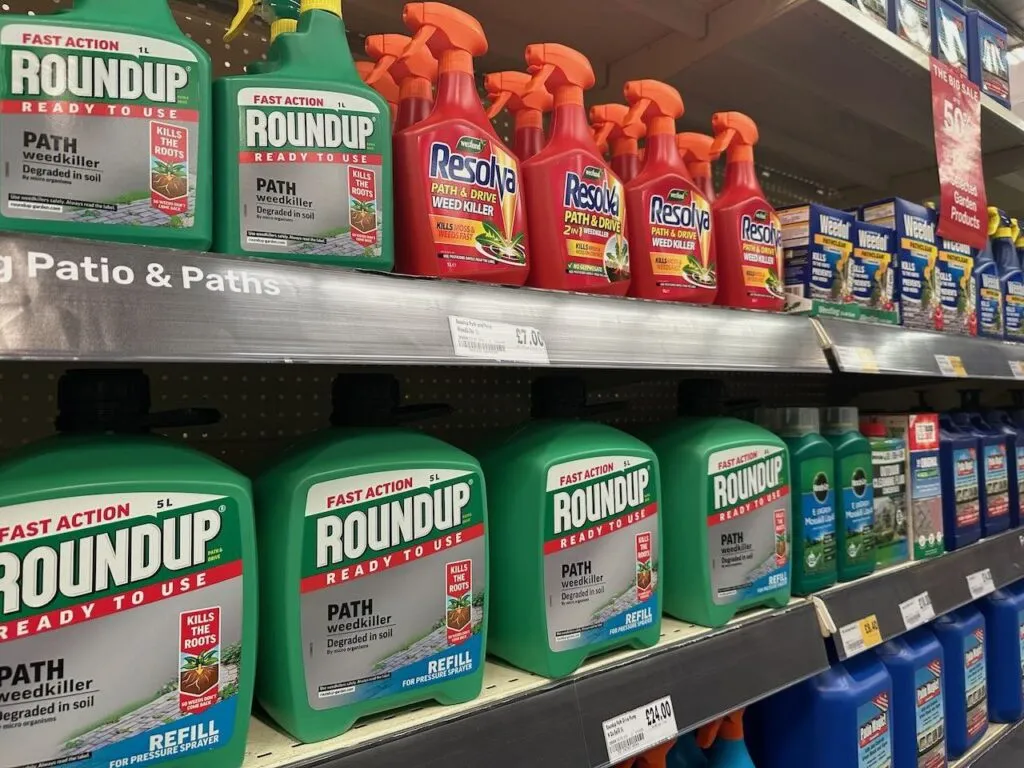
Apply weedkillers when weeds are actively growing, in mild temperatures between 10°C and 25°C, and when no rain is forecast for at least 24 hours. Applying before rain simply washes the product off before it can be absorbed. Applying in very hot or dry weather stresses the plant into semi-dormancy, which slows or prevents translocation. Morning application on a dry day is ideal. Do not apply to newly seeded lawns or to recently scarified grass, and keep children and pets off treated areas until the product has dried and rain has washed it in, as directed on the packaging.
Some weeds, particularly clover and speedwell, can be resistant to certain formulations. If you’ve had a disappointing result, it’s worth checking whether the product you used specifically lists those weeds on the label, and if not, switching to one that does. A second application four to six weeks after the first is often needed for established infestations anyway. Persistence matters more than product strength.
Prevention: The Best Weed Control
Here’s something that might sound counterintuitive: the best weed control isn’t in a bottle or a bag. It’s maintaining grass so healthy and vigorous that weeds simply cannot establish. Thick, well-fed, properly mowed grass outcompetes almost every weed on this list. Think of weeds as opportunists. They colonise gaps, thin patches, and areas where grass is struggling. Remove those opportunities, and weeds lose their foothold naturally.
This means following a proper lawn care routine: feeding three times yearly with appropriate fertiliser, mowing at the correct height for your grass type (never scalping), and aerating compacted areas annually, then scarifying to remove thatch build-up. It sounds like more work than just spraying weedkiller, and initially, it is. However, long-term, prevention through lawn health saves massive amounts of time, money, and frustration compared to constantly battling established weed populations.
💡 Top Tip
Never cut your lawn shorter than 4cm during the growing season. Scalping grass weakens it, thins the sward, and creates exactly the bare, stressed patches that weeds love. Raise your mower blades in spring and leave them there. Your lawn will thank you by being too dense for most weeds to penetrate.
When to Call in Professional Help
Most lawn weeds respond well to the methods I’ve outlined, but sometimes you need reinforcements. If you’re dealing with severe infestations covering more than 30% of your lawn, if you’ve tried everything without success, or if you simply don’t have the time or inclination to tackle it yourself, professional lawn care services can transform things relatively quickly. They have access to commercial-grade products and the experience to diagnose underlying problems you might miss, such as persistent drainage issues or soil compaction that’s the actual root cause of your weed problem.
Frequently Asked Questions
What kills weeds in lawns but not grass?
Selective broadleaf lawn weedkillers containing active ingredients such as 2,4-D, MCPA, mecoprop-P, or dicamba will kill most common broadleaf weeds without harming grass. These are available as ready-to-use sprays or concentrated liquids from most garden centres. Always check that the specific weed you’re targeting is listed on the product label, as not all formulations cover all species.
How do I get rid of weeds in my lawn naturally?
The most effective natural approach is hand weeding with a daisy grubber or hori hori knife, combined with improving lawn health through regular feeding, aeration, and correct mowing height. A thick, vigorous lawn leaves no room for weeds to establish. For persistent weeds, repeated hand removal throughout the growing season will eventually exhaust the root system on most species.
When is the best time to treat lawn weeds?
Spring (March to May) and early autumn (September to October) are the most effective periods. Weeds are actively growing in both seasons, which means selective weedkillers are absorbed and translocated most effectively. Avoid treating during summer drought, frost, or very hot weather above 25°C.
Why does my lawn have so many weeds?
A high weed count is almost always a symptom of weak or thin grass rather than an aggressive weed problem. Causes include soil compaction, low fertility, incorrect mowing height, poor drainage, or thatch build-up. Address the underlying lawn health issue and most weeds will decline naturally as the grass thickens up and outcompetes them.
Is it better to pull weeds or use weedkiller?
For small infestations and tap-rooted weeds such as dandelions, hand removal with a daisy grubber is faster, more targeted, and avoids any risk to surrounding grass. For widespread infestations of creeping or mat-forming weeds such as clover, speedwell, or buttercup, selective weedkiller is more practical. In most lawns, a combination of both methods across the season gives the best results.
Should I reseed after removing weeds?
Yes, always overseed bare patches left after weeding. Bare soil is an invitation for the next generation of weed seeds to germinate. After hand weeding, rake the area lightly to rough up the surface, apply a suitable grass seed for your conditions (shade mix, general purpose, or amenity depending on the area), and keep it consistently moist for two to three weeks until the seedlings establish. Filling gaps quickly is the single best thing you can do to prevent weeds returning.
The Bottom Line on Weed Identification
Knowing your enemy makes all the difference in lawn weed control. Each weed has specific characteristics and vulnerabilities, and using that knowledge strategically gives you far better results than random chemical warfare. Alternatively, why not help Mother Nature out and just go with the weeds?!
The real secret to weed-free lawns isn’t aggressive treatment of existing weeds, though that has its place. It’s creating conditions where grass thrives, and weeds struggle. Feed your lawn properly, mow at appropriate heights, address drainage and compaction issues, and most weed problems solve themselves naturally over time. I’ve watched countless lawns transform from weed-infested disasters to thick, healthy turf simply through consistent, proper maintenance rather than reliance on herbicides.
Happy Gardening Ninjas!
Lee.
🌿 Related Lawn Care Guides





Lee Burkhill
Lee Burkhill, known as the Garden Ninja, is an award-winning garden designer and horticulturist with over 30 years of gardening experience and 15 years as a professional garden designer. A qualified RHS (Royal Horticultural Society) professional, Lee specialises in sustainable garden design and practical horticultural advice. He designs and presents on BBC1’s Garden Rescue and in leading gardening publications. Lee combines three decades of hands-on gardening knowledge with professional design qualifications to help gardeners create beautiful, functional outdoor spaces.
View all posts by Lee Burkhill






Categories
Other posts
-

Start here: to begin your gardening journey! Read more
-
Dark Drama: Purple & Black Plants for Gothic Garden Design Ideas Read more
-
Plants for North Facing Gardens Read more
-
How to Tell When Your Garden Needs Watering: The Finger Test Method Read more
-
Trees and Their Influence on Witchcraft: Exploring Magic, Folklore & Mysticism Read more
-
How to use the colour wheel in garden design: Avoid these plant fails! Read more