-
Edimentals: Beautiful Plants You Can Actually Eat
 Lee Burkhill: Award Winning Designer & BBC 1's Garden Rescue Presenters Official Blog
There's a new phrase in the world of gardening: edimentals. Beautiful ornamental plants that you can eat. I'm going to walk you through my top plant choices that are edible and ornamental so you can make the most of of your gardens with plants that have a dual purpose!
What are edimentals? Edimentals are plants that deliver double duty in your garden by being both edible and ornamental. These stunning specimens blur the boundaries between decorative planting and productive growing, giving design-conscious gardeners the best of both worlds without compromise.
After 35 years of hands-on gardening and designing hundreds of urban gardens across the North West, I’ve witnessed a fascinating shift in how people approach their outdoor spaces. Gone are the days when you had to choose between a picture-perfect garden and one that puts food on your table.
The edible revolution is here, and I couldn’t be happier that people are growing a mix of ornamentals and edibles together. Gone are the days of beauty or productivity in garden design and planting!
In my own Garden Ninja HQ trial garden, I’ve been experimenting with edimentals for years now, and I can tell you from first-hand experience that these plants have completely transformed how I design modern gardens. Whether you’re working with a tiny courtyard in Manchester or a sprawling plot in Cheshire, edimentals offer an elegant solution to the age-old gardening dilemma: productive or pretty?
The answer, my fellow Garden Ninjas, is brilliantly both.

Why Edimentals Are Perfect for UK Gardens
The British gardening landscape has evolved dramatically. We’re no longer satisfied with boring rows of vegetables tucked away behind the shed, nor do we want purely ornamental gardens that offer nothing but a view. Modern gardeners want sustainable, functional spaces that look absolutely stunning whilst providing fresh, homegrown produce. This is precisely where edimentals excel.
Throughout my work on BBC’s Garden Rescue and in private garden design projects, I’ve seen the hunger for multi-functional planting schemes grow exponentially. People are realising that sustainability doesn’t mean sacrificing style. In fact, some of the most architecturally striking plants I specify in my designs are completely edible. From a design perspective, this opens up incredible possibilities for creating gardens with genuine year-round interest that also feed you and support wildlife.
The practical benefits are enormous, too. Edimentals typically require the same maintenance as conventional ornamentals but reward you with harvests. They integrate seamlessly into existing borders, look fantastic in contemporary planting schemes, and many are absolute bee magnets. In my experience, once clients understand what edimentals can offer, there’s no going back to purely decorative planting.
Top 10 Edimentals for UK Gardens
Based on my trial gardens and design work across diverse UK climates, here are the edimentals that consistently deliver outstanding ornamental value alongside reliable harvests. These aren’t trendy Instagram plants that look pretty for five minutes – these are tough, proven performers that have earned their place in British gardens through decades of cultivation.
1. Nasturtium (Tropaeolum majus)
Height: 30cm trailing to 3m climbing | Spread: 45-90cm | Hardiness: H3 | USDA Zones: 9-11 (grown as annual in UK)
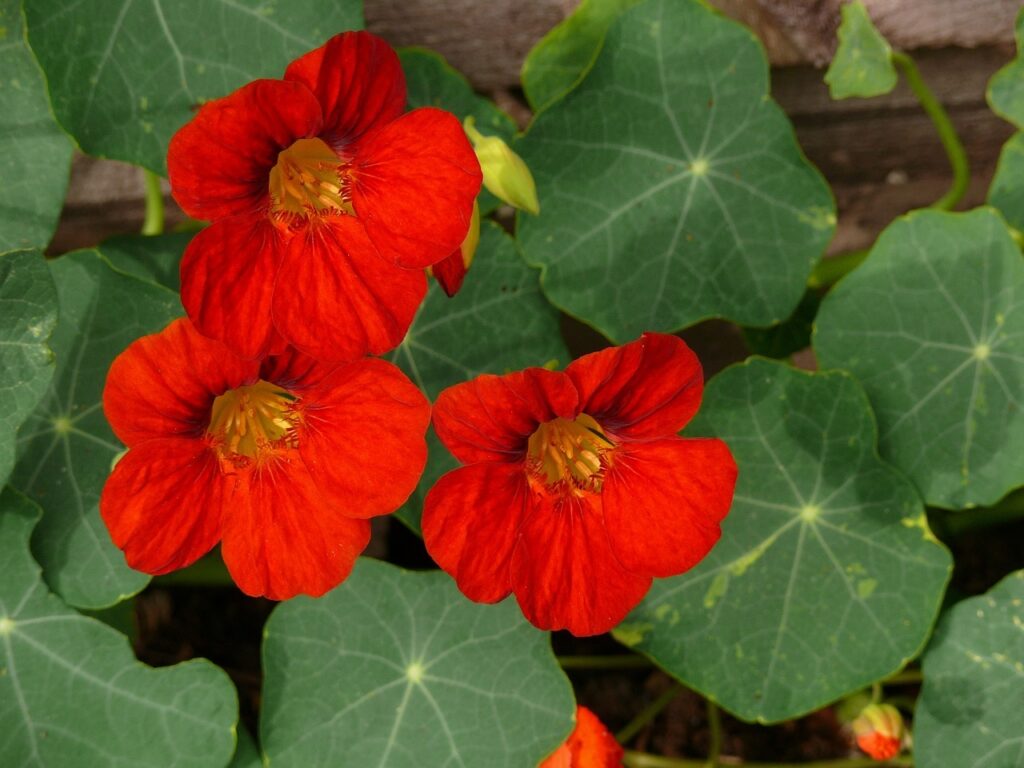
If there is a single plant that earns its place in the edimental garden on the very first day you plant it, it is Tropaeolum majus. The nasturtium is one of those rare plants where absolutely everything is edible, the leaves, the flowers, and the seeds, and yet it also happens to be one of the most vivid, cheerful, and thoroughly undemanding things you can grow in a British garden. From June right through to the first hard frosts in October, it pumps out trumpet-shaped flowers in fiery shades of orange, scarlet, yellow, and cream that would look extraordinary in any border regardless of whether a single petal was ever eaten.
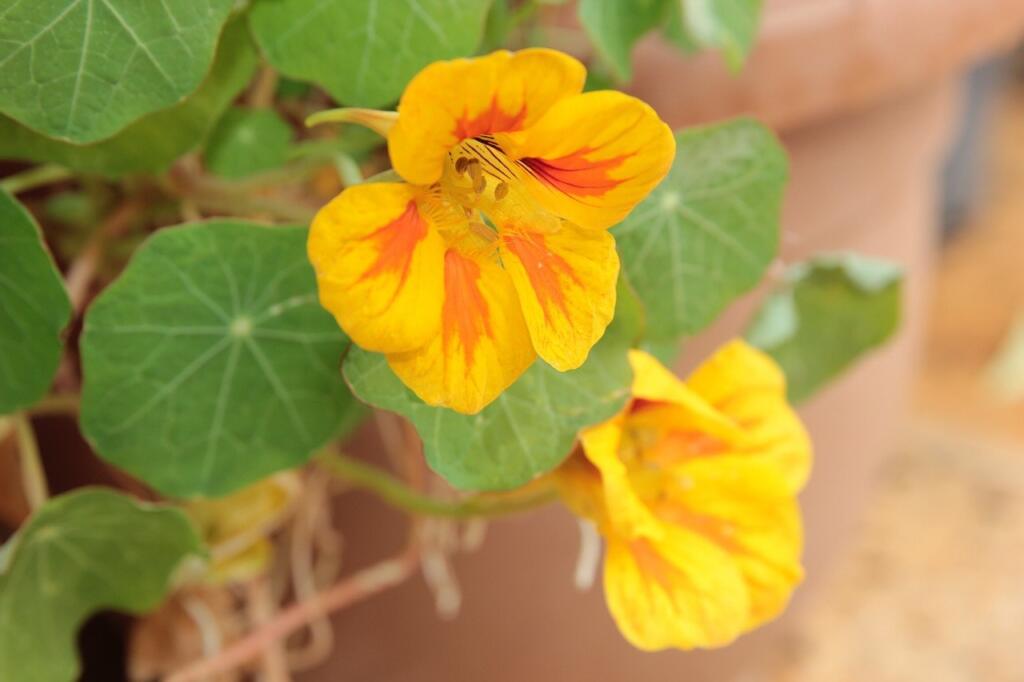
The flavour is the real revelation for most beginner gardeners. The leaves and flowers carry a peppery, watercress-like heat that transforms a basic salad into something genuinely interesting, and the unripe seeds, pickled in vinegar, are among the most convincing caper substitutes you will ever taste. Having used nasturtiums extensively in my garden design work for BBC1’s Garden Rescue and at Garden Ninja HQ, I can tell you that non-gardeners are routinely astonished when they discover that the flamboyant orange flowers trailing over a wall are not just beautiful but genuinely delicious.
From a design perspective, the trailing varieties are superb for softening hard edges, tumbling over raised beds, or filling gaps at the front of a sunny border with extraordinary speed. The climbing forms such as ‘Tall Mixed’ will scramble up a trellis or obelisk to 3m in a single season. The compact mounding varieties like ‘Alaska’, with its spectacular marbled cream-and-green foliage, work beautifully as ground cover or container plants. Nasturtiums thrive on neglect; rich soil encourages excessive leafy growth at the expense of flowers, so plant them in poor, well-drained ground, and they will flower themselves silly all summer long.
Growing Tips: Direct sow outdoors from April onwards, once the frost risk has passed, barely covering the seeds, as they need darkness to germinate. They resent root disturbance, so avoid transplanting. Deadhead regularly to prolong flowering and harvest leaves and flowers continuously once the plant establishes. Blackflies can be a problem; simply blast them off with water or allow natural predators to manage them. Leave some flowers to set seed in autumn for the following year’s free plants.
🛒 Buy Nasturtium seeds (Tropaeolum majus) on Amazon UK
2. Globe Artichoke (Cynara cardunculus var. scolymus)
Height: 1.5-2m | Spread: 1-1.5m | Hardiness: H5 | USDA Zones: 7-11
No plant in the edimental canon commands attention quite like the Globe Artichoke. This is architectural planting at its most theatrical. A true structural giant that I have used repeatedly in award-winning garden designs because nothing else delivers quite the same combination of sheer physical drama and genuine productive yield.
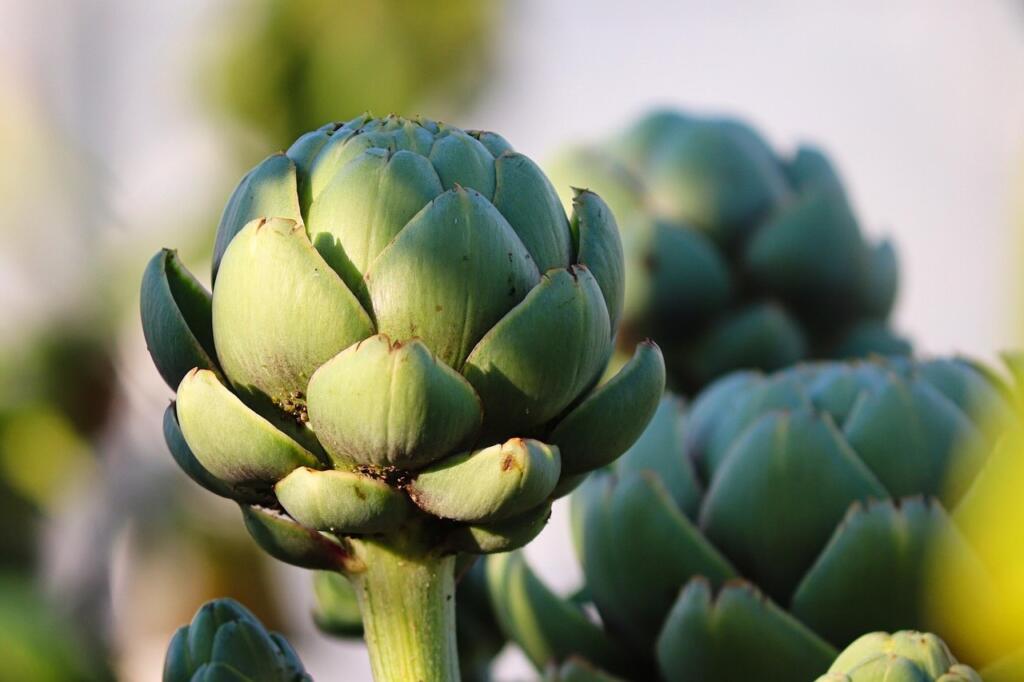
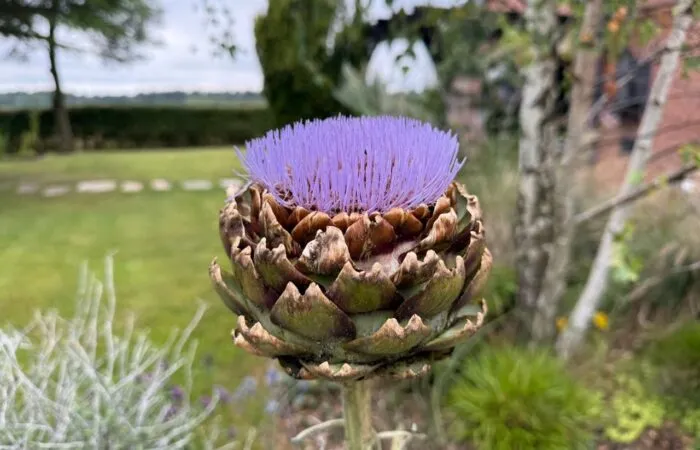
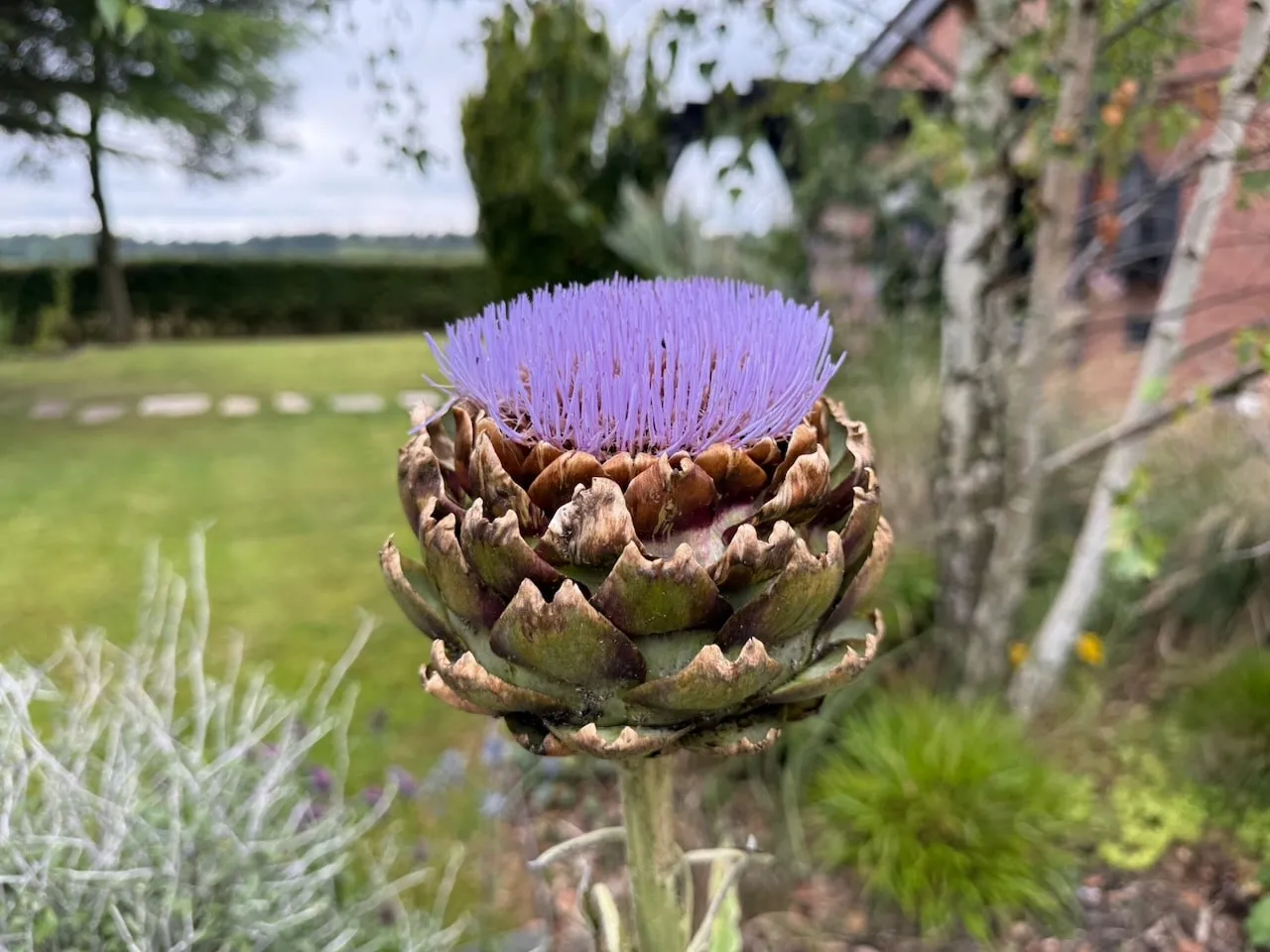
Cynara cardunculus var. scolymus produces massive rosettes of deeply cut, silvery-grey foliage that catch every available ray of light. If you allow the flower buds to develop beyond eating size, they open into enormous thistle flowers of spectacular purple that are frankly among the most beautiful things you will see in any British garden in July.
The edible part that most people know is the immature flower bud, specifically the fleshy base of each scale (called the bract) and the prized heart beneath. Steamed and served with melted butter or vinaigrette, they are one of the genuinely great pleasures of the kitchen garden. A single mature plant will produce six to eight buds in its first productive year, and established clumps will provide significantly more. The flavour is rich and nutty with a slightly smoky sweetness that has no real substitute in the vegetable world.
Plant in groups of three for maximum visual impact. The cultivar ‘Gros Vert de Laon’ is arguably the finest for flavour, whilst ‘Violetto di Chioggia’ produces beautiful purple-tinged buds and is particularly ornamental. Both are hardier than their Italian names might suggest and will survive most UK winters with a light mulch of straw around the crown.
Growing Tips: Plant in full sun in rich, well-drained soil and give it generous space. Water regularly during dry spells and feed with a balanced fertiliser in spring. Cut down the foliage in late autumn and mulch crowns to protect from frost. Divide established plants every 3-4 years, replanting offsets (called suckers) in spring to maintain productivity. Harvest buds before the scales begin to open, once they show purple at the tips you are at the optimum eating stage.
🛒 Buy Globe Artichoke (Cynara) on Amazon UK
3. Rainbow Chard (Beta vulgaris subsp. cicla)
Height: 40-60cm | Spread: 30cm | Hardiness: H5 | USDA Zones: 6-10
Rainbow Chard might be the most underrated edimental in British horticulture. Beginner gardeners often overlook it because it sits quietly in the vegetable category in their minds. Yet, when you actually stand in front of a well-grown clump of Beta vulgaris ‘Rainbow Chard’, the experience is genuinely surprising.
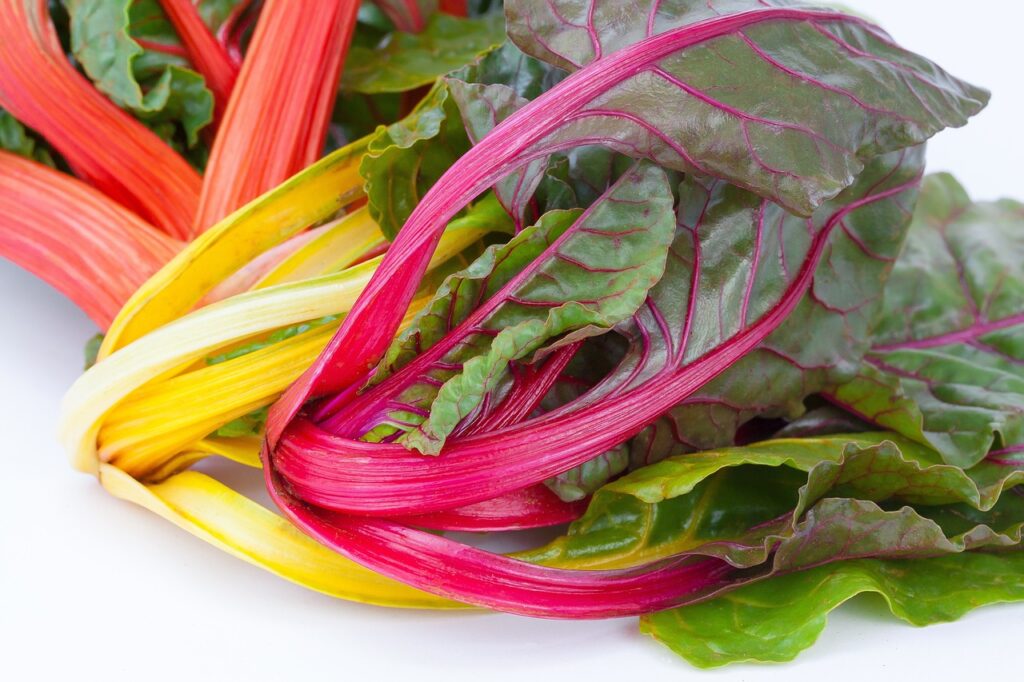
The stems blaze in crimson, golden yellow, hot orange, and shocking pink, a colour range that rivals any ornamental annual you care to name. At the same time, the large, blistered leaves create a lush, almost tropical foliage effect that looks extraordinary in borders from spring right through to the first hard frosts.
From a productivity standpoint, chard is one of the most generous cut-and-come-again vegetables available to British gardeners. A single sowing in spring will provide continual harvests for six months or more, with young leaves adding a mild, spinach-like flavour to salads and older leaves holding up beautifully to wilting, stir-frying, or adding to pasta dishes. The coloured stems, which are thicker and more substantial than those of ordinary spinach, can be cooked separately and carry a mild, earthy sweetness. Nothing is wasted, and the more you harvest, the more it produces.
Growing Tips: Sow directly from March to July in any reasonable, moisture-retentive soil in sun or partial shade. Thin seedlings to 30cm apart. Begin harvesting outer leaves once the plant has established itself; always leave the central growing point intact. Water regularly during dry spells to prevent bolting. A second sowing in August will provide leaves well into winter. Remarkably tolerant of challenging conditions, including partial shade, clay soils, and exposed positions.
🛒 Buy Rainbow Chard seeds on Amazon UK
4. Society Garlic (Tulbaghia violacea)
Height: 50-60cm | Spread: 30cm | Hardiness: H3-H4 | USDA Zones: 7-10
Society Garlic is one of those plants that earns its edimental credentials with quiet, sustained excellence rather than theatrical drama, and it thoroughly deserves more attention than British gardeners currently give it. Tulbaghia violacea produces slender, strap-like foliage and elegant tubular flowers in soft lilac-pink on tall stems from June right through to October.
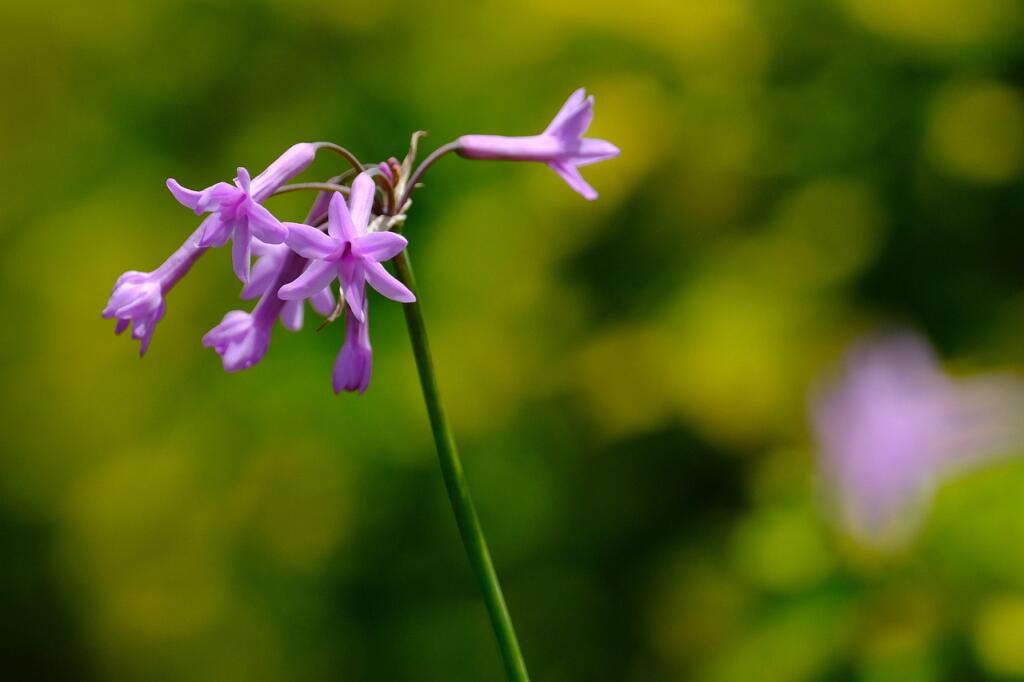
A flowering season that puts many purely ornamental plants to shame. The flower clusters bear a striking resemblance to Agapanthus, which gives the plant an instant air of Mediterranean sophistication in the border.
The edimental magic of Society Garlic lies in its flavour profile, which is perhaps its most valuable characteristic. The leaves, flowers, and stems all carry a subtle but unmistakable garlic flavour that, crucially, does not linger on the breath, hence the common name. For those who love garlic in cooking but find the social consequences of raw garlic leaves somewhat limiting, Society Garlic is a genuinely useful solution. Snip the leaves into salads, add the flowers as a garnish, or chop the stems into dressings and marinades where their flavour integrates beautifully without overpowering.
Growing Tips: Plant in full sun in well-drained soil,;it will struggle and potentially rot in cold, waterlogged positions over winter. In colder regions, grow in containers that can be brought under glass for the coldest months, or mulch crowns generously with grit and straw in autumn. Divide established clumps every 3-4 years in spring to maintain vigour and increase stock. Harvest leaves and flowers throughout the growing season; regular cutting actually encourages fresh, productive growth.
🛒 Buy Society Garlic (Tulbaghia violacea) on Amazon UK
5. Runner Bean ‘Painted Lady’
Height: 2-2.5m | Spread: 30cm | Hardiness: H2 (grown as annual) | USDA Zones: 10-12 (annual in UK)
The ‘Painted Lady’ runner bean is a genuine piece of British horticultural history, a Victorian cottage garden classic that has been grown in this country for well over two centuries and shows absolutely no signs of going out of fashion. Runner Bean ‘Painted Lady’ is the bicolour variety that produces the most extraordinarily beautiful flowers of any climbing bean, each bloom displaying a combination of salmon-pink and white that is genuinely unlike any other runner bean flower available.
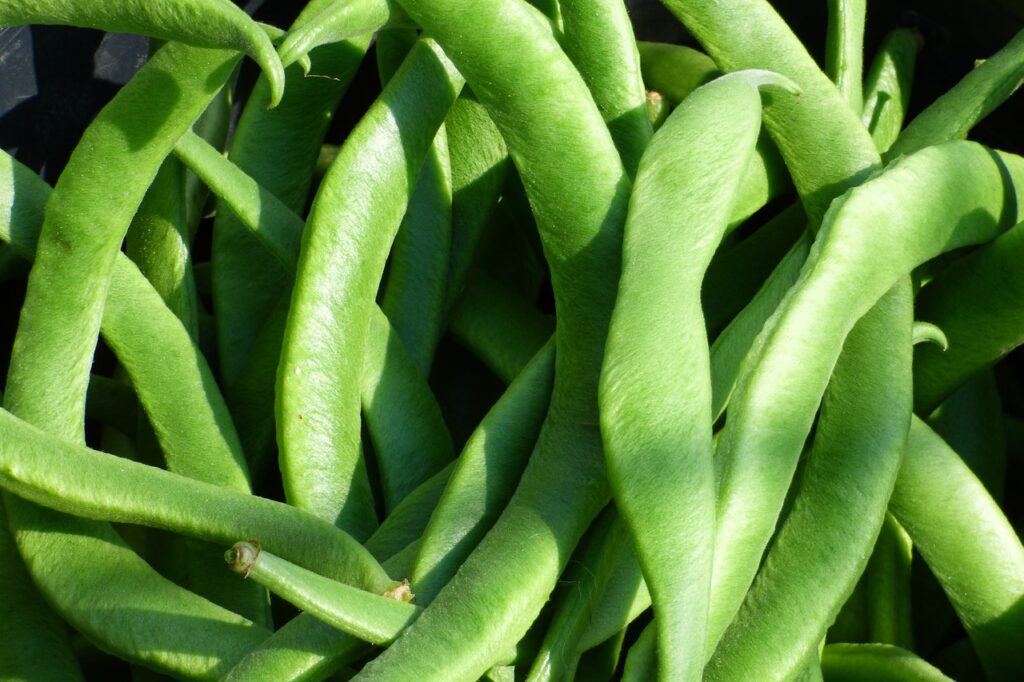
From June through to September, a well-grown wigwam or row of ‘Painted Lady’ is nothing short of spectacular, a living screen of bold, tropical-looking foliage covered in hundreds of exquisite bicolour blooms.
The practical credentials are equally impressive. ‘Painted Lady’ produces an excellent crop of full-sized runner beans with the characteristic sweet, slightly beany flavour that British summer cooking depends on. A single wigwam of five or six plants will provide more beans than most families can eat throughout the season, and the more you harvest, the more the plant produces. Pick regularly, and it will not stop flowering and cropping until the first frosts cut it down. The beans freeze exceptionally well, meaning a good summer’s growing can stock your freezer for months.
Growing Tips: Sow indoors in April, or direct sow outside in May after the frost risk has passed, planting seeds 5cm deep and 15cm apart. Erect a sturdy support structure before planting, as mature plants are extremely heavy when laden with beans. Water copiously during dry spells; irregular watering leads to beans failing to set. Feed with a high-potash liquid fertiliser once flowering begins. Pick beanswhen they aret 15-20cmlong, before they become stringy and tough.
🛒 Buy Runner Bean ‘Painted Lady’ seeds on Amazon UK
6. Day Lily (Hemerocallis)
Height: 60-100cm | Spread: 60-90cm | Hardiness: H7 | USDA Zones: 3-10
The Day Lily is one of those stalwart herbaceous perennials that British gardeners have grown in borders for generations. Still, the vast majority have no idea that virtually every part of the plant is edible. Hemerocallis has been used as a food plant in China and Japan for thousands of years, where it is considered a delicacy rather than a curiosity.
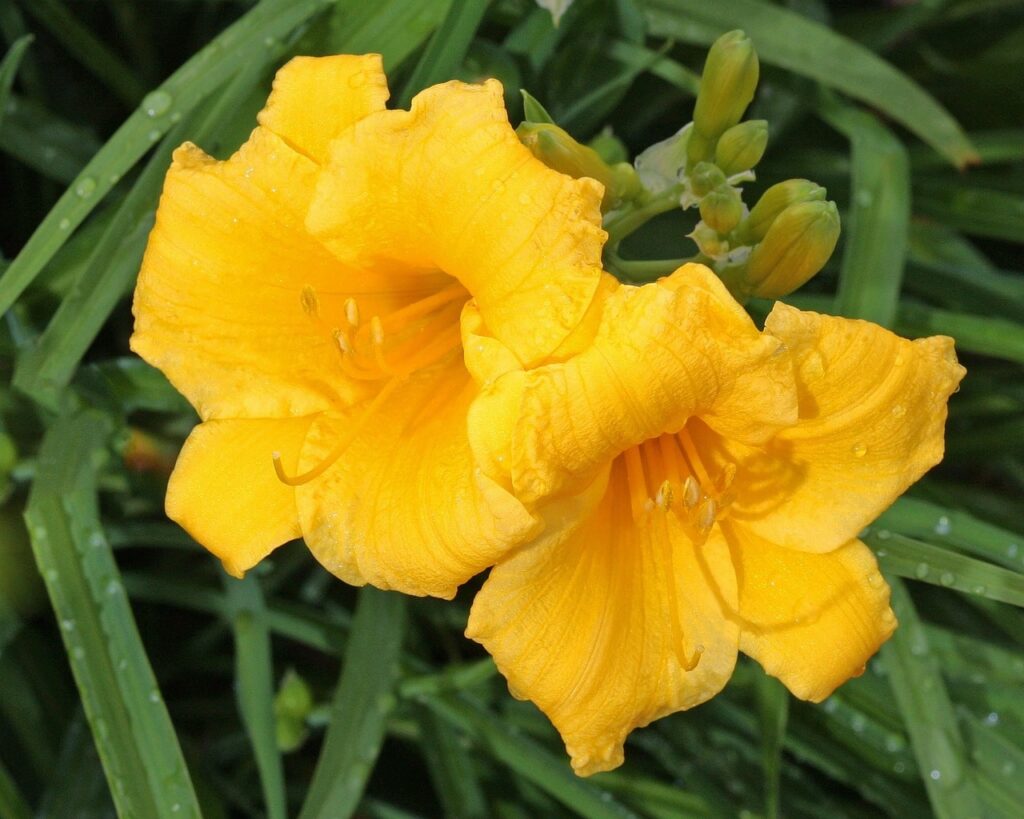
The young emerging shoots in spring can be eaten like asparagus, the flower buds have a pleasing crunchy texture when eaten fresh or lightly cooked, and the open petals make one of the most striking garnishes available to any cook, adding genuine visual dimension to salads and desserts with their extraordinary range of colours from palest cream through deep burgundy.
Ornamentally, the Day Lily is one of the most reliable and versatile perennials in the British garden. The bold, strap-like foliage creates excellent architectural presence from early spring, and, as the name suggests, the flowers, each lasting just a single day, are produced in such continuous succession that a well-chosen variety can be in bloom for six weeks or more. Plant a succession of early, mid-season, and late-flowering varieties, and you can have Day Lilies in bloom from June through to September. The colour range available is extraordinary, from the classic burnt orange of the species through to near-black, vivid pink, and the palest butter yellow.
Note: Day Lilies are toxic to cats; keep this in mind if you have feline companions in the garden.
Growing Tips: Plant in spring or autumn in any reasonable soil in sun or partial shade. Divide congested clumps every 4-5 years in spring or autumn to maintain vigour and increase your stock. Water during dry spells whilst establishing. For edible use, harvest flower buds just as they are beginning to show colour and open petals in the morning, whilst they are at their freshest. The leaves can be harvested in spring when the young shoots are just emerging.
🛒 Buy Day Lily (Hemerocallis) on Amazon UK
7. Chicory (Cichorium intybus)
Height: 90-120cm | Spread: 30-45cm | Hardiness: H6 | USDA Zones: 3-9
Chicory is one of the most spectacularly underused edimental plants in British horticulture, and every year I find myself urging gardeners to stop overlooking it. Cichorium intybus produces some of the most intensely vivid blue flowers of any plant that will grow reliably in the UK, a sky-blue of extraordinary clarity that sits at the top of tall, branched stems from July through to September, providing a wildflower aesthetic that no cultivated blue annual can quite match. It is the sort of blue that makes you stop walking and genuinely stare.
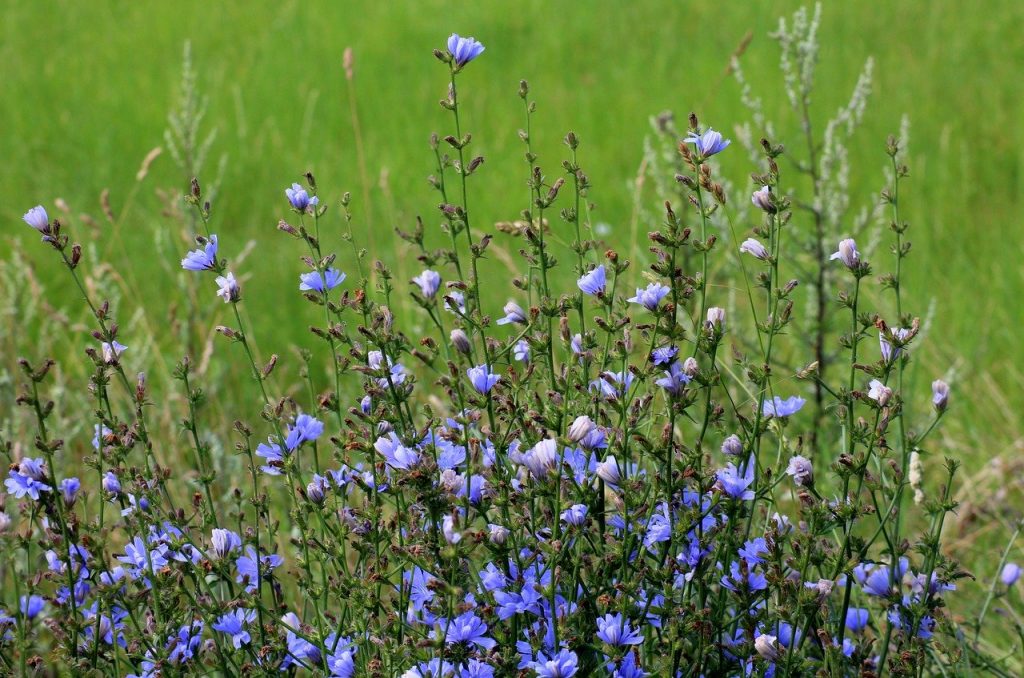
The ornamental qualities extend beyond the flowers. The grey-green basal foliage creates good ground cover early in the season, and the upright, branching stems create an airy structural presence in the border that allows other plants to be seen through it, a quality that garden designers prize enormously. In prairie-style and naturalistic planting schemes, chicory is absolutely invaluable, combining the wildflower aesthetic with an architectural presence that purely ornamental plants at this height often lack.
Growing Tips: Sow directly in spring in full sun on well-drained soil in any reasonable soil. Chicory is extremely drought-tolerant once established and will self-seed moderately in suitable conditions, giving you a self-sustaining colony over time. For forced chicons, lift roots in October, cut back foliage to 2-3cm, and pot individually in deep pots filled with compost. Cover to exclude all light and keep at 10-18°C. Harvest the pale chicons after 3-4 weeks.
🛒 Buy Chicory (Cichorium intybus) on Amazon UK
8. Borage (Borago officinalis)
Height: 60-90cm | Spread: 45cm | Hardiness: H6 | USDA Zones: 2-11
Borage is the edimental that beginners fall in love with the moment they first grow it, and it is entirely easy to understand why. Borago officinalis produces some of the most strikingly beautiful blue star-shaped flowers in British horticulture, a vivid, almost electric blue of extraordinary intensity, continuously from June through to the first frosts.
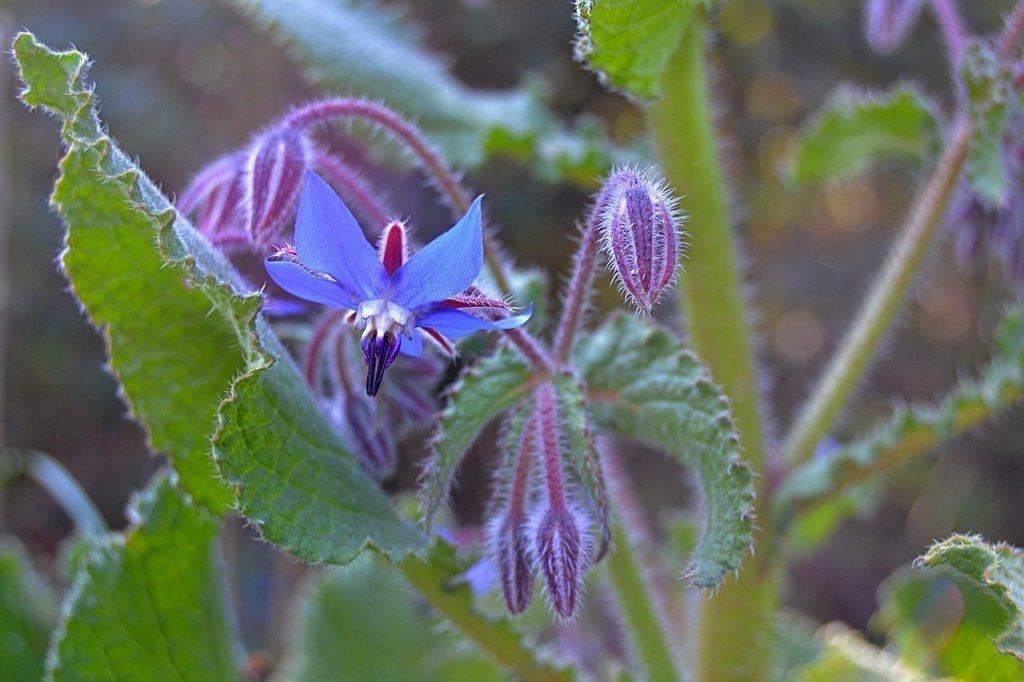
Each flower is a small masterpiece of botanical engineering, with petals arranged in a perfect star around a cone of black anthers, and the fact that they are produced in such extraordinary profusion means the plant is perpetually covered in blooms throughout its entire growing season.
The bee attraction of borage is genuinely remarkable and worth emphasising. I have never planted it anywhere without it immediately becoming one of the most visited plants in the garden by honeybees, bumblebees, and hoverflies; its reputation as one of the finest pollinator plants in British horticulture is thoroughly deserved. If you want to do one thing to support your local bee population this year, grow borage.
Edibly, borage is a delight. The flowers taste of cool cucumber and are most famously used floating in a glass of Pimm’s, an association so embedded in British summer culture that it practically constitutes a tradition. But they are equally at home crystallised as cake decorations, frozen into ice cubes for drinks, or scattered over salads where their intense colour provides a genuinely stunning garnish. The young leaves, which also carry the cucumber flavour, can be added to salads, yoghurt dressings, or infused in water as a cooling summer drink.
Growing Tips: Direct sow in spring where you want the plants to flower, barely covering seeds. They grow quickly and will be in flower within eight to ten weeks of sowing. Deadhead regularly to prolong flowering, though some seedheads left to ripen ensure next year’s free plants. Thrives in poor soil in full sun but tolerates light shade. Stems can become floppy at height. Insert a single stake alongside each plant early in the season to provide discreet support.
🛒 Buy Borage (Borago officinalis) on Amazon UK
9. Courgette ‘Romanesco’
Height: 60-90cm | Spread: 90-120cm | Hardiness: H2 (grown as annual) | USDA Zones: 3-10 (annual in UK)
The standard courgette is already one of the most productive plants in any British kitchen garden, but Courgette ‘Romanesco’ elevates the genus into genuinely ornamental territory. This Italian heirloom variety produces sculptural, deeply ridged fruits of pale grey-green that are considerably more beautiful than any standard courgette. Still, the real ornamental spectacle lies in the plant itself.
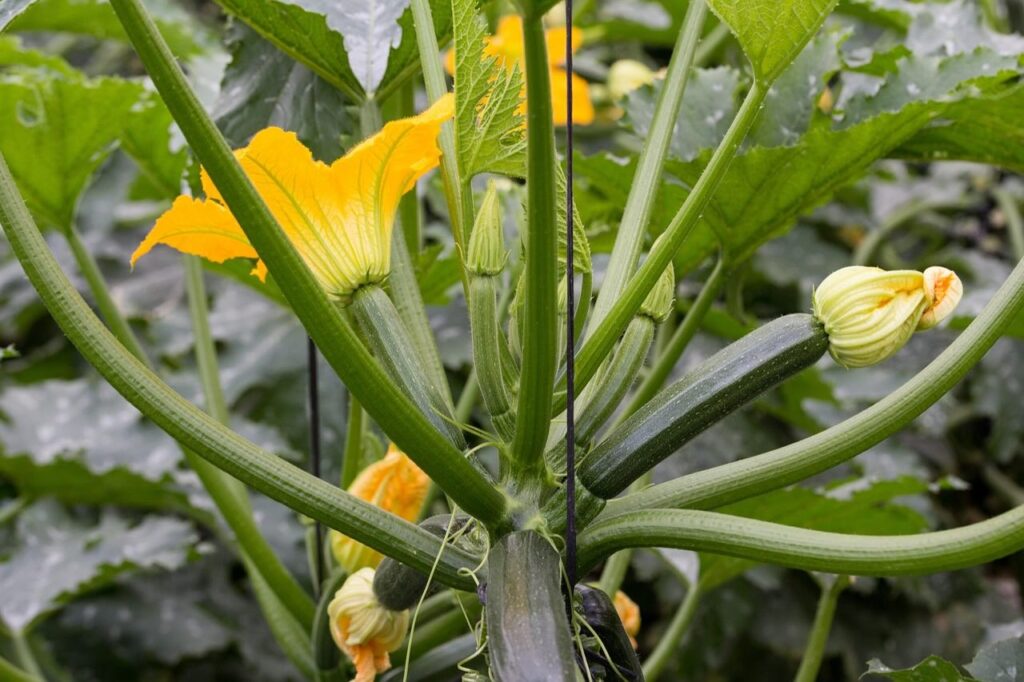
The enormous, deeply lobed architectural leaves, easily 60cm across on a mature plant, create a lush, almost tropical effect that is genuinely dramatic in any kitchen garden or ornamental border. When the spectacular golden-yellow trumpet flowers open in succession throughout summer, each one 12-15cm across and glowing in morning light, the plant makes a truly bold statement that no purely decorative annual of comparable size can quite rival.
The eating quality of ‘Romanesco’ is superior to most modern courgette varieties. The fruits have denser, nuttier flesh with considerably more flavour than commercial varieties, and the ribbed shape means they hold their structure beautifully in cooking, roasted, grilled, or stuffed whole. The male flowers, which appear in greater abundance than the females and can be harvested without reducing the crop, are among the great delicacies of Italian summer cooking, stuffed with ricotta and fried in a light batter, or simply sliced into pasta with olive oil and garlic.
Growing Tips: Sow indoors in April in individual deep pots, or direct outside in late May after all frost risk has passed. Plant out with generous spacing of at least 90cm in all directions. Feed weekly with a high-potash liquid fertiliser once the first flowers appear and water copiously; inconsistent watering causes poor fruit set. Harvest fruits at 15-20cm before they develop into marrows. Pick male flowers (those without a small fruit behind them) in the morning whilst they are fully open.
🛒 Buy Courgette ‘Romanesco’ seeds on Amazon UK
10. Cavolo Nero (Tuscan Kale)
Height: 60-90cm | Spread: 45cm | Hardiness: H5 | USDA Zones: 7-11
Cavolo Nero, also known as Tuscan Kale, Black Kale, or Dinosaur Kale, is the edimental that has genuinely changed how many British gardeners think about what vegetables can look like in a garden. Cavolo Nero produces long, strap-shaped leaves of the most extraordinary dark blue-green, heavily blistered and puckered with a texture that is almost prehistoric in its drama, the ‘Dinosaur Kale’ name is thoroughly earned.
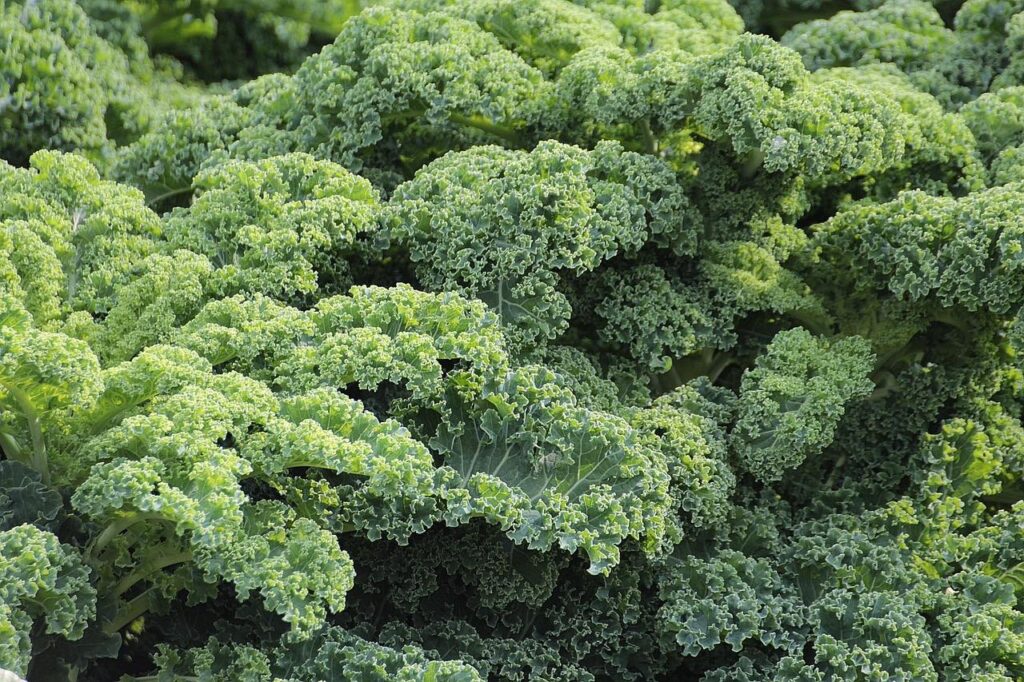
Growing to 90cm on strong upright stems, a row of established plants creates a genuinely bold structural statement in the winter garden at precisely the time when most other plants have retreated below ground.
The winter interest is one of Cavolo Nero’s greatest edimental qualities. As temperatures drop, the leaves actually improve in flavour; the frost converts stored starches into sugars, producing a sweeter, more complex flavour that out-of-season kale simply cannot match. This means that at the point when the plant looks most dramatically beautiful in the garden, standing dark and structural against frost or snow, it is simultaneously at the absolute peak of its culinary qualities. Few plants anywhere in horticulture manage to achieve both of these things simultaneously.
The versatility of Cavolo Nero as a food is exceptional. The young inner leaves add a robust, deeply savoury flavour to salads. Larger leaves are perfect for the now-ubiquitous kale chips, for adding to soups and stews (it is the essential ingredient in the classic Tuscan ribollita), or for wilting as a side dish with olive oil and garlic. It is genuinely one of the most nutritious vegetables available to British kitchen gardeners, and the fact that it provides this nutrition precisely when fresh garden vegetables are at their scarcest makes it doubly valuable.
Growing Tips: Sow from March through to June for a succession of harvests spanning autumn through to spring. Sow indoors or in a seedbed, then transplant at the four-leaf stage, spacing plants 45cm apart in all directions. Firm the soil well around roots to prevent rocking in the wind. Begin harvesting outer leaves once plants arwell-establisheded, always working from the bottoupds. A single plant will produce leaves for six months or more from a single sowing.
🛒 Buy Cavolo Nero seeds on Amazon UK
11. Cardoons (Cynara cardunculus)
Height: 1.5-2m | Spread: 1-1.5m | Hardiness: H5 | USDA Zones: 7-10
If you have only ever grown the Globe Artichoke and thought that constituted genuinely architectural kitchen-garden planting, allow me to introduce you to its magnificent, even more dramatic relative. Cynara cardunculus, the Cardoon, is arguably the most spectacular large-scale edimental available to British gardeners, producing enormous rosettes of deeply dissected, silvery-grey leaves that can reach 1.5m across.
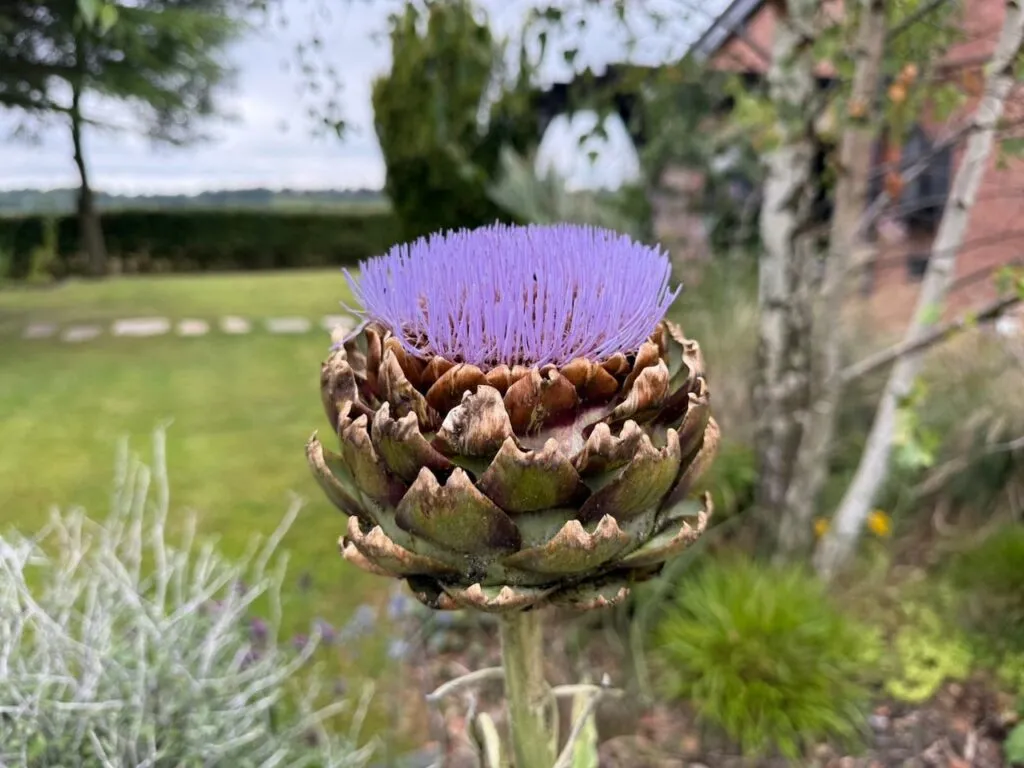
The individual leaves are spectacularly architectural, long, arching, and serrated with a silvery-white down on their undersides that catches sunlight with extraordinary effect. In July and August, towering flower stems rise to 2m and beyond, topped with magnificent purple thistle flowers, among the largest and most dramatic in British horticulture.
The Cardoon has a distinguished culinary history in Mediterranean cooking that has somehow bypassed most British gardeners entirely. The edible part is the blanched leaf stalk, not the head as with the artichoke, but the fleshy, pale inner stems, which, when earthed up or wrapped to exclude light for three to four weeks in autumn, develop a tender, artichoke-like flavour that is genuinely delicious. The process of blanching is straightforward: tie the stems together, wrap in cardboard or hessian, and wait. The result is a vegetable with considerable culinary versatility, braised in butter, added to gratins, or served as the star of a rich meat stew.
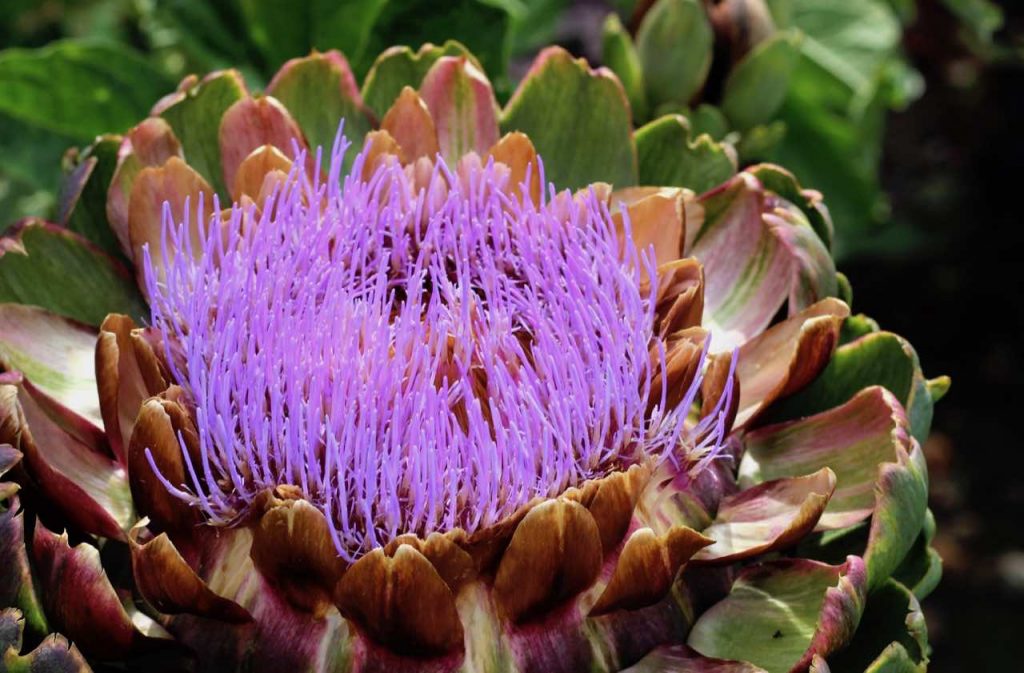
As a purely ornamental plant, the Cardoon is one of the very finest large-scale architectural specimens available. I have used it as a bold structural focal point in large herbaceous borders, as a dramatic specimen plant in gravel gardens, and as the central element of large containerised arrangements on terraces. Its silvery foliage works beautifully against dark brick walls and creates stunning contrast with purple-leaved plants like Cotinus or Sambucus.
Growing Tips: Plant in full sun with rich, deeply cultivated, well-drained soil. Give a generous space of at least 1.5m in all directions. Water copiously throughout the growing season and feed monthly with a balanced fertiliser. To blanch for eating, tie the stems loosely together in early autumn, then wrap them in cardboard or hessian and secure with string. Blanch for 3-4 weeks before harvesting. Mulch crowns generously in autumn to protect from frost.
🛒 Buy Cardoon (Cynara cardunculus) on Amazon UK
12. Chives (Allium schoenoprasum)
Height: 25-30cm | Spread: 30cm | Hardiness: H7 | USDA Zones: 3-9
If I had to choose just one edimental for a complete beginner, someone who has never grown anything edible before and is genuinely uncertain whether they can keep a plant alive, I would choose Allium schoenoprasum without a moment’s hesitation.
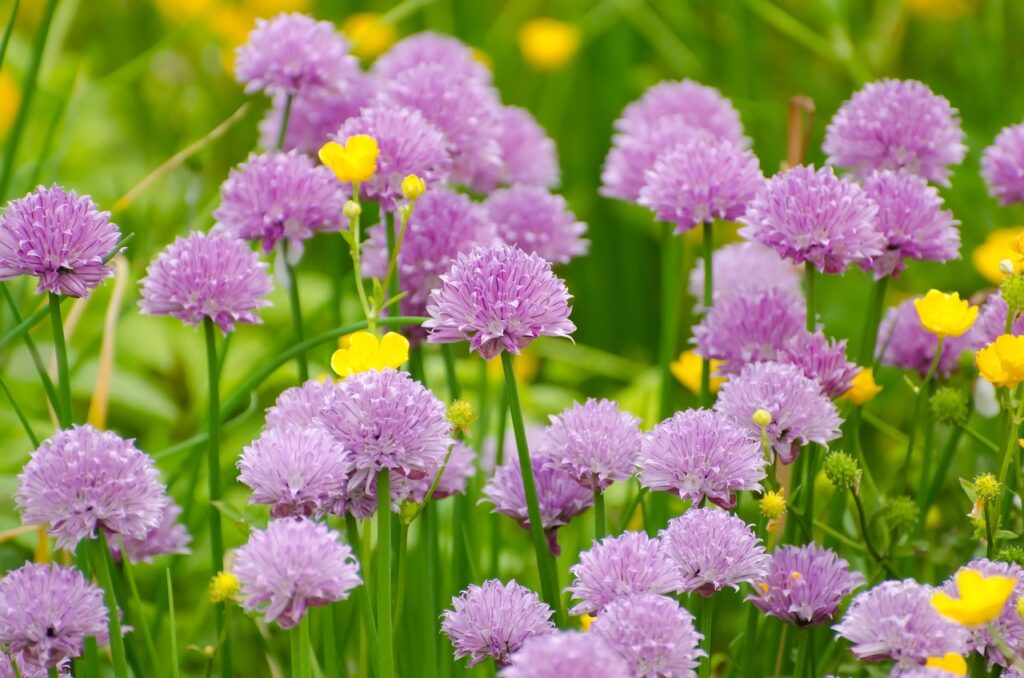
Chives are virtually indestructible, completely hardy throughout the UK, productive from the moment the leaves emerge in early spring, and in May and June, they produce the most charming purple pompom flowers that are among the best pollinator plants of any herb, genuinely beloved by bees, hoverflies, and butterflies in extraordinary numbers.
The flowers, which carry a mild onion flavour, are also edible and make one of the most attractive garnishes available; scattered over a salad or soup,, they add both flavour and visual interest.
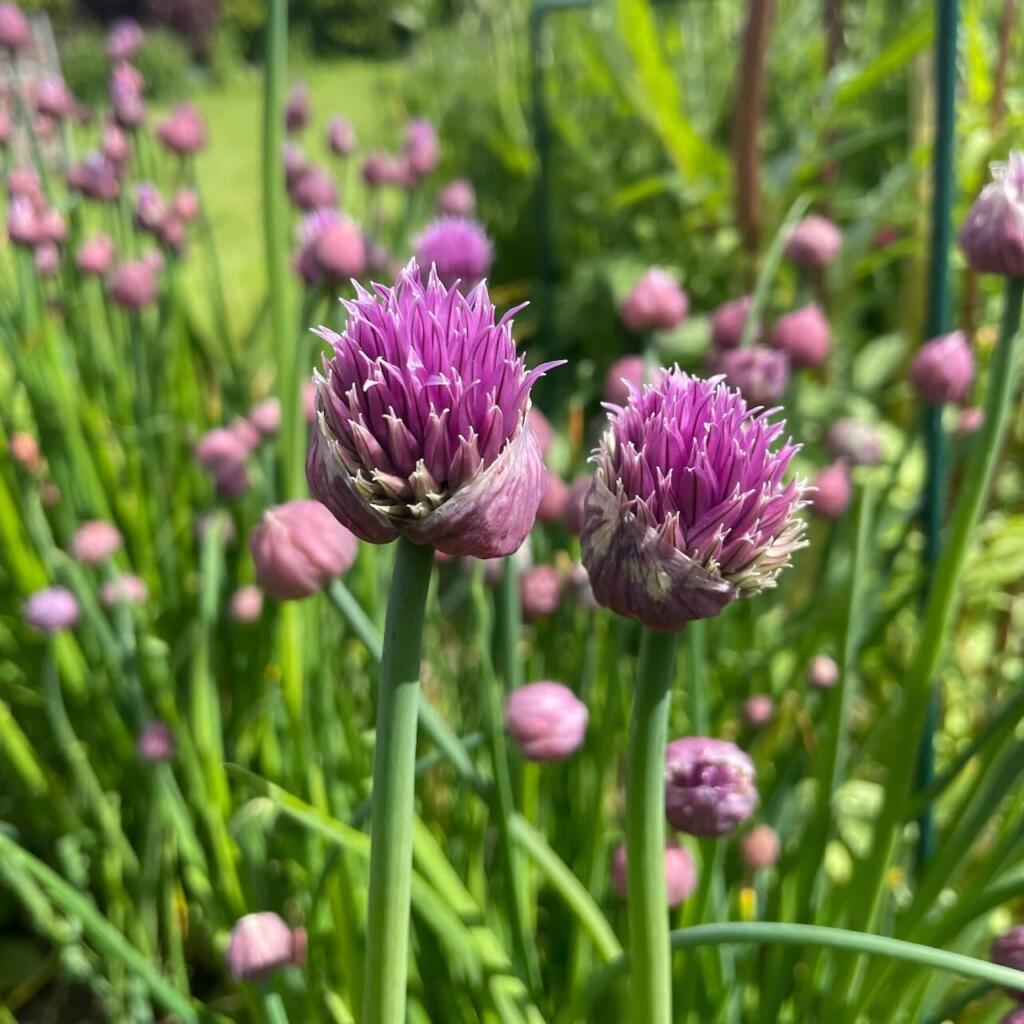
The culinary uses for chives are so extensive and so familiar that listing them almost feels superfluou. Still, itt is worth noting that the continuous snipping required by the kitchen actually benefits the plant; regular harvesting encourages fresh, tender new growth and prevents the clump from becoming woody and unproductive. After flowering, cut the entire clump back to 5-8cm above ground level, and it will regrow vigorously, providing a second flush of fresh leaves within a few weeks.
Growing Tips: Plant in full sun in any reasonable, well-drained soil. Chives grow happily in pots on a kitchen windowsill or in containers on a balcony, one of the very few genuinely productive edimentals suitable for the smallest outdoor spaces. Divide congested clumps every 2-3 years in spring or autumn to maintain productivity and increase stock. Cut back hard after flowering to promote fresh leaf growth. Fully hardy and requires no winter protection whatsoever in any part of the UK.
🛒 Buy Chives (Allium schoenoprasum) on Amazon UK
13. Sorrel ‘Bloody Dock’ (Rumex sanguineus)
Height: 20-30cm | Spread: 30cm | Hardiness: H7 | USDA Zones: 4-8
Bloody Dock is one of those plants that divides opinion at first glance and then earns devoted admirers the moment it is placed in the right context. Rumex sanguineus produces clumps of broadly oval leaves dramatically veined in deep crimson-red, a colouration of extraordinary intensity that becomes richer and more striking as temperatures cool in autumn and winter.
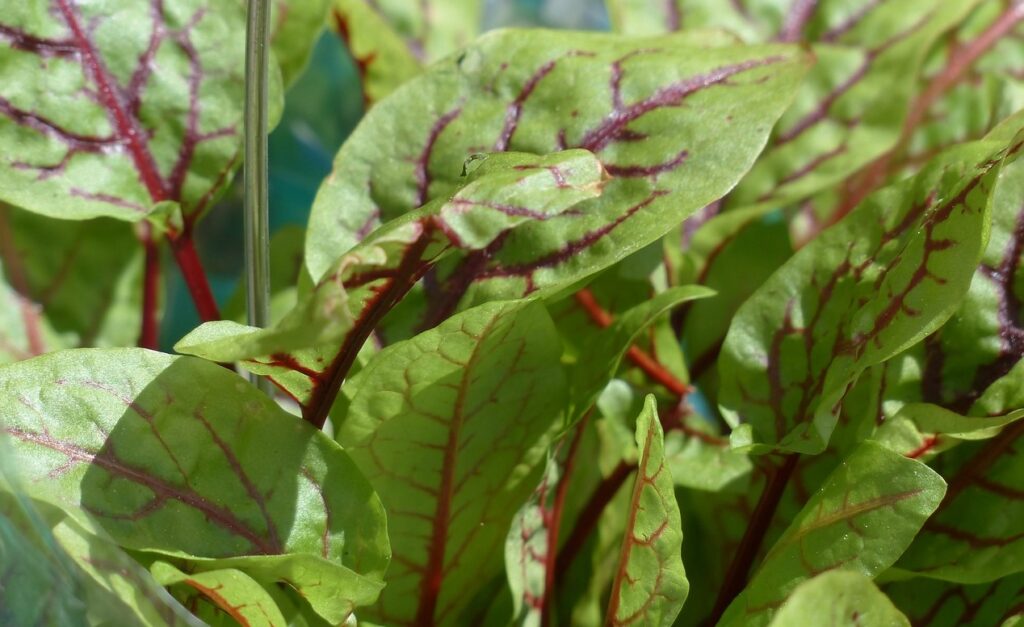
In partial shade, where the rich burgundy veining seems almost to glow against the surrounding greenery, it is genuinely one of the most beautiful foliage plants available for difficult, low-light positions in the British garden.
The edible quality of Bloody Dock is more nuanced than some edimentals. The leaves carry a mild, pleasantly acidic flavour, reminiscent of regular sorrel but considerably milder, which makes them useful in salads where a gentle sharpness is welcome. Younger leaves are considerably more palatable than older ones, and snipping them continuously throughout the growing season both encourages fresh tender growth and keeps the plant looking its best.
Growing Tips: Plant in partial to full shade in moisture-retentive soil. Tolerates clay admirably and is one of the few edimentals that actively performs better in partial shade than full sun. Direct summer sunlight can bleach the dramatic red veining. Divide established clumps in spring every 2-3 years to maintain vigour. Remove flower spikes promptly to prevent self-seeding and to direct the plant’s energy into leaf production. Fully hardy throughout the UK with no winter protection required.
🛒 Buy Sorrel ‘Bloody Dock’ (Rumex sanguineus) on Amazon UK
Design Principles for Edimental Gardens
Creating a successful edimental garden isn’t just about cramming edible plants into your borders and hoping for the best. Through my design work, I’ve developed some key principles that ensure edimentals look intentional rather than accidental. The secret lies in treating edible plants with the same design consideration you’d give to any premium ornamental.
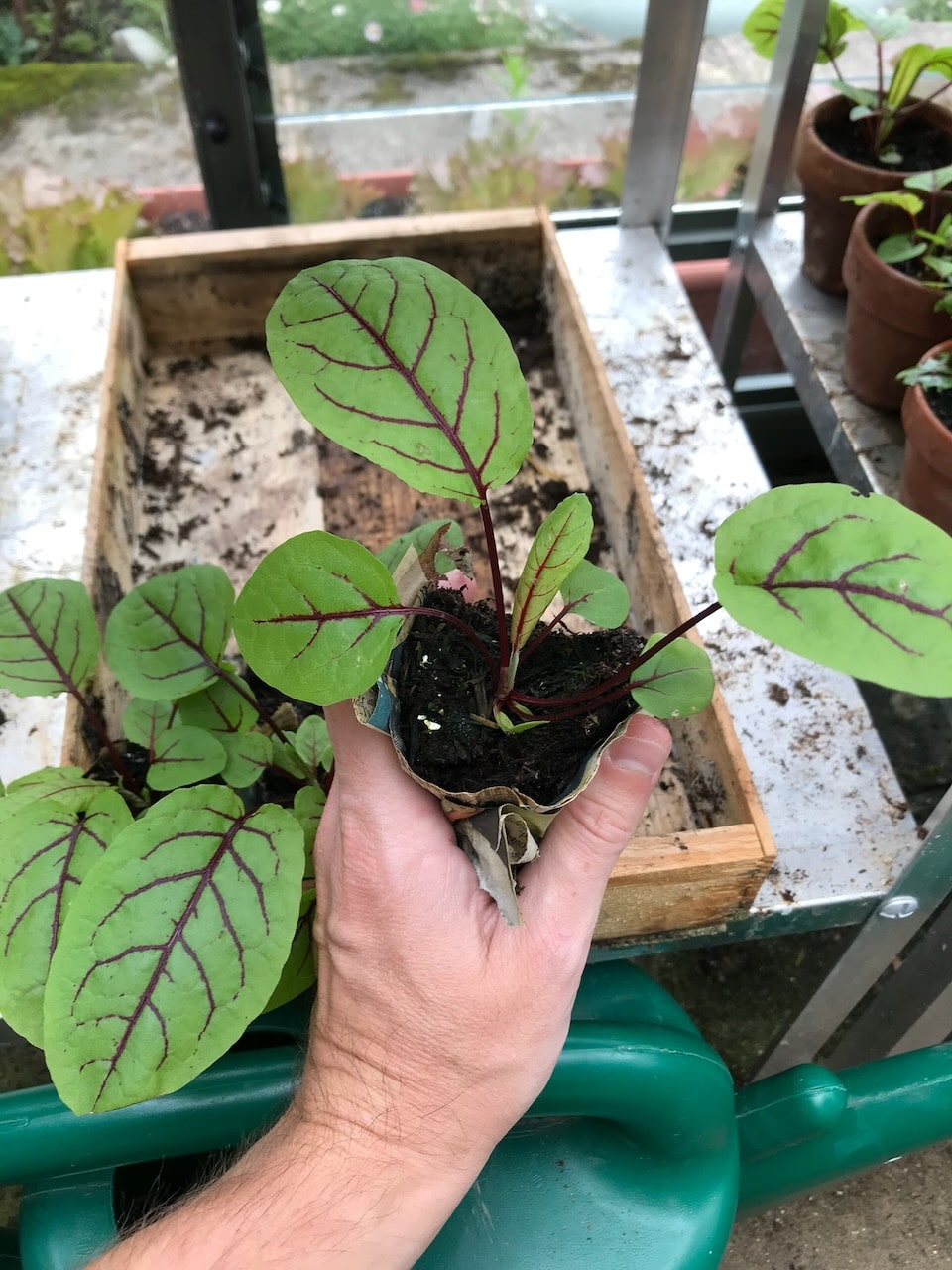
Start by considering form, texture and colour just as you would in a purely ornamental scheme. Globe artichokes, for instance, provide that crucial architectural element that every well-designed border needs. I often position them as focal points, with their magnificent silver foliage creating contrast against darker planting. Similarly, rainbow chard’s vibrant stems can be used as you would a colourful heuchera, bringing jewel-like tones to the front of borders, where they catch the light beautifully.
🥷 Garden Ninja Tip: Think about succession planting from a design perspective. In my Manchester gardens, I interplant spring bulbs with summer edimentals. As tulips fade, nasturtiums take over, followed by late-season kale, which provides winter structure. This ensures your borders never look bare whilst maintaining continual harvests.
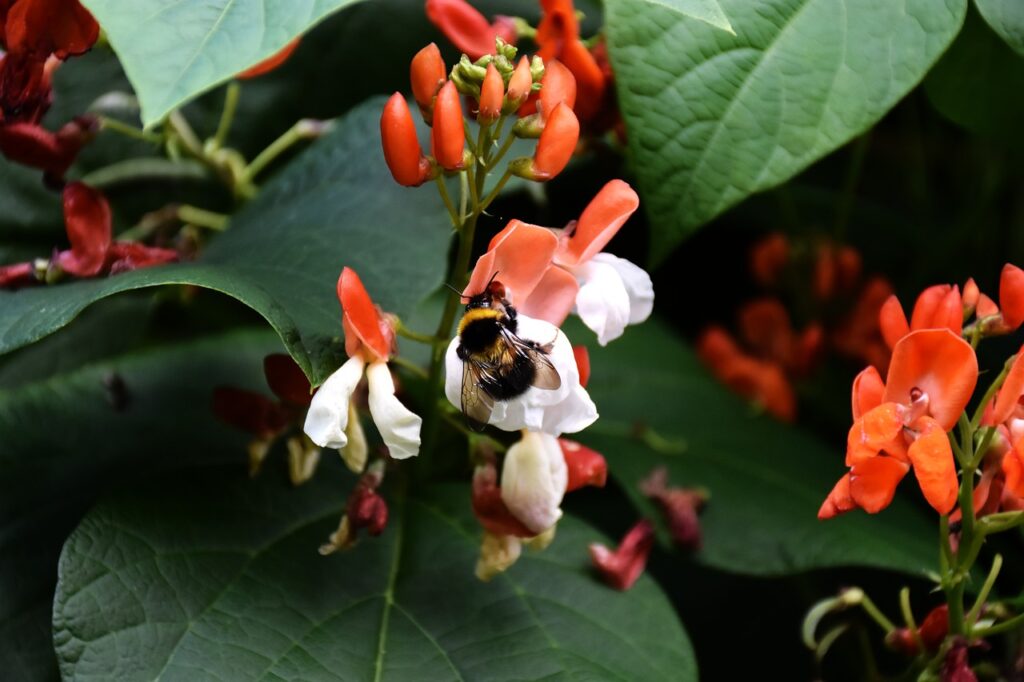
Height variation is absolutely crucial. Use climbing edimentals like runner beans on obelisks or tripods to create vertical interest, exactly as you would with sweet peas. Position taller edimentals like chicory and globe artichokes at the back of borders, with mid-height plants like day lilies in the middle, and ground-hugging herbs at the front. This traditional tiered approach works beautifully with edimentals.
Integrating Edimentals into Existing Borders
One question I’m constantly asked is how to introduce edimentals without completely redesigning existing gardens. The answer is simpler than you might think. Start small by swapping out a few conventional ornamentals for edible alternatives. Replace that tired lavender with society garlic. Substitute standard bedding with rainbow chard. Swap ornamental alliums for edible chive varieties. These simple substitutions maintain your garden’s aesthetic whilst boosting productivity.
In shadier spots, consider edimentals like perpetual spinach, wild rocket or even hostas (yes, they’re edible in Asian cuisine!). For sunny borders, Mediterranean edibles like rosemary, thyme and sage offer fantastic foliage structure alongside culinary utility. The key is matching the right edimental to your garden’s existing conditions rather than fighting against them.
Practical Growing Advice from the Trial Gardens
Let me share some hard-won wisdom from years of growing edimentals in the often challenging North West climate. First and foremost, soil preparation is non-negotiable. These plants need to thrive as ornamentals whilst producing crops, which demands good fertility. I always incorporate plenty of well-rotted compost or manure before planting, ensuring the soil is rich enough to support both beautiful growth and productive harvests.

The watering strategy differs slightly from that for purely ornamental planting. Edimentals generally require consistent moisture to produce tender, flavourful growth. This doesn’t mean waterlogging them, but it does mean staying vigilant during dry spells. I’ve found that mulching heavily with organic matter helps retain moisture whilst suppressing weeds and continuing to feed the soil as it breaks down.
- Timing matters: Plant edimentals at the same time you’d plant their ornamental equivalents. Tender plants like nasturtiums wait until after the last frost, whilst hardy perennials like globe artichokes go in during autumn or early spring.
- Harvesting for aesthetics: Pick strategically to maintain visual appeal. With rainbow chard, remove outer leaves rather than stripping plants bare. For flowers like nasturtiums and borage, regular picking actually encourages more blooms.
- Pest management: Many edimentals attract beneficial insects that help control pests naturally. Nasturtiums, for instance, act as sacrificial plants, drawing aphids away from other crops. This companion planting effect is gold dust for organic gardeners.
- Winter interest: Don’t rush to tidy up. Many edimentals like cavolo nero provide stunning structural interest through winter. Their frost-kissed foliage looks spectacular whilst still providing harvests.
Common Edimental Mistakes to Avoid
Through troubleshooting hundreds of gardens, I’ve identified several recurring mistakes with edimentals. The biggest is over-harvesting at the expense of aesthetics. Remember, these plants need to look good as well as feed you. Never strip a plant completely – always leave enough growth to maintain its ornamental presence.
Another common pitfall is neglecting plant support. Climbing edimentals like runner beans need sturdy structures that look intentional, not afterthought bamboo canes tied with string. Invest in proper obelisks or create beautiful willow wigwams that become features in their own right. Similarly, tall edimentals like globe artichokes may need discreet staking in exposed positions. Do this early, before plants flop, using techniques that keep supports invisible.
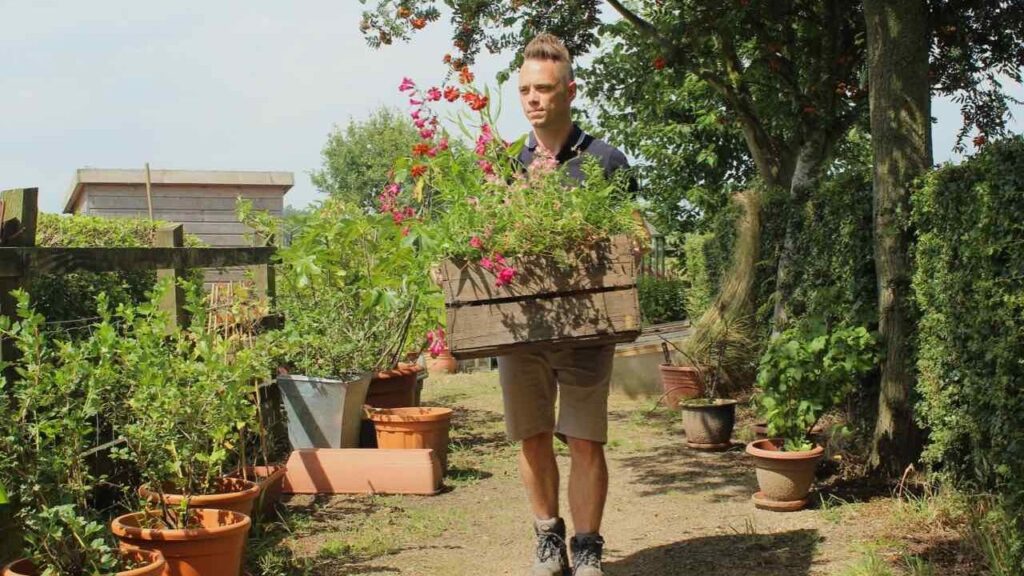
Finally, resist the temptation to squeeze in too many varieties. In small gardens, especially, restraint creates impact. Better to have three or four edimentals performing brilliantly than a chaotic jumble of ten different species competing for attention. This disciplined approach to plant selection is what separates amateur gardening from thoughtful design.
The Future of Productive Beauty
Looking ahead, I genuinely believe edimentals represent the future of sustainable garden design. As we face increasing pressure to reduce food miles, support pollinators and create climate-resilient gardens, plants that multitask aren’t just desirable but essential. The edimental approach allows us to garden more sustainably without sacrificing the beauty that makes outdoor spaces so enriching.
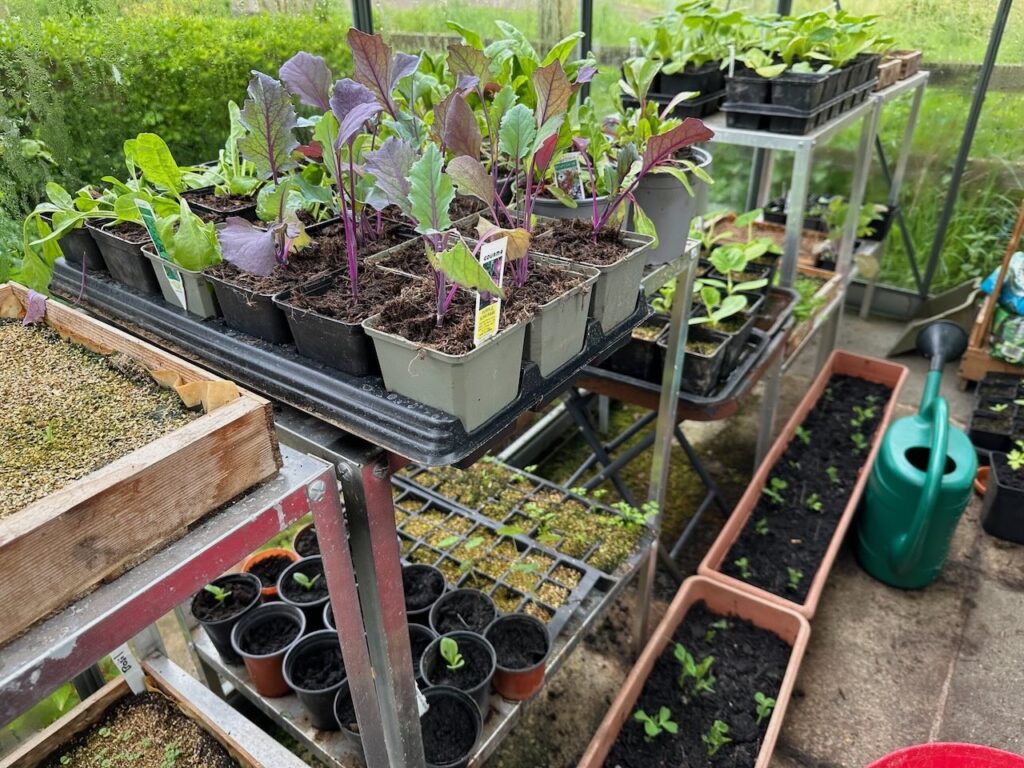
In my design practice, I’m specifying edimentals in projects where clients would never have considered growing food before. Front gardens, roof terraces, and and even formal courtyards now seamlessly incorporate beautiful edibles. This isn’t about creating vegetable patches; it’s about recognising that the division between ornamental and edible has always been somewhat arbitrary. Many of our most beloved garden plants have edible uses that we’ve simply forgotten.
Summary
Start your edimental journey today by choosing just one or two plants from the list above. Plant them prominently in your borders, care for them as you would any cherished ornamental, and discover the profound satisfaction of harvesting beauty you can actually eat.
Trust me, once you experience that first homegrown nasturtium salad or steamed artichoke you’ve watched develop for months, you’ll understand why edimentals are revolutionising British garden design. The Garden Ninja way has always been about making gardens work harder whilst looking absolutely stunning – and edimentals deliver exactly that promise.
Happy gardening!





Lee Burkhill
Lee Burkhill, known as the Garden Ninja, is an award-winning garden designer and horticulturist with over 30 years of gardening experience and 15 years as a professional garden designer. A qualified RHS (Royal Horticultural Society) professional, Lee specialises in sustainable garden design and practical horticultural advice. He designs and presents on BBC1’s Garden Rescue and in leading gardening publications. Lee combines three decades of hands-on gardening knowledge with professional design qualifications to help gardeners create beautiful, functional outdoor spaces.
View all posts by Lee Burkhill








Other posts
-

Start here: to begin your gardening journey! Read more
-
How to keep cats out of your garden: expert gardener shares tips Read more
-
How to prune Cornus & Dogwood Shrubs: foolproof guide for winter colour Read more
-
How to Grow Agapanthus UK: Containers, Winter Care & the Best Hardy Varieties Read more
-
How to grow your own wedding bouquet: The truth about why you shouldn’t! Read more
-
Plants that love Sandy Free Draining Soil: 30 Easy to Grow Plants Read more