For the garden you’ve already got, not the one you’re starting from scratch. Seven checklists and video lessons from BBC Garden Rescue’s Lee Burkhill, designed to help you decide what’s worth keeping before you spend a penny.
69


Quick answer: Plant herbaceous Peonies in autumn as bare roots, or any time the ground isn’t frozen from pots, in full sun and fertile, well-drained soil. Keep the buds no more than 2.5cm (1in) below the surface, as planting too deep is the main reason Peonies don’t flower. Support the stems in spring, deadhead after flowering, and cut the foliage to the ground in late autumn.
I adore Peonies, even though they need such exacting conditions to grow flowers that usually last less than three weeks, but if you have the space, patience, and verve, Peonies set the gardening elite apart from the low-maintenance gardener.
Get one detail wrong at planting time, though, and you can wait years for a single bloom, which is why so many of the Peony questions I’m sent come down to the same few mistakes. Having grown them myself for over a decade, I want to help you avoid those pitfalls and join the high ranks of the Peony crew!

In this guide I’ll cover the three types of Peony, when and how to plant them, supports, feeding, deadheading, when to cut them back, and what to do if yours won’t flower. I’ll also introduce the five Peonies I’ve just added here at Garden Ninja HQ, chosen for scent and a spread of flowering times.
Jump To
(The one piece of kit I’d recommend for almost every Peony is a set of tall, heavy-duty half-round plant supports, put in place in early spring so the stems grow up through them and the heavy flowers don’t end up face down in the border after rain.)
This page contains affiliate links for products I use and love. If you take action (i.e., subscribe or make a purchase) after clicking a link, I may earn some gardening commission, which will help me keep the Garden Ninja Blog free for all.
Before you buy, it’s worth being clear about what Peonies are and aren’t. Each plant flowers for just a few weeks in late spring and early summer, and for the rest of the season you are growing it for its foliage. Basically, it’s one of those hidden plants most garden visitors will miss unless it’s in flower. If that puts you off, then go no further; your long-flowering Geraniums are calling, Ninja.
The good news is that the foliage is attractive in its own right. The glossy, deeply divided leaves emerge red-tinged in spring, form a neat, shrubby mound all summer, and, in many varieties, take on red and bronze tones in autumn. So they make a solid space filler, but not a foliage thriller.

Peonies are a plant for patient gardeners. They take two or three years to settle in and flower properly, most need staking, and they dislike being moved. Once established, though, they can flower every year for fifty years or more, which is why I think of them as a jewel in the border rather than a workhorse.
For the same reason, they’re probably not the best choice for a small garden with limited space. A mature clump needs around a square metre to itself for a few weeks of flowers, and in a small plot every plant has to earn its place over many months.
If you’re short on space but still want one, choose a compact variety like ‘Bouquet Perfect’ in a large pot, or plant a single Peony among longer-flowering perennials that carry the border once it has finished.
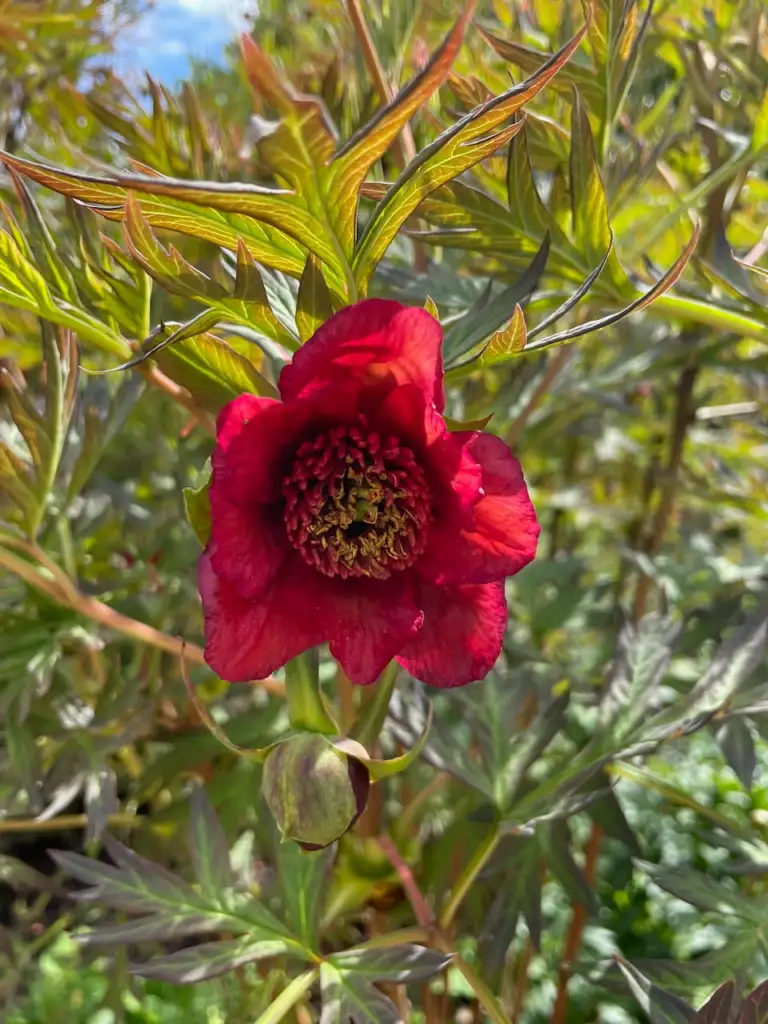
It pays to know which kind of Peony you have before you plant, because the three types are planted and pruned differently. Most Peonies sold in garden centres are herbaceous, usually varieties of Paeonia lactiflora, that die back to the ground every winter and reappear in spring. These are far better suited to smaller gardens than tree Peonies, which over time turn into huge shrubs!
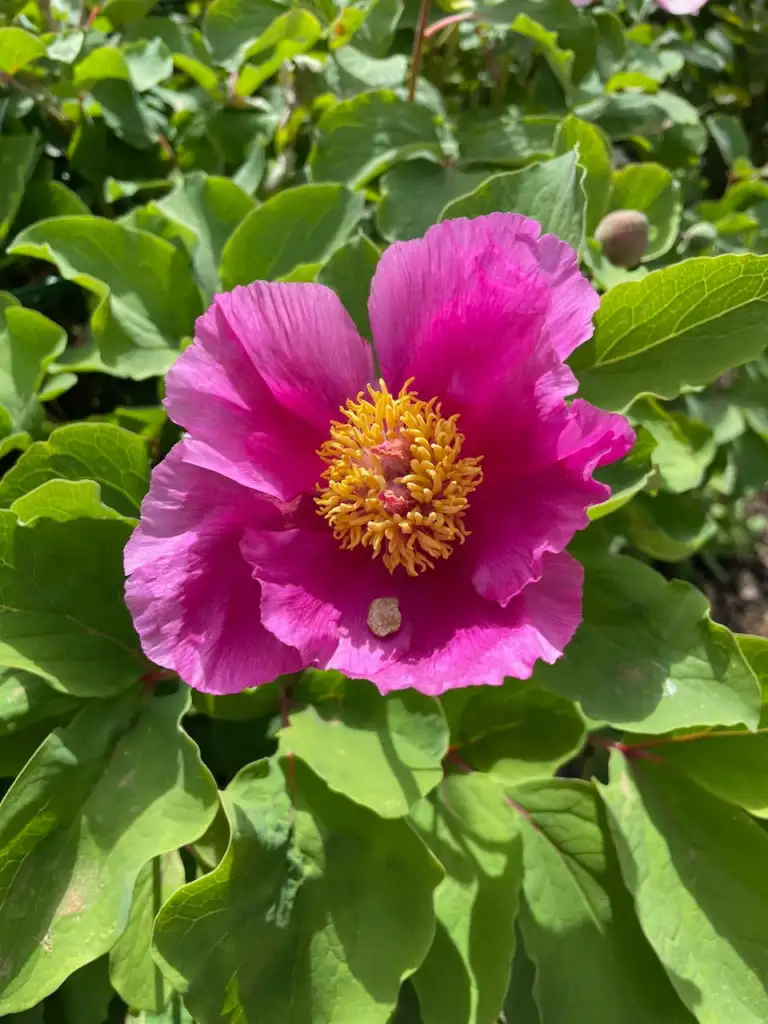
Tree Peonies are woody shrubs that keep their stem framework over winter, while Itoh, or intersectional, Peonies are crosses between the two, with the flowers of a tree Peony on a plant that dies back like a herbaceous one. Here’s how they compare.
| Type | Examples | Height | In winter | Planting depth | Pruning |
|---|---|---|---|---|---|
| Herbaceous Peony | Paeonia lactiflora, P. officinalis | 60cm to 1m | Dies back to the ground | Buds no more than 2.5cm (1in) below the surface | Cut foliage to the ground in late autumn |
| Itoh (intersectional) Peony | ‘Bartzella’, ‘Cora Louise’ | 75cm to 1m | Dies back, often leaving short woody stems | Buds no more than 2.5cm (1in) below the surface | Cut back to just above ground level in late autumn |
| Tree Peony | Paeonia suffruticosa, P. delavayi, P. ludlowii | 1m to 2m | Keeps its woody stems | Graft union about 15cm (6in) below the surface | Light pruning only; remove dead or leggy stems |
Flower shape is the other thing you’ll see on labels. Single and Japanese types have open centres that honey and solitary bees can access; anemone types have a cushion of petal-like stamens in the middle; and double types are packed with petals. Doubles give the biggest flowers but are the most likely to flop in rain, so they need the sturdiest supports. They also offer the least benefit for wildlife in terms of pollen and nectar, as breeders have selected them for showy flowers rather than cross-pollination.
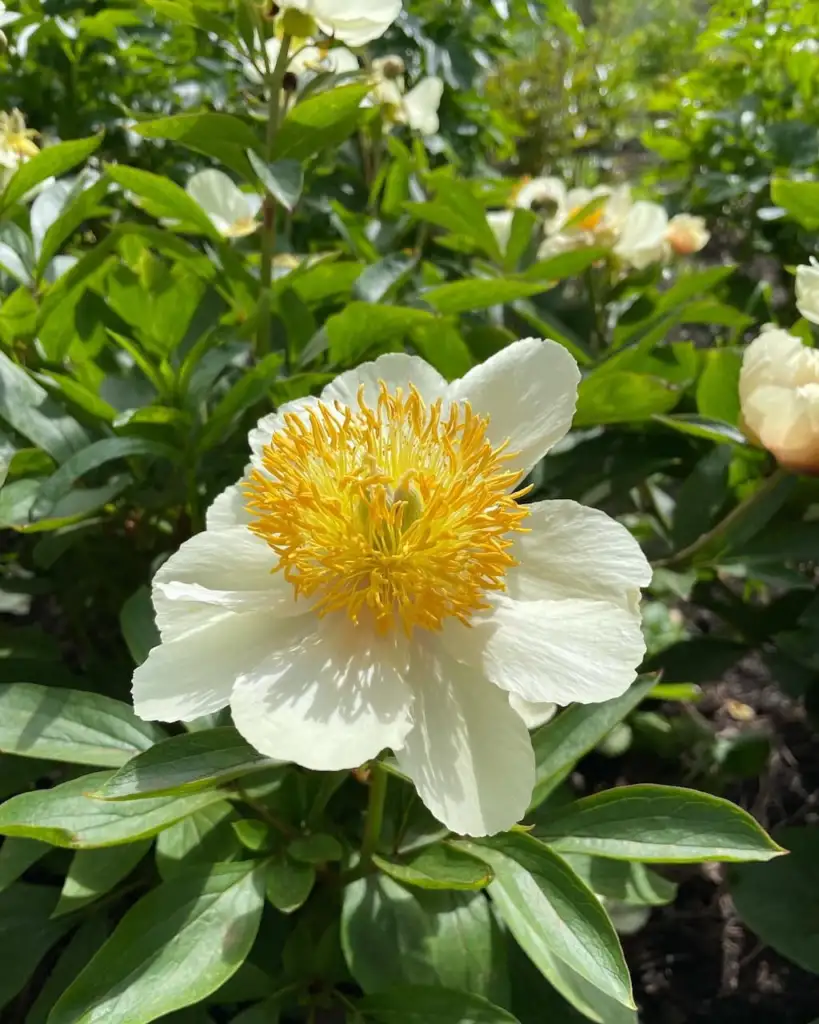
Autumn is the best time to plant Peonies in the UK, ideally from late September to November while the soil is still warm. Specialist nurseries usually send bare-root herbaceous Peonies out in late autumn, and they settle in over winter, ready to grow away in spring.
Pot-grown Peonies can go in at any time of year as long as the ground isn’t frozen or waterlogged, although you’ll need to water them more through their first summer if you plant in spring. Potted Peonies can be £30+ per plant, whereas the equivalent bare root may be £6 to £15. It’s a huge saving if you’re planting a large garden or cottage border full of Peonies.
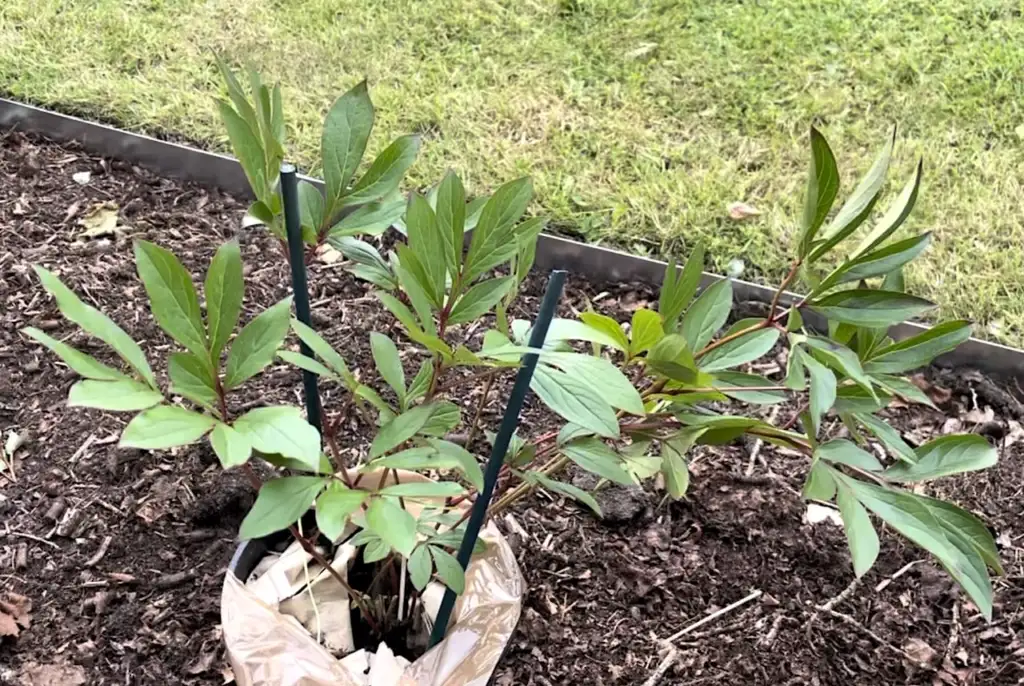
The five Peonies I grow here at Garden Ninja HQ came in 4-litre pots, except for ‘Tom Eckhardt’ in a 7-litre pot; you can plant them straight into the ground in autumn.
Tree Peonies are also best planted in autumn, winter, or early spring. Avoid planting them in late spring and summer, when hot, dry weather makes it harder for them to establish.
Peonies flower best in full sun, ideally with six or more hours of direct sun a day, usually in a south- or west-facing border. They will grow in light shade, but the more shade they get, the fewer flowers you’ll see. If you’re not sure which way your borders face, my garden aspects guide shows you how to check.
They like fertile, well-drained soil improved with plenty of garden compost or well-rotted manure, and they cope well with clay as long as it doesn’t sit wet over winter. Give each plant around a metre of space, away from shrubs and tree roots, as Peonies resent being crowded and are best planted once and left alone.

Shelter matters as much as sun. Peonies dislike cold, chilling winds, which scorch emerging shoots in spring, snap heavy stems, and shred flowers once they open. Avoid exposed, windy corners and gaps between buildings where wind funnels through, and look for a spot sheltered by a hedge, wall, or neighbouring shrubs without being shaded.
Avoid frost pockets too, especially for tree Peonies. They are fully hardy, but late spring frosts can blacken new shoots and flower buds, so on cold April and May nights, drape a layer of horticultural fleece over the emerging growth.
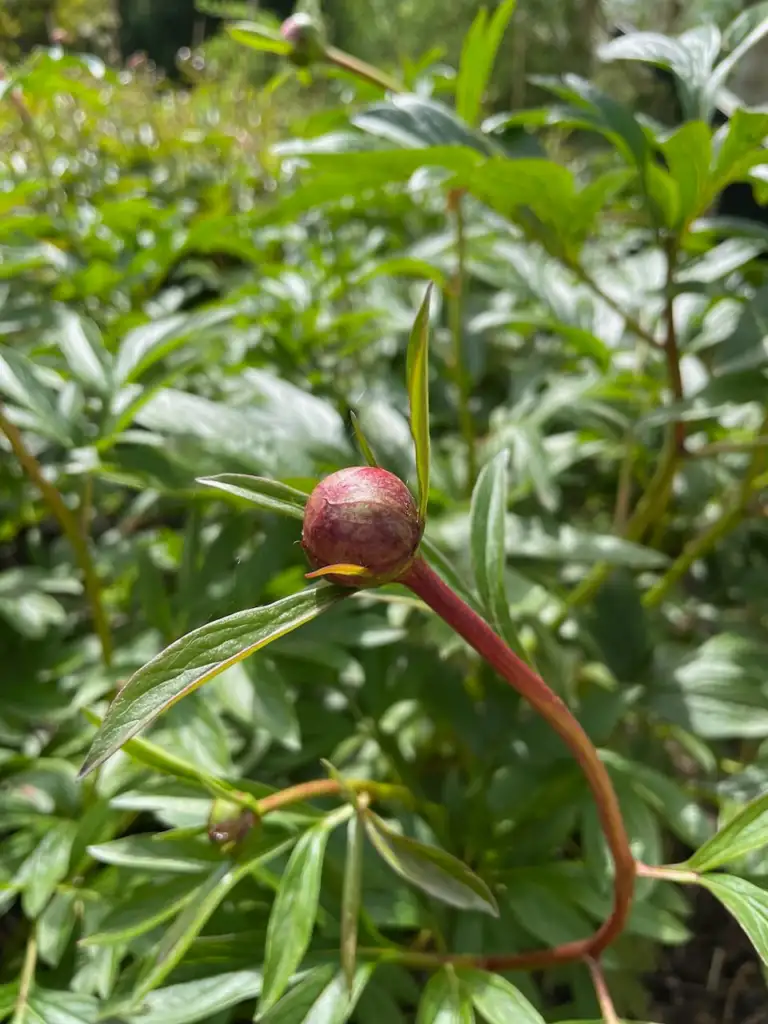
Planting depth is where most Peony problems start. Herbaceous Peonies grow from fleshy roots topped with pinkish-red buds, often called eyes, and if those eyes end up buried too deep, the plant will grow leaves for years without flowering.
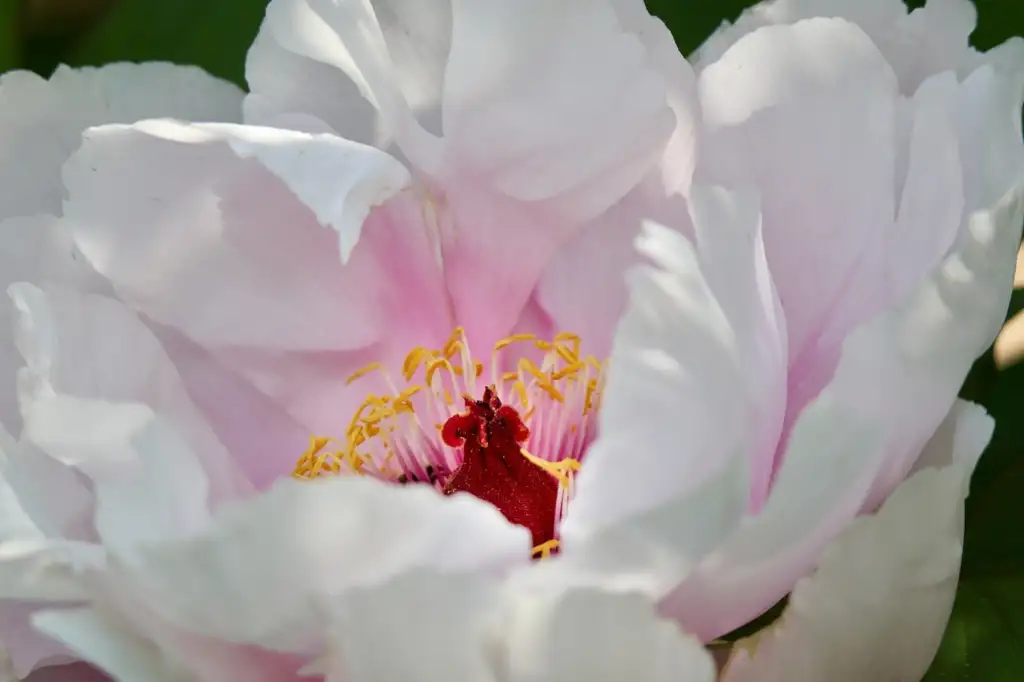
Dig over an area roughly a metre across and work in a couple of spadefuls of garden compost or well-rotted manure. Peonies can stay in the same spot for twenty years or more, so it’s worth doing this properly. Keep fresh manure away from the roots, as it can scorch them.
Dig a hole as deep as the root ball or bare-root division and roughly twice as wide. This gives the roots loose, improved soil to grow into in their first year. If planting a container Peony, dig the hole so the top of the soil in the pot is level with your soil too. Don’t bury it deeper than it already is, as this leads to crown rot.
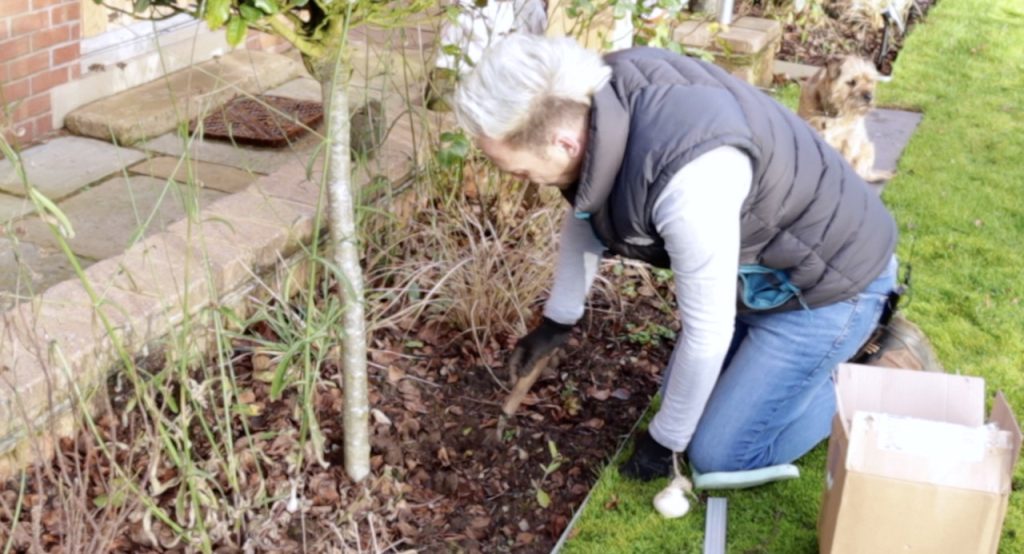
Place the plant so that the buds sit no more than 2.5cm (1in) below the soil surface. Lay a cane across the hole to check the level. For a pot-grown plant, gently scrape back the top of the compost to find the buds before you plant, as nursery pots are sometimes topped up and the plant may already be sitting a little deep.
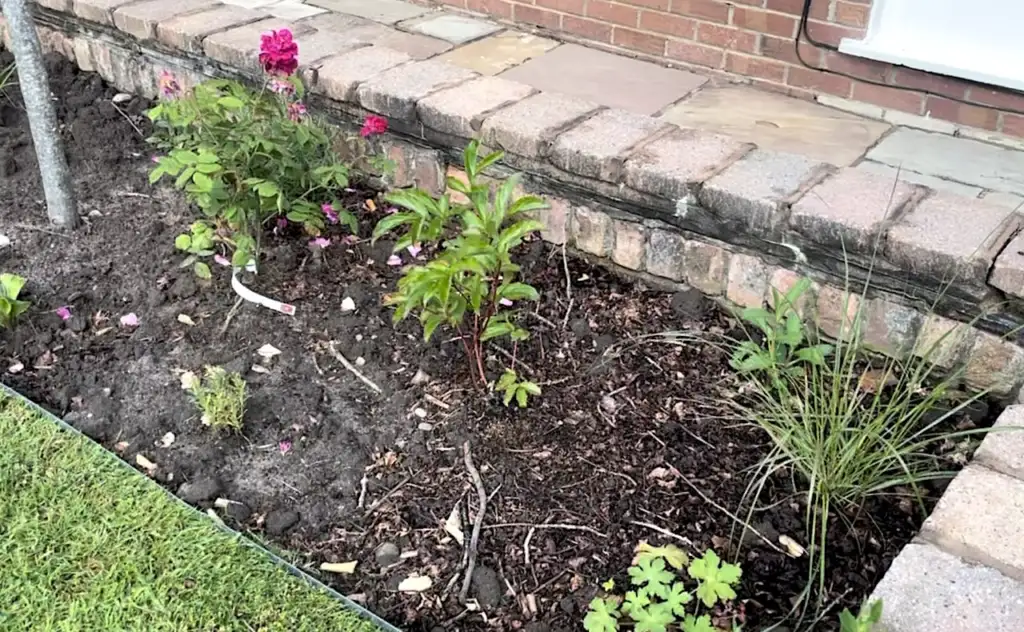
Tree Peonies are the exception. Plant them with the graft union, the slight bulge near the base of the stem, about 15cm (6in) below the surface so the plant can form its own roots.
Backfill around the roots, gently firm the soil with your hands (not your boot), and water well. Finish with a compost mulch around the plant, keeping it clear of the crown so the buds aren’t buried deeper.
Yes, although Peonies are happiest in the ground long term. Their roots go deep, and they dislike being disturbed, so a pot works well for a few years on a patio, or while you decide where the plant should go. Choose a bigger pot than you normally would; a pot big enough for a small shrub is best, not a tiny terracotta one.
Choose a pot at least 45cm wide and deep, with drainage holes, and fill it with a loam-based compost such as John Innes No. 3. Plant with the buds 2.5cm below the surface, as you would in the ground.
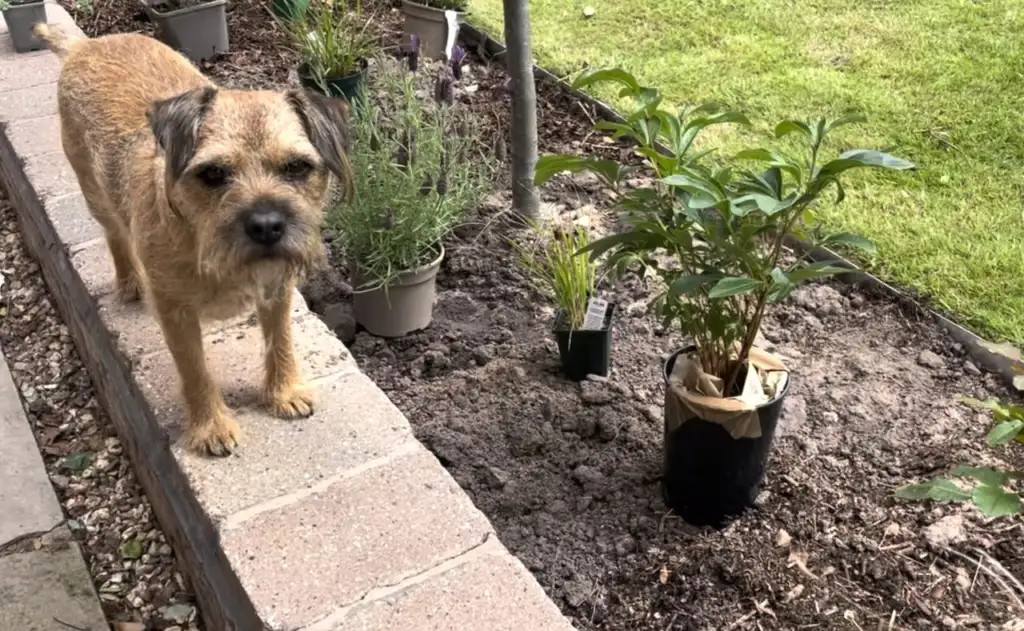
Water regularly, as pots dry out far faster than borders, and feed in spring with a slow-release fertiliser. Compact varieties such as ‘Bouquet Perfect’, which grows to around 65cm, are the best choice for containers.
Most Peonies need staking, and I treat it as part of planting rather than an optional extra. The doubles in particular carry flowers so heavy that a single summer shower can flatten them.
The answer is to put supports in place early, in March or April when the shoots are no more than 15 to 30cm tall, so the stems grow up through them and hide the frame.
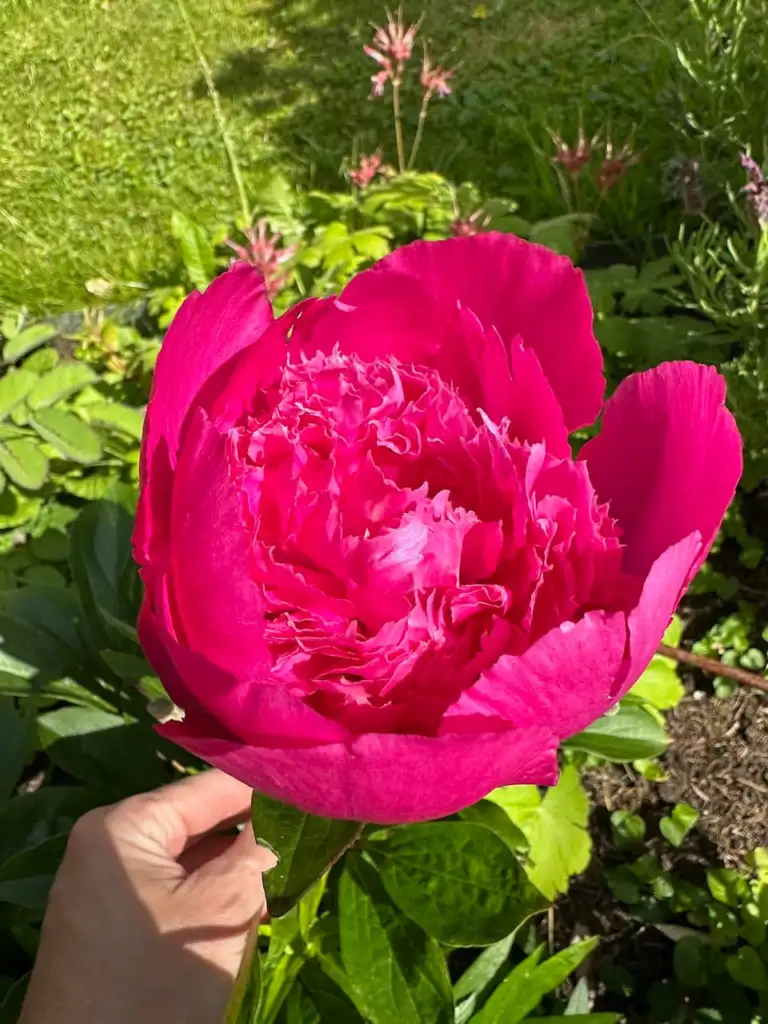
Choose tall, heavy-duty supports. Thin, cheap ring supports sold in garden centres tend to buckle or tip over once a mature clump is in full flower and wet, taking the whole plant down with them. They are neither useful nor permanent; what will hold a lot holds a little. I use sturdy, rust-resistant half-round hoops, which push deep into the ground and can be linked together around a clump of any size. I prefer the green coated ones as they blend in whereas rusty supports tend to stick out around the dark green Peony foliage.
🛒 Buy heavy-duty half-round plant supports from Amazon UK
You can also push a circle of Hazel or Birch twigs around the clump. Japanese and anemone types, such as four of the five I’m growing, have lighter flowers and stand up better on their own, but a support still helps in an exposed garden. This is also a nice Hedgewitch practice if you already recycle plants and tree prunings around your wheel of the year garden!
If you’ve left it too late and the stems are already flopping, push three or four canes in around the clump and loop soft twine around them in tiers. It won’t look as neat as a ring support, but it will keep the flowers off the ground.
Water newly planted Peonies regularly through their first spring and summer, especially in dry spells. Once established, they are deep-rooted and rarely need watering, but a long spring dry spell can stop buds from developing properly, so water then if the soil is dry.
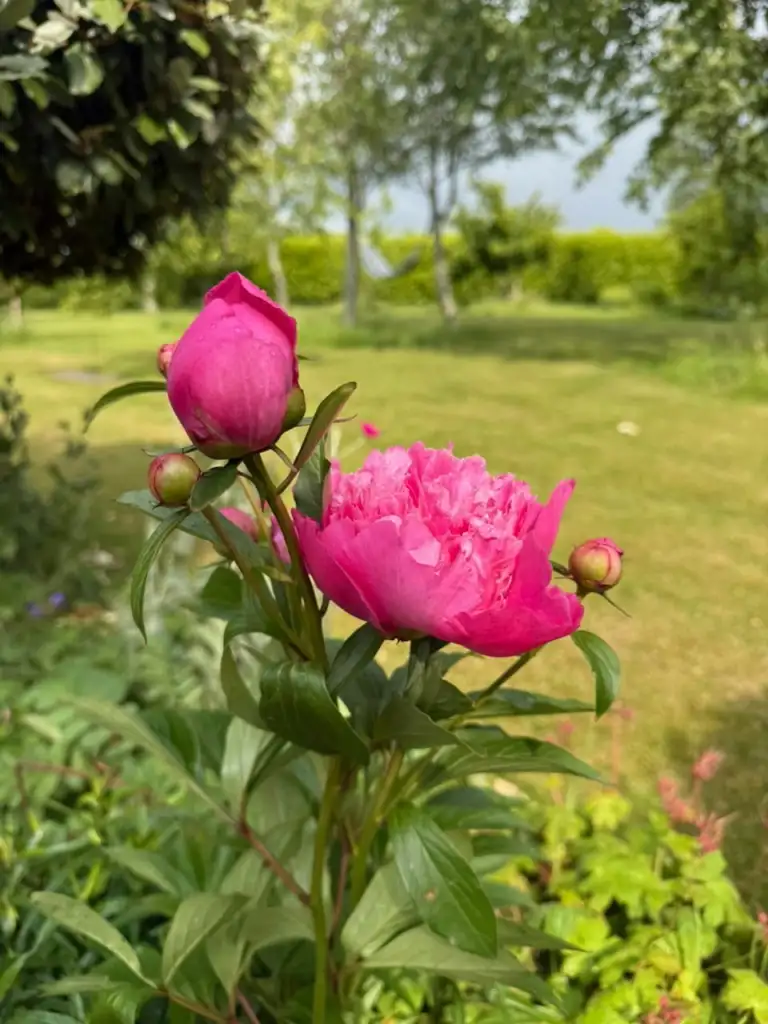
Feed each spring as the shoots appear with a general-purpose fertiliser such as Growmore, at around 70g per square metre, then mulch with compost, keeping it away from the crown. Avoid high nitrogen feeds, which produce lots of leaves at the expense of flowers. My guide to the best plant fertilisers explains the different types.
Yes. Deadheading won’t make a herbaceous Peony flower again that year, but it keeps the plant tidy and stops it putting energy into seed. Once a flower has faded, cut the stem back to just above the top leaf so you don’t end up with bare stalks sticking up through the foliage.
Leave the leaves in place. They spend the rest of the summer feeding the roots and building up the buds for next year, so don’t cut the foliage down after flowering, however tired it starts to look.
After flowering, deadhead the spent blooms and then leave the plant to grow on. Water in prolonged dry spells and keep the area around the clump weeded, but otherwise there’s very little to do until autumn.
Tree Peonies are slightly different. Cut the flowered shoots back to just above the new growth once the flowers have faded, or leave the seed heads on until autumn if you want to collect the seed.
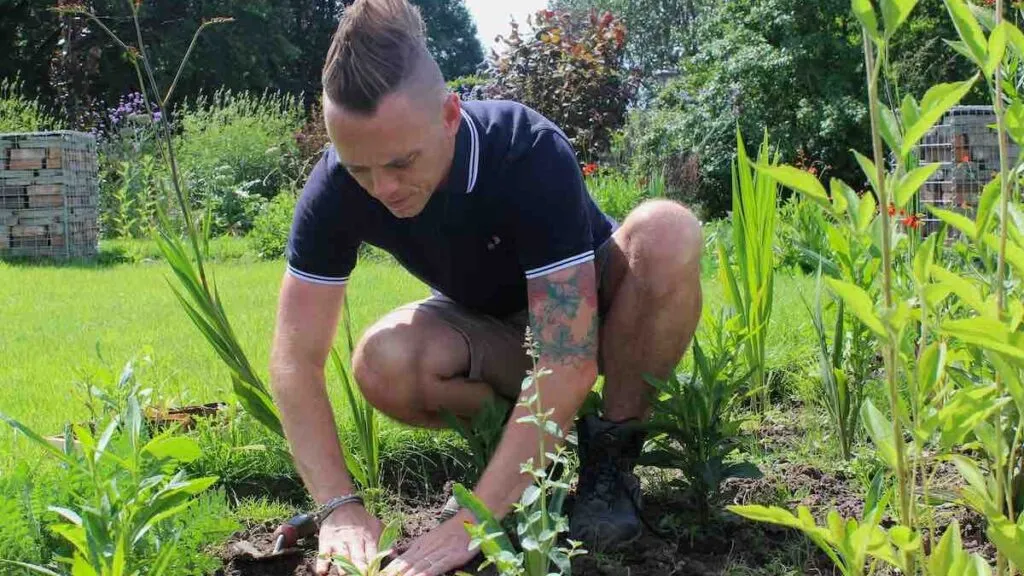
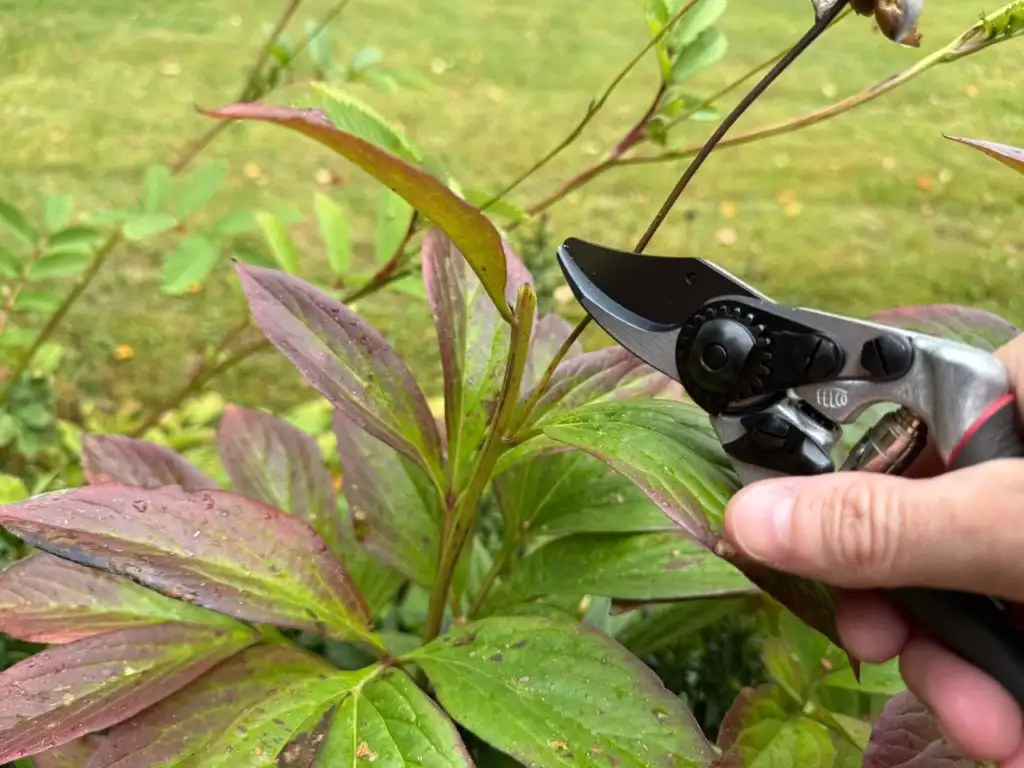
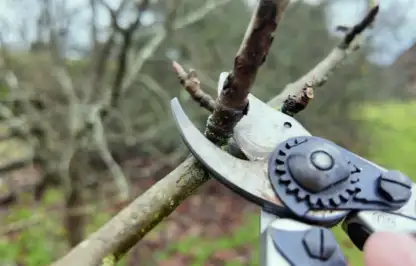
Cut back herbaceous peonies in late autumn, usually October or November, once the foliage has turned yellow or brown. Cut every stem down to ground level with clean bypass secateurs. Don’t put the old foliage on the compost heap, as it can carry Peony wilt, the main disease that affects Peonies.
Cut back Itoh Peonies the same way, leaving any short woody stems at the base. Never cut tree peonies to the ground. Instead, remove any dead shoots in late winter, and shorten leggy stems by about a third in autumn after the leaves have fallen.
Herbaceous Peonies flower from May to June in the UK, with tree Peonies usually starting earlier, often in late April and May, and Itoh Peonies following into June. Each individual flower lasts around a week, and a mature clump usually flowers for two to three weeks in total.
Varieties are often described as early, mid-, or late-season. By choosing a mix, you can stretch the Peony season in your garden to six weeks or more. Of the five I’m growing, ‘Bouquet Perfect’ is one of the earliest, while ‘Tom Eckhardt’ is a late-season variety that carries on after most others have finished.
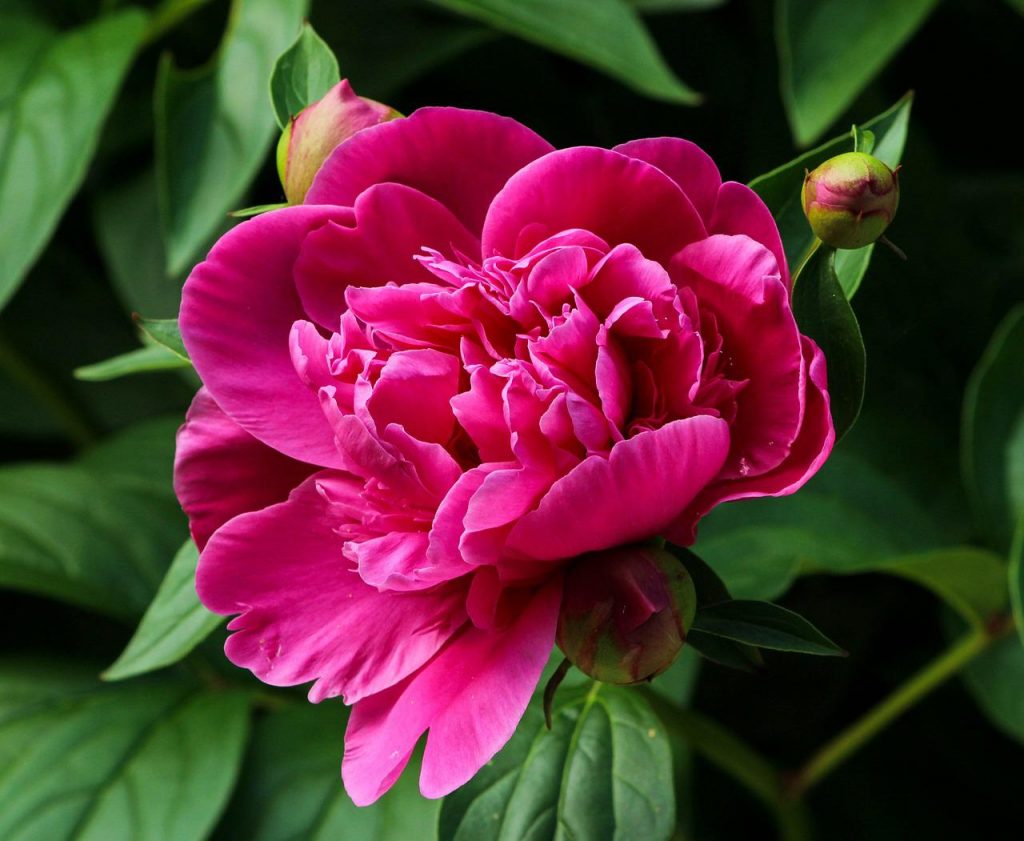
A Peony that produces healthy leaves but no flowers is one of the most common problems I’m asked about. These are the usual causes, roughly in order of how often I see them.
If the buds are more than 2.5cm below the soil, the plant may never flower. This often happens over time as mulch builds up around the crown. Lift the plant in autumn and replant it at the right depth.
Peonies planted in shade, or overtaken by a growing tree or shrub, will flower less and less. Move the plant to a sunnier spot in autumn, or cut back whatever is shading it.
A new plant or division often takes two or three years to flower properly, and a moved Peony may skip a year or two while it re-establishes. Tree Peonies can take up to four years to settle in.
A long dry spell in spring can stop the buds developing, and a late frost can kill them outright. Too much nitrogen feed or lawn feed runoff pushes the plant into leaves rather than flowers.
This is usually Peony wilt, a fungal disease covered in the problems section below, or frost damage to the developing buds.
Peonies have a reputation for hating being moved, and while they do sulk for a year or two afterwards, they move perfectly well if you do it at the right time.
Autumn, once the foliage has died back, is the time to move or divide them. As I’ve advised on the forum before, never move a Peony that’s in bud in spring, or you’ll lose that year’s flowers.
Lift the whole clump with a fork, taking as much root as possible, and replant it straight away with the buds 2.5cm below the surface.
To divide an old clump that has stopped flowering well, cut it into sections with a sharp spade or knife, making sure each piece has at least three buds and a good amount of root. Divisions usually flower again after about two years.
Peonies are tough plants with few serious problems, and slugs and snails rarely bother established clumps, which is why they appear in my guide to slug and snail resistant plants.
Peony wilt is the only serious disease. It causes shoots to wilt and collapse in spring, buds to turn brown and fail to open, and grey fuzzy mould on affected parts in damp weather.
Cut out any affected growth back to healthy tissue and dispose of it in your green waste bin, not the compost heap. Clearing all the foliage away in autumn and giving plants plenty of space for airflow are the best ways to prevent it.
Peony blotch shows as grey-brown spots with reddish-purple edges on the leaves, usually from midsummer. It looks unsightly but isn’t serious, and removing the old foliage in autumn reduces the problem the following year.
Ants are drawn to the sugary nectar on Peony buds. They don’t harm the plant, so there’s no need to do anything. If you’re cutting Peonies for the house, gently shake the stems or dip the flower head in a bucket of water first.
Peonies are listed as toxic to cats, dogs and horses. The roots and stems contain a compound called paeonol, and eating the plant can cause vomiting, diarrhoea and lethargy in pets. Serious poisoning is rare, as the plant tastes bitter, but if your pet has eaten a Peony and seems unwell, contact your vet.
I’ve just added five herbaceous Peonies here at Garden Ninja HQ, all varieties of Paeonia lactiflora. I chose them for scent and for a spread of flowering times, and four of the five have Japanese or anemone-style flowers. These open-centred types are easier for bees to get into than fully double flowers, and their lighter heads are less likely to flop after rain.
‘Cora Stubbs’ has raspberry-pink outer petals around a tufted centre of creamy pink petaloids, a combination that looks like two flowers in one. The flowers are semi-double and saucer-shaped, with a spicy scent, and the dark green foliage is tinged red as it emerges in spring.
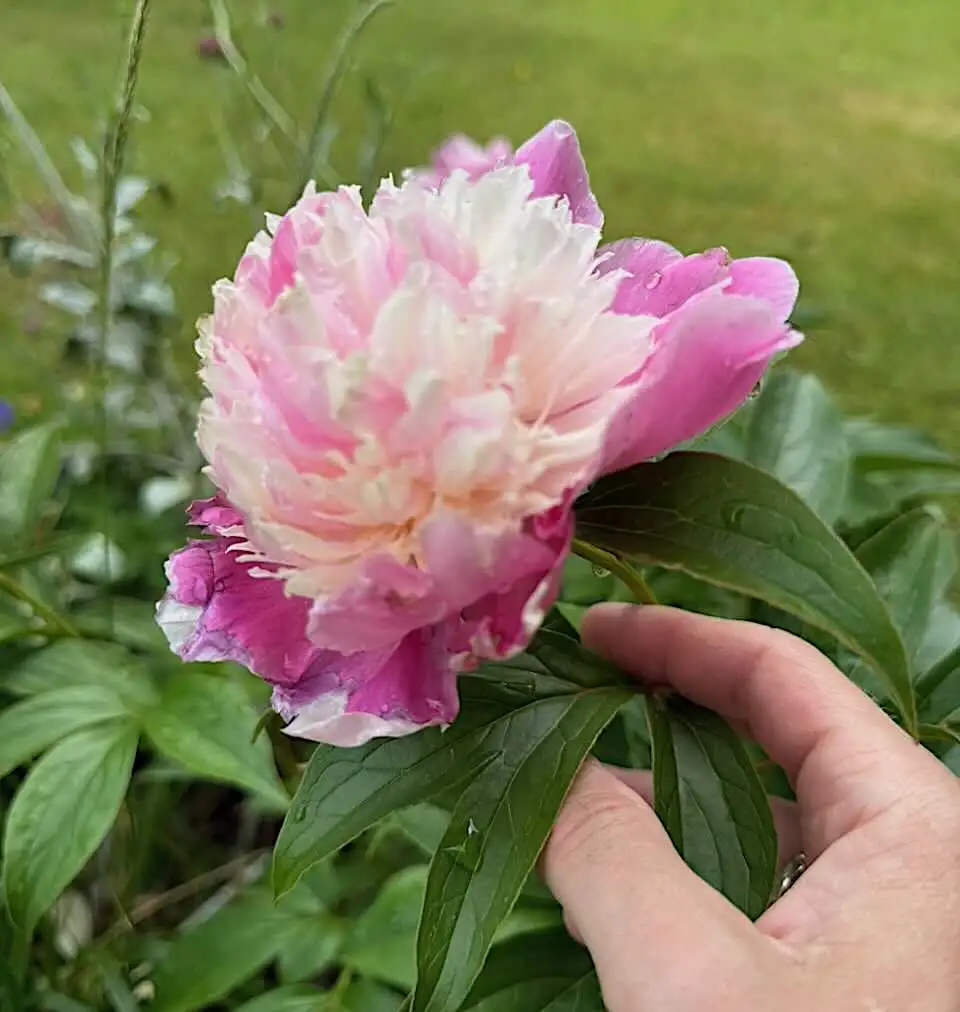
It flowers in midseason and makes a bushy, upright clump. It’s a good choice if you want something more unusual than a classic double pink Peony, and the flowers are excellent for cutting.
| At A Glance | |
|---|---|
| Botanical Name | Paeonia lactiflora ‘Cora Stubbs’ |
| Plant Type | Herbaceous perennial |
| RHS Hardiness | H6 |
| Height and Spread | 75 to 90cm x 75 to 90cm |
| Flowering Period | Late May to June (midseason) |
| Best Conditions | Full sun, fertile, well-drained soil |
| Key Feature | Raspberry-pink petals around a creamy centre, spicy scent |
‘Koningin Wilhelmina’ is a Dutch heirloom variety, bred by Krelage and introduced in 1912. It’s the only fully double Peony of my five, with ruffled, rose-pink flowers that soften as they open, and a rich scent.
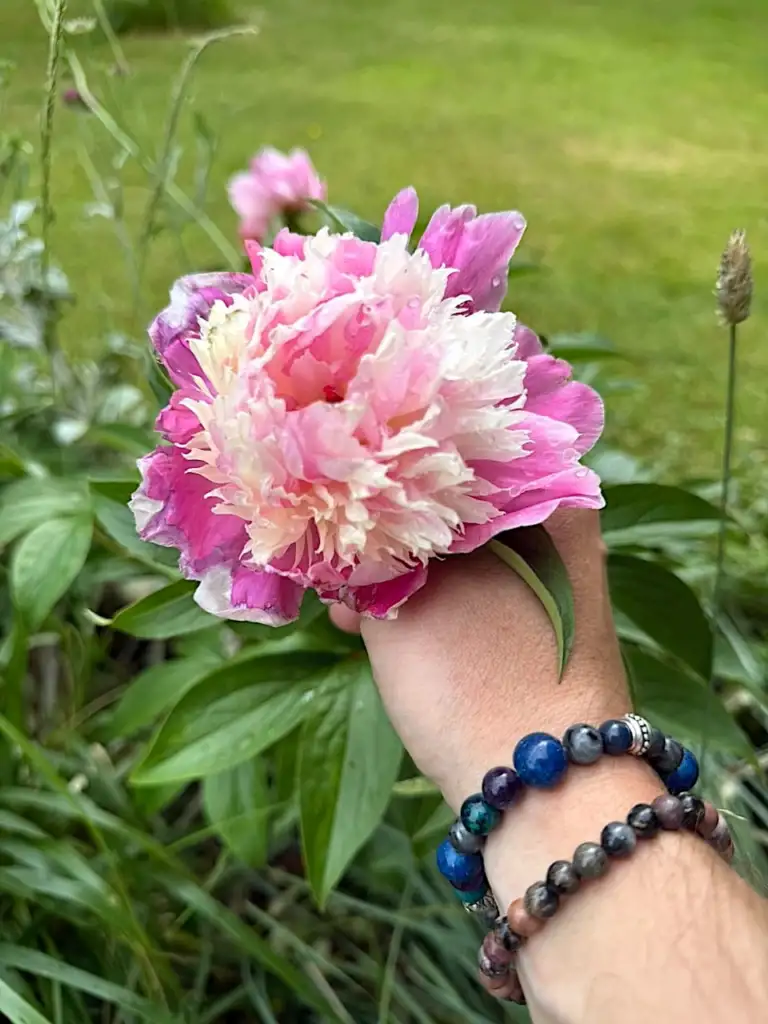
Being a heavy double, it’s the one that will need the sturdiest support of the five, so it’s the one I would give a sturdy support first, well before the buds form. It grows to around 70cm and flowers in late May and June.
| At A Glance | |
|---|---|
| Botanical Name | Paeonia lactiflora ‘Koningin Wilhelmina’ |
| Plant Type | Herbaceous perennial |
| RHS Hardiness | Fully hardy (H6 for P. lactiflora) |
| Height and Spread | Around 70cm x 70cm |
| Flowering Period | Late May to June |
| Best Conditions | Full sun, fertile, well-drained soil, with support |
| Key Feature | Heirloom double rose-pink flowers with a strong scent |
‘Władysława’ holds the RHS Award of Garden Merit and has pink, bowl-shaped Japanese-type flowers with a cream to yellow centre of staminodes. The flowers are very fragrant, and the open centres make it a good Peony for pollinators.
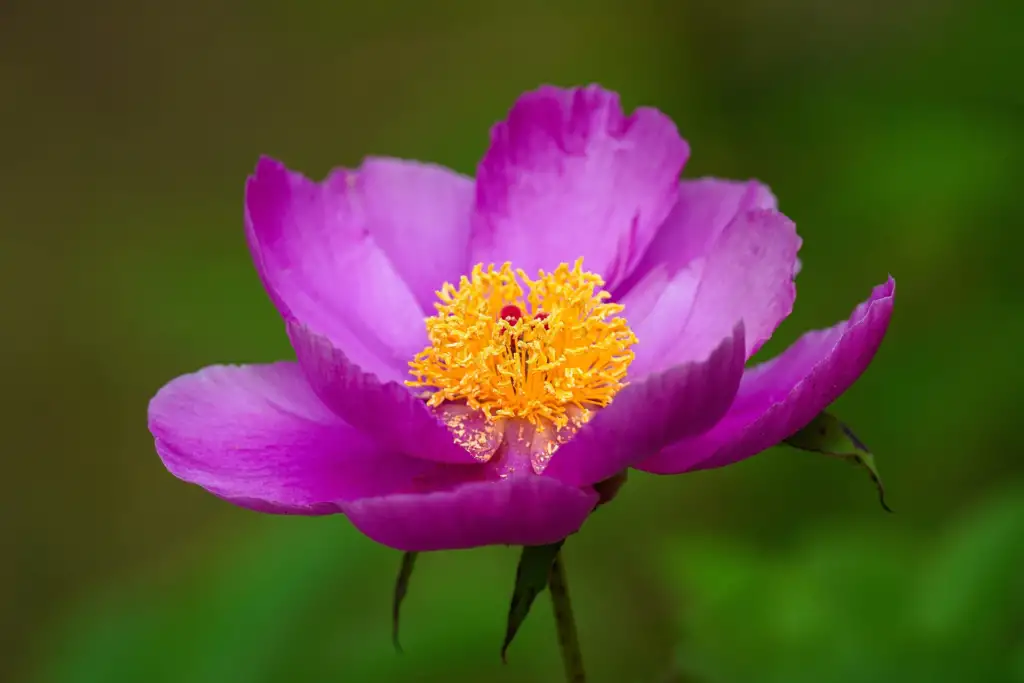
It’s a midseason variety, growing to around 65cm to 1m. The RHS rates it H4, hardy through most of the UK, so in a cold garden I would give it a sheltered, sunny spot.
| At A Glance | |
|---|---|
| Botanical Name | Paeonia lactiflora ‘Władysława’ |
| Plant Type | Herbaceous perennial |
| RHS Hardiness | H4 |
| Height and Spread | 65cm to 1m x 50cm to 1m |
| Flowering Period | Late May to June (midseason) |
| Best Conditions | Full sun, sheltered, fertile, well-drained soil |
| Key Feature | RHS AGM, very fragrant pink flowers with a creamy centre |
Tom Eckhardt’ is a Japanese-type Peony with deep fuchsia-pink petals around a centre of yellow, orange and pink stamens. On established plants, the centre can form a fuller cushion of staminodes, and both petals and centre fade paler as the flower ages.
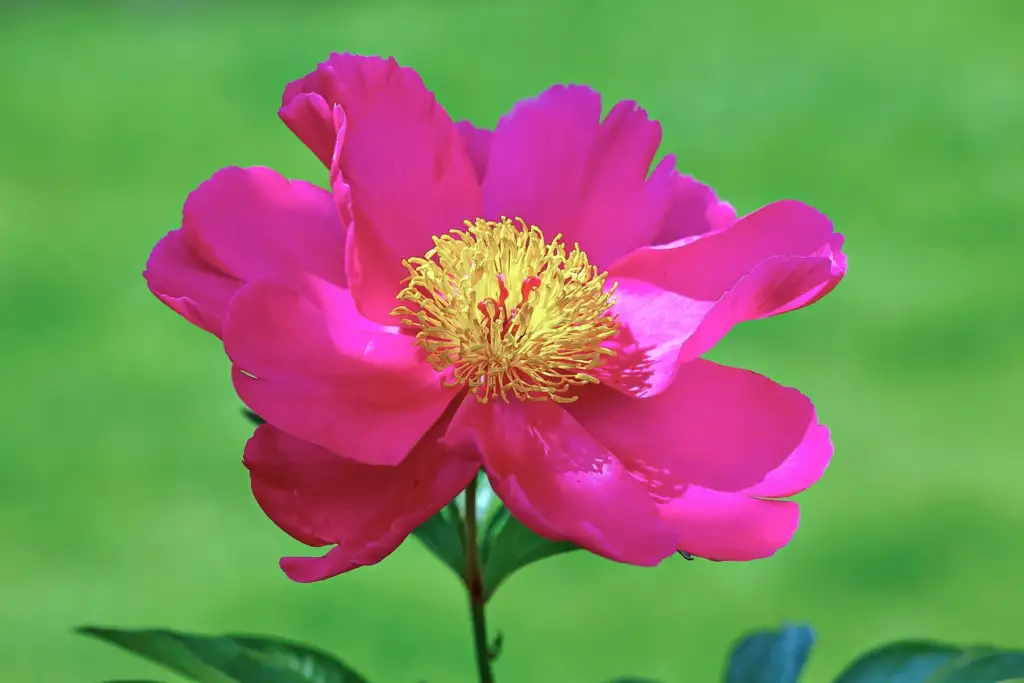
It’s a late-season variety, flowering after most other Peonies, and makes a mounding clump of around 90cm with large, bright green leaves. It’s scented and good for cutting, and it’s the one of my five that arrived in the larger 7-litre pot.
| At A Glance | |
|---|---|
| Botanical Name | Paeonia lactiflora ‘Tom Eckhardt’ |
| Plant Type | Herbaceous perennial |
| RHS Hardiness | H6 |
| Height and Spread | Around 90cm x 90cm |
| Flowering Period | June (late season) |
| Best Conditions | Full sun, fertile, well-drained soil |
| Key Feature | Fuchsia-pink petals around yellow, orange and pink stamens |
‘Bouquet Perfect’ also holds the RHS Award of Garden Merit. It has rich pink-to-magenta anemone-type flowers with a centre of red-tipped stamens and a light fragrance.

At around 65cm tall, it’s the most compact of my five and one of the earliest to flower, from late May. That makes it the best choice for a pot or the front of a border, and the strong stems need less support than taller varieties.
| At A Glance | |
|---|---|
| Botanical Name | Paeonia lactiflora ‘Bouquet Perfect’ |
| Plant Type | Herbaceous perennial |
| RHS Hardiness | H6 |
| Height and Spread | Around 65cm x 50cm |
| Flowering Period | Late May to June (early to midseason) |
| Best Conditions | Full sun, fertile, well-drained soil or a large pot |
| Key Feature | RHS AGM, compact, rich pink anemone-type flowers |
For a classic pink double, ‘Sarah Bernhardt’ is the most widely grown Peony in the UK. It has large, pale pink, ruffled flowers with a sweet scent in June, and it’s one of the best Peonies for cutting. Like ‘Koningin Wilhelmina’, its heavy flowers need a support.
🛒 Buy Paeonia lactiflora ‘Sarah Bernhardt’ at Primrose
Buying from Primrose? I’ve got a 15% off code for Garden Ninja readers that you won’t find on the voucher sites. Pop your email in below and I’ll send it straight over, so you can use it on your Peonies and anything else you’re adding to the border.
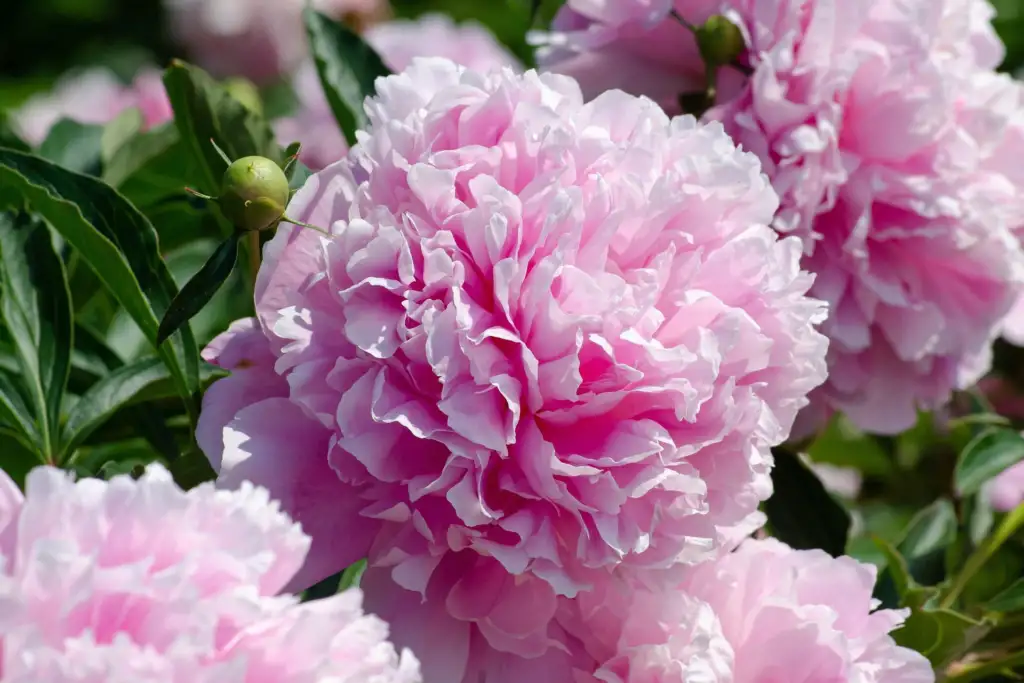
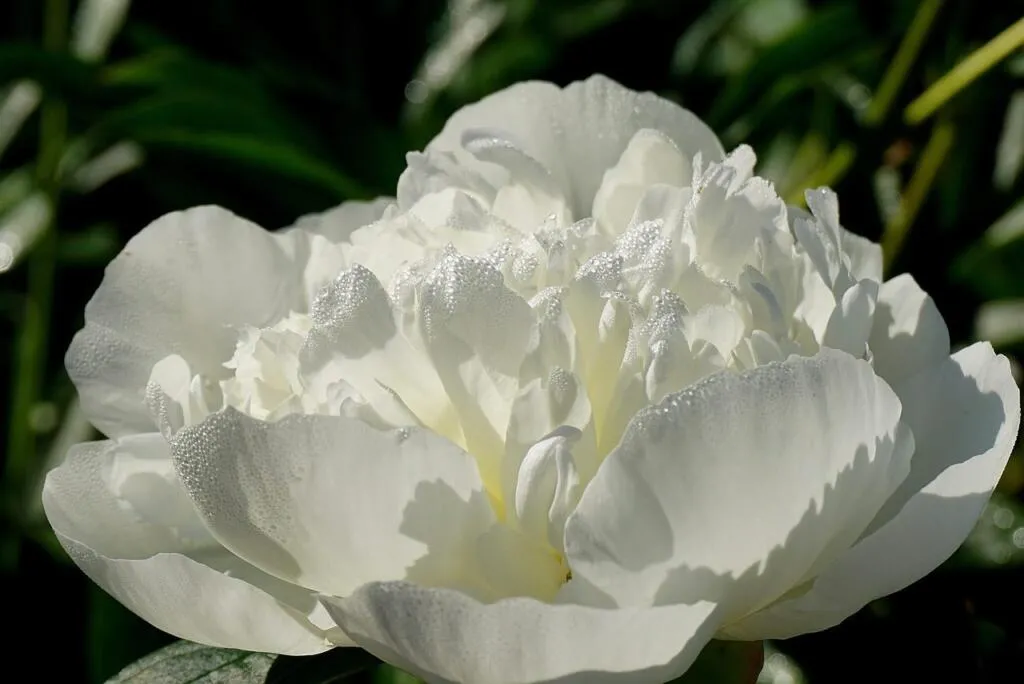
If you prefer white flowers, classic varieties such as ‘Duchesse de Nemours’ and ‘Shirley Temple’ are reliable doubles, and you’ll find more ideas in my guide to the best white flowers for UK gardens.
Yes. Herbaceous and Itoh Peonies die back in autumn and regrow from the roots every spring, and tree Peonies keep their woody stems. A well-sited Peony can live and flower for fifty years or more.
Autumn, from late September to November, is best, especially for bare-root plants. Pot-grown Peonies can be planted at any time the ground isn’t frozen or waterlogged.
Plant herbaceous and Itoh Peonies with the buds no more than 2.5cm (1in) below the soil surface. Tree Peonies are planted deeper, with the graft union about 15cm (6in) below the surface.
They flower best in full sun, ideally six hours or more a day. They will grow in light shade, but they flower less, and in deep shade they may not flower at all.
Cut herbaceous and Itoh Peonies to ground level in late autumn, once the foliage has yellowed. Don’t cut tree Peonies down; just remove dead or leggy stems.
The most common causes are Peony wilt, a late frost, or a dry spring. Buds that turn brown and soft are usually Peony wilt, so cut them off and dispose of them away from the compost heap.
They’re easy to establish in the right conditions, which means planting at the right depth in a sunny spot. They need very little care beyond a spring feed, supports for the heavier varieties, and cutting back in autumn.
Each plant only flowers for a few weeks, most varieties need staking, they dislike cold winds, and they take two or three years to flower well after planting or moving. The attractive foliage makes up for the short season, but they need patience and space.
They are probably not the best choice where space is tight, as a mature clump needs around a square metre for a few weeks of flowers. In a small garden, grow a compact variety such as ‘Bouquet Perfect’ in a large pot, or a single plant among longer flowering perennials.

Join over 100,000 gardeners on YouTube
Free gardening videos from the Garden Ninja, with 8 million views and counting.
Subscribe on YouTube, it’s freePeonies look their best when they’re part of a planned border, with plants around them that carry the show on once their flowers have finished. If you’d like to learn how to plan planting like that, my online courses take you through it step by step.
Courses start from just £29, and you can work through them at your own pace from home.
For the garden you’ve already got, not the one you’re starting from scratch. Seven checklists and video lessons from BBC Garden Rescue’s Lee Burkhill, designed to help you decide what’s worth keeping before you spend a penny.
Garden Design Examples for Small Gardens: 30 Design Templates & Planting Plans: In this online gardening course, I’ll walk you through 30 fantastic garden designs, explaining the logic behind the layout and plant choices, plus take-home tips for applying them in your own garden.
Learn how to transform and design your garden with Lee Burkhill’s crash course in garden design. In over 5 hours, Lee will teach you how to design your dream garden. Featuring practical design examples, planting ideas and video guides. Learn how to design your garden in one weekend!
Garden Design for Beginners Online Course: Want to become a garden designer or design your own garden? This beginner course is for you. Join me, Lee Burkhill, an award-winning garden designer, as I train you in the art of beautiful garden design. Enjoy 20 hours of online study and video lessons, along with quizzes and a completion certificate.
Peonies are long-lived and easy to establish in the right conditions. Plant them in autumn in full sun and fertile soil, with the buds no more than 2.5cm below the surface, give the heavier varieties a support in early spring, and cut the foliage to the ground in late autumn.
If yours won’t flower, check the planting depth and the amount of sun first, as those two account for most problems. If you’re still stuck, post a photo on the Garden Ninja Gardening Forum and the community and I will help you work out what’s going on.
Happy Gardening!


Lee Burkhill, known as the Garden Ninja, is an award-winning garden designer and horticulturist with over 30 years of gardening experience and 15 years as a professional garden designer. A qualified RHS (Royal Horticultural Society) professional, Lee specialises in sustainable garden design and practical horticultural advice. He designs and presents on BBC1’s Garden Rescue and in leading gardening publications. Lee combines three decades of hands-on gardening knowledge with professional design qualifications to help gardeners create beautiful, functional outdoor spaces.
View all posts by Lee Burkhill








JOIN THE NINJAS
Be the first in line for new Guides, Discount codes and Offers