For the garden you’ve already got, not the one you’re starting from scratch. Seven checklists and video lessons from BBC Garden Rescue’s Lee Burkhill, built to help you work out what’s worth keeping before you spend a penny.
69


🌱 Quick Answer
Plant Camassia bulbs in September or October, 10 to 15cm deep and 15 to 20cm apart, in sun or light shade. They thrive in heavy clay and soil that’s wet in winter and spring, naturalise in meadows and long grass, and flower in late April to June before coming back year after year.
I’ll admit it straight away: I love Camassia. They’re one of those plants that make visitors stop and ask what on earth they’re looking at. Tall spires of starry flowers rising out of a border in May look far too exotic to be this easy, like something that should need a greenhouse and a heated propagator, and yet they shrug off a British winter in sodden clay without a second thought. I rarely see them in other people’s gardens.
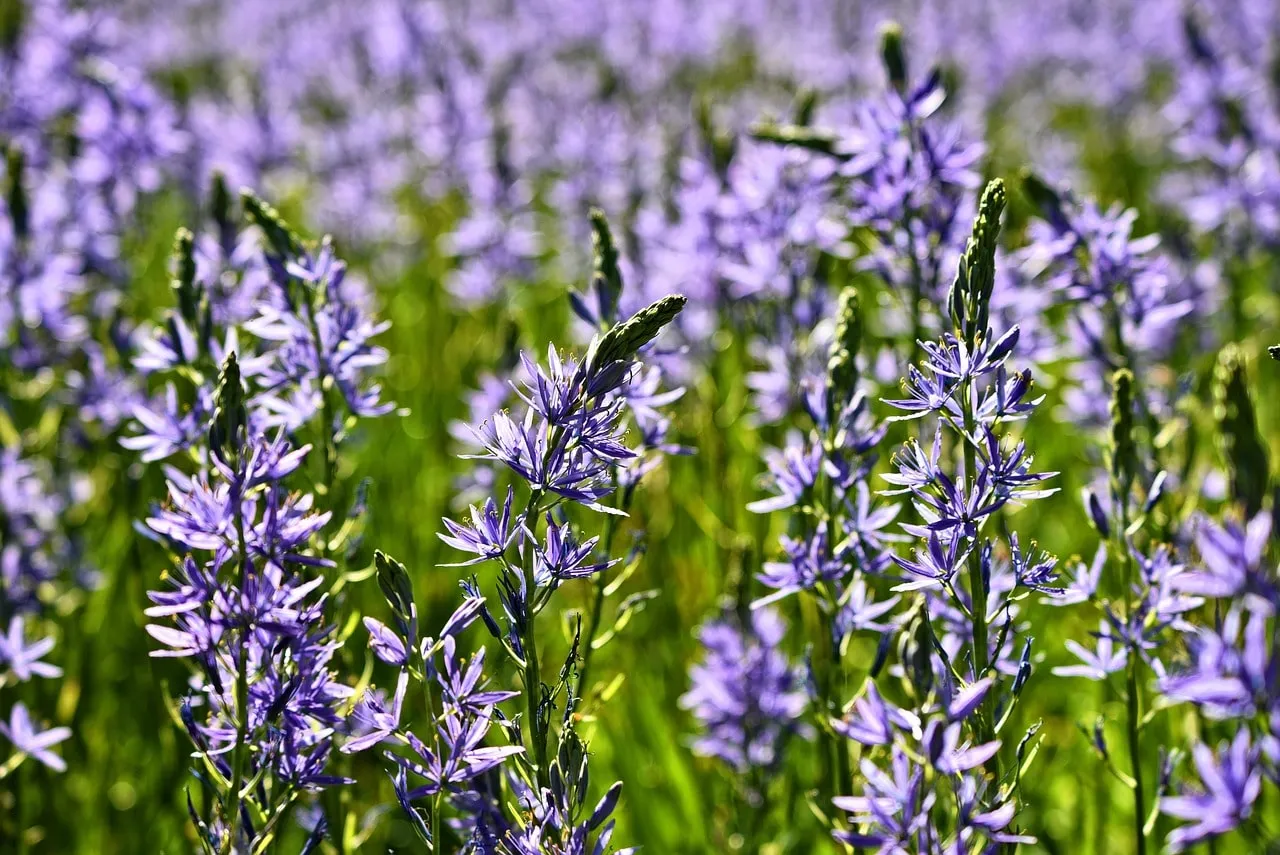
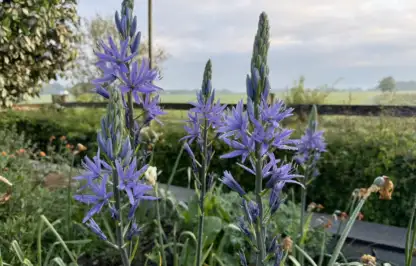
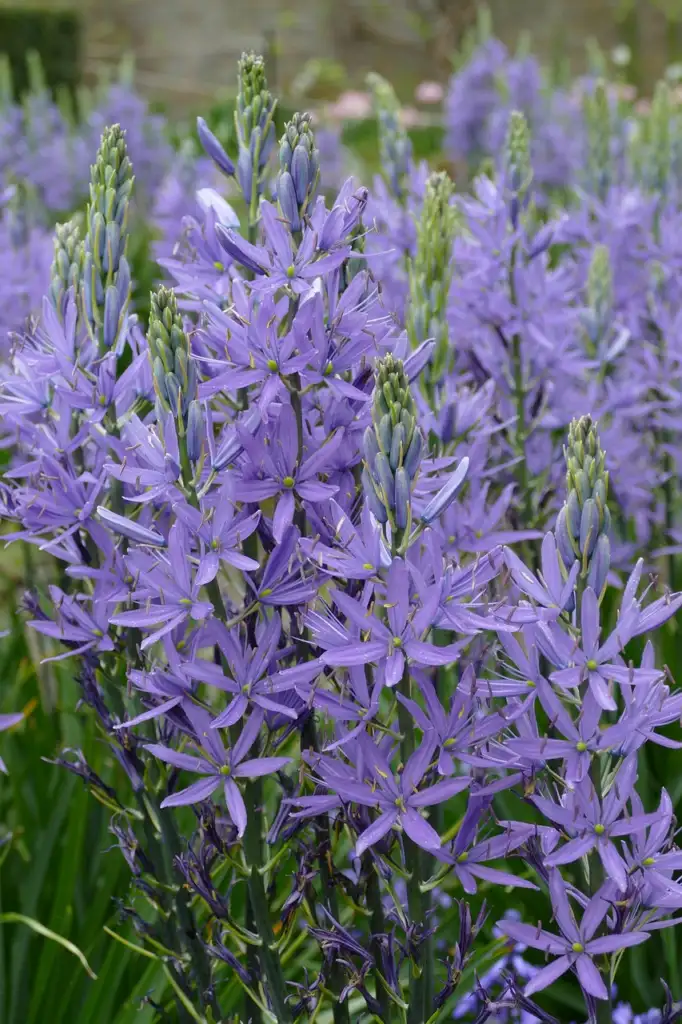
I grow them here at Garden Ninja HQ in what I call my Granite Garden, and when they open in late spring, the blue is electric. True, vivid blue is rare in the plant world, and most flowers sold as blue are really mauve or purple, if you’re being honest. Camassia glow best, especially in the low light of a May evening, when the rest of the border has faded into shadow.
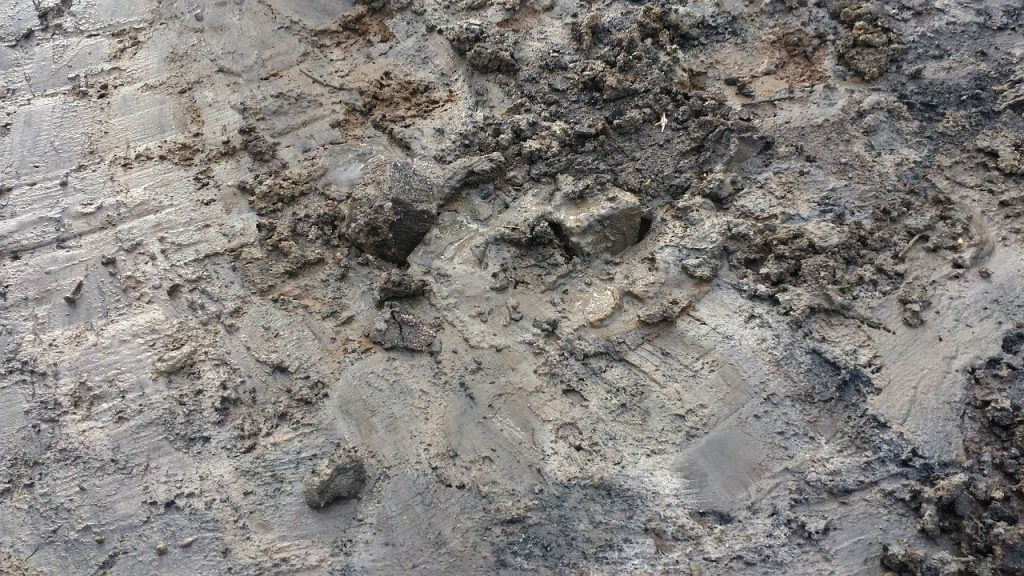
But the real reason every clay gardener should know about Camassia is what they’ll put up with underground. Most bulbs rot the moment they sit in wet, heavy soil over winter. Camassia come from damp meadows that flood in winter and spring, so waterlogged clay that would turn a tulip to mush is home from home for them. I mean, who would guess such a vibrant, exotic blue spring flower could come from such poor, wet soil!
In my experience, the only other spring bulbs you’d trust in that kind of ground are the very hardiest daffodils, and even they tend to sulk. In this guide, I’ll cover when and how to plant Camassia in clay, how to naturalise them in a meadow, the varieties worth growing, and the slightly unfortunate story of the explorers who ate too many.
Jump To
This guide contains affiliate links, which means I may earn a small commission if you buy through them, at no extra cost to you. If you only grow one Camassia, make it Camassia leichtlinii ‘Caerulea’, the tall blue one that started my love affair with them.
🛒 Buy Camassia leichtlinii ‘Caerulea’ Bulbs from Amazon UK
Camassia, also known as camas or quamash, is native to western North America, where it grows in vast numbers in damp meadows and prairies from British Columbia down to California. Those meadows are soaked through in winter and spring, then bake and dry out over summer. The bulbs have evolved for exactly that rhythm: they want plenty of moisture while they grow and flower, then go dormant and are perfectly happy for the ground to dry out once the leaves die back.
That’s almost a description of a typical British clay garden. Clay holds water all winter, often sits waterlogged after heavy rain, then cracks and sets like concrete in a dry July. It’s the kind of soil that makes most bulb catalogues nervous, and it’s why Camassia stands out in my guide to plants that love clay soil.
There’s one important caveat, though, and I’d rather you heard it from me than discovered it the hard way. Seasonal waterlogging is fine. Standing water year-round is not.
A spot that turns into a pond every winter and drains by late spring is perfect; a permanent bog or a pond margin that never dries out is pushing it, because bulbs can rot during summer dormancy if they’re never allowed to dry off. If a patch of your garden is wet even in August, choose true bog plants for that bit and put the Camassia on the slightly higher ground around it.
| Bulb | Wet clay tolerance | In practice |
|---|---|---|
| Camassia | Excellent | Thrives in soil that’s wet in winter and spring |
| Daffodils (toughest types) | Fair | Tolerate heavy soil but sulk if waterlogged for long |
| Snake’s head fritillary | Good | A natural partner for damp meadows |
| Tulips | Poor | Rot quickly in wet, heavy ground |
| Alliums | Poor | Need sharp drainage to come back reliably |
Camassia are about as low maintenance as bulbs get. Plant them once, get the timing of a couple of jobs right, and they’ll keep coming back for decades. This is the calendar I work to.
| When | What to do |
|---|---|
| September to October | Plant bulbs, ideally while the soil is still warm. November planting is fine if the ground isn’t frozen. |
| February to March | Leaves emerge. Keep an eye out for slugs on the young shoots. |
| Late April to June | Flowering, with C. quamash first and C. leichtlinii types following into June. |
| June to July | Cut flower stems if you don’t want seed. Leave the foliage to yellow and die back. |
| July to August | Dormant. Cut meadows once the Camassia leaves have gone. Lift and divide congested clumps. |
| Autumn, every few years | Mulch borders with compost or leaf mould, and plant more if you’re hooked. |
Plant Camassia bulbs in September and October. Like most spring-flowering bulbs, they need to root into warm autumn soil and then get a winter chill to flower, and on heavy clay there’s an extra reason to get them in early: clay is far easier to dig in early autumn than it is in November, when it’s turned to something closer to modelling putty. Late planting into November still works fine as long as the ground isn’t frozen or completely waterlogged on the day.
Spring planting of dry bulbs doesn’t work. If you’ve found a forgotten bag in the shed in March, plant them anyway, but expect a year of leaves and few flowers while they catch up. A better spring option is to buy Camassia growing in pots, which you can plant out straight away at the same depth they’re growing. My bulb planting calendar has the timing for everything else you might want to plant alongside them this autumn.
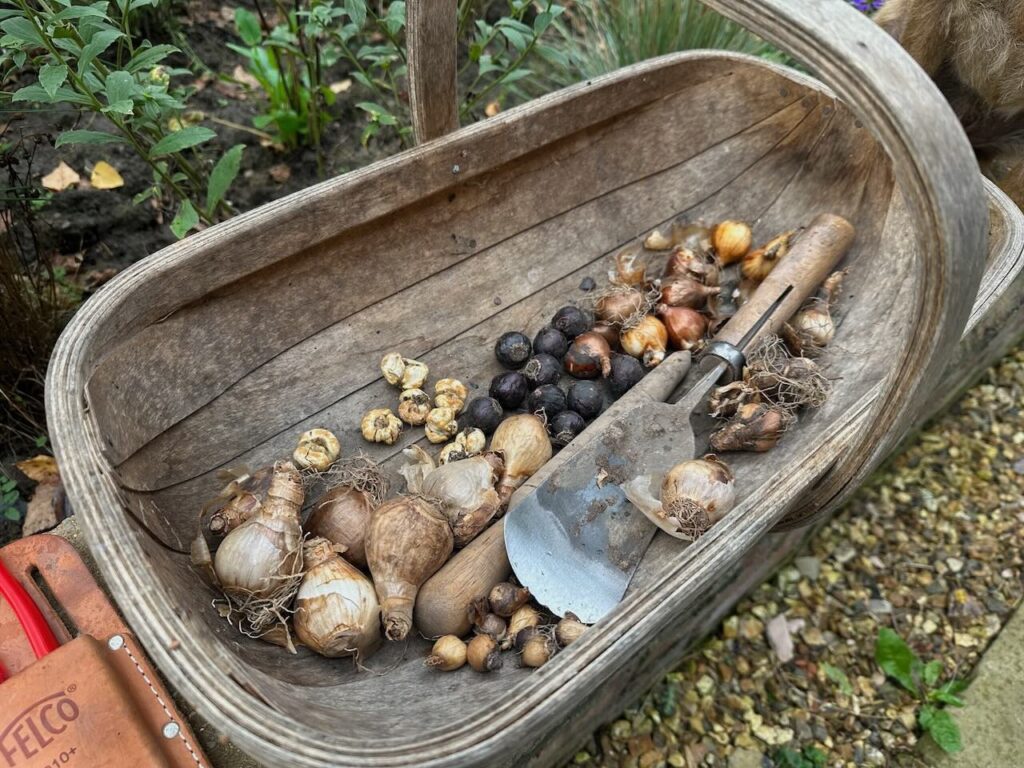
Bulb size matters more with Camassia than with most bulbs, so check what you’re buying. Bulb sizes are given as the circumference in centimetres, such as 12/14; for C. leichtlinii, I’d look for 12/14 or bigger, which should flower well in the first spring. Bargain packs of smaller bulbs are fine for a meadow if you don’t mind waiting a year for them to bulk up. Whatever size you buy, the bulbs should feel firm and heavy for their size, with no soft patches or mould.
Plant them as soon as they arrive, because they don’t like hanging around in a bag. If you’re buying from mail-order nurseries, my guide to buying healthy plants online has more tips on what to check when the parcel arrives.
Camassia bulbs are big and chunky, a bit like a small onion, so plant them deeper than most spring bulbs. A general rule of about three times the bulb’s height works well: around 10cm deep for the smaller Camassia quamash and 10 to 15cm deep for the larger C. leichtlinii and C. cusickii. Deeper planting also anchors tall flower stems, which matters in exposed spots.
| Type | Depth | Spacing | Height in flower |
|---|---|---|---|
| C. quamash | 10cm | 10 to 15cm | 30 to 60cm |
| C. leichtlinii types | 10 to 15cm | 15 to 20cm | 60 to 100cm |
| C. cusickii | 10 to 15cm | 15 to 20cm | 60 to 80cm |
| In meadow grass | As above, through the turf | In drifts, 15 to 30cm | As above |
For a natural look, plant in loose groups of five to fifteen bulbs rather than dotting single bulbs evenly through a border. In a meadow, throw handfuls across the grass and plant each one where it lands. Camassia look best in drifts you can see from across the garden.
Planting in clay is mostly about not making things worse. These are the steps I follow.
Pick your moment. Plant when the clay is moist but not sticky. If the soil smears and glues itself to your spade, walk away and try again in a few days. Working wet clay squashes the structure and leaves you with a compacted, airless lump around the bulbs.
Dig a wide hole. For a group, dig one wide hole 10 to 15cm deep rather than lots of narrow ones. Narrow holes in clay act like little sumps that fill with water and hold it there. A wider hole lets the water spread out.
Loosen the base and add a little grit. Break up the bottom of the hole with a fork, and on very heavy clay, add a handful of horticultural grit under the bulbs. Camassia don’t need sharp drainage, but a bit of grit stops the bulb sitting in a pocket of cold mud during dormancy. Fork in some garden compost while you’re at it.
Pointy end up. Set the bulbs in with the pointed tip upwards and the flatter base, where the roots come from, down. Space them 15 to 20cm apart for the big types.
Backfill, firm and mulch. Crumble the soil back, firm it gently with your boot rather than stamping, and mulch the surface with compost or leaf mould. Then label the patch, because by next March you will have forgotten, and a spade through a Camassia bulb is a sad sight. I go through all of this, including the most common mistakes, in this video on planting bulbs.
If you’re planting dozens of bulbs in grass or heavy ground, a long-handled bulb planter makes life much easier and saves your back from a day of digging. My guide to using a bulb planter shows the technique.
🛒 Buy the Burgon & Ball RHS Long Handled Bulb Planter from Amazon UK
If Camassia have a natural habitat in a British garden, it’s the meadow. In the wild, they colour whole prairies blue; in a garden, they do the same job in rough grass, a wildflower area, or an orchard. They flower in May, after the daffodils have faded and before the summer meadow flowers get going, which fills what’s usually a quiet gap in the meadow calendar with tall spires of blue that sit just above the grass.
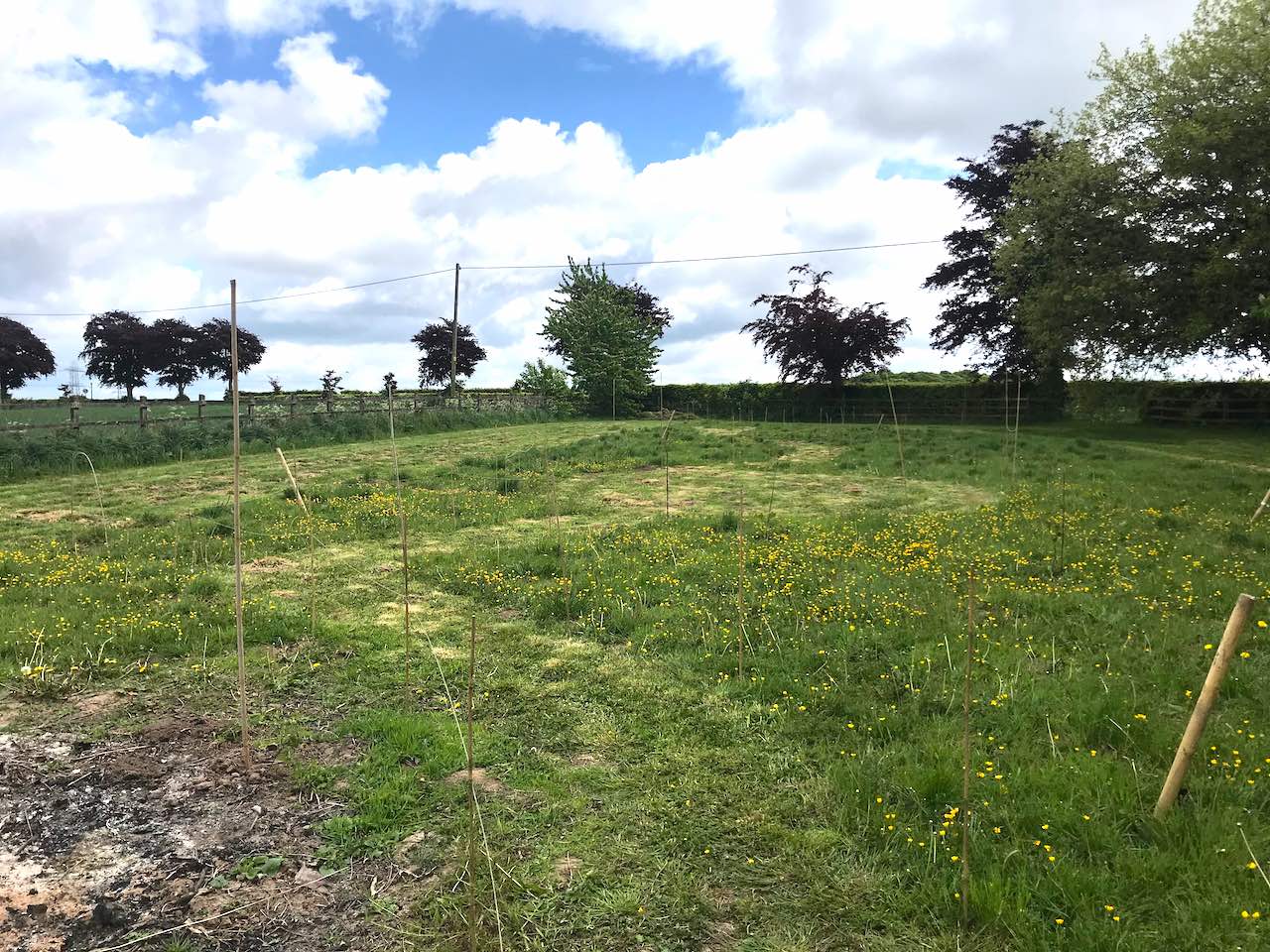
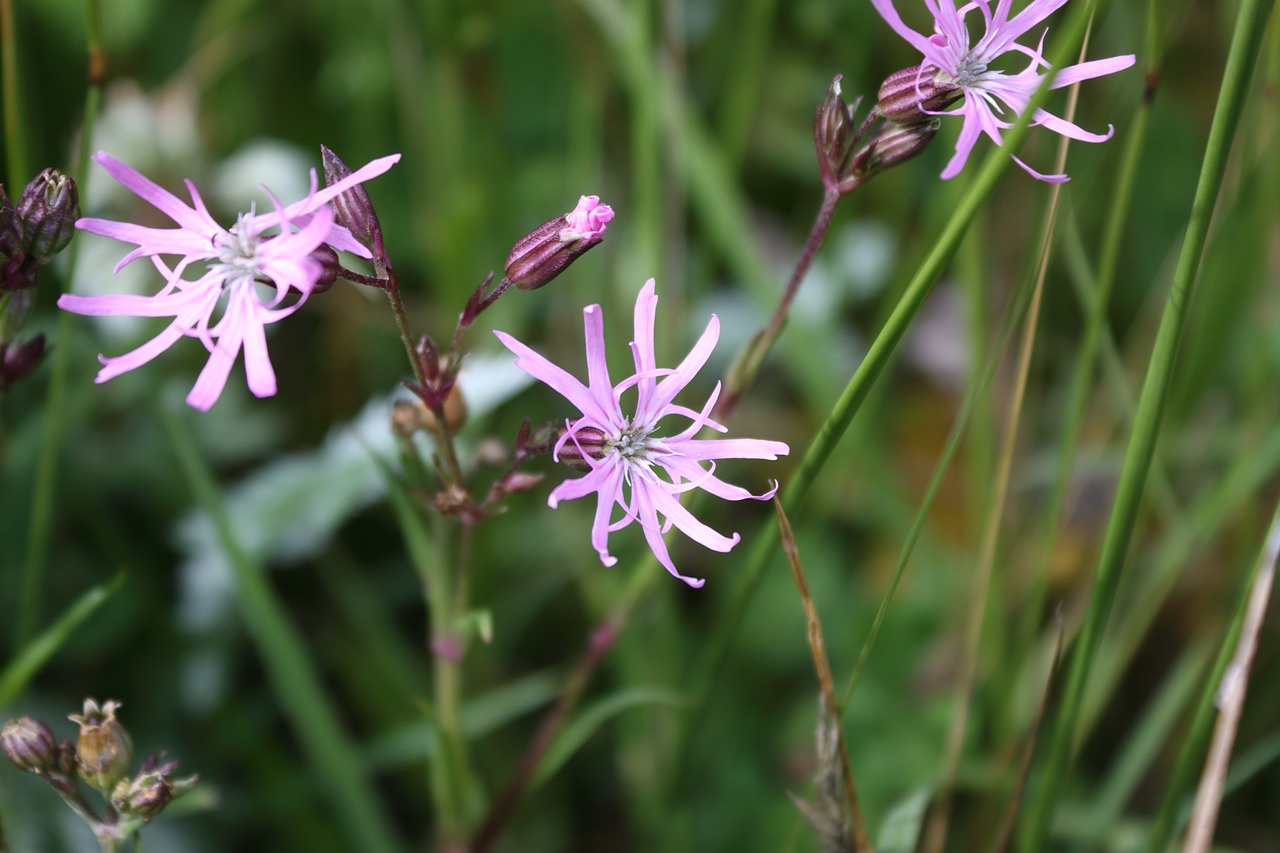
They’re also one of the few bulbs that can hold their own in long grass. Daffodils and crocuses are fine in short turf but get swamped later in the season. Camassia stems grow to 60cm to a metre, so the flowers stay visible even as the grass grows around them. On a heavy, damp site, plant them alongside snake’s head fritillaries, ragged robin, meadow buttercup, and ox-eye daisies for a wet-meadow look.
The crucial thing with Camassia in grass is when you cut. The leaves need to die back fully after flowering to feed the bulbs for next year, which usually means leaving the meadow uncut until July. That fits perfectly with a traditional meadow cut anyway, which happens once the wildflowers have dropped their seed. If you mow your grass every week, Camassia aren’t for that bit of lawn. Give them a corner you’re happy to let grow long.
If you’re starting a meadow from scratch, this video walks you through how I created mine, and Camassia fits right into the planting plan. My guides to creating a wildflower meadow the easy way and how and when to cut a wildflower meadow cover the rest.
| Plant | Flowers | Why it works with Camassia |
|---|---|---|
| Snake’s head fritillary | April | A classic damp meadow bulb that flowers just before |
| Cowslip | April to May | Tough, native and happy in heavy grassland |
| Ragged robin | May to June | Loves damp ground and carries on after the Camassia |
| Meadow buttercup | May to July | Bright yellow that makes the blue sing |
| Ox-eye daisy | June to August | Takes over the show as Camassia fade |
| Yellow rattle | May to July | Weakens the grass so bulbs and flowers can compete |
If you’re thinking about a rain garden, Camassia should be near the top of your list. A rain garden is simply a shallow dip or bed that collects water running off a roof or patio and lets it soak away slowly, so it’s wet and soggy after heavy rain and in winter, then dries out in a summer dry spell. That’s the boom-and-bust pattern of a camas meadow, which is why Camassia are one of the few bulbs that thrive there.
Plant them on the sides and upper slopes of the dip rather than in the very bottom, where water sits longest.
The same rule applies by a pond or along a ditch: the damp margins that dry a little in summer are perfect, while the permanently wet zone right at the water’s edge is better left to true marginal plants like yellow flag iris and marsh marigold. Get that right, and you’ll have tall spires of blue reflected in the water every May, which is about as close to a North American camas meadow as you’ll get in a British back garden.
You don’t need a meadow to grow Camassia. In a border, they provide strong vertical lines in late spring, right after the tulips finish and summer perennials are still bulking up. That timing is what makes them useful from a design standpoint. They bridge the gap that leaves so many borders looking flat in May.
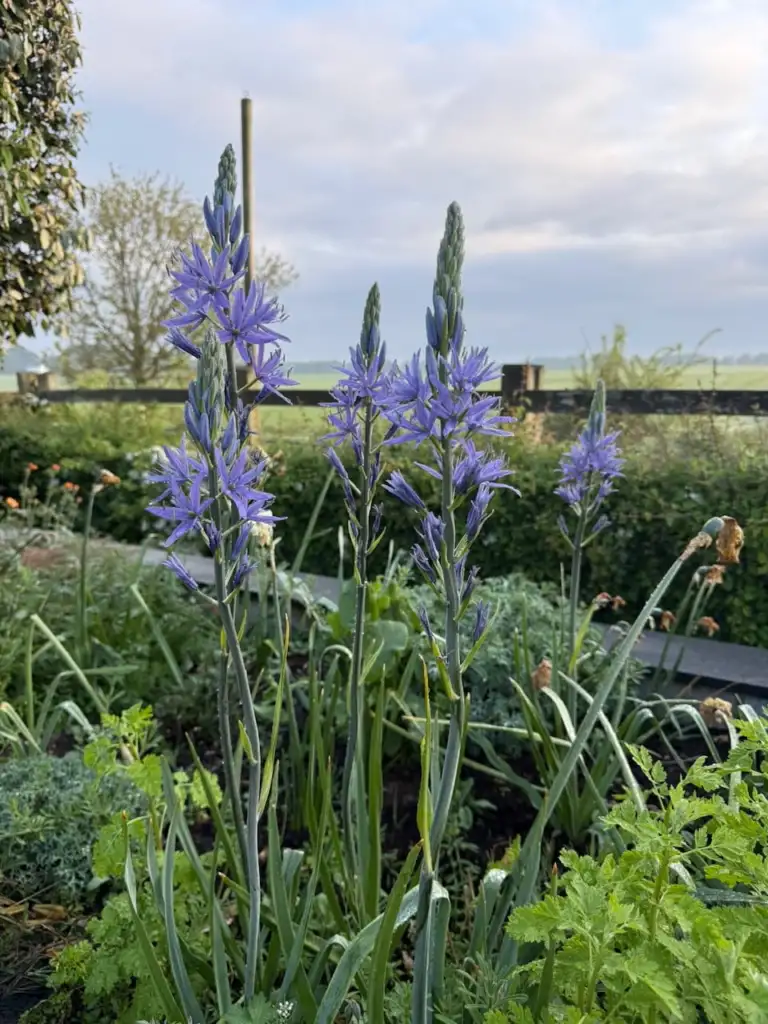
I like them rising through low, mounding plants that will hide their leaves as they fade: hardy geraniums, Euphorbia, Geum, Alchemilla and ferns all do the job nicely. They also work well in a prairie or naturalistic scheme, mixed with grasses, and pair well with alliums, which carry the purple and blue theme into June. My guide on planting allium bulbs covers those, although on heavy, wet clay alliums are much fussier, so keep them to the better-drained parts of the border.
That electric blue also gives you a lot to play with colour-wise. For a bright, zingy combination, pair it with lime green Euphorbia or the orange of a Geum such as ‘Totally Tangerine’, as blue and orange sit opposite each other on the colour wheel and make each other glow.
For something calmer, mix blue and white Camassia with silver foliage and soft pink geraniums. My guide to using the colour wheel in garden design explains why these combinations work, and my true blue flowers guide has more plants in the same rare shade.
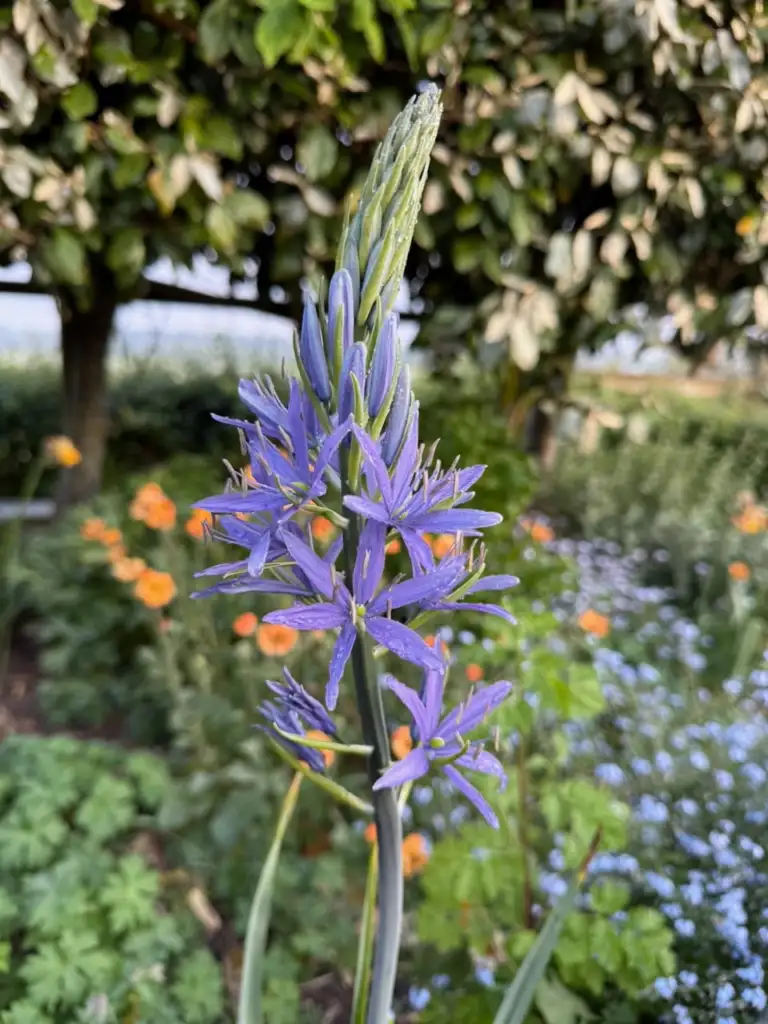
Camassia are also great for small gardens because they take up very little ground space for the height and impact they give. A clump of seven bulbs in a 40cm gap at the back of a narrow border gives you a metre of electric blue in May, then disappears to let the summer plants take over. In shadier spots, they’re one of my top choices in my guide to plants for heavy clay soil in shade, and in moist, fertile ground they’re equally at home in silty soil.
They also make excellent cut flowers. Pick a few stems when the bottom flowers are open and the top ones are still in bud, and they’ll keep opening in a vase for up to two weeks. The bees will forgive you, because Camassia feed them in the garden. Their open, starry flowers give bumblebees and solitary bees easy access to pollen and nectar, and they’re a valuable addition to my list of plants for bees.
Yes, although they’re happiest in the ground long term. If you’ve only got a patio, or you want to enjoy them up close, use a deep pot of at least 30cm, as the bulbs are big and the stems are tall, and a heavy pot helps stop the display blowing over. Fill it with peat-free multi-purpose compost mixed with some loam-based compost, which holds moisture better than multi-purpose alone. Plant the bulbs 10cm deep and about 10cm apart; five large bulbs in a 35cm pot looks great.
The big difference from most bulbs in pots is watering. Camassia want the compost to stay moist through spring while they’re growing and flowering, so don’t let the pot dry out in a sunny April spell. Once the leaves have died back, you can ease off and let it dry out over summer. After two or three years, plant them out into the garden. My guide to planting bulbs in pots covers compost mixes and aftercare in more detail.
Only a handful of Camassia species exist, and three do almost all the work in British gardens: the smaller Camassia quamash, the tall Camassia leichtlinii with its many forms, and the ice-blue Camassia cusickii. These are the ones I’d recommend, starting with the one I’d grow if I could only have one.
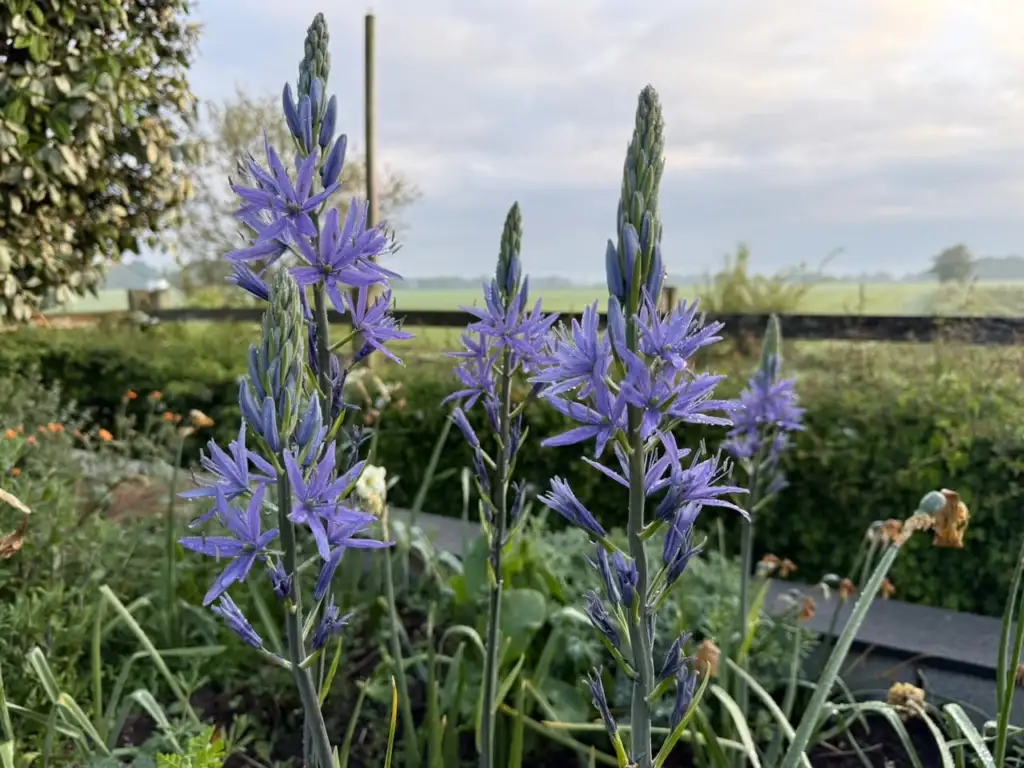
This is the classic, and the one most people picture when they think of Camassia. Tall, sturdy stems carry dozens of starry flowers in a rich lavender to violet-blue, opening from the bottom of the spike upwards over two or three weeks in May and June. It’s sold under a few names, including C. leichtlinii subsp. suksdorfii Caerulea Group, but they all refer to essentially the same plant.
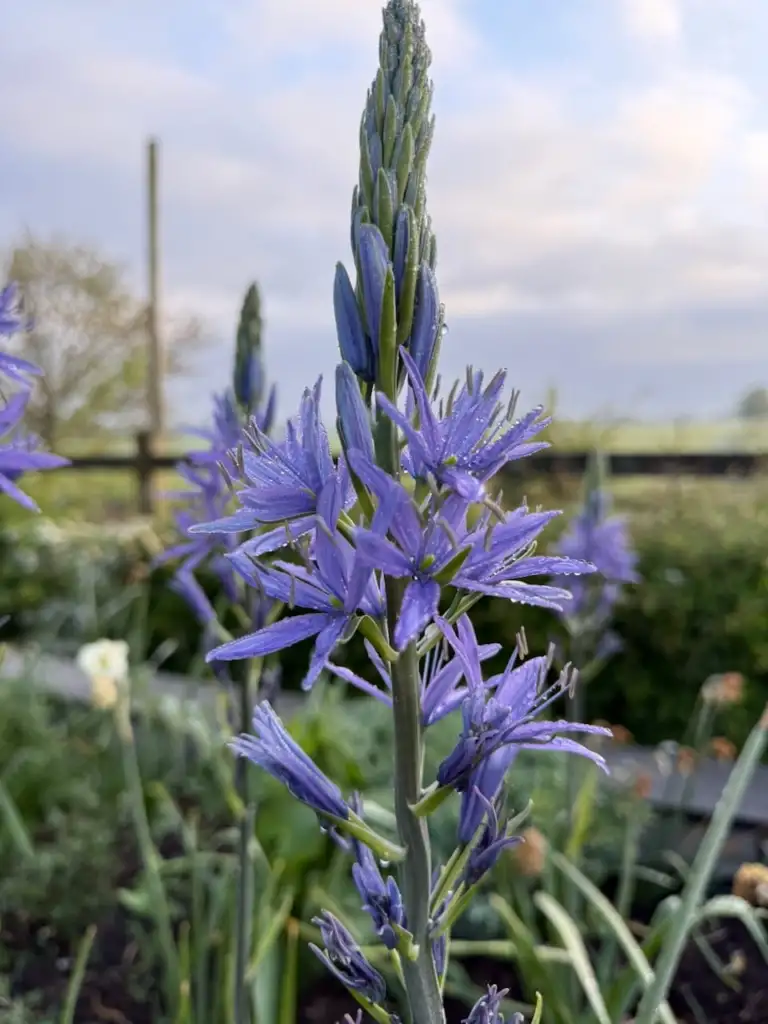
It’s the best all-rounder for borders and meadows; it’s reliable in heavy clay, and its tall stems stand out above hardy geraniums or long grass. Also look out for ‘Maybelle’, a selection with especially rich blue flowers.
| At A Glance | |
|---|---|
| Botanical Name | Camassia leichtlinii subsp. suksdorfii Caerulea Group |
| Plant Type | Hardy perennial bulb |
| RHS Hardiness | H4 |
| Height and Spread | 60 to 100cm x 20cm |
| Flowering Period | May to June |
| Best Conditions | Sun or part shade, moist or heavy clay soil, borders and meadows |
| Key Feature | Tall spires of rich blue stars that bridge the late spring gap |
🛒 Buy Camassia leichtlinii ‘Caerulea’ Bulbs from Amazon UK
Camassia quamash is the original camas of North American meadows and the most intensely blue species, deep and almost luminous on a dull day. It’s smaller than C. leichtlinii, usually 30 to 60cm tall, and flowers a little earlier, from late April into May. The bulbs are smaller and cheaper too, which makes it the one to buy by the hundred.
This is my pick for naturalising in grass, because it suits a meadow and seeds itself gently once it’s settled. ‘Blue Melody’ has a pretty form with cream-edged leaves, giving you something to look at before the flowers open.
| At A Glance | |
|---|---|
| Botanical Name | Camassia quamash |
| Plant Type | Hardy perennial bulb |
| Hardiness | Fully hardy in UK gardens |
| Height and Spread | 30 to 60cm x 10cm |
| Flowering Period | Late April to May |
| Best Conditions | Sun or light shade, moist soil, meadows and long grass |
| Key Feature | The deepest, most electric blue of the Camassias |
🛒 Buy Camassia quamash Bulbs from Amazon UK
If blue isn’t your colour, ‘Alba’ offers the same height and elegance, with creamy white flowers that glow in the evening and look very classy in a white- or green-themed border. It flowers in May and June alongside ‘Caerulea’, and together they make a lovely meadow mix.
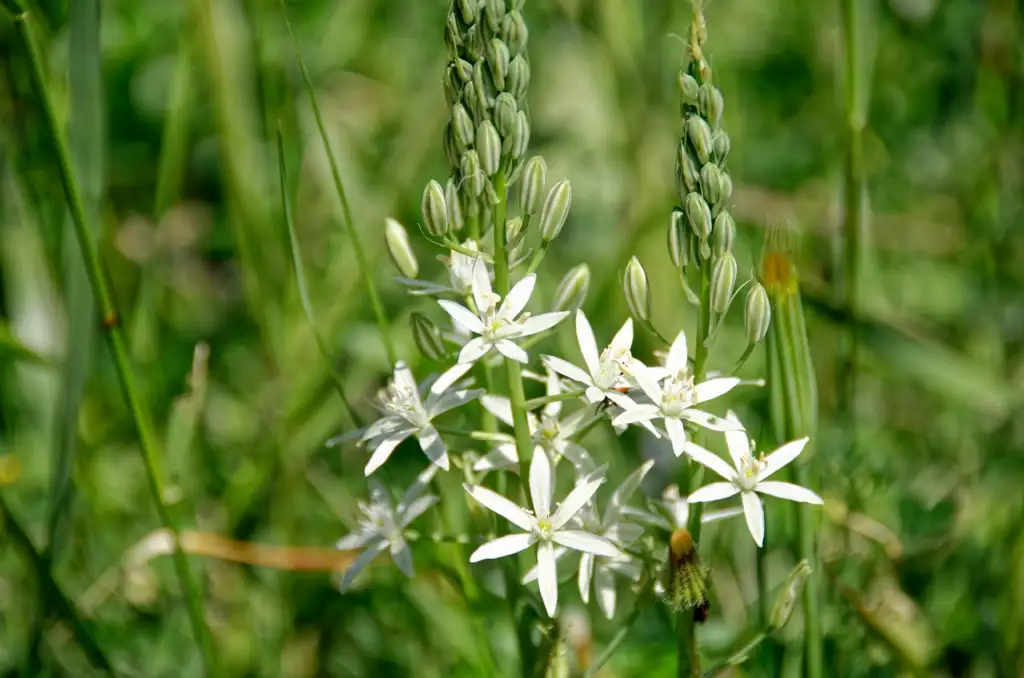
For something more extravagant, ‘Semiplena’ has double, creamy-white flowers with a slightly frilly look. It takes longer to bulk up and costs more, but it’s a real talking point. If you love white flowers, my guide to the best white flowers for UK gardens has plenty of partners for it.
| At A Glance | |
|---|---|
| Botanical Name | Camassia leichtlinii ‘Alba’ |
| Plant Type | Hardy perennial bulb |
| Hardiness | Fully hardy in UK gardens |
| Height and Spread | 60 to 100cm x 20cm |
| Flowering Period | May to June |
| Best Conditions | Sun or part shade, moist or heavy soil |
| Key Feature | Creamy white spires that glow at dusk |
🛒 Buy Camassia leichtlinii ‘Alba’ Bulbs from Amazon UK
Camassia cusickii has paler, ice-blue flowers and broader, greyish-green leaves than the others, plus some of the biggest bulbs you can plant. It’s a sturdy, reliable plant and the soft blue is a nice change from the deeper colours, especially in a cool-toned planting scheme with silver foliage.
It copes well with heavy soils, which makes it a good choice for the stickiest clay in the garden. Plant it at the deeper end of the range, around 15cm, so those big bulbs are well anchored.
| At A Glance | |
|---|---|
| Botanical Name | Camassia cusickii |
| Plant Type | Hardy perennial bulb |
| Hardiness | Fully hardy in UK gardens |
| Height and Spread | 60 to 80cm x 20cm |
| Flowering Period | May |
| Best Conditions | Sun or part shade, moist to heavy clay soil |
| Key Feature | Soft ice-blue flowers and very large bulbs |
🛒 Buy Camassia cusickii Bulbs from Amazon UK
‘Sacajawea’ is the one for foliage lovers. The leaves are edged in creamy white, so the plant looks good from the moment it emerges in spring, and the flowers are a soft cream. It’s a little shorter and less vigorous than the plain forms, so it suits the front or middle of a border better than a meadow.
The name nods to Sacagawea, the Shoshone woman who guided and interpreted for the Lewis and Clark expedition, which feels fitting for a camas. You’ll see why in the history section further down.
| At A Glance | |
|---|---|
| Botanical Name | Camassia leichtlinii ‘Sacajawea’ |
| Plant Type | Hardy perennial bulb |
| Hardiness | Fully hardy in UK gardens |
| Height and Spread | 50 to 70cm x 20cm |
| Flowering Period | May to June |
| Best Conditions | Sun or part shade, moist soil, borders |
| Key Feature | Cream-edged leaves and soft cream flowers |
Camassia are sometimes sold as wild hyacinth or Indian hyacinth, and people often mistake young plants for bluebells, especially the chunky Spanish types, because the strappy leaves look very similar when they first come up in spring. Once they flower, though, you can tell them apart.
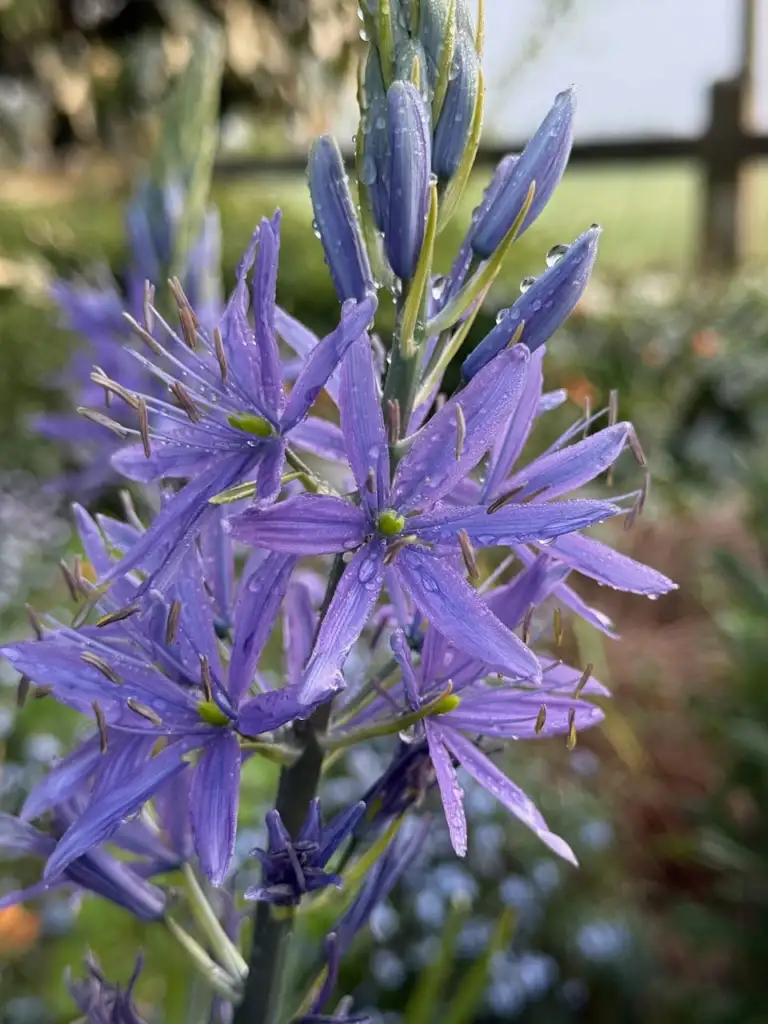
Bluebells have bell-shaped flowers that hang down, and they flower in April and early May at around 30 to 40cm tall. Camassia have flat, open, star-shaped flowers with six petals that face outwards on an upright spike; they’re usually much taller, 60cm to a metre, and the big ones flower a few weeks later, in May and June.
Camassia also have prominent yellow stamens in the centre of each star, which you’ll never see on a bluebell. And unlike Spanish bluebells, Camassia won’t cross with our native bluebells, so you can plant them near woodland with a clear conscience. If you’re trying to figure out what’s growing in your shady corners, my guide to English vs Spanish bluebells covers the bluebell side in detail.
If you’ve got patience and fancy a cheap way to fill a meadow, Camassia are easy from seed, just slow. Collect seed from your own plants in summer when the pods turn brown and start to split, or buy fresh seed, and sow it thinly in a pot of gritty seed compost in autumn. Leave the pot outside over winter, because the seed needs a cold spell to germinate, and you’ll see grass-like seedlings the following spring.
Grow them on in the pot for a year or two, keeping them moist in spring, then plant the little bulbs out into the meadow or border. Expect three or four years before the first flowers. It’s a long game, but a pot of seed can give you hundreds of plants for the price of a handful of bulbs, and if you sow a pot every autumn, you’ll soon have a steady supply.
Once Camassia are in, they need very little from you. The main question I get asked is whether to cut them back after flowering, and the answer is: yes, the flower stems, if you like; no, the leaves.
Flower stems. Once the flowers have faded, you can cut the stems down to the base. That tidies things up and stops them from setting seed, channelling more energy back into the bulb. If you’re growing them in a meadow and want them to spread, leave the stems to ripen and drop their seed instead. The seed heads have a nice architectural look too.
Leaves. Leave them alone until they’ve gone yellow and flopped, usually by July. That foliage is feeding the bulb for next year’s flowers, and cutting it early is the quickest way to end up with a clump of leaves and no flowers. Plant them among perennials that will grow up and hide the fading leaves, and you won’t even notice them.
Feeding. On fertile clay, Camassia rarely need feeding. A mulch of garden compost or leaf mould every autumn keeps the soil healthy and helps break up heavy clay over time. In pots, give a high-potash liquid feed every couple of weeks from flowering until the leaves die back. My guide to mulching your garden covers how and when to mulch.
Dividing. After about five years, a clump can become so congested that flowering drops off. Lift it with a fork in late summer, when the bulbs are dormant; separate the bulbs and replant them right away with more space. It’s also a free way to get more plants for elsewhere in the garden. The technique is the same as in my guide to lifting and dividing spring bulbs.
Yes, Camassia are long-lived perennial bulbs that come back reliably every year and slowly bulk up into larger clumps. They also self-seed in the right conditions, particularly C. quamash in grass, but seedlings take three or four years to reach flowering size. In my experience, they spread politely rather than aggressively, and they’re not considered invasive in the UK. If you don’t want seedlings, cut the flower stems off after they flower.
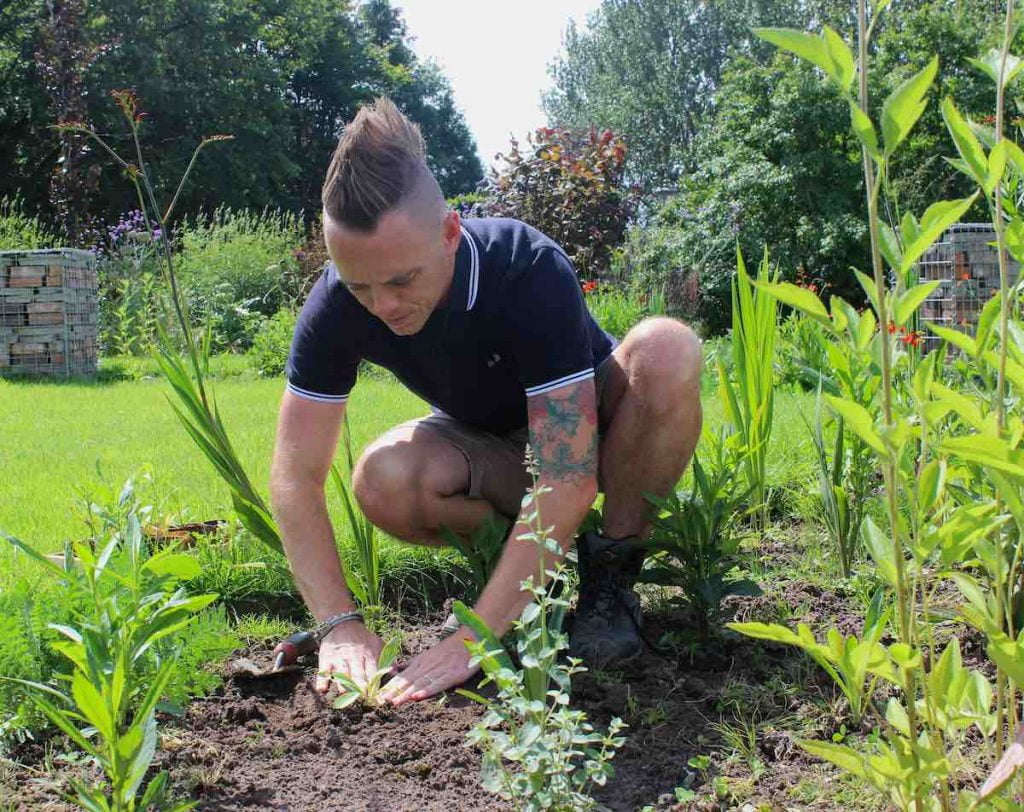
Camassia are tough, but a few things can go wrong. These are the issues I see most often, roughly in order of how often they come up.
Leaves but no flowers. In the first spring after planting, small or late-planted bulbs often produce leaves and few flowers while they settle in, so give them a year. After that, the usual causes are cutting back the foliage too early the previous summer, too much shade, the soil drying out completely in spring while they’re growing, or congested clumps that need dividing.
Slugs on the young shoots. Slugs and snails love fresh spring shoots, especially on damp clay, which is their favourite habitat. Damage is usually cosmetic, but in a bad year it can ruin the flower spikes before they open. A ring of grit around new shoots, evening patrols with a torch, and encouraging frogs, toads and birds into the garden all help. My guide to slug- and snail-proof plants has more ideas for damp borders.
Bulbs rotting. This almost always comes down to ground that stays wet in summer while the bulbs are dormant, or bulbs that were already soft or mouldy when they were planted. Move the survivors to slightly higher ground and add grit under them when you replant.
Flower stems flopping. Tall C. leichtlinii types can lean or snap in exposed, windy spots, especially in rich soil. Plant them deeper, at around 15cm, grow them among sturdy perennials that will prop them up, or choose the shorter C. quamash for exposed gardens.
Rabbits and deer tend to leave Camassia alone, which makes them a good bet for rural gardens where tulips get grazed to the ground.
Camassia have a far more dramatic backstory than you’d expect from a polite garden bulb. For thousands of years, camas was one of the most important foods for Indigenous peoples of the Pacific Northwest, including the Nez Perce, the Coast Salish, and many others.
Families tended and harvested the same camas meadows for generations, digging the bulbs and slow-cooking them in pit ovens lined with hot stones for up to two days. That long, slow roast converts the bulbs’ indigestible inulin into sugars, turning them into something sweet, said to taste a little like a sweet potato, which could be dried and stored for the winter.
Then, in September 1805, the Lewis and Clark expedition arrived, half-starved after crossing the Bitterroot Mountains. The Nez Perce generously fed them dried salmon and camas, and the men tucked in with gusto. Unfortunately, starving men plus a mountain of high-fibre bulbs, some likely undercooked, is not a winning combination.
Nearly the whole party lay low with stomach cramps, sickness, and, let’s be delicate about this, an extraordinary amount of wind. Clark recorded in his journal that he was very unwell from how many roots he’d eaten. Not quite the welcome feast anyone had in mind. The expedition did eventually learn to enjoy camas, in sensible portions.
There’s a darker twist too. Death camas grew in the same meadows, a highly poisonous lookalike with cream flowers. Out of flower, the bulbs are hard to tell apart, so Indigenous harvesters marked or dug the edible blue camas while it was in bloom, and weeded out the death camas.
Lewis even warned his men to buy their camas from the Nez Perce rather than dig it themselves. The expedition reported meadows of camas so blue they looked like lakes from a distance, a sight I’d love to see one day.
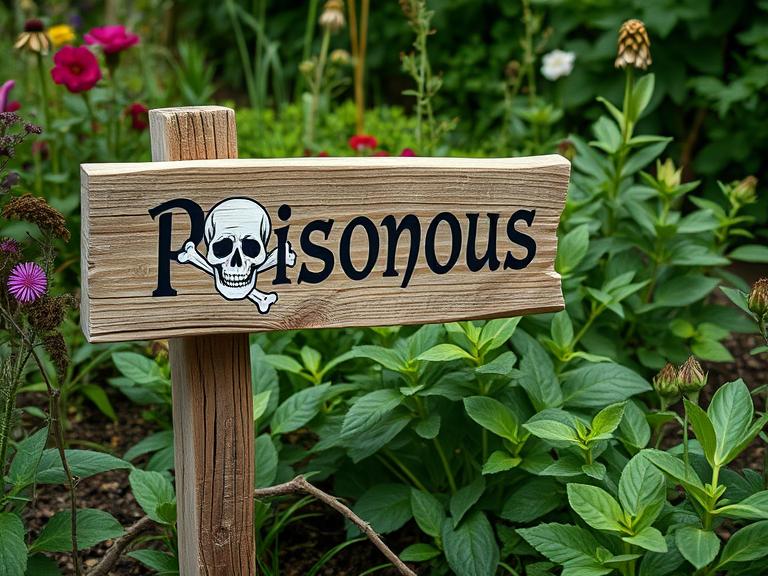
I wouldn’t suggest eating garden Camassia, before anyone gets ideas. The bulbs aren’t generally considered dangerous, but raw or undercooked they’ll give you a very good impression of the Lewis and Clark expedition, so keep dogs from chewing them, too.
In a gentler way, they still mark the year’s turning in my garden. On the Wheel of the Year, they flower right around Beltane, the start of summer, when everything in the garden seems to surge at once, and a drift of electric blue spires is about as good a way to celebrate it as I can think of.
Plant Camassia bulbs in September and October, while the soil is still warm. Planting in November is fine as long as the ground isn’t frozen or waterlogged. Spring planting of dry bulbs usually gives a year of leaves and few flowers.
Plant Camassia quamash about 10cm deep, and the larger Camassia leichtlinii and Camassia cusickii 10 to 15cm deep, roughly three times the bulb’s height. Space them 10 to 20cm apart depending on the type.
Yes. Camassia are among the best bulbs for heavy clay because they come from meadows that stay wet in winter and spring. They cope with seasonal waterlogging that would rot most bulbs, but avoid spots that stay wet all summer.
Camassia tolerate waterlogged soil in winter and spring, unlike most bulbs. They do need the ground to dry out a little in summer while they’re dormant, so permanent bog or standing water isn’t suitable.
Yes. Camassia are hardy, long-lived perennial bulbs that flower every year and slowly build into larger clumps, especially if you let the foliage die back naturally after flowering.
Plant Camassia in sun or light shade in moist, fertile soil, including heavy clay. They’re ideal for meadows, long grass, damp borders and the edges of wet areas, and look best planted in drifts.
You can cut the flower stems down once the flowers fade, unless you want them to self-seed. Leave the leaves until they’ve turned yellow, usually by July, as they feed the bulb for next year’s flowers.
No, Camassia aren’t considered invasive in the UK. They spread slowly by bulb offsets and gently self-seed in grass, but seedlings take three or four years to flower. Cut off the seed heads if you don’t want them to spread.
Camassia quamash flowers from late April into May, and Camassia leichtlinii types follow in May and June, filling the gap between spring tulips and early summer perennials.
Yes, in a deep pot of at least 30cm filled with a peat-free, multi-purpose, loam-based compost mix. Keep the compost moist in spring while they’re growing, and plant them out in the garden after two or three years.
Camassia flower best in sun but can cope with light shade, such as dappled shade under deciduous trees. In deep shade, they’ll produce leaves but few flowers.
Yes. The open, star-shaped flowers are easy for bees to feed from, and they provide pollen and nectar in late spring for bumblebees, honeybees and solitary bees.
Garden Camassia aren’t generally considered poisonous, but raw bulbs can cause stomach upsets in people and pets, so discourage dogs from digging and chewing them. Their wild North American lookalike, death camas, is highly toxic.
Yes. Quamash and camas are the traditional Indigenous North American names for Camassia, and Camassia quamash is the botanical name of the most widespread species.
Rabbits and deer generally leave Camassia alone, making it a good choice for rural gardens. Slugs and snails are the more likely pest, nibbling the young spring shoots.

Join over 100,000 gardeners on YouTube
Free gardening videos from the Garden Ninja, with 8 million views and counting.
Subscribe on YouTube, it’s freeCamassia are a perfect example of a bigger design lesson: stop fighting your soil and plant what loves it. Heavy clay, wet corners, and shade all become assets once you know which plants love them. My online courses teach you to read your garden’s conditions the way I read a client’s, then plan borders, meadows and planting schemes that thrive with far less effort.
Courses start from just £29, so you can learn at your own pace and put it into practice this autumn.
For the garden you’ve already got, not the one you’re starting from scratch. Seven checklists and video lessons from BBC Garden Rescue’s Lee Burkhill, built to help you work out what’s worth keeping before you spend a penny.
Garden Design Examples for Small Gardens: 30 Design Templates & Planting Plans: In this online gardening course, I’ll walk you through 30 fantastic garden designs, explaining the logic behind the layout, the plant choices, and take-home tips for applying them in your own garden.
Learn how to transform and design your own garden with Lee Burkhills crash course in garden design. Over 5 hours Lee will teach you how to design your own dream garden. Featuring practical design examples, planting ideas and video guides. Learn how to design your garden in one weekend!
Garden Design for Beginners Online Course: If you want to make the career jump to becoming a garden designer or to learn how to design your own garden, this is the beginner course for you. Join me, Lee Burkhill, an award-winning garden designer, as I train you in the art of beautiful garden design.
Camassia are the best bulbs there are for wet clay and meadow planting. Plant them 10 to 15cm deep in September or October, in sun or light shade, in soil that’s wet in winter and spring but dries a little in summer. Drift them through long grass with snake’s head fritillaries and ragged robin, or use their tall spires to bridge the late-spring gap in a border, and let the leaves die back before you cut or mow.
Start with Camassia leichtlinii ‘Caerulea’ for height and reliability, or Camassia quamash for electric blue in a meadow, and you’ll get a show-stopping, exotic-looking display that comes back for decades in the soil that defeats most other bulbs. Just don’t eat them. For more on getting the rest of your autumn bulbs in, my guides to planting crocus bulbs and English vs Spanish bluebells pick up where this one leaves off.
Happy Gardening!


Lee Burkhill, known as the Garden Ninja, is an award-winning garden designer and horticulturist with over 30 years of gardening experience and 15 years as a professional garden designer. A qualified RHS (Royal Horticultural Society) professional, Lee specialises in sustainable garden design and practical horticultural advice. He designs and presents on BBC1’s Garden Rescue and in leading gardening publications. Lee combines three decades of hands-on gardening knowledge with professional design qualifications to help gardeners create beautiful, functional outdoor spaces.
View all posts by Lee Burkhill






JOIN THE NINJAS
Be the first in line for new Guides, Discount codes and Offers