
For the garden you’ve already got, not the one you’re starting from scratch. Seven checklists and video lessons from BBC Garden Rescue’s Lee Burkhill, built to help you work out what’s worth keeping before you spend a penny.
69

🌱 Quick Answer
Plant Crocus bulbs (technically corms) in September and October, though anything in the ground before Christmas will usually still flower. Set them 8 to 10cm deep, pointed tip up, 5 to 8cm apart in full sun or under deciduous trees. They flower from February to April and come back every year.
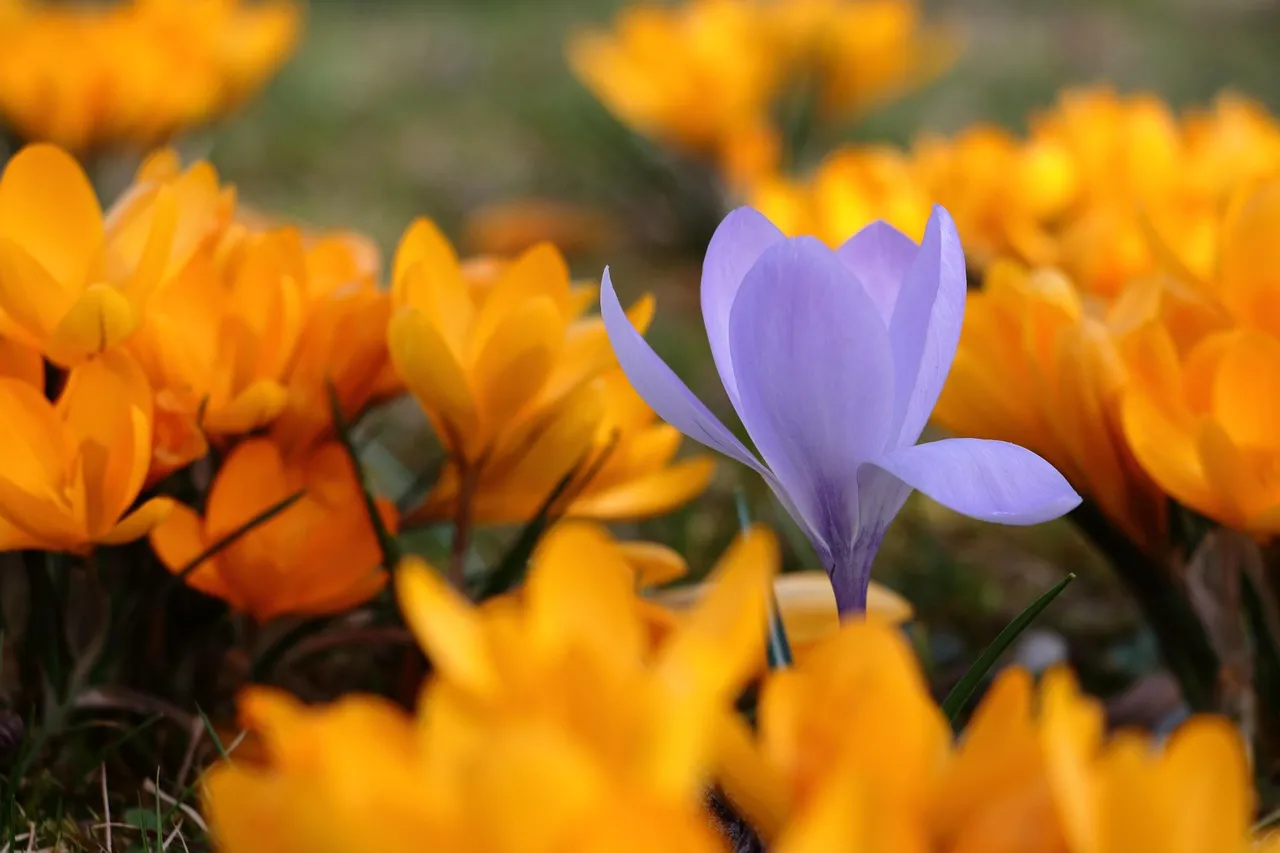
That’s a mistake, and one I see in a lot of gardens I’m asked to look at. Crocuses are some of the first flowers of the year to emerge for most of us. Crocus open their goblets in February when the rest of the garden is still sulking under a grey sky. They fit into the tiniest gaps, they sparkle in lawns, they carpet the ground under trees, and they sit happily in a pot no bigger than a cereal bowl.
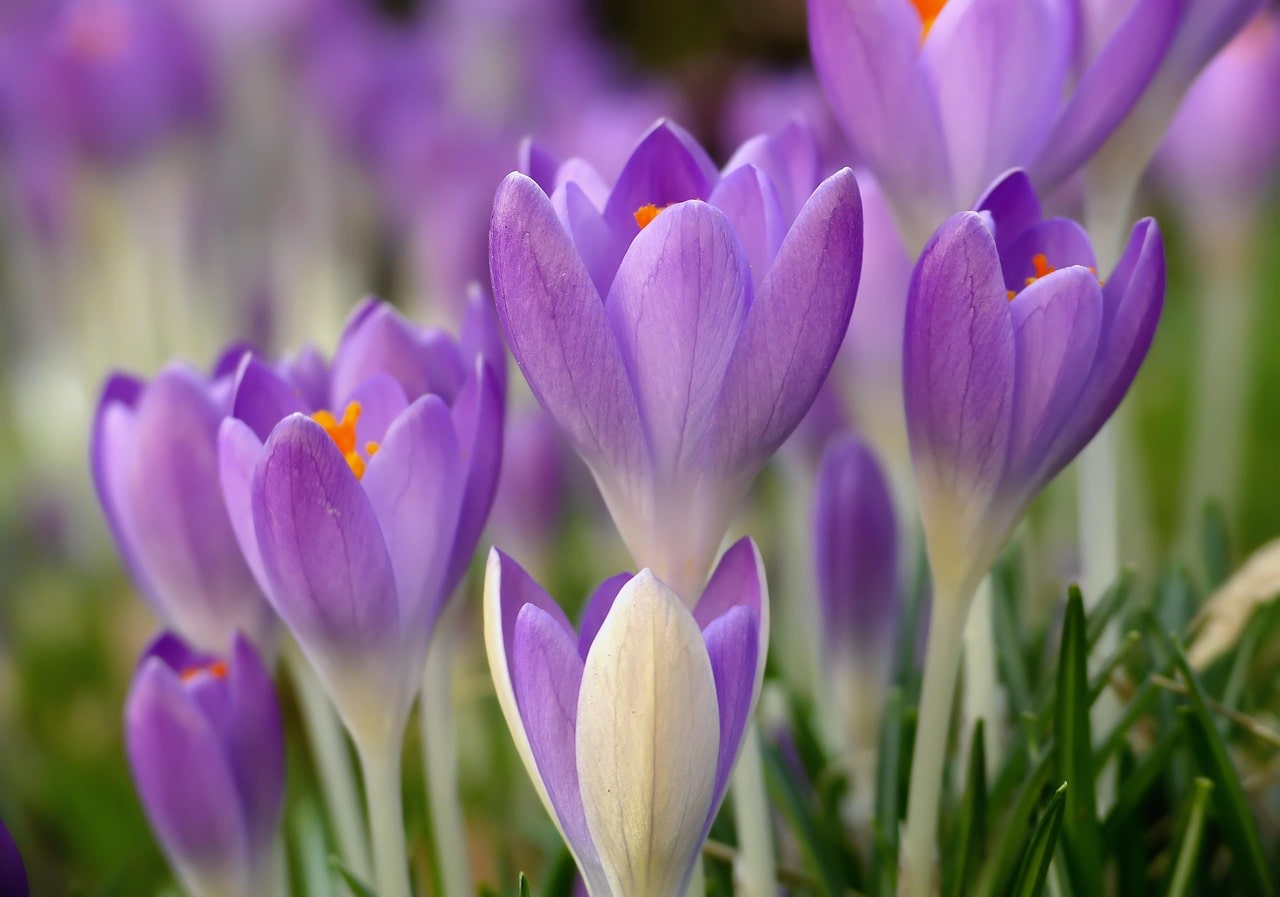
For small, tight-for-space gardens, they give you more colour per square centimetre than almost anything else you can plant.
In this guide, I’ll cover exactly when and how deep to plant Crocus bulbs, how I drift them under trees each autumn for a spring carpet, how to get them into a lawn without wrecking your back, the varieties I use on client gardens, and the furry vandals you’ll need to outwit to keep the flowers on their stems. Spoiler: it’s usually the rabbits.

Jump To
This guide contains affiliate links, which means I may earn a small commission if you buy through them, at no extra cost to you. If you want to get going straight away, a bag of large flowering mixed Crocus is the easiest place to start for pots and lawns alike.
🛒 Buy 50 Large Flowering Mixed Crocus Bulbs from Amazon UK
Spring-flowering Crocus are planted in autumn, and the sweet spot is September and October. The soil is still warm from summer, which lets the corms put down roots quickly before winter, and that early root growth is what gives you strong flowers in February and March. Crocus flowers earlier than almost every other spring bulb, so they appreciate getting in the ground earlier too. Tulips can wait until November; Crocus would rather not.
A quick bit of botany before we get our hands dirty. What we all call Crocus bulbs are technically corms, which are swollen stem bases rather than true bulbs made of layered scales like an onion. A Crocus corm is roughly round and slightly flattened, wrapped in a papery or netted brown tunic, with a pointed tip and a flat base.
For planting purposes, the difference doesn’t matter one jot, but it does explain why they multiply by producing little baby cormlets around the old one rather than splitting like a Daffodil.
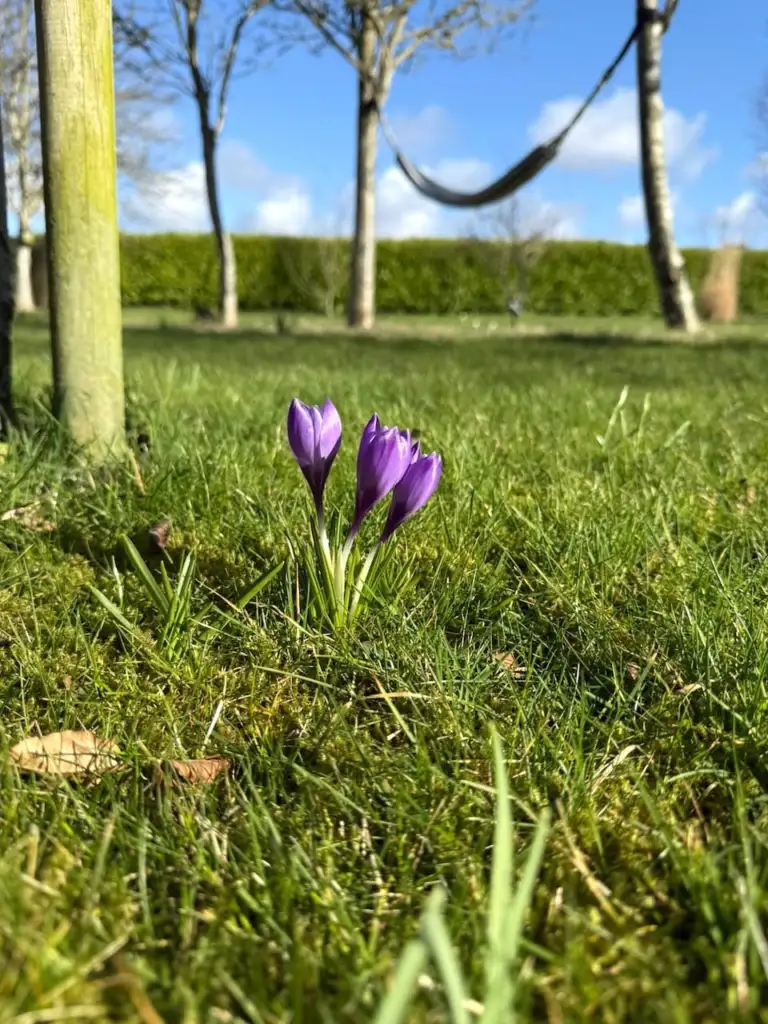
If September has run away with you, don’t panic. November planting works perfectly well, and I’ve planted Crocus as late as the week before Christmas on client jobs and still had a decent show. The corms need to be firm, with no soft patches or blue mould, and the flowers will simply turn up a couple of weeks later than the neighbours’. The one thing I wouldn’t do is leave the bag in the shed until spring.
Crocus corms are small, so they dry out quickly. A corm that’s shrivelled to the texture of a raisin won’t flower no matter how much you apologise to it.
Autumn-flowering Crocus, such as Crocus speciosus and the saffron Crocus, Crocus sativus, are a different beast. They go in during late July and August and flower in September and October, often before their leaves appear. I’ve covered those near the end of this guide, along with the Colchicum, which people call autumn Crocus but which isn’t a Crocus at all. My month-by-month bulb-planting calendar includes the timing for every other bulb if you’re planning a larger autumn order.
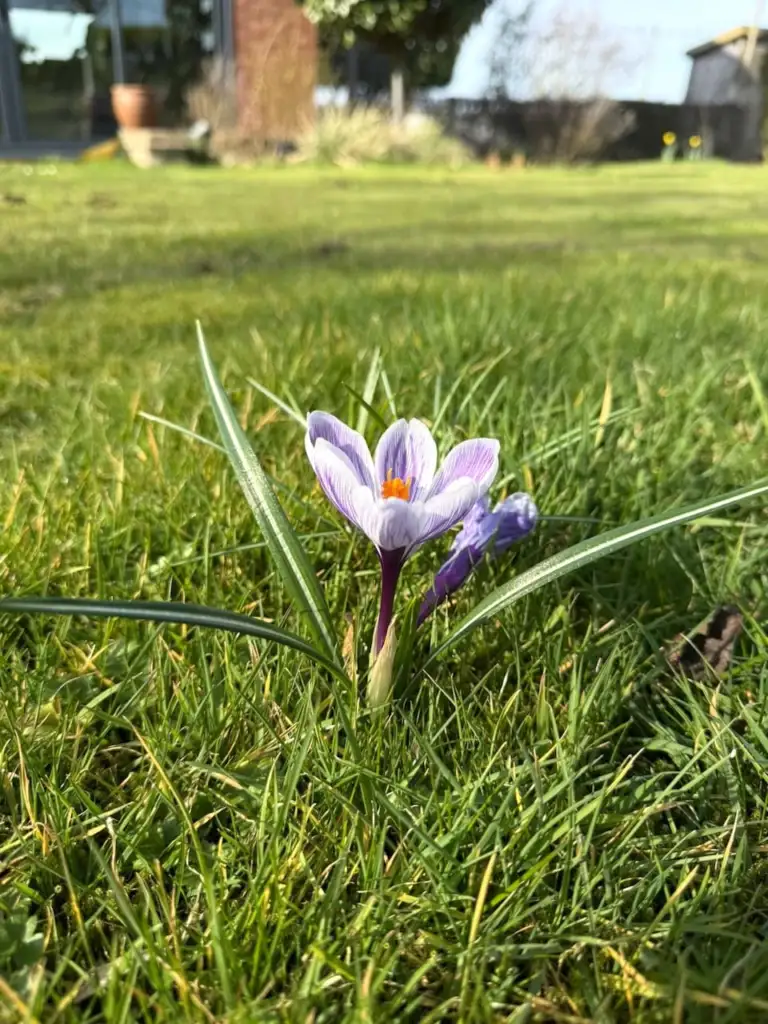
The general bulb rule is to plant at around three times the height of the bulb; for Crocus, that works out to 8 to 10cm deep in open ground. They’re small corms, so it’s tempting to pop them in just under the surface, but shallow Crocus are the ones that get dug up by squirrels, heaved out by frost, and flower poorly after the first year. On light, sandy soil I go to the full 10cm.
On heavy clay I’ll stick to around 8cm and work a handful of grit into the base of the hole, because Crocus hate sitting wet. The large-flowering Dutch Crocus have larger corms, and in thick lawn turf I plant them a little deeper, at 10 to 12cm, which helps them push through the grass and hold their own for years.
Spacing depends on the look you’re after. For a dense carpet in a border, plant them 5cm apart, roughly a thumb’s width between each corm. In a lawn, where you want a natural drift, 7 to 10cm apart looks more convincing, and they’ll fill in on their own over the years. As a rough guide, 50 corms will give you a good patch about the size of a large doormat, and 100 will cover around a square metre properly.
| Where | Depth | Spacing | When |
|---|---|---|---|
| Borders | 8 to 10cm | 5 to 8cm | September to October |
| Lawns and grass | 8 to 10cm species, 10 to 12cm Dutch types | 7 to 10cm | September to October |
| Under deciduous trees | 8cm | 5 to 10cm, in drifts | September to October |
| Pots and containers | 8cm | 2 to 3cm (25 to 30 per 30cm pot) | September to October |
| Late planting | 8 to 10cm | As above | November to December |
If you’re ever unsure, err on the deeper side. A Crocus planted a centimetre too deep will still find its way up. One planted too shallow is basically a free lunch left on the doorstep for the local wildlife. If you’ve got very shallow soil over rubble or concrete, have a read of my forum answer on planting bulbs in shallow soil, because Crocus are one of the few bulbs that cope with it.
Crocus are about as low effort as plants get, but a few jobs at the right time make all the difference. This is the calendar I work to for spring-flowering Crocus.
| When | What to do |
|---|---|
| September to October | Plant corms in borders, lawns, under trees and in pots. Cut lawns short before planting so the flowers show up well. |
| November to December | Late planting is still fine if corms are firm. Peg chicken wire over new plantings where squirrels or rabbits visit. |
| January | Shoots appear. Bring forced pots indoors once shoots are showing. Protect flowers from rabbits with mesh. |
| February to March | Species Crocus flower, followed by the Dutch types from March into April. |
| April to May | Leave the foliage to die back. Don’t mow Crocus lawns until the leaves have yellowed. |
| June to August | Corms are dormant. Lift and divide congested clumps, and plant autumn flowering Crocus in late July and August. |
Planting Crocus takes minutes once you’ve got the depth right. This is the method I use in borders, and the lawn and tree methods further down are variations on the same theme.
Check your corms first. Give each one a gentle squeeze. It should feel firm, like a hazelnut in its shell. Throw out anything soft, hollow or furry with mould, because it’ll rot in the ground and you’ll wonder all spring where the gap came from. There’s no need to soak Crocus corms before planting either. Some bulb sellers suggest it, but Crocus are adapted to dry summers, and a soaked corm going into cold, wet autumn soil is more likely to rot than to get a head start.
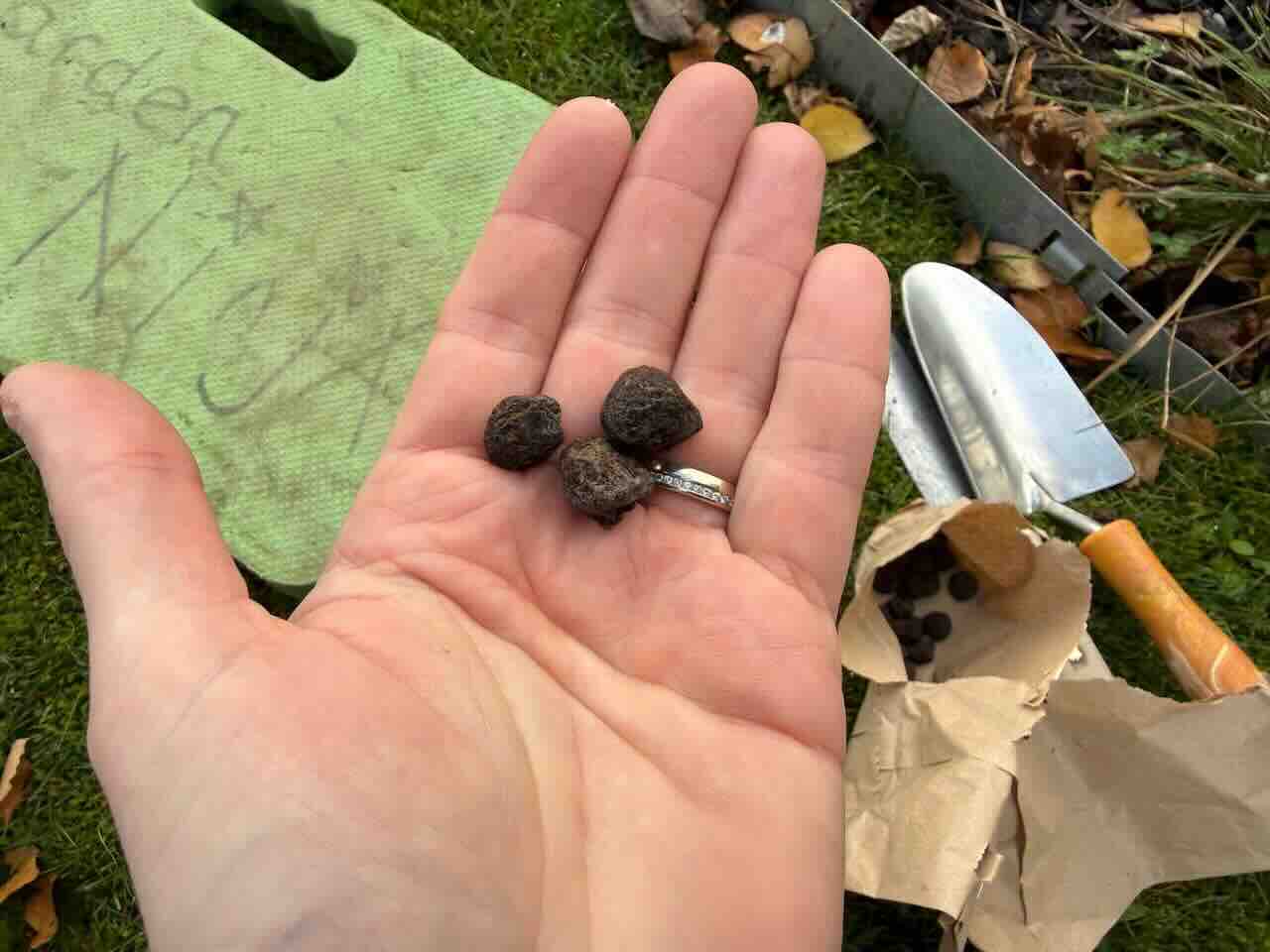
Find the right way up. Crocus corms have a slightly flattened base, sometimes with the dried remains of last year’s roots, and a pointed tip on top where the shoot comes from. The point goes up. If the papery tunic makes it impossible to tell, plant it on its side. It’ll sort itself out, and I’ve never seen a Crocus fail from being planted sideways.
Dig and drop. For a group, dig one wide hole 8 to 10cm deep rather than lots of little ones. It’s quicker and gives you a more natural clump. Loosen the base, add a pinch of grit on heavy soil, then set the corms 5 to 8cm apart.
Backfill and firm. Crumble the soil back over, firm it gently with the flat of your hand, and water in if the ground is dry. Then mark the spot with a label or a stick, because by next week you will have forgotten, and by March you’ll be putting a spade straight through them.
I go through the whole process, including the mistakes I see most often, in this video on planting bulbs in gardens, containers and lawns. Everything in it applies to Crocus, just at the shallower end of the depth range.
If you’re planting more than a couple of bags, a long-handled bulb planter saves your knees and back. It pulls out a neat plug of soil; you drop the corm in, and the next plug you take out pushes the last one back in. My guide on how to use a bulb planter shows the technique in detail, and it’s the one I use for Crocus in lawns.
🛒 Buy the Burgon & Ball RHS Long Handled Bulb Planter from Amazon UK
If you’ve only got a pocket handkerchief of a garden, Crocus are your best friend. They need no border space of their own. They’ll pop up through a lawn, along the edge of a path, through gravel, around the base of a shrub or between paving, flower their socks off for six weeks, and then vanish before anything else needs the room. In a small garden that’s the dream: a spring display that costs you precisely zero square metres of summer planting.
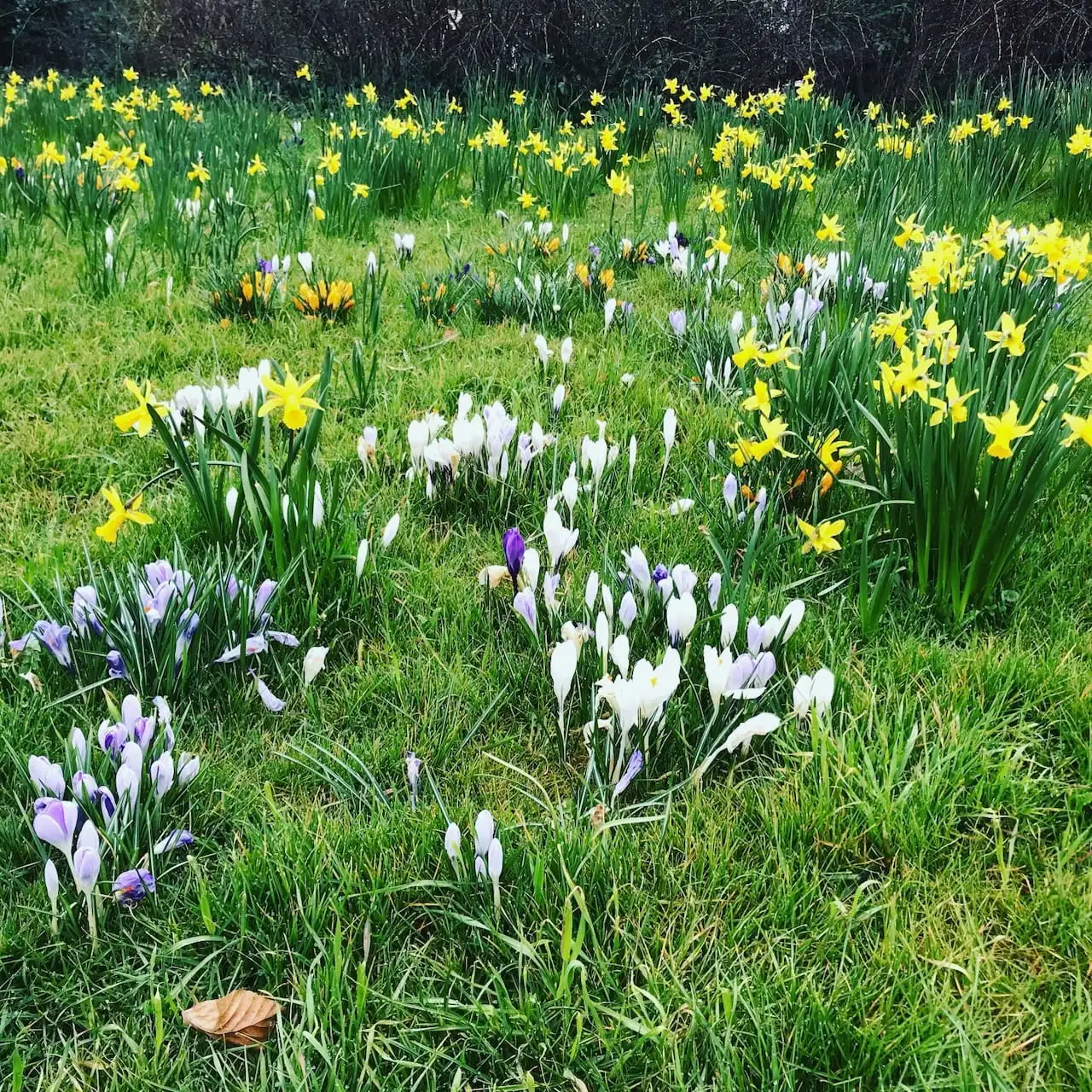
Lawns are where Crocus really shine. A patch of purple and white goblets studded through the grass in February makes even a tiny back garden look like it’s been designed, and they’re one of the few bulbs short enough not to look daft in turf. On so many of the smaller gardens I’ve worked on, a few hundred Crocus in the lawn have done more to lift the space in late winter than any amount of new planting and they are remarkably low fuss to look after!
Before you start, give the lawn a short cut. It makes the planting easier, and the flowers stand out far better in February against short grass than they do poking out of a shaggy winter lawn.
There are two ways to do it, and both work. For drifts of 20 or more, I use the flap method. Cut three sides of a square about 30cm across with a sharp spade or half-moon edger, then slide the spade under and fold the turf back like the lid of a box. Loosen the soil underneath with a hand fork, press the corms in 8cm deep, then fold the turf back over, firm it down with your foot and water it in. By spring you’ll never know you were there.

For single corms scattered more widely, use a bulb planter or a narrow trowel to take out a plug, drop the corm in and replace the plug. Either way, the trick to a natural look is to throw a handful of corms underarm across the grass and plant each one exactly where it lands. Your brain is terrible at being random, and if you place them by hand you’ll end up with something that looks like a dot-to-dot puzzle.
This is the bit people get wrong. The leaves continue working for around six weeks after the flowers fade, feeding the corm for next year, so don’t mow that patch until the foliage has turned yellow and flopped over. Cut it too early, and you’ll get fewer flowers every year until they give up entirely.
Early-flowering species Crocus such as Crocus tommasinianus are done by around early April, which is why I prefer them in lawns over the larger Dutch types, whose leaves hang on longer. If you’re after a neat lawn by Easter, choose accordingly. My guide on choosing the right lawn mower is there for when you’re allowed to start cutting again.
One of my favourite autumn jobs, and one I do in my own garden most years, is drifting Crocus under deciduous trees. The ground under a tree is usually a bit of a dead zone: too dry and dark for most plants in summer, and bare and muddy in winter. But in February and March, before the tree comes into leaf, it’s full of light, and that’s exactly when Crocus want to flower.
By the time the canopy closes over in May, the Crocus have finished and gone to sleep. It’s a timeshare arrangement that suits everyone.
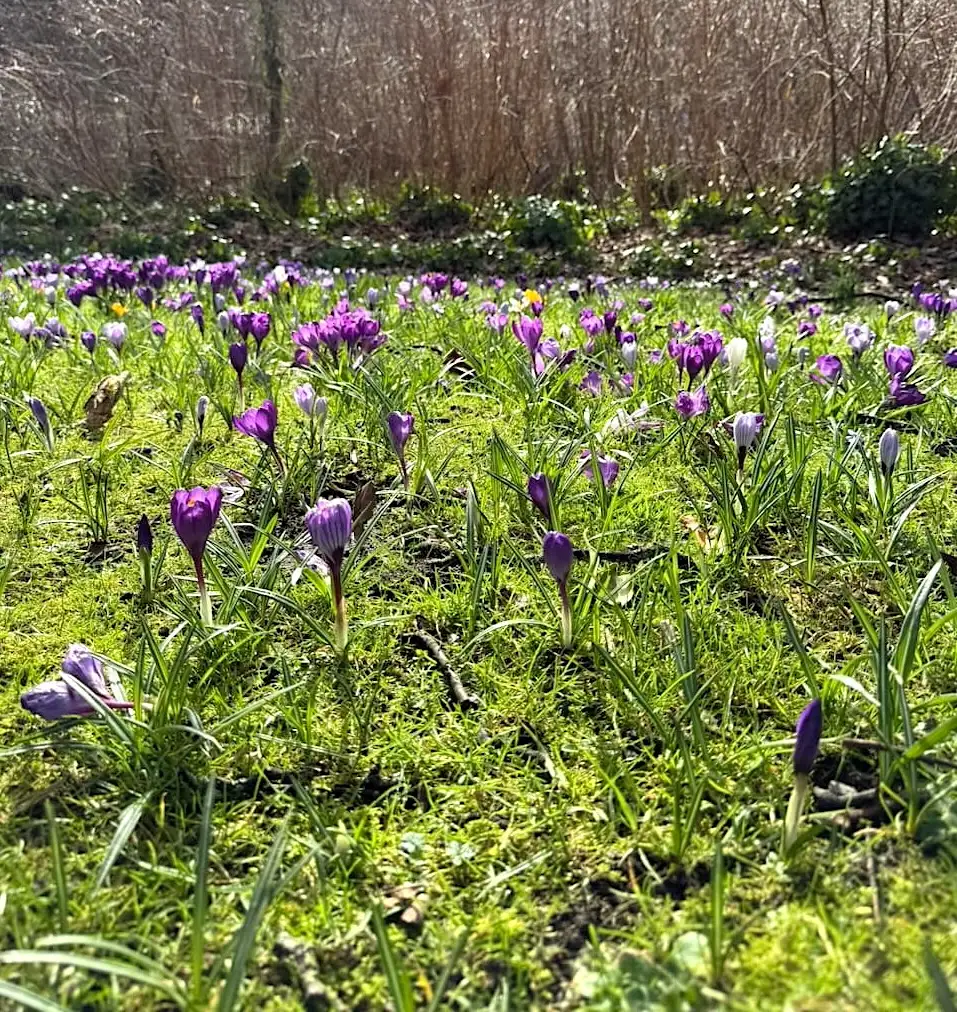
I plant them in September or October, once the worst of the summer drought has passed and the soil has some moisture in it again. I scatter handfuls in a loose, teardrop shaped drift that’s densest near the trunk and thins out towards the edge of the canopy, which mimics the way they’d spread on their own. Then I plant each corm where it falls, 8cm deep, with a narrow trowel or a hori hori knife.
Tree roots are the main obstacle, and this is where Crocus win over big bulbs like Daffodils: the corms are small enough to slot between roots without you having to hack through anything. If you hit a root, move over a few centimetres and try again.
🛒 Buy the Spear & Jackson Razorsharp Hori Hori from Amazon UK

Add a handful of leaf mould or garden compost over the top once you’ve finished. The soil under trees is often hungry, and a light mulch helps the corms bulk up for a better show each year. Stick to deciduous trees such as Birch, Amelanchier, Apple, Cherry and Rowan. Under evergreens like Conifers and Holly it’s too dark and dry all year round, and Crocus will fade away within a couple of seasons.
Crocus tommasinianus, the woodland Crocus, is the one to use here. It copes with light shade better than the others and seeds itself around happily, so a drift of a hundred corms turns into a proper carpet within three or four years. If you’ve got a tree in a lawn, Crocus pair nicely with the tree ring planting approach, and they combine well with snowdrops, which I cover in my guide to planting snowdrops in the green.
If you haven’t got a lawn or a tree, or you’ve only got a balcony or a back step, Crocus are about the best value bulb you can put in a pot. They take up hardly any room at all. A 30cm bowl will hold 25 to 30 corms, planted around 8cm deep and packed in so they’re almost touching, and the result is a tight, jewel-box dome of colour you can put on a table or by the back door, where you’ll see it every day in February.
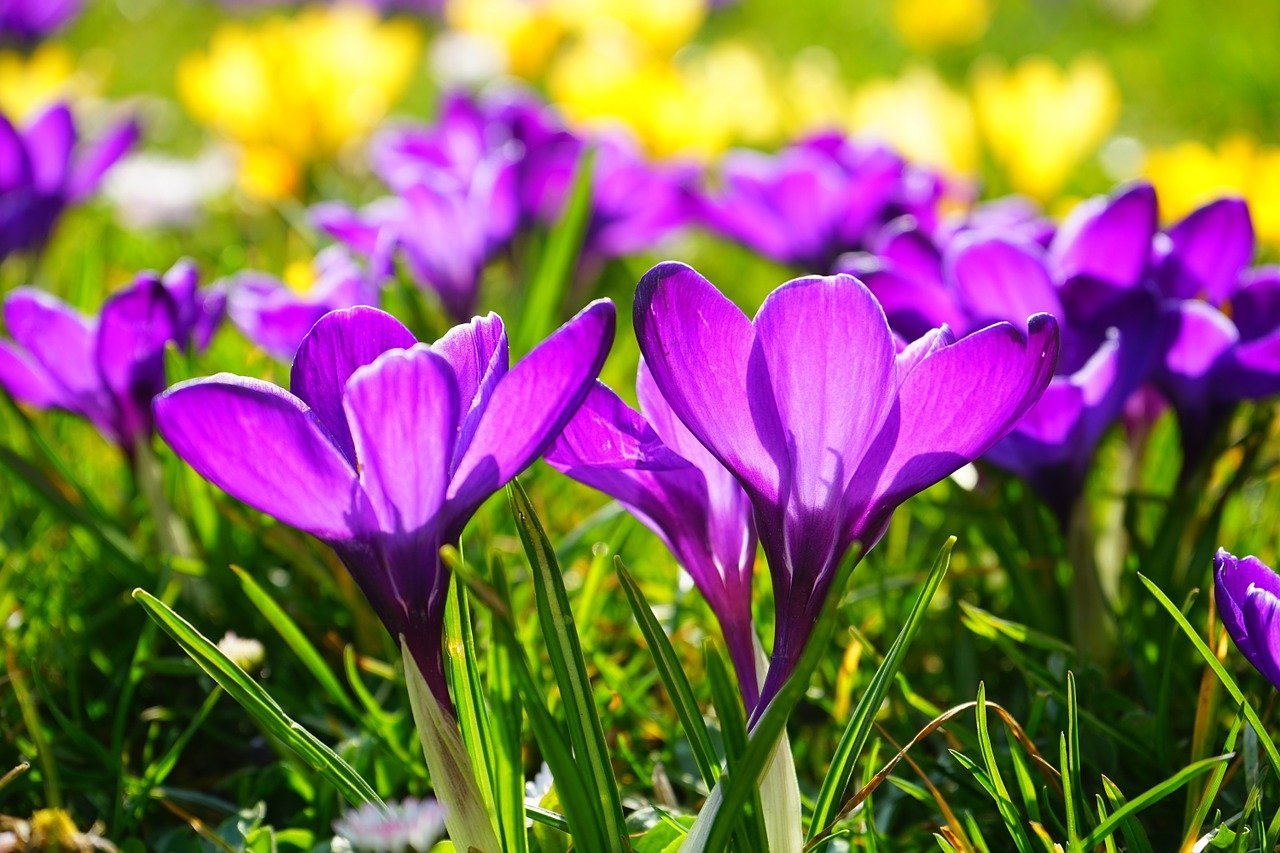
Shallow bowls and pans work better than tall pots, because Crocus roots don’t go deep and you want the flowers at a height where you can see into them. Use a peat-free multi-purpose compost mixed with about a third grit or perlite for drainage, put a layer of crocks or gravel at the base, and make sure there’s a drainage hole. Waterlogged compost over winter is the most common way to lose container Crocus.
Once they’re planted, stand the pot somewhere sheltered but outdoors. Crocus need the cold of winter to trigger flowering, so don’t bring them into a warm house or the greenhouse until you see the shoots, if at all. Keep the compost just moist, not wet, and move the pot to a prominent spot when the buds appear.
I cover compost mixes, pot sizes and the whole year-round routine in my guide to how to plant bulbs in pots, and if you like a succession, one pot of Crocus for February, then Daffodils, then Tulips, is a simple way to stretch the season without a single bulb lasagne in sight. You’ll know my feelings on bulb lasagnes already.
Crocuses are among the easiest bulbs to bring into flower early for a table centre in January or February. Plant the large flowering Dutch types in a shallow pan in early autumn, then leave the pan somewhere cold and dark, such as a cold frame, an unheated shed, or simply outdoors against a north wall, for 10 to 12 weeks so the corms can develop their roots. Once you see the shoots a couple of centimetres tall, bring the pot into a cool porch or greenhouse, then indoors when the buds colour up.
The catch is that Crocus flowers go over in four or five days in a warm living room. I keep forced pots on the doorstep or in the porch at night and only bring them in when I want to look at them, which easily doubles or triples how long they last. The same trick works if you pick a few flowers for a tiny vase. They only last a few days cut, but on a grey February morning a jam jar of Crocus on the windowsill punches well above its weight.
For pots, the richly coloured tommasinianus selections such as ‘Ruby Giant’ are a good choice, because they flower early and stay neat.
🛒 Buy Crocus tommasinianus ‘Ruby Giant’ Bulbs from Amazon UK
Crocus come in three broad groups for the garden, and knowing which is which saves a lot of disappointment. The species Crocus, such as Crocus tommasinianus and Crocus chrysanthus, are small, early and elegant, and they naturalise brilliantly. The large-flowered Dutch Crocus, varieties of Crocus vernus, have fuller flowers a couple of weeks later and are the ones you see in municipal verges.
Then there are the autumn-flowering species, which I cover separately below. These are the four I use most often.
If I could only grow one Crocus, it would be this. Slender, silvery lilac flowers open from February, often before anything else in the garden has woken up, and it spreads by seed as well as by offsets, so a modest planting becomes a carpet within a few years. It’s the best Crocus for naturalising in lawns and under trees, and it’s one of the few that copes with a bit of shade. It carries the RHS Award of Garden Merit.
The flowers stay tightly furled in dull weather and throw themselves wide open in sunshine, showing a bright orange centre that queen bumblebees go mad for on a mild February afternoon. The foliage is fine and dies back early, which makes it the most lawn friendly Crocus you can buy.
| At A Glance | |
|---|---|
| Botanical Name | Crocus tommasinianus |
| Plant Type | Hardy perennial corm |
| RHS Hardiness | H5 |
| Height and Spread | 8 to 10cm x 5cm |
| Flowering Period | February to March |
| Best Conditions | Sun or light shade, well-drained soil, lawns and under trees |
| Key Feature | Naturalises readily and seeds itself into carpets |
🛒 Buy Crocus tommasinianus ‘Ruby Giant’ Bulbs from Amazon UK
‘Whitewell Purple’ is the richer coloured selection of the woodland Crocus, with reddish purple outer petals and paler lilac insides. It has all the toughness and self-seeding habit of the species, just with more punch from a distance, which is useful in a lawn you’re mostly viewing from the kitchen window.
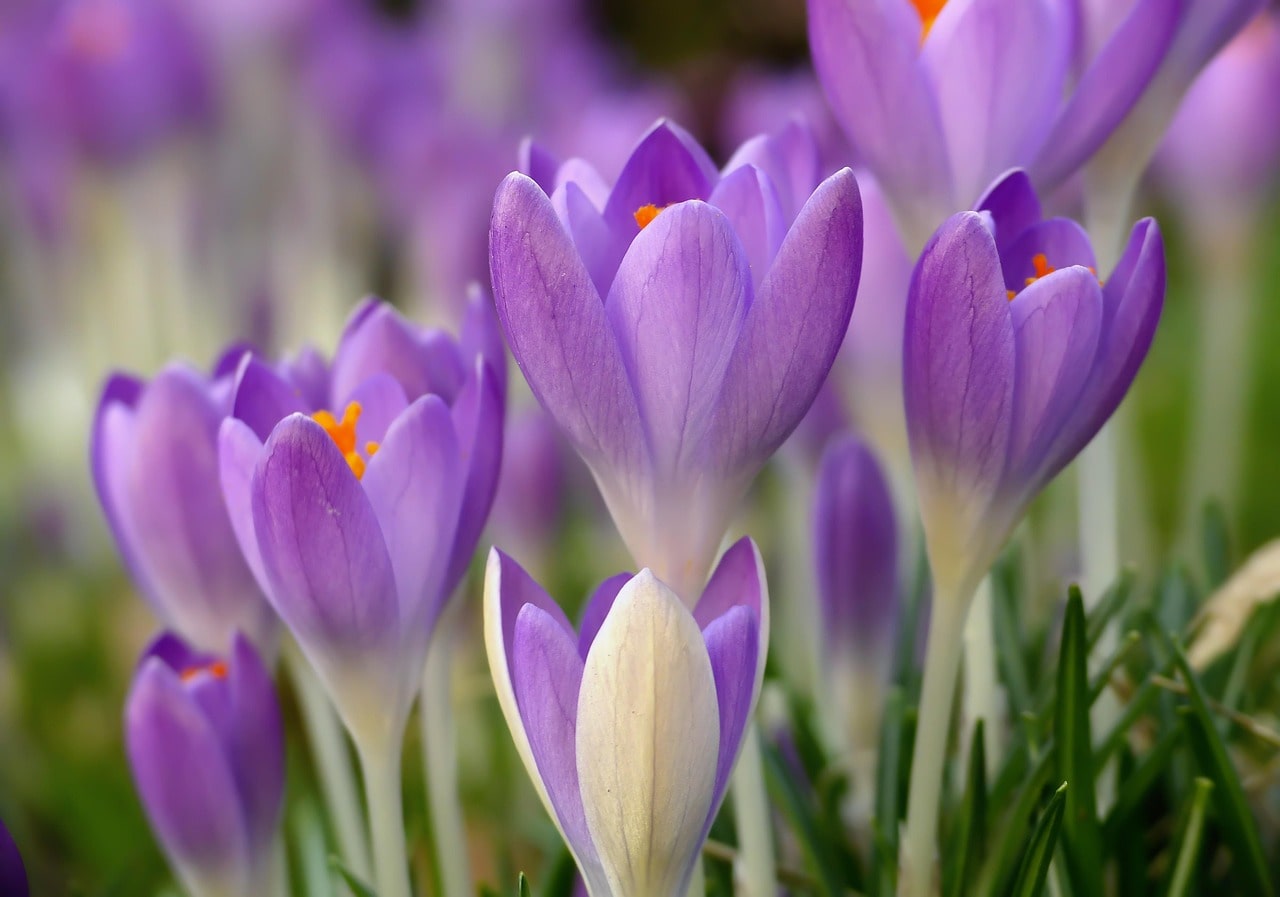
I often mix it 50:50 with the plain species when drifting under trees, because the variation in shade looks far more natural than a single block of colour. It’s also a good match for early snowdrops and the first Hellebores.
| At A Glance | |
|---|---|
| Botanical Name | Crocus tommasinianus ‘Whitewell Purple’ |
| Plant Type | Hardy perennial corm |
| RHS Hardiness | H5 |
| Height and Spread | 8 to 10cm x 5cm |
| Flowering Period | February to March |
| Best Conditions | Sun or light shade, lawns, gravel and under deciduous trees |
| Key Feature | Deeper purple colour that reads well from a distance |
For a softer look, ‘Cream Beauty’ is hard to beat. The flowers are a buttery cream with a deep yellow throat and a faint honey scent on a warm day, and it’s another holder of the RHS Award of Garden Merit. Crocus chrysanthus varieties are sometimes called snow Crocus, because they flower so early, and they produce several flowers from each corm, so you get a longer display than you’d expect.
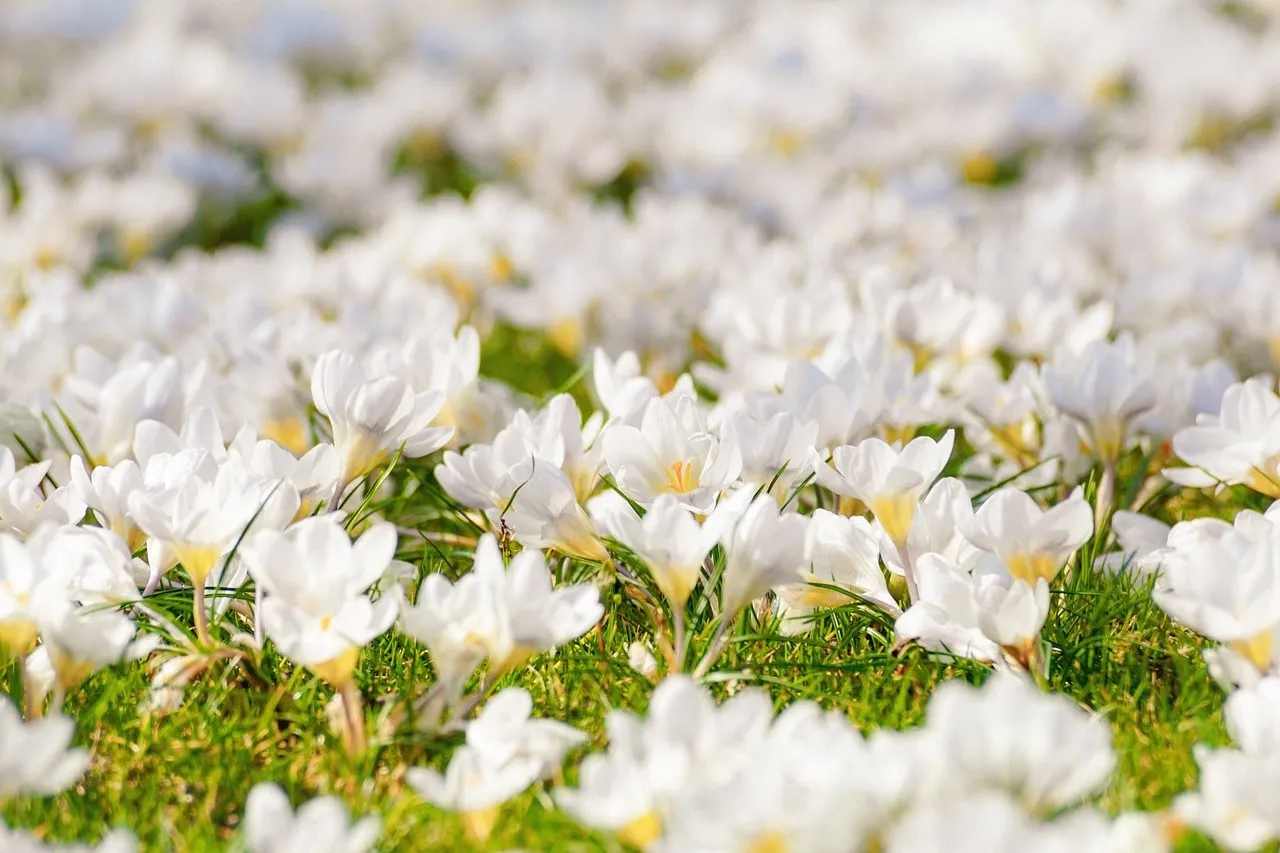
It’s my go-to for pots by the back door and for the front edge of borders, where the pale flowers glow in low winter light. It looks lovely with blue Iris reticulata and Muscari, and if colour planning is your thing my spring bulbs by colour guide has plenty more combinations.
| At A Glance | |
|---|---|
| Botanical Name | Crocus chrysanthus ‘Cream Beauty’ |
| Plant Type | Hardy perennial corm |
| RHS Hardiness | H5 |
| Height and Spread | 7 to 8cm x 5cm |
| Flowering Period | February to March |
| Best Conditions | Full sun, well-drained soil, pots and border edges |
| Key Feature | Several scented flowers per corm |
‘Pickwick’ is the classic large flowering Dutch Crocus, with fat goblets striped in lilac and white and a darker purple base. These flower a fortnight or so after the species types, usually from March into April, and they’re sturdier in rough weather. They’re the ones that give you the chunky, instantly recognisable Crocus look.
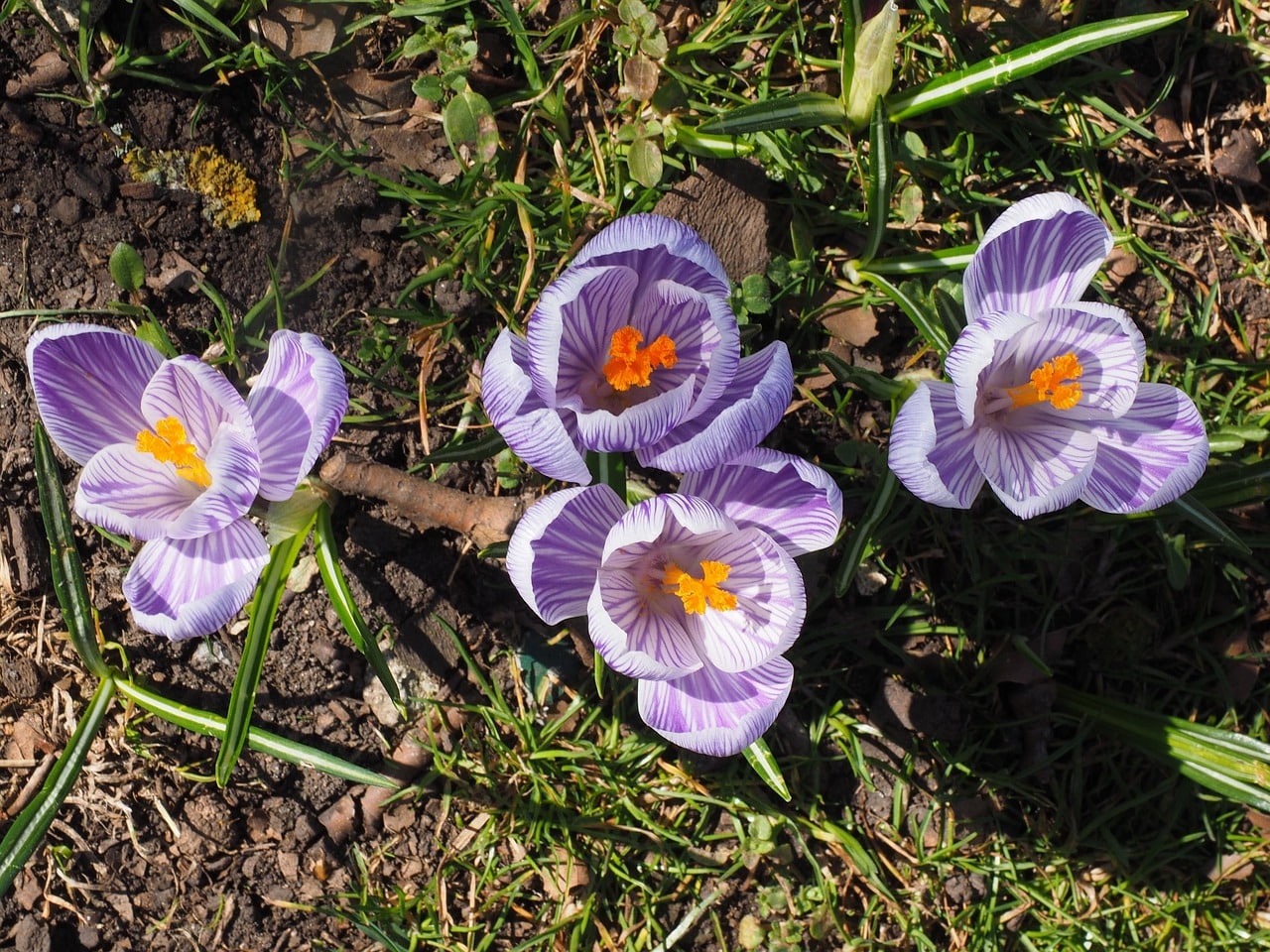
They’re perfect for pots and borders, and they’ll naturalise in grass too, but the leaves are longer and take a few weeks more to die back, so be prepared to leave that corner of lawn unmown into May. Other Dutch Crocus I rate include pure white ‘Jeanne d’Arc’ and the deep purple ‘Flower Record’, which usually come in the large flowering mixes.
| At A Glance | |
|---|---|
| Botanical Name | Crocus vernus ‘Pickwick’ |
| Plant Type | Hardy perennial corm |
| RHS Hardiness | H5 |
| Height and Spread | 10 to 12cm x 5cm |
| Flowering Period | March to April |
| Best Conditions | Full sun, well-drained soil, pots, borders and grass |
| Key Feature | Large striped goblets that stand up to wind and rain |
Beyond those four, a few others earn their place. Crocus chrysanthus ‘Snow Bunting’ is a crisp white with a gold throat and a light scent, lovely in pots and at the front of a border, and ‘Prins Claus’ is white with a deep purple blotch on the outer petals.
Blue Pearl’ has soft lavender blue flowers that pair beautifully with early snowdrops. Crocus sieberi ‘Tricolor’ is a real jewel, with lilac, white and gold bands in each flower, and it’s worth growing in a pot where you can see it up close.
For a classic purple in lawns, Crocus tommasinianus ‘Barr’s Purple’ is another good naturaliser, and if you want yellow, Crocus x luteus ‘Golden Yellow’ is the traditional Dutch variety, though the sparrows will be delighted.
🛒 Buy 50 Large Flowering Mixed Crocus Bulbs from Amazon UK
Here’s the thing nobody puts on the front of the bag. Crocuses are delicious, apparently. Plant a drift in autumn, and you’ve effectively laid out a tasting menu for half the wildlife in the postcode, and each course has a different diner.
Rabbits are the worst offenders for the flowers. If you garden anywhere near fields, verges or a railway embankment, beware: rabbits love to nibble the heads clean off Crocus, usually at first light, leaving you a neat row of green stumps where your February display was supposed to be. They’ll graze the leaves too, which weakens the corms for next year. You’ll often see advice, much of it American, claiming Crocus are rabbit-proof. In my experience with British rabbits, that’s wishful thinking.

The most reliable fix is a physical barrier. Once you’ve planted, lay a sheet of galvanised chicken wire with 25mm holes flat over the soil or turf and peg it down. The shoots grow straight through the mesh, but rabbits can’t dig or get their teeth in close enough to do real damage. In borders, you can bend the same mesh into low cloches over each group from January until flowering has finished.
For pots, a mesh cage or simply lifting the pot up onto a wall or table out of reach works well. And if you’re in rabbit country, plant more than you need. I’d rather lose a third of a big drift than all of a small one.
🛒 Buy Suregreen Galvanised Chicken Wire (25mm Mesh) from Amazon UK
Squirrels, mice and voles go for the corms. These dig down in autumn and winter and eat the corm itself, which is why planting at the full 8 to 10cm depth matters. The same flat layer of chicken wire just under the soil surface stops them from digging in, and it’s worth doing on anything freshly planted, since the disturbed soil is what draws them in. Covering fresh planting holes with a scattering of leaf litter or gravel also helps to hide the scent of newly turned earth.
Sparrows and pheasants shred the flowers. House sparrows have a habit of pulling yellow Crocus to pieces in particular, possibly for the nectar or simply out of mischief, and pheasants will peck them flat in rural gardens. Planting purple and white varieties seems to attract less attention from the sparrows, and a few lengths of black cotton strung between short canes above a drift is an old gardener’s trick that does help.
Slugs will occasionally nibble the flowers in mild, wet spells, but Crocus are rarely a slug’s first choice. If slugs are a big problem in your garden, my list of slug and snail proof plants has more ideas for the rest of the border.
Crocus look after themselves better than most bulbs, but what you do in the six weeks after flowering decides how good next year’s display will be. Leave the leaves alone until they go yellow. Don’t cut them, don’t tie them up, and in a lawn don’t mow over them. That foliage is recharging the corm and building the new cormlets that make your clumps bigger every year.
Deadheading isn’t necessary, and with Crocus tommasinianus it’s best avoided, because you want those seeds to spread. In pots, give them a liquid feed high in potash, such as tomato feed, every fortnight from when the flowers fade until the leaves die back. Crocus in the ground don’t need feeding at all, although a thin mulch of leaf mould or compost each autumn in a border does no harm.
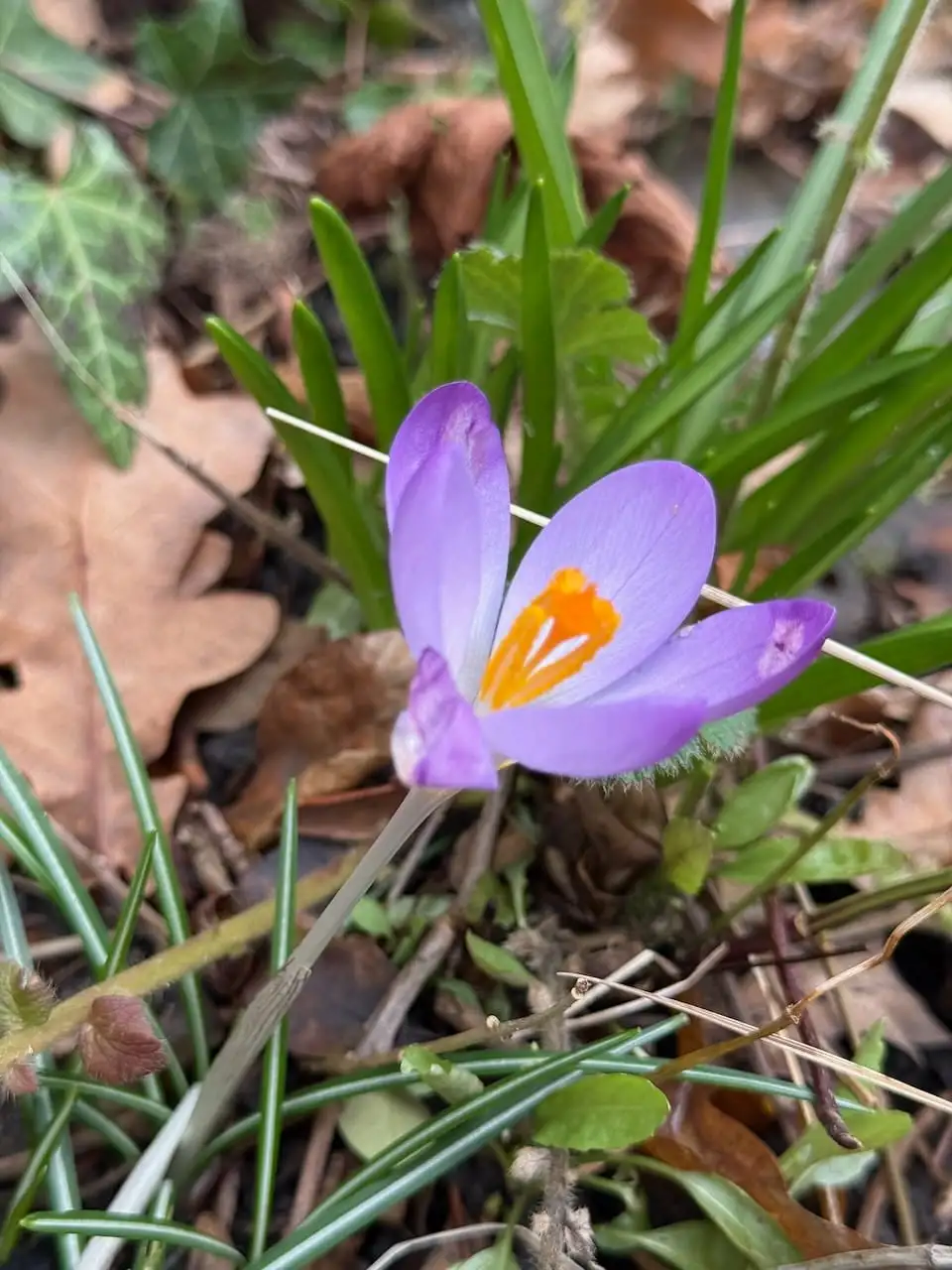
Crocus in pots can stay put for two or three years before the compost is exhausted, after which I tip them out once the foliage has died down and replant the biggest corms in fresh compost or out in the garden. If you want to reuse the pot for summer bedding, let the corms dry off, brush off the old compost and store them in a paper bag somewhere cool and dry until September.
Crocus multiply steadily, and after four or five years a clump in a border can become so congested that flowering drops off. When that happens, lift the clump with a fork either in late spring as the leaves yellow, when you can still see where they are, or in late summer while they’re dormant. Tease the corms apart, and replant them straight away or store them somewhere cool and dry until September.
The exception is Crocus tommasinianus, which flowers happily in dense colonies, so I leave it well alone unless it has stopped flowering. The tiny cormlets you find around the edges can be grown on in a pot or a spare corner for a year or two until they reach flowering size. My guide on when to lift and divide spring bulbs walks through the process with photos.
If you planted Crocus and got leaves but no flowers, or they flowered once and then quietly gave up, the cause is almost always one of a handful of things. In the order I find them in gardens, they are as follows, with the two other problems I get asked about most — floppy flowers and Crocus that never came up at all — at the end.
Mown or cut back too early. This is the most common by a mile, especially in lawns. If the foliage was removed before it yellowed, the corm couldn’t build up enough energy to flower the following spring. Leave the patch unmown for six weeks after flowering next year, and give them a season or two to recover.
Planted too shallow. Shallow corms dry out in summer, split into lots of tiny cormlets too small to flower, and get eaten. If you dig one up and it’s only a few centimetres down, replant at 8 to 10cm in autumn.
Too much shade. Crocus need spring sunshine to open and to bulk up. A spot that’s in full shade in February, under evergreens or on the north side of a tall fence, will give you leaves and not much else. Move them to somewhere brighter.
Congestion. Old clumps that haven’t been divided in years run out of room and nutrients. Lift and split them as above.
Something ate them. If there’s no sign of leaves either, check for the tell tale small holes of squirrels or mice. Missing flowers with stems still standing points to rabbits or birds.
Crocus wilting or flopping over. Crocus stems are soft and will flop in a warm spell or after heavy rain, which is normal and they usually stand back up. If they’re limp for days, check the soil. Pots that have dried out need a drink, and ground that’s waterlogged needs better drainage. Corms planted too shallow also tend to flop, because there isn’t enough stem underground to anchor them.
Nothing came up at all. If there’s no sign of any leaves, dig carefully where you planted. Empty holes point to squirrels or mice. Soft, brown, mushy corms mean they rotted, usually from waterlogged soil or from corms that were already damaged or mouldy when they went in. Very occasionally they’ve been planted far too deep, 20cm or more, and simply run out of energy before reaching the surface.
A quick word on the autumn flowering types, because the naming causes a lot of confusion. True autumn flowering Crocus, such as Crocus speciosus, are planted in late July or August and flower in September and October in the same way spring Crocus do, just at the other end of the year. The saffron Crocus, Crocus sativus, is one of these.
It needs a very sunny, free-draining spot to flower well in the UK, and each purple flower gives you three red stigmas, which is the saffron. It takes around 150 flowers to produce a single gram of dried saffron, which gives you a new respect for why it costs what it does. The corms also need to be lifted and replanted in fresh ground every four or five years to keep them flowering.
The plant sold as autumn Crocus or naked ladies, Colchicum autumnale, looks very similar but belongs to a different family altogether. It has larger, pinker flowers, much bigger leaves that appear in spring, and it is highly toxic to people and pets if eaten.
Spring-flowering crocuses are much less dangerous, but they are still mildly toxic and can cause vomiting and an upset stomach in dogs and cats if eaten, so if you have a pet that likes to dig and chew, keep bags of corms well out of reach and call your vet if you think any have been eaten. My dog friendly garden design guide covers safer planting in more detail.
Every Crocus carries a bit of Greek tragedy in its name. Krokos is the ancient Greek word for saffron, and in the version of the legend recorded by the physician Galen, Crocus was a mortal youth and the close companion of Hermes, the messenger of the gods. The pair were throwing the discus when one of Hermes’ throws went astray and struck Crocus on the head.
Grief-stricken, Hermes turned his friend into a flower, and the three drops of blood that fell from the wound became the three blood-red stigmas at the heart of the saffron Crocus, the very threads that are still picked by hand for saffron today.

The other version swaps the discus for doomed romance, with Crocus pining after the nymph Smilax until the gods turned him into a flower and her into a thorny climber, which tells you roughly how that relationship was going.
I’ll admit I have a soft spot for this story. I’ve got wings tattooed on my ankles, a nod to Mercury, the Roman version of Hermes and the fleet-footed messenger of the gods, so a flower created by a messenger god’s butterfingers feels like one of mine.
Hermes also lent his name for many years to a certain parcel delivery firm, now rebranded as Evri, and given that the original Hermes is best remembered in Crocus lore for lobbing a heavy object at someone, I’ve sometimes wondered whether it made it into the training manual. More than one box of mail order plants has turned up at Garden Ninja HQ looking like it had competed in the discus final. The Crocus corms usually survive it, mind you. Another point in favour of being small.
The Victorians, who couldn’t hand over a bunch of flowers without hiding a coded message in it, gave the Crocus several meanings in their language of flowers. In Kate Greenaway’s Language of Flowers of 1884, the spring Crocus stands for youthful gladness and the saffron Crocus for mirth, while Crocus on its own carries the rather stern warning ‘abuse not’.
The poor Colchicum, or meadow saffron, was handed ‘my happiest days are past’, or ‘my best days fled’ depending on which dictionary you read, which seems harsh for a plant whose only crime is flowering without its leaves on. So a posy of spring Crocus was a cheerful thing to receive, and a handful of Colchicum was, frankly, a bit passive aggressive.
On the Wheel of the Year, Crocus belong to Imbolc on 1 to 2 February, the festival of Brigid and of the first stirrings of growth, when the light is noticeably coming back. Alongside snowdrops, they’re the flowers that mark it in the garden, and a shallow bowl of Crocus on the table is one of the simplest ways to celebrate it, which is another good reason to force a pot or two.
By Ostara, the spring equinox in March, the big Dutch Crocus are in full swing and the season has well and truly turned. If the folklore side of the garden is your thing, my guide to hedge witchcraft for gardeners lists Crocus among the Imbolc plants, and my A to Z of garden plants used in witchcraft covers plenty more of the stories hiding in your borders.
September and October are the best months to plant spring flowering Crocus in the UK, while the soil is still warm enough for the corms to root before winter. November and early December planting will still flower, just a little later than usual.
Plant Crocus corms 8 to 10cm deep in the ground, which is around three times their own height, and about 8cm deep in pots. Planting too shallow leaves them open to frost, drought, squirrels and mice.
The flattened base, sometimes with old root remains, goes down and the pointed tip goes up. If you really can’t tell, plant the corm on its side and the shoot will find its own way up.
Yes, Crocus are one of the best bulbs for lawns. Plant them 8 to 10cm deep by folding back a flap of turf or using a bulb planter, and don’t mow that area until the leaves have yellowed, usually around six weeks after flowering.
A 30cm pot or bowl will take around 25 to 30 Crocus corms, planted about 8cm deep and spaced so they almost touch. Use a peat free compost mixed with grit or perlite so the pot drains freely over winter.
Yes. Crocus produce new cormlets every year, and species such as Crocus tommasinianus also spread by seed, so a planting thickens up into a carpet over three or four years if the foliage is left to die back naturally.
Rabbits nibble Crocus flowers and leaves down to stumps, sparrows and pheasants shred the flowers, and squirrels, mice and voles dig up and eat the corms. A layer of 25mm chicken wire pegged over newly planted areas is the most reliable protection.
Species Crocus such as Crocus tommasinianus and Crocus chrysanthus flower from February into March, and the larger Dutch Crocus follow in March and April. Autumn flowering species bloom in September and October.
No. Crocus corms don’t need soaking, and soaking them before they go into cold, wet autumn soil can increase the risk of rot. Plant them dry, then water them in if the ground is dry.
Dry Crocus corms need a cold spell of around 10 to 12 weeks, so they must be planted in autumn. In spring you can buy pots of Crocus already in flower from garden centres and plant them straight into borders or lawns once they finish.
Most Crocus need sun at flowering time, but Crocus tommasinianus copes with light shade and grows well under deciduous trees, which are bare while it flowers. Avoid deep shade under evergreens.
Yes. Crocus are one of the first sources of pollen and nectar each year, and queen bumblebees and honeybees rely on them on sunny days from February, when very little else is in flower.
Each flower lasts around a week outdoors in cool weather, and a clump will keep flowering for three to four weeks as new buds open. Indoors in the warmth they go over in four or five days.
In the Victorian language of flowers, the spring Crocus means youthful gladness and the saffron Crocus means mirth. In Greek myth the saffron Crocus grew from the blood of Crocus, a companion of Hermes, and on the Wheel of the Year Crocus are linked with Imbolc and the return of the light in early February.
Spring flowering Crocus are mildly toxic and can cause vomiting and an upset stomach if eaten, but the plant sold as autumn Crocus, Colchicum autumnale, is highly toxic to pets and people. Keep corms out of reach and contact your vet if you think your pet has eaten any.

Join over 100,000 gardeners on YouTube
Free gardening videos from the Garden Ninja, with 8 million views and counting.
Subscribe on YouTube, it’s freeA few hundred Crocus in the right place can transform how a garden feels in February, and knowing where that right place is comes down to design. My online courses teach you to read your own garden the way I read a client’s, from planning where colour lands through the year to laying out borders that look good in every season.
Courses start from just £29, so you can learn at your own pace and put it into practice this autumn.
For the garden you’ve already got, not the one you’re starting from scratch. Seven checklists and video lessons from BBC Garden Rescue’s Lee Burkhill, built to help you work out what’s worth keeping before you spend a penny.
Garden Design Examples for Small Gardens: 30 Design Templates & Planting Plans: In this online gardening course, I’ll walk you through 30 fantastic garden designs, explaining the logic behind the layout, the plant choices, and take-home tips for applying them in your own garden.
Learn how to transform and design your own garden with Lee Burkhills crash course in garden design. Over 5 hours Lee will teach you how to design your own dream garden. Featuring practical design examples, planting ideas and video guides. Learn how to design your garden in one weekend!
Garden Design for Beginners Online Course: If you want to make the career jump to becoming a garden designer or to learn how to design your own garden, this is the beginner course for you. Join me, Lee Burkhill, an award-winning garden designer, as I train you in the art of beautiful garden design.
Crocus might be the smallest bulbs in the bag, but they punch well above their weight. Plant them 8 to 10cm deep in September or October, drift them through lawns and under deciduous trees, pack them into shallow pots by the back door, and let the leaves die back naturally so they come back stronger every year. They need almost no room, which makes them one of the best spring bulbs there is for a small garden.
Just keep an eye out for the rabbits. Peg a bit of chicken wire over your plantings, choose Crocus tommasinianus for lawns and trees, and by February you’ll have the first flowers of the year opening while everything else is still asleep. For the rest of your autumn order, my tulip planting guide, my guide to when to plant daffodil bulbs and my guide to growing Alliums pick up where this one leaves off, and Crocus sit perfectly in any early season planting for bees.
Happy Gardening!


Lee Burkhill, known as the Garden Ninja, is an award-winning garden designer and horticulturist with over 30 years of gardening experience and 15 years as a professional garden designer. A qualified RHS (Royal Horticultural Society) professional, Lee specialises in sustainable garden design and practical horticultural advice. He designs and presents on BBC1’s Garden Rescue and in leading gardening publications. Lee combines three decades of hands-on gardening knowledge with professional design qualifications to help gardeners create beautiful, functional outdoor spaces.
View all posts by Lee Burkhill






JOIN THE NINJAS

Be the first in line for new Guides, Discount codes and Offers