For the garden you’ve already got, not the one you’re starting from scratch. Seven checklists and video lessons from BBC Garden Rescue’s Lee Burkhill, built to help you work out what’s worth keeping before you spend a penny.
69


Quick Answer
Prune forsythia immediately after flowering finishes, usually in April. Cut back flowered stems to a strong new shoot lower down, remove around a fifth of the oldest stems at the base, and thin out crowded growth in the centre of the shrub. Never prune in autumn or winter, since you will cut off the flower buds for next spring.
I have lost count of the number of forsythia shrubs and hedges I have come across over twenty years of garden design and television that have been hacked back in autumn or winter, usually with the best intentions, only for the owner to wonder why the following spring’s display was thin, patchy or completely absent. Forsythia flowers on wood it produced the previous year, so any pruning carried out after around June removes the very growth that would have carried next year’s blooms. Get the timing right and forsythia rewards you generously. Get it wrong, and you are looking at a flowerless spring and a year’s wait to put it right.
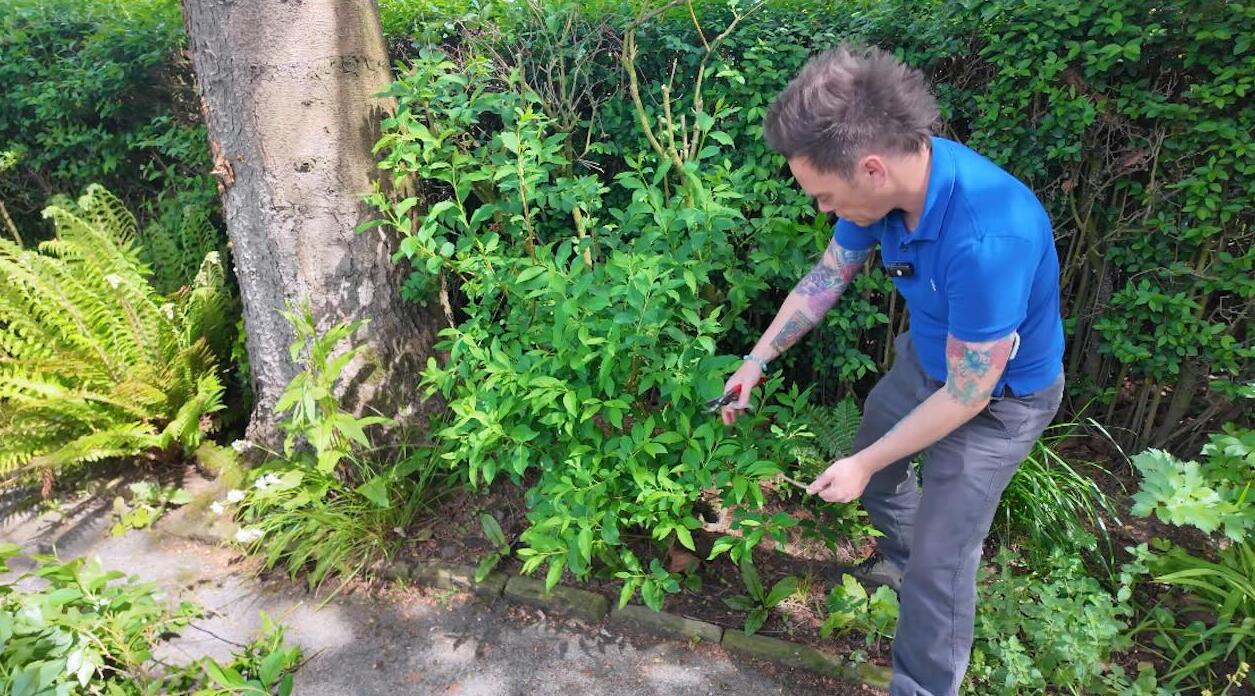
In this guide, I will walk through exactly when to prune, the step-by-step technique for routine annual pruning, how to renovate an old woody specimen that has been left for years, and how to manage forsythia grown as a hedge rather than a freestanding shrub. I will also cover the tools worth having to hand and the mistakes I see most often, both in client gardens and in the questions that land on the Garden Ninja forum every spring.
Jump To
This page contains affiliate links (see full details here). If you purchase through these links, I may earn a small commission at no extra cost to you. I only recommend products I personally use and trust at Garden Ninja HQ.
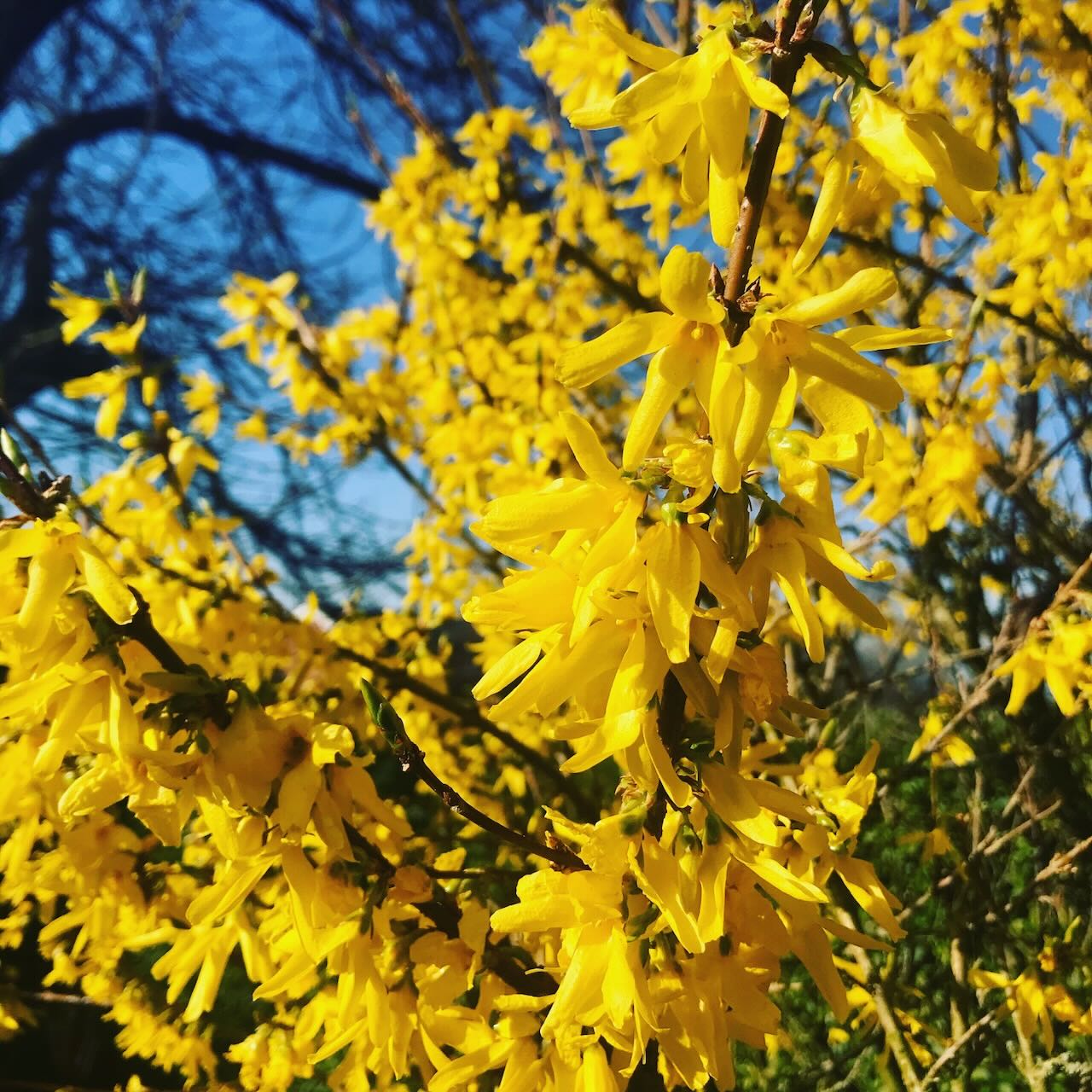
The rule I give every client and every forum member who asks is straightforward enough to remember without writing it down. Prune forsythia immediately after it has finished flowering, which in most of the UK falls somewhere in April, occasionally stretching into early May in colder northern gardens or a particularly late season. The flowers will fade, the petals will drop, and new leaf growth will start to come through. That is your signal to get the secateurs out, not a date on the calendar.
Waiting for the plant to tell you rather than working from a fixed date matters because UK seasons vary so much year to year and region to region. A forsythia in a sheltered Cornish garden might finish flowering in early March, while the same variety in a cold Aberdeenshire garden could still be in full bloom into late April. Watch the plant, not the calendar.
⚠️ Avoid This
Never prune forsythia in autumn or winter as a matter of routine. The only exception is a hard renovation cut on a badly overgrown, flower shy specimen, which I cover further down this guide, and even then it is a deliberate trade off rather than a free pass for general tidying.
Forsythia belongs to a group of shrubs that pruning specialists describe as flowering on the previous year’s wood. Through the summer after flowering, the shrub puts on new stems, and it is this new growth that carries next spring’s flower buds. If you prune in summer, autumn or winter, you are removing stems that are already carrying, or about to carry, the buds for the display you were hoping to enjoy. Forsythia x intermedia, the most commonly grown garden forsythia, behaves exactly this way, as do close relatives like flowering currant and mock orange, so the same logic applies whenever you are working out pruning timing for early spring flowering shrubs more generally.
There is a second reason the immediate post-flowering window works so well. Pruning straight after flowering gives the shrub the maximum amount of the growing season ahead of it to put on the new wood that will flower the following spring. Leave it any later than around June, and you start to compress that window, which can mean a noticeably thinner display the year after.
Forsythia is not a demanding shrub when it comes to kit. For the vast majority of routine annual pruning, a decent pair of bypass secateurs will do almost everything you need, since most of the stems you are removing are pencil thickness or smaller. I have used Okatsune 103 bypass secateurs for years across client gardens and on Garden Rescue, and they remain my go to recommendation for this kind of job because the blade holds a clean edge through a full season of pruning without constant resharpening.
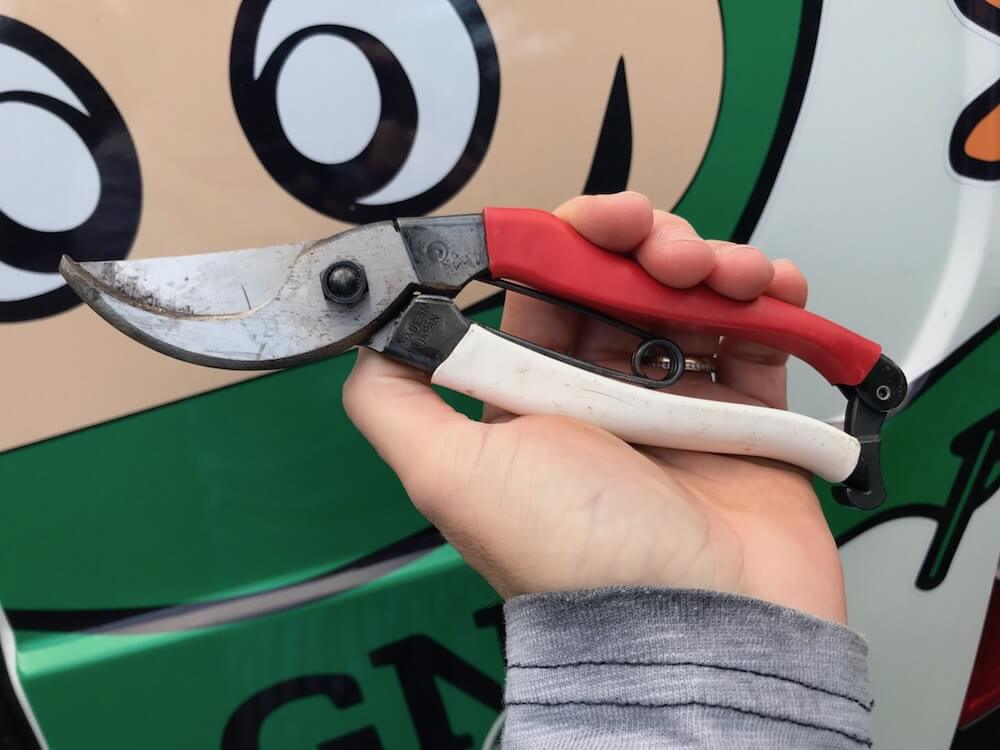
🛒 Buy Okatsune 103 Bypass Secateurs from Amazon UK
For the thicker, woodier stems you will encounter on an older shrub during a renovation prune, a pair of loppers will save your hands and give you a cleaner cut than forcing secateurs through wood they were never designed to handle. Keeping your blades properly sharp also matters more than people expect. A crushed, ragged cut heals more slowly and gives disease an easier way in than a clean one, so a sharpening whetstone kept in the shed is a small investment that pays for itself many times over across a gardening year.
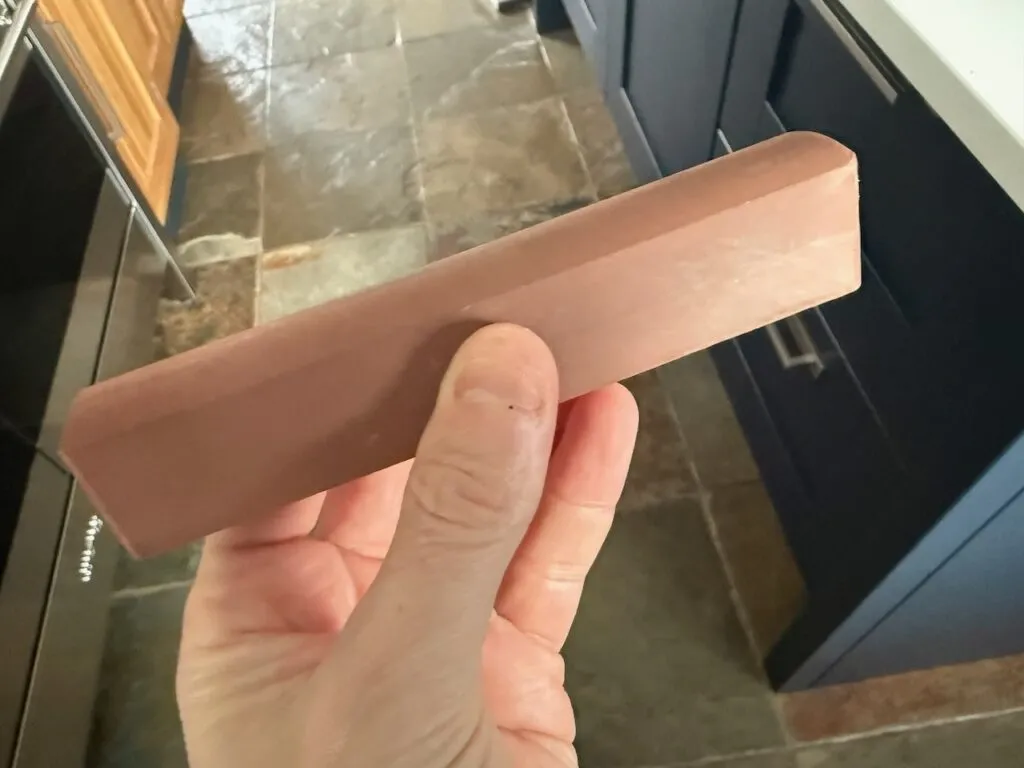
🛒 Buy a secateur sharpening whetstone from Amazon UK
Finally, forsythia produces a surprising amount of cut material even from a fairly modest annual prune, so a sturdy garden trug to collect prunings as you go saves repeated trips to the compost heap and keeps the job tidy as you work around the shrub.
🛒 Buy a plastic garden trug from Amazon UK
If you have recently planted a forsythia, the best advice I can give is to largely leave it alone for the first couple of years. Young plants establish better and develop a more natural, graceful shape if you resist the urge to start shaping them too early. All that is needed in those first seasons is the removal of any dead, damaged or obviously badly positioned shoots, ideally spotted and dealt with in late spring once flowering has finished.
This restraint pays off later. A forsythia allowed to establish its own framework in those early years tends to need far less corrective work down the line than one that has been clipped into a tight shape from the outset, which often just encourages a dense thicket of growth at the expense of the open, arching habit that makes the shrub so attractive when it flowers.
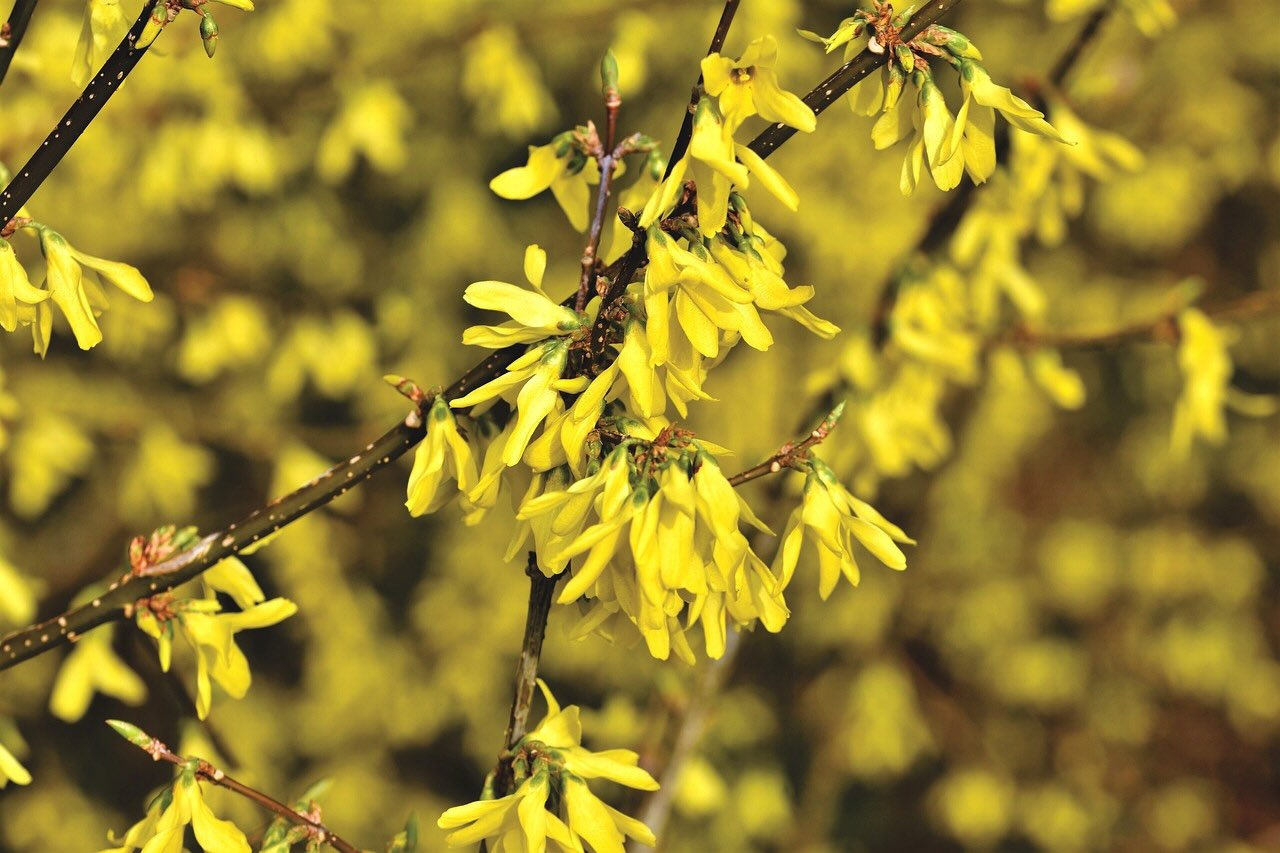
Once a forsythia is established, usually from its third year in the ground onwards, an annual prune straight after flowering keeps it healthy, well shaped and flowering generously rather than running to leggy bare wood at the base. I follow the same five steps on every established forsythia I work on, whether it is a single specimen in a border or part of a larger planting scheme.
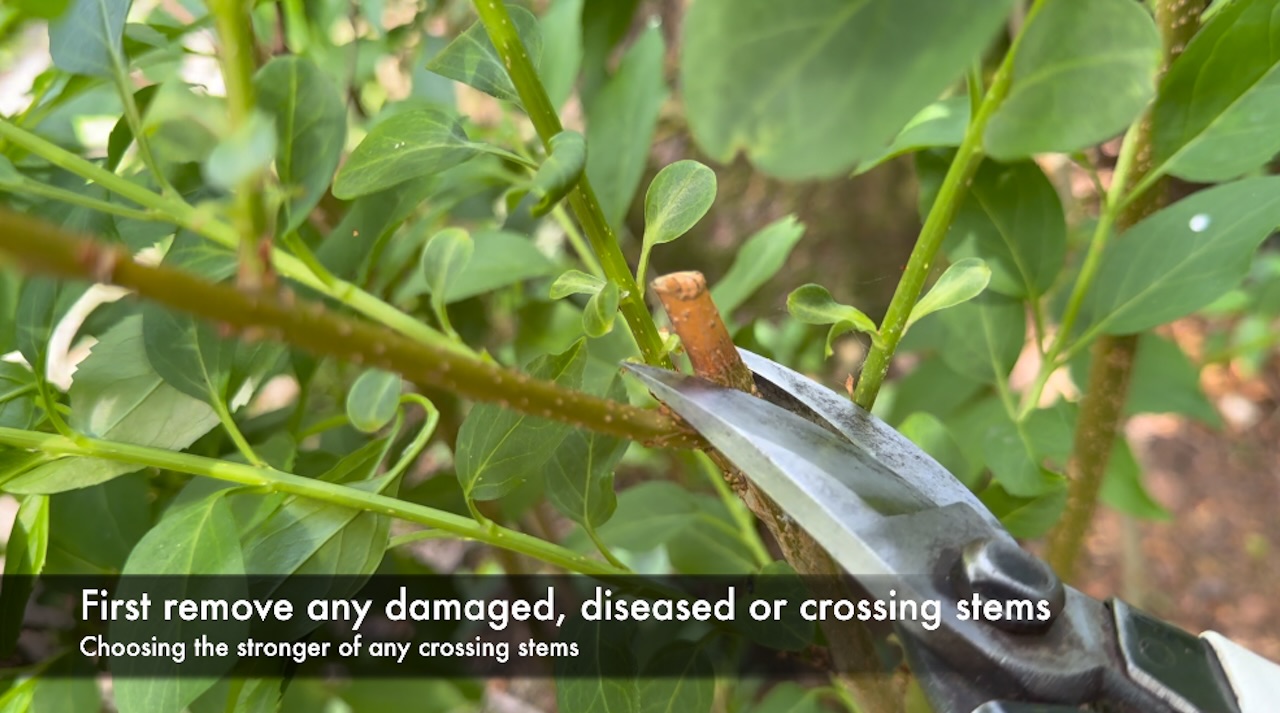
Take out any disease-damaged, crossing or rubbing stems first. This is not strictly part of the shaping work, but it clears away the clutter so you can actually see the true shape and structure of the shrub before you start making the cuts that matter.
Follow each flowered stem down and cut it back to a strong, vigorous shoot or bud lower down, ideally one that is facing outward or upward so the new growth fills the shrub rather than crossing back through the centre. This is the single most important step, since it is what triggers the strong new growth that will carry next year’s flowers.
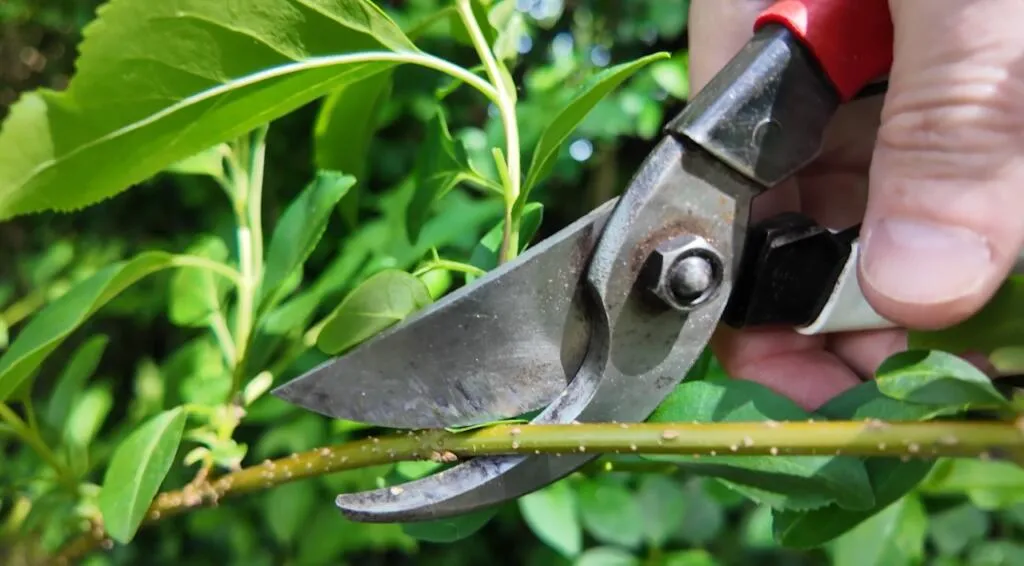
Look for the thickest, greyest, most woody stems in the shrub and cut a handful of them right down to ground level or to a low framework branch. This sounds drastic the first time you do it, but it is exactly what encourages strong new shoots to come up from the base rather than the shrub gradually turning into a tangle of old wood with all the flowering happening at head height.
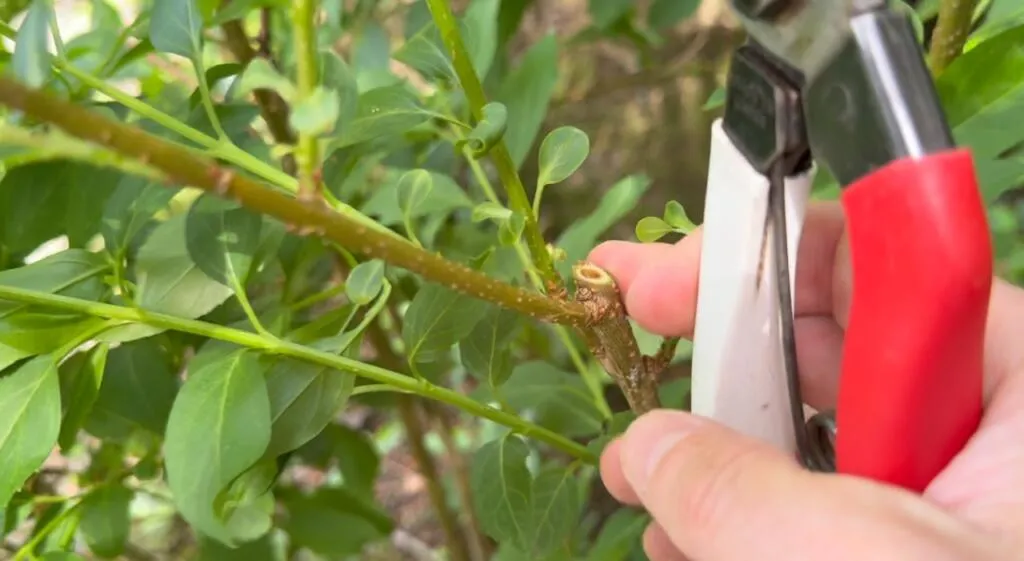
Forsythia left to its own devices for a couple of seasons will often produce a dense knot of crossing stems in the middle of the shrub. Open this up by removing weaker, thinner growth and any stems that are rubbing against one another, since rubbing wounds are an easy entry point for disease and rarely heal cleanly.
It is easy to focus on one section of the shrub and lose sight of the whole. Stop every few cuts, walk round to the front, and check the shrub is developing an open, slightly arching shape rather than a flat or lopsided one. Repeat this check regularly as you work rather than only at the very end.
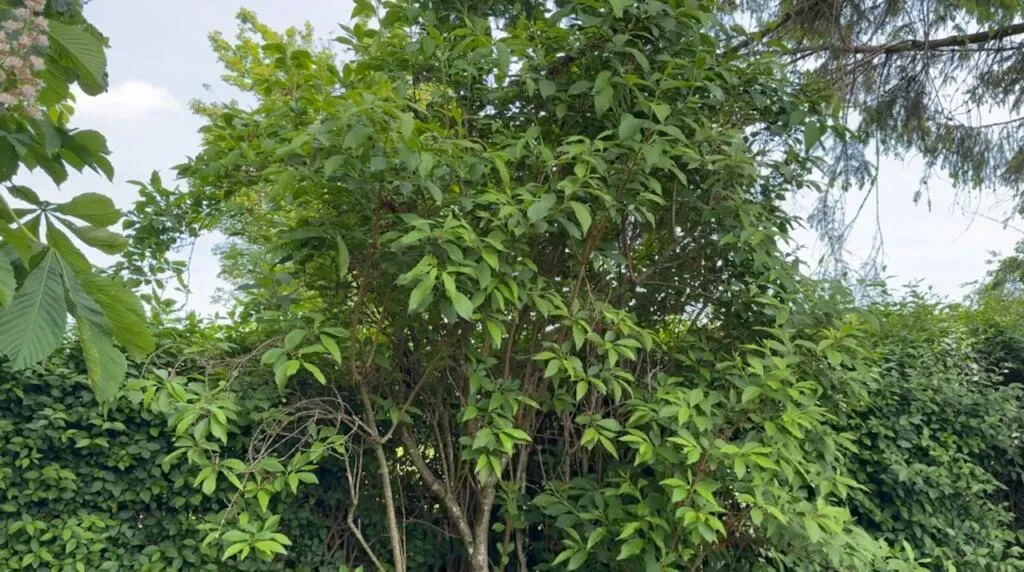
💡 Top Tip
An easy way to keep a forsythia in check without it ever feeling like a chore is to cut generous lengths of flowering stem for the vase indoors while it is in full bloom. You get the display in the house, and the shrub gets a head start on the pruning you would have needed to do anyway.
This is the situation I am asked about more than any other when it comes to forsythia, both by clients and on the forum. A neglected forsythia that has not been pruned for several years typically develops into a tall, leggy shrub with most of the flowering happening right at the top, a thicket of old unproductive wood lower down, and a noticeably thinner display than it once had. The good news is that forsythia is an exceptionally forgiving shrub to renovate, and it is one of the few situations where I will deliberately step outside the immediate post flowering rule.
For a properly overgrown, flower shy specimen, hard renovation pruning is carried out during the dormant season, between late autumn and late winter, rather than after flowering. The trade off is honest and worth being upfront about: you will sacrifice most or all of that spring’s flowers in exchange for a properly restored shrub. Given the alternative is a forsythia that barely flowers anyway, this is almost always the right call.
I take one of two approaches depending on how bad the situation is. For a shrub that is overgrown but still has reasonable structure, I cut around a third of the oldest, thickest stems hard back to near ground level, leaving the remaining stems untouched that season. The following year, once the new growth from the first cut has established, I repeat the process on another third of the old wood, and finish the job in year three. Spreading the work over two or three seasons like this means the shrub is never without some flowering capacity while it recovers, and the regrowth comes through far stronger than if you try to do everything in one go.
For a properly neglected shrub that has become an unattractive tangle with very little going for it, forsythia is robust enough to tolerate cutting the entire plant back hard to around 30 to 45cm from ground level in one go. This is a properly drastic looking cut and it will mean a flowerless spring or two while the shrub rebuilds, but I have done this on enough old, woody forsythia specimens in client gardens to know it works reliably. Feed and mulch well after a cut this hard to support the vigorous regrowth you are asking the plant to produce.
Forsythia makes a really good informal flowering hedge, and I have specified it on more than one project where a client wanted boundary screening that earns its place with a proper seasonal display rather than just being green all year. The principle remains the same as for a freestanding shrub, but the approach needs a little adjustment to keep a hedge looking like a hedge rather than a row of individual shrubs.
Prune a forsythia hedge immediately after flowering, exactly as you would a specimen shrub, cutting back flowered growth to encourage new shoots and removing some of the oldest stems at the base each year to keep the hedge renewing itself from the ground up rather than just gaining height. Where a hedge differs is that you can also lightly trim the outer face for shape at the same time, since a hedge generally needs a cleaner line than an individual shrub growing informally in a border.
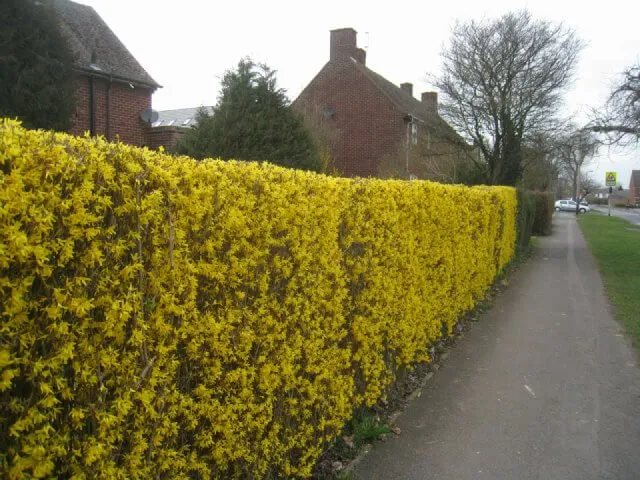
One thing I would actively avoid is clipping a forsythia hedge with shears on a fixed schedule throughout summer the way you might with a formal evergreen hedge like box or yew. Repeated shearing through the growing season removes the new wood that would carry next spring’s flowers, and over a few years you end up with a hedge that is green, tidy, and almost completely without blossom, which rather defeats the point of choosing forsythia in the first place. One proper prune straight after flowering is worth far more than several light trims through the summer.
Pruning at the wrong time of year is by far the most common mistake, and it is almost always done with good intentions. People tidy up the garden in autumn, see a forsythia that looks a bit untidy, and cut it back along with everything else, not realising they have just removed next year’s entire flower display. If you only take one thing from this guide, let it be that forsythia is pruned after flowering, not as part of a general autumn tidy.
Shearing the whole shrub into a ball or a flat hedge shape is the second mistake I see regularly, usually on hedges but occasionally on specimen shrubs too. This destroys the naturally arching habit that makes forsythia attractive and, as covered above, repeated shearing through summer removes the flowering wood. Selective cutting with secateurs, working stem by stem, will always give a better result than blunt shearing with hedge trimmers.
Leaving an established forsythia completely unpruned year after year eventually produces exactly the leggy, flower shy specimen covered in the renovation section above. A few minutes of routine maintenance every spring avoids ever needing the more drastic renovation cut later.
Using blunt or dirty tools is a mistake that applies to pruning in general but is worth repeating here, since forsythia’s soft new growth bruises and crushes easily under a poor cut, slowing healing and giving disease an easier route in. Keep your secateur blades sharp and reasonably clean between jobs.
Forsythia asks very little of you after a routine annual prune. A light mulch around the base in spring helps retain moisture and feeds the soil as the new growth gets going, and a balanced general purpose feed is worth applying if the shrub looked tired or flowered poorly the previous year. After a hard renovation cut, feeding and mulching properly makes a genuine difference, since you are asking the plant to put on a large amount of vigorous new growth in a single season and it will perform better with the nutrients to support that.
Keep an eye on watering during any dry spells in the weeks following a hard prune, particularly for newer or less established plants, since the stress of a significant cut combined with drought is a harder combination for the shrub to cope with than either on its own.
Most UK gardens see forsythia finish flowering in April, which is when routine pruning should be carried out. Watch the plant rather than a fixed date, since milder or colder regions and individual seasons can shift this earlier or later by several weeks.
You can, but the later into summer you leave it, the more you compress the window the shrub has to put on the new growth that carries next year’s flowers. Aim to have routine pruning finished by June at the latest if you want a full display the following spring.
The most common cause by far is pruning at the wrong time, typically in autumn or winter as part of a general garden tidy, which removes the previous season’s growth before it has had a chance to flower. An old, congested shrub that has gone unpruned for years can also flower poorly simply because most of its energy is tied up in unproductive old wood. A renovation prune, as covered above, usually restores flowering within a year or two.
Yes. Forsythia is one of the more forgiving shrubs when it comes to hard renovation pruning and will tolerate being cut back to 30 to 45cm from the ground if it is properly overgrown. This is best done during the dormant season between late autumn and late winter, and you should expect a flowerless spring or two while the shrub rebuilds.
Consistent annual pruning straight after flowering is the answer, removing a portion of the oldest stems at the base each year and cutting back flowered growth to a strong lower shoot. This keeps the shrub renewing itself from the ground up rather than simply gaining height and girth unchecked.
Mastering Forsythia pruning is just the beginning of creating your dream garden! If you’re inspired by the transformation that proper pruning can achieve, imagine what you could accomplish with professional garden design skills.
Ready to take your gardening to the next level? Join thousands of Garden Ninjas who’ve discovered the secrets of stunning garden design through Lee Burkhill’s award-winning online courses. Whether you’re dreaming of redesigning your own outdoor space or considering a rewarding career change, these expertly crafted courses will transform you from a gardening enthusiast to a confident designer.
For the garden you’ve already got, not the one you’re starting from scratch. Seven checklists and video lessons from BBC Garden Rescue’s Lee Burkhill, built to help you work out what’s worth keeping before you spend a penny.
Garden Design Examples for Small Gardens: 30 Design Templates & Planting Plans: In this online gardening course, I’ll walk you through 30 fantastic garden designs, explaining the logic behind the layout, the plant choices, and take-home tips for applying them in your own garden.
Learn how to transform and design your own garden with Lee Burkhills crash course in garden design. Over 5 hours Lee will teach you how to design your own dream garden. Featuring practical design examples, planting ideas and video guides. Learn how to design your garden in one weekend!
Garden Design for Beginners Online Course: If you want to make the career jump to becoming a garden designer or to learn how to design your own garden, this is the beginner course for you. Join me, Lee Burkhill, an award-winning garden designer, as I train you in the art of beautiful garden design.
Forsythia rewards a little attention at exactly the right moment of the year. Prune immediately after flowering, cut back flowered stems to strong new growth, remove some of the oldest wood at the base each season, and you will keep this shrub flowering generously for decades. If you have inherited an old, neglected specimen, do not be afraid of a hard renovation cut over the dormant season. Forsythia is one of the most forgiving shrubs in the garden, and a year or two of patience will bring it back to its best.
Happy gardening, and here is to a forsythia full of yellow blossom every spring from now on.


Lee Burkhill, known as the Garden Ninja, is an award-winning garden designer and horticulturist with over 30 years of gardening experience and 15 years as a professional garden designer. A qualified RHS (Royal Horticultural Society) professional, Lee specialises in sustainable garden design and practical horticultural advice. He designs and presents on BBC1’s Garden Rescue and in leading gardening publications.
View all posts by Lee Burkhill







JOIN THE NINJAS
Be the first in line for new Guides, Discount codes and Offers