For the garden you’ve already got, not the one you’re starting from scratch. Seven checklists and video lessons from BBC Garden Rescue’s Lee Burkhill, built to help you work out what’s worth keeping before you spend a penny.
69


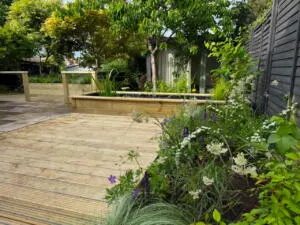
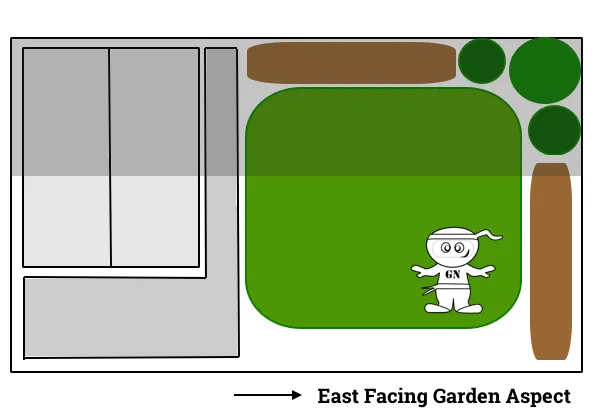
An east facing garden receives direct sun from sunrise until roughly midday or early afternoon, depending on the time of year and any surrounding structures. After that, the garden transitions into shade for the rest of the day. This means you have the best of both worlds in many respects: enough morning sun to grow a wide and interesting range of plants, combined with cool afternoon shade that actually protects plants from the most intense, drying heat of the day.

Plants that would scorch or bolt in a south facing garden often thrive magnificently in an east facing one, and the soil tends to retain moisture more reliably than in a fully sun-drenched aspect.
There is one specific challenge with east facing gardens that is worth understanding before you plant: the risk of frost damage to early flowering plants. On clear winter nights, temperatures drop sharply, and if a frost-tender flower bud is then hit by early morning sun, it thaws too rapidly and the cell walls rupture, turning flowers brown. With careful plant selection, however, this is easily managed, and there are excellent alternatives that will give you spectacular results without any risk of frost.
Quick Answer
East facing gardens receive morning sun and cool afternoon shade, creating ideal conditions for clematis, honeysuckle, hydrangeas, hostas, astilbes, foxgloves and Japanese forest grass. The soil stays moister than south or west facing gardens, which reduces watering. The main challenge is choosing plants that won’t be damaged by early morning frost on developing buds in late winter, which is easily resolved with the right plant selection.
This page contains affiliate links (see full details here). If you purchase through these links, I may earn a small commission at no extra cost to you.
Jump To
Before you spend a single penny on plants, the most valuable thing you can do is spend a full day in your garden observing where the light falls and when. Stand in your garden in the morning and you will feel the warmth of the rising sun on your face.
By early to mid afternoon, that sun will have moved around and much of the garden will be in dappled or full shade. The precise timing varies significantly through the year: in midsummer, you will get considerably more morning sun than in the depths of January when the sun barely clears the rooftops.
One of the practical advantages of an east facing garden that I have observed repeatedly in my design work is the moisture retention. Because the garden is not exposed to the intense drying effect of afternoon sun, the soil stays more consistently moist, which is excellent news for the majority of plants I will be recommending in this guide. You will also find that you spend less time watering than gardeners with south or west facing gardens, which is genuinely useful during dry spells.
The frost-thaw issue I mentioned above is real but manageable. The problem occurs specifically in late winter and early spring when flower buds are just developing. If a plant is in a spot where early morning sun hits frozen tissue before it has had a chance to thaw gently, the damage can be significant. The solution is simply to choose plants that either flower later in the season, are frost hardy enough not to be affected, or to position vulnerable early-flowering plants on the boundary between the east facing and north facing aspects of the garden where they receive no early morning sun at all.
East facing walls and fences offer tremendous potential for climbers, and the range of suitable plants is broader than you might expect. What you are looking for are plants that appreciate morning sun but do not require the intense afternoon heat that south and west facing walls provide.
Clematis montana is, in my view, one of the most spectacular climbers you can grow on an east facing wall, and it performs magnificently in these conditions. The sheer exuberance of this plant in flower, when it covers itself completely in masses of small, saucer-shaped blooms in white or the beautiful soft pink of the variety ‘Elizabeth’, is one of the great early summer spectacles of the British garden.
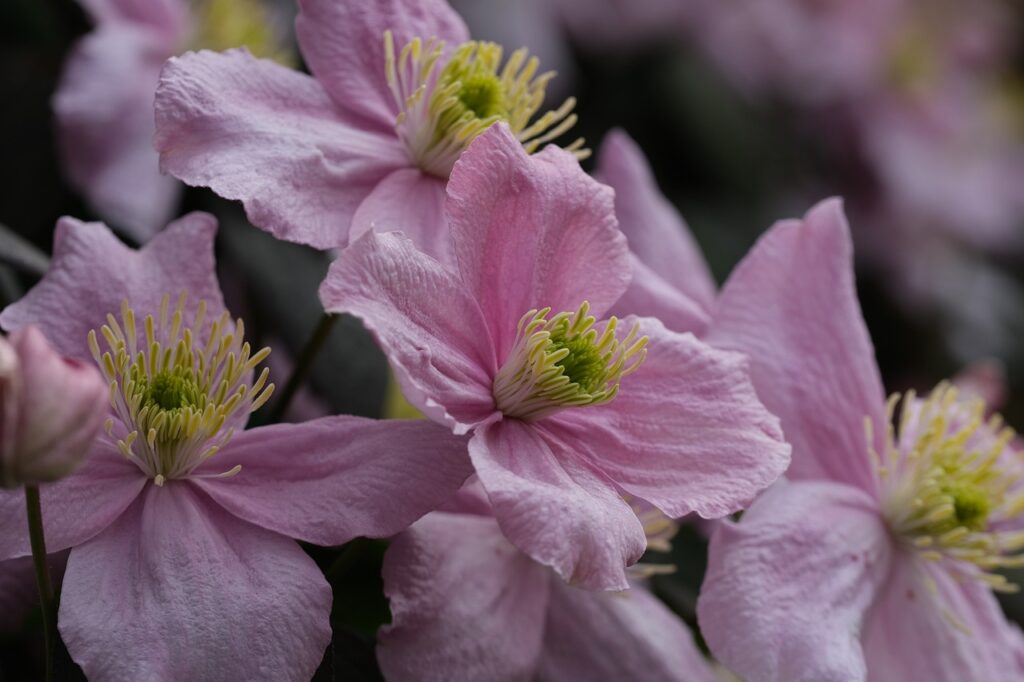
It flowers on the previous year’s growth, so it needs pruning immediately after flowering rather than in early spring. The variety ‘Rubens’ has slightly bronzed young foliage and pretty pink flowers that are particularly lovely. It is vigorous, tough and completely reliable in an east facing position.
🛒 Buy Clematis montana on Amazon UK
While most clematis prefer as much sun as they can get, Clematis alpina and the closely related Clematis macropetala are genuinely well suited to east facing positions. Clematis alpina produces nodding, lantern-shaped flowers in shades of indigo blue and purple in early spring, followed by attractive, silky seedheads that persist into summer.
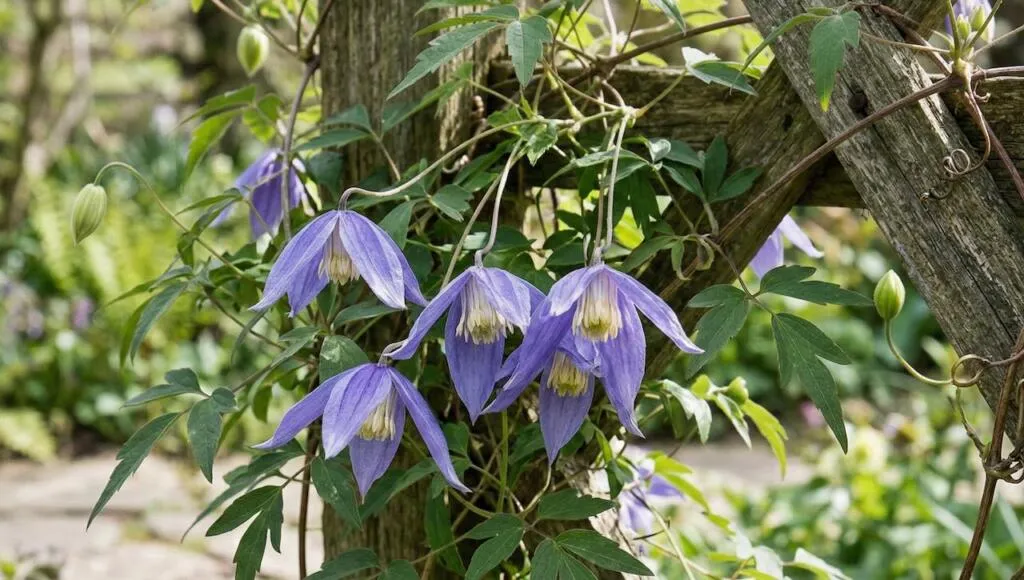
Clematis macropetala ‘Lagoon’ is particularly fine, with deeper blue semi-double flowers. Both are compact, manageable climbers that will not take over the wall, and they are completely hardy without the frost susceptibility issues of some other early flowering plants. I have used them on east facing fences many times and they are completely reliable.
🛒 Buy Clematis alpina on Amazon UK
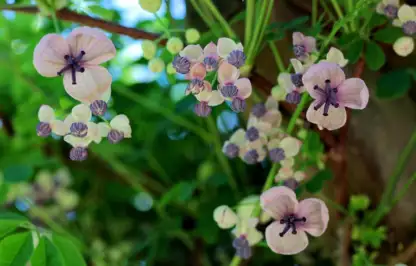
Akebia quinata is a plant I have been championing for years on east facing walls, and it deserves to be far better known. This semi-evergreen twining climber produces the most wonderfully unusual flowers in early spring: small, pendant clusters of deep burgundy purple with a subtle but intriguing chocolate scent, hence its common name.
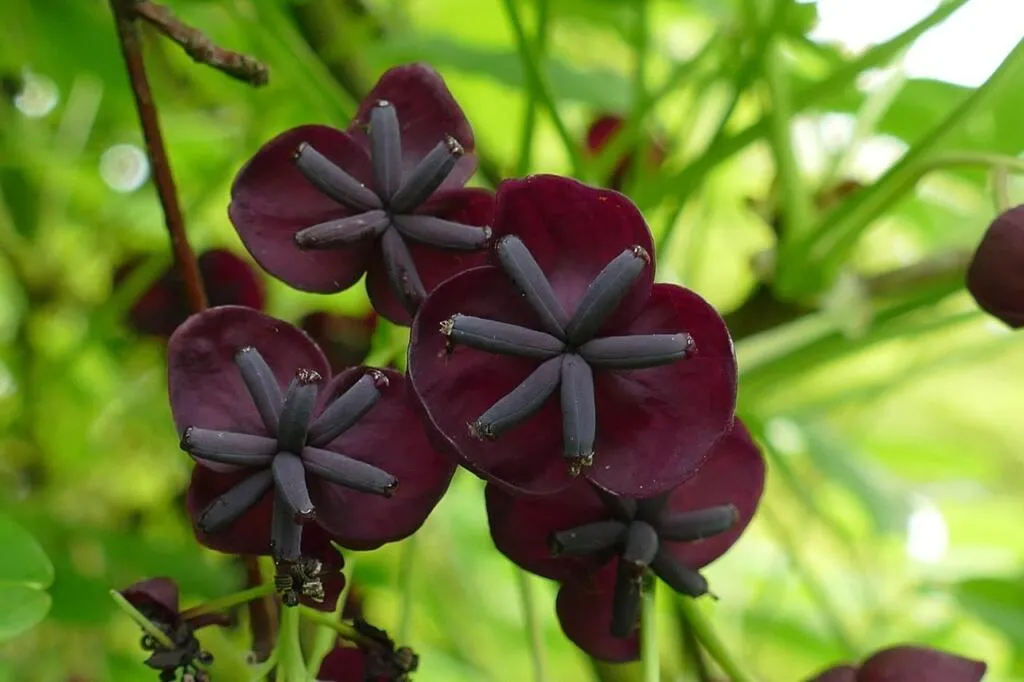
The foliage is attractive and interesting, with five-lobed leaflets that give it a refined, almost tropical appearance. In warm summers, it can produce curious sausage-shaped purple fruits. It grows vigorously once established and provides excellent coverage on an east facing wall or fence.
🛒 Buy Akebia quinata on Amazon UK
Our native honeysuckle is perfectly suited to an east facing wall. It actually performs better without the relentless afternoon sun of a south or west facing position, because intense heat can sometimes cause the foliage to yellow and the plant to look tired by midsummer.
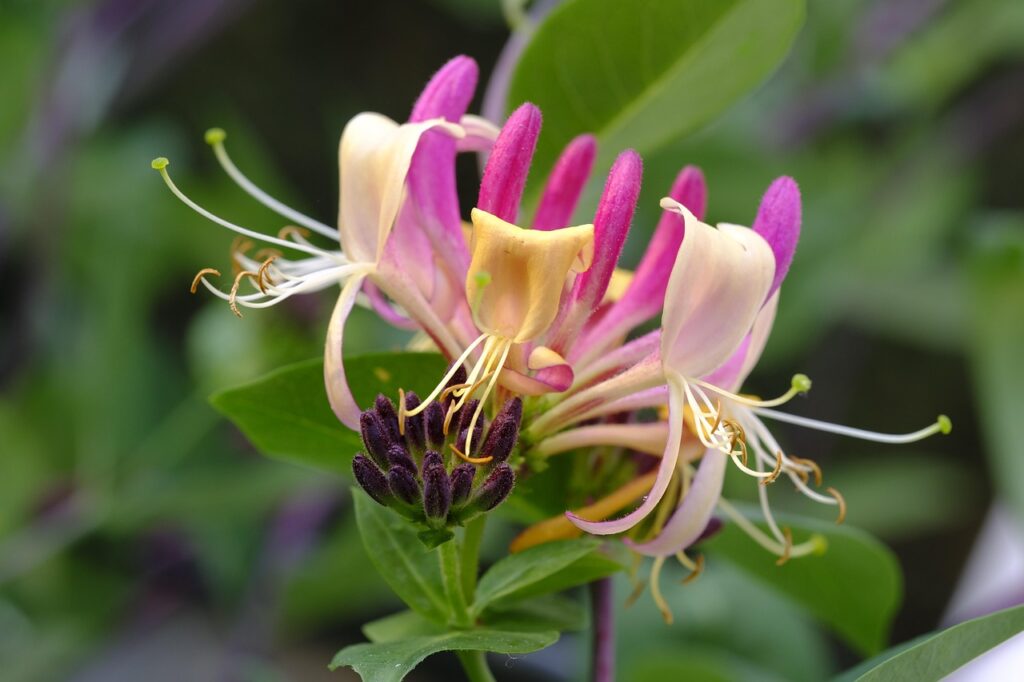
In a cooler, partially shaded east facing spot, it stays lush and green all season while producing its glorious, intensely fragrant flowers over a long period from June into autumn. The native species ‘Belgica’ flowers first in May and June, and ‘Serotina’ follows later in summer, so growing both gives you an extended season of that incomparable scent. Wildlife, particularly moths and bats, absolutely love it.
🛒 Buy Honeysuckle on Amazon UK
Garrya elliptica is one of those plants that earns its keep through the most difficult months. It is an evergreen shrub that can be trained flat against an east facing wall, and in the depths of winter it produces the most extraordinary long, grey-green, silky catkins that drape elegantly from the branches in January and February when almost nothing else is flowering.
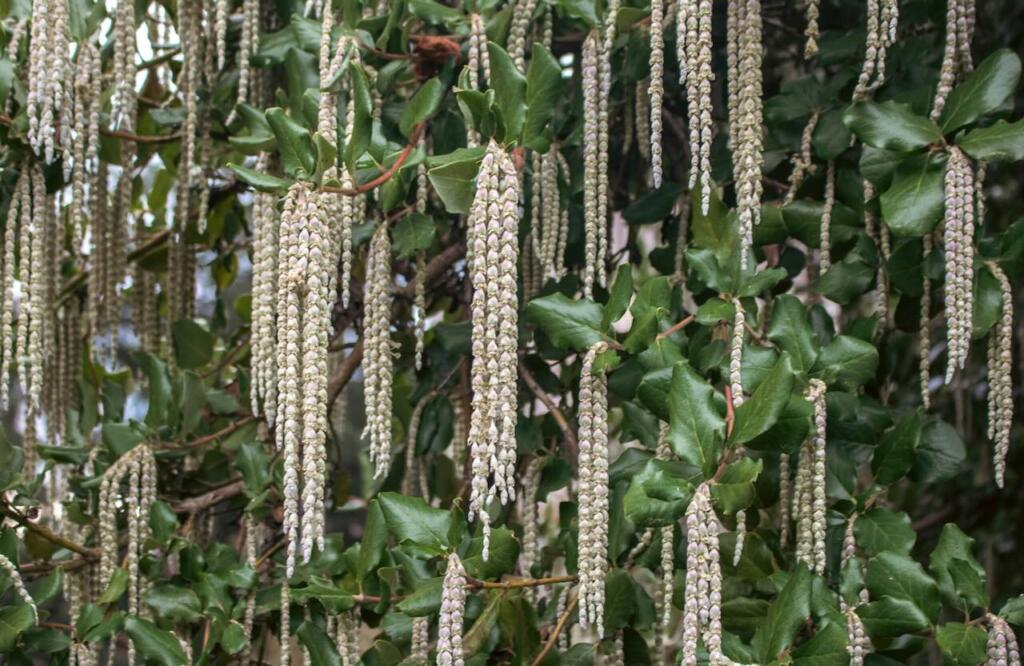
The variety ‘James Roof’ has the longest catkins of any form and is the one I always recommend. It is completely hardy, unfussy about soil, and looks magnificent against a rendered or brick wall. It does need regular pruning after the catkins have finished to keep it tidy and in bounds.
🛒 Buy Garrya elliptica on Amazon UK
The shrub palette for east facing gardens is rich and diverse, offering excellent options for structure, year-round interest, and seasonal colour.
Hydrangea ‘Annabelle’ is one of the most reliable and spectacular flowering shrubs you can grow in an east facing garden. The enormous, rounded flowerheads, up to 30cm across in pure white, appear from July and last for months, gradually fading to a beautiful parchment and cream as autumn arrives before eventually drying completely and persisting through winter.
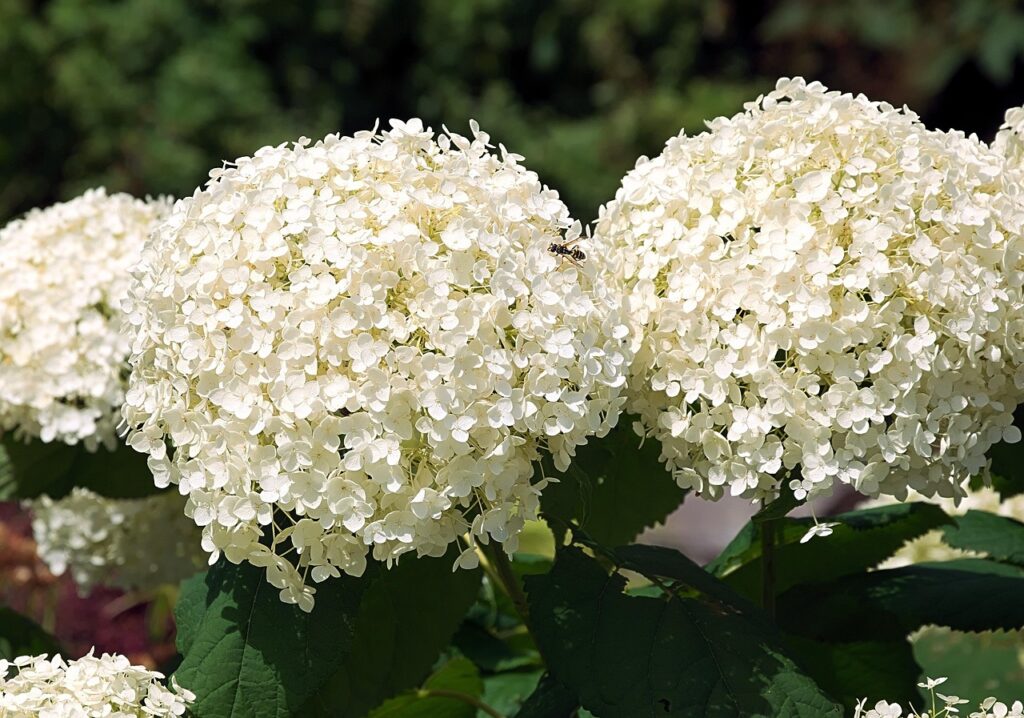
Unlike mophead hydrangeas, ‘Annabelle’ flowers on the current year’s growth, so it can be pruned hard in early spring without any risk of losing the flowers. It holds the RHS Award of Garden Merit and is genuinely one of the most useful and beautiful shrubs in the entire canon of garden plants. I use it constantly in east facing gardens because it performs so consistently.
🛒 Buy Hydrangea Annabelle on Amazon UK
Viburnums are underused in British gardens and they are absolutely outstanding for east facing gardens. Viburnum plicatum f. tomentosum ‘Mariesii’ is probably the most spectacular, producing horizontal layers of tiered branches covered in lacecap-like white flowers in late spring, followed by red berries in autumn and wonderful russet autumn colour.
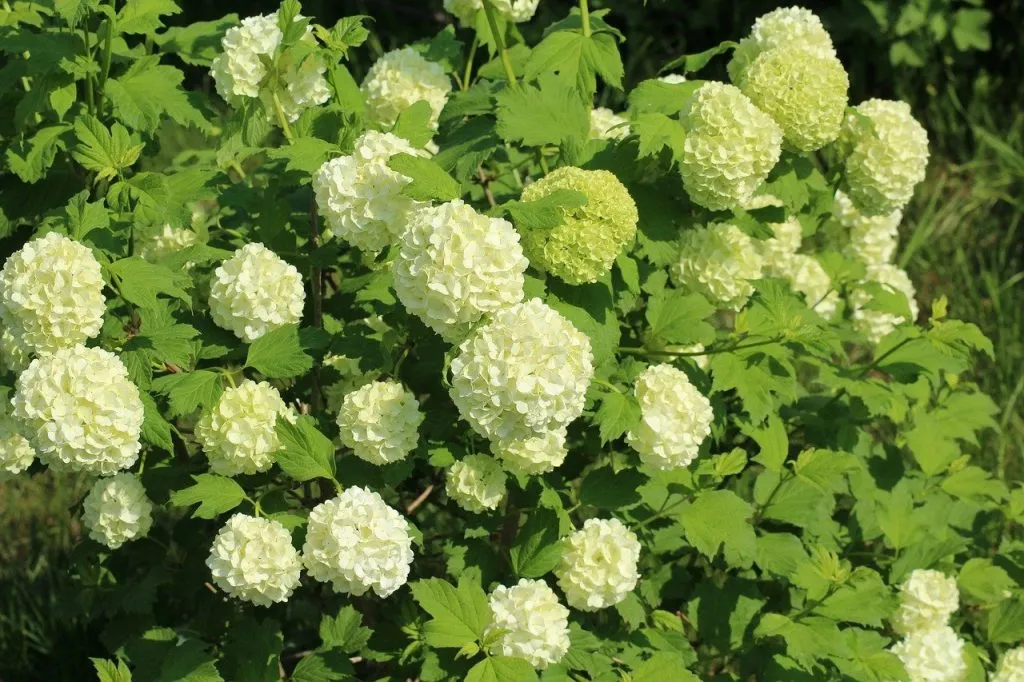
Viburnum x bodnantense ‘Dawn’ is an entirely different proposition: a tall, upright shrub that flowers through the darkest months of winter, producing pink-flushed, richly scented clusters of flowers from November right through to March on bare stems. Both hold RHS Awards of Garden Merit, and both perform beautifully in east facing conditions.
Berberis is a supremely tough and adaptable genus of shrubs that thrives in east facing gardens. The deciduous varieties like Berberis thunbergii offer spectacular autumn colour, with foliage turning every shade of orange, red and purple before falling, and often with a good crop of coral red berries for the birds.
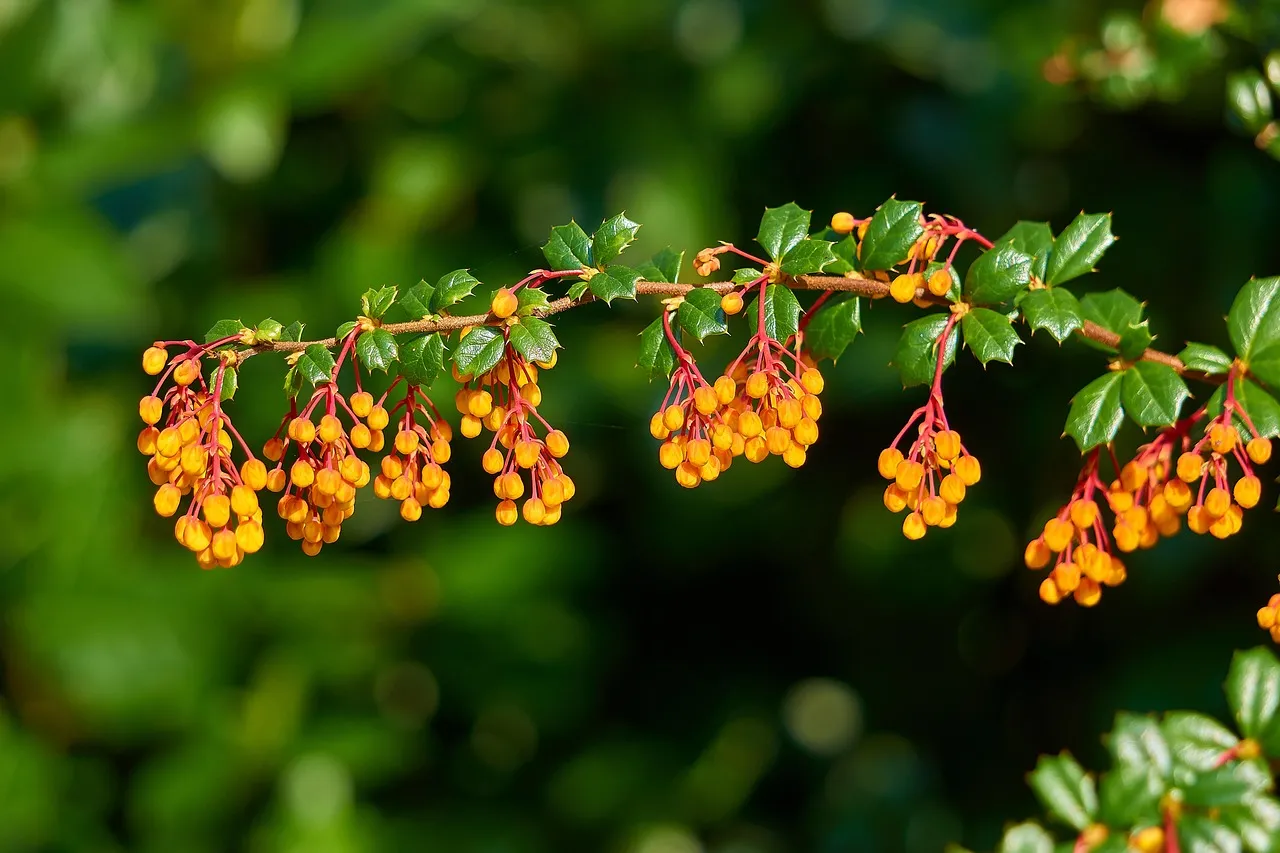
The evergreen forms, such as Berberis x lologensis ‘Apricot Queen’, provide year-round structure with glossy foliage and clusters of yellow-orange flowers in spring. They tolerate morning sun followed by afternoon shade without any complaint and are completely unfussy about soil type. The thorns mean they also make excellent security hedging along boundaries.
🛒 Buy Berberis barberry on Amazon UK
For bold, architectural drama in an east facing border, Acanthus mollis is one of the finest plants available. The enormous, deeply lobed, glossy dark green leaves are among the most beautiful of any garden plant, and the tall spires of white and purple hooded flowers that appear in summer are extraordinary, rising to 1.5m or more and making a quite spectacular statement.
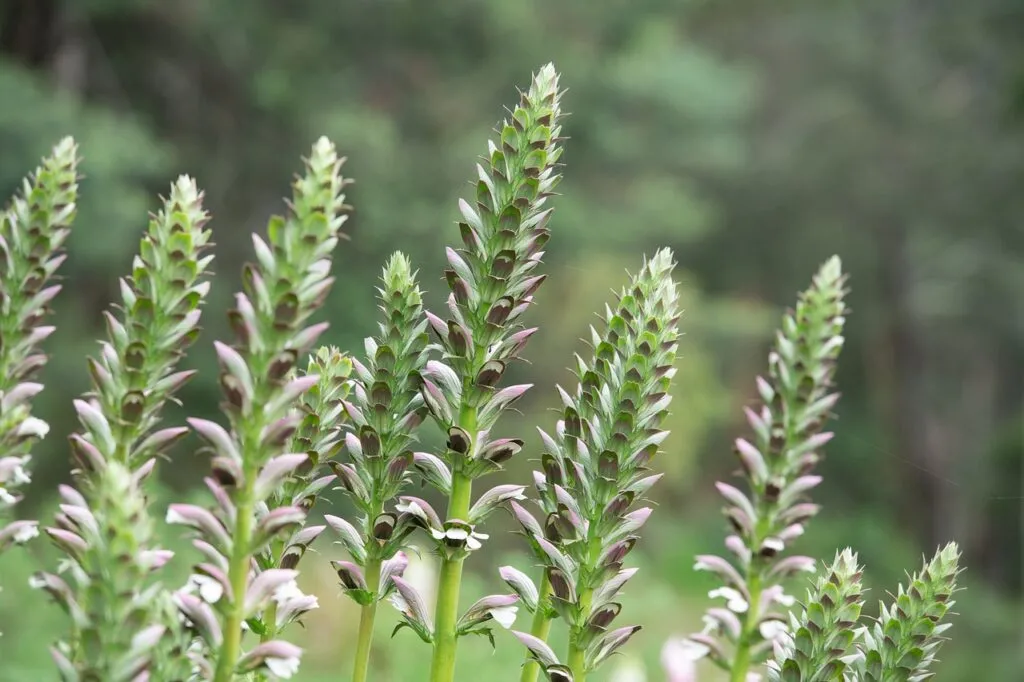
It is ridiculously tough, handles afternoon shade well after its morning sun fix, and once established, is remarkably drought-tolerant. It does spread by underground runners and can become quite large over time, so give it space and be prepared to manage it. The dried flowerheads are architectural and beautiful well into winter. Once you have Acanthus, you will never get rid of it, so be warned — I have it here at Garden Ninja HQ and it’s fabulous!
🛒 Buy Acanthus mollis on Amazon UK
Fatsia japonica, which I also covered in the north facing guide, is actually equally well suited to east facing gardens. It will happily take the morning sun that an east facing position provides, and the afternoon shade suits it perfectly. The enormous, glossy, palmate leaves create a wonderfully exotic, lush feel that is particularly effective in urban east facing gardens where you want to maximise greenery and architectural impact.

It is completely hardy in most parts of the UK and provides year-round structure and interest. The autumn flowers are a bonus that attracts late pollinators.
🛒 Buy Fatsia japonica on Amazon UK
The perennial palette for east facing gardens is genuinely broad and exciting, because you can draw from both the shade-tolerant plant world and from plants that need a reasonable amount of sun but do not want to be baked all day.
Heucheras have undergone a revolution in breeding over the last twenty years, and the range of foliage colours now available is quite extraordinary, from deep burgundy through to lime green, bronze, silver and copper, with every combination in between. They are near-evergreen perennials that thrive in partial shade with morning sun, exactly the conditions an east facing garden provides.
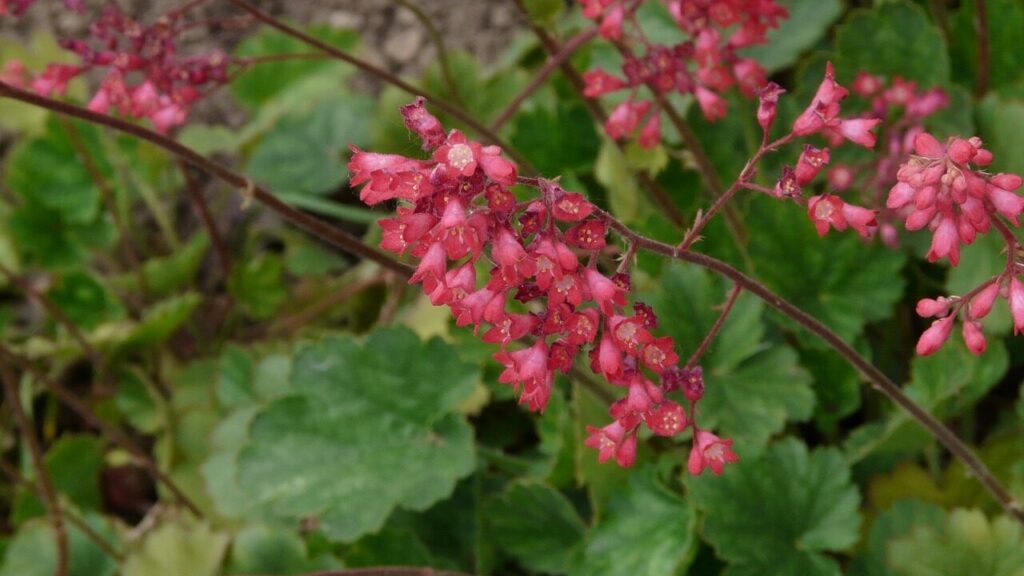
The delicate flower stems, usually in white, pink or red, rise above the foliage in summer and are attractive to bees. In an east facing garden, I would always include at least three or four different Heuchera varieties to create a tapestry of colour and texture throughout the year. Varieties such as ‘Palace Purple’, ‘Caramel’, and ‘Lime Marmalade’ are particularly striking.
Japanese anemones are one of the great late-season perennials for east facing gardens, flowering from late summer right through into October and providing colour at a time when many plants are winding down for the year. The flowers, in shades of white and pink, are elegant and beautiful, held on tall wiry stems above the handsome, dark green lobed foliage.
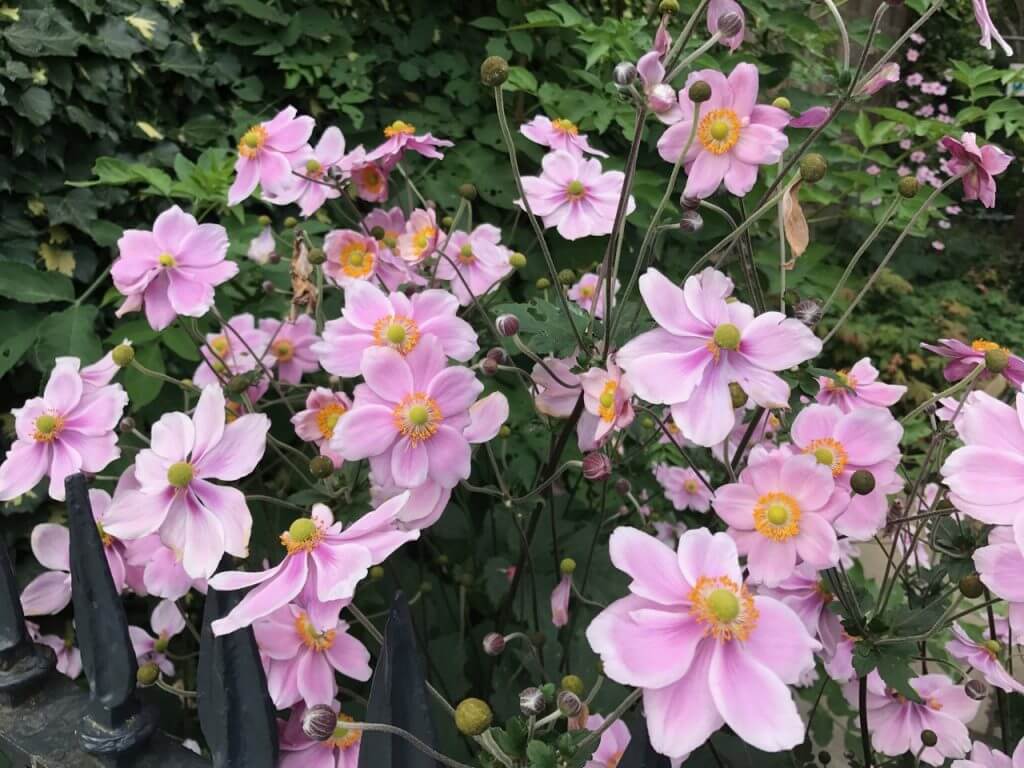
‘Honorine Jobert’ in pure white and the pink ‘September Charm’ are both RHS Award of Garden Merit holders. They spread steadily by underground runners and eventually form good-sized colonies, which is exactly what you want in a border that needs reliable late-season colour. They are completely hardy and ask very little of the gardener once established.
🛒 Buy Japanese Anemone on Amazon UK
Hostas, which I also recommend enthusiastically for north facing gardens, are equally at home in east facing borders. The morning sun in an east facing position actually helps to bring out the colour of variegated and yellow-leaved varieties more effectively than a north facing position, where the light can be too low.
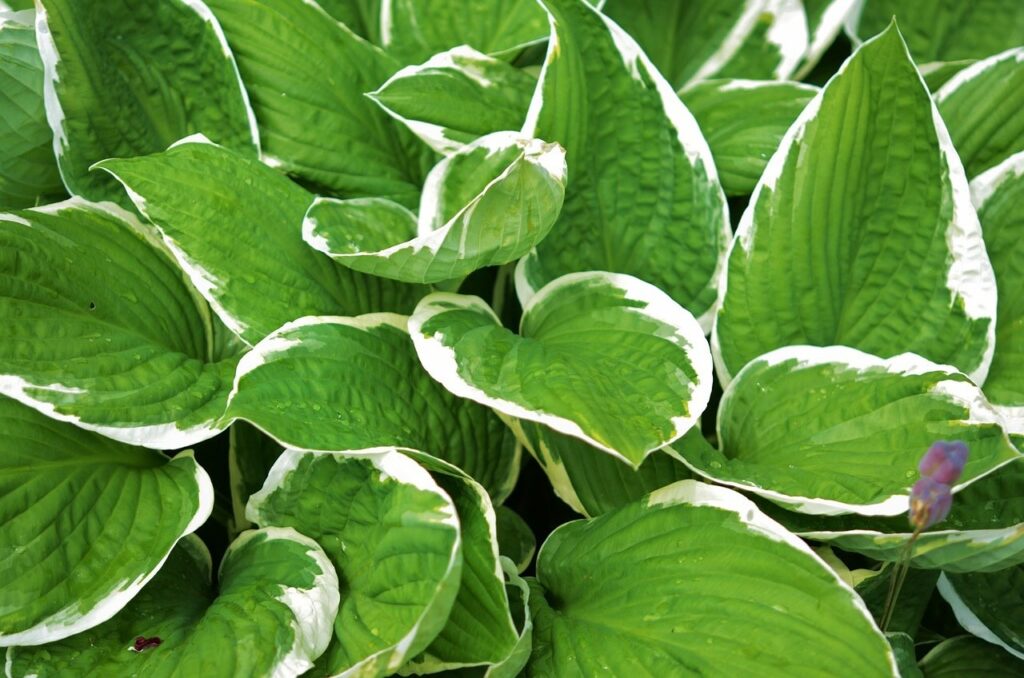
Plant them in consistently moist, fertile soil and divide them every few years in spring to increase your stock and keep the clumps vigorous. Protect them from slugs and snails, which are the main pest challenge, using organic deterrents such as wool pellets or copper tape around containers.
Astilbes need moisture and some shade to perform at their best, and an east facing border provides exactly these conditions. The feathery plumes in shades of white, cream, pink and red are one of the great pleasures of the summer border, and the dried flowerheads persist through autumn and winter in an attractive russet brown.
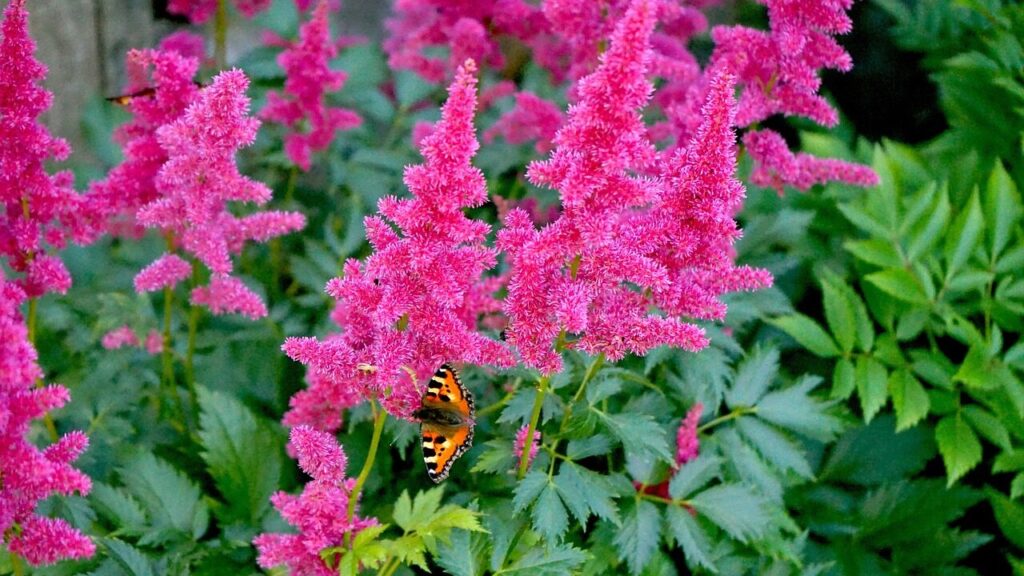
They are completely reliable, increase steadily in size, and can be divided in autumn or early spring. I always recommend interplanting astilbes with hostas because the two plants complement each other perfectly in terms of flower form, leaf texture, and growing conditions.
If you want to grow one of the most spectacular and genuinely blue flowers available to any British gardener, the Himalayan poppy is the plant you need, and an east facing garden is the ideal spot for it. Meconopsis needs cool, moist conditions, dappled or partial shade, and acidic, humus-rich soil. In a south facing position it would struggle badly with the heat and drying conditions.
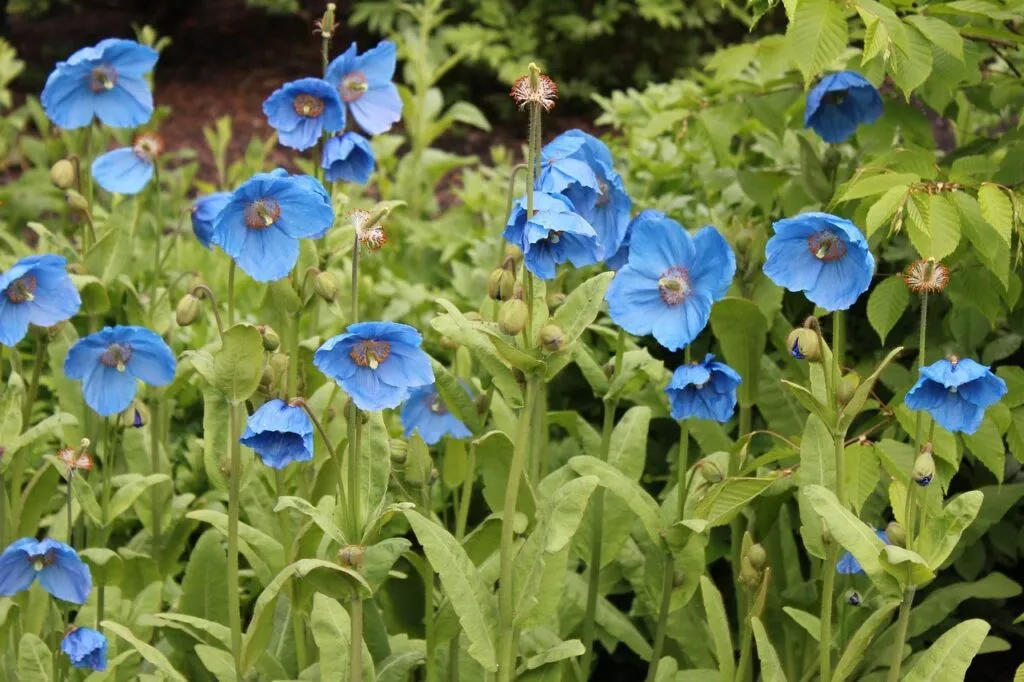
In an east facing border with reliably moist, slightly acidic soil, it can be utterly magnificent, producing those extraordinary, translucent, true-blue flowers from late spring into summer. It demands more attention and the right conditions than most plants in this guide, but the reward when it flowers well is incomparable.
🛒 Buy Meconopsis Blue Poppies on Amazon UK
Primulas in all their forms, from the humble garden primrose through to the spectacular candelabra primulas, are superb plants for east facing gardens. The smaller forms, including Primula vulgaris and the hybrid primroses in every imaginable colour, are ideal for the front of a border and flower in late winter and early spring.
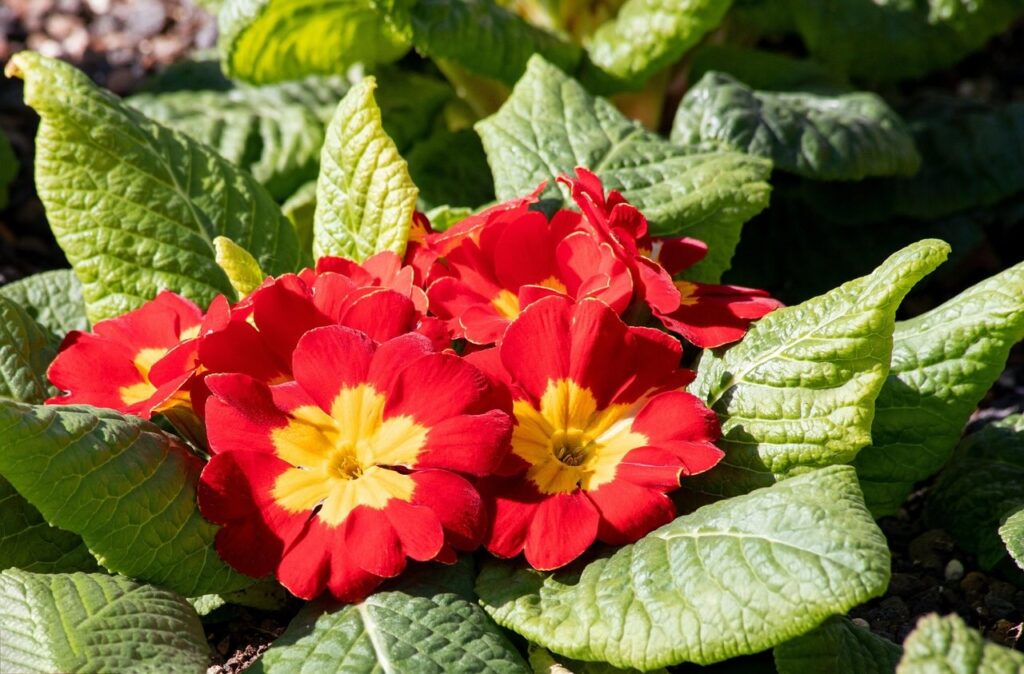
The taller candelabra types, such as Primula japonica in crimson red and white, and the beautiful lilac-flowered Primula pulverulenta, thrive in the moist, cool conditions of an east facing garden and create stunning vertical interest in early summer. They naturalise well in consistently moist soil and will spread by self-seeding over time.
Foxgloves are one of my great loves in the garden, and they are perfectly suited to east facing conditions, enjoying the dappled light and moist soil these gardens provide. As a biennial, they need to be sown or planted one year to flower the next, but once you have them established they self-seed prolifically and will perpetuate themselves indefinitely.
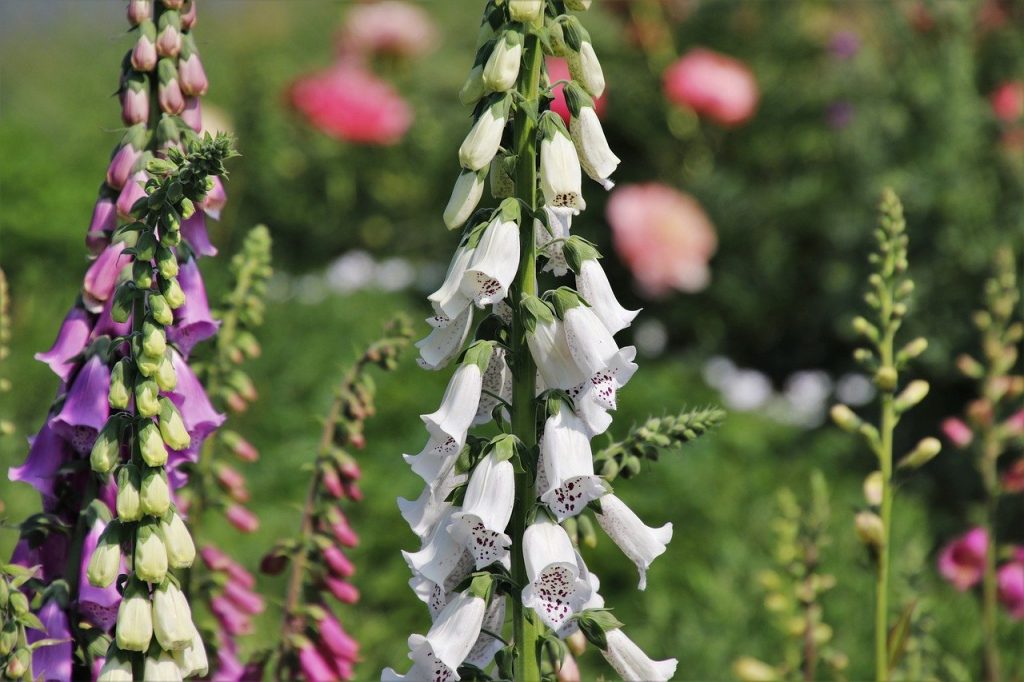
The tall spires of tubular flowers in purple, pink, white and cream are absolutely spectacular in early summer and are magnets for bumblebees. Plant in drifts for the most naturalistic effect. The white form Digitalis purpurea f. albiflora is particularly elegant in a shaded border. Note that all parts of the foxglove are toxic if ingested.
🛒 Buy Foxglove seeds on Amazon UK
Ground cover plants in an east facing garden serve the same essential purposes as in any other aspect: suppressing weeds, retaining soil moisture, and creating a finished, lush appearance at the base of taller plants.
Vinca minor is one of the most reliable and useful ground cover plants for east facing gardens, spreading steadily to create a dense, evergreen mat that suppresses weeds effectively. The small, bright flowers in blue-purple appear from early spring and continue sporadically through summer.
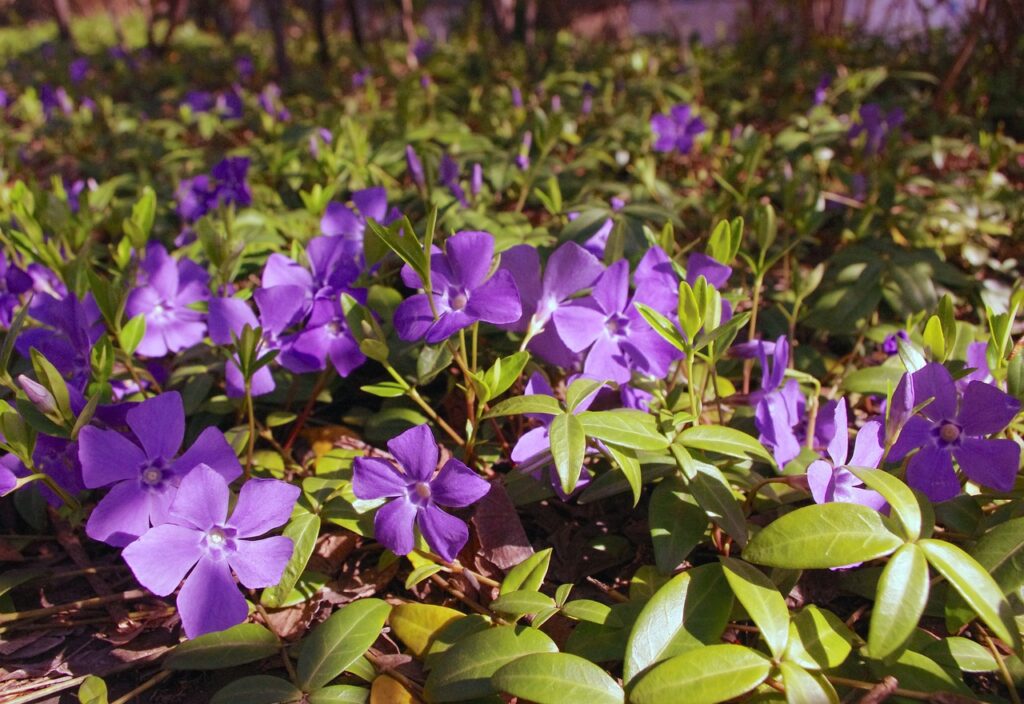
The variety ‘Gertrude Jekyll’ in white is particularly beautiful and brightens shaded areas effectively. It will grow in both morning sun and afternoon shade without any complaint, and once established requires essentially no maintenance.
🛒 Buy Vinca minor on Amazon UK
This ground-covering euphorbia is one of the toughest and most useful plants I know for partly shaded east facing gardens. It spreads steadily by underground stems to form a dense colony of glossy, dark green leaves topped with characteristic lime-yellow-green flowerheads from spring into early summer. It tolerates both dry and moist shade, is evergreen, and provides excellent weed suppression once established.
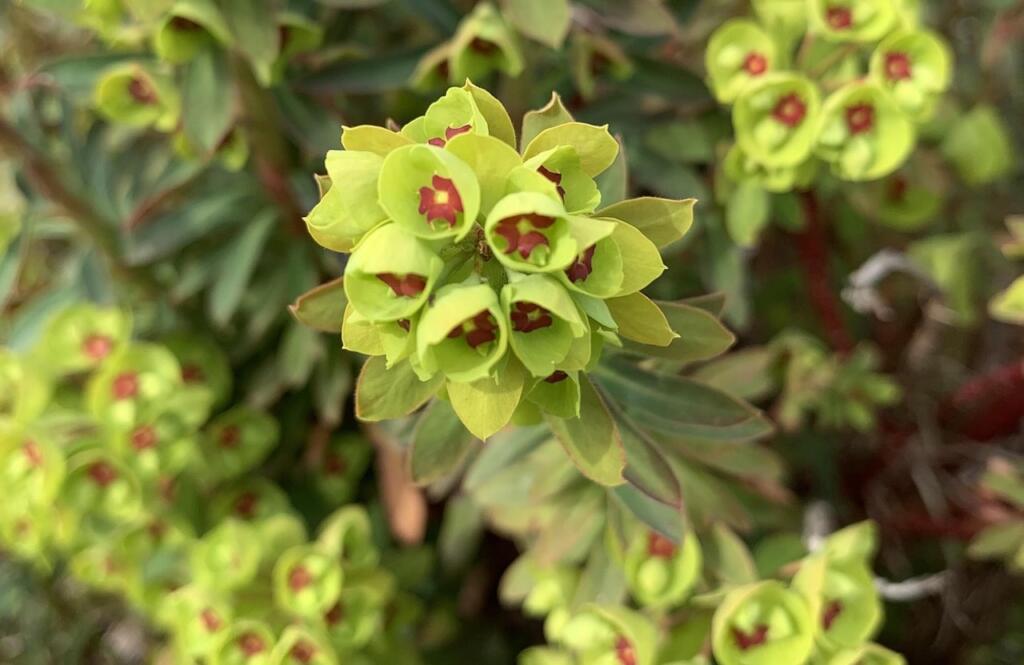
The sap is a skin irritant, so wear gloves when handling it. Despite this, it is an excellent plant for difficult spots and holds the RHS Award of Garden Merit.
🛒 Buy Euphorbia robbiae on Amazon UK
East facing gardens support an excellent range of bulbs, particularly those that prefer a degree of shade from the most intense afternoon sun.
Tulips perform remarkably well in east facing gardens, because the morning sun is enough to encourage them to open beautifully, and the afternoon shade then prolongs the life of the flowers, which would fade much more quickly in a full sun south facing position.
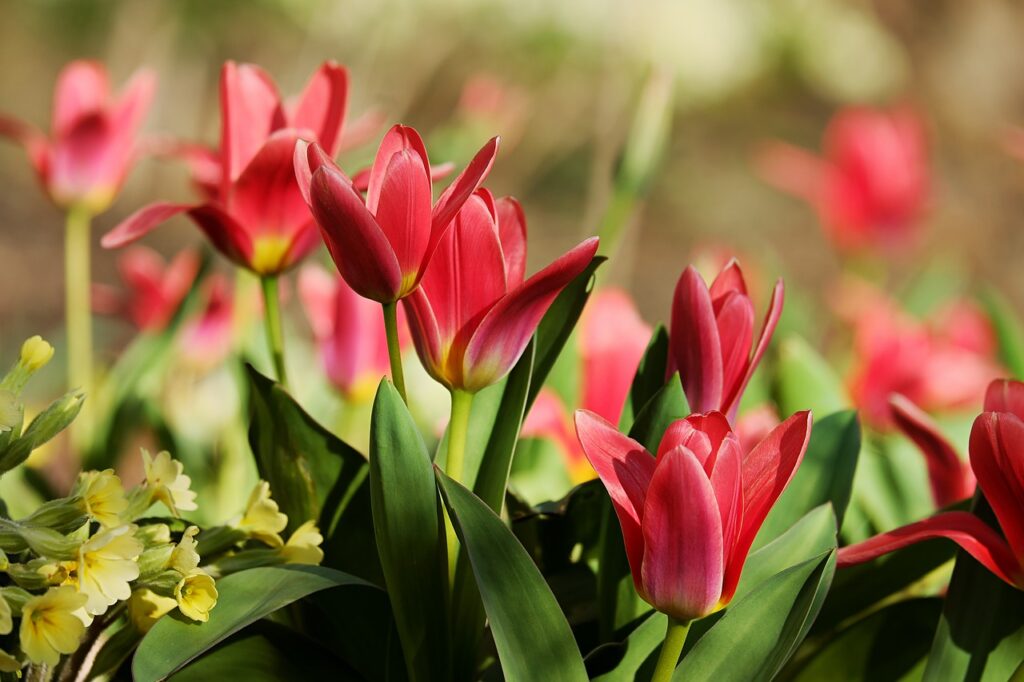
The more delicate-coloured varieties, particularly the soft pastels and the fringed and parrot types, look particularly lovely in east facing conditions where their nuance of colour is better appreciated. Plant them in well-drained soil in autumn, aiming for a depth of approximately three times the height of the bulb.
🛒 Buy Tulip bulbs on Amazon UK
Daffodils are completely unfussy about aspect and perform just as well in east facing gardens as in any other position. They provide invaluable early colour from late winter into spring, and the wide range of varieties available means you can extend the season from the earliest miniature ‘Tête-à-Tête’ in February through to the late-flowering poeticus varieties in May.
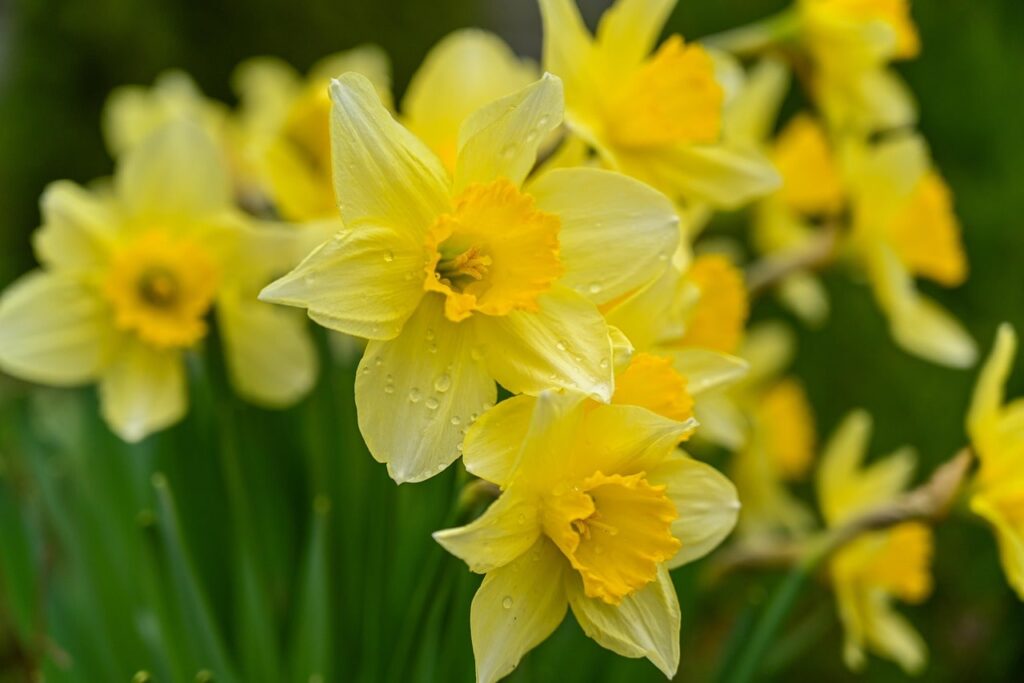
Plant them in autumn in groups of at least fifteen to twenty bulbs for the best naturalistic effect, and allow the foliage to die down completely before cutting it away.
🛒 Buy Daffodil bulbs on Amazon UK
Grasses and ferns provide invaluable texture, movement and structure in east facing borders, and several of the best are perfectly adapted to these conditions.
This is one of my absolute favourite plants for east facing gardens. The arching, cascading stems of golden-yellow, fine-textured foliage with green stripes are luminous in any light, but in the dappled shade of an east facing garden with morning sun washing over them, they are quite spectacular.
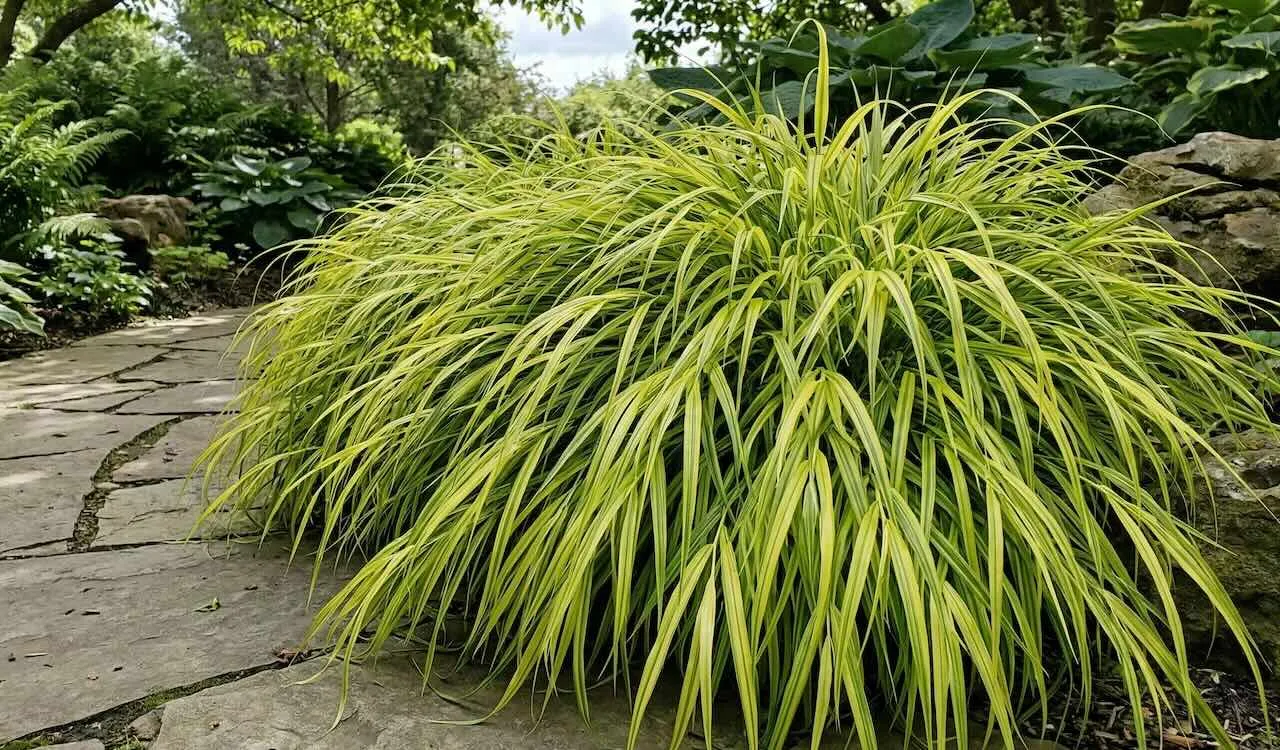
The plant moves beautifully in any breeze and provides wonderful textural contrast alongside broader-leaved hostas and astilbes. It holds the RHS Award of Garden Merit and is completely hardy. The foliage turns russet and bronze in autumn before dying back for winter.
🛒 Buy Hakonechloa macra on Amazon UK
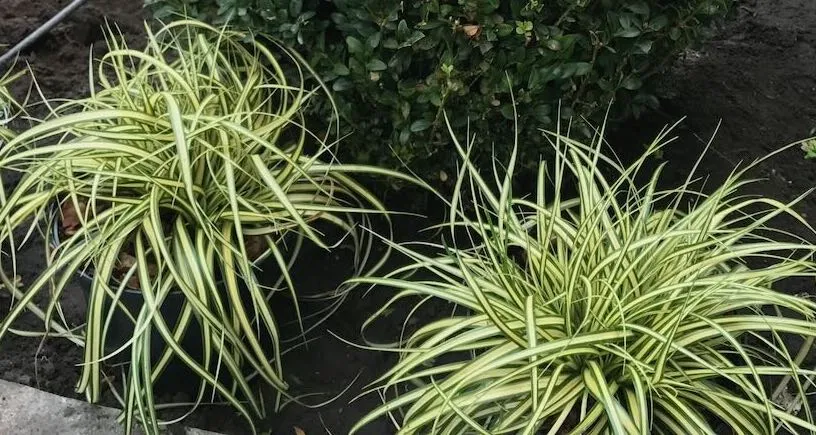
Carex, or sedge, is one of the most versatile groups of grass-like plants for east facing gardens. Varieties such as Carex oshimensis ‘Evergold’, with its bright yellow-striped foliage, and the bronze-toned Carex comans ‘Bronze Form’ are evergreen, adaptable, and happy in the shifting conditions of morning sun followed by afternoon shade. They require minimal maintenance, look good year-round, and provide excellent contrast to broader-leaved perennials and shrubs.
🛒 Buy Carex sedge on Amazon UK
The male fern is one of the most reliable ferns available and it performs equally well in east facing positions. In fact, it may perform even better in east facing gardens because the morning sun helps to bring out the fresh, bright green of the new fronds as they unfurl in spring.
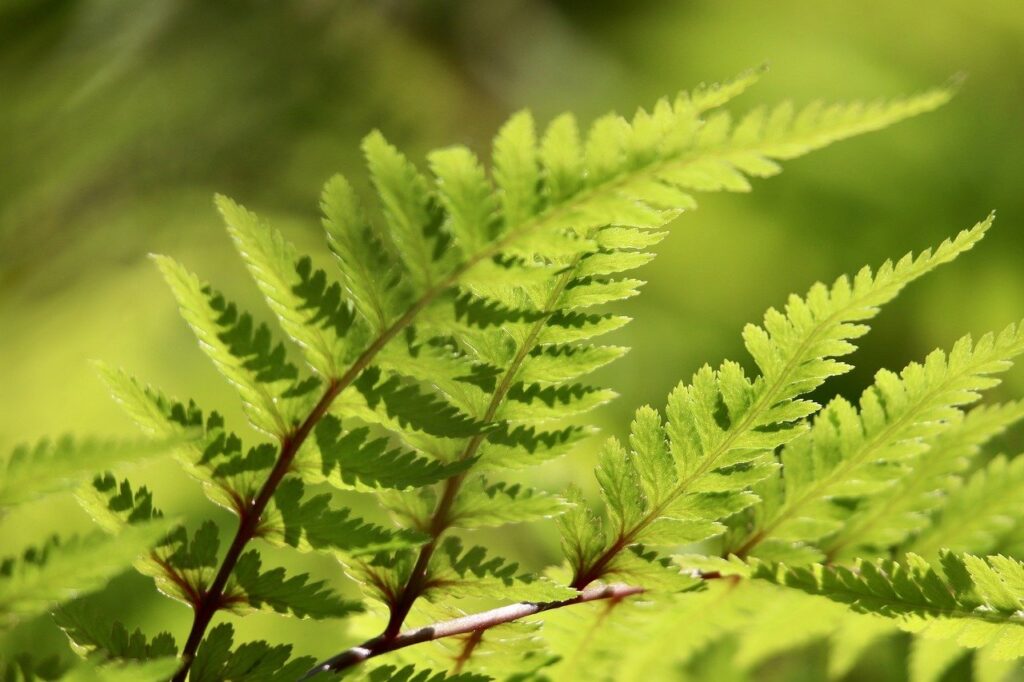
It provides excellent structure throughout the growing season and is semi-evergreen, giving winter interest. Plant it at the back or middle of a border as a backdrop for flowering perennials and colourful ground cover.
In an east facing garden, colour plays beautifully because the morning light has a cool, clear quality that flatters both bold and subtle flower colours. Blues, purples and mauves look particularly magnificent in morning light, as do the clean whites and soft pinks that seem to glow rather than bleach. To help you plan your planting scheme by colour, take a look at my dedicated colour guides below covering the best flowers for UK gardens.
Not sure about the other aspects of your garden? Or perhaps you have a mix of aspects across a larger plot? I have put together a complete set of guides covering plant choices for every garden aspect, so you can plan each part of your garden with confidence.
The most important thing you can do before planting an east facing border, particularly one that runs along the base of a house or fence, is to improve the soil generously. East facing walls and fences can create a significant rain shadow on the soil directly at their base, meaning the ground there is often drier than it first appears, even in a generally moist east facing garden. Dig in a generous amount of garden compost or well-rotted manure to a depth of at least 30cm before planting, and always plant at least 30 to 45cm away from the base of any wall or fence.
💡 Top Tip
Mulching is particularly valuable in east facing gardens, especially in the first couple of seasons while plants are establishing. A 5 to 7cm layer of composted bark or garden compost applied each spring, keeping it clear of plant stems and crowns, will help retain moisture, suppress weeds, and gradually improve soil structure.
When positioning plants in an east facing garden, think carefully about the frost risk for early flowering plants. If you want to grow camellias in an east facing garden, site them where the early morning sun does not directly hit the flowers — perhaps tucked into a corner where the angle means the sun reaches them only once it is higher in the sky and temperatures have already risen. Alternatively, choose later-flowering varieties where the frost risk has passed by the time the flowers open.
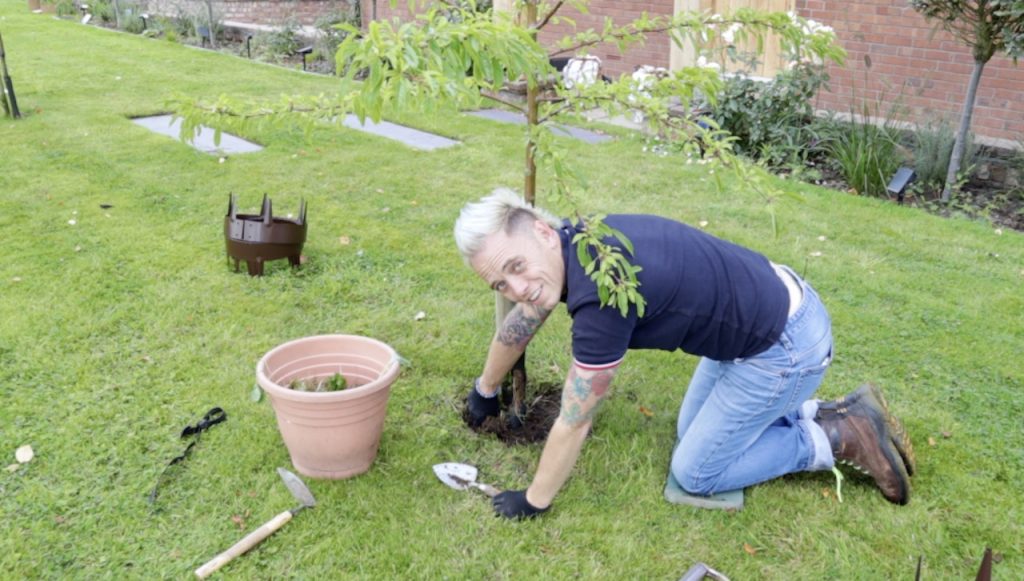
Having the right tools transforms any planting project from a chore into a pleasure. Here are the five tools I would reach for when tackling an east facing garden planting scheme, all recommended in full detail in my complete beginner’s garden tools guide.
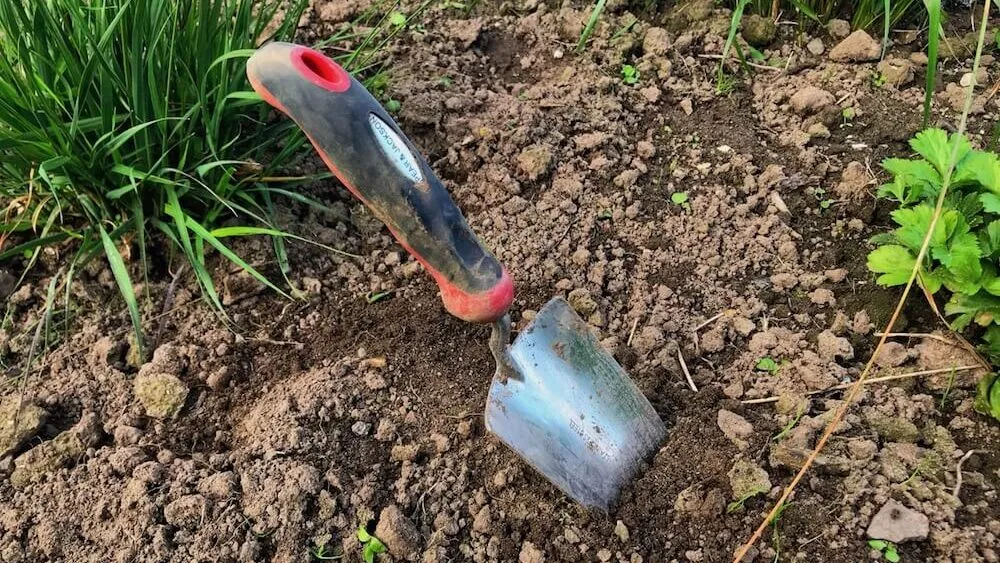
For planting perennials, bulbs and smaller shrubs, a quality stainless steel trowel with a rubberised handle is your most important tool. Avoid plastic-headed trowels completely. Expect to spend between £5 and £35, or up to £60 for premium Japanese steel.
🛒 View my recommended garden trowels on Amazon UK
For soil preparation and planting larger shrubs and climbers, a quality garden spade with a solid one-piece metal head is essential. Invest between £35 and £65 for a tool that will last decades.

🛒 View my recommended garden spades on Amazon UK
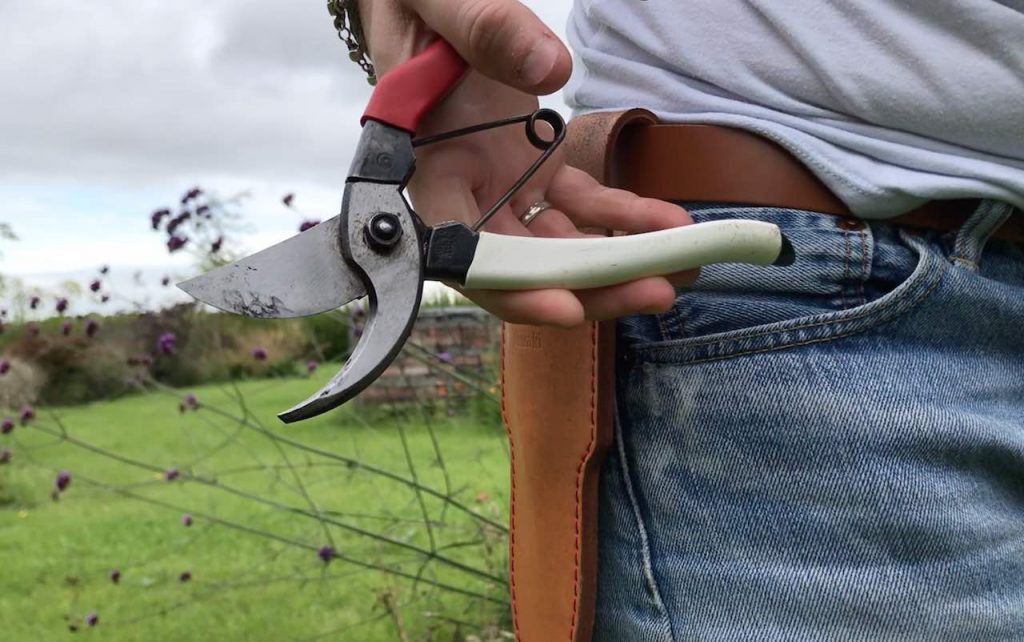
For deadheading, pruning climbers, and shaping shrubs, a good pair of bypass secateurs is indispensable. Spend between £20 and £60 for a reliable everyday pair. Felco are some of my most favourite snips as they have excellent repair and serviceability. Niwaki are also fabulous!
🛒 View my recommended secateurs on Amazon UK
For breaking up and aerating the soil before planting, a well-forged garden fork with strong tines is essential. Look to spend between £15 and £35.

🛒 View my recommended garden forks on Amazon UK
The greatest value-for-money gardening purchase you will ever make. A simple foam kneeling pad protects your knees and makes every border planting session considerably more comfortable. Spend no more than £3 to £15. The super thick ones are best!
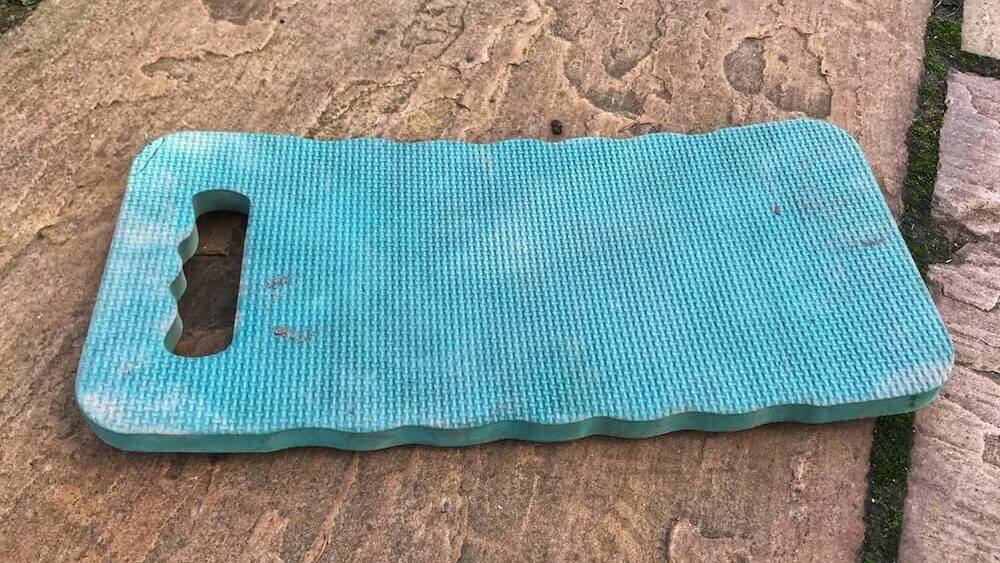
🛒 View my recommended kneeling pads on Amazon UK
Q: Is an east facing garden good or bad?
A: East facing gardens are genuinely good gardens to plant. The combination of morning sun and cool afternoon shade suits a very wide range of plants, the soil stays more consistently moist than in south or west facing gardens, and the reduced watering requirement is a real practical benefit. The only consideration worth managing is the frost-thaw risk for early spring flowers, which is solved by careful plant selection.
Q: What climbers are best for an east facing wall?
A: Clematis montana, Clematis alpina, Akebia quinata, native honeysuckle, and Garrya elliptica are all outstanding choices. All thrive in morning sun with afternoon shade and will provide excellent coverage and seasonal interest across the year.
Q: Can I grow roses on an east facing wall?
A: Yes, although east facing walls are not ideal for the most sun-hungry repeat-flowering climbers. The rambling and once-flowering types, such as Rosa ‘Francis E. Lester’ or the climbing Rosa ‘Blairii Number Two’, will perform well. Some of the more tolerant modern climbers will also manage an east facing position with enough morning sun to flower reasonably well.
Q: Why do camellias struggle in east facing gardens?
A: The issue is not the shade, but the rapid temperature change when early morning sun hits frost-damaged flower buds before they have time to thaw slowly. The cell walls rupture and the flowers turn brown. The solution is to site camellias where the early morning sun does not reach them directly — tucked into a corner or shielded by a neighbouring structure — or to choose later-flowering varieties that avoid the frost risk entirely.
Q: What are the best shade-tolerant perennials for an east facing border?
A: Hostas, astilbes, heucheras, Japanese anemones, foxgloves and primulas are all outstanding. They all appreciate the cool, moist conditions an east facing garden provides and will reward you with months of interest through the growing season.
Q: How do I improve soil in an east facing garden?
A: Dig in generous quantities of well-rotted garden compost or manure before planting, particularly at the base of walls where rain shadow can create unexpectedly dry conditions. Mulch every spring with a 5 to 7cm layer of composted bark or garden compost, kept clear of plant stems. This alone will transform the moisture retention and fertility of the soil over two or three seasons.
Ready to transform your gardening skills beyond just choosing plants? Garden Ninja’s expertly crafted online courses will fast-track your development from keen amateur to skilled garden designer in months rather than years. Starting at just £29, you will gain access to professional garden design expertise from BBC Garden Rescue’s Lee Burkhill, delivered at a fraction of traditional horticultural education costs.
For the garden you’ve already got, not the one you’re starting from scratch. Seven checklists and video lessons from BBC Garden Rescue’s Lee Burkhill, built to help you work out what’s worth keeping before you spend a penny.
Garden Design Examples for Small Gardens: 30 Design Templates & Planting Plans: In this online gardening course, I’ll walk you through 30 fantastic garden designs, explaining the logic behind the layout, the plant choices, and take-home tips for applying them in your own garden.
Learn how to transform and design your own garden with Lee Burkhills crash course in garden design. Over 5 hours Lee will teach you how to design your own dream garden. Featuring practical design examples, planting ideas and video guides. Learn how to design your garden in one weekend!
Garden Design for Beginners Online Course: If you want to make the career jump to becoming a garden designer or to learn how to design your own garden, this is the beginner course for you. Join me, Lee Burkhill, an award-winning garden designer, as I train you in the art of beautiful garden design.
An east facing garden is, in truth, a remarkably generous and versatile space to plant. The combination of cool, clear morning sun and sheltered afternoon shade gives you access to an exceptionally wide plant palette, far broader than many gardeners realise. From the spectacular spires of foxgloves and the cascading elegance of Japanese forest grass through to the extraordinary blue of Himalayan poppies and the reliable brilliance of hydrangeas, there is no shortage of beauty available to you.
The key is to understand the one genuine challenge — rapid morning sun on frost-tender buds can cause damage in late winter and early spring — and to plan your planting with this in mind. Beyond that, approach your east facing garden with confidence and enthusiasm, because with the right plants, it can be one of the most beautiful and rewarding garden environments of all.
If you would like help planning your east facing garden or any other aspect of your outdoor space, my online garden design services and garden design courses are here to help. You can also post your specific questions in the Garden Ninja forum, where I answer personally.
Happy gardening!



Lee Burkhill, known as the Garden Ninja, is an award-winning garden designer and horticulturist with over 30 years of gardening experience and 15 years as a professional garden designer. A qualified RHS (Royal Horticultural Society) professional, Lee specialises in sustainable garden design and practical horticultural advice. He designs and presents on BBC1’s Garden Rescue and in leading gardening publications. Lee combines three decades of hands-on gardening knowledge with professional design qualifications to help gardeners create beautiful, functional outdoor spaces.
View all posts by Lee Burkhill




JOIN THE NINJAS

Be the first in line for new Guides, Discount codes and Offers