35 Yellow Flowering Plants for UK Gardens: Brighten Your Borders with Bold Sunshine Blooms
Lee Burkhill: Award Winning Designer & BBC 1's Garden Rescue Presenters Official Blog
Beginner level
Discover 35 stunning yellow flowering plants that'll transform your UK garden from drab to fab. This comprehensive guide features trees, shrubs, perennials, bulbs, and climbers with detailed hardiness ratings, heights, and growing conditions. Learn why yellow flowers deserve more love, how to create hot colour schemes, and practical design tips for using sunshine blooms to brighten borders, attract pollinators, and create year-round impact in British gardens.
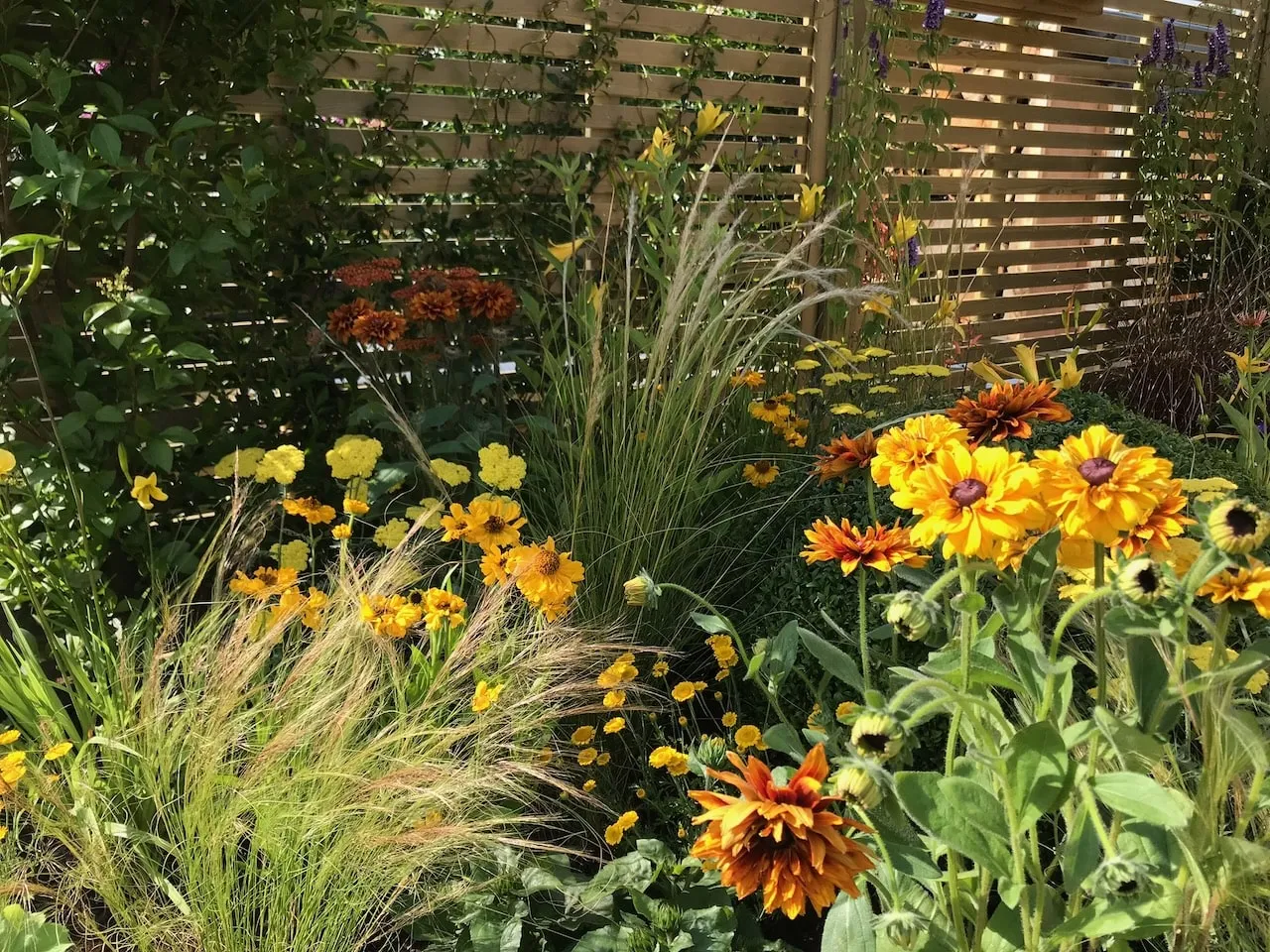
There’s a colour and plant type that’s criminally underused in British gardens: bright, vibrant, in-your-face yellow flowers! Now, I know what you’re thinking. Everyone and their nan goes for the safe pastels, the gentle pinks and soft purples. But what you may not know is that yellow flowers are absolute show-stoppers in terms of garden contrast, that deserve way more love than they get.
I’ve been banging the drum for hot colours in gardens for years now, and yellow is where the party really starts. These blooms don’t whisper; they shout “LOOK AT ME!” Which is exactly what a high-impact garden should do.
Whether you’re looking to light up a gloomy corner, create a sun-drenched border that makes you grin every time you look at it, or attract pollinators like you’re running a five-star insect hotel, yellow flowers deliver the goods every single time.
In this comprehensive guide, I’m sharing 35 of my favourite yellow-flowering plants that thrive in UK gardens. From early spring bloomers that chase away the winter blues to autumn stunners that keep the show going right through to the first frosts, these plants will transform your garden from “nice” to “absolutely banging.
And because I know you want the nitty-gritty details, I’ve included hardiness ratings, ultimate heights and spreads for each one. No more guessing whether that plant will actually survive a British winter or grow to swallow your shed whole!
This page contains affiliate links for products I use and love. If you take action (i.e. subscribe, make a purchase) after clicking a link, I may earn some gardening commission, which helps me keep the Garden Ninja Blog free for all.
Why Yellow Flowers Deserve More Garden Real Estate
Let me be straight with you: yellow gets a bad rap in garden design circles. Too often, I hear people say it’s “too loud” or “clashes with everything”. Absolute nonsense! Yellow is one of the most versatile colours in the garden palette, and here’s why you should embrace it:
A) Yellow flowers create instant impact
Without being overwhelming. They naturally draw the eye and create focal points that guide visitors through your garden. Unlike some colours that can fade into the background on cloudy days (which, let’s face it, is most days in Britain), yellow blooms remain visible and cheerful even when the weather’s rubbish.
B) Pollinators absolutely adore yellow flowers
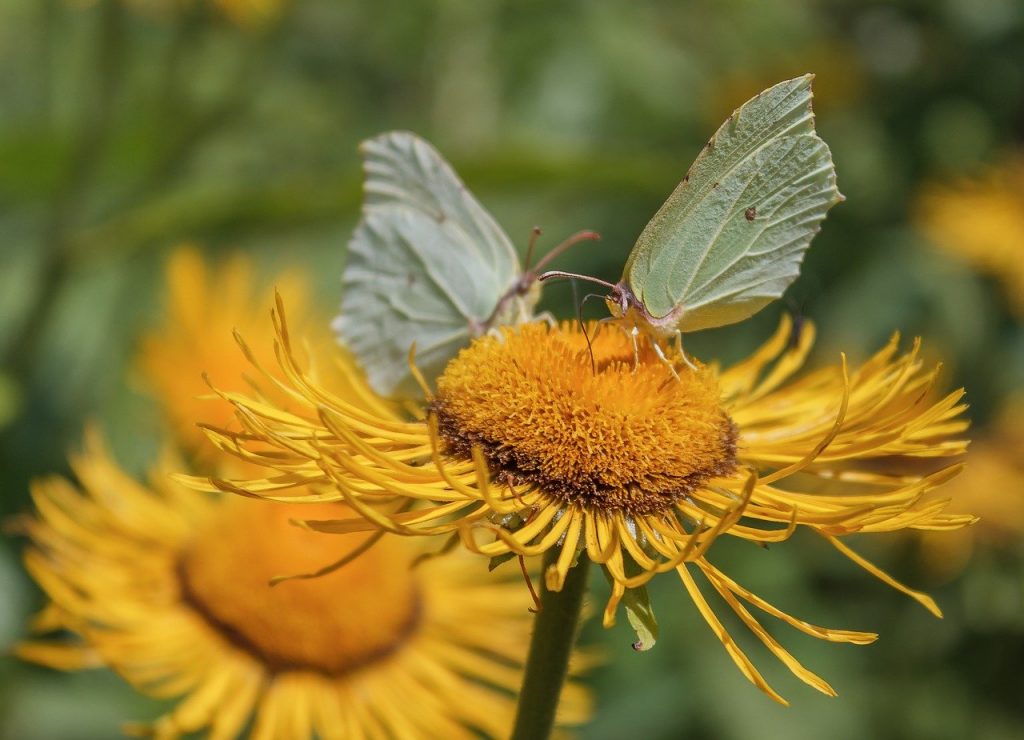
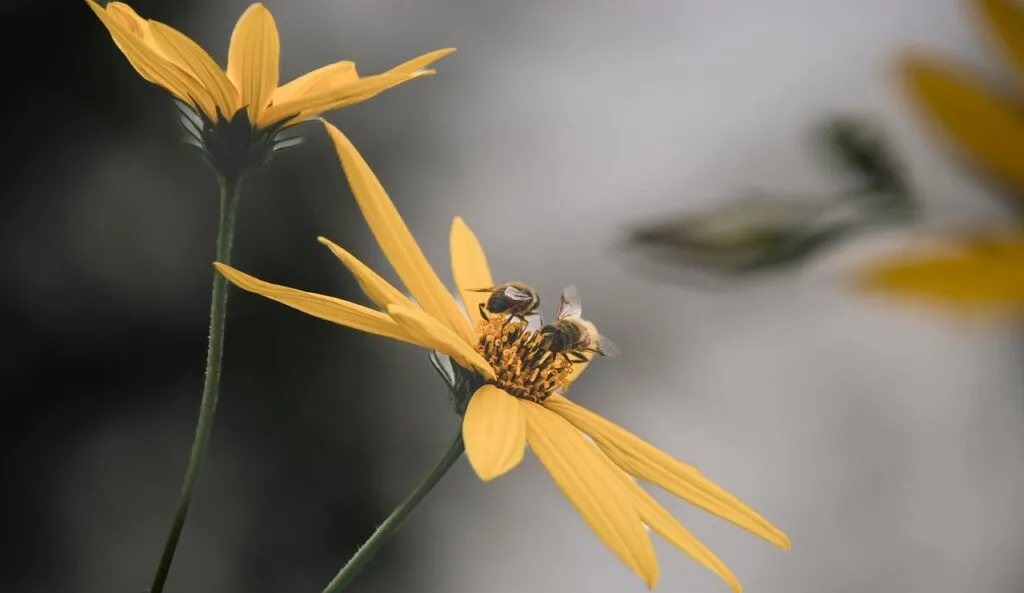
Bees, hoverflies, and butterflies are naturally attracted to bright yellows and golds, making these plants essential for wildlife-friendly gardens. If you’re serious about supporting biodiversity, you need yellow in your arsenal.
C) Yellow works brilliantly in both hot and cool colour schemes
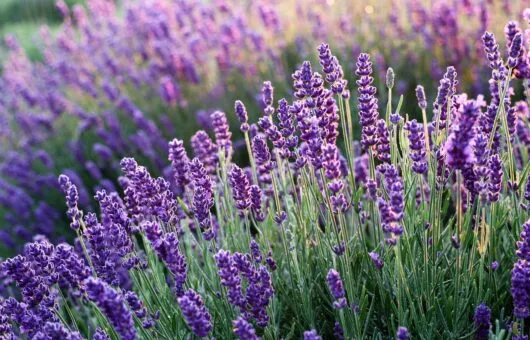
Pair it with oranges and reds for a tropical fiesta vibe, or combine it with purples and blues for stunning contrast that makes both colours sing. You can even use softer lemon yellows with whites and silvers for an elegant, sophisticated look. It’s not the yellow that’s the problem; it’s how you use it.
D) They extend the apparent sunshine hours in your garden
On those grey British days when the sun’s playing hide and seek, yellow flowers create the illusion of dappled sunlight, lifting the mood and making the whole space feel more welcoming.
So stop following the crowd with their boring beige planting schemes! Let’s dive into these 35 cracking yellow flowers that’ll transform your garden into something special. I’ve organised them from trees and shrubs down through perennials to annuals and bulbs, so you can create layers of yellow interest throughout the year.
Trees and Large Shrubs for Structural Yellow Impact
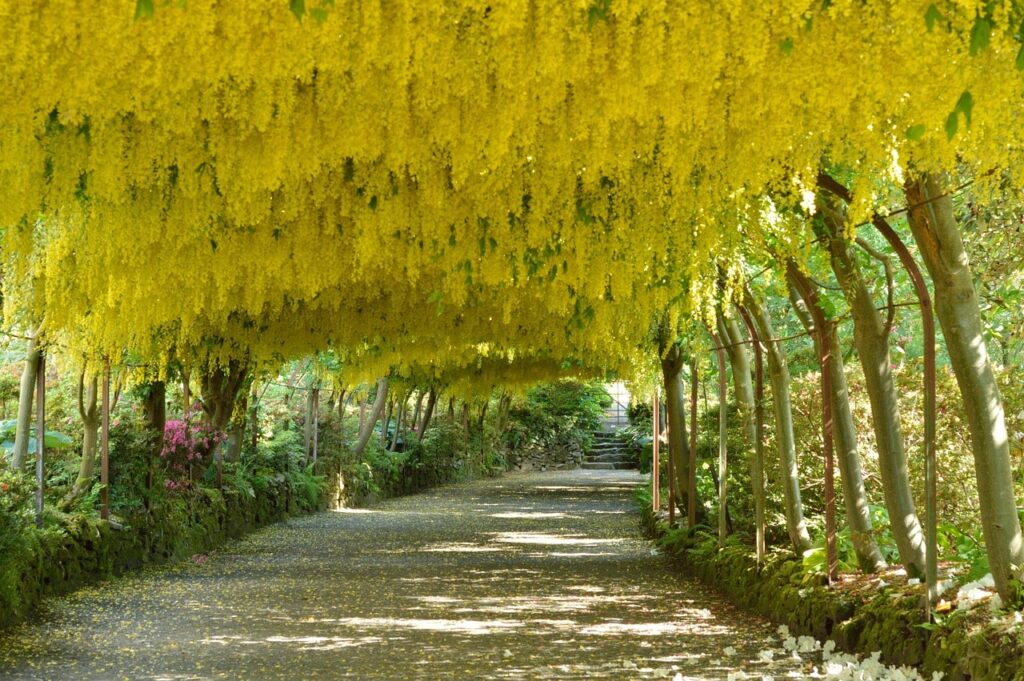
1. Laburnum (Laburnum × watereri ‘Vossii’)
This small deciduous tree is pure drama in late spring when those cascading chains of golden-yellow flowers appear. Think Wisteria’s louder, more confident cousin. The pendant racemes can reach 60cm long, creating an absolutely stunning display that stops people in their tracks.
Best Growing Conditions: Full sun to partial shade in any well-drained soil. Tolerates chalk and clay once established.
Top Tip: All parts are highly toxic, so not one for gardens where children or pets frequent. However, if you have the space and the right situation for it, the flowering spectacle is absolutely worth it. Perfect for creating that iconic laburnum arch if you’re feeling ambitious!
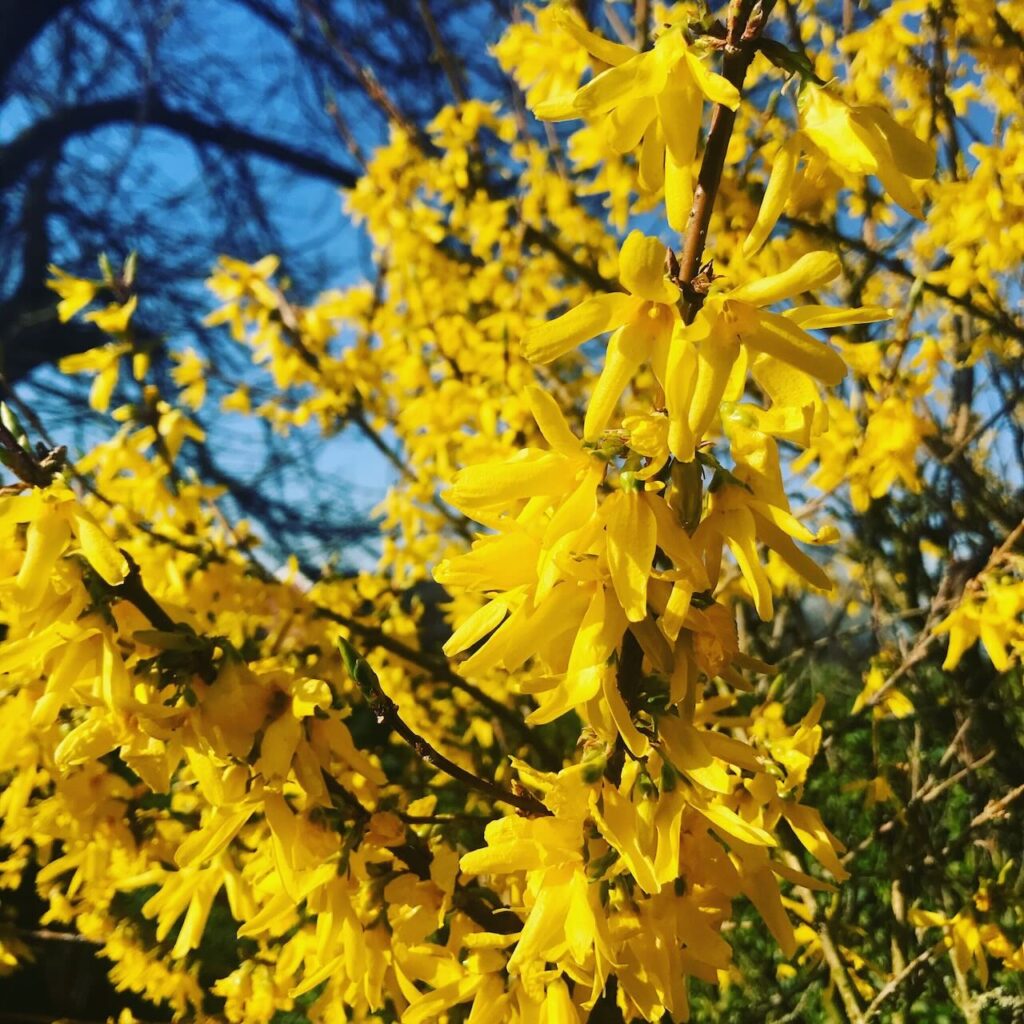
Forsythia is the plant that tells you winter’s finally buggered off and spring has arrived. These tough-as-nails deciduous shrubs explode into masses of bright yellow flowers on bare stems in March and April, providing that much-needed blast of colour when everything else is still waking up.
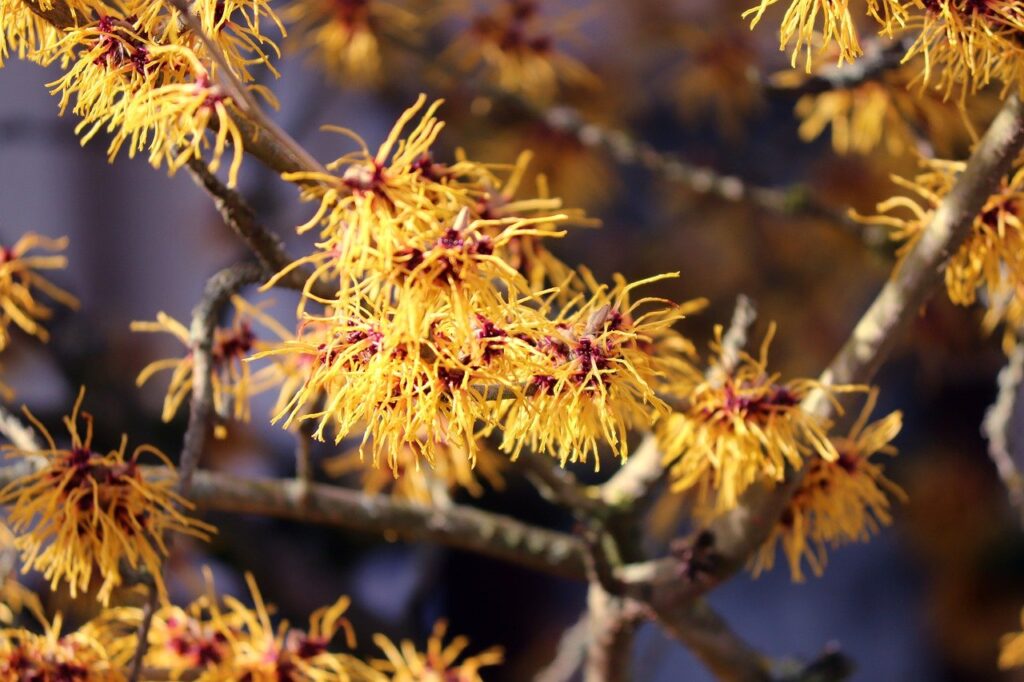
If you want to blow people’s minds in January and February, this is your plant. Witch hazel produces those bizarre, spidery yellow flowers with the most incredible sweet fragrance right in the depths of winter. It’s like Mother Nature decided to give us a preview of spring when we need it most.
Best Growing Conditions: Prefers moist, well-drained, slightly acidic soil in sun or partial shade. Worth improving your soil for this one.
Top Tip: The autumn foliage is stunning too, turning shades of orange and red. Plant it where you’ll walk past regularly in winter so you can properly appreciate that gorgeous scent. Position near a path or entrance for maximum impact!
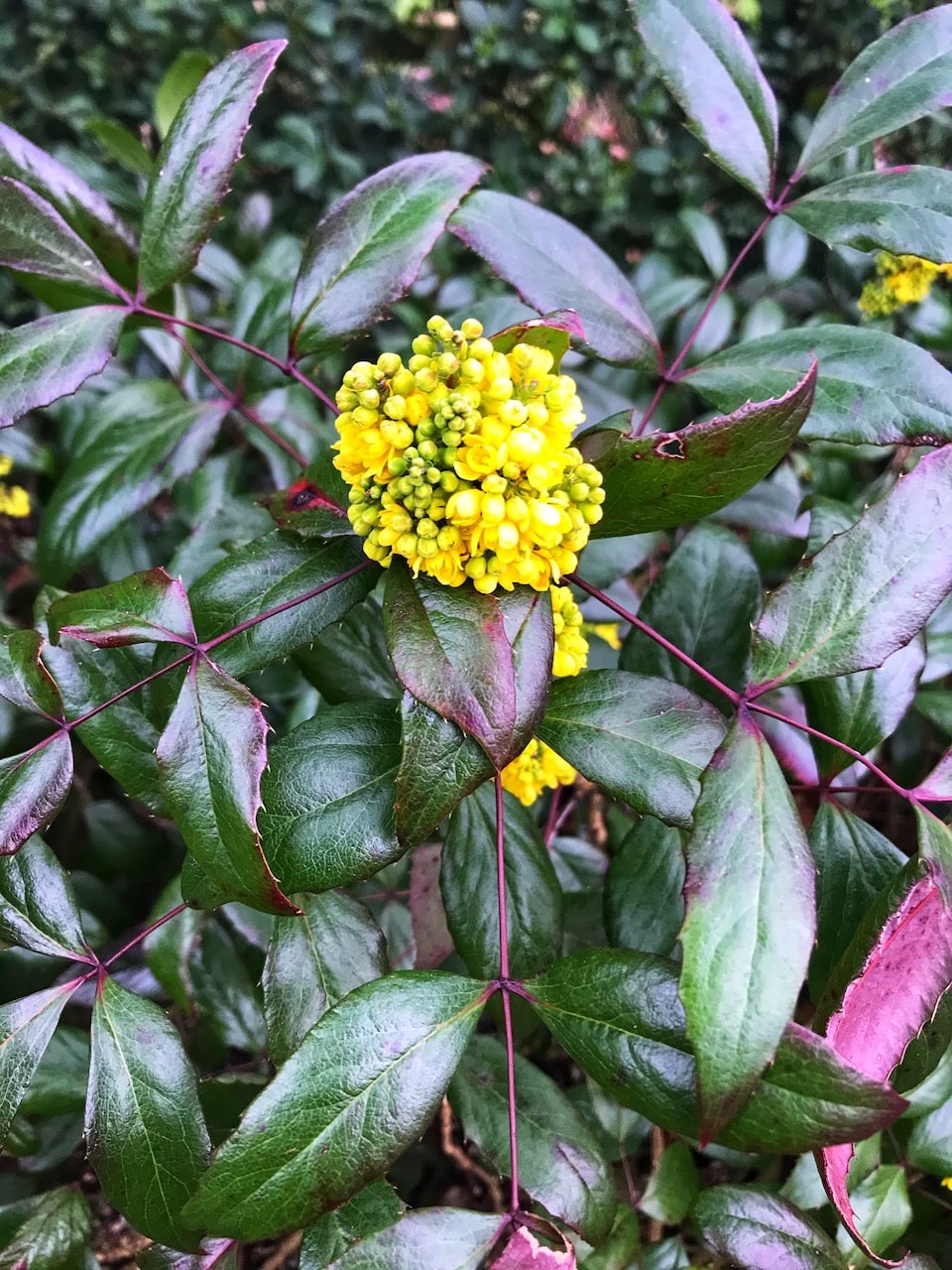
This architectural evergreen shrub is an absolute weapon for winter interest. Those spiky, pinnate leaves look dramatic year-round, but from November through to March, it produces upright racemes of bright yellow flowers that smell incredible and are magnets for early pollinators.
Best Growing Conditions: Shade to partial shade, making it perfect for those awkward north-facing spots. Any reasonable soil.
Top Tip: The spiky leaves make it excellent for security planting under windows. Follow the flowers with dark blue berries that birds love. Prune after flowering if it gets leggy, cutting back to a leaf joint lower down.
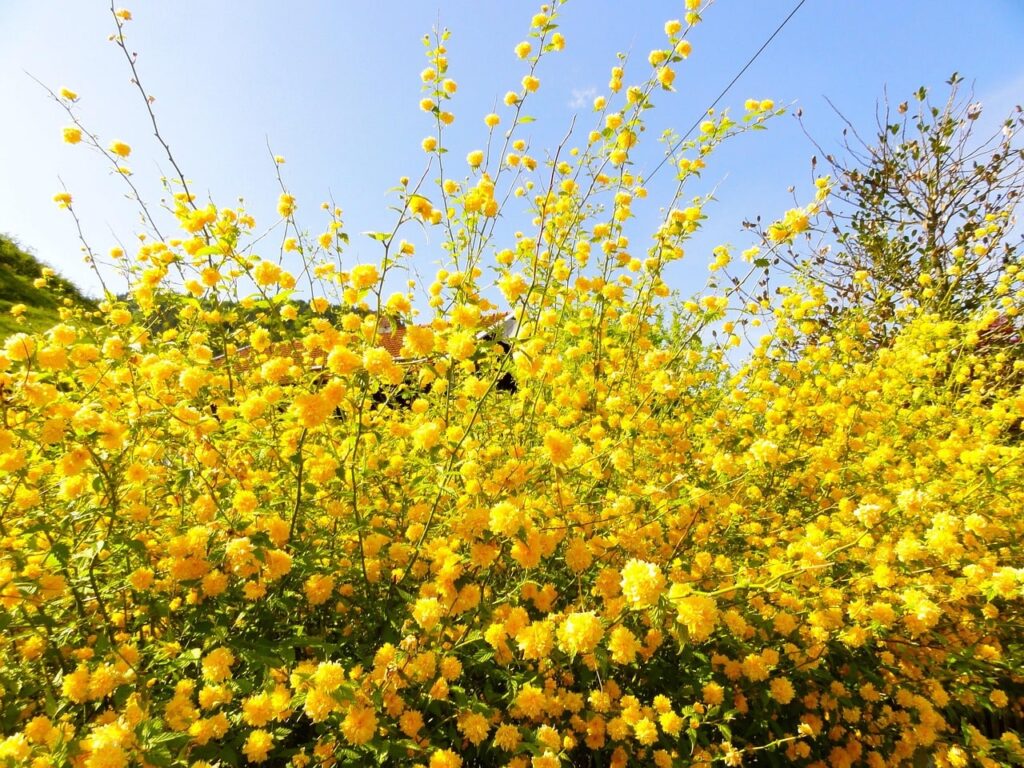
This deciduous shrub is criminally underused. It produces masses of double, golden-yellow pompom flowers in April and May on bright green stems that remain attractive through winter. It’s tough, reliable, and absolutely bombproof for difficult spots.
Best Growing Conditions: One of the best shrubs for north-facing walls and shady spots, though it’ll flower more prolifically with some sun.
Top Tip: Cut out about a third of the oldest stems at ground level after flowering to keep it vigorous and promote fresh growth. It can spread via suckers, so keep an eye on it if you want it contained. Great for awkward corners!
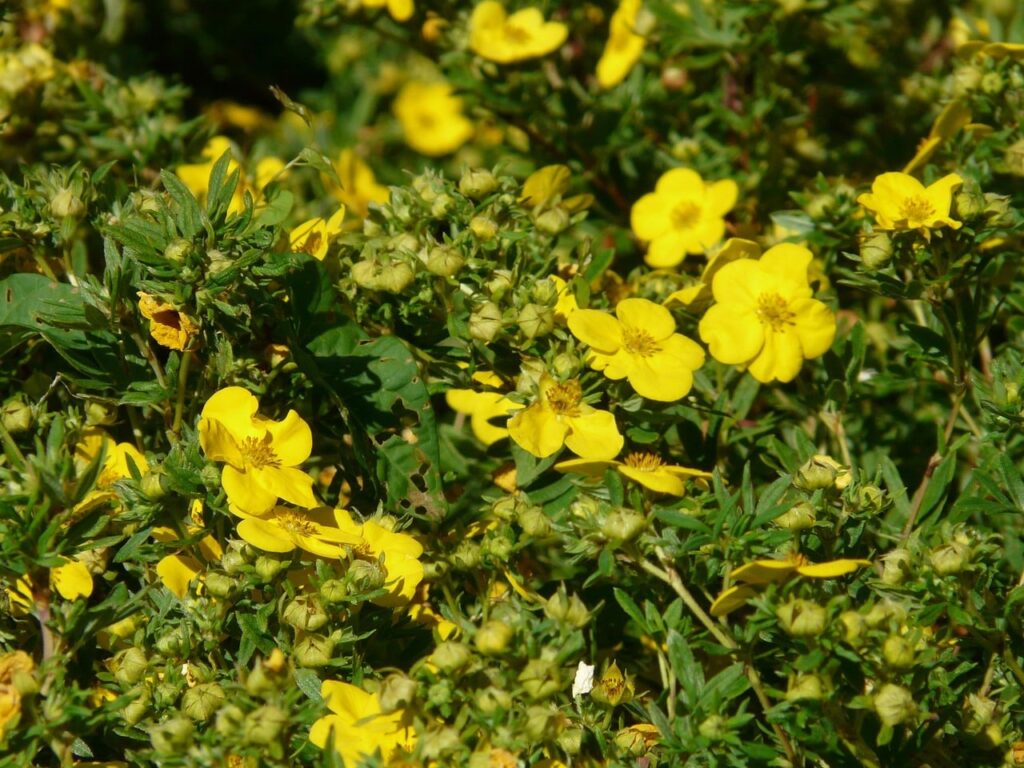
If you want months of continuous yellow flowers with virtually zero maintenance, Potentilla is your mate. This compact deciduous shrub produces those cheerful, saucer-shaped yellow blooms from May right through to October. It’s like the Duracell Bunny of the shrub world.
Best Growing Conditions: Full sun in any well-drained soil. Drought-tolerant once established.
Top Tip: Fantastic for low hedging or the front of borders. Trim lightly in early spring to keep it compact. Combines brilliantly with purple lavenders for contrast. Dead easy for beginners!
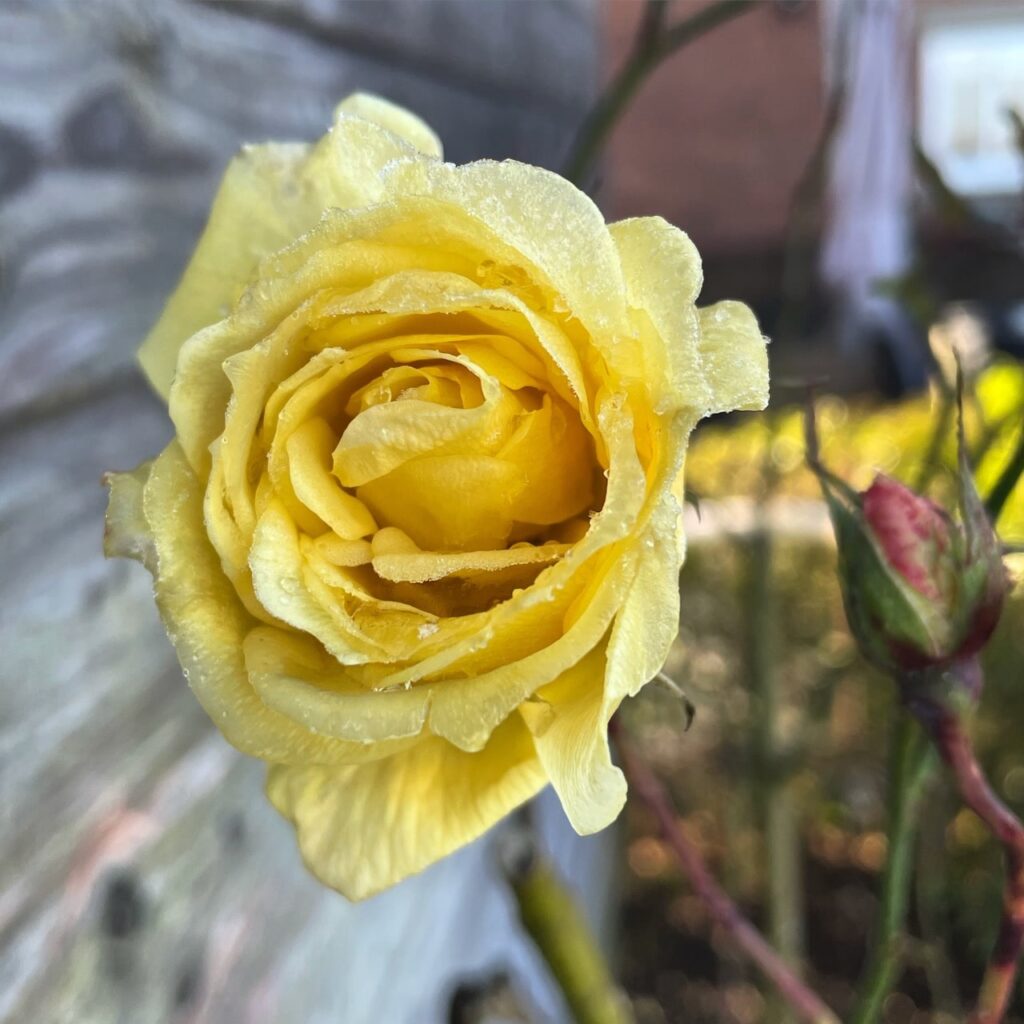
David Austin’s ‘Graham Thomas’ is widely considered one of the best yellow roses ever bred, and I’m not going to argue. Those rich, golden-yellow, perfectly cupped blooms have a gorgeous tea rose fragrance and appear continuously from June through October.
Hardiness: H6 (Hardy throughout UK) Ultimate Height: 1.5-2 metres (or more as a climber) Ultimate Spread: 1.5 metres
Best Growing Conditions: Full sun in rich, well-drained soil. Feed generously for best performance.
Top Tip: This rose is vigorous enough to be grown as a climber if you fancy it. Deadhead regularly to keep flowers coming. Mulch with well-rotted manure or compost in spring for bumper blooms. One of the most reliable yellows in the David Austin range!
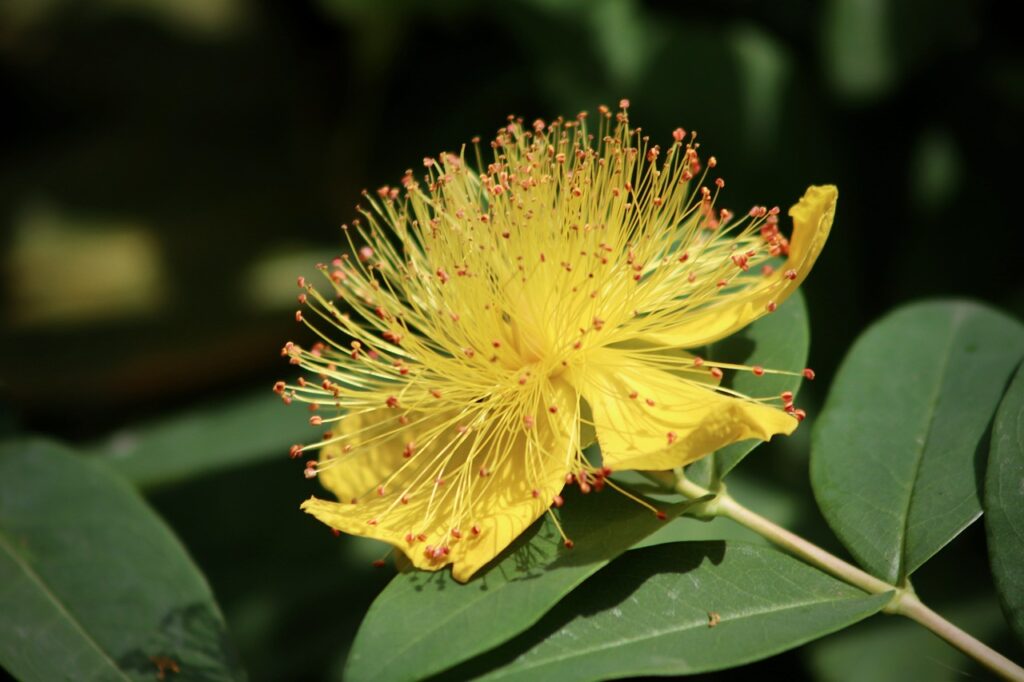
St John’s Wort is a semi-evergreen shrub that produces those distinctive golden-yellow saucer-shaped flowers with prominent stamens from July through September. It’s tough as old boots and perfect for challenging spots.
Best Growing Conditions: Sun or partial shade, any reasonable soil. Tolerates drought, pollution, and general neglect.
Top Tip: Cut back hard in early spring to keep compact and encourage better flowering. The red berries that follow are attractive too. Great for new builds where the soil’s rubbish!
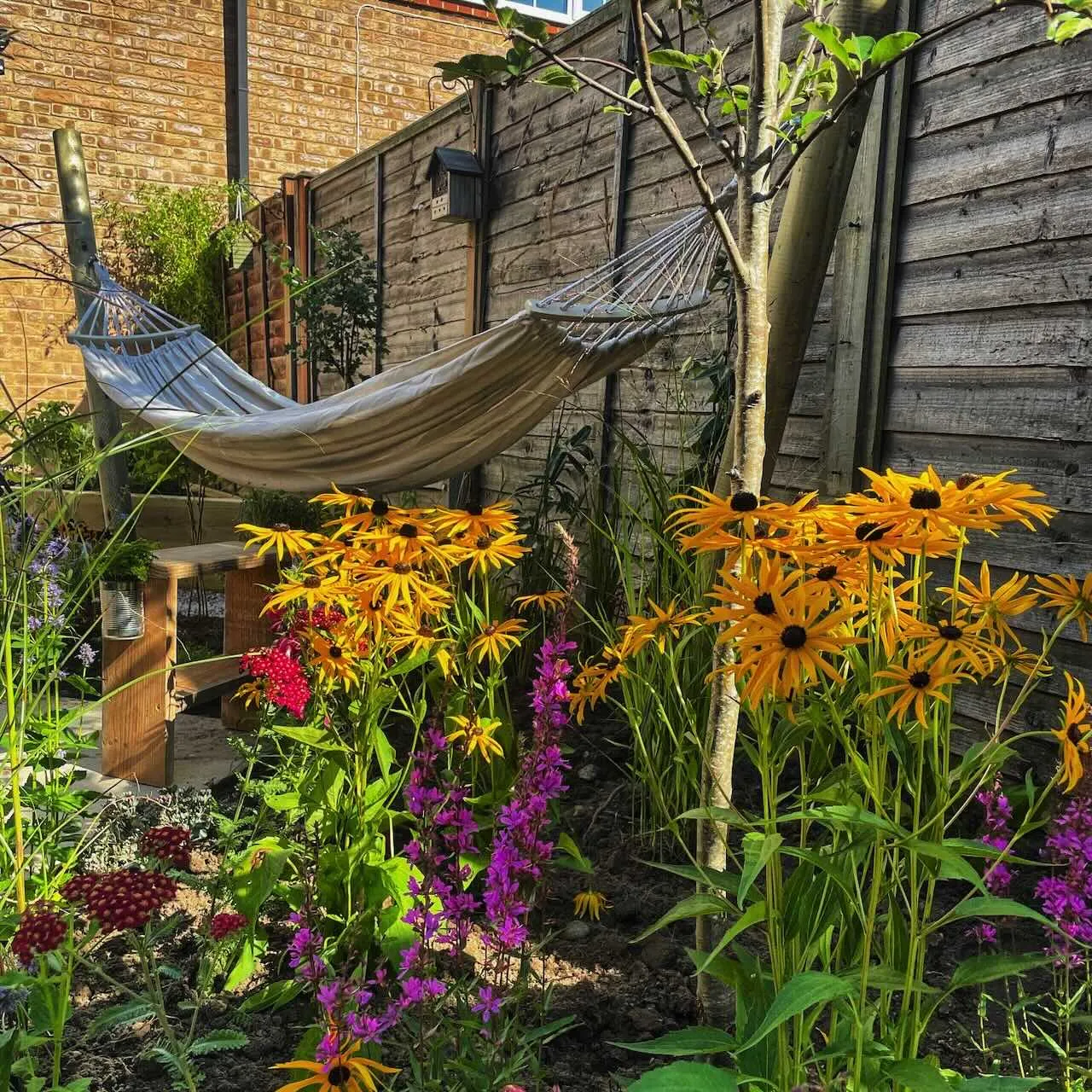
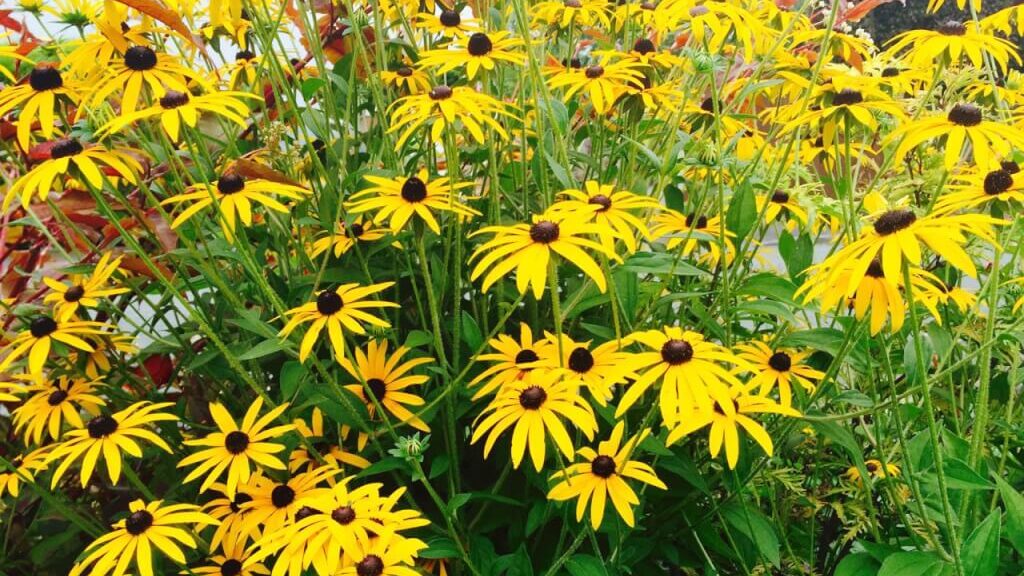
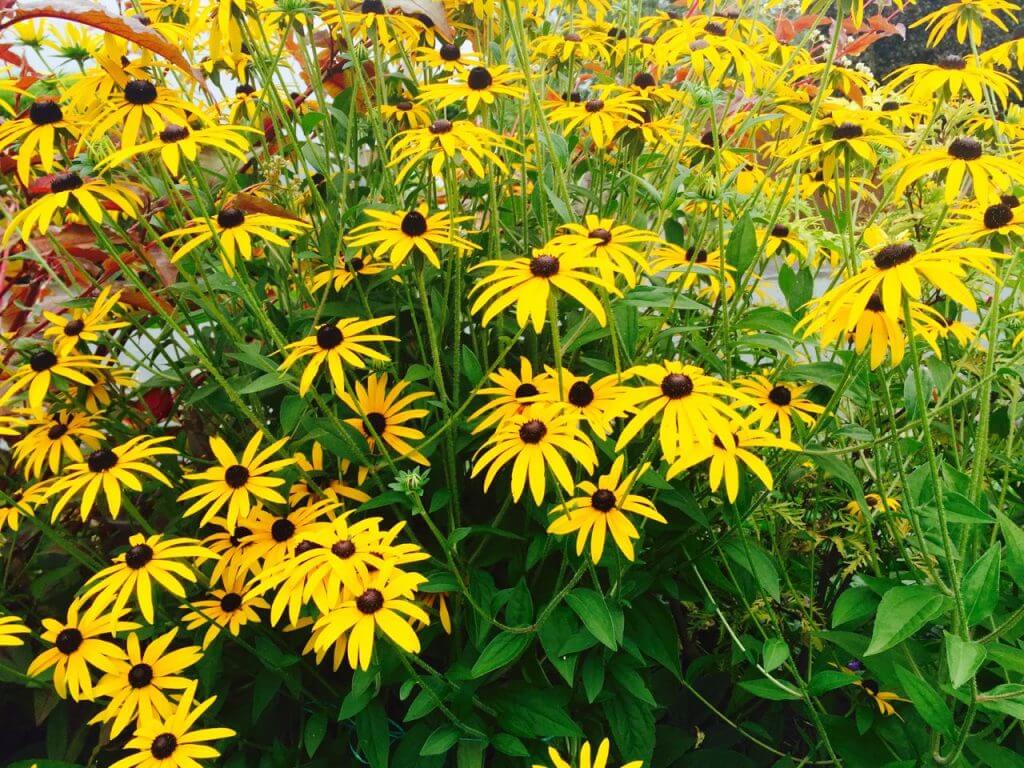
Black-eyed Susan is pure sunshine in plant form! These cheerful golden daisies with those distinctive dark centres bloom from July right through to October, providing months of reliable colour. They’re virtually indestructible and attract pollinators like you’re running a botanical nightclub.
Best Growing Conditions: Full sun to light shade in any reasonable soil. Drought-tolerant once established.
Top Tip: The seed heads look fantastic through winter, so leave them standing for structure and bird food. Divide every 3-4 years in spring to keep vigorous. One of my absolute favourite hot border plants!
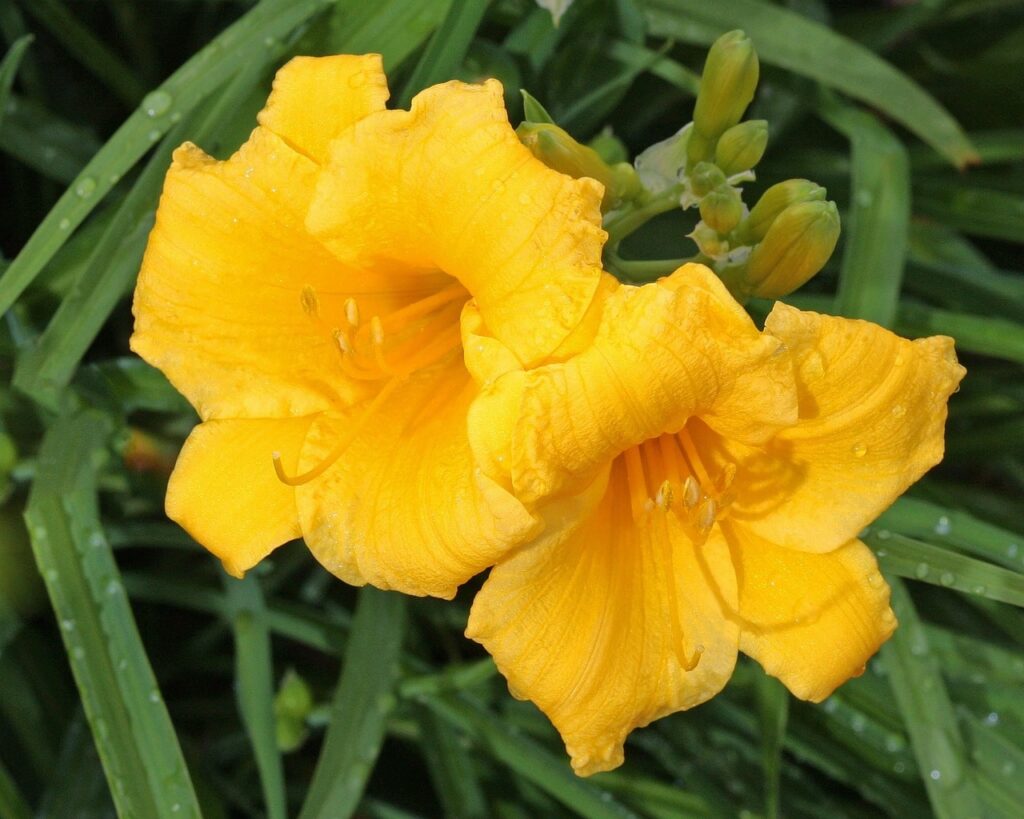
Daylilies are absolute grafters that flower continuously from June through September. ‘Stella de Oro’ produces those cheerful, golden-yellow trumpet flowers non-stop and is virtually maintenance-free. Each bloom lasts just one day, but there are so many buds that you’ll never notice.
Best Growing Conditions: Full sun to partial shade in moist but well-drained soil. Tolerant of most conditions.
Top Tip: Remove spent flower stems to keep plants tidy and encourage more blooms. Divide every few years if clumps get congested. Brilliant for beginners and tough as nails!
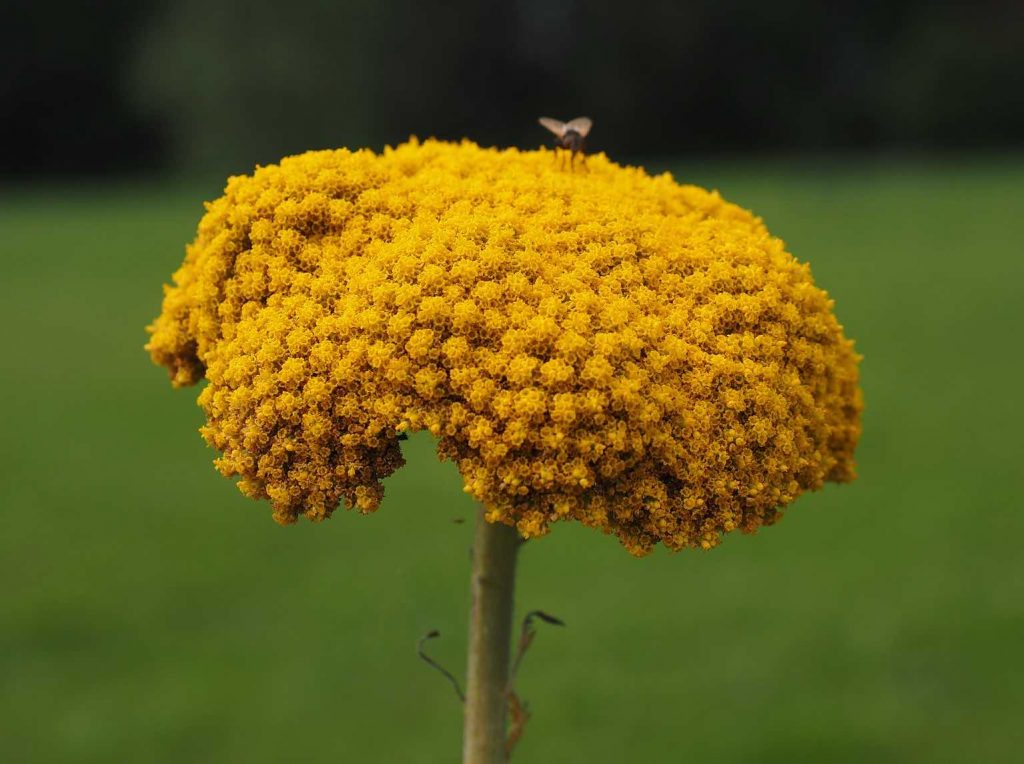
Yarrow produces those distinctive flat-topped flower heads that are absolutely brilliant for providing landing platforms for insects. ‘Cloth of Gold’ has rich, golden-yellow flowers from June to August and ferny, aromatic foliage that looks good even when not in bloom.
Best Growing Conditions: Full sun in well-drained soil. Thrives on neglect and drought.
Top Tip: Perfect for gravel gardens and hot, dry spots. Cut back after flowering for a second flush. The flowers dry beautifully for arrangements. Hoverflies absolutely love thes
Tickseed is an absolute superstar that deserves way more love. ‘Zagreb’ produces masses of star-shaped, golden-yellow flowers from June through September above fine, ferny foliage. It flowers its socks off and asks for virtually nothing in return.
Best Growing Conditions: Full sun in well-drained soil. Drought-tolerant once established.
Top Tip: Deadhead regularly or shear back by a third in midsummer for a fresh flush of flowers. Fantastic for the front of borders or mixed containers. Easy-peasy for beginners!
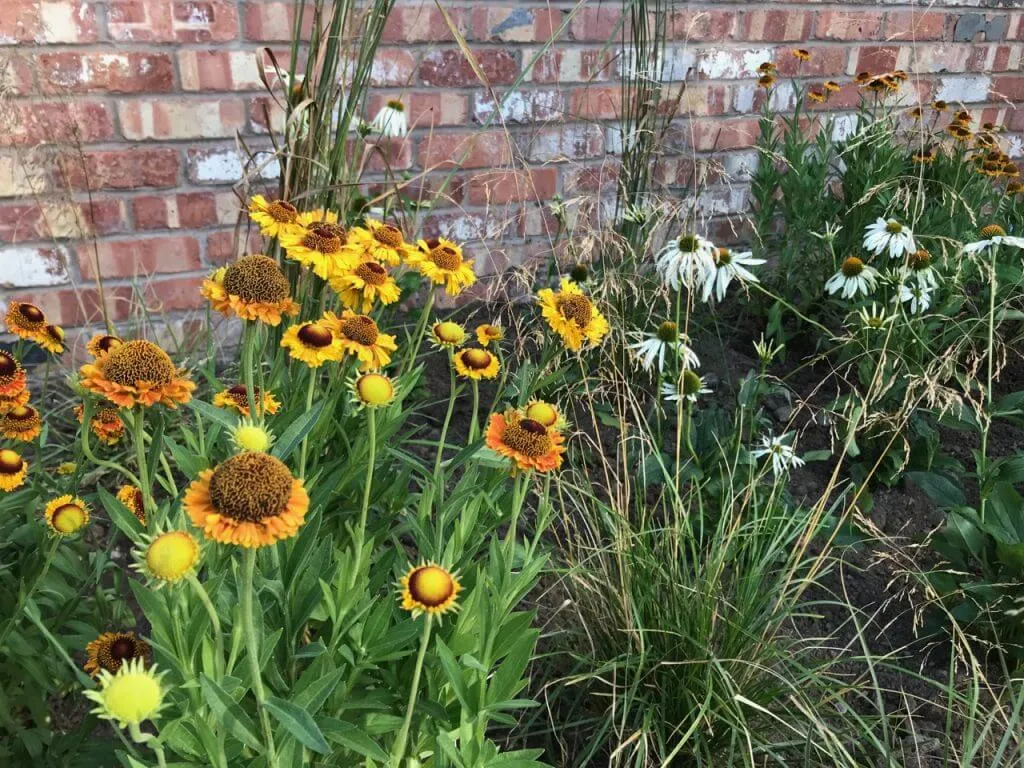
Sneezeweed (comical name, gorgeous plant!) produces those distinctive daisy flowers with prominent central cones in shades of golden-yellow and amber from July through September. They’re like having fireworks in your border!
Best Growing Conditions: Full sun in moist, fertile soil. Tolerates clay and damp conditions.
Top Tip: Pinch out the growing tips in May to encourage bushier growth and more flowers. Divide every 3 years to maintain vigour. Provides crucial late-season nectar for pollinators. I grow loads of these from seed here at Garden Ninja HQ!
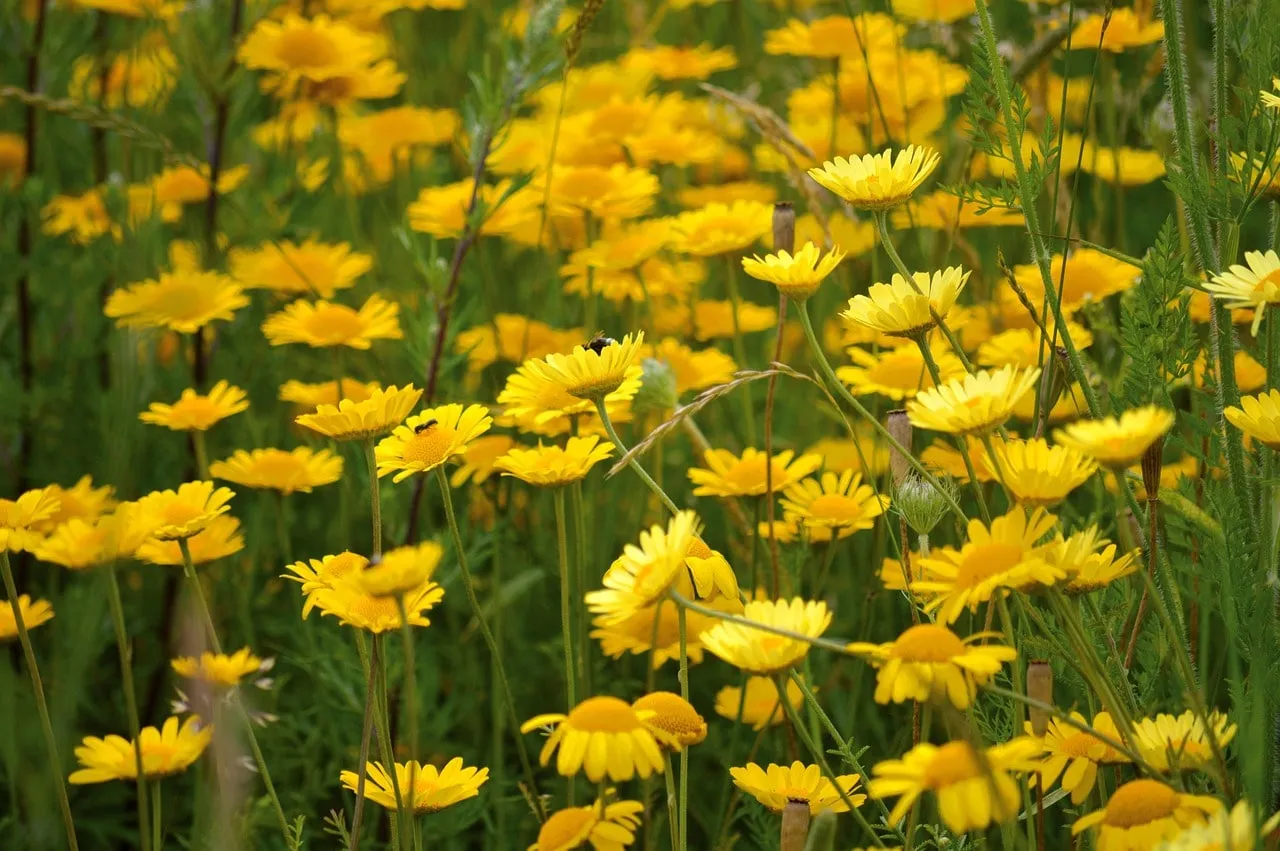
Golden Marguerite is a cottage garden classic that produces those cheerful, daisy-like yellow flowers from June through August above finely cut, aromatic foliage. It’s like having a perpetual summer meadow in your border!
Hardiness: H5 (Hardy in most UK regions) Ultimate Height: 60-80cm Ultimate Spread: 50-60cm
Best Growing Conditions: Full sun in well-drained soil. Excellent drainage is crucial for survival.
Top Tip: Short-lived perennial, so take cuttings every couple of years to maintain stock. Trim after the first flush for repeat flowering. Perfect for cottage garden schemes and gravel plantings!
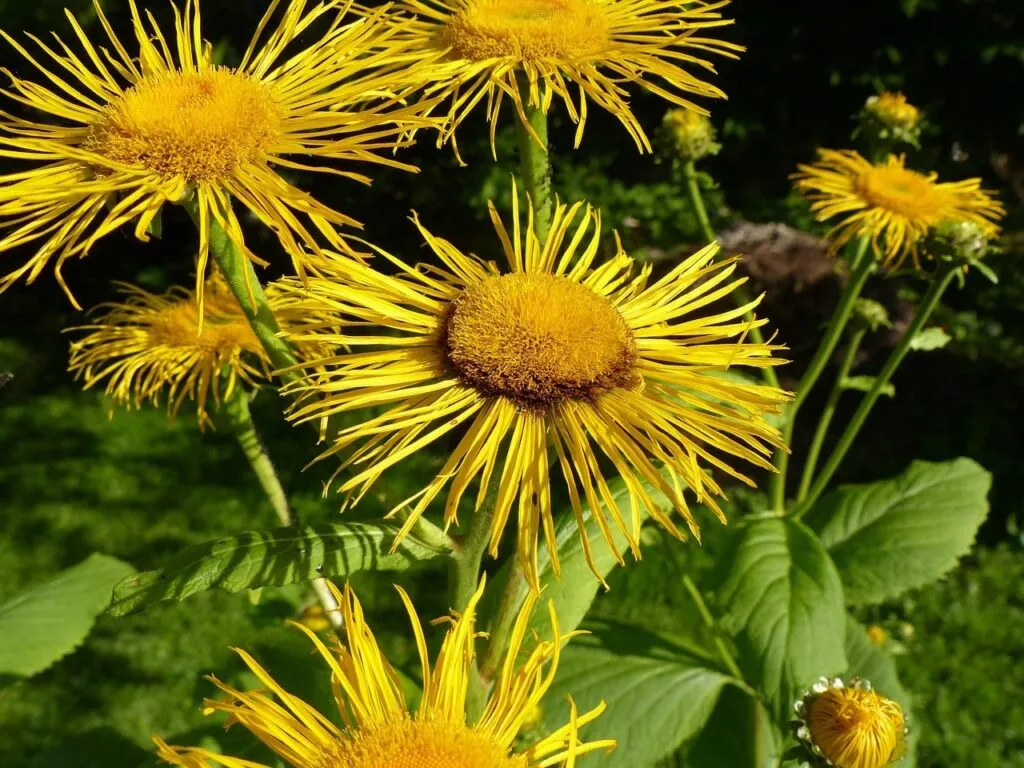
This vigorous perennial produces masses of shaggy, golden-yellow daisy flowers with distinctive, narrow petals from July through September. It’s cheerful, reliable, and brilliant for naturalistic plantings.
Best Growing Conditions: Sun to partial shade in moist soil. Tolerates clay.
Top Tip: Spreads steadily to form good clumps, so give it room. Great for cottage gardens or more naturalistic schemes. Cut back after flowering to keep tidy.
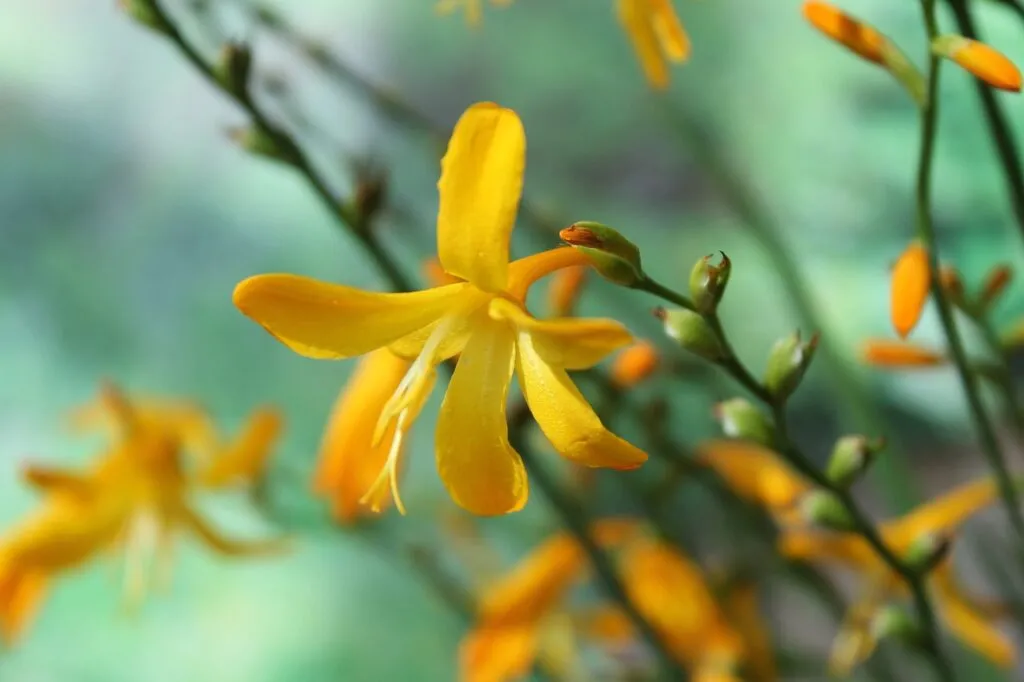
Montbretia produces those dramatic, arching stems of funnel-shaped flowers, and ‘Citronella’ or ‘George Davidson’ is the best yellow-flowered variety. Those lemon-yellow blooms appear from July through September above sword-like foliage that’s architectural even when not in flower.
Hardiness: H5 (Hardy in most UK regions) Ultimate Height: 60-80cm Ultimate Spread: 30cm (but spreads via corms)
Best Growing Conditions: Full sun to light shade in well-drained soil.
Top Tip: The corms multiply readily, so you’ll have generous drifts within a few years. Lift and divide congested clumps every few years. Fabulous for hot borders paired with reds and oranges. The strappy foliage is slug-proof!
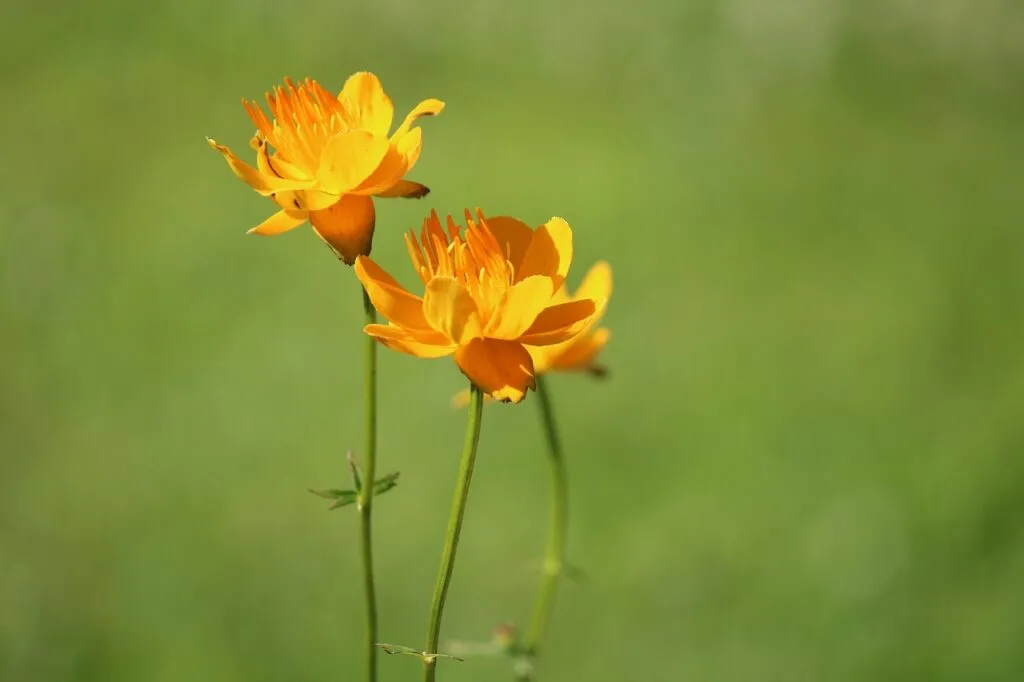
Globeflower produces those distinctive, globe-shaped buttercup flowers in May and June. ‘Cheddar’ has gorgeous pale lemon-yellow blooms and thrives in conditions that would make other plants sulk.
Best Growing Conditions: Partial shade to sun in moist or even boggy soil. Brilliant for pond edges and damp borders.
Top Tip: One of the few yellow flowers that genuinely loves wet feet. Deadhead after flowering for a possible second flush. Great for naturalising in damp meadows or beside water features!
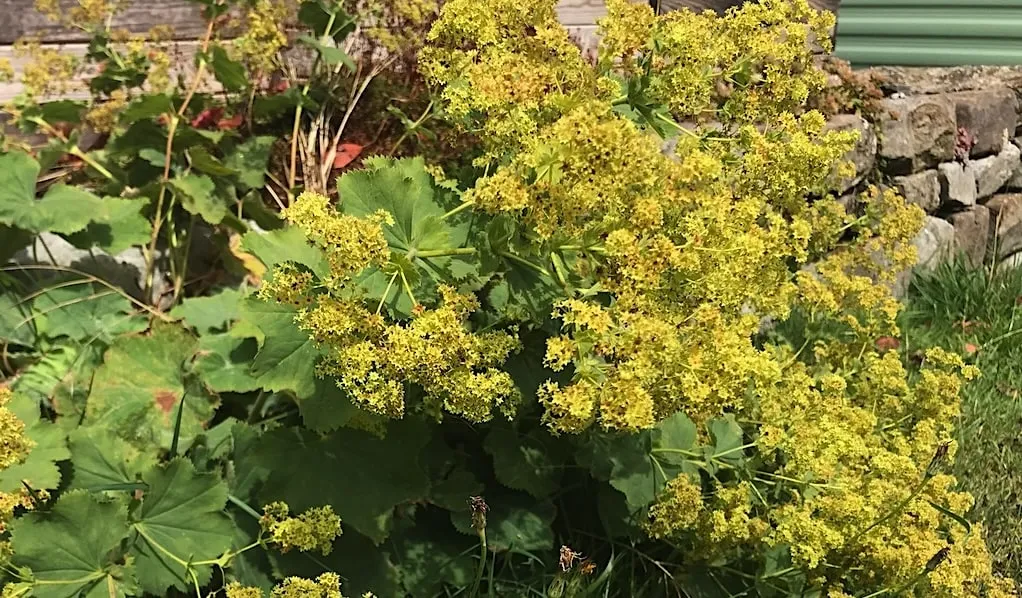
Lady’s mantle is pure cottage garden magic. Those frothy sprays of lime-yellow flowers appear from June through August above scalloped, velvety leaves that catch morning dew like tiny pearls. It’s one of those plants that just makes a garden feel established and loved.
Best Growing Conditions: Sun or shade, any soil. Totally bombproof.
Top Tip: Can self-seed enthusiastically, so deadhead if you don’t want babies everywhere. The flowers are brilliant for cutting, and the foliage provides perfect contrast to more dramatic blooms. Rabbits and deer ignore it!
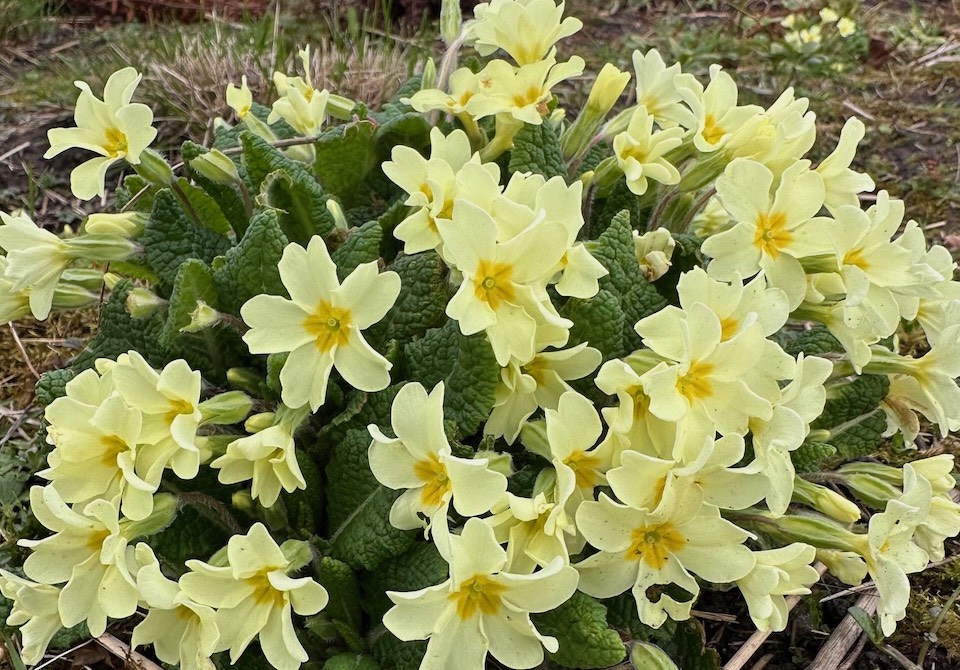
Our native cowslip is an absolute treasure that deserves a place in every British garden. Those nodding clusters of fragrant, yellow flowers appear in April and May, bringing a proper bit of British wildflower magic to your borders.
Best Growing Conditions: Sun to partial shade in moist but well-drained soil.
Top Tip: Allow to self-seed for naturalised drifts. Perfect for wildflower areas, cottage gardens, or under deciduous trees. Provides crucial early nectar for butterflies and bees. Native and brilliant!
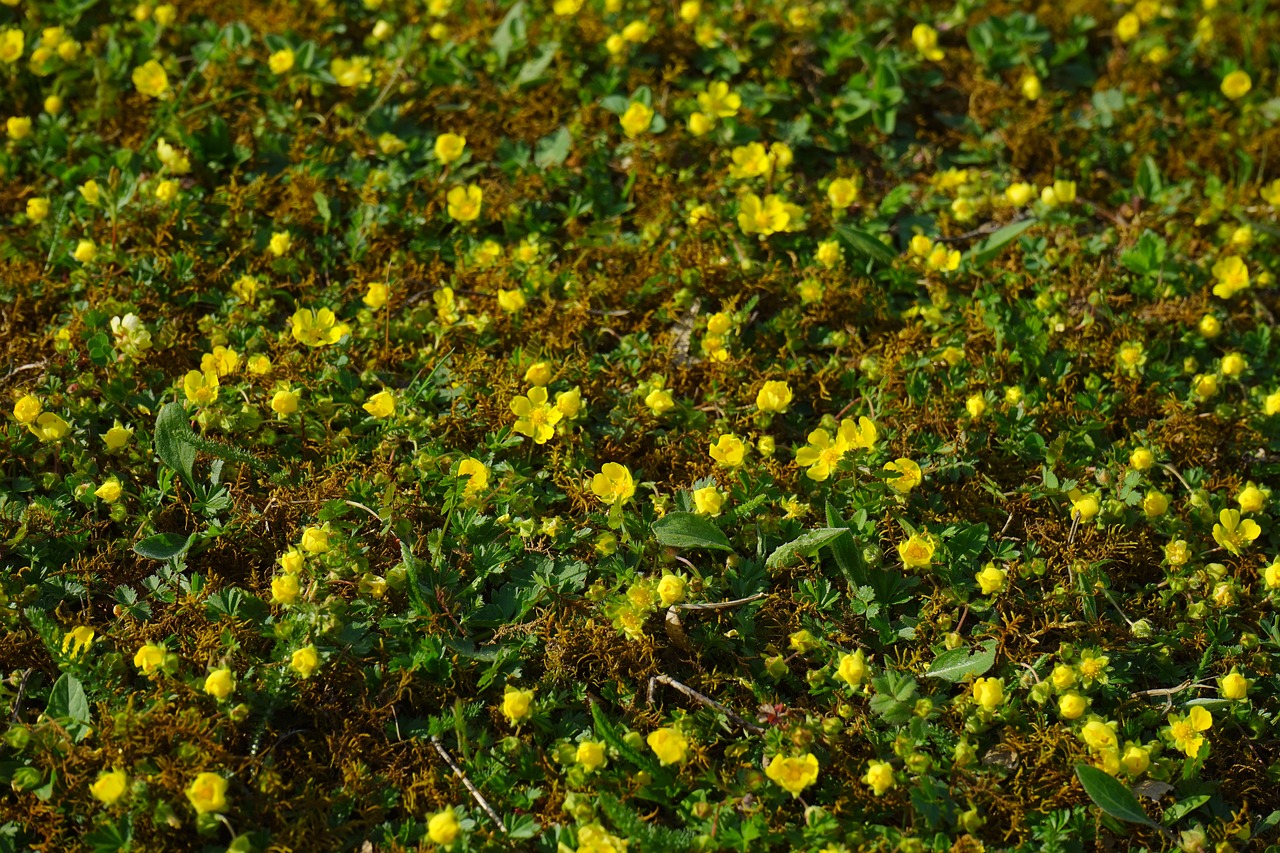
This brilliant semi-evergreen ground cover produces masses of cheerful, yellow flowers from April through June above attractive, strawberry-like foliage. It’s one of the best ground covers for suppressing weeds while looking gorgeous. I used this at the Chelsea Flower Show on my show garden!
Best Growing Conditions: Sun or shade, any reasonable soil. Drought-tolerant once established.
Top Tip: Perfect for covering large areas or awkward banks where grass won’t thrive. The evergreen foliage looks good year-round. Spreads steadily without being thuggish. Brilliant for difficult spots
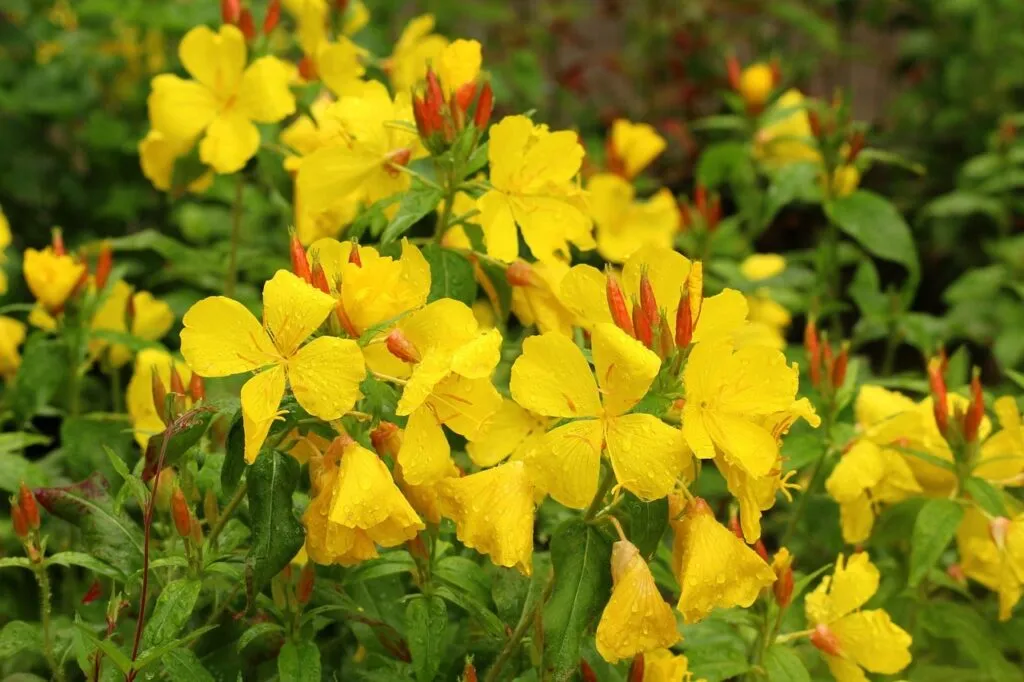
This low-growing perennial produces absolutely massive, tissue-paper yellow flowers up to 12cm across from June through September. They open in the evening, creating a stunning display just when you’re most likely to be relaxing in the garden.
Best Growing Conditions: Full sun in well-drained to dry soil. Excellent for gravel gardens.
Top Tip: The flowers are followed by attractive seedpods. Perfect for the front of hot, sunny borders or tumbling over the edge of raised beds. Drought-tolerant and spectacular!
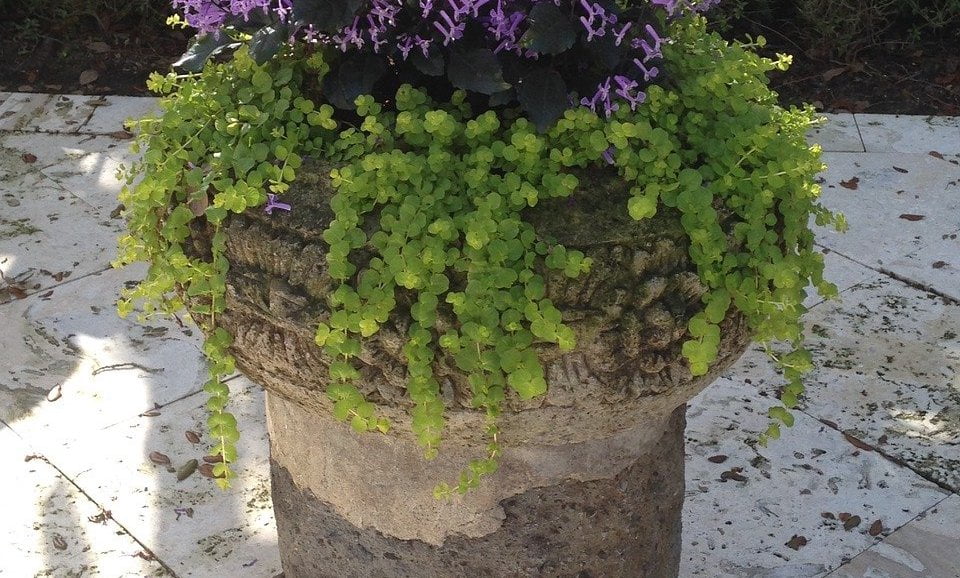
This vigorous carpeting perennial has brilliant golden-yellow foliage that lights up shady spots like a torch. The yellow cup-shaped flowers in summer are a bonus, but it’s really all about that luminous foliage.
Best Growing Conditions: Sun or shade, moist soil. Brilliant for pond edges.
Top Tip: Keep an eye on it as it can be enthusiastic, but it’s brilliant for lighting up dark corners and filling in around paving. Works beautifully in containers where it can trail over the edge. Great for damp spots!
The annual Rudbeckia varieties are workhorses that flower continuously from July right through to the first frosts. Varieties like ‘Toto Gold’ and ‘Prairie Sun’ produce masses of golden flowers with those distinctive dark centres.
Best Growing Conditions: Full sun in any reasonable soil.
Top Tip: Deadhead regularly for continuous flowering. Brilliant for filling gaps in borders or creating instant impact in new gardens. Easy to grow from seed and great for cutting
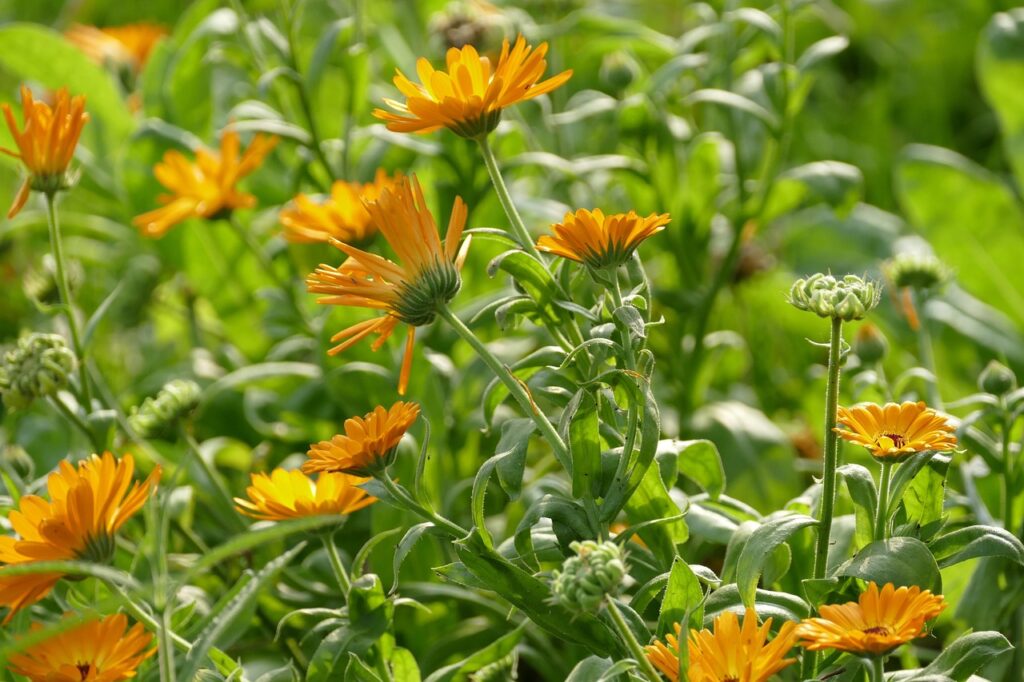
These cheerful cottage garden annuals produce masses of bright orange-yellow daisy flowers from June right through to the first frosts. They’re brilliant for bees, edible (the petals add colour to salads), and dead easy to grow.
Best Growing Conditions: Full sun in any soil. Tolerates poor conditions.
Top Tip: Self-seeds readily, so you’ll have free plants for years. Deadhead for continuous flowering or let some go to seed for next year’s display. Brilliant for vegetable gardens, where they help with pest control. Easy from seed!
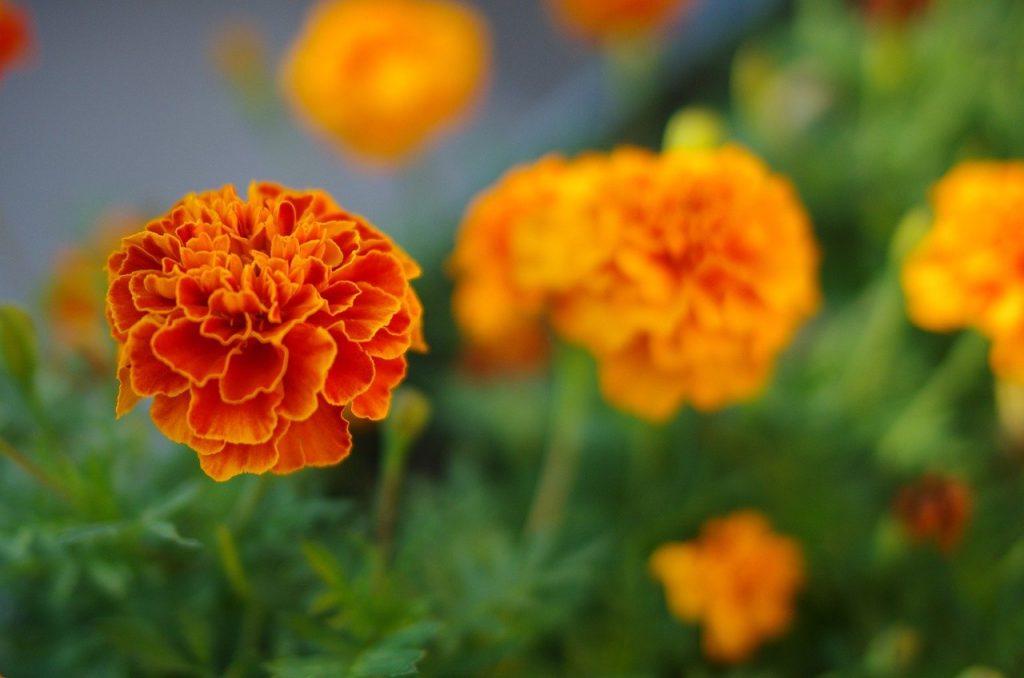
French marigolds are bedding plant workhorses that flower continuously from June through October. Yellow varieties like ‘Safari Yellow’ and ‘Bonanza Yellow’ create cheerful splashes of sunshine and are magnets for hoverflies.
Best Growing Conditions: Full sun in any reasonable soil.
Top Tip: The strong scent deters some pests, making them brilliant companion plants for vegetables. Easy from seed or buy as plug plants. Deadhead regularly for continuous flowering. Great for containers
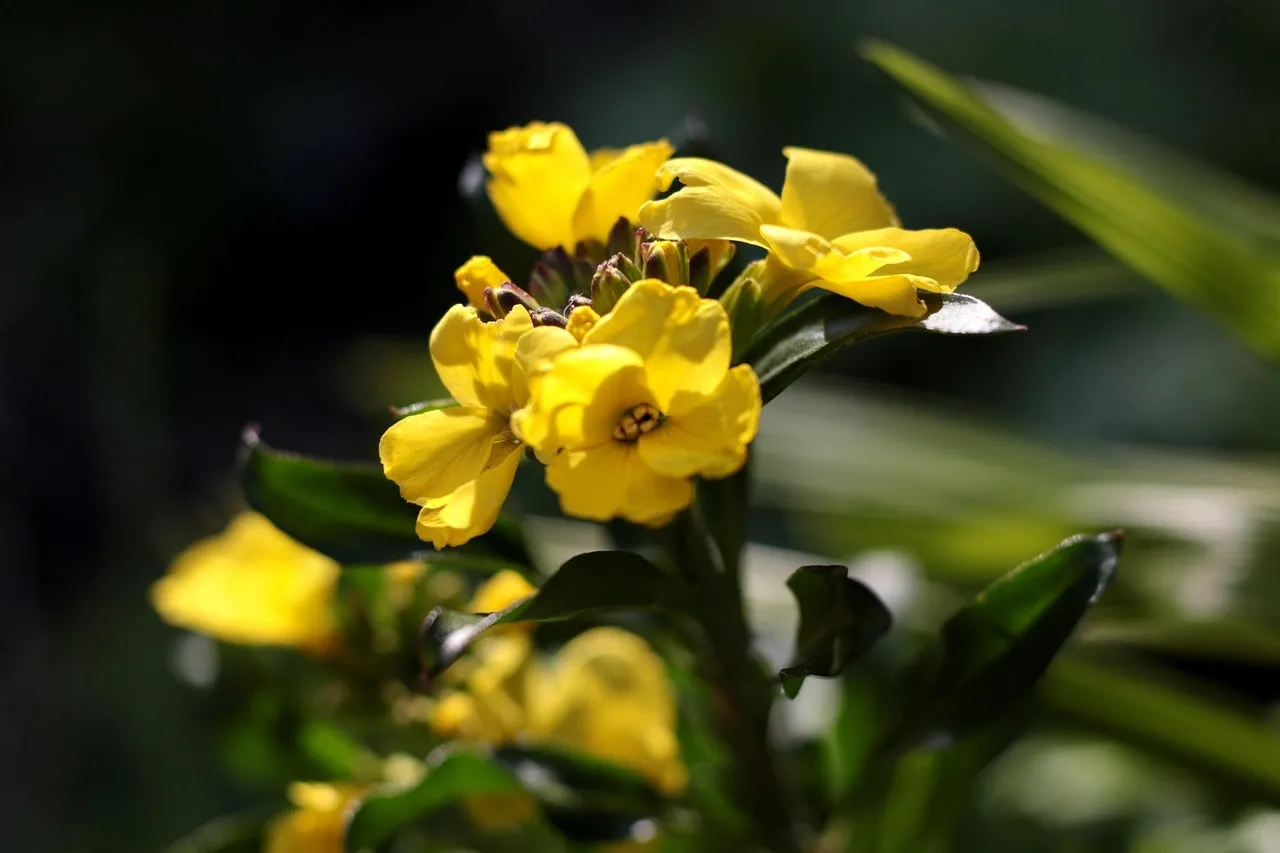
Wallflowers are brilliant spring bedding plants that produce those intensely fragrant flowers from March through May. ‘Cloth of Gold’ has golden-yellow blooms that smell absolutely incredible on warm spring days.
Best Growing Conditions: Full sun in well-drained, preferably alkaline soil.
Top Tip: Treat as a biennial. Sow in May, grow on through summer, plant out in autumn for flowering the following spring. Brilliant planted with tulips for a classic spring display. That perfume is worth the effort!
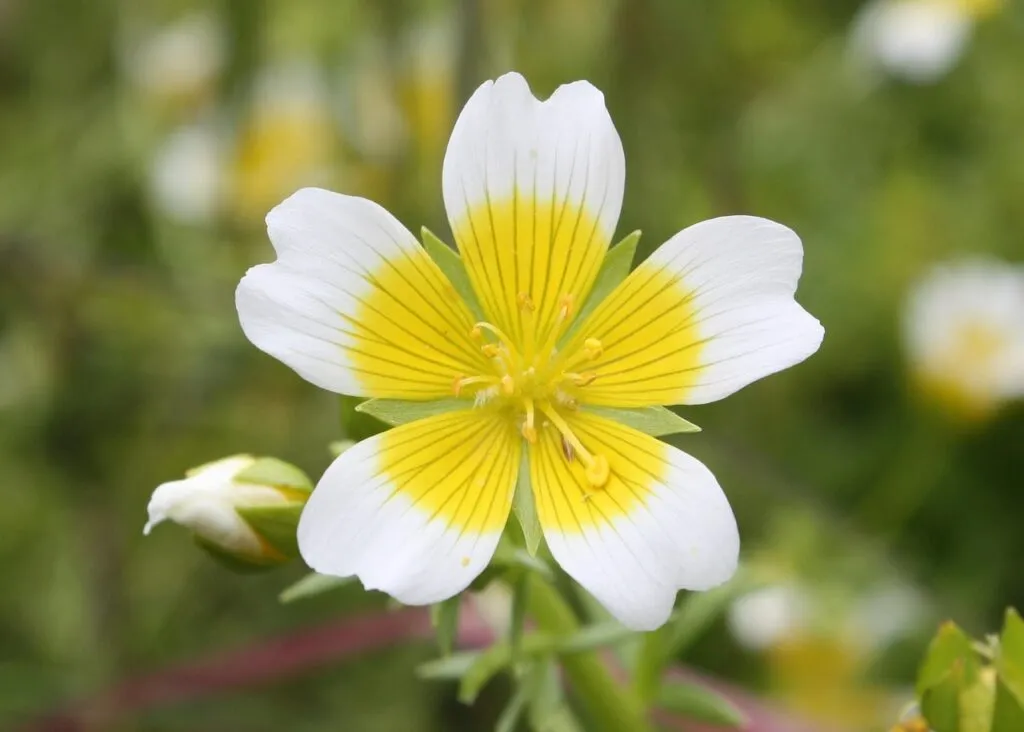
This adorable hardy annual produces masses of yellow flowers with white tips from June through September. It’s brilliant for attracting hoverflies and looks absolutely gorgeous naturalised in gravel or along path edges.
Best Growing Conditions: Full sun in moist but well-drained soil.
Top Tip: Self-seeds enthusiastically, so you’ll have free plants for years. Brilliant for filling gaps between paving stones or at the front of borders. Ridiculously easy from seed and loved by beneficial insects!
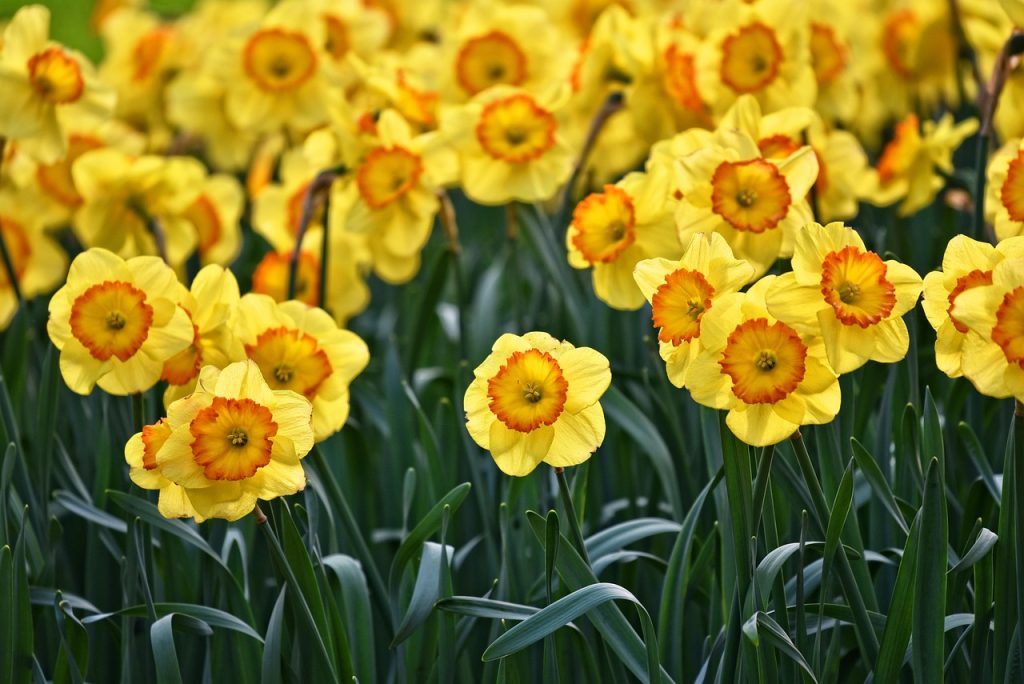
Right, you can’t have a yellow flowers list without daffodils, can you? From classic ‘King Alfred’ trumpets to delicate miniatures like ‘Tête-à-tête’, daffodils are the ultimate spring mood-lifters. They’re reliable, naturalise beautifully, and shout “SPRING IS HERE!” like nothing else.
Best Growing Conditions: Sun or partial shade in any reasonable, well-drained soil.
Top Tip: Plant bulbs in autumn at three times their depth. Let foliage die back naturally after flowering (6 weeks minimum) to feed the bulb for next year. Brilliant naturalised in grass or woodland areas. Try different varieties for extended flowering from February through April!
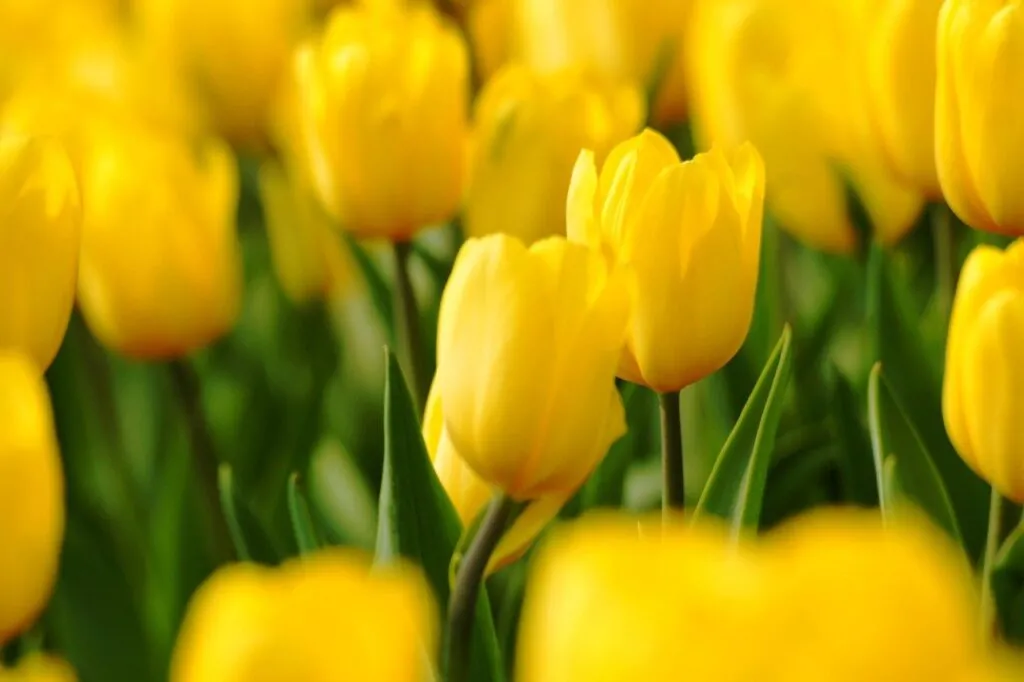
Yellow tulips range from soft primrose to vibrant egg-yolk shades. Varieties like ‘Strong Gold’, ‘Yellow Crown’, and ‘Golden Apeldoorn’ create stunning spring displays that can’t be beaten. Especially for spring borders, when mixed with other spring bulbs for early-season interest and pollen for insects like honey bees.
Best Growing Conditions: Full sun in well-drained soil.
Top Tip: Plant bulbs in November at three times their depth for best flowering. In heavy soils, lift after flowering and store dry for replanting in autumn, or treat as annuals. Try planting with wallflowers for a classic spring combination. Loads of varieties to choose from!
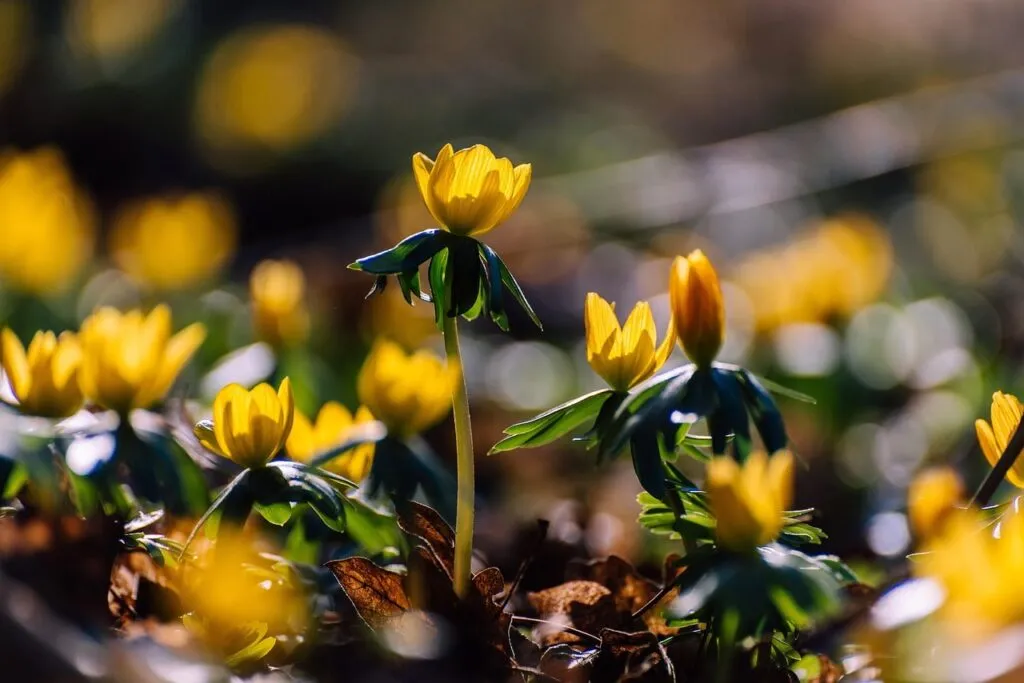
These little beauties are one of the first bulbs to flower, producing those bright yellow, buttercup-like blooms surrounded by a ruff of green leaves in January and February. They’re absolute gems for lifting winter spirits. Notoriously hard to grow but worth the roll of the dice, it took me 7 years to get them to establish at Garden Ninja HQ!
Best Growing Conditions: Partial shade in moist but well-drained soil. Perfect under deciduous trees.
Top Tip: Plant tubers immediately after purchase as they don’t store well. Or better yet, buy “in the green” after flowering. They naturalise beautifully and provide crucial early nectar when little else is flowering. Combines gorgeously with snowdrops!
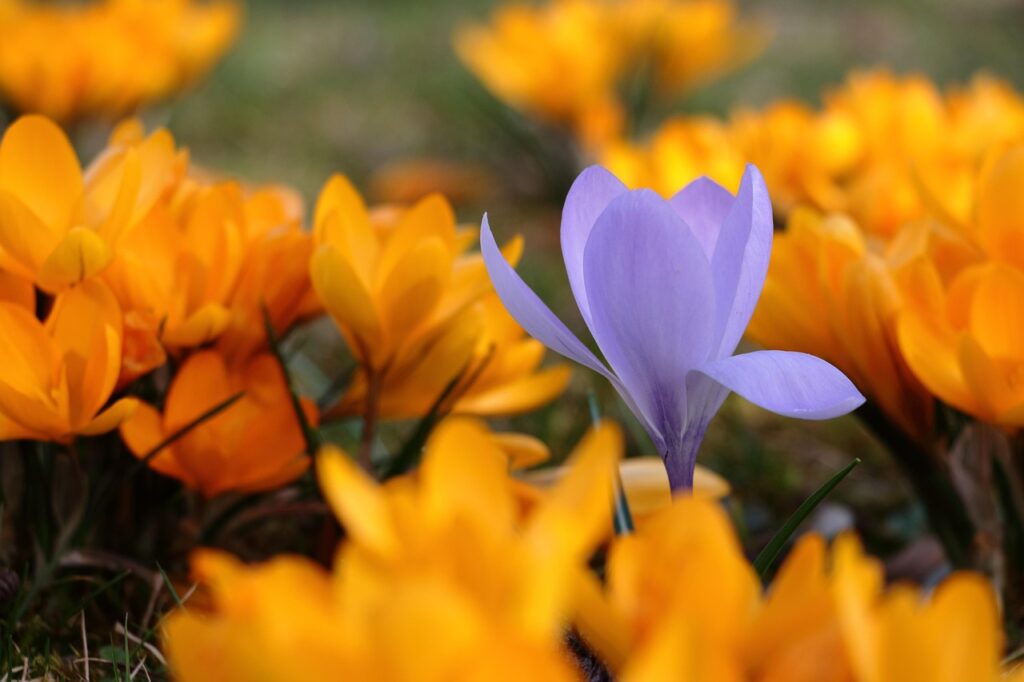
Yellow crocus varieties like ‘Romance’, ‘E.A. Bowles’, and ‘Cream Beauty’ are absolute treasures that flower from February through March, providing vital early nectar for bees emerging from winter.
Best Growing Conditions: Full sun in well-drained soil.
Top Tip:Plant corms in autumn at about 10cm deep. Brilliant naturalised in lawns (just don’t mow until the foliage has died back). They multiply readily to create gorgeous drifts. Perfect for rockeries and the front of borders!
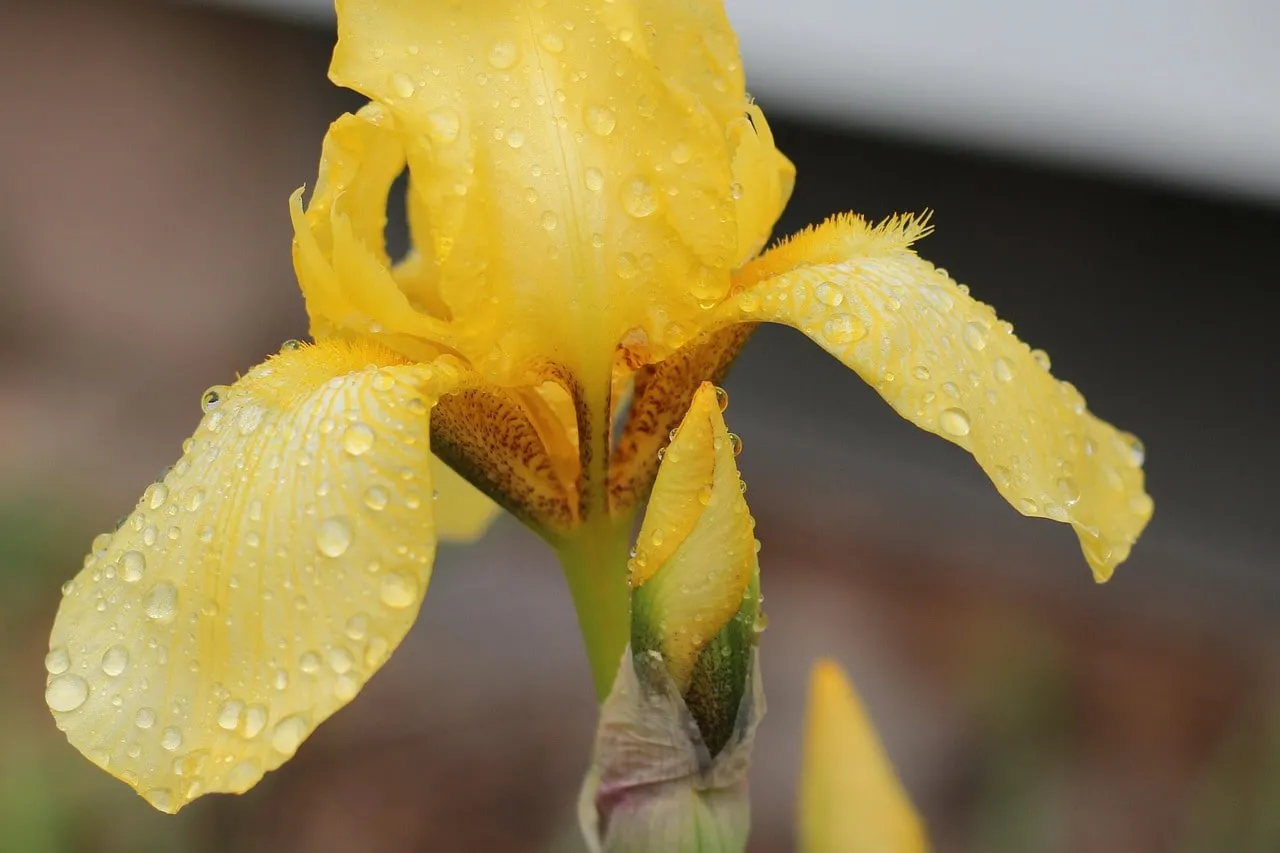
These miniature irises produce those exquisite flowers in late winter and early spring. While most are purple, yellow forms like ‘Katharine Hodgkin’ (pale yellow with blue markings) are absolute stunners.
Best Growing Conditions: Full sun in well-drained soil. Excellent for rockeries.
Top Tip:Plant bulbs in autumn at about 10cm deep. They’re small enough for containers but look brilliant naturalised in gravel or rockeries. Leave undisturbed to multiply. The flowers often appear before the leaves!
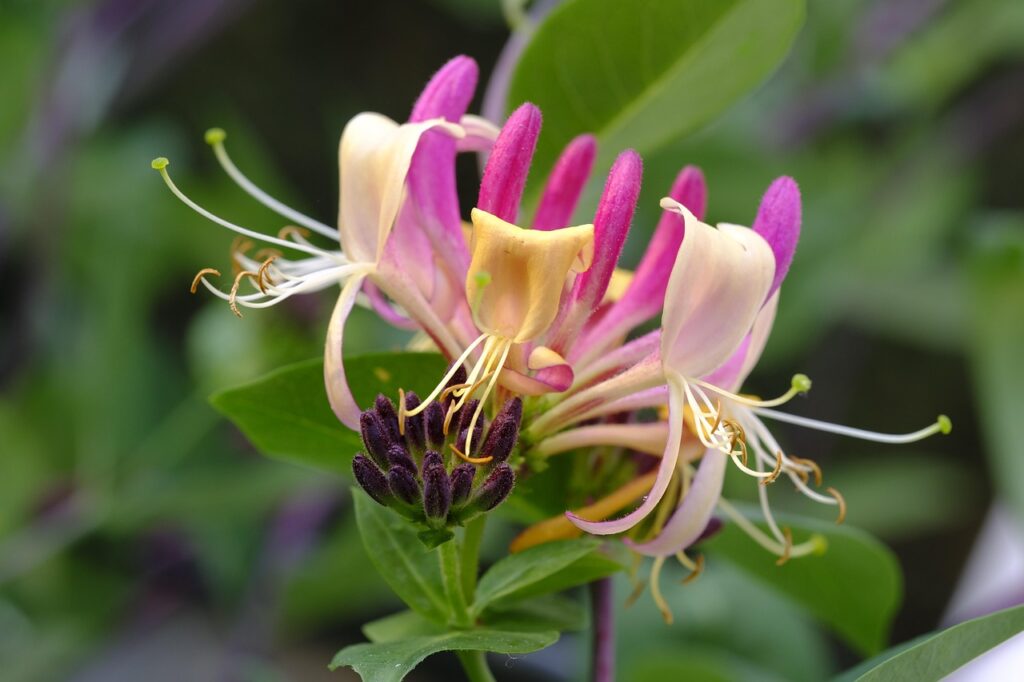
This vigorous deciduous climber produces masses of fragrant, creamy-yellow tubular flowers from June through September. The scent on warm evenings is absolutely intoxicating and will fill your entire garden.
Best Growing Conditions: Partial shade to sun with roots in shade and head in sun for best performance.
Top Tip: Mulch the roots to keep cool. Prune after flowering by removing about a third of old stems to encourage fresh growth. Brilliant for wildlife, attracting bees, moths, and providing berries for birds. That evening scent is spectacular!
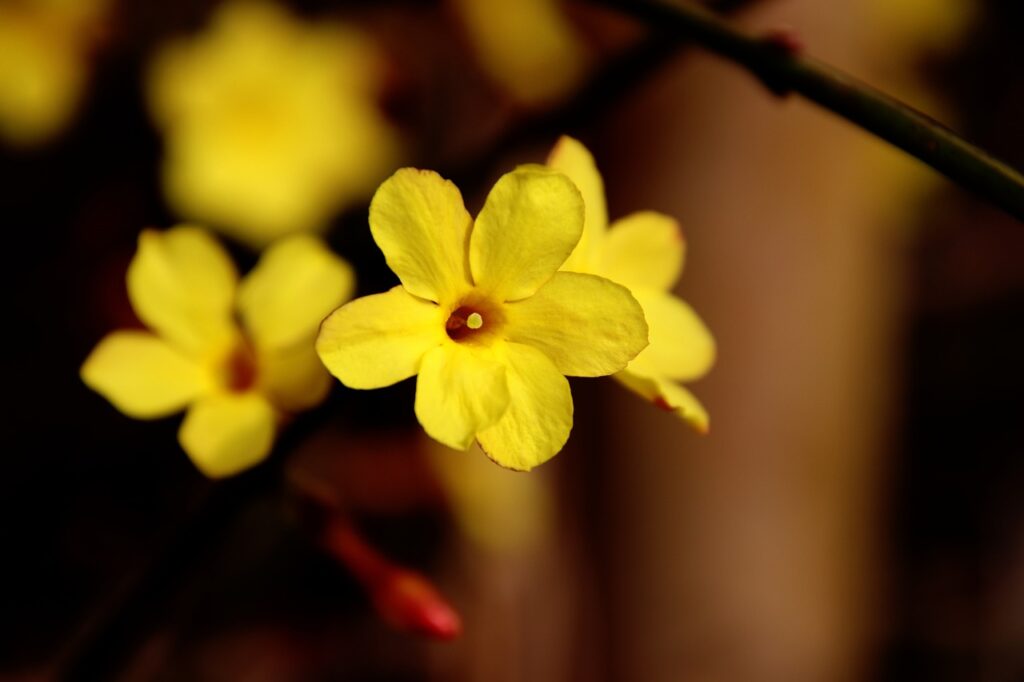
This deciduous climber (technically a wall shrub) produces masses of bright yellow flowers on bare green stems from November through March. It’s like having bottled sunshine during the darkest months.
Best Growing Conditions: Any aspect, including north-facing walls. Any soil.
Top Tip: Prune after flowering by cutting back flowered shoots to strong buds near the base. Train up wires or trellis for the best display. Absolutely bombproof and brilliant for difficult spots. Perfect for north-facing walls!
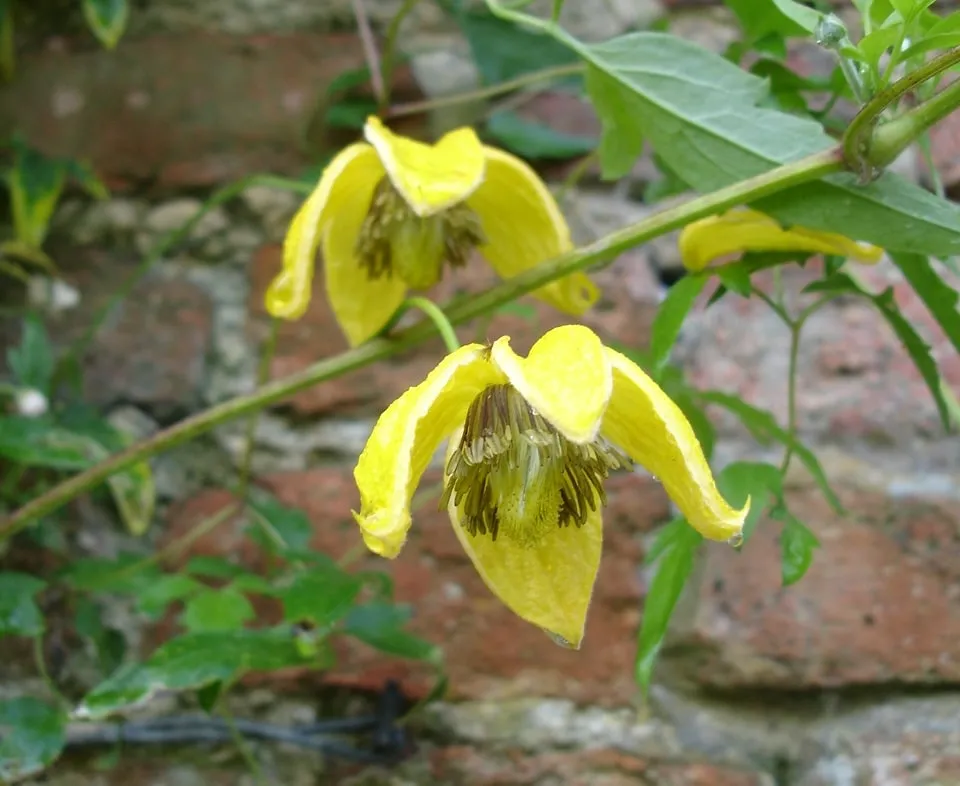
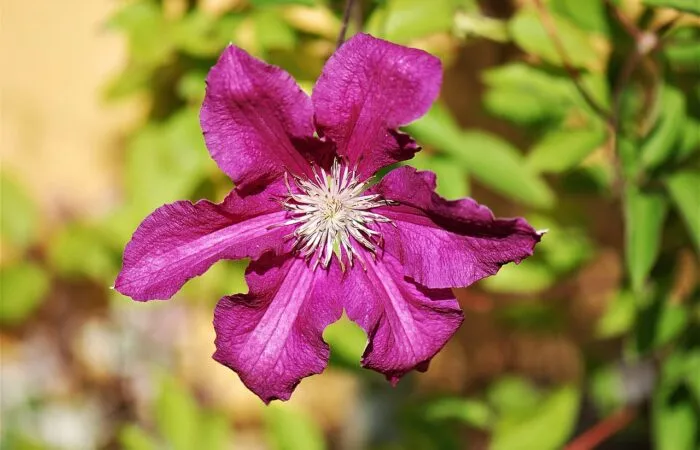
This vigorous late-flowering clematis produces masses of nodding, bell-shaped yellow flowers from July through October, followed by those gorgeous fluffy seedheads that look stunning through winter.
Colour is one of the most powerful tools in any garden designer’s toolkit, and once you start thinking about planting through the lens of a single colour, the whole design process becomes so much more intentional and rewarding. Whether you are drawn to cool, calming tones or bold, high-impact drama, there is a dedicated Garden Ninja colour guide to help you make the most of every border, bed, and container in your garden.
As a BBC1 Garden Rescue presenter and award-winning garden designer with over 20 years of professional experience, I have used every one of these colours extensively across hundreds of real garden designs. These guides are not theoretical colour wheel exercises. They are practical, plant-by-plant resources drawn from years of hands-on planting design, so you can be confident that every plant listed genuinely performs in UK conditions.
🌹 Red Flowering Plants
Bold, passionate, and utterly unforgettable, red flowers create the highest-impact borders in any garden.
From the tropical flame of Crocosmia to the smouldering copper of Helenium, these 35 orange-flowering plants will transform your borders from March to October.
Each guide follows the same comprehensive structure I use when designing planting plans for my professional clients: trees, shrubs, perennials, ground cover, bulbs, and climbers, all with hardiness ratings, ultimate dimensions, growing conditions, and my personal top tips drawn from real garden design experience. Whether you are starting from scratch with a blank canvas or looking to refine an existing border, these guides give you the plant knowledge to make genuinely confident, well-informed choices.
If you want to take your planting design skills even further, my Garden Design for Beginners course walks you through the entire process of creating a beautiful, cohesive planting scheme from the ground up. Thousands of UK gardeners have already used it to transform their outdoor spaces, and it will change the way you think about plants and colour forever.
Learn How to Design Your Own Garden
Now that you have a shopping list of gorgeous yellow plants to grow, why not take your skills to the next level with some online design training? My Garden Design for Beginners Course is here to help take your garden from average to extraordinary with an affordable online course, no matter how little your experience with plants.
This course offers step-by-step guidance from me, Lee Burkhill, award-winning garden designer and presenter on BBC1’s Garden Rescue. In this course, you’ll go from a garden design novice to a confident designer equipped to tackle any green space.
Planting Techniques – Select and arrange plants like a pro.
Design Styles & Layout Options – Explore different styles to suit every garden.
Course Features:
20 Hours of Study Time
Flexible Online Learning
Engaging Video Lessons & Quizzes
Real-World Case Studies
Certification upon Completion
Taught by Award-Winning Designer Lee Burkhill
Enrol now for just £199 and start your journey toward garden design mastery!
29
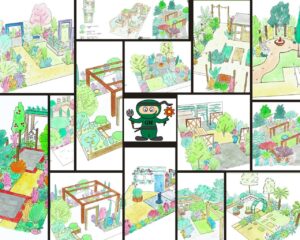
Garden Design Examples for Small Gardens: 30 Design Templates & Planting Plans
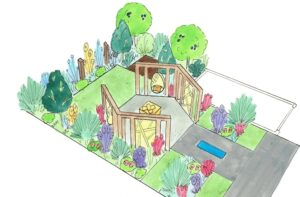
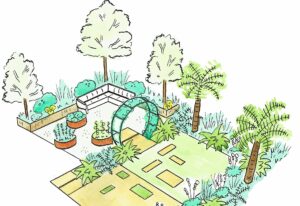
Garden Design Examples for Small Gardens: 30 Design Templates & Planting Plans: In this online gardening course, I’ll walk you through 30 fantastic garden designs, explaining the logic behind the layout, the plant choices, and take-home tips for applying them in your own garden.
Weekend Garden Makeover: A Crash Course in Design for Beginners
Learn how to transform and design your own garden with Lee Burkhills crash course in garden design. Over 5 hours Lee will teach you how to design your own dream garden. Featuring practical design examples, planting ideas and video guides. Learn how to design your garden in one weekend!
Garden Design for Beginners: Create Your Dream Garden in Just 4 Weeks
Garden Design for Beginners Online Course: If you want to make the career jump to becoming a garden designer or to learn how to design your own garden, this is the beginner course for you. Join me, Lee Burkhill, an award-winning garden designer, as I train you in the art of beautiful garden design.
Yellow is one of my favourite colours in the garden, and I wish more gardeners would be brave enough to welcome it in! When paired with blue or purple flowers, it heightens the contrast, creating really immersive flower beds and gardens.
Whether it’s yellow daffodils in spring or the beauty of late-season Rudbeckia, yellow should always have a place in your garden!
Your subscription could not be saved. Please try again.
Your subscription has been successful.
Lee Burkhill
Lee Burkhill, known as the Garden Ninja, is an award-winning garden designer and horticulturist with over 30 years of gardening experience and 15 years as a professional garden designer. A qualified RHS (Royal Horticultural Society) professional, Lee specialises in sustainable garden design and practical horticultural advice. He designs and presents on BBC1’s Garden Rescue and in leading gardening publications. Lee combines three decades of hands-on gardening knowledge with professional design qualifications to help gardeners create beautiful, functional outdoor spaces.