-
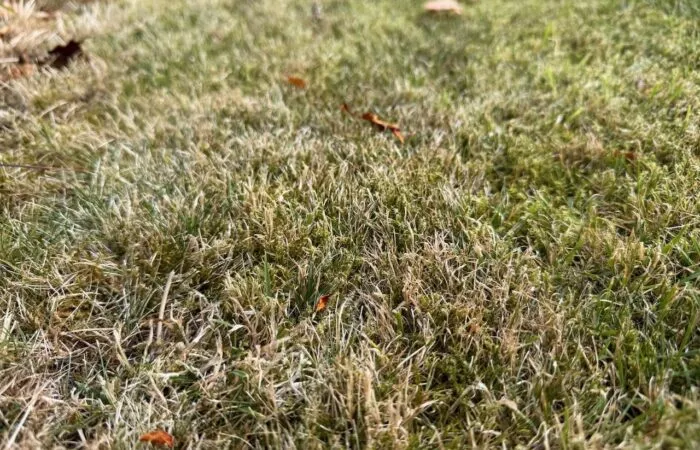
Why Is My Lawn Yellow or Patchy? The UK Gardener’s Complete Diagnosis Guide
 Lee Burkhill: Award Winning Designer & BBC 1's Garden Rescue Presenters Official Blog
A yellow or patchy lawn is one of the most common problems I see in UK gardens, and it is also one of the most misdiagnosed. The temptation when grass goes yellow is to reach for a bottle of lawn feed and hope for the best. Sometimes that is exactly the right answer. But more often than not, feeding a lawn that has a different underlying problem is like treating the symptoms without addressing the cause. The yellow patches come back, the lawn continues to disappoint, and another season passes without real improvement.
After twenty years of designing gardens professionally and working on everything from inner-city courtyard lawns to large estate turf, I have seen every cause of yellow and patchy grass the UK climate can throw at a lawn. This guide runs through all of them, shows you how to identify which one is affecting your lawn, and gives you the fix for each. Most of these problems are entirely recoverable with the right approach at the right time of year.
Quick Answer
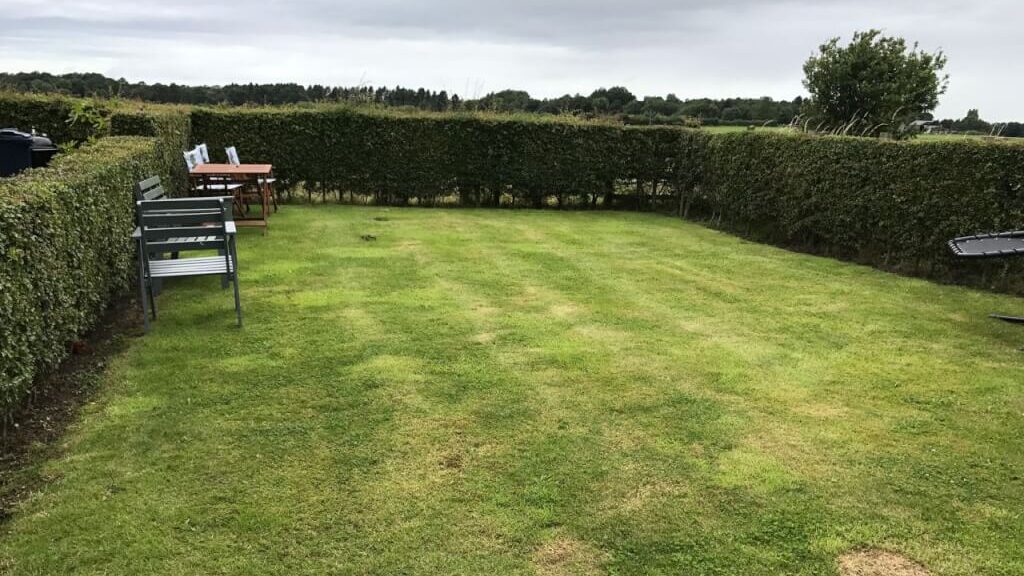
Yellow or patchy UK lawns are most commonly caused by drought stress, dog urine burn, moss taking over, compacted soil, nutrient deficiency, leatherjacket or chafer grub damage, shading from trees or buildings, or lawn disease. Identify the cause before reaching for a fix. Scarifying, aerating, overseeding, and seasonal feeding resolve most problems within four to six weeks.
Jump To
How to diagnose why your lawn is yellow or patchy
Before doing anything to your lawn, spend five minutes actually looking at it. The pattern, location, and appearance of the yellow patches tell you almost everything you need to know. Scattered circular patches are very different from large uniform yellowing across the whole lawn. Patches near a fence are different from patches under a tree. Taking a photo and getting down to ground level before you do anything will save you from treating the wrong problem.
One more thing before we get into each cause. A quick scratch test tells you a great deal. Push your finger into the soil of a yellow patch. If the soil is bone dry and barely yields, drought or compaction is likely. If it feels wet and squelchy and pulls up easily with moss attached, you have a drainage or moss problem. If you can see the turf lifting away easily with no roots underneath, you probably have a pest problem.
1. Drought stress and summer heat
The most common reason for a yellow UK lawn in summer is simply drought. Grass goes dormant when water is in short supply, turning yellow or straw-coloured as a survival mechanism. It looks dramatic, but it is not actually dying. I have been asked by worried clients whether their entire lawn has been killed by a hot spell, and the answer is almost always no. UK grass varieties are naturally drought-tolerant enough to survive several weeks without rain, and they bounce back remarkably quickly once conditions improve.
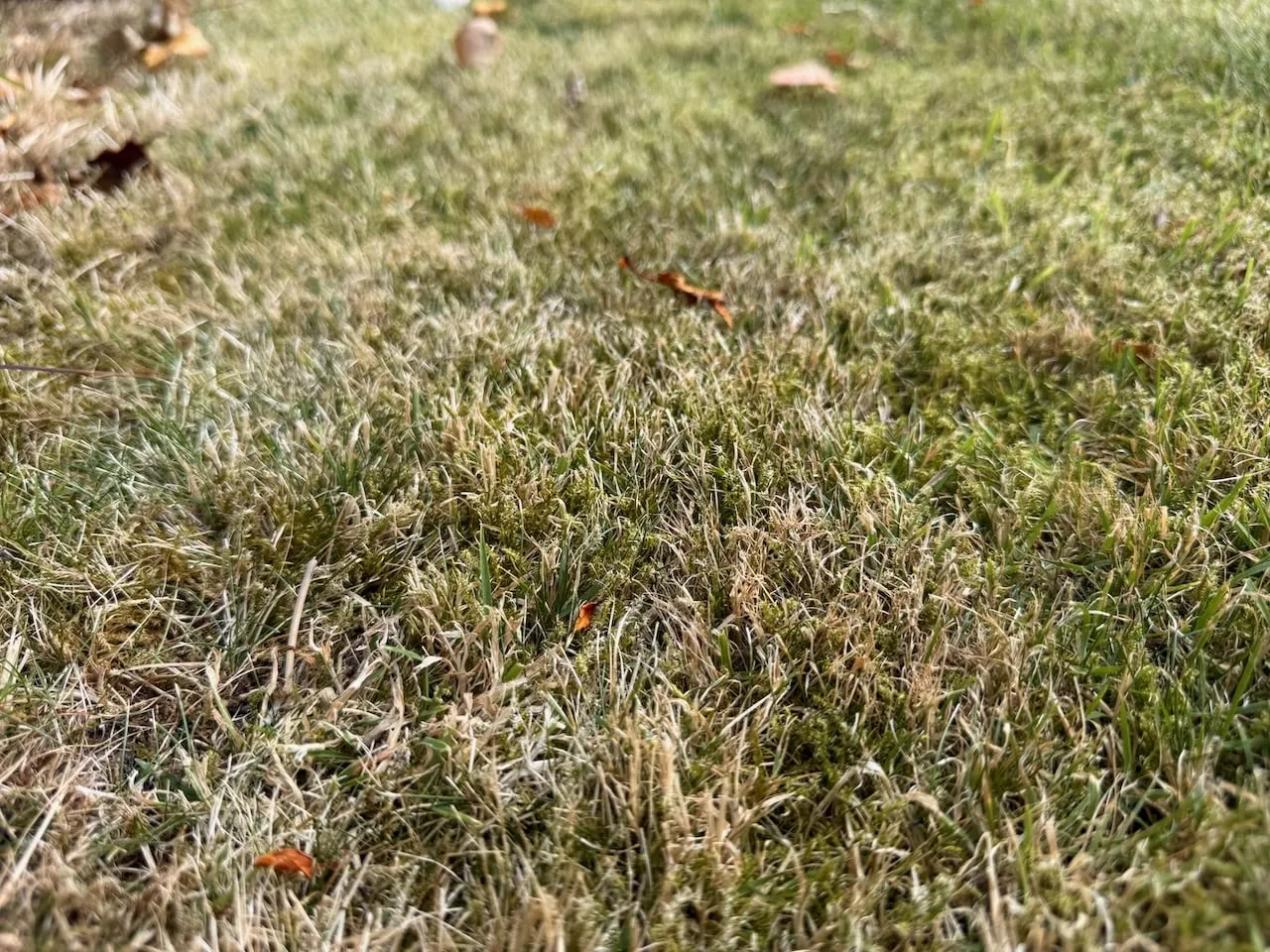
The proof is easy enough to find. Put a screwdriver or a long nail into the yellowed area. If the soil is dry to a depth of 5 centimetres or more and the grass blades are dry and crispy rather than soft and rotting, drought is your answer. The grass will recover on its own when autumn rains arrive, or within days of significant rainfall at any point in the summer. You do not need to do anything heroic to fix drought-yellowed grass.
💡 Top Tip
Resist the urge to water a drought-yellowed established lawn during a heatwave. You will need to water it constantly to prevent re-yellowing, which wastes huge amounts of water and is genuinely bad for the environment. Let it go dormant, let it recover naturally, and save your watering for containers and newly planted areas that genuinely cannot survive without it.
Where watering does make sense is on new lawns less than 12 months old, on lawns on very free-draining sandy soil, and on any lawn that has been recently overseeded. New grass seed and young turf simply do not have the root depth to reach moisture further down in the soil, so they need help during dry spells. A deep, infrequent watering early in the morning is far more effective than frequent shallow watering, which keeps roots near the surface and makes the lawn more drought-vulnerable over time, not less.
2. Dog urine burn
If you have a dog, you will recognise this immediately once you know what you are looking at. Dog urine causes bright, intensely yellow circles on the lawn, often with a halo of lush, dark green grass around the edges.
The nitrogen in urine acts as a hyper-concentrated fertiliser: at the centre, it burns and kills the grass, but at the edges, where it has diluted into the soil slightly, it provides a feed boost, which is why you get that characteristic darker ring surrounding the dead patch. The patches are usually small and irregularly distributed, following wherever your dog chooses to go to the toilet.
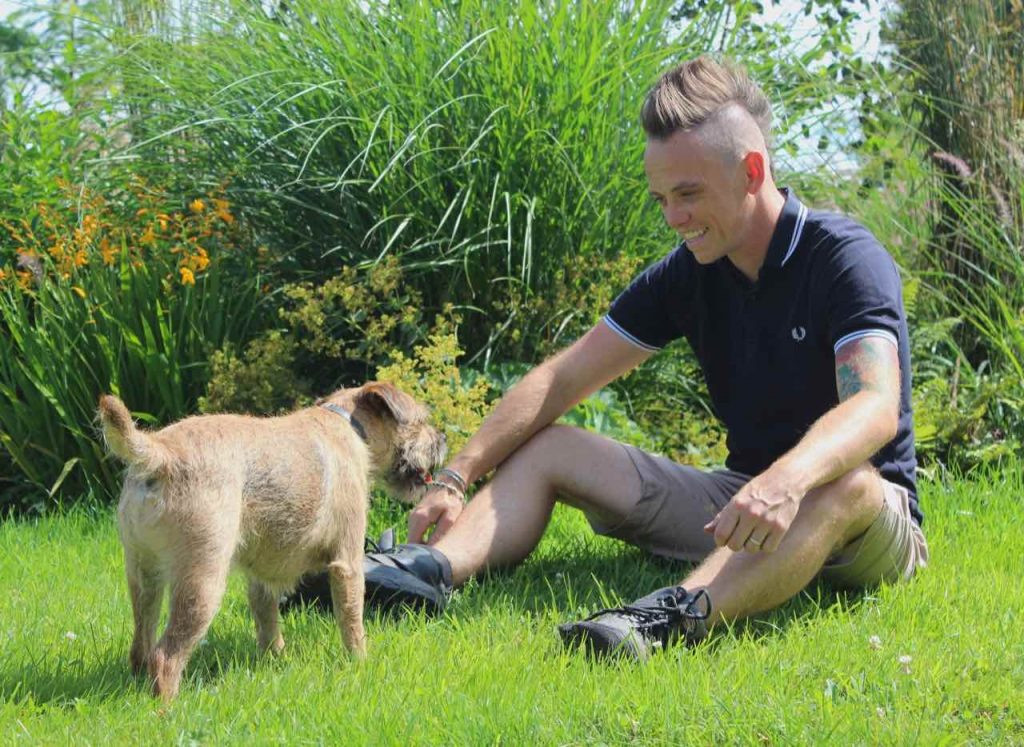
The immediate fix is to drench the area with water as quickly as possible after your dog urinates. Diluting the nitrogen quickly significantly reduces the burning effect. This does require you to catch it fairly promptly, which is more realistic with some dogs than others. For existing burned patches, lightly fork the area, remove any dead grass, top-dress with a little sieved compost, and overseed. Water it in well and keep it moist. Most patches recover within four to six weeks.
💡 Top Tip
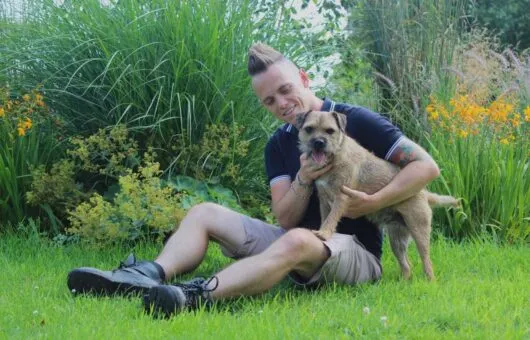
There are supplements marketed to reduce the nitrogen concentration in dog urine. Some gardeners find these helpful, but training your dog to use a specific gravel or bark chip area of the garden is often the more reliable long-term solution, particularly for larger or older dogs where the volume and concentration of urine is higher. My two border terriers Barry and Percy have their own designated area well away from the main lawn.
For overseeding dog urine patches, choose a hard-wearing, high-rye grass seed mix. Pure rye grass is tough enough to handle moderate dog traffic and recovers more quickly than fine fescue blends. Scatter seed at around 35 grams per square metre and keep moist until germination, which typically takes seven to fourteen days in warm conditions.
🛒 Find hard-wearing lawn seed on Amazon UK
3. Nutrient deficiency
A lawn that is uniformly pale, thin, or yellowing across a wide area rather than in specific patches is often telling you it is hungry. Grass needs nitrogen above all else to produce the lush green colour and vigorous growth most gardeners want. If your lawn has not been fed in a year or more, or if you have had heavy rainfall that has flushed nutrients out of the soil, nutrient deficiency is a very real possibility.
I want to be clear about something here: I am not a big proponent of obsessive lawn feeding schedules. Most lawns in UK domestic gardens can get by with two feeds per year and a top-dressing of sieved compost every couple of years. The lawn care industry does an excellent job of convincing gardeners they need far more intervention than they actually do. That said, a genuinely hungry lawn will not recover on goodwill alone, and a well-timed feed makes an extraordinary difference.
In spring and early summer, apply a high-nitrogen feed to promote leafy green growth. A granular spring lawn fertiliser, scattered with a spreader, gives even coverage and avoids the risk of scorching from uneven hand application.
In Autumn, switch to a low-nitrogen, high-potassium feed that hardens the grass for winter rather than pushing soft, vulnerable growth heading into the colder months. Avoid feeding between November and February when the grass is dormant and cannot absorb nutrients effectively.
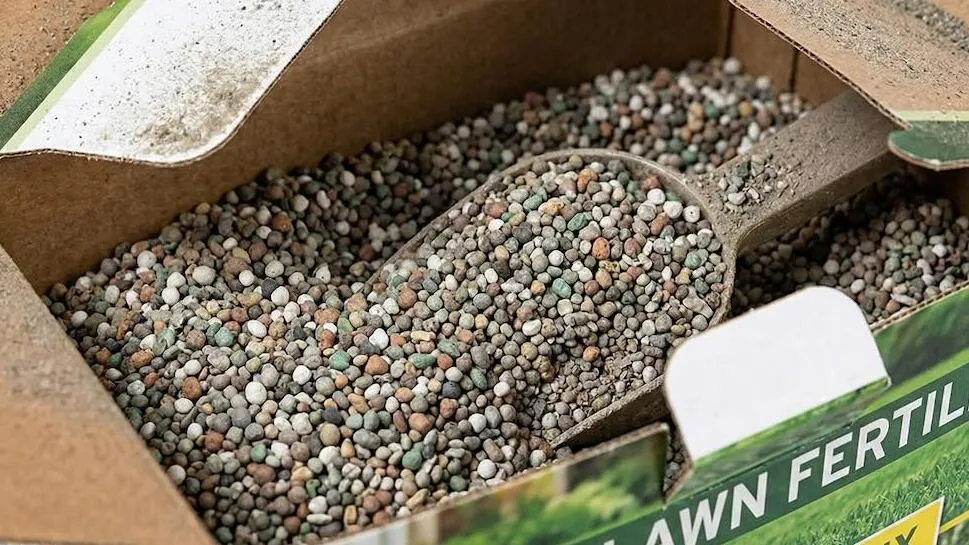
One product I use and genuinely trust is a liquid seaweed feed watered over the lawn in spring at a ratio of around 1 part to 10 parts water. It is gentle and organic, providing the grass with a balanced nutrient boost without the risk of burning. For a more immediate visual result on a very yellow lawn, a granular spring feed applied with a spreader will show results within two weeks in decent growing conditions.
🛒 Find spring lawn feed on Amazon UK
🛒 Find liquid seaweed lawn feed on Amazon UK
🛒 Find lawn seed and fertiliser spreaders on Amazon UK
4. Moss takeover
Moss does not cause yellow grass directly, but it does choke out the grass beneath it, leaving bare yellow patches when the moss dies back or is removed. If large sections of your lawn feel spongy underfoot, pull away easily, and reveal a thick mat of dark green or grey-green material rather than grass roots anchored in soil, moss is your primary problem rather than the grass itself.
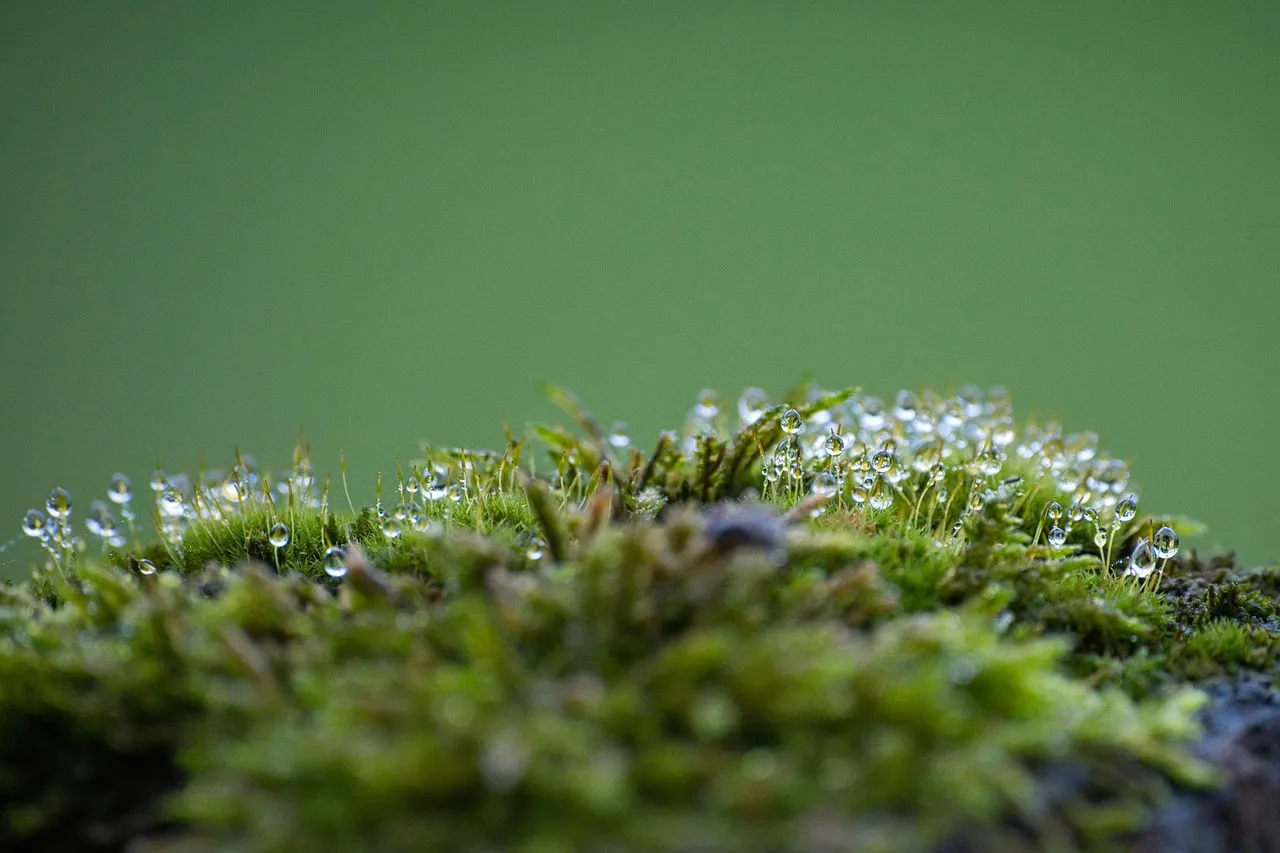
Moss thrives in conditions that grass dislikes: shade, poor drainage, compacted soil, acidic soil, and low fertility. It does not create those conditions on its own; it exploits them. Killing moss without addressing the underlying cause is a temporary fix. The moss will return within months because the conditions that allowed it to establish remain. The real fix is to make the lawn a better environment for grass than for moss.
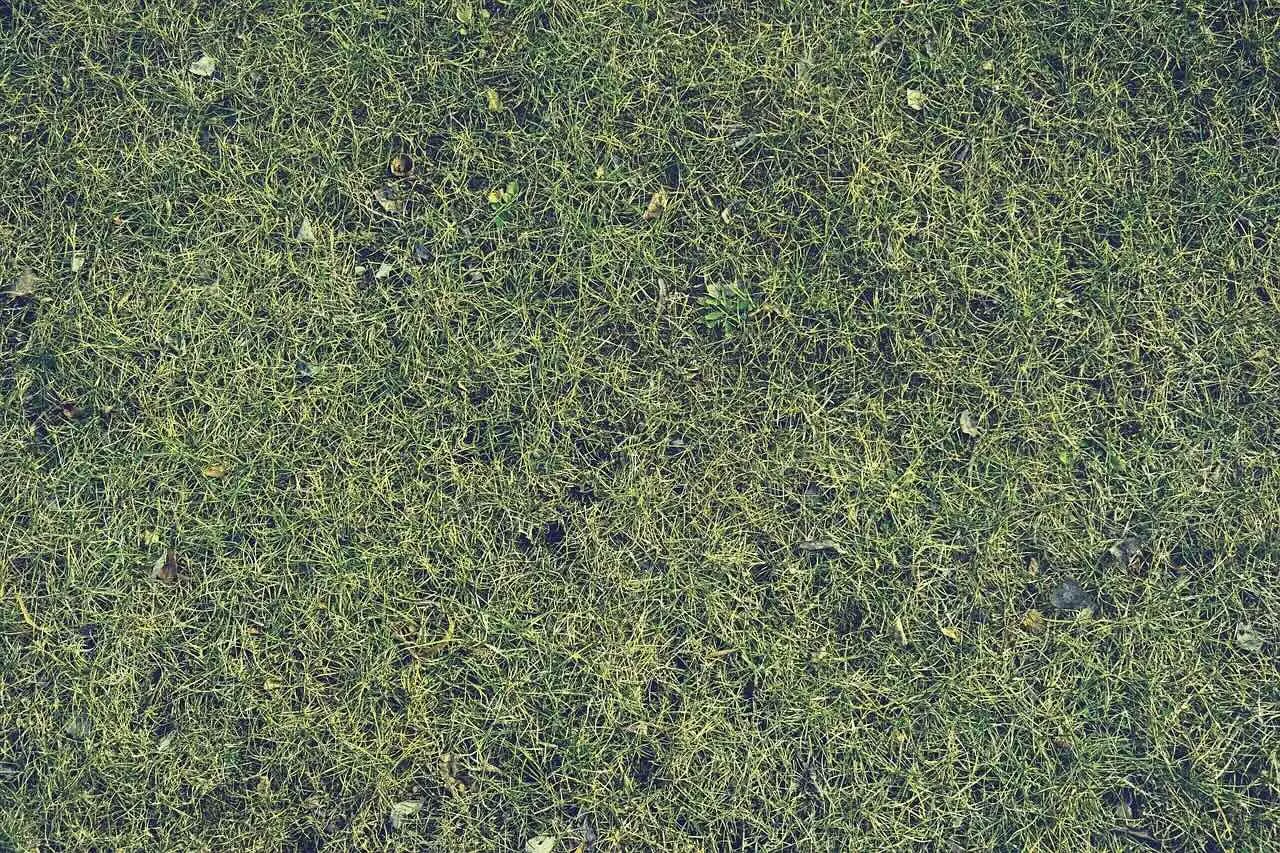
Iron sulphate kills moss effectively and is widely available. Apply it in autumn when the moss is actively growing, wait for it to turn black over two to three weeks, then scarify the dead moss out. After scarification, aerate the lawn to address any compaction, overseed bare areas, and apply a balanced autumn feed. This combined approach, done in September, is the most effective single action you can take to bring a mossy lawn back.
🛒 Find iron sulphate moss killer on Amazon UK
For shaded lawns, the honest answer is that no amount of moss treatment will produce a bowling-green result under a dense tree canopy. Raising the canopy by removing lower branches helps significantly, but for very deep shade, you may be better served by groundcover planting or bark mulch in the shadiest sections rather than fighting a losing battle with grass. My scarifying guide covers the full moss removal process in detail.
5. Compaction and poor drainage
Compacted soil prevents grass roots from penetrating deeply enough to access water and nutrients. The grass becomes shallow-rooted, stressed, and increasingly yellow during any dry period or after heavy use. High-traffic areas, paths across the lawn, children’s play areas, and spots used repeatedly for parking equipment are the most vulnerable. In clay soil gardens, compaction can develop surprisingly quickly even with normal garden use.
The signs are specific: water sitting on the surface rather than draining away after rainfall, soil that is noticeably harder than the surrounding areas when you push a fork in, and grass that comes away easily at the surface with very little root system attached. A screwdriver pushed into the soil of a compacted area should meet significant resistance within the first few centimetres.
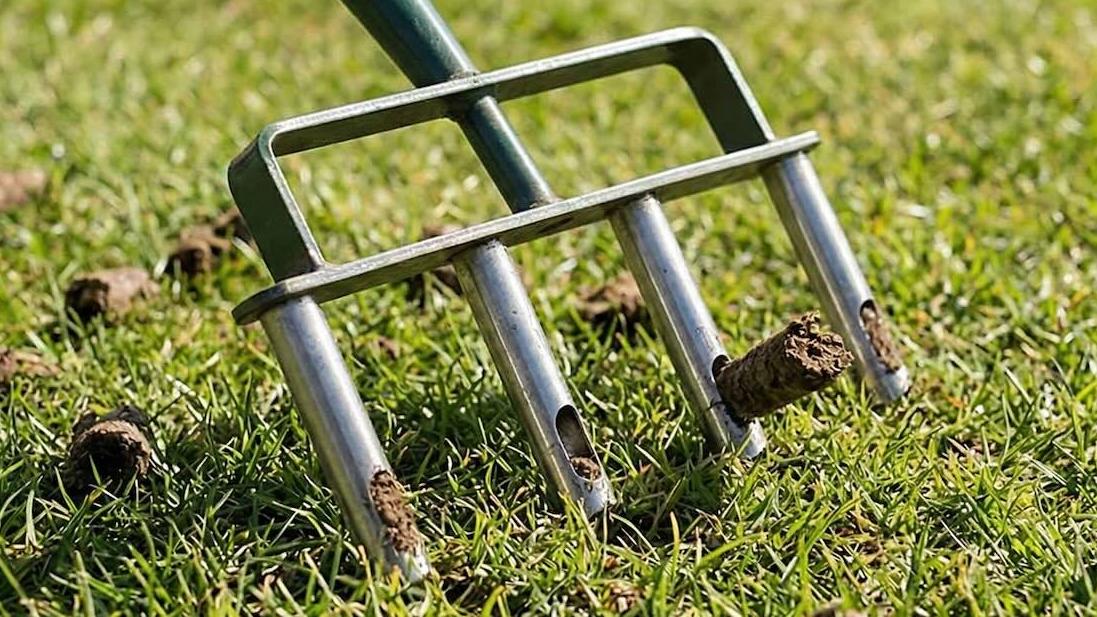
Aeration is the fix. Hollow tine aeration physically removes small soil plugs, opening the compacted layer and allowing air, water, and nutrients to reach the root zone. Solid tine aeration using a garden fork is the manual version for smaller areas.
Do this in September or March when the grass is actively growing and can recover quickly. Always follow aeration with a top dressing of fine sandy compost brushed into the holes, then overseed and water in. My aeration guide covers the full method and helps you choose between hollow and solid tine tools.
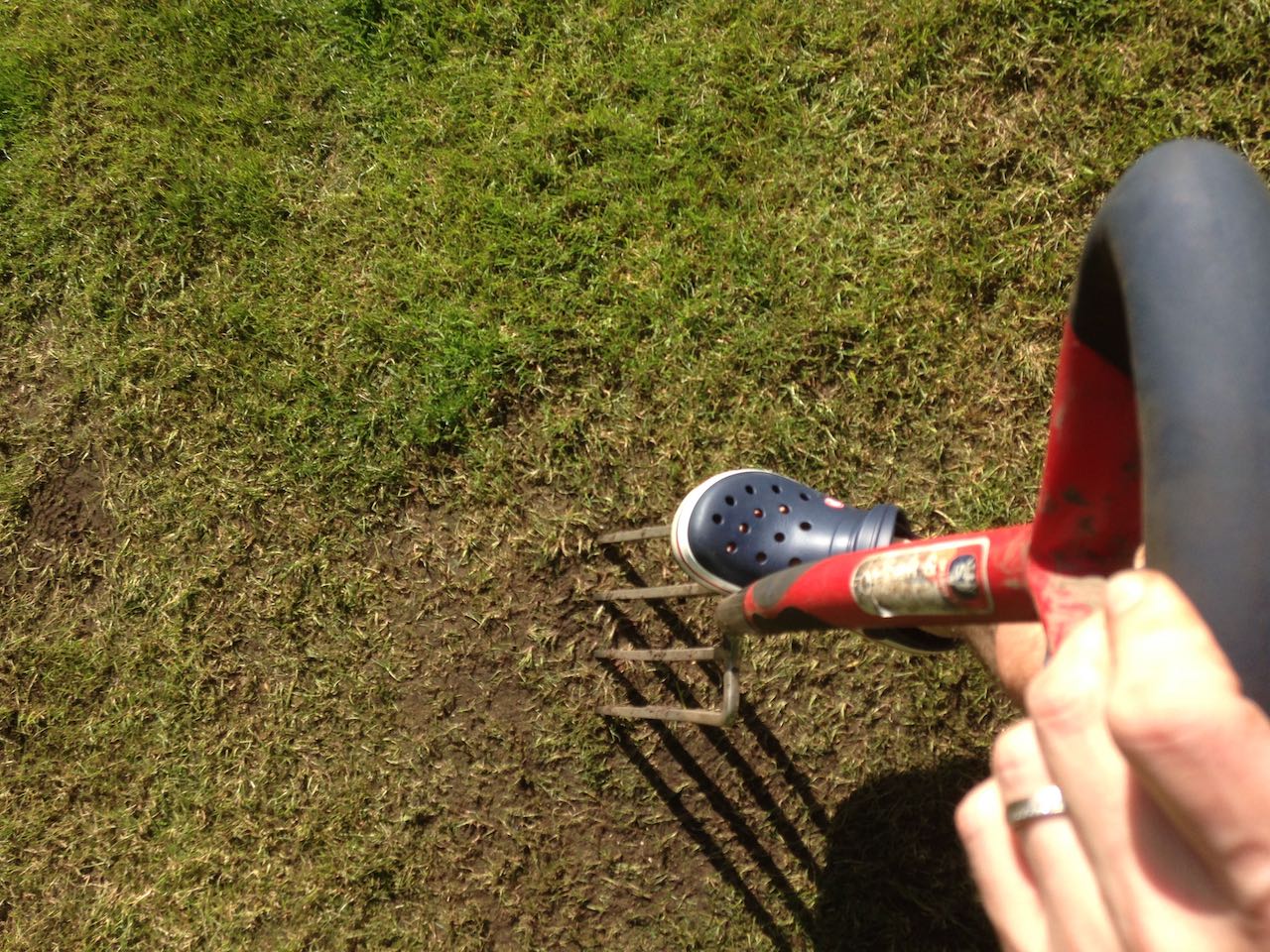
🛒 Find hollow tine aerators on Amazon UK
6. Lawn pests: leatherjackets and chafer grubs
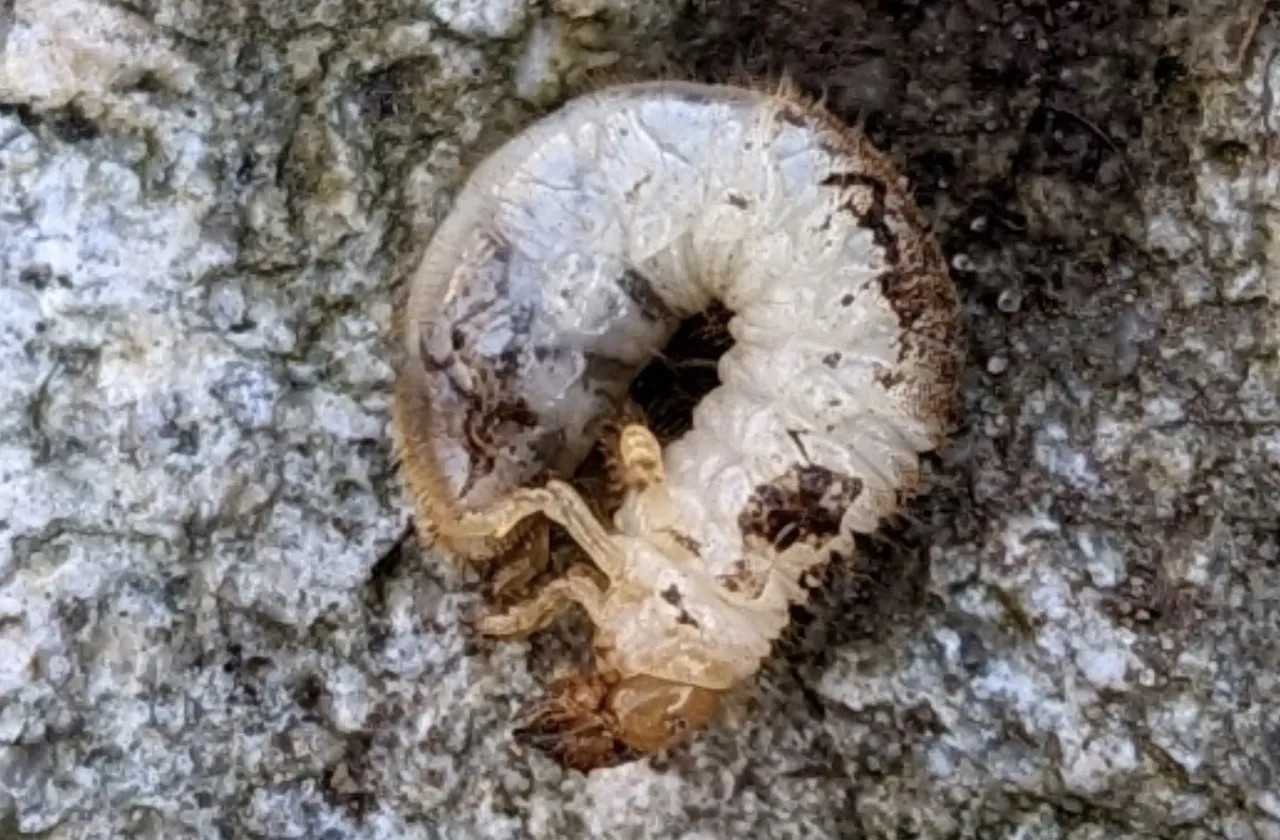
If your lawn has developed irregular dead patches that lift away from the surface with very little root attached, and you are seeing increased crow, magpie, starling, or fox activity probing the ground, you almost certainly have a lawn pest problem. In the UK, the two main culprits are leatherjackets (the larvae of crane flies, also known as daddy longlegs) and chafer grubs (the larvae of various chafer beetles). Both feed on grass roots, severing them from the soil and causing the turf above to die.
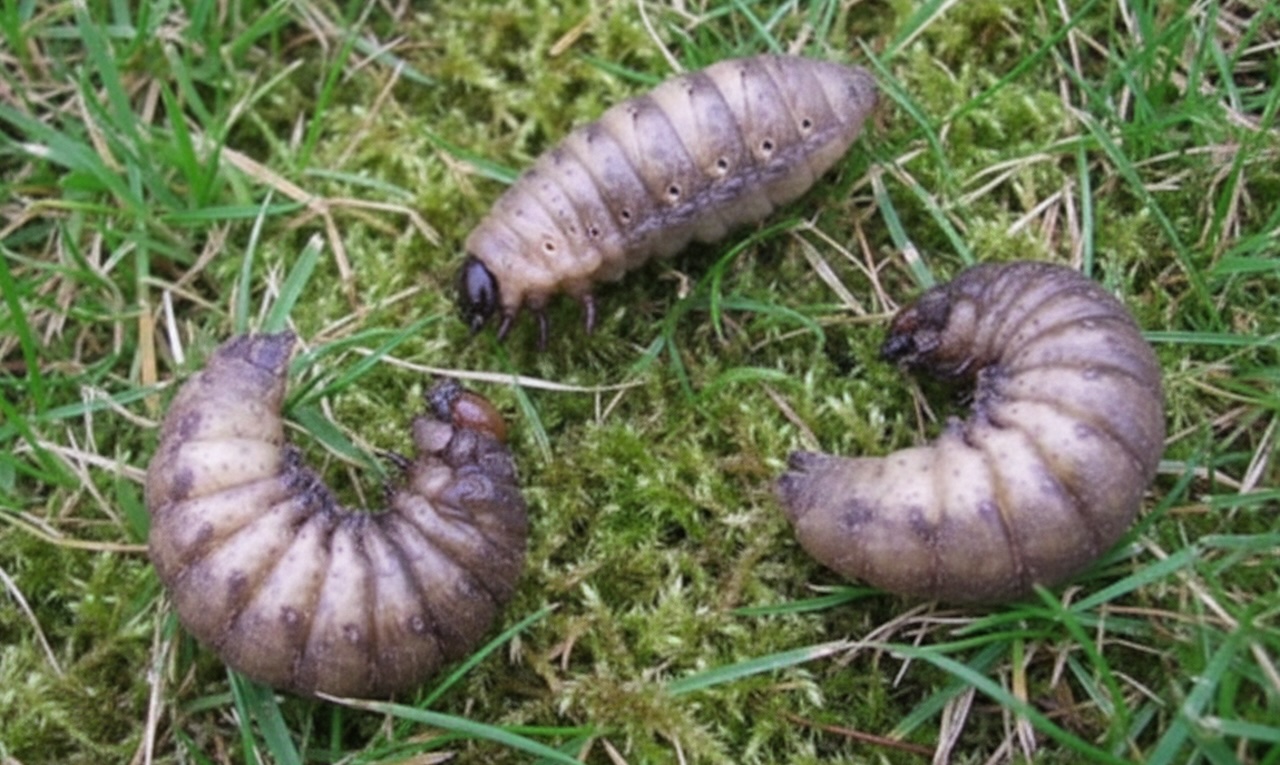
To confirm, peel back a patch of affected turf in the morning. Leatherjackets are grey-brown, legless, and roughly 3 to 4 centimetres long. Chafer grubs are white or cream with an orange-brown head and a distinctive C-shaped body. Finding more than five or six per square metre in a small test area indicates a population high enough to cause significant damage.
Biological control using nematodes is the most effective and environmentally sound treatment available to UK home gardeners. Steinernema feltiae nematodes target leatherjackets, while Heterorhabditis bacteriophora nematodes target chafer grubs. Both are applied as a soil drench in late summer or early autumn when the larvae are young and the soil temperature is above 12°C. They need moist soil to work effectively, so water the lawn thoroughly before and after application. Chemical treatments for these pests are no longer available to home gardeners in the UK following the withdrawal of chlorpyrifos.
After treating, aerate and overseed any damaged areas. The grass will not recover on its own in areas where the roots have been destroyed and the soil exposed. Overseed in September for the best germination results.
🛒 Find leatherjacket nematodes on Amazon UK
🛒 Find chafer grub nematodes on Amazon UK
7. Shade from trees and buildings
Grass needs light. Most standard UK lawn seed mixes are bred for reasonably open conditions and struggle considerably in dense shade. If sections of your lawn are consistently yellower under a tree canopy, beside a high fence, or in the shadow of an extension, shade is likely the cause rather than any treatable soil problem.
The honest answer to a very shaded lawn is to manage expectations. No lawn grass thrives in deep shade, and pretending otherwise by repeatedly overseeding a standard seed mix and watching it fail season after season helps nobody. For partial shade, switching to a shade-tolerant lawn seed mix with a high proportion of fine fescue or creeping red fescue can make a meaningful difference. These varieties need less light than rye-dominated mixes and cope better with damp, lower-light conditions common under trees.
💡 Top Tip
For badly shaded sections under mature trees, consider whether replacing the lawn with groundcover planting might be a more sensible long-term solution. Epimedium, ajuga, pachysandra, and vinca all grow happily in dry shade under trees and need very little maintenance once established. The lawn looks better because you are not fighting nature, and you get a genuinely attractive planting instead of a perpetually struggling yellow patch.
For trees with crown lifts (removing the lower branches), this is a job worth doing professionally to get right. Removing the right branches increases light transmission significantly without compromising the tree’s structure or health. In many cases, a modest crown lift transforms a deeply shaded lawn area into one that can sustain reasonable grass growth.
🛒 Find shade-tolerant lawn seed on Amazon UK
8. Lawn disease
UK lawn diseases are less common than many gardening articles suggest, but they do occur and are worth knowing about. The two most frequently seen in UK domestic gardens are red thread and fusarium patch (also known as snow mould).
Red thread appears as pinkish-red patches in the lawn during humid summer weather, often after a warm, wet spell. Look closely, and you will see the distinctive pink thread-like fungal strands on the grass blades. It is disfiguring but rarely kills grass permanently. The underlying cause is almost always low nitrogen levels, so a spring feed prevents reoccurrence far better than fungicides. Fusarium appears in autumn or after snow as roughly circular patches with a white cotton-wool-like mould at the edges. It tends to appear on over-fed, over-lush lawns heading into winter, which is why autumn feeds should always be low in nitrogen.
The key principle with lawn disease is that a healthy, well-fed lawn maintained at the correct mowing height rarely suffers significantly. If you are seeing repeated disease problems, look at the overall management of the lawn first, rather than reaching for fungicides. Cutting too short, over-feeding with nitrogen, poor aeration, and excess thatch create the conditions that diseases need to thrive.
9. Scalping and mowing damage
Mowing too short is one of the most common and entirely self-inflicted causes of yellow or straw-coloured patches. Cutting grass too short removes the green leafy tissue the plant needs to photosynthesise, leaving yellow stems. This is called scalping, and it is especially damaging on uneven lawns where the mower tip-cuts on high spots. The result is characteristic yellowing that follows the mowing lines or concentrates on raised areas.
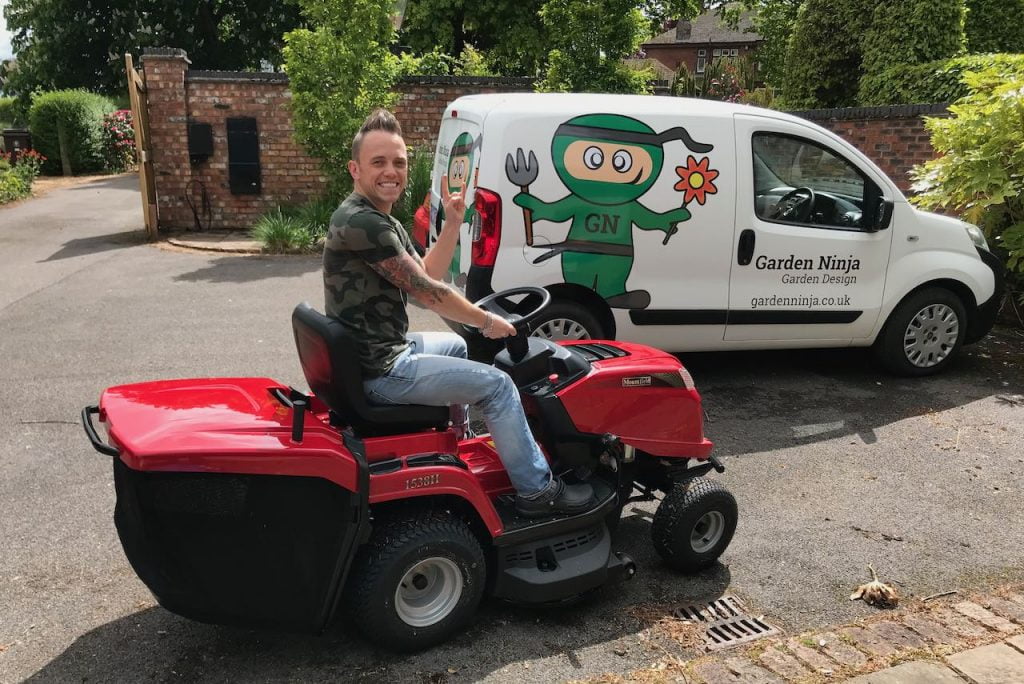
The solution is straightforward: raise the cutting height. For a standard UK domestic lawn, 25 to 40 millimetres (approximately the height of a pound coin to an inch and a half) is the right range for most of the year. Only ornamental, fine-turf lawns benefit from being cut shorter, and only under perfect growing conditions. Raise the height, mow little and often rather than cutting long grass down hard all at once, and the yellowing resolves itself as the grass recovers. Avoid cutting grass short at the end of the growing season heading into winter, as shorter grass is more vulnerable to frost damage and moss establishment.
10. The full lawn recovery plan: scarify, aerate, overseed, feed
For a lawn that has become genuinely tired, with a combination of yellowing, patchiness, moss, and compaction, a single targeted fix is rarely enough. The most effective approach is to carry out a full renovation in September or early October, when the soil is still warm enough for seed germination but weed competition is reducing, and the grass can recover before winter. This is what I recommend to clients and what I do in my own garden.
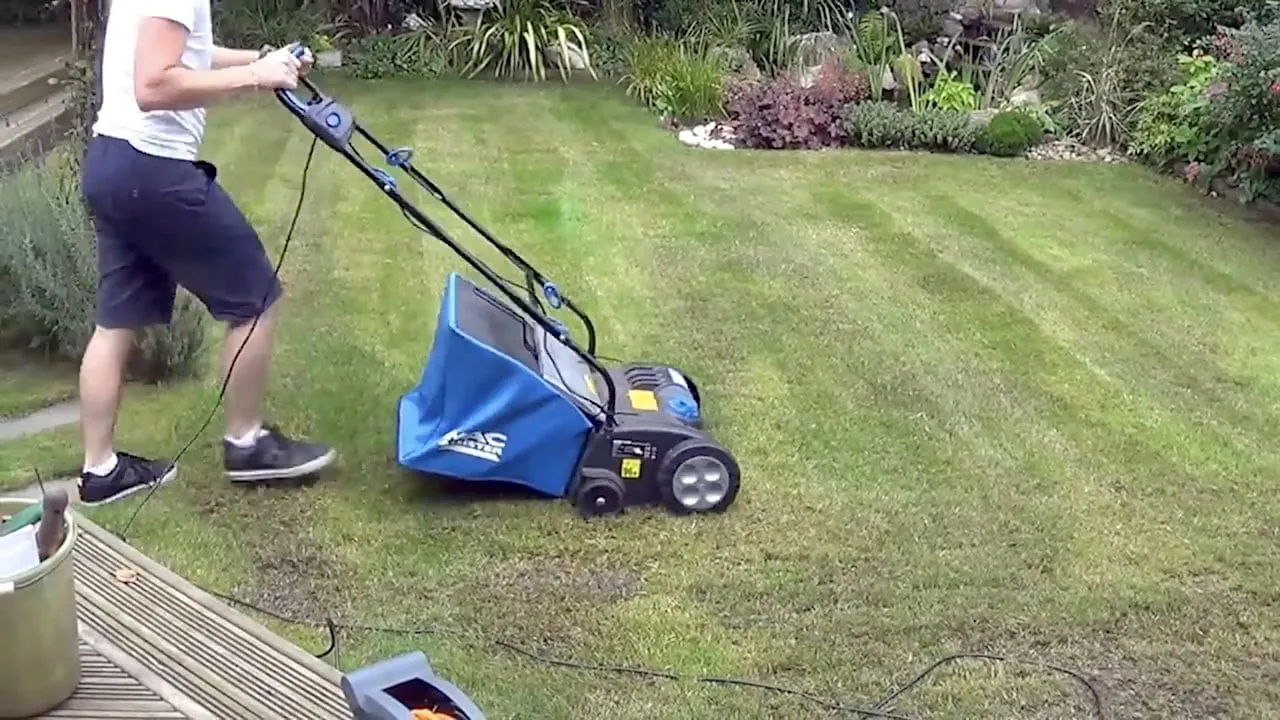
The sequence matters. Scarify first to remove thatch and moss. Then aerate to relieve compaction. Then overseed into the opened-up surface. Then apply an autumn feed. Then water everything in thoroughly. Doing all four in a single afternoon in September is the most efficient approach and gives you the full benefit of the autumn growing season to establish the new grass before the first frosts.
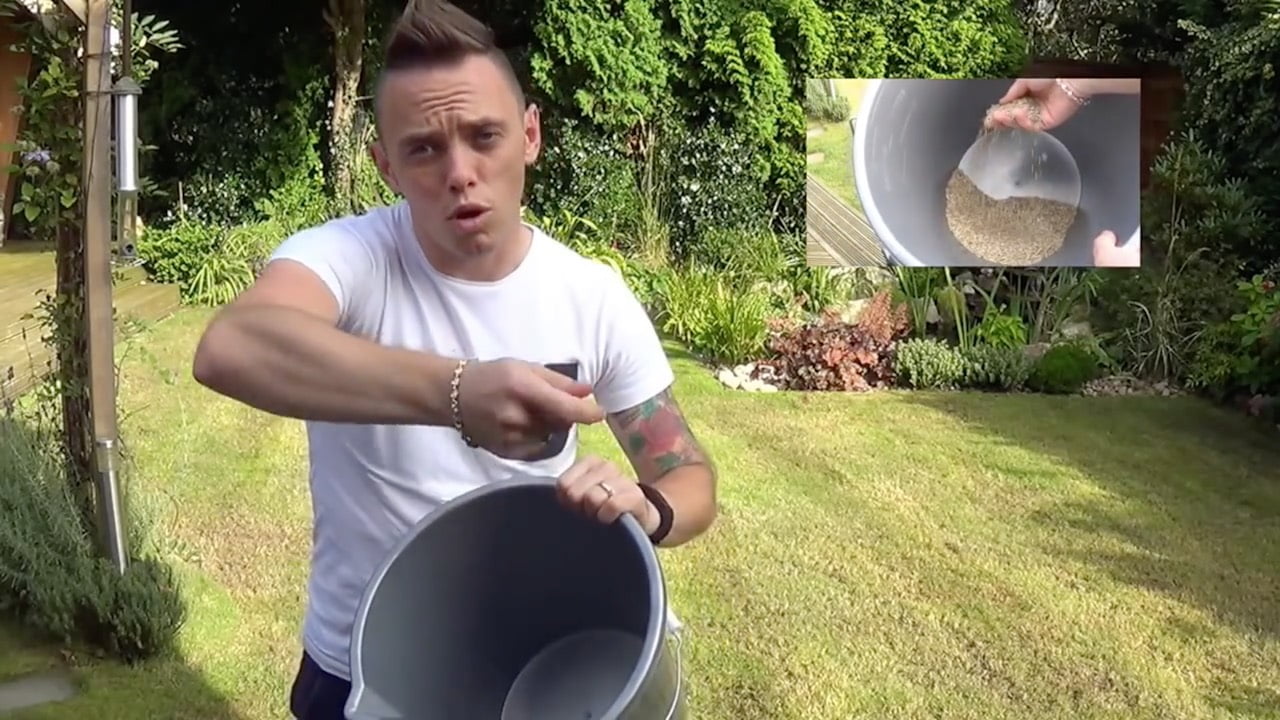
The lawn will look terrible for two to three weeks after scarification. Please do not panic. This is entirely normal. You have removed years of accumulated thatch and moss, and the grass will look thin and rough until the new seed germinates and the existing grass sends out new lateral shoots to fill the gaps. By six weeks after treatment, it should be visibly better. By the following spring, it should be transformed.
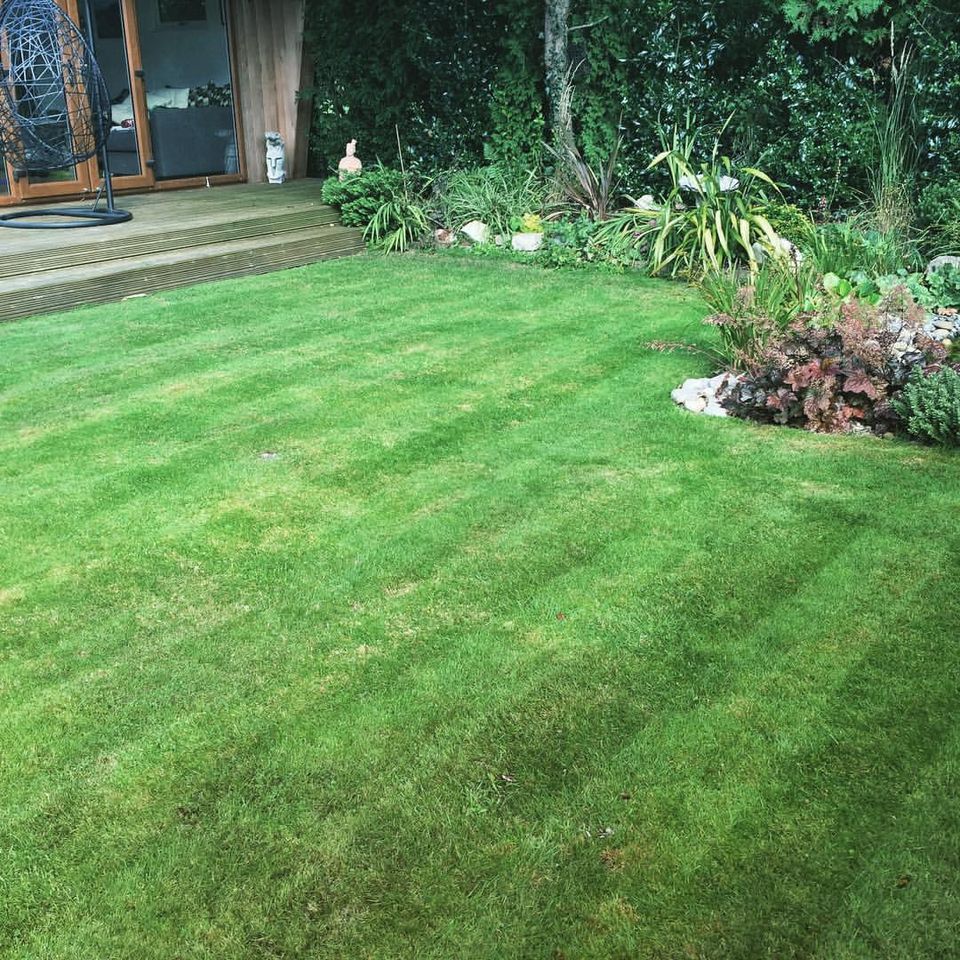
For detailed step-by-step guidance on each stage of the renovation process, I have dedicated guides that go into full depth: my scarifying guide, my aeration guide, and my overseeding guide. The month-by-month lawn planner tells you exactly what to do and when for the rest of the year.
🛒 Find lawn repair seed mixes on Amazon UK
🛒 Find autumn lawn feeds on Amazon UK
Frequently asked questions
Will my yellow lawn recover on its own?
It depends entirely on the cause. Drought-yellowed grass almost always recovers on its own once rain returns. Dog urine burn, pest damage, and severe moss problems require intervention. Pale, nutrient-deficient grass will not green up significantly without feeding. Use the diagnosis table above to identify the cause first.
How long does it take for a yellow lawn to turn green again?
Most treated lawns show visible improvement within two to four weeks and significant recovery within six weeks. Drought recovery after rain can happen within days. Overseeded patches take seven to fourteen days to germinate and another three to four weeks to fill in. A full renovation in September will show dramatic results by November and excellent results the following spring.
Should I water my yellow lawn?
For an established lawn going yellow in a summer heatwave, no. Let it go dormant and recover naturally. Intensively watering to keep it green during a drought is wasteful and creates shallow roots that make the problem worse. For new lawns, recently overseeded areas, and lawns on very sandy soil, yes, water deeply and infrequently early in the morning.
What is the best feed for a yellow lawn?
In spring and summer, a high-nitrogen granular or liquid feed applied with a spreader for even coverage. In autumn, a low-nitrogen, high-potassium feed hardens the grass rather than pushing soft growth. Liquid seaweed is a gentle organic option year-round that avoids the risk of scorching associated with synthetic granular feeds applied in dry conditions.
Is yellow lawn grass dead?
In most cases, no. Yellow grass is usually dormant or stressed rather than dead. Grass that has gone entirely brown and feels dry and crispy is dormant from drought and will recover. Grass that has gone yellow from disease, pests, or compaction may have some dead areas, but the surrounding turf will fill in once conditions are corrected. Grass is rarely as dead as it looks, which is one of the most encouraging things about lawn care.
When is the best time to renovate a yellow or patchy lawn?
September is the single best month for a full lawn renovation in the UK. The soil is warm enough for grass seed to germinate quickly, rainfall typically increases after summer, weed competition decreases, and the grass has enough of a growing season ahead to establish well before winter. Spring is the second-best window, from late March through April, when soil temperatures reliably reach 8°C or above. Avoid renovation work in summer heat or winter dormancy.
How do I stop my lawn going yellow every summer?
Carry out a full September renovation each year: scarify, aerate, overseed, and autumn feed. Apply a spring feed in March or April. Mow at the correct height (25 to 40mm) throughout the season. Water only new seed or new turf, not established lawns. Address moss and compaction before they become severe. These five habits, done consistently, produce a lawn that handles the UK’s variable summers reliably well without constant intervention.
Summary
A yellow or patchy lawn is almost never as bad as it looks. The key is to diagnose the cause before you treat it. Drought yellowing sorts itself out. Dog urine needs dilution and overseeding. Nutrient deficiency needs a seasonal feed. Moss needs scarification, aeration, and improved growing conditions. Pests need nematodes. Shade needs a rethink of what you plant. And a tired, multi-problem lawn needs a single determined September renovation to set it right. Do that once properly, and you will be amazed at what comes back.
For the full depth on each stage of the process, visit my scarifying guide, aeration guide, overseeding guide, and month-by-month lawn planner.
Happy Gardening Ninjas!




Lee Burkhill
Lee Burkhill, known as the Garden Ninja, is an award-winning garden designer and horticulturist with over 30 years of gardening experience and 15 years as a professional garden designer. A qualified RHS (Royal Horticultural Society) professional, Lee specialises in sustainable garden design and practical horticultural advice. He designs and presents on BBC1’s Garden Rescue and in leading gardening publications. Lee combines three decades of hands-on gardening knowledge with professional design qualifications to help gardeners create beautiful, functional outdoor spaces.
View all posts by Lee Burkhill






Other posts
-

Start here: to begin your gardening journey! Read more
-

Sloped Garden Design: Terracing, Steps, and How to Design on a Gradient Read more
-
Plastic Plant Pots; is there a viable alternative? Read more
-
How and When to Lift and Move Established Shrubs or Plants Read more
-
How to make an easy compost bin from wooden pallets Read more
-
Garden Design Templates: Review of Free Garden Plans & Custom Design Read more