Star Jasmine Overgrown? When and How to Prune for Best Results
Lee Burkhill: Award Winning Designer & BBC 1's Garden Rescue Presenters Official Blog
Beginner level
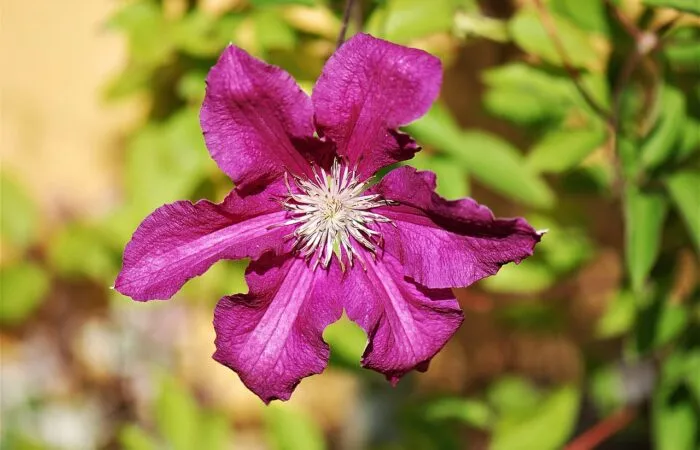
Star Jasmin, Trachleosperumum jasminoides or evergreen Jasmin as it is also known, is a fabulous low-fuss green all-year-round climber. No wonder it's so popular for new gardeners and TV garden makeover shows! However, this low-maintenance climber isn’t entirely maintenance-free. This guide shows when to prune them and where to site them so they flower each summer, along with alternative climbing plants.
Quick Answer: Pruning Overgrown Star Jasmine
Prune star jasmine (Trachelospermum jasminoides) immediately after flowering finishes in late summer (August-September). Cut back overgrown stems by up to two-thirds, removing old woody growth to encourage fresh flowering shoots.
Star jasmine flowers on the previous year’s growth, so avoid spring pruning, which removes flower buds. Established plants tolerate hard renovation pruning in late winter (February) if severely overgrown, though this sacrifices the current year’s flowers. Feed with general-purpose fertiliser after pruning and mulch to encourage vigorous regrowth.
Understanding Star Jasmine Growth Habits
Star jasmine has become increasingly popular in British gardens over the past two decades. After fielding hundreds of questions about it on my Garden Ninja forum, I can tell you that its vigorous growth catches most gardeners by surprise, and that it adds greenery even in the coldest, darkest winter months to walls and fences!
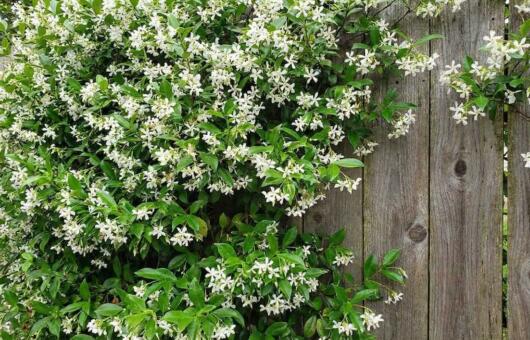
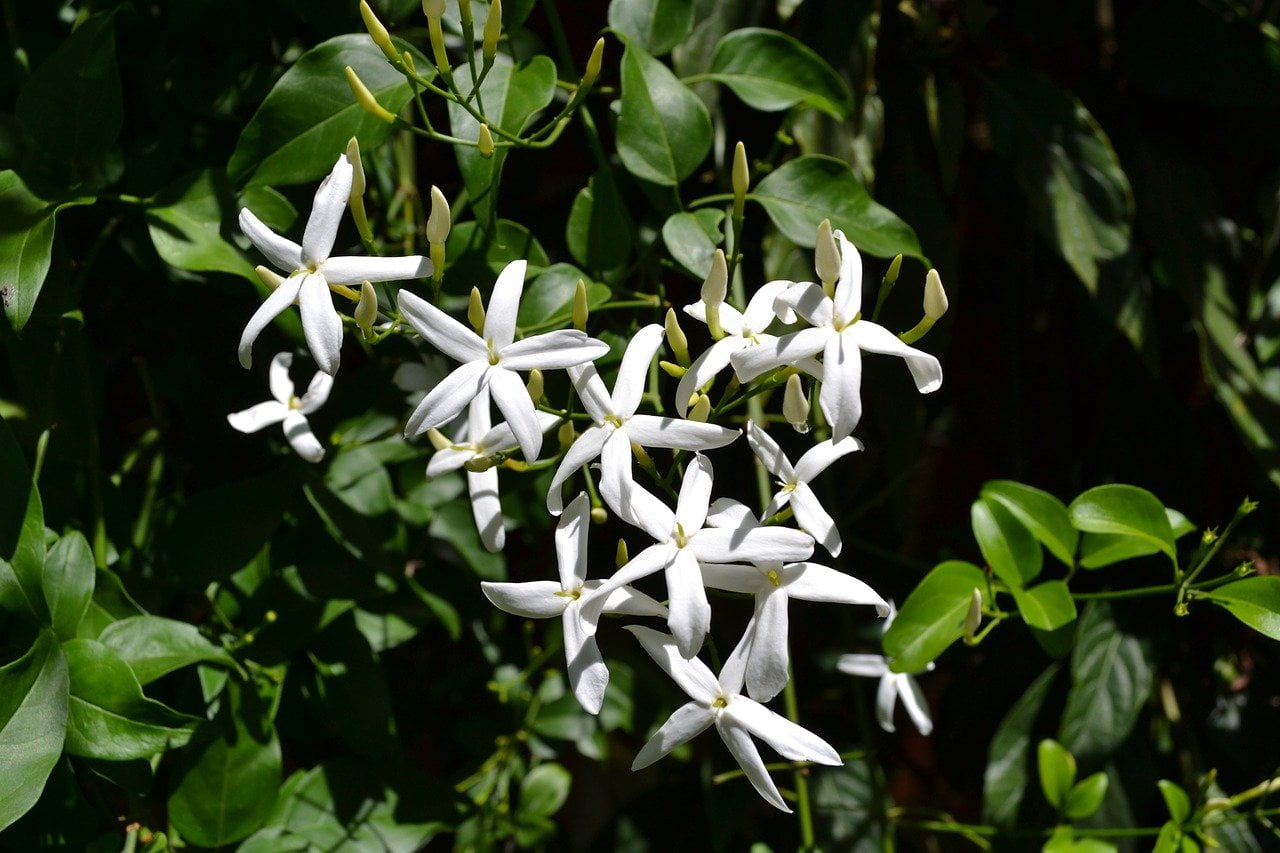
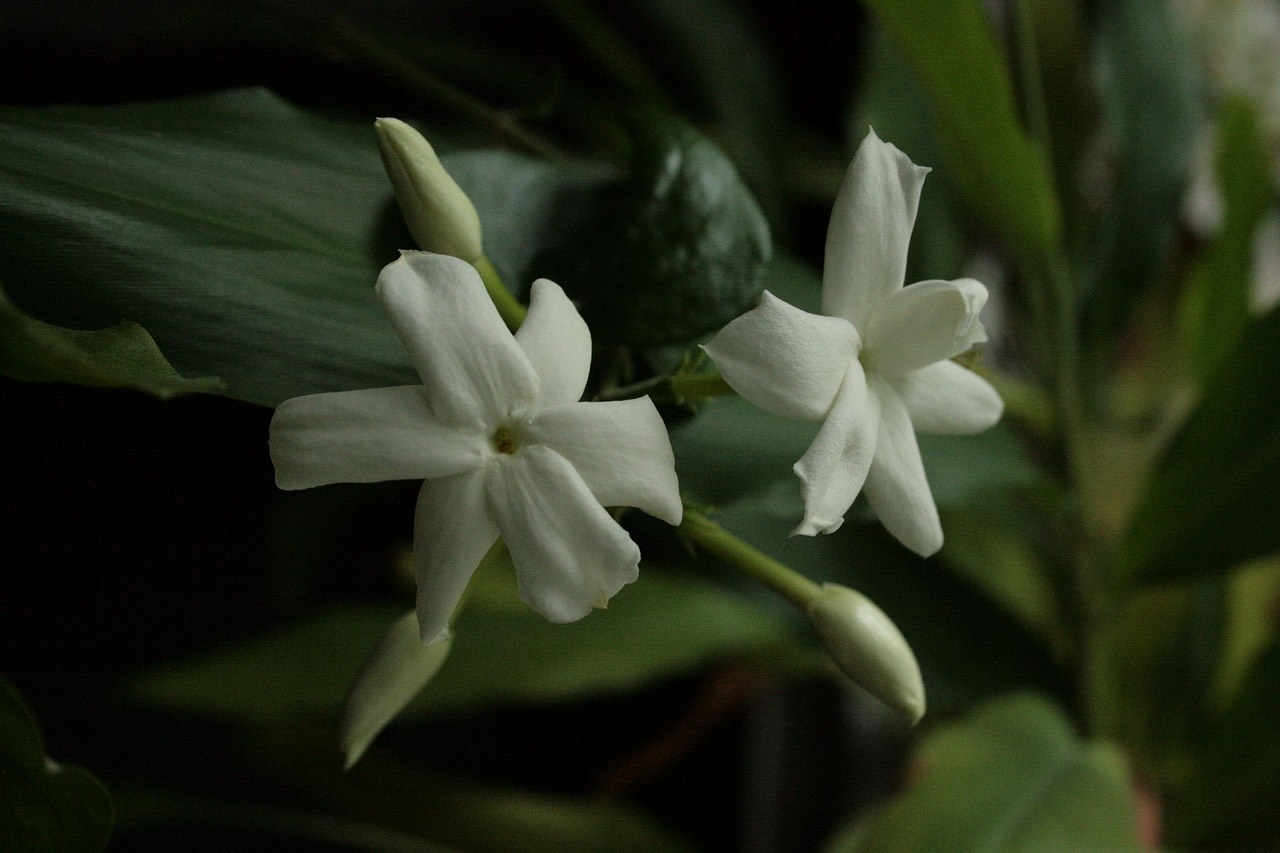
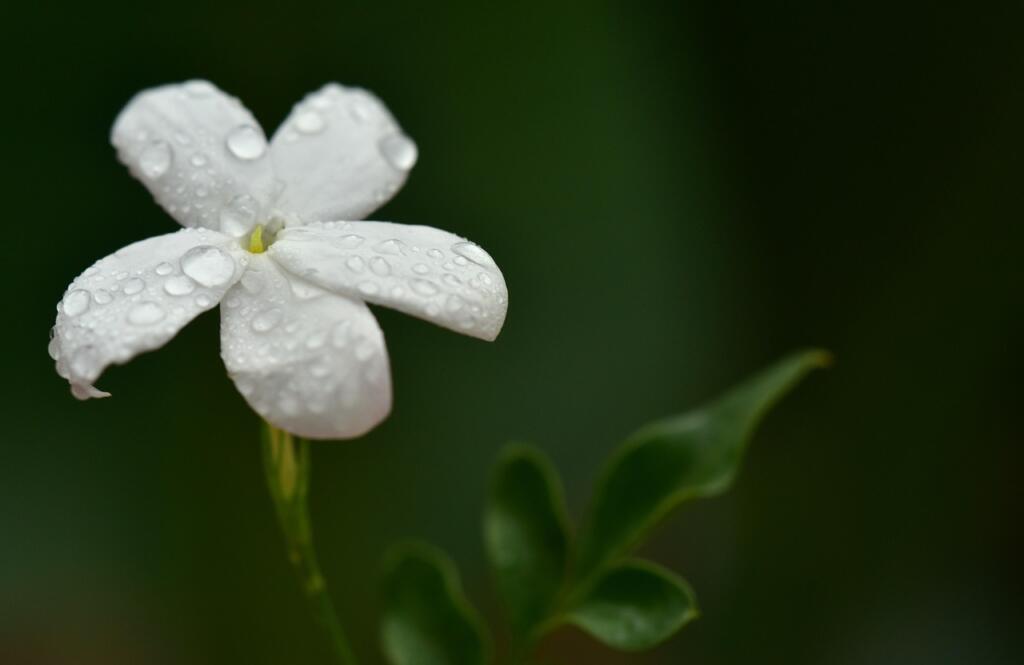
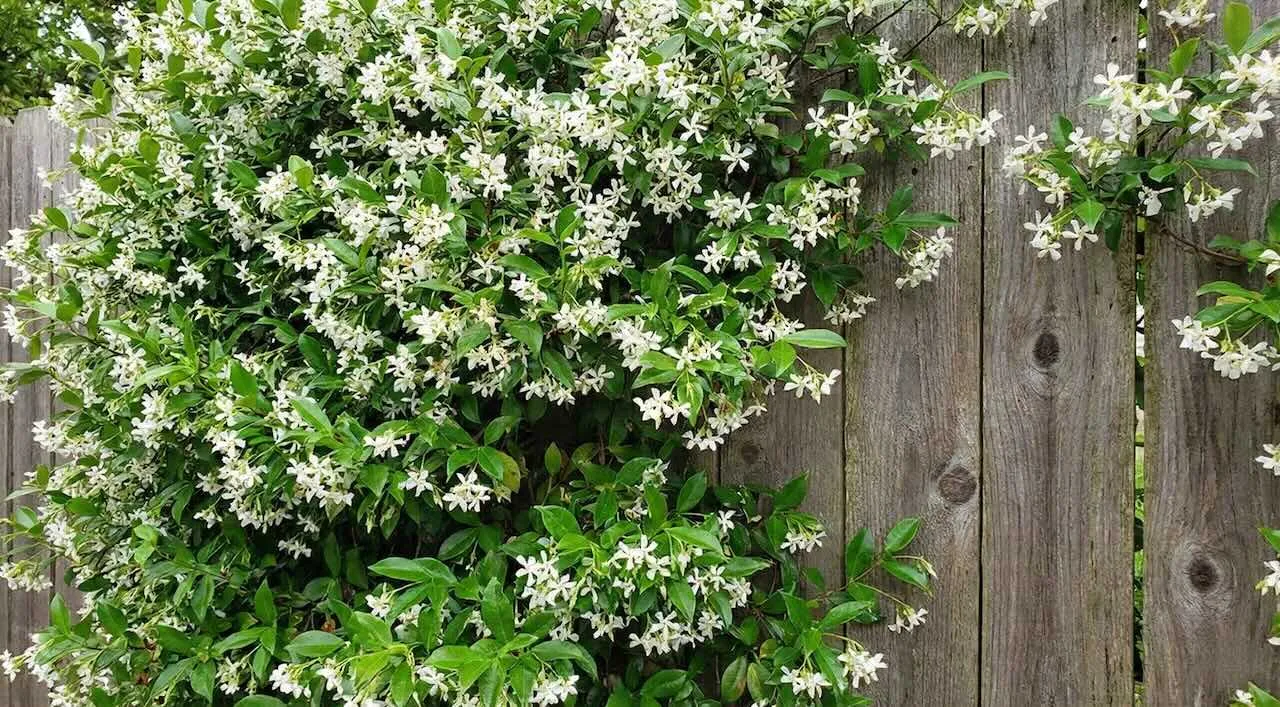
This evergreen climber produces those delightfully scented white flowers that make it so popular. Still, the exuberant growth that comes with it often transforms a neat plant into an overwhelming tangle within just a few growing seasons.
The fundamental thing to understand about star jasmine is that it’s a true climber, not a shrub. Left to its own devices, star jasmine will scramble up and over anything it can reach, producing trailing stems several metres long that layer themselves upon each other, creating patchy, sometimes messy masses og growth.
This vigorous growth is actually a sign of a happy, healthy plant, but it requires regular intervention to keep it within bounds and to encourage prolific flowering. With all climbers, pruning focuses energy on flowering rather than just green, leafy growth. Wisteria is a prime example of why pruning is essential for climbers.
The confusion many gardeners face stems from conflicting pruning advice. Some sources suggest treating star jasmine like other jasmines with gentle tidying, whilst others recommend hard annual cutting back. The reality is that star jasmine flowers on wood produced the previous year, which means timing your pruning correctly becomes absolutely critical for maintaining flowers whilst controlling size. Get the timing wrong, and you’ll sacrifice an entire season’s flowering display.
The British climate poses an interesting challenge for star jasmine. It’s reasonably hardy (surviving temperatures down to about -5°C once established), but it’s not truly hardy for all UK regions, particularly in harsh winters. This means pruning must be timed to avoid encouraging soft new growth that might be damaged by late frosts, whilst also working within the flowering cycle to preserve blooms.
Why Star Jasmine Becomes Overgrown
The primary reason star jasmine becomes problematic is that gardeners don’t establish control early enough. In the first year or two after planting, star jasmine seems relatively tame, producing moderate growth that requires little intervention. But once the root system establishes properly (usually by year 3), growth accelerates dramatically.
If you haven’t trained the plant and established a pruning routine by this point, you’ll suddenly find yourself with meters of uncontrolled stems all seemingly appearing overnight.
The plant’s natural growth habit compounds this issue. Star jasmine produces long, trailing stems from a woody base, and these stems grow rapidly during the growing season, easily putting on 2-3 metres of growth between April and October in favourable conditions. These stems twist around themselves and any available support, creating increasingly tangled masses that become progressively harder to manage the longer they’re left.
Layering Creates Dense Mats
Star jasmine has an annoying (from a management perspective) habit of self-layering. Where stems touch soil or remain in constant contact with damp surfaces, they produce roots and establish new growth points. This means an overgrown star jasmine isn’t just one plant anymore—it’s potentially dozens of rooted layers all competing for space and light.
This layering characteristic makes star Jasmine excellent ground cover, but it’s disastrous if you’re trying to maintain a neat climber. The lower stems root into the ground, produce vigorous upright shoots, and suddenly you have what looks like a 2-metre-wide shrub where you intended a neat climber against a fence.
Inadequate Support Structures
Many gardeners underestimate the support star jasmine requires. It’s not self-clinging like ivy, so it needs a trellis or wires to climb. When inadequate support is provided, the plant piles on itself, creating the chaotic tangles that prompt desperate forum questions. The weight of mature star jasmine growth is also substantial—flimsy trellis panels collapse under the burden, creating a domino effect where the entire plant ends up as a heap on the ground.
Optimal Pruning Timing for Flowering Success
Let me explain when you should summer-prune star jasmine and when a more aggressive pruning approach in winter may be needed.
Late Summer: The Standard Pruning Window (August-September)
This represents the ideal timing for routine star jasmine pruning in most UK regions. The plant has finished flowering (flowers typically fade by late July or early August), but there’s still sufficient warm weather left for it to produce the strong new growth that will carry next year’s flowers. The key principle is that you’re removing the stems that have just flowered whilst encouraging the plant to produce the replacement stems that will flower next year.
Working in late August through September gives new growth time to ripen and harden before winter arrives, reducing the risk of frost damage. This hardening period is essential—soft, sappy growth produced too late in the season gets caught by autumn frosts and dies back, defeating the purpose of pruning. In northern gardens or exposed locations, prune in early August rather than waiting until September to ensure adequate hardening time.
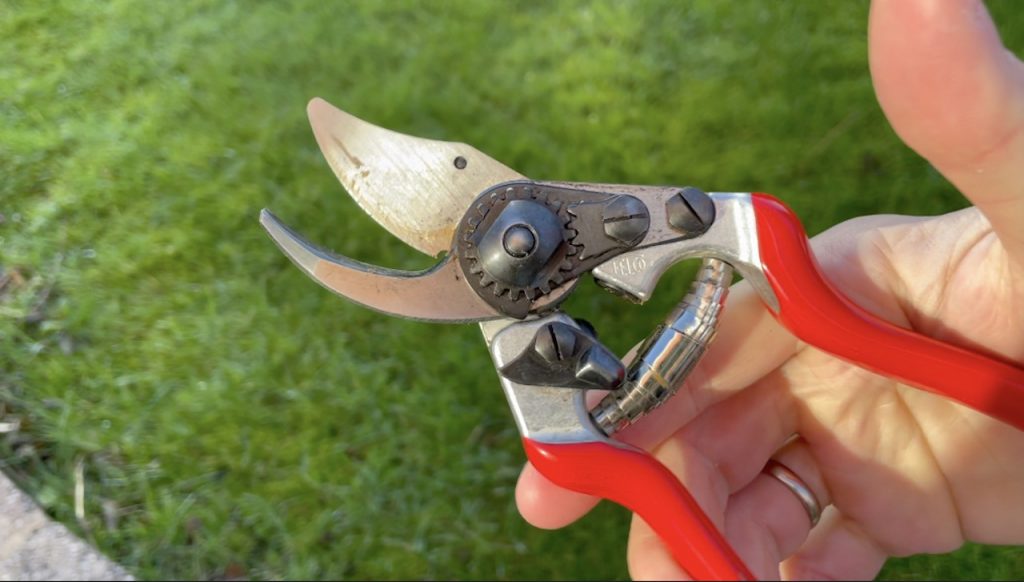
The practical advantage of late summer pruning is that you can clearly see which stems have flowered (they have spent flower clusters at their tips) and which are newer stems (they lack flowers but have fresh green growth). This makes selective pruning much easier than working during winter, when all stems look similar. Always make sure you use clean, sharp, quality secateurs to make the job easier, like my Felco snips, which make light work of Jasmine pruning!
Late Winter: Renovation Pruning for Severe Problems (February)
When star jasmine has become so overgrown that routine pruning won’t suffice, late winter renovation pruning offers a solution. However, it comes with the trade-off of sacrificing the current year’s flowers. If your star jasmine resembles a chaotic bird’s nest more than a plant, late winter hard pruning represents your best option, accepting that you won’t see flowers until the following year.
February timing takes advantage of the dormant period whilst avoiding the worst of winter weather. The plant isn’t actively growing, so it won’t immediately respond with soft, frost-vulnerable shoots. But it’s late enough that severe cold is unlikely (though never guaranteed in British weather), and the approaching growing season means recovery happens quickly once warm weather arrives.
This hard pruning involves cutting the entire plant back severely, sometimes to within 30-60cm of the base. It looks brutal, but star jasmine responds remarkably well, producing vigorous new growth from old wood and completely regenerating within one or two growing seasons. The trade-off is that this new growth won’t flower until its second year, as it needs to mature first.
When NOT to prune Jasmine
Never prune star jasmine in spring (March-May), particularly once new growth has begun. This timing removes exactly the wood that will flower this year, sacrificing the entire season’s display. I see this mistake constantly—enthusiastic gardeners emerging in spring, seeing overgrown star jasmine, and immediately attacking it with secateurs, then wondering why they get no flowers despite having healthy growth.
Similarly, avoid autumn pruning (October-November). This timing encourages late growth that doesn’t have time to harden before winter frosts arrive. The soft growth produced is damaged by cold weather, leading to dieback and potentially allowing disease entry through frost-damaged tissues.
The Star Jasmine Pruning Process
Stand back and really look at your star jasmine before making any cuts. Identify the main framework stems—these are the oldest, thickest woody stems that form the structural bones of the plant. These framework stems should generally be retained unless they’re dead, diseased, or growing in completely wrong directions that make training impossible.
Distinguish between flowered stems (older growth from last year that has produced this year’s flowers) and current season’s growth (fresh green stems without flowers that will flower next year). This identification guides your cutting decisions. You’re primarily removing the flowered stems and thinning congested growth whilst preserving the fresh growth that will carry next year’s display.
Look for dead or diseased wood; it should always be removed, regardless of timing. Star jasmine occasionally suffers from dieback or frost damage, particularly in harsh winters or exposed locations. This dead material won’t recover and clogs the plant, impeding air circulation and harbouring potential disease problems.
Systematic Cutting Technique
Begin with the Three Ds—Dead, Diseased, and Damaged wood. Remove these completely to promote healthy growth or to the main framework. Clean your secateurs between cuts when dealing with diseased material to avoid spreading problems.
Remove flowered stems next. Cut these back to a point where you can see strong new growth emerging. Typically, this means removing the flowered portion plus perhaps another 20-30cm below the flowers, back to where vigorous shoots have developed. These vigorous shoots become next year’s flowering stems.
Thin congested areas by selectively removing entire stems rather than just shortening everything. Star jasmine quickly becomes a tangled mass, with dozens of stems occupying the same space. Thinning creates space and light for the remaining stems to develop properly. Remove the weakest, most congested stems completely, cutting them right back to their origin point on the main framework.
Directional pruning guides growth where you want it. When cutting back to a side shoot, choose shoots pointing in the direction you want growth to continue. If you want horizontal growth along a fence top, cut back to horizontally oriented shoots. For upward growth, choose upward-pointing shoots.
Renovation Pruning for Completely Overgrown Plants
When faced with severely overgrown star jasmine that has escaped all control, more drastic action becomes necessary. This hard renovation pruning can be done in late winter (February), accepting the loss of the current year’s flowers, or spread over two years if maintaining some floweringis importants.
For a complete renovation, cut the entire plant back to 30-60cm from the base, removing all tangled growth above this point. This seems brutal, but star jasmine regenerates remarkably well from old wood. Within one growing season, you’ll have vigorous new growth several meters long. Train and prune this new growth from the start to establish a good structure that won’t become problematic again.
The two-year renovation approach involves hard-pruning half the plant in year one, allowing that section to regenerate whilst the unpruned half continues flowering. In year two, prune the remaining half whilst enjoying flowers on the regenerated first-year growth. This maintains some ornamental value whilst achieving eventual renovation.
Critical After-Pruning Care
Feed pruned star jasmine with a balanced general-purpose fertiliser immediately after cutting. The plant needs nutrients to fuel the strong new growth you’re encouraging. Use a slow-release granular feed or liquid feed applied every two weeks through the main growing season.
Water thoroughly after pruning and continue regular watering through the first growing season after heavy pruning. Established star jasmine is reasonably drought-tolerant, but plants regenerating from hard pruning need consistent moisture to produce the vigorous growth you want.
Mulch around the base with 5cm of organic material such as well-rotted compost or bark chips. This conserves moisture, suppresses weeds, and gradually releases nutrients as it decomposes. Keep mulch away from the stem base to prevent rot.
Training Star Jasmine for Long-Term Control
The absolutely best way to prevent star Jasmine from becoming overgrown is to establish good structure from the beginning. Let me give you my tried-and-tested method for wall training a Jasmine the easy way, Ninjas!
1) Establishing Structure Early
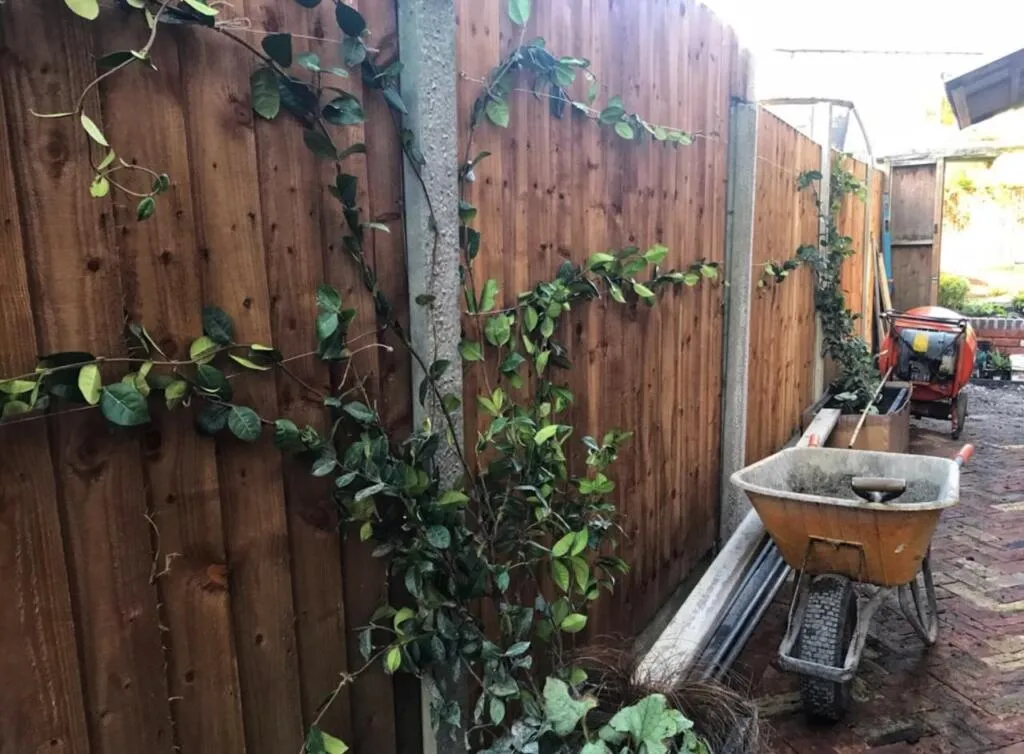
In the first 2-3 years after planting, focus on creating a framework of main stems spaced 30-40cm apart that evenly cover your support structure. Tie these framework stems securely to your trellis or wires, spreading them horizontally rather than allowing them to grow purely upward.
Remove or shorten any growth that doesn’t contribute to this framework structure. This early intervention establishes control before the plant’s vigour overwhelms your efforts. Once a good framework exists, annual pruning maintains it relatively easily, preventing the complete renovation that becomes necessary when early control is neglected.
2) Creating Horizontal Layers
For star jasmine trained against walls or fences, creating distinct horizontal layers produces both better coverage and easier long-term management. Then, train the main stems horizontally at 40-50cm intervals up the support structure. Allow flowering shoots to develop from these horizontal main stems, creating a herringbone pattern.
This structure makes annual pruning straightforward—you remove flowered shoots growing from the permanent horizontal framework, maintaining the overall structure year after year. It also improves flowering because horizontal training encourages more flowering shoots to develop along the entire length of the stem rather than just at the tips.
3) Container Growing Requirements
Star jasmine in containers requires more frequent pruning than ground-planted specimens because the restricted root system cannot support the same vigorous growth. Prune container plants more heavily, cutting back by up to two-thirds after flowering. The restricted root zone means growth remains more manageable, but it also means the plant needs regular feeding and consistent watering to perform well.
Common Star Jasmine Problems Beyond Overgrowth
Failure to Flower After Pruning
If your star jasmine produces healthy growth but no flowers following pruning, the most likely cause is pruning at the wrong time. Spring pruning removes the growth that would have flowered that summer. The solution is simply waiting—the growth produced this year will flower next year if you don’t prune it off.
Occasionally, excessively hard annual pruning creates the same problem. If you’re removing all growth every year, you never allow the mature wood to develop that carries flowers. Adjust your technique to preserve some previous season’s growth whilst controlling overall size.
Leaves Turning Yellow or Dropping
Star jasmine showing yellowing leaves typically indicates nutrient deficiency (most commonly nitrogen) or, in container plants, potbound roots. For ground-planted specimens, apply a balanced fertiliser in spring and maintain a mulch layer that gradually releases nutrients. Container plants need annual repotting into fresh compost or more frequent feeding if repotting isn’t practical.
Winter yellowing and leaf drop are normal for star jasmine in colder regions of the UK. The plant is evergreen but may shed some older leaves, particularly after harsh winters or in exposed locations. This isn’t a problem unless the plant looks genuinely unhealthy overall.
Dieback After Hard Winters
Star jasmine sits right on the edge of hardiness for many UK gardens. Temperatures below -°C can cause significant didiebackparticularly on young or exposed plants. Frost-damaged growth turns brown and dies, often not becoming apparent until spring when new growth should emerge but doesn’t.
Prune out dead growth back to healthy wood in late spring (May) once you’re confident about what has genuinely died. Star jasmine often produces new growth from seemingly dead stems, so patience before pruning prevents removing shoots that might have recovered.
Pest Problems
Star jasmine generally suffers fewfrom pest problems, but occasionally scale insects or aphids colonise stems and foliage. Regular monitoring catches problems early when they’re easily controlled with insecticidal soap or horticultural oil sprays. The dense growth of overgrown star jasmine can harbour pests unnoticed, providing another reason to maintain good structure and airflow through regular pruning.
Frequently Asked Questions
Can I prune star jasmine hard every year?
Not if you want flowers. Annual hard pruning removes all the previous year’s growth that would have flowered this summer. Instead, adopt a selective approach, removing flowered stems whilst preserving the current season’s growth that will flower next year.
My star jasmine hasn’t flowered in years despite healthy growth—why?
Almost certainly because it’s being pruned at the wrong time or too hard, Star jasmine needs to mature for 1 year before flowering. If you’re removing all growth annually or pruning in spring, you prevent flowering even when the plant is healthy.
Can starJasminee grow as ground cover?
Yes, absolutely. Star jasmine makes excellent ground cover, rooting as it spreads and forming dense, weed-suppressing mats. However, it still requires periodic shearing to prevent excessive vertical growth and maintain the mat-like habit. Prune ground cover star jasmine in late summer, removing vertical stems to encourage horizontal spread.
How do I get star jasmine to grow up rather than staying bushy at the base?
Train the strongest stems upward against supports from the very beginning, removing or shortening all side growth for the first 1-2 metres of height. Once you’ve achieved the desired height, allow branching and flowering growth to develop. Without this early training, star jasmine naturally produces bushy growth at the base.
Will star jasmine damage walls or fences?
Star jasmine isn’t self-clinging and doesn’t damage structures like ivy can. It needs support (trellis or wires) to climb. However, the weight of very mature specimens can stress weak fence panels or pull the trellis away from the walls if not adequately secured initially.
Learn Garden Design
Want to take your gardening skills to the next level? I’ve created comprehensive online garden design courses that teach you everything from the fundamentals of design principles to creating planting plans that actually work in real gardens. These aren’t stuffy academic courses but practical, hands-on learning based on my 35 years of gardening experience and professional design work.
My courses break down complex design concepts into manageable, bite-sized lessons that you can work through at your own pace. You’ll learn how to assess your space properly, understand soil conditions, choose plants that thrive rather than survive, and create cohesive designs that look professional. Whether you’re a complete beginner or someone looking to formalise your existing knowledge, there’s a course level to suit your needs.
29
Garden Design Examples for Small Gardens: 30 Design Templates & Planting Plans
Garden Design Examples for Small Gardens: 30 Design Templates & Planting Plans: In this online gardening course, I’ll walk you through 30 fantastic garden designs, explaining the logic behind the layout, the plant choices, and take-home tips for applying them in your own garden.
Weekend Garden Makeover: A Crash Course in Design for Beginners
Learn how to transform and design your own garden with Lee Burkhills crash course in garden design. Over 5 hours Lee will teach you how to design your own dream garden. Featuring practical design examples, planting ideas and video guides. Learn how to design your garden in one weekend!
Garden Design for Beginners: Create Your Dream Garden in Just 4 Weeks
Garden Design for Beginners Online Course: If you want to make the career jump to becoming a garden designer or to learn how to design your own garden, this is the beginner course for you. Join me, Lee Burkhill, an award-winning garden designer, as I train you in the art of beautiful garden design.
Visit gardenninja.co.uk/courses to explore the full range of options, from foundation courses starting at £29 through to comprehensive design programmes. You’ll also get access to our private members’ forum, where you can share your projects, get feedback, and connect with other garden design enthusiasts. It’s the perfect way to turn your gardening passion into genuine design expertise, and I’ll be there to support you every step of the way.
Further Reading from the Garden Ninja Forum
If you’re looking for more advice on Star Jasmine and other climbing plants, these popular forum discussions from the Garden Ninja community might help answer your specific questions:
Star Jasmine Specific Discussions:
Help with a poorly Star Jasmin: dealing with leaf blight, black sooty marks, and red/brown spots on your Star Jasmine leaves, plus organic treatment methods that won’t harm nesting birds.
Star Jasmine is overgrown. When to prune? tackles the question of winter versus spring pruning timing, plus advice on retraining an overgrown climber onto new support structures without killing the plant.
Climbing Jasminehelps explores the differences between common Jasmine (Jasminum officinale) and evergreen Star Jasmine, plus how to rescue a badly pruned deciduous Jasmine.
Climbing Honeysuckle Pruning Advice explains which wood to cut back to when pruning another popular scented climber that shares similar growing habits to Star Jasmine.
Vine eye screws for climbing plants provides practical advice on installing wire support systems for training Star Jasmine and other climbers against fences and walls.
The Garden Ninja forum has thousands of members sharing their experiences with climbers, troubleshooting problems and offering advice based on real gardens across the UK. If you’ve got a specific question about your Star Jasmine that isn’t covered in this guide, head over to the forum where the community and I are always happy to help. Just remember to include photos if you’re asking about plant problems, as seeing what’s actually happening makes it much easier to diagnose issues and suggest solutions.
Final Thoughts on Pruning Star Jasmine
Star Jasmine is genuinely one of the most forgiving climbers you can grow, which makes it perfect for gardeners who might be nervous about wielding the secateurs. The beauty of this plant is that it responds brilliantly to regular pruning, rewarding you with bushier growth and more of those heavenly scented flowers. Whether you’re tackling an overgrown monster that’s been neglected for years or simply giving your plant its annual tidy up, you can prune with confidence knowing that Star Jasmine bounces back stronger than ever.
The key takeaway is timing. Prune after flowering in late summer for shaping and maintenance, but don’t be afraid to tackle renovation pruning in spring if you’ve inherited a complete jungle. I’ve seen these plants recover from the most brutal cutbacks, so trust the process. Remember to work with the plant’s natural climbing habit rather than against it, training those stems where you want them to go and removing what doesn’t serve your design. Within a season or two, you’ll have a beautifully shaped climber that fills your garden with fragrance every summer.
If you’re still feeling uncertain about any aspect of pruning your Star Jasmine, drop a comment below or head over to the Garden Ninja forum, where thousands of other Ninjas and I are always happy to help troubleshoot your specific situation.
You can Tweet, Facebook or Instagram me with your questions or ideas! You can also find me on YouTube, where II’vegot plenty of garden guide vlogs.
Lee Burkhill, known as the Garden Ninja, is an award-winning garden designer and horticulturist with over 30 years of gardening experience and 15 years as a professional garden designer. A qualified RHS (Royal Horticultural Society) professional, Lee specialises in sustainable garden design and practical horticultural advice. He designs and presents on BBC1’s Garden Rescue and in leading gardening publications. Lee combines three decades of hands-on gardening knowledge with professional design qualifications to help gardeners create beautiful, functional outdoor spaces.