How & when to prune gooseberries: Beginners guide for improved fruiting
Lee Burkhill: Award Winning Designer & BBC 1's Garden Rescue Presenters Official Blog
Beginner level
Gooseberries are a wonderful soft fruit bush for any sized garden whether big or small. Gooseberry bushes over time will start to lose their vigour which is why pruning them each year is essential. It may look daunting but I'm going to show you how to easily prune your gooseberry bushes in a snip!
Quick Answer
Prune gooseberries twice a year for the best crops. In winter, while the bush is dormant, remove dead and crossing wood, take out a third of the oldest stems and shorten the rest by a third to create an open goblet shape. In late June, trim the current season’s side shoots back to around five leaves, which reduces storm damage from heavy fruit and improves airflow through the centre. A simple once a year winter prune is enough to keep most garden bushes healthy, but adding the summer trim will noticeably improve your yields.
Gooseberries are a fuss-free fruiting shrub and a great fruit bush for beginner gardeners. Suitable for container gardens, small gardens, big gardens or allotment patches, they are a brilliant addition to the edible garden. Gooseberries have something of a reputation problem though, with many gardeners feeling nervous about pruning them properly.
Given their rugged, thorny appearance, many people are either put off growing them altogether or fail to prune them properly once they have one in the garden. Trust me when I say there is nothing to fear here, and a good pair of 🛒 thorn proof gardening gloves will sort out any concerns about those thorns.
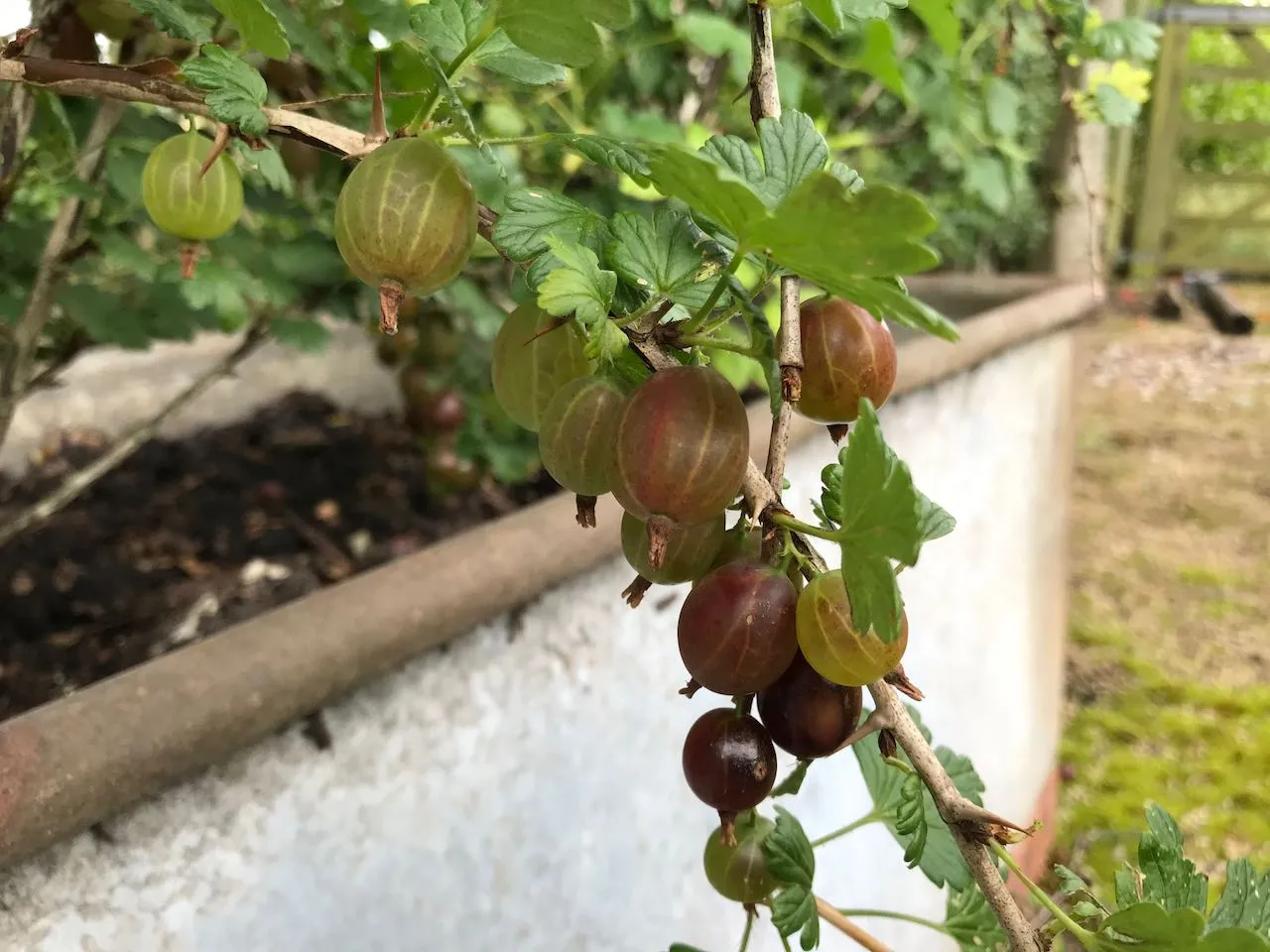
I grow a number of different gooseberry varieties in containers in my own edible garden, and they are prolific fruiters once established. Gooseberries are great for jam, gooseberry gin, or simply picking fresh from the shrub for that tart and juicy hit that nothing else in the fruit garden quite matches.
This guide is going to help you correctly prune your gooseberry bushes without fear of those thorns, covering everything from timing and tools through to harvesting, pest prevention and what to actually do with the fruit once you have it. By the end you will be pruning with confidence each year and keeping your gooseberries productive for decades to come.
This page contains affiliate links for products I use and love. If you take action (i.e. subscribe, make a purchase) after clicking a link, I may earn some gardening commission which helps me keep the Garden Ninja Blog free for all.
1. Why do gooseberries need pruning?
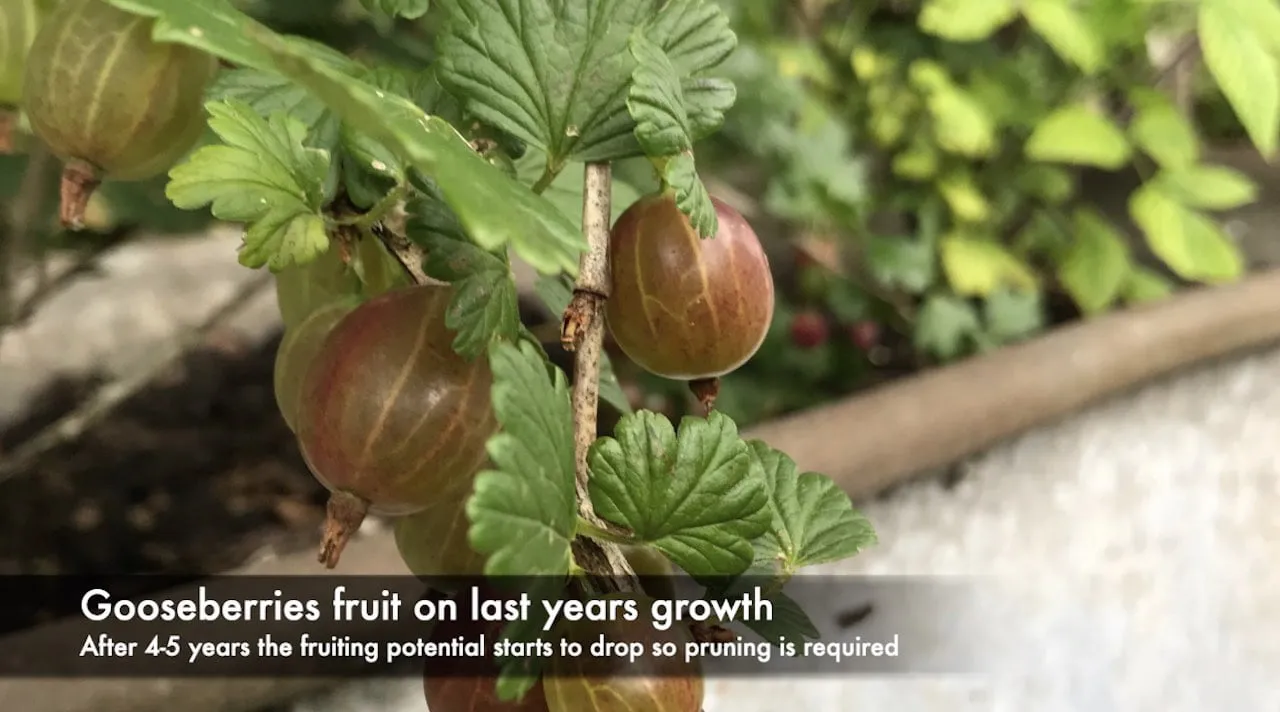
Gooseberries fruit on two to three-year-old wood. They tend not to fruit well on soft new growth. However, over time, if these older branches are left unchecked, they will produce fewer and fewer fruits as they near the end of their productive lifespan.
This is why pruning each year will encourage fresh new growth that, from years two and three, can then take their place. Think of it as a never-ending cycle of older growth producing, new growth growing, and then removing older growth once it stops being productive.
Pruning also helps keep your gooseberry bushes in a healthy form that is free from disease and drama. If left unpruned, gooseberry bushes tend to get over congested. Branches rub and cross each other, making picking fruit a hazardous task, and the lack of airflow through the middle of the bush makes fungus and disease far more likely to take hold.
Pruning is straightforward, and if done each year it takes a matter of minutes to improve fruit yields and prevent disease or damage. Pruning helps focus the plant’s energy on the shoots that are going to be productive. Although we are removing parts of the shrub, think of it as redirecting the energy into lower shoots or other areas of the gooseberry bush rather than simply cutting it back.
Pruning gooseberries has the following benefits:
Encourages fresh productive growth for the following years
Reduces congestion, meaning the fruits are easier to pick in summer
Redirects energy to other parts of the gooseberry, resulting in bigger fruits and fewer thorny branches in the way
Improves airflow through the centre of the bush, reducing the risk of mildew and fungal disease
2. Bush, cordon, fan or standard? Choosing how to grow your gooseberry
Before picking up the secateurs it is worth knowing that a gooseberry does not have to be grown as a simple bush. This guide focuses on the open goblet bush shape, since it suits the great majority of gardens and is by far the easiest for beginners, but it is worth knowing the alternatives exist in case your garden has a specific space to fill.
Bush: the standard form, with multiple stems radiating from a short leg, typically reaching around 1 to 1.5 metres tall and wide. This is what the rest of this guide covers.
Cordon: a single stem trained upright or at an angle, with short fruiting side shoots. Cordons take up very little ground space and are ideal if you want to grow several different varieties along a fence or against a wall, particularly on an east or north facing aspect where a full bush would struggle.
Fan: trained flat against a wall or fence with branches spread out like a fan. A good option where you want to make use of a vertical surface without the depth a bush would need.
Standard: a lollipop shaped head of branches on a clear stem around a metre tall, usually bought already trained. These are more ornamental and let you plant low growing herbs or salad underneath, though they need a bit more aftercare to keep the head in shape.
Cordons, fans and standards are usually bought as pre-trained plants from a specialist fruit nursery rather than trained from scratch, since getting the initial framework right takes a couple of seasons. If you already have one of these forms, the same winter and summer pruning principles in this guide apply, just adapted to maintain the existing framework rather than create the open goblet shape from new growth each year.
3. Formative pruning for a newly planted gooseberry
If you have just planted a young gooseberry bush, the first couple of years are about building the framework rather than maximising fruit. Get this right early and the open goblet shape covered later in this guide becomes far easier to maintain for the rest of the bush’s life.
In the first winter after planting, trim all the main branches back by about half their length, cutting to a strong, healthy bud. This hard initial cut feels counterintuitive, but it encourages the vigorous new growth needed to build a well spaced framework rather than a leggy, thin one.
In the second winter, shorten the new growth on each of those main stems by half again. Look at the side shoots that appeared over the summer and choose the best placed ones, meaning those that are outward or upward facing and not congested with other growth, shortening these by half too. Remove any side shoots that are crossing, weak or growing into the centre.
By the third winter your gooseberry should have a reasonably established framework of five to eight main stems, and you can move on to the routine open goblet pruning covered in the rest of this guide. Remove any suckers or low shoots growing from near the base each year from now on, since gooseberries can be prone to these and they sap energy from the main framework.
4. When should I prune gooseberries?
In the UK, the best time for the winter prune is while the plants are still dormant, any time from November through to very early spring.
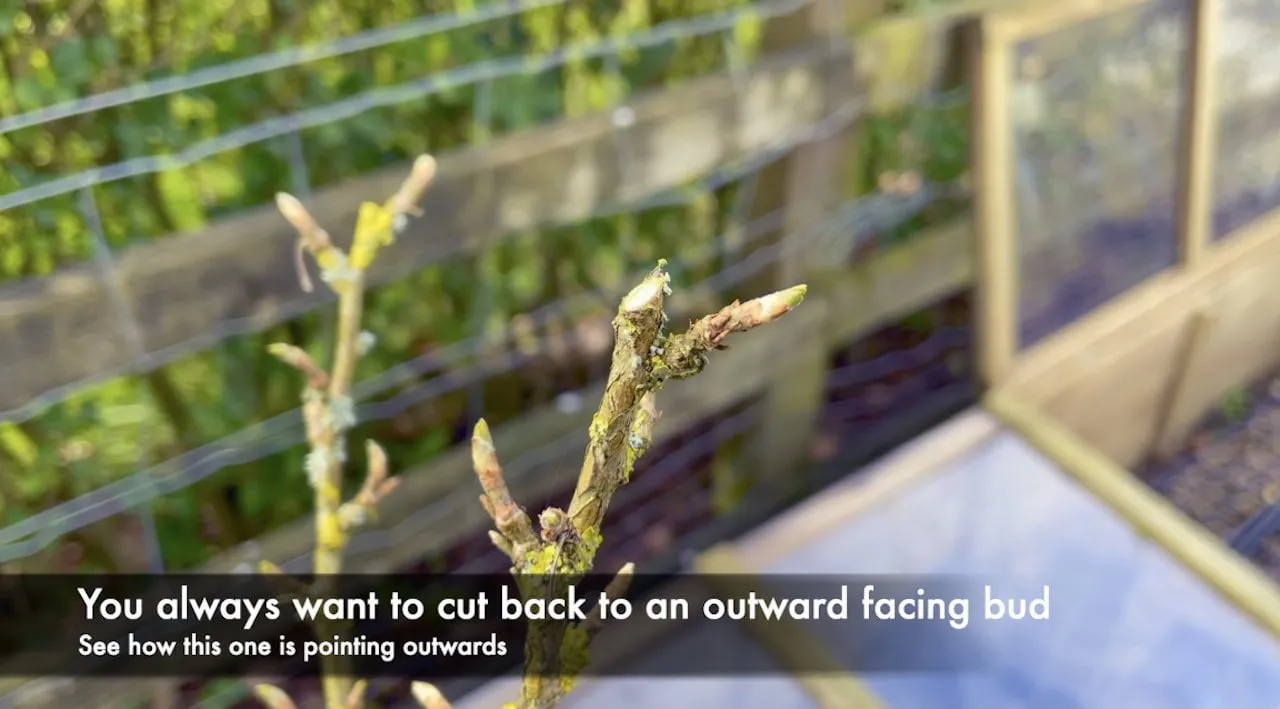
However, several beginner gardeners struggle to know how to select the right outward-facing buds for pruning until they have actually started to emerge. Gooseberries are tough plants, so if you are a beginner I always recommend pruning in early March when the buds are just breaking.
This is because it makes it much easier to see which way the new growth is facing, and also to identify dead wood, meaning wood that has not budded at all and needs removing entirely.
💡 Top Tip
If you have a particularly cold garden or live in a frost pocket, hold off pruning until you can see the first leaf buds beginning to swell. Pruning into wood that later turns out to be frost damaged just means a second round of cuts later in spring.
5. Equipment for pruning gooseberries
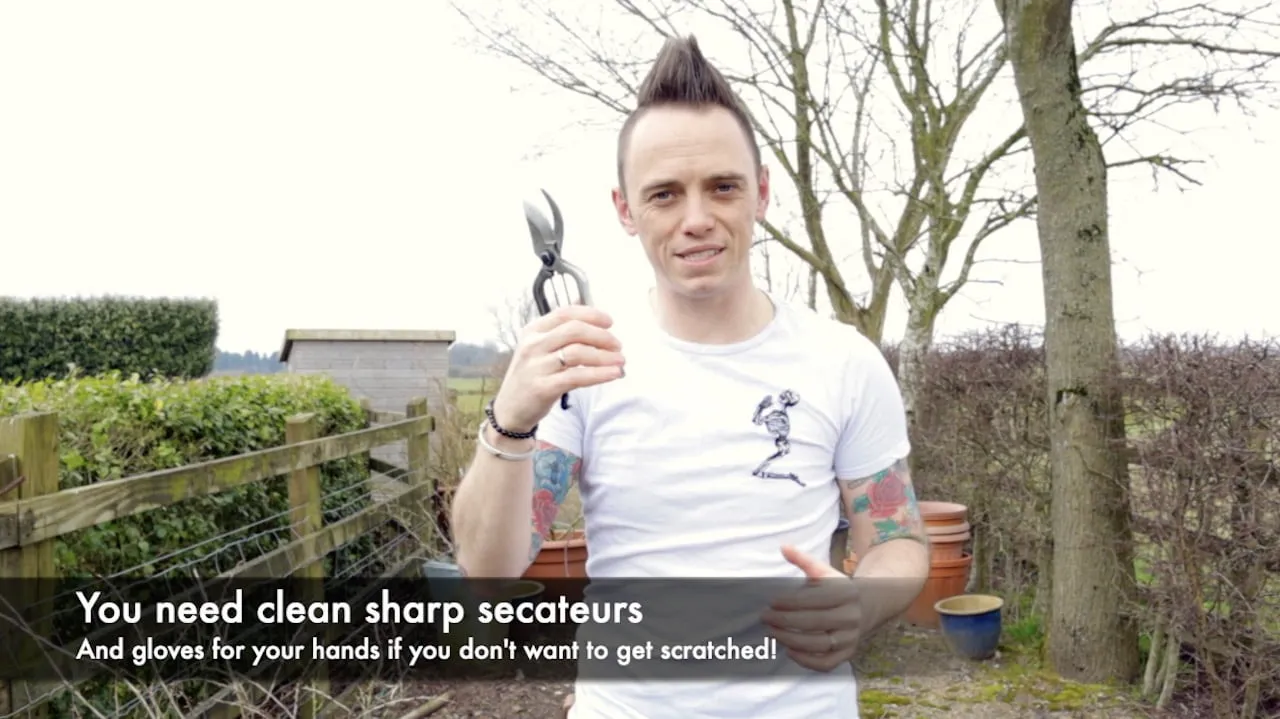
Before we get into the action of pruning, you are going to need three pieces of equipment to successfully and safely prune gooseberries.
I always reach for my Felco secateurs for gooseberry pruning. The bypass blade gives a clean cut on woody stems without crushing them, which matters for a fruiting shrub since a crushed cut heals far more slowly and invites disease in. If yours are struggling to slice cleanly through the wood, follow my sharpening guide here before you start.
6. How to prune gooseberry bushes in winter
The first thing to understand is the ultimate shape we want a gooseberry bush to be in. For most bush grown gooseberries, this is the open goblet, or upward facing palm, shape. There are other ways to train them, such as cordons and wall trained fans, but those are usually reserved for more experienced gardeners with a specific space in mind. This guide focuses on the open goblet shape, which suits the vast majority of gardens.
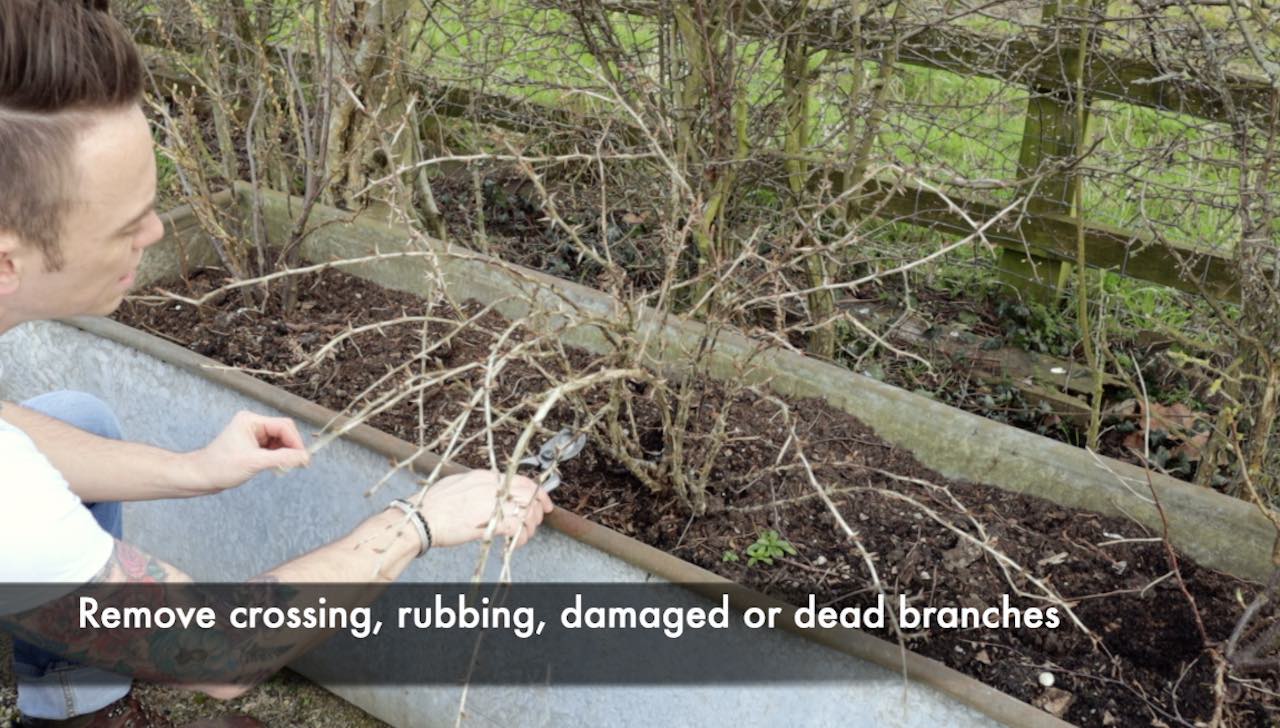
Step 1: Remove dead, crossing or damaged stems
Stand back and look at the overall shape and health of the gooseberry bush, looking carefully for any dead wood, crossing branches, or damaged and diseased growth. These branches rob the gooseberry of vital nutrients and will end up getting in the way or causing damage long term, so they need removing first.
Remove these first by cutting them back with your secateurs to the next set of healthy growth, meaning the next bud down, or right the way back to the main stem if a branch is crossing over another. Do not be shy. Gooseberries are tough, so be bold with your pruning.
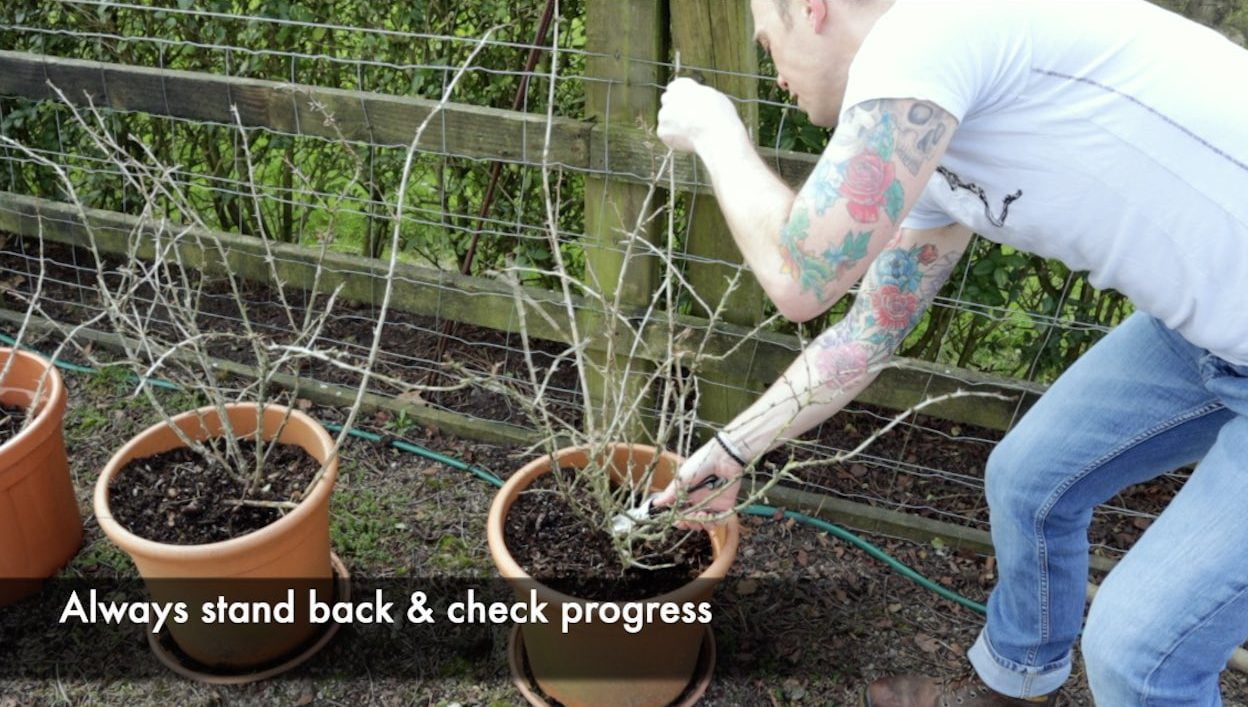
Step 2: Stand back and check your gooseberry has a balanced shape
Stand back and check your progress as you remove each part of the gooseberry bush. This will help you keep it evenly spaced and shaped. Take your time, since this is what helps you balance out your pruning rather than ending up lopsided. If you do find it is getting uneven, simply even out the pruning on both sides before moving on.
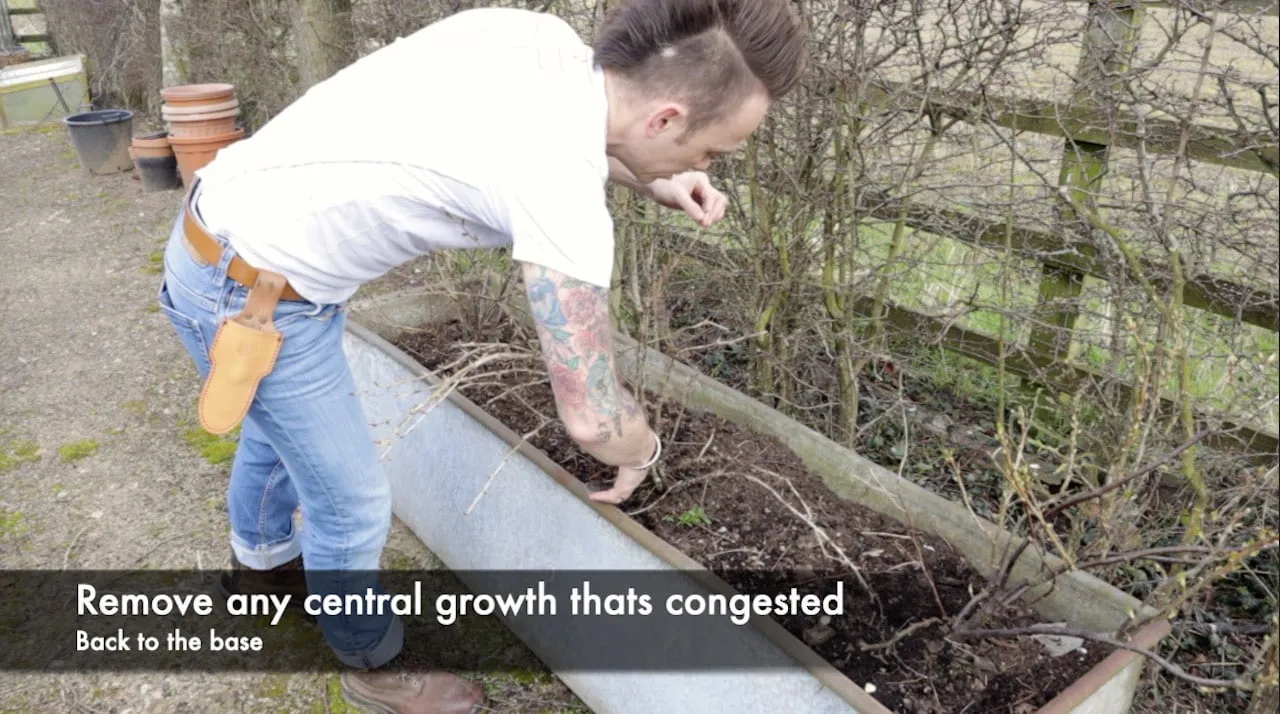
Step 3: Open up the centre of the gooseberry bush
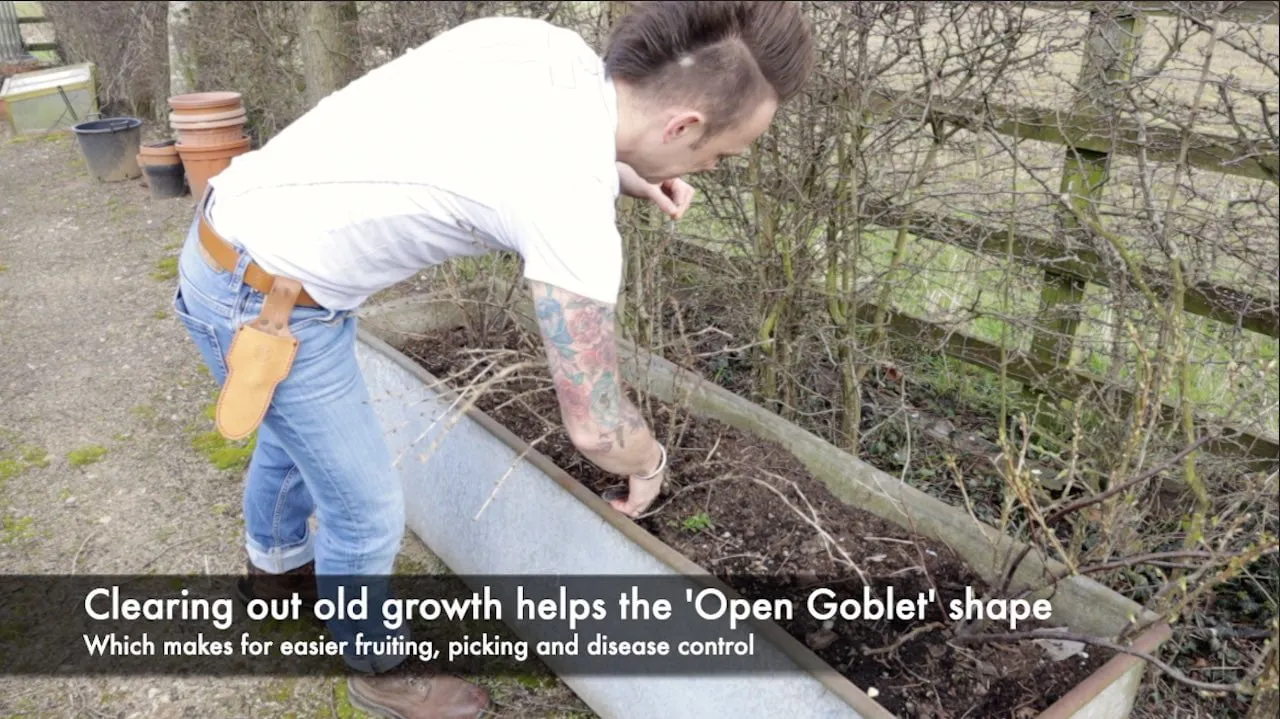
We then want to remove any growth in the centre that may be preventing the open goblet or upward palm shape from forming. This is especially true of crossing or congested growth left over from previous fruiting seasons. By opening up the centre we encourage airflow, which helps prevent mildew and fungus from damaging the gooseberries later in the year.
Even healthy growth right in the very centre will tend to send out laterals, or side shoots, that ultimately end up rubbing against the outward facing branches and stems we are training. Be bold in removing these, since we are focusing the plant’s energy on the more productive outer parts of the bush rather than the congested middle.
Step 4: Remove a third of the oldest wood back to the base
Next, we want to remove roughly a third of the very oldest wood right back to the main stem.
This older wood, typically four to five years old, will have become far less productive. Removing it spurs the gooseberry on to put on fresh growth that can take its place. This helps open up the shrub, giving a higher fruit yield and far less congestion in future years.
Step 5: Shorten the remaining branches by about a third
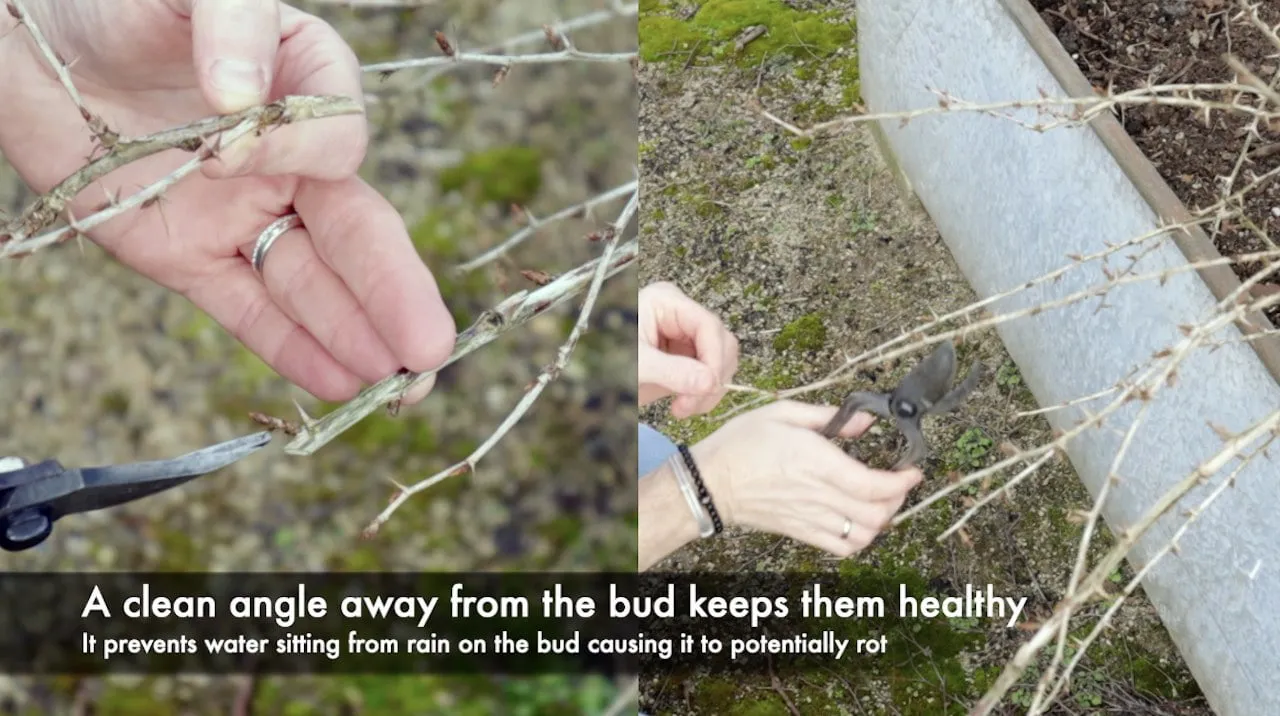
We then want to take off around a third of last year’s growth from each of the remaining tips, reducing them in length by roughly a third of their overall size. Where a stem is growing upright, cut to an outward facing bud to keep the centre open. Gooseberries droop more than most fruit bushes though, so on any horizontal or downward leaning stem, cut to an upward facing bud instead, which encourages that branch to lift rather than trail further towards the ground.
This should leave three to five buds on each of the remaining stems. We do this to focus more of the plant’s effort on fruit and less on vegetative growth, while also keeping the gooseberry bush a neat, workable size for picking and maintenance.
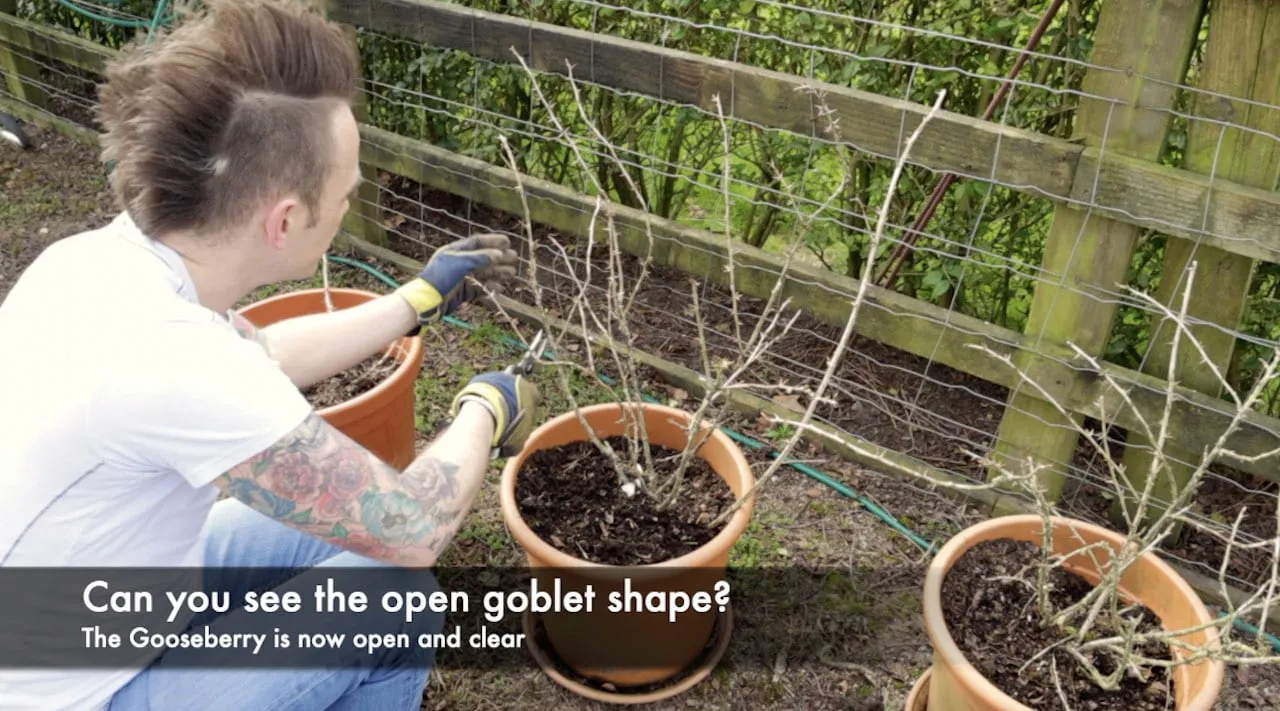
Step 6: Create the open goblet shape
We are aiming for an open goblet, or upwards palm, shape for the whole shrub. This results in five to seven main stems, equally spaced, with an open centre. This allows airflow and light to reach each part of the gooseberry shrub equally, meaning a healthier and more productive plant overall.
Step 7: Collect all clippings in a bucket
Collect your cuttings in your bucket as you go so you do not end up standing on them by accident, since they can be very sharp. I do not compost these clippings, as the thorns are unpleasant when handling compost by hand later on. I either save them to use as kindling or put them in my council green recycling bin.
Step 8: Mulch your gooseberries to feed them
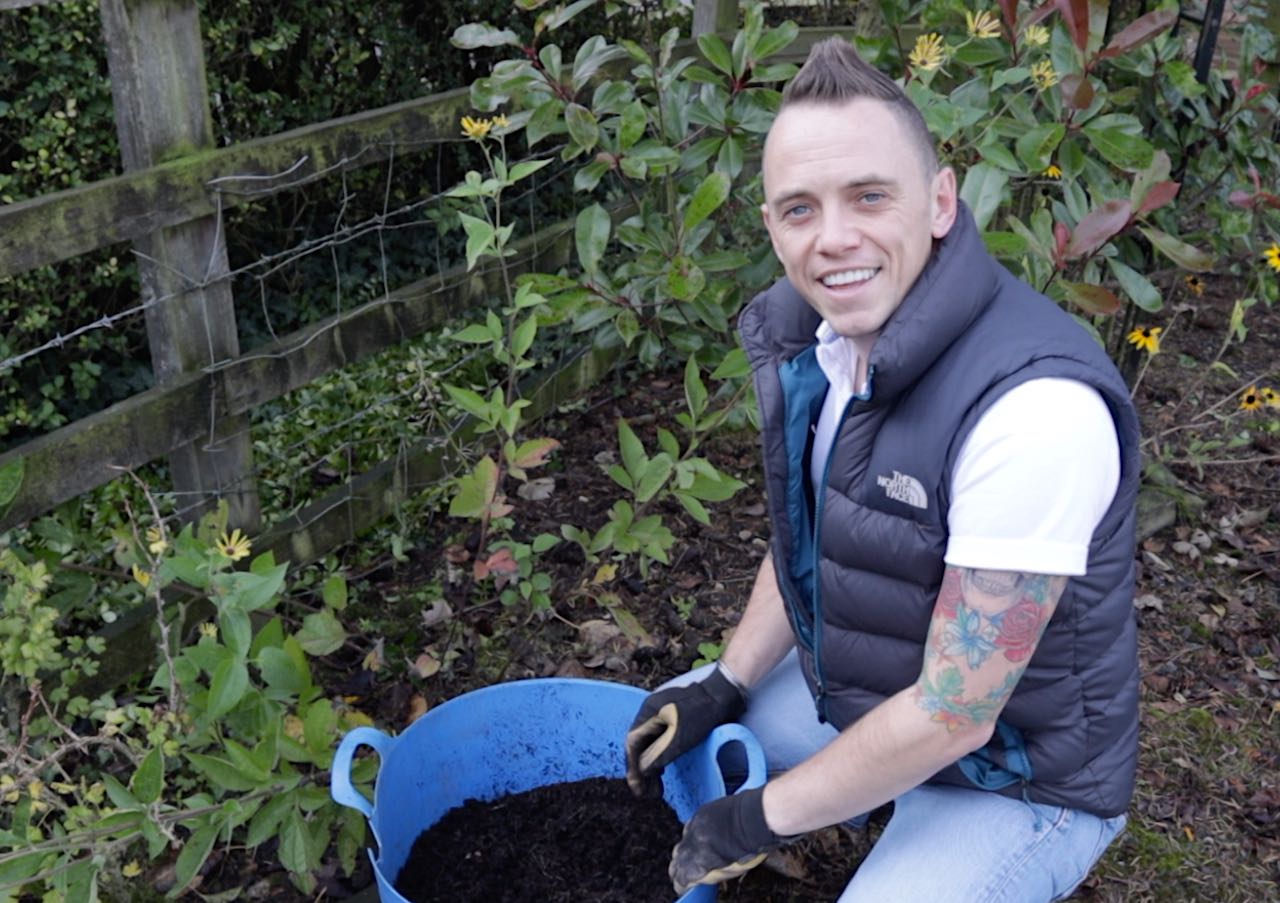
Lastly, each autumn it is a good idea to give your gooseberries a good thick mulch of peat free compost. This helps feed them, especially if you are growing them in containers, and mulching is one of the gardener’s best defences against both weeds and disease. It also makes the bed look really neat, with a thick dark layer of mulch surrounding the base.
Mulching gooseberries helps them:
Retain moisture, meaning less watering through summer
Prevents weeds from stealing nutrients around the gooseberry’s base
It is really simple to prune gooseberries this way and keep them productive for years to come. Most pruning of an established gooseberry takes as little as fifteen minutes once you have your confidence, and it is a great way to build your overall garden pruning skills before tackling trickier fruit like pears or cherries.
7. Summer pruning gooseberries
The winter prune above is all most garden gooseberries actually need, but if you want noticeably better crops it is worth adding a second, much quicker prune in summer. This is the technique fruit growers and the RHS recommend for maximising yields, and it takes only a few minutes once the winter framework is in place.
In late June, once the fruit has set and the bush is in full leaf, trim the current season’s side shoots back to around five leaves. Leave the main framework branches you created in winter alone, and just shorten the soft new side growth coming off them. This achieves three things at once.
It reduces the weight and wind resistance of leafy growth, which lowers the risk of heavily laden branches snapping or being damaged in summer storms
It opens the bush up further, letting more light and air reach the ripening fruit
It redirects the plant’s energy from producing more leaf into ripening the fruit that is already there, often resulting in noticeably larger berries
💡 Top Tip
If you only have time for one prune a year, do the winter prune. The summer trim is a genuine bonus for yield and fruit size, but it is the winter structural prune that keeps the bush healthy and productive long term.
8. Common gooseberry pruning mistakes
I see the same handful of mistakes time and again, both in my own garden when I was starting out and in questions on the forum. Knowing these in advance will save you a season of poor fruiting.
Being too timid. Gooseberries are tough shrubs and respond well to a confident hand. Leaving too much old wood in place because it feels safer almost always results in a congested, less productive bush.
Pruning at the wrong time. Cutting back hard in midsummer removes the wood that would have carried next year’s fruit. Save the hard structural pruning for late winter or early spring.
Leaving the centre congested. Skipping the step of opening up the middle of the bush is the single biggest cause of mildew problems later in the season.
Using blunt secateurs. A crushed, ragged cut heals far more slowly than a clean one and gives fungal disease an easy way in.
Forgetting to feed and mulch after pruning. Pruning removes growth, but the plant still needs the nutrients to put on strong new shoots in spring.
9. How often should I prune gooseberries?
You should aim to prune your bush gooseberries once a year using the guide above.
This means that each year you are taking out the oldest growth and keeping your gooseberry bushes productive, creating a continual cycle of new growth replacing the oldest growth as it stops earning its place.
10. Pruning storm or accident damage in summer
If your gooseberries get damaged during the year, from severe wind or a stray football, then prune back the damaged areas immediately. Do not wait for winter, since damaged branches left in place lead to infection and poor plant health.
If you are simply maintenance pruning and there is no damage to deal with, always wait for winter. Pruning in summer often cuts off the buds that would have turned into fruit, so pruning during the gooseberry growing season can actually stop the plant fruiting at all that year.
11. When to harvest gooseberries and how to know when they are ripe
Most gooseberries fruit in June here in the UK. You will see fruits emerging from April onwards, and the biggest problem most gardeners face is getting to them before the birds do.
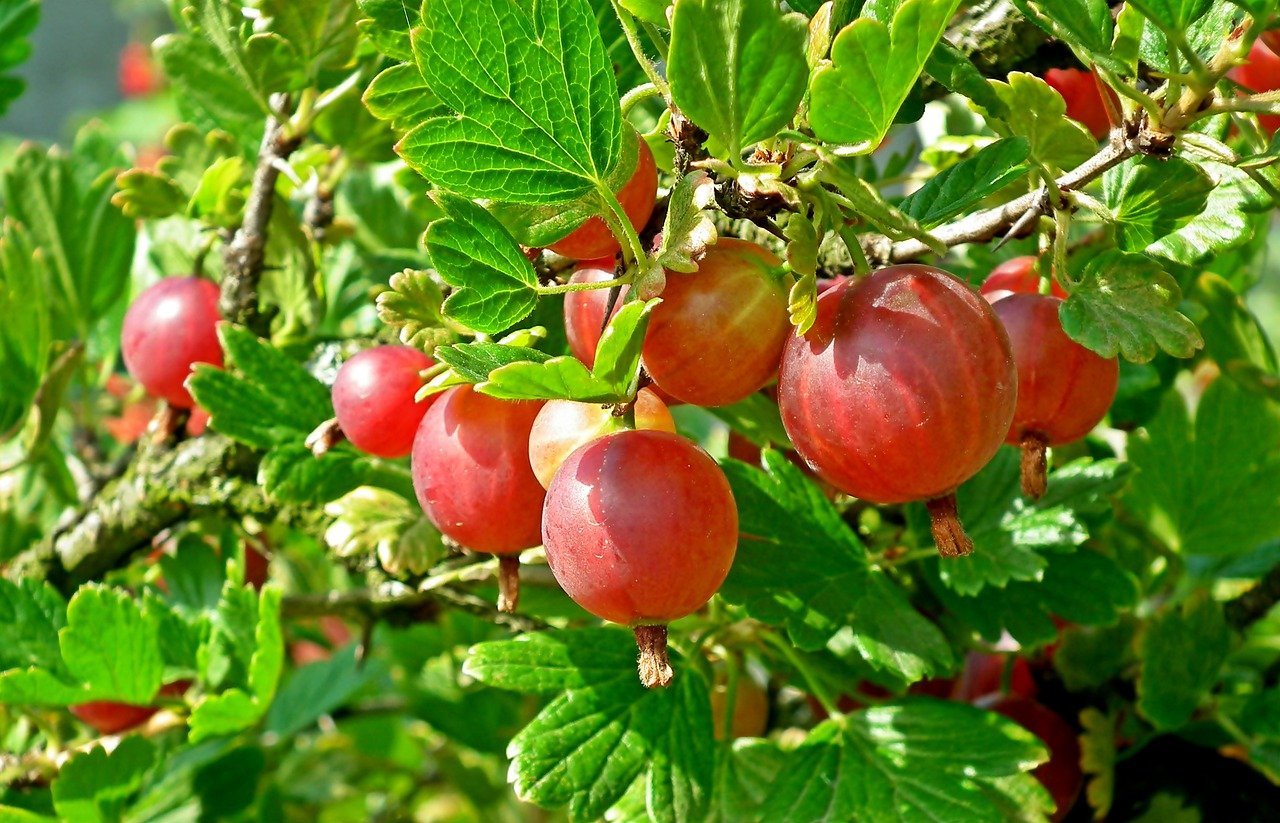
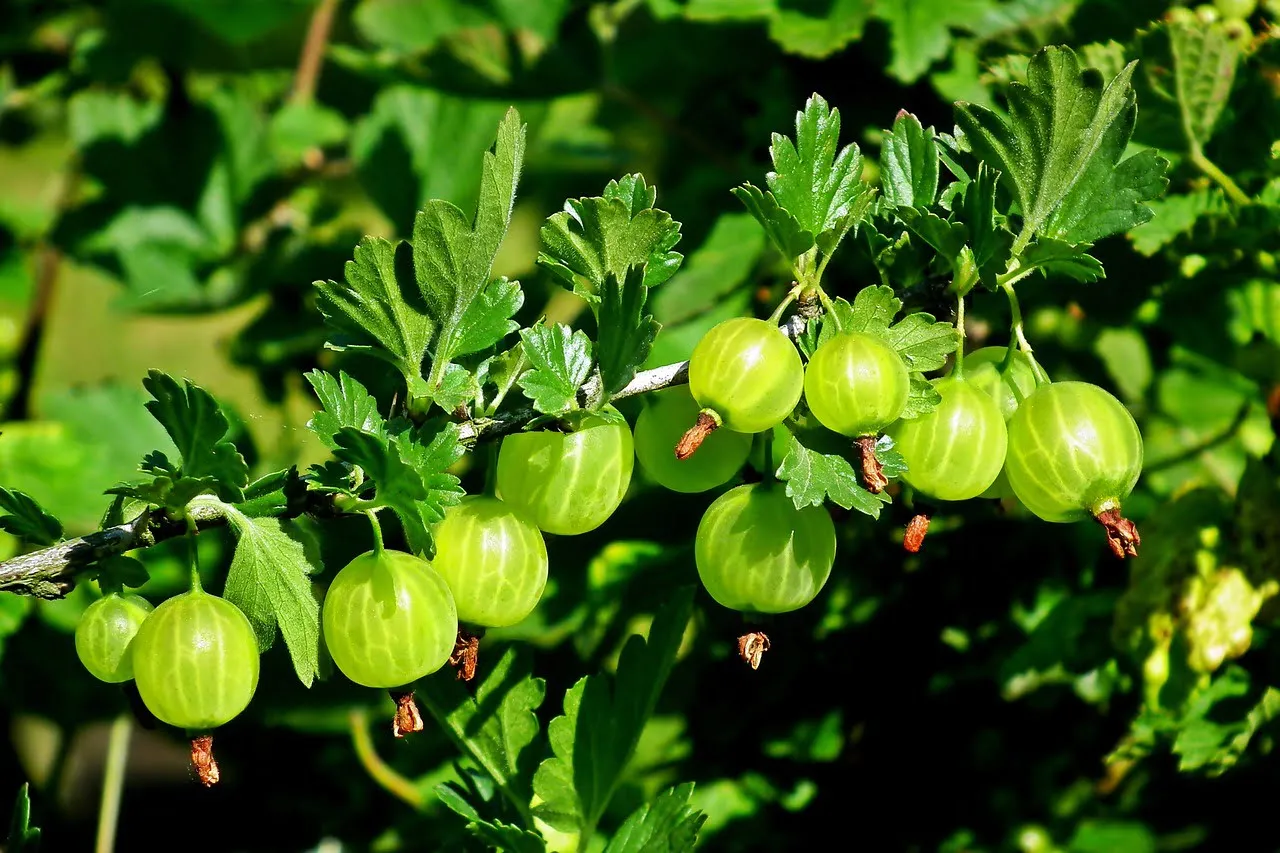
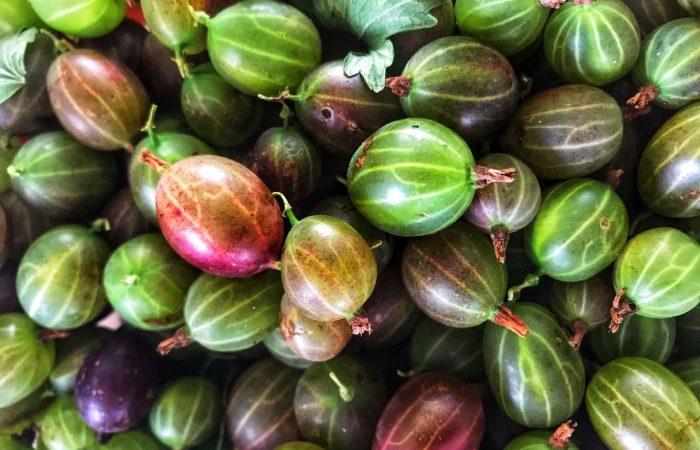
You can 🛒 cover your gooseberries with fine netting to prevent birds stealing them. However, I find birds tend to only target fruit once it is properly ripe. There are green and red gooseberry cultivars, so do not wait for a red variety to turn green, or vice versa. Look up the cultivar you have, then use the guide below to know when they are ready.
You can tell a gooseberry is ripe because it should feel slightly soft to the touch. If it is hard or firm, it is not ready yet. From the end of May I check mine every couple of days, and once they feel properly soft I harvest quickly, leaving just a few for the birds so they do not miss out entirely.
12. What can I make with gooseberries?
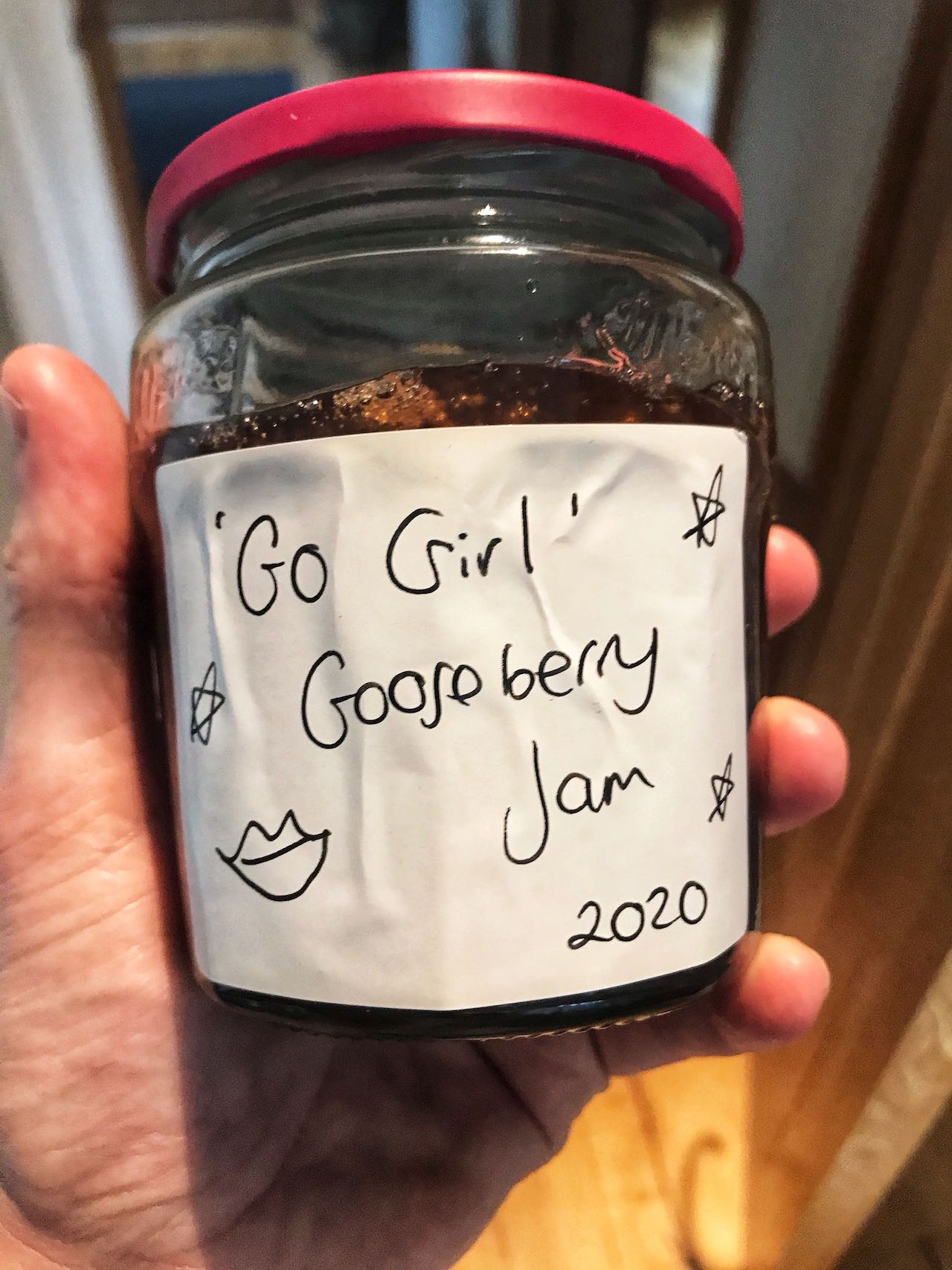
Gooseberries make wonderful jams or fools. Given their naturally high pectin content, they work really well for sweet desserts and set beautifully. I make jam using an equal part of fruit to jam sugar, since jam sugar contains the extra pectin needed for a good set. Making jam means I can enjoy gooseberries all year round, and I even add them to the centre of cakes for a sweet and tangy surprise.
I like to give my jams ridiculous names just for fun, much to the amusement of anyone I gift a jar to.
Stewing gooseberries for a fool is the quickest way to prepare them. I put my gooseberries in a pan with sugar to taste and a splash of water, simmer for a couple of minutes, then take off the heat. Once cooled it turns into a lovely fruity syrup that is brilliant with ice cream, yoghurt or stirred through your morning porridge.
13. Best gooseberries for containers and small gardens
Gooseberries make great container plants for balcony gardens, small urban plots or anywhere with limited space. They are remarkably tolerant of many aspects, including shade in a garden. When planting gooseberries in containers, use a rich, 🛒 peat free compost and top dress at the end of each year, giving a good liquid feed during fruiting such as home made organic comfrey tea.
Top 3 gooseberries for container gardening
🛒 Gooseberry ‘Invicta’ – the heaviest cropping variety, and a reliable choice for beginners
🛒 Gooseberry ‘Captivator’ – great bright red fruit and notably fewer thorns than most varieties
🛒 Gooseberry ‘Hinnonmaki’ – excellent disease and mildew resistance, ideal if your garden is prone to damp summers
14. How to stop birds from eating gooseberries
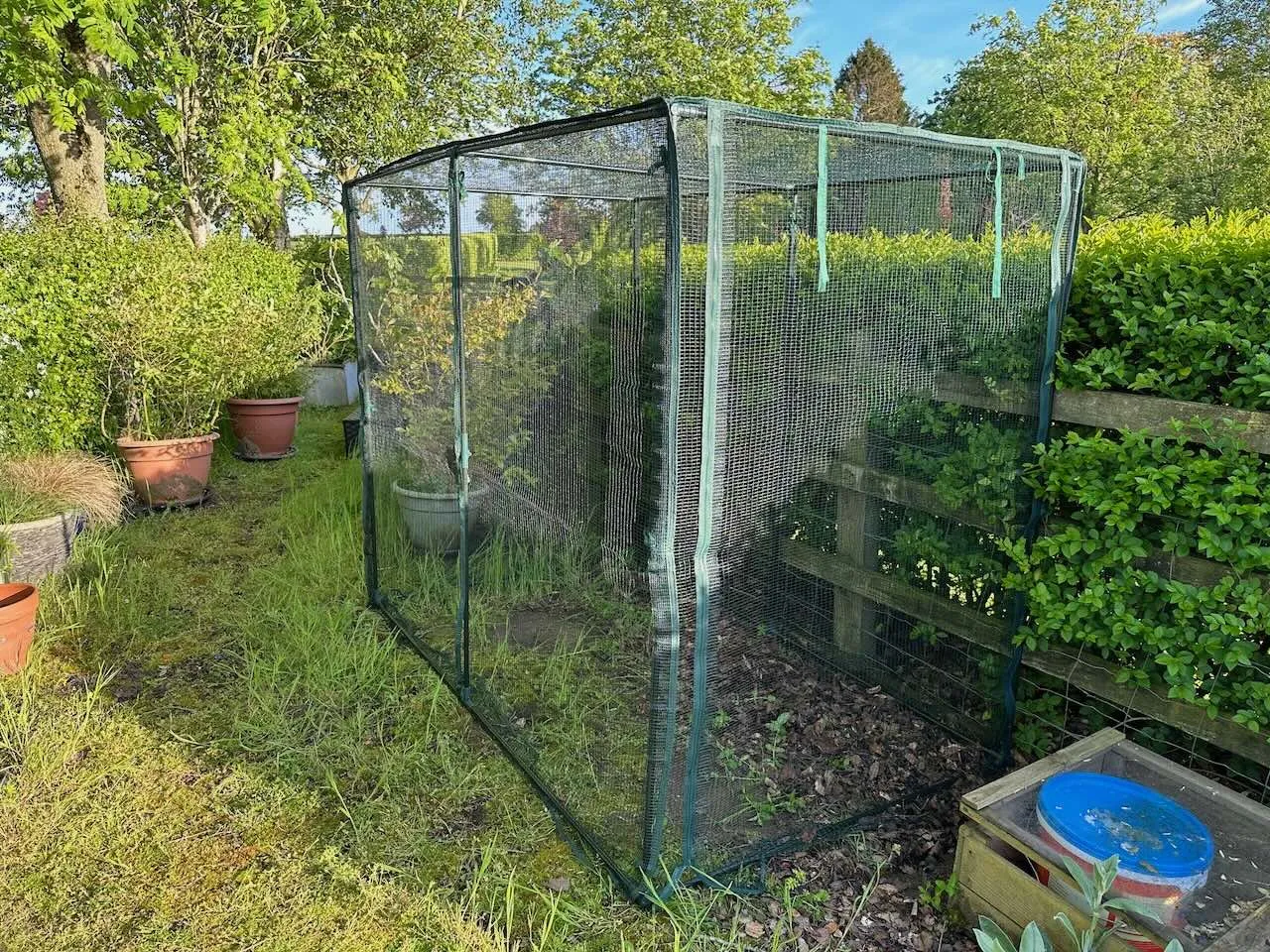
The best way to stop birds eating your gooseberries is to use a fruit cage. A fruit cage is a lightweight structure with netting over every side. Your gooseberry bushes are then grown either in containers or in the ground within this cage. It stops birds being able to steal the fruit while still allowing insects such as honeybees in to pollinate the flowers that then become fruit.
If a full cage is not practical in your garden, draping 🛒 fine mesh netting directly over individual bushes once the fruit starts to colour up is a cheaper and quicker alternative, just make sure it is secured at the base so birds cannot simply walk in underneath.
15. Gooseberry pests and diseases
Gooseberries are delightful fruit bearing plants, but they are not immune to a variety of pests and diseases that can impact their health and productivity. As a dedicated gardener, it is worth being well informed about the following common gooseberry pests and diseases to keep on top of your plants’ wellbeing.
Gooseberry pests
Aphids: these small, pear shaped insects often colonise the undersides of gooseberry leaves, where they feed on sap. Their presence can lead to distorted leaves and the secretion of honeydew, a sugary substance that encourages sooty mould and further hampers photosynthesis. A blast from the hose or an organic pest spray usually keeps numbers down.
Gooseberry sawfly: the larvae of the gooseberry sawfly are notorious defoliators. They are pale green with a series of black spots and can strip the foliage from a gooseberry bush in a matter of days if left unchecked, which then severely limits the plant’s ability to photosynthesise and recover. Check the undersides of leaves from late spring onwards and remove larvae by hand as soon as you spot them, since this is usually enough to stop an infestation in its tracks on a garden scale.
Birds: while not insects, birds are significant nuisances in the gooseberry garden. They have a real knack for pecking at fruit the moment it ripens, reducing your harvest considerably. Protect your crop with netting or a fruit cage as covered above.
Gooseberry diseases
Gooseberry mildew: this fungal disease shows up as a powdery white coating on the leaves, shoots and fruit. Left untreated it reduces the plant’s ability to photosynthesise efficiently, which affects its overall vigour and fruiting the following year. Good airflow through proper pruning, as covered above, is by far the best prevention.
Leaf spot diseases: gooseberries are susceptible to several leaf spot diseases, including anthracnose and septoria leaf spot. These fungal infections cause small, dark lesions on the leaves and can lead to leaf drop if not managed, usually through improved airflow and removing fallen infected leaves promptly.
Botrytis fruit rot: also known as grey mould, botrytis cinerea can affect ripe gooseberries, causing them to turn soft, brown and mouldy. This disease thrives in humid conditions, particularly after rainy periods, so proper spacing and good air circulation through the bush reduce the risk significantly.
Ribes mosaic virus: a viral disease that creates mosaic like patterns on gooseberry leaves and reduces fruit production. Where infection is confirmed, it is best to remove the affected plant promptly to prevent the virus spreading to other gooseberries or currants nearby.
16. Frequently asked questions about pruning gooseberries
Do I need to prune a gooseberry bush every single year? Yes. Skipping a year or two is not the end of the world, but gooseberries left unpruned for several years become congested, less productive and far more prone to mildew. An annual prune of just fifteen minutes keeps everything ticking over nicely.
What happens if I do not prune my gooseberries at all? The bush will still fruit for a while, but yields drop year on year as more of the plant is made up of unproductive old wood. Congestion also increases the risk of mildew and fungal disease, and picking the fruit becomes uncomfortable among all that extra thorny growth.
Can I prune an old, badly neglected gooseberry bush back hard in one go? It is best to restore a very overgrown gooseberry over two winters rather than one. Remove the worst of the dead, diseased and congested wood in year one, then complete the goblet shape the following winter once the bush has had a chance to respond.
Why has my gooseberry stopped fruiting? The most common causes are an unpruned, congested centre, very old unproductive wood that has never been cut back, or pruning at the wrong time of year and accidentally removing the fruiting buds. Mildew can also reduce fruiting significantly if left untreated for a couple of seasons.
Are gooseberry thorns actually dangerous? They are sharp rather than dangerous, but a good pair of thick gardening gloves removes any discomfort entirely. I would never prune a gooseberry without gloves on, simply because there is no need to put up with the scratches.
Do I really need to do the summer prune as well as the winter one? No, it is optional. A single winter prune is enough to keep most garden gooseberries healthy and productive. The summer trim is a worthwhile extra step if you want larger fruit and fewer storm damaged branches, but it is not essential if time is tight.
Can I grow a gooseberry as a cordon in a small garden? Yes, and it is a great option where space is limited. A cordon trains the gooseberry as a single stem with short fruiting side shoots, making it ideal against a fence or wall, including an east or north facing one where a full bush would struggle. Pre-trained cordons are usually bought from a specialist fruit nursery.
Join over 100,000 gardeners
Free gardening videos from the Garden Ninja, with 8+ million views and counting.
Improve your gardening skills with my online courses
Discover the transformative power of gardening with me, Lee Burkhill, the Garden Ninja.
Enrol in my online garden design courses and learn to create your perfect outdoor oasis from the comfort of your home. With engaging video lessons, interactive quizzes and expert tuition, you will uncover the secrets to designing stunning gardens tailored to your style and space.
Whether you are a beginner looking to develop your green thumb or an experienced gardener seeking fresh inspiration, my courses cater to all skill levels. Gain practical knowledge in layout, plant selection and maintenance, guided by my extensive expertise and passion for sustainable gardening practice.
By joining the Garden Ninja’s courses you will acquire valuable insights and the confidence to transform any outdoor space into a vibrant sanctuary. Connect with a community of garden enthusiasts and embark on a journey to design and nurture a garden that reflects your personality and enhances your lifestyle.
29
Garden Design Examples for Small Gardens: 30 Design Templates & Planting Plans
Garden Design Examples for Small Gardens: 30 Design Templates & Planting Plans: In this online gardening course, I’ll walk you through 30 fantastic garden designs, explaining the logic behind the layout, the plant choices, and take-home tips for applying them in your own garden.
Weekend Garden Makeover: A Crash Course in Design for Beginners
Learn how to transform and design your own garden with Lee Burkhills crash course in garden design. Over 5 hours Lee will teach you how to design your own dream garden. Featuring practical design examples, planting ideas and video guides. Learn how to design your garden in one weekend!
Garden Design for Beginners: Create Your Dream Garden in Just 4 Weeks
Garden Design for Beginners Online Course: If you want to make the career jump to becoming a garden designer or to learn how to design your own garden, this is the beginner course for you. Join me, Lee Burkhill, an award-winning garden designer, as I train you in the art of beautiful garden design.
Pruning gooseberries is one of the easiest jobs in the fruit garden once you know the shape you are working towards. Prune once a year in late winter or early spring, remove dead and crossing wood first, open up the centre, take out a third of the oldest growth, shorten the rest by a third, then mulch and feed. Stick to that simple annual routine and your gooseberries will reward you with healthy, productive fruiting for decades.
So there we have it, the easiest way to keep your gooseberries healthy and full of fruit each year, meaning you can enjoy delicious homegrown organic fruit season after season. Be the envy of your neighbours and maybe make some gorgeous preserves to gift to friends and family along the way.
Visit me on Twitter, Facebook or Instagram! You should also follow me on Youtube where I’ve got plenty of garden guide vlogs. You can also ask a question in the lively gardening forum below, where thousands of Garden Ninjas answer gardening dramas and questions each day.
If you have enjoyed this article then why not Tweet, Facebook or Instagram me with your fruit pruning pictures or questions? You can also subscribe to my YouTube channel for hundreds of garden design tips, tricks and hack guides.
Your subscription could not be saved. Please try again.
Your subscription has been successful.
Lee Burkhill
Lee Burkhill, known as the Garden Ninja, is an award winning garden designer and horticulturist with over 30 years of gardening experience and 15 years as a professional garden designer. A qualified RHS (Royal Horticultural Society) professional, Lee specialises in sustainable garden design and practical horticultural advice. He designs and presents on BBC1’s Garden Rescue and in leading gardening publications. Lee combines three decades of hands on gardening knowledge with professional design qualifications to help gardeners create beautiful, functional outdoor spaces.
Hi I am complete newbie to growing anything planted our purple gooseberry bush back end of summer last year and now we are getting a fair bit of flowers. My question is how would I know which way to snip the branches away from the buds I am someone who will do this wrong
Hi Andrew, Thanks for your comment on gooseberry pruning. Not to worry about being a newbie! The easiest way is to see which side of the stem or lateral the bud is facing. You want to cut above the ones facing outwards not on the inside or facing inwards. Hope that helps! Happy Gardening. Lee
I have a newly bought (this year) Invicta Gooseberry bush in a container, some of the new fruits have a white appearance to them. |The stems seem in good order, can you suggest what may be wrong with the plant.
Hello we have had our gooseberry Bush around 4years hasn’t really done anything thank you for explaining Where’s best to cut I will do that this winter 😀 x
Sounds like mildew which is caused by heat stress. It slows down the growth of the plants and fruits by reducing photosynthesis. Make sure it’s well watered and fed. That should help. Happy gardening. Lee

















It is a great advice to prune your gooseberry immediately to prevent serious problems rather than wait for the winter!
Thanks for easy to understand assistance on growing gooseberries and when to prune…
Cheers. Franklt
Hi I am complete newbie to growing anything planted our purple gooseberry bush back end of summer last year and now we are getting a fair bit of flowers. My question is how would I know which way to snip the branches away from the buds I am someone who will do this wrong
Hi Andrew, Thanks for your comment on gooseberry pruning. Not to worry about being a newbie! The easiest way is to see which side of the stem or lateral the bud is facing. You want to cut above the ones facing outwards not on the inside or facing inwards. Hope that helps! Happy Gardening. Lee
Thanks for the easy step by step instructions, very helpful. I just repotted a baby plant and look forward to some berries this year.
I have a newly bought (this year) Invicta Gooseberry bush in a container, some of the new fruits have a white appearance to them. |The stems seem in good order, can you suggest what may be wrong with the plant.
Hello we have had our gooseberry Bush around 4years hasn’t really done anything thank you for explaining Where’s best to cut I will do that this winter 😀 x
Hi Joan.
Sounds like mildew which is caused by heat stress. It slows down the growth of the plants and fruits by reducing photosynthesis. Make sure it’s well watered and fed. That should help. Happy gardening. Lee
You’re welcome I’m glad my gooseberry guide is useful! Happy gardening. Lee