How and When to Prune Philadelphus (Mock Orange) UK
Lee Burkhill: Award Winning Designer & BBC 1's Garden Rescue Presenters Official Blog
Beginner level
Philadelphus, or Mock Orange, is a fabulous-scented shrub that gardeners around the world adore. Why? Once established, it's easy to keep; the white flowers have an amazing scent, and it will cope with light shade and full sun. Most gardeners plant and 'forget about' this shrub as it's so unfussy. But after a few years, they can start to look bare at the bottom or a bit of a tangled mess. That's where my pruning guide comes in: I'll show you how to keep your mock orange shrubs dense and florific, or to renovate an old, straggly shrub!
Quick Answer
Prune philadelphus (mock orange) immediately after flowering, from late June to July. Cut the stems that have just flowered back to strong new sideshoots lower down, and remove up to one in three of the oldest stems at or near ground level each year. Never prune in autumn, winter or spring. Philadelphus flowers on wood grown the previous summer, so late pruning removes next year’s buds entirely.
Philadelphus are one of the most undemanding shrubs you can plant in your garden. They tolerate full sun or partial shade and apart from heavy clay work with all free-draining soils, even poor nutrient, weak soil! What attracts gardeners to these fuss-free shrubs is the delicate foliage and the bright white flowers, with their gorgeous, sweet, floral-citrus scent.
This page contains affiliate links for products I use and love. If you take action (i.e. subscribe, make a purchase) after clicking a link, I may earn some gardening commission which helps me keep the Garden Ninja Blog free for all.
1. What is philadelphus?
Philadelphus, commonly known as mock orange, is a deciduous flowering shrub in the family Hydrangeaceae. The common name refers to the flowers, which carry an intoxicating fragrance remarkably similar to orange blossom. It is one of the most powerfully scented shrubs available for UK gardens, and on a warm June evening with a philadelphus in full flower nearby, the scent carries across the garden in a way that very few plants can match.
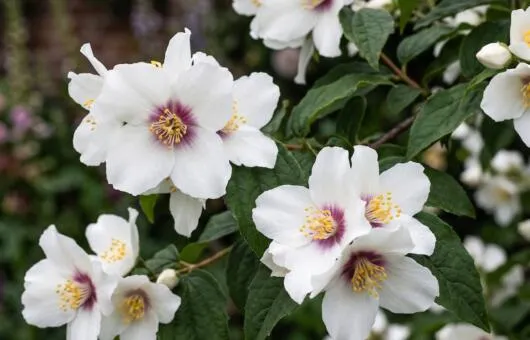
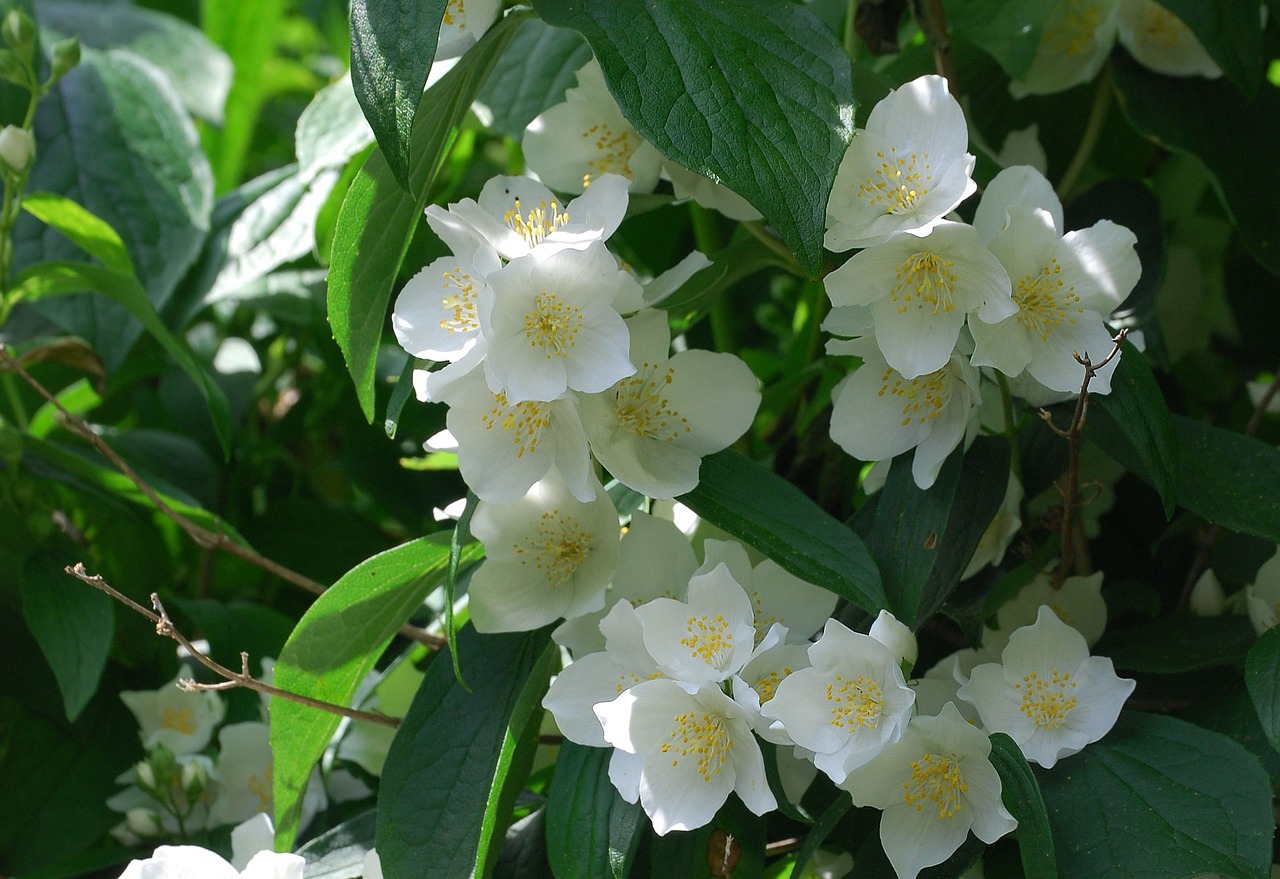
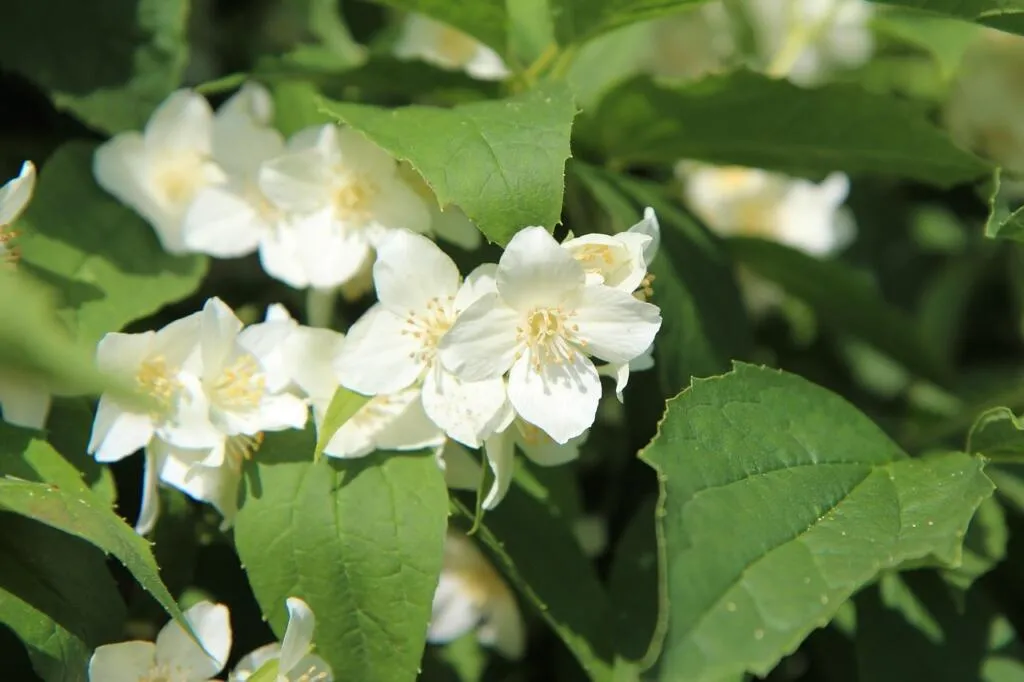
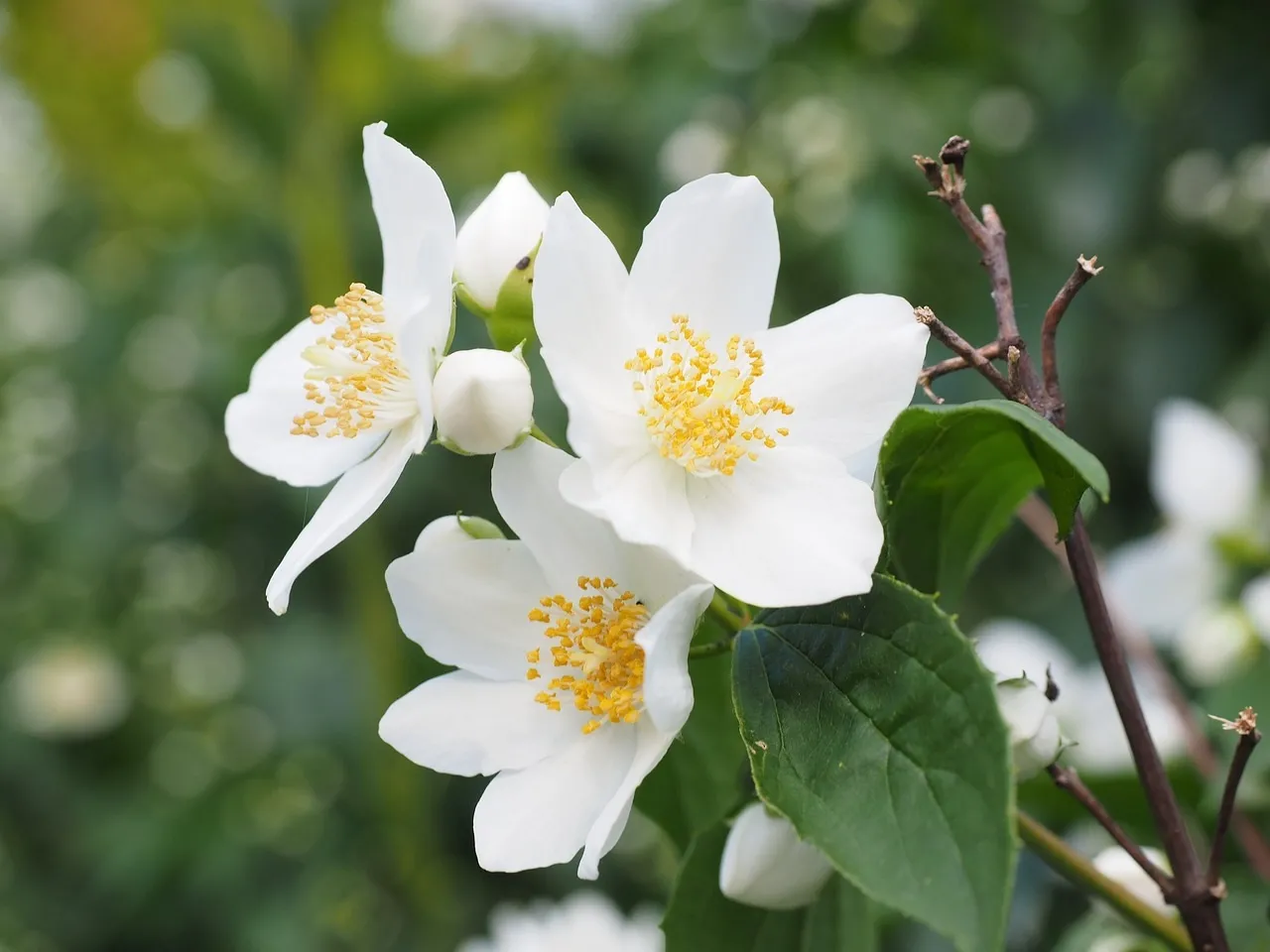
The genus contains around sixty species, originating from North America, Central America and eastern Asia. Most of the varieties grown in UK gardens are cultivars or hybrids derived from Philadelphus coronarius, the common mock orange from southern Europe and Asia Minor. The classic large white flowers with four petals and a prominent cluster of golden stamens at the centre are the defining characteristic, and many cultivars have been bred over the decades to intensify the scent or produce double flowers, semi-double flowers, or different habits.
Philadelphus is one of those shrubs that often gets taken for granted in gardens because it spends most of the year as a fairly unremarkable mass of green foliage. That three-to-four-week flowering period in June and July is the moment it earns its place entirely. The combination of white flowers against dark green leaves and that fragrance drifting through the garden is genuinely one of the finest early-summer experiences in the UK garden. I specify it regularly for design projects, wherever there is a sheltered spot and enough space for a medium- to large-sized shrub.
2. Why prune philadelphus?
Left unpruned, philadelphus builds up an increasingly congested thicket of old woody stems over several years. The older the wood, the fewer and smaller the flowers it carries. An unpruned philadelphus after a decade or so typically produces a poor display of flowers at the very tips of long, arching branches, with the centre of the shrub a tangled mass of stems that carry almost nothing. The whole point of regular pruning is to keep the plant in a permanent state of renewal, with a succession of young, vigorous stems replacing older ones each year.
The key to understanding philadelphus pruning is knowing where it flowers. Philadelphus blooms on short sideshoots produced from stems that grew during the previous summer. This is the critical fact that dictates both the timing and the technique. The new growth produced this summer will carry next year’s flowers. If you prune at the wrong time of year and cut off that new growth, you remove next year’s flower buds entirely. This is the single most common reason philadelphus fails to flower, and it is entirely avoidable once you understand the flowering cycle.
💡 Top Tip
Think of philadelphus pruning as a conveyor belt of renewal. The stems that flowered this year will not flower as well next year. By cutting them back, you direct the plant’s energy into producing new strong stems that will carry the best flowers the following season. Each year the old moves out and the new comes in.
3. When to prune philadelphus in the UK
The timing rule for philadelphus is simple and unambiguous: prune immediately after flowering, in late June or July. The moment the last flowers fade and the display is genuinely finished, get your secateurs out. Waiting even a few weeks beyond the end of flowering is not a problem. Waiting until autumn, winter or the following spring is.
The reason timing matters so much is that philadelphus begins producing new growth immediately after flowering. This new growth will carry next year’s flowers. The sooner you prune after flowering, the longer the new shoots have to grow and develop before the growing season ends. Pruning in late June gives the new shoots the maximum amount of time to develop through July, August and September, producing strong stems with good flowering potential. Pruning in September gives the new shoots only a few weeks of growing time before growth slows. Pruning in autumn, winter or spring removes shoots that are already carrying next year’s flower buds.
Still fine, though new growth has less time to develop.
October to May
Do not prune
Flower buds are present on stems. Pruning now removes next year’s display.
4. How to prune philadelphus: step by step
The annual pruning of a well-maintained philadelphus involves two distinct actions: cutting back the flowered stems and removing the oldest stems entirely. Both are important and neither should be done without the other.
Step 1: Assess the shrub before you cut anything
Stand back and look at the overall shape and condition of the plant. Identify any dead, damaged, or diseased stems first. These come out regardless of timing or age. Then look for the oldest, thickest stems, which will typically be the darkest in colour and the most gnarled in appearance. These are the ones you will remove at the base. Finally, identify the stems that have just flowered, which will have faded flower heads still attached. These are the ones you will cut back to strong new side shoots.
Step 2: Remove one in three of the oldest stems at the base
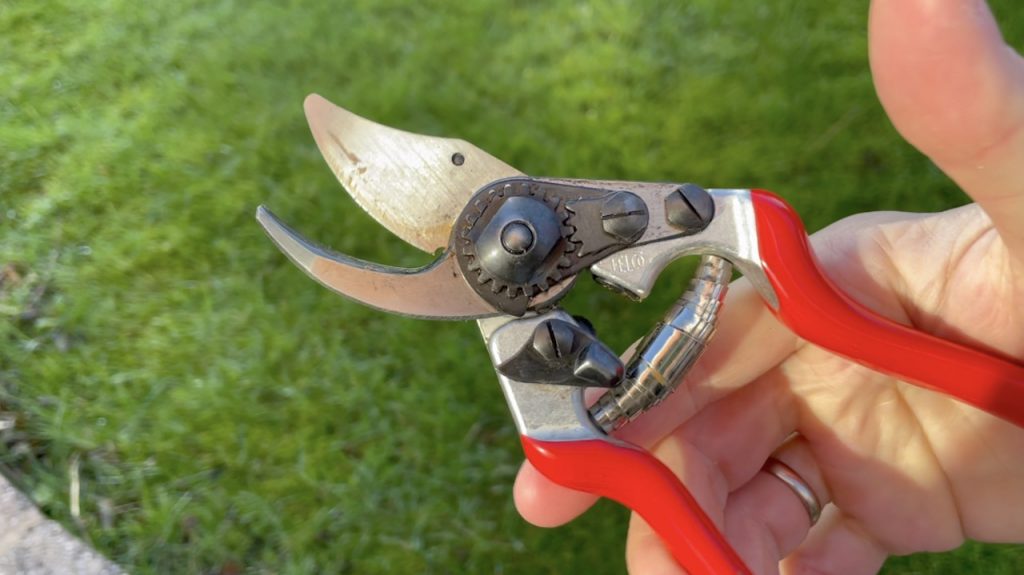
Using loppers for thick stems or sharp secateurs for thinner ones, cut one in three of the oldest, thickest stems as close to ground level as possible, ideally cutting to just above a low sideshoot or bud. This is the renewal element of the prune. Over three years of doing this consistently, the entire old framework of the shrub will have been replaced by younger, more productive wood. Do not be timid about this: removing old stems entirely is what keeps a philadelphus young and flowering freely over the long term.
Step 3: Cut flowered stems back to strong new sideshoots
For the remaining stems, cut back the shoots that have just flowered to a strong new sideshoot lower down the stem. You will be able to identify the new growth clearly at this time of year: it is the bright green, soft-textured growth emerging from the base and lower sections of the stems, in contrast to the older, darker, woodier growth above. Cut just above a strong new side shoot, leaving no stump above the cut. These new shoots will grow vigorously through the rest of the summer and will carry next year’s flowers.
Step 4: Thin remaining stems for air and light
Once the main pruning work is done, stand back and check that air and light can reach the centre of the shrub. Remove any weak, crossing or inward-growing stems entirely. Aim to leave roughly eight to ten strong, well-spaced stems to carry next year’s flowers. A shrub with a relatively open, airy structure will produce better flowers than a dense, congested one, and will be far less prone to the powdery mildew that can affect philadelphus in hot, dry conditions.
After pruning, apply a balanced granular feed around the base of the shrub and mulch with a five- to eight-centimetre layer of bark or well-rotted compost. The feed supports the strong new growth you need for next year’s flowers, and the mulch retains moisture through the rest of the summer while the new stems are developing. This aftercare step is often skipped, but makes a meaningful difference to the vigour of the new growth.
5. Renovating an overgrown philadelphus
If you have inherited an old, neglected philadelphus that has built up into a thicket of old stems over many years, renovation is possible, and the shrub will respond well to it. Philadelphus is considerably more resilient to hard pruning than many other flowering shrubs. Unlike roses or buddleja, though, the best approach is a staged renovation over two to three seasons rather than a single drastic cut, because flowering on the previous season’s wood means hard pruning will cost you a season’s display regardless of when you do it.
Year one: clear and open up
Immediately after flowering, remove all dead, diseased, and damaged stems. Then take out up to a third of the oldest, thickest stems at or near ground level. This alone will significantly open up the shrub, allowing light and air into the centre. You will still get some flowers from the remaining stems the following season. So it’s a nice light touch prune!
Year two: remove the next layer of old wood
Again, immediately after flowering, remove another third of the remaining old stems, prioritising the thickest and most congested. By now, the plant will have produced significant new growth from the base and lower sections, and the difference in vigour between the new and old wood will be very clear. Keep the strong new stems and continue to remove the old ones.
Year three: complete the renovation
By the third season, the remaining old wood can be removed, and the plant should now consist almost entirely of young, vigorous stems producing excellent flower displays. From this point, the standard annual maintenance prune keeps it in good order indefinitely.
💡 Top Tip
After renovation pruning, apply a generous mulch of well-rotted manure or garden compost around the base of the shrub and water in a balanced liquid feed. Renovation pruning is a significant stress on the plant and it needs the energy reserves to push strong new growth. Feed generously in the first two seasons of renovation and you will be rewarded with much faster recovery.
6. Why isn’t my philadelphus flowering?
This is the question I see most often in the forum from gardeners who have a healthy, leafy philadelphus that simply never puts on a flower display. In almost every case, one of these four causes is responsible.
1. Pruned at the wrong time of year
By far the most common cause. If your philadelphus was pruned in autumn, winter or spring, you removed the stems that were carrying next year’s flower buds. There is nothing you can do to recover this season’s display, but if you stop pruning at the wrong time and switch to immediately post-flowering pruning, the plant will flower again the following year. This mistake is understandable because autumn and late winter feel like the natural time to tidy up shrubs, but for philadelphus it is precisely the wrong time.
2. Too much shade
Philadelphus tolerates light shade but will flower very poorly in deep shade. If surrounding trees or buildings have gradually cast more shade over the plant since it was first established, the reduced light is likely suppressing flowering. Ideally, the plant needs at least four to five hours of direct sun to flower well. Consider what has changed in the surrounding planting and whether thinning nearby trees would help.
3. Overfeeding with nitrogen
A philadelphus that is regularly fed with a high-nitrogen fertiliser or is growing in very rich soil will produce abundant, lush foliage with very few flowers. The plant is putting its energy into vegetative growth rather than reproduction. If lawn feed has been applied nearby or the border has been heavily manured, this could be your issue. Stop all feeding for a season and see whether flowering improves.
4. Old, congested wood
An unpruned philadelphus gradually fills with old, unproductive wood that carries increasingly few flowers. If the plant has never been properly pruned or has not been pruned for several years, the congestion itself is suppressing the display. Begin the staged renovation approach above, and the flowering will return over the following two to three seasons.
7. Best philadelphus varieties for UK gardens
The choice of variety matters more for philadelphus than many gardeners appreciate. The size range among the different cultivars is enormous, from compact varieties suitable for small urban gardens to large specimens that will fill a significant corner of any garden. As Mock Oranges are ‘green blobs’ for the most part of the year, choosing the right size is key, as they can take up valuable real estate in a smaller garden. Getting the right size for your garden is also important because philadelphus does not do well with hard pruning to keep it artificially small.
‘Belle Etoile’
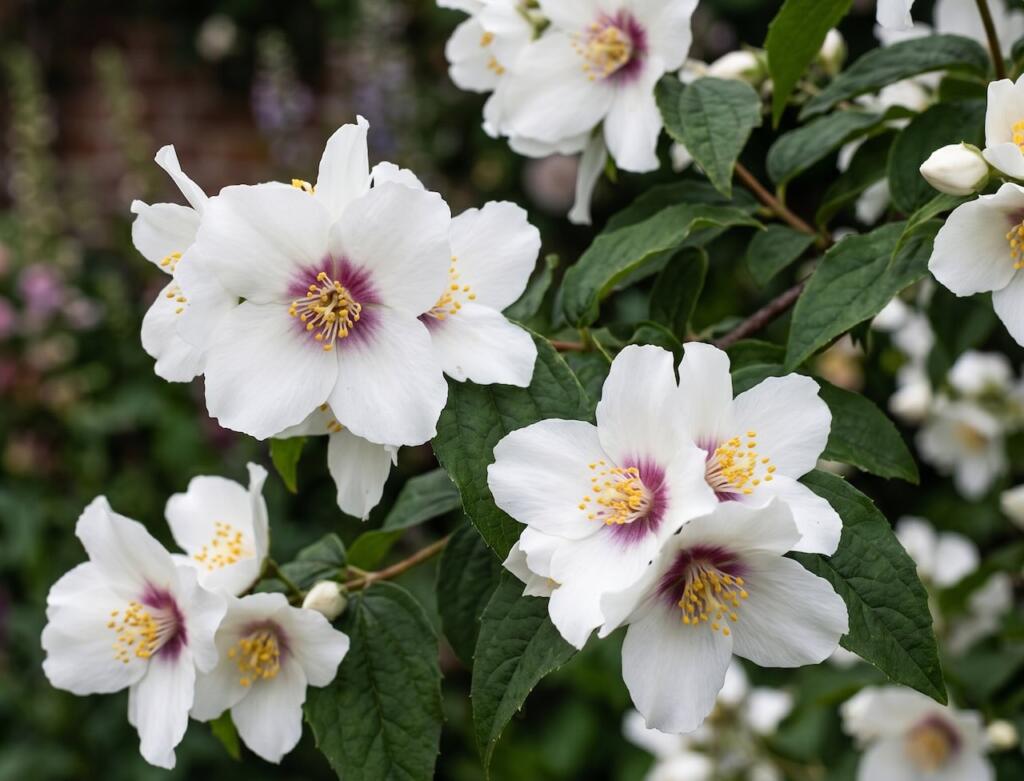
One of the most beautiful philadelphus cultivars and my most-used in professional designs. ‘Belle Etoile’ produces large, single white flowers with a distinctive pink-purple flush at the base of each petal, creating an elegant two-tone effect. The scent is outstanding, and the overall habit is relatively compact at around two metres. It holds the RHS Award of Garden Merit and is the variety I would choose above all others for a medium-sized garden. The flowers are slightly later than some varieties, often carrying into July.
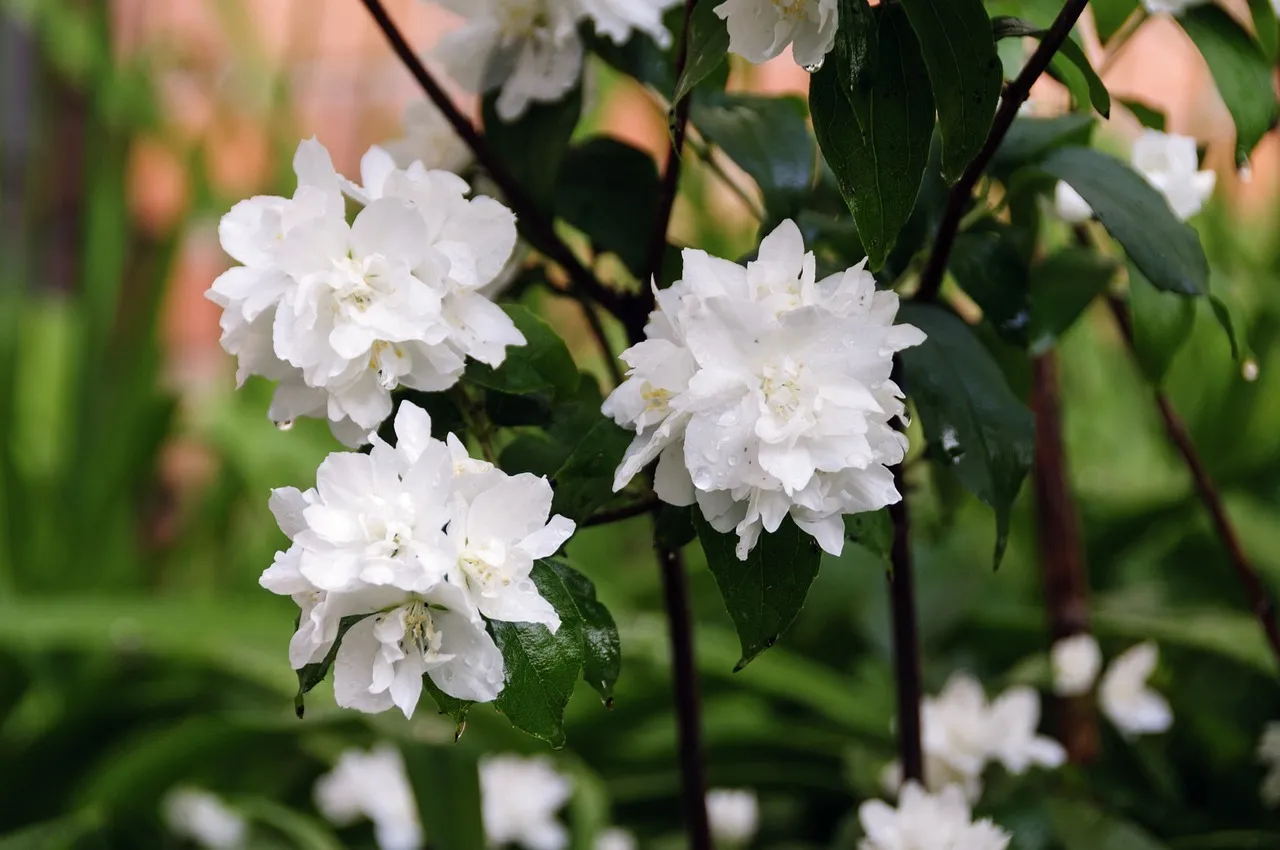
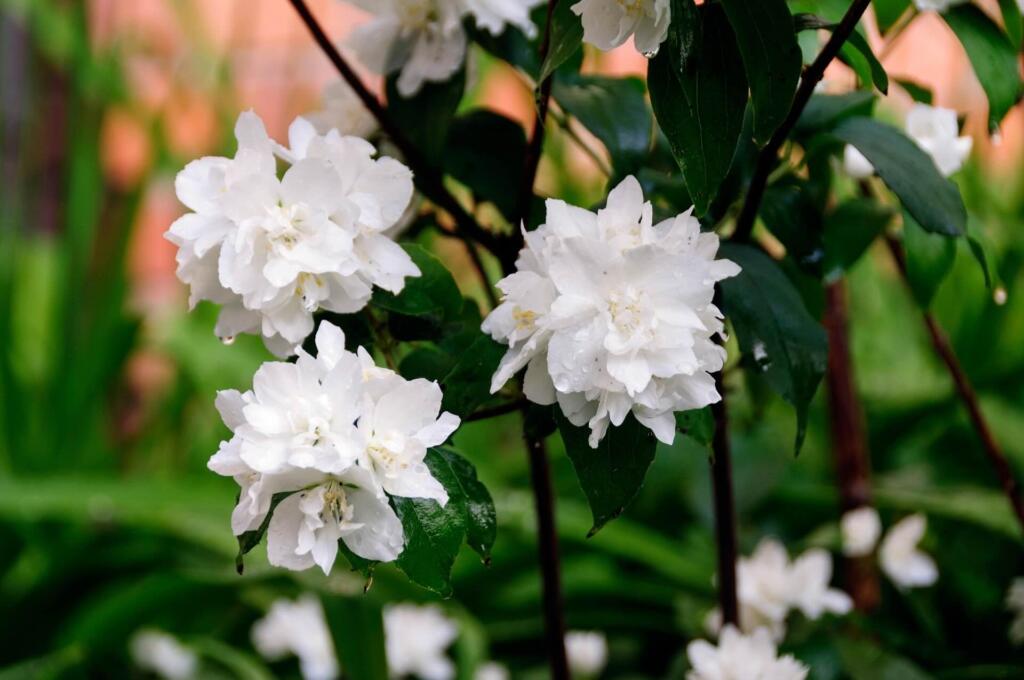
The best choice for small gardens or containers. Manteau d’Hermine’ is a compact, slow-growing variety reaching only about 75 centimetres to one metre, producing masses of small, double, intensely fragrant white flowers in proportion to its size. It holds the RHS AGM and is a genuinely useful plant for smaller spaces, where the range of species would quickly become overwhelming. The double flowers are particularly pretty up close.
‘Virginal’
The classic large philadelphus, reaching two and a half to three metres or more. ‘Virginal’ produces double white flowers with a very strong scent and has been grown in British gardens for well over a century. It is the variety most commonly encountered in older gardens and is extremely vigorous and tough. The RHS AGM confirms its reliable UK performance. For a large garden boundary planting or the back of a wide border, it is an excellent choice.
A different proposition from the other varieties: Philadelphus coronarius ‘Aureus’ is grown primarily for its foliage rather than its flowers. The leaves emerge brilliant gold-yellow in spring and hold that colour well into summer before gradually fading to lime green. The single white flowers are fragrant but secondary to the foliage effect. The RHS notes that clipping over this variety immediately after flowering encourages a fresh crop of bright golden-yellow leaves, as older leaves turn to green in summer. It prefers a position with some shade, as yellow-leaved plants may need a little protection from strong sun, unlike the flowering varieties, which prefer full sun.
Philadelphus is one of the most accommodating large flowering shrubs available for UK gardens. It tolerates a wide range of soil types, copes with light shade, is fully hardy throughout the UK, and once established requires little beyond the annual post-flowering prune. The vast majority of philadelphus are hardy so can be grown throughout the UK.
Soil and position
Philadelphus are tolerant of most soils in full sun or light shade. They dislike very heavy, permanently wet soils, and by avoiding poor, dry soils or deep shade, plants will be more vigorous and floriferous. For the best flowering, a sunny position is preferable. In light shade, the plant will grow well, but the flower display will be noticeably reduced. The ideal soil is reasonably fertile and well-drained without being bone dry in summer.
Planting
Plant philadelphus in autumn or spring. Autumn planting allows the roots to establish while the soil is still warm, giving the plant a head start the following growing season. Plant bare root plants in winter when the ground is not frozen or waterlogged. Incorporate lots of well-rotted manure or garden compost to improve the soil and water in well. Mulch in spring. Container-grown specimens can go in at any time of year as long as watering is consistent through the first summer.
Ongoing care
Beyond the annual prune, philadelphus is a very low-maintenance shrub. A light feed with a balanced fertiliser in spring every two or three years is beneficial but not essential in reasonable soil. Watering is only necessary in the first growing season or during an exceptional drought. Most philadelphus are hardy and do not need extra care over winter. Powdery mildew can occasionally affect plants in hot, dry conditions with poor air circulation, which is another reason to maintain an open, well-pruned structure.
9. Using philadelphus in garden design
Philadelphus occupies an interesting position in garden design: it is a shrub that earns its place entirely through its flowering period and fragrance, then recedes into a supporting role for the rest of the year. That quality of retiring modestly after its moment in the sun is actually very useful in design terms, because it allows you to plant it as a backdrop to more continuously interesting perennials and grasses without it competing for attention outside its peak period.
I use philadelphus most often at the back of mixed borders where its height provides structure and the June flowering coincides with roses, early geraniums and alliums in the mid-border. The white flowers and orange fragrance read particularly beautifully against the purples and blues of June-flowering perennials. ‘Belle Etoile’ with its pink-flushed petals works especially well alongside deep pink roses, where the tonal relationship between the flower colours is very satisfying.
For smaller gardens, ‘Manteau d’Hermine’ can be grown in a large container positioned near a seating area or doorway where the fragrance can be enjoyed at close range. The scent of philadelphus is strongest in the morning and evening, and positioning the plant where you sit at those times of day is one of those small design decisions that makes a large difference to the experience of the garden.
Philadelphus also works well as an informal screen or boundary planting where you want something deciduous that provides privacy during the growing season, flowers spectacularly in June, and is virtually maintenance-free beyond an annual prune. It is considerably more attractive for this use than laurel or leylandii, and the annual pruning keeps it within bounds without any of the complications of conifer management.
10. Frequently asked questions about pruning Philadelphus
When should I prune Philadelphus in the UK?
Prune immediately after flowering in late June or July. This is the single most important timing rule for this shrub. The flowers fade, and that is your signal to act. Pruning at any other time of year risks removing next year’s flower buds.
Why is my Philadelphus not flowering?
In most cases, it is pruning at the wrong time of year, particularly autumn, winter or spring. Other causes include too much shade, over-feeding with nitrogen, and old, congested wood. Check pruning timing first, as this accounts for the majority of cases.
Can I prune Philadelphus in autumn?
No. Autumn pruning removes the stems carrying next year’s flower buds. Leave the plant untouched from late summer until after the following year’s flowers have faded. Autumn pruning will cost you the entire next season’s display.
How hard can I prune Philadelphus?
You can remove up to a third of the oldest stems entirely at ground level each year without harming the plant. For renovation of a neglected specimen, spread the work over two to three seasons rather than cutting everything back at once. So don’t go crazy and just hack it back or you’ll lose flowers for the next few years. Philadelphus is considerably more resilient to hard pruning than many other flowering shrubs, but do it in stages.
How often does Philadelphus need pruning?
An annual prune immediately after flowering gives the best results. Missing a year occasionally is not a disaster, but consistent annual pruning prevents the build-up of old unproductive wood and maintains strong, free-flowering growth year after year.
Is Philadelphus fully hardy in the UK?
Yes, fully hardy throughout the UK, including northern England and Scotland. No winter protection is needed. The main care requirement is correct timing for post-flowering pruning.
Ready to stop guessing and start designing with confidence? My Garden Design for Beginners online course takes you from blank canvas to brilliant layout, step by step.
I’m Lee Burkhill, award-winning garden designer and BBC1’s Garden Rescue presenter, and I’ve built this course around the same principles I use for every client garden — practical, honest, and designed to actually work in the real world.
In 20 hours of flexible online study, you’ll cover:
Design principles that make any garden work
How to select and arrange plants like a professional
Styles and layouts to suit every size and shape of space
Video lessons, real-world case studies, quizzes, and a certificate on completion — all for just £199.
Enrol today and start designing your dream garden.
29
Garden Design Examples for Small Gardens: 30 Design Templates & Planting Plans
Garden Design Examples for Small Gardens: 30 Design Templates & Planting Plans: In this online gardening course, I’ll walk you through 30 fantastic garden designs, explaining the logic behind the layout, the plant choices, and take-home tips for applying them in your own garden.
Weekend Garden Makeover: A Crash Course in Design for Beginners
Learn how to transform and design your own garden with Lee Burkhills crash course in garden design. Over 5 hours Lee will teach you how to design your own dream garden. Featuring practical design examples, planting ideas and video guides. Learn how to design your garden in one weekend!
Garden Design for Beginners: Create Your Dream Garden in Just 4 Weeks
Garden Design for Beginners Online Course: If you want to make the career jump to becoming a garden designer or to learn how to design your own garden, this is the beginner course for you. Join me, Lee Burkhill, an award-winning garden designer, as I train you in the art of beautiful garden design.
Philadelphus is one of the finest fragrant shrubs available for UK gardens, and one of the most reliable once you understand its single most important requirement: prune immediately after flowering in late June or July, and never at any other time of year. Cut the flowered stems back to strong new sideshoots, remove one in three of the oldest stems entirely at the base each year, and feed and mulch after pruning. Do this annually, and your mock orange will reward you with an increasingly spectacular June display every year for decades, making your garden sing during the summer!
Your subscription could not be saved. Please try again.
Your subscription has been successful.
Lee Burkhill
Lee Burkhill, known as the Garden Ninja, is an award-winning garden designer and horticulturist with over 30 years of gardening experience and 15 years as a professional garden designer. A qualified RHS (Royal Horticultural Society) professional, Lee specialises in sustainable garden design and practical horticultural advice. He designs and presents on BBC1’s Garden Rescue and in leading gardening publications. Lee combines three decades of hands-on gardening knowledge with professional design qualifications to help gardeners create beautiful, functional outdoor spaces.