How to grow succulents in a container: Best evergreen succulent planting guide
Lee Burkhill: Award Winning Designer & BBC 1's Garden Rescue Presenters Official Blog
Beginner level
Succulents are the most forgiving plants you can grow in a container — once you know the one thing that kills them. So many gardeners are planting in pots and containers to inject some colour into your garden. However, do you find that after a while your pots start to look a mess? Do plants turn crispy and wilt? Are you shaking you fists to the sky whilst wanting a low maintenance high impact gardening idea? Then planting succulents is going to be your new secret weapon!
Quick Answer
To plant succulents in pots, mix two thirds multipurpose compost with one third perlite or horticultural grit, choose a container with drainage holes, arrange your plants starting with a central focal point, backfill firmly, clean any debris from the leaves, then water thoroughly and allow to drain completely. The key to success is free-draining soil and avoiding overwatering.
Planting in pots is a fantastic way for newbies to take their first steps into the world of gardening. Time and time again, though, I see new gardeners filling pots with a mix of annuals (plants that live for one season before dying) and hanging plants (Ivy and Fuschia are classics). The classic combinations Fuschia, Petunias, Violas, Lavender and Begonias are quickly stuffed into pots watered for a week or two and then left.
The problem is that we often pack far more plants into a container than we need. This is because it looks too empty when you first plant it. The next problem is that as they grow rapidly, they require more and more attention. Watering, feeding and deadheading become an almost daily task!
This page contains affiliate links for products I use and love. If you take action (i.e. subscribe, make a purchase) after clicking a link, I may earn some gardening commission, which helps me keep the Garden Ninja Blog free for all.
Why do my plants keep dying in pots?
Inevitably, people forget, or something else takes the place of the pot, such as a late night in the office or looking after their family. Then one day you realise you have a grey, crispy, dead collection of plants and say to yourself, ‘Gardening is just not for me‘.
Stop right there! It is for you; you just need to find the right plants to start out with gardening. Gardening is a brilliant activity not only for the environment but for your mental health. This guide is going to help you create a garden pot collection that’s not only engaging but low-maintenance. Meaning that you don’t need to set phone reminders just to keep it alive! We are going to achieve this by using evergreen succulent plants that, once planted, are low maintenance and keep their cute form all year long.
How to create a low-maintenance succulent container
Succulents are the terminators of the plant world; they are true survivors with an edgy look. All they require is free-draining soil, i.e., soil that’s not constantly soggy or wet. If you can give them this, then they will give you a year-round show, welcoming you home each day with their spiky petals outstretched and waving. As if they are saying ‘Welcome home!’ They are evergreen, meaning that when everyone else’s flowering pots have died, yours is still going strong.
This guide will help you create a beautiful Succulent pot display that will get you started on your journey into the fascinating world of horticulture with no drama.
Choosing the right succulents for UK growing
One of the most important lessons I have learnt over twenty years of professional garden design is that matching the plant to the conditions is everything. With succulents, this means understanding which will genuinely thrive outdoors year-round in the UK climate and which will die the moment a frost arrives. The answer lies in the RHS hardiness ratings, which run from H1 (heated glasshouse only) through to H7 (exceptionally hardy, surviving temperatures below minus 20°C).
The single most important rule for UK succulent growers: it is wet that kills succulents more reliably than cold.
Even a fully hardy Sempervivum will rot if it sits in waterlogged compost through a British winter. Drainage is everything. With that in mind, here are the varieties I recommend, along with their RHS hardiness ratings.
🌿 UK Succulent Hardiness Guide
Variety
RHS Rating
Min Temp
UK Growing
Sempervivum (Houseleek)
H7
Below -20°C
Outdoors year-round, no protection needed
Sedum (hardy types)
H5-H7
-10 to -20°C
Outdoors year-round; some Mexican species are tender
Echeveria
H2
1 to 5°C
Indoor or greenhouse; outdoors in summer only
Agave (most species)
H1c
5 to 10°C
Indoor; bring outside summer only
Aloe vera
H1c
5 to 10°C
Indoor; can enjoy summer outdoors in sheltered spots
Crassula (Jade plant)
H1c
5 to 10°C
Indoor; exception: C. sarcocaulis is H4
Aeonium
H1c
5 to 10°C
Indoor in winter; outdoors from late May to September
For complete beginners in the UK, I always recommend starting with Sempervivums. They are fully hardy, need almost no attention, and come in a jaw-dropping range of colours, textures and sizes. Once you have mastered Sempervivums, you can start experimenting with the more tender varieties indoors.
These are the four succulents I reach for first when designing outdoor container displays in the UK. Every one of them is genuinely hardy and will stay outside year-round without any cosseting, provided you give them free-draining soil and a sunny spot. All are available from Amazon UK.
🌿1. Sempervivum (Houseleek) — RHS H7
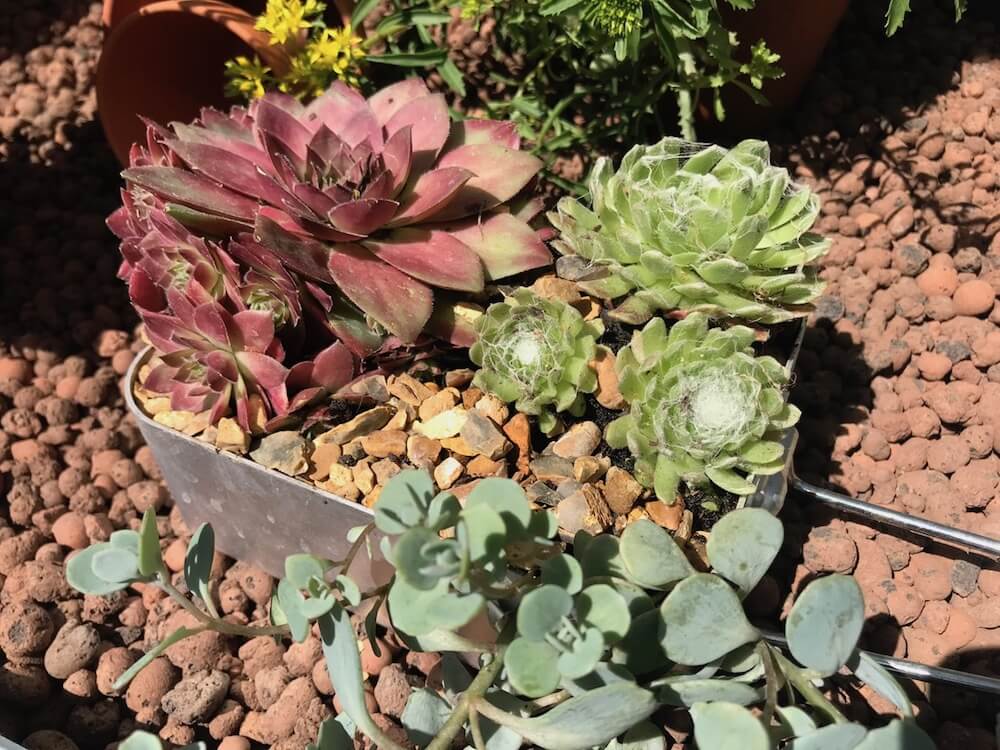
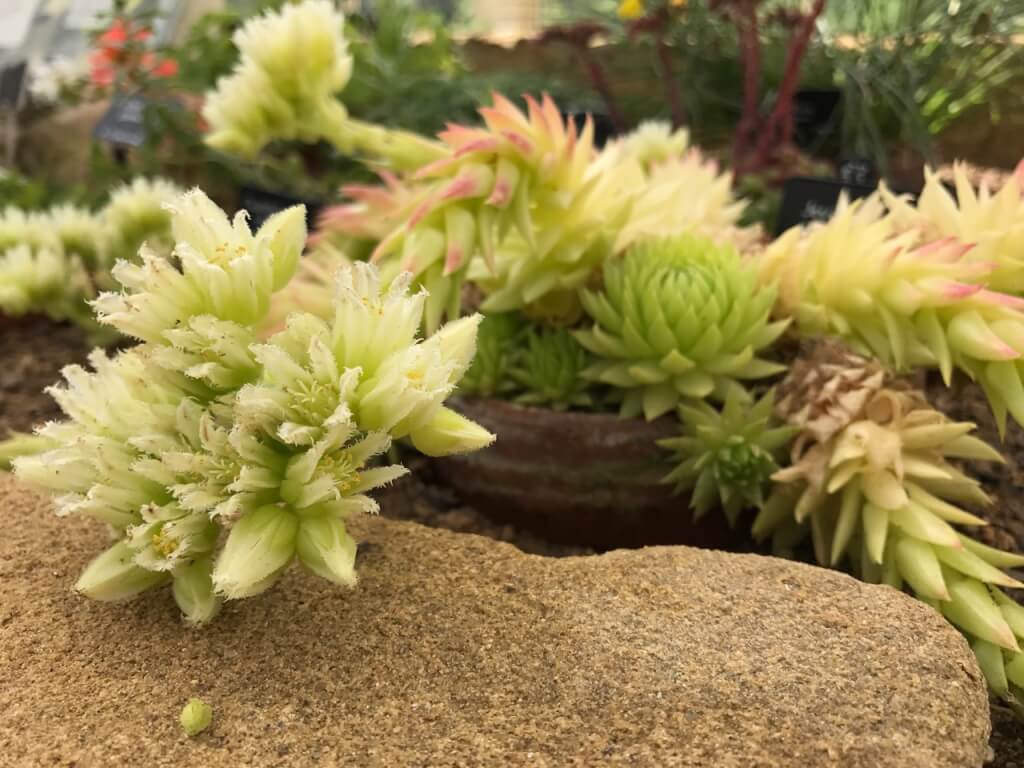
The houseleek is my number one recommendation for outdoor UK succulent containers, and it has been for years. Fully hardy to below minus 20°C (RHS H7), it survives anything a British winter can throw at it and asks for almost nothing in return beyond free-draining soil and a sunny position. One plant produces offsets so freely it will fill a trough within two or three seasons. The range of colours available is extraordinary — deep burgundy, near-black, lime green, silver and rose — and the tight geometric rosettes look architectural and deliberate in a container all year round.
Best for: Outdoor containers, troughs, rockeries | Position: Full sun to partial shade | UK Hardiness: H7 — outdoors year-round
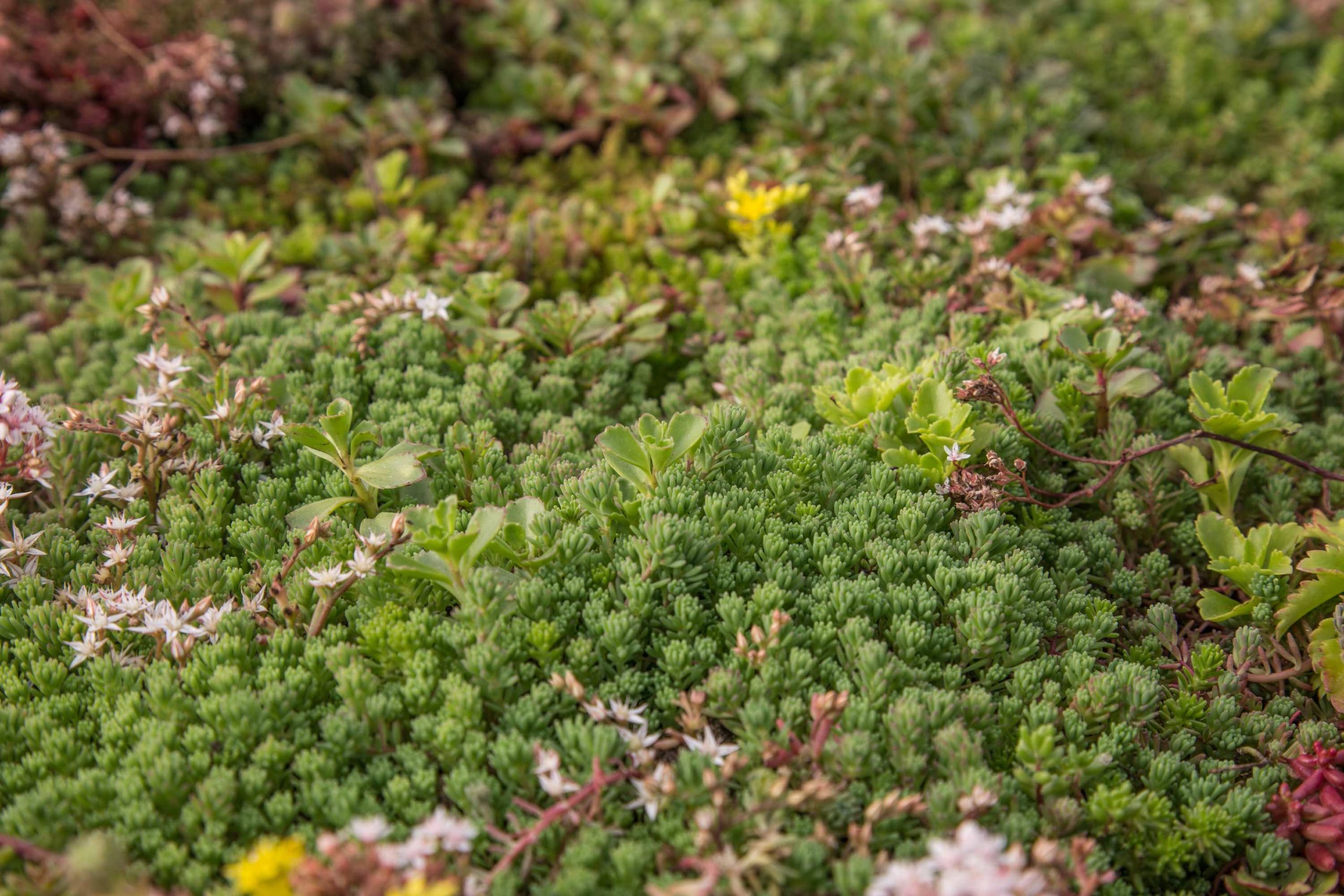
Hardy Sedums are the workhorses of the outdoor succulent world in the UK. Sedum spathulifolium, with its flat silver-grey rosettes and bright yellow summer flowers, is one of the most striking mat-forming succulents you can grow in a container or rockery. Sedum acre, the biting stonecrop, is equally tough and carpets surfaces with tiny bright green leaves. Both are rated H5 to H7 by the RHS and will happily survive in a container through even a severe British winter. They are also excellent at suppressing weeds in low containers and wall troughs where little else will thrive.
Best for: Outdoor containers, wall troughs, rockeries | Position: Full sun, well-drained | UK Hardiness: H5-H7 — outdoors year-round
Delosperma is the succulent I pull out when clients want colour as well as drought tolerance outdoors. The ice plant produces an extraordinary flush of vivid daisy-like flowers from June through to September in shades of magenta, orange, yellow and white, held above fleshy, cylindrical leaves that glitter in sunlight as though frosted. Delosperma cooperi is the most widely available species in the UK and is rated H4 to H5, meaning it will handle most British winters in a sheltered spot with good drainage. In colder northern gardens, a gritty compost mix and a slightly protected south-facing position will see it through reliably.
Best for: Outdoor containers, wall tops, sunny borders | Position: Full sun, very well-drained | UK Hardiness: H4-H5 — hardy in most of the UK
Jovibarba is the Sempervivum’s close cousin and is every bit as tough, but with a distinctly different character. Where Sempervivum produces flat offsets on short stolons, Jovibarba heuffelii forms tighter, more upright rosettes that split and divide directly from the base, giving a denser, more structured appearance in a container. Jovibarba hirta produces small offsets called rollers that literally detach and roll away to root elsewhere, which is one of the more endearing things you will see in a succulent display. Fully hardy at H7, it thrives in the same conditions as Sempervivum and is a genuinely underused plant that always draws comment when I include it in a design.
Best for: Outdoor containers and rockeries alongside Sempervivum | Position: Full sun, free-draining | UK Hardiness: H7 — outdoors year-round
After twenty years in professional garden design, if I had a pound for every time someone told me their succulents had died in regular potting compost, I would have enough for a Chelsea Flower Show season ticket. Standard multipurpose compost holds far too much moisture for succulents. Their roots evolved in rocky, mineral-rich soils where water drains away within minutes of rainfall. Give them the same conditions in a pot, and they will thrive for years.
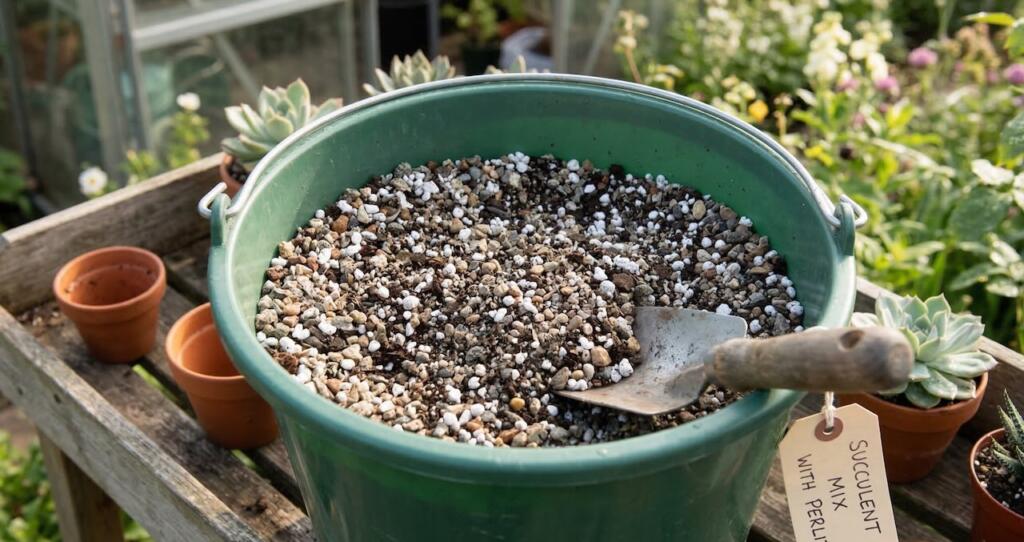
My go-to recipe is two-thirds multipurpose compost mixed with one-third horticultural grit or perlite.
If you want to go a step further and replicate what specialist growers use, switch the multipurpose for John Innes No. 2, which has a loam base that holds just enough nutrients without becoming waterlogged. A 60:40 ratio of John Innes No. 2 to horticultural grit is what I use for my more precious specimens.
💡 Top Tip
Never use builders’ sand in your succulent mix. It has a very fine particle size that compacts almost like cement when wet, doing the exact opposite of what you want. Always use coarse horticultural grit with particles of 1 to 4mm. And avoid recycled municipal compost, which can contain herbicide residues that stress succulent roots.
One thing I want to address head-on is the popular advice to put a layer of gravel in the bottom of your pot for drainage. This is a myth, and it actually makes drainage worse, not better. Water moving down through soil stops when it hits a coarser layer, creating what soil scientists call a perched water table. This raises the saturated zone closer to your plant’s roots, increasing the risk of rot.
The correct approach is a uniformly gritty mix throughout the pot’s entire depth, with proper drainage holes at the bottom. A taller pot naturally lowers this saturated zone, keeping it farther from the roots. So ditch the gravel layer and invest in a better compost mix instead.
If you prefer to buy a ready-mixed succulent compost rather than blending your own, I have had excellent results with Westland Cacti and Succulent Potting Mix, which is widely available and good value.
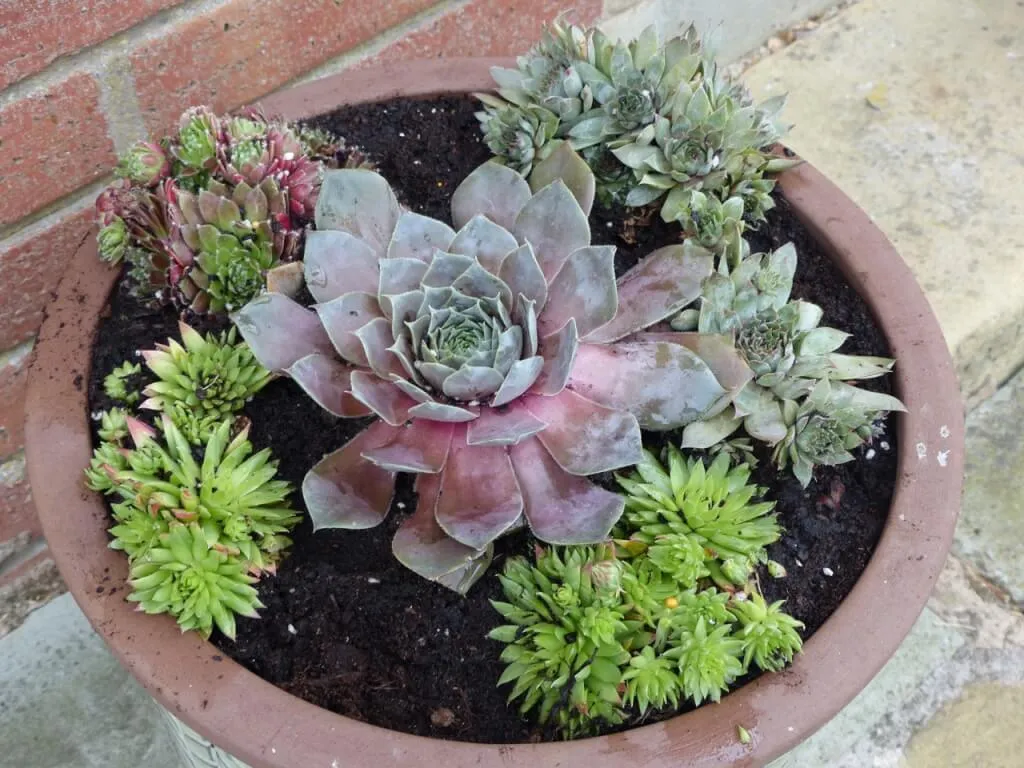
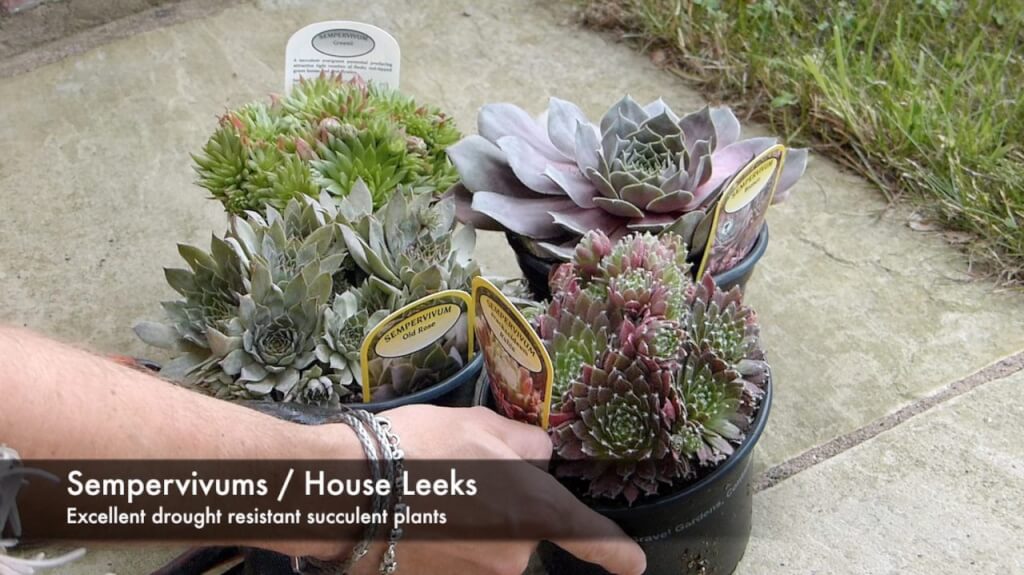
In this example, I’ve chosen House Leeks or Sempervivums. I’ve chosen them because they come in an array of colours and textures. They are also amazing value. They have a really distinctive look, which I think lends itself perfectly to a container. They cry out to be touched and examined, making it a great container idea for a front door or statement piece.
2. Choose a free-draining potting mix
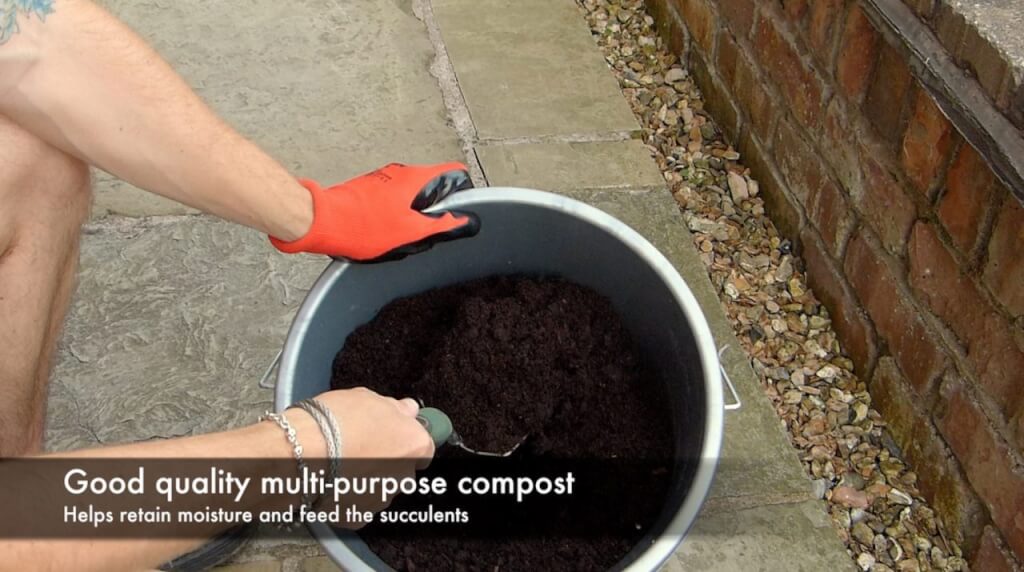
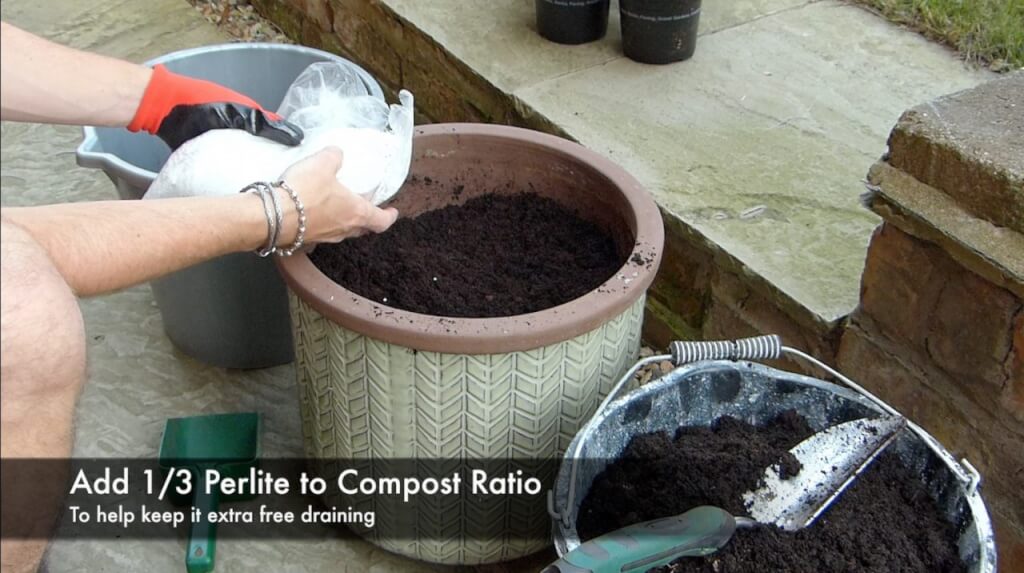
Fill your pot with a mixture of 2/3 multi-purpose compost with 1/3 perlite (or other grit/gravel). This is to ensure the growing media is really free-draining. Succulents hate soggy bottoms. If their roots sit in water, they will rot and die. This is the Succulents’ only real requirement, so if we can give them this now, it saves you any plant grief later on.
3. Arrange your Succulents
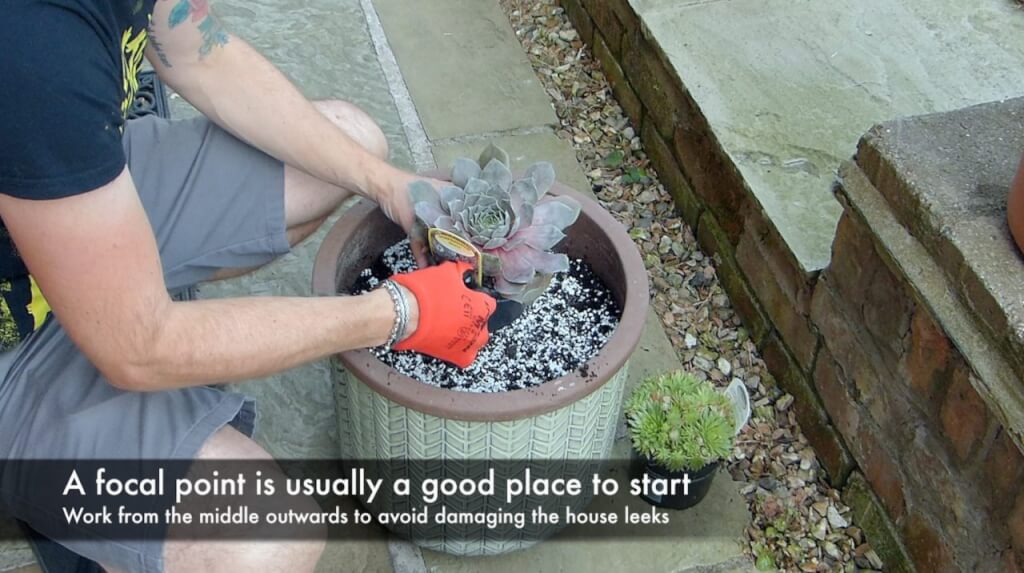
I like to start in the middle with a focal point. This helps draw attention to the largest-sized Sempervivum and gives a more natural arrangement. It also means you don’t damage the others while arranging them. Succulents can be quite tender when planting, so a little care now can help prevent damage. If you do damage them, don’t worry, most will survive, so don’t beat yourself up.
4. Backfill carefully with compost.
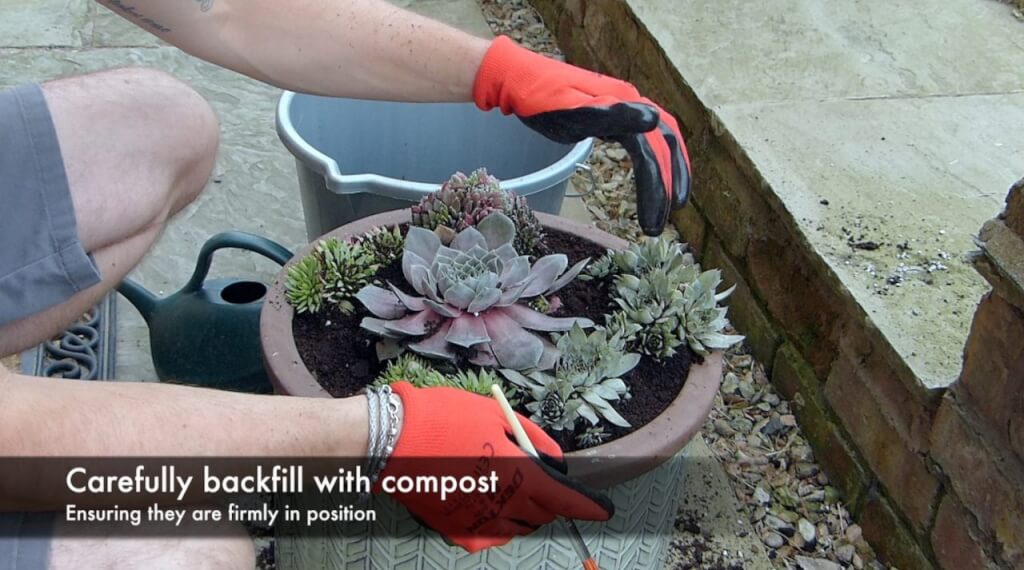
This is key to their survival. You need to make sure they are well compacted with free-draining compost. This is to ensure they have a good footing in the pot. If you don’t firm them in well enough, roots can be exposed, causing them to dry out or even sink when watered. I use a finger or two to push the growing medium around them.
5. Flick out any compost from the leaves
Another good tip is to use a small paintbrush, like the kind you use to paint a picture. You can use this to flick out any dust or debris from the house leaks, which sometimes happens when planting.
6. Water thoroughly to ensure that the roots have had a good soak.
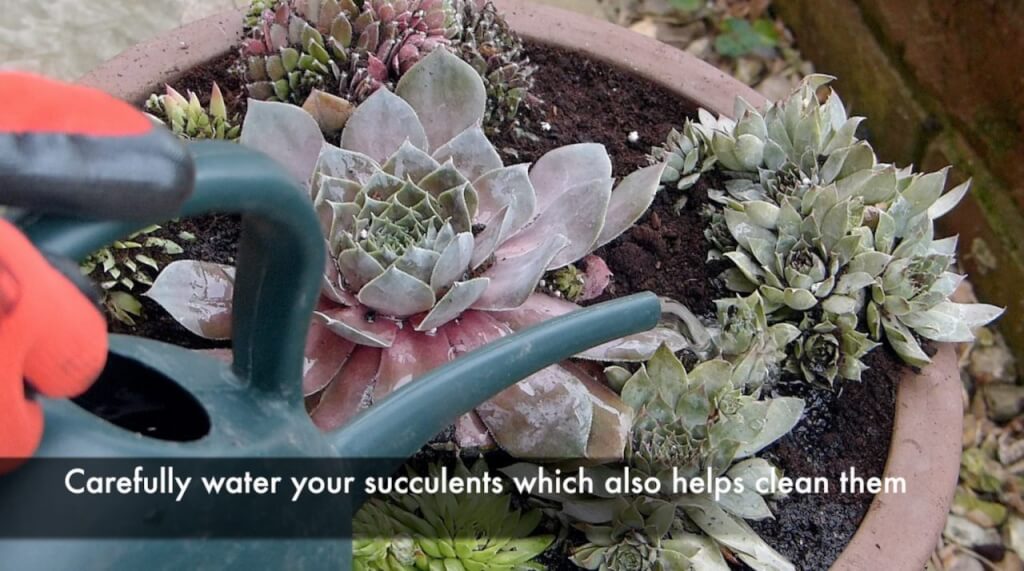
You’ve just transplanted them, so they now require watering to help them settle in. For the first couple of weeks, I would recommend giving them a good water each week until they start to send out their own roots.
You should now have your beautiful, striking succulent garden display ready to show off to the world. Sempervivums are evergreen, meaning they will keep their colour year-round, and as long as they don’t get hit by frost, they will survive nearly every type of weather!
💡 Top Tip
Once planted, dress the surface of the compost with a thin layer of horticultural grit or small pebbles. This top-dressing looks smart, helps water drain away from the base of the rosettes and reduces the risk of the crown sitting in wet compost. It is a trick I use on every succulent display I design professionally.
Indoor vs outdoor growing in the UK
Where you position your succulents in the UK depends almost entirely on which variety you have chosen. Refer back to the hardiness table above, and you will quickly see that Sempervivums and hardy Sedums can live outside year-round without any fuss, while Echeverias, Aeoniums and Aloes need to come indoors before the first frost, which in most parts of the UK falls between mid-October and November.
For indoor succulents, a south-facing windowsill is the gold standard position. Even the sunniest south-facing window in the UK provides roughly half the light intensity of outdoors, because glass filters out key wavelengths. In winter, daylight hours drop to seven or eight hours in southern England and even less further north.
If your plants start stretching towards the light, developing elongated stems and wide gaps between leaves, this is called etiolation, and it is a sign they need more light. Unfortunately, the stretched stem is permanent and cannot be reversed. The only fix is to behead the rosette and propagate it somewhere with better light conditions.
If your home does not have a south-facing window, a grow light positioned 15 to 20cm above the plants, run for 12 to 14 hours a day, will solve the problem entirely. Full-spectrum LED grow lights in the 5000 to 6500K range work brilliantly and are surprisingly affordable.
For outdoor succulents, always wait until after the last frost before moving tender varieties outside. In most of the UK, this means waiting until mid-May, although in the south, you may be safe from the end of April. When moving indoor succulents outside, acclimatise them gradually over one to two weeks by starting them in a sheltered, partially shaded spot before moving them into full sun.
Moving a succulent directly from a dim indoor environment to bright direct sunshine will cause sunburn, which shows as pale, bleached or papery patches on the leaves that are permanent.
How to water succulents correctly
Overwatering is, by a considerable distance, the most common reason succulents die. The reason is simple: succulents evolved to store water in their leaves, stems and roots precisely because they come from environments where rain is infrequent. When you water them constantly, the roots sit in wet compost and begin to rot. The signs of overwatering are leaves that become translucent, soft or mushy, and stems that turn black at the base. By the time you can see these symptoms, the rot is usually already advanced.
The method I teach all my clients is what I call the three Ds: Drench, Drain, Dry. Water thoroughly until water runs freely from the drainage holes (drench), make sure the pot drains completely and is not left sitting in a saucer of water (drain), then wait until the compost is completely dry before watering again (dry). This single method, if followed consistently, will solve almost every overwatering problem.
One technique I particularly recommend for indoor succulents is bottom watering. Rather than pouring water over the top of the plant (which can sit in the crown and cause rot, especially on tight rosette types like Echeveria), place the pot in a shallow tray of water for 10 to 15 minutes and allow the compost to absorb moisture from the base upwards. This encourages the roots to grow downwards in search of water and keeps the crown dry. A soil moisture meter is a genuinely useful tool for beginners who are unsure when to water.
Succulents in pots do benefit from feeding, but the timing and type of fertiliser matter enormously. A high-nitrogen feed, which is what most general liquid feeds contain, will cause soft, lush growth that is attractive to pests and prone to rot. What you want is a low-nitrogen feed, which encourages compact, sturdy growth. A half-strength tomato fertiliser applied monthly from April through to September works brilliantly and is exactly what the RHS recommends. Baby Bio Cactus Food is the most popular option on Amazon UK and for good reason.
The best time to repot succulents is in spring, when they are just beginning to emerge from their winter rest. Signs that a succulent needs repotting include roots growing out of the drainage holes, the plant becoming unstable in the pot or growth slowing noticeably despite correct care. When repotting, choose a container only one to two inches larger than the current one. Going too large means the excess compost retains moisture the roots cannot use, increasing the risk of rot. Water sparingly for the first two weeks after repotting to allow any damaged roots time to recover.
How to propagate succulents
One of the great joys of succulents is how freely they propagate. Once you have a thriving display, you can generate dozens of new plants for free using three main methods. The best time to propagate in the UK is from April through to August, when warmth and light are on your side.
Leaf propagation works brilliantly for Echeveria, Sedum and Crassula. Choose a healthy, plump leaf and twist it cleanly from the stem with a slight side-to-side motion, ensuring the entire base, including the meristem tissue, comes away. Lay the detached leaves on the surface of barely damp, gritty compost in a bright spot out of direct sun. Mist lightly every two to three days. Tiny rosettes and roots will emerge from the base of the leaf within three to eight weeks. Do not bury the leaf.
Stem cuttings, sometimes called beheading, are the quickest way to propagate leggy or etiolated succulents. Cut two to three inches of healthy stem with clean, sharp scissors or a knife, strip the lower leaves to expose an inch of bare stem, then leave the cutting somewhere dry and bright for three to four days to allow the cut end to callous over. Once calloused, insert the stem into gritty compost and water lightly after one week. This method works well for Aeonium, leggy Echeveria and Jade plants.
Offset division is the easiest method of all and is how Sempervivums naturally reproduce. The mother plant sends out small rosettes on short stolons, called chicks or offsets, which can be separated once they have developed their own small root system. Simply tease them gently away from the parent plant, allow the base to dry for a day or two, then pot into gritty compost. Sempervivums in particular produce offsets prolifically, meaning one initial plant can fill an entire trough within two or three growing seasons.
UK seasonal succulent care calendar
Understanding the rhythm of the growing year is something I emphasise in all my garden design work, and succulents are no exception. Their needs change significantly across the seasons, particularly in the UK, where winter light levels are dramatically lower than in summer.
📅 UK Succulent Seasonal Care Calendar
March
Begin increasing watering gradually. Repot into fresh compost if roots are showing. Check for pest activity after the winter months.
April
Start monthly feeding with half-strength cactus fertiliser. Begin taking cuttings and dividing offsets. Move plants to brighter spots as light levels increase.
May
After the last frost (mid-May in most of the UK), begin acclimatising tender succulents to outdoor conditions gradually over one to two weeks before placing in full sun.
June to August
Peak growing season. Water more frequently, feed monthly. Watch for mealybugs and vine weevil. Enjoy the display.
September
Reduce watering. Give a final feed using a high-potash fertiliser to harden plants before winter. Begin planning to bring tender varieties indoors.
October
Bring all tender succulents (Echeveria, Aeonium, Aloe, Crassula) indoors before the first frost. Position near a south-facing window or under grow lights.
November to February
Minimal watering every three to four weeks. Keep in the brightest position available. Avoid cold draughts and do not feed. Allow plants to rest.
Common succulent mistakes and how to avoid them
Over the years of filming BBC Garden Rescue and working with garden owners across the UK, I have seen the same mistakes crop up again and again with succulents. Most of them are entirely avoidable once you know what to look for.
The biggest and most consistent killer is overwatering. If your succulent has translucent, soft or mushy leaves, or the stem is blackening at the base, root rot has set in, and you need to act immediately. Remove the plant from its pot, cut away any black or mushy roots with clean scissors, allow the healthy roots to air dry for a day or two, then repot into fresh, dry, gritty compost. Do not water for a week after repotting.
The second most common mistake I see is using the wrong compost. Standard multipurpose compost is designed to retain moisture, which is brilliant for most plants and catastrophic for succulents. Mixing in at least one-third grit or perlite before planting costs very little and makes an enormous difference to long-term survival.
Choosing a container without drainage holes is an easy mistake that costs plants their lives. Decorative pots and glass terrariums look lovely, but trap water with no escape route. If you fall in love with a pot without drainage holes, use it as a cachepot and place a properly planted terracotta pot inside it, removing the cachepot each time you water to allow proper drainage.
Not rotating indoor plants is a mistake that surprises people when I point it out. A succulent on a windowsill will lean dramatically towards the light within weeks if you do not turn the pot a quarter turn every time you water. Misting instead of proper watering is another common error: it wets the leaves without delivering enough moisture to the roots, creating the worst of both worlds. Always water at the base of the plant, not over the foliage.
⚠️ Important
Many popular succulents including Euphorbia species (which are sometimes sold as succulents) contain a toxic milky sap that is an irritant to skin and eyes and is harmful if ingested. Echeveria and Sempervivum are generally considered non-toxic to humans but can cause mild digestive upset in dogs and cats if eaten in quantity. Always check the specific variety if you have young children or pets.
Succulent pests and problems in the UK
Most succulent guides mention mealybugs, and rightly so, but there is a UK-specific pest that rarely gets the attention it deserves: vine weevil. This is the pest I see most often damaging container succulents in UK gardens, and it can kill a plant very rapidly because it attacks underground, where you cannot see it until the damage is done.
Vine weevil grubs are white, C-shaped larvae up to 10mm long that feed on roots and can bore directly into the fleshy stems of succulents from autumn through to spring. The first sign is usually a plant that suddenly collapses or can be pulled from the compost with almost no root system attached.
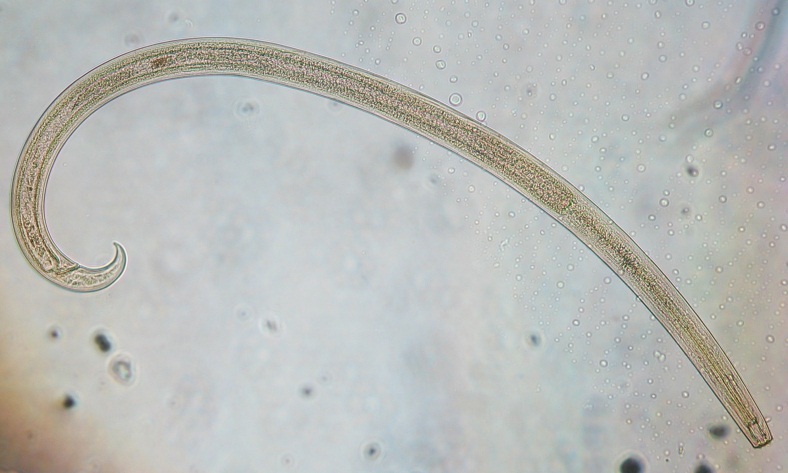
Treatment is with Steinernema kraussei nematodes applied as a soil drench when the soil temperature is at or above 5°C, typically from March to April and again in September. These are biological controls that seek out and kill the larvae without harming your plants, the soil or local wildlife.
Mealybugs are the most frequently spotted succulent pest, appearing as small, white, fluffy or waxy deposits in the crevices between leaves and at the base of rosettes. They are sap-suckers and will weaken a plant significantly if left unchecked. The most effective treatment I have found is 70 per cent isopropyl alcohol applied directly onto the mealybugs with a cotton bud or small paintbrush. It kills them on contact without damaging the plant. Always quarantine any new succulent you bring home for at least two weeks before placing it near your existing collection, as mealybugs spread rapidly between plants.
Caring for Succulents
Now, whilst this creation is super low-maintenance, there are a few things you can do to ensure your succulents survive and even thrive for years.
Feed your succulents once a month from April to September using a half-strength cactus or tomato fertiliser. Avoid high-nitrogen general feeds.
Ensure they don’t get waterlogged. Position them out of the way of a leaky gutter or a known wet spot.
Water every couple of weeks in the growing season, or more frequently in hot weather. Always let the compost dry out completely between waterings.
Bring tender varieties indoors by mid-October before the first frost arrives.
Your subscription could not be saved. Please try again.
Your subscription has been successful.
Frequently asked questions about planting succulents
Can you grow succulents outdoors in the UK?
Yes, but it depends entirely on the variety. Sempervivums (houseleeks) and many Sedums are fully hardy in the UK, rated H7 by the RHS, meaning they can stay outside year-round, including through severe winters. Echeveria, Aeonium, Aloe vera and Crassula are all tender and must be brought indoors before the first autumn frost, typically by mid-October. The critical rule for all outdoor succulents is free-draining soil. Winter wet is more damaging in the UK than winter cold.
Can you use regular potting compost for succulents?
Standard multipurpose compost alone is not suitable for succulents because it retains too much moisture. You need to amend it by mixing in one-third horticultural grit or perlite before planting. A ratio of two-thirds compost to one-third grit is a reliable starting point. For specialist growing, switch the multipurpose for John Innes No. 2 and use a 60:40 ratio with coarse grit. Never use builders’ sand, which compacts and becomes impermeable when wet.
Should you put rocks or gravel at the bottom of a succulent pot?
No. This is a very widely repeated piece of advice that is actually counterproductive. Placing a coarse layer at the bottom of a pot creates what soil scientists call a perched water table, where water moving down through the compost stops when it hits the coarser material and forms a saturated zone that sits directly above the gravel. This raises the wet layer closer to the roots, increasing rather than reducing the risk of rot. The correct approach is to use a uniformly gritty compost mix throughout the pot and ensure the pot has proper drainage holes.
How often should you water succulents indoors?
In spring and summer, watering every 7 to 14 days is a reasonable guide, but the most reliable method is to test the compost rather than follow a fixed schedule. Water only when the compost is completely dry to a depth of 2 to 3cm. In autumn and winter, stretch this out to every 3 to 4 weeks. The mantra I give all my clients is: Drench, Drain, Dry. Water thoroughly, ensure the pot drains fully, then wait until the soil is completely dry before watering again.
Why is my succulent stretching?
Stretching, or etiolation, is caused by insufficient light. The plant is reaching towards its nearest light source and elongating its stem in the process. Unfortunately, the stretched growth is permanent and cannot be corrected by moving the plant to a brighter position, though better light will prevent further stretching. The fix is to behead the healthy rosette at the top of the stretched stem and propagate it as a stem cutting in a brighter location. The remaining stem can also produce new offsets.
Can you propagate succulents from leaves?
Yes, for a wide variety of plants, including Echeveria, Sedum and Crassula. Twist a healthy leaf cleanly from the stem, ensuring the entire base and meristem tissue comes away cleanly, then lay it on the surface of damp, gritty compost. Mist every two to three days and keep in a bright position out of direct sun. Tiny new rosettes and roots will emerge from the base of the leaf within three to eight weeks. This is a slow process, but deeply satisfying when it works. Sempervivums and Aeoniums do not propagate reliably from leaves; use offset division or stem cuttings for these.
Do succulents need drainage holes?
Yes. A container without drainage holes is almost certain to eventually kill a succulent, regardless of how carefully you water it. Even experienced growers find it nearly impossible to judge the correct amount of water when there is nowhere for the excess to go. If you want to use a decorative pot without drainage holes, place it as a cachepot around a properly planted terracotta pot with drainage holes. Remove the inner pot each time you water so it can drain freely before being returned.
Learn How to Design Your Own Garden
Now you understand everything there is to know about succulents, why not take your skills to the next level with some online design training? My Garden Design for Beginners Course is here to help take your garden from average to amazing with an affordable online course, no matter how little your experience with plants.
This course offers step-by-step guidance from me, Lee Burkhill, award-winning garden designer and presenter on BBC1’s Garden Rescue. You’ll go from a garden design novice to a confident designer equipped to tackle any green space.
Enrol now for just £199 and start your journey toward garden design mastery!
29
Garden Design Examples for Small Gardens: 30 Design Templates & Planting Plans
Garden Design Examples for Small Gardens: 30 Design Templates & Planting Plans: In this online gardening course, I’ll walk you through 30 fantastic garden designs, explaining the logic behind the layout, the plant choices, and take-home tips for applying them in your own garden.
Weekend Garden Makeover: A Crash Course in Design for Beginners
Learn how to transform and design your own garden with Lee Burkhills crash course in garden design. Over 5 hours Lee will teach you how to design your own dream garden. Featuring practical design examples, planting ideas and video guides. Learn how to design your garden in one weekend!
Garden Design for Beginners: Create Your Dream Garden in Just 4 Weeks
Garden Design for Beginners Online Course: If you want to make the career jump to becoming a garden designer or to learn how to design your own garden, this is the beginner course for you. Join me, Lee Burkhill, an award-winning garden designer, as I train you in the art of beautiful garden design.
Your subscription could not be saved. Please try again.
Your subscription has been successful.
Lee Burkhill
Lee Burkhill, known as the Garden Ninja, is an award-winning garden designer and horticulturist with over 30 years of gardening experience and 15 years as a professional garden designer. A qualified RHS (Royal Horticultural Society) professional, Lee specialises in sustainable garden design and practical horticultural advice. He designs and presents on BBC1’s Garden Rescue and in leading gardening publications. Lee combines three decades of hands-on gardening knowledge with professional design qualifications to help gardeners create beautiful, functional outdoor spaces.