Garden Rescue Behind the Scenes: a look behind how the TV show is made
Lee Burkhill: Award Winning Designer & BBC 1's Garden Rescue Presenters Official Blog
Beginner level
Garden Rescue is one of BBC1's flagship gardening shows pulling in millions of viewers each afternoon. As one of the lead presenters and designers on the show, I'm going to show you how the show works behind the scenes. Giving all the gossip on how the gardens are designed, built and what really goes on! Come join me, Lee Burkhill as I show you how this incredible show works.
Quick Answer
Garden Rescue is filmed over two days per garden: day one for groundworks and structures, day two when presenters arrive and planting is completed. Gardens are filmed a full year before broadcast. Contributors pay for all materials and plants (minimum £3,000 budget) while design fees and labour are covered by the production. The designer never visits the garden before filming day.
Have you ever wondered how Garden Rescue is filmed and how long it takes? As a presenter on BBC1’s Garden Rescue for nearly a decade, I will explain how the show works, how contributors are chosen, how long the build takes, how we design the gardens, how plants are sourced, and how the whole series comes together. I will then show you how you can apply to be on the show yourself.
Grab a brew, and let’s peek behind the curtain on the BBC’s popular gardening show, Garden Rescue!
Garden Rescue is the BBC’s popular garden makeover series, now in its tenth series on BBC One. The format is simple and compelling: two designers compete to win a homeowner’s garden, each presenting their own design within the contributor’s budget. The homeowner chooses one design, and the losing designer then joins the winning team to build it together. The whole build happens in two days, the garden is revealed to the homeowner at the end of day two, and the result is what you see on screen.
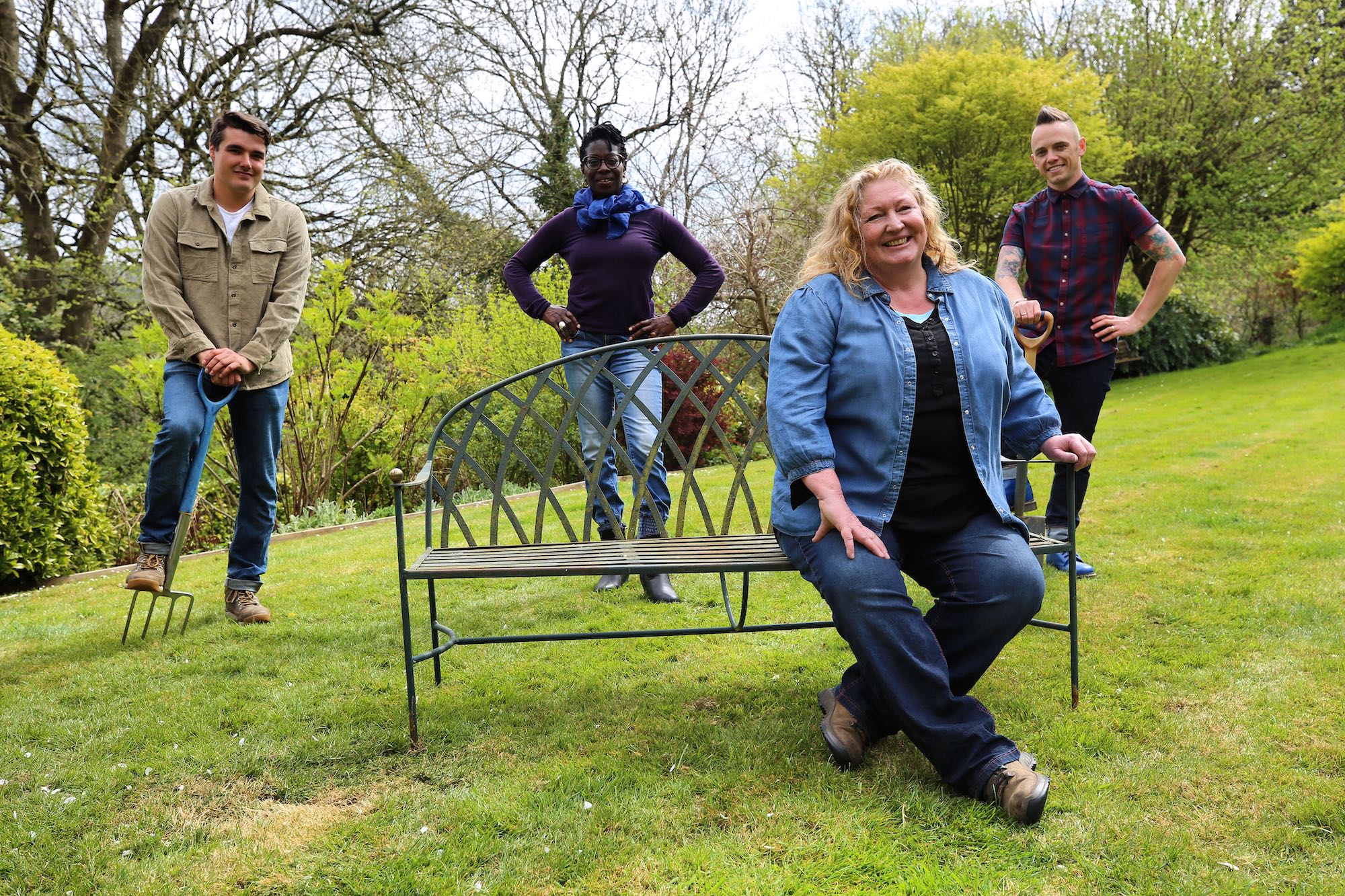
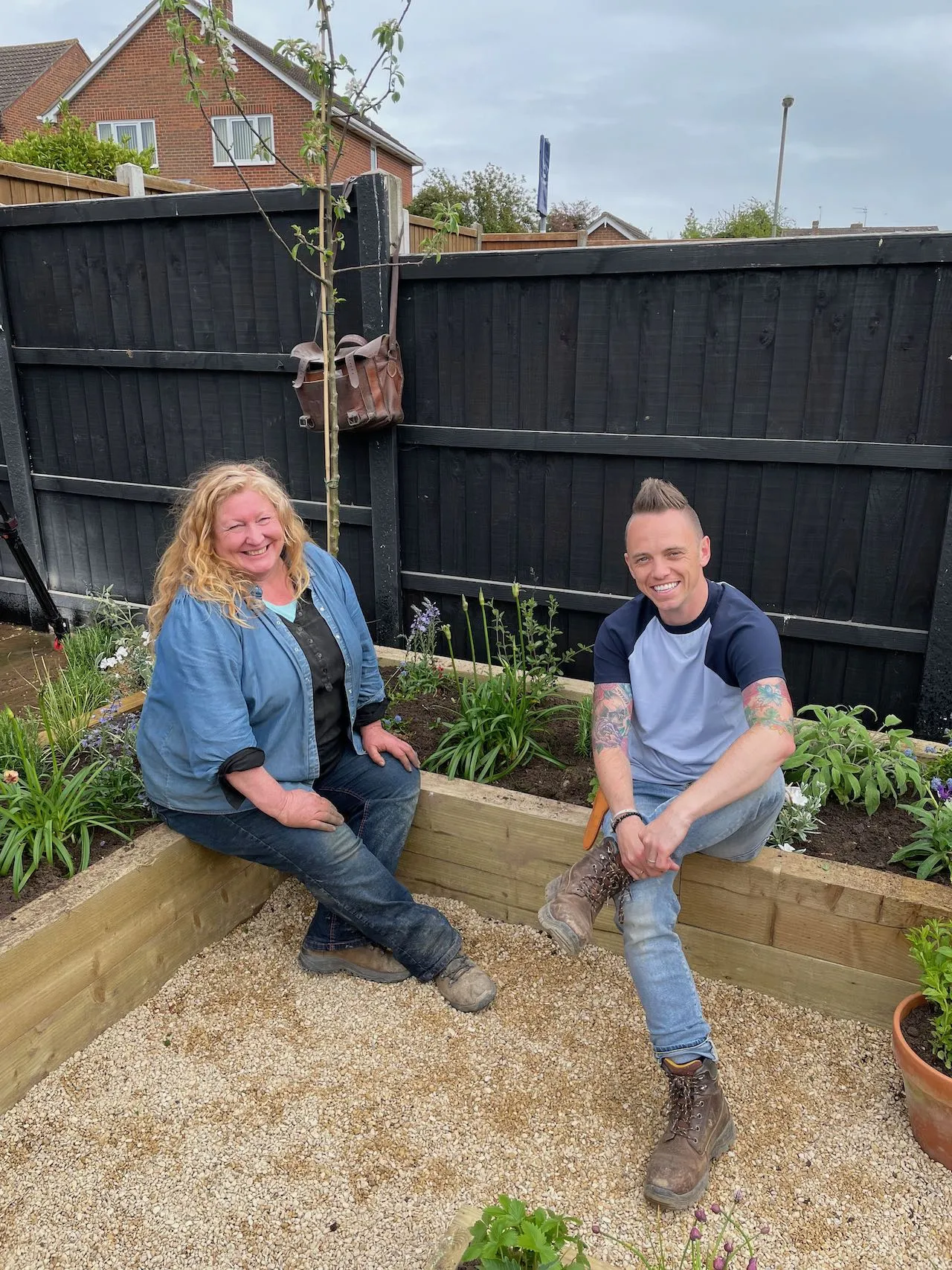
I have been a presenter on Garden Rescue since series one and have designed well over a hundred gardens on the show. The series currently features Charlie Dimmock, Chris Hull, Flo Headlam, and newest designer Amelia Bouquet, who joined in series ten. What makes Garden Rescue different from most TV gardening shows is that the jeopardy is entirely real. The budgets are real, the timelines are real, and the reveal is the first time the contributor has seen their finished garden. Nothing is staged. Every reaction you see on screen is genuine.
Garden Rescue is produced by Spun Gold TV for BBC One and airs weekdays in the early afternoon slot. If you want to understand exactly how it all comes together, read on.
1. Applying for Garden Rescue
The first step is for the production company to vet all public applications. This involves interviews and conversations with applicants whose gardens meet the show’s feasibility criteria. Only gardens under a certain size can be chosen, because every build must be completed within two days. The garden also needs to offer something genuinely interesting for viewers: a compelling personal story, a garden that is in real trouble, or a space that presents the designers with a proper challenge.
Applications are typically open in the autumn for the following year’s series. The production team does the selecting, the interviews, and all the feasibility checks. If you want to apply, you can do so via the BBC’s official application page here.
💡 Top Tip: Applying for the Show
The applications that tend to get through are the ones with a genuine story behind the garden and a clear idea of what the homeowner wants but cannot achieve alone. A garden that is purely neglected with no particular brief is harder to make compelling television from. Think about what you actually want from your space, and make that the centre of your application.
(Please note that I have no involvement in the selection process, so I am sharing this so you can get in touch with the team that does.)
2. Project managers survey the chosen gardens
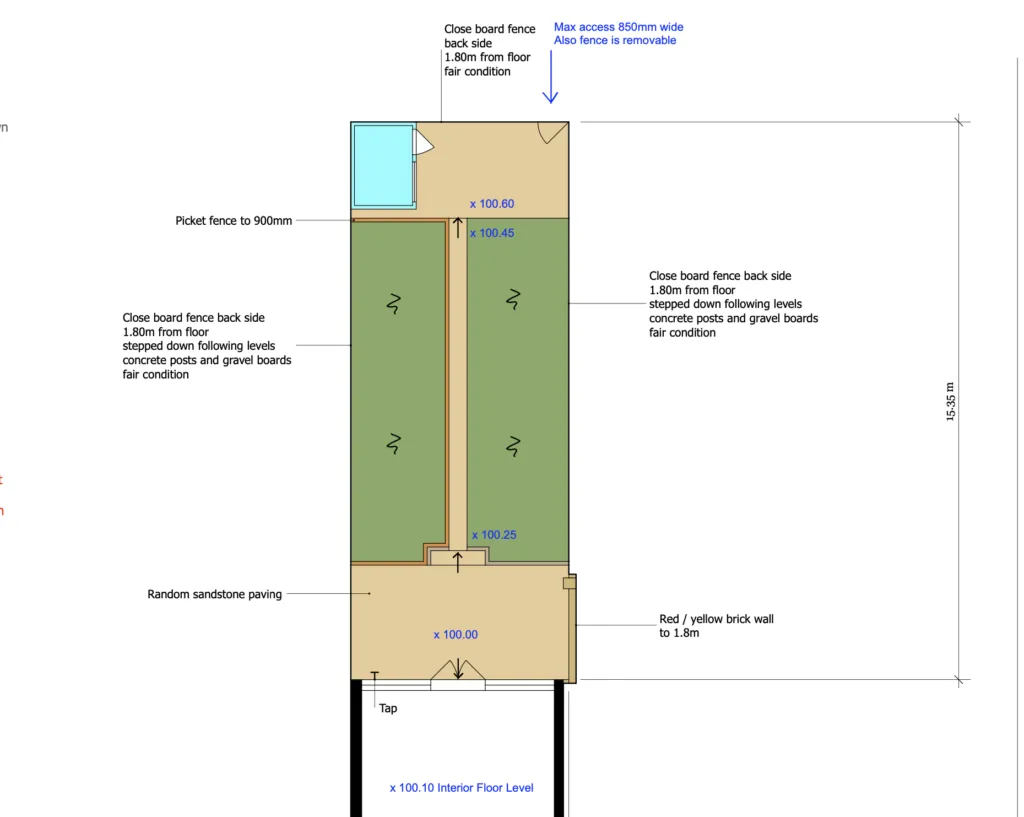
The real design process starts with the garden survey. This is the keystone in the whole process, because we designers never visit the gardens before the build day. The survey is how we understand the space we are designing for, and getting it right makes the difference between a design that works on site and one that causes problems the moment we arrive.
Scaled surveys are prepared by the project manager landscapers, along with numerous photographs, videos, and a virtual walkaround of the garden and surrounding space. I pay particular attention to levels, aspect, existing features that will remain, and anything the survey photographs might suggest about soil type or drainage conditions.
The survey is the foundation of every Garden Rescue design. Level changes, dimensions, and existing features must all be accurately recorded because I will not visit the garden until filming day.
One of the realities of Garden Rescue that surprises people is that despite relying on surveys, I occasionally arrive on site to find something quite different from what the photographs suggested. A slope that looked gentle in pictures turns out to be steeper. An area marked as partial shade is in deep shadow all day. This is where years of experience become essential, because the design must be adapted on the fly once you are there, and the plants and materials are already ordered. For a more detailed account of what this process actually feels like from the inside, I have written about how I actually design gardens for BBC Garden Rescue, including the moments when things do not go to plan.
3. Design packs are sent to the competing designers
How the designer pairings are determined on Garden Rescue is a closely guarded secret. Each year, there is a different ratio of who I am paired with, and it is entirely the production team’s decision. We designers are simply told which gardens we have been allocated. Looking at the design briefs I have received over the years, it appears genuinely random, though I suspect the production team thinks carefully about which pairing makes for the most interesting television.
The design pack for each garden consists of the scaled survey, all site photographs and videos, a detailed written breakdown of the contributor’s wishes, and a video of the contributor talking through exactly what they want from their garden. That video is often the most useful part. Hearing someone describe their garden in their own words, the way they talk about how they want to feel in it rather than just what they want to put in it, gives you a much richer brief than a written list.
4. Drawing up the Garden Rescue designs
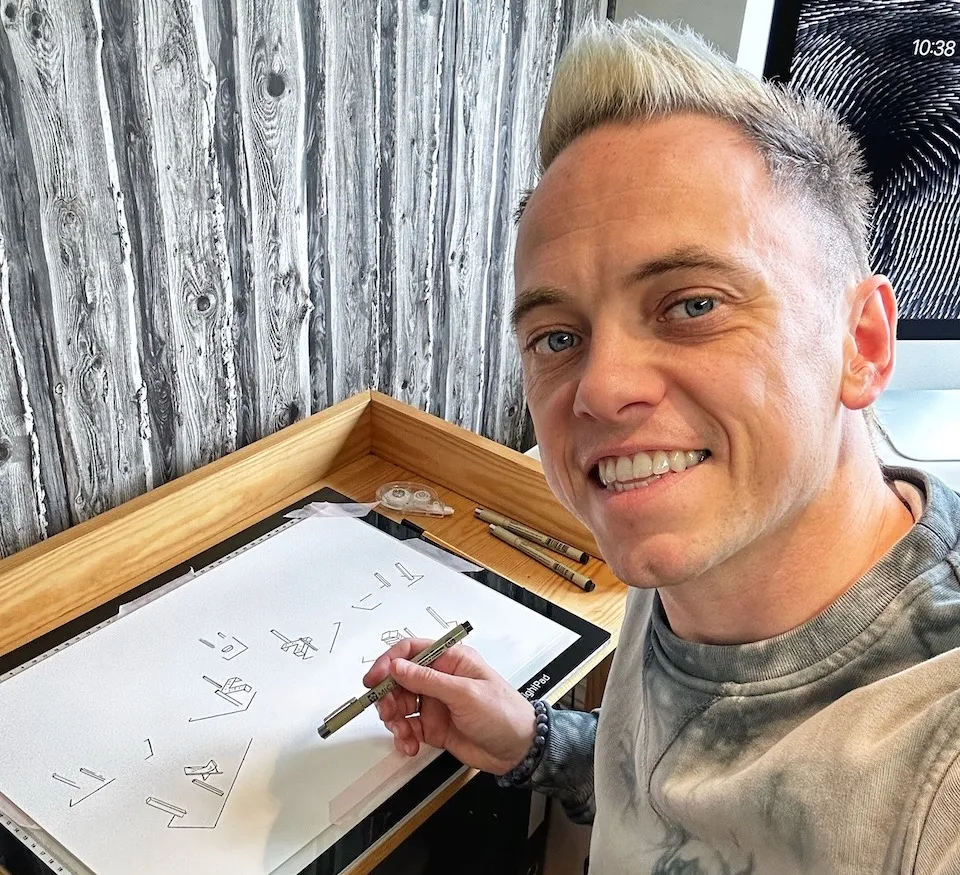
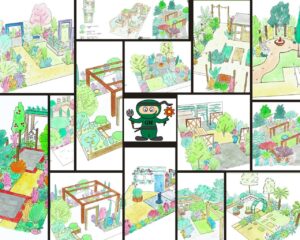
This is where the pressure really starts. If I am filming around twenty gardens in a series, I have roughly six weeks to get all the designs costed, approved, drawn up, and painted. That happens early in the year, around February, when the rest of the gardening world is relatively quiet. For me it is the opposite: a concentrated burst of design work before the build season begins.
February is design season for Garden Rescue. With up to twenty gardens to design in six weeks, the studio becomes a very busy place.
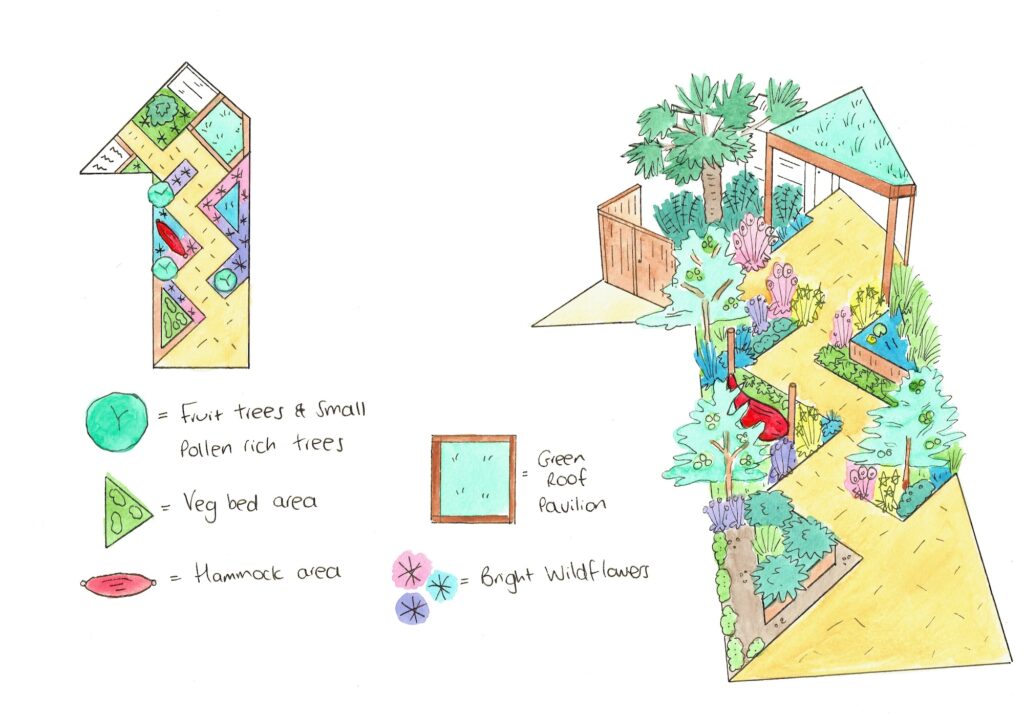
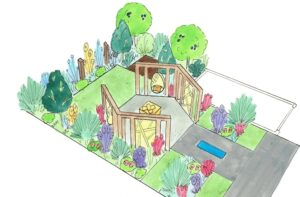
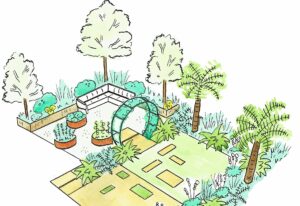
The process mirrors professional garden design practice. Scaled costings are drawn up first at the concept stage. Once the project managers have approved these as feasible and within budget, I draw up the final 3D render or visual, which in garden design terms is the final proof. At its tightest, I can have as little as 48 hours from receiving the site survey to having a design ready for approval. That might sound impossible, but it becomes achievable with experience. You develop a very clear sense of what works spatially and horticulturally, and you learn to make decisions quickly. I also work through my own design brief process, which you can use for your own gardens.
5. Designs are pitched to the contributors
The pitch is the section you see on television where we explain our design choices to the homeowner. These are filmed in batches at locations around the UK. I tend to film mine in groups, doing a number each day. This is why you sometimes see me in the same clothes across multiple episodes: it is deliberate continuity filming.
The pitch videos are cut down and sent to the contributors simultaneously, along with the final design visuals. The contributors then have a limited time to choose which design they want built. We designers see the results live during the filming of the pitch reveal segments, sitting at the design board. That real-time reaction to winning or losing the garden is entirely genuine, which is why you sometimes see a flash of genuine disappointment or genuine delight on our faces when the decision is announced.
6. Planning for the build
Once a design is chosen, the project manager and landscapers order and source all materials for the filming date. Dates are set well in advance, and designs are processed in chronological order from the earliest to the latest filming date, which keeps logistics manageable throughout the series.
I keep my material specifications deliberately fluid at this stage to make life easier for the build team. Rather than specifying a single very particular type of stone or timber that might be difficult to source, I will give two or three closely matched alternatives. The important thing is that the character and colour palette of the design is preserved, rather than every specific product being identical to what I drew. This flexibility saves enormous amounts of time and stress during the ordering process without compromising the finished result.
7. How are plants chosen for Garden Rescue?
Plant sourcing follows the same principle of controlled flexibility. We have a horticultural expert who sources the plants we request, but rather than locking in a single specific cultivar for every position, I provide a rolling list of alternatives for each scheme. Plants go over, go out of stock, or are simply unavailable at certain times of year. Having alternatives ready means the team is not chasing a wild goose, and the garden still achieves the right horticultural character even if the exact cultivar is not available.
Choosing the plants is genuinely my favourite part of the design process. It is where the garden comes alive on paper. I try to provide a mix of plants that suit the contributor’s stated experience level, with a few slightly more unusual specimens that will give them something to learn about and grow into. Working with other horticulturalists at this stage is always rewarding. You inevitably encounter plants you have not used before, and those discoveries find their way into future designs.
Plant selection is the part of the Garden Rescue process I find most rewarding. Getting the right plants to match both the design and the contributor’s ability level is the detail that makes a garden succeed long term.
8. How long does Garden Rescue take to film?
The entire build phase is completed in two days. Not two long days with a few extra hours, but genuinely two standard filming days from dawn to late afternoon. Here is what each of those days actually involves.
Day 1: Groundworks and structures
Day one is the landscapers’ day. This is their first and only visit to the site before filming begins and it has to count. The existing garden is stripped out. Anything being removed is cleared. The design is marked out on the ground using spray line, which gives the team a clear template to work from. Then the complex build work begins: everything that needs time to set, cure, or settle. Concrete foundations, paving, structures, raised beds, and any built features that cannot be rushed must all be started and ideally completed on day one.
The project managers are extraordinarily experienced at this stage. They know exactly how much can be achieved in a day, and they plan it accordingly. What looks impossible from the outside is the result of very precise sequencing: the right task in the right order, with the right number of people on each element.
Day 2: Presenter day, planting, and reveal
Day two is the one you see on television, and it is genuinely as intense as it looks. This is when the presenters arrive, the cameras roll continuously, and everything must be finished in daylight hours. Structures and landscaping are completed. Planting begins. Filming is happening throughout all of this simultaneously, which means you are frequently mid-sentence describing what you are doing while someone else takes over the physical task so you can move to the next section being filmed.
Day two on Garden Rescue is controlled chaos. Every person on site is contributing something, and the whole team moves as a unit to get the garden finished in daylight.
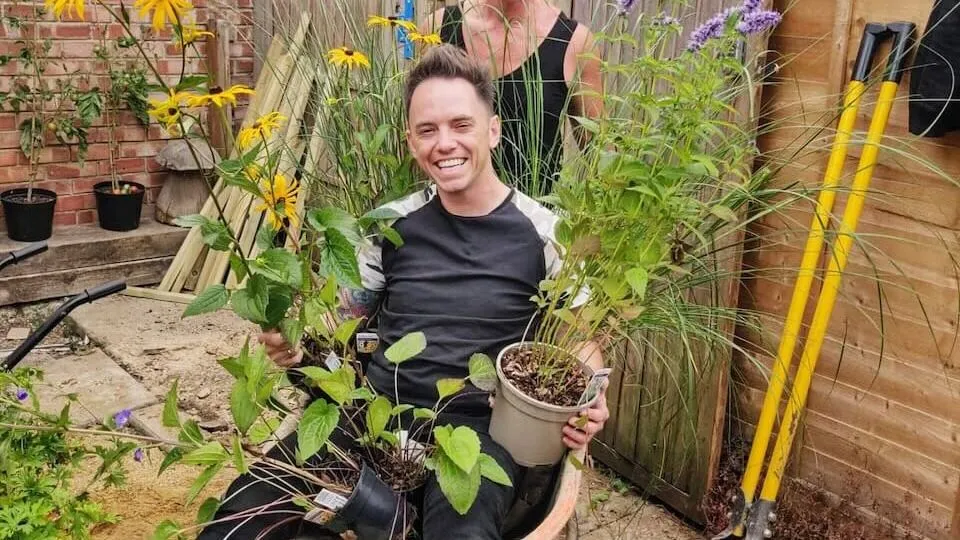
Day two runs on goodwill, enthusiasm, adrenaline, caffeine, and carbohydrates. Every single person on site, including production staff, is willing to jump onto a practical task if a camera is not pointing at them. The planting phase in particular becomes a whole-team effort when there are hundreds of plants going in across a large garden. You find people who have never held a trowel in their professional lives carefully placing hostas with genuine focus. Garden Rescue is the epitome of teamwork.
Garden Rescue is as much about the team behind the camera as the presenters in front of it. Everyone contributes to making the build happen on time.
💡 The Biggest Challenge Nobody Sees
The hardest part of filming day two is not the physical work. It is managing the mental load of presenting clearly and enthusiastically while simultaneously monitoring how the build is progressing, adjusting plans in real time when something unexpected happens, and keeping an eye on the light. Every Garden Rescue presenter knows what it feels like to be mid-interview about the planting while scanning the garden over the interviewer’s shoulder to see whether the paving is going to be finished in time.
9. Garden Rescue reveals
The question I am asked more than any other is whether the reveals are real. The answer is yes, completely. The contributors have their windows papered over or blacked out for the entire two days of the build. They do not see the garden at any point until the reveal moment. When they open their eyes to the finished result, that reaction is entirely genuine and unscripted.
From a presenter’s perspective, the reveal is always emotional. You have put a significant amount of thought and care into this design. You have worked alongside an extraordinary team for two days to make it happen. And then you watch someone see their garden for the first time and react. Some reveals are joyful. Some are overwhelming. Occasionally, a contributor is so emotional that they cannot speak. Those moments never get less affecting, however many series you have done.
The reveals are entirely genuine. Contributors have not seen the garden at any point during the build, and their reaction to the finished result is completely unscripted.
10. What happens to the garden after Garden Rescue?
This is a question viewers often wonder about and it is a straightforward one. The garden belongs entirely to the contributor once filming is complete. The production team does not return. The plants, the hard landscaping, the structures, all of it is theirs to maintain, develop, and enjoy. The budget the contributor put in covers everything that was built and planted, so there is no ongoing financial relationship with the production company.
What tends to happen is exactly what you would expect. Gardens mature. The planting fills out. Contributors develop their gardening skills, often becoming significantly more confident with plants than they were before the show. The revisited episodes that have featured in recent series give a genuinely rewarding view of how gardens change over the years following a Garden Rescue makeover, and they are consistently some of the most popular episodes of each series.
If a garden featured on the show is in your area and you are curious about it, the best way to find out more is through the contributor themselves via the show’s social media, as the production team does not share location details of contributor gardens.
11. Filming schedule and airing
Garden Rescue is filmed approximately a year before it airs. The gardens you see on screen during the current series were designed and built the previous year. This is why when viewers ask us presenters about a garden that has just been broadcast, we sometimes need a moment to recall it: we are already well into designing and filming the following series by the time the current one reaches television.
The current series ten is airing on BBC One on weekdays at 3.45pm. The show is produced by Spun Gold TV and has been running since 2016. You can catch up on missed episodes via BBC iPlayer.
12. What is the minimum budget for Garden Rescue?
The minimum budget for Garden Rescue is £4,000. This is the minimum amount needed to create a meaningful garden makeover in the series’s smaller gardens. Anything below this and the reveal would be too subtle to make compelling television. The figure represents the minimum investment needed to make a genuine and lasting difference to a garden within the two-day build constraint.
Many Garden Rescue gardens have considerably higher budgets than the minimum, particularly larger spaces or those requiring significant structural work. A typical episode budget is around £6,000, though this varies considerably depending on the scope of the design and the size of the space.
13. Who pays for Garden Rescue makeovers?
The contributors pay for all materials and plants. If a garden has a £6,000 budget, that money goes entirely towards the physical elements of the build: hard landscaping materials including stone, cement, sand, timber, and fixings; all plants, trees, shrubs, and lawns; and any accessories the designer has specified such as garden furniture, lighting, or water features.
14. What is not covered in the Garden Rescue budget?
The designers’ fees, the landscapers’ labour, and the entire production cost of filming the show are not covered by the contributor’s budget. These costs are borne by the production company. If you were to commission the same design and build privately, the labour and design fees alone would typically at least double the overall cost. This is a significant part of the show’s value proposition for contributors: they receive professional design and skilled labour at no cost, and their investment covers only the physical materials.
15. Is Garden Rescue still on TV?
Yes. Garden Rescue is very much still on BBC One. The show is currently in its tenth series, which began airing in 2025. It airs on weekdays at 3.45pm on BBC One and is available to stream on BBC iPlayer. The series has run continuously since 2016 and remains one of the BBC’s most consistently popular daytime gardening programmes.
Series ten features Charlie Dimmock, Chris Hull, Flo Headlam, and new designer Amelia Bouquet, alongside revisited episodes where past gardens are shown to see how they have matured. I am not currently appearing in series ten as a regular presenter, but continue to be involved with the show and the wider BBC gardening output.
💡 Want to Design Your Own Garden?
You do not need to apply to Garden Rescue to create a garden you love. My online garden design courses teach the same principles I use on the show, at a pace that suits you. The Garden Design for Beginners course takes you from a blank canvas to a confident design in 20 hours of study, and costs £199.
Frequently asked questions about Garden Rescue
Where is Garden Rescue filmed?
Garden Rescue is filmed at contributors’ homes across the UK. The show travels to a different location for each episode, covering gardens throughout England, Wales, and occasionally Scotland. Locations are chosen based on applicants rather than geography, so the show reflects a genuinely national spread of garden types, sizes, and climates. The design pitches are filmed separately at various UK locations.
How do I watch Garden Rescue?
Garden Rescue airs on BBC One on weekdays at 3.45pm. Episodes are also available to stream on BBC iPlayer, where the full back catalogue of series is accessible. If you miss an episode during its broadcast window it will be available on iPlayer for a period afterwards.
Who are the Garden Rescue presenters in 2025?
Series ten of Garden Rescue features Charlie Dimmock, Chris Hull, Flo Headlam, and new designer Amelia Bouquet. Previous series also featured the Rich Brothers (Harry and David) and Arit Anderson, who fans of the show may recognise from earlier episodes that are sometimes broadcast alongside new series ten material.
Does Garden Rescue visit the same garden twice?
Yes. The revisited episodes, which have featured in recent series, return to gardens from previous series to see how they have developed over the years. These episodes are consistently popular because they show the reality of how gardens mature once the production team has left and the contributor is maintaining the space themselves.
You do not need to apply to Garden Rescue to create the garden of your dreams. My online courses teach the same design principles I use on the show, broken down into straightforward steps you can apply to any outdoor space.
I, Lee Burkhill, award-winning garden designer and presenter on BBC1’s Garden Rescue, will guide you through the full process from blank canvas to finished design. The course is available entirely online and fits around your schedule.
Garden Design Examples for Small Gardens: 30 Design Templates & Planting Plans
Garden Design Examples for Small Gardens: 30 Design Templates & Planting Plans: In this online gardening course, I’ll walk you through 30 fantastic garden designs, explaining the logic behind the layout, the plant choices, and take-home tips for applying them in your own garden.
Weekend Garden Makeover: A Crash Course in Design for Beginners
Learn how to transform and design your own garden with Lee Burkhills crash course in garden design. Over 5 hours Lee will teach you how to design your own dream garden. Featuring practical design examples, planting ideas and video guides. Learn how to design your garden in one weekend!
Garden Design for Beginners: Create Your Dream Garden in Just 4 Weeks
Garden Design for Beginners Online Course: If you want to make the career jump to becoming a garden designer or to learn how to design your own garden, this is the beginner course for you. Join me, Lee Burkhill, an award-winning garden designer, as I train you in the art of beautiful garden design.
Garden Rescue is a genuinely complex logistical operation behind the scenes. From choosing applicants and commissioning surveys through to designing under pressure, sourcing materials and plants, building in two days, and revealing the finished result to a homeowner who has not seen a single moment of it, every episode represents a remarkable team effort. Every team member pulls out all the stops to make it happen, especially against the tight deadlines.
If you are enjoying the current series, I would love to hear from you on social media. You can find me on Instagram, Facebook, and YouTube, where there are hundreds of garden design guides, tips, and tutorials.
Your subscription could not be saved. Please try again.
Your subscription has been successful.
Lee Burkhill
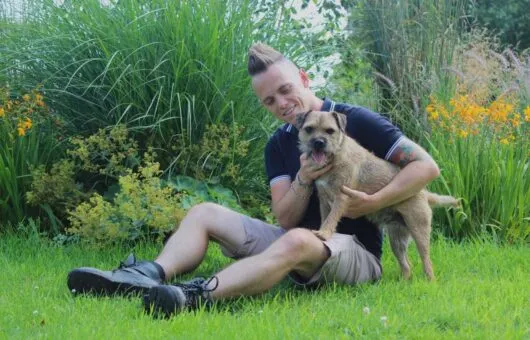
Lee Burkhill, known as the Garden Ninja, is an award-winning garden designer and horticulturist with over 30 years of gardening experience and 15 years as a professional garden designer. A qualified RHS (Royal Horticultural Society) professional, Lee specialises in sustainable garden design and practical horticultural advice. He designs and presents on BBC1’s Garden Rescue and in leading gardening publications. Lee combines three decades of hands-on gardening knowledge with professional design qualifications to help gardeners create beautiful, functional outdoor spaces.
Thank you, This was really interesting seeing how garden rescue works in detail. I have applied as we have a large boring grass garden in the Staffordshire Moorlands We would like a wildlife friendly garden for hedgehogs our wildlife pond and our bees. so unlikely we would be chosen, as most gardens seem to be on housing estates and and want Mediterranean gardens, but we live in hope. The program is really useful though for getting ideas. I particularly like your gardens and Charlie’s. Keep up the great work 😊my wildflowers patch is coming along nicely thanks to your videos. Chris
14:47Thanks so much Chris! It’s brilliant to hear your wildflower patch is thriving, that’s exactly what we love to see. The Staffordshire Moorlands sounds like a fantastic location for a wildlife garden, and your focus on hedgehogs, bees and your existing pond is exactly the kind of project that makes for compelling telly. Don’t sell yourself short on the application front either. Whilst we do feature plenty of urban gardens, the show absolutely loves a good wildlife brief, and having that moorland setting could work really well visually.
The producers are always looking for diverse locations and genuine passion for wildlife gardening, which you clearly have in spades.
I’m chuffed you’re enjoying the ideas from the show, and thank you for the lovely words about my designs and Charlie’s work. We try to create gardens that inspire people to have a go themselves, so hearing that you’re already cracking on with wildflowers is exactly what it’s all about. Keep us posted on how your garden develops, and fingers crossed for your Garden Rescue application. Even if it doesn’t come off this time round, you’re already well on your way to creating something special for your local wildlife. Keep up the great work yourself, and thanks for watching!










Thank you, This was really interesting seeing how garden rescue works in detail. I have applied as we have a large boring grass garden in the Staffordshire Moorlands We would like a wildlife friendly garden for hedgehogs our wildlife pond and our bees. so unlikely we would be chosen, as most gardens seem to be on housing estates and and want Mediterranean gardens, but we live in hope. The program is really useful though for getting ideas. I particularly like your gardens and Charlie’s. Keep up the great work 😊my wildflowers patch is coming along nicely thanks to your videos. Chris
14:47Thanks so much Chris! It’s brilliant to hear your wildflower patch is thriving, that’s exactly what we love to see. The Staffordshire Moorlands sounds like a fantastic location for a wildlife garden, and your focus on hedgehogs, bees and your existing pond is exactly the kind of project that makes for compelling telly. Don’t sell yourself short on the application front either. Whilst we do feature plenty of urban gardens, the show absolutely loves a good wildlife brief, and having that moorland setting could work really well visually.
The producers are always looking for diverse locations and genuine passion for wildlife gardening, which you clearly have in spades.
I’m chuffed you’re enjoying the ideas from the show, and thank you for the lovely words about my designs and Charlie’s work. We try to create gardens that inspire people to have a go themselves, so hearing that you’re already cracking on with wildflowers is exactly what it’s all about. Keep us posted on how your garden develops, and fingers crossed for your Garden Rescue application. Even if it doesn’t come off this time round, you’re already well on your way to creating something special for your local wildlife. Keep up the great work yourself, and thanks for watching!
Lee