Hi @moonstone
Thanks for getting in touch about honey fungus. Honey fungus is a really nasty tree/shrub fungus that can kill plants and is a bit of a death sentence for most unless treated and dug out.
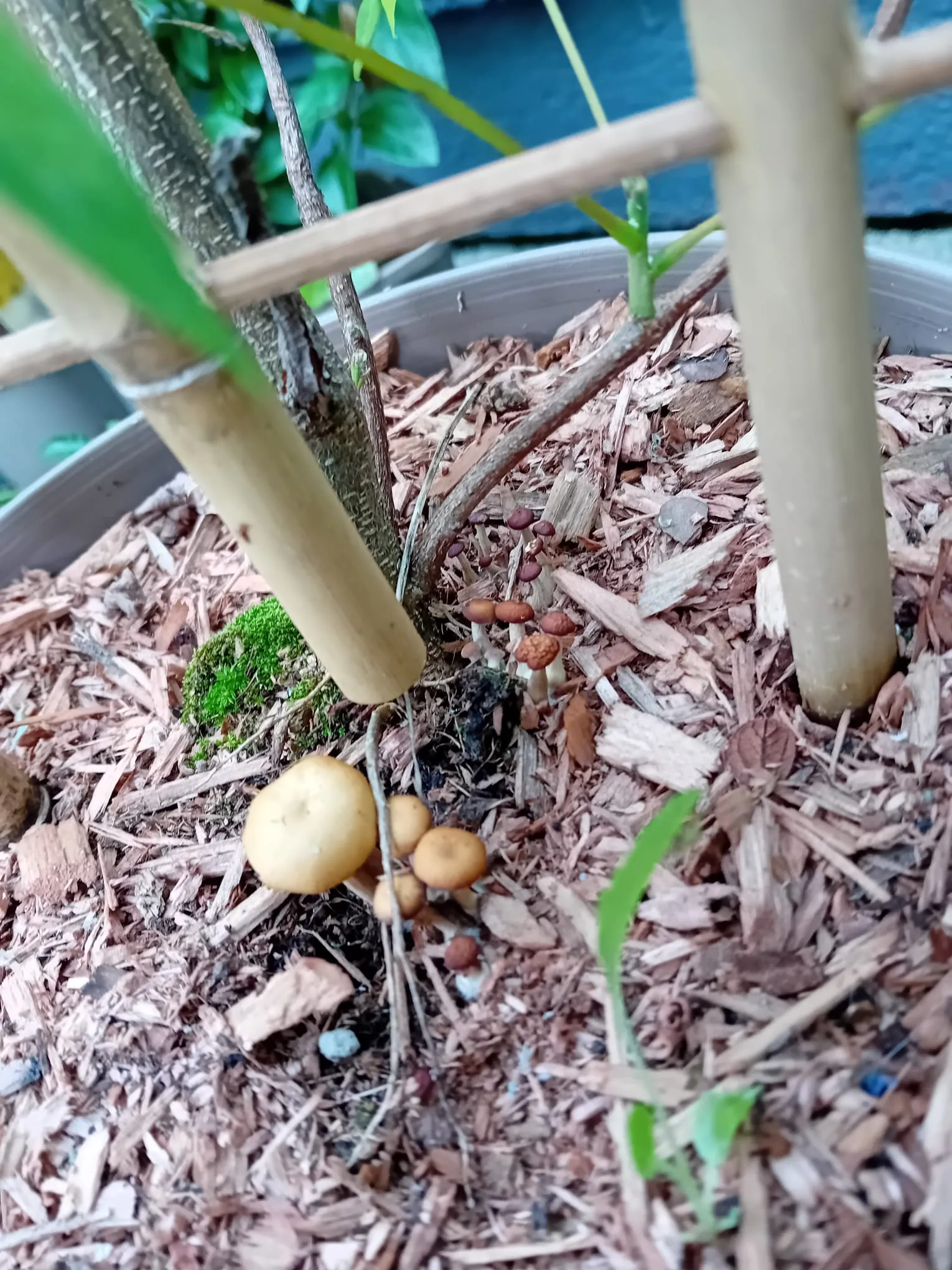
The good news is that the image you have is NOT honey fungus. It's just regular mushroom compost. With all compost and healthy soil, you may find from time to time small mushrooms appear near the base of plants, due to the mycelium network which uses plant roots, amongst other things, in a symbiotic way for sugars in return for water and nutrients. It's truly fascinating when you look into it.
These should be left alone, are harmless, beneficial mushrooms and pose no threat!
Honey Fungus: How to Identify It and How to Treat It – A Detailed Guide
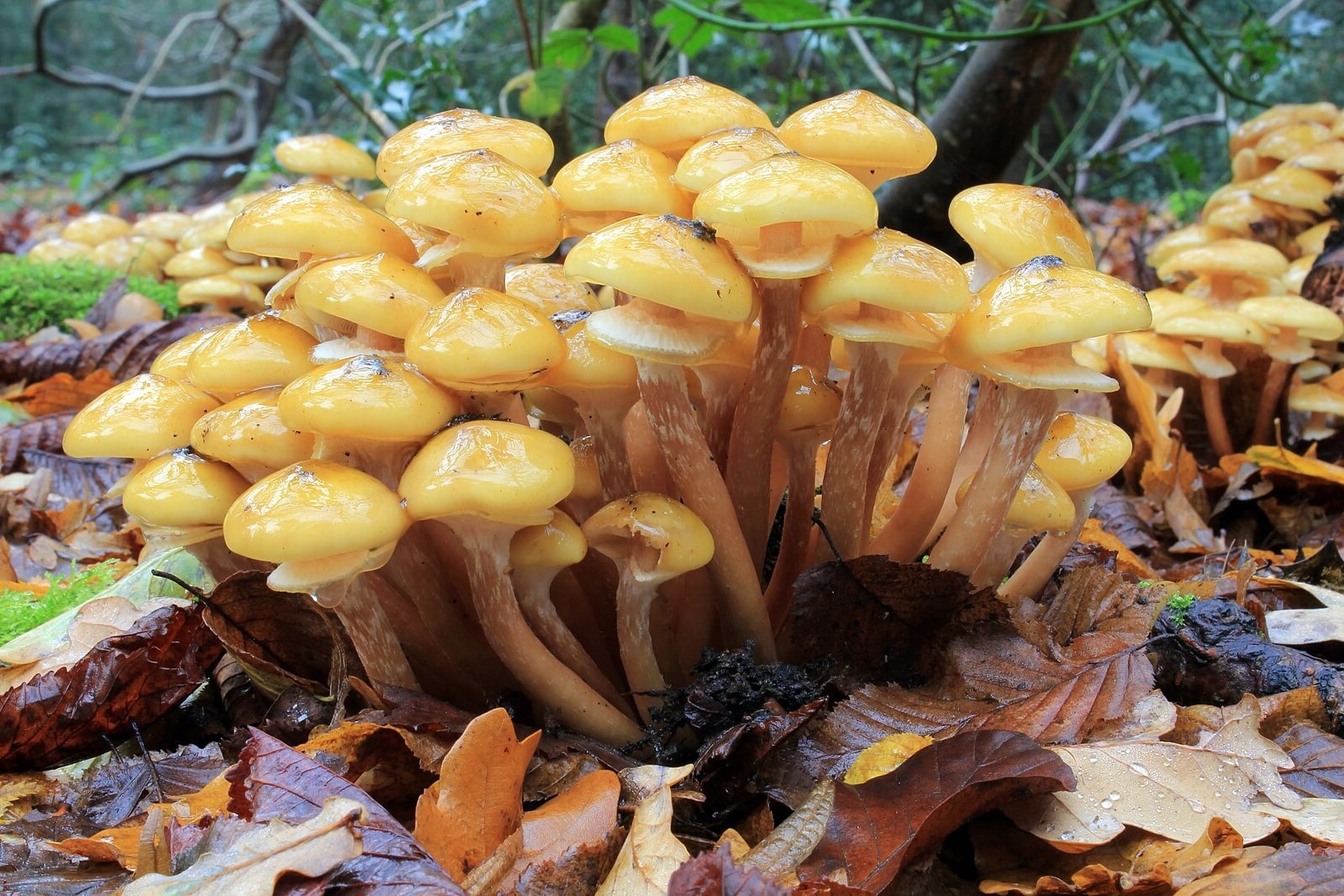
A classic example of honey fungus is below. It's bright yellow and sticky, looking like Honey. Let's take a closer look at Honey Fungus and how to identify it and treat it for other Ninjas who may be looking for gardening guidance on it.
Honey fungus, caused by several species of the Armillaria genus, is one of the most destructive fungal diseases in gardens. It attacks and kills the roots of many woody and perennial plants, leading to dieback, decay, and often the death of the entire plant. Recognising the signs early and understanding how to manage the disease are essential for maintaining a healthy garden.
What is Honey Fungus?
Honey fungus refers to a group of parasitic fungi that live on wood and spread underground via long, black, bootlace-like rhizomorphs. These rhizomorphs travel through soil and infect the roots of living plants, eventually colonising the base and lower stems. Once the fungus invades the plant’s tissues, it interferes with water and nutrient uptake, slowly starving and killing the plant. These are sometimes referred to as 'bootstrap fungus' or honey bootstraps.
There are several species of Armillaria, with Armillaria mellea being the most aggressive in the UK. This species is most commonly found in gardens, especially where soil has been disturbed or organic matter is abundant.
How to Identify Honey Fungus
The first signs of honey fungus are often subtle and can easily be mistaken for general decline or poor health. Affected plants may show reduced vigour, smaller leaves, early autumn colouring, and dieback in stems and branches. In some cases, leaves may yellow or wilt suddenly, especially during dry periods, as the damaged roots fail to supply enough water.
One of the most telling signs is the presence of white fungal mycelium between the bark and wood at the base of the stem or root collar. If you carefully peel back the outer bark near soil level, you may see a white, creamy, fan-shaped sheet of fungal growth. This mycelium smells strongly of mushrooms and is a clear diagnostic feature.
Black rhizomorphs are another key indicator. These root-like structures can be found in the soil surrounding infected plants. They are tough, black, and look like shoelaces, often stretching several metres underground in search of new hosts.
In late summer or autumn, clusters of honey-coloured toadstools may appear around the base of infected stumps or trees. These fruiting bodies are typically found in clumps and have a yellow-brown cap, white gills, and a distinctive ring around the stem. However, these mushrooms don’t appear every year and usually only emerge once the fungus has fully established itself in a host.
How to Treat and Control Honey Fungus
Unfortunately, there is no chemical cure for honey fungus available to home gardeners, so once you have it, you need to get rid of it ASAP or it will spread and take out other trees and shrubs. Control relies on cultural methods and management practices to reduce the spread and limit damage.
The first step is to confirm the presence of honey fungus through visual inspection. Once identified, the ENTIRE-infected plant should be removed promptly, including as much of the root system as possible. Destroy all affected plant material by burning or removing it from the site—do not compost it, as the fungus can survive and spread further.
Dig out and remove infected stumps, if feasible, as the fungus thrives on decaying wood. If complete removal isn’t possible, consider deep trenching around the infected area to create a physical barrier. Trench edges lined with heavy-duty plastic sheeting can help limit the spread of rhizomorphs into surrounding soil.
Replanting in infected soil should be approached with caution. Choose resistant species, as some plants are more tolerant of honey fungus than others. These include many conifers like juniper and yew, as well as ornamental shrubs like Mahonia and Viburnum tinus. Avoid replanting with highly susceptible species such as apples, cherries, and roses.
https://youtu.be/ar9v5eLcV-g
Improving overall soil drainage and aeration can reduce the likelihood of honey fungus taking hold. The fungus prefers moist, compacted soils with high organic content, so breaking up heavy soils and avoiding over-mulching with wood chips near plant bases can help reduce risk.
Where possible, avoid wounding the roots or lower stems of plants during maintenance, as wounds provide an easy entry point for the fungus. Keep plants healthy through proper watering, feeding, and pruning, as strong, vigorous plants are more resistant to infection.
I hope that helps!
All the best
Lee Garden Ninja
Hi @moonstone
Thanks for getting in touch about honey fungus. Honey fungus is a really nasty tree/shrub fungus that can kill plants and is a bit of a death sentence for most unless treated and dug out.
The good news is that the image you have is NOT honey fungus. It's just regular mushroom compost. With all compost and healthy soil, you may find from time to time small mushrooms appear near the base of plants, due to the mycelium network which uses plant roots, amongst other things, in a symbiotic way for sugars in return for water and nutrients. It's truly fascinating when you look into it.
These should be left alone, are harmless, beneficial mushrooms and pose no threat!
Honey Fungus: How to Identify It and How to Treat It – A Detailed Guide
A classic example of honey fungus is below. It's bright yellow and sticky, looking like Honey. Let's take a closer look at Honey Fungus and how to identify it and treat it for other Ninjas who may be looking for gardening guidance on it.
Honey fungus, caused by several species of the Armillaria genus, is one of the most destructive fungal diseases in gardens. It attacks and kills the roots of many woody and perennial plants, leading to dieback, decay, and often the death of the entire plant. Recognising the signs early and understanding how to manage the disease are essential for maintaining a healthy garden.
What is Honey Fungus?
Honey fungus refers to a group of parasitic fungi that live on wood and spread underground via long, black, bootlace-like rhizomorphs. These rhizomorphs travel through soil and infect the roots of living plants, eventually colonising the base and lower stems. Once the fungus invades the plant’s tissues, it interferes with water and nutrient uptake, slowly starving and killing the plant. These are sometimes referred to as 'bootstrap fungus' or honey bootstraps.
There are several species of Armillaria, with Armillaria mellea being the most aggressive in the UK. This species is most commonly found in gardens, especially where soil has been disturbed or organic matter is abundant.
How to Identify Honey Fungus
The first signs of honey fungus are often subtle and can easily be mistaken for general decline or poor health. Affected plants may show reduced vigour, smaller leaves, early autumn colouring, and dieback in stems and branches. In some cases, leaves may yellow or wilt suddenly, especially during dry periods, as the damaged roots fail to supply enough water.
One of the most telling signs is the presence of white fungal mycelium between the bark and wood at the base of the stem or root collar. If you carefully peel back the outer bark near soil level, you may see a white, creamy, fan-shaped sheet of fungal growth. This mycelium smells strongly of mushrooms and is a clear diagnostic feature.
Black rhizomorphs are another key indicator. These root-like structures can be found in the soil surrounding infected plants. They are tough, black, and look like shoelaces, often stretching several metres underground in search of new hosts.
In late summer or autumn, clusters of honey-coloured toadstools may appear around the base of infected stumps or trees. These fruiting bodies are typically found in clumps and have a yellow-brown cap, white gills, and a distinctive ring around the stem. However, these mushrooms don’t appear every year and usually only emerge once the fungus has fully established itself in a host.
How to Treat and Control Honey Fungus
Unfortunately, there is no chemical cure for honey fungus available to home gardeners, so once you have it, you need to get rid of it ASAP or it will spread and take out other trees and shrubs. Control relies on cultural methods and management practices to reduce the spread and limit damage.
The first step is to confirm the presence of honey fungus through visual inspection. Once identified, the ENTIRE-infected plant should be removed promptly, including as much of the root system as possible. Destroy all affected plant material by burning or removing it from the site—do not compost it, as the fungus can survive and spread further.
Dig out and remove infected stumps, if feasible, as the fungus thrives on decaying wood. If complete removal isn’t possible, consider deep trenching around the infected area to create a physical barrier. Trench edges lined with heavy-duty plastic sheeting can help limit the spread of rhizomorphs into surrounding soil.
Replanting in infected soil should be approached with caution. Choose resistant species, as some plants are more tolerant of honey fungus than others. These include many conifers like juniper and yew, as well as ornamental shrubs like Mahonia and Viburnum tinus. Avoid replanting with highly susceptible species such as apples, cherries, and roses.
Improving overall soil drainage and aeration can reduce the likelihood of honey fungus taking hold. The fungus prefers moist, compacted soils with high organic content, so breaking up heavy soils and avoiding over-mulching with wood chips near plant bases can help reduce risk.
Where possible, avoid wounding the roots or lower stems of plants during maintenance, as wounds provide an easy entry point for the fungus. Keep plants healthy through proper watering, feeding, and pruning, as strong, vigorous plants are more resistant to infection.
I hope that helps!
All the best
Lee Garden Ninja
 Lee Burkhill: Award Winning Designer & BBC 1's Garden Rescue Presenters Official Blog