Hi @tankboy74
Hi, what a lovely problem to have in one sense. Passersby stopping to admire your wildflower patch is exactly what every gardener hopes for, and the fact that it looked stunning in its first year shows you got the establishment right. The poppy takeover you're describing is however one of the most common frustrations with annual wildflower mixes and it leads me to share something I've learned from years of working with wildflower areas.
Why This Keeps Happening with Annual Mixes
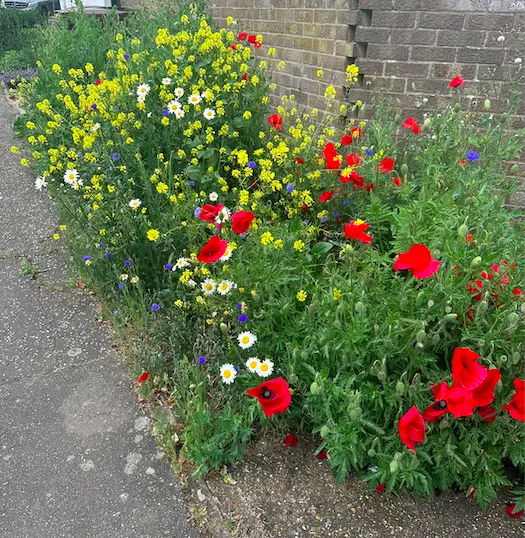
The root cause of your poppy dominance is actually baked into the nature of most off-the-shelf wildflower seed mixes. The majority of budget and widely available wildflower mixes are heavily weighted towards annual species, and common field poppies (Papaver rhoeas) are annual plants that have evolved over thousands of years to be extraordinarily good at one thing: producing and dispersing seed in vast quantities before dying. A single poppy plant can produce up to 17,000 seeds, and those seeds can remain viable in the soil for decades. Once you have a decent poppy seed bank established in your soil, you are essentially in a long term battle with a plant that has been winning this particular arms race since before humans were farming.
The other annual species in your mix, cornflowers, corn marigolds, and similar, simply cannot compete with that level of seed production over successive seasons. The poppies gradually crowd them out year by year until, as you've discovered, you're left with what is essentially a poppy monoculture.
Why I Prefer Perennial Wildflower Mixes
This is exactly the reason I moved away from recommending annual wildflower mixes years ago and now always advocate for perennial wildflower mixes instead. Perennial species like oxeye daisy, knapweed, betony, wild carrot, yarrow, ragged robin, and field scabious establish more slowly in their first year but then come back reliably every season from their root systems rather than relying solely on seed.
https://youtu.be/YDBXSsKXMGg
They build genuine meadow communities over time rather than the boom and bust cycle of annual mixes, and crucially they are far better balanced in terms of which species dominates. No single perennial tends to muscle out all the others in the way poppies do with annual mixes. My complete guide to creating a wildflower meadow covers this in detail and explains how to choose and establish a perennial mix that will genuinely improve year on year rather than deteriorating into a monoculture.
Tackling the Poppy Problem This Year
Your instinct about the approach is broadly right but there are a couple of refinements worth making to give yourself the best possible chance of success.
The most important thing you can do right now, while the poppies are still flowering, is to deadhead them before the seed heads mature and split. This is time sensitive. Once those seed pods turn papery and dry the seeds are already dispersing, so get out there with scissors or secateurs and remove every developing seed head you can see as soon as the petals drop. You won't catch every one given the scale of an established poppy patch, but significantly reducing the seed rain this season will gradually draw down the seed bank in the soil over the coming years rather than topping it back up.
After flowering has finished and you've deadheaded as thoroughly as you can, cut the whole area down to ground level. At this point I would not recommend immediately digging the soil over, because disturbing the soil brings dormant poppy seeds up to the surface where light triggers their germination. The less you cultivate the better when you're trying to reduce a poppy seed bank.
Reseeding with a Perennial Mix
Rather than reaching for another annual mix, this is your opportunity to transition to a perennial wildflower seed mix that will serve you far better in the long run. Sow into the cleared surface in late summer to early autumn, ideally after scarifying the ground lightly with a rake to create good seed to soil contact without deep cultivation. Yellow rattle (Rhinanthus minor) is worth including if it isn't already present as it weakens the competitive grasses that can otherwise swamp perennial wildflowers, and it must be sown fresh in autumn to get the cold stratification period it needs to germinate.
https://youtu.be/M74fq80zmu0
Be prepared for poppies to continue appearing for several seasons as the existing seed bank gradually depletes. Pull them out by hand when they're young seedlings if they're crowding out the perennials, but a few poppies among a diverse perennial meadow are actually rather lovely. The goal is balance rather than elimination.
With patience and the right seed mix, this patch can be genuinely spectacular for years to come rather than requiring annual intervention.
All the best and keep up the excellent work Ninja!
Lee Garden Ninja
Hi @tankboy74
Hi, what a lovely problem to have in one sense. Passersby stopping to admire your wildflower patch is exactly what every gardener hopes for, and the fact that it looked stunning in its first year shows you got the establishment right. The poppy takeover you're describing is however one of the most common frustrations with annual wildflower mixes and it leads me to share something I've learned from years of working with wildflower areas.
Why This Keeps Happening with Annual Mixes
The root cause of your poppy dominance is actually baked into the nature of most off-the-shelf wildflower seed mixes. The majority of budget and widely available wildflower mixes are heavily weighted towards annual species, and common field poppies (Papaver rhoeas) are annual plants that have evolved over thousands of years to be extraordinarily good at one thing: producing and dispersing seed in vast quantities before dying. A single poppy plant can produce up to 17,000 seeds, and those seeds can remain viable in the soil for decades. Once you have a decent poppy seed bank established in your soil, you are essentially in a long term battle with a plant that has been winning this particular arms race since before humans were farming.
The other annual species in your mix, cornflowers, corn marigolds, and similar, simply cannot compete with that level of seed production over successive seasons. The poppies gradually crowd them out year by year until, as you've discovered, you're left with what is essentially a poppy monoculture.
Why I Prefer Perennial Wildflower Mixes
This is exactly the reason I moved away from recommending annual wildflower mixes years ago and now always advocate for perennial wildflower mixes instead. Perennial species like oxeye daisy, knapweed, betony, wild carrot, yarrow, ragged robin, and field scabious establish more slowly in their first year but then come back reliably every season from their root systems rather than relying solely on seed.
They build genuine meadow communities over time rather than the boom and bust cycle of annual mixes, and crucially they are far better balanced in terms of which species dominates. No single perennial tends to muscle out all the others in the way poppies do with annual mixes. My complete guide to creating a wildflower meadow covers this in detail and explains how to choose and establish a perennial mix that will genuinely improve year on year rather than deteriorating into a monoculture.
Tackling the Poppy Problem This Year
Your instinct about the approach is broadly right but there are a couple of refinements worth making to give yourself the best possible chance of success.
The most important thing you can do right now, while the poppies are still flowering, is to deadhead them before the seed heads mature and split. This is time sensitive. Once those seed pods turn papery and dry the seeds are already dispersing, so get out there with scissors or secateurs and remove every developing seed head you can see as soon as the petals drop. You won't catch every one given the scale of an established poppy patch, but significantly reducing the seed rain this season will gradually draw down the seed bank in the soil over the coming years rather than topping it back up.
After flowering has finished and you've deadheaded as thoroughly as you can, cut the whole area down to ground level. At this point I would not recommend immediately digging the soil over, because disturbing the soil brings dormant poppy seeds up to the surface where light triggers their germination. The less you cultivate the better when you're trying to reduce a poppy seed bank.
Reseeding with a Perennial Mix
Rather than reaching for another annual mix, this is your opportunity to transition to a perennial wildflower seed mix that will serve you far better in the long run. Sow into the cleared surface in late summer to early autumn, ideally after scarifying the ground lightly with a rake to create good seed to soil contact without deep cultivation. Yellow rattle (Rhinanthus minor) is worth including if it isn't already present as it weakens the competitive grasses that can otherwise swamp perennial wildflowers, and it must be sown fresh in autumn to get the cold stratification period it needs to germinate.
Be prepared for poppies to continue appearing for several seasons as the existing seed bank gradually depletes. Pull them out by hand when they're young seedlings if they're crowding out the perennials, but a few poppies among a diverse perennial meadow are actually rather lovely. The goal is balance rather than elimination.
With patience and the right seed mix, this patch can be genuinely spectacular for years to come rather than requiring annual intervention.
All the best and keep up the excellent work Ninja!
Lee Garden Ninja
 Lee Burkhill: Award Winning Designer & BBC 1's Garden Rescue Presenters Official Blog