Hi @simmya
Thanks for getting in touch, and don't worry- you're doing exactly the right thing by seeking advice before diving in. Your magnolia is clearly stressed, and from what you're describing, my gut feeling is that a combination of the recent heatwave and the limitations of container growing are behind what you're seeing.
What those symptoms are telling you
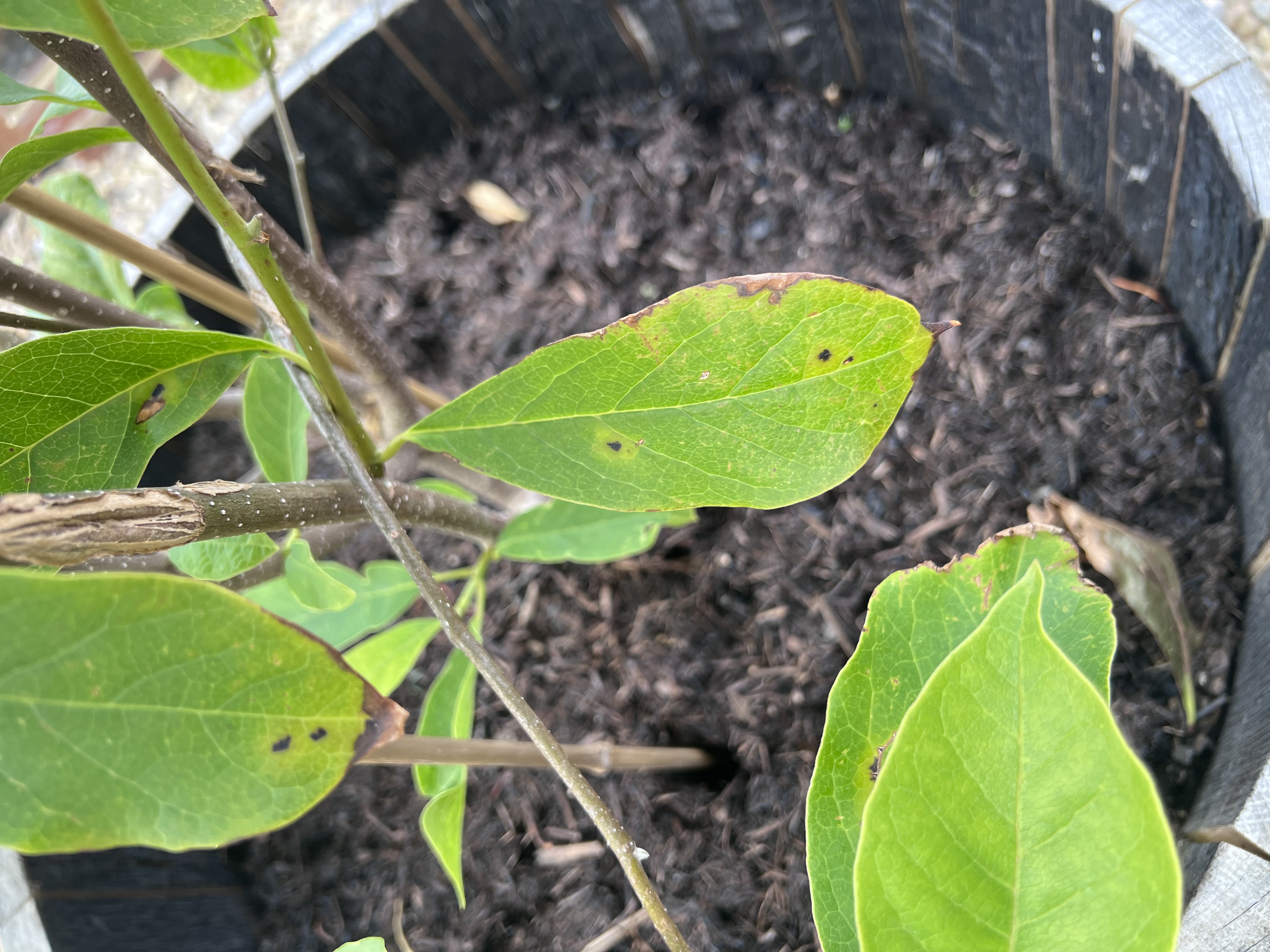
Brown leaf edges on a magnolia are a classic sign of heat and moisture stress. When temperatures spike, the leaves lose water through transpiration faster than the roots can replace it, and the leaf margins are always the first casualties because they're furthest from the plant's water supply. The black spots alongside that browning suggest a secondary fungal issue has taken hold in the weakened tissue, which is common once leaves are already under stress. A healthy, well-hydrated magnolia would simply shrug off most fungal spores, but a stressed plant has its defences down.
The whiskey barrel is the underlying problem
Here's the honest truth. A Magnolia soulangeana is a substantial tree that, given the chance, wants to put down a deep, expansive root system. A whiskey barrel, however generous it feels, places a hard limit on that ambition. In normal conditions a large container can work for a few years, but during a heatwave it becomes a very different situation. Containers heat up dramatically in direct sun, essentially cooking the roots from the outside in, and the volume of compost available to hold moisture is simply no match for what a tree of this size needs during prolonged hot weather. The compost can also break down and become compacted over time, reducing drainage and airflow around the roots.
My recommendation: get it in the ground
My strong recommendation would be to plan to get this magnolia into the ground, and the sooner the better in terms of giving it a long-term future. Autumn is the ideal window for this, once the worst of the summer heat has passed and the soil is still warm enough to encourage root establishment before winter. Avoid moving it now in the height of summer as transplanting a tree that is already stressed will compound the shock rather than relieve it.
In the meantime, focus on keeping it as comfortable as possible in the barrel. Water deeply and consistently rather than little and often, ensuring the water is getting right down to the lower roots rather than just wetting the surface. If the barrel is in full sun, moving it to a position with some afternoon shade will take the pressure off considerably during any remaining warm spells.
Immediate care for the damaged leaves
Remove the worst affected leaves cleanly to reduce the disease load on the plant and improve airflow around the remaining foliage. Use clean, sharp secateurs and give the blades a wipe with disinfectant between cuts to avoid spreading any fungal spores to healthy leaves. Don't be tempted to feed it with a high-nitrogen fertiliser right now as this encourages soft new growth the stressed plant can't support. A seaweed-based tonic watered in around the base is a gentler way to give it a boost without pushing it too hard.
When you do plant it out
Choose a sheltered spot away from harsh east winds and late frost pockets, as those stunning flowers are very vulnerable to a sharp late frost, browning them overnight. A west or south-facing position with slightly acidic, well-drained soil is where a Magnolia soulangeana will genuinely flourish. Once it's in the ground and properly established, you'll wonder why you ever kept it in a pot.
Further Reading
Happy gardening!
Hi @simmya
Thanks for getting in touch, and don't worry- you're doing exactly the right thing by seeking advice before diving in. Your magnolia is clearly stressed, and from what you're describing, my gut feeling is that a combination of the recent heatwave and the limitations of container growing are behind what you're seeing.
What those symptoms are telling you
Brown leaf edges on a magnolia are a classic sign of heat and moisture stress. When temperatures spike, the leaves lose water through transpiration faster than the roots can replace it, and the leaf margins are always the first casualties because they're furthest from the plant's water supply. The black spots alongside that browning suggest a secondary fungal issue has taken hold in the weakened tissue, which is common once leaves are already under stress. A healthy, well-hydrated magnolia would simply shrug off most fungal spores, but a stressed plant has its defences down.
The whiskey barrel is the underlying problem
Here's the honest truth. A Magnolia soulangeana is a substantial tree that, given the chance, wants to put down a deep, expansive root system. A whiskey barrel, however generous it feels, places a hard limit on that ambition. In normal conditions a large container can work for a few years, but during a heatwave it becomes a very different situation. Containers heat up dramatically in direct sun, essentially cooking the roots from the outside in, and the volume of compost available to hold moisture is simply no match for what a tree of this size needs during prolonged hot weather. The compost can also break down and become compacted over time, reducing drainage and airflow around the roots.
My recommendation: get it in the ground
My strong recommendation would be to plan to get this magnolia into the ground, and the sooner the better in terms of giving it a long-term future. Autumn is the ideal window for this, once the worst of the summer heat has passed and the soil is still warm enough to encourage root establishment before winter. Avoid moving it now in the height of summer as transplanting a tree that is already stressed will compound the shock rather than relieve it.
In the meantime, focus on keeping it as comfortable as possible in the barrel. Water deeply and consistently rather than little and often, ensuring the water is getting right down to the lower roots rather than just wetting the surface. If the barrel is in full sun, moving it to a position with some afternoon shade will take the pressure off considerably during any remaining warm spells.
Immediate care for the damaged leaves
Remove the worst affected leaves cleanly to reduce the disease load on the plant and improve airflow around the remaining foliage. Use clean, sharp secateurs and give the blades a wipe with disinfectant between cuts to avoid spreading any fungal spores to healthy leaves. Don't be tempted to feed it with a high-nitrogen fertiliser right now as this encourages soft new growth the stressed plant can't support. A seaweed-based tonic watered in around the base is a gentler way to give it a boost without pushing it too hard.
When you do plant it out
Choose a sheltered spot away from harsh east winds and late frost pockets, as those stunning flowers are very vulnerable to a sharp late frost, browning them overnight. A west or south-facing position with slightly acidic, well-drained soil is where a Magnolia soulangeana will genuinely flourish. Once it's in the ground and properly established, you'll wonder why you ever kept it in a pot.
Further Reading
Happy gardening!
 Lee Burkhill: Award Winning Designer & BBC 1's Garden Rescue Presenters Official Blog