Hi @rosy
Hi Rosy! Great to hear you've been following the watering and mulching advice, and don't worry at all about those soft ends because this is one of the most common questions I get about courgettes and it's very fixable once you understand what's actually happening.
What's Causing Those Soft Ends
What you're describing is almost certainly blossom end rot, a physiological disorder rather than a disease, which explains perfectly why some of your courgettes are absolutely fine whilst others are affected. Blossom end rot appears at the flower end of the developing fruit as soft, sunken, sometimes discoloured tissue that deteriorates quickly. It looks alarming but it tells you something really important about what's happening in the soil.
The root cause is a calcium deficiency within the developing fruit itself. Now here's the thing that surprises most people: this doesn't necessarily mean your soil is short of calcium. In most UK gardens the calcium is already there. The problem is that the plant can't transport it efficiently enough to every developing fruit when water movement through the plant is inconsistent. Calcium travels with water through the plant's vascular system, so when that water flow is uneven or interrupted, the fruits furthest from the main stem or developing most rapidly are the first to show the deficiency. This is precisely why some courgettes on the same plant are perfectly firm whilst others next to them are collapsing.
Why Inconsistent Watering is the Culprit
A sudden large watering after a period of dryness causes problems because the fruit develops faster than the plant's ability to supply nutrients can keep up with. Even if you're watering regularly, if there have been any hot spells where the soil dried out more than usual between waterings, that brief interruption to the calcium supply is enough to trigger blossom end rot in the fruits that were developing at that precise moment. Courgettes in full production are extraordinarily thirsty plants, and during peak summer you might need to water daily, particularly for containers.
The soft courgettes you're seeing now were developing during a period when water delivery to the fruit was temporarily interrupted. The firm ones were either developing during a period of more consistent moisture, or are positioned on the plant where calcium supply was more reliable.
Pollination Can Also Play a Role
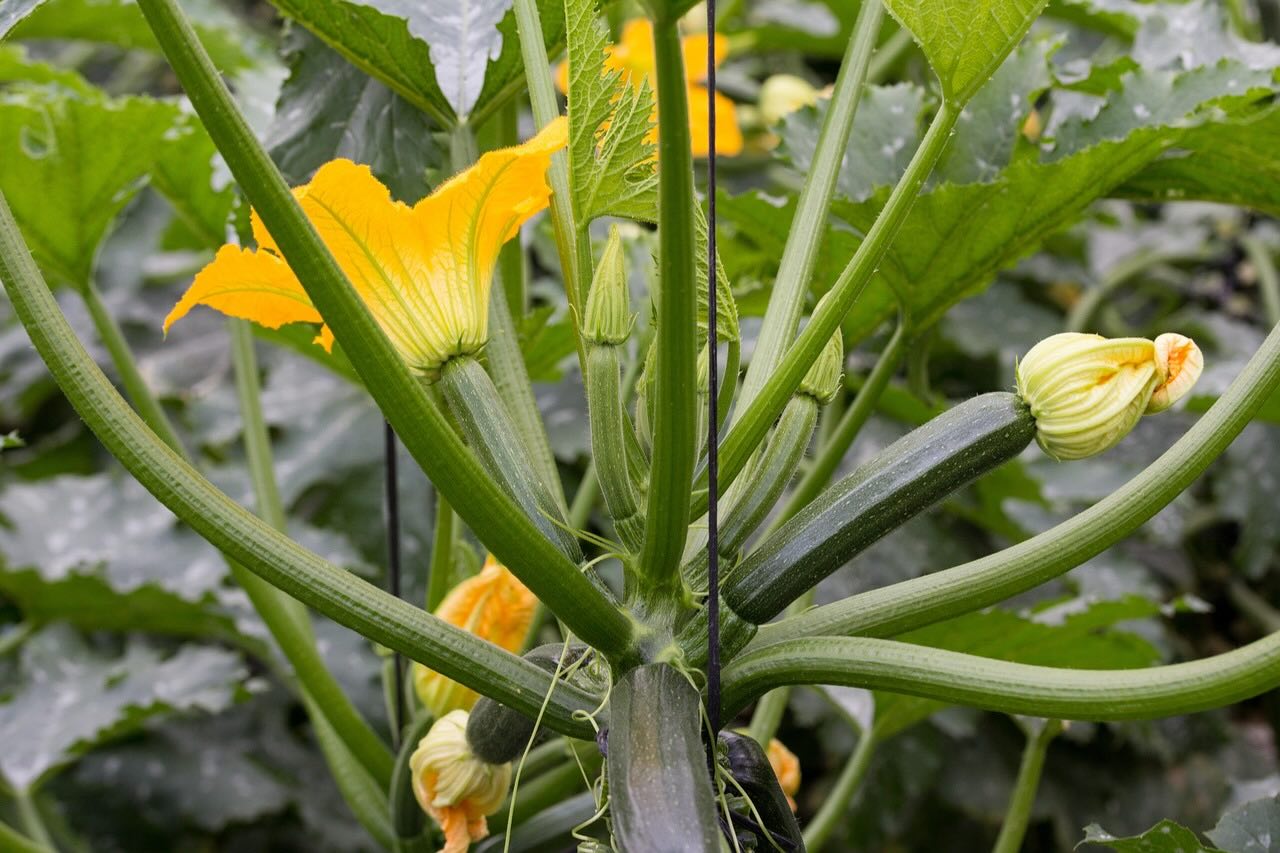
If courgettes rot at the flower end before growing properly, this can also be poor pollination or very wet conditions. Courgettes need their female flowers to be pollinated by insects visiting the male flowers on the same or nearby plants. In cool, wet, or very still weather when pollinators aren't flying as actively, pollination can be patchy, leading to some fruits developing poorly from the outset. If you're seeing the problem on very young, small fruits rather than well-developed ones, poor pollination may be contributing alongside the watering issue.
You can hand-pollinate very easily on dull days by taking a small paintbrush or simply picking a male flower (the ones on a plain stem without a tiny fruit behind the flower), peeling back the petals, and dabbing the pollen directly onto the centre of the female flowers (the ones with the tiny proto-courgette behind the flower).
How to Fix It Going Forward
The most important change you can make is to shift from reactive watering to a consistent daily routine, particularly now that your plants are in full production and cropping heavily. Water deeply at the base of the plant rather than a light sprinkle over the top, ensuring moisture reaches right down to the root zone. A useful technique is to sink a 15cm pot into the ground next to each plant and water into that, directing moisture to the roots whilst preventing rot around the neck of the plant.
A liquid feed containing calcium, or a seaweed-based tonic applied weekly, will also help ensure the plant has everything it needs to supply developing fruits reliably. Remove any affected courgettes promptly and cleanly rather than leaving them on the plant, as the plant will redirect its energy into the healthy fruits developing alongside them.
Don't Be Disheartened
The firm, healthy courgettes alongside the affected ones prove your plants are fundamentally in good health, Rosy. This is a very common mid-season challenge that most courgette growers encounter at some point, and with a few tweaks to your watering routine you should see a significant improvement in the fruits that are still developing now.
Further Reading
Happy gardening Rosy, keep us posted on how the plants come on!
Lee Garden Ninja
Hi @rosy
Hi Rosy! Great to hear you've been following the watering and mulching advice, and don't worry at all about those soft ends because this is one of the most common questions I get about courgettes and it's very fixable once you understand what's actually happening.
What's Causing Those Soft Ends
What you're describing is almost certainly blossom end rot, a physiological disorder rather than a disease, which explains perfectly why some of your courgettes are absolutely fine whilst others are affected. Blossom end rot appears at the flower end of the developing fruit as soft, sunken, sometimes discoloured tissue that deteriorates quickly. It looks alarming but it tells you something really important about what's happening in the soil.
The root cause is a calcium deficiency within the developing fruit itself. Now here's the thing that surprises most people: this doesn't necessarily mean your soil is short of calcium. In most UK gardens the calcium is already there. The problem is that the plant can't transport it efficiently enough to every developing fruit when water movement through the plant is inconsistent. Calcium travels with water through the plant's vascular system, so when that water flow is uneven or interrupted, the fruits furthest from the main stem or developing most rapidly are the first to show the deficiency. This is precisely why some courgettes on the same plant are perfectly firm whilst others next to them are collapsing.
Why Inconsistent Watering is the Culprit
A sudden large watering after a period of dryness causes problems because the fruit develops faster than the plant's ability to supply nutrients can keep up with. Even if you're watering regularly, if there have been any hot spells where the soil dried out more than usual between waterings, that brief interruption to the calcium supply is enough to trigger blossom end rot in the fruits that were developing at that precise moment. Courgettes in full production are extraordinarily thirsty plants, and during peak summer you might need to water daily, particularly for containers.
The soft courgettes you're seeing now were developing during a period when water delivery to the fruit was temporarily interrupted. The firm ones were either developing during a period of more consistent moisture, or are positioned on the plant where calcium supply was more reliable.
Pollination Can Also Play a Role
If courgettes rot at the flower end before growing properly, this can also be poor pollination or very wet conditions. Courgettes need their female flowers to be pollinated by insects visiting the male flowers on the same or nearby plants. In cool, wet, or very still weather when pollinators aren't flying as actively, pollination can be patchy, leading to some fruits developing poorly from the outset. If you're seeing the problem on very young, small fruits rather than well-developed ones, poor pollination may be contributing alongside the watering issue.
You can hand-pollinate very easily on dull days by taking a small paintbrush or simply picking a male flower (the ones on a plain stem without a tiny fruit behind the flower), peeling back the petals, and dabbing the pollen directly onto the centre of the female flowers (the ones with the tiny proto-courgette behind the flower).
How to Fix It Going Forward
The most important change you can make is to shift from reactive watering to a consistent daily routine, particularly now that your plants are in full production and cropping heavily. Water deeply at the base of the plant rather than a light sprinkle over the top, ensuring moisture reaches right down to the root zone. A useful technique is to sink a 15cm pot into the ground next to each plant and water into that, directing moisture to the roots whilst preventing rot around the neck of the plant.
A liquid feed containing calcium, or a seaweed-based tonic applied weekly, will also help ensure the plant has everything it needs to supply developing fruits reliably. Remove any affected courgettes promptly and cleanly rather than leaving them on the plant, as the plant will redirect its energy into the healthy fruits developing alongside them.
Don't Be Disheartened
The firm, healthy courgettes alongside the affected ones prove your plants are fundamentally in good health, Rosy. This is a very common mid-season challenge that most courgette growers encounter at some point, and with a few tweaks to your watering routine you should see a significant improvement in the fruits that are still developing now.
Further Reading
Happy gardening Rosy, keep us posted on how the plants come on!
Lee Garden Ninja
 Lee Burkhill: Award Winning Designer & BBC 1's Garden Rescue Presenters Official Blog