Hi @peerlitahotmail-co-uk
Great photo, and really useful to be able to see the detail on those leaves clearly. Looking at your image carefully, I can identify what I think is a combination of two distinct problems happening at the same time, which is quite common on courgettes in a warm summer. But don't panic, this has happened to nearly all kitchen gardeners that I know myself included, hence why its so easy to reply!
There are two separate things going on here and it is important to distinguish between them because they need different responses.
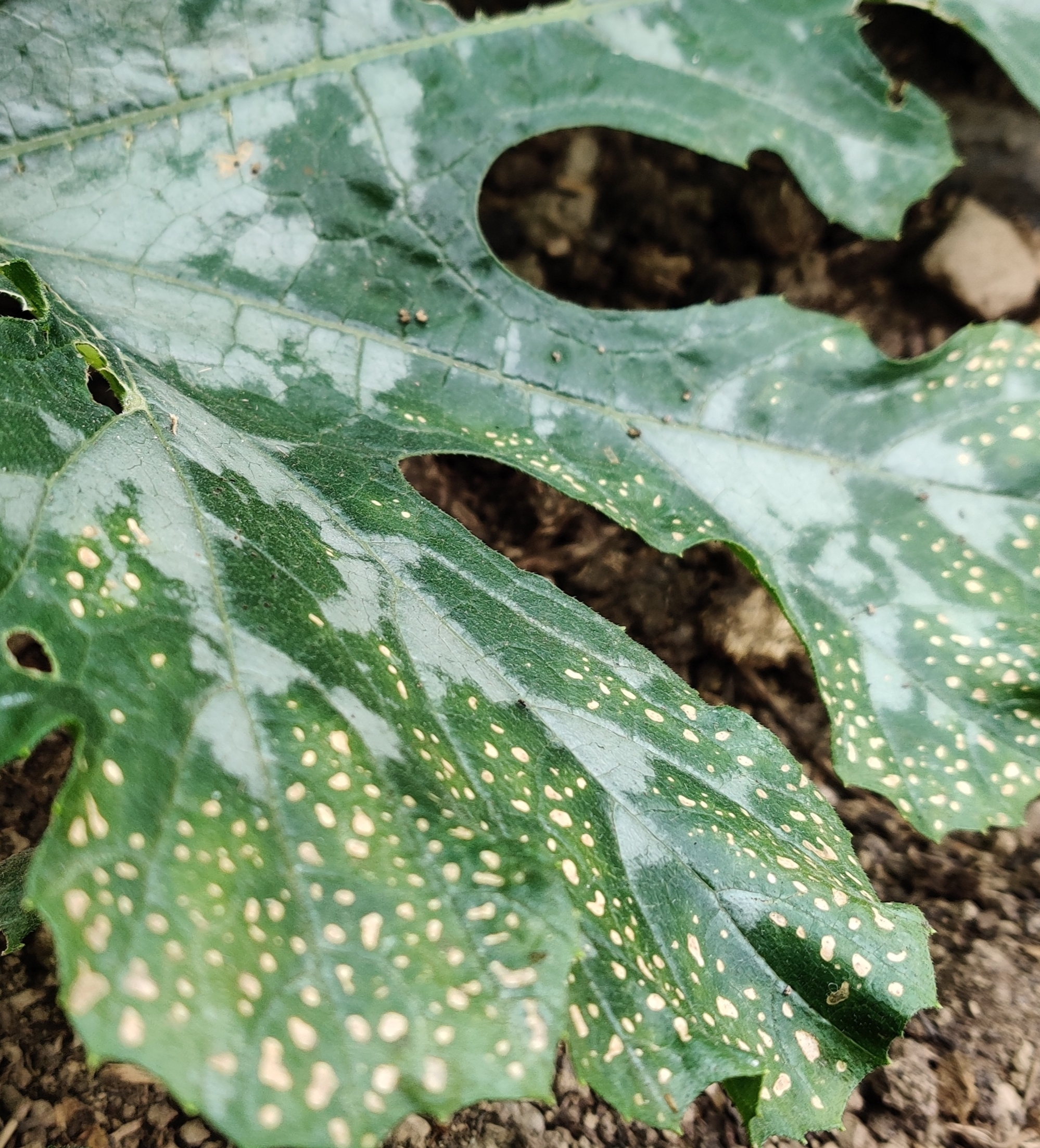
The silvery-white mottling spreading across the leaf surface between the veins is characteristic of powdery mildew (Erysiphe cichoracearum), which is one of the most common fungal problems on all cucurbit plants including courgettes, squash, and pumpkins. Powdery mildew is most often caused in warm and dry weather by airborne spores, producing a white powdery coating that spreads over the leaves, especially on the upper surface.
The second issue is those small, discrete cream or pale yellow oval spots scattered across the leaf surface in a stippled pattern, combined with the ragged holes you can see in the leaf edges. This stippling pattern combined with ragged holes is consistent with squash bug damage, which causes white stippling as the insects pierce the leaf tissue to feed on the sap beneath.
How to Tell the Difference
Run your finger across one of the pale areas. If it smears or rubs off slightly, that is powdery mildew. If rubbed, the powder smears, making it easy to distinguish from normal silvering or insect scarring. The discrete oval spots that do not rub away are the insect feeding scars, which are a separate problem requiring a different treatment.
Dealing With the Powdery Mildew
Remove the most heavily affected leaves completely and dispose of them in your general waste rather than the compost, as the spores will persist and reinfect. For the remaining foliage, a homemade spray of one teaspoon of bicarbonate of soda dissolved in a litre of water, applied to the leaf surfaces in the morning rather than during the heat of the day, can help slow the spread on a mild to moderate infection. Neem oil spray is another effective organic option and deals with both the fungal and pest issues simultaneously, which makes it a good choice when you are dealing with both problems at once as you appear to be here. Do checkout my guide on neem oil here, though which shows the potential issues with using it.
🛒 Buy Neem Oil Spray from Amazon UK
Checking for the Pest Culprit
Turn the leaves over and examine the undersides carefully, paying particular attention to where the leaf stem meets the main stem. Squash bugs lay clusters of small, bronze-coloured oval eggs in neat rows on the leaf undersides, and the nymphs are grey-green and cluster together when young. Remove any eggs or insects you find by hand and drop them into a bucket of soapy water. Check every two to three days as squash bugs can build up quickly in warm weather.
Will the Plant Survive?
Almost certainly yes, provided you act now rather than waiting. Powdery mildew will often stunt growth and affect yield but will rarely kill the plant outright. The courgette is a vigorous grower and will continue to produce fruit from the healthy stems even while you are managing the affected leaves. Keep the plant well watered at the base rather than overhead, which helps reduce the humid leaf conditions that powdery mildew favours, and make sure it has good airflow around it. Avoid watering the leaves directly at all costs.
Do let us know how it responds to treatment and post another photo in a week or so.
Lee Garden Ninja
Hi @peerlitahotmail-co-uk
Great photo, and really useful to be able to see the detail on those leaves clearly. Looking at your image carefully, I can identify what I think is a combination of two distinct problems happening at the same time, which is quite common on courgettes in a warm summer. But don't panic, this has happened to nearly all kitchen gardeners that I know myself included, hence why its so easy to reply!
There are two separate things going on here and it is important to distinguish between them because they need different responses.
The silvery-white mottling spreading across the leaf surface between the veins is characteristic of powdery mildew (Erysiphe cichoracearum), which is one of the most common fungal problems on all cucurbit plants including courgettes, squash, and pumpkins. Powdery mildew is most often caused in warm and dry weather by airborne spores, producing a white powdery coating that spreads over the leaves, especially on the upper surface.
The second issue is those small, discrete cream or pale yellow oval spots scattered across the leaf surface in a stippled pattern, combined with the ragged holes you can see in the leaf edges. This stippling pattern combined with ragged holes is consistent with squash bug damage, which causes white stippling as the insects pierce the leaf tissue to feed on the sap beneath.
How to Tell the Difference
Run your finger across one of the pale areas. If it smears or rubs off slightly, that is powdery mildew. If rubbed, the powder smears, making it easy to distinguish from normal silvering or insect scarring. The discrete oval spots that do not rub away are the insect feeding scars, which are a separate problem requiring a different treatment.
Dealing With the Powdery Mildew
Remove the most heavily affected leaves completely and dispose of them in your general waste rather than the compost, as the spores will persist and reinfect. For the remaining foliage, a homemade spray of one teaspoon of bicarbonate of soda dissolved in a litre of water, applied to the leaf surfaces in the morning rather than during the heat of the day, can help slow the spread on a mild to moderate infection. Neem oil spray is another effective organic option and deals with both the fungal and pest issues simultaneously, which makes it a good choice when you are dealing with both problems at once as you appear to be here. Do checkout my guide on neem oil here, though which shows the potential issues with using it.
🛒 Buy Neem Oil Spray from Amazon UK
Checking for the Pest Culprit
Turn the leaves over and examine the undersides carefully, paying particular attention to where the leaf stem meets the main stem. Squash bugs lay clusters of small, bronze-coloured oval eggs in neat rows on the leaf undersides, and the nymphs are grey-green and cluster together when young. Remove any eggs or insects you find by hand and drop them into a bucket of soapy water. Check every two to three days as squash bugs can build up quickly in warm weather.
Will the Plant Survive?
Almost certainly yes, provided you act now rather than waiting. Powdery mildew will often stunt growth and affect yield but will rarely kill the plant outright. The courgette is a vigorous grower and will continue to produce fruit from the healthy stems even while you are managing the affected leaves. Keep the plant well watered at the base rather than overhead, which helps reduce the humid leaf conditions that powdery mildew favours, and make sure it has good airflow around it. Avoid watering the leaves directly at all costs.
Do let us know how it responds to treatment and post another photo in a week or so.
Lee Garden Ninja

 Lee Burkhill: Award Winning Designer & BBC 1's Garden Rescue Presenters Official Blog