Lee Burkhill: Award Winning Designer & BBC 1's Garden Rescue Presenters Official Blog
Beginner level
In the realm of garden design, ornamental grasses serve as versatile and captivating additions, offering texture, movement, and year-round interest to outdoor spaces. Whether you're seeking to add dynamic contrast to flower beds, create stunning focal points, or design low-maintenance landscapes, selecting the right ornamental grasses can elevate your garden to new heights. In this blog post, we'll explore some of the best ornamental grasses for gardens!
I have a continued love affair with ornamental grasses in the garden. I love their height, texture, movement, and long seasons of interest. They are a welcome addition to nearly any garden, and after years of designing gardens for BBC One’s Garden Rescue as well as hundreds of private clients across the UK, I can say with confidence that grasses remain one of the most underused and underrated plants available to British gardeners.
Now, I know they may not be everyone’s cup of tea, but if you’re open to giving grasses a try, this article will show you a curated selection of well-behaved varieties suitable for both small and large gardens. So why not let grasses bring some drama to your garden borders?
What makes ornamental grasses so compelling as a garden designer is their ability to do several jobs at once. They provide structure, introduce movement that no other plant can replicate, and they look extraordinary when frost settles on their seed heads in winter. Whether you’re working with a tiny courtyard or a sweeping country border, there is an ornamental grass perfectly suited to your space and growing conditions. All the grasses I’ve included in this guide are clump-forming, which is absolutely crucial. They don’t run, they don’t spread aggressively, and they will behave themselves in a mixed border without bullying their neighbours.
This page contains affiliate links for products I use and love. If you take action (i.e. subscribe, make a purchase) after clicking a link, I may earn some gardening commission, which helps me keep the Garden Ninja Blog free for all.
Grasses for Small Gardens & Containers
If you’ve only got a small garden, then naturally, you’re only going to be looking for petite, smaller varieties. Luckily, there are many to choose from, all of which can bring movement and calm to your garden without overwhelming the space. The key with small gardens is choosing grasses that earn their place through more than one season, and each of my picks below absolutely does that.
1. Stipa tenuissima (Mexican Feather Grass)
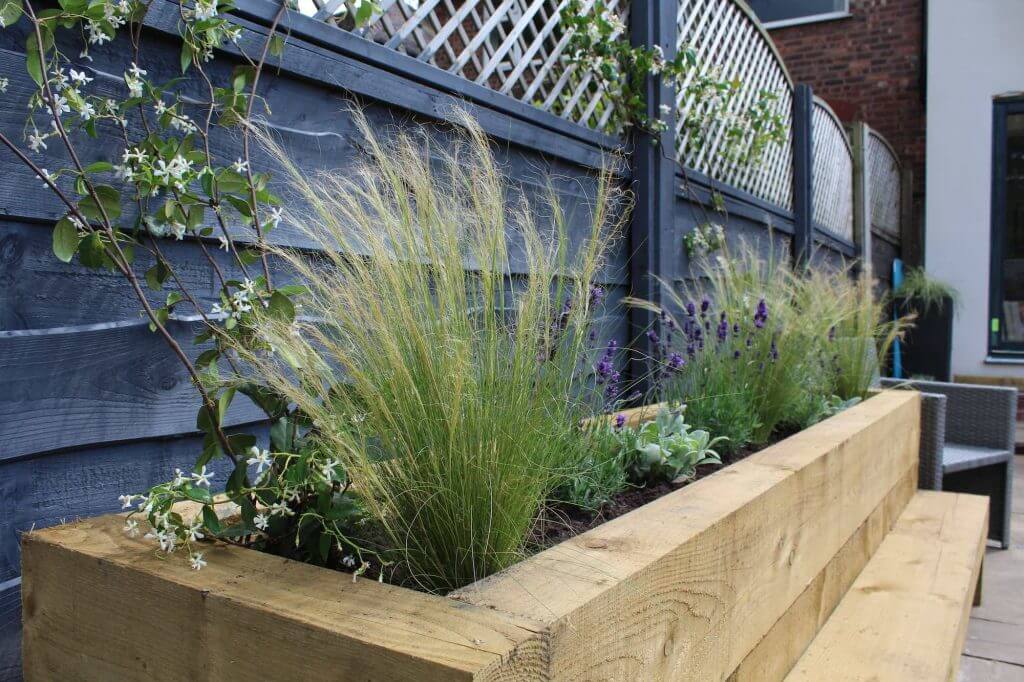
The Mexican feather grass is probably the best-known ornamental grass, and for good reason. You will see it in glossy gardening magazines, show gardens and on Gardeners’ World.
It has a breezy, floating habit that is almost hypnotic in a light breeze, creating movement that no other plant in the border can match. It’s also a semi-evergreen, so apart from some light pruning (see my guide on that for more detail) you won’t need to do too much to it throughout the year.
Stipa tenuissima is a well-behaved and low-fuss grass for texture in smaller gardens.
It will happily survive with some neglect, preferring dry, bright positions. It will grow in dappled shade but may not produce as many flowers if it doesn’t get enough sun. It’s also super easy to grow from seed, so you can bulk up your borders relatively cheaply. I often use this grass in drifts of three or five plants to create a flowing, naturalistic effect at the front or middle of a sunny border.
🌾 Stipa tenuissima At A Glance
Botanical Name
Stipa tenuissima (syn. Nassella tenuissima)
Common Name
Mexican Feather Grass, Ponytail Grass
UK Hardiness
Fully hardy H5 (down to -15°C) in free-draining soil
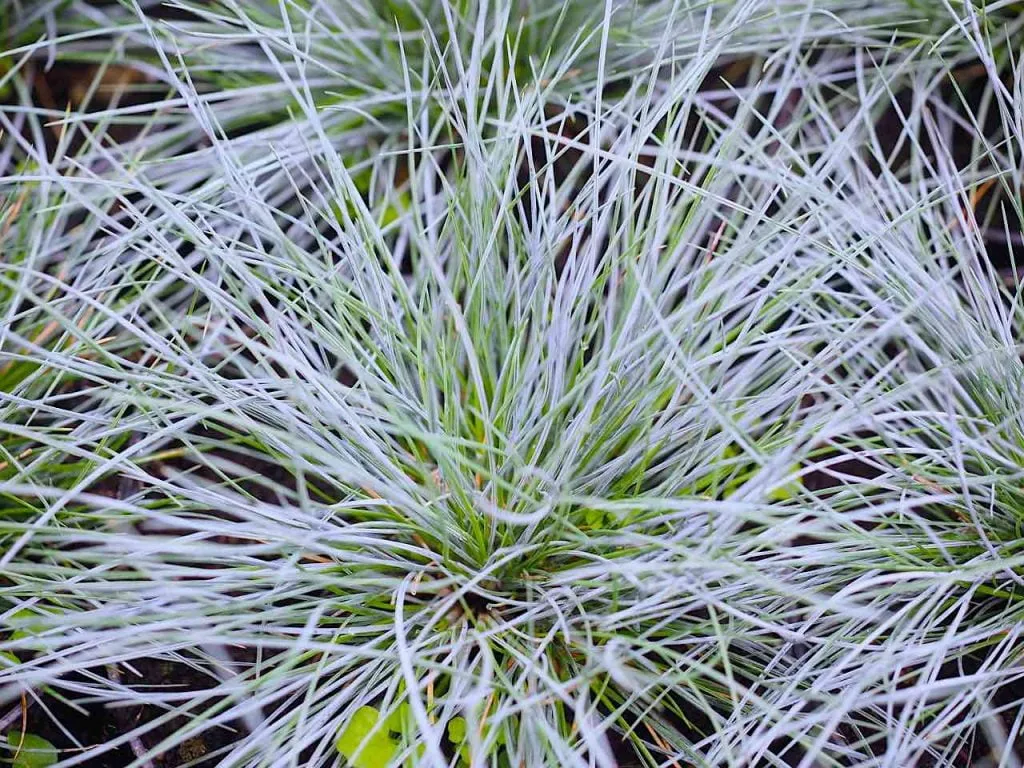
Another wonderfully low-fuss, high-impact grass is Festuca glauca, also known as Blue Fescue. It’s an evergreen (well, ever blue!) and is very well-behaved. It’s great in partial shade or full sun and sends up little blue seed heads in the summer. It provides genuine year-round interest and is a low-fuss winner whether in a container or a garden border.
I use its blue to bring focus to darker areas in a border or to offset against yellow flowers. The contrast it creates is clean and sophisticated, and it’s one of the grasses I reach for most when I want a front-of-border punctuation point.
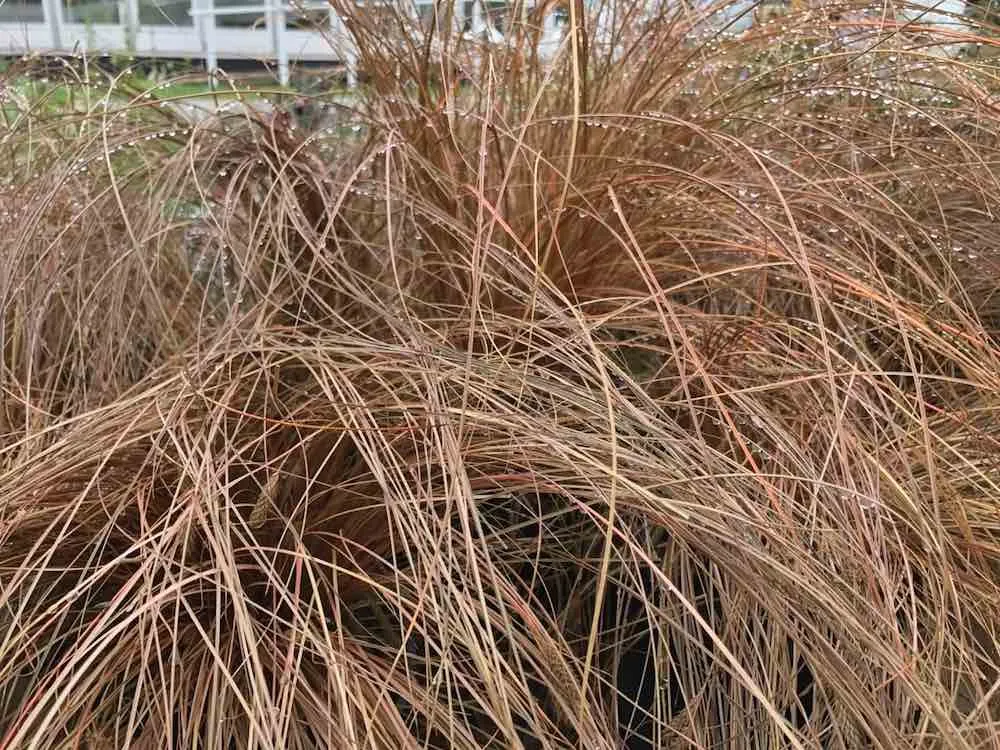
Whilst not technically a grass, it’s a sedge, I have listed it here as it’s a superb performer with that distinctive grassy look. It has a rusty bronze colour, which is great against brighter colours, acting as a really earthy foil to hot pinks, oranges and lime greens.
It’s basically fuss-free once established. Just don’t let it dry out completely, as the Sedge family prefer damper conditions compared to most grasses, and it will do the rest for you. I particularly enjoy pairing this with bright Heucheras or the bold acid yellows of Hakonechloa for maximum contrast. Carex ‘Comans Bronze’ — the uber fuss-free grass (well, sedge)
🌾 Carex ‘Comans Bronze’ At A Glance
Botanical Name
Carex comans ‘Bronze’
Common Name
Bronze Sedge, New Zealand Hair Sedge
UK Hardiness
Fully hardy H5 (down to -15°C)
Height & Spread
35cm height × 45cm spread
Flowering Period
April to May (flowers are inconspicuous; grown for foliage)
Best Position
Full sun to partial shade; moisture-retentive but well-drained soil
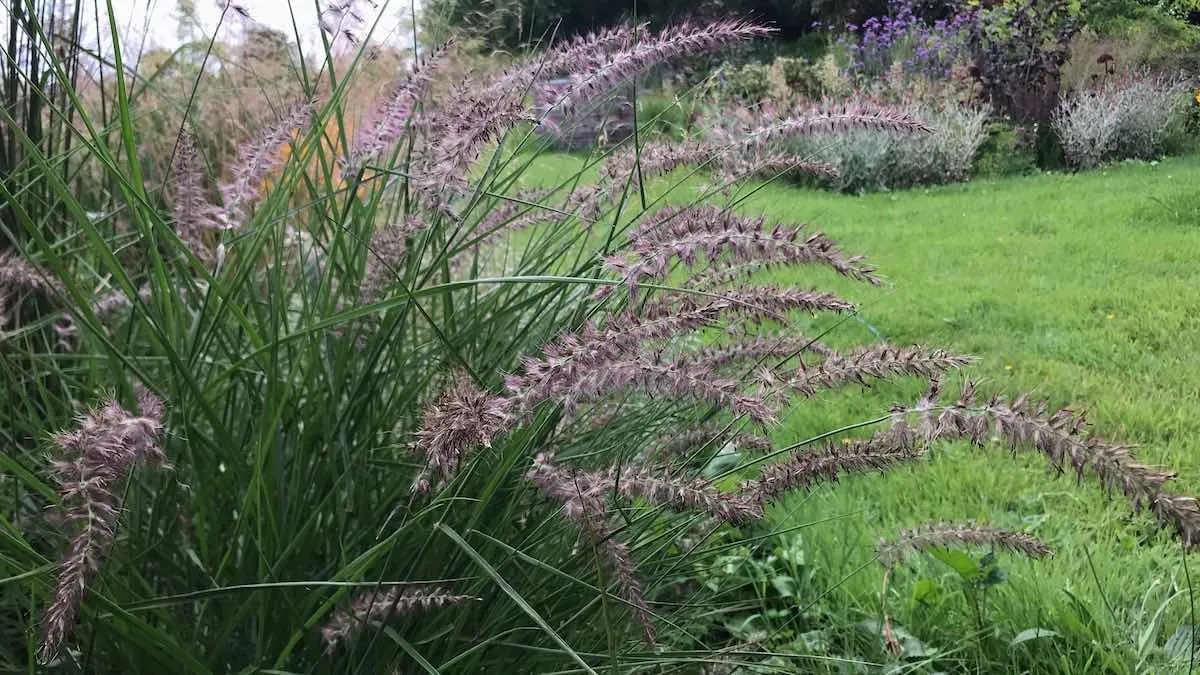
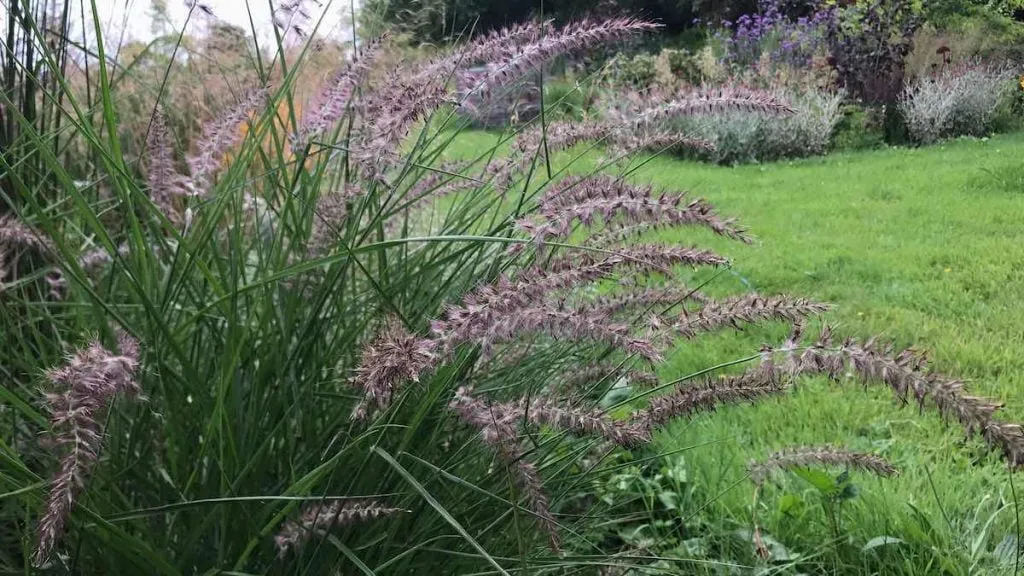
This specimen goes by many common names, from bunny ears and bunny tails to fairy tails. It’s a really delicate grass with super soft, tactile flowers. The Karley Rose cultivar has a rose tint to it that I find irresistible. It’s a late flowerer, so it only really comes into its own from July onwards.
This makes it a brilliant plant for mixing into a herbaceous border to provide a pop of texture and colour during the later part of summer when some other plants begin to tire. It stays relatively compact but has a high impact, and the feathery flower heads catch the light beautifully. Soft, tactile and rose-tinted; this is Pennisetum ‘Karley Rose’.
🌾 Pennisetum ‘Karley Rose’ At A Glance
Botanical Name
Pennisetum orientale ‘Karley Rose’
Common Name
Fountain Grass, Bunny Tails Grass
UK Hardiness
Fairly hardy H4 (down to -10°C); protect in cold, wet winters
Height & Spread
60cm height × 50cm spread
Flowering Period
July to October
Best Position
Full sun; well-drained fertile soil; sheltered from cold winds
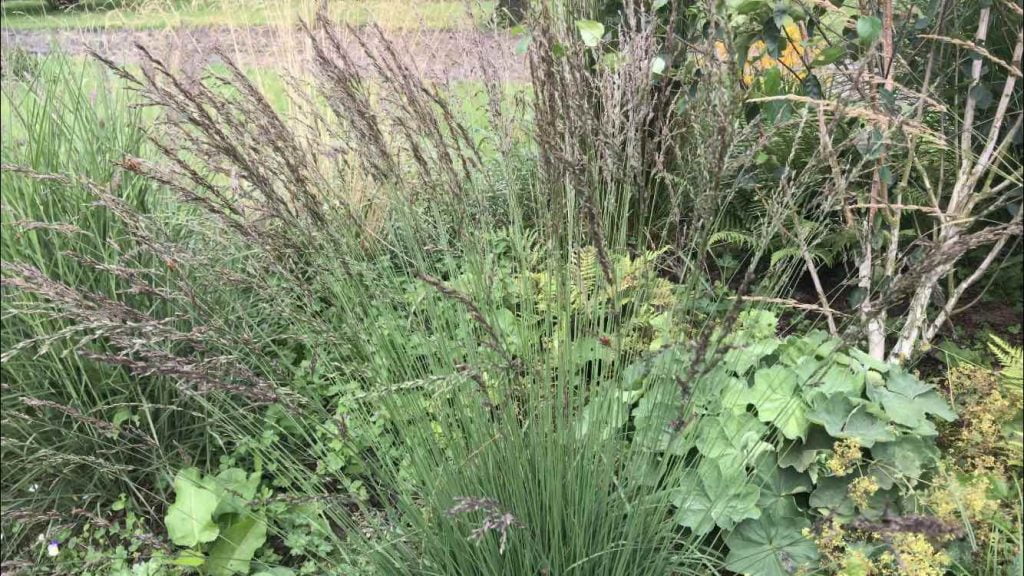
This variety may be a bit of a tongue twister, but this Purple Moor Grass is a delicate and easy-to-look-after ornamental grass for both small and large gardens. It will quite happily sit at just 30 to 60cm in diameter with its dark green leaves before sending up the darkest purple flowers.
This dark contrast, which is unusual for grass, means it can really pop out of a border, especially when planted next to other bright colours. It’s one of my absolute favourites. Subtle, but it still holds its own in a herbaceous border, and the way the flower stems catch the late-afternoon sun in September is genuinely one of the best things I see in my own garden each year. Purple Moor Grass adds some dark tones to a border; look at how it pops out from the Alchemilla behind it.
🌾 Molinia caerulea ‘Edith Dudszus’ At A Glance
Botanical Name
Molinia caerulea ‘Edith Dudszus’
Common Name
Purple Moor Grass
UK Hardiness
Fully hardy H7 (down to -20°C and below)
Height & Spread
75cm height × 50cm spread (flower stems to 90cm)
Flowering Period
July to September
Best Position
Full sun to partial shade; prefers slightly moist, neutral to acid soil
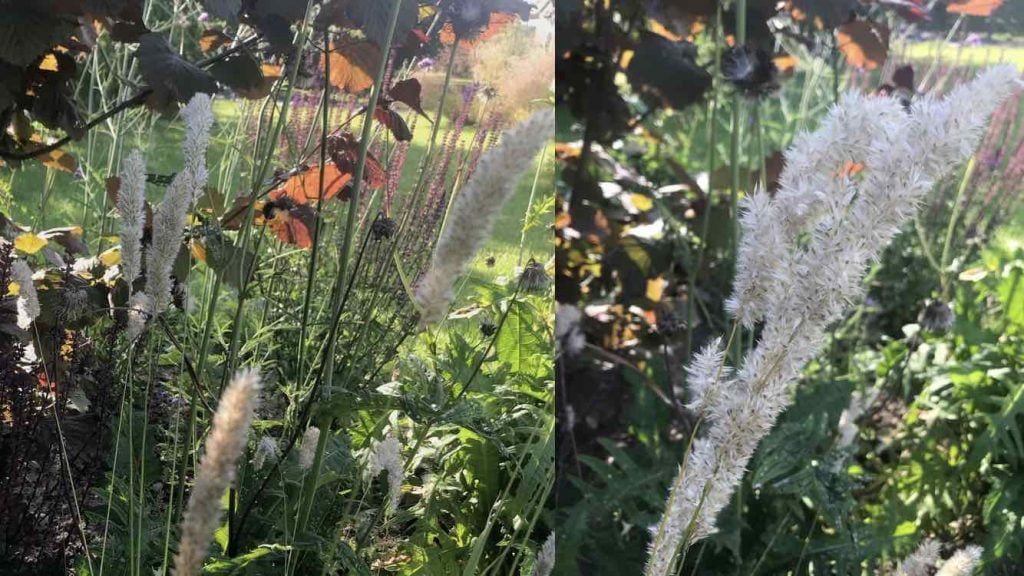
This specimen is a pretty rare one for UK gardens and is often confused with the ‘Timothy’ weedy grass species. However, it really shouldn’t be overlooked as an incredible ornamental grass for even the smallest of gardens. It’s relatively shy in the border, taking up to 30cm in width. Melica ciliata is a real unusual hidden gem of an ornamental grass.
When it flowers, it sends up long, fluffy panicles that can brighten even the darkest border with their white plumes. A great one to set behind your border plants to give some structure and movement to the summer season. My Melica flowers from May all the way through to October. A truly special ornamental grass with a real wow factor that very few gardeners seem to know about yet.
🌾 Melica ciliata At A Glance
Botanical Name
Melica ciliata
Common Name
Silky Spike Melic, Hairy Melic Grass
UK Hardiness
Fully hardy H5 (down to -15°C)
Height & Spread
45cm height × 30cm spread
Flowering Period
May to October
Best Position
Full sun to partial shade; well-drained or dry soils
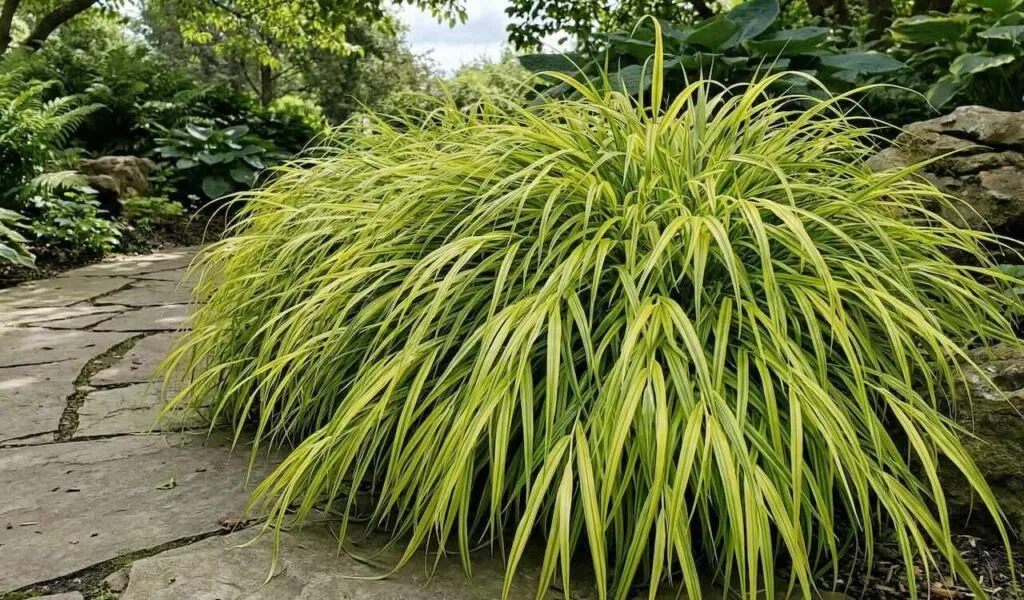
This is a grass I have been recommending to clients for years, and it consistently surprises people when they realise it will thrive in partial shade. Hakonechloa macra, commonly known as Japanese Forest Grass, has gorgeous cascading, arching foliage that ripples gently in even the lightest breeze.
The Aureola cultivar in particular has stunning golden-yellow foliage with fine green striping that brings warmth and light to those trickier shaded corners of the garden. I use it frequently in north-facing town gardens where getting colour and movement is genuinely challenging, and it never lets me down. It’s also a brilliant container plant, where its mounding, flowing habit softens the edges beautifully.
🌾 Hakonechloa macra ‘Aureola’ At A Glance
Botanical Name
Hakonechloa macra ‘Aureola’
Common Name
Japanese Forest Grass, Hakone Grass
UK Hardiness
Fully hardy H5 (down to -15°C)
Height & Spread
40cm height × 50cm spread
Flowering Period
August to September (grown primarily for foliage)
Best Position
Partial shade to dappled shade; moist, fertile, humus-rich soil
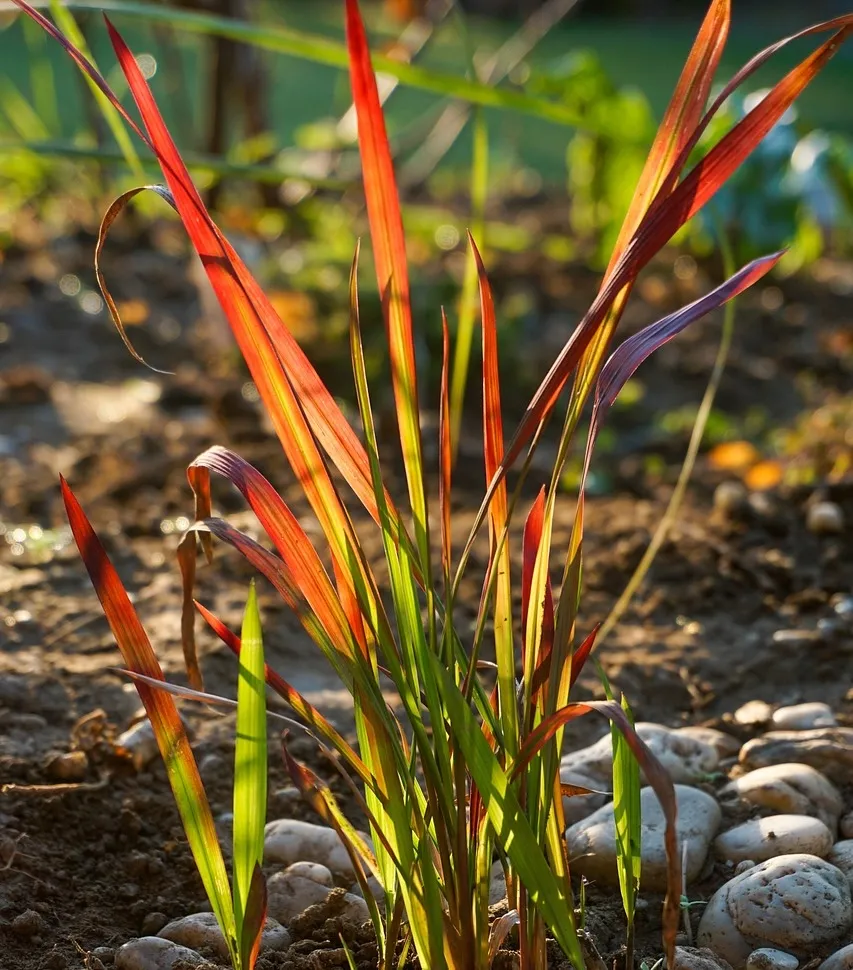
If you’ve ever wanted to introduce dramatic red foliage without resorting to annual bedding plants, then Imperata cylindrica ‘Red Baron’ is your answer. This Japanese Blood Grass starts the season with fresh green blades, then gradually transforms from the tips downwards into a breathtaking blood red, deepening to crimson by late summer.
The effect when backlit by low autumn sun is genuinely one of the most striking things you’ll see in a garden border. I recommend planting it where it will catch the morning or evening light directly, as the translucent quality of the leaves is where the drama really lives. It works beautifully alongside blue-leaved grasses like Festuca or against the dark foliage of a Heuchera.
🌾 Imperata cylindrica ‘Red Baron’ At A Glance
Botanical Name
Imperata cylindrica ‘Red Baron’ (syn. ‘Rubra’)
Common Name
Japanese Blood Grass, Cogon Grass
UK Hardiness
Fully hardy H5 (down to -15°C) with good drainage; protect crown in very cold winters
Height & Spread
40cm height × 30cm spread
Colour Season
Green spring foliage; red from tips from June, deepening to crimson by September
Best Position
Full sun for best colour; partial shade tolerated; well-drained soil
If you’ve got a larger garden or simply want more of a statement plant, then the following grasses are for you. You often hear of people using specimen trees or shrubs, but why not use a statement grass instead? These examples are brilliant for adding drama, texture and genuine intrigue to your garden borders, and several of them will provide structure and visual interest well into winter.
1. Stipa gigantea (Giant Oat Grass)
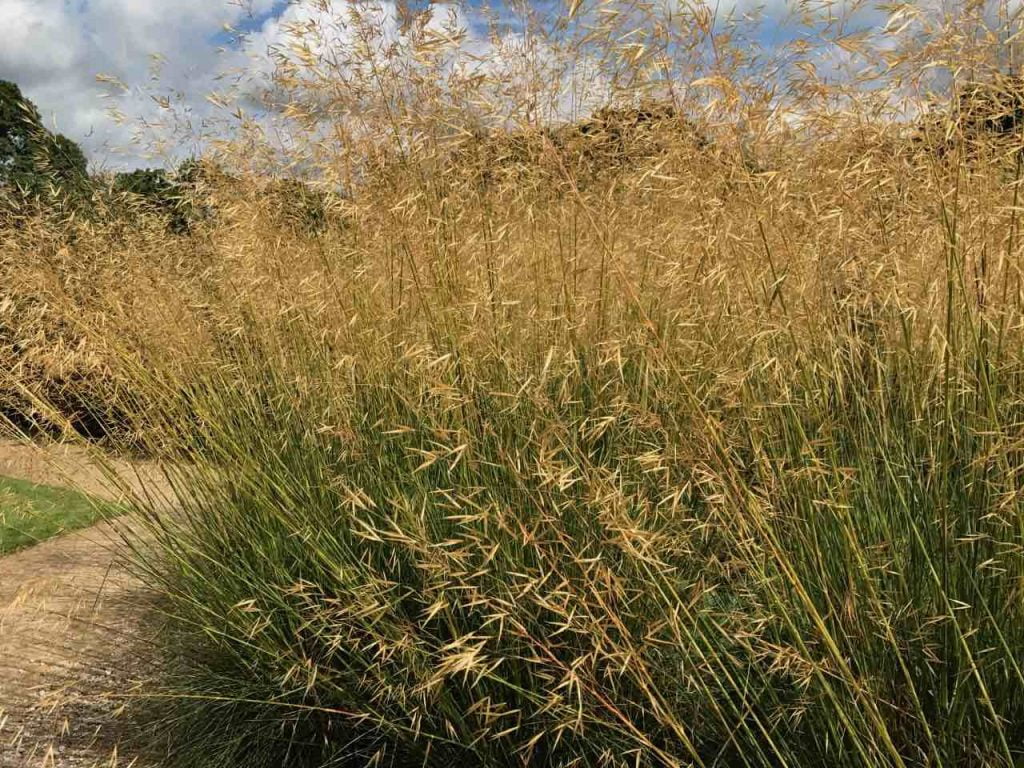
Probably the largest and most popular of the taller specimens, this beauty will dominate a border with cool, calming movement. What’s really interesting is the remarkable low maintenance of this grass. It’s a semi-evergreen, so all I do is cut back the spent seed heads while leaving the green crown or base foliage of the grass year-round.
It sends up massive, delicate oaty seed heads that are beautiful in cut flower arrangements or dried. It’s not for the smallest gardens or borders, as the base of the plant can be quite sparse. I tend to use it in larger borders with more dense herbaceous plants surrounding it, so you can see through it to other layers of planting behind. Great when planted in bulk; I’d save this only for the larger of borders.
🌾 Stipa gigantea At A Glance
Botanical Name
Stipa gigantea (syn. Celtica gigantea)
Common Name
Giant Oat Grass, Golden Oat Grass
UK Hardiness
Fully hardy H5 (down to -15°C)
Height & Spread
Foliage 60cm; flower stems to 2m height × 120cm spread
Flowering Period
June to August (seed heads persist through winter)
Best Position
Full sun; free-draining soil essential; not for heavy clay
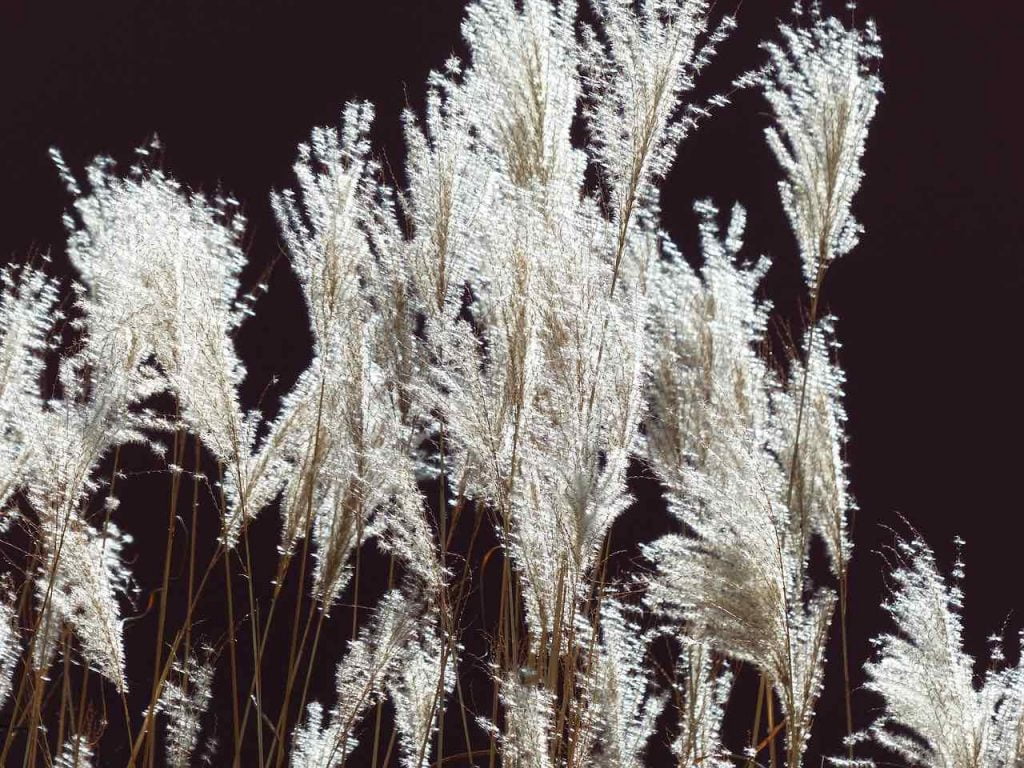
Another larger but meatier grass is from the Miscanthus family. This grass sends up huge plumes of yellow to white flower heads and reaches 1.5 to 2m in height. A real statement plant. It’s denser than Stipa, and the foliage adds bulk or a full stop to a border.
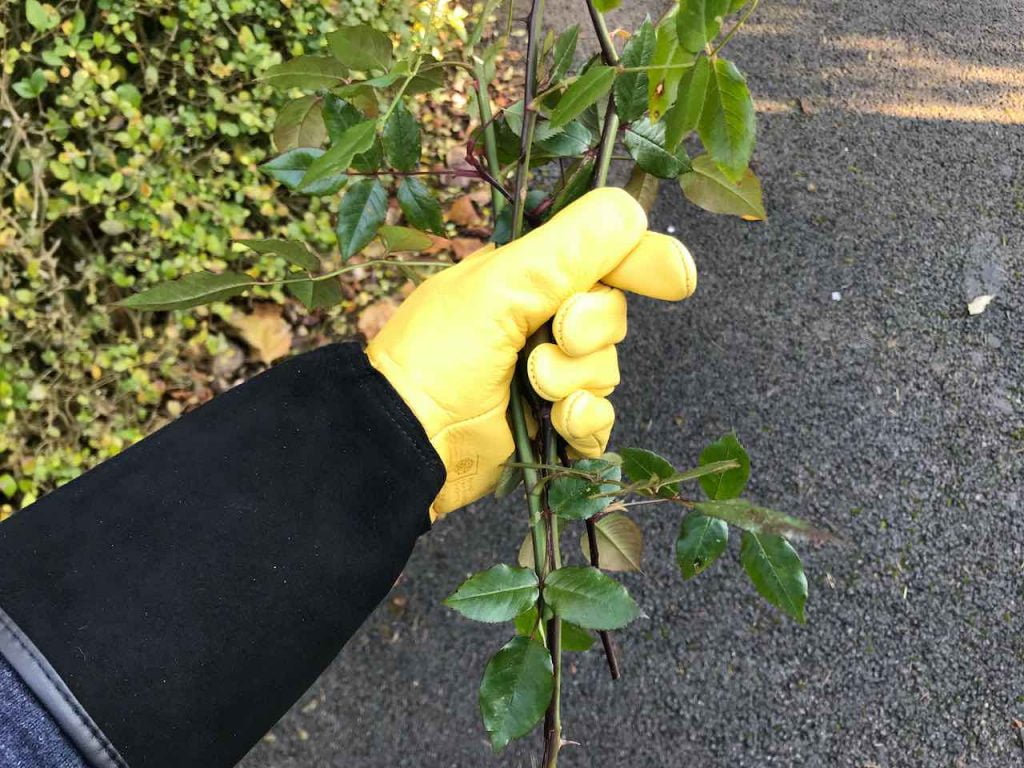
I cut this one back hard in late winter to ensure I get strong, well-coloured new growth and flowers each year. A word of caution: do wear gloves when handling Miscanthus, as the leaves can be sharp and cause skin irritation if you’re working through them without protection.
🌾 Miscanthus sinensis ‘Morning Light’ At A Glance
Botanical Name
Miscanthus sinensis ‘Morning Light’
Common Name
Chinese Silver Grass, Maiden Grass
UK Hardiness
Fully hardy H5 (down to -15°C)
Height & Spread
1.5 to 2m height × 1m spread
Flowering Period
September to November (plumes persist through winter)
Best Position
Full sun to partial shade; moist, well-drained fertile soil
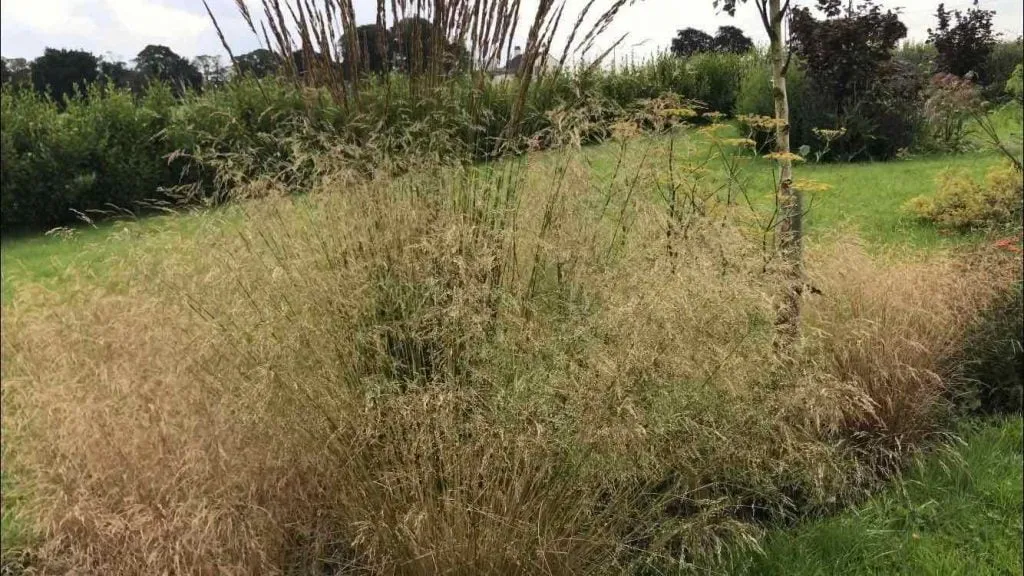
If you’re looking for a broader grass with airy oaty seed heads, then Deschampsia offers a real extended season of interest. It starts off as a bright green tuffet of foliage before sending up its flowers, then gradually turns golden all over as summer progresses.
A beautiful transformation that always wows visitors to my Exploding Atom garden. It’s a wonderful plant for bridging the gap between spring and autumn in a border, and unlike many grasses, it actually performs well in moist soils too, making it an excellent choice for shadier, damper spots where other grasses struggle. Airy, light and a bit like waves of gold. Deschampsia adds a real boat cruise feel to your garden.
🌾 Deschampsia cespitosa At A Glance
Botanical Name
Deschampsia cespitosa
Common Name
Tufted Hair Grass
UK Hardiness
Fully hardy H7 (down to -20°C and below)
Height & Spread
Foliage 60cm; flower stems to 1.2m height × 75cm spread
Flowering Period
June to August (seed heads persist well into autumn)
Best Position
Full sun to partial shade; tolerates moist and clay soils well
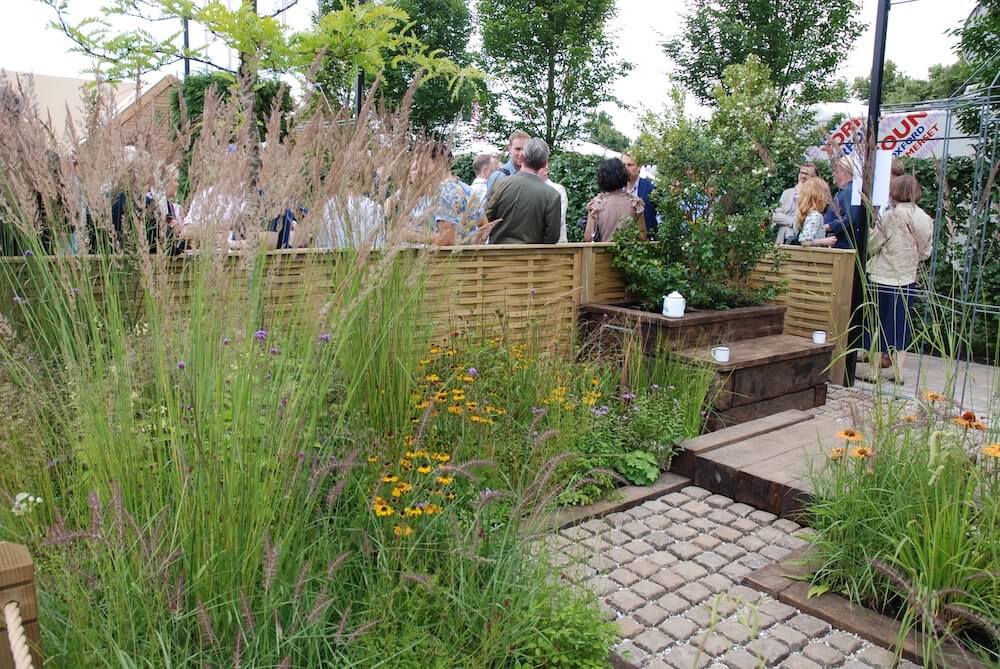
This show garden staple is one of the best-behaved tall ornamental grasses available, and one I return to again and again in my own designs, including my very first Hampton Court show garden back in 2016. It’s very considerate of neighbouring herbaceous perennials and doesn’t run. It has semi-arching foliage which forms a tight clump, then in June in the UK it sends up slender, oat-like flowers which turn a beautiful burnt golden colour in July.
These beauties only reach about 60cm in width in my experience, but you can clump them together to get a mass effect sooner. They keep their stature all the way through winter, and the upright seed heads look magnificent covered in a winter frost. My only advice is to remove any broken seed heads, as they have a habit of folding in half in bad weather.
Calamagrostis featured in my very first show garden: Fancy a Brew Take a Pew at Hampton Court 2016.
🌾 Calamagrostis ‘Karl Foerster’ At A Glance
Botanical Name
Calamagrostis × acutiflora ‘Karl Foerster’
Common Name
Feather Reed Grass, Karl Foerster Reed Grass
UK Hardiness
Fully hardy H7 (down to -20°C and below)
Height & Spread
Flower stems to 1.8m height × 60cm spread
Flowering Period
June to July (seed heads persist through winter)
Best Position
Full sun to partial shade; tolerates most soils including clay
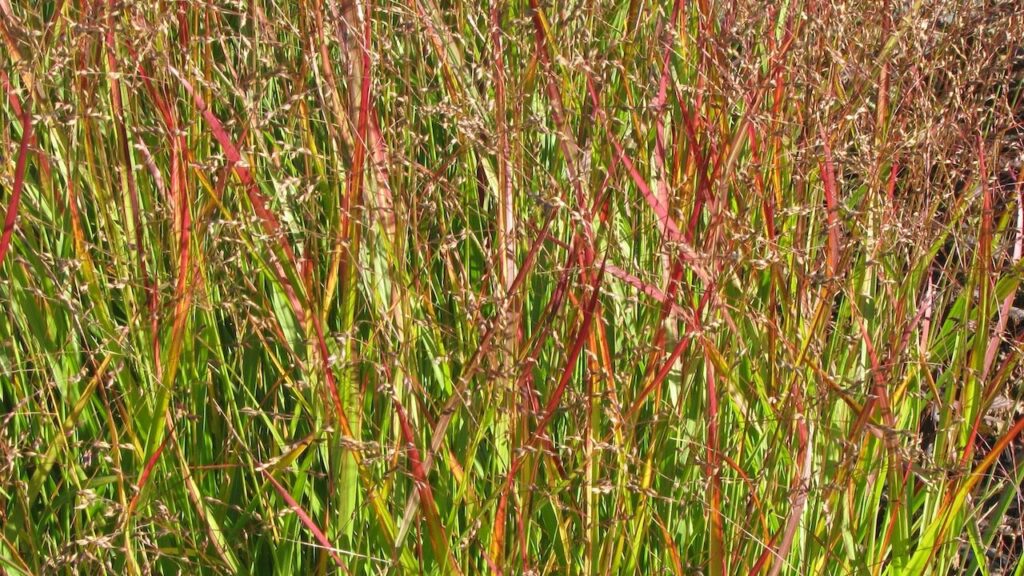
Switchgrass is a plant that I think is massively underused in UK gardens, and Shenandoah is by far the most rewarding cultivar for our climate. What makes this grass genuinely extraordinary is its autumn colour display.
The foliage, which is a pleasant blue-green through summer, begins to turn a rich, deep red from late August onwards, intensifying through September and October into something truly spectacular. In a prairie-style planting with Echinacea, Rudbeckia and Persicaria, it ties everything together beautifully. It has an upright, slightly arching habit with fine, airy flower panicles that catch the light magnificently in late summer. I’d recommend it to anyone looking for a grass that genuinely earns its place across three full seasons.
🌾 Panicum virgatum ‘Shenandoah’ At A Glance
Botanical Name
Panicum virgatum ‘Shenandoah’ (syn. Switchgrass)
Common Name
Switchgrass, Prairie Grass
UK Hardiness
Fully hardy H5 (down to -15°C)
Height & Spread
90cm to 1.2m height × 60cm spread
Key Season
Blue-green summer foliage; deep red autumn colour from August to November
Best Position
Full sun for best autumn colour; well-drained to moderately moist soil
What garden conditions do ornamental grasses need?
Most gardens can accommodate some beautiful ornamental grasses to add texture and diversity. If you want to make sure you have the right conditions for the grasses you’re considering, then here are my key principles from years of planting grasses in gardens across the UK, from coastal Lancashire to sheltered city courtyards in London.
i) Sunlight
While most ornamental grasses prefer full sun, some varieties can tolerate partial shade. The grasses that perform in shade, such as Hakonechloa and Deschampsia, are genuinely invaluable for difficult north-facing borders. However, if you push a sun-loving grass like Stipa tenuissima into full shade, you’ll get leggy, weak growth and very few flowers. Always check the requirements for each specific variety before planting, and when in doubt, choose a position that gets at least four hours of direct sunlight per day.
ii) Soil Types
Ornamental grasses prefer well-draining soil with a slightly acidic to neutral pH level. Before planting into heavy clay or compacted soil, I always recommend working in organic matter such as peat-free compost or grit to improve drainage. Most grasses will rot at the crown if left sitting in waterlogged soil over winter, which is the single most common cause of losing them. Calamagrostis is a welcome exception here, as it will tolerate quite heavy, moisture-retentive soils.
iii) Watering
During the establishment period, ornamental grasses require regular watering to encourage root development. Water deeply but infrequently to encourage deep root growth and drought tolerance over time. Once established, most grasses are remarkably drought-tolerant and require very little supplemental watering except during prolonged dry spells. This makes them excellent low-maintenance choices for busy gardeners who can’t water regularly.
iv) Spacing
Proper spacing is something I see gardeners get wrong more often than almost anything else with grasses. Plant them too close together and they’ll compete, producing weaker growth and reducing the visual impact of each individual plant. As a general rule, allow at least the expected mature spread of each plant between them.
For smaller grasses, this might be 30 to 45cm, for larger specimens like Miscanthus, you might need 90cm to 1m. It feels generous when the plants are young, but within two years you’ll thank yourself.
v) Fertilisation
Ornamental grasses generally have low fertility requirements and can thrive in nutrient-poor soil. In fact, over-fertilising is one of the quickest ways to ruin a grass, as excessive nitrogen pushes the plant into producing lush, floppy, lazy growth at the expense of flowering and that wonderful upright habit. If your soil is genuinely very poor, a single application of a balanced slow-release fertiliser at planting is more than enough.
vi) Mulching
Applying a layer of organic mulch such as peat-free compost or shredded bark around the base of ornamental grasses helps conserve soil moisture, suppress weeds and regulate soil temperature. Always leave a small gap between the mulch and the base of the grass clump itself to prevent any rotting or fungal issues at the crown.
vii) Pruning
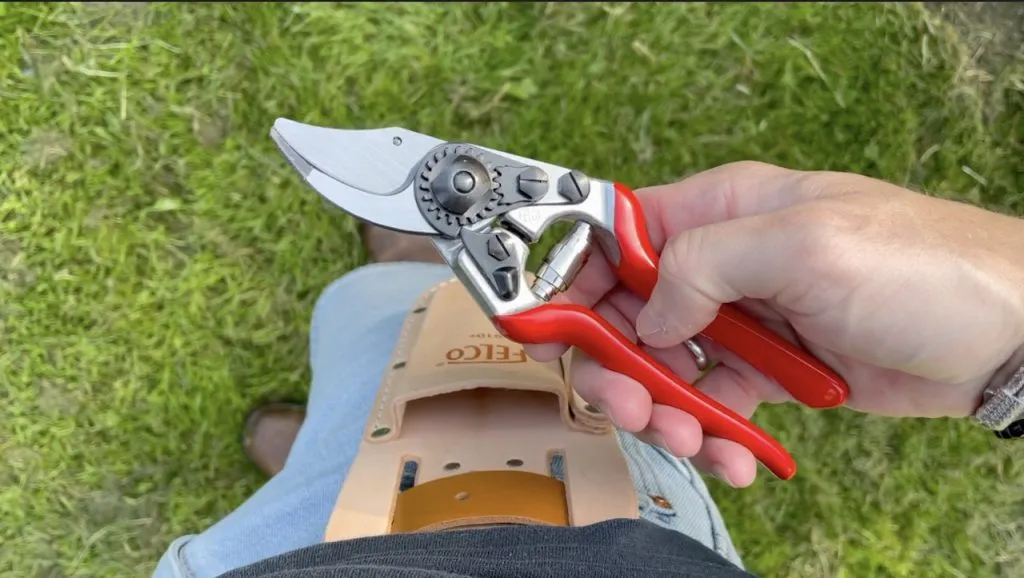
Annual pruning is essential for maintaining the health and appearance of ornamental grasses. Before new growth emerges in late winter or early spring, cut back the previous year’s foliage to a few inches above the ground using sharp, clean shears or secateurs. Remove any dead, damaged or diseased foliage to promote airflow and reduce the risk of pest infestations.
How to Prune Ornamental Grasses
Pruning of grasses could not be simpler if you follow my handy guide. Grasses are split between evergreen and deciduous. Evergreen varieties require only minor pruning each year to tidy up old flower stems and dead foliage. Deciduous varieties need a more decisive cut down near to the ground each February, leaving just a few centimetres of growth. This might feel brutal, but grasses are incredibly resilient and will push through with vigour within weeks. Because of this, deciduous grasses still provide a focus point for a whopping nine months of the year.
How to Divide Ornamental Grasses
Once your grasses have been growing happily for three or four years, they will benefit enormously from division. This is one of the most rewarding jobs in the ornamental grass garden because you essentially get free plants for other parts of the border. The best time to lift and divide grasses in the UK is early to mid-spring, just as the new shoots are beginning to emerge, and you can see exactly where the fresh growth is.
Use a sharp spade to cut cleanly through the clump, splitting it into three or four sections. Each division should have a good root system and a decent number of growing points.
Replant immediately at the same depth they were growing, water in well and they will establish quickly. Don’t be tempted to divide in autumn; the new divisions won’t have time to settle in before winter and may not survive cold, wet conditions as well as established plants do.
Ornamental Grasses for Wildlife
One of the things I find myself emphasising more and more when designing gardens is the value of ornamental grasses for wildlife. The seed heads of grasses are a genuinely significant food source for birds, particularly finches and sparrows, who will return to them repeatedly throughout the autumn and winter months. This is one of the reasons I strongly advocate leaving grass seed heads standing through winter rather than cutting them back in autumn. You lose very little aesthetically, and you gain an enormous amount in terms of supporting garden birds through the leaner months.
The dense base growth of established clump-forming grasses also provides valuable overwintering habitat for beneficial insects and small invertebrates. When you do cut back in late February or early March, do so gradually rather than all at once to avoid disturbing any insects that may still be sheltering within. Grasses also combine beautifully with wildlife-friendly perennials like Echinacea, Rudbeckia and Verbena bonariensis, creating a prairie-style planting that supports pollinators from June through to October.
Your subscription could not be saved. Please try again.
Your subscription has been successful.
Essential Tools for Growing Ornamental Grasses
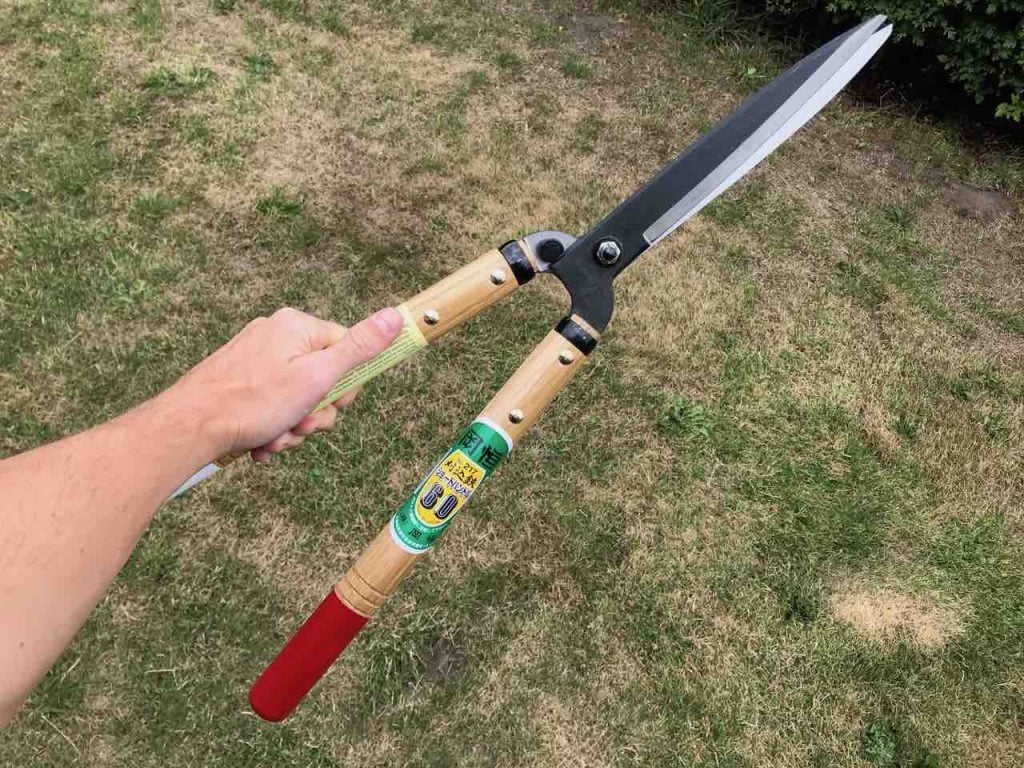
The right tools make all the difference when managing ornamental grasses. A sharp pair of secateurs handles the smaller varieties with ease, while a pair of long-handled hedging shears makes cutting back larger clumps like Miscanthus and Deschampsia significantly quicker and less physically demanding. For the really chunky clumps, a sharp spade for division is essential.
Gloves are particularly important when dealing with Miscanthus, as the leaf edges are sharp enough to cause nasty cuts to bare hands and forearms.
To make choosing the right grass as straightforward as possible, here’s a quick summary guide covering all the grasses featured in this article.
Grass
Size
Position
Hardiness
Type
Stipa tenuissima
60cm
Full sun
H5
Semi-evergreen
Festuca glauca
30cm
Sun / part shade
H5
Evergreen
Carex ‘Comans Bronze’
35cm
Sun / part shade
H5
Evergreen
Pennisetum ‘Karley Rose’
60cm
Full sun
H4
Deciduous
Molinia ‘Edith Dudszus’
75cm
Sun / part shade
H7
Deciduous
Melica ciliata
45cm
Sun / part shade
H5
Semi-evergreen
Hakonechloa ‘Aureola’
40cm
Partial shade
H5
Deciduous
Imperata ‘Red Baron’
40cm
Full sun
H5
Deciduous
Stipa gigantea
2m
Full sun
H5
Semi-evergreen
Miscanthus ‘Morning Light’
1.5 to 2m
Sun / part shade
H5
Deciduous
Deschampsia cespitosa
1.2m
Sun / part shade
H7
Evergreen
Calamagrostis ‘Karl Foerster’
1.8m
Sun / part shade
H7
Deciduous
Panicum ‘Shenandoah’
90cm to 1.2m
Full sun
H5
Deciduous
Learn more about growing & Garden Design
Why not consider expanding your plant and garden design knowledge with one of my online gardening courses? My Garden Design for Beginners Course is here to help you transform your garden from average to exceptional with an affordable online course, no matter how little your experience with plants.
This course offers step-by-step guidance from me, Lee Burkhill, award-winning garden designer and presenter on BBC1’s Garden Rescue. In this course, you’ll go from a garden design novice to a confident designer equipped to tackle any green space.
Planting Techniques – Select and arrange plants like a pro.
Design Styles & Layout Options – Explore different styles to suit every garden.
Course Features:
20 Hours of Study Time
Flexible Online Learning
Engaging Video Lessons & Quizzes
Real-World Case Studies
Certification upon Completion
Taught by Award-Winning Designer Lee Burkhill
Enrol now for just £199 and start your journey toward garden design mastery!
29
Garden Design Examples for Small Gardens: 30 Design Templates & Planting Plans
Garden Design Examples for Small Gardens: 30 Design Templates & Planting Plans: In this online gardening course, I’ll walk you through 30 fantastic garden designs, explaining the logic behind the layout, the plant choices, and take-home tips for applying them in your own garden.
Weekend Garden Makeover: A Crash Course in Design for Beginners
Learn how to transform and design your own garden with Lee Burkhills crash course in garden design. Over 5 hours Lee will teach you how to design your own dream garden. Featuring practical design examples, planting ideas and video guides. Learn how to design your garden in one weekend!
Garden Design for Beginners: Create Your Dream Garden in Just 4 Weeks
Garden Design for Beginners Online Course: If you want to make the career jump to becoming a garden designer or to learn how to design your own garden, this is the beginner course for you. Join me, Lee Burkhill, an award-winning garden designer, as I train you in the art of beautiful garden design.
Grasses really are a wonderful addition to any garden. Their habit, movement and quiet calm can help slow down a garden border and bring a sense of rhythm that no other plant quite achieves. On a breezy day, there is genuinely nothing better than sitting and watching their hypnotic movement, letting the world go by. I’ve been designing with grasses for well over fifteen years and I’m still discovering new cultivars and combinations that surprise and delight me. Give a few a try this season — I don’t think you’ll regret it.
If you’ve found this guide helpful, why not follow me on YouTube where I’ve got plenty of garden guide videos including a full tutorial on pruning ornamental grasses. You can also find me on Instagram and Facebook where I share design ideas, garden updates and plenty of horticultural advice. Happy gardening!
Your subscription could not be saved. Please try again.
Your subscription has been successful.
Lee Burkhill
Lee Burkhill, known as the Garden Ninja, is an award-winning garden designer and horticulturist with over 30 years of gardening experience and 15 years as a professional garden designer. A qualified RHS (Royal Horticultural Society) professional, Lee specialises in sustainable garden design and practical horticultural advice. He designs and presents on BBC1’s Garden Rescue and in leading gardening publications. Lee combines three decades of hands-on gardening knowledge with professional design qualifications to help gardeners create beautiful, functional outdoor spaces.
Hi Lee, Just watched your video on ‘Ornamental Grasses’. Absolutely brilliant!
I have a few ornamental grasses in my garden which I can never identify but your video gave me a start.
Thank you,
















Hi Lee, Just watched your video on ‘Ornamental Grasses’. Absolutely brilliant!
I have a few ornamental grasses in my garden which I can never identify but your video gave me a start.
Thank you,
Derek
Thanks Derek! I’m glad it’s been of help in identifying your existing grasses! Happy Gardening!
very informative blog!
All the best!
Great item on grasses. Would be interested to know whether your ‘well behaved’ grasses self seed much. (Forwarned is forarmed!)