For the garden you’ve already got, not the one you’re starting from scratch. Seven checklists and video lessons from BBC Garden Rescue’s Lee Burkhill, designed to help you decide what’s worth keeping before you spend a penny.
69


Quick Answer
Plant garlic in the UK in October or November, ideally before Christmas, so the cloves get the winter cold they need to split into full bulbs. Push individual cloves into free-draining soil in full sun, pointed end up, with the tip about 2.5cm below the surface, 15cm apart in rows 30cm apart. Keep them weeded, water in dry spells in spring, and lift the bulbs in June or July once the lower leaves turn yellow.
In fact, the only real problem with growing garlic is what to do with it all, because you will almost certainly end up with a glut. That is no bad thing. Home-grown garlic is far more flavoursome than most supermarket bulbs, and a glut means plenty of garlic to turn into sauces, dips and kitchen preserves that last well into the following winter. I have included my favourite ways to use it up at the end of this guide. If you are just starting out with growing your own, my top 20 beginner vegetables is a good next step.
Jump To
This page contains affiliate links for products I use and love. If you take action (i.e. subscribe, make a purchase) after clicking a link, I may earn some gardening commission which helps me keep the Garden Ninja Blog free for all.
🛒 Buy certified seed garlic for autumn planting from Amazon UK
The best time to plant garlic in the UK is from October to November. Garlic needs a spell of cold, at least four to eight weeks below about 10°C, to trigger each clove to split into a full bulb of new cloves. Planting in autumn gives it that cold naturally, and the cloves put down roots before winter so they are ready to grow away strongly in spring. Planted any later than Christmas, and you risk single-clove “rounds” instead of proper bulbs. You can see where garlic fits alongside everything else in my October and November growing guides.
If you miss the autumn window, all is not lost. Some varieties are sold specifically for spring planting in February and March, and you can start autumn varieties in modules in a cold frame or unheated greenhouse in winter and plant them out in spring. Spring-planted garlic usually gives smaller bulbs, but it is still well worth growing. On very heavy, wet clay, starting cloves in modules and planting them out in early spring is often more reliable than autumn planting in cold, waterlogged soil. My monthly vegetable planting calendar covers the rest of the year.
Garlic comes in two main types, and choosing the right one depends on how you want to use and store it.
Softneck garlic is the type you find in supermarkets. It has a soft, flexible stem, lots of smaller cloves, a milder flavour, and stores the longest, often six to nine months, which makes it the best choice for a big harvest you want to last. The soft stems can be plaited into the classic garlic braid. Popular UK varieties include ‘Solent Wight’ and ‘Germidour’.
Hardneck garlic grows a stiff central stalk and sends up a curly flower stem called a scape in early summer. It produces fewer but larger cloves that are easier to peel, with a richer, more complex flavour, though it only stores for three to five months. Varieties such as ‘Chesnok Wight’ and ‘Lautrec Wight’ are well suited to the UK climate. Snap the scapes off when they curl, and do not waste them: they taste like mild garlic and are delicious stir-fried or blitzed into pesto.
Elephant garlic is not true garlic at all but a close relative of the leek. It produces huge bulbs with a few enormous, mild cloves, and it is grown in exactly the same way, just spaced a little wider at 20 to 25cm apart. It is a fun one to try if you prefer a gentler garlic flavour, especially roasted whole.
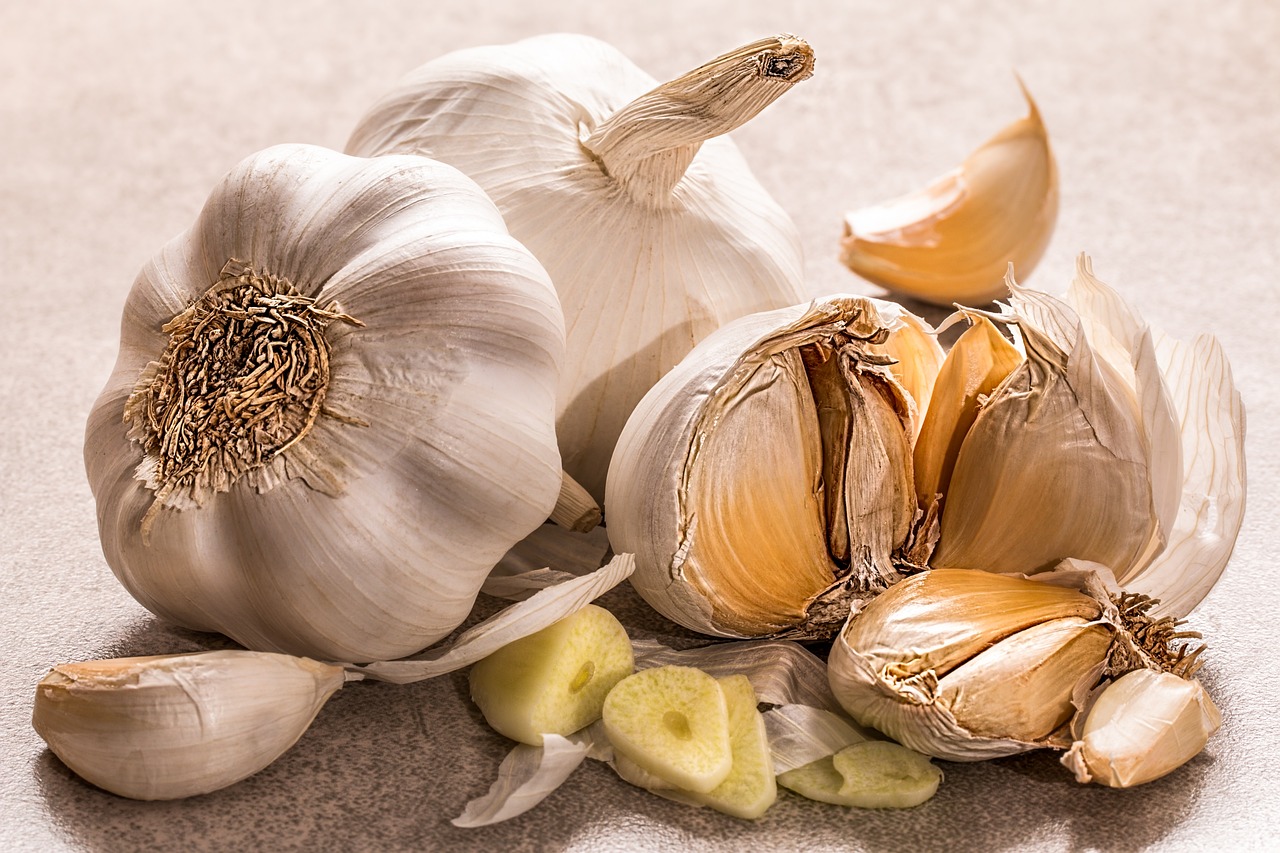
You can grow garlic from a single clove of a supermarket bulb, and it will often sprout. The problem is that supermarket garlic is usually imported from warmer countries, so the variety may not suit the cold, damp UK climate and may not form decent bulbs here. It can also carry virus or fungal diseases that build up in your soil.
For a reliable crop, buy certified seed garlic from a garden centre or specialist supplier. It is grown for the UK climate and certified free of virus, and the bulbs tend to be bigger and healthier. Seed garlic is not actually seed at all, just bulbs sold for planting, and one or two bulbs give you enough cloves for a short row. Once you have grown your own, you can save a few of your best bulbs to replant the following autumn.
Garlic wants full sun and free-draining soil. It sits in the ground all winter, so the biggest danger is cold, waterlogged soil that rots the cloves before they can root. On heavy clay, dig in plenty of well-rotted compost and some grit, or plant on a slight ridge or in a raised bed. My guide on how to build a raised bed shows you how, and my comparison of raised beds versus growing in the ground helps you decide.
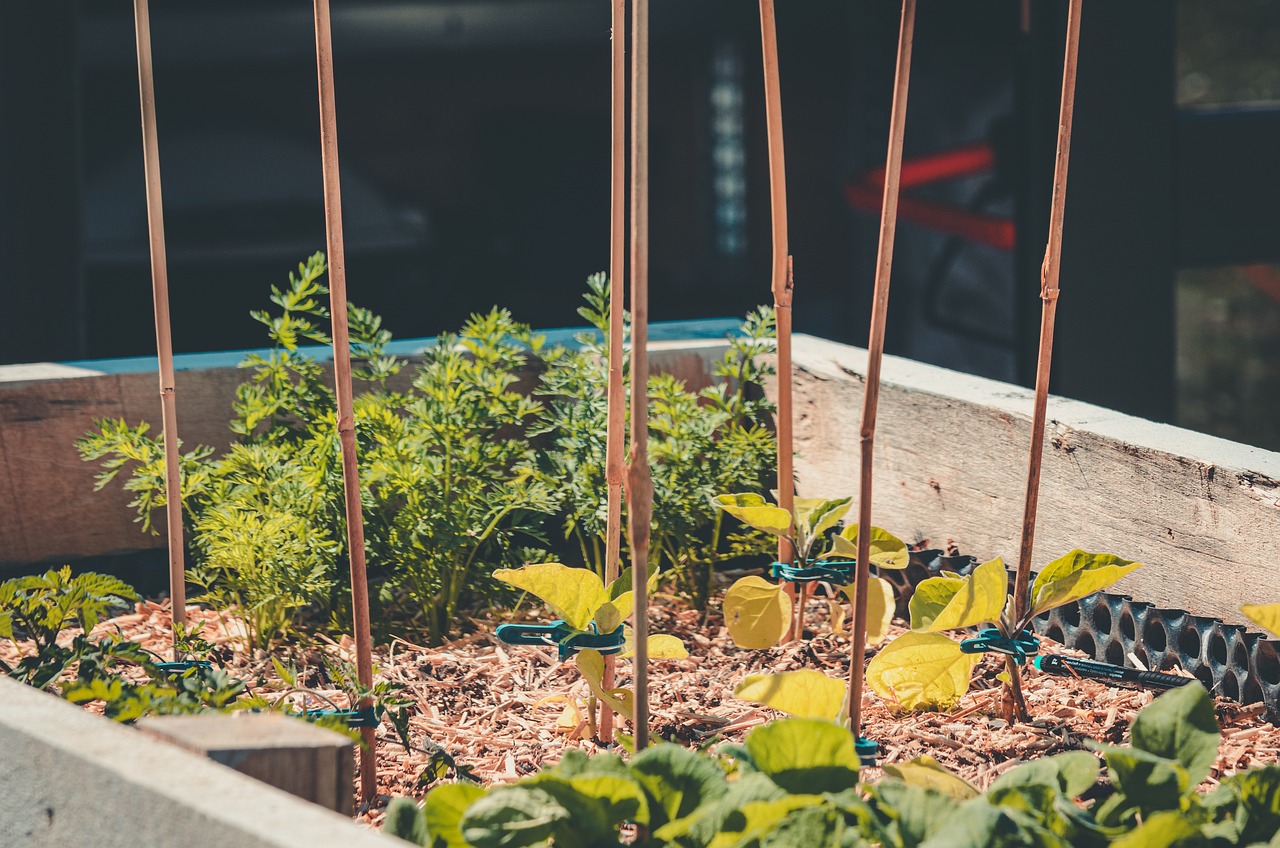
Avoid planting garlic where onions, leeks or shallots grew in the last couple of years, because they share pests and diseases, including white rot, which can stay in the soil for many years. My guide to crop rotation for beginners explains how to plan it. Garlic also makes a useful neighbour for carrots, Roses and fruit bushes, as covered in my companion planting guide.
Just before planting, gently break the bulb apart into individual cloves, keeping the papery skin on each one. Pick the biggest, plumpest cloves to plant, because big cloves grow big bulbs. Use the small ones from the centre in the kitchen.
Weed the bed thoroughly, loosen the soil to a fork’s depth, and rake in some well-rotted compost or a sprinkle of general-purpose fertiliser. Garlic does not need rich soil, but it does need it free-draining and free of weeds.
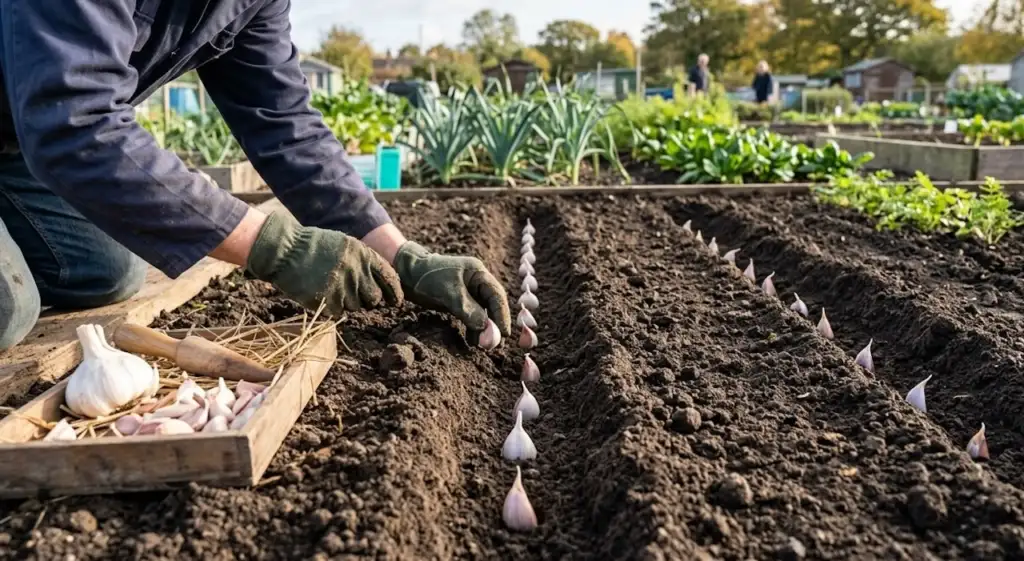
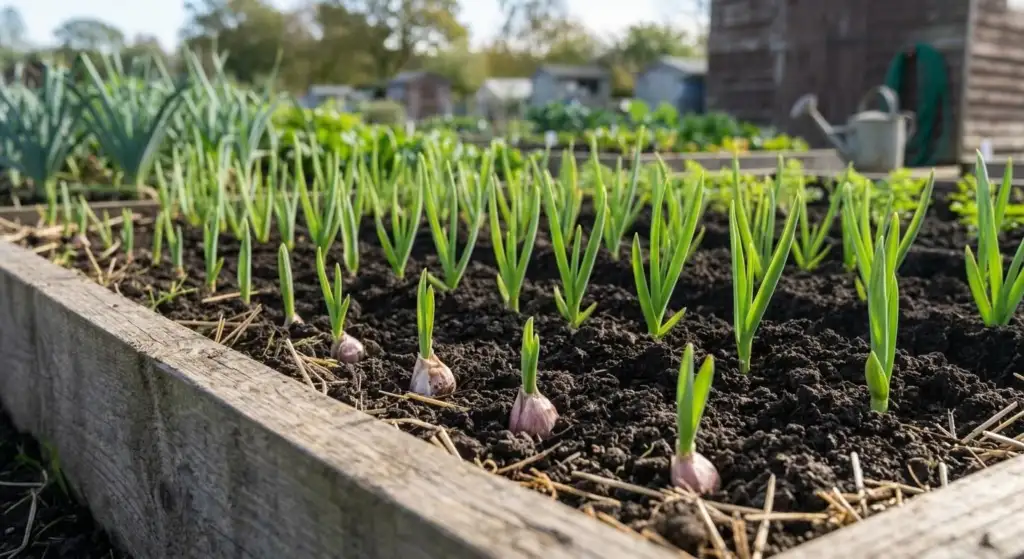
Push each clove into the soil with the flat base down and the pointed tip up, so the tip sits about 2.5cm below the surface. In light soil you can push them in with your fingers; in firmer soil, make a hole with a dibber first so you do not damage the base. Space the cloves 15cm apart in rows 30cm apart, or in a block with 15cm between them each way.
🛒 Buy a wooden dibber for planting garlic from Amazon UK
Firm the soil gently over the cloves and water them in if the soil is dry. Birds, especially crows, pigeons and blackbirds, love pulling newly planted cloves out of the ground, so cover the bed with fleece or netting for the first few weeks until the roots have anchored them in. The same fleece doubles as frost protection later, as explained in my guide to protecting plants from frost.
Garlic grows well in containers, which makes it ideal for small gardens, patios and balconies. Choose a pot at least 20 to 25cm deep with drainage holes, and fill it with peat-free multipurpose compost mixed with a few handfuls of grit for drainage. A 30cm-wide pot holds six to eight cloves, planted at the same depth as in the ground and about 10cm apart. My guide to container gardening for beginners covers choosing pots and compost.
Stand the pot somewhere sunny and leave it outside over winter, since the cloves need the cold. Raise it on pot feet so it does not sit in water, and water whenever the compost dries out in spring, as pots dry out far faster than open ground. Container garlic gives slightly smaller bulbs than garlic in the ground, but it is just as easy.
Once planted, garlic needs very little from you, which is a big part of why it is such a good crop for beginners. Green shoots usually appear within a few weeks and then sit quietly through the coldest months. Garlic is fully hardy, so frost and snow will not harm it.
Weeding is the one job that matters. Garlic has narrow, upright leaves that cast very little shade, so weeds quickly outgrow it, and a crop smothered in weeds gives noticeably smaller bulbs. Hoe or hand weed regularly from late winter onwards, taking care not to damage the shallow roots. A light mulch of compost or leaf mould in spring helps keep weeds down and holds moisture in.
In spring, as growth picks up, water during dry spells, especially from April to June when the bulbs are swelling. A light feed of a balanced or seaweed fertiliser in early spring helps, but avoid high-nitrogen feeds, which produce lots of leaf at the expense of the bulb. My beginner’s guide to plant food explains the difference. Stop watering about a month before harvest so the bulbs can firm up and store well.
If you are growing hardneck garlic, snap off the curly scapes once they have made a loop in early summer. Removing them pushes the plant’s energy into the bulb rather than into flowering, and the scapes themselves are a lovely bonus crop.
Garlic rust. Bright orange pustules on the leaves in late spring and summer are rust, a fungal disease that is common in wet years. It looks alarming, but the bulbs are usually still perfectly good to eat. Space plants properly for good airflow, avoid high-nitrogen feeds, remove the worst affected leaves, and do not grow garlic or leeks in the same spot the following year.
White rot. Yellowing, wilting leaves and fluffy white mould on the base of the bulb point to white rot, a serious soil-borne disease. There is no cure, and it can stay in the soil for many years, so lift and bin affected plants, never compost them, and grow garlic, onions and leeks somewhere else for as long as you can.
Bulbs that do not split into cloves. If you lift single, round bulbs with no cloves, the garlic did not get enough cold. This usually happens when it is planted too late, in a very mild winter, or in spring. Plant earlier next year, ideally in October or November.
Rotting cloves. Cloves that rot in the ground over winter are almost always the result of cold, waterlogged soil. Improve drainage, plant on a ridge or in a raised bed, or start the cloves in modules on heavy clay.
Birds and pests. Birds pulling up newly planted cloves are the most common nuisance, and fleece or netting solves it. Allium leaf miner and onion fly can attack garlic in some areas; covering the crop with fine insect mesh during their flying periods in spring and autumn is the best protection.
Autumn-planted garlic is ready to harvest in June or July, and spring-planted garlic a few weeks later. The sign to watch for is the leaves: once the lower third to half of the leaves have turned yellow or brown while the top few are still green, it is time to lift. Each green leaf represents a layer of papery skin around the bulb, so lifting while a few are still green gives bulbs that store well. Leave it too long and the bulbs start to split open and do not keep as well.
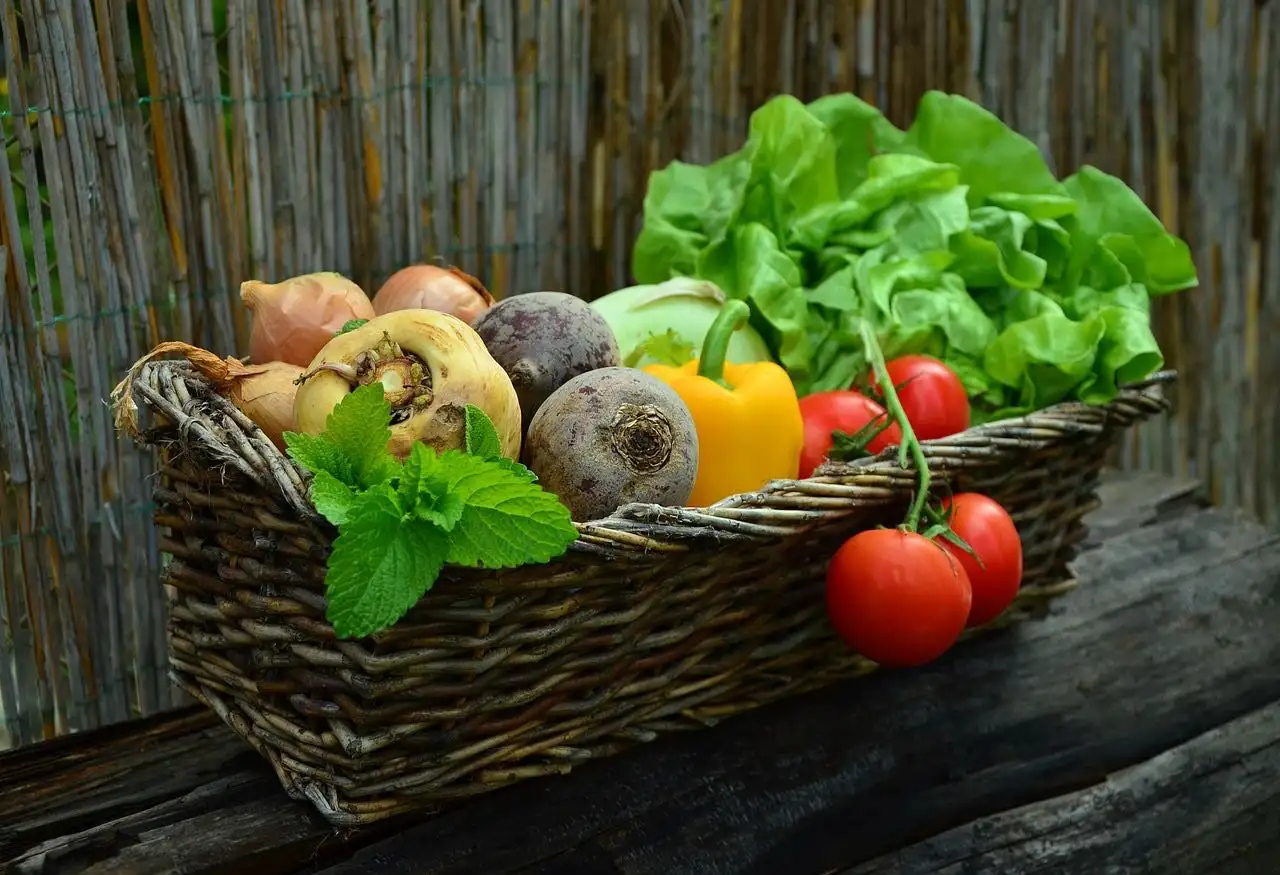
Do not pull garlic up by the leaves, as the stems snap and the bulbs bruise easily. Loosen the soil alongside the row with a fork, then lift each bulb gently out by hand, brushing off the loose soil. Pick a dry day if you can, so the bulbs start drying straight away.
Freshly lifted garlic needs curing before it will store. Lay the bulbs out somewhere warm, dry and airy, out of direct sun, such as a greenhouse bench, a shed with the door open, or hung in bunches under cover, and leave them for two to four weeks until the outer skins are papery and the necks are completely dry. Leave the leaves and roots on while they cure.
Once cured, trim the roots and cut the stems back to about 2cm, or leave the stems long on softneck garlic and plait them into braids to hang in the kitchen. Store the bulbs somewhere cool, dry and dark with good airflow; a garage, shed or cool cupboard is ideal, but not the fridge, where they tend to sprout. Softneck garlic keeps for six to nine months, and hardneck for three to five, so use the hardnecks first.
Before you start cooking, set aside a few of your biggest, healthiest bulbs to plant again in autumn. Saving your own seed garlic costs nothing, and over a few years you end up with garlic that is well suited to your own garden.
With garlic this easy to grow, a glut is almost guaranteed, and that is the best part. Home-grown garlic has a sweetness and depth of flavour you rarely get from shop-bought bulbs, so it is worth making the most of every one. These are some of the easiest ways to turn a big harvest into sauces, dips and kitchen preserves that last.
Roasted garlic. Slice the top off whole bulbs, drizzle with olive oil, wrap in foil and roast until soft and golden. Squeeze out the sweet, spreadable cloves and stir them into sauces, mashed potato, gravy and soups, or freeze the paste in an ice cube tray for later.
Garlic dips and sauces. Fresh garlic makes the best aioli, tzatziki, hummus and garlic mayonnaise, and a garlic-heavy pasta sauce or pesto (made with the scapes if you grow hardneck) freezes well in batches.
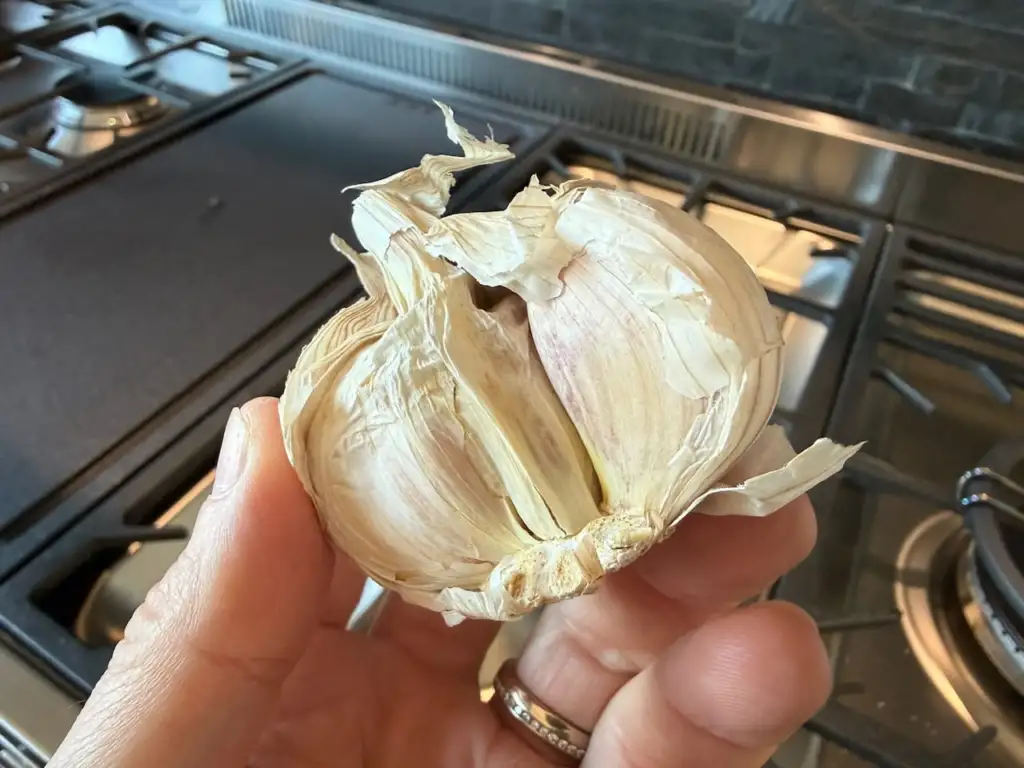
Garlic butter. Mash crushed garlic and chopped herbs into softened butter, roll it into a log in baking parchment, and freeze it. Slice off rounds for garlic bread, steak or roast vegetables all winter.
Pickled garlic. Peeled cloves pickled in vinegar with a little sugar, salt and spices keep for months in sterilised jars and mellow beautifully over time.
Dried garlic and garlic salt. Thinly slice cloves and dry them in a low oven or dehydrator, then keep them as chips or blitz them into homemade garlic powder or garlic salt.
A note on garlic in oil. Raw or roasted garlic stored in oil at room temperature carries a risk of botulism, a rare but serious form of food poisoning. Keep any garlic in oil in the fridge and use it within a few days, or freeze it, rather than storing it in the cupboard.
October and November are the best months to plant garlic in the UK, ideally before Christmas. Garlic needs four to eight weeks of cold to split into a full bulb of cloves, and autumn planting gives it that naturally. Some varieties can be planted in February and March, though they usually give smaller bulbs.
Yes. Every garlic bulb grows from a single clove, and each clove you plant becomes a whole new bulb. For the best results, plant cloves from certified seed garlic rather than supermarket bulbs, which are often varieties suited to warmer climates and can carry disease.
Yes, garlic grows well in pots at least 20 to 25cm deep, filled with peat-free compost mixed with grit. Plant six to eight cloves in a 30cm pot, leave it outside over winter so the cloves get the cold they need, and water whenever the compost dries out in spring.
Autumn-planted garlic takes around eight to nine months, from planting in October or November to harvesting in June or July. Spring-planted garlic is quicker, at around five to six months, but the bulbs are usually smaller.
Plant each clove so the pointed tip sits about 2.5cm below the soil surface, with the flat base down. Space cloves 15cm apart in rows 30cm apart, or 20 to 25cm apart for elephant garlic.
You can, and it will often grow, but it is a gamble. Supermarket garlic is usually imported from warmer countries, so it may not form good bulbs in the UK, and it can carry diseases into your soil. Certified seed garlic gives a far more reliable crop.
Harvest autumn-planted garlic in June or July, once the lower third to half of the leaves have turned yellow or brown while the top leaves are still green. Loosen the soil with a fork and lift the bulbs gently rather than pulling them by the stems.
Cure the bulbs somewhere warm, dry and airy for two to four weeks until the skins are papery, then trim the roots and stems, or plait softneck garlic. Store it somewhere cool, dry and dark with good airflow, not in the fridge. Softneck garlic keeps for six to nine months and hardneck for three to five.
Garlic that forms a single round bulb without cloves has not had enough cold. This usually happens when it is planted too late, in spring, or after a very mild winter. Planting in October or November gives the best chance of full bulbs.
Orange pustules on garlic leaves are garlic rust, a fungal disease that is common in wet summers. The bulbs are usually still fine to eat. Improve airflow, avoid high-nitrogen feeds, remove the worst leaves, and grow garlic somewhere else next year.

Join over 100,000 gardeners on YouTube
Free gardening videos from the Garden Ninja, with 8 million views and counting.
Subscribe on YouTube, it’s freeGarlic is a brilliant first crop, and once you have grown it, it is hard not to want more. Working out where your vegetable beds go, how they sit alongside the rest of the garden and how to make them look as good as they crop is part of what my online garden design courses teach. If you are starting from scratch, my guide to starting a vegetable garden is a good place to begin.
With courses starting from just £29, winter is the perfect time to plan a productive garden for next year.
For the garden you’ve already got, not the one you’re starting from scratch. Seven checklists and video lessons from BBC Garden Rescue’s Lee Burkhill, designed to help you decide what’s worth keeping before you spend a penny.
Garden Design Examples for Small Gardens: 30 Design Templates & Planting Plans: In this online gardening course, I’ll walk you through 30 fantastic garden designs, explaining the logic behind the layout and plant choices, plus take-home tips for applying them in your own garden.
Learn how to transform and design your garden with Lee Burkhill’s crash course in garden design. In over 5 hours, Lee will teach you how to design your dream garden. Featuring practical design examples, planting ideas and video guides. Learn how to design your garden in one weekend!
Garden Design for Beginners Online Course: Want to become a garden designer or design your own garden? This beginner course is for you. Join me, Lee Burkhill, an award-winning garden designer, as I train you in the art of beautiful garden design. Enjoy 20 hours of online study and video lessons, along with quizzes and a completion certificate.
Garlic is the ultimate beginner vegetable: plant cloves of certified seed garlic in October or November, pointed end up, 2.5cm deep and 15cm apart in a sunny, free-draining spot, keep them weeded, and lift fat bulbs in June or July. Choose softneck garlic if you want bulbs that keep for most of the year, and hardneck if you want bigger cloves, a stronger flavour and a bonus crop of scapes.
Cure your harvest well, save a few of the best bulbs to replant, and turn the rest of the glut into roasted garlic, dips, sauces, garlic butter and pickles. For more crops to keep your beds productive through the cold months, my guide to winter vegetables has fourteen more.
Happy gardening from The Garden Ninja! 🌿


Lee Burkhill, known as the Garden Ninja, is an award-winning garden designer and horticulturist with over 30 years of gardening experience and 15 years as a professional garden designer. A qualified RHS (Royal Horticultural Society) professional, Lee specialises in sustainable garden design and practical horticultural advice. He designs and presents on BBC1’s Garden Rescue and in leading gardening publications. Lee combines three decades of hands-on gardening knowledge with professional design qualifications to help gardeners create beautiful, functional outdoor spaces.
View all posts by Lee Burkhill





JOIN THE NINJAS
Be the first in line for new Guides, Discount codes and Offers