For the garden you’ve already got, not the one you’re starting from scratch. Seven checklists and video lessons from BBC Garden Rescue’s Lee Burkhill, built to help you work out what’s worth keeping before you spend a penny.
69


Quick Answer
A hedge witch is a solitary practitioner of folk magic who works with the plants, trees and rhythms of their own garden and local land rather than through a coven or a formal Wiccan structure. The name comes from the old English wisewoman or wiseman who lived at the edge of the village, by the boundary hedge, tending to healing herbs and quiet ritual. Most gardeners already carry a little of this instinct, whether they name it or not.
Witchcraft and the occult have finally managed to come out of the shadows of bigotry and misinformation over the last few decades. We now live in an era where witchcraft is no longer feared and is seen as the gentle, subtle art of working with nature to manifest positive changes.
The scaremongering from religions, politicians and Hollywood’s portrayal of ‘Witches’ as the old crone or outsider has always cast us as the outsiders to persecute. Anyone who doesn’t follow the mainstream and calls upon a greater, humble and considerate power of nature has been viewed for the last 500 years as the bad folk. Mainly because that removes the need for religious structure, societal hierarchies with a few rich men in power or constructs to keep us all toeing the line.

However, what’s been liberating is that since the 1950’s here in the UK, witchcraft, the occult (which just means the mysteries of life), and esoteric practices have slowly been more accepted as brave, bold writers and witches have come forward to demystify the falsehoods. Whereas years ago you could end up losing your life if your witchcraft was uncovered, now so many of us who practice the usually solitary practice of the craft (excluding covens and more structured practices) can share our learnings and powers with whoever may be interested in progressing their understanding of their true self.
After all, witchcraft, in my experience, is the connection not only with the greater powers of nature and the cosmos, but the greatest power of truly understanding yourself within this mix.
I want to make one thing clear: witchcraft, the occult and spell work should never be about harm or so-called black magic. True beneficial magic is about effecting change in your life through your clear intentions, focus and drive to make things better. I would argue that all the ‘Wise Women and Men’ of the Old Ways I know work to harm none. But just like we have dark forces acting in our society in all walks of life, there may be the occasional rotten apple, but it’s the exception, not the rule. More often than not, work under the occult is more about the wider good of your efforts for others than simple money spells, love charms or any instant gratification by doing a ‘Promotion’ spell off eBay.
Now, with the world opening up through social media and access to information, many people are seeking out the ‘old ways’ of connecting, not with the dogma of a hierarchical religion but with Mother Nature herself. A one-on-one connection to the divine. This guide is going to explain what a Hedgewitch is and how many of us gardeners may be one in the making without even knowing it yet!
Jump To
This page contains affiliate links for products I use and love. If you take action (e.g., subscribe or make a purchase) after clicking a link, I may earn a gardening commission, which helps me keep the Garden Ninja Blog free for all.
I have written a lot of articles for this site over the years, and a fair few of them have edged towards folklore, magic and the older, stranger uses of the plants we grow. The A to Z of garden plants used in witchcraft was meant to be a nod to the fact that half the border in any cottage garden has a spell or a superstition attached to it if you dig back far enough. What I did not expect was how many of you would write in, comment or message me to say that piece meant something to you, and how many of those messages carried the same quiet admission that you already lived a little of this life without ever putting a name to it.

So here is the confession. I am one of you. I have spent the better part of twenty years designing gardens, tending my own patch, and talking about plants on television, and running quietly underneath all of that has been a private spiritual practice rooted in the land, the seasons, and the old lore of the plants I grow.
I would call myself a hedge witch, though for a long time I never said the words out loud, keeping it to myself. If you have watched a few series of Garden Rescue, you may already have picked up on it without realising: a passing comment about planting by the old calendar, a nod to why I always leave a corner of a client’s garden a little wild, a reason for choosing Rowan or Hawthorn over something more fashionable when a design calls for a boundary tree.
These were small threads of a much older practice that I follow as a hedge witch, left in plain sight because sometimes the occult (a term for the word mysteries or hidden) needs a gentle approach rather than being forced upon people. It’s been my very subtle way of showing you what I’ve learnt so far on my journey with both plants and witchcraft without being censored or silenced by the nervous media.
I am ready now. Partly because the response to the witchcraft content on this site has shown me there is a real appetite for it done properly, with horticultural knowledge behind it rather than borrowed aesthetic, and partly because I think there is something useful in showing that this path is not as strange or as separate from ordinary gardening as people assume.
A hedge witch practice, at its heart, is simply paying very close attention to what is already happening in your garden and treating that attention as meaningful. Most of you reading this already do that.
You already know when the blackbirds start nesting, when the first frost is likely, and which corner of the garden the light favours at the solstice. That noticing of nature and the wheel of the year is the basic foundation of the craft. What follows is my attempt to explain what a hedge witch actually is, where the practice sits alongside paganism and Wicca, which plants and trees carry the strongest folklore, and how you might bring a little of this into your own garden, whether or not you ever call yourself anything at all.
A hedge witch is a solitary practitioner who works magic through plants, herbs, the land and the turning of the seasons, usually without belonging to a coven or following a fixed liturgical structure. The name is old, and it comes from a very practical place rather than a mystical one. However, the now-infamous wise woman Rae Beth coined the phrase and brought it into the light with her brilliant book explaining the basics of hedgewitch craft.
In medieval English villages, the hedge marked the boundary between the cultivated land and the wild, and it was common for the local wisewoman or cunning man to live at the edge of the settlement, right by that hedge line. She was the one people went to for a remedy when a child had a fever, for advice on when to plant and when to hold back, for a charm to protect the livestock or the harvest.
She or he stood, quite literally, on the threshold between the tamed garden and the wild hedgerow, and that position between two worlds became the defining image of the hedge witch tradition. Later writers extended the metaphor into something more mystical, the idea of hedge riding, where the practitioner is said to cross between the everyday world and the spirit world the way a hedge separates one field from another, but the roots of the term are as practical as they are poetic.
Just lishamanic practitionericioner or witch who meditates to connect with other worlds, a hedgewitch uses the ‘hedge’ metaphoricalrorical green boundary to cross over durinmeditationtiation or trance to gain wisdom fromspiritualpritual plants. Whether this is mother nature, father sun, the fae, your ancestors or the plant spirits themselves.
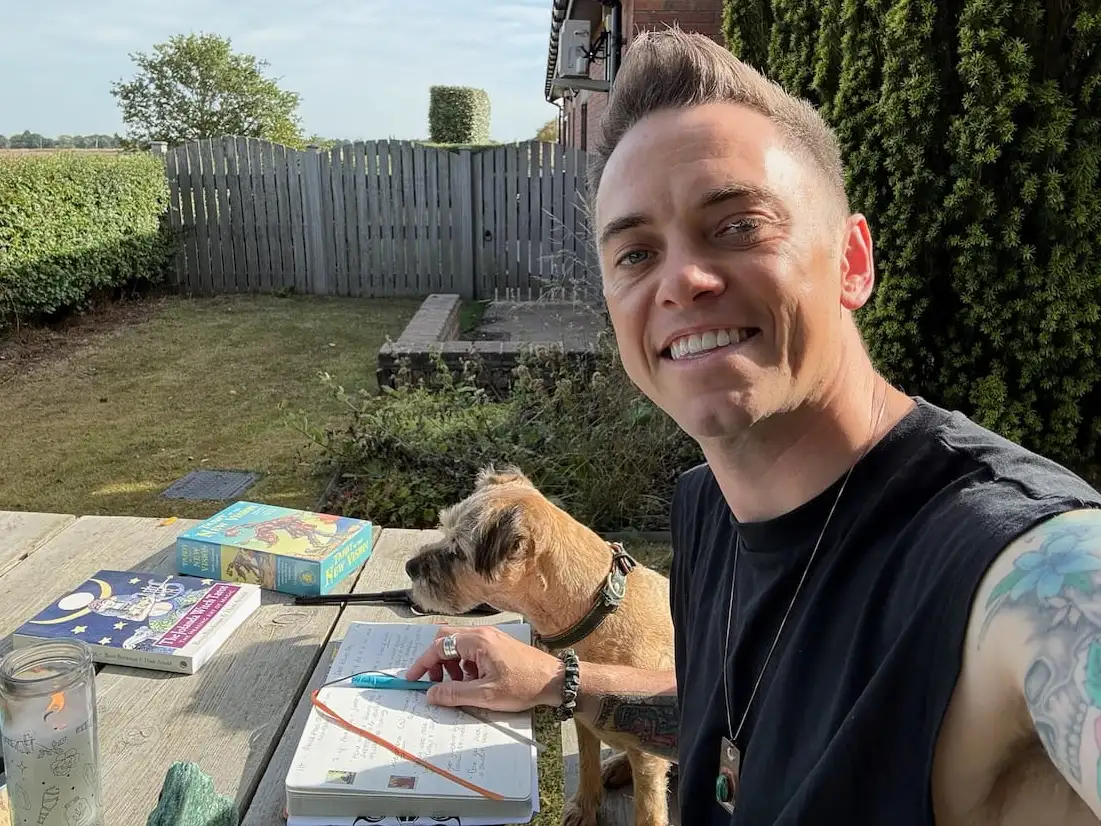
Just like the Shamans who have travelled to the underworld, present, and upper worlds for wisdom and to connect with the collective consciousness, a hedgewitch works with plants, nature, and the quiet spaces between our worlds to gain wisdom and understanding. Bringing back knowledge to work with nature and make the world a better place.
What makes hedge witchcraft different from much of the modern witchcraft content you find online is that it is fundamentally a solitary, self-taught, land-based practice rather than a group-ritual one. There is no initiation you need, no coven to join, no set of tools you must buy before you are allowed to begin.
It grows out of a direct relationship with a specific patch of land, usually your own garden or the hedgerows and fields close to where you live, and it leans heavily on practical herbalism, folk remedy and observation of the natural cycle rather than ceremony for its own sake. That is precisely why it sits so comfortably alongside a career spent designing and tending gardens.
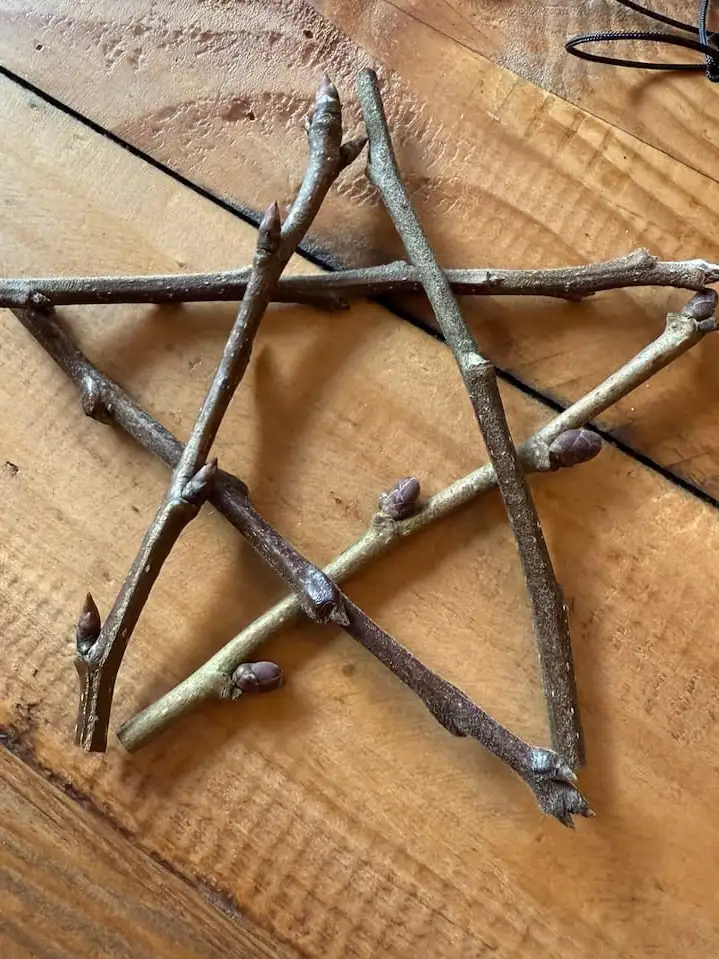
A hedge witch and a horticulturist are, in a lot of respects, asking the same question, which is: what does this piece of land want to grow, and what can I learn from paying proper attention to it? What energy can I work with, learn from or create in this space to benefit the greater good?
These three words are often used interchangeably, and I think that causes more confusion than necessary, so it is worth untangling them properly before we go any further. Paganism is the broadest term of the three. It is an umbrella term for a whole family of nature-venerating spiritual paths, old and new, that generally honour the earth and the seasons, and often a range of gods and goddesses rather than a single deity. Someone can call themselves pagan without practising any magic at all. It describes a worldview more than a specific set of rituals.
Wicca is a specific, structured religion that sits within that pagan umbrella. It was formalised in England in the mid-twentieth century, largely through the work of Gerald Gardner, and it typically involves initiation, a coven, a defined set of tools, and a fairly structured ritual calendar built around the eight sabbats of the wheel of the year. Wicca is a religion in the fullest sense of the word, with its own theology, ethical code, and lineage of teaching passed from initiate to initiate. However, Wicca is a relatively new ‘religion’ or order from the 1930’s as a way of defining some tenets of paganism and witchcraft, but the hedge witches’ practice is far, far older than this.
What defines hedge witchcraft is the solitary, self-directed, plant- and land-based nature of the practice rather than any particular belief system underneath it. You do not need a coven. You do not need initiation. You do not even need to believe in deity at all, since plenty of hedge witches practise in a way that is closer to folk herbalism and mindful ritual than formal religion.
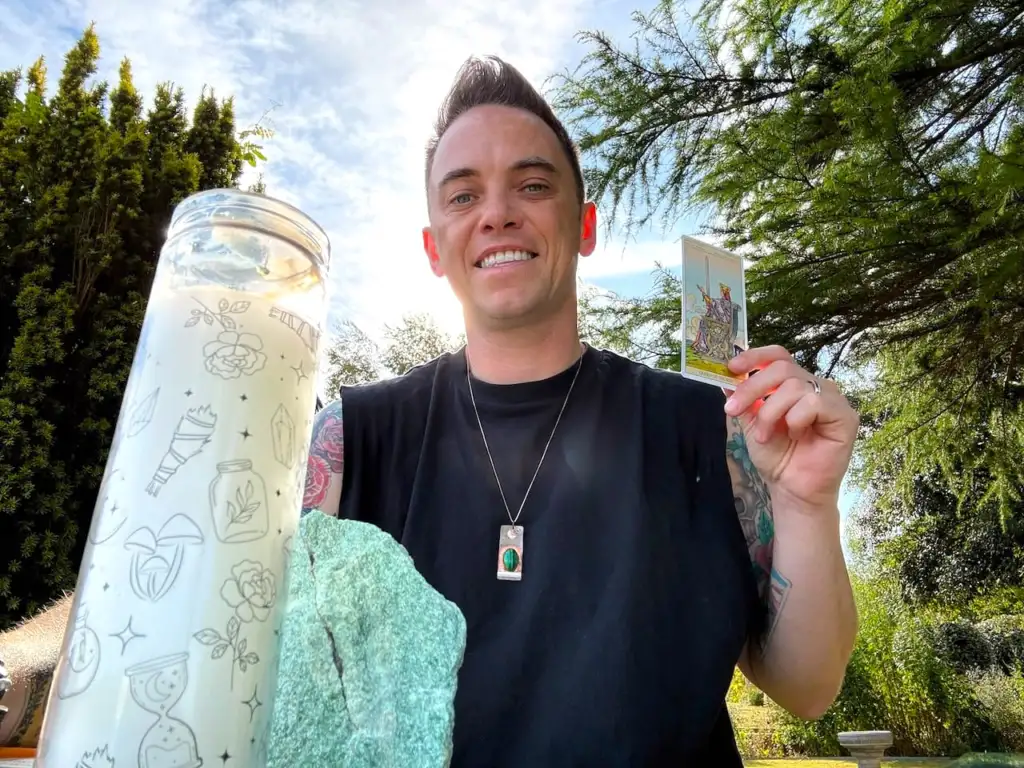
This is exactly why I think most gardeners already sit somewhere on this spectrum without realising it. If you have ever planted foxgloves because your grandmother always grew them by the back door, if you have ever felt a pull to leave the elder at the bottom of the garden alone rather than cut it back, if you time your sowing by the old wisdom rather than strictly by the seed packet, you are already practising a folk tradition that sits right alongside hedge witchcraft, whether or not you would ever use that word for it.
A lot of what gets called being a green witch or simply being a herbalist is, in practice, exactly the same instinct, minus the pagan or Wiccan framing. The plants do not mind what you call yourself, Ninjas! It’s the considerate daily practice and harmonisation with nature that’s key to the hedgewitch.
The wheel of the year is the eightfold calendar of seasonal festivals that anchors most pagan and Wiccan practice, and it maps almost perfectly onto the gardening year that every one of you already lives by, whether you have ever heard the festival names or not.
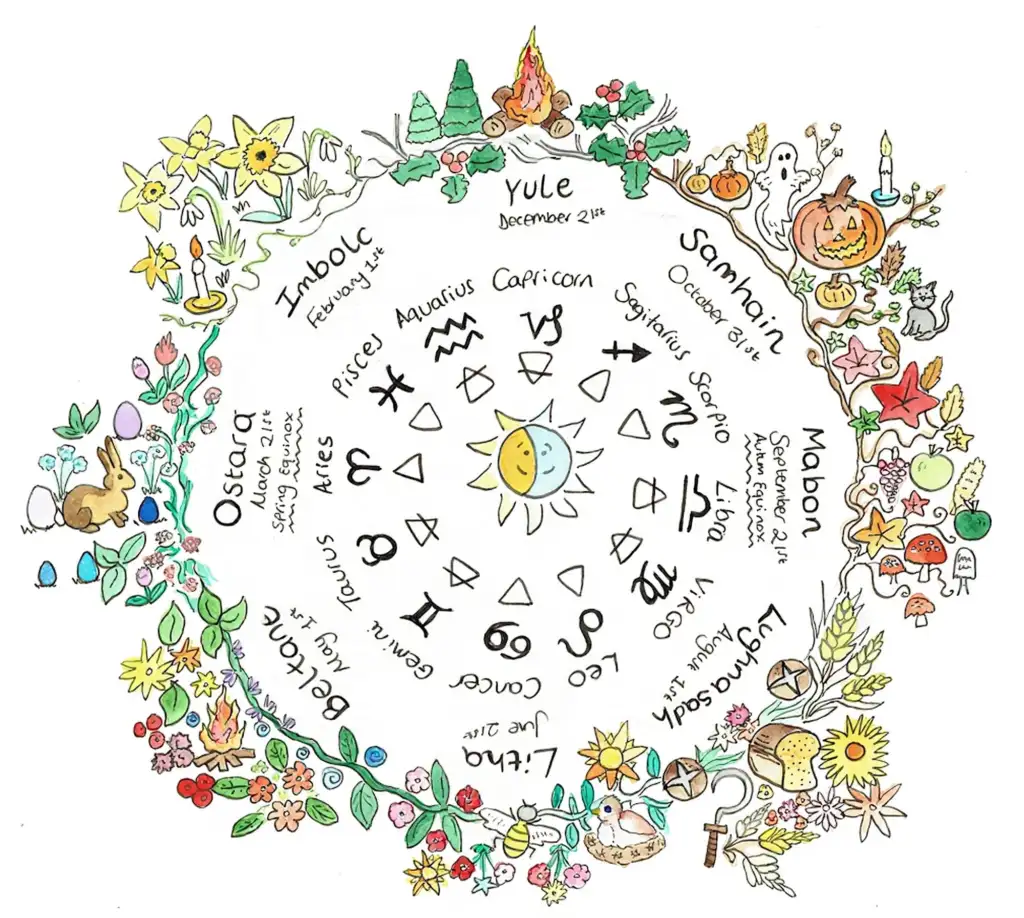
| Sabbat & date | Flowers & vegetables emerging | What the season symbolises |
|---|---|---|
| Samhain 31 October – 1 November | Apples, pumpkins & squash, sloes, rosehips, chrysanthemums | Death of the growing year, start of the dark half |
| Yule Winter solstice, c. 21 December | Holly, ivy, mistletoe, Christmas rose, rosemary | Shortest day and the return of the light |
| Imbolc 1 – 2 February | Snowdrops, crocus, winter aconite, hazel catkins, primrose | First stirrings of growth underground |
| Ostara Spring equinox, c. 20 March | Daffodils, tulips, forsythia, blackthorn blossom, violets | Balance of light and dark, sowing properly begins |
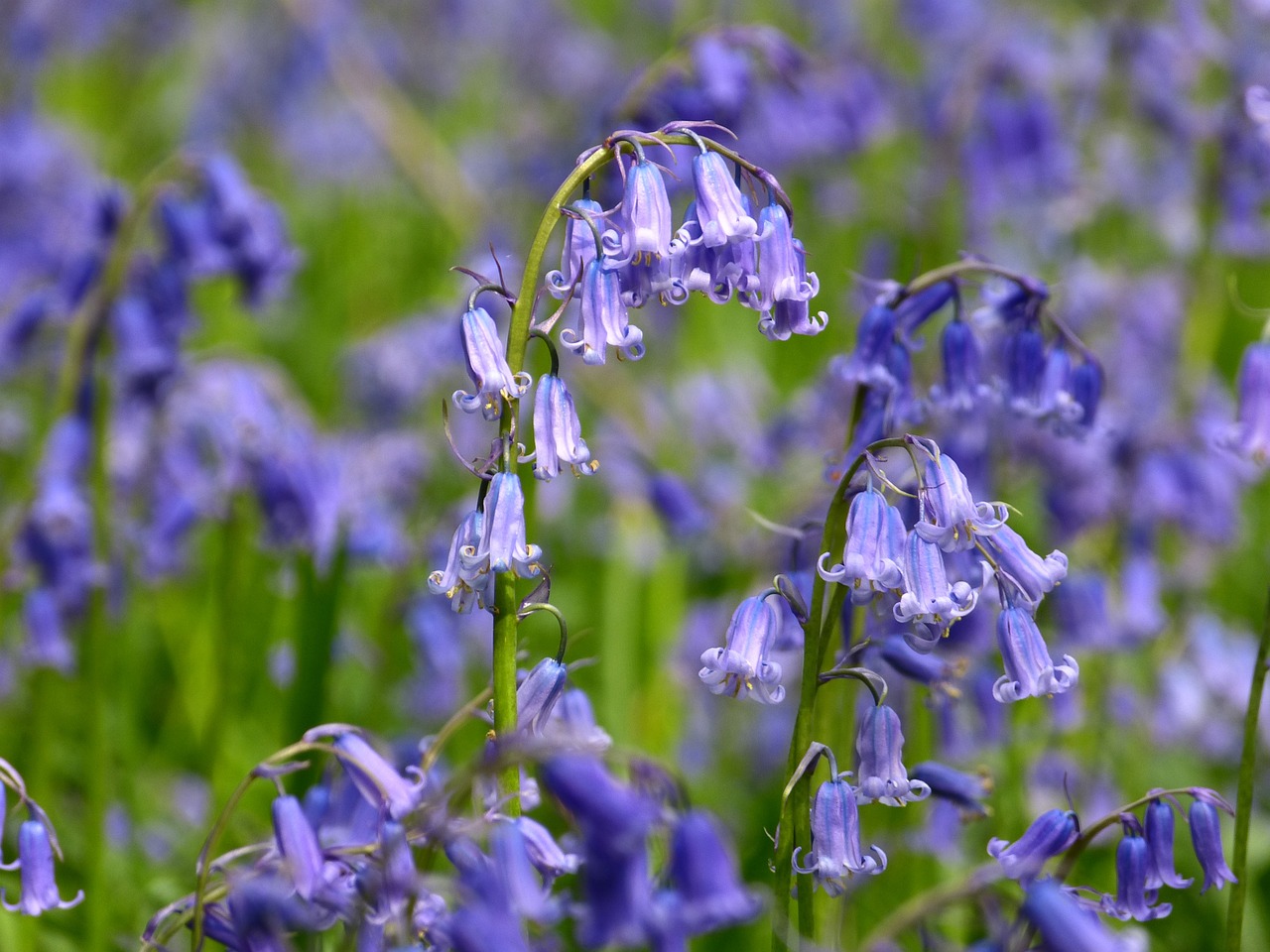
| Beltane 30 April – 1 May | Hawthorn blossom, bluebells, lilac, cowslips, lily of the valley | The garden tips fully into growth |
| Litha Summer solstice, c. 21 June | Roses, St John’s Wort, elderflower, foxgloves, lavender | Peak of light and abundance |
| Lughnasadh 1 August | Sunflowers, blackberries, calendula, sweetcorn, early apples | The first harvest |
| Mabon Autumn equinox, c. 22 September | Apples, pumpkins, hops, sedum, Michaelmas daisies | Second harvest, the turn back towards rest |
I find it useful to think about my own gardening year through this lens rather than purely through a sowing calendar, because it reminds you that the relationship between plants and people marking the seasons this way is not a recent invention. It goes back thousands of years, long before anyone wrote it down as the wheel of the year in its current eightfold form. Every agricultural society that has ever existed has had to build some kind of ritual calendar around planting, growth, harvest and rest, because getting that timing wrong meant going hungry.
The wheel of the year is really just a very old, very practical farming and gardening calendar that has had spiritual meaning layered onto it over centuries, and working with it in my own garden feels less like adopting a belief system and more like reconnecting with the reason gardens have always mattered to people in the first place. When I choose to leave the last of the summer growth standing until Samhain rather than tidying it away early, or make sure I am out in the garden at first light on Beltane morning to see what has come into flower overnight, I’m paying attention on purpose to the cycle of nature.
Nobody arrives at a solitary practice like this in a vacuum, and I want to be honest about the writers whose books sit on my own shelf and have shaped how I think about the crossover between gardening and folk magic. If any of this resonates with you and you want to read beyond what one article can cover, these three are where I would start.
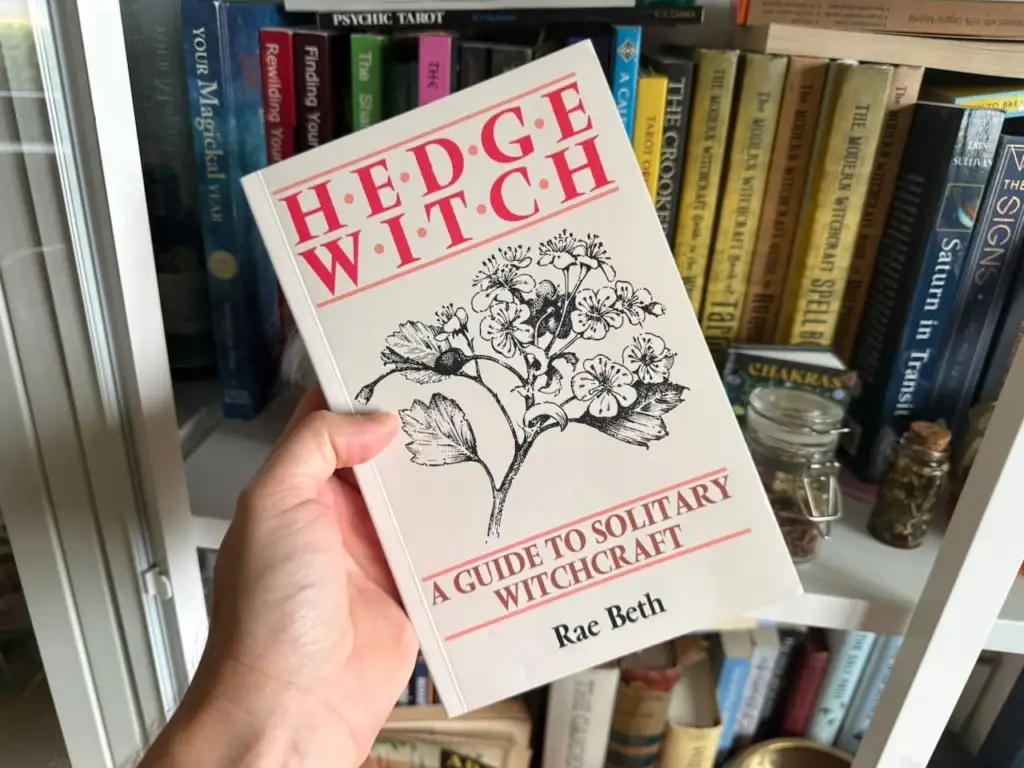
Rae Beth is probably the single most influential voice in bringing the term hedge witch into wider use in Britain. Her book, written as a series of letters from an experienced solitary witch to two apprentices, lays out the sabbats of the wheel of the year, the reverence for the Goddess and the Horned God, and a very grounded, land-centred approach to solitary practice that never asks the reader to join anything or buy into elaborate ceremony. It reads more like a mentor’s correspondence than a rulebook, and that tone is a large part of why it has stayed in print and stayed relevant for so long.
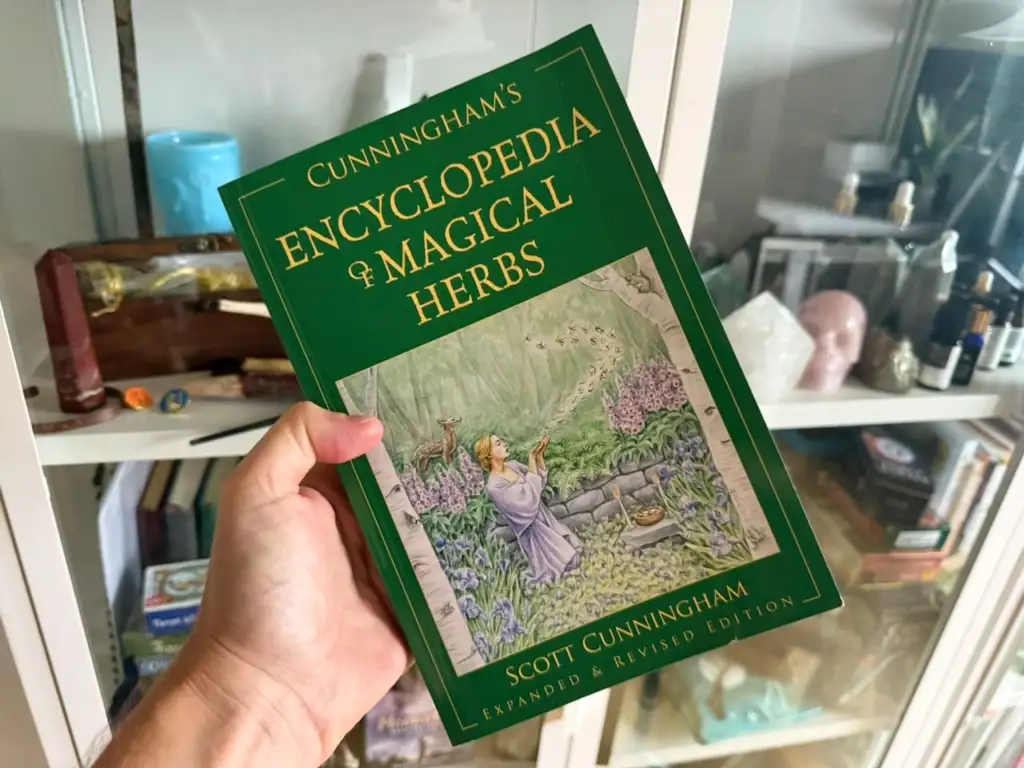
Scott Cunningham did more than almost anyone to document the folklore and magical associations of individual plants in a systematic, accessible way. His encyclopedia of magical herbs catalogues the traditional folk uses of several hundred herbs, cross referencing the old country names so that when a historical recipe calls for something like bramble or lapstone, you can actually work out what plant is meant. For a gardener, this book functions almost like a folklore companion to the RHS encyclopedia, plant by plant, association by association, and it is the reference I go back to most often when I am trying to trace where a particular piece of plant lore actually originated.
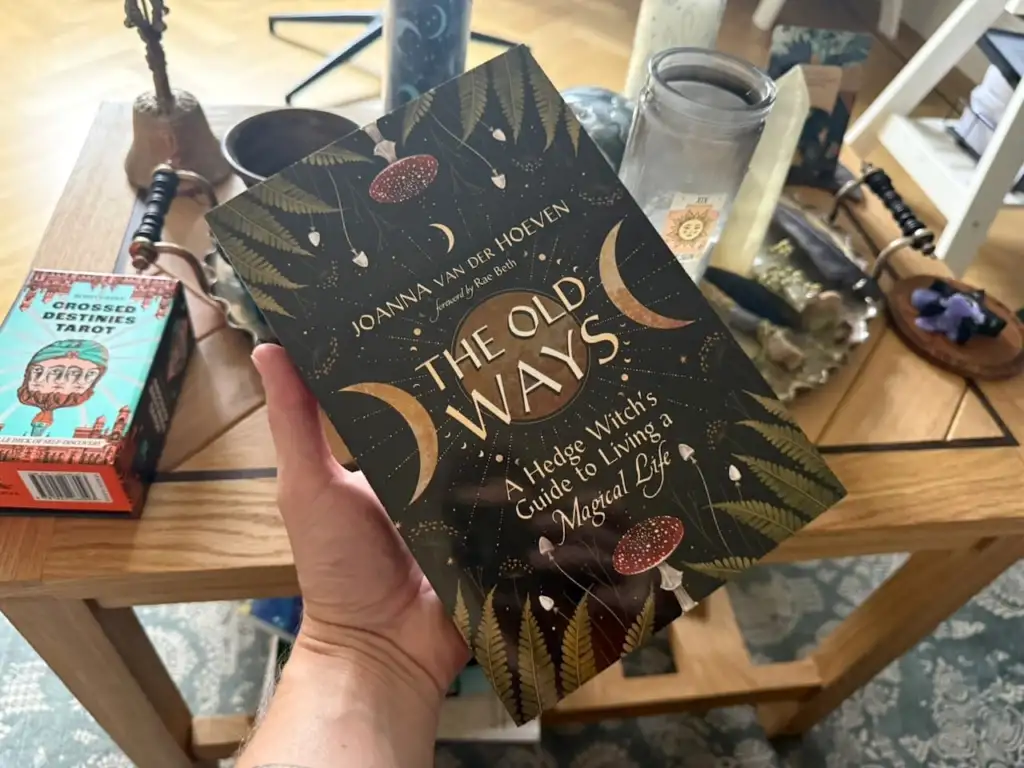
Joanna van der Hoeven is the contemporary voice I would point you to if the historical material feels a little distant. She has worked within pagan and druidic traditions for over three decades, lives on the Suffolk coast, and writes specifically about hedge witchcraft as a living, modern practice rather than a historical curiosity, including the idea of hedge riding, working consciously with the elements, and building a relationship with what older folklore calls the Fair Folk. Her writing is the closest in tone to how I think about my own garden practice, practical, rooted in a real relationship with a real patch of land in England, and refreshingly free of the more theatrical trappings some witchcraft writing leans on.
If you want to start building your own reading on this, both Rae Beth’s Hedge Witch and Scott Cunningham’s Encyclopedia of Magical Herbs are the two I would keep closest to hand as a gardener specifically.
I have already written a full deep dive into tree folklore on this site, so I will not repeat that piece by piece here. If you want the fuller story on Oak, Hazel, and the rest, that is the place to go. What I want to cover here instead is the shortlist I would tell any beginner hedge witch to get to know first in their own garden, and one hawthorn story I have never told anywhere else on the site.
👉 For the full folklore behind oak, ash, hazel, elder and the rest, read my guide to trees and their influence on witchcraft.
No tree carries more folklore weight in the British Isles than Crataegus monogyna hawthorn. It has been considered the fairy tree for as long as anyone has been writing folklore down; farmers would plough right around a solitary hawthorn rather than cut it, and the old country rule was that you never brought the blossom into the house. It flowers right at Beltane, which is no coincidence, since it was traditionally taken as the signal that the fairy realm and the human world sat closest together.
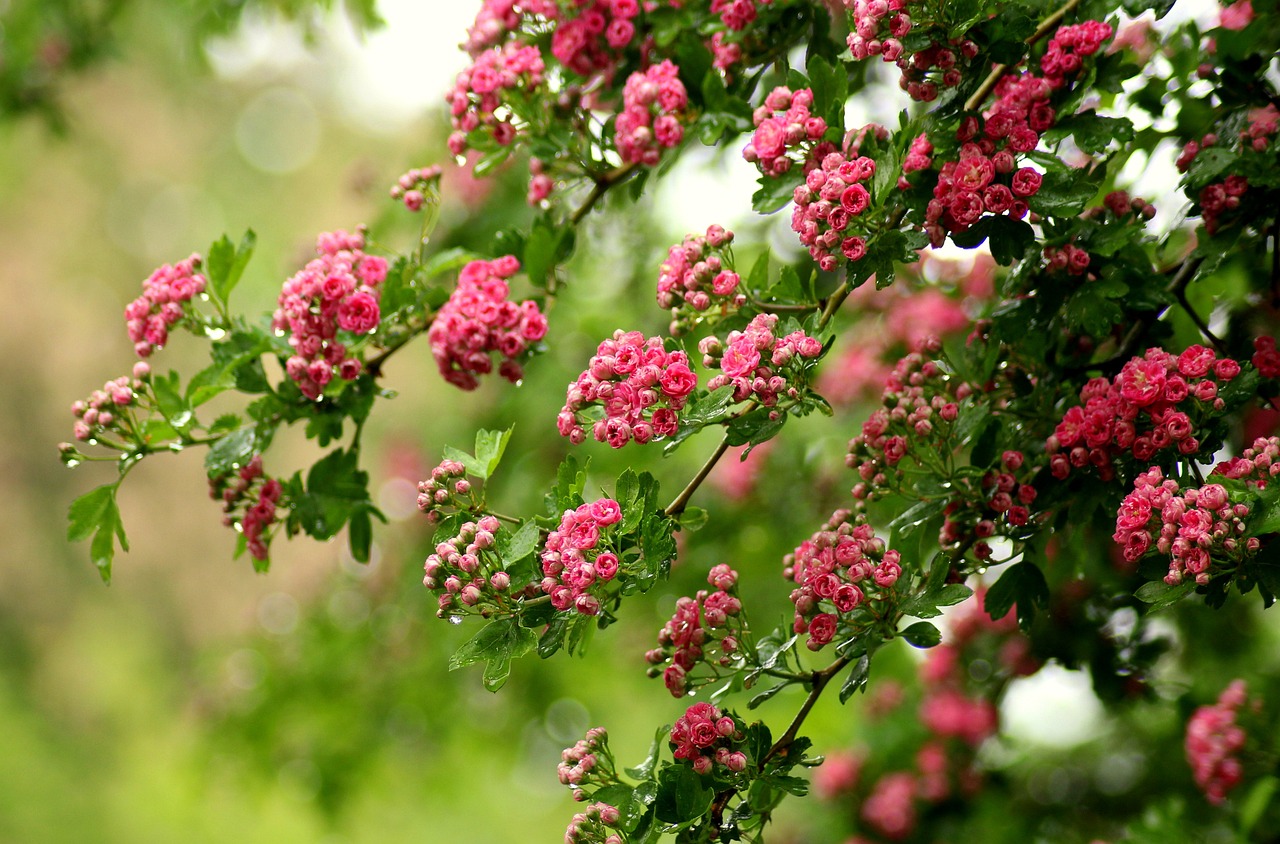
I have a particular soft spot for one cultivar I always try to work into a design when the brief allows it, and that is Crataegus laevigata Paul’s Scarlet, with its double, deep pink-red flowers. Back in the 1850s, in a garden near Waltham Cross, a single branch on an ordinary double-flowered hawthorn suddenly produced flowers of an entirely different, deeper colour, a chance genetic event known in horticulture as a sport.
The nurseryman William Paul spotted it, propagated cuttings from that one branch, and introduced it to the trade in 1866. Every Paul’s Scarlet hawthorn growing anywhere in the world today is, genetically, descended from that single chance branch on that single tree in that one Hertfordshire garden.
I find that history quietly magical even before you layer any folklore on top of it, and in my own practice I have always felt that a tree born from such an unrepeatable accident of nature carries a particularly strong pull for the fae, who I think have a soft spot for the unexpected and the singular the way we might have a soft spot for a rare bird turning up in the garden. That is my own belief rather than documented folklore, and I share it in that spirit, but it is exactly the kind of personal meaning a hedge witch practice invites you to build around the plants you grow.
Rowan is the protector tree, hung by red thread over doorways for centuries to ward off ill will, and I plant it by front doors more often than almost anything else. Elder is the one tree with its own etiquette attached, since the belief that an Elder Mother spirit must be asked permission before you cut any wood survived in country districts well into the last century, and I still do this myself.
Birch traditionally opens the Celtic tree calendar, associated with fresh starts and purification, and its twigs are what a proper besom is bound from. Ash carries some of the deepest folklore of any British tree through the wider concept of a world tree, and was long considered a healing tree besides. Oak and blackthorn round out the set, the Oak King ruling the light half of the year against the Holly King, and blackthorn carrying the fiercest, most protective reputation of the lot. The full story on every one of these sits in the article linked above.
If you want to grow your own, Cytisus scoparius broom is an easy-going, drought-tolerant shrub for a sunny spot. Common broom, Cytisus scoparius, is one of those shrubs that has quietly done double duty in folk practice for centuries, lending both its name and its actual physical branches to the besom, the traditional bundled sweeping brush that gave us the word broom for a cleaning tool in the first place.
The scent is the part I always come back to. Crush a handful of broom flowers or foliage, and the smell is sharp, slightly resinous and honestly not a pleasant one to sit with for long, and folklore reads that unpleasantness as entirely deliberate on the plant’s part, a scent strong enough to see off anything mischievous that might otherwise be tempted to linger by the back door.
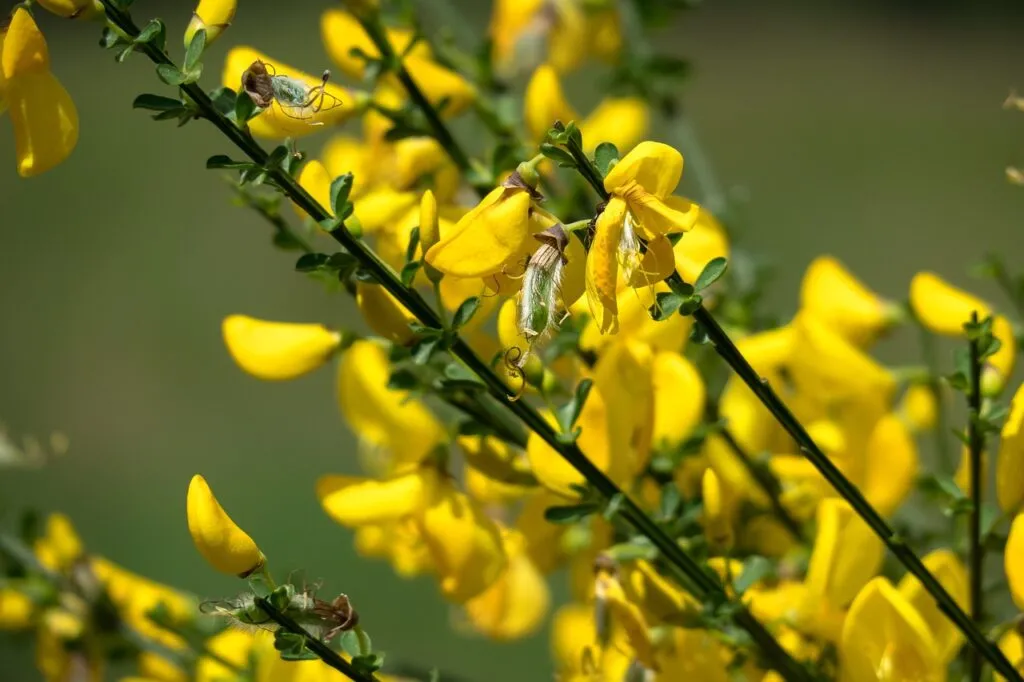
Whether or not you believe there is anything listening on the other side of that smell, it makes practical sense too, since a lot of traditional insect repellent plants share that same sharp, resinous quality, so broom by the doorway was probably doing a perfectly good job of keeping midges and flies at bay long before anyone thought to credit it with keeping the fae away as well. I have a besom made from broom and birch hanging by my own back door, more as a nod to the practice than a functioning cleaning tool at this point, and I would be lying if I said I did not feel a small satisfaction every time I walk past it.
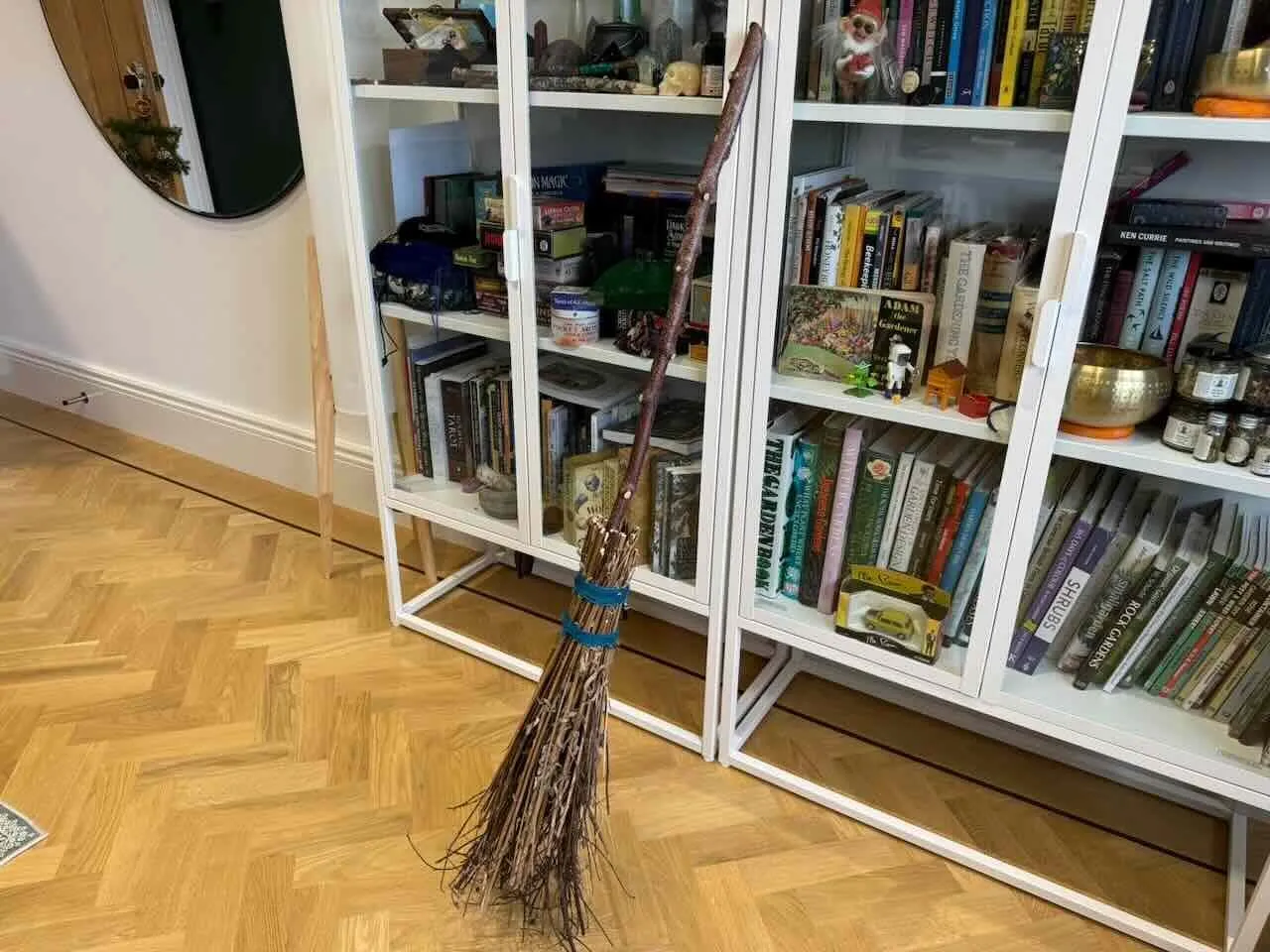
One thing that puts a lot of beginners off before they even start is the idea that you need a cupboard full of ceremonial kit before you are allowed to call yourself a hedge witch. You do not. Most of what a hedge witch reaches for is already sat in the shed or the kitchen drawer, and I think that practical, make do approach is actually one of the things that separates this path from some of the more formal traditions.
An athame, the ceremonial knife some witches use to direct energy during ritual, is traditional in a lot of Wiccan practice, but a hedge witch is just as likely to use whatever blade is at hand, and for me that is very often the same secateurs or garden knife I use to prune with. A wand, in the same spirit, does not need to be bought. A fallen twig from a tree that means something to you, hawthorn or rowan for preference given everything above, does the job perfectly well, and there is something rather nice about a wand that came from your own garden rather than a shop shelf.
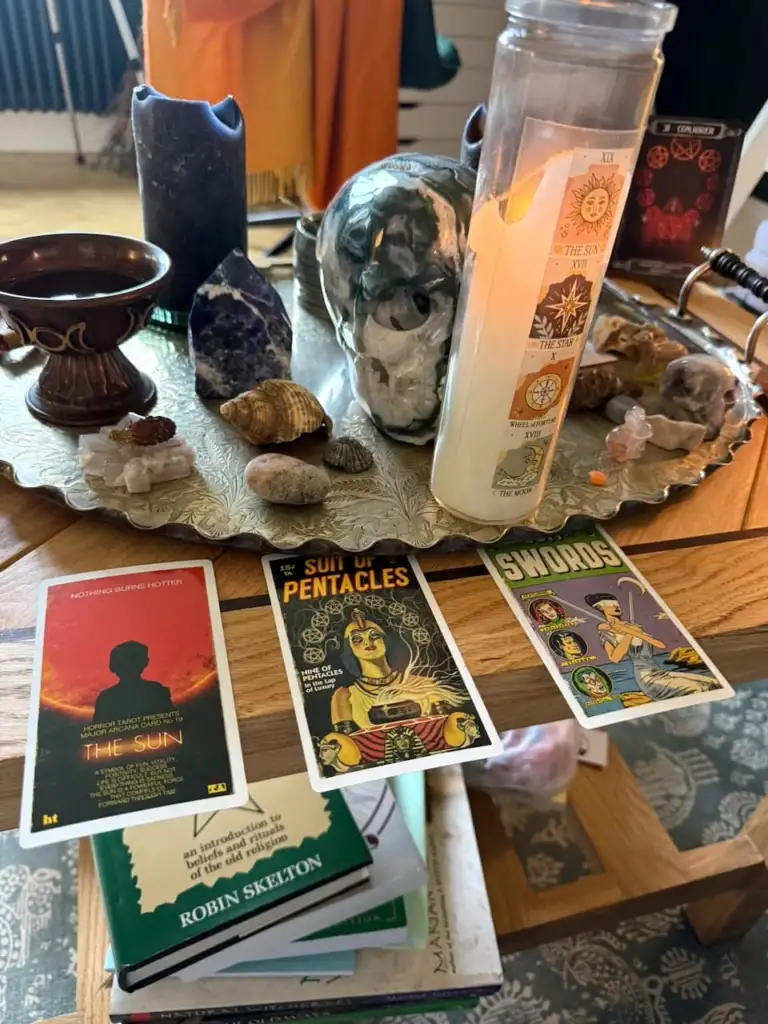
A small cauldron or heatproof dish earns its keep for burning dried herbs, mixing a tincture or simply holding water for a scrying moment on a still evening, and you almost certainly already own something that will do. As for an altar, mine is nothing grander than a corner of the potting bench and a windowsill indoors, both cluttered with the same things most gardeners collect without thinking twice, a jam jar of feathers, a handful of pretty stones from the beach, a dried seed head or two, a candle for the darker months.
That is the whole secret. The tools of a hedge witch are gathered from a life spent outdoors rather than bought as a set, and the besom I mentioned earlier fits into that same category, useful, homemade and meaningful because of where it came from rather than what it cost.
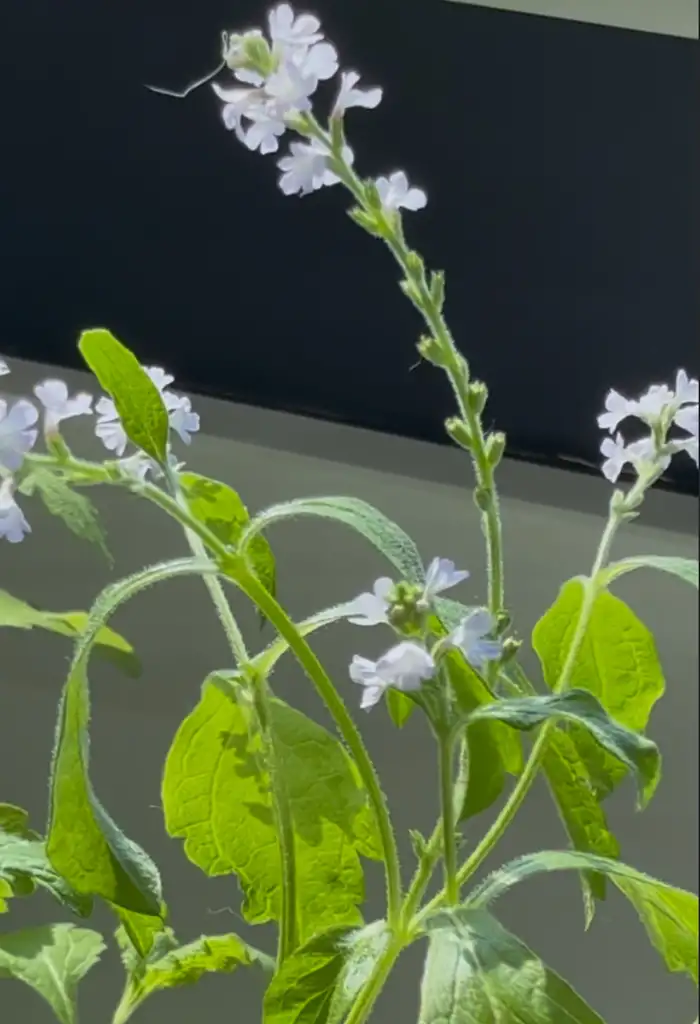
If you want to try your luck, Verbena officinalis seeds are available, though I would recommend buying more than you think you need.
Verbena officinalis, true vervain, was considered one of the most sacred plants in the ancient world, used by Druids in ritual, by Romans as a herb of purification carried before sacred ceremonies, and later by folk practitioners across Britain as protection against curses, hexes and general bad luck. It sits alongside rue and rosemary as one of the plants most consistently described in old texts as a herb of banishing and cleansing, and Scott Cunningham’s encyclopedia lists it under an enormous range of uses, from protection to love drawing to purification, which tells you something about how central it was considered to be.
I will be entirely honest with you as a horticulturist rather than as a hedge witch for a moment, because growing true Vervain from seed is one of the more frustrating things you can attempt in a UK garden, and I think anyone selling you the idea that it is straightforward is not telling you the whole story. The seed has a notoriously erratic germination rate, often needs a period of cold stratification in the fridge before it will even think about sprouting, and even then, a significant proportion of what you sow simply will not come up at all. I have had entire trays fail on me more than once.
My advice, from hard experience, is to sow far more seed than you think you will need, to give it a proper cold spell in damp compost in the fridge for several weeks before sowing rather than skipping that step, to be patient well beyond the point you would give up on most herbs, and to treat every seedling that does make it as a genuine small victory rather than the baseline you expected.
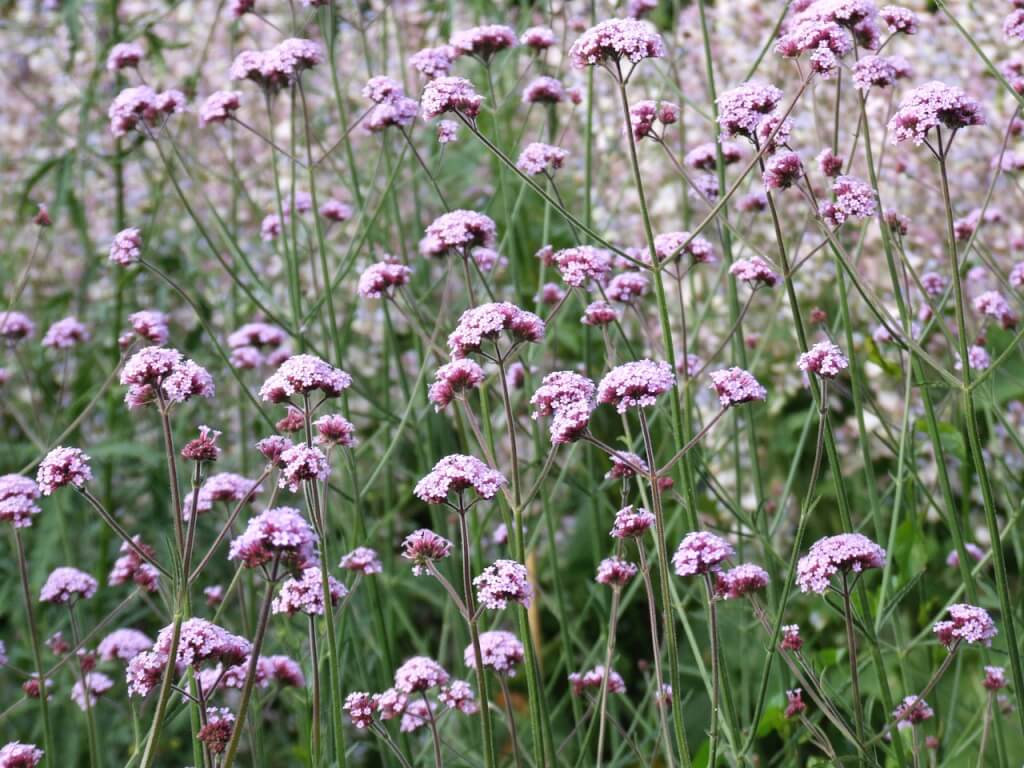
There is something quite fitting about the fact that the plant folklore considers one of the most powerful and sacred of all, yet is also one of the most reluctant to actually grow for you. It rather feels like it wants you to earn it. But if you don’t have the time or the energy, the nearest cousin, Verbena bonariensis, is much easier to grow, as shown below, and can be used in its place for potions, tinctures, incense, and rituals.
Pulling together everything above and adding a further set of reliable, garden worthy plants, here are twenty I would happily recommend growing if you want a garden that carries real folklore weight as well as looking good. I have grown every single one of these myself at some point, and where I have already covered a plant in detail above I have kept the summary short here so this works as a proper reference table rather than repeating myself. Tap any plant name below to see it for sale.
| Plant | Botanical name | Traditional folklore use |
|---|---|---|
| Hawthorn | Crataegus monogyna | The fairy tree, Beltane and the threshold between worlds |
| Rowan | Sorbus aucuparia | Protection at the doorway, warding off enchantment |
| Elder | Sambucus nigra | The Elder Mother spirit, always ask before cutting |
| Birch | Betula pendula | New beginnings, purification, besom making |
| Ash | Fraxinus excelsior | Healing and the world tree connection |
| Oak | Quercus robur | Strength, the Oak King and the light half of the year |
| Blackthorn | Prunus spinosa | Fierce boundary protection and the Dark Mother |
| Holly | Ilex aquifolium | Protection through winter, the Holly King |
| Vervain | Verbena officinalis | Sacred purification and protection, notoriously hard from seed |
| Broom | Cytisus scoparius | The besom, sweeping away negative energy |
| Mugwort | Artemisia vulgaris | Dream work, protection while travelling, smudging |
| Wormwood | Artemisia absinthium | Psychic protection and banishing |
| Foxglove | Digitalis purpurea | Fairy thimbles, associated closely with the fae, poisonous so handle with care |
| Yarrow | Achillea millefolium | Courage, protection and old divination practices |
| Rosemary | Salvia rosmarinus | Remembrance, protection and purification |
| Sage | Salvia officinalis | Cleansing and wisdom |
| St John’s Wort | Hypericum perforatum | Midsummer protection, banishing low spirits |
| Ivy | Hedera helix | Binding, faithfulness and evergreen protection |
| Nettle | Urtica dioica | Protection and breaking hexes |
| Angelica | Angelica archangelica | Protection and banishing, named for the archangel Michael |
Mugwort, wormwood, yarrow, rosemary, sage and St John’s Wort are all reliable, easy going herbs for a UK border, and a mixed herb seed collection is a sensible way to trial several of these at once before committing bed space to any one of them.
Alongside the plants everyone associates with witchcraft, there is a whole second tier of ordinary garden and kitchen plants carrying folklore most people have never clocked. Garlic’s reputation for keeping vampires away is the most famous, but long before that particular association took hold in Victorian gothic fiction, garlic was already considered protective against illness, the evil eye and general misfortune right across European folk medicine, largely because it does have real antimicrobial properties that would have made an obvious difference to a household without modern medicine.
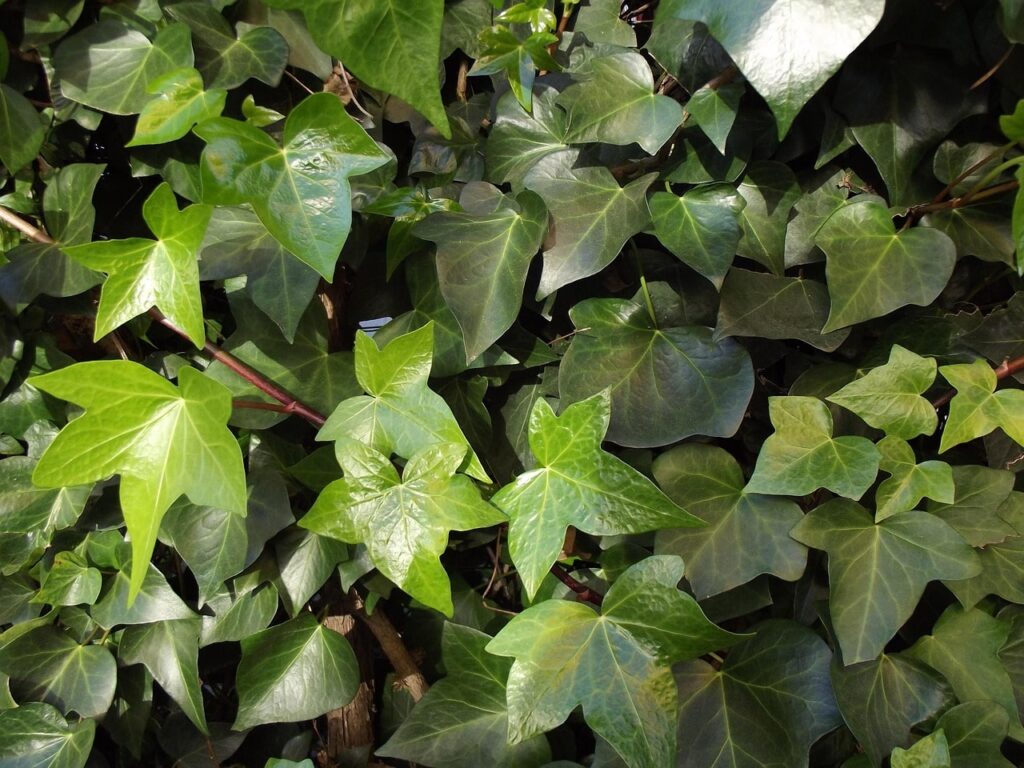
Ivy carries a folklore of binding and faithfulness, which is where the tradition of ivy in a wedding bouquet actually comes from: a wish for the couple’s bond to hold as fast as ivy holds to a wall. Lunaria, the plant most of us know simply as honesty for its papery, moon-shaped seed pods, was long associated with truth-telling and moon magic specifically because of that pale, translucent seed case, and it turns out to be one of the most searched-for individual plants in folklore terms, which tells you the fascination with it has not faded in the slightest.
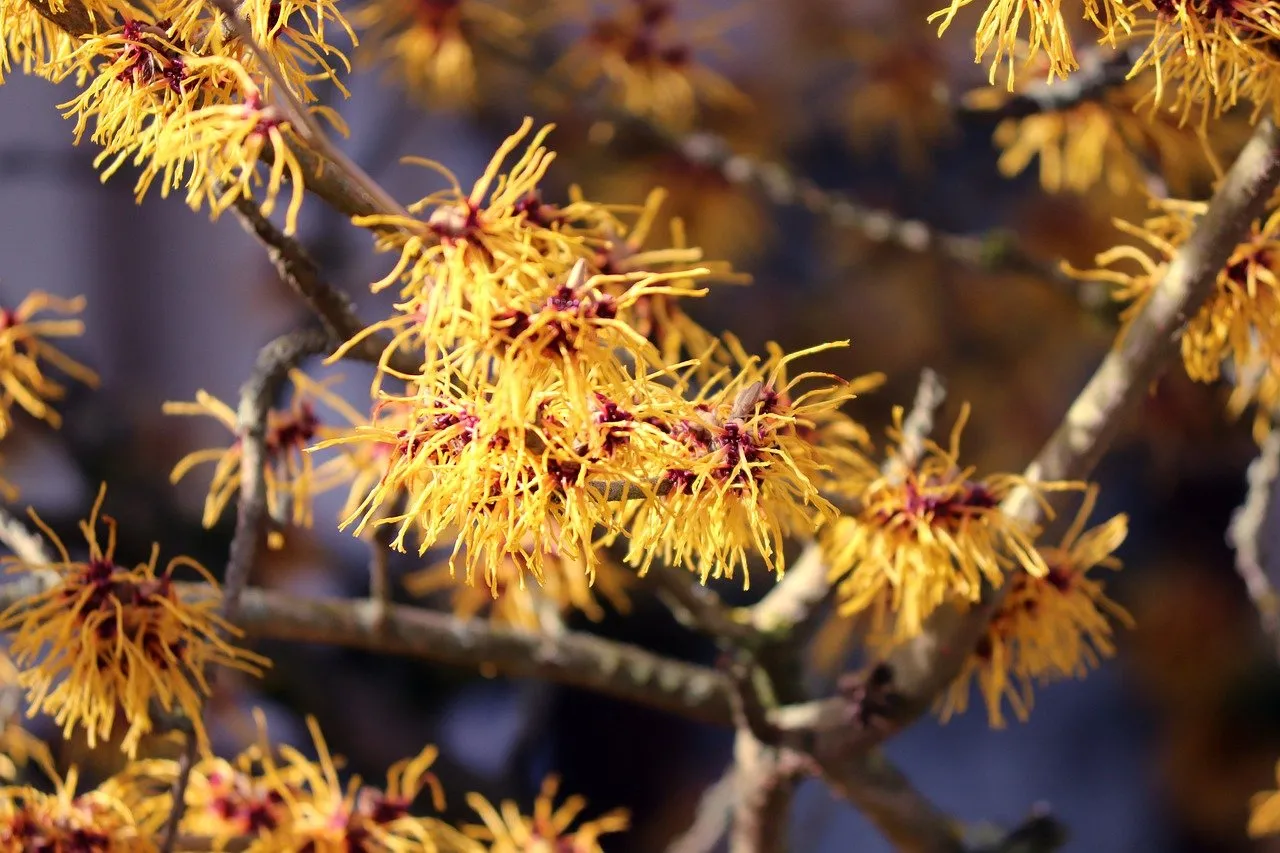
And then there is witch hazel, which I have to mention purely because it catches out so many people. Despite the name, Hamamelis has no real connection to witchcraft folklore at all. The witch in witch hazel almost certainly comes from the old English word wice, meaning pliable or bendable, the same root that gives us wicker, since the flexible branches were traditionally used for divining rods and for the bent handles of tools, nothing more mystical than that.
It is a lovely little coincidence of language rather than a genuine piece of folk magic, and I always enjoy the moment in a conversation when I get to point that out to someone who has just assumed otherwise.
You do not need to overhaul your garden or your beliefs to bring any of this in. For me, the practice sits in small, repeated actions rather than grand ceremony, noticing the first hawthorn blossom of the year, asking before I cut the elder, keeping the besom by the door more for what it represents than what it sweeps, marking the solstices and equinoxes with a little more attention than an ordinary day.
The core tenet of hedge witchcraft, to me, is a complete connection to Mother Nature, the living, breathing world outside. Connecting with Father Sun, the moon, all plants, animals and sentient beings. Just building that connection to the seasons, the changes and removing yourself from attaining and reframing yourself into ‘observing’ what’s growing and surviving around you. It’s not something that you can learn overnight or from one book; it’s a slow observance and gentle interaction with the natural world.
Putting your phone, email, and work to one side and communing outside, no matter how small your garden and breathing in some silence. Make notes of what you hear and see, the smells and movement at dusk or dawn. These are the very first steps to opening up your potential as a gardener and hedgewitch.
If any of this has struck a chord with you, I would truly love to hear how you already do this in your own garden, whether you have ever named it or not, and I will be sharing more of my own habits and small rituals as this series continues.
Now, here’s a question I get asked quite a lot once people start getting into plant magic: what exactly is the difference between a green witch and a hedgewitch? The terms get used interchangeably online more often than they should, and I think that does both traditions a disservice because they’re actually quite distinct paths with their own history and focus. Understanding the difference will help you work out which approach, if either, resonates with how you want to garden and practice.
A green witch is essentially a plant specialist. Their whole practice revolves around herbalism, gardening, and the physical properties of plants themselves. If you’re drawn to growing your own herbs, learning which ones heal a sore throat, which ones calm anxiety, and which ones you can use in cooking as well as spellwork, you’re already thinking like a green witch. This path is grounded firmly in the garden and the kitchen. It’s about knowing your plants inside out—their growing conditions, their medicinal properties, their magical correspondences—and building a deeply rooted relationship with the green world around you.
A green witch might spend years learning about a single plant family, understanding not just what mint does in a spell but how it grows, when to harvest it, how different varieties differ from one another, and how to work with it in tinctures, teas, salves, and charms alike.
A hedgewitch, on the other hand, is about something broader. The term comes from the Old English word “haegtessa” and historically referred to wise women and cunning folk who lived on the edge of villages, quite literally at the hedge boundary between the settled world and the wild. This liminal position is the key to understanding hedgewitchery. It’s not primarily about plants, though plants absolutely feature in hedgewitch practice.
It’s about being a boundary walker, someone who moves between the everyday world and the spirit world, who understands the old ways of folk magic, healing, and divination, and who wanders through the land and its unseen inhabitants. Hedgewitchery is a much older and broader tradition that includes herbalism as one part of a larger practice that also encompasses hedge riding (a form of spirit journeying), working with the fae and ancestral spirits, and serving as an unofficial healer and wise woman for a community.
So where does that leave the actual overlap? Plenty of witches consider themselves both, and the two paths share a huge amount of common ground. A hedgewitch will absolutely grow and use plants, just as a green witch might dabble in divination or spirit work alongside their herbalism. The distinction isn’t a strict boundary so much as a difference in emphasis and depth.
Think of it this way: a green witch has gone deep into one particular skill, the plants themselves, while a hedgewitch has gone wide, taking in plants as part of a broader folk magic practice that includes healing work, seasonal celebrations, and connecting with the spirit world through the natural boundaries of hedgerows, woodland edges, and liminal spaces.

For most beginners reading this, the practical starting point is the same regardless of which label appeals to you. You start by getting your hands in the soil. Whether you eventually lean towards calling yourself a green witch because you fall in love with the detailed science and magic of individual plants, or you find yourself drawn to the wider hedgewitch tradition of folklore, seasonal rhythms, and working the boundaries between worlds, everything begins with learning to grow things properly.
Get to know your soil, your local climate, and the plants that thrive in your particular patch of the UK. The labels can come later, if they matter to you at all. Some of the best practitioners I’ve come across over the years never bother with a label whatsoever; they just quietly get on with growing, harvesting, and using what the earth gives them.
What I’d say to anyone starting out is, don’t worry too much about which box you fit into. Traditions like these developed organically over centuries, shaped by whatever individual women and men needed to do to help their families and communities survive and thrive. Modern witchcraft has inherited these terms and, in some cases, tidied them up into neater categories than they perhaps deserve. Your own practice will naturally develop its own character the longer you spend growing plants, learning their properties, and working out what truly helps you feel connected to the changing seasons in your garden.
No. Wicca is a structured, initiatory religion, usually practised through a coven, with a defined ritual calendar. A hedge witch is a solitary practitioner working directly with plants and the land, and does not need to belong to any coven or follow any fixed religious structure, though some hedge witches also identify as pagan or even Wiccan alongside their hedge practice.
Not at all. Plenty of hedge witches describe their practice as closer to folk herbalism than religion, and many gardeners already carry the same instincts around plant lore and seasonal observation without ever adopting a pagan identity or belief system.
Rosemary, Lavender, Bay and Sage as herbs and Birch or Rowan trees are all forgiving, widely available and carry strong, well-documented folklore, making them a sensible starting point before you attempt anything trickier like Vervain from seed. You can make all sorts of smudge sticks, protective charms and resin-based incense from these wonderful small garden plants as you begin your witchcraft journey.
Verbena officinalis has notoriously erratic germination, often needs several weeks of cold stratification before it will sprout, and even then a significant proportion of seed simply will not germinate. Sowing more than you think you need and being patient beyond the point you would give up on other herbs both help considerably.
Ready to transform your gardening skills beyond basic maintenance? Garden Ninja’s expertly crafted online courses will fast-track your development from keen amateur to skilled garden designer in months rather than years. Starting at just £29, you’ll gain access to professional garden design expertise from BBC Garden Rescue’s Lee Burkhill, delivered at a fraction of traditional horticultural education costs.
For the garden you’ve already got, not the one you’re starting from scratch. Seven checklists and video lessons from BBC Garden Rescue’s Lee Burkhill, built to help you work out what’s worth keeping before you spend a penny.
Garden Design Examples for Small Gardens: 30 Design Templates & Planting Plans: In this online gardening course, I’ll walk you through 30 fantastic garden designs, explaining the logic behind the layout, the plant choices, and take-home tips for applying them in your own garden.
Learn how to transform and design your own garden with Lee Burkhills crash course in garden design. Over 5 hours Lee will teach you how to design your own dream garden. Featuring practical design examples, planting ideas and video guides. Learn how to design your garden in one weekend!
Garden Design for Beginners Online Course: If you want to make the career jump to becoming a garden designer or to learn how to design your own garden, this is the beginner course for you. Join me, Lee Burkhill, an award-winning garden designer, as I train you in the art of beautiful garden design.
A hedge witch practice is, at its core, simply a deeper level of attention paid to the garden you already tend, wrapped in folklore that in most cases is thousands of years old. You do not need a coven, an initiation,tiation or even a settled set of beliefs to start noticing when the hawthorn blooms, why your grandmother always kept rosemary by the door, or what it might mean to ask an old elder tree’s permission before you reach for the loppers.
Happy gardening, and happy hedge tending too.



Lee Burkhill, known as the Garden Ninja, is an award-winning garden designer and horticulturist with over 30 years of gardening experience and 15 years as a professional garden designer. A qualified RHS (Royal Horticultural Society) professional, Lee specialises in sustainable garden design and practical horticultural advice. He designs and presents on BBC1’s Garden Rescue and in leading gardening publications.
View all posts by Lee Burkhill






JOIN THE NINJAS

Be the first in line for new Guides, Discount codes and Offers