For the garden you’ve already got, not the one you’re starting from scratch. Seven checklists and video lessons from BBC Garden Rescue’s Lee Burkhill, built to help you work out what’s worth keeping before you spend a penny.
69


April is the month where the garden stops waiting and starts delivering. This is the busiest sowing and planting month in the entire UK gardening calendar, and if you know what to do and when, you can set yourself up for an absolutely cracking summer. I genuinely love this month, Ninjas. The seed packets come out in force, the potato bags go in, and that list of jobs you have been building since January finally starts getting ticked off!
Quick Answer
April is the UK’s most productive month for sowing and planting. Direct outside you can sow carrots, beetroot, peas, spinach, chard, parsnips, spring onions, and radish. Under cover start courgettes, squash, runner beans, sweetcorn, and half-hardy flowers. Plant second early and maincrop potatoes, onion sets, strawberries, and summer-flowering bulbs. Frost is still possible in April across most of the UK, so keep fleece to hand and always harden off indoor-raised plants before they go out.
Jump To
This page contains affiliate links for products I use and love. If you take action (i.e. subscribe or make a purchase) after clicking a link, I may earn a gardening commission, which helps me keep the Garden Ninja Blog free for all.
What makes April particularly special is the sheer range of things you can get going at once. The seed sowing list in April is longer than in any other month in the gardening calendar. Half-hardy crops that needed a warm, frost-free start in February and March are now big enough to be potted on and hardened off.
Hardy crops that prefer cooler conditions are perfectly at home going straight into the ground. And the ornamental garden is bursting into life, with spring bulbs reaching their peak and summer perennials pushing up fast.
That said, April in the UK is not without its traps. Frost is still a very real possibility right across the country, and I have lost plants to a sharp late-April frost more times than I care to remember. Gardeners in the north of England, Scotland, and at higher altitudes should treat April with particular caution when it comes to tender crops.
Always keep a roll of horticultural fleece to hand throughout the month. It is one of the most useful bits of kit you can own at this time of year, and it has saved countless plants in my own garden over the years.
💡 Top Tip
Before rushing to sow everything outside in April, do the soil temperature check. Push a soil thermometer 10cm into the ground. Seeds like carrots and beetroot need at least 7°C to germinate reliably. If you are below that, use a cloche or fleece to warm the soil for a week first. Cold, slow germination is one of the biggest causes of patchy results in the April vegetable garden.
The other thing worth noting is that regional variation really matters in April. A gardener in Cornwall or the Thames Valley is working with meaningfully warmer, more settled conditions than someone in Yorkshire, Cumbria, or Scotland. If you are in the north or at altitude, add two to three weeks onto any outdoor sowing timings and lean more heavily on cover protection. There is no benefit in rushing, and the gap closes quickly as May arrives.
April is the month to get the big summer crops under cover if you have not already. Courgettes, squash, pumpkins, runner beans, sweetcorn, and cucumbers all need a protected start before they eventually go outside after the last frosts. The key is sowing just early enough to have good-sized, resilient plants ready to go out in late May or June, without sowing so early that they become pot-bound and stressed waiting for the weather to warm up.
April is the ideal time to start courgettes and summer squash under cover, and I would say these are the two crops that most reliably reward getting going now rather than waiting. Sow one seed per small pot on its side, about 1cm deep in peat-free compost, and place on a warm windowsill or in a heated propagator at around 18 to 20 degrees. Germination is fast and satisfying, often within five days.
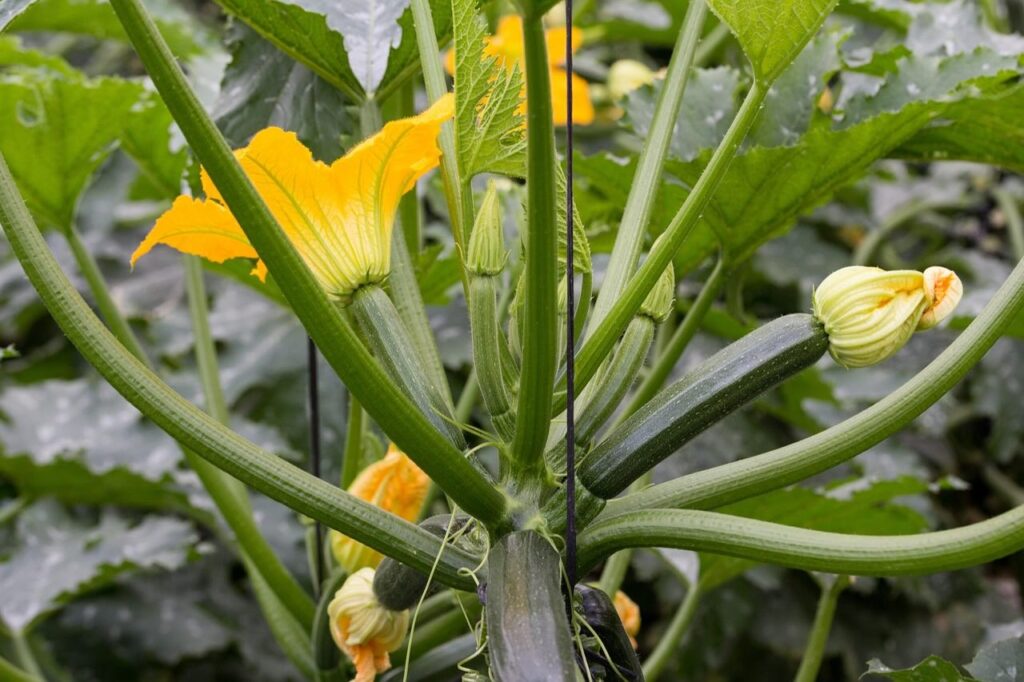
Courgette varieties worth growing include Defender F1 for disease resistance and reliability, Black Beauty for deep-flavoured dark green fruits, and Goldena for a yellow variety that looks spectacular on the plate. A word of warning: two courgette plants is genuinely all most households need. I have been caught out every year by optimistically planting four, and by August the kitchen surfaces are drowning in them.
🛒 Buy courgette seeds from Amazon UK
For squash and pumpkins, including winter squash varieties like Crown Prince and Butternut, sow now in exactly the same way. These are even more vigorous than courgettes and will need plenty of space when they eventually go out, so factor that into your planning from the start.
Runner beans are one of the great joys of the British vegetable garden, and April is the perfect time to get them going under cover, ready for planting out in late May or early June. Sow individually into 9cm pots, one bean per pot, to a depth of about 5cm.
They are fast germinators and will be sturdy young plants within a couple of weeks. Keep them in a frost-free greenhouse or on a bright windowsill and pot on if they start to outgrow their containers before the weather allows them outside.
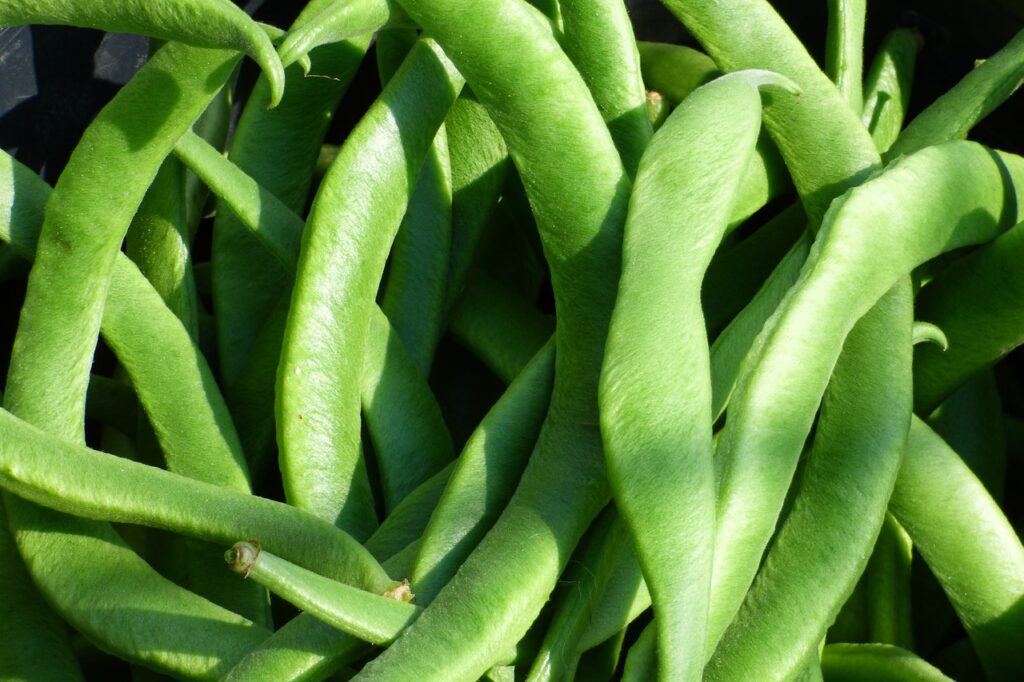
Painted Lady remains a favourite variety with a beautiful red and white flower and excellent flavour. Enorma produces long, straight pods with outstanding cropping. If you want something a bit different, Scarlet Emperor is the classic red-flowered variety that has been grown in British gardens for generations.
🛒 Buy runner bean seeds from Amazon UK
French beans are more tender than runners and also benefit from an April start under cover. Dwarf varieties like Annabel and Safari are very productive in smaller spaces or containers, while climbing French beans like Cobra offer impressive yields from a small footprint.
Sweetcorn is a crop that genuinely rewards an early start under cover in April, because it needs a long, warm growing season to produce full, sweet cobs before the frosts return in autumn. Sow two seeds per 9cm pot, 2.5cm deep, in a heated propagator or warm windowsill at around 18 to 21 degrees. Remove the weaker seedling once both have germinated. Sweetcorn dislikes root disturbance, so use biodegradable pots if you have them, as these can go straight in the ground at planting time.
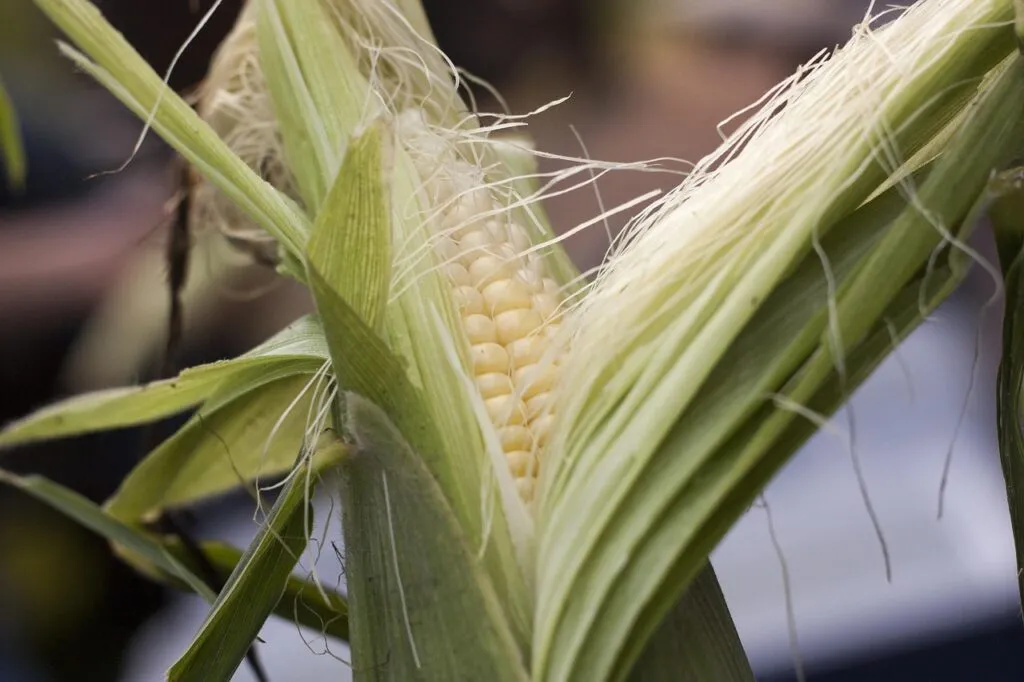
Sweetcorn is wind-pollinated and must be grown in blocks rather than rows to ensure good pollination and well-filled cobs. A block of at least four by four plants is the minimum I would recommend. Varieties like Swift F1, Sundance, and Minipop (for baby corn) are all reliable performers in UK conditions. 🛒 Buy sweetcorn seeds from Amazon UK
If you have a greenhouse or polytunnel, April is the time to get cucumbers going in earnest. Outdoor or ridge cucumbers can also be started now for planting out after the frosts, though they will need a sheltered, sunny spot and warm soil to do well.
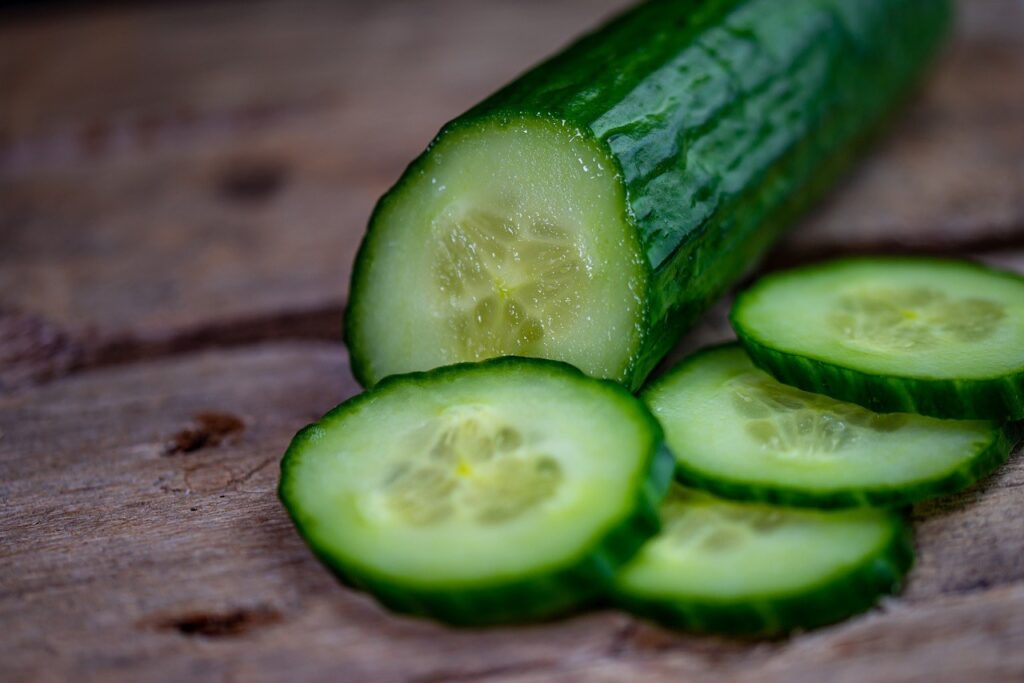
Sow on their side in individual pots at around 20 degrees. Telegraph Improved is the classic indoor variety, while Marketmore is a solid outdoor choice that handles British summers well. Keep cucumber plants moist and in good light as they grow on under cover.
If you sowed tomatoes and chillies back in February or March, April is when they need your attention. Once the first true leaves appear above the rounded seed leaves, it is time to prick them out into individual 9cm pots. Handle seedlings by their leaves, never by the stem, as the stem is where all the action is and any damage there can be fatal to a young plant.
Chillies in particular benefit from being potted on into a slightly larger container this month, as they are hungry and thirsty plants that will stall in a small pot. Keep them somewhere warm and bright, and begin feeding with a balanced liquid feed once they are established in their new containers.
If you have not started tomatoes yet, April is not too late. Fast-maturing varieties like Sungold and Gardeners Delight sown now will still crop well before the season ends.
🛒 Buy tomato seeds from Amazon UK
April is the time to start thinking ahead to Autumn and Winter harvests by sowing brassicas under cover. Brussels sprouts, purple sprouting broccoli, winter cabbage, kale, and calabrese all benefit from being started in a seedbed or modules this month and transplanted out into their final positions in June or July.
These are the crops that will still be delivering when summer’s abundance has long passed, and getting them going now means they have the full growing season ahead of them.
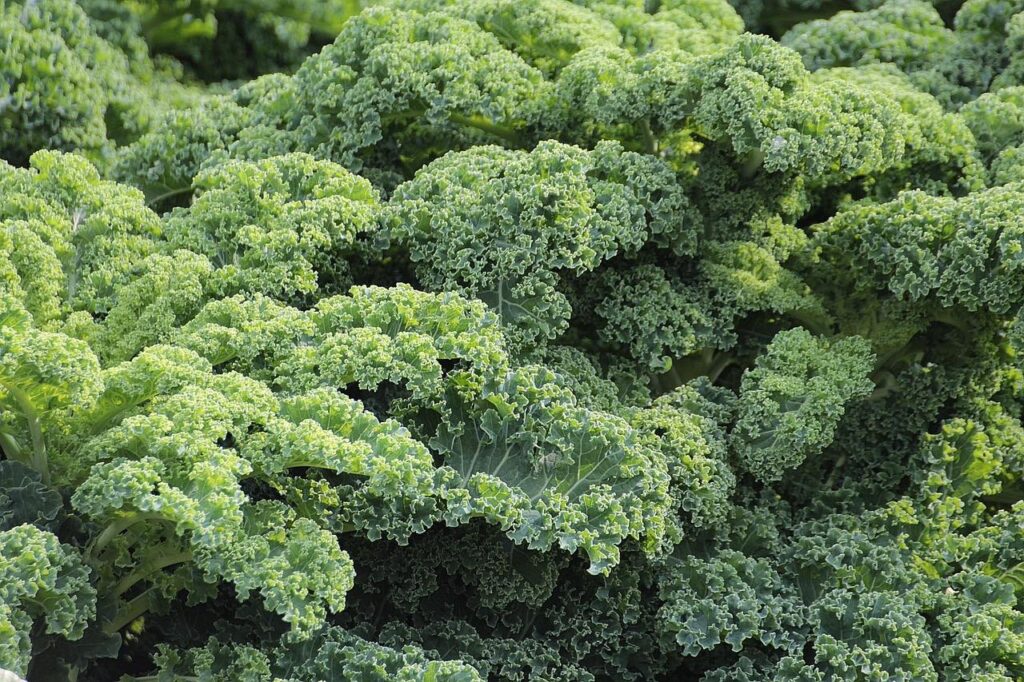
Sow into a tray or individual modules in a cold greenhouse or cold frame. There is no need for heat at this stage; brassicas germinate readily in cool conditions. Thin or pot on once they develop their first true leaves.
🛒 Buy brassica seed collections from Amazon UK
The outdoor sowing list in April is longer than any other month. Soil temperatures are rising, day length is increasing, and there is a wide range of hardy crops that will take outdoor conditions without complaint. That said, a cold snap can still undo early sowings, so always have fleece available and do not sow into waterlogged or frozen ground.
April is one of the best months of the year to sow carrots outside. The soil is warm enough for reliable germination, and the cooler spring conditions produce sweeter, more flavourful roots than later summer sowings. The key with carrots is to sow into deeply worked, stone-free, manure-free soil. Manure causes the roots to fork and distort, which does not affect flavour but does make them fiddly to peel.
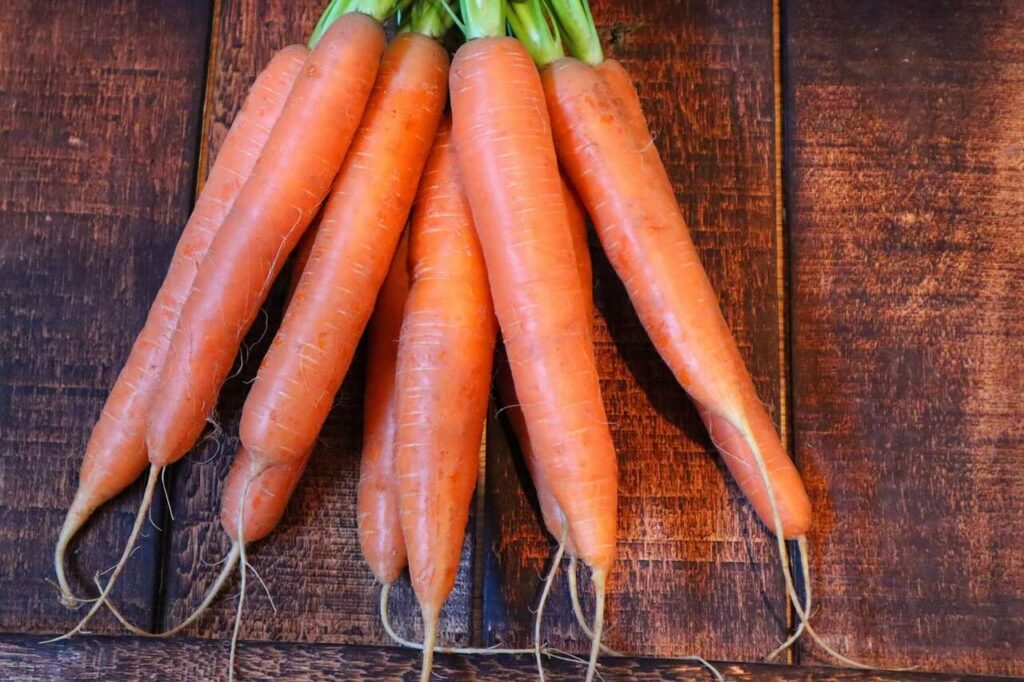
Sow in shallow drills about 1cm deep, as thinly as you can manage, and cover lightly. Thinning carrot seedlings to 5 to 7cm apart is essential for producing decent-sized roots. Do this in the evening if possible, as the smell of bruised carrot foliage attracts carrot root fly, which lays its eggs at the base of the plant.
A fine mesh carrot fly barrier around the bed is one of the most effective organic controls available. Early Nantes 5, Amsterdam Forcing, and Autumn King 2 are all excellent varieties for April sowing.
🛒 Buy carrot seeds from Amazon UK
Beetroot is one of those crops that new gardeners often worry about unnecessarily. It is straightforward, productive, and gives you two crops in one: the roots and the young leaves, which are excellent in salads. Each beetroot seed is actually a small cluster of seeds, so you will need to thin the seedlings to about 10cm apart once they emerge to give the roots room to swell properly. I love growing beetroot as they pickle well and go in pretty much any stew, roast or stir-fry!
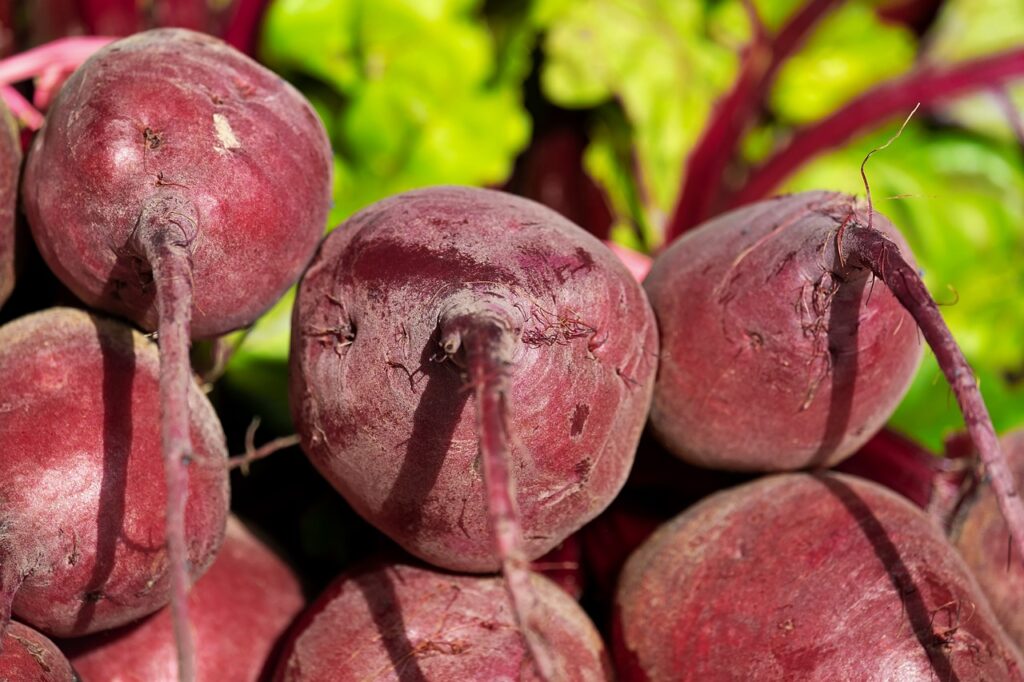
Sow 2.5cm deep in rows 20 to 30cm apart. Beetroot Boltardy is the classic, reliable variety, resistant to bolting and consistently tasty. Chioggia gives you those beautiful candy-striped roots that are as decorative as they are delicious.
For something a bit different, Golden Beetroot is sweeter and slightly earthier, and it does not bleed when you cut it, which is a great advantage in the kitchen.
🛒 Buy beetroot seeds from Amazon UK
April is still a brilliant time to sow peas outside. They prefer cool conditions and will establish much better now than in the warmth of May or June. Sow in drills about 5cm deep and 5 to 8cm apart, in double rows with 60cm between each pair to allow for picking access.
If slugs are a persistent problem, the guttering trick from the March guide works just as well now: sow into lengths of guttering filled with compost and slide the whole rootball into a prepared trench when the plants are about 8cm tall.
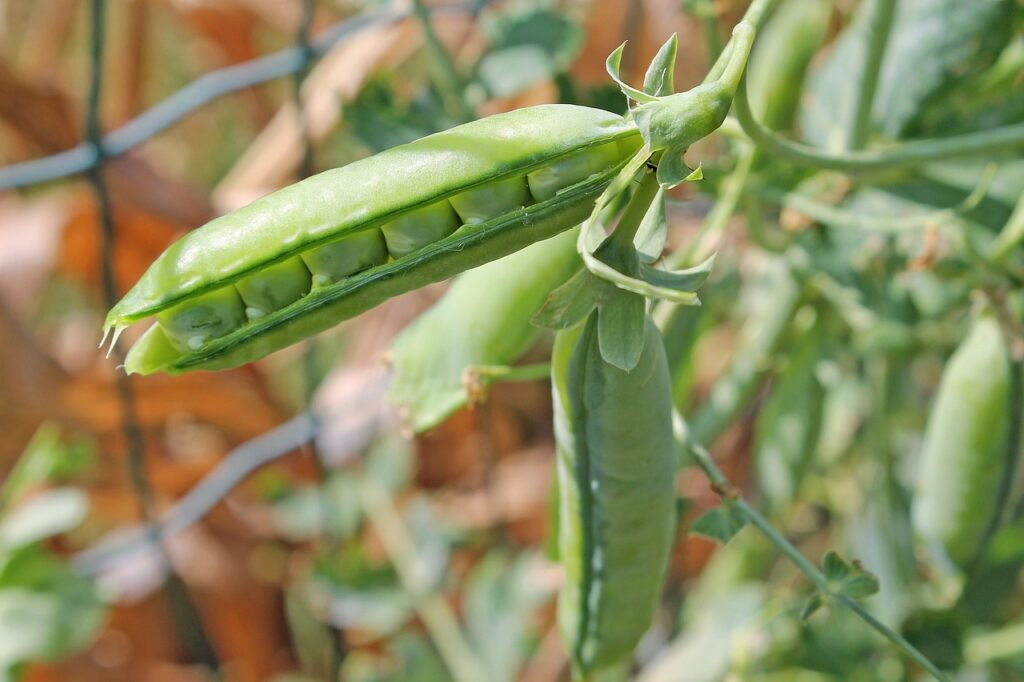
Kelvedon Wonder is one of the best early varieties: compact, heavy-cropping, and very reliable from April sowings. Hurst Green Shaft is an excellent maincrop pea with long, well-filled pods. Sugar snap varieties like Sugar Ann are brilliant if you want to eat pods whole, with no shelling required. Put up your pea support netting or twiggy sticks as you sow, rather than waiting until the plants are already falling over each other. 🛒 Buy pea seeds from Amazon UK
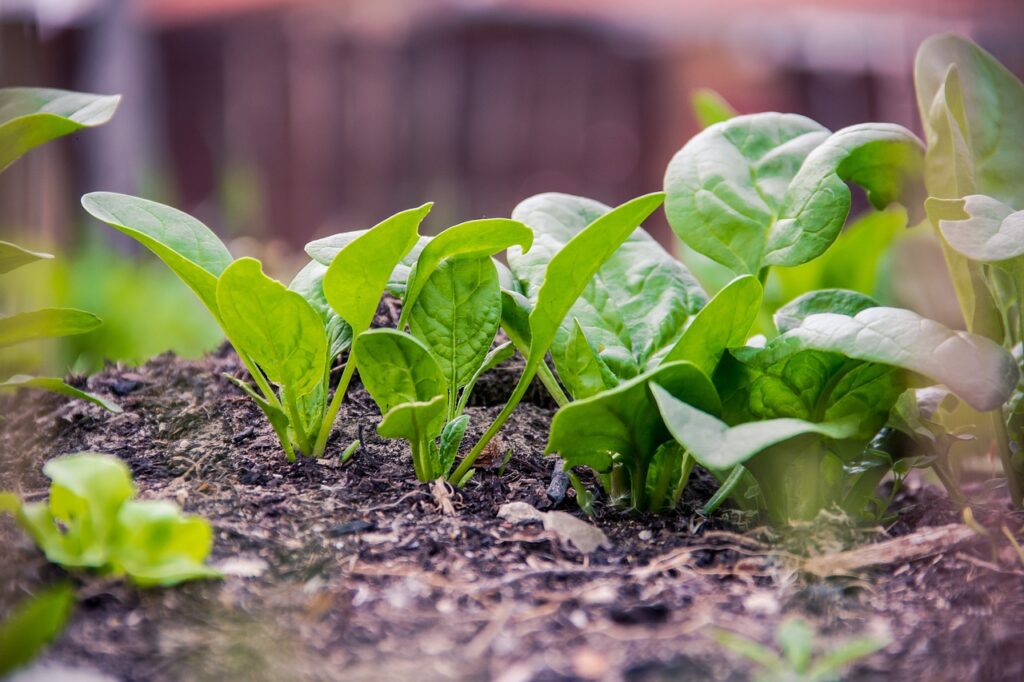
Spinach thrives in the cooler April conditions and will bolt as soon as the heat of summer arrives, so getting it going now means productive harvests throughout May and June. Sow thinly in rows, thin to 15cm apart, and make further small sowings every two to three weeks to extend the harvest. Medania remains the RHS Award of Garden Merit variety I keep coming back to, given its slow bolting and heavy cropping. It is simply reliable.
Swiss chard is even more versatile and significantly more heat-tolerant than spinach. The rainbow varieties, with their spectacular stems in yellow, red, orange, and white, are genuinely ornamental enough to grow in a flower border if you need to maximise limited space.
Sow 2.5cm deep, thin to 20 to 25cm apart, and begin harvesting the outer leaves once the plants are established.
🛒 Buy Swiss chard seeds from Amazon UK
April is actually one of the best months for sowing parsnips, as the soil has warmed to a level where germination is more reliable than in the colder March soil. Parsnip germination can still be notoriously slow and patchy, sometimes taking up to three to four weeks, so do not give up on them if nothing appears quickly.
The secret is to keep the soil consistently moist during that germination period. Sow thickly, as fresh seed always outperforms old seed, and thin to 15cm apart once the seedlings are established.
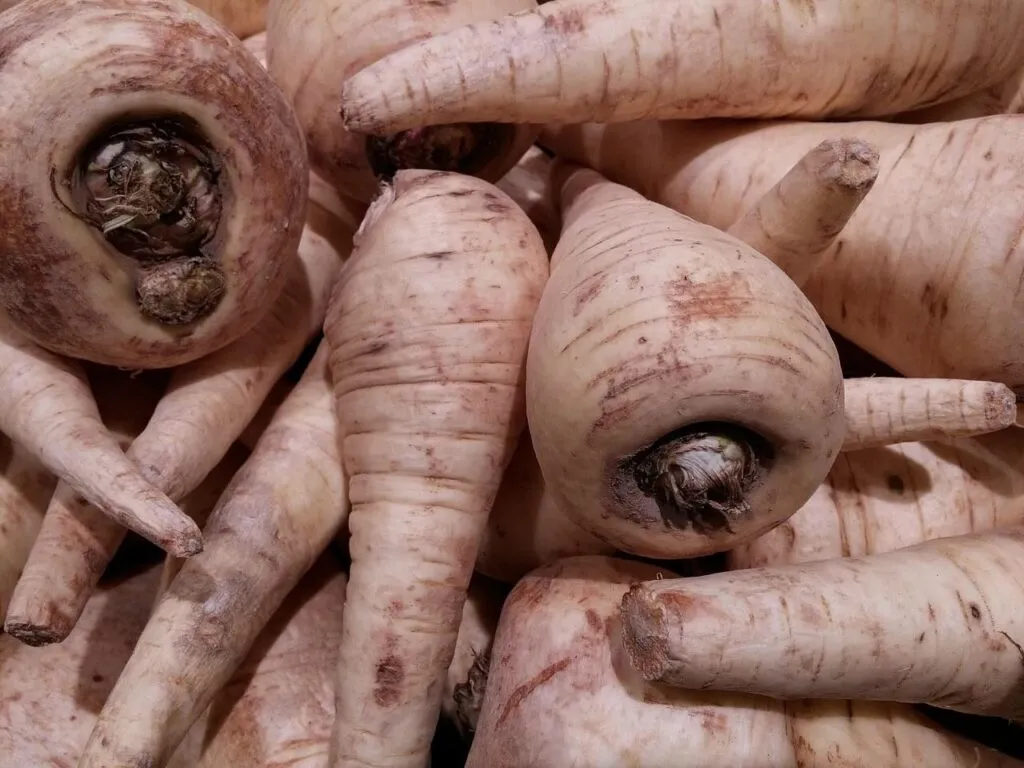
Gladiator F1 is the variety I come back to every year for its canker resistance and large, sweet roots. White Gem is another solid performer, and Tender and True is the heritage variety that old hands still swear by.
🛒 Buy parsnip seeds from Amazon UK
April is brilliant for fast-growing salad crops that give you harvests within weeks of sowing. Mixed salad leaves, rocket, lamb’s lettuce, and cut-and-come-again lettuces can all be sown outside now, either in rows or broadcast thinly across a prepared patch. The key is to make small, frequent sowings every two to three weeks rather than one large sowing, which prevents the feast-or-famine cycle that catches so many gardeners out.
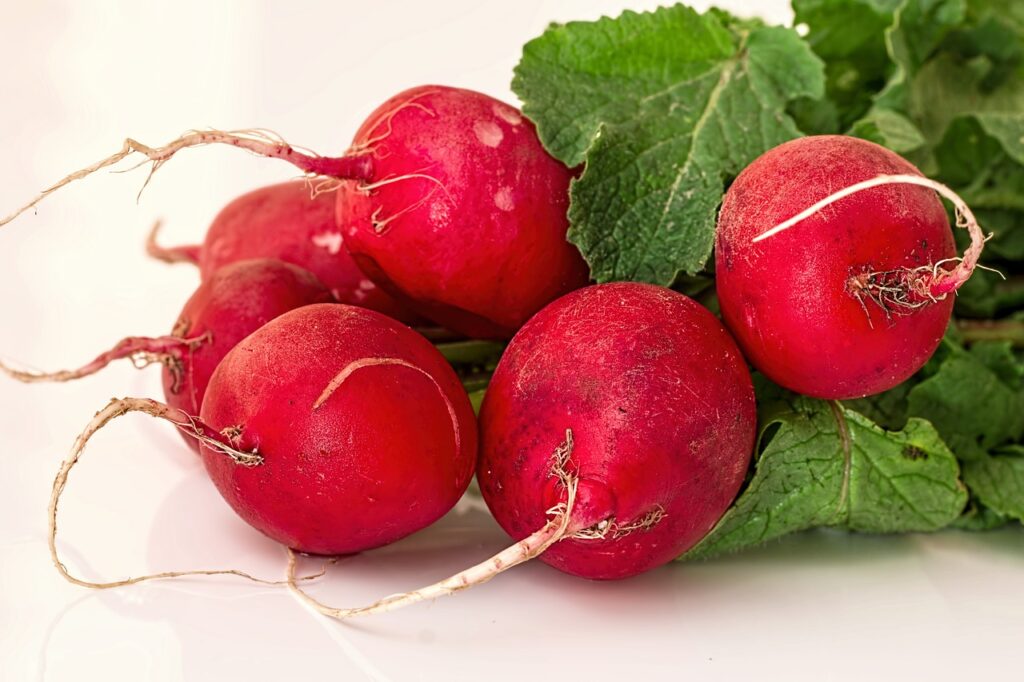
Spring onions can be sown from April onwards and are ready in about 8 to 12 weeks. White Lisbon is the reliable RHS AGM standard. Radish is the fastest crop in the vegetable garden, often ready to pull in as little as four weeks from sowing. French Breakfast is the classic mild-flavoured variety. Both crops are excellent for filling gaps between slower-growing plants and make very efficient use of available space.
🛒 Buy mixed salad leaf seeds from Amazon UK
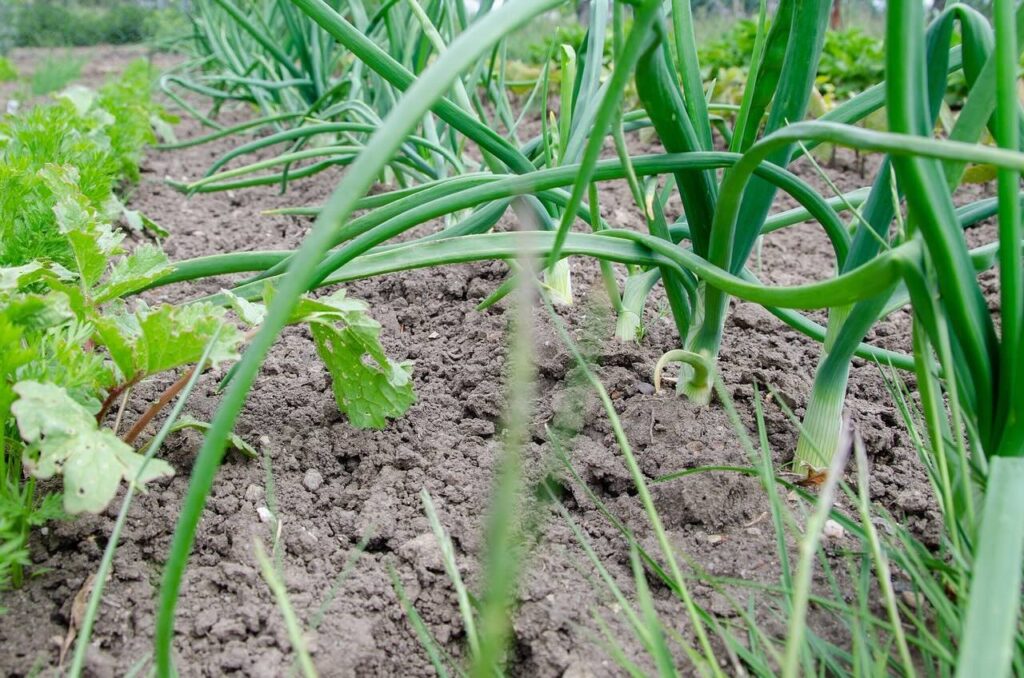
April is a good time to sow leeks in an outdoor seedbed if you prefer this method over modules. Sow thinly in rows, 1cm deep and 15cm apart, and transplant the young plants into their final positions in June or July when they are around pencil thickness. Musselburgh is the classic UK leek, very hardy and reliable. Hannibal and Bandit both offer excellent winter hardiness for late-season harvests.
Kale can also go into an outdoor seedbed this month for planting out later in the season. Nero di Toscana (Cavolo Nero) is one of the best-looking and most delicious of all the kales, and Redbor produces striking deep-red leaves that look superb in the winter garden. Both are remarkably cold-hardy.
🛒 Buy leek seeds from Amazon UK
Beyond sowing from seed, April is also a key month for setting out established plants and vegetable crowns directly into the ground. These are the crops that have been waiting for the soil to warm and the days to lengthen, and April is exactly the right moment to get them in.
If you missed March for onion sets, you can still plant them through April and get excellent results. Sets are simply small, part-grown onion bulbs that are far more reliable in the garden than seed-grown onions. Press them into well-prepared, fertile soil so that just the tip is showing above the surface, with about 10cm between sets and 25 to 30cm between rows.
The main nuisance at this time of year is birds, which have an infuriating habit of pulling freshly planted sets straight back out again.
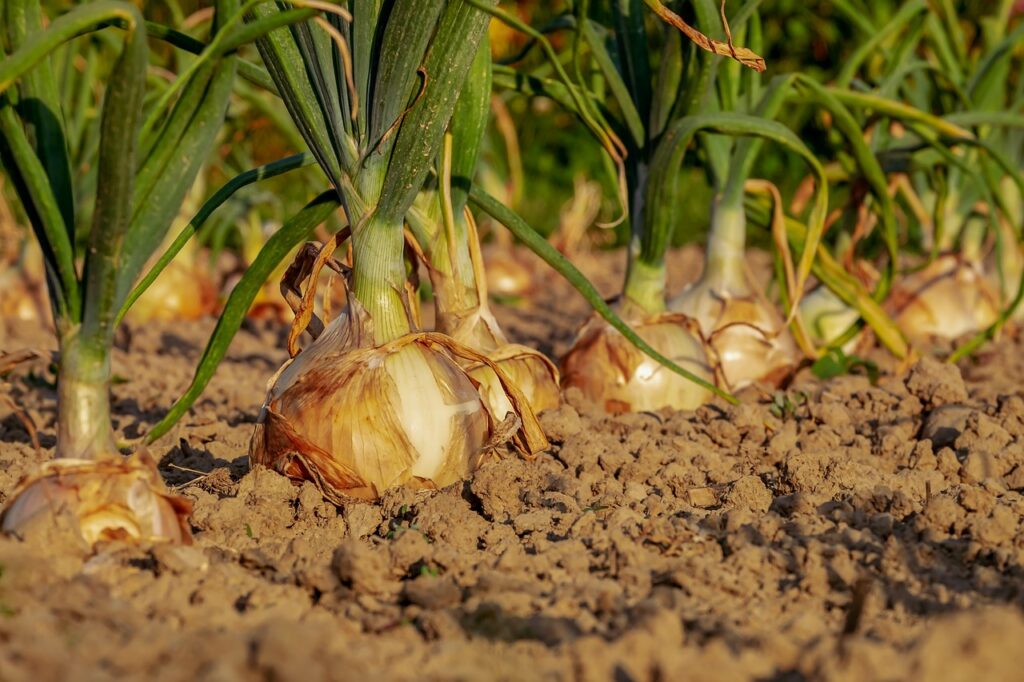
Sturon is my go-to variety for a semi-round, well-keeping onion with an RHS Award of Garden Merit. Stuttgarter Giant is another reliable choice for a flatter, more traditional shape. For shallots, Jermor and Longor are both excellent long-keeping French varieties, while Red Sun gives you a beautiful, deep-red skin that looks fantastic in the kitchen.
🛒 Buy onion sets from Amazon UK
April remains a good time to plant asparagus crowns if you did not get to it in March, and this is one of my most enthusiastic recommendations for any gardener with a bit of space. Asparagus is a long-term investment: you cannot harvest in the first year and should only take a light cutting in the second, but from year three onwards, an established bed will reward you for 20 years or more with virtually no effort.
Dig a trench 30cm deep, create a low ridge of soil along the bottom, drape the crowns over it with roots hanging naturally on either side, and cover with 5cm of soil. Space crowns 30 to 45cm apart.
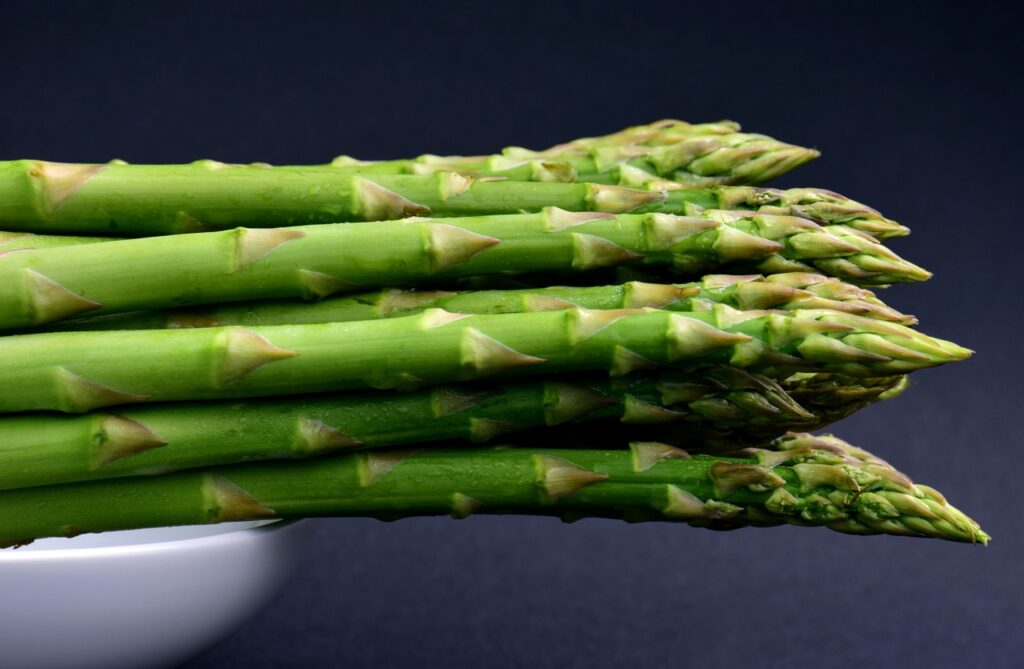
Gijnlim remains the most consistently recommended variety for UK growing, reliably producing heavy yields of tender, flavoursome spears. Jersey Knight is another excellent choice, particularly noted for its vigour.
🛒 Buy asparagus crowns from Amazon UK
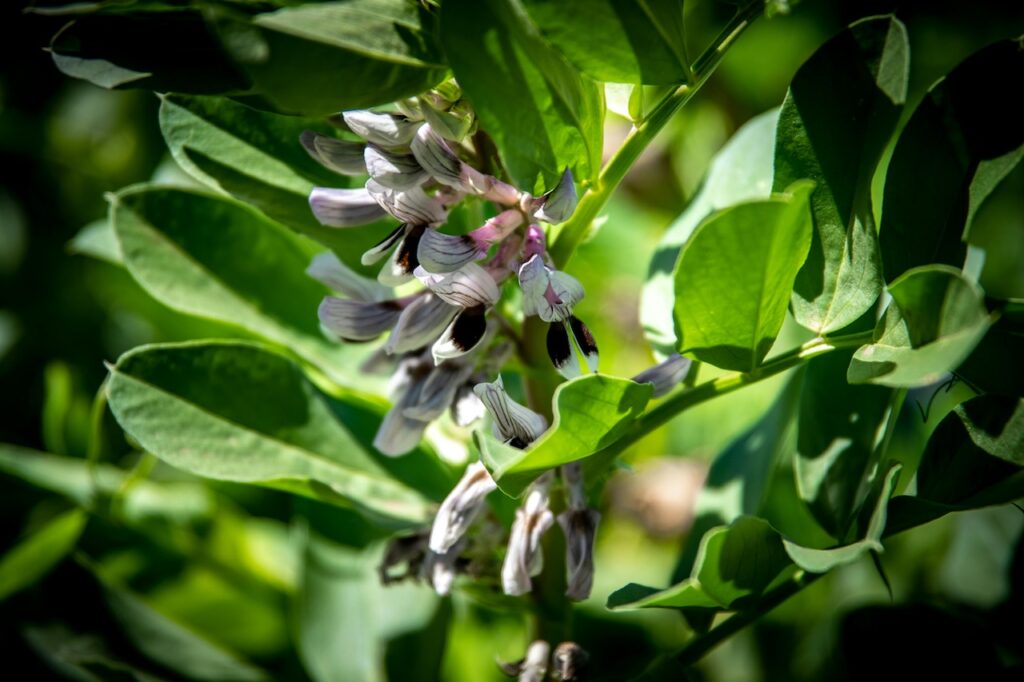
If you started broad beans under cover in February or March, April is the time to transplant those young plants into their final outdoor positions. Harden them off first by placing them outside during the day and bringing them in at night for a week or two, gradually increasing their exposure to outdoor conditions.
Then plant out, with 23cm between plants and 45cm between rows, and water in well. They are very robust at this stage and will handle cool April nights without any trouble.
Globe artichoke offsets, or rooted suckers, can be planted out in April into a sunny, well-drained position. These are spectacular architectural plants that earn their space both as ornamentals and as producers of those extraordinary edible flowerheads.
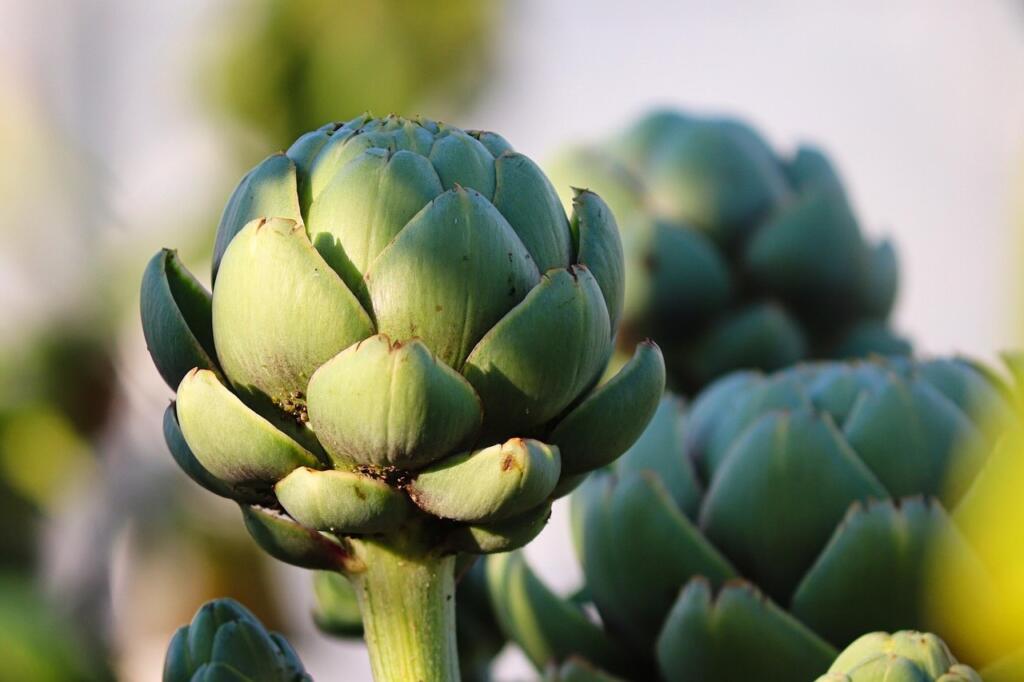
Plant with 90cm between plants, as they become large and impressive over time. Green Globe Improved is the standard UK variety and reliably productive.
🛒 Buy globe artichoke plants from Amazon UK
Potatoes are a cornerstone of the April vegetable garden, and this is the month when the bulk of UK potato planting happens. If you planted first early varieties in March, those are already in the ground. April is when second early and maincrop varieties go in, making it one of the busiest planting weeks of the entire year for anyone growing their own food.
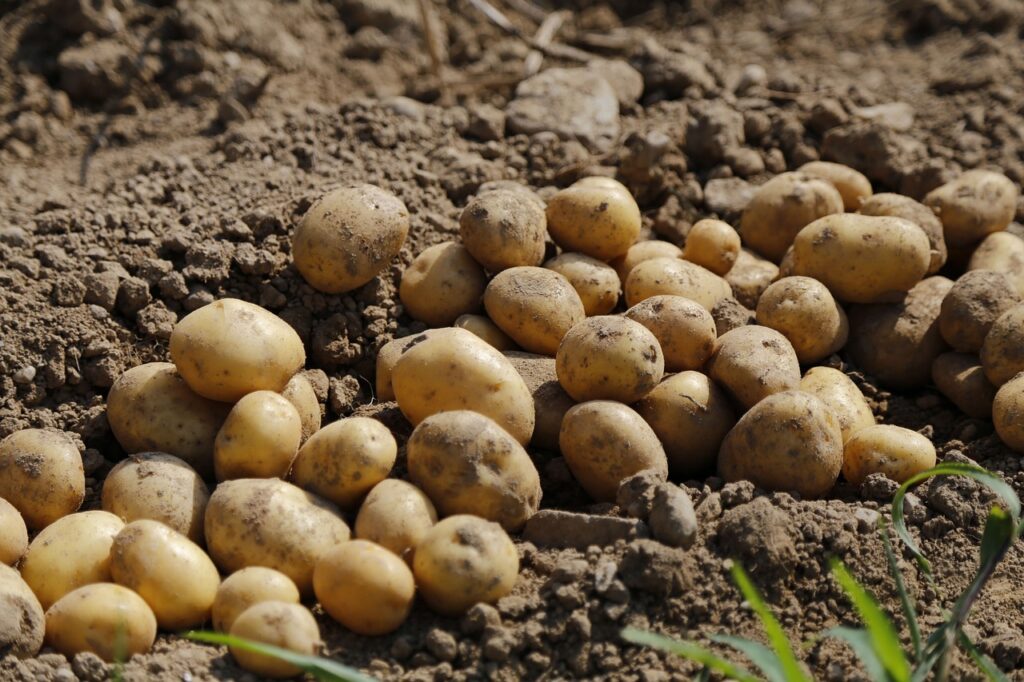
If your seed potatoes are not yet chitted (sprouted), get them into an egg box or tray in a cool, bright, frost-free spot now. Short, sturdy, dark-green sprouts of about 1 to 2cm are ideal for planting. Long, etiolated pale sprouts that have been sitting in the dark are weaker and will not perform as well. Chitting is not strictly essential, but it does give potatoes a head start and often improves yields.
💡 Top Tip
Plant second early potatoes in the first half of April and maincrop varieties in the second half. This staggered planting gives you a longer overall harvest window and reduces the risk that a late frost wipes out all your emerging shoots at once. If a sharp frost is forecast after your potatoes have emerged, simply draw more soil up around the shoots to protect the tender growth. It takes two minutes and can save weeks of waiting for regrowth.
Dig a trench about 12cm deep, set seed potatoes 30cm apart (second earlies) or 40cm apart (maincrops), with 60 to 75cm between rows. Cover with soil and draw up a slight ridge. As shoots emerge, continue to earth up by drawing soil around them, which prevents light reaching the developing tubers, encourages more tuber formation, and protects against frost.
Second early varieties to consider include Charlotte, the waxy salad potato that is consistently outstanding, Wilja, which is excellent for boiling and baking, and Kestrel, with its distinctive purple-splashed skin and superb flavour.
For main crops, Desiree is one of the most versatile UK varieties, Maris Piper remains the chip shop standard and outstanding for roasting, and King Edward is the classic choice for bakers and roasters.
🛒 Buy seed potatoes from Amazon UK
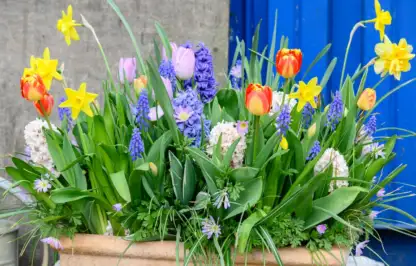
April is one of the most exciting months of the year for flowers. The half-hardy annuals that will form the backbone of the summer display need to get going now under cover, while hardy annuals can go straight outside in increasing numbers. The ornamental garden is also coming alive with spring colour, and there are summer-flowering bulbs to get planted up in containers and borders.
If you have not yet started cosmos, zinnias, nicotiana, antirrhinums, petunias, salvias, or ageratum, April is your moment. These are the plants that will fill the summer borders with colour from July onwards, and starting them now in a heated propagator or on a warm windowsill gives them the head start they need. Sow into modules or small pots, cover very lightly, and provide as much light as possible once germinated to prevent leggy growth.
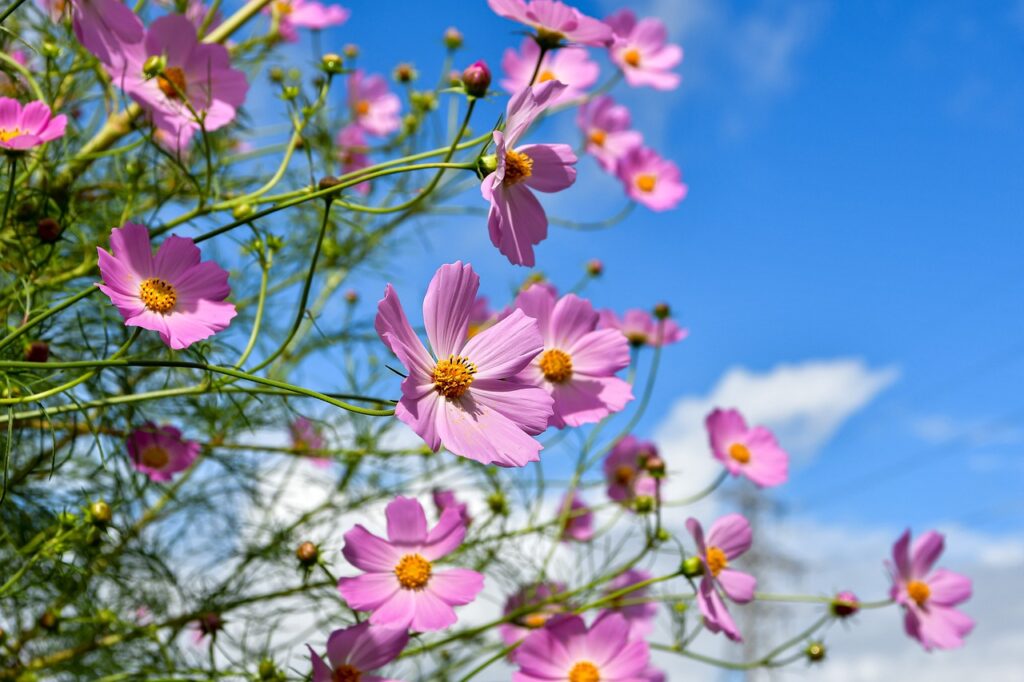
Cosmos Sensation Mixed is one of the most reliable and rewarding half-hardy annuals you can grow, producing feathery foliage and large, elegant flowers in white, pink, and crimson from midsummer right through to the first frosts. Zinnia Profusion Series is similarly excellent, particularly for containers and front-of-border displays. Do not plant any of these outside until after the last frost date, which for most of the UK means late May at the earliest.
🛒 Buy cosmos seeds from Amazon UK
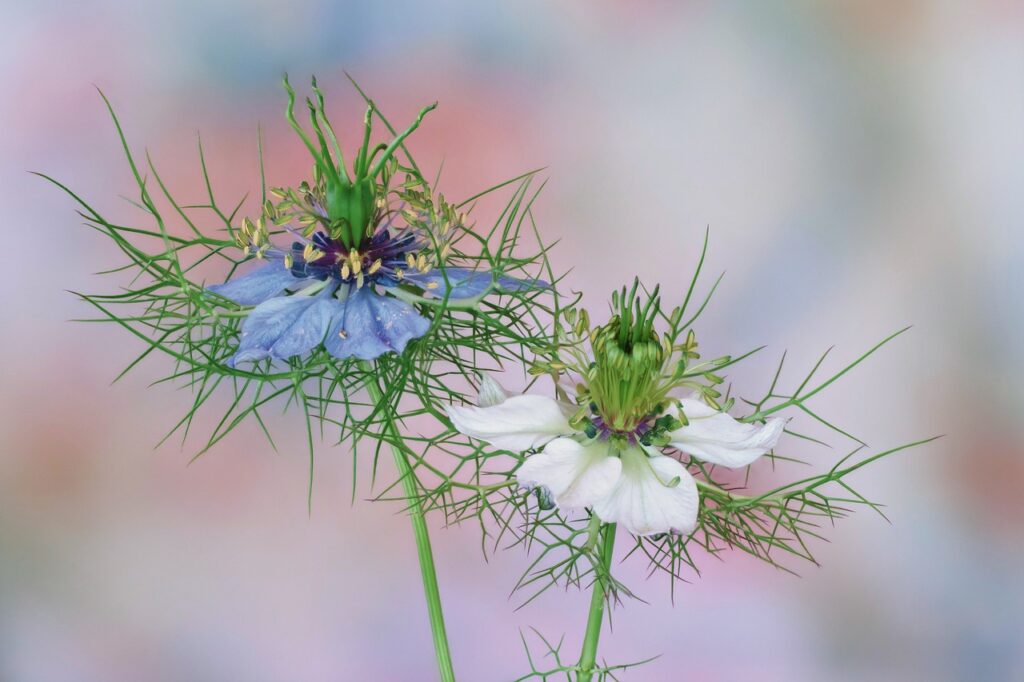
Cornflowers, California poppies (Eschscholzia), annual poppies, nigella, clarkia, larkspur, calendula, and nasturtiums can all be sown direct outside in April where you want them to flower. April conditions are actually better for these than later sowings because they prefer to germinate in cool soil and then grow steadily as temperatures rise. They often outperform plants sown in warmer May conditions. Prepare the ground to a fine tilth, scatter seed thinly, rake lightly to cover, and thin as they develop.
Sunflowers can also go direct outside from April, making for one of the most satisfying sowings you can do at this time of year. Push individual seeds 2.5cm deep where you want them to grow, or into 9cm pots if you want more control. Titan is the variety for genuinely spectacular head size, while Velvet Queen gives you the rich, burnished orange-brown tones that are so popular in cutting gardens.
🛒 Buy sunflower seeds from Amazon UK
Sweet peas sown now will flower beautifully from June onwards. If you have plants that were started in February or March, April is the time to begin hardening them off and to get their support structures in place before they go out in late April or May.
Those of you in warmer, southern parts of the UK can plant out Autumn or February-sown sweet peas now, with the shelter of a wall or fence and a watchful eye on the forecast.
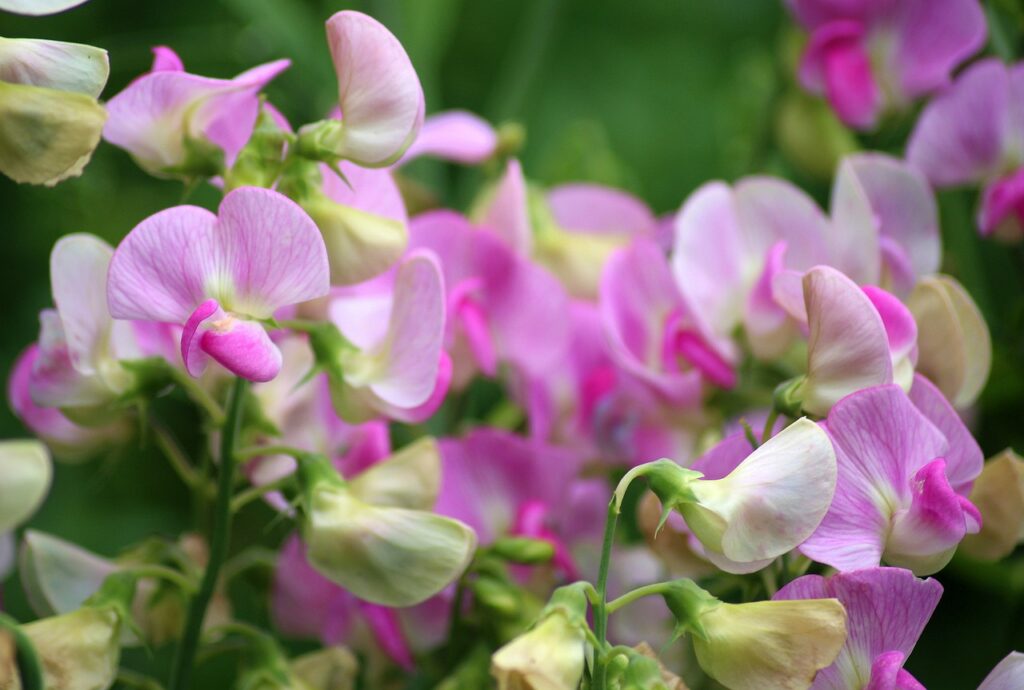
For new sowings, sow into deep modules or root trainers to accommodate those long taproots. Soak the seeds overnight first.
Varieties with the strongest fragrance include Matucana, Cupani, and the original Spencer types, which carry that classic sweet pea scent that is simply unmatched in the summer garden.
🛒 Buy sweet pea seeds from Amazon UK
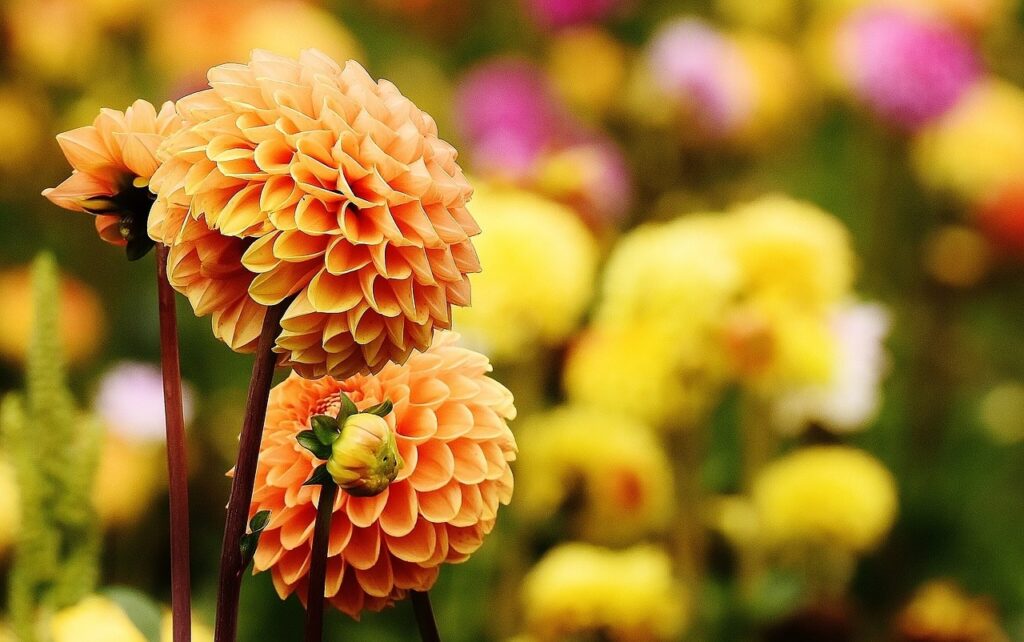
April is the time to start planting summer-flowering bulbs and tubers. Dahlias, gladioli, lilies, eucomis, and ranunculus can all go into containers now or into the ground in sheltered spots, with protection from a cloche or fleece if frost threatens. Dahlia tubers that have been overwintered indoors should be potted up into large containers of compost and placed in a frost-free greenhouse or polytunnel to start into growth, then hardened off and planted out in May.

Lilies can be planted in the ground in April in well-drained soil. Oriental lilies like Stargazer and trumpets like Regale are both superb choices that will flower magnificently from midsummer. Plant the bulb at three times its own depth and in a position where the lower part of the stem is shaded, as lily bulbs dislike getting too hot.
🛒 Buy lily bulbs from Amazon UK
If you are starting from scratch with dahlias, April is a good time to buy and pot up tubers. You will not plant them outside until after the last frost in late May, but potting them up now and growing them on in a greenhouse or frost-free space gives them a head start, so they will flower sooner once they are finally outside. Pot into a large container, keeping the old stem just above the compost surface. Water sparingly until growth begins, then increase watering as the plant develops.
🛒 Buy dahlia tubers from Amazon UK
The bare-root planting window that ran from November through early spring is now closing, but April remains a very productive month for fruit planting with container-grown specimens. Strawberries, in particular, do very well when planted in April, and there are several other soft fruit crops worth considering this month.
April is one of the best times to plant strawberries, and container-grown plants establish brilliantly at this time of year. Plant into well-prepared, fertile soil or large containers with the crown of the plant just at soil level. Plant too deep and the crown rots; plant too shallow and it dries out. Water the well and mulch around the plants with straw or a strawberry mat to keep the fruits off the soil and suppress weeds.
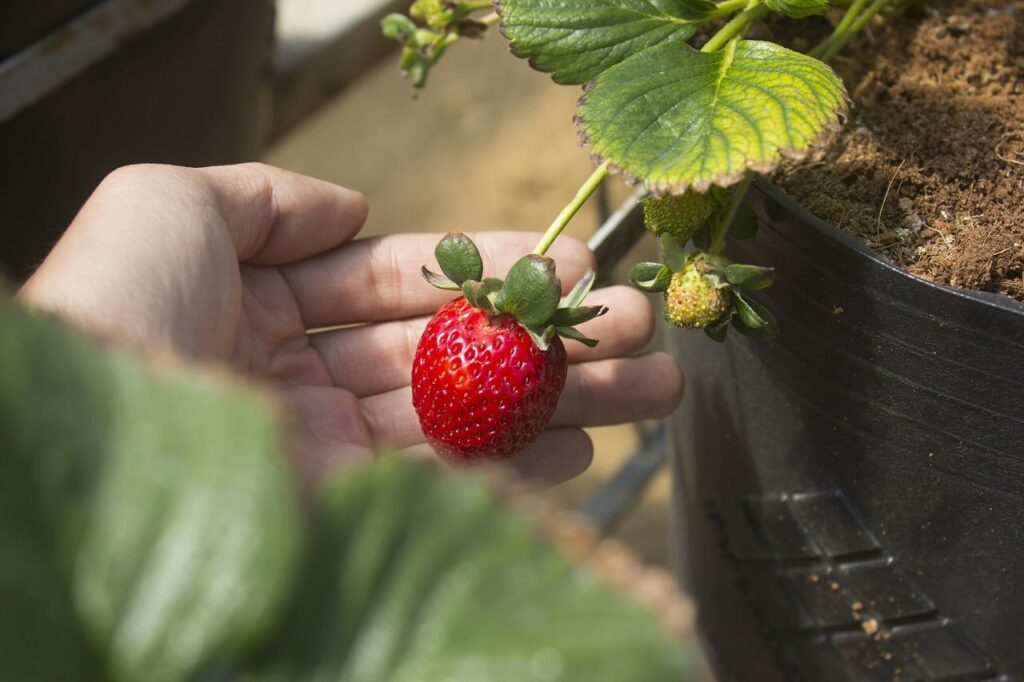
Elsanta remains one of the most reliable and widely grown UK strawberries. Honeoye is excellent for very early crops. Symphony is the RHS Award of Garden Merit variety that consistently produces good yields of flavoursome fruits through late June and July. If space is limited, the compact Mara des Bois is a perpetual variety that produces small but intensely flavoured fruits from June right through to the first frosts.
🛒 Buy strawberry plants from Amazon UK
Container-grown raspberry canes, blackcurrants, redcurrants, and gooseberry bushes can all be planted in April. These are among the most productive soft fruits you can grow in a UK garden and will crop reliably for many years with relatively little maintenance.
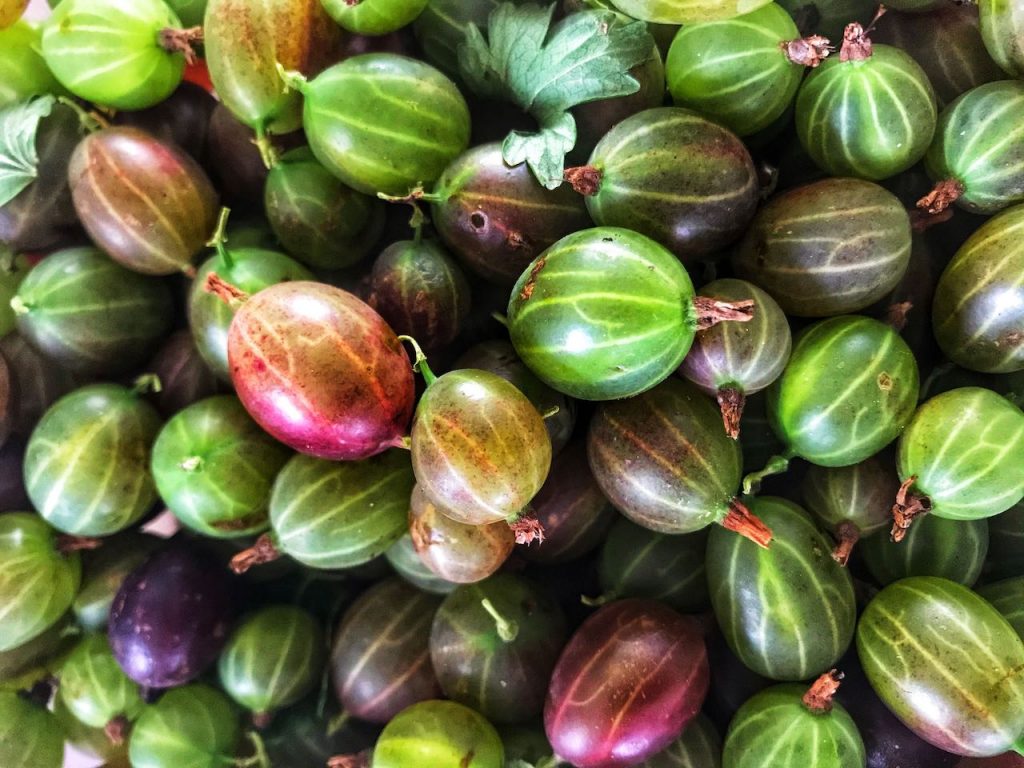
Plant in well-prepared soil with plenty of well-rotted compost worked in, and water in well. Put up your raspberry support system at planting time rather than waiting, as the canes will need it sooner than you expect.
🛒 Buy raspberry canes from Amazon UK
April is a very productive month for herbs, both for sowing from seed and for planting out established plants. Hardy herbs can go outside now without any protection, while tender Mediterranean herbs like basil still need warmth and cover for a few more weeks.
Chervil, dill, coriander, fennel, and chamomile can all be sown direct outside in April. These prefer cool conditions for germination and often struggle if sown in the heat of late May or June. Sow thinly in rows or scatter over prepared ground, cover lightly, and thin as they establish. Parsley can also go outside now, though it is notoriously slow to germinate: soaking the seed in warm water for a few hours before sowing makes a real difference to germination speed.
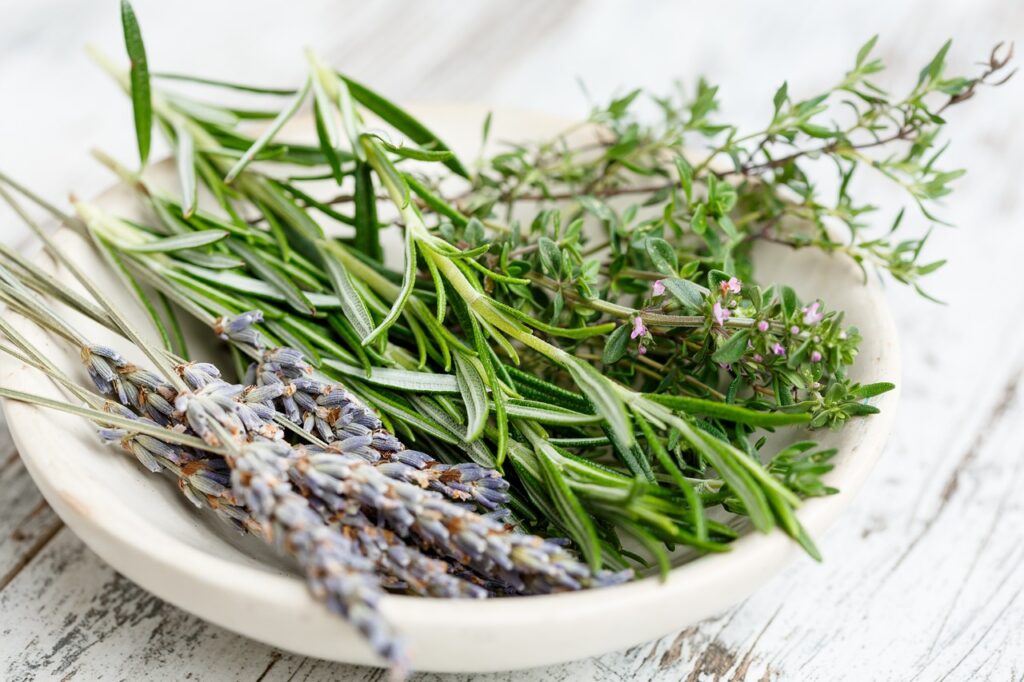
Chives, thyme, rosemary, sage, and mint can all be planted out as established plants in April. These are versatile, reliable herbs that will thrive with minimal attention. A word on mint: always grow it in a container, or it will take over your entire herb bed with its vigorous spreading runners.
🛒 Buy herb seed collections from Amazon UK
Basil is the one herb that still needs warmth and protection in April. It is genuinely tropical in its requirements, hating temperatures below around 12 degrees and collapsing dramatically in cold draughts. Sow into modules in a heated propagator or on a very warm, bright windowsill this month and grow on under cover.
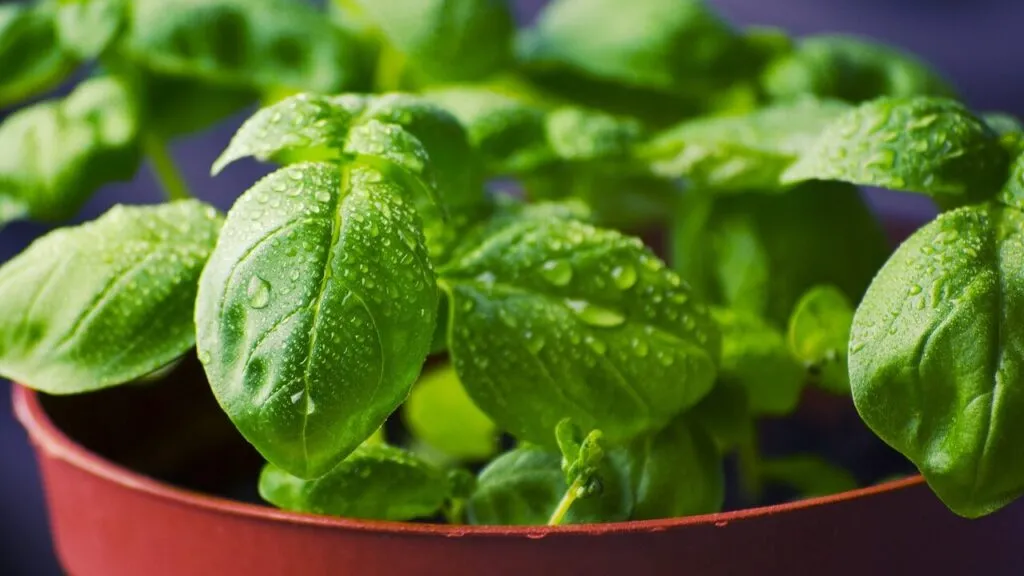
Genovese basil remains the standard for flavour, while Greek basil forms a neat compact mound that is excellent for pots. They will not go outside until late May or early June at the absolute earliest.
Sowing and planting are only part of the April picture. This is also a month of considerable maintenance, preparation, and vigilance, and the gardeners who get the most from April are the ones who stay on top of the tasks that run alongside all the exciting growing work.
April marks the return of slugs and snails in serious numbers, and they will view your fresh seedlings and emerging perennial shoots as the finest meal of the year. Hostas, delphiniums, lettuce, and sweet pea plants are particular targets.
Organic slug pellets based on ferric phosphate are safe to use around children, pets, and wildlife. Beer traps are satisfyingly effective. Copper tape around containers creates a barrier that many slugs and snails will not cross.
Going out at night with a torch, a bucket of soapy water, and hand-picking them is time-consuming but remarkably effective. Use whatever combination works for your garden. I tend to use a combination of ferric phosphate pellets around vulnerable plants and regular torchlight patrols on damp evenings.
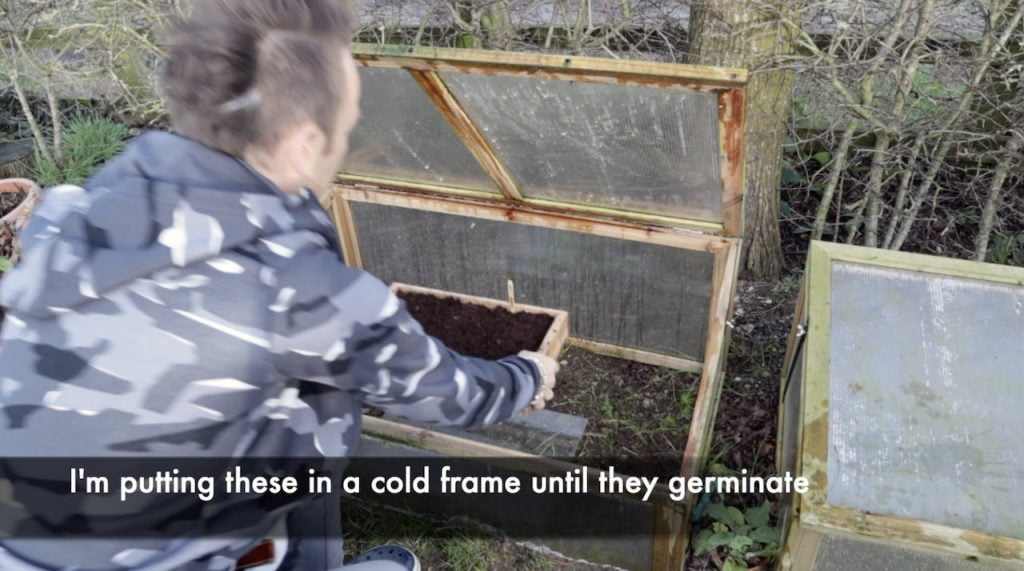
Any plants raised indoors, whether on windowsills or in heated greenhouses, need to be gradually acclimatised to outdoor conditions before they are planted out. This process is called hardening off, and skipping it is one of the most common causes of plant losses in April and May. Start by placing plants outside in a sheltered spot for a few hours on mild days, bringing them back in overnight.
Gradually extend the time they spend outside over a period of one to two weeks until they are staying out all night in mild weather, and only coming in when frost threatens. A cold frame is an excellent tool for this process, as it provides shelter while still exposing plants to outdoor temperatures.
April is the month when annual weeds really start to appear in earnest, and getting on top of them now, before they set seed, is one of the most valuable things you can do for your garden across the whole year. A single annual weed plant can produce hundreds of seeds, and the saying “one year’s seeds means seven years’ weeds” is not far from the truth.
Hoe on dry days, when the cut weeds will wither and die quickly rather than re-rooting in damp soil. Keep a sharp hoe going regularly between rows of vegetable sowings and around established plants. The effort invested in April pays dividends throughout the summer.
As growth accelerates in April, established plants make nutritional demands that the soil may not meet on its own, particularly in gardens that have been cultivated for many years or in containers where nutrients are quickly depleted. Apply a balanced granular fertiliser around fruit trees, shrubs, and rose beds as growth begins.
Blood, fish, and bone are excellent all-purpose organic feeds that break down steadily to release nutrients as the season progresses. Roses in particular benefit from a rose-specific feed now and again after the first flush of flowering in June.
The lawn will have been growing for a few weeks by now, and April is the month to establish your regular mowing routine. Start with the blades high and gradually lower them over successive cuts. This avoids scalping, which stresses the grass and allows moss and weeds to take hold quickly. April is also one of the best times to apply a spring lawn feed, which promotes lush green growth and helps the lawn outcompete moss and weeds.
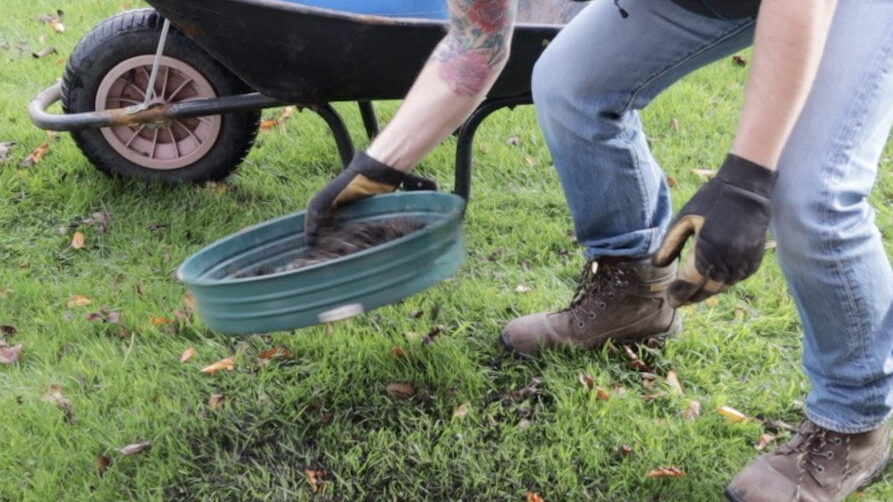
Do not feed the lawn and then cut it the same day; give the feed a few days to be taken up by the grass first. You can also sow new grass seed to repair bare patches in April, as soil temperatures are now warm enough for reliable germination.
🛒 Buy spring lawn feed from Amazon UK
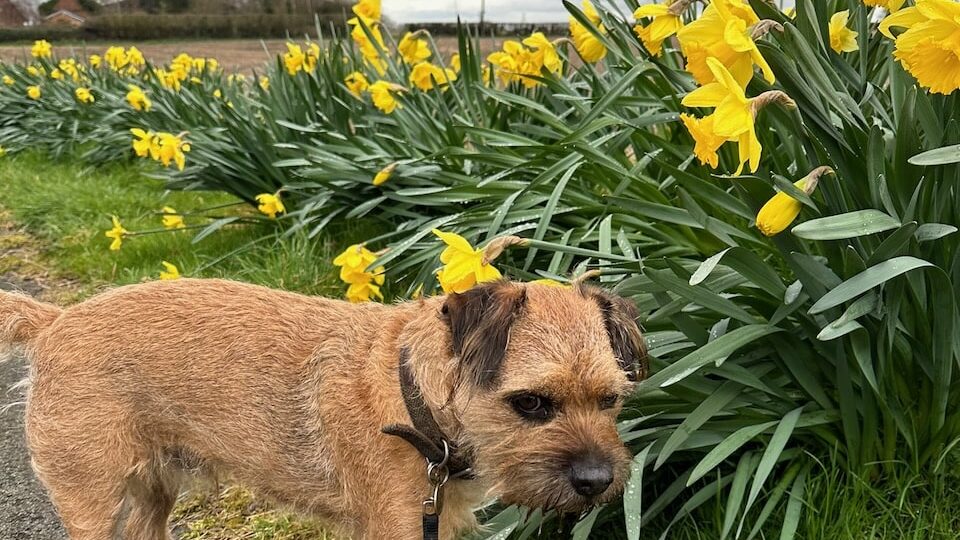
Daffodils and tulips are likely at or past their peak in April, and deadheading the spent flowers is important for two reasons. First, it prevents the plant from wasting energy on setting seed. Second, it keeps the garden looking tidy as the transition from spring to summer planting happens.
Never cut back the foliage while it is still green, however tidily you want things to look. The dying leaves are feeding the bulb for next year’s display, and removing them early will result in progressively weaker flowering. Tie them into loose knots or simply let them die back naturally over the next six to eight weeks.
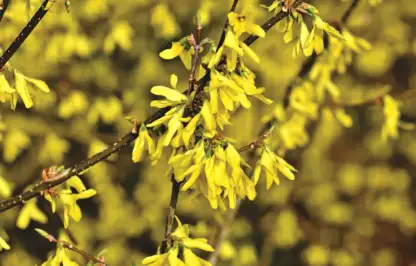
April brings new pruning opportunities as well as some important restrictions. Spring-flowering shrubs like forsythia, flowering currant (Ribes), and chaenomeles should be pruned immediately after flowering this month, before they set their buds for next year.
Wait too long and you will cut off next year’s display. Ornamental grasses that were left standing through winter for wildlife interest should be cut back to the ground now before the new growth is too advanced. Clematis Group 1 varieties, which flower on old wood in spring, should not be pruned beyond a light tidy until after flowering.
The complete pruning calendar on Garden Ninja explains timing for all major UK shrubs if you need guidance on specific plants in your garden.
No. Tomatoes should not go outside in April in the UK because frost is still a genuine risk across most of the country right through to mid-May and beyond. In April, tomato seedlings should be growing on under cover, in a heated greenhouse, cold frame, or on a warm, bright windowsill. They go outside after the last frost, which for most UK regions means late May to early June. Planting out too early in cold, wet soil causes stress, poor growth, and leaves plants vulnerable to disease.
Plant second early potatoes in the first half of April and maincrop varieties in the second half. This staggered approach gives you a longer harvest window and reduces the risk of all your emerging shoots being caught by a late frost at the same time. If you are in Scotland, northern England, or at altitude, delay by two to three weeks and be prepared to earth up quickly if frost is forecast after shoots emerge.
Not at all. April is actually the single most productive month for seed sowing in the UK gardening calendar. You can sow a huge range of both vegetables and flowers in April, both under cover and directly outside. Even crops that ideally start earlier, like courgettes, runner beans, and sweetcorn, can all be started in April and still produce excellent harvests. The only crops where you have genuinely lost significant time by April are those that need the longest possible season, like celeriac and aubergines, though even these can still be started with some success if you move quickly.
You can sow a wide range of flowers in April. Hardy annuals, including cornflowers, California poppies, nigella, larkspur, calendula, nasturtiums, and sunflowers, can be sown direct outside. Half-hardy annuals, including cosmos, zinnias, petunias, antirrhinums, and nicotiana, should be started under cover now, ready to go outside after the last frost in late May or early June. Sweet peas can still be sown in April and will flower from June.
Summer-flowering bulbs, including lilies, gladioli, and eucomis, can be planted in containers this month, and dahlia tubers should be potted up and growing on in a frost-free space ready for planting out next month.
Yes, April is actually an excellent time to plant container-grown shrubs, perennials, and climbers. The soil is warming and moist, days are lengthening, and plants establish well in these conditions. Water in thoroughly at planting and keep a close eye on soil moisture during any dry spells in April. Mulching around newly planted specimens with a 5 to 8cm layer of bark or compost will help retain moisture and suppress weeds during the critical establishment period.
Keep a roll of horticultural fleece to hand throughout April. When frost is forecast, drape fleece directly over vulnerable plants or frames, making sure it goes right to the ground so cold air cannot get underneath. Two layers of fleece provide significantly more protection than one. Cloches work well for rows of seedlings and small plants. For container plants, move them against a sheltered wall or into a porch overnight when temperatures are predicted to drop below 2 degrees. Always remove fleece during the day once the temperature has risen, as plants need air and light to grow well.
🛒 Buy horticultural fleece from Amazon UK
Now you’ve learnt all about plants for silty soils, why not consider expanding your knowledge with one of my online gardening courses? My Garden Design for Beginners Course offers step-by-step guidance from me — Lee Burkhill, award-winning garden designer and presenter on BBC1’s Garden Rescue. In this course, you will go from a garden design novice to a confident designer equipped to tackle any outdoor space.
Enrol now for just £199 and start your journey toward garden design mastery.
For the garden you’ve already got, not the one you’re starting from scratch. Seven checklists and video lessons from BBC Garden Rescue’s Lee Burkhill, built to help you work out what’s worth keeping before you spend a penny.
Garden Design Examples for Small Gardens: 30 Design Templates & Planting Plans: In this online gardening course, I’ll walk you through 30 fantastic garden designs, explaining the logic behind the layout, the plant choices, and take-home tips for applying them in your own garden.
Learn how to transform and design your own garden with Lee Burkhills crash course in garden design. Over 5 hours Lee will teach you how to design your own dream garden. Featuring practical design examples, planting ideas and video guides. Learn how to design your garden in one weekend!
Garden Design for Beginners Online Course: If you want to make the career jump to becoming a garden designer or to learn how to design your own garden, this is the beginner course for you. Join me, Lee Burkhill, an award-winning garden designer, as I train you in the art of beautiful garden design.
The thing about April is that it rewards organised gardeners and catches out impatient ones in equal measure. Frost is still a real possibility right across the UK, and a sharp late-April cold snap can undo a week of good work if you rush tender plants outside too soon.
The secret to April success is knowing exactly which crops can go straight outside now, which ones need to carry on under cover for a few more weeks, and which jobs simply cannot wait any longer if you want to eat well this summer. I will walk you through all of it in this guide.
Whether you are working a small raised bed in Manchester, a sprawling veg plot in Kent, or a few pots on a balcony in Edinburgh, there is something genuinely exciting for everyone in April. The days are properly long now, soil temperatures are rising fast, and the growing season has well and truly arrived.
Make the very most of every single day of it!
Make sure you visit my YouTube channel for more gardening guides, and follow me on Twitter, Facebook or Instagram for daily garden help and tips.
Happy gardening!



Lee Burkhill, known as the Garden Ninja, is an award-winning garden designer and horticulturist with over 30 years of gardening experience and 15 years as a professional garden designer. A qualified RHS (Royal Horticultural Society) professional, Lee specialises in sustainable garden design and practical horticultural advice. He designs and presents on BBC1’s Garden Rescue and in leading gardening publications.
View all posts by Lee Burkhill



JOIN THE NINJAS
Be the first in line for new Guides, Discount codes and Offers