Why Is My Clematis Dying? Wilt, Collapse and Recovery Explained
Lee Burkhill: Award Winning Designer & BBC 1's Garden Rescue Presenters Official Blog
Beginner level
Few sights in a UK garden are more disheartening than a clematis that was covered in buds yesterday, lying completely collapsed this morning. It happens suddenly, it looks catastrophic, and nine times out of ten, the first word that comes to mind is wilt.
Quick Answer
Clematis most commonly dies back from clematis wilt, a fungal disease that causes sudden stem collapse, but the majority of cases blamed on wilt are actually caused by slug damage, physical stem injury, waterlogging, or drought stress. Cut all affected stems back to ground level, dispose of the material without composting it, and in most cases new shoots will emerge from the buried crown. The plant is rarely dead, even when it looks it.
Over the years, I have been asked about clematis wilt more than almost any other climbing plant problem, both through the Garden Ninja forum and through my work designing client gardens, and the same pattern plays out repeatedly. The plant looks dead. The owner is convinced it is wilt. And in a significant number of those cases, it is not wilt at all.
That distinction matters enormously because the treatment for true clematis wilt and the treatment for a drought-stressed, slug-damaged, or physically injured clematis are quite different. Getting the diagnosis right is the difference between saving the plant and losing it through the wrong intervention. This guide covers every cause of clematis collapse and dieback I have encountered, how to tell them apart, and exactly what to do about each one.
Clematis wilt is a fungal disease caused by the pathogen Calophoma clematidina, formerly known as Phoma clematidina. It enters the plant through wounds in the stem, whether from insect feeding, physical damage from plant ties rubbing, or careless handling. Once inside, the fungus blocks the water-conducting tissue within the stem, causing everything above the point of infection to collapse rapidly. This is why wilt looks so dramatic: the plant appears to have simply given up overnight, often when it was loaded with buds and apparently in perfect health the day before.
The fungus survives in the soil on dead plant material and debris, and its spores are spread by water splash from rain or irrigation. This is why the problem peaks in late spring and early summer, typically May and June in most UK gardens, when rainfall and humidity create ideal conditions for spores to spread onto new, soft growth. The roots of an affected plant are usually unaffected, which is the key piece of good news in an otherwise grim-sounding diagnosis. The buried crown and any buds below soil level almost always survive and will produce new shoots once the dead top-growth is removed.
💡 Top Tip
If you suspect clematis wilt, cut the stem and examine the cut end. True wilt stains the inner stem tissue black. If the stem interior is green and healthy, the collapse has a different cause entirely and you need to look elsewhere for the problem.
Is It Really Clematis Wilt? The Diagnosis Problem
Here is the thing that surprises most gardeners when I explain it to them. The RHS has stated clearly that the majority of collapsing clematis in UK gardens are not suffering from clematis wilt at all. They are suffering from drought stress, slug damage, physical stem injury, waterlogging, or vine weevil damage to the roots. Clematis wilt is far less common than its fearsome reputation suggests, and the instinct to reach for it as an explanation the moment a clematis collapses leads many gardeners to misdiagnose and mistreat their plants.
The critical distinction is that true clematis wilt affects large-flowered hybrid varieties almost exclusively.
The smaller-flowered species and their cultivars, including Clematis montana, Clematis viticella, Clematis alpina, Clematis macropetala, and Clematis tangutica, show very strong resistance to the disease. If your struggling plant is one of these species types and it has collapsed, wilt is almost certainly not the cause. Equally, if your large-flowered hybrid has yellowing leaves, gradual dieback, or a slow decline over several weeks rather than a sudden overnight collapse, something other than wilt is almost certainly responsible.
Identifying True Clematis Wilt: The Key Symptoms
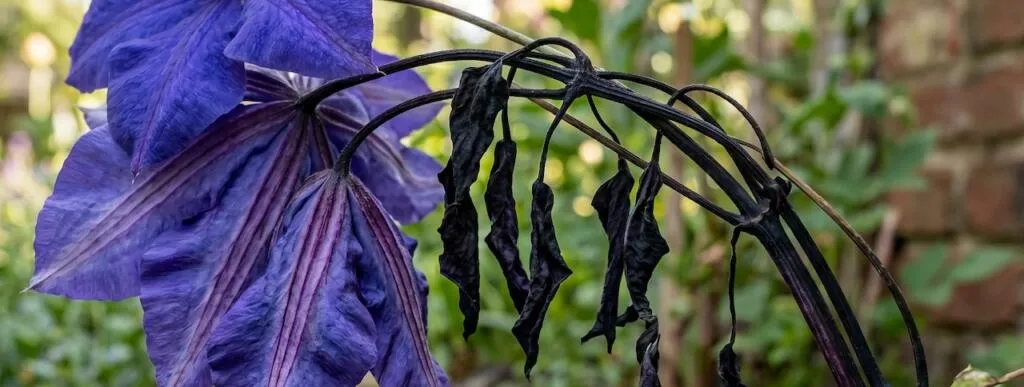
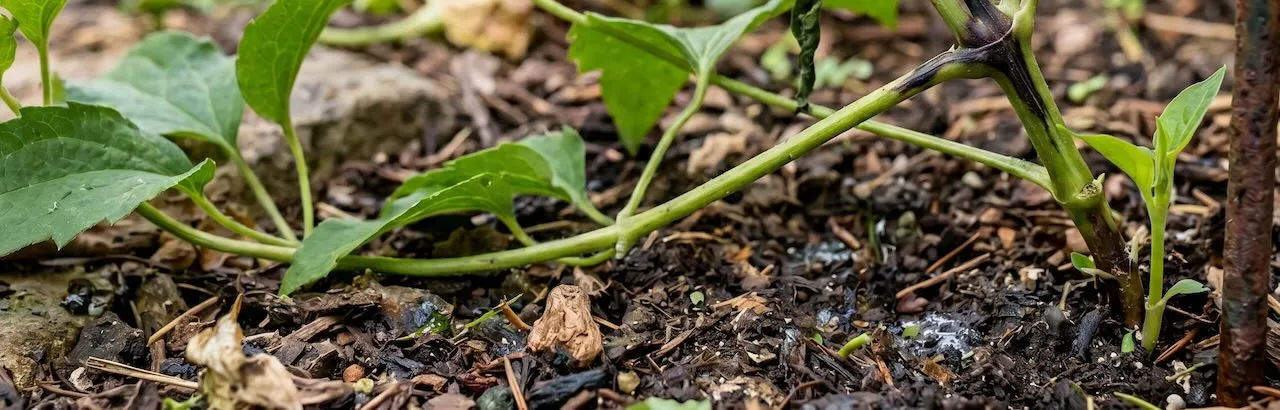
True clematis wilt has a distinctive set of characteristics that set it apart from other causes of collapse. Understanding these is the first step to an accurate diagnosis. The defining feature is the speed and completeness of the collapse. One or more stems go limp within hours and then begin to blacken, with the discolouration moving rapidly down the stem toward the base. The blackening of leaf stalks, which turn completely black rather than simply browning, is a very reliable indicator of true wilt rather than physical damage or drought.
The collapse happens without any obvious external cause: the soil is moist, the support is intact, and there is no visible pest damage. The healthy parts of the plant are unaffected initially, though in severe cases the whole plant can go down. When you cut the affected stem, the inner tissue will turn black. This internal blackening is the most reliable single diagnostic indicator of true Calophoma clematidina infection, and it is worth making that cut before doing anything else.
Other Causes of Clematis Collapse and Dieback
If your clematis has collapsed but the internal stem tissue is green, or if the plant is one of the wilt-resistant species types, work through the following causes before concluding you are dealing with a disease problem. In my experience as a garden designer, these non-wilt causes account for the majority of cases I see.
Slug and Snail Damage
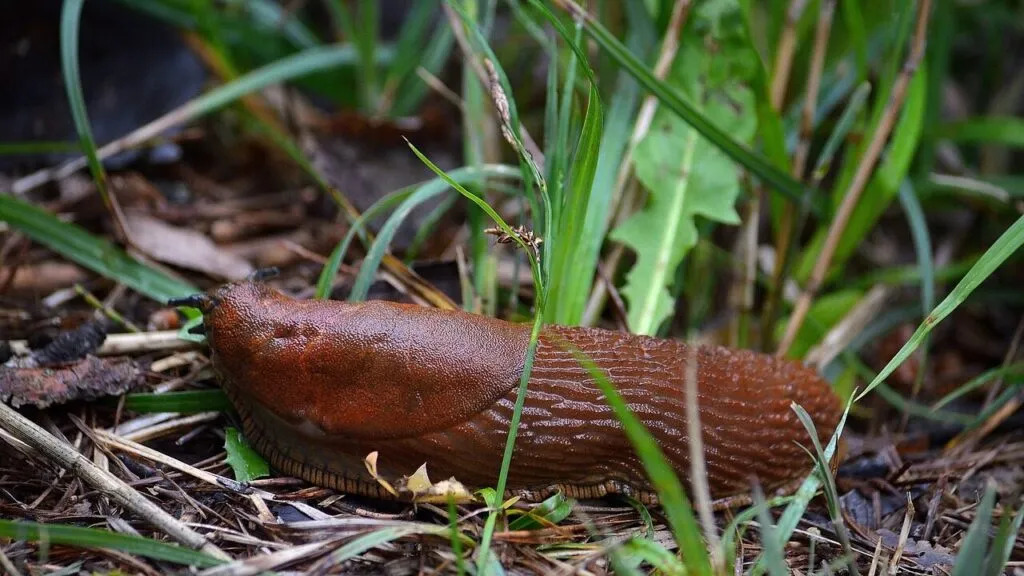
This is the single most common cause of clematis collapse, which is often misdiagnosed as wilt. Slugs and snails feed on clematis stems at or just below ground level, particularly on new spring shoots, and they can completely sever or deeply graze a stem overnight. A severed stem collapses just as dramatically as a stem affected by wilt, and the timing, early spring new growth, is exactly the same.
Inspect the base of the plant carefully for slime trails, grazing marks, or stems cleanly cut through at ground level. Slug damage is always the first thing I check when a forum member posts a photo of a collapsed clematis in April or May.
The fix is straightforward. Remove the damaged stem, apply wildlife-friendly slug deterrent around the base of the plant, and consider using a collar of grit or copper tape around the stems. The plant will almost certainly produce new growth from below, provided the root system is healthy.
Clematis stems are surprisingly brittle for such vigorous climbers. They can be damaged by strong winds flexing the plant at the point where it enters the soil, by plant ties that have rubbed through the stem over time, by careless hoeing or weeding around the base, or simply by rough handling when you are training new growth. A damaged stem cannot conduct water properly and will collapse above the point of injury just as quickly as a stem affected by wilt. Check for movement at the base of the plant, look at the condition of plant ties, and examine the stem for bruising, constriction, or abrasion.
Always use soft, flexible ties for clematis and check them annually as the stems thicken. A tie that was loose in spring can become a tourniquet by late summer. Plastic mesh or clematis netting is far better than individual ties as it gives the stems multiple anchor points without any single point of constriction.
Drought Stress
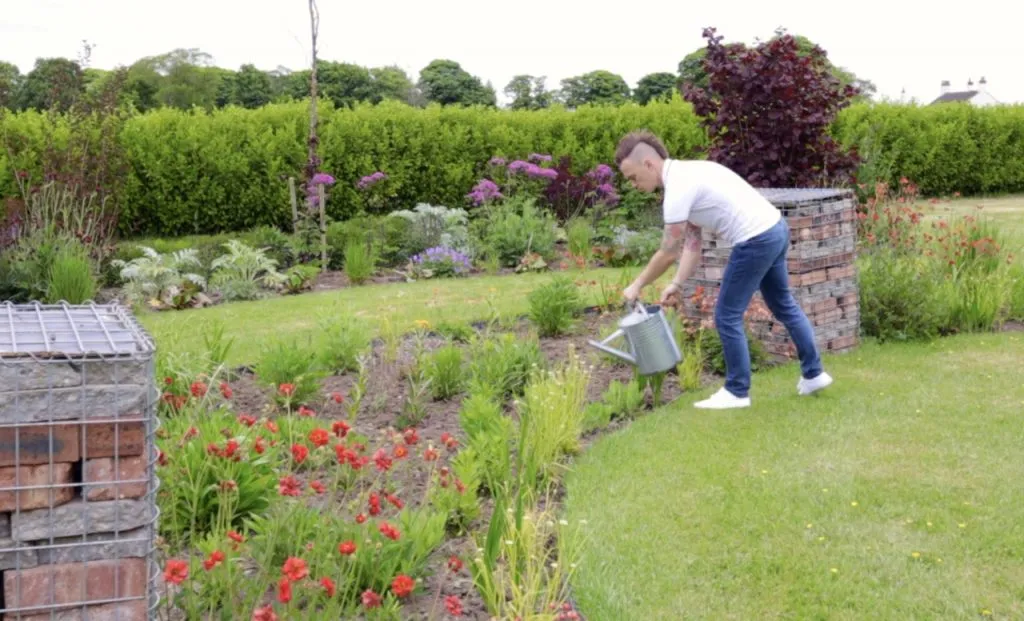
A clematis whose roots have dried out will collapse very quickly in warm weather, particularly in the first two years after planting, before the root system is fully established. The tell-tale difference from wilt is that the stems stay green for longer before blackening, and the soil around the base of the plant will be dry. Water deeply and generously and wait 24 hours before assuming the worst. A drought-stressed clematis usually responds to watering; a plant affected by true wilt does not recover regardless of how much water it receives.
Newly planted clematis are especially vulnerable to drought in their first summer. Clematis need a minimum of around nine litres of water per week during the growing season in dry weather, which is far more than most gardeners assume. A thick mulch over the root zone, kept away from the stem itself, makes an enormous difference to moisture retention.
While clematis need consistent moisture, their roots cannot tolerate standing water. In waterlogged soil, the roots die and the plant wilts as a consequence of its inability to take up water, even though there is technically plenty of it present. This is usually a slower decline than true wilt, developing over weeks rather than days, with stems yellowing before they blacken. Container-grown clematis that have been overpotted into a container that is too large are particularly vulnerable to this problem, as the excess compost holds water around the roots without the plant being able to use it fast enough.
Vine Weevil Root Damage
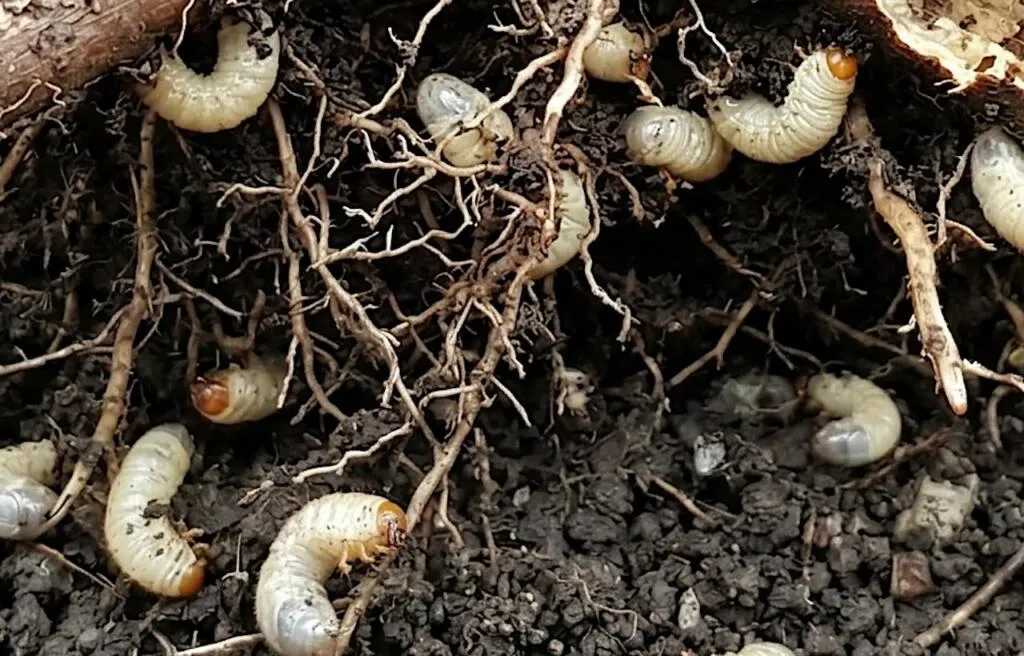
Vine weevil grubs feed on the roots of container-grown clematis in particular, and a severe infestation can destroy enough of the root system to cause wilting and collapse. If your clematis is in a pot and has gradually wilted despite regular watering, tip it out of the container and examine the roots. Vine weevil grubs are creamy white, C-shaped, and unmistakable. Treat with a nematode drench in late summer or autumn when soil temperatures are suitable.
How to Treat Clematis Wilt
Once you have confirmed that the collapse is caused by true wilt rather than one of the alternatives above, the treatment is straightforward, if drastic. Cut all affected stems back to ground level, or even below ground level if the blackening extends down into the crown. Do not leave any infected material on the plant. The fungus can spread through the plant if dead material is left attached, and it also survives in soil on fallen debris, so every piece of affected stem and leaf needs to be removed.
Do not compost any material affected by clematis wilt. Burn it if you can, or bag it for the council green waste collection. Composting it risks the fungus surviving and reinfecting your clematis, or spreading to other plants in the garden, through contaminated compost. Sterilise your secateurs with a disinfectant solution before using them on any other plant after cutting out wilt. There are no fungicides currently available to amateur gardeners in the UK that are proven effective against clematis wilt, so chemical treatment is not a realistic option.
After cutting back, water the plant well if the soil is at all dry and apply a mulch over the root zone. In the vast majority of cases, new shoots will appear from the buried crown within a few weeks. In young plants that have been struck in their first season, recovery may take until the following spring. This is the good news about clematis wilt that often gets lost in the drama of the collapse: the plant is almost never actually dead.
💡 Top Tip
After cutting out wilt, resist the urge to feed the plant with a high-nitrogen fertiliser to encourage recovery. High nitrogen promotes the soft, lush growth that is most vulnerable to wilt infection. A potassium-rich feed such as a tomato fertiliser is a far better choice, as it promotes stronger, more disease-resistant stems.
Prevention: Deep Planting and the Buried Crown
The single most effective thing you can do to protect a large-flowered clematis from wilt, and to ensure it recovers quickly if wilt does strike, is to plant it deeply. The rule I follow in every client garden is to plant large-flowered clematis with the top of the rootball at least 8 to 10cm below soil level.
This buries several buds below ground so that if the top-growth is killed by wilt, slugs, or physical damage, there are buried buds available to regenerate new shoots from. A clematis planted at pot depth with nothing buried has no safety net, and if wilt kills the crown at soil level, it has nothing to grow back from.
A young plant struck by wilt in its first summer that was planted at pot depth is often the worst-case scenario. This is one of the most common patterns I see when forum members share their experiences of losing newly planted clematis. They were planted correctly in every other respect: good soil, sunny position, roots shaded. But they went in at pot depth, and when wilt or slug damage took out the stem at the crown, there was nothing below to regenerate from. Always plant deeper than the pot suggests.
Beyond deep planting, the best preventive measures are to keep the root zone consistently moist without waterlogging, to shade the roots with a mulch or surrounding low planting, to water the soil rather than the foliage to reduce spore splash, and to check and adjust plant ties regularly to avoid stem abrasion.
Avoid feeding with high-nitrogen products that produce soft growth vulnerable to infection. A slightly alkaline, well-drained but moisture-retentive soil is the ideal, which in a typical UK garden usually means adding organic matter to improve structure and a dressing of garden lime if your soil is on the acidic side.
If you have had repeated problems with wilt in a particular spot in the garden, or if you simply want the peace of mind of growing something that is genuinely resistant to the disease, the viticella types are the answer. Clematis viticella and its many cultivars are highly resistant to clematis wilt and represent some of the most reliable and free-flowering garden clematis available. In all the years I have been designing gardens and managing my own planting, I have never seen a viticella type seriously affected by wilt, even in gardens where large-flowered hybrids have been repeatedly struck.
The viticella group flowers from midsummer through to autumn, which fills a different season from the early large-flowered hybrids, and the flowers, while individually smaller, are produced in extraordinary abundance. They are also pruned hard back to a low framework in late winter, which removes any overwintering disease material and gives a completely fresh start each spring. The following varieties are all well worth considering as wilt-resistant alternatives or companions to more susceptible types.
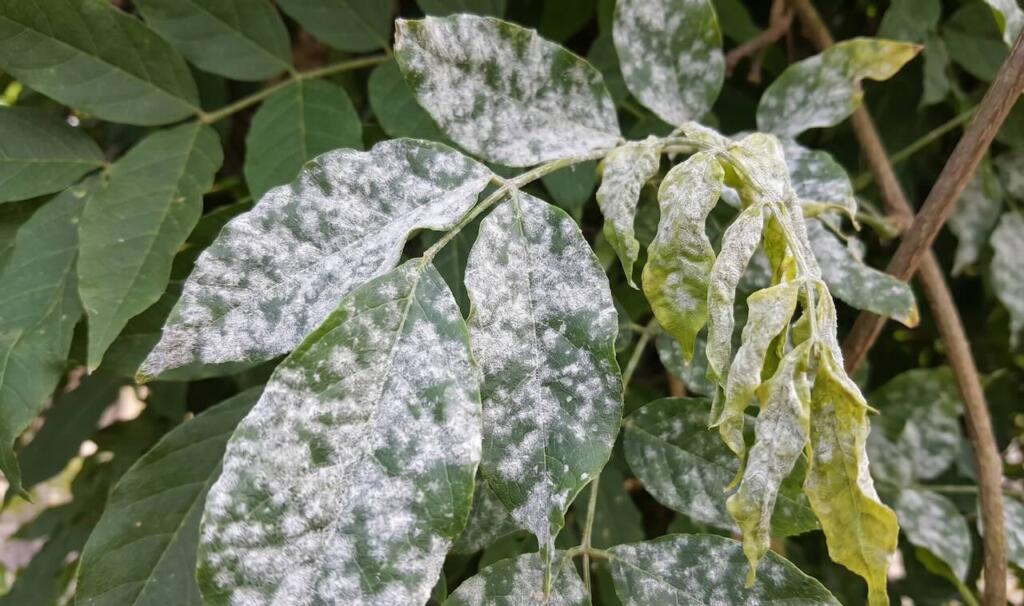
Powdery mildew is the second most common disease problem I see on clematis, and it is entirely distinct from wilt. Where wilt causes sudden collapse, powdery mildew shows as a white or greyish dusty coating on leaves, stems, and sometimes flowers. It tends to appear in late summer, particularly on plants growing in dry conditions against a wall or fence where air circulation is poor. The leaves may yellow and drop prematurely, and the plant can look generally tired and sparse, but it does not collapse or blacken in the way that wilt causes.
Powdery mildew in clematis is almost always a stress response to dry soil at the roots combined with humid air. The treatment is to improve watering at the base of the plant, mulch the root zone, and improve air circulation around the stems where possible. Remove and dispose of affected leaves to reduce the spore load. Unlike wilt, powdery mildew is rarely fatal to an established plant, though repeated severe infections weaken the plant over time and affect flowering the following year.
Other Common Clematis Problems
Clematis Not Flowering
A clematis that is alive and growing but failing to flower is almost always a pruning problem. Pruning at the wrong time removes the stems that would have carried the flowers. Group 1 clematis, which includes Clematis montana and armandii, flower on growth made the previous year, so pruning in autumn or spring removes the flowering wood. Group 2 large-flowered hybrids flower on short growth from the current season’s stems, so hard pruning in late winter removes the early flower buds. If your clematis was pruned at the wrong time for its group, you simply will not see flowers until the plant has had time to produce the right kind of growth again. Always check which pruning group your variety belongs to before cutting.
Yellowing Leaves
Yellowing of lower leaves on an otherwise healthy clematis is normal in hot weather and not a cause for concern. More widespread yellowing, particularly if accompanied by stunted growth, can indicate waterlogging, a very alkaline or very acidic soil, or nutrient deficiency. Clematis prefer a slightly alkaline soil, so if your garden soil is on the acidic side, yellowing may respond to an application of garden lime in late winter.
Green Petals or Distorted Flowers
Clematis occasionally produce flowers with green discolouration to the petals, known as clematis green petal. This is most common on the first flush of flowers in spring and is caused by low temperatures during flower development. It is not a disease and subsequent flushes of flowers are usually unaffected. Pale and white-flowered varieties are most prone to this problem.
Frequently Asked Questions: Clematis Wilt and Problems
Will my clematis recover from wilt?
In the vast majority of cases, yes. Clematis wilt kills the above-ground growth but leaves the root system and buried crown intact. New shoots will emerge from below ground once the dead material has been cut back. Young plants in their first season that were planted at pot depth may struggle to recover if the crown was also affected, but an established plant with a buried crown will almost always regenerate.
How do I tell the difference between clematis wilt and drought?
The key differences are the speed of onset, the colour of the collapsing stems, and the state of the soil. True wilt causes rapid, complete collapse with stems blackening quickly, and the soil will be moist. Drought causes collapse in warm weather but stems stay green longer before blackening, and the soil around the base will be dry. Water a drought-stressed plant deeply and check for recovery after 24 hours. A wilt-affected plant will not respond to watering.
Can I use a fungicide to treat clematis wilt?
There are no fungicides currently available to amateur gardeners in the UK that are proven effective against clematis wilt. The RHS does not recommend spraying. The most effective response is to cut back all affected material promptly, dispose of it without composting, and allow the plant to regenerate from the buried crown. Prevention through deep planting, consistent watering, and avoiding stem damage is far more reliable than any chemical treatment.
Which clematis varieties are resistant to wilt?
The viticella group, including Etoile Violette, Polish Spirit, and Abundance, shows very strong resistance to clematis wilt. The species types Clematis montana, Clematis alpina, Clematis macropetala, and Clematis tangutica are also highly resistant. Large-flowered hybrid varieties are the most susceptible group, particularly those that flower early in the season.
Should I remove a clematis that keeps getting wilt?
Not necessarily. If the plant is repeatedly affected, it is worth addressing the underlying conditions first: check that it is planted deeply enough with buds buried below soil level, that the roots are consistently moist and shaded, that plant ties are not abrading the stems, and that slug damage is not being confused with wilt. If conditions are genuinely good and wilt keeps recurring on a large-flowered hybrid, replacing it with a viticella type in the same spot is the simplest long-term solution.
If you want to learn more about plants, design principles, and creating beautiful spaces, check out my online garden design courses. Whether you want to level up your plant knowledge, learn about design principles, or even start a career in garden design, I’ve got courses ranging from £29 to £199 that cover everything you need.
These courses aren’t just for people with gardens either! The principles of understanding plant needs, creating harmonious colour schemes, and designing beautiful functional spaces apply just as much to indoor plant arrangements as they do to full garden designs. You’ll learn how to read plants, troubleshoot problems, and create spaces that genuinely work for your lifestyle.
29
Garden Design Examples for Small Gardens: 30 Design Templates & Planting Plans
Garden Design Examples for Small Gardens: 30 Design Templates & Planting Plans: In this online gardening course, I’ll walk you through 30 fantastic garden designs, explaining the logic behind the layout, the plant choices, and take-home tips for applying them in your own garden.
Weekend Garden Makeover: A Crash Course in Design for Beginners
Learn how to transform and design your own garden with Lee Burkhills crash course in garden design. Over 5 hours Lee will teach you how to design your own dream garden. Featuring practical design examples, planting ideas and video guides. Learn how to design your garden in one weekend!
Garden Design for Beginners: Create Your Dream Garden in Just 4 Weeks
Garden Design for Beginners Online Course: If you want to make the career jump to becoming a garden designer or to learn how to design your own garden, this is the beginner course for you. Join me, Lee Burkhill, an award-winning garden designer, as I train you in the art of beautiful garden design.
Clematis wilt is dramatic, distressing, and far less common than its reputation suggests. Before assuming the worst, check the stem interior for black staining, check the soil moisture, look for slug damage at the base, and consider whether the collapse was gradual or sudden. The majority of collapsed clematis cases I encounter through the forum and in client gardens are not wilt at all.
If it is genuine wilt, cut back hard to below ground level, dispose of all affected material without composting it, and wait. The plant will almost certainly regrow. Planting deeply from the start, keeping the root zone moist and shaded, and choosing wilt-resistant viticella varieties where the disease has been a persistent problem are the three most effective long-term strategies.
Clematis are extraordinary garden plants and well worth persevering with. Get the basics right and most problems resolve themselves remarkably quickly.
Your subscription could not be saved. Please try again.
Your subscription has been successful.
Lee Burkhill
Lee Burkhill, known as the Garden Ninja, is an award-winning garden designer and horticulturist with over 30 years of gardening experience and 15 years as a professional garden designer. A qualified RHS (Royal Horticultural Society) professional, Lee specialises in sustainable garden design and practical horticultural advice. He designs and presents on BBC1’s Garden Rescue and in leading gardening publications. Lee combines three decades of hands-on gardening knowledge with professional design qualifications to help gardeners create beautiful, functional outdoor spaces.