Why Is My Box Hedge Dying? Box Blight and Caterpillar Guide
Lee Burkhill: Award Winning Designer & BBC 1's Garden Rescue Presenters Official Blog
Intermediate level
If your box hedge has started looking brown, bare, or just completely threadbare, you are not alone. Box blight and box tree moth caterpillar have become two of the most damaging problems in UK gardens over the last decade. The frustrating thing is that both problems can look deceptively similar at first glance, but they need completely different responses. Getting the diagnosis wrong means wasting time and money on the wrong treatment while your plants deteriorate further.
I have seen box hedges go from perfectly clipped and healthy to completely defoliated within a single season, and I have also seen plants that looked near-dead make a full recovery with the right care. Whether you are dealing with a beloved parterre, a row of box balls in pots, or a formal edging hedge that took years to establish, this guide will walk you through exactly what is happening, how to tell the two problems apart, and what your options are going forward.
Quick Answer
Box hedges die or deteriorate mainly from two causes: box blight, a fungal disease causing brown leaves, black stem streaks, and bare patches in damp conditions; or box tree moth caterpillar, a pest that strips foliage and leaves distinctive white webbing. Both can kill established plants if left untreated. Correct diagnosis is essential before any treatment, as the solutions are completely different.
How to Tell Box Blight and Box Tree Caterpillar Apart
This is the single most important step, and it is the one most gardeners skip in a panic when they see brown leaves. I completely understand that impulse. When something you have nurtured for years suddenly starts looking terrible, the instinct is to reach for a spray and do something immediately. But treating caterpillar damage with a fungicide, or treating blight with an insecticide, achieves absolutely nothing and costs you time your plant does not have.
The good news is that once you know what to look for, the two problems are actually quite distinct. Go and stand in front of your box plant right now, get close, and work through this checklist.
Signs of Box Blight
Box blight is a fungal disease caused by two closely related fungi, Calonectria pseudonaviculata and Calonectria henricotiae. It has been present in the UK since 1998 and thrives in warm, humid, wet conditions, which is why it so often appears after a spell of mild, damp weather.
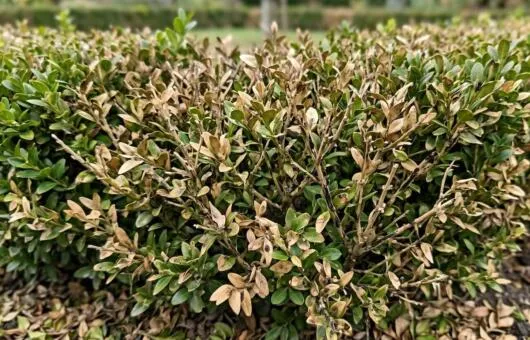
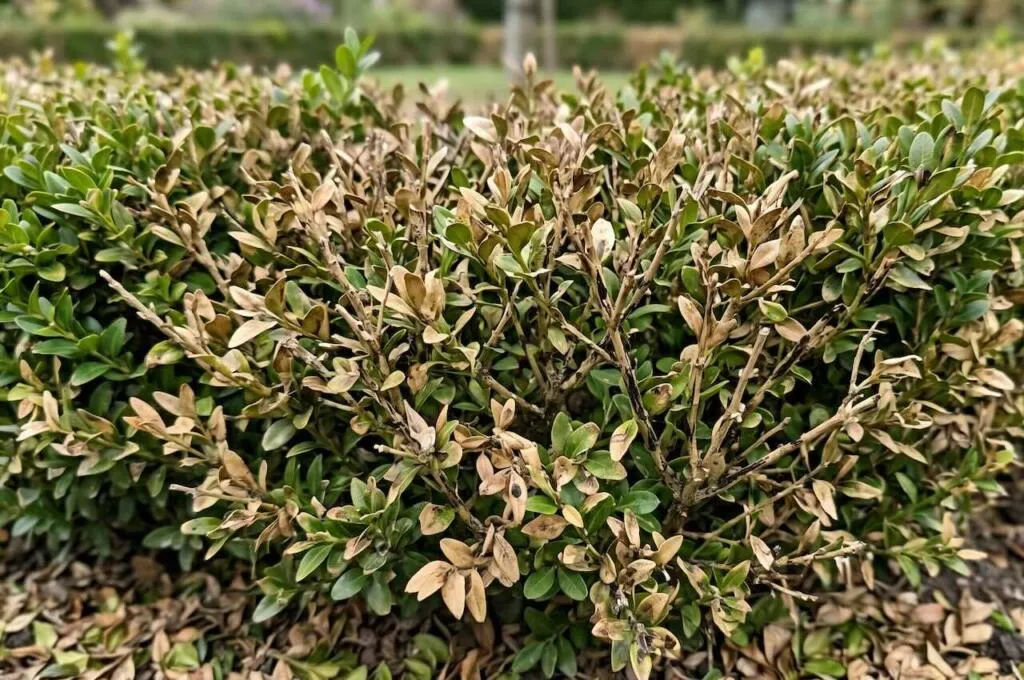
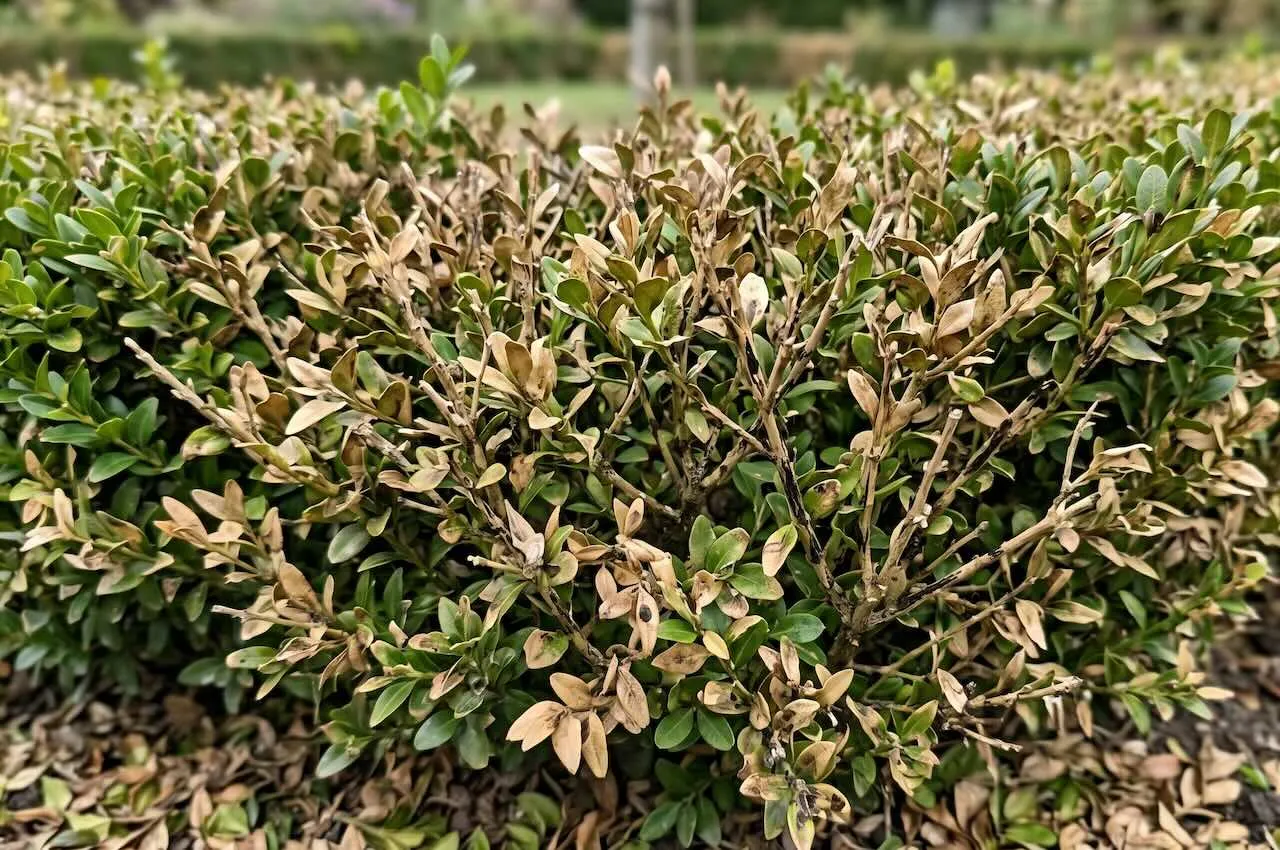
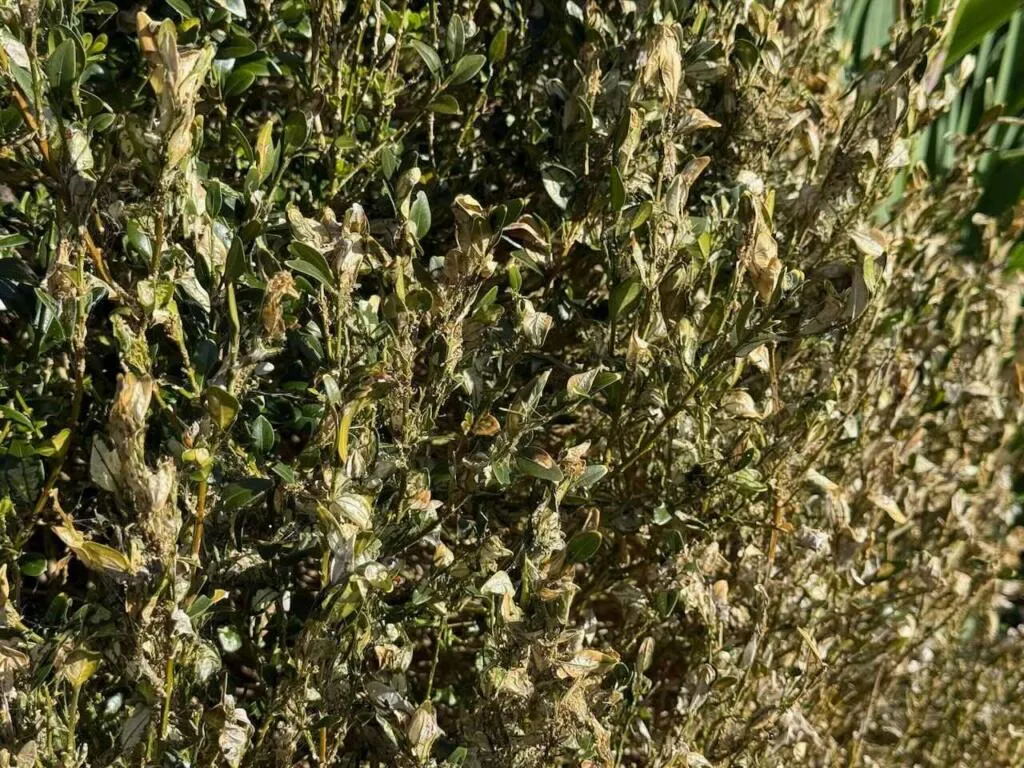
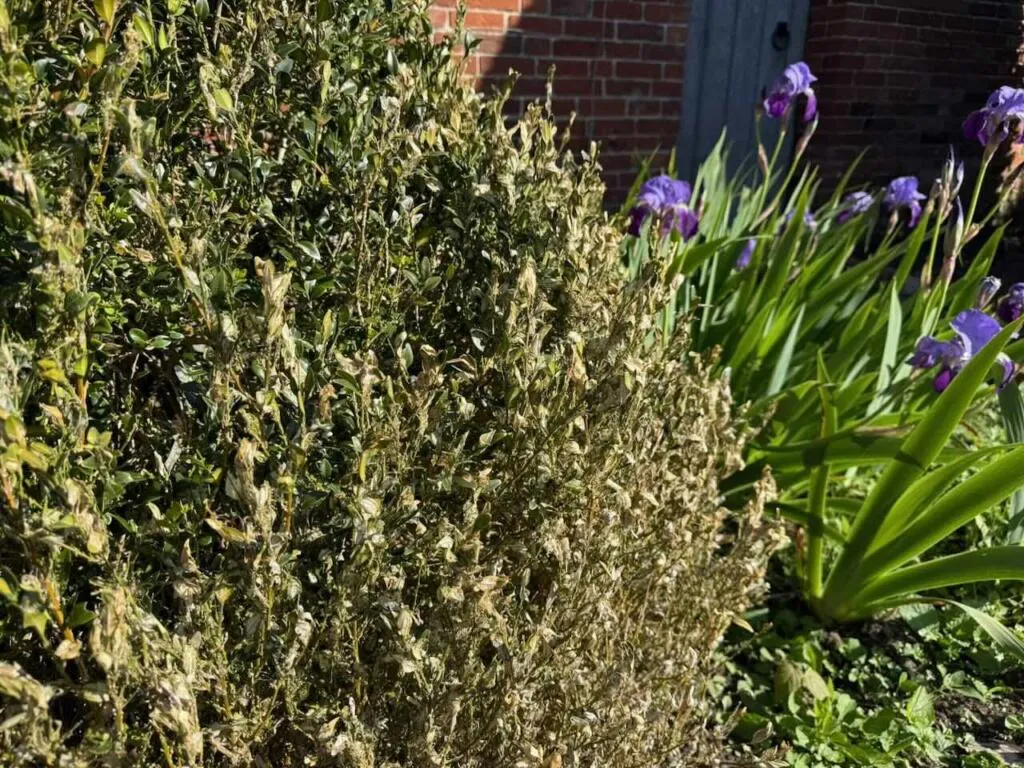
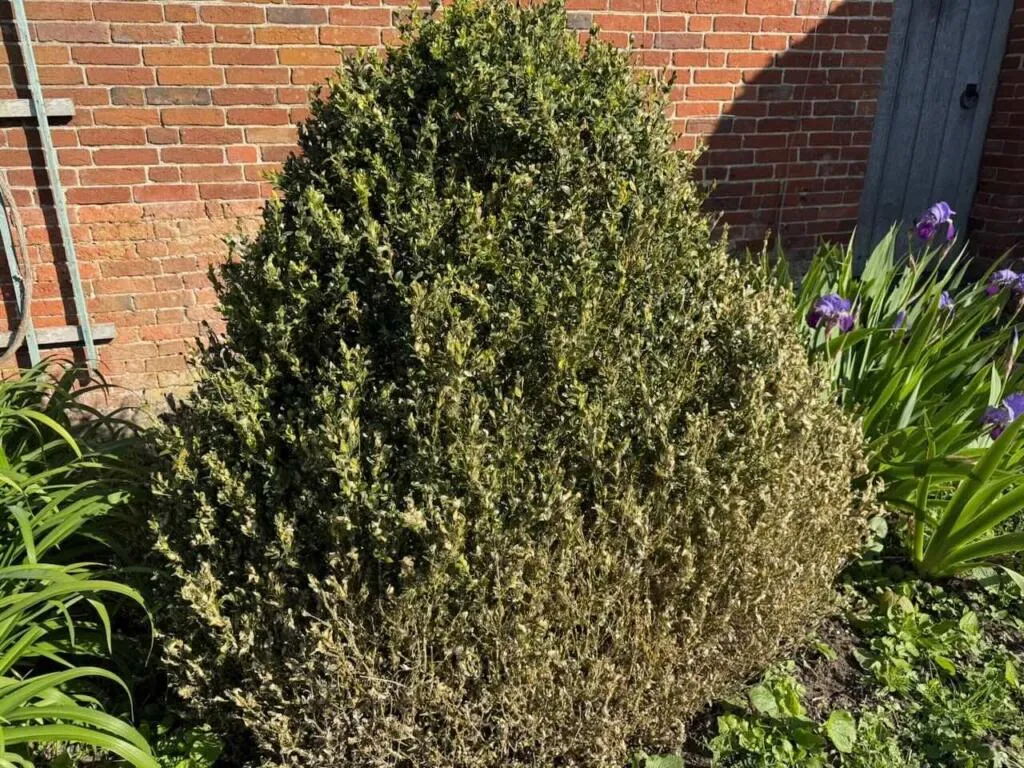
The key signs to look for are brown leaves that fall from the plant (rather than clinging on), black streaks running along young stems, and in wet conditions, white or pinkish spore masses on the undersides of infected leaves. Affected patches often spread across whole sections of a hedge, particularly on densely clipped topiary where air circulation is poor.
The defining diagnostic feature of box blight is that the leaves fall to the ground. Blight does not eat the leaves. The fungal infection causes them to die and drop, leaving bare, brown stems behind. The roots are not affected by blight, which is an important piece of information for deciding whether a plant can recover.
⚠️ Important Warning
Never compost fallen leaves or pruned material from a box blight-infected plant. The fungal spores can survive in leaf litter for up to six years. Always bag affected material and put it in your general waste bin, not the compost heap.
Signs of Box Tree Caterpillar
Box tree moth (Cydalima perspectalis) arrived in Britain in 2007 and was first found in private gardens in 2011. It is native to East Asia and has since spread right across the UK, though it remains most severe in the south-east. The caterpillars can completely defoliate a box plant, and they can do it fast. A box ball can be destroyed within a week if the infestation is bad enough. In 2024, the RHS reported nearly five times as many reports in the first four months of the year compared with the same period in 2023, so this is a problem that is absolutely getting worse, not better.
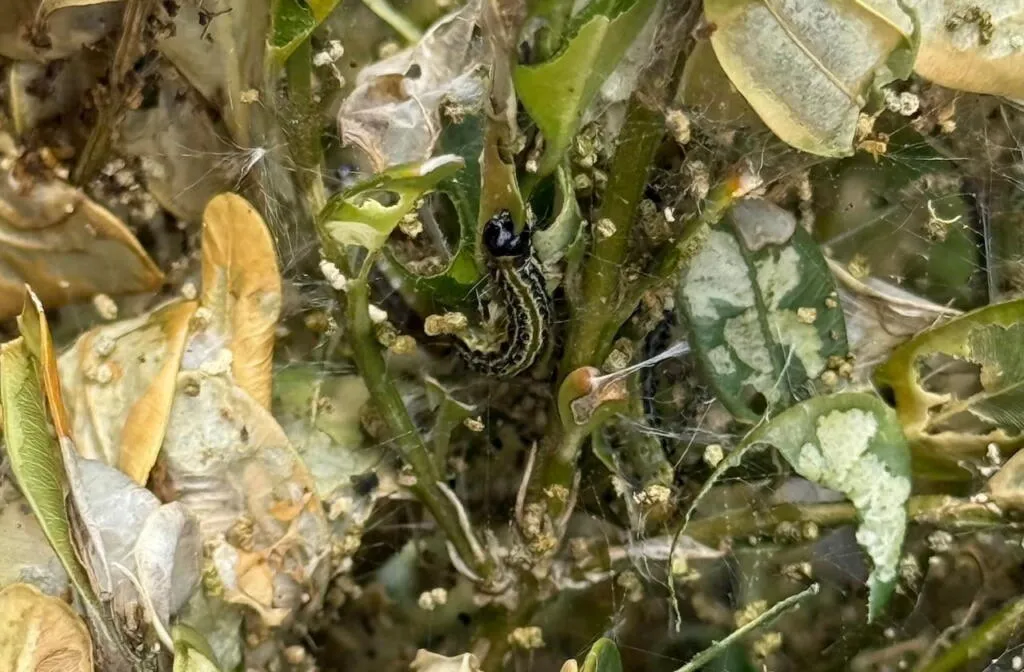
The signs to look for are white, silky webbing draped across sections of the plant, areas of dieback where leaves turn pale and papery, and the caterpillars themselves hiding deep within the foliage. Newly hatched caterpillars are pale greenish-yellow with black heads.
As they grow, they develop distinctive green and black stripes along their bodies and can reach up to 4cm long. You will often find them only once you clip or trim the plant, which is when the webbing and the damage inside become visible.
The key difference from blight here is that the leaves are consumed by the caterpillars, not dropped. You are looking at feeding damage, not a fungal die-off. The presence of webbing, droppings (frass), and the caterpillars or moths themselves is, as the RHS notes, unique to box moth infestation and makes for the surest diagnosis. There is no webbing with box blight.
Box blight is, in many ways, the more predictable of the two problems. Its triggers are fairly well understood, its spread follows wet weather, and its management relies heavily on hygiene and cultural practice rather than chemical intervention. As an RHS-qualified horticulturalist, I would always start with cultural controls before reaching for anything from the garden centre, and with box blight that approach can genuinely work, particularly if you catch the infection early.
Why Box Blight Spreads So Fast
The fungal spores of Calonectria pseudonaviculata spread in several ways, all of which are tied to moisture. Rain splash is the main vehicle, carrying spores from infected leaves onto healthy ones nearby. Clipping tools that have not been sterilised between plants mechanically spread the disease, which is one reason why entire hedges can succumb rapidly after being trimmed.
Dense, tightly clipped topiary creates the humid microclimate the fungus loves, trapping moisture and reducing airflow. Box blight is fundamentally a disease of wet conditions and poor air circulation.
The variety most commonly used in UK gardens, Buxus sempervirens ‘Suffruticosa’, is unfortunately one of the most susceptible. If you are replanting after blight, this dwarf variety is worth avoiding in favour of more resistant cultivars like Buxus microphylla ‘Faulkner’, which shows considerably better disease resistance, though it is not immune.
Treating an Active Box Blight Infection
The first action when you discover blight is to cut out all visibly infected material, cutting back to healthy green growth and removing the clippings from the garden entirely. Do not compost them. Bag them and put them in the bin. This alone, done promptly, can stop a minor outbreak before it takes hold. Once you have cut back the affected areas, clean your tools thoroughly with a disinfectant solution before using them on any other plant. A diluted bleach solution or dedicated tool steriliser works well for this.
💡 Top Tip
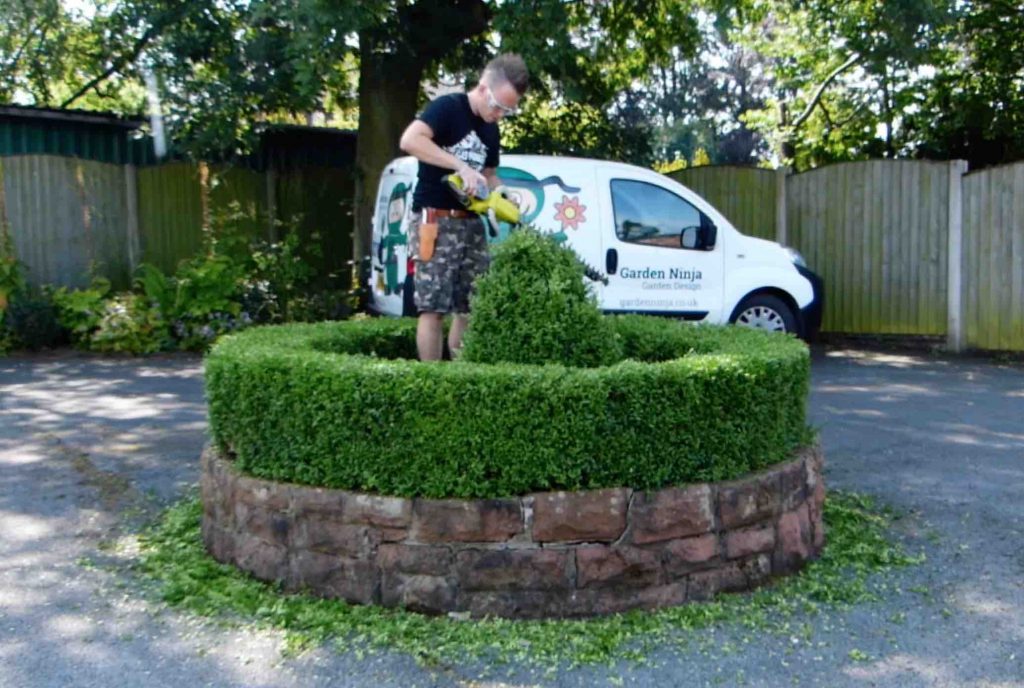
Always clip box in dry weather, ideally during May to August when fungal spores are least active. Clipping during wet, humid conditions is one of the most common ways gardeners inadvertently spread box blight from plant to plant. If you must clip in autumn, do it early in the day so the cuts have time to dry before evening damp sets in.
On the question of fungicides: the RHS does not endorse any proprietary fungicides as reliably effective against box blight for home gardeners, and I would be cautious about spending money on products that may achieve very little. What does work is building stronger plant health through feeding.
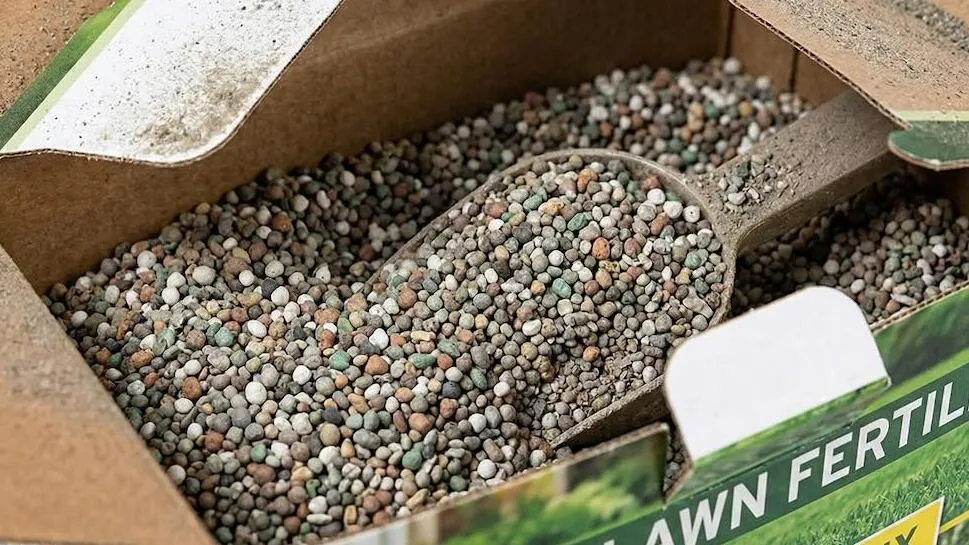
A specialist box fertiliser such as TopBuxus Health Mix, applied as a foliar spray throughout the growing season, strengthens the plant’s natural defences and improves its ability to resist and recover from infection. Apply protective treatments in spring and autumn, the periods of highest infection risk, before clipping.
If the infection has taken hold across a large section of hedge, a more drastic cutback may be your best option. The critical thing to understand is that box blight does not kill the roots. The plant can regenerate from the base and the woody framework, provided the roots are healthy.
Badly blighted hedges, cut hard back, can produce decent new growth within a few seasons when given proper feeding and care. However, it takes patience, there are no guarantees, and, in my opinion, once you have it, removing it completely is incredibly difficult.
Box Tree Caterpillar: Full Diagnosis and Treatment Guide
Box tree caterpillar is, if anything, a more alarming problem than blight, because the speed of destruction can be genuinely shocking. I have had forum members send me photos of a healthy-looking box ball one week and a completely bare, webbed skeleton the next.
The caterpillars are voracious, they hide deep inside the foliage where they are hard to spot, and they complete up to three life cycles per year between March and October. In a warm year, the RHS has noted the possibility of even more generations, which means there is almost no let-up from spring to autumn.
The moth lays its eggs on the undersides of box leaves. These hatch into tiny, pale caterpillars that feed initially on the soft inner leaves before growing into the more distinctive striped individuals described above. Once they have consumed all available foliage, desperate caterpillars will move on to stripping bark, which at that point can kill sections of the plant permanently. This is the point of no return you want to avoid reaching.
Treatment Options for Box Tree Caterpillar
For light, early-stage infestations, hand-picking caterpillars is effective, though it is genuinely fiddly given how well they conceal themselves in the webbing. You need to work through the plant systematically, pulling back the webbing and checking inside. It is not feasible for a large or advanced infestation, but it is perfectly reasonable for a pot-grown box ball or a small topiary specimen where you spot the problem early.
Pheromone traps are one of the most useful tools available and I would recommend deploying them from early spring, even if you have not seen damage yet. These traps use a synthetic version of the female moth’s scent to attract and catch adult male moths, breaking the reproductive cycle. They will not eliminate an established infestation on their own, but as an early warning system and as one part of an integrated approach they are genuinely valuable. The traps are simple to use: insert the pheromone lure, add water, and hang them in or near your box plants.
For larger infestations, a biological approach using a product based on Bacillus thuringiensis (Bt) is currently the most effective option available to UK home gardeners. These are bacterial insecticides that specifically target caterpillars and are safe for birds, bees, and other wildlife. PlantPro BuxRevive is currently available in the UK and has been used successfully. T
he key to any spray treatment is to achieve good penetration into the plant’s interior, not just the surface, because that is where the caterpillars are feeding. Do not spray in rain or in the two days before expected rain, as the bacteria will be washed off before they can work.
In winter, prune back and dispose of shoot tips where young caterpillars overwinter in small cocoons. This disrupts the first generation of the following year and can meaningfully reduce the scale of spring infestations. It is a small job that pays disproportionate dividends come March.
There are also parasitic nematodes specifically formulated for the box tree caterpillar. These are applied as a soil drench and can be effective, particularly when watered into the base of the plant where young larvae may be present. They work best in warm, moist soil conditions, so apply when soil temperatures are above 12°C.
One encouraging note: the RHS has observed several naturally occurring predators of the box tree moth, including parasitoid wasps and a species of fly that prey on caterpillars and pupae. Birds, particularly blue tits and jackdaws, have been recorded feeding on them too. Encouraging biodiversity in your garden and avoiding broad-spectrum pesticides that would wipe out these beneficial insects gives natural predation the best chance of providing at least some background suppression over time.
Can My Box Hedge Recover? Honest Answers
This is the question I get asked most often, and the honest answer is: it depends on how far things have progressed and which problem you are dealing with. Let me give you my genuine assessment based on years of seeing these situations play out in client gardens.
Recovery from Box Blight
Recovery from blight is genuinely possible, particularly for established plants with a healthy root system. Because the fungus attacks the leaves and stems but leaves the roots intact, a plant cut hard back and fed properly can regenerate. The process is slow. You will not have a clipped, presentable hedge within a season. But over two to three years, with consistent feeding, good hygiene practice, and dry-weather clipping, you can get back something close to what you had. I would always recommend trying this before removing a plant that has been growing in your garden for a long time.
Where recovery becomes very difficult is when the blight has been present for a long time, spread has been unchecked, and the plant has been repeatedly re-infected. If you find yourself cutting back to healthy growth each spring only to watch the blight advance again each autumn, the honest conversation is about whether box is the right plant for that spot going forward. Some positions, particularly shaded, damp, sheltered corners, simply favour the fungus too strongly for box to thrive without constant intervention.
Recovery from Caterpillar Damage
Box plants are more resilient after caterpillar damage than most people expect. Even completely defoliated plants, stripped bare by caterpillars, can regenerate and produce new leaves once the caterpillars are gone, typically within around eight weeks. The RHS notes this resilience explicitly: box can come back even from complete defoliation, though it does weaken the plant with each episode.
Things become irreversible when caterpillars move on to stripping bark. If the bark has been removed from stems in a ring pattern (known as girdling), that section of the plant will die because it can no longer transport water and nutrients. Check stems carefully. If there are sections where bark has been eaten away completely around the circumference, those stems are lost, even if the caterpillars are now gone.
For heavily damaged plants that still have a viable root system and some living stem framework, cut back to healthy wood, remove all dead material, apply a liquid feed to support new growth, and treat against any remaining or returning caterpillars. A good quality box fertiliser will help the plant direct its energy into new growth rather than trying to sustain dying material.
If you’re thinking of using Box in your garden in the current climate, it does require more than the occasional trim it once did. That is simply the reality of gardening in the UK now that both blight and caterpillar are established here. Whether that commitment is worthwhile for you depends on how much you love your box plants and how much time you can give to their care.
The practices that make the biggest practical difference are: clipping only in dry weather, sterilising tools between plants, removing and binning (not composting) all clippings from potentially infected plants, applying a foliar feed such as TopBuxus Health Mix throughout the growing season to build plant strength, and deploying pheromone traps from March onwards to monitor and reduce moth populations.
Avoid the very susceptible ‘Suffruticosa’ variety if you are replanting, and consider spacing plants more widely than traditional parterre practice dictates, because better air circulation is your single most effective cultural defence against blight.
There is also a strong case for using pheromone traps not just reactively but proactively as a permanent feature of your garden from spring to autumn if you have box plants. Think of them as the equivalent of slug pellets around hostas: you put them out at the start of the season as routine practice, not just when you see damage. The traps catch the adult male moths before they can mate, reducing the number of eggs laid and therefore the severity of each generation’s caterpillar hatching.
Best Alternatives to Box Hedging
This is the section many gardeners arrive at reluctantly, and I completely understand that. Box hedging has been central to formal garden design for centuries, and there is something special about a perfectly clipped box parterre or a row of matching box balls flanking a front path. It shows an accomplished gardener who spends a lot of time in their garden!
Removing plants you have grown and shaped for years is heartbreaking for us passionate gardeners. But there comes a point where honest advice means telling you that the battle may no longer be worth fighting in every situation, and that there are excellent alternatives which will give you the structure and formality you want without the annual attrition.
The RHS has been running a trial at Wisley investigating alternatives to box, and the results are genuinely encouraging. The following plants are the ones I would recommend to clients and have used in design projects myself.
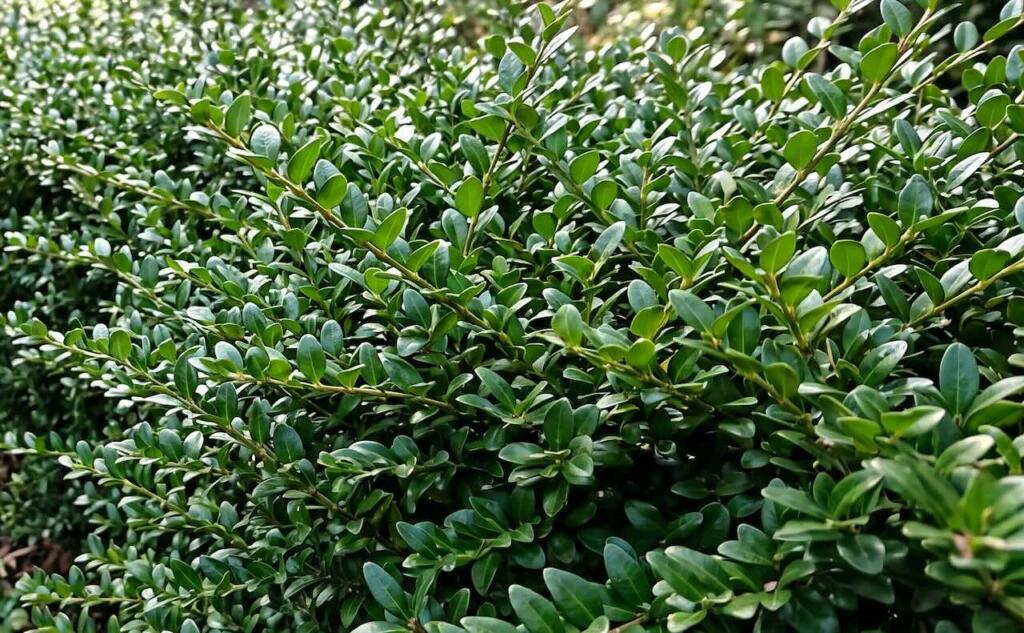
Ilex crenata (Japanese Holly)
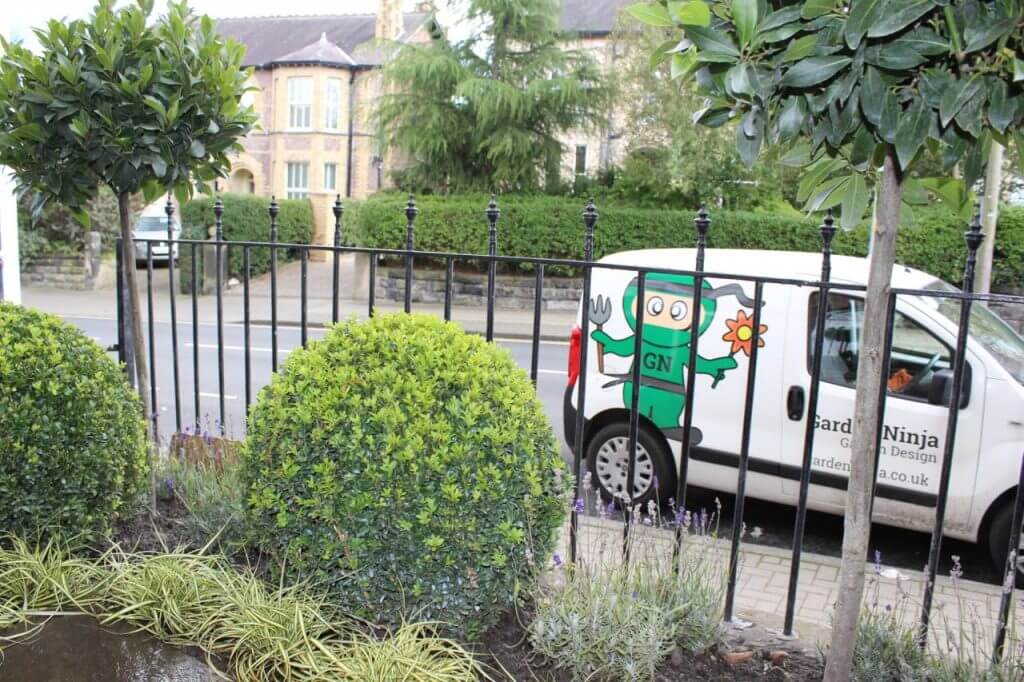
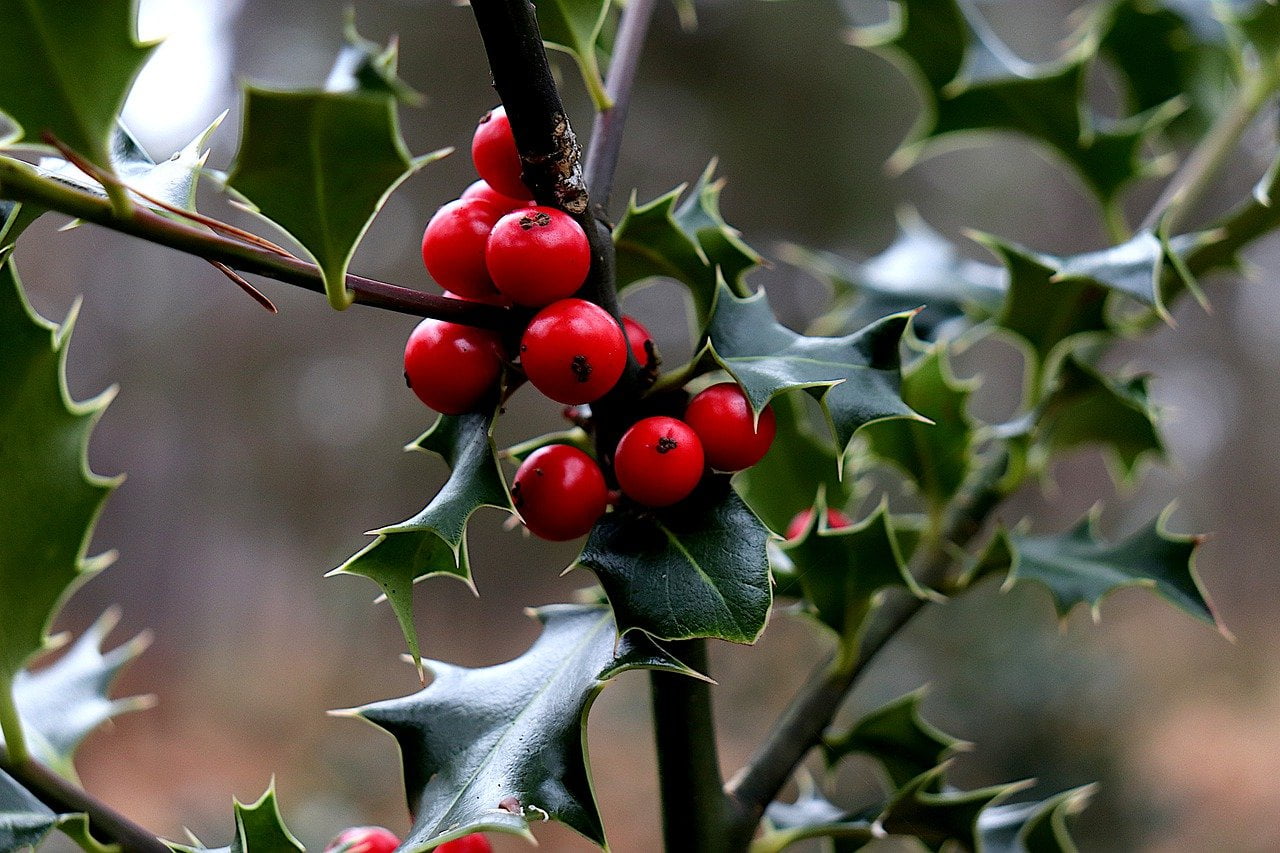
This is my first recommendation to anyone who wants something that looks close to box and behaves in a similar way. Ilex crenata has small, glossy, dark green leaves and can be clipped into tight formal shapes, hedges, balls, and low edging. It grows slowly, which means less maintenance than some alternatives. It tolerates shade and urban pollution well.
The only notable weakness is that the roots do not like to be frozen when container-grown, so if you are using it in pots, protect the root ball in severe winters. In the ground, it is thoroughly reliable in most UK conditions.
🌿 Ilex crenata At A Glance
Botanical Name
Ilex crenata
Plant Type
Evergreen shrub
UK Hardiness
H5 (hardy to -15°C)
Height / Spread
Up to 1.5m / 1.5m (clipped much smaller)
Best Conditions
Sun or partial shade; moist, well-drained soil; not waterlogged
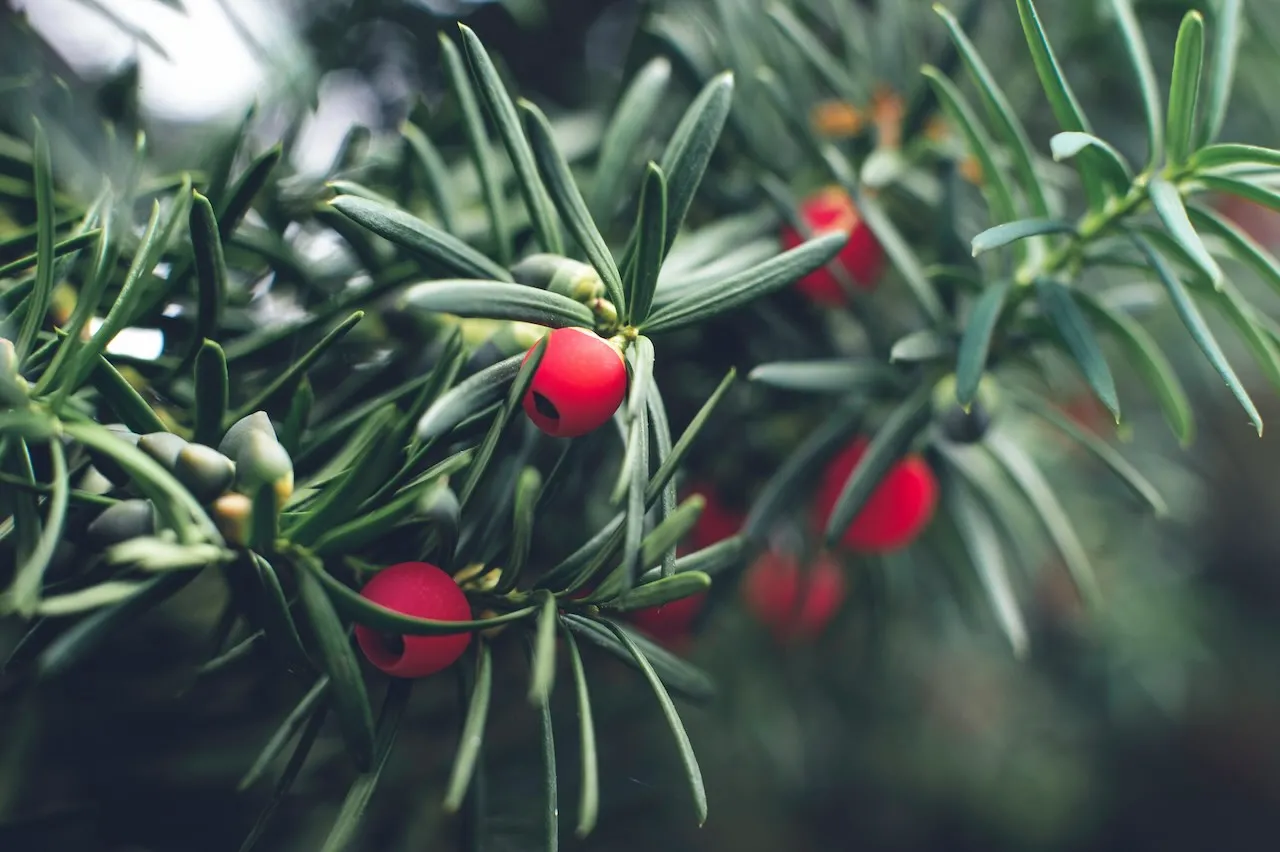
Yew is the plant of choice for many head gardeners and professional designers who have moved away from box, and it is easy to see why. It is a British native, responds superbly to hard clipping, works brilliantly for hedging, topiary balls, cones, and cloud pruning, and once established is genuinely trouble-free. It grows in sun or shade and tolerates most soils. The one thing yew will not tolerate is waterlogged soil, where it can develop Phytophthora root rot, so make sure drainage is adequate before planting.
Do note that all parts of yew are highly toxic to humans and animals, so this matters if you have young children or pets with access to the garden. Berries in particular attract attention.
Lonicera nitida has smaller leaves than box and forms a dense, easily clipped hedge. It grows faster than both box and Ilex crenata, which means more frequent trimming but also faster establishment. The cultivar ‘Baggesen’s Gold’ offers attractive golden foliage for a slightly different look. It’s my favourite alternative to Buxus, and I use it in many of my garden designs.
It clips into a range of shapes including spirals and low hedging, and it is unfazed by most soil types and conditions. The downside is that its rapid growth means it can start to look untidy quickly between clips, so it suits gardeners who enjoy regular maintenance more than those who want something that stays presentable for months between visits.
🌿 Lonicera nitida At A Glance
Botanical Name
Lonicera nitida
Plant Type
Evergreen shrub
UK Hardiness
H6 (hardy to -20°C)
Height / Spread
Up to 1.5m / 1.5m
Best Conditions
Sun or shade; most soils; very tolerant
Clip When
Multiple times per year; grows fast
Box Lookalike?
Good. Small leaves, dense growth; slightly different texture
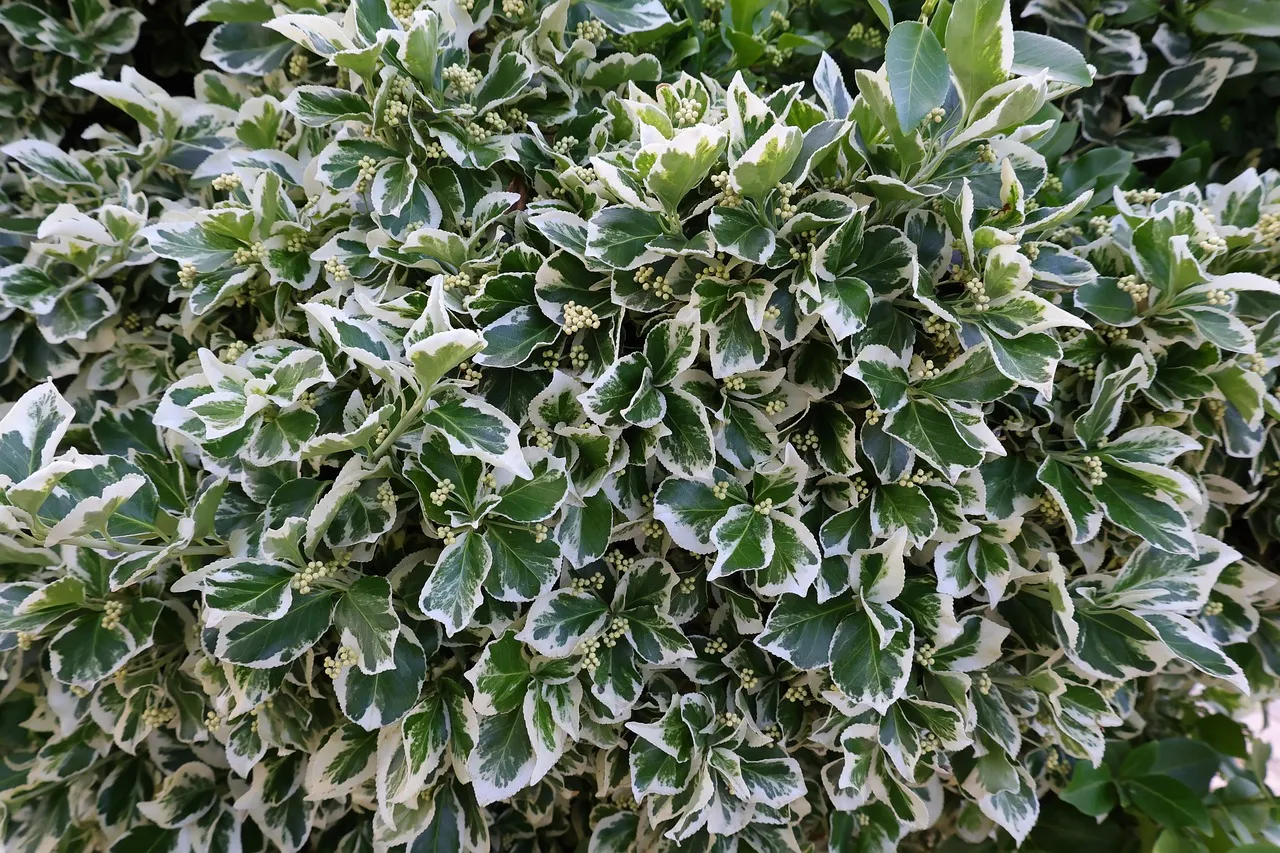
Euonymus is a useful option, particularly where you want some variation in foliage colour. The variegated forms such as ‘Emerald Gaiety’ (green with white margins) and ‘Emerald Gold’ (green with yellow margins) offer evergreen structure with a different visual character to box.
They clip reasonably well and grow in most conditions. Bear in mind that euonymus tends to spread more than box so does need more regular attention to maintain a tight formal shape. For a more relaxed, cottage-style planting rather than strict formal geometry, it works particularly well.
🌿 Euonymus japonicus At A Glance
Botanical Name
Euonymus japonicus / Euonymus fortunei
Plant Type
Evergreen shrub
UK Hardiness
H5 (hardy to -15°C)
Height / Spread
Up to 2m / 1.5m (japonicus); 60cm / 1.5m (fortunei)
Best Conditions
Sun or partial shade; most well-drained soils
Clip When
Spring and again in summer if needed
Foliage
Green or variegated: ‘Emerald Gaiety’, ‘Emerald Gold’
Growth Rate
Moderate. Spreads more than box, needs regular trimming
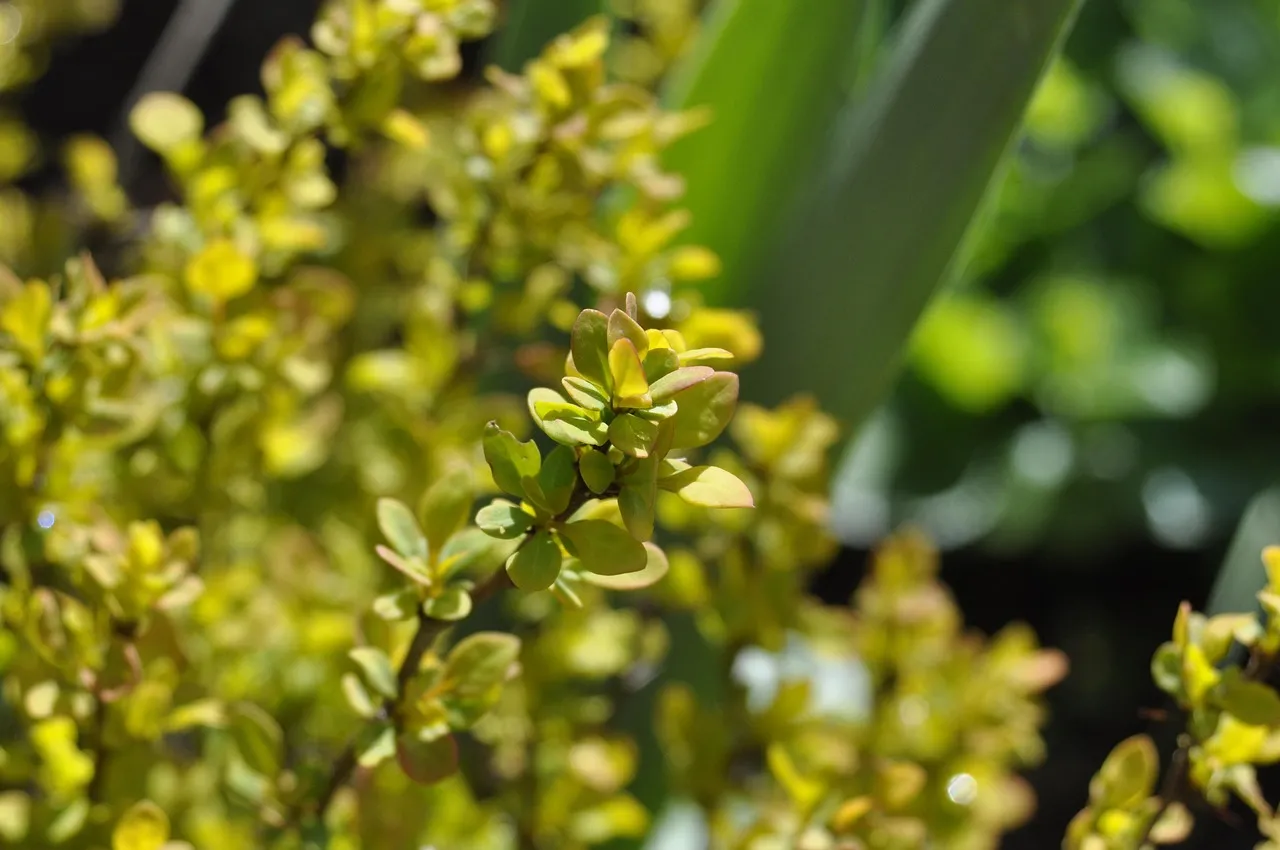
If security is one of your motivations for planting a hedge, evergreen berberis deserves serious consideration. Berberis x stenophylla forms a dense, thorny evergreen hedge that is extremely effective as a barrier, and it produces attractive yellow flowers in spring. It clips well and can be kept relatively compact with annual trimming after flowering. It is not a substitute for box topiary, but as a formal boundary hedge or border edging it is a genuinely tough and effective plant with added wildlife value through its berries.
🌿 Berberis x stenophylla At A Glance
Botanical Name
Berberis x stenophylla
Plant Type
Evergreen shrub
UK Hardiness
H5 (hardy to -15°C)
Height / Spread
Up to 3m / 3m (clip to size)
Best Conditions
Full sun or partial shade; most well-drained soils
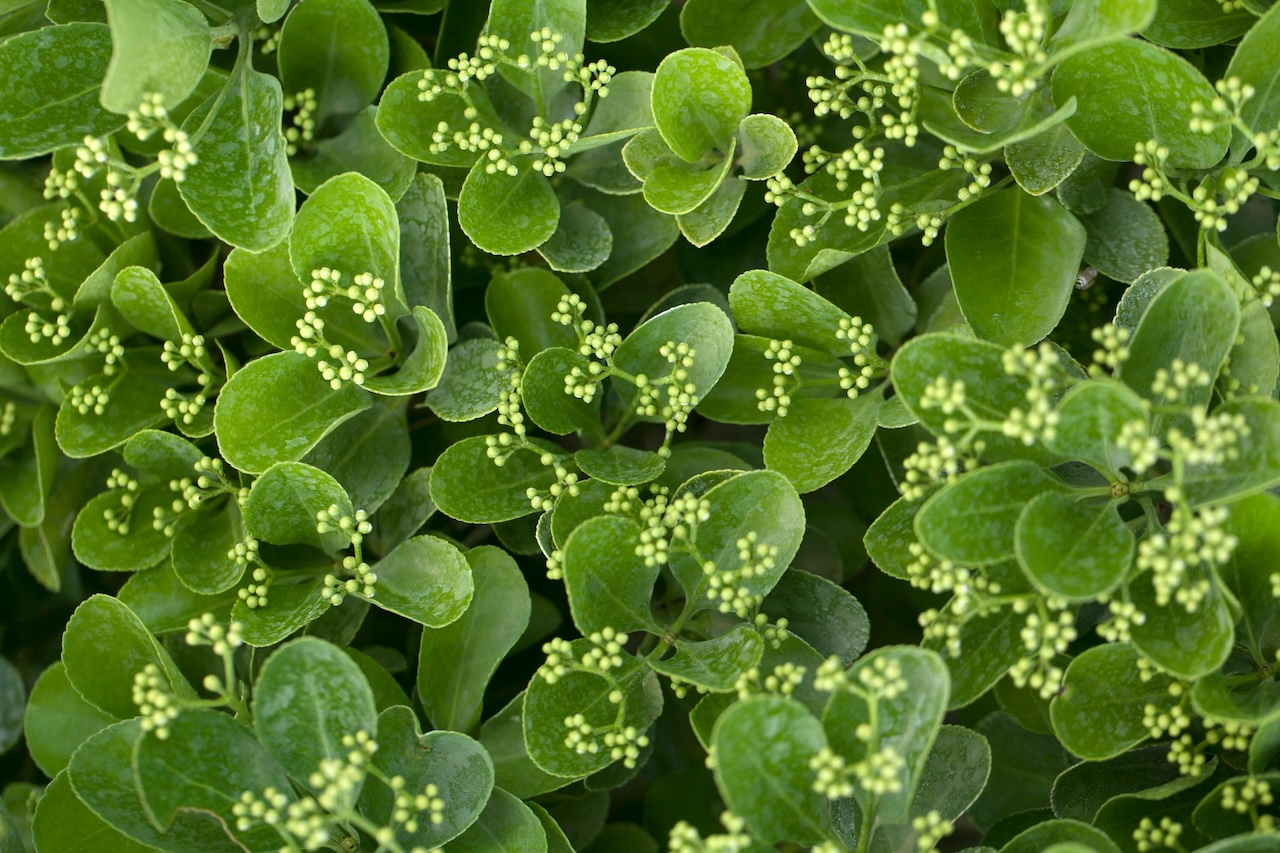
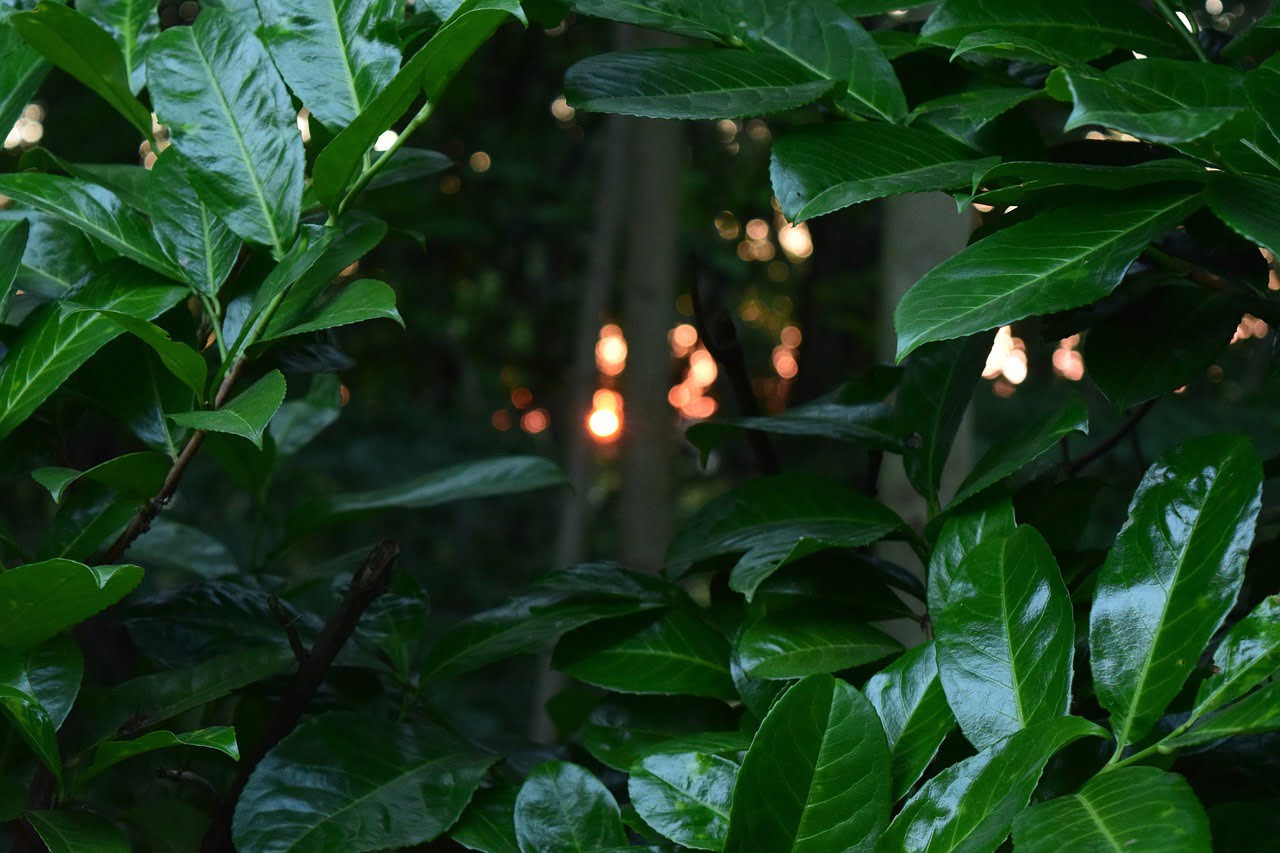
For larger hedges where you need something with presence, Portuguese laurel is an excellent choice. It has glossy dark green leaves, attractive red stems on young growth, and clips well into formal shapes. It is very hardy despite its name, grows in sun or partial shade, and is unfazed by most UK conditions. It will not replicate the fine, tight geometry of a box parterre, but for a low-to-medium formal hedge it is a first-rate alternative and much more disease-resistant than box or common laurel.
🌿 Prunus lusitanica At A Glance
Botanical Name
Prunus lusitanica
Plant Type
Evergreen shrub / small tree
UK Hardiness
H5 (hardy to -15°C)
Height / Spread
Up to 8m / 8m (easily clipped to 1m)
Best Conditions
Sun or partial shade; most soils; very tolerant
Clip When
Late spring or late summer
Distinguishing Feature
Glossy dark green leaves; red stems on young growth
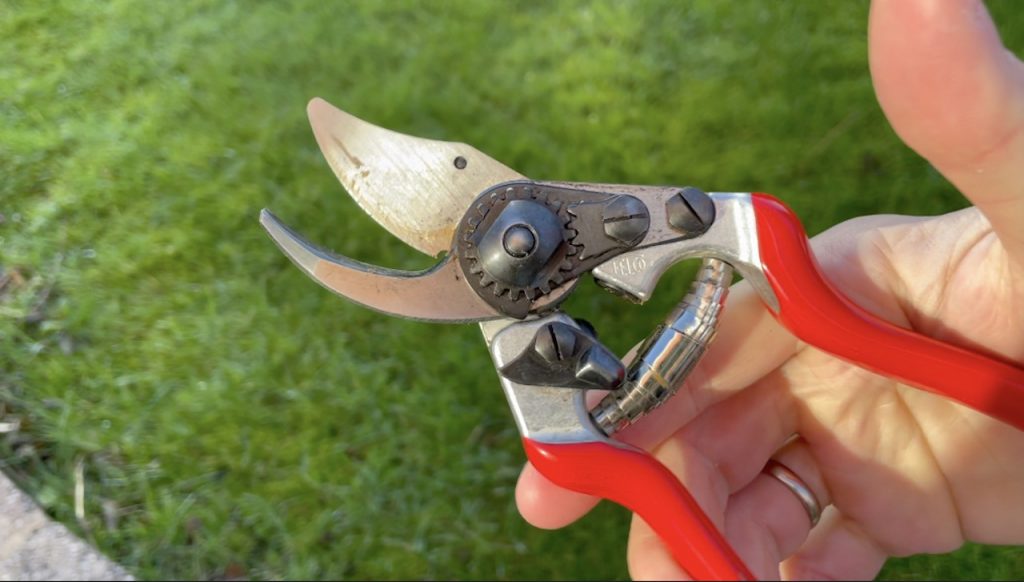
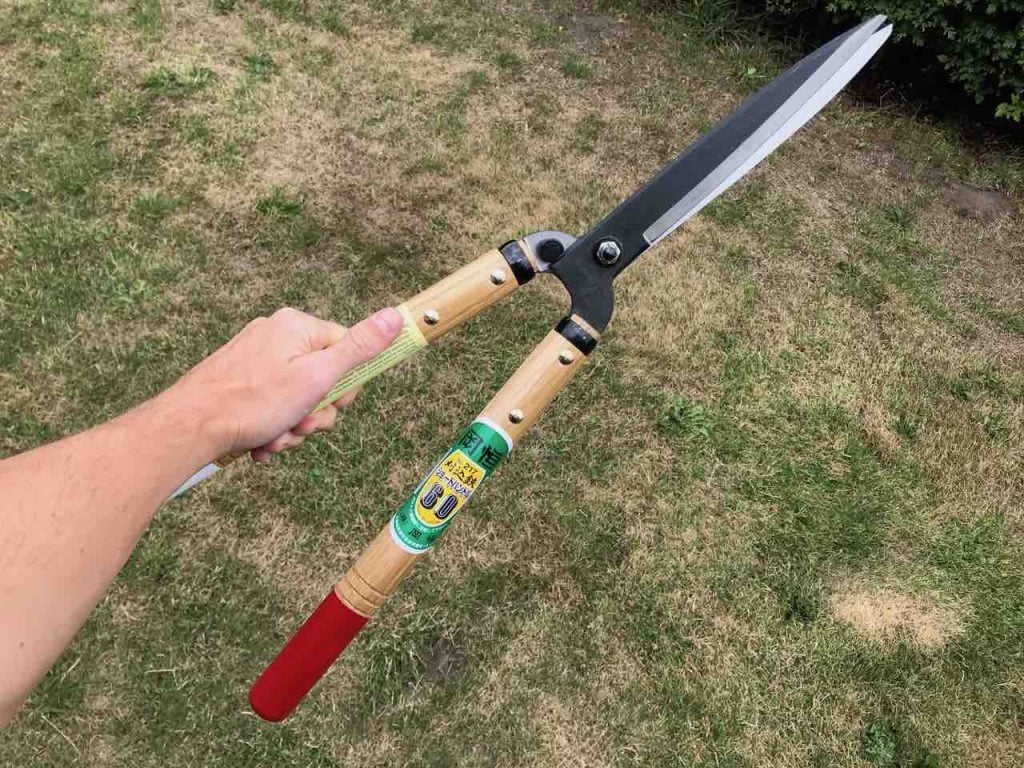
Clipping and caring for box, or its alternatives, is much easier with the right tools. I use Felco secateurs for detailed topiary work and smaller plants, where precision matters. For trimming larger sections of hedge, a quality pair of hedge shears with sharp, well-maintained blades is worth every penny.
Blunt blades tear rather than cut cleanly, which exposes plant tissue to infection, and that matters significantly when you are trying to prevent blight.
Tool sterilisation is genuinely one of the most important and most commonly skipped steps in managing both blight and caterpillar. Keep a small container of disinfectant solution at hand when clipping and dip your blades between plants. It sounds fussy, but it takes seconds and can prevent you from spreading infection right down a row of box plants in a single clipping session.
Frequently Asked Questions About Box Hedge Problems
Can box blight spread to other plants?
Box blight primarily affects plants in the Buxaceae family, so it is largely specific to box and close relatives. However, the importance of good hygiene practice around infected plants comes from the fact that spores travel in water splash and on tools, so while blight will not infect your roses or shrubs, contaminated tools used on other plants can carry spores back to any remaining healthy box elsewhere in the garden.
Will box tree caterpillar attack other plants?
Box tree moth caterpillar feeds almost exclusively on box. If you find caterpillars on other plants in your garden, they are almost certainly a different species. This specificity is actually a useful diagnostic tool: if your hedge is being defoliated but it is not a Buxus plant, you are not dealing with box tree moth.
My box hedge is going yellow, not brown. What is wrong?
Yellowing rather than browning is more commonly associated with nutrient deficiency (particularly nitrogen), poor drainage leading to waterlogged roots, or insufficient sunlight in a shaded position. Box planted in very alkaline soil can show yellowing due to iron deficiency. Before assuming blight or caterpillar, check the drainage around the plant, consider the aspect, and give it a balanced feed to see whether colour improves. If the yellowing is accompanied by the characteristic black stem streaks of blight, then proceed with a blight diagnosis.
Can I move box plants that have had blight?
Moving an infected plant risks spreading the disease to new areas of the garden through soil disturbance and disturbing spore-laden leaf litter. If you need to move a plant that has had blight, do so with care, clear away as much of the surrounding leaf litter as possible first, and treat the new planting site with a good drench before replanting. I would generally advise against it unless absolutely necessary.
How often should I spray against box tree caterpillar?
For biological treatments based on Bacillus thuringiensis, follow the product instructions but as a general guide, applications every three to four weeks from March to October will maintain pressure on successive caterpillar generations. The key is to spray at the right time: caterpillars are most vulnerable when young and newly hatched. Monitoring with pheromone traps will tell you when adult moths are active, so you know when egg-laying is occurring and can time your spray accordingly.
Is it worth buying new box plants or should I switch to an alternative?
This genuinely depends on your situation. If you have a garden where box has struggled repeatedly despite good care, switching to Ilex crenata or yew is likely to bring you less frustration and a better long-term result. If you have one isolated outbreak of blight in a garden where box has otherwise been healthy, treating it and managing it carefully is absolutely a reasonable choice.
The key factor is the position: if your garden has the warm, humid, sheltered conditions that consistently favour the blight fungus, replacing box with a more resistant alternative is the pragmatic decision. From designing hundreds of client gardens, I have seen both strategies work, and both fail, depending on the specific circumstances.
Can birds help control box tree caterpillar?
There is growing evidence that blue tits and jackdaws will feed on box tree caterpillars, and the RHS has noted this as a naturally occurring form of suppression. It is not enough on its own to prevent serious defoliation during a heavy infestation, but encouraging garden birds by providing habitat, nesting boxes, and a bird-friendly garden generally helps build the predator populations that provide some background control over time.
If you want to learn more about plants, design principles, and creating beautiful spaces check out my online garden design courses. Whether you want to level up your plant knowledge, learn about design principles, or even start a career in garden design, I’ve got courses ranging from £29 to £199 that cover everything you need.
These courses aren’t just for people with gardens either! The principles of understanding plant needs, creating harmonious colour schemes, and designing beautiful functional spaces apply just as much to indoor plant arrangements as they do to full garden designs. You’ll learn how to read plants, troubleshoot problems, and create spaces that genuinely work for your lifestyle.
29
Garden Design Examples for Small Gardens: 30 Design Templates & Planting Plans
Garden Design Examples for Small Gardens: 30 Design Templates & Planting Plans: In this online gardening course, I’ll walk you through 30 fantastic garden designs, explaining the logic behind the layout, the plant choices, and take-home tips for applying them in your own garden.
Weekend Garden Makeover: A Crash Course in Design for Beginners
Learn how to transform and design your own garden with Lee Burkhills crash course in garden design. Over 5 hours Lee will teach you how to design your own dream garden. Featuring practical design examples, planting ideas and video guides. Learn how to design your garden in one weekend!
Garden Design for Beginners: Create Your Dream Garden in Just 4 Weeks
Garden Design for Beginners Online Course: If you want to make the career jump to becoming a garden designer or to learn how to design your own garden, this is the beginner course for you. Join me, Lee Burkhill, an award-winning garden designer, as I train you in the art of beautiful garden design.
The two main causes of box hedge decline are box blight (a fungal disease favouring warm, humid conditions, identifiable by brown falling leaves and black stem streaks) and box tree moth caterpillar (an invasive pest identifiable by white webbing, eaten foliage, and distinctive striped caterpillars). Correct diagnosis comes before any treatment. Blight is managed through hygiene, dry-weather clipping, tool sterilisation, and foliar feeding.
Caterpillar is managed through pheromone traps, biological sprays, and hand-picking for minor infestations. Both problems are manageable if caught early. If your box hedge is too far gone or you are tired of the annual battle, Ilex crenata, yew, and Lonicera nitida are all excellent alternatives that provide the same formal structure without the same vulnerabilities.
Your subscription could not be saved. Please try again.
Your subscription has been successful.
Lee Burkhill
Lee Burkhill, known as the Garden Ninja, is an award-winning garden designer and horticulturist with over 30 years of gardening experience and 15 years as a professional garden designer. A qualified RHS (Royal Horticultural Society) professional, Lee specialises in sustainable garden design and practical horticultural advice. He designs and presents on BBC1’s Garden Rescue and in leading gardening publications.