Modernist Garden Design Guide: how to design a high impact garden
Lee Burkhill: Award Winning Designer & BBC 1's Garden Rescue Presenters Official Blog
Modernist design can stop you dead in your tracks. It's bold use of clean lines, framing and the rejection of anything fussy makes this garden design style stand head and shoulders above the rest. Often modernism is rejected as cold and stark but only to the uninformed! This modernist garden design guide will let you decide with a much more informed approach! Let's go!
Modernist garden design is a striking way to connect your outdoor space to your home, especially if you’re completely renovating your house with a super-slick modern look. This design style is very distinct and very much requires an ‘all-in’ approach.
Ideally, the modernist garden design will be part of a house build or renovation. That’s because modernism is an immersive design that aims to connect the house to the garden, connecting forms, materials, lines and viewpoints. It focuses on both function and simplicity. Completely and unapologetically contrary to the norm!
Modernist gardens don’t work well with period properties, given that they aim to rebel against such detail-rich styles. They want to throw away that rulebook and open up the space to simplicity. Using striking, clean lines, architectural plants and materials. However, modernist garden design can work really well with new build properties.
Especially if they have features such as bi-fold doors, open-plan living, or large picture windows. If you think of those striking Hollywood hill houses that are rectangular, jut off from the hills with cantilever patios, and use clean, bright materials and long infinity pools, then you’re on the way to recognising modernist design!
What is modernist garden design?
There are a few key elements in modernist garden design, and the aim is to use restraint and do a few things with high impact. Almost as if the bits left out further accentuate the design style. It can sound a bit cryptic, but let’s take a deeper look at the principles.
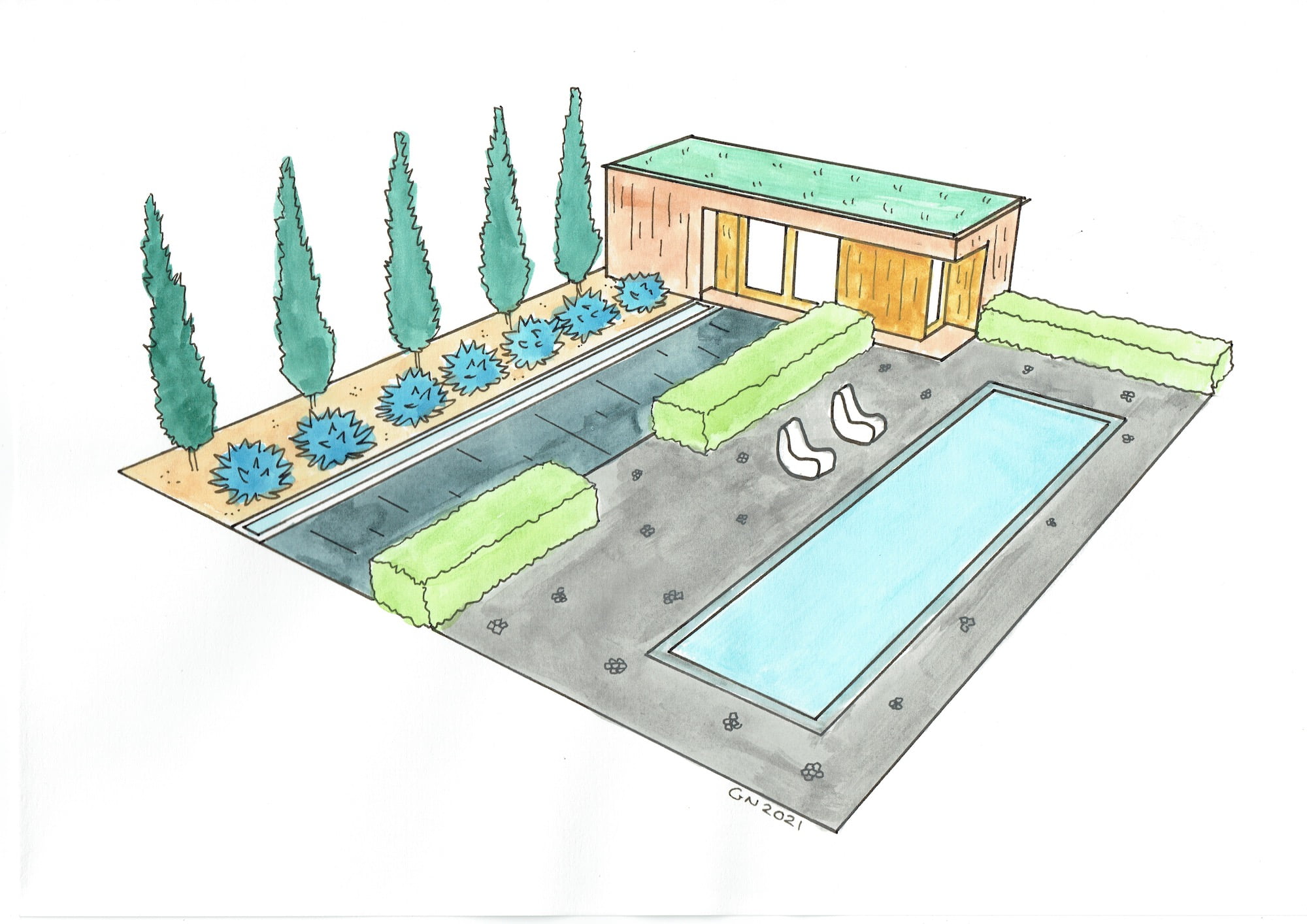
Modernist gardens rely heavily on asymmetry, often complementing the house they connect to. They follow clean, flowing lines. Often, only one or two views are accentuated. They use a restricted palette of plants, often with colour blocking or grouping of plants, textures, or materials. Proportion and ‘eyelines’ or viewpoints are key with this style.
Asymmetric
Uncluttered
Planting is used as an architectural element, but not necessarily the focus
Larger paving stones or structures are used to give scale
Simple patterns, layouts or pathways
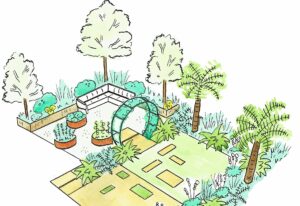
Above is my hand drawn watercolour example of a modernist garden design.
In summary, modernism in garden design uses a geometric, abstract style. It pays no attention to sentiment or emotion, and there are usually no historical nods. I.e. no greek busts, twee willow archways or whimsey! Function rules the roost, and restraint is the key power at play. These gardens are for true early adopter free thinkers who make their minds up and then execute that vision.
Origins of Modernism in Garden Design
We couldn’t discuss modernist design without referencing the Bauhaus school of design. Founded in 1919 in the city of Weimar, German Architect Walter Gropius wanted to reimage the world to unify arts, technology and design. Artists, carpenters, textile, and theatre designers, and wood and metal workers all combined their skills. Think of it as a melting pot safe place for designers. In a time when design followed strict fashions and rules.
The movement is still prominent in design today. It focuses on simplicity and using materials that aren’t necessarily associated with the designed item. Their club chairs and seats are probably the most recognisable. Just enough design for them to function, but no bells or whistles. Very stripped back, again letting the absence of fabric or padding become part of the unique design aesthetic.
Modernism, to me, gives me a sense of intrigue and a sense of asking why? These design styles make me stop and think, which I believe is part of the beauty of modernism.
A modernist-style chair above.
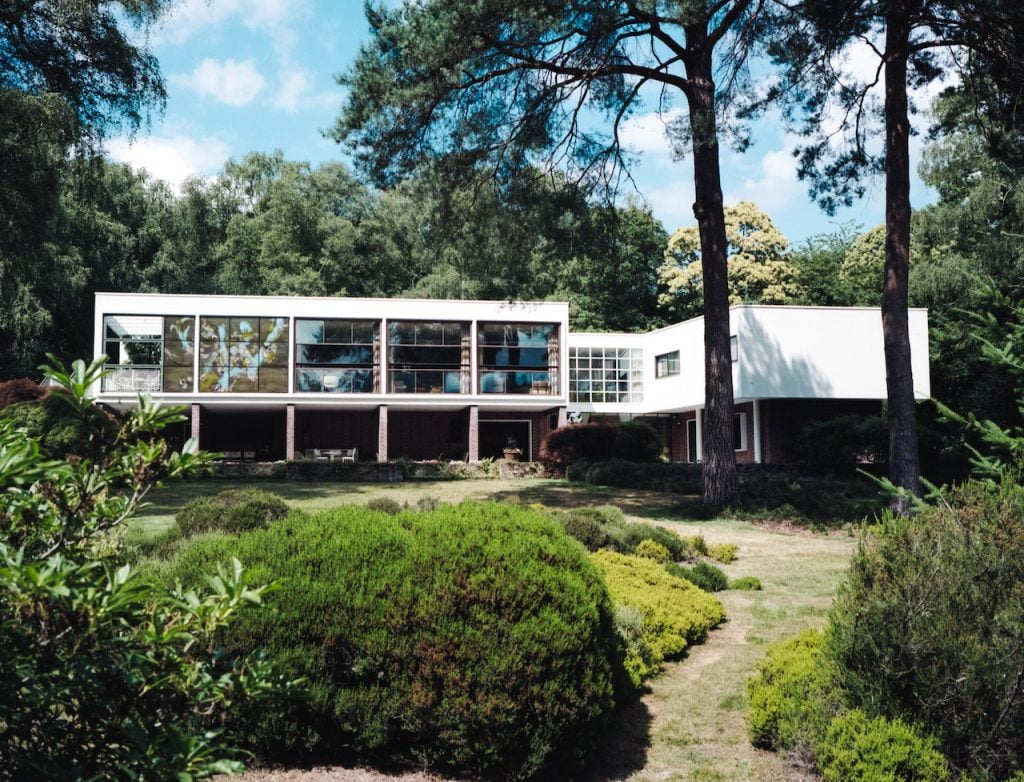
Whilst Bauhaus is not the only form of modernism, it is probably one of the most accessible for new gardeners. In the UK, one of the most classic examples of modernist garden design is the Homewood in Surrey by Patrick Gwynne.
Can you see the distinction between the house shape and the more organic grounds? This is the juxtaposition that modernism thrives on.
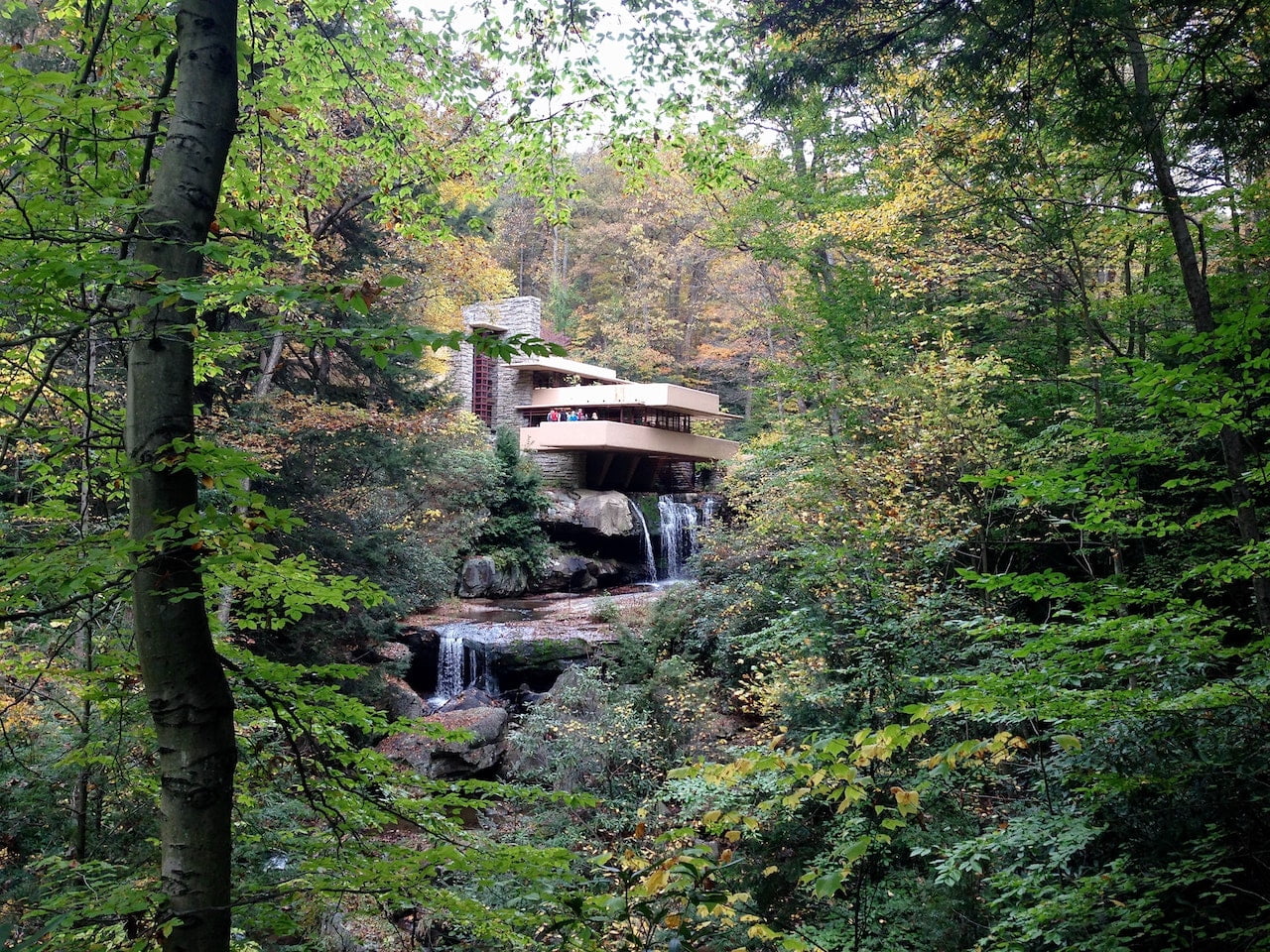
You may also recognise Frank Lloyd Wright’s Fallingwater mill design, which is a great example of modernism and nature combined. You will either love or dislike the two pictures. That’s the nature of modernism.
Whilst these don’t blend, their differences complement each other. Both living in separate spheres yet joined.
How to design a modernist garden
The key to the modernist design is to follow both simplicity and restraint. Using one or two key materials rather than a mix of different textures. The design has to fit within the landscape but also be eye-catching. It is this juxtaposition that makes modernism so arresting when done well.
You may take, for example, the stone thats used in the house and then run with the exact material into the garden, connecting the two spaces. Reflections and square edges go hand in hand when playing with the light. Whilst curves may be present, they are likely to be highly intentional and repeated on a large scale.
Glass and large rectangular picture windows may help bring the garden into the house, and also the framing of the windows pulls the house into the garden.
Your subscription could not be saved. Please try again.
Your subscription has been successful.
My top tips for trying to achieve this in an urban setting are:
Use a minimal set of materials, one or two that match the house
Limit the colour palette, and if a colour is chosen, run it through the landscape or planting for a mass effect
Frame your sliding doors or windows to elements of the garden and declutter window ledges, so there is nothing to distract
Create a clear contrast between planting/organics and the hard landscaping, like they are in opposition to each other
Colour blocking can work well where planted areas all use the same colour or texture for a ‘framed art’ effect
Be exact with your clean lines and shapes, taking proportions from the house – there is nowhere to hide if these don’t match up exactly!
Improve your design skills in a weekend
If you want to set yourself apart with your gardening skills, why not consider one of my online garden design courses? You can study at your own pace, and access to the materials is unlimited, so you can return to the tuition as many times as you need.
My new build garden design crash course can be completed in as little as 5 hours and trains you in everything you need to know to make great plant choices and layout ideas.
5 Hours of Study Time
Study Online Anywhere
Video Lessons
Quizzes
5 Sample New Build Garden Designs
Beginners guide to Planting
Certificate upon Completion
29
Garden Design Examples for Small Gardens: 30 Design Templates & Planting Plans
Garden Design Examples for Small Gardens: 30 Design Templates & Planting Plans: In this online gardening course, I’ll walk you through 30 fantastic garden designs, explaining the logic behind the layout, the plant choices, and take-home tips for applying them in your own garden.
Weekend Garden Makeover: A Crash Course in Design for Beginners
Learn how to transform and design your own garden with Lee Burkhills crash course in garden design. Over 5 hours Lee will teach you how to design your own dream garden. Featuring practical design examples, planting ideas and video guides. Learn how to design your garden in one weekend!
Garden Design for Beginners: Create Your Dream Garden in Just 4 Weeks
Garden Design for Beginners Online Course: If you want to make the career jump to becoming a garden designer or to learn how to design your own garden, this is the beginner course for you. Join me, Lee Burkhill, an award-winning garden designer, as I train you in the art of beautiful garden design.
Modernism challenges norms and rejects whimsy in favour of function. In doing so, it creates arresting and sometimes breathtaking design examples. Not for the reserved or tentative, these styles no doubt mirror their creator’s visions of rebellion and maverick tendencies.
If you think this design style suits you, what’s stopping you from causing a stir with your very own modernist garden design?
Your subscription could not be saved. Please try again.
Your subscription has been successful.
Lee Burkhill
Lee Burkhill, known as the Garden Ninja, is an award-winning garden designer and horticulturist with over 30 years of gardening experience and 15 years as a professional garden designer. A qualified RHS (Royal Horticultural Society) professional, Lee specialises in sustainable garden design and practical horticultural advice. He designs and presents on BBC1’s Garden Rescue and in leading gardening publications. Lee combines three decades of hands-on gardening knowledge with professional design qualifications to help gardeners create beautiful, functional outdoor spaces.