How to Start a Gardening Business: What You Really Need to Know
Lee Burkhill: Award Winning Designer & BBC 1's Garden Rescue Presenters Official Blog
Beginner level
Are you considering starting your own gardening, garden maintenance, design or landscaping business? Whether you're fresh out of school or thinking of changing careers into the world of horticulture, this guide is going to help you avoid the most common mistakes that new gardeners make! Let me show you the way to success!
I made the leap from IT project manager to BBC Garden Rescue presenter and professional garden designer. After 12 years of managing IT projects, I completely changed careers, and I’m here to give you the honest truth about what it actually takes. Not the motivational fluff you’ll find elsewhere, but the real deal based on my journey from corporate cubicle to designing gardens on national television.
I’ll start by stating it wasn’t as the media suggests, an overnight success. It was built on planning, training, support and lots of grit.
The good news: you don’t need a degree or a lot of capital to start.
The harder truth: building a sustainable income takes 3-4 years,winter months will test your finances, and underpricing is the single biggest reason new garden businesses fail. I’ve made and seen many of these garden business mistakes, so you don’t have to.
Let me be brutally honest about my journey. After one particularly gruelling IT project in 2015, I thought “enough is enough—I need more meaning in my working life.” But here’s the bit most people don’t tell you: I didn’t quit immediately. I spent over two years building credentials and experience while still employed.
This staged approach saved me from financial disaster. I enrolled in RHS Level 2 at Edinburgh Botanical Gardens, studying part-time over 2+ years whilst working full-time in IT. I completed weekend design courses at the Cotswold School of Garden Design. I volunteered extensively for established designers, helping at RHS Flower Shows and on jobs, usually completely unpaid but absolutely invaluable. I felt like a sponge, soaking up as much hands-on knowledge and classroom training as possible.
I started at the very bottom. I worked nonstop, took every opportunity and smiled even when clients paid me in cake, brews or goodwill as a new designer. Not glamorous, but necessary.
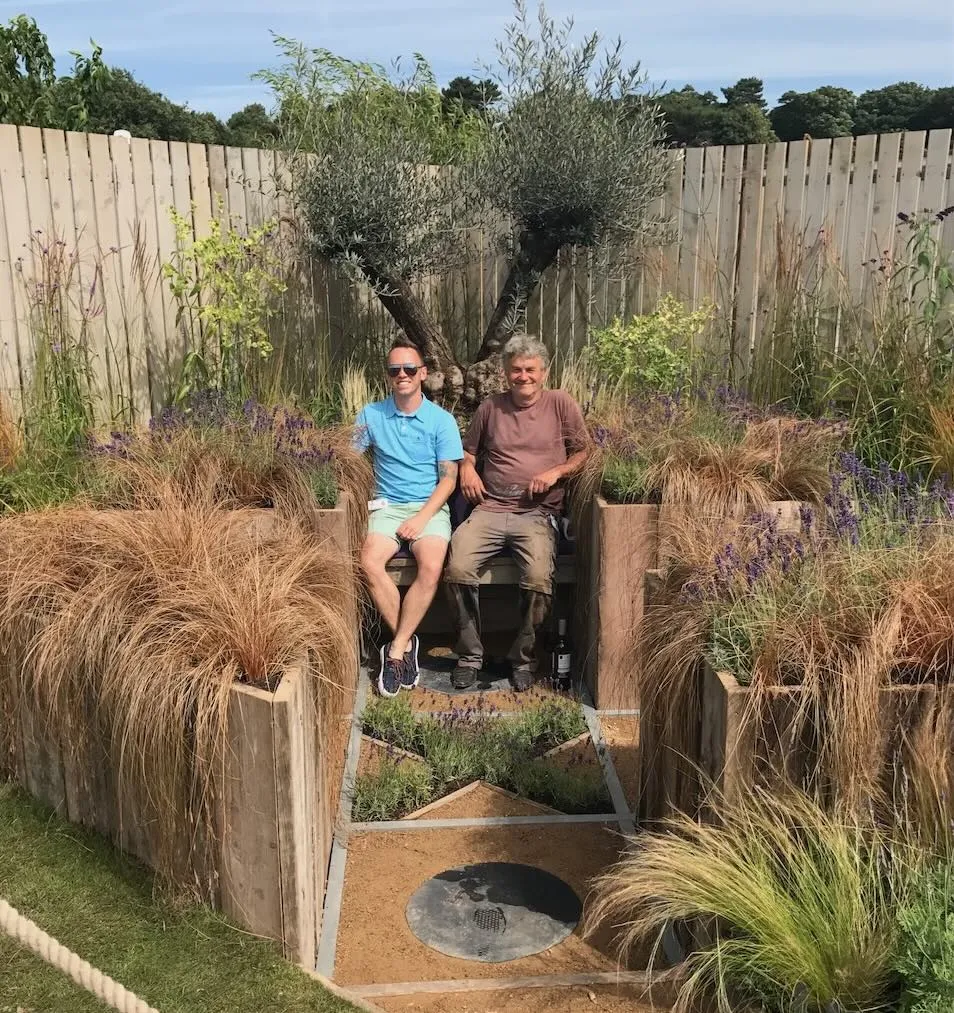
The breakthrough came in 2016 when I won an RHS and BBC Garden Design competition to create a show garden at Hampton Court. Serendipitously, around the same time as I started charging for my design work, the design world called, and I jumped at the chance. The BBC spotted me through my YouTube channel and invited me to appear on Garden Rescue.
But here’s what you need to understand: a career as a garden designer or gardener is very uncertain. You’re usually self-employed, and work can be nonexistent or nonexistentwhen you first start. You constantly have to plug away. It’s never 9-5. It takes a huge amount of drive, belief, grit and tenacity.
Don’t let that put you off, though, if you really want it. I absolutely love my job, which is more than work—it’s an obsession!
Stay Employed Whilst You Train
The smartest thing I did was not making a clean break. I used my IT salary to lay the foundations over 18 months before going full-time. My experience has shown me that slowly and surely building the gaps in your horticultural knowledge and experience is key to successfully transitioning into a career as a gardener, garden designer or horticulturalist.
As a professional, my view is that you need a blend of plant-based qualifications, hands-on experience with expert landscapers, designers, or plant experts, and the development of your own strong skill set, whether that’s specific planting types, pruning, maintenance, arboriculture, or other skills like propagation techniques. You need to spend a few years seeing where your true skills lie, what you love doing, dislike doing and then work out how to build a business offering around that sweet spot of your skills!
Here’s exactly what I recommend based on what worked for me.
i) Study Part-Time for Your RHS Level 2 Qualification
I’m going to be direct here: if you want to get into garden design, I’d say that the RHS Level 2 is a must. I’m not sure how anyone could study garden design without having Level 2 under their belt. Distance learning options cost £345-£720, whilst college courses with face-to-face elements run £975-£1,874. Government funding may cover costs if you’re on a low income. I
completed mine in about 2 years part-time whilst working full-time in IT on distance learning at Royal Botanic Gardens Edinburgh (RBGE).
ii) Volunteer Every Weekend You Can Spare
When I started, I was still working full-time, so I chose to volunteer on weekends and at show gardens for other designers. Yes, I didn’t get paid, but the experience was invaluable. I soaked up a lot of knowledge and networked at the same time. The National Trust offers garden volunteer roles across 500+ properties. RHS gardens accept volunteers for practical maintenance, with a typical commitment of 5 hours per week.
iii) Design for Friends and Family First
This is crucial: take on any work for friends and family as a freebie at first. You can make smaller mistakes, really get to grips with design, and get honest feedback. This is the invaluable learning stage where people getting design work for free are more understanding of the odd hiccup. I built my entire initial portfolio this way.
iv) Build Your Toolkit Gradually
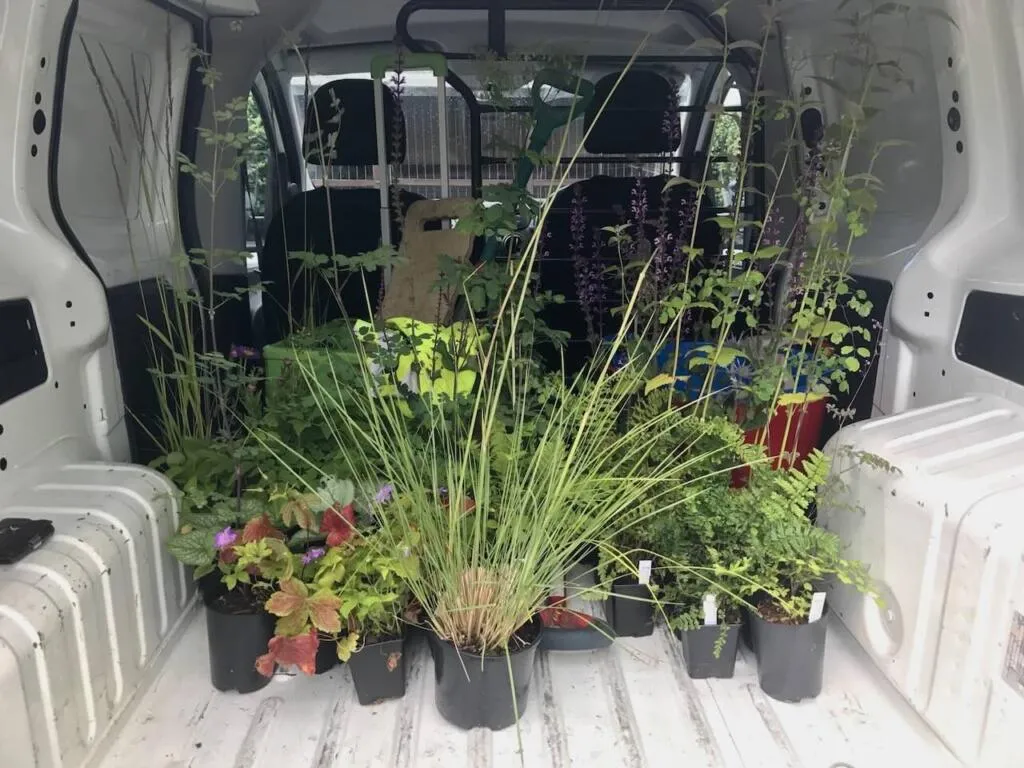
Essential hand tools (spade, fork, secateurs, shears) cost £150-300 total. A reliable petrol mower runs £400-800. I spread these purchases over my employment period, so I wasn’t facing a massive bill when I launched. I bought the smallest second-hand van I could and had it sign-written with my logo. This was the best investment as it meant I could turn up to clients looking professional and also collect my own plants!
Another thing I did religiously was keep that little van showroom clean inside and out. Sometimes, washing it twice a week. I always believe that turning up at paying clients, suppliers, and businesses with a super clean van sends a message of attention to detail and consistency. Even when I was at Chelsea, I washed my van midway through build week.
I also broke the mould by deciding not to bother putting a phone or email number on the van; after all, who has a pen to write that down? I went big on the logo and branding so people would remember it…and they did! People knew the ‘Ninja Van’ and fans would beep me on the motorways!
Choosing Your Path: Maintenance, Design, or Landscaping
Your business model significantly affects startup costs, income potential, and day-to-day operations. After you’ve completed your training, qualifications, and experience, it’s time to choose a path. By this point, you should have a list of your likes, dislikes, and what really fires you up each morning. Follow that passion,ssion Ninjas!
I’ve combined all three of the below in my business over the years, but understanding each path helps you choose your entry point. You may move away from parts and back to others, but understanding your offering at any given time is key.
Path
Startup Costs
Income Potential
Garden Maintenance
£1,000-£5,000
£25-36/hour (£270/day)
Garden Design
£10,000-£20,000
£500-£4,000 per project
Landscaping
£250,000+
Highest potential
Being totally tyransparent I’ve moved away from garden maintenance at this point in my career. I have my own acre and a half of gardening to do and prefer garden design, presenting, consultancy and planting plans. So don’t be afraid to adapt and pivot based on what’s working for you.
Garden Maintenance: Where I Started
Garden maintenance offers the easiest entry point. Startup costs range from £1,000 to £5,000 for basic equipment. You’ll earn £25-36/hour or around £270/day once established. The income is regular and recurring—whatever you earn this month, you’ll likely earn again next month. Physical demands are real, and winter work drops significantly, but this path builds client relationships that lead to design work. That’s exactly how I built my business.
Garden Design: Where the Creativity Happens
Garden design requires more training but commands higher fees: I charge from £650/day for consultancy,y and full garden redesigns start from £2,500. Experienced designers charge £50-200/hour for consultations.
You can work year-round (I do all my planning during winter), and it’s less physically demanding than maintenance. The trade-off: proper diploma courses cost £ 10,000-£20,000, and building your reputation takes much longer.
Landscaping: Partner, Don’t Compete
Landscaping has the highest earning potential but demands serious capital—£250,000+ for a medium-sized operation with equipment and staff. I don’t do heavy landscaping myself. Instead, I partner with landscapers: I refer big construction projects to them; they pass maintenance and design clients to me. This works brilliantly.
My Recommended Hybrid Approach
Start with maintenance to build a steady client base. Add design consultations once established (that’s what I did), and develop partnerships for larger projects you can’t handle on your own. This diversification protects you from seasonal income swings and builds multiple revenue streams. It’s how I’ve built a sustainable business.
Why gardening pays so poorly in the UK
Gardening and horticulture are among the lowest-paid skilled occupations in Britain, with employed gardeners earning an average of £22,000–£28,000 per year — roughly 25–40% less than comparable trades like plumbing and electrical work. This matters because the industry supports over 700,000 jobs and contributes £38 billion to UK GDP.
Yet, its workforce is caught in a structural trap of low barriers to entry, cultural undervaluation, and extreme market fragmentation. The pay gap isn’t an accident or a market inefficiency waiting to be corrected; it reflects deep, mutually reinforcing forces that anyone considering a garden business must understand clearly.
So you’re going into a relatively poorly paid occupation. Still, the benefits to your mental health and freedom can sometimes make up for that, alongside diversifying and offering multiple gardening, design, and maintenance services.
The other good news is that the barrier to entry for gardeners is nonexistent. I argue this needs to change, and basic training should be essential, to stop people from just considering gardeners as ‘a man or woman with a leaf blower’ who works for minimum wage!
This financial barrier means gardening and horticulture remain among the least ethnically diverse occupations in the UK.
The Qualifications That Actually Matter
No formal qualification is legally required to start a UK gardening business. However, specific credentials open doors and build credibility. Here’s what I recommend based on my own journey.
i) RHS Level 2 Certificate: Start Here
RHS Level 2 is the industry-recognised foundation, and honestly, I think it’s essential. Now split into two certificates (theory and practical), it covers plant science, identification, planting styles, and garden design principles. I studied the theory through Edinburgh Botanical Gardens for around £975, but correspondence colleges offer it for £345. Completion typically takes 1-2 years part-time. This qualification is required for membership of The Gardeners Guild.
I absolutely loved studying this course; it really gives you the foundations you need to get started.
ii) Garden Design Diplomas: The Expensive Option
Garden design diplomas from schools like the London College of Garden Design (at Kew Gardens) or KLC School of Design cost £10,000- £20,000 for one-year part-time programmes. That’s a huge investment in my view. That’s exactly why I created my own affordable online course, Garden Design for Beginners (£199).
Traditional training is prohibitively expensive and time-consuming for most career changers. In my opinion, you shouldn’t need to remortgage your house to learn garden design. My courses get you going without the panic of expensive loans or commitments. There’s no time limit on completing them, so you can take as much time as you need!
Practical Certifications Worth Adding
First aid training, PA1/PA6 spraying certificates if using pesticides, and chainsaw qualifications if offering tree work. None are legally required for basic gardening, but they expand your service range and justify higher rates. I’ve added several of these over the years as my business has grown.
My Honest Take on Qualifications
It doesn’t need to be a degree in my experience, but understanding horticulture properly is key. I’ve got 35 years of gardening experience, but that RHS Level 2 gave me the theoretical knowledge to back up my practical skills. Knowing plants and understanding the principles of horticulture are essential to any successful career in this area. You cannot skip understanding as much as you can about plants, propagation, pruning, and how the world of botany works.
Do Garden Qualifications Help your Salary?
Formal qualifications do improve earning potential, though the return on investment is less dramatic than in regulated trades where certification is mandatory.
The PGG’s salary bands illustrate the progression. Moving from an unqualified gardener role (£24,400) to a skilled gardener with RHS Level 2 or NVQ equivalent (£29,400+) represents roughly a £5,000–£8,000 annual increase. Progressing to deputy head gardener with RHS Level 3 and supervisory experience adds another £3,000–£10,000. The PGG recommends an additional £725 per year for each relevant professional qualification completed. Which, given the cost of the courses, seems an almost pointless exercise financially!
The most financially impactful qualifications are those enabling career progression into management. A garden manager with NVQ Level 4+ and formal management training can reach the £46,760–£67,150 band, the highest in employed horticulture. Degree-level qualifications (BSc, MSc, or the RHS Master of Horticulture) enable faster movement into these senior roles and open doors to specialist positions in plant science, consultancy, and commercial growing.
Specific vocational certificates carry particular weight wwhenlegally required. Chainsaw competence certificates (NPTC), Personal Law Doughnut pesticide application certificates AXA (PA1-PA6), and waste carrier licences open up additional revenue streams and justify higher rates.
BASIS and FACTS certificates qualify holders for specialist advisory roles, with salaries of £30,000–£40,000+. Garden design qualifications offer perhaps the strongest earnings uplift: garden designers average £32,600 employed, with London designers reaching a median of £47,465, and established freelancers potentially exceeding £100,000.
The uncomfortable truth, however, is that many employers — particularly heritage organisations and public gardens — pay well below PGG recommended rates regardless of qualifications. The prestige of working at Kew, the National Trust, or historic estates is often treated as compensation in itself, creating what the industry calls the “passion tax.”
Which frustrates me no end, Ninjas!!!
UK Legal Requirements You Cannot Skip.
Whilst gardening has low regulatory barriers, certain requirements carry serious penalties for non-compliance.
Register as Self-Employed with HMRC
Register by 5 October after the end of your first trading tax year. You’ll receive a Unique Taxpayer Reference within 10 working days. Start as a sole trader—it’s simpler and cheaper. Consider switching to a limited company only when profits consistently exceed £30,000-£40,000.
Obtain a Waste Carrier Licence
Required if removing any green waste from client properties. Upper Tier registration costs £184 (renewed every 3 years at £125) through the Environment Agency. The penalty for transporting waste without registration is an unlimited fine.
Public Liability Insurance
Coverage of £1-2 million costs approximately £70-120/year and protects against claims if you damage client property or injure someone. Many clients require it before booking. Add professional indemnity insurance (~£100-200/year) if offering design services.
Business Vehicle Insurance
Legally required if using any vehicle for work. Standard personal policies explicitly exclude business use. Expect £400-800/year for a van with “carriage of own goods” cover.
Annual Compliance Costs
Your annual compliance costs as a solo gardener total approximately £582-£1,1,32 covering public liability, waste carrier licence, vehicle insurance, and tool insurance.
Realistic Startup Costs and Essential Equipment
Career changers consistently underestimate startup costs, then scramble when unexpected expenses hit. Budget £3,000-£7,500 to launch properly, though you can start smaller at £1,000-£3,000 with essential tools only.
Essential Equipment to Buy First
My guide to the best beginner gardening tools will show you exactly how much to pay for each one, and my recommendations can save you a lot of trial-and-error, Ninjas! Below, though, is a rough idea of the different costs of gardening equipment when used in a business. I would always advise paying a bit more and getting tools that last and can be serviced. If your cheap spade snaps during your day, then you can’t work, so lose the rest of that day’s wage!
Item
Cost Range
Quality hand tools (spade, fork, secateurs, shears)
A decent second-hand van runs £5,000-£10,000; new vans start around £25,000. Van branding costs £200-500. Some gardeners start with a car and trailer (£500-£3,000 for trailer), but vans project professionalism and allow more services.
Marketing Essentials
Basic website (DIY via Squarespace): £150-300/year. Business cards and leaflets: £50-200 (though I would argue, don’t waste your time, focus on your local online presence to get organic traffic from Google rather than hoping someone will keep your business card). Van signage: £200-500, which is an absolute must, but focus on an eye-catching logo and brand rather than phone numbers, which other drivers won’t be able to write down! Total: £400-£1,000.
Hold Off On
Ride-on mowers (lease if needed), commercial-grade equipment, chainsaw gear (requires certification), and duplicate power tools. Buy these only whthe en client demand justifies the investment.
Pricing: The Mistakes That Kill Gardening Businesses
Underpricing nearly destroyed my business in the early days. I was so lacking in confidence that I charged peanuts for the work I was doing. The inability to charge properly is the single biggest reason new designers’ businesses fail, and I learnt this the hard way.
London rates run £35-45+/hour. The South East commands £30-40/hour. Northern England and Scotland typically see £20-30/hour, but operating costs are also lower. I’m based in Manchester, so my rates sit in the middle of that range.
My Pricing Advice for Beginners
Here’s what I tell everyone: price your services based on your experience. Better to earn a small amount but learn a lot on the job than try to charge people full rates where they will have less tolerance for your lack of experience. However, garden designers should not be cheap once they’re established. Combining plant knowledge, design skills, project management, and client requirements into a single service is a highly considered skill.
The 25% Rule
Approximately 25% of your turnover goes to business costs—fuel, insurance, equipment, and marketing. Factor this in before setting rates, then add your profit margin. I review and raise my prices annually by 4-5% to keep pace with industry trends and inflation.
How I Got My First Clients (And How You Can Too)
Building a client base from zero requires hustle, not just skill. The reassuring reality: 84% of people trust recommendations from friends and neighbours, making word of mouth your most powerful tool. Here’s exactly what worked for me.
I Started With My Immediate Network
I offered friends and family reduced rates or free initial work in exchange for testimonials, reviews, and—critically—professional photographs. I documented every single job with before-and-after images from day one. This became my portfolio when I had no “real” clients yet.
Online Presence Establishes Credibility
I created my now award-winning blog/website showing my services, coverage area, and portfolio photos. I claimed my Google Business Profile early on—crucial for local search. I consistently post transformation photos on Instagram and Facebook. I’ve built my YouTube channel to over 73,000 subscribers, which has been absolutely invaluable for credibility.
This is far more successful than leaflet drops, business cards, and expensive magazine adverts. I can confidently say I’ve never spent a penny on any advertising, purely because my online content is enough of a marketing force!
Strategic Partnerships Accelerate Your Growth
I connected with landscapers early on (I handle maintenance and design; they handle construction). Other areas, such as approaching estate agents for rental property work, can be a clever move. Think about contacting property management companies. These commercial relationships can be gold dust for consistent work.
Building My Portfolio From Nothing
I photographed my own garden’s transformation in detail. I created speculative designs for interesting properties I observed. I entered local gardening competitions (winning that RHS competition changed everything). I volunteered for community garden makeovers. Every project—paid or unpaid—became portfolio material that helped me land the next client. Helping other designers at show gardens expanded both my skill set and my network.
The Critical Timeline
Consistent profitability took me about 3-4 years. In my first few months, I only had 3 days of work per week. If you’re leaving a corporate salary as I did, you may be shocked to see how hard it is to match that with garden maintenance, design and landscaping. It is possible, but you have to diversify and do lots of different jobs to bringin revenue from different work streams. Realistically, expect it to take 3-5 years to start earning a living/relatively acceptable wage!
Here’s my reality check: if you’re starting,you need to be prepared for gradual earnings growth as you build experience and expand your network. Anyone promising you’ll be earning £50k in your first year is lying to you.
Surviving Winter: The Seasonal Challenge Nobody Mentions
This is where unprepared career changers fail. Income drops approximately 37% during the winter months due to shorter days, adverse weather, and fewer gardening tasks. The peak earning season runs from March through September.
Financial Strategies That Work
Build reserves of at least 3 months’ income before launching. Time major expenses (vehicle MOT, insurance renewals, tax payments) outside winter. Consider year-round maintenance contracts with fixed monthly payments—clients pay the same amount each month, smoothing your cash flow. Domestic customers typically pay immediately; commercial clients may take 30 days to pay.
Winter Services to Offer
Winter pruning of deciduous trees and shrubs, fence and shed repairs, leaf clearance and gutter cleaning, and pressure washing paths and patios. Garden planning and design consultations (office-based) and hard landscaping projects (weather permitting) keep you working.
Commercial Contracts Provide Stability
Commercial contracts—hotels, offices, industrial estates—often run year-round and pay higher rates (£500-600/day versus £200-300/day for residential). Developing even one or two commercial relationships provides crucial winter stability.
The Five Mistakes Common Mistakes
1. Underpricing your services
In my early days, I was so lacking in confidence that I charged rates that didn’t cover my costs. I had to learn the hard way to calculate my true expenses (25% of turnover), add living costs, and factor in the profit margin. Don’t race to the bottom as I did.
2. Ignoring Seasonal Planning
I operated as if my income would stay constant year-round. My first January was a financial crisis because I hadn’t planned for the winter drop. You must plan finances assuming a 37% winter drop. Build reserves during peak season, or you’ll be in trouble.
3. Starting without savings
About 20% of new gardening businesses fail in their first year, often due to insufficient startup funds. I was lucky—I had savings from my IT job. You need equipment money plus 3-6 months of operating costs. Don’t launch without this safety cushion or consider weekend gardening jobs until you have the confidence and experience.
4. Neglecting your physical care
Gardening is incredibly physically demanding. I’ve had back problems, shoulder issues, the lot. Learn proper lifting techniques from day one, use appropriate equipment, and think about how sustainable this work is as you age. Proper PPE is a must-have for the long term.
5. Competing on Price Rather Than Value
Some gardeners and designers try to undercut their copmpetitiors prices. Which is an understandable but terrible strategy. Professional gardeners should be “proud to tell you why they are worth their fees,” as I now tell my students. Qualifications, insurance, reliability, and professionalism justify higher rates. Racing to undercut competitors just attracts problem clients.
Conclusion: A Career Worth Building Slowly
My journey from IT project manager to BBC presenter and award-winning garden designer took years of deliberate preparation, not a dramatic leap. My staged transition whilst employed, my RHS qualification, my unpaid volunteering, my portfolio building through friends and family work: these steps are completely replicable.
The financial reality is clear: expect £15,000-£25,000 in year one, plan for 3-4 years to reach consistent profitability, and build reserves for the 37% winter income drop. Your startup costs of £3,000- £7,500 are modest compared to most businesses, and your annual compliance costs stay under £1,200.
What makes this career different from most is also what makes it worth pursuing. It takes a huge amount of drive, belief and tenacity to build your portfolio whilst spinning all the plates needed. But for those who want meaningful work outdoors, creative expression, and independence, the path exists. You just have to build it one client, one season, one year at a time.
I absolutely love what I do now. It’s more than work—it’s an obsession. And yes, it’s been worth every single moment of the struggle to get here. No, it’s not easy, and I’m certainly not advocating that all gardeners are swimming in cash. Still, if you carefully plan your offerings, diversify and spin many plates, you can create a very rewarding career.
Ready to Start Your Journey?
If you’re serious about making this career change, I’ve created online courses specifically for career changers who can’t afford expensive traditional training:
Garden Design Examples for Small Gardens: 30 Design Templates & Planting Plans
Garden Design Examples for Small Gardens: 30 Design Templates & Planting Plans: In this online gardening course, I’ll walk you through 30 fantastic garden designs, explaining the logic behind the layout, the plant choices, and take-home tips for applying them in your own garden.
Weekend Garden Makeover: A Crash Course in Design for Beginners
Learn how to transform and design your own garden with Lee Burkhills crash course in garden design. Over 5 hours Lee will teach you how to design your own dream garden. Featuring practical design examples, planting ideas and video guides. Learn how to design your garden in one weekend!
Garden Design for Beginners: Create Your Dream Garden in Just 4 Weeks
Garden Design for Beginners Online Course: If you want to make the career jump to becoming a garden designer or to learn how to design your own garden, this is the beginner course for you. Join me, Lee Burkhill, an award-winning garden designer, as I train you in the art of beautiful garden design.
You don’t have to quit your job to do this, you don’t have to go to university, you don’t have to take out a second mortgage—just find a course that fits with your circumstances.
The journey takes time, but it’s absolutely achievable. Start today by enrolling in an RHS Level 2 course, volunteering at your local National Trust property, or reaching out to established designers in your areaase I did. Every expert started exactly where you are now.
Lee Burkhill, known as the Garden Ninja, is an award-winning garden designer and horticulturist with over 30 years of gardening experience and 15 years as a professional garden designer. A qualified RHS (Royal Horticultural Society) professional, Lee specialises in sustainable garden design and practical horticultural advice. He designs and presents on BBC1’s Garden Rescue and in leading gardening publications. Lee combines three decades of hands-on gardening knowledge with professional design qualifications to help gardeners create beautiful, functional outdoor spaces.