How to Prune Rhododendrons: Deadheading, Shaping and Renovation
Lee Burkhill: Award Winning Designer & BBC 1's Garden Rescue Presenters Official Blog
Beginner level
Having visited some of the finest rhododendron collections in the UK, including Bodnant in North Wales and several of the great woodland gardens of Scotland, what strikes me most is how little the best specimens are pruned. The goal with rhododendron pruning is almost always the minimum intervention needed to keep the plant healthy and flowering, not the maximal cutting that many gardeners default to when a shrub starts to look a little large.
Quick Answer
Rhododendrons need very little pruning. The main tasks are deadheading spent flowers immediately after blooming, removing dead or diseased wood at any time of year, and light shaping after flowering in May or June. Hard renovation pruning to reduce an overgrown plant is best done in late winter between January and March, accepting that flowering will be reduced for one to two seasons while the plant recovers.
Rhododendrons are among the most forgiving flowering shrubs when it comes to pruning, and one of the biggest mistakes gardeners make is over-complicating it. In most years, the only intervention needed is to remove the spent flower heads promptly after flowering, which takes 20 minutes and helps keep the plant healthy and stop any bud rot.
The more complex pruning tasks, removing dead wood, shaping, and renovation of an overgrown plant, are each distinct operations with their own timing and technique, and keeping them separate in your mind makes the whole business much more straightforward.
The timing of rhododendron pruning depends entirely on what you are trying to achieve. There is no single correct window that applies to all pruning tasks, and conflating them is the source of most pruning mistakes on this plant. A lot of guides just say ‘prune after flowering’ but thats a very generic lazy window! You rarely need to actually prune Rhododendrons (Or Rhodies, as they are sometimes called), but knowing how to prune if you need to is key, and I’m going to show you.
For deadheading and removing spent flowers, the window is immediately after flowering, typically between May and early June for most UK varieties. Flower buds for the following year begin forming very shortly after the current flowers finish, so deadheading promptly gives you the maximum window before those new buds are set. Deadheading later in summer risks removing developing buds along with the spent heads, which reduces next year’s display.
For light shaping and the removal of crossing or congested stems, the best window is also after flowering in May and June, following the deadheading. The plant has just finished its main expenditure of energy on flowering and is moving into its vegetative growth phase, which means it responds well to light pruning and produces strong new growth from the cuts.
For hard renovation pruning of an overgrown plant, the recommended window is late winter between January and March, while the plant is dormant and before growth begins. This will sacrifice flowering for one or possibly two seasons, but it gives the plant the full growing season to regenerate from the cuts.
Some practitioners prefer to do renovation pruning immediately after flowering to reduce the flower sacrifice, taking the approach of reducing the plant by roughly one-third of the longest stems each year over three seasons rather than cutting everything hard at once.
Dead wood and diseased material can be removed at any time of year without concern for timing. Getting it out of the plant promptly is always preferable to leaving it in place to harbour disease.
2. How to Deadhead Rhododendrons
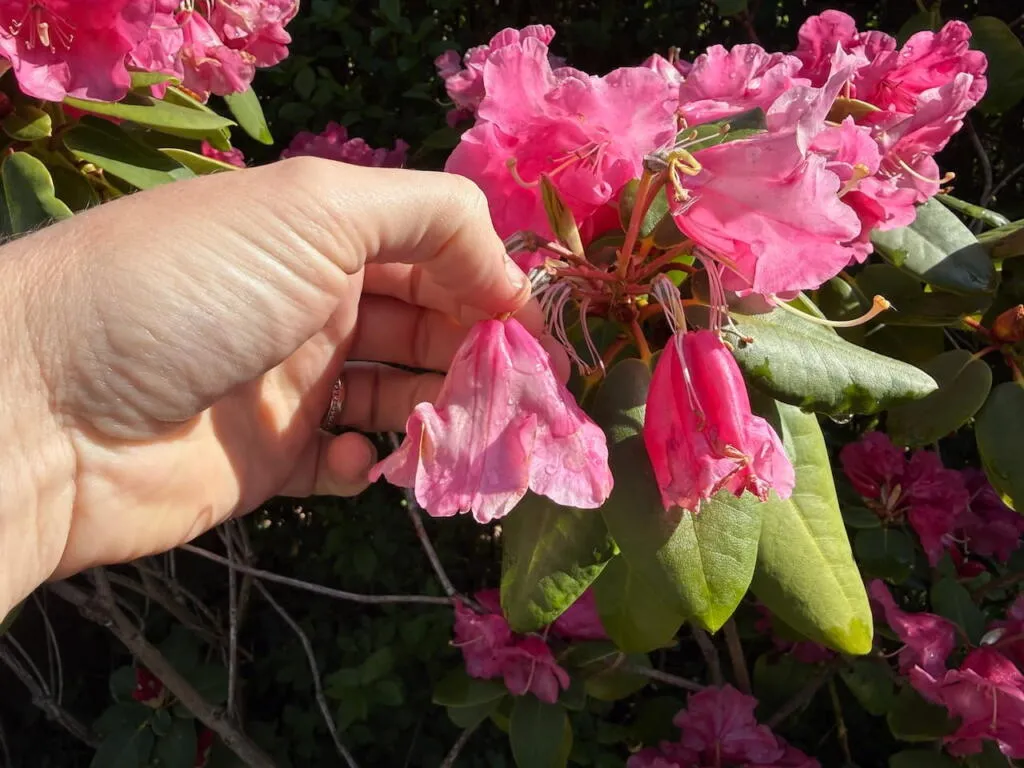
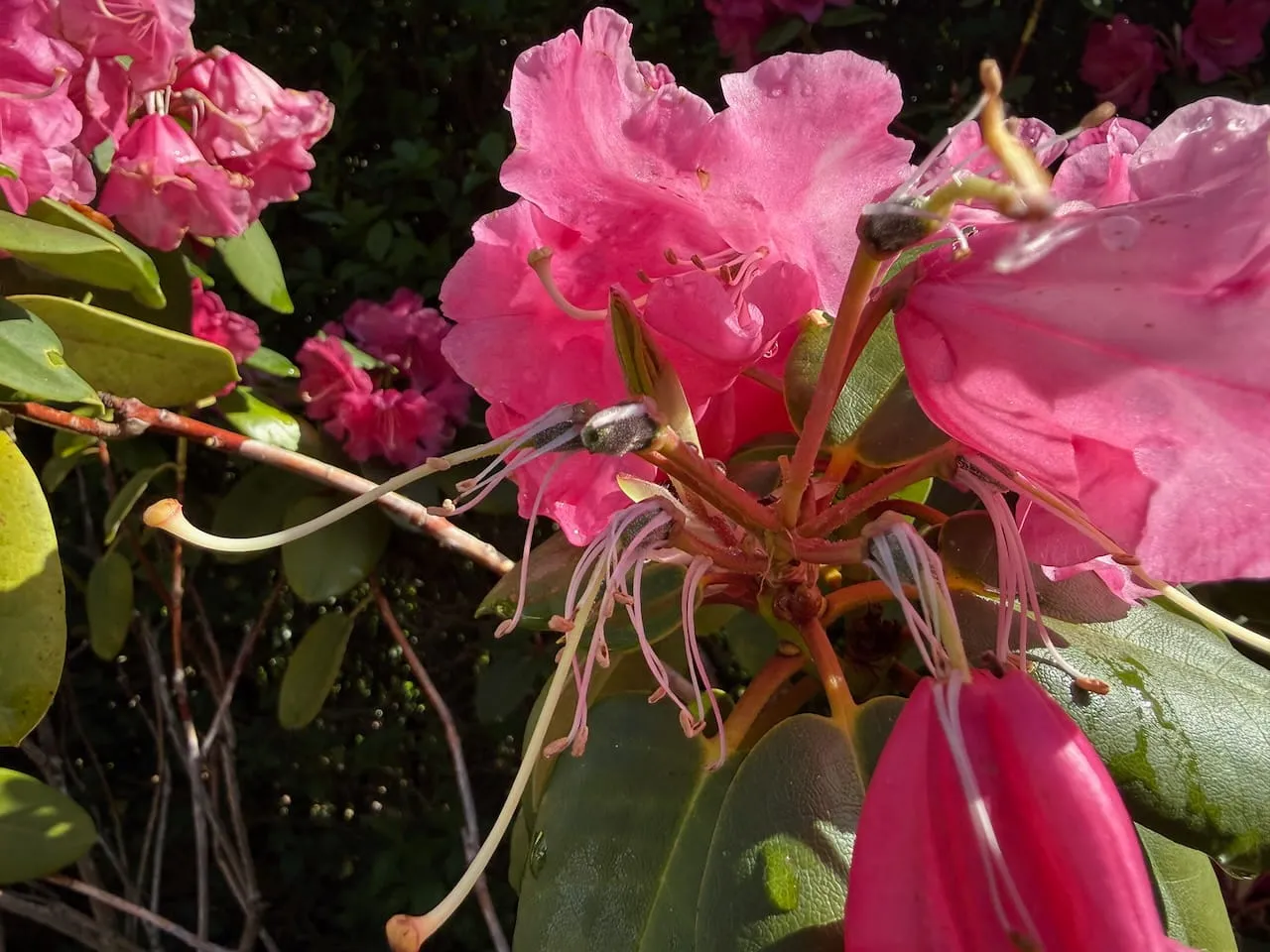
Deadheading is the single most beneficial pruning task you can do for a rhododendron, and it is also the simplest. Once the flowers have faded and before the seed heads begin to develop, grip the spent flower truss at its base between your thumb and forefinger and twist it gently to snap it off cleanly. Done immediately after flowering, you should be able to do this by hand without tools on most varieties.
The reason deadheading matters is that allowing the plant to set seed redirects significant energy into seed production rather than into building next year’s flower buds. On a rhododendron that has not been deadheaded for several years, the difference in flower display compared to a consistently deadheaded plant of the same age and variety can be striking. It is one of the most time-efficient garden tasks relative to the result it produces.
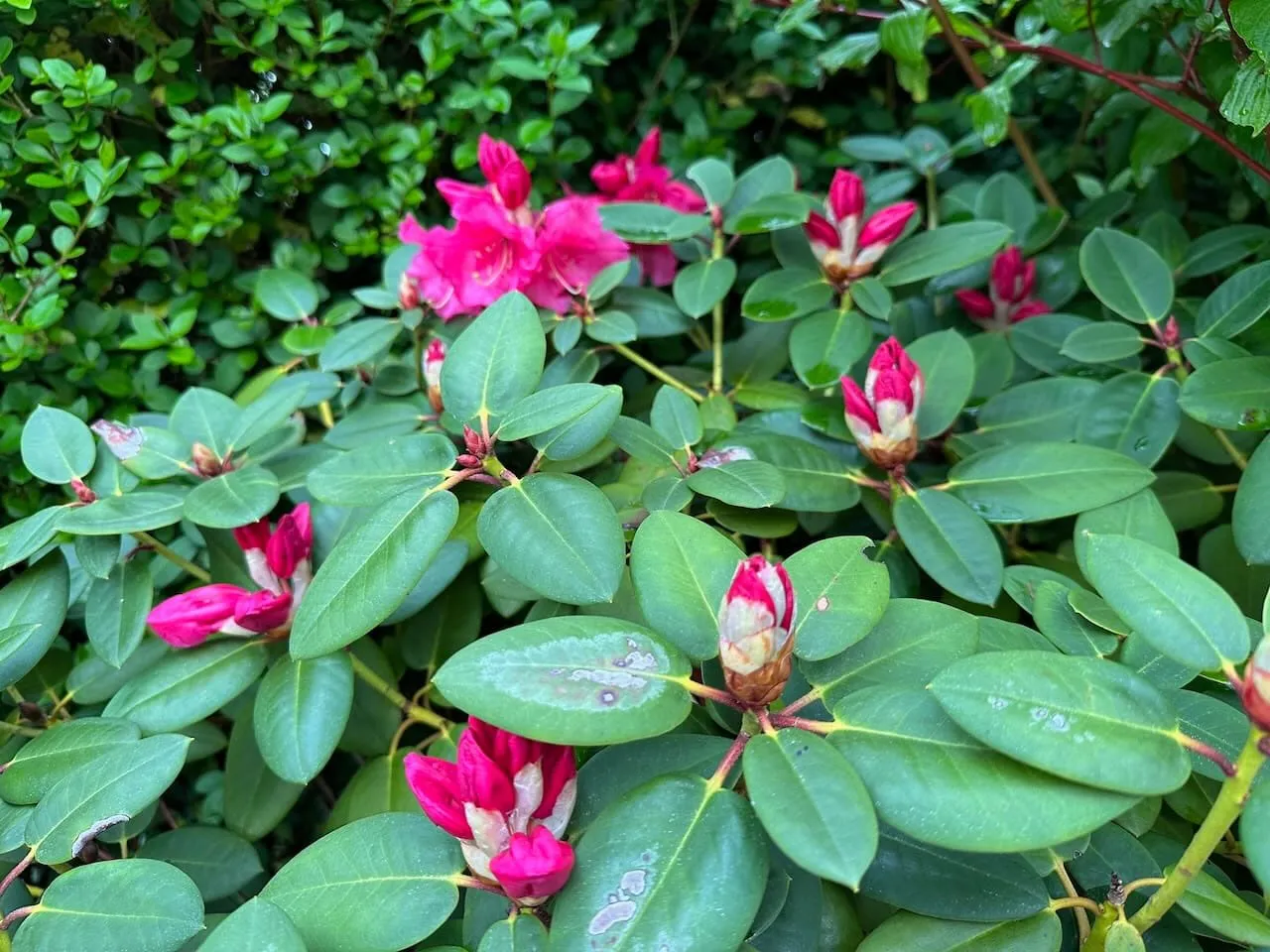
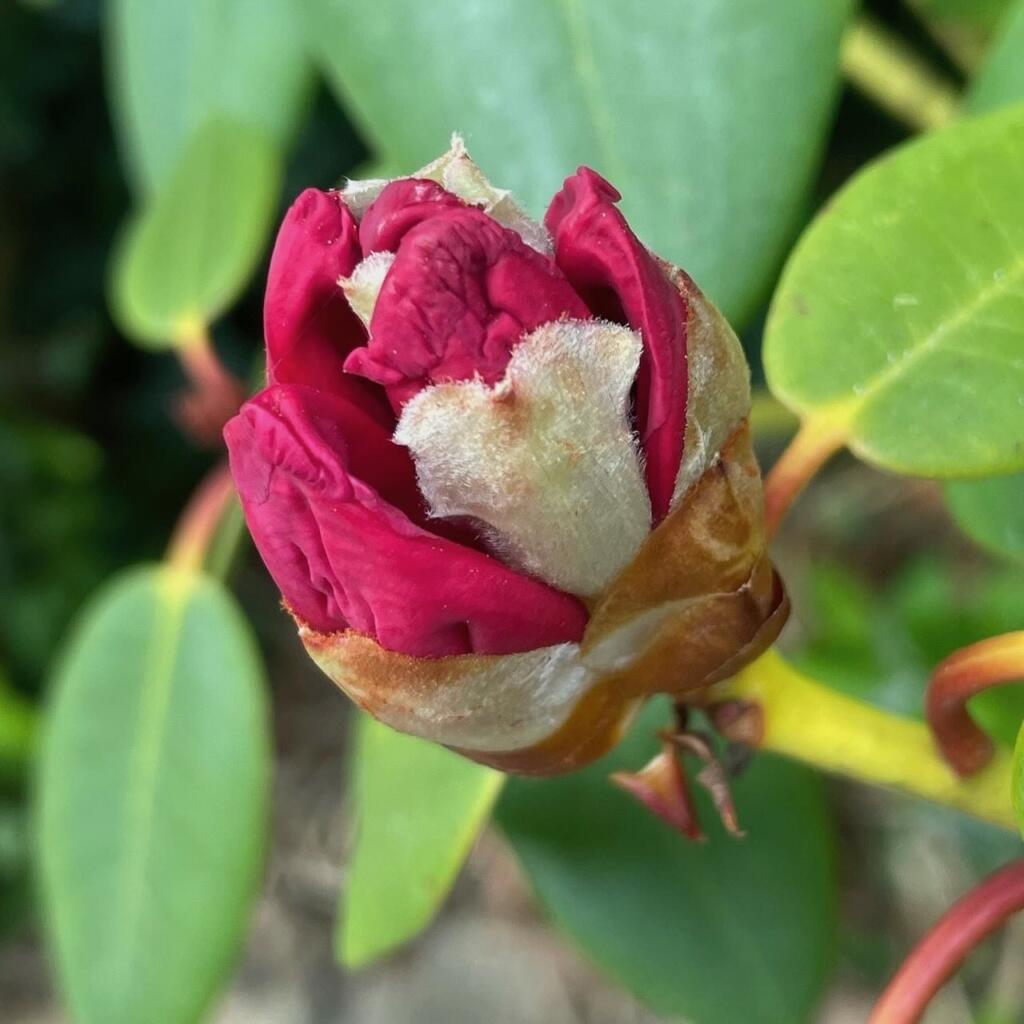
Be careful to remove only the spent flower head and not the cluster of growth buds visible just beneath it. These small, pointed buds at the base of the spent truss are next year’s flowering shoots, and snapping them off along with the dead head defeats the purpose entirely. If you look carefully before each snap, you will see the distinction clearly: the spent brown flower head above, and the cluster of fresh green or reddish buds just below it. Snap above those buds, not through them.
💡 Top Tip
On a large, established rhododendron with hundreds of spent trusses, deadheading every single one is not always practical. Focus on the most visible stems and the strongest growing ones. Even partial deadheading produces a noticeable improvement in flower numbers the following year compared to doing nothing at all.
3. Removing Dead and Diseased Wood
Dead wood should be removed from a rhododendron as soon as you notice it, regardless of the time of year. A dead branch left in the plant becomes a harbour for fungal disease and creates unnecessary congestion in the canopy. The technique is straightforward: follow the dead branch back towards the main stem until you find healthy green wood, then cut just above a visible bud or to the junction with the main stem, whichever is appropriate to the size of the branch.
Always cut to healthy wood, not just to the point where the branch stops looking dead from the outside. Scrape the bark of a suspect branch lightly with your thumbnail: healthy wood is green or cream beneath the bark, while dead wood is dry and brown throughout. If you are removing a diseased branch, sterilise your secateurs or loppers between cuts using a diluted garden disinfectant or methylated spirits. This prevents the transfer of fungal spores from diseased material to healthy cuts.
4. Light Shaping After Flowering
Most rhododendrons in UK gardens do not need annual shaping beyond deadheading. They are naturally well-structured plants that develop an attractive layered form without intervention, and over-shearing them into a tight, rounded ball destroys much of their character. That said, there are situations where a little selective pruning after flowering improves the plant: a branch extending much further than the rest of the plant and spoiling its overall outline, stems crossing through the centre and creating congestion, or growth heading in an undesirable direction towards a path or neighbouring plant.
For light shaping, use sharp bypass secateurs for stems up to about 1.5cm in diameter and loppers or a pruning saw for anything thicker. Always cut to just above a visible bud or a side branch rather than leaving a blunt stump, which will die back and create an entry point for disease. Cut at a slight angle so that water drains away from the cut surface rather than sitting on it. The angle should slope away from the bud so that rain runs downward and outward.
The key principle with shaping is to work with the natural structure of the plant rather than against it. Remove stems that are genuinely problematic rather than trimming all stems uniformly to create an artificial shape. A rhododendron that has been lightly and selectively shaped after flowering looks natural and grows on strongly. One that has been sheared all over looks artificial and typically produces a ring of vigorous growth at the cut points that unbalances the plant further.
5. Renovation Pruning: Tackling an Overgrown Rhododendron
An overgrown rhododendron that has become leggy, bare at the base, and too large for its position can often be renovated successfully, which is one of the great advantages of this plant over many other woody shrubs. Unlike conifers, most rhododendrons will regenerate from old wood, though the response varies considerably between varieties. Rough-barked types such as Rhododendron ponticum and most deciduous azaleas tend to respond better and more vigorously than smooth-barked hybrid varieties.
The staged approach recommended by most experienced practitioners is to reduce the plant by roughly one third of its longest stems each year over three years, rather than cutting everything hard at once. This is kinder to the plant, maintains some flowering through the renovation period, and reduces the risk of losing the plant entirely if it responds poorly to very hard cutting. If using the staged approach, begin immediately after flowering in May or June, selecting the oldest and longest stems for reduction in the first year.
For a harder, faster renovation where the plant is very overgrown and you are prepared to lose flowering for two seasons, cut the main stems back to around 30 to 60cm above ground level in late winter between January and March. Always cut just above a visible bud or a junction with a side branch. After hard cutting, feed the plant with an ericaceous slow-release fertiliser, apply a thick mulch of acidic material around the base, and water well through the following spring and summer. The plant will typically produce vigorous new growth from dormant buds in the old wood through the first growing season, and should begin flowering again within two to three years.
💡 Top Tip
Before hard renovation pruning, scratch the bark of the main stems with your thumbnail to check for green living tissue beneath. A stem that is already dead throughout will not regenerate regardless of how you prune it. Only cut back to stems that show green, living wood under the bark, and you will have a genuine chance of a good result.
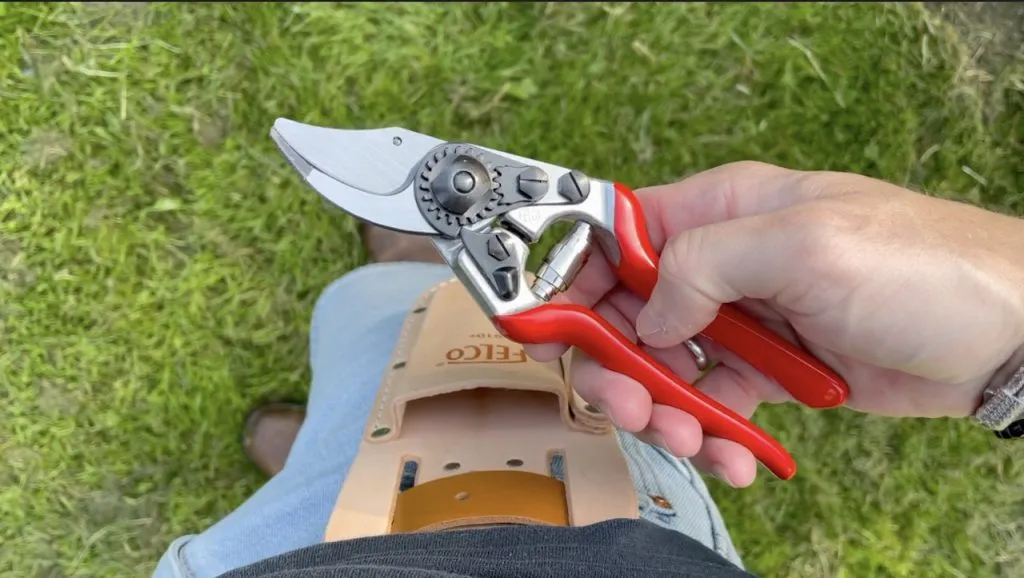
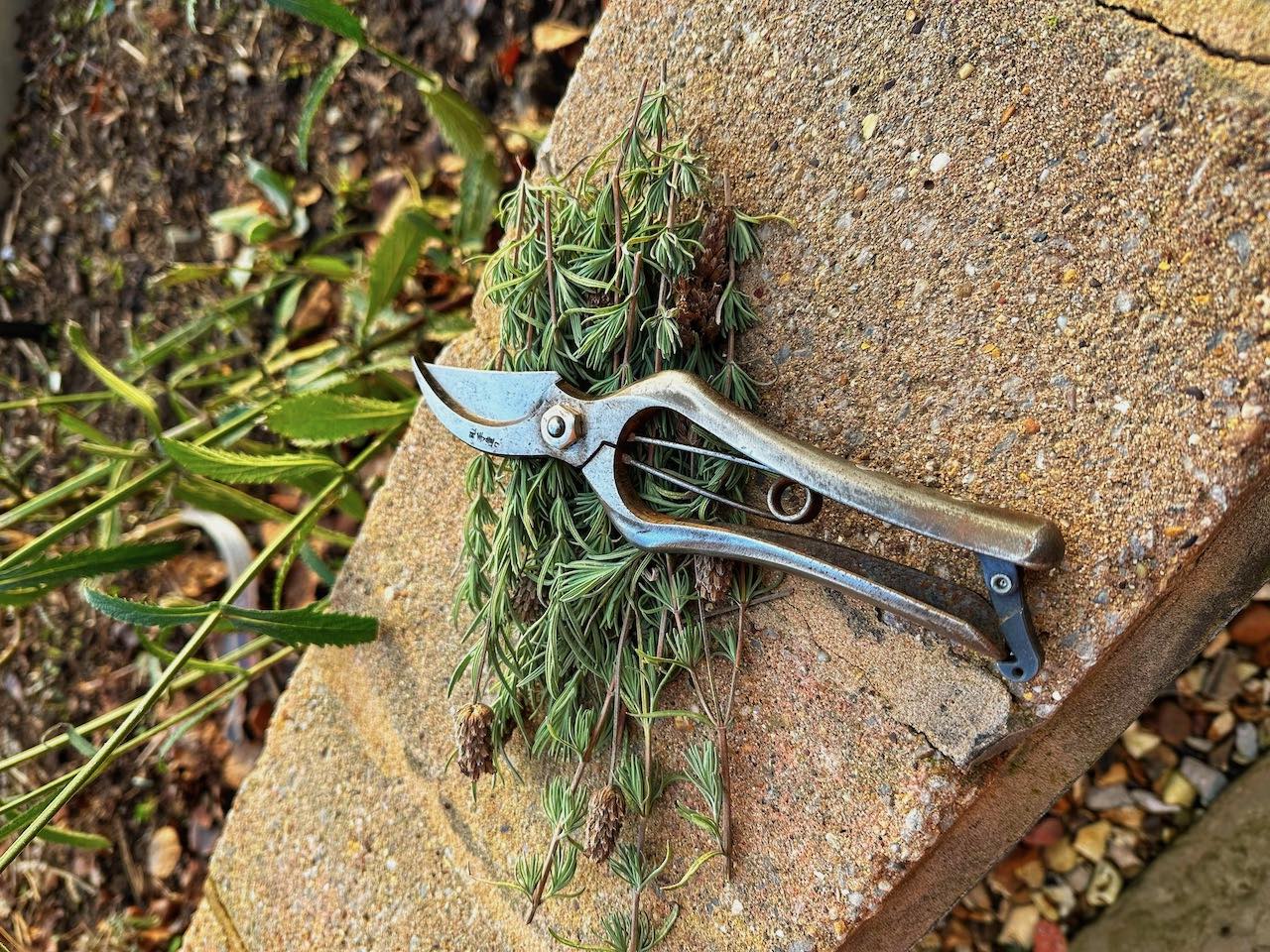
Rhododendrons have relatively soft wood compared to many garden shrubs, which means you do not need heavy-duty tools for most pruning tasks. For deadheading and removing small twigs and branches up to about 1cm in diameter, a sharp pair of bypass secateurs is ideal. Bypass secateurs make a clean slicing cut rather than the crushing action of anvil secateurs, which is important for the plant’s ability to heal cleanly.
For branches between 1 and 3cm in diameter, a pair of loppers gives you the reach and leverage to make clean cuts without straining your hands. For main stems during renovation pruning, a sharp folding pruning saw will handle most situations comfortably. Whatever tools you use, sharp blades make a genuinely significant difference to the quality of the cut and the plant’s ability to heal. A blunt secateur tears and crushes the wood rather than cutting it cleanly, creating a ragged wound that takes longer to callous over and is more vulnerable to fungal infection.
Clean your blades before working on each plant, especially when moving between a diseased plant and a healthy one. A quick wipe with diluted garden disinfectant or methylated spirits on a cloth takes seconds and prevents the spread of disease between plants. This small habit is one of the most important in the garden and one of the least observed.
The most common mistake is pruning in autumn. This is the period when next year’s flower buds are already set and visible on the stems, and cutting the stems at this point removes those buds and results in no flowers the following spring. If you need to do any shaping work, complete it by the end of June at the latest to avoid the risk of cutting into developing buds.
The second most common mistake is shearing rhododendrons into tight, rounded balls with a hedge trimmer. Rhododendrons are not hedging plants, and this treatment destroys their natural structure, removing the majority of flowering wood in a single pass and producing an ugly, unnatural shape that takes years to recover. It also stimulates vigorous leafy regrowth at the cut points that unbalances the plant further. Always use selective hand pruning rather than mechanical shearing for rhododendrons.
Pruning with blunt tools is the third consistent error. Torn, ragged cuts heal more slowly and are more vulnerable to fungal infection than the clean cuts a sharp blade produces. Check the sharpness of your secateurs before starting, and sharpen them if in doubt. A few minutes on a whetstone before a pruning session saves a great deal of trouble afterwards.
Finally, removing too much from an established plant in a single year causes unnecessary stress and a significant drop in flowering performance. Even when renovation is needed, a staged approach over two or three years is kinder to the plant and yields better long-term results than cutting everything back hard at once.
Frequently Asked Questions: How to Prune Rhododendrons
When is the best time to prune rhododendrons in the UK?
For deadheading and light shaping, immediately after flowering finishes in May or June. For hard renovation pruning of an overgrown plant, January to March, while the plant is dormant. Dead and diseased wood can be removed at any time of year. Avoid pruning in autumn when next year’s flower buds are already forming on the stems.
Can you cut rhododendrons back hard?
Yes, most rhododendrons can be cut back hard into old wood and will regenerate, which distinguishes them from most conifers. Rough-barked varieties such as Rhododendron ponticum and deciduous azaleas respond most vigorously. Smooth-barked hybrids can be more variable. Always check that the wood you are cutting into is still alive by scratching the bark to reveal green tissue beneath, and feed and mulch generously after hard pruning to support the recovery.
Do I need to deadhead rhododendrons?
Deadheading is not strictly necessary for the plant’s survival, and rhododendrons will continue to flower without it. However, consistent deadheading immediately after flowering redirects the plant’s energy from seed production into building next year’s flower buds, and the difference in flower numbers over time between a deadheaded and non-deadheaded plant of the same variety can be considerable. It is twenty minutes well spent.
Why is my rhododendron not flowering after pruning?
If the plant was pruned in autumn or late summer, the developing flower buds for the following year were almost certainly removed along with the pruned material. Rhododendrons set their buds for the following year from late summer onwards, and any pruning done after July risks cutting them off. The plant should recover and flower normally the following year if left unpruned, provided the growing conditions are correct.
How do you prune an overgrown rhododendron?
The staged approach is the most reliable method: reduce the longest and oldest stems by roughly one third each year over three years, cutting immediately after flowering. This maintains some flowering through the process and is less stressful for the plant than a single hard renovation. For a faster result, cut all main stems back to 30 to 60cm above ground level in January to March, then feed, mulch, and water well through the following season. Expect little or no flowering for two seasons while the plant regenerates.
If you want to deepen your knowledge of pruning techniques, plant selection, and creating a garden that works beautifully through every season, take a look at my online garden design courses. Courses range from £29 to £199 and cover everything from understanding plant behaviour to full garden design.
29
Garden Design Examples for Small Gardens: 30 Design Templates & Planting Plans
Garden Design Examples for Small Gardens: 30 Design Templates & Planting Plans: In this online gardening course, I’ll walk you through 30 fantastic garden designs, explaining the logic behind the layout, the plant choices, and take-home tips for applying them in your own garden.
Weekend Garden Makeover: A Crash Course in Design for Beginners
Learn how to transform and design your own garden with Lee Burkhills crash course in garden design. Over 5 hours Lee will teach you how to design your own dream garden. Featuring practical design examples, planting ideas and video guides. Learn how to design your garden in one weekend!
Garden Design for Beginners: Create Your Dream Garden in Just 4 Weeks
Garden Design for Beginners Online Course: If you want to make the career jump to becoming a garden designer or to learn how to design your own garden, this is the beginner course for you. Join me, Lee Burkhill, an award-winning garden designer, as I train you in the art of beautiful garden design.
Pruning rhododendrons well comes down to understanding what each type of pruning is trying to achieve and matching the timing to the task. Deadhead promptly after flowering every year and you will see a meaningful improvement in flower numbers. Remove dead and diseased wood whenever you spot it. Shape lightly after flowering if needed, and leave the plant to develop its natural structure as much as possible. If renovation is needed, stage it over two or three years for the kindest result, or do it hard in late winter and accept a couple of flowerless seasons while the plant rebuilds.
Rhododendrons do not need or benefit from annual hard pruning, and the gardeners who get the best results from them are generally those who prune the least. Deadhead, remove dead wood, and otherwise leave them to do what they do naturally. The results tend to be spectacular.
Your subscription could not be saved. Please try again.
Your subscription has been successful.
Lee Burkhill
Lee Burkhill, known as the Garden Ninja, is an award-winning garden designer and horticulturist with over 30 years of gardening experience and 15 years as a professional garden designer. A qualified RHS (Royal Horticultural Society) professional, Lee specialises in sustainable garden design and practical horticultural advice. He designs and presents on BBC1’s Garden Rescue and in leading gardening publications. Lee combines three decades of hands-on gardening knowledge with professional design qualifications to help gardeners create beautiful, functional outdoor spaces.