How to Create a Pond or Water Feature in Your Garden: Ultimate Beginner’s Guide
Lee Burkhill: Award Winning Designer & BBC 1's Garden Rescue Presenters Official Blog
Beginner level
Who doesn't love the sound of moving water in the garden? By creating a pond or water feature, you not only add a new sensory element to your garden but also give wildlife a much-needed helping hand. Did you know that ponds and water features provide a vital resource for struggling amphibians, birds, mammals, and insects? Let me show you how to create your own pond for wildlife and relaxation!
Quick Answer
To create a pond, choose a spot with partial shade away from deciduous trees, dig to a minimum depth of 60cm with marginal shelves, line with butyl rubber underlay and liner, fill slowly with a hose, then add oxygenating plants and a combination filter-pump. Allow 4–6 weeks for the water to stabilise before adding fish. A basic wildlife pond for a medium garden costs £200–£500 in materials.
Adding a pond or water feature to your garden is one of the most beneficial landscaping projects you can undertake to help out Mother Nature and bring some peace to any garden. Who doesn’t love the tranquillity of hearing moving water or watching newts, fish, birds and insects go about their daily lives using the pond as their one-stop shop?
Whether you envision a serene wildlife pond or a super modern decorative water feature, this one-stop beginner’s guide to everything you need to know about creating a pond will walk you through the essential steps to build a pond, no matter what size garden you have!
The first step before any digging, pond liners or building materials are bought is to work out the style of the pond, which is usually linked to its purpose. When discussing style in garden design, we refer to any garden feature’s aesthetic as the way you want your garden to look as an overall theme or style.
With ponds, the style usually falls into two types: either informal or formal. This refers to whether the pond will look more naturalistic (informal) or prescribed form (formal).
What is a Formal Pond?
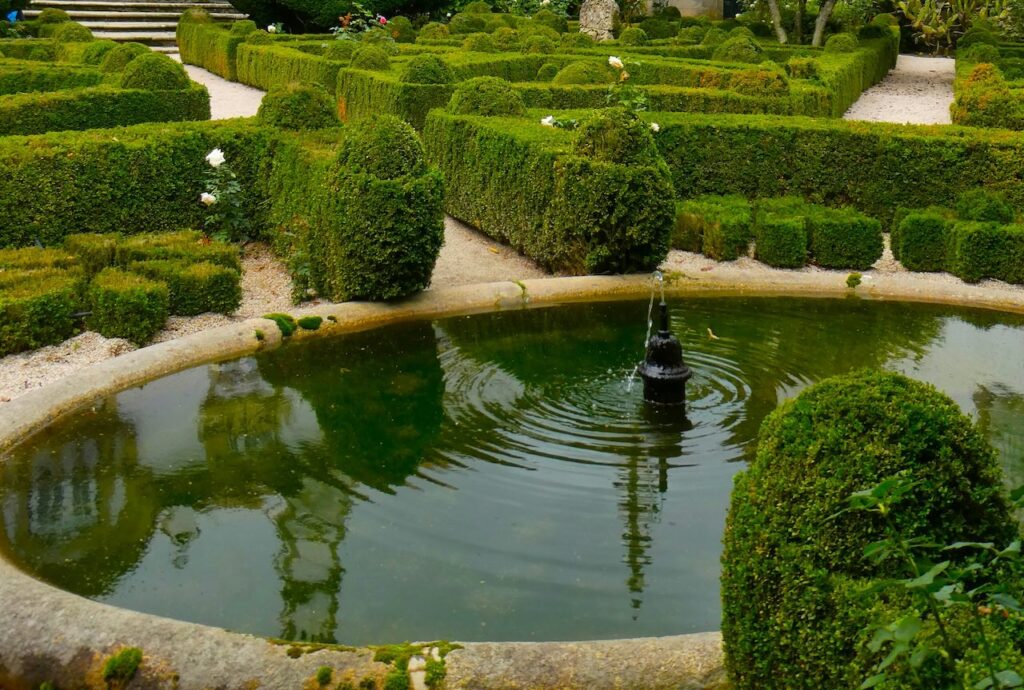
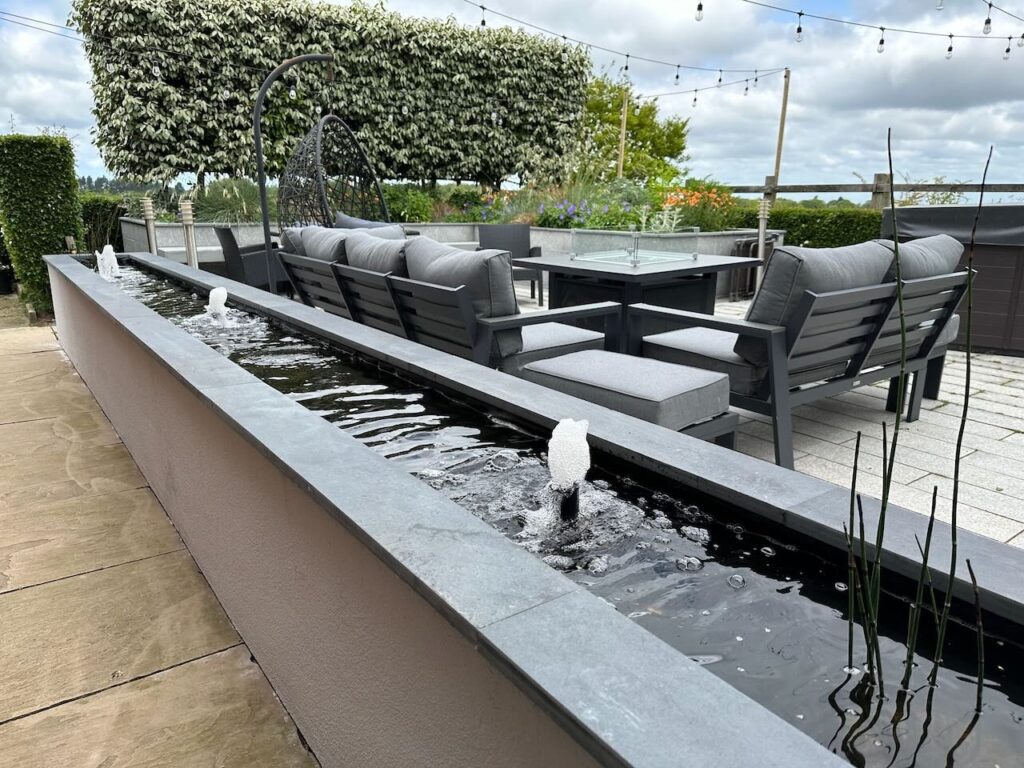
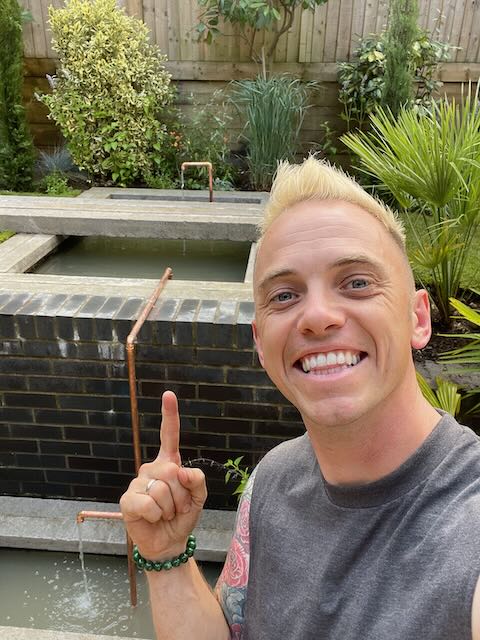
Let’s review an example of a formal pond, as shown below. Note the symmetry and clean balance of the pond using stone for a sharp geometric look. These types of ponds are found in formal gardens such as knot or parterre gardens. They are also found in very symmetrical modern designs.
Features of a Formal Pond
📋 Formal Pond at a Glance
Shape
Geometric — rectangles, squares, circles
Edges
Crisp hard landscaping: stone, brick or concrete
Central Feature
Fountain, statue or decorative centrepiece
Planting
Minimal, carefully positioned for a controlled look
Water Surface
Still for reflection, or moving for drama
Best For
Modern, contemporary and formal garden styles
What is an Informal Pond?
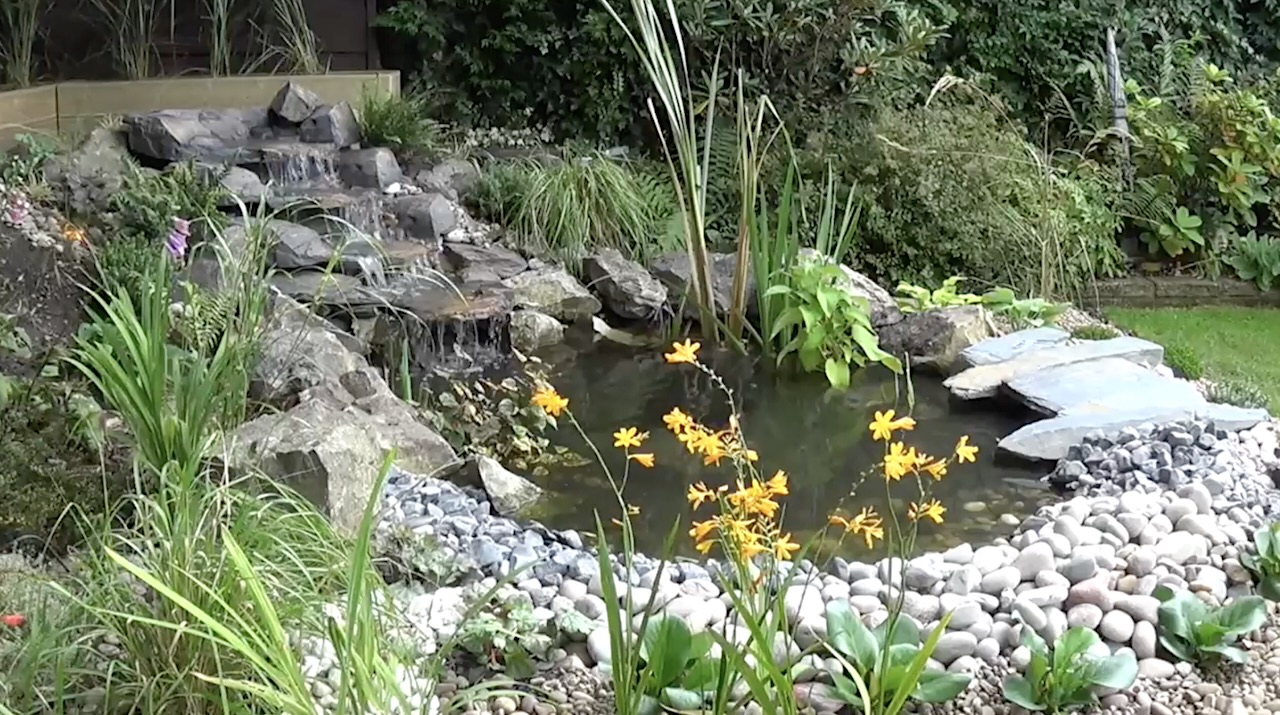
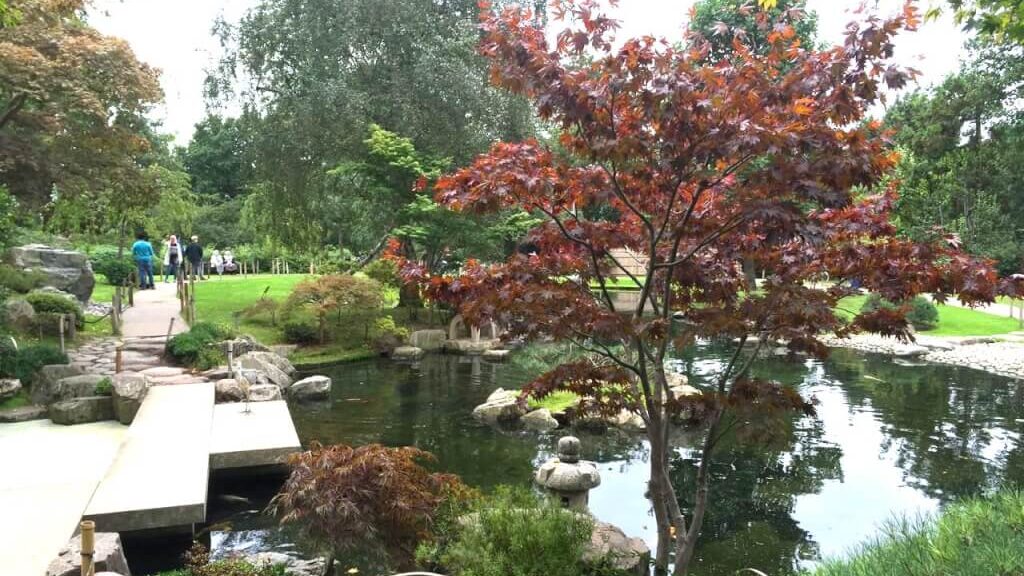
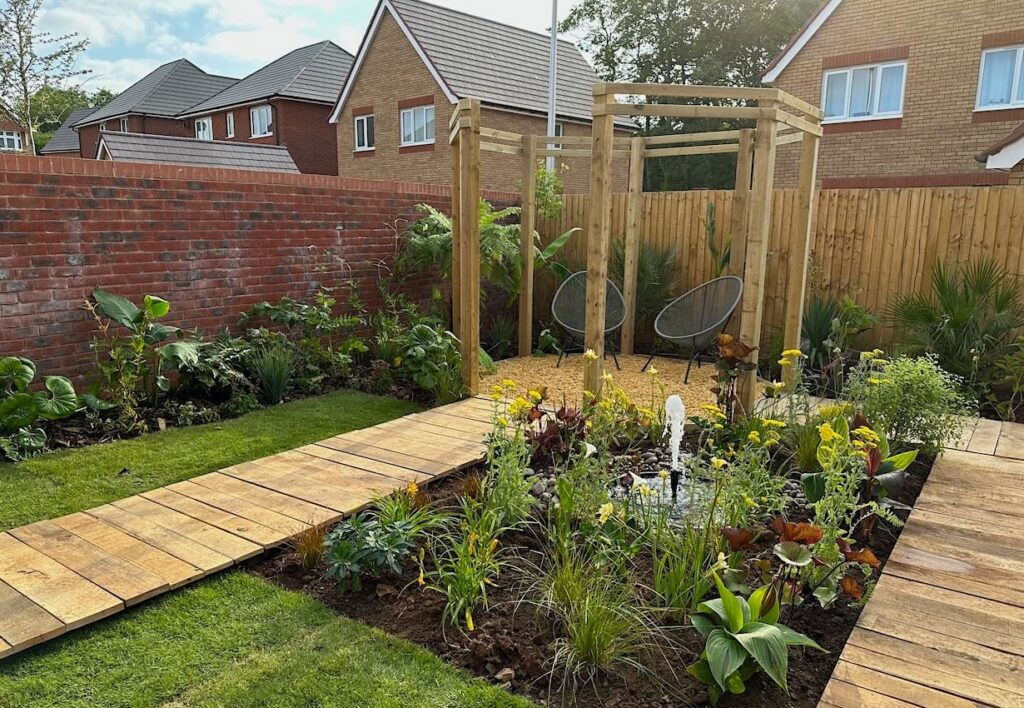
In contrast, the informal pond has asymmetry and a more naturalistic style with soft lines, gentle sloping edges and planting. You find these naturalistic ponds in informal garden designs or asymmetrical garden layouts where the gardens are more relaxed in their layout. Relaxed does not mean lazy garden design, though — formal and informal gardens take just as much garden design planning!
Features of an Informal Pond
📋 Informal Pond at a Glance
Shape
Curved, irregular — mimics natural water bodies
Edges
Soft, blending into surrounding landscape with overhanging plants
This then leads to the next consideration: do you want a wildlife pond (usually informal), an ornamental pond (typically formal), or simply a water feature such as a rill, pebble pool, or plug-in pond in a pot? Answering this usually tells you whether you need to plan pond plants, fish, water pumps and filtration.
Whilst all ponds and water features benefit wildlife, the smaller the pond or water feature, the less benefit it will have, and the higher the chance it will look a tad awkward in larger gardens. You also need to top the water up more frequently in summer. So consider the pond’s scale to be in keeping with the size of your garden.
If it looks too small, it will always feel awkward; if it’s too big, it will dominate your garden space, which is why planning and drawing up your garden pond to scale on paper is a good idea.
2. Choosing the Best Pond Location
This is often the step in building a pond that gets overlooked. Most beginner gardeners shove the pond or water feature into a back corner of the garden or slap it straight in the middle. Both of these can look awkward, imposing, or lacklustre. Careful consideration is needed to ensure your pond is in the best place to make sure you’re happy with your view of it. A considered pond location or placement can also reduce maintenance if it’s easy to access and away from hanging trees or fence panels, and ensure that you get the most out of your water feature.
Once you have built a pond, they are a pain to relocate, so it’s best to get the position of your pond in your garden right the first time. No one wants water feature regrets.
How to Choose the Best Position for a Pond
💡 Top Tip
Always view your proposed pond position from the house before digging a single spadeful. The journey to the pond, the view from your kitchen window, and how it sits in relation to the rest of the garden are all just as important as what the pond itself will look like.
I would always advise that you site and position your garden pond based on the following checklist criteria:
Choose a spot with partial sun and shade, reducing algae and allowing for a better water balance.
Position your pond away from being directly under deciduous trees to reduce leaf debris.
Consider the journey to the pond in your overall garden design.
Does the position make it easy to maintain and inspect?
Is the ground level enough, or will significant ground preparation be needed?
Is there easy access to a power supply if you want a pump or filter?
3. Size & Depth of Your Pond Explained
When designing a pond, the intended purpose greatly influences its ideal depth to ensure it is suitable for fish and wildlife, and to prevent it from freezing solid in the winter or evaporating into a puddle in the summer.
How Deep Should a Wildlife Pond Be?
For wildlife ponds, a depth of 45–60 cm (18–24 inches) is recommended. This depth range is critical to help wildlife survive in your pond during the entire year, not just in summer!
I would always argue a 60cm pond depth is the real minimum to ensure everything living in the pond can happily survive the extremes of temperature. However, if you’re pushed for depth, 45cm is the bare minimum depth a pond or water feature supporting life should be.
A depth of at least 45cm ensures that the pond can support plants of varying heights and growth habits, such as marginal plants along the edges and oxygenating plants at the base. The depth of a pond can help prevent the pond from freezing completely during winter, allowing creatures to survive in the warmer water layers at the bottom. Ideally, a pond that’s 60cm can survive even the most brutal of frosts here in the UK.
How Deep Should an Ornamental Pond Be?
Shallower depths are suitable for decorative ponds, which are often designed for visual appeal rather than supporting fish or extensive wildlife. A depth of 15–30 cm (6–12 inches) can suffice if the focus is on aesthetics and supporting much smaller water plants. However, the limitations of shallower ponds include:
Increased vulnerability to temperature fluctuations — water overheats in summer and freezes solid in winter.
There is less space for wildlife to find refuge or thrive, making them less ideal for supporting a diverse ecosystem.
You must keep topping them up with rainwater (tap water can be used, but the chlorine can quickly upset the balance for anything living in there).
If your pond or water feature has fish, then even decorative ponds need deeper areas (at least 60cm) to ensure fish safety during temperature extremes.
What’s the Maximum Depth of a Pond?
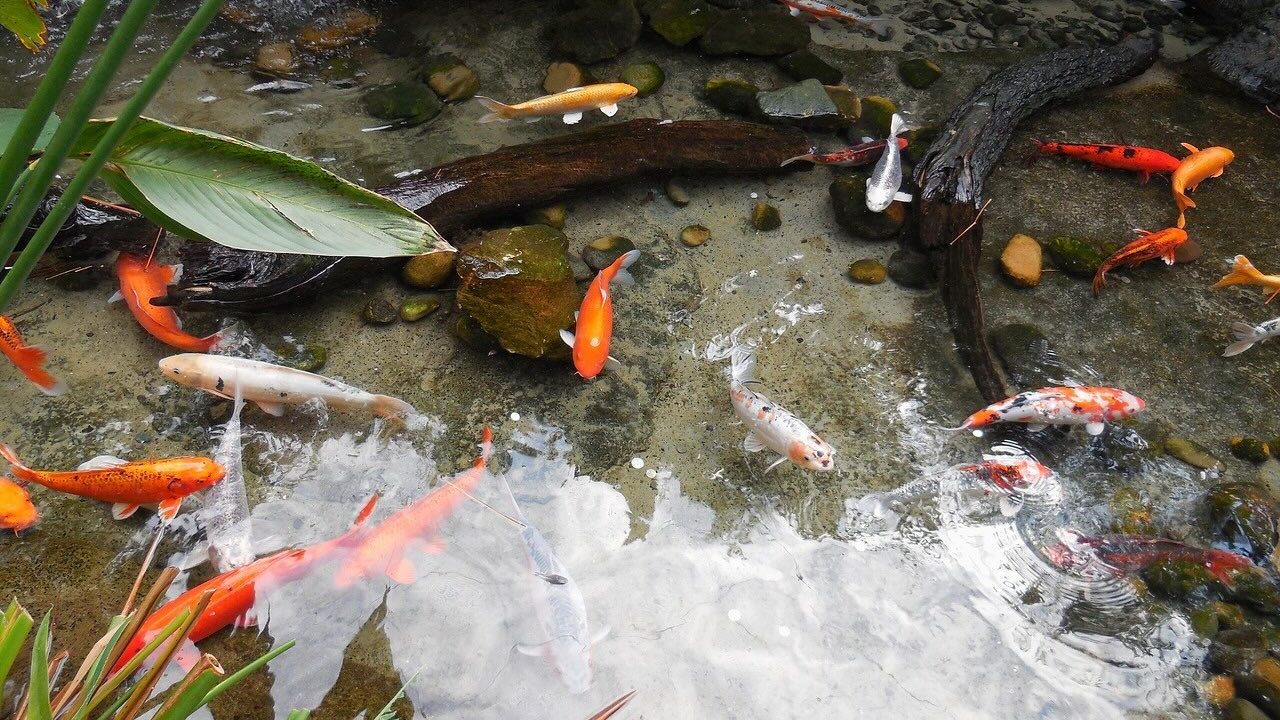
In my experience, for urban gardens, the maximum depth of a pond is around 1.5m, which is only suitable for large fish like koi or huge ponds. Deeper ponds can be harder to clean, require more planning, and may increase safety concerns — especially with children around or if anyone falls in.
📋 Pond Depth Quick Guide
Pond Type
Minimum Depth
Maximum Depth
Wildlife pond
45cm
90cm
Ornamental / decorative
15cm
60cm
Fish pond (goldfish)
60cm
100cm
Koi pond
100cm
150cm
Marginal shelf
10–15cm
25cm
Ensure Your Pond Has a Marginal Shelf
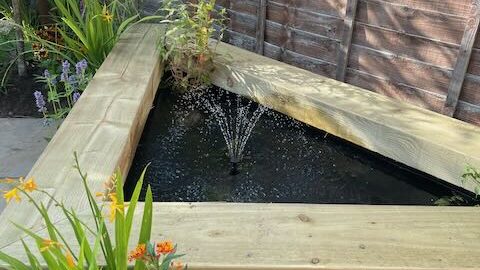
A marginal shelf is the secret weapon of any successful pond. It’s that shallow ledge around the edge of your pond, and it’s an absolute game-changer. Why? Because it creates the perfect home for marginal plants like marsh marigolds and water irises, which look stunning and act as natural water filters.
The shelf provides a gradual transition between water and land, making it easier for wildlife like frogs, newts, and insects to move in and out of the pond. Plus, the plants on the shelf offer essential shelter and shade for aquatic life while softening the pond’s edges for a more natural look. Without a marginal shelf, your pond might feel a little lifeless and miss out on the incredible biodiversity it could support. So please don’t skip this essential feature, it’s the key to a thriving, wildlife-friendly pond!
4. Choosing Pond Liners: Which is Best?
Before we go running for a spade to start digging over the garden, we need to carefully consider what kind of pond liner we are going to use. The pond liner’s job is to keep water in the pond, prevent leaks, and provide a long-lasting barrier between the water and the surrounding ground. The old adage of you get what you pay for comes into play when choosing a pond liner.
i) PVC (Polyvinyl Chloride) Liners
A lightweight, flexible, and budget-friendly pond liner option, often chosen by beginner pond enthusiasts. This pond liner can be picked up from any garden centre or online, usually sold by the metre. This pond liner is cheap and cheerful. Cost £2–£8 per m².
Lifespan: 10–15 years with proper installation and maintenance.
ii) EPDM Rubber Liners
EPDM (Ethylene Propylene Diene Monomer) is a significant step up from PVC and represents excellent value for the majority of garden pond builds. EPDM rubber pond liners are the most popular choice for UK wildlife and fish ponds. They’re flexible enough to form around complex shapes, highly resistant to UV and frost, and approved as fish-safe. Cost £6–£12 per m².
Lifespan: 20–30 years. For most gardeners building a medium-sized wildlife pond, EPDM offers the best balance of performance and value.
iii) Butyl Rubber Liners
The gold standard in pond liners is known for its premium quality and exceptional durability. I would always persuade even gardeners on a budget to splash out on butyl rubber pond liners if at all possible. This material can be ordered in custom shapes and sizes for the perfect fit, especially for garden rills or formal geometric water features. Costs £10–£15 per m².
Lifespan: 30–50 years, making it the longest-lasting option.
iv) Preformed Pond Liners
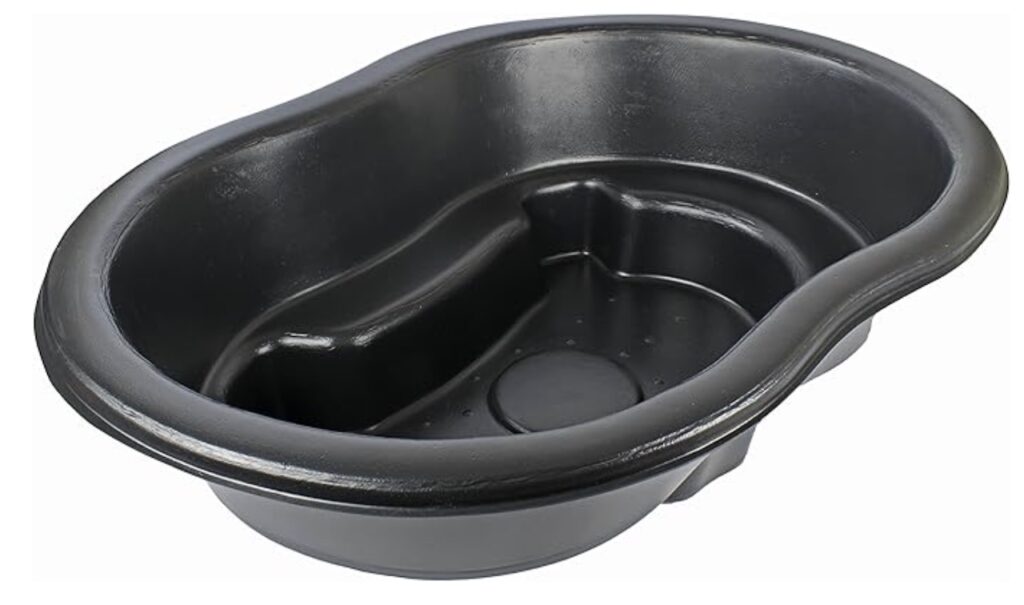
Rigid, moulded preformed pond liners made of durable plastic or fibreglass, designed for small, easy-to-install ponds. This was one of the first pond liners I ever used as a child, way back when! The difficulty is that you have to dig the hole to the exact shape and size of the liner, and you’ll need sharp sand to get a decent, snug fit. Costs £50–£500+ depending on size and material.
Lifespan: 10–20 years, depending on material quality.
Pond Liner Comparison Table
📋 Pond Liner Comparison
Type
Lifespan
Cost (per m²)
Best For
PVC
10–15 years
£2–£5
Budget, small ponds
EPDM Rubber
20–30 years
£6–£12
✅ Best value — wildlife & fish ponds
Butyl Rubber
30–50 years
£10–£15
High-end, long-term ponds
Preformed
10–20 years
£30–£300+
Small decorative ponds
Pond Liner Fitting Tips
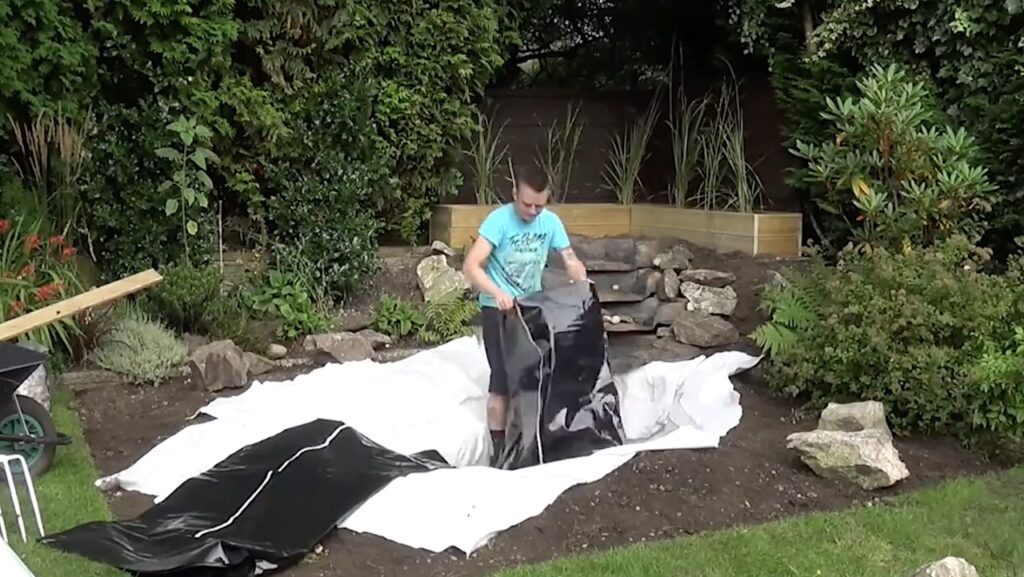
Before laying your liner, always add a pond liner underlay or protective fleece (around £1–£3 per m²) beneath your liner to protect against punctures from sharp stones or roots. This step is so often skipped by beginners and it’s the difference between a liner that lasts two years and one that lasts twenty.
Lining the base with sharp sand is an alternative to using a fleece or underlay.
Try to remove any rocks or roots before adding the liner.
Consider the liner’s warranty as an indicator of quality — some premium liners carry warranties of up to 25 years.
Rather than joining pond liners with adhesive, order or use one continuous piece of liner for the size of your pond.
How to Calculate the Right Liner Size
Getting the liner size wrong is an expensive and frustrating mistake. Use this formula before you order:
💡 Liner Size Formula
Length of liner = pond length + (2 x maximum depth) + 0.5m overlap each end Width of liner = pond width + (2 x maximum depth) + 0.5m overlap each side
Example: A pond 2m x 1.5m x 0.6m deep needs a liner of 4.2m x 3.7m.
5. How to Dig Out and Line a Pond: Step by Step
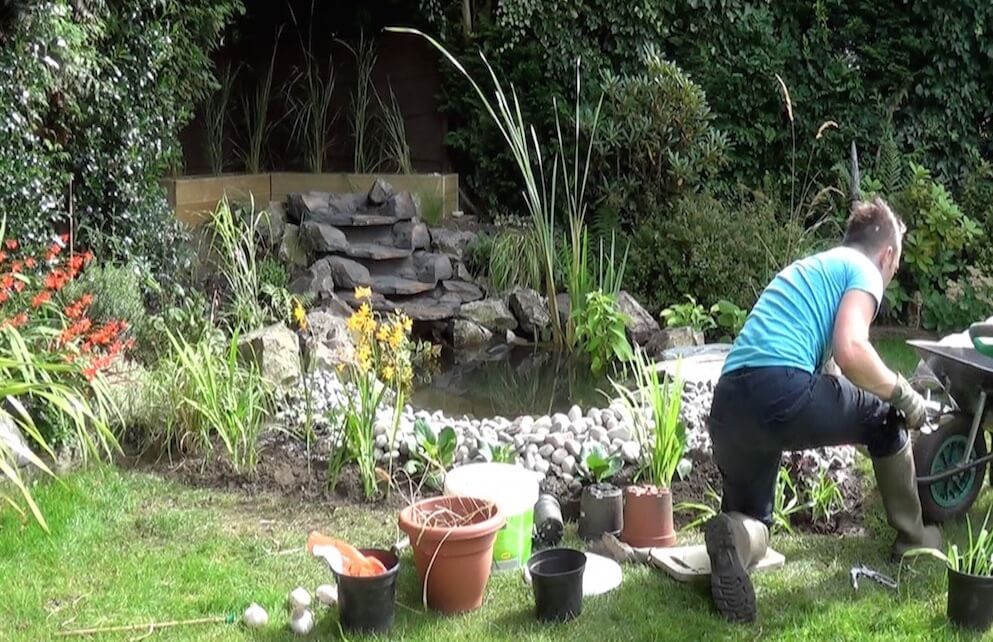
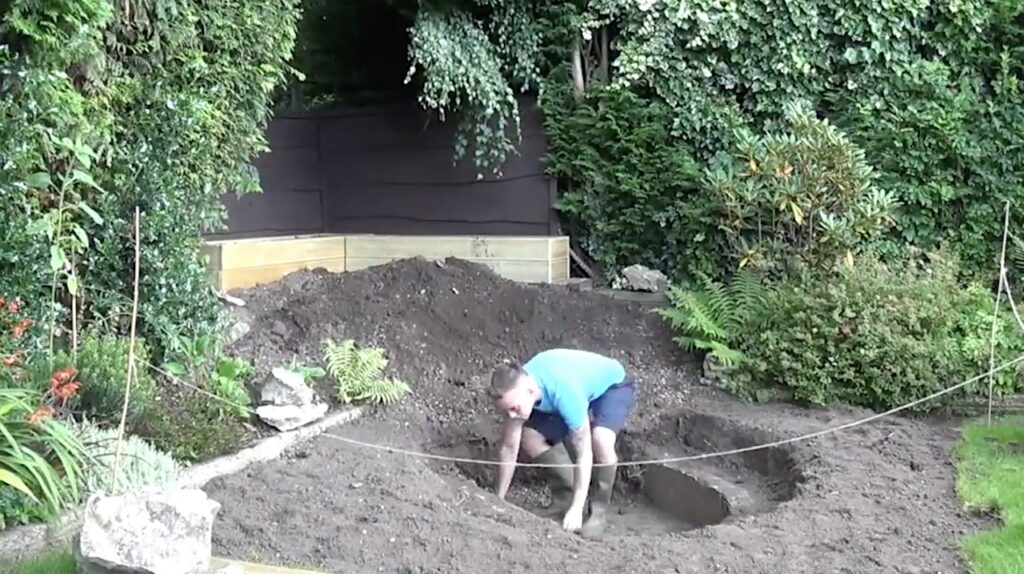
Now for the hard work and fun part: digging out the pond. Unless you have a massive pond requiring a digger, most people will be digging the hole by hand.
The first tip is to take your time, and please don’t underestimate how much effort you need to dig a pond manually. It always takes far longer than you imagine, so ensure you have a whole weekend or plenty of time. Also, consider where all the soil you have dug out will go! Using tarps, plastic sheeting and containers to put the soil in is a good idea to stop spreading mud and muck around your garden.
Step 1: Mark Out the Pond
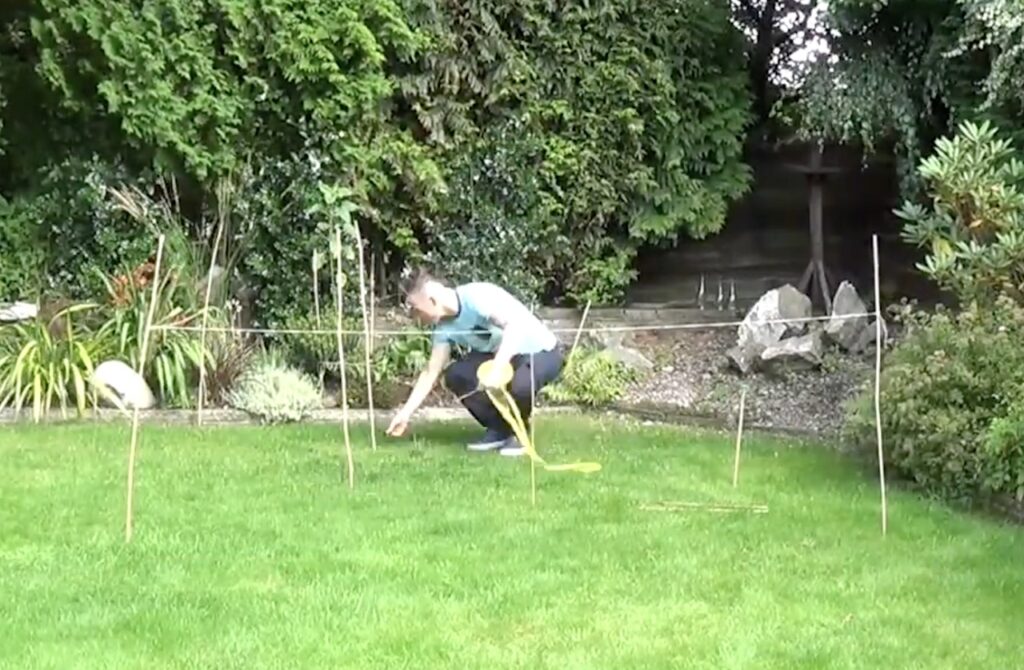
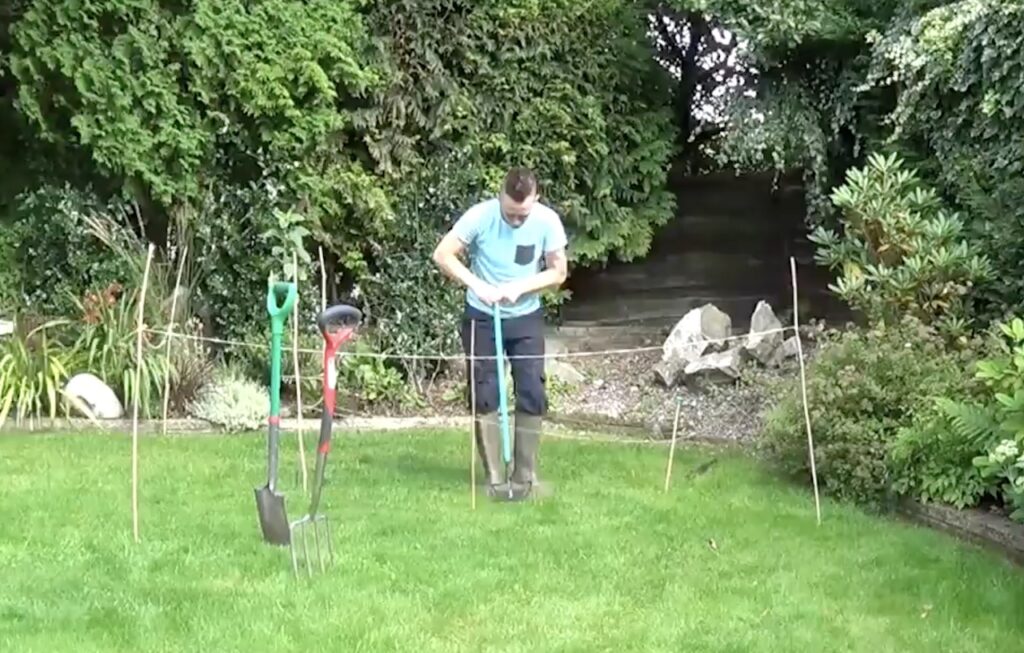
Outline your pond shape using a garden hose, bamboo canes, string, or spray paint. I prefer canes and string as you can adjust them, then use a spray line to mark out your pond. Don’t be surprised if you need to tweak the size or shape at this stage. Standing back or viewing the pond from the house will give you the edits you need to make.
Step 2: Dig Out Your Pond
When you’re ready, remove either the turf with a half edger or start to dig the soil on bare earth. Dig the outline first and lift the turf to see the overall shape. Then dig out the pond, taking one or two spades out from each section and working around the pond evenly. Don’t try to dig to the ultimate depth on one side and then carry on to the other side. It’s too difficult and far easier to take off even amounts across the pond area and then dig additional layers until you reach the desired depth. Don’t forget to create shelves for aquatic ‘marginal’ plants and to allow wildlife in and out of the wildlife pond easily.
Step 3: Level the Edges
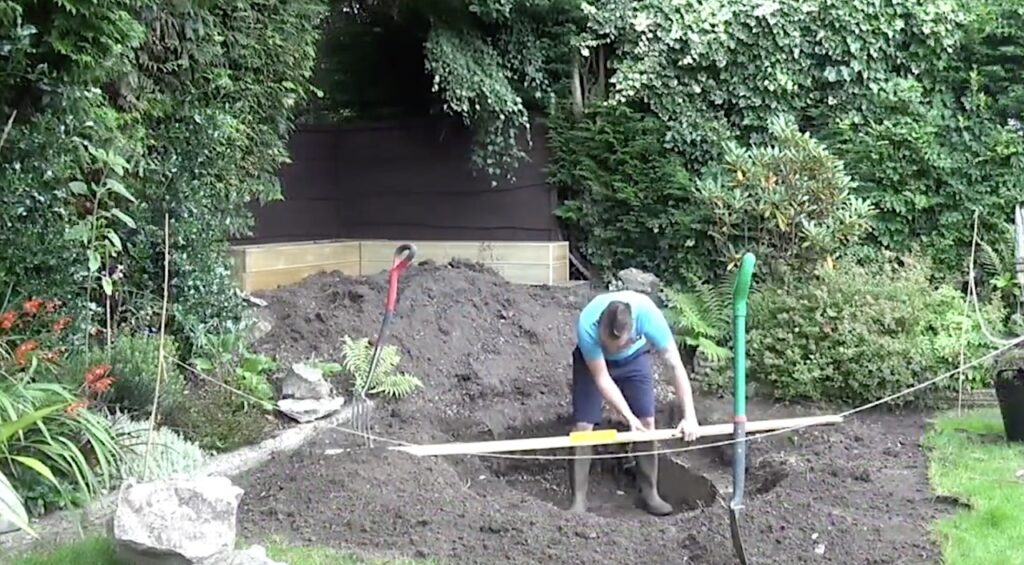
With a plank of wood and a spirit level, ensure the edges are even to prevent water from overflowing from any one side. This is the step most often missed by beginner gardeners digging ponds. A piece of wood from one side to the other and a spirit level will show which side either needs to be raised or dug lower, until the bubble on the spirit level rests in the middle.
Step 4: Remove Rocks and Debris, Then Add Fleece
At this stage, spend some time tidying and cleaning the base of the pond of rocks, roots, sharp edges or any debris that can puncture the pond liner. I also like to give my ponds a flat bottom because it allows any pond pumps or filters to sit evenly anywhere in the pond rather than right in the middle if the base is angled. This gives you the most flexibility with water circulation and placement of pond filters.
This is a clever hack that helps you avoid too many creases and issues in getting your flexible pond liner to fit the pond correctly. Unwrap your pond liner and leave it in the sun or a warm room to soften. This enables you to flex and move it far more than a cold, rigid pond liner. Leave it in the sun or unwrapped indoors for at least one hour to soften.
Step 6: Lay the Liner into the Pond
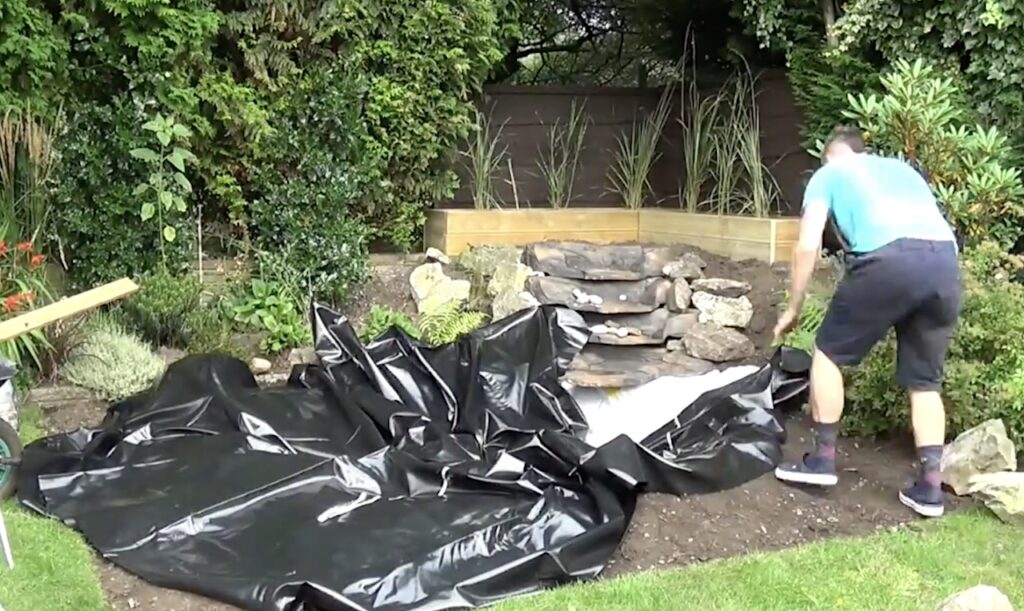
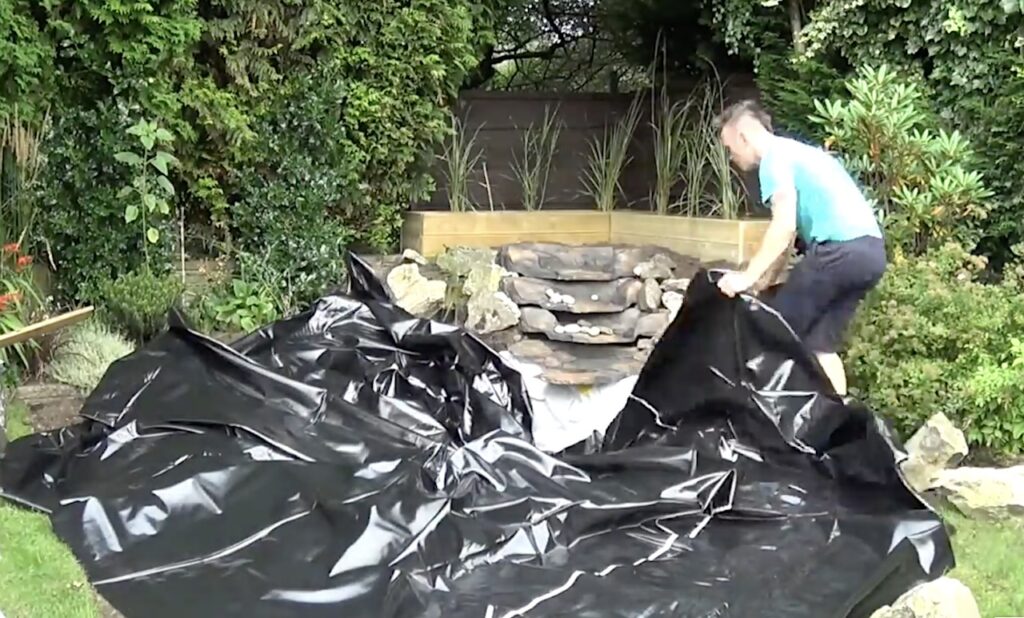
Now for the fun bit, laying the hopefully warmed liner into the pond. Ensuring it fits smoothly into the hole, take your time to pay it out, and take your shoes off when walking into the pond so you don’t damage it! Pull out any significant creases and ensure that it covers not just the hole but the excess, which then covers the top ground level of the pond.
⚠️ Important Warning
Do not cut the liner yet. Wait until it has been filled with water, as the weight of the water will draw in the liner and shorten the edges. If you cut too soon the liner can suddenly become too small for the pond!
Step 7: Fill with Water
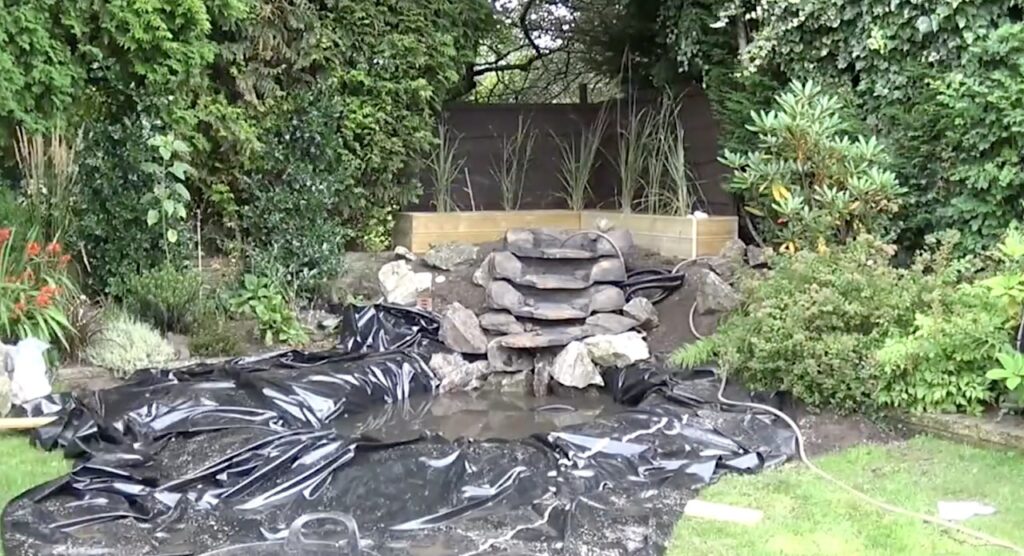
Slowly fill the pond with a hose, adjusting the liner as needed to remove creases. You may read about filling ponds with rainwater, but this is usually not possible for larger ponds, so I use a hose and let the water acclimatise before adding fish, usually for around 4–6 weeks.
This removes chlorine and other chemicals from the water, allowing it to neutralise. You can speed up this process with a 🛒 pond water dechlorinator or tap safe treatment, which is particularly useful if you’re in a hurry to establish the pond. Once the water is 5cm below the top level, turn off the hose and let the pond settle; check for an hour or so that there are no leaks or a dropping water level before edging.
Step 8: Finish the Pond Edges and Cut the Liner Excess
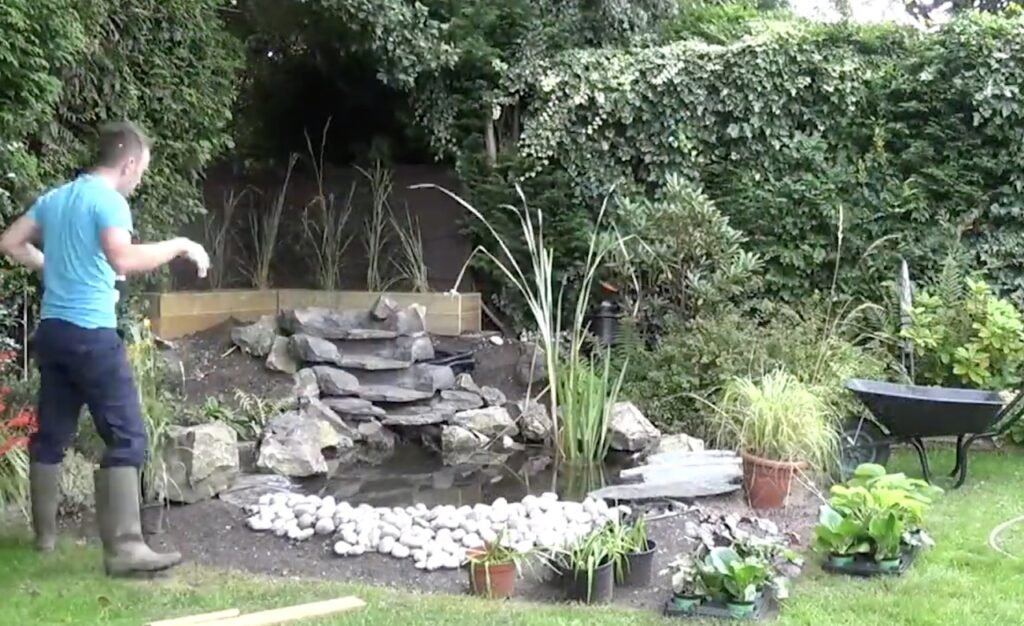
The last step is to finish the edges and cut the spare liner so it’s all neat and tidy. You have a few options for pond edges: formal paving stones set on a mortar bed, or the more naturalistic stone or rockery edge. You can also use large logs or run turf up to the edge to naturalise it. A word of design warning: use a gradient of different stone and pebble sizes to avoid the ‘Wilma Flintstone Necklace’ look around the pond, which I always see and it looks slightly naff.
How Long Should I Wait Before Adding Fish to a New Pond?
The pond must go through the nitrogen cycle, which typically takes 4–6 weeks. During this time, beneficial bacteria will establish themselves in the filter and pond’s surfaces to break down harmful substances like ammonia and nitrites from fish waste.
After the cycling process is complete and the water parameters are stable, you can begin introducing fish gradually. Start with a few fish and monitor the water quality frequently. Adding too many fish too soon can overload the pond’s filtration system and restart the cycling process, which can harm the fish. You can accelerate the process with pond beneficial bacteria treatments, which introduce the good bacteria your pond needs to become balanced.
6. Adding Pond Plants
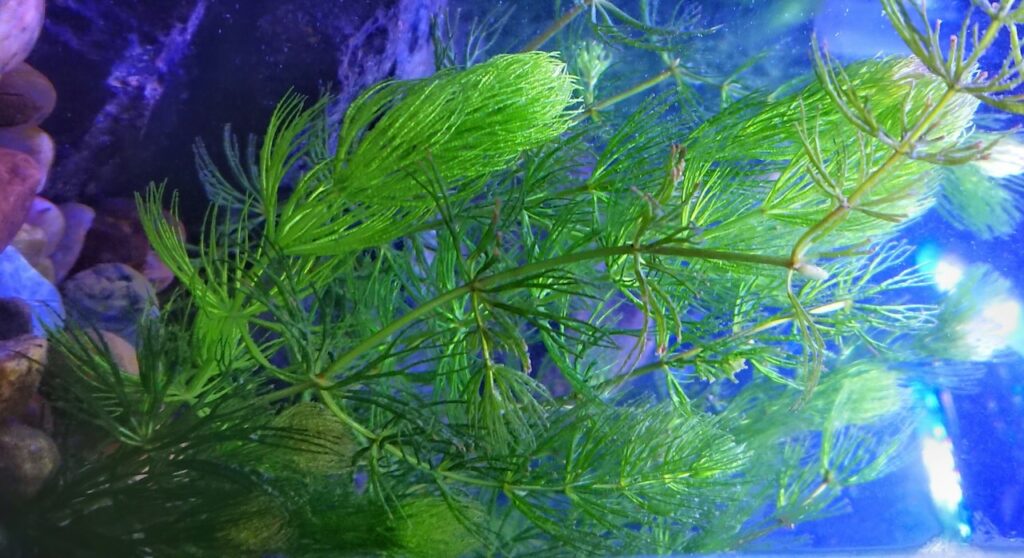
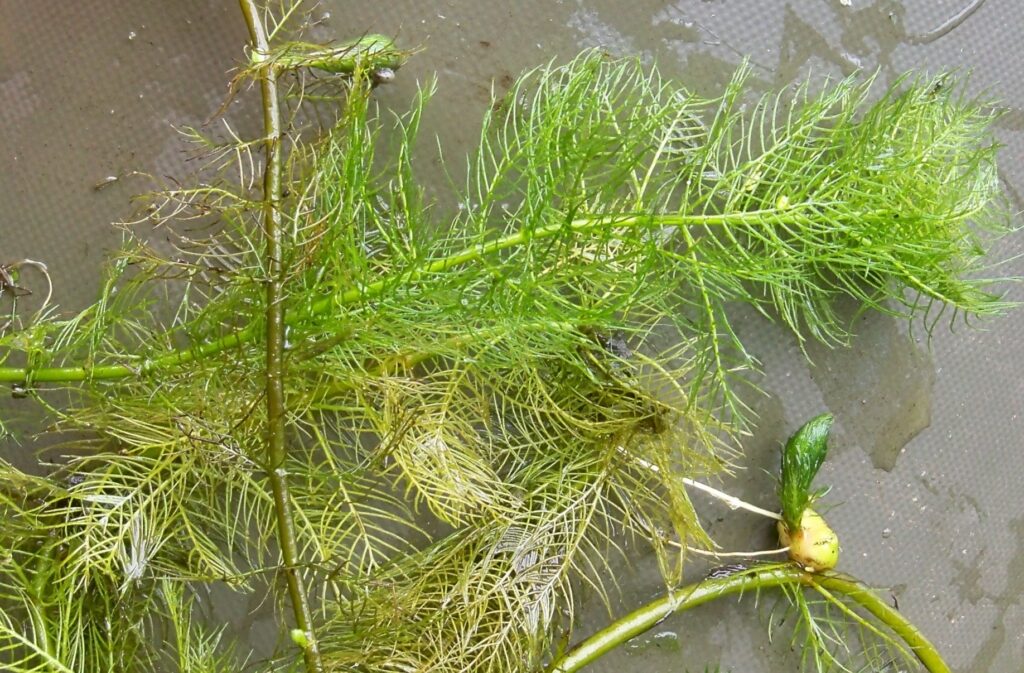
Aquatic plants are the backbone of a thriving pond ecosystem. Incorporating a mix of oxygenators, marginals, and floaters will ensure your pond stays balanced. Oxygenators like hornwort work behind the scenes to keep your water clean and oxygen-rich, vital for fish and other aquatic life.
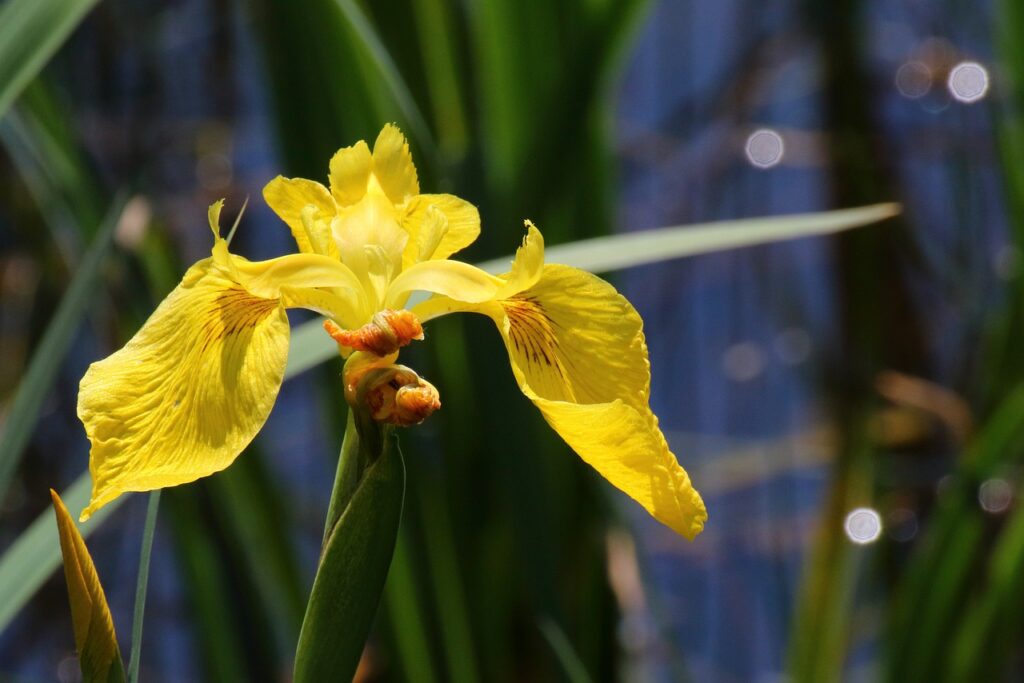
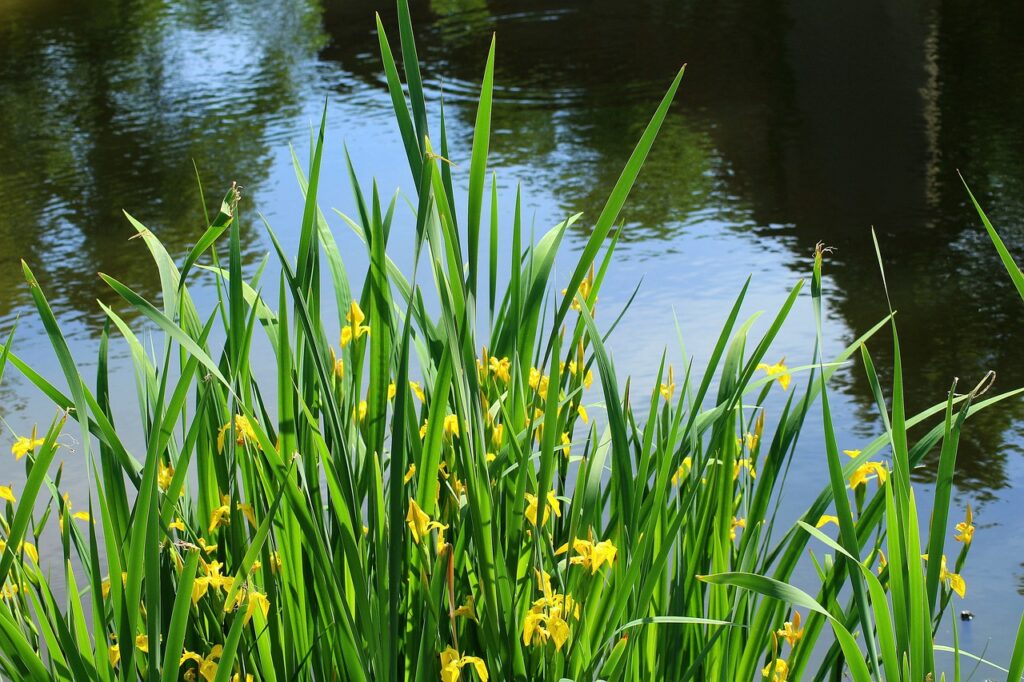
Marginals, such as irises, look stunning with their bold foliage and flowers, but also help stabilise the pond’s edges and provide essential shelter for wildlife. Remember the marginal shelf we discussed? This is the place to plant aquatic marginals and help soften the edges of any pond, giving a much-needed shelter belt for wildlife.
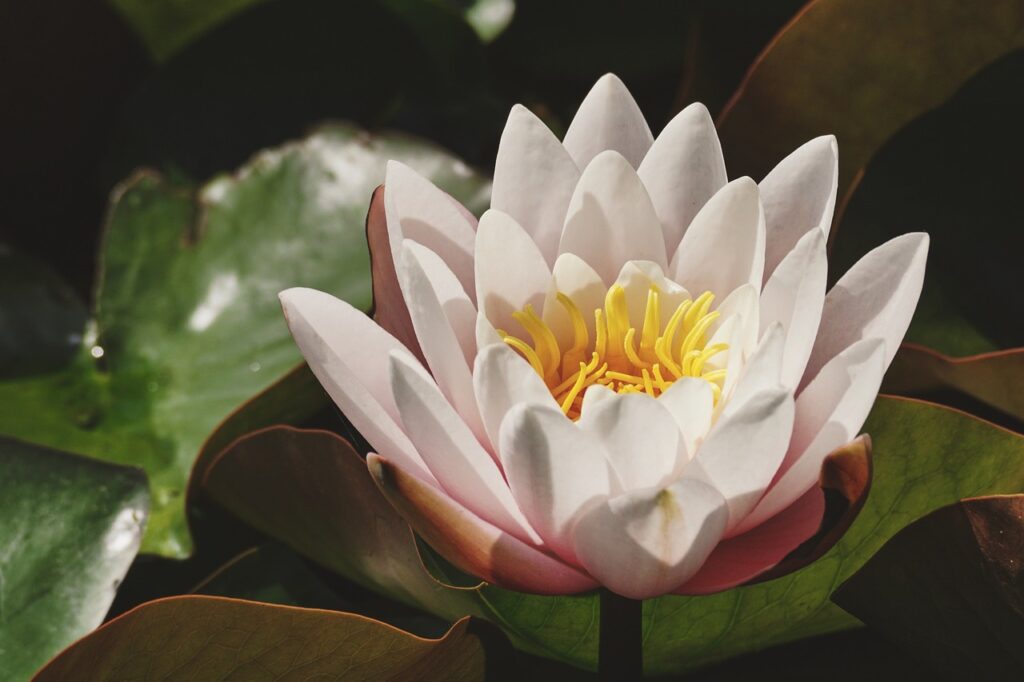
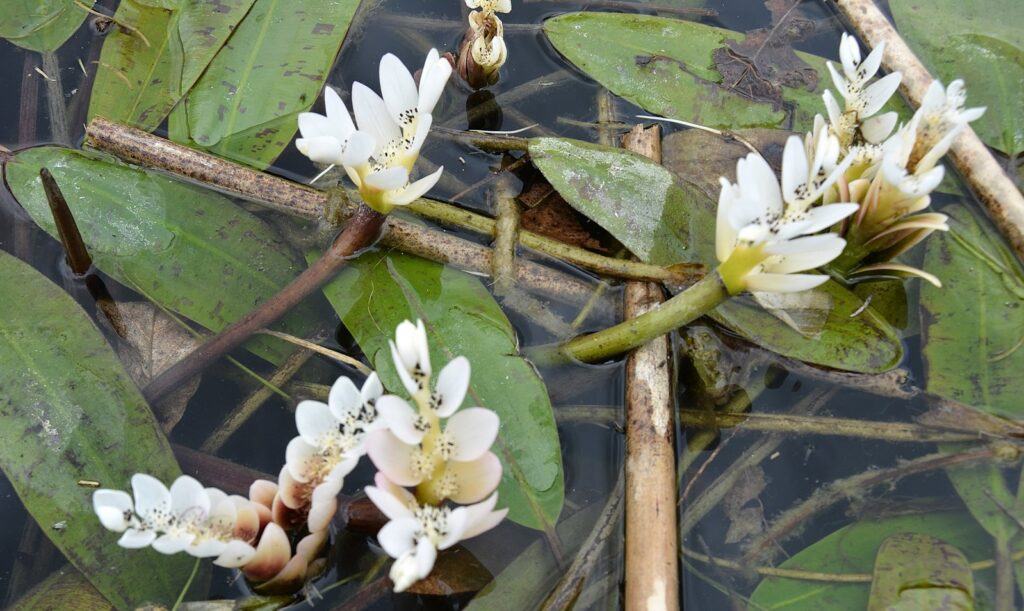
Finally, floating aquatic plants like waterlilies or water lettuce add a classic pond aesthetic while shading the water to prevent overheating and algae growth. Together, these plants create a harmonious pond where wildlife thrives, and water quality remains clear.
📋 Pond Plant Types at a Glance
Plant Type
Position in Pond
Key Benefit
Examples
Oxygenator
Submerged
Keeps water clean and oxygen-rich
Hornwort, Water Milfoil
Marginal
Marginal shelf (10–25cm)
Stabilises edges, shelters wildlife
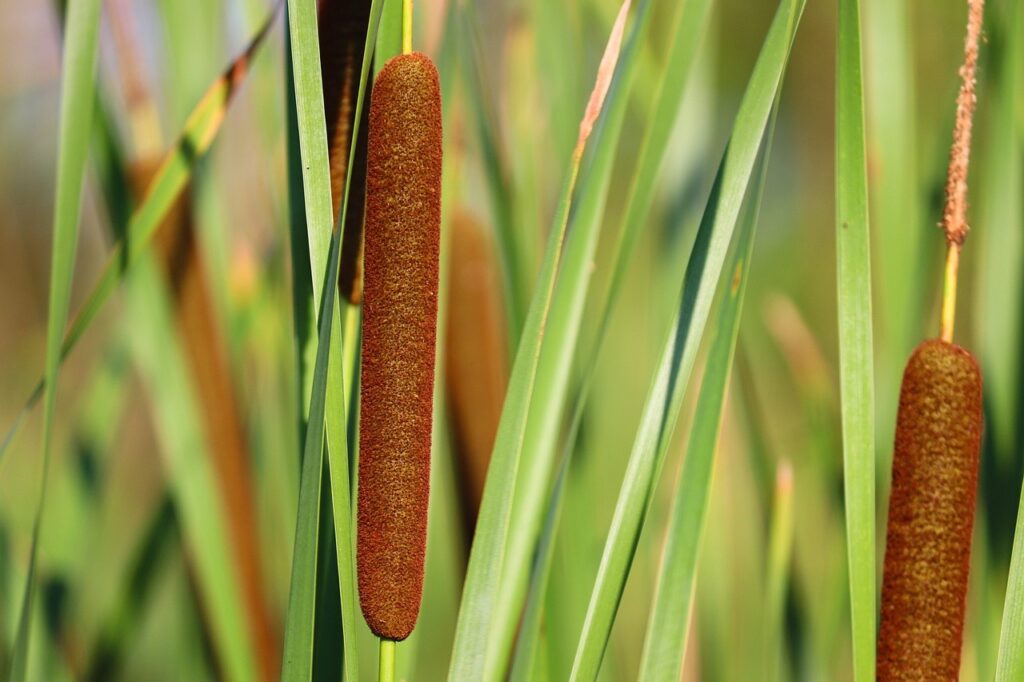
Yellow Flag Iris, Cattail
Floating
Water surface
Shades water, reduces algae
Water Lily, Water Hyacinth
Deepwater
30–90cm depth
Long-term anchor, ornamental interest
Water Hawthorn, Lily pads
Top 10 Aquatic Pond Plants for a New Pond
If you’ve just built a pond and are wondering what the best beginner pond plants are, the list below shows my top ten fuss-free pond plants. Always check the label of each of these for their recommended depth, particularly with water lilies. In shallow ponds, always look for dwarf varieties with a shallower depth. With marginals, most plants will accommodate a depth of 10–30cm. It’s also worth investing in aquatic planting baskets to keep your plants contained and easy to manage or divide.
1. Nymphaea (Water Lily)
Type: Deepwater plant (floating foliage and flower)
Benefits: Provides shade, reduces algae, and adds a classic, ornamental touch
Once established, your aquatic plants will likely outgrow their containers. When this happens, pot them on with specialist aquatic pond plant compost into new planting baskets. Regular compost will cloud your water and cause algae blooms — aquatic compost is heavier, clay-based, and low in nutrients, keeping the water clear.
7. Pond Pumps, Filtration and Water Circulation
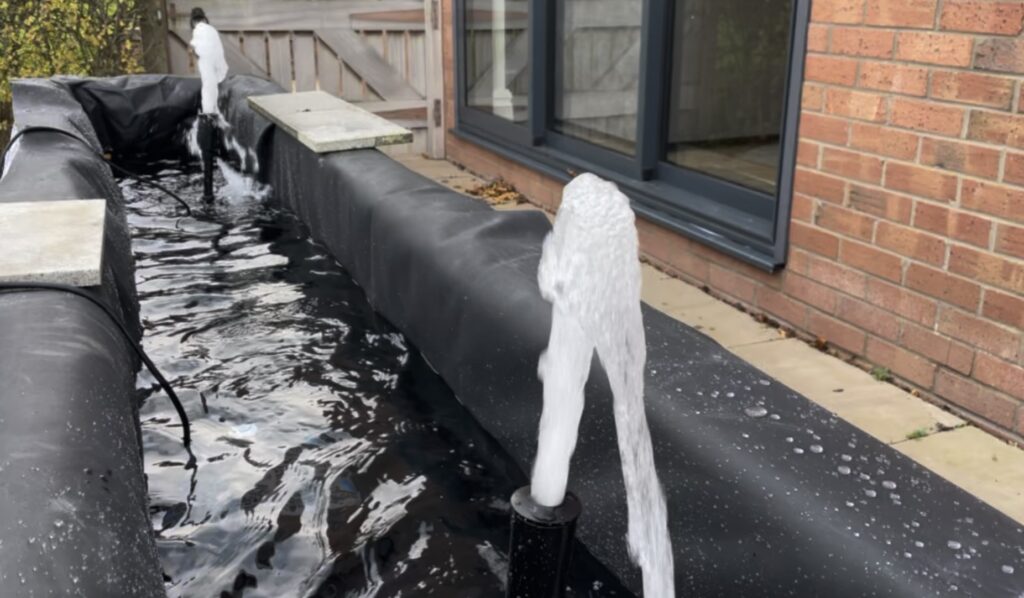
Adding a waterfall or fountain to your pond is a brilliant way to inject movement and sound into your garden. The gentle trickle of water cascading down a waterfall or the rhythmic splash of a spouting fountain not only creates a sense of tranquillity but also helps aerate the water, keeping it fresh and healthy for pond life, especially when paired with a filtration system.
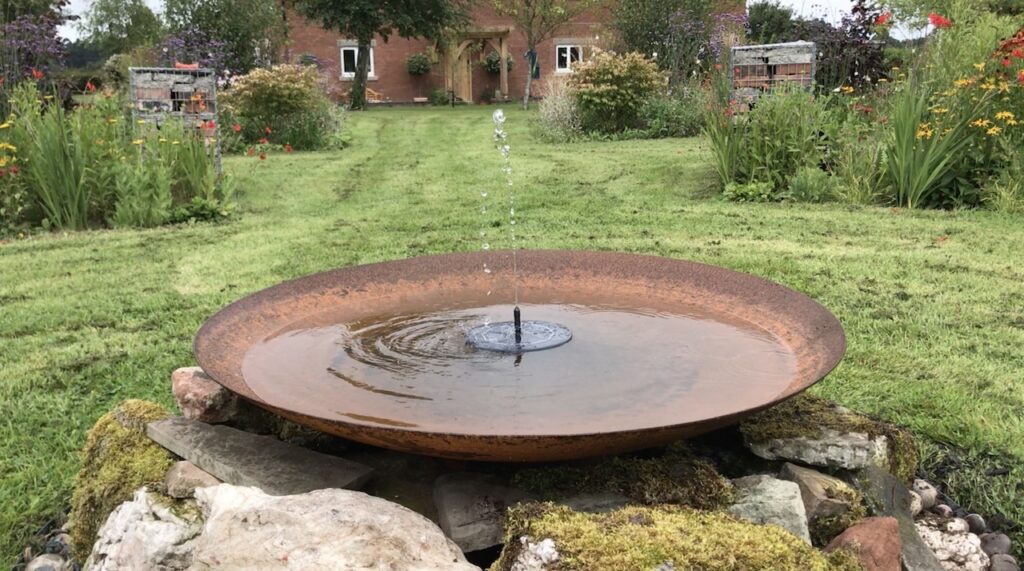
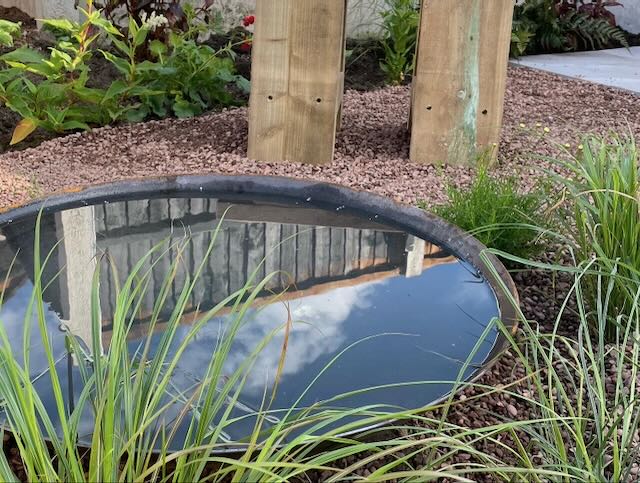
Even a simple water bowl can benefit from a solar pond fountain pump like the one below with no electricity needed, and it adds that magical sound of moving water to even the smallest garden space!
Pumps and filters recirculate your pond water, ensuring movement while pond filters maintain clarity. This helps keep aquatic life healthy and happy and stops your pond from turning into a dark green algae-riddled soup. Choosing the right combination of pond pump and filter can be daunting, but let me explain which pump and filter work best to ensure your pond stays fabulous throughout the seasons.
Why Do You Need a Pond Pump and Filter?
A pond pump keeps water circulating, preventing stagnation and encouraging oxygenation, essential for fish, plants, and beneficial bacteria. A filter works hand-in-hand with the pump to remove debris, waste, and harmful toxins, ensuring your pond remains crystal clear and balanced.
Together, a pump and filter create a healthy ecosystem, reducing algae growth, supporting wildlife, and enhancing the overall aesthetic of your pond. Running a combination filter and pump for 6 hours a day from spring to autumn will keep your pond clean and dramatically reduce the manual maintenance you need to do.
Types of Pond Filter Explained
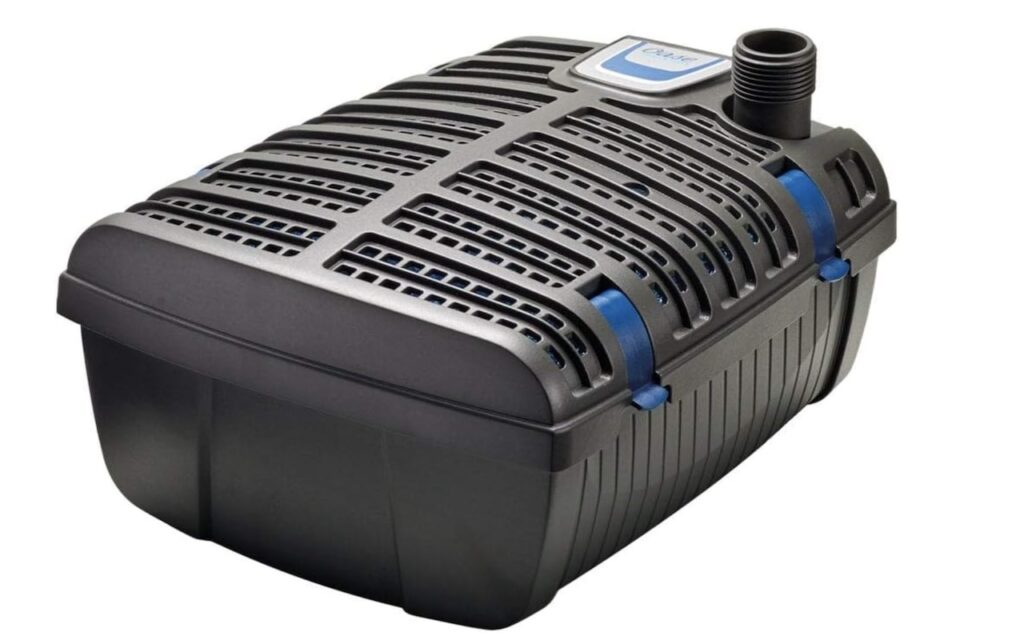
There are three main types of pond filter, but the best setup for most residential ponds is a combination biological, UV and pump in a single submersible unit. The one I use in all my pond designs for most residential clients is the Oase Filtral UVC — a submersible all-in-one filter which cleans the water, treats algae, and then provides an outlet for a fountain or waterfall. A one-stop shop, and one of the best pond investments you can make. I have these in all 3 of my ponds here at Garden Ninja HQ and they are incredible!
A) Biological Pond Filters
These filters use beneficial bacteria to break down harmful substances in the water, such as ammonia and nitrites produced by fish waste and organic matter. They convert toxic compounds into harmless nitrates that plants can use. Biological filters are essential for ponds with fish or high levels of organic debris — they focus on improving water quality over time rather than immediate clarity.
B) UV Pond Filters
UV (ultraviolet) filters control algae by using UV light to destroy algae cells, preventing them from multiplying and causing green water. They work by passing water through a chamber containing a UV lamp, which sterilises the algae without affecting beneficial bacteria. While UV filters are excellent for achieving clear water, they do not remove physical debris or toxins — which is why they’re almost always combined with a biological filter.
C) Combination Pond Filters
These filters combine biological filtration with UV technology and usually include a pump for either a fountain or a water feature. They are highly effective for ponds with fish, improving water quality and clarity. This is the type I recommend to most of my clients. Usually containing a pump too, they handle multiple aspects of pond maintenance in one unit, making them ideal for those seeking convenience and comprehensive filtration.
For 99% of garden ponds, a submersible pond pump is the way to go. A decent submersible filter system will usually have a water outlet for a pump, so you don’t need both unless running multiple waterfalls or fountains in your pond.
How to Choose the Right Size Pond Pump
Every pump on the market will have a volume of water that it’s suitable for, usually listed in the product name (for example, the Oase Aquarius 2000 handles a maximum of 2,000 litres per hour). Here’s how to calculate your pond volume:
💡 Pond Volume Formula
Multiply: length (m) x width (m) x average depth (m) x 1,000 = volume in litres
Example: 2m x 1.5m x 0.5m = 1.5m³ x 1,000 = 1,500 litres
💡 Always choose a pump that exceeds your pond’s litreage — a 3,000-litre pump for a 2,000-litre pond gives you headroom as the pump ages. You can always turn the flow down; you can’t turn it up past its maximum.
How to Deal with Pond Algae
Every pond owner will face algae at some point, particularly in the first year when the ecosystem hasn’t found its balance. Blanketweed and green water are the two most common complaints. Here is how to tackle them:
Green water (single-celled algae) — nearly always resolved by a UV filter. If you have green water and no UV, that is your answer.
Blanketweed (filamentous algae) — remove manually with a stick or pond fork, then treat with a pond algae or blanketweed treatment. Adding more oxygenating plants and shading 50–60% of the water surface with lily pads will starve it of light long-term.
Seasonal green water in spring — perfectly normal as the pond wakes up. Be patient; once oxygenating plants get going the balance usually corrects itself within 4–6 weeks.
8. Pond Maintenance Tips
Keeping your pond in tip-top shape doesn’t have to be a chore, especially if you’ve got a decent combination filter and you’ve positioned it correctly with the right depth. With a little know-how and regular care, you can maintain a thriving, crystal-clear pond that’s the star of your garden.
i) Keep It Clean
Remove fallen leaves, debris, and algae regularly using a pond net or skimmer. This prevents organic matter from decaying in the water, which can lead to poor water quality and algae blooms. A little weekly tidying goes a long way. But the trick is not to be too diligent — a bit of dead organic matter is beneficial in a pond, and stirring the water can cause it to cloud and disturb wildlife.
ii) Maintain and Trim Back Your Plants
Just like herbaceous perennials and shrubs, aquatic pond plants will also need maintenance. Trim back overgrown aquatic plants to stop them from taking over the pond. If your marginal plants start to fill out over the years, consider dividing them in the spring. Then pot on with fresh aquatic compost and specialist pond plant containers.
Give your pump and filter a regular check-up. Clean out any debris and rinse filter sponges — but always in a bucket of pond water, not tap water, to keep the beneficial bacteria alive. I clean my UV submersible filter once a month through the summer. This ensures proper water circulation and filtration and stops it from becoming sluggish.
v) Top Up Water Levels
Hot summer days can lead to evaporation, so keep an eye on water levels. Top up the pond with rainwater or dechlorinated tap water. It’s better to fill buckets with tap water the day before and let them off-gas overnight to reduce the impact on your pond’s water chemistry.
vi) Winter Pond Care
In autumn, use a pond cover net to stop leaves from clogging up. In winter, ensure part of the surface stays ice-free for oxygen exchange by floating a pond heater or de-icer or a simple tennis ball. Check all liners, pumps and pipes for leaks, cracks or damage during the quieter winter months. In spring, give the pond a deep clean if needed and start up your pump and filter after its winter rest.
💡 Top Tip
Never smash ice on a frozen pond. The shock waves travel through the water and can kill fish, frogs and other pond life instantly. Instead, place a pan of hot water on the ice surface and let the heat gradually melt through to create a breathing hole safely.
9. How Much Does a Pond Cost? UK Prices Explained
Cost is one of the most Googled questions when it comes to building a garden pond, and it’s one that competitors consistently fail to answer with useful specificity. So here are some real-world figures from my 20 years of professional pond installation.
The single best way to keep costs down without compromising on quality is to use EPDM rubber liner rather than butyl for medium-sized ponds, choose a submersible combination filter rather than a separate external filter system, and buy your pond plants in bundles rather than individually. The ongoing annual costs are fairly modest. Mostly the electricity to run the pump (typically £30–£80 a year for a small to medium pond) and an occasional filter clean or replacement media.
10. Safety Considerations with Ponds
A pond can be a stunning focal point in your garden, but it’s essential to prioritise safety, especially if children, pets, or wildlife are part of the equation. With a few thoughtful measures, you can create a safe, secure, and wildlife-friendly pond that gives you peace of mind without compromising on style or functionality.
A. Secure the Perimeter
The edges of your pond are where most accidents happen. Ensure you use slip-resistant materials like rough stone or textured paving around the pond to reduce the risk of slips and falls. For families with young children, consider installing a low boundary, like a decorative fence or dense planting, to act as a natural barrier.
B. Add Pond Nets or Safety Grilles
Installing a pond safety grille is a game-changer for ultimate peace of mind, especially in gardens with small children. These sturdy metal grids sit just below the water’s surface, allowing plants and fish to thrive while preventing anyone from falling in. If a permanent grille isn’t your style, a strong pond safety net over the pond can also provide protection, although it requires regular maintenance to keep it taut and debris-free.
C. Gradual Depths and Marginal Shelves
Designing your pond with safety in mind starts from the ground up. Incorporate gradual slopes and marginal shelves rather than steep sides, which can be dangerous if someone accidentally steps into the pond. These shelves also benefit wildlife, giving creatures like frogs and hedgehogs an easy way to climb in and out of the water, preventing them from getting trapped.
D. Teach Children About Pond Safety
While physical barriers are vital, educating children about the dangers of water is equally important. Teach them never to lean over or run near the pond, and supervise them at all times while they are playing in the garden. Encouraging them to interact safely by helping with tasks like feeding fish or planting aquatic plants under adult guidance is a lovely way to build that connection with nature.
E. Wildlife-Friendly Safety Features
Your pond is likely to attract all sorts of wildlife, so make it safe for them, too. Add ramps or sloped sides to help creatures like hedgehogs and frogs escape if they fall in. Floating plants and logs also provide animals with places to rest.
F. Plan for Winter Safety
In colder months, ice can form on the pond, posing additional risks. Children or pets may mistakenly think it’s solid enough to walk on. Use a pond heater or floating ball to keep part of the surface ice-free, which not only improves safety but also helps wildlife by allowing oxygen exchange during winter.
Frequently Asked Questions About Building a Pond
Q: How long does it take to build a garden pond? A: A small to medium wildlife pond (up to 2m x 1.5m) will typically take a full weekend for an experienced DIYer. Digging always takes longer than you expect, so allow Saturday for excavation and Sunday for lining, filling, and edging.
Q: Do I need planning permission for a pond in the UK? A: Generally no, garden ponds do not require planning permission under permitted development rights. However, if you live in a listed building or conservation area, or if the pond is very large (over 50m²), it is worth checking with your local planning authority first.
Q: Can I build a pond without a liner? A: Yes, if your soil is heavy clay you may be able to puddled clay to create a waterproof layer, though this is a skilled technique and can be unreliable. For most gardens, a flexible EPDM or butyl rubber liner is the most reliable approach.
Q: When is the best time to build a pond? A: Spring and early autumn are the ideal times. Mild temperatures make digging easier, water conditions are more stable for establishing plants, and wildlife is active and ready to colonise a new habitat quickly.
Q: How do I stop my pond going green? A: Green water is caused by single-celled algae and is almost always solved by installing a UV filter. Long-term, shading 50–60% of the water surface with floating plants like water lilies will naturally reduce algae by starving it of light.
Q: Do I need a pump for a wildlife pond? A: No. A well-planted wildlife pond with plenty of oxygenating plants can be perfectly healthy without a pump. However, if you want to add a small fountain or cascade for sound and extra oxygenation, a solar-powered pump is a low-maintenance and low-cost option.
Q: How do I attract wildlife to a new pond? A: Position the pond away from intense shade and add a mix of oxygenating, marginal and floating plants immediately. Leave the water to settle without chemicals. Wildlife — frogs, newts, dragonflies, water boatmen — will find a new pond surprisingly quickly, often within the first season.
Q: How often should I clean my pond? A: A well-balanced pond with good filtration needs relatively little intervention. Clean the pump filter monthly through summer, use a net to remove fallen leaves in autumn, and do a deeper de-silting every 3–5 years if needed. Avoid cleaning too thoroughly as you will remove the beneficial bacteria and ecosystem balance the pond has built up.
Learn More About Water Features & Garden Design
Why not consider expanding your plant and garden design knowledge with one of my online gardening courses? My Garden Design for Beginners course is here to help you transform your garden from average to exceptional — no matter how little experience you have with plants.
29
Garden Design Examples for Small Gardens: 30 Design Templates & Planting Plans
Garden Design Examples for Small Gardens: 30 Design Templates & Planting Plans: In this online gardening course, I’ll walk you through 30 fantastic garden designs, explaining the logic behind the layout, the plant choices, and take-home tips for applying them in your own garden.
Weekend Garden Makeover: A Crash Course in Design for Beginners
Learn how to transform and design your own garden with Lee Burkhills crash course in garden design. Over 5 hours Lee will teach you how to design your own dream garden. Featuring practical design examples, planting ideas and video guides. Learn how to design your garden in one weekend!
Garden Design for Beginners: Create Your Dream Garden in Just 4 Weeks
Garden Design for Beginners Online Course: If you want to make the career jump to becoming a garden designer or to learn how to design your own garden, this is the beginner course for you. Join me, Lee Burkhill, an award-winning garden designer, as I train you in the art of beautiful garden design.
A pond or water feature adds charm and biodiversity to any garden. With thoughtful planning and regular maintenance, your water feature will become a serene retreat and a haven for local wildlife. I’ve built dozens of ponds over my career from tiny wildlife bowls to large ornamental koi ponds for BBC Garden Rescue, and every single one has enriched not just the garden but the life of the people and wildlife who use them.
The key things to remember: get your depth right (60cm minimum for wildlife), invest in a good quality liner, add the underlay beneath it, establish your plants before adding fish, and let the pond find its own balance before intervening too heavily. A pond that is slightly imperfect and alive with frogs, dragonflies and water boatmen is infinitely more rewarding than a sterile, over-managed feature that gleams but supports no life whatsoever.
If you have any questions, please drop a comment below or add one to my YouTube channel, where I’m always happy to help. You can also check out my Twitter, Facebook or Instagram for more guides and tips.
Your subscription could not be saved. Please try again.
Your subscription has been successful.
Lee Burkhill
Lee Burkhill, known as the Garden Ninja, is an award-winning garden designer and horticulturist with over 30 years of gardening experience and 15 years as a professional garden designer. A qualified RHS (Royal Horticultural Society) professional, Lee specialises in sustainable garden design and practical horticultural advice. He designs and presents on BBC1’s Garden Rescue and in leading gardening publications.