Hi @pmoss8976gmail-com
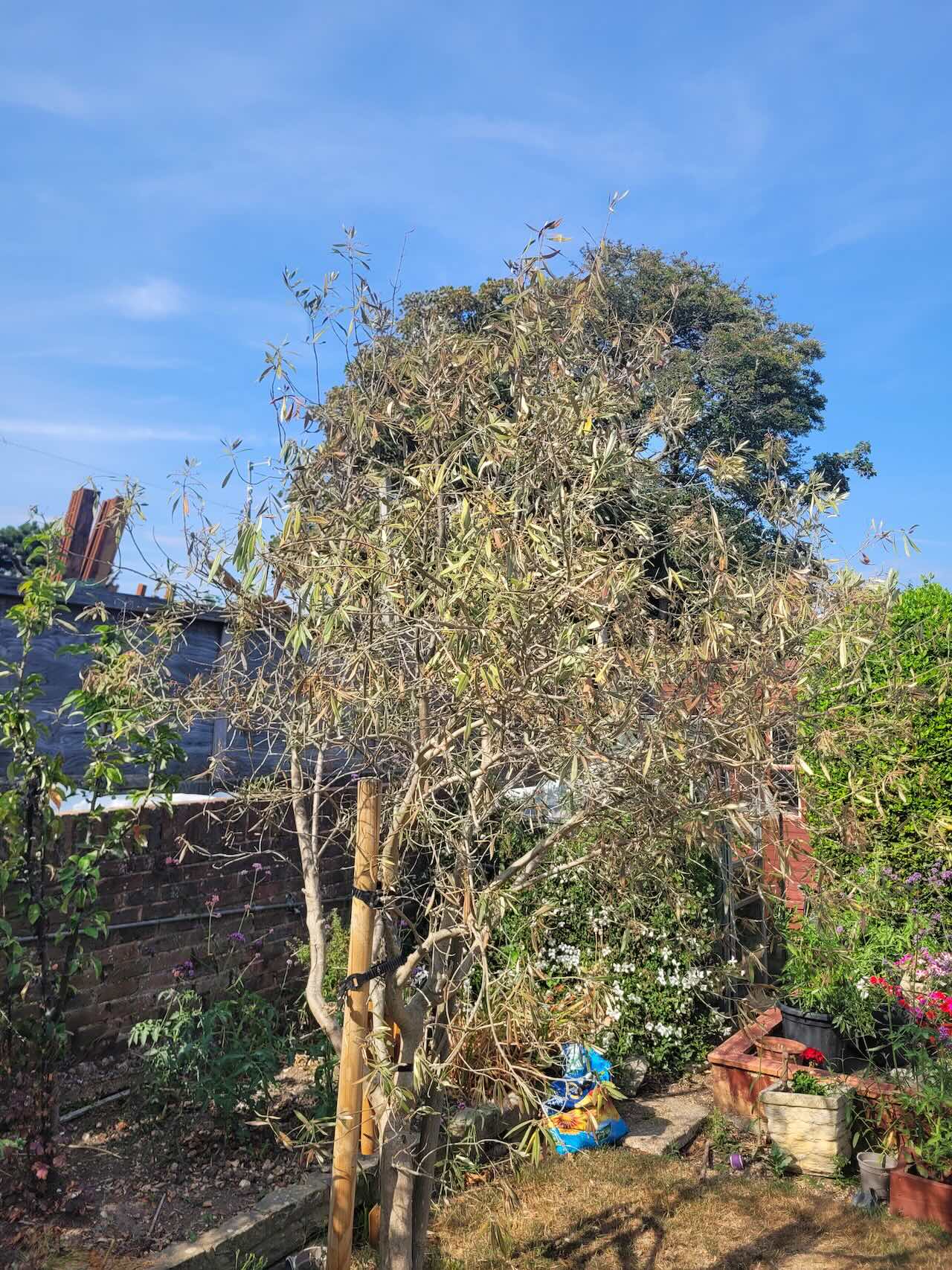
Looking at that photo, this is a serious situation and completely understandable why you're alarmed. That tree looks to be in real distress, and I want to give you a thorough breakdown of what might be happening because the cause matters enormously for how you respond and how you protect that healthy tree growing right alongside it.
Why the heatwave probably isn't the main culprit
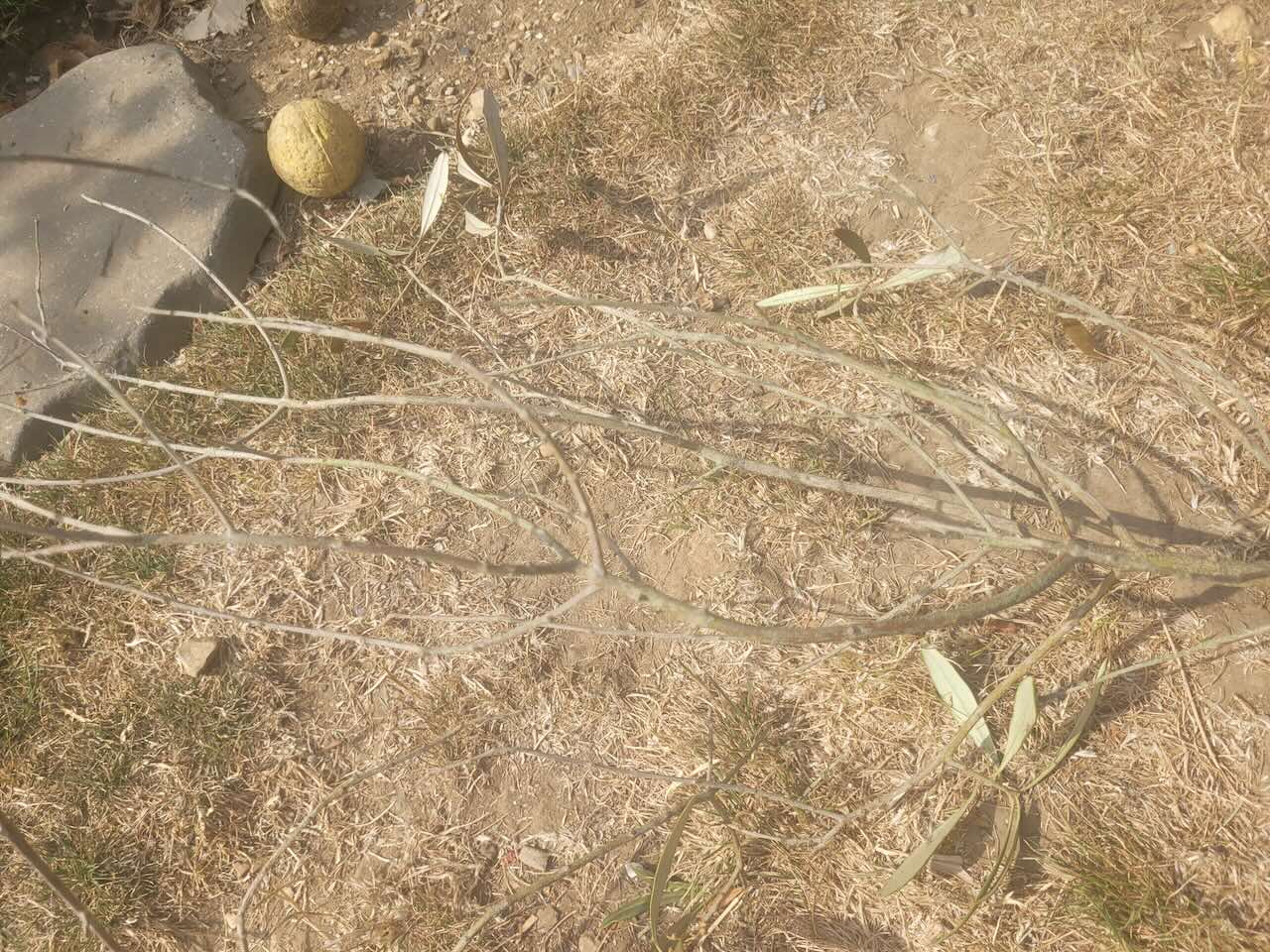
The first thing worth saying is that olives are one of the most heat-tolerant trees you can grow in the UK. They evolved in the baking heat of the Mediterranean, where summer temperatures regularly exceed what we experience here, so a British heatwave alone really shouldn't bring an established olive to the state you're seeing in that photo. Some leaf silvering, a little drooping in extreme heat, yes. But 75% browning and what looks like significant branch dieback suggests something more serious is at work, likely with the roots or the vascular system of the tree itself.
Scenario one: Verticillium wilt
This is my primary concern looking at your photo. Verticillium wilt is a soil-borne fungal disease caused by Verticillium dahliae that invades through the roots and spreads upwards into the tree's water-conducting tissue, causing wilting, browning and leaf drop that progresses from lower branches upwards. The pattern of decline you're describing, rapid, severe, and affecting one tree whilst the other right next to it remains completely healthy, fits the profile of Verticillium very closely.
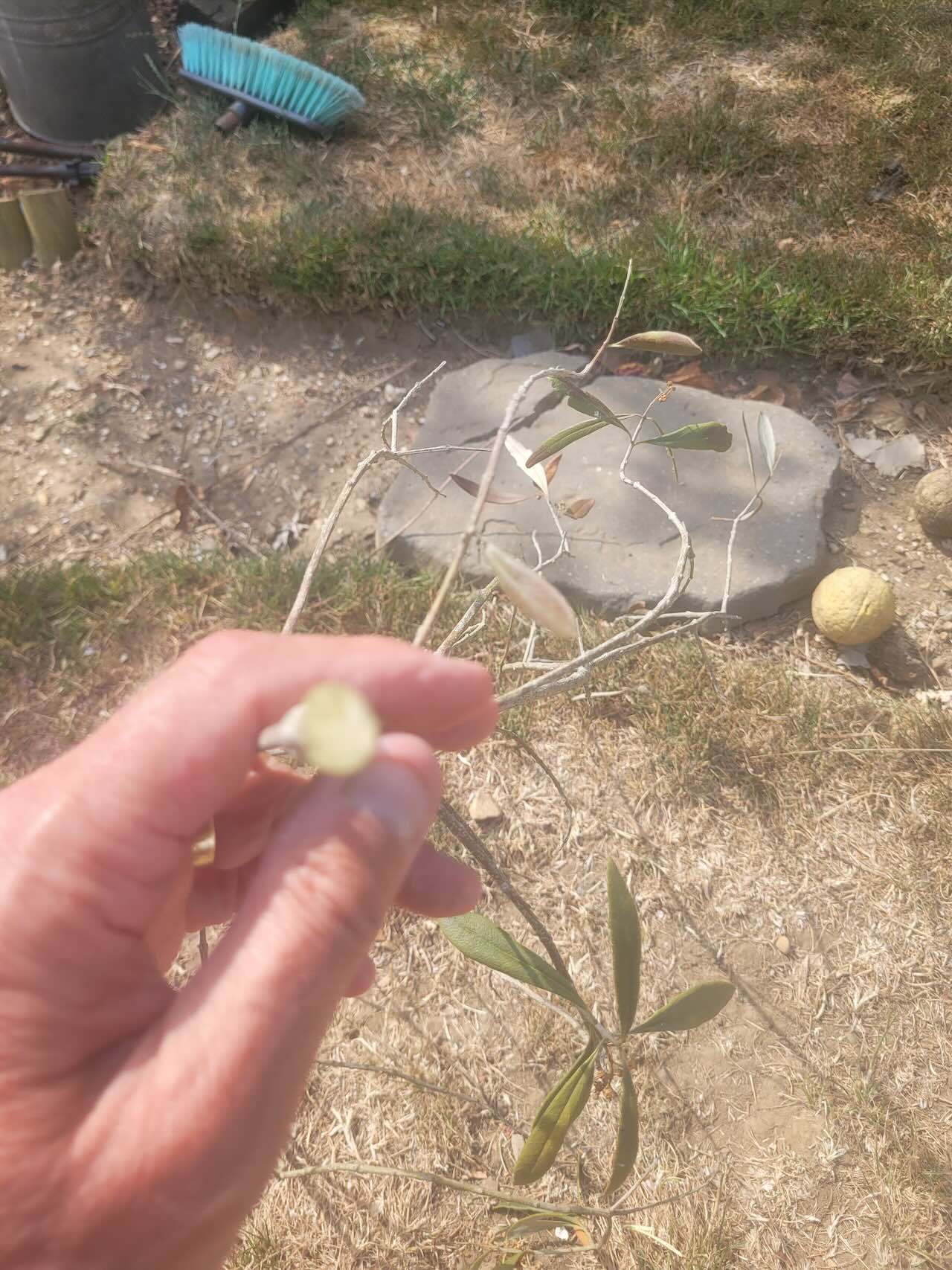
You can do a simple test to check for this. Cut through one of the affected branches and look at the cross-section. In woody plants, Verticillium wilt shows as brown or black streaks in the tissue under the bark, visible as a circle of brown marks when the stem is cut across transversely. If you see that dark staining in the wood, Verticillium is very likely your answer.
The deeply concerning thing about this disease is that once a plant is infected with Verticillium wilt, it cannot be cured. The management strategy shifts to damage limitation and protecting everything around it and removing the olive, via the bin or burning it to prevent spreading the infection.
Scenario two: Phytophthora root rot
The other strong possibility is Phytophthora root rot, particularly if the ground around the tree has experienced periods of waterlogging at any point, either before the heatwave or during heavy rain that may have followed it. Phytophthora is a water mould rather than a true fungus, and it thrives in exactly those conditions of wet soil followed by warm temperatures.
Container-grown or ground-planted olives that experience waterlogging are particularly susceptible to diseases such as Verticillium wilt and Phytophthora root rot that cause leaves to yellow and wilt. The symptoms can look almost identical from above ground, which is why the cross-section test on a branch is so useful for narrowing things down.
The disease spread risk to your healthy tree
This is genuinely your most pressing concern right now. The Verticillium fungus can remain in the soil for many years, even in the absence of host plants, which makes it difficult to break the disease cycle once the pathogen is established in an area. The spread of Verticillium wilt can be increased by factors such as poor soil drainage, high soil moisture levels, and environmental stress that weaken plant defences.
The fungus can be spread in contaminated soil, so if the disease is suspected, be careful not to spread soil from around the affected plants on tools or muddy boots. Weed control is also important because some weeds are hosts and will not show any visible signs of infection.
The fact that your healthy tree is growing right alongside the sick one means you need to act thoughtfully and promptly. Do not use the same tools on both trees without thoroughly sterilising them between uses, and avoid disturbing the soil around the sick tree unnecessarily.
What to do right now
Start by doing that cross-section test on a clearly dead branch. If you see dark streaking in the wood, assume Verticillium and plan accordingly. Remove all visibly dead and dying branches from the affected tree using clean, sterilised secateurs, cutting back into healthy wood. Dispose of all removed material in the bin rather than the compost heap, as composting infected wood risks spreading the pathogen.
If fungal diseases are identified, improving drainage around the root zone and ensuring the soil is allowed to dry out between thorough waterings is the primary environmental adjustment you can make. For trees suffering from Verticillium wilt, there is currently no chemical control, and the management strategy shifts to avoidance and soil management.
Be honest with yourself about the prognosis. Large trees often survive many years after initial infection, and in some cases a tree may only lose a few branches each season. However, given the scale of what you're showing in the photo, 75% browning is severe, and the tree may not recover fully.
Monitor it closely over the coming weeks, and if decline continues despite your interventions, removal and replacement with a tree from a completely different botanical family may be the most sensible long-term decision for the health of your garden.
For a comprehensive guide to keeping your olives in the best possible health going forward, including watering, feeding, and care through all seasons, take a look at my full olive growing guide here: Growing Olive Trees in the UK
Happy gardening!
Lee Garden Ninja
Hi @pmoss8976gmail-com
Looking at that photo, this is a serious situation and completely understandable why you're alarmed. That tree looks to be in real distress, and I want to give you a thorough breakdown of what might be happening because the cause matters enormously for how you respond and how you protect that healthy tree growing right alongside it.
Why the heatwave probably isn't the main culprit
The first thing worth saying is that olives are one of the most heat-tolerant trees you can grow in the UK. They evolved in the baking heat of the Mediterranean, where summer temperatures regularly exceed what we experience here, so a British heatwave alone really shouldn't bring an established olive to the state you're seeing in that photo. Some leaf silvering, a little drooping in extreme heat, yes. But 75% browning and what looks like significant branch dieback suggests something more serious is at work, likely with the roots or the vascular system of the tree itself.
Scenario one: Verticillium wilt
This is my primary concern looking at your photo. Verticillium wilt is a soil-borne fungal disease caused by Verticillium dahliae that invades through the roots and spreads upwards into the tree's water-conducting tissue, causing wilting, browning and leaf drop that progresses from lower branches upwards. The pattern of decline you're describing, rapid, severe, and affecting one tree whilst the other right next to it remains completely healthy, fits the profile of Verticillium very closely.
You can do a simple test to check for this. Cut through one of the affected branches and look at the cross-section. In woody plants, Verticillium wilt shows as brown or black streaks in the tissue under the bark, visible as a circle of brown marks when the stem is cut across transversely. If you see that dark staining in the wood, Verticillium is very likely your answer.
The deeply concerning thing about this disease is that once a plant is infected with Verticillium wilt, it cannot be cured. The management strategy shifts to damage limitation and protecting everything around it and removing the olive, via the bin or burning it to prevent spreading the infection.
Scenario two: Phytophthora root rot
The other strong possibility is Phytophthora root rot, particularly if the ground around the tree has experienced periods of waterlogging at any point, either before the heatwave or during heavy rain that may have followed it. Phytophthora is a water mould rather than a true fungus, and it thrives in exactly those conditions of wet soil followed by warm temperatures.
Container-grown or ground-planted olives that experience waterlogging are particularly susceptible to diseases such as Verticillium wilt and Phytophthora root rot that cause leaves to yellow and wilt. The symptoms can look almost identical from above ground, which is why the cross-section test on a branch is so useful for narrowing things down.
The disease spread risk to your healthy tree
This is genuinely your most pressing concern right now. The Verticillium fungus can remain in the soil for many years, even in the absence of host plants, which makes it difficult to break the disease cycle once the pathogen is established in an area. The spread of Verticillium wilt can be increased by factors such as poor soil drainage, high soil moisture levels, and environmental stress that weaken plant defences.
The fungus can be spread in contaminated soil, so if the disease is suspected, be careful not to spread soil from around the affected plants on tools or muddy boots. Weed control is also important because some weeds are hosts and will not show any visible signs of infection.
The fact that your healthy tree is growing right alongside the sick one means you need to act thoughtfully and promptly. Do not use the same tools on both trees without thoroughly sterilising them between uses, and avoid disturbing the soil around the sick tree unnecessarily.
What to do right now
Start by doing that cross-section test on a clearly dead branch. If you see dark streaking in the wood, assume Verticillium and plan accordingly. Remove all visibly dead and dying branches from the affected tree using clean, sterilised secateurs, cutting back into healthy wood. Dispose of all removed material in the bin rather than the compost heap, as composting infected wood risks spreading the pathogen.
If fungal diseases are identified, improving drainage around the root zone and ensuring the soil is allowed to dry out between thorough waterings is the primary environmental adjustment you can make. For trees suffering from Verticillium wilt, there is currently no chemical control, and the management strategy shifts to avoidance and soil management.
Be honest with yourself about the prognosis. Large trees often survive many years after initial infection, and in some cases a tree may only lose a few branches each season. However, given the scale of what you're showing in the photo, 75% browning is severe, and the tree may not recover fully.
Monitor it closely over the coming weeks, and if decline continues despite your interventions, removal and replacement with a tree from a completely different botanical family may be the most sensible long-term decision for the health of your garden.
For a comprehensive guide to keeping your olives in the best possible health going forward, including watering, feeding, and care through all seasons, take a look at my full olive growing guide here: Growing Olive Trees in the UK
Happy gardening!
Lee Garden Ninja
 Lee Burkhill: Award Winning Designer & BBC 1's Garden Rescue Presenters Official Blog