Hi @winestar
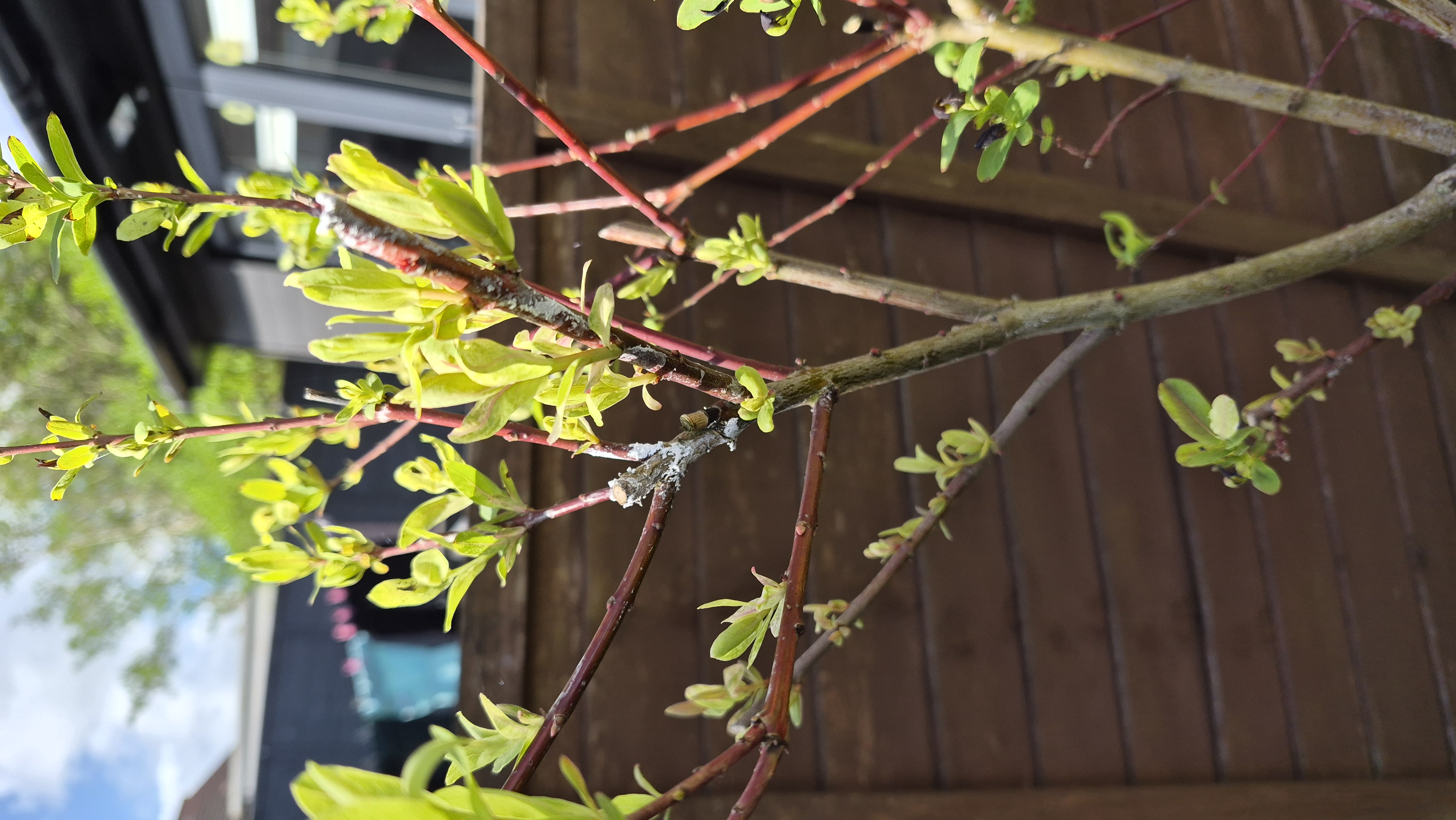
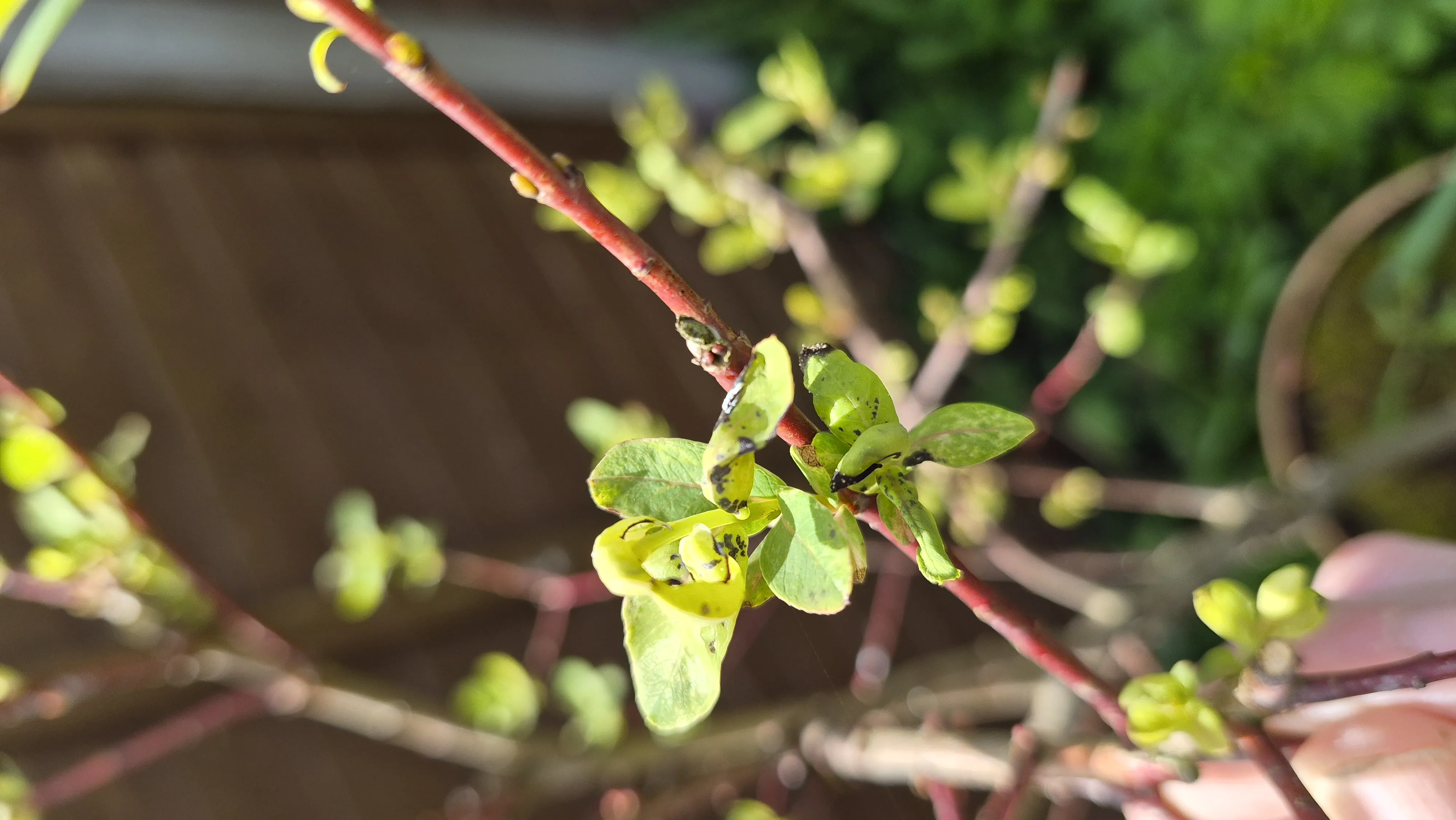
Hi, thanks for posting and for sharing those photos, they're really helpful in working out what's going on here. Looking at the white fluffy substance on the stem tips and the black spotting on the leaves, I can give you a fairly confident steer on both issues.
The White Fluffy Substance on the Stems
What you're seeing on the pruning cut tips is almost certainly woolly aphid (Eriosoma lanigerum) or a closely related species that colonises fresh pruning wounds and soft new growth on willows. The white fluffy or waxy coating is not the insect itself but rather a protective wax the colony secretes around itself, which is why it has that distinctive cotton wool or fluffy appearance rather than looking like a typical aphid infestation.
It's very commonly seen on Salix integra Hakuro-Nishiki after pruning, particularly in spring and early summer when the soft new growth the aphids prefer is at its most abundant.
The good news is that a healthy, well-established flamingo willow can tolerate a moderate level of woolly aphid without serious long term harm. That said, a heavy infestation on a younger or recently hard pruned specimen is worth addressing because the aphids feed by piercing the bark and extracting sap, which over time can weaken stems and distort new growth.
What to Do About It
The most straightforward approach is to start with a strong jet of water directed at the affected stems, which physically dislodges the colonies without any chemicals involved. You'll need to repeat this several times over a few weeks as the colonies re-establish. For a more persistent infestation, a spray of diluted washing-up liquid and water applied directly to the white woolly patches is effective and won't harm the tree or surrounding wildlife. Avoid any systemic insecticides as these will work their way into the plant tissue and can harm the beneficial insects and birds that visit the tree.
Natural predators, including blue tits, ladybirds, and lacewings, will all feed on woolly aphid colonies if you can encourage them into the garden, so a bird feeder nearby is genuinely useful rather than just decorative.
The Black Spots on the Leaves
The black spotting on the foliage is most likely willow anthracnose (Marssonina salicicola), a fungal disease that is extremely common on ornamental willows in the UK, particularly in cool, wet springs where the spores spread readily between leaves. It presents as dark brown to black spots or patches on the leaf surface, sometimes with a yellowing halo around each spot, and in severe cases, can cause early leaf drop.
Anthracnose is rarely fatal to an established tree, but it is worth managing to reduce its spread. Remove and bin any affected leaves that have fallen, as the fungal spores overwinter in leaf litter and reinfect the tree the following spring. Do not compost them. Improving airflow around the tree by keeping the centre of the canopy relatively open when you prune will also help, as the fungus thrives in still, humid conditions close to the foliage.
General Care Going Forward
Both of these issues are quite common on flamingo willows and are a signal to keep a close eye on overall tree health rather than cause for serious alarm. Make sure the tree isn't sitting in waterlogged soil, that it's receiving a balanced feed in spring, and that any pruning cuts are made cleanly with sharp, sterilised tools to avoid giving opportunistic infections an easy entry point.
My complete flamingo tree care guide covers pruning timing, feeding, and general maintenance in much more detail and is well worth a read alongside this advice. It covers the most common problems people encounter with this tree and how to keep it looking its best year on year.
Do let us know how it responds once you've treated the woolly aphid colonies. Fingers crossed for a full recovery.
Lee Garden Ninja
Hi @winestar
Hi, thanks for posting and for sharing those photos, they're really helpful in working out what's going on here. Looking at the white fluffy substance on the stem tips and the black spotting on the leaves, I can give you a fairly confident steer on both issues.
The White Fluffy Substance on the Stems
What you're seeing on the pruning cut tips is almost certainly woolly aphid (Eriosoma lanigerum) or a closely related species that colonises fresh pruning wounds and soft new growth on willows. The white fluffy or waxy coating is not the insect itself but rather a protective wax the colony secretes around itself, which is why it has that distinctive cotton wool or fluffy appearance rather than looking like a typical aphid infestation.
It's very commonly seen on Salix integra Hakuro-Nishiki after pruning, particularly in spring and early summer when the soft new growth the aphids prefer is at its most abundant.
The good news is that a healthy, well-established flamingo willow can tolerate a moderate level of woolly aphid without serious long term harm. That said, a heavy infestation on a younger or recently hard pruned specimen is worth addressing because the aphids feed by piercing the bark and extracting sap, which over time can weaken stems and distort new growth.
What to Do About It
The most straightforward approach is to start with a strong jet of water directed at the affected stems, which physically dislodges the colonies without any chemicals involved. You'll need to repeat this several times over a few weeks as the colonies re-establish. For a more persistent infestation, a spray of diluted washing-up liquid and water applied directly to the white woolly patches is effective and won't harm the tree or surrounding wildlife. Avoid any systemic insecticides as these will work their way into the plant tissue and can harm the beneficial insects and birds that visit the tree.
Natural predators, including blue tits, ladybirds, and lacewings, will all feed on woolly aphid colonies if you can encourage them into the garden, so a bird feeder nearby is genuinely useful rather than just decorative.
The Black Spots on the Leaves
The black spotting on the foliage is most likely willow anthracnose (Marssonina salicicola), a fungal disease that is extremely common on ornamental willows in the UK, particularly in cool, wet springs where the spores spread readily between leaves. It presents as dark brown to black spots or patches on the leaf surface, sometimes with a yellowing halo around each spot, and in severe cases, can cause early leaf drop.
Anthracnose is rarely fatal to an established tree, but it is worth managing to reduce its spread. Remove and bin any affected leaves that have fallen, as the fungal spores overwinter in leaf litter and reinfect the tree the following spring. Do not compost them. Improving airflow around the tree by keeping the centre of the canopy relatively open when you prune will also help, as the fungus thrives in still, humid conditions close to the foliage.
General Care Going Forward
Both of these issues are quite common on flamingo willows and are a signal to keep a close eye on overall tree health rather than cause for serious alarm. Make sure the tree isn't sitting in waterlogged soil, that it's receiving a balanced feed in spring, and that any pruning cuts are made cleanly with sharp, sterilised tools to avoid giving opportunistic infections an easy entry point.
My complete flamingo tree care guide covers pruning timing, feeding, and general maintenance in much more detail and is well worth a read alongside this advice. It covers the most common problems people encounter with this tree and how to keep it looking its best year on year.
Do let us know how it responds once you've treated the woolly aphid colonies. Fingers crossed for a full recovery.
Lee Garden Ninja
 Lee Burkhill: Award Winning Designer & BBC 1's Garden Rescue Presenters Official Blog