Hi @beagle
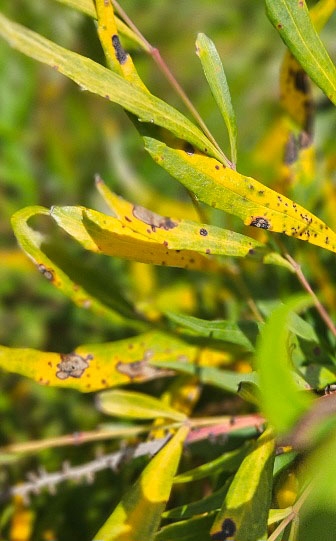
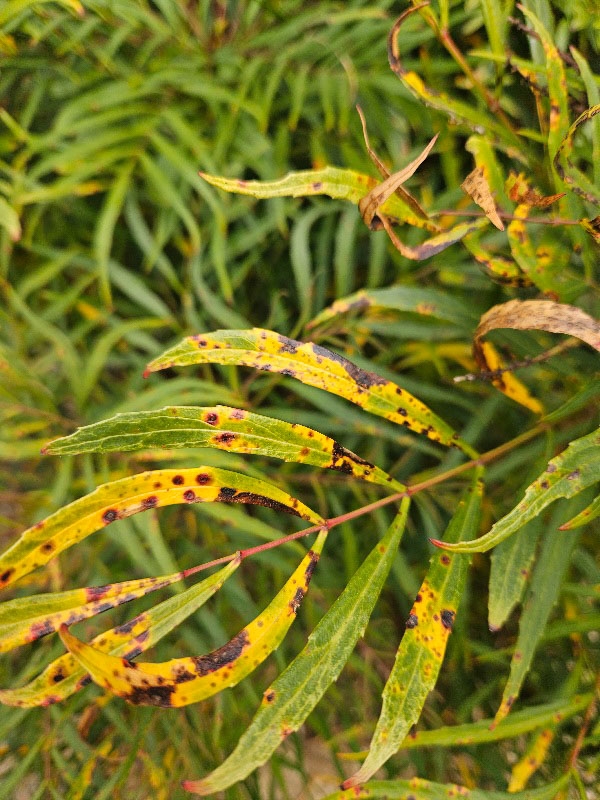
Thanks for the photo, that’s really helpful for working out what’s going on. Looking at those yellowing leaves with the dark brown and black spotting, this does look like a fungal leaf spot rather than a nutrient deficiency. My suspicion is humidity is playing a big part here. Mahonia ‘Soft Caress’ is generally a tough, reliable plant, but it can pick up leaf spot diseases when conditions stay damp and airflow around the foliage is poor.
Why this looks fungal rather than a deficiency
A nutrient deficiency tends to show up as fairly even yellowing across the leaf, often following a pattern related to the leaf’s veins, without the scattered dark spotting you’re seeing here. What’s in your photo is much more typical of a leaf spot fungus: individual lesions that start small and dark, then expand, with the surrounding leaf tissue turning yellow as the plant responds to the damage. The yellowing is really a secondary symptom of the spots themselves rather than a sign the plant is short of nutrients.
The humidity connection
My best guess is that humidity and damp conditions are behind this. Leaf spot fungi thrive when foliage stays wet for extended periods, whether that’s from prolonged rain, overhead watering, or simply a position with poor air circulation where leaves don’t dry out between damp spells. Mahonia ‘Soft Caress’ has quite dense, upright foliage, and after five years in the same spot it may have filled out enough that the centre of the plant is staying more humid than it used to, creating ideal conditions for spores to take hold and spread from leaf to leaf.
What to do now
Start by removing the worst affected leaves and clearing any fallen debris from around the base of the plant, as fungal spores often overwinter on dropped leaves and in soil debris, then reinfect the plant the following season. Avoid watering over the foliage; water at the base instead so the leaves stay drier. If the centre of the plant looks congested, a light thinning of some of the older stems will open it up and improve airflow, which makes it much harder for the fungus to re-establish.
It’s worth saying too that whatever you use to remove those leaves and stems, make sure it’s clean and properly sharp. Blunt or dirty blades crush and tear the plant tissue rather than slicing cleanly through it, leaving ragged wounds that are slower to heal and far easier for fungal spores to get into. Since you’re already dealing with a fungal issue here, a grubby or dull pair of secateurs is the last thing you want moving infected material around the plant and then onto your other shrubs. A quick wipe of the blades with disinfectant between cuts, especially when removing diseased material, is a small habit that makes a real difference. I’ve got a full guide on choosing and looking after a decent pair here if you want it: Best Secateurs UK: A Garden Designer’s Honest Guide.
Should you worry about long term health
Generally no. Leaf spot on an established Mahonia like yours is usually a cosmetic issue rather than a serious threat, especially on a plant that’s been settled and growing well for five years. It’s unlikely to kill the plant, but addressing the damp, congested conditions now will reduce how much it recurs each year and keep the plant looking better for longer.
Happy gardening!
Lee Garden Ninja
Hi @beagle
Thanks for the photo, that’s really helpful for working out what’s going on. Looking at those yellowing leaves with the dark brown and black spotting, this does look like a fungal leaf spot rather than a nutrient deficiency. My suspicion is humidity is playing a big part here. Mahonia ‘Soft Caress’ is generally a tough, reliable plant, but it can pick up leaf spot diseases when conditions stay damp and airflow around the foliage is poor.
Why this looks fungal rather than a deficiency
A nutrient deficiency tends to show up as fairly even yellowing across the leaf, often following a pattern related to the leaf’s veins, without the scattered dark spotting you’re seeing here. What’s in your photo is much more typical of a leaf spot fungus: individual lesions that start small and dark, then expand, with the surrounding leaf tissue turning yellow as the plant responds to the damage. The yellowing is really a secondary symptom of the spots themselves rather than a sign the plant is short of nutrients.
The humidity connection
My best guess is that humidity and damp conditions are behind this. Leaf spot fungi thrive when foliage stays wet for extended periods, whether that’s from prolonged rain, overhead watering, or simply a position with poor air circulation where leaves don’t dry out between damp spells. Mahonia ‘Soft Caress’ has quite dense, upright foliage, and after five years in the same spot it may have filled out enough that the centre of the plant is staying more humid than it used to, creating ideal conditions for spores to take hold and spread from leaf to leaf.
What to do now
Start by removing the worst affected leaves and clearing any fallen debris from around the base of the plant, as fungal spores often overwinter on dropped leaves and in soil debris, then reinfect the plant the following season. Avoid watering over the foliage; water at the base instead so the leaves stay drier. If the centre of the plant looks congested, a light thinning of some of the older stems will open it up and improve airflow, which makes it much harder for the fungus to re-establish.
It’s worth saying too that whatever you use to remove those leaves and stems, make sure it’s clean and properly sharp. Blunt or dirty blades crush and tear the plant tissue rather than slicing cleanly through it, leaving ragged wounds that are slower to heal and far easier for fungal spores to get into. Since you’re already dealing with a fungal issue here, a grubby or dull pair of secateurs is the last thing you want moving infected material around the plant and then onto your other shrubs. A quick wipe of the blades with disinfectant between cuts, especially when removing diseased material, is a small habit that makes a real difference. I’ve got a full guide on choosing and looking after a decent pair here if you want it: Best Secateurs UK: A Garden Designer’s Honest Guide.
Should you worry about long term health
Generally no. Leaf spot on an established Mahonia like yours is usually a cosmetic issue rather than a serious threat, especially on a plant that’s been settled and growing well for five years. It’s unlikely to kill the plant, but addressing the damp, congested conditions now will reduce how much it recurs each year and keep the plant looking better for longer.
Happy gardening!
Lee Garden Ninja
 Lee Burkhill: Award Winning Designer & BBC 1's Garden Rescue Presenters Official Blog