Hi @mattacjonesgmail-com
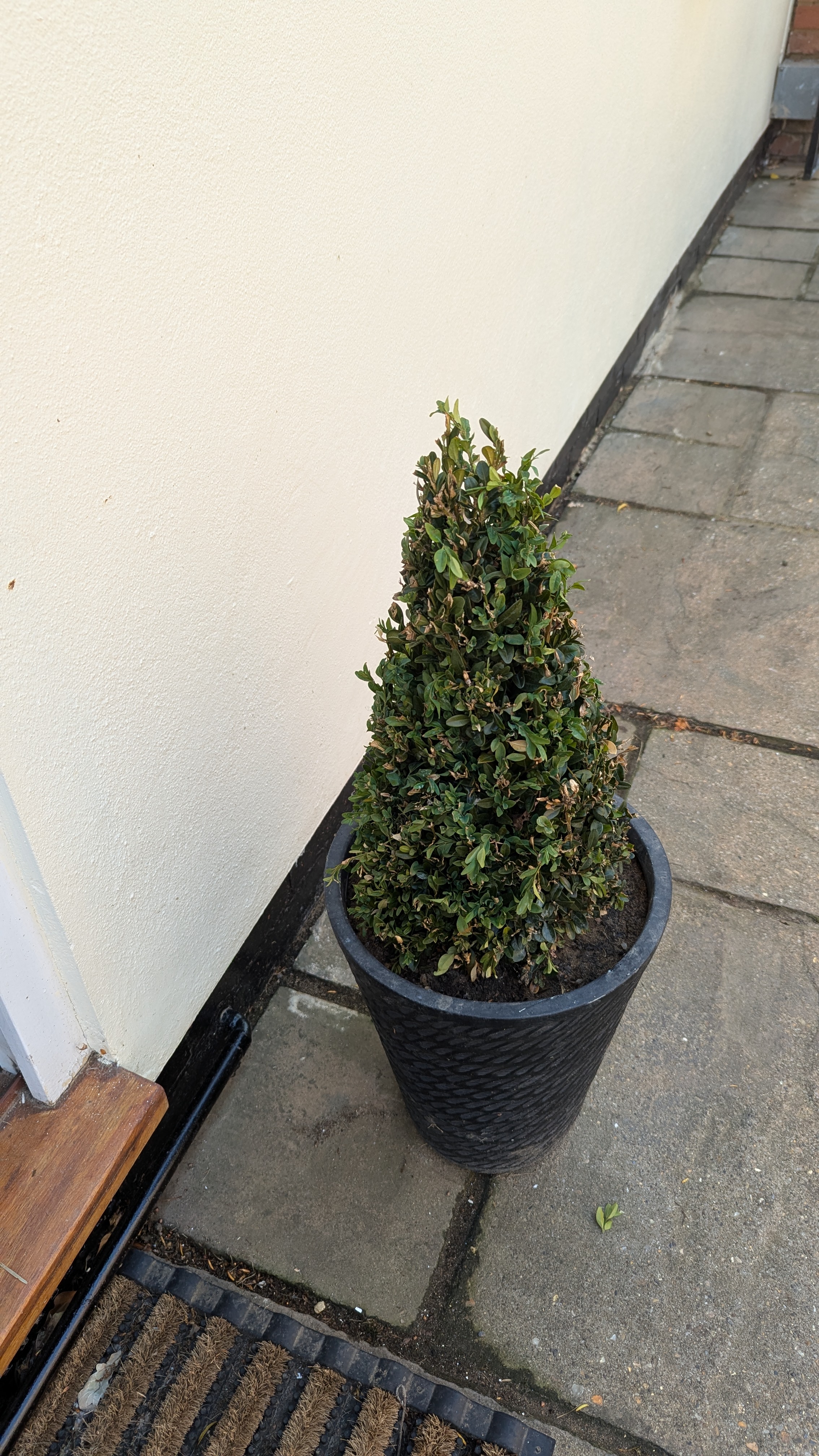
Thanks for your comment, and sorry to hear you're suffering with your box plants. I don't want to be the bearer of bad news, but it does look like Box Blight. An incredibly difficult pathogen to get rid of that lingers and quickly infects box plants, usually after pruning or cutting.
The niggle is that once you have it, it will probably be in the soil and on your tools, so it's best to avoid the box altogether and pick a different plant species. I've stopped using it entirely now in my garden design practice for this reason and the fact that it has little impact or benefit for wildlife. I'm going to give you and the other Ninjas some more info below on box blight to try and help everyone either avoid it or choose alternatives.
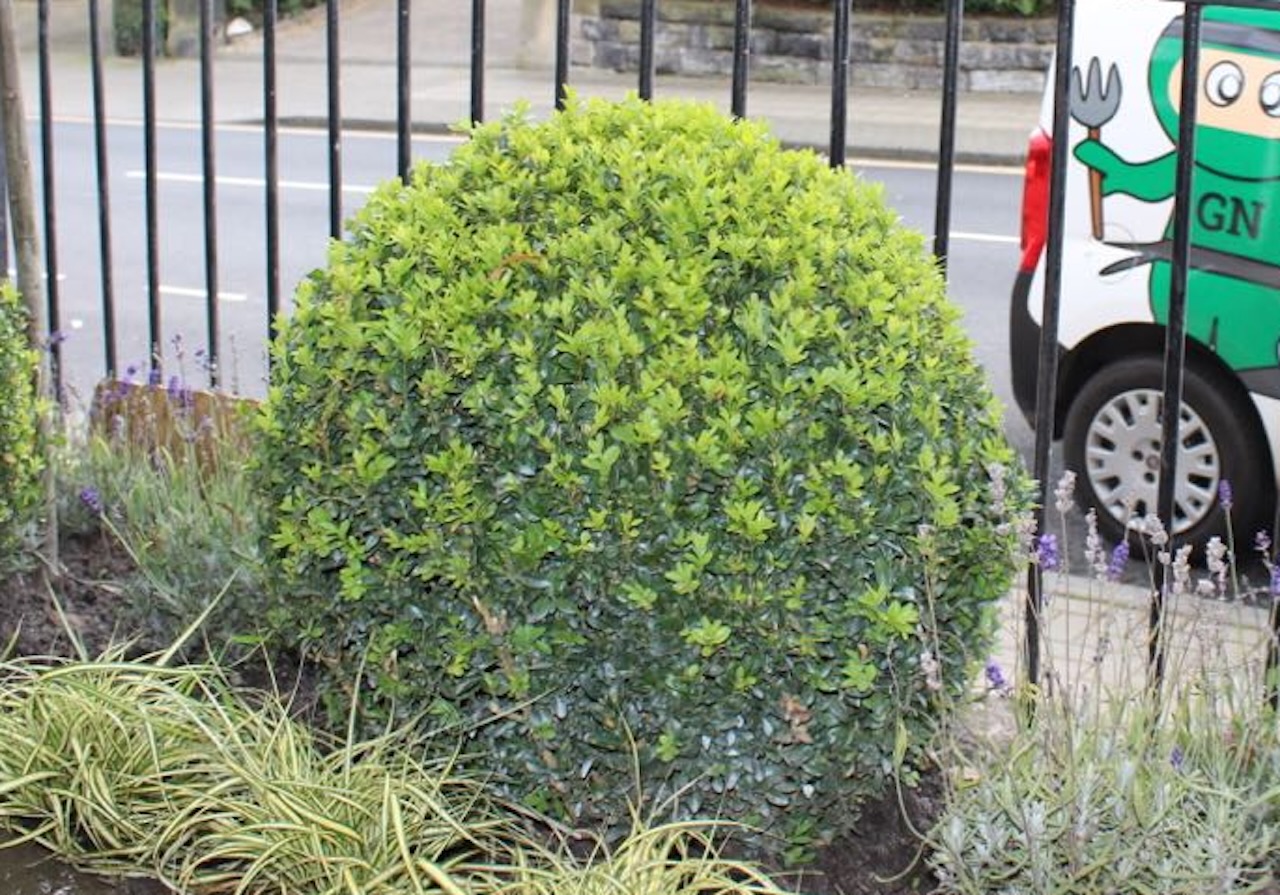
If I were you I'd pick maybe a Hebe or an evergreen viburnum for your specimens both which flower and don't mind smaller contaienrs. Ideally, I think any shrub does need to be in a container twice the size of the one you have for health and hydration reasons!
Box Blight: How to Avoid It and Topiary Alternatives
Box blight (Calonectria pseudonaviculata and Calonectria henricotiae) is a destructive fungal disease that affects Buxus sempervirens (commonly known as box or boxwood), widely used in hedging and topiary. It's become increasingly problematic across the UK and parts of Europe due to wet, humid conditions and overuse of box in planting schemes. It's every gardeners and garden designers nightmare!
What Is Box Blight?
Box blight is a fungal disease (Calonectria pseudonaviculata or Calonectria henricotiae) that spreads rapidly in Buxus plants, and there is no cure apart from destroying the plants and burning them.
Box blight causes:
It spreads rapidly in damp, poorly ventilated conditions and is often introduced via infected plants, tools, or footwear.
How to Identify Box Blight
This is the tricky part, without experience, as heat scorch and dehydration can give the same symptoms as blight. The difference is that blight will spread super quickly, and the leaves underneath the blight all die back and do not return. Blight resembles heat scorch, but it will also turn orange and tan-coloured, not just have brown tips.
Symptoms typically include:
-
Brown, dead patches on the foliage.
-
Black streaks on young stems.
-
Leaf drop, often leaving bare patches.
-
Grey or white fungal spores on the underside of leaves in humid conditions.
How to Prevent and Manage Box Blight
1. Good Plant Hygiene
-
Avoid overhead watering, which encourages leaf wetness and fungal growth.
-
Sterilise tools regularly, especially when clipping. One part bleach to 4 parts water is the ideal mix in the bucket to disinfect your tools between pruning the box and other hedge plants.
-
Remove fallen leaves and debris, which can harbour spores. Always bin and not compost them.
-
Buy from reputable nurseries with clear disease management policies.
2. Improve Air Circulation
-
Space plants properly – a box needs room to breathe, which makes it a rather unfortunate choice for a formal garden hedge.
-
Avoid tightly packed planting or over-clipping, which encourages dense growth and reduced airflow. Which can be difficult given that box hedges need pruning 3x a year!
3. Regular Inspections
-
Check for early signs during wet weather.
-
Isolate and remove infected plants or stems quickly to prevent spread, as soon as you see the burnt-looking brown then light orange coloured leaves.
4. Fungicide Use
While there are fungicides such as tebuconazole or myclobutanil that may help reduce the spread, none can cure the disease. Always follow UK pesticide use regulations. In my opinion, though, these rarely work and can cause more damage to the environment, so my advice would be to not waste your money on these box fungicides.
5. Alternative Approaches
If a hedge or topiary is heavily affected:
-
Remove and destroy (do not compost) infected material. The pathogens continue to spread and can live on in tools, so make sure you disinfect pruners, secateurs or loppers.
-
Replace with resistant or alternative species.
Alternative Plant Species for Topiary
To move away from box while maintaining formal structure or clipped forms, several excellent alternative box plant species can be used. Not all can be clipped, but if not, they offer the beauty of flowering, which is far better for wildlife!
1. Ilex crenata (Japanese Holly)
-
Closest visual match to box with small, dark green leaves.
-
Responds well to clipping and formal shaping.
-
Resistant to box blight and box tree caterpillar.
-
Grows slightly slower than box, so low maintenance once established.
2. Lonicera nitida (Shrubby Honeysuckle)
-
Dense, small-leaved evergreen.
-
Fast-growing and tolerant of clipping.
-
Can be shaped into spheres, domes, or low hedges.
-
‘Baggesen’s Gold’ offers a vibrant golden hue.
3. Pittosporum tenuifolium ‘Golf Ball’
-
Naturally forms a globe shape, minimal clipping required.
-
Evergreen, with small, neat leaves.
-
Slightly tender in colder parts of the UK but suitable for sheltered sites.
4. Taxus baccata (Yew)
-
Classic English topiary species.
-
Slow-growing but extremely long-lived and easily clipped.
-
Very resilient to disease and adaptable to sun or shade.
-
Toxic if ingested, so not suitable around pets or children unsupervised.
5. Osmanthus x burkwoodii
-
Evergreen with glossy leaves, slower growth.
-
Can be pruned tightly into shapes.
-
Fragrant white flowers in spring.
-
Tolerates partial shade well.
6. Euonymus japonicus
-
Evergreen, available in green or variegated forms.
-
Good for formal low hedging or clipped shapes.
-
Tolerates urban pollution and shade.
I do hope that helps and let us know how you get on!
Lee Garden Ninja
Hi @mattacjonesgmail-com
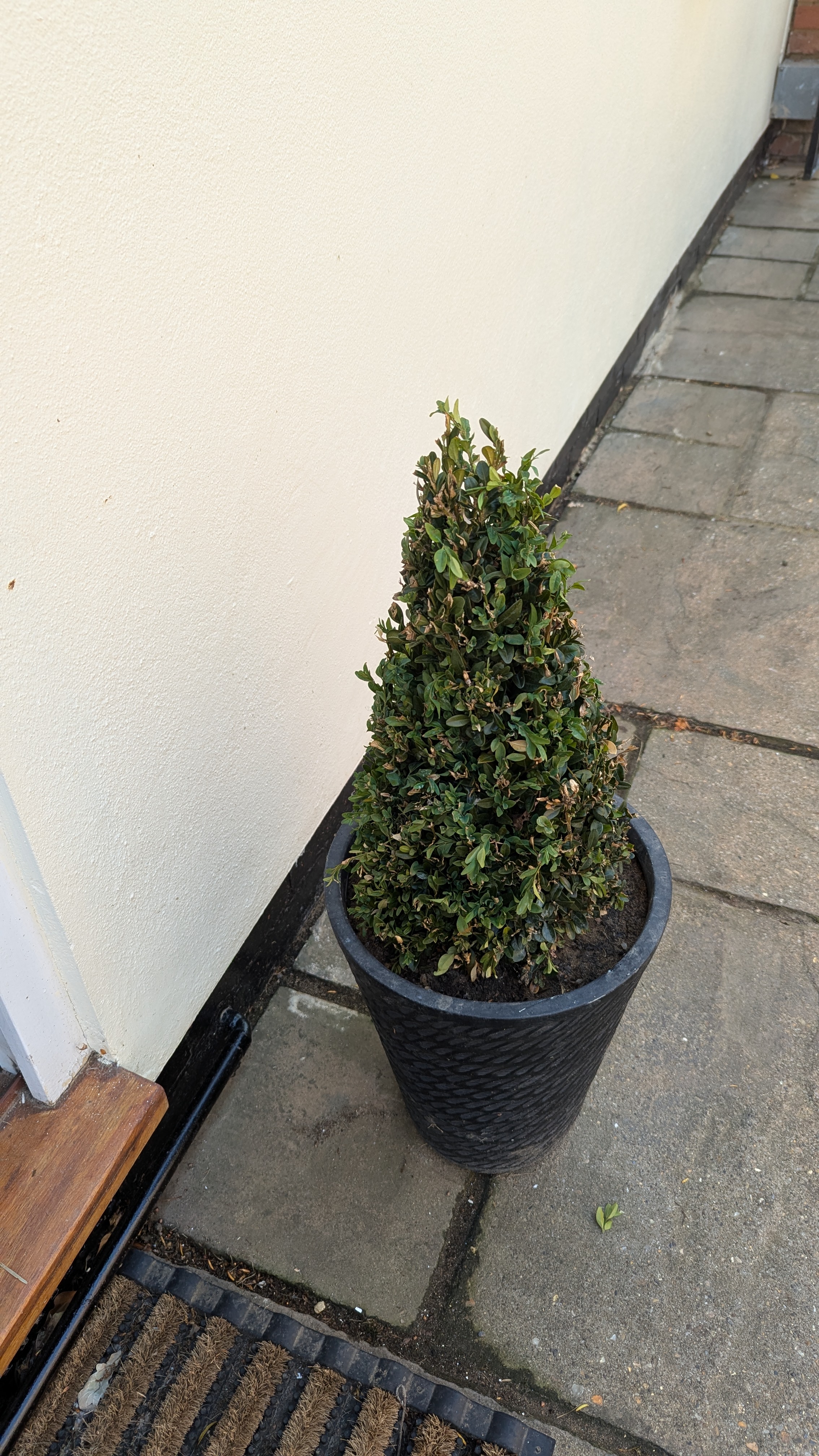
Thanks for your comment, and sorry to hear you're suffering with your box plants. I don't want to be the bearer of bad news, but it does look like Box Blight. An incredibly difficult pathogen to get rid of that lingers and quickly infects box plants, usually after pruning or cutting.
The niggle is that once you have it, it will probably be in the soil and on your tools, so it's best to avoid the box altogether and pick a different plant species. I've stopped using it entirely now in my garden design practice for this reason and the fact that it has little impact or benefit for wildlife. I'm going to give you and the other Ninjas some more info below on box blight to try and help everyone either avoid it or choose alternatives.
If I were you I'd pick maybe a Hebe or an evergreen viburnum for your specimens both which flower and don't mind smaller contaienrs. Ideally, I think any shrub does need to be in a container twice the size of the one you have for health and hydration reasons!
Box Blight: How to Avoid It and Topiary Alternatives
Box blight (Calonectria pseudonaviculata and Calonectria henricotiae) is a destructive fungal disease that affects Buxus sempervirens (commonly known as box or boxwood), widely used in hedging and topiary. It's become increasingly problematic across the UK and parts of Europe due to wet, humid conditions and overuse of box in planting schemes. It's every gardeners and garden designers nightmare!
What Is Box Blight?
Box blight is a fungal disease (Calonectria pseudonaviculata or Calonectria henricotiae) that spreads rapidly in Buxus plants, and there is no cure apart from destroying the plants and burning them.
Box blight causes:
It spreads rapidly in damp, poorly ventilated conditions and is often introduced via infected plants, tools, or footwear.
How to Identify Box Blight
This is the tricky part, without experience, as heat scorch and dehydration can give the same symptoms as blight. The difference is that blight will spread super quickly, and the leaves underneath the blight all die back and do not return. Blight resembles heat scorch, but it will also turn orange and tan-coloured, not just have brown tips.
Symptoms typically include:
-
Brown, dead patches on the foliage.
-
Black streaks on young stems.
-
Leaf drop, often leaving bare patches.
-
Grey or white fungal spores on the underside of leaves in humid conditions.
How to Prevent and Manage Box Blight
1. Good Plant Hygiene
-
Avoid overhead watering, which encourages leaf wetness and fungal growth.
-
Sterilise tools regularly, especially when clipping. One part bleach to 4 parts water is the ideal mix in the bucket to disinfect your tools between pruning the box and other hedge plants.
-
Remove fallen leaves and debris, which can harbour spores. Always bin and not compost them.
-
Buy from reputable nurseries with clear disease management policies.
2. Improve Air Circulation
-
Space plants properly – a box needs room to breathe, which makes it a rather unfortunate choice for a formal garden hedge.
-
Avoid tightly packed planting or over-clipping, which encourages dense growth and reduced airflow. Which can be difficult given that box hedges need pruning 3x a year!
3. Regular Inspections
-
Check for early signs during wet weather.
-
Isolate and remove infected plants or stems quickly to prevent spread, as soon as you see the burnt-looking brown then light orange coloured leaves.
4. Fungicide Use
While there are fungicides such as tebuconazole or myclobutanil that may help reduce the spread, none can cure the disease. Always follow UK pesticide use regulations. In my opinion, though, these rarely work and can cause more damage to the environment, so my advice would be to not waste your money on these box fungicides.
5. Alternative Approaches
If a hedge or topiary is heavily affected:
-
Remove and destroy (do not compost) infected material. The pathogens continue to spread and can live on in tools, so make sure you disinfect pruners, secateurs or loppers.
-
Replace with resistant or alternative species.
Alternative Plant Species for Topiary
To move away from box while maintaining formal structure or clipped forms, several excellent alternative box plant species can be used. Not all can be clipped, but if not, they offer the beauty of flowering, which is far better for wildlife!
1. Ilex crenata (Japanese Holly)
-
Closest visual match to box with small, dark green leaves.
-
Responds well to clipping and formal shaping.
-
Resistant to box blight and box tree caterpillar.
-
Grows slightly slower than box, so low maintenance once established.
2. Lonicera nitida (Shrubby Honeysuckle)
-
Dense, small-leaved evergreen.
-
Fast-growing and tolerant of clipping.
-
Can be shaped into spheres, domes, or low hedges.
-
‘Baggesen’s Gold’ offers a vibrant golden hue.
3. Pittosporum tenuifolium ‘Golf Ball’
-
Naturally forms a globe shape, minimal clipping required.
-
Evergreen, with small, neat leaves.
-
Slightly tender in colder parts of the UK but suitable for sheltered sites.
4. Taxus baccata (Yew)
-
Classic English topiary species.
-
Slow-growing but extremely long-lived and easily clipped.
-
Very resilient to disease and adaptable to sun or shade.
-
Toxic if ingested, so not suitable around pets or children unsupervised.
5. Osmanthus x burkwoodii
-
Evergreen with glossy leaves, slower growth.
-
Can be pruned tightly into shapes.
-
Fragrant white flowers in spring.
-
Tolerates partial shade well.
6. Euonymus japonicus
-
Evergreen, available in green or variegated forms.
-
Good for formal low hedging or clipped shapes.
-
Tolerates urban pollution and shade.
I do hope that helps and let us know how you get on!
Lee Garden Ninja

 Lee Burkhill: Award Winning Designer & BBC 1's Garden Rescue Presenters Official Blog