Hi @edenrose!
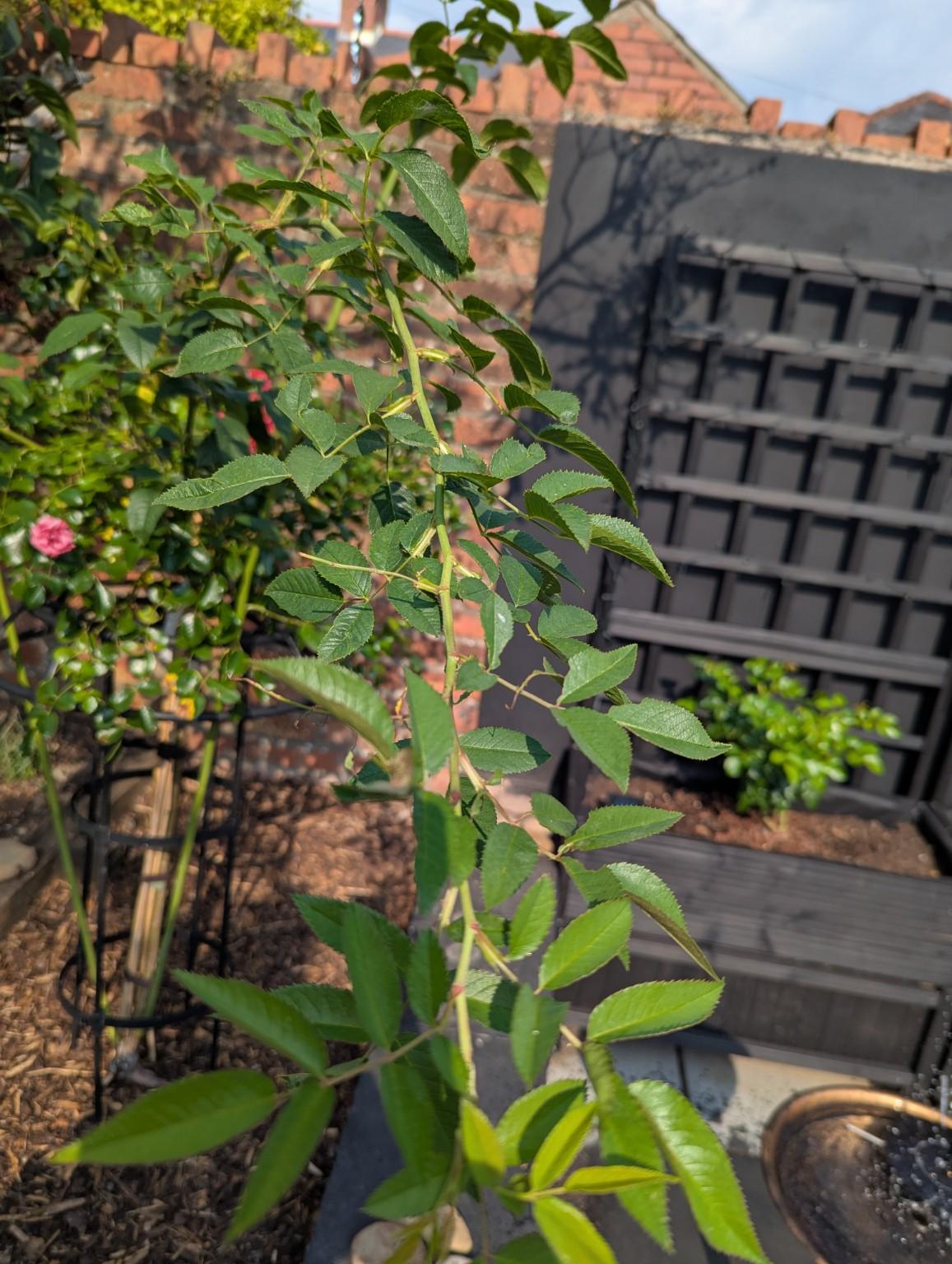
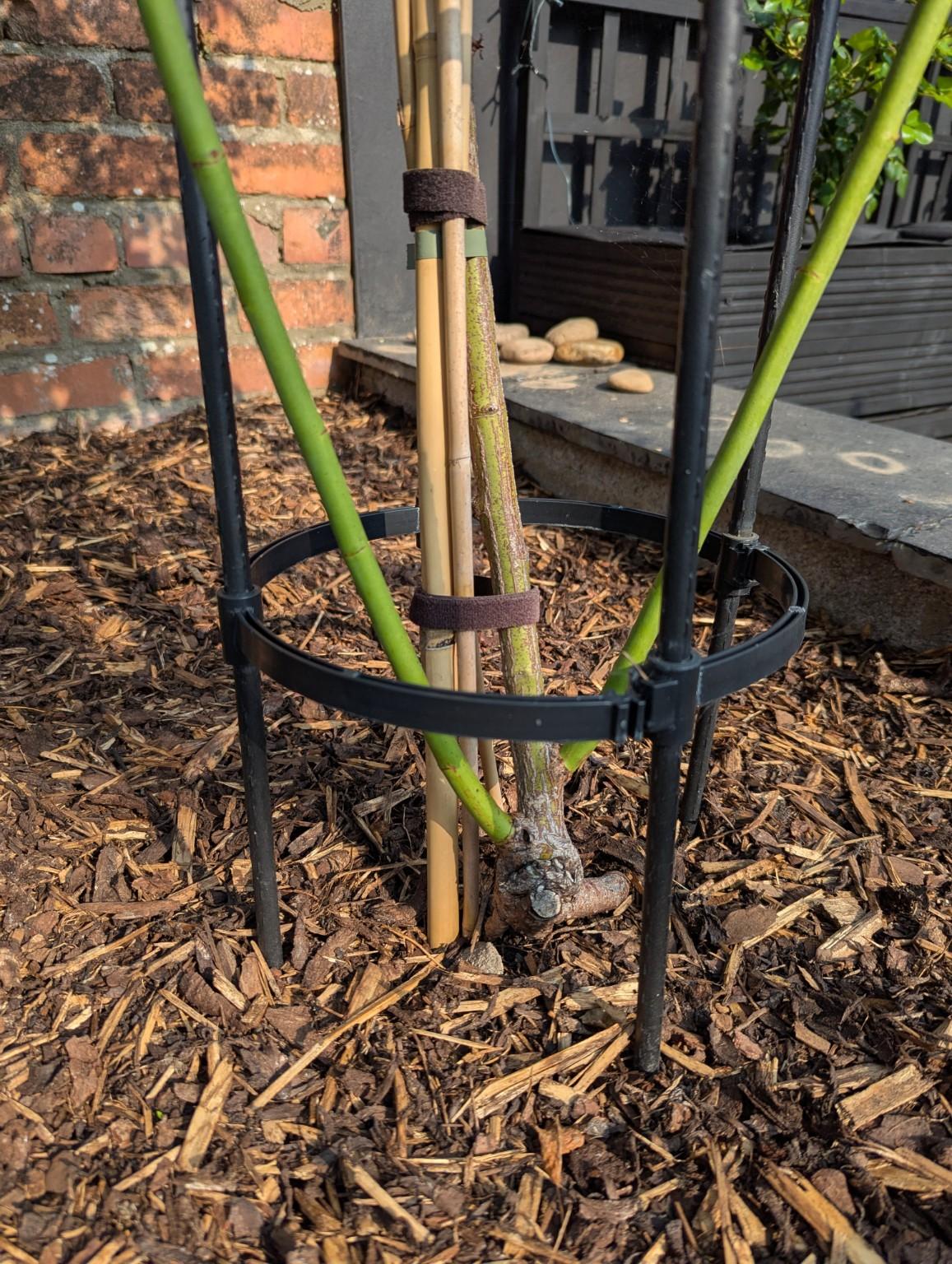
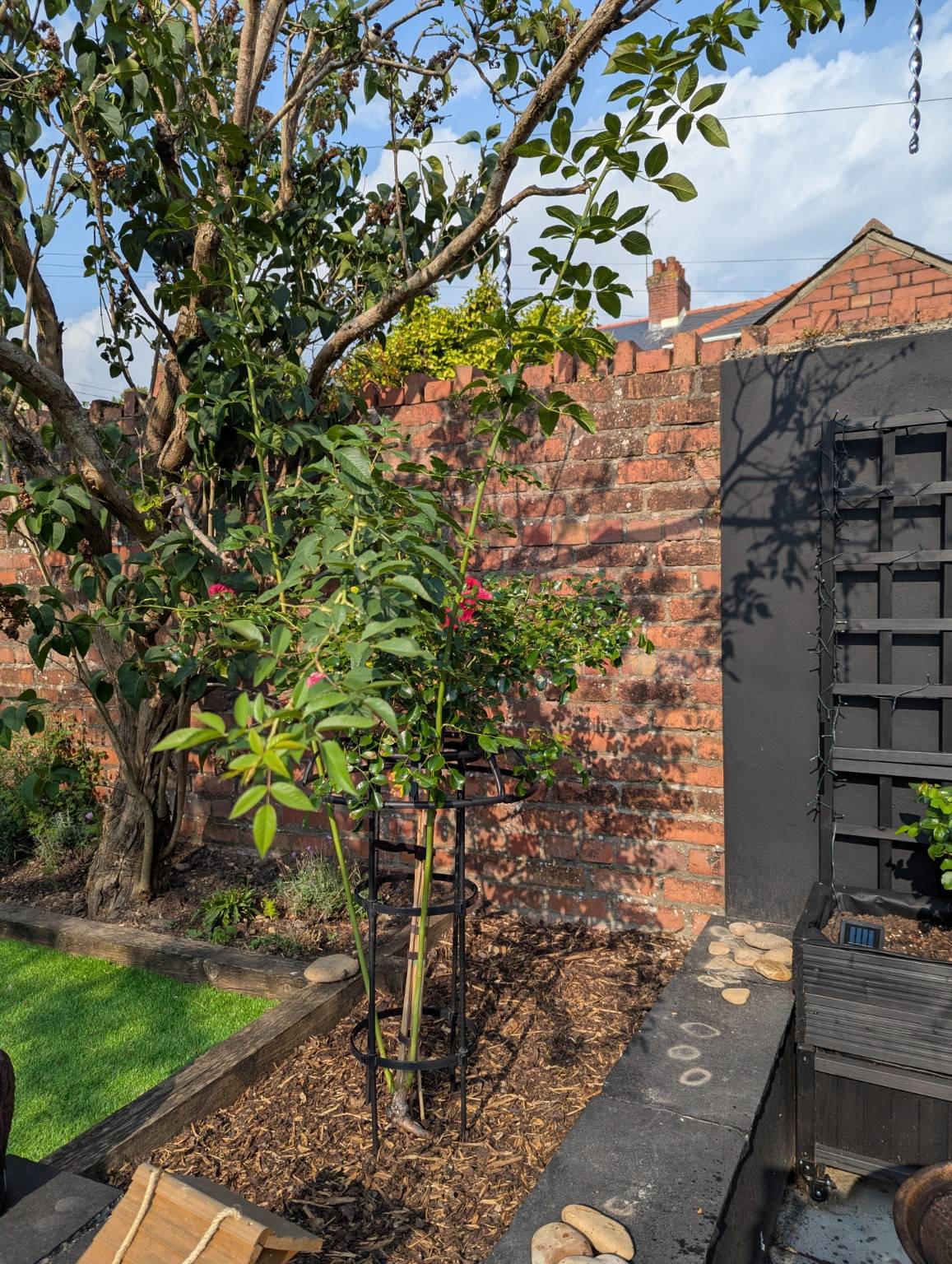
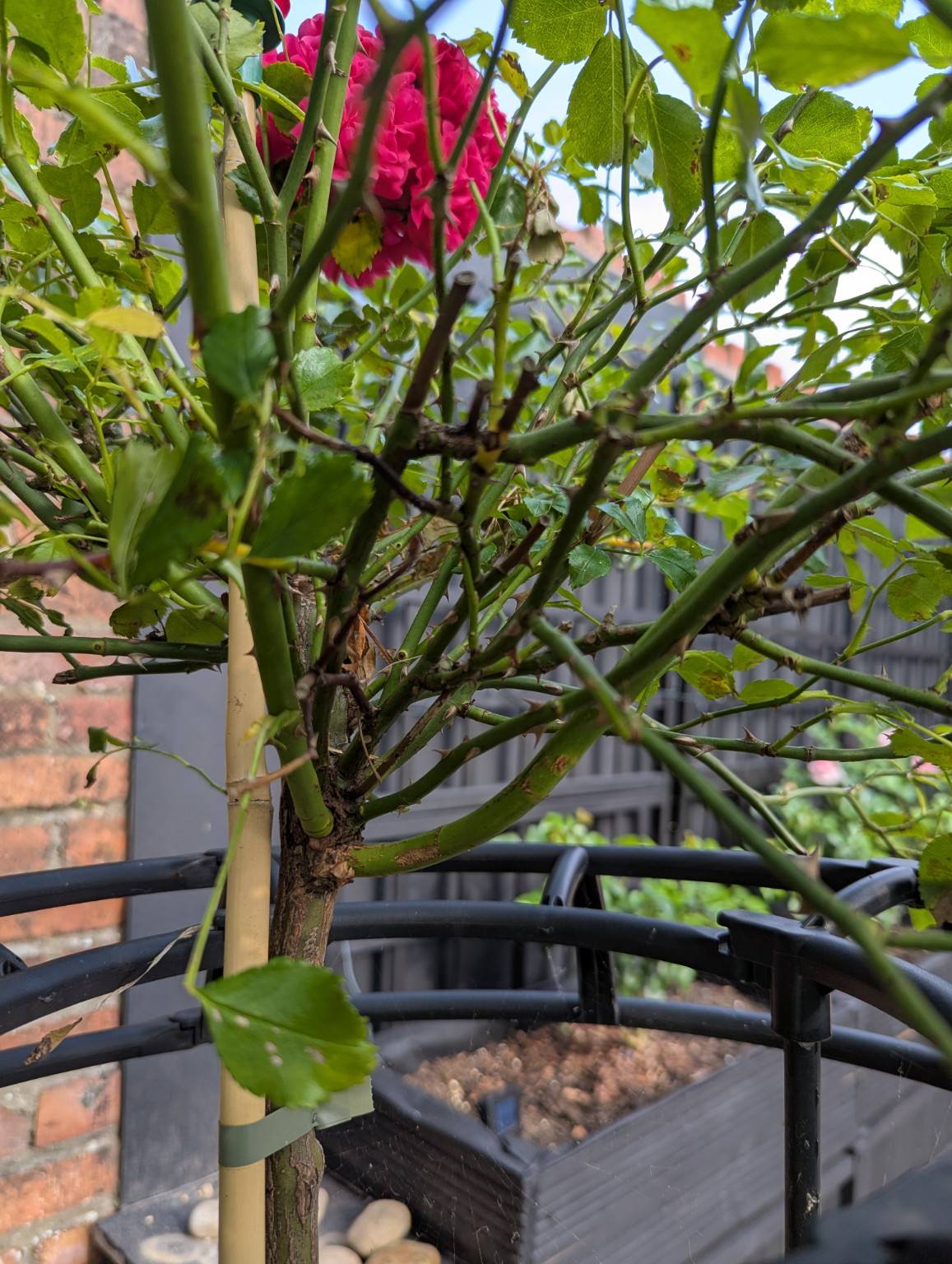
Thanks for such a detailed question and the photo; it's really helpful for working out what's going on. Looking at the image, I can see exactly what you're dealing with, and you've done a brilliant job of describing the situation so clearly.
Are these suckers or genuine rose growth?
The honest answer is that whilst these canes aren't true suckers in the classic sense, the distinction matters less than you might think when it comes to what you should do with them. True rootstock suckers emerge from below the graft union, often from the roots themselves, and the leaves typically look quite different from the grafted variety above. What you're describing, with two canes emerging from the base of the head just above the union and one from the top of the graft, suggests these are likely shoots from the rootstock or very low on the graft, rather than genuine growth from your Lancashire Weeping rose variety.
The extremely long internodes and exceptional vigour you're describing are a classic giveaway. Your Lancashire Weeping will produce new canes, but they should generally match the growth habit and vigour of the rest of the tree. When you get canes that are dramatically more vigorous than everything else and shooting away at a completely different rate, that's usually a strong sign they're not contributing to the shape and character you want from this plant.
Why this matters for your standard rose shape
This is the really important bit. Even if these canes do technically belong to the rose rather than the rootstock, leaving them on a standard rose is still going to cause you problems. The entire point of a standard rose is that beautifully balanced lollipop shape at the top of a clear stem. Those three enormous canes, now reaching three metres and growing at pace, are drawing an enormous amount of the plant's energy and resources away from the weeping head where you actually want it.
Think of it like having a beautifully shaped topiary ball with three enormous branches shooting off in random directions. The plant will keep feeding those vigorous canes because they're the path of least resistance, and the weeping head you've carefully maintained will gradually lose its vigour, produce fewer flowers, and start to look sparse and weak. Left unchecked over a season or two, those canes can fundamentally alter the character of the tree you've invested in.
What to do now
Remove all three canes as cleanly as possible, cutting back to the point of origin with sharp, clean secateurs. For the two emerging from the base of the head, cut as flush to the union as you comfortably can without damaging the surrounding bark. For the one emerging from within the head itself, trace it back carefully and remove it at its origin point. The cleaner the cut, the less likely you are to get regrowth from the same spot.
https://youtu.be/rBU3PlVRLcY
Keep an eye on these areas through the rest of the season, as vigorous rootstock growth in particular has a habit of trying again once it's been removed. If new shoots appear from the same points, remove them promptly before they put on the kind of growth you're dealing with now.
Further Reading on Roses
For more guidance on rose care and keeping your standard in great shape, these guides will help:
Happy gardening!
Hi @edenrose!
Thanks for such a detailed question and the photo; it's really helpful for working out what's going on. Looking at the image, I can see exactly what you're dealing with, and you've done a brilliant job of describing the situation so clearly.
Are these suckers or genuine rose growth?
The honest answer is that whilst these canes aren't true suckers in the classic sense, the distinction matters less than you might think when it comes to what you should do with them. True rootstock suckers emerge from below the graft union, often from the roots themselves, and the leaves typically look quite different from the grafted variety above. What you're describing, with two canes emerging from the base of the head just above the union and one from the top of the graft, suggests these are likely shoots from the rootstock or very low on the graft, rather than genuine growth from your Lancashire Weeping rose variety.
The extremely long internodes and exceptional vigour you're describing are a classic giveaway. Your Lancashire Weeping will produce new canes, but they should generally match the growth habit and vigour of the rest of the tree. When you get canes that are dramatically more vigorous than everything else and shooting away at a completely different rate, that's usually a strong sign they're not contributing to the shape and character you want from this plant.
Why this matters for your standard rose shape
This is the really important bit. Even if these canes do technically belong to the rose rather than the rootstock, leaving them on a standard rose is still going to cause you problems. The entire point of a standard rose is that beautifully balanced lollipop shape at the top of a clear stem. Those three enormous canes, now reaching three metres and growing at pace, are drawing an enormous amount of the plant's energy and resources away from the weeping head where you actually want it.
Think of it like having a beautifully shaped topiary ball with three enormous branches shooting off in random directions. The plant will keep feeding those vigorous canes because they're the path of least resistance, and the weeping head you've carefully maintained will gradually lose its vigour, produce fewer flowers, and start to look sparse and weak. Left unchecked over a season or two, those canes can fundamentally alter the character of the tree you've invested in.
What to do now
Remove all three canes as cleanly as possible, cutting back to the point of origin with sharp, clean secateurs. For the two emerging from the base of the head, cut as flush to the union as you comfortably can without damaging the surrounding bark. For the one emerging from within the head itself, trace it back carefully and remove it at its origin point. The cleaner the cut, the less likely you are to get regrowth from the same spot.
Keep an eye on these areas through the rest of the season, as vigorous rootstock growth in particular has a habit of trying again once it's been removed. If new shoots appear from the same points, remove them promptly before they put on the kind of growth you're dealing with now.
Further Reading on Roses
For more guidance on rose care and keeping your standard in great shape, these guides will help:
Happy gardening!

 Lee Burkhill: Award Winning Designer & BBC 1's Garden Rescue Presenters Official Blog