Hi @potatowedgy
Thanks for your question and for posting those pictures, they're really helpful for identification. I can see exactly what you're dealing with here, and whilst it's frustrating when you've just had new turf laid, the good news is that this is a solvable problem.
What are these flies?
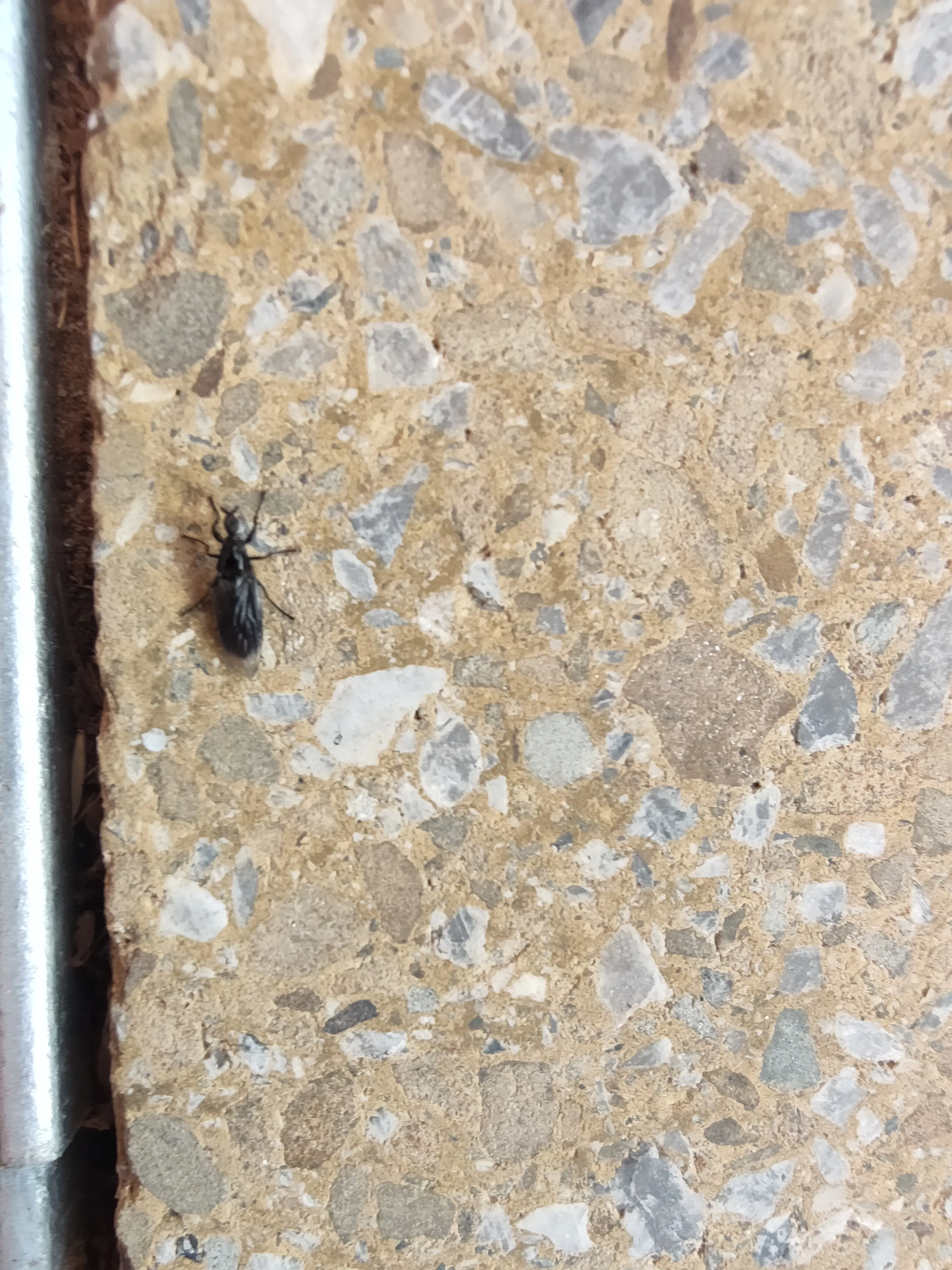
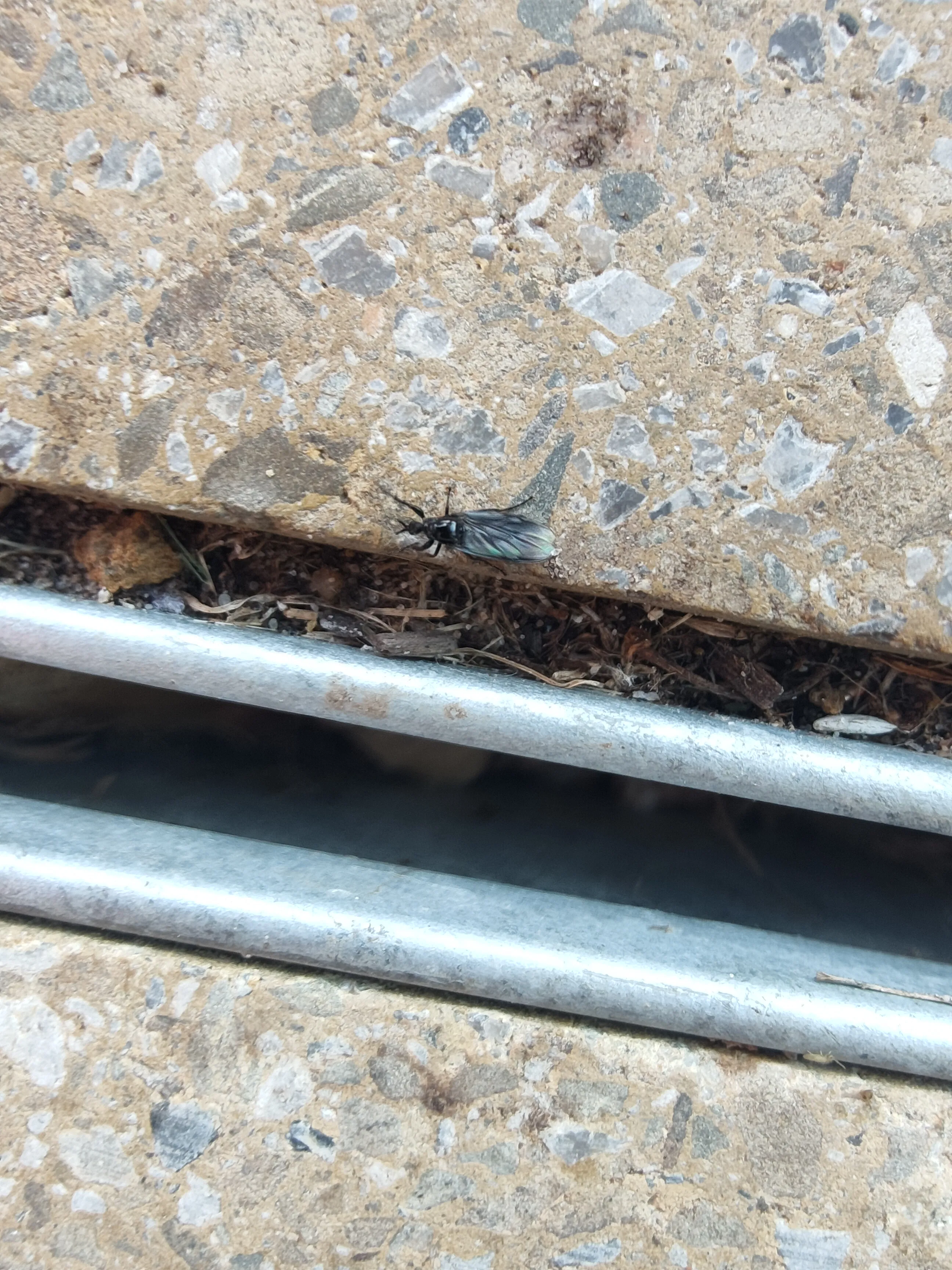
Those black flies swarming all over your turf and patio are bibionid flies, commonly known as St Mark's flies or heather flies. You can identify them by their distinctive dangly back legs that trail behind them when they fly, which I can see clearly in your photos. They're called St Mark's flies because they typically emerge around St Mark's Day (25th April), though with climate change we're seeing them appear earlier and later in the season than traditionally.
The adult flies themselves are completely harmless. They don't bite, they don't sting, and they're not interested in getting into your house. They're actually rather clumsy fliers that spend most of their brief adult lives mating and laying eggs before dying off within a week or two. What you're seeing now is likely a mass emergence, which is why they seem to be absolutely everywhere on your lawn and patio.
Why is your turf dying?
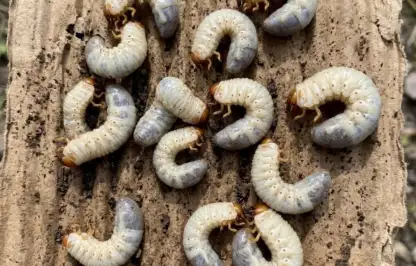
Here's where things get problematic for your new lawn. Whilst the adult flies are harmless, it's their larvae (called leatherjackets) that are causing your turf to die off. The adult females lay eggs in the soil, and when these hatch, the greyish brown grubs feed voraciously on grass roots throughout autumn and winter. With new turf that hasn't had time to establish a deep, robust root system, this root damage is absolutely devastating.
Your turf is dying because these leatherjacket larvae have been munching away at the roots underground, severing the connection between the grass blades and their nutrient supply. New turf is particularly vulnerable because the roots are still shallow and haven't had time to grow deep into the soil below. Established lawns can often tolerate some leatherjacket damage because they've got deeper roots to fall back on, but fresh turf just doesn't have that resilience yet.
I've since written two full guides on this, one on how to get rid of leatherjackets (https://www.gardenninja.co.uk/how-to-get-leather-jackets-out-of-lawns-natural-methods-that-actually-work/) and one on how to get rid of chafer grubs (https://www.gardenninja.co.uk/how-to-get-rid-of-chafer-grubs-in-lawns-uk-guide/), which walk through telling the two apart, the right nematode species for each, and the treatment window you need to hit.
How did this happen?
The turf company may have laid turf that already had eggs or larvae in it, or the flies could have laid eggs shortly after your turf was installed. Either way, the timing has been unfortunate. The larvae have been developing in the soil over the past few months (you mentioned the turf was laid a few months ago), and now the adults are emerging in their masses, which is what you're seeing swarming everywhere.
What to do about it
For the adult flies swarming on your patio, honestly, the best approach is to wait them out. They'll die off naturally within a week or two, and then the problem will disappear until next year's emergence. You can hose them off the patio if they're bothering you, but they'll just come back until their lifecycle is complete. They're a nuisance rather than a threat at this stage.
For your dying turf, I'm afraid the damage is likely already done for this season. If the turf has genuinely died (pull at it and if it comes away easily with no root attachment, it's dead), then you'll need to remove the dead sections and relay fresh turf. Before you do that, though, you need to deal with any remaining larvae in the soil, otherwise you'll just have the same problem again.
You can treat the soil with nematodes (Steinernema feltiae) which are a biological control that specifically targets leatherjackets. These microscopic worms parasitize the larvae and kill them without harming anything else in your garden. Apply them when the soil temperature is above 12°C and the ground is moist. This is an organic, wildlife friendly solution that actually works.
Alternatively, if you're seeing lots of birds suddenly taking an interest in your lawn (magpies, starlings, crows), that's actually a good sign. They'll peck at the turf to get at the leatherjackets below, and whilst it looks messy, they're doing you a favour by reducing the population naturally.
Preventing this in future
When you relay turf (or if you're starting from scratch elsewhere in the garden), make sure you inspect it carefully before laying. Look for any grubs in the root zone. Water new turf regularly but not excessively, as bibionid flies are attracted to damp, organic rich soil for egg laying. Good lawn care with regular feeding will help the grass establish deep roots quickly, making it more resilient to any future pest damage.
Helpful lawn care guides
For comprehensive guidance on laying and establishing new turf properly, have a look at my ultimate lawn laying guide which covers everything from preparation through to aftercare and that crucial first mow. It will help you understand exactly what your new turf needs to establish properly.
If you're dealing with patchy or dying turf in a new build property (which is sadly very common), this forum thread on new build lawn problems covers similar issues and solutions that might be relevant to your situation.
For ongoing lawn maintenance and keeping your turf healthy once it's re-established, my winter lawn care guide will help you understand seasonal care requirements that prevent future problems.
I know this isn't the news you wanted to hear when you've just moved in and invested in new turf, but at least you now know what you're dealing with and can take action. The fly swarm will disappear soon, and with proper treatment and fresh turf where needed, you can get your lawn back on track.
Let us know how you get on with the treatment, and feel free to post updates. We're here to help!
Happy gardening!
Lee Garden Ninja
Hi @potatowedgy
Thanks for your question and for posting those pictures, they're really helpful for identification. I can see exactly what you're dealing with here, and whilst it's frustrating when you've just had new turf laid, the good news is that this is a solvable problem.
What are these flies?
Those black flies swarming all over your turf and patio are bibionid flies, commonly known as St Mark's flies or heather flies. You can identify them by their distinctive dangly back legs that trail behind them when they fly, which I can see clearly in your photos. They're called St Mark's flies because they typically emerge around St Mark's Day (25th April), though with climate change we're seeing them appear earlier and later in the season than traditionally.
The adult flies themselves are completely harmless. They don't bite, they don't sting, and they're not interested in getting into your house. They're actually rather clumsy fliers that spend most of their brief adult lives mating and laying eggs before dying off within a week or two. What you're seeing now is likely a mass emergence, which is why they seem to be absolutely everywhere on your lawn and patio.
Why is your turf dying?
Here's where things get problematic for your new lawn. Whilst the adult flies are harmless, it's their larvae (called leatherjackets) that are causing your turf to die off. The adult females lay eggs in the soil, and when these hatch, the greyish brown grubs feed voraciously on grass roots throughout autumn and winter. With new turf that hasn't had time to establish a deep, robust root system, this root damage is absolutely devastating.
Your turf is dying because these leatherjacket larvae have been munching away at the roots underground, severing the connection between the grass blades and their nutrient supply. New turf is particularly vulnerable because the roots are still shallow and haven't had time to grow deep into the soil below. Established lawns can often tolerate some leatherjacket damage because they've got deeper roots to fall back on, but fresh turf just doesn't have that resilience yet.
I've since written two full guides on this, one on how to get rid of leatherjackets (https://www.gardenninja.co.uk/how-to-get-leather-jackets-out-of-lawns-natural-methods-that-actually-work/) and one on how to get rid of chafer grubs (https://www.gardenninja.co.uk/how-to-get-rid-of-chafer-grubs-in-lawns-uk-guide/), which walk through telling the two apart, the right nematode species for each, and the treatment window you need to hit.
How did this happen?
The turf company may have laid turf that already had eggs or larvae in it, or the flies could have laid eggs shortly after your turf was installed. Either way, the timing has been unfortunate. The larvae have been developing in the soil over the past few months (you mentioned the turf was laid a few months ago), and now the adults are emerging in their masses, which is what you're seeing swarming everywhere.
What to do about it
For the adult flies swarming on your patio, honestly, the best approach is to wait them out. They'll die off naturally within a week or two, and then the problem will disappear until next year's emergence. You can hose them off the patio if they're bothering you, but they'll just come back until their lifecycle is complete. They're a nuisance rather than a threat at this stage.
For your dying turf, I'm afraid the damage is likely already done for this season. If the turf has genuinely died (pull at it and if it comes away easily with no root attachment, it's dead), then you'll need to remove the dead sections and relay fresh turf. Before you do that, though, you need to deal with any remaining larvae in the soil, otherwise you'll just have the same problem again.
You can treat the soil with nematodes (Steinernema feltiae) which are a biological control that specifically targets leatherjackets. These microscopic worms parasitize the larvae and kill them without harming anything else in your garden. Apply them when the soil temperature is above 12°C and the ground is moist. This is an organic, wildlife friendly solution that actually works.
Alternatively, if you're seeing lots of birds suddenly taking an interest in your lawn (magpies, starlings, crows), that's actually a good sign. They'll peck at the turf to get at the leatherjackets below, and whilst it looks messy, they're doing you a favour by reducing the population naturally.
Preventing this in future
When you relay turf (or if you're starting from scratch elsewhere in the garden), make sure you inspect it carefully before laying. Look for any grubs in the root zone. Water new turf regularly but not excessively, as bibionid flies are attracted to damp, organic rich soil for egg laying. Good lawn care with regular feeding will help the grass establish deep roots quickly, making it more resilient to any future pest damage.
Helpful lawn care guides
For comprehensive guidance on laying and establishing new turf properly, have a look at my ultimate lawn laying guide which covers everything from preparation through to aftercare and that crucial first mow. It will help you understand exactly what your new turf needs to establish properly.
If you're dealing with patchy or dying turf in a new build property (which is sadly very common), this forum thread on new build lawn problems covers similar issues and solutions that might be relevant to your situation.
For ongoing lawn maintenance and keeping your turf healthy once it's re-established, my winter lawn care guide will help you understand seasonal care requirements that prevent future problems.
I know this isn't the news you wanted to hear when you've just moved in and invested in new turf, but at least you now know what you're dealing with and can take action. The fly swarm will disappear soon, and with proper treatment and fresh turf where needed, you can get your lawn back on track.
Let us know how you get on with the treatment, and feel free to post updates. We're here to help!
Happy gardening!
Lee Garden Ninja

 Lee Burkhill: Award Winning Designer & BBC 1's Garden Rescue Presenters Official Blog